Prejudice is an evaluative attitude toward a group; stereotypes are generalized beliefs; discrimination is unequal treatment.
Explain cognitive and emotional contributions to prejudice and the roles of power, prestige, and class
Prejudice is an evaluative attitude toward a group; stereotypes are generalized beliefs; discrimination is unequal treatment. Categorization simplifies information but can exaggerate between-group differences and overlook within-group variation. In-group favoritism, threat, competition, and learned associations can sustain bias. Scapegoating directs frustration toward a less powerful group. Power and prestige influence whose labels become institutional expectations and whose behavior is treated as normal. Explicit prejudice can be consciously endorsed; implicit associations may affect responses without deliberate endorsement. A measure of association is not an infallible diagnosis of an individual’s future discriminatory behavior.
A stereotype attributes a characteristic to a category; stigma marks an attribute or identity as socially discrediting and can affect interaction, opportunity, and self-presentation. Ethnocentrism judges others by one’s own cultural standards, often treating them as superior. Cultural relativism seeks to understand practices within their cultural context; understanding a practice does not require endorsing harm. Categories and norms can change historically. A stigmatized health condition may reduce willingness to seek care because of anticipated judgment, even before direct discrimination occurs. Distinguish the belief, its emotional evaluation, and the behavior or institutional consequence.
A self-fulfilling prophecy occurs when an expectation changes treatment or behavior in ways that help produce the expected outcome. A teacher’s low expectations may reduce opportunities, thereby lowering performance. Stereotype threat concerns situational pressure related to potentially confirming a negative group stereotype; effects vary across populations, tasks, and study designs and should not be assumed in every performance gap. Discrimination is an action or institutional practice producing unequal treatment. A lower score alone identifies none of these mechanisms. Test expectations, treatment, situational cues, and outcomes separately, and consider resources and measurement bias as alternatives.
Worked question. An experiment randomly describes the same task as diagnostic of ability or as a practice exercise. A group difference appears mainly under the diagnostic framing. What does the design test, and what does it not establish?
It tests whether evaluative framing changes performance, potentially through stereotype-related pressure if the relevant stereotype and mediators are demonstrated. It does not prove a fixed group ability difference or explain all real-world disparities. Randomized framing strengthens a causal claim about that manipulation, while generalization requires replication and attention to context.
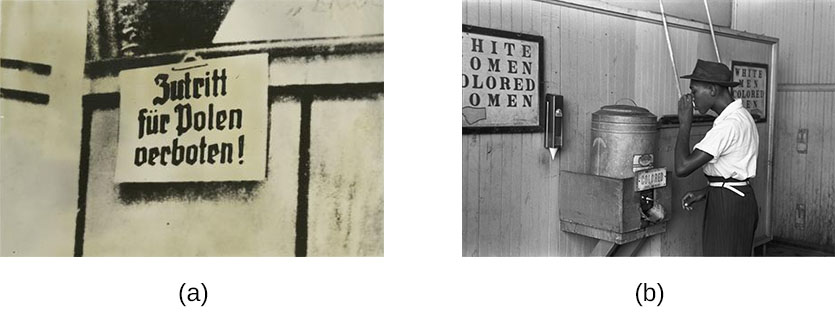
Figure 12.21 Prejudice and discrimination occur across the globe. (a) A 1939 sign in German-occupied Poland warns “No Entrance for Poles!” (b) An African-American male drinks from a designated “colored” water fountain in Oklahoma in 1939 during the era of racial segregation as a practice of discrimination. (credit b: modification of work by United States Farm Security Administration)
Figure 12.22 Women now have many jobs previously closed to them, though they still face challenges in men-dominated occupations. (credit: "The National Guard"/Flickr)
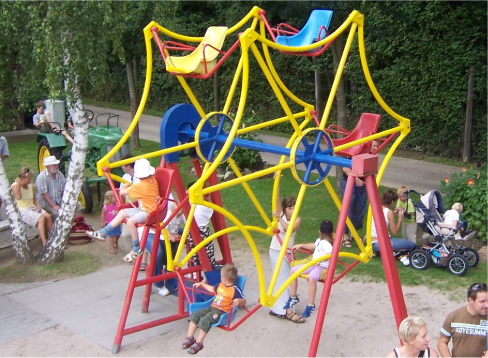
Figure 12.23 These children are very young, but they are already aware of their gender in-group and out-group. (credit: modification of work by "Reiner Kraft"/Flickr)
Rose M. Spielman, William J. Jenkins, and Marilyn D. Lovett, Psychology 2E, OpenStax. (credit: modification of work by "Reiner Kraft"/Flickr) · CC BY-NC-SA 4.0
· Original image ↗ · Access for free ↗
Figure 11.4 Stereotypes and prejudices are persistent and apply to almost every category of people. They are also subject to confirmation bias, in which any bit of supporting evidence gives a person more confidence in their belief. For example, if you think older people are bad drivers, every time you see an accident involving an older driver, it's likely to increase your confidence in your stereotype. Even if you hear the statistics that younger drivers cause more accidents than older drivers, the fulfillment of your stereotype is difficult to overcome. (Credit: Chris Freser/flickr)
Figure 3.3 Experiencing an entirely new practice may lead to a high degree of interest or a level of criticism. The Indegenous people of Sagada, in the Philippines, have for thousands of years placed the bodies of deceased people into coffins hung on the cliffs near their villages. Some visitors may find this practice admirable, while others may think it’s inappropriate. (Credit: Arian Zwegers/flickr)
Figure 9.2 In the upper echelons of the working world, people with the most power reach the top. These people make the decisions and earn the most money. The majority of Americans will never see the view from the top. (Credit: Alex Proimos/flickr)
Figure 9.3 Strata in rock illustrate social stratification. People are sorted, or layered, into social categories. Many factors determine a person’s social standing, such as wealth, income, education, family background, and power. (Credit: Just a Prairie Boy/flickr)
Figure 9.4 The people who live in these houses most likely share similar levels of income and education. Neighborhoods often house people of the same social standing. Wealthy families do not typically live next door to poorer families, though this varies depending on the particular city and country. (Credit: Orin Zebest/flickr)
Figure 9.5 India used to have a rigid caste system. The people in the lowest caste suffered from extreme poverty and were shunned by society. Some aspects of India’s defunct caste system remain socially relevant. (Credit: Elessar/flickr)
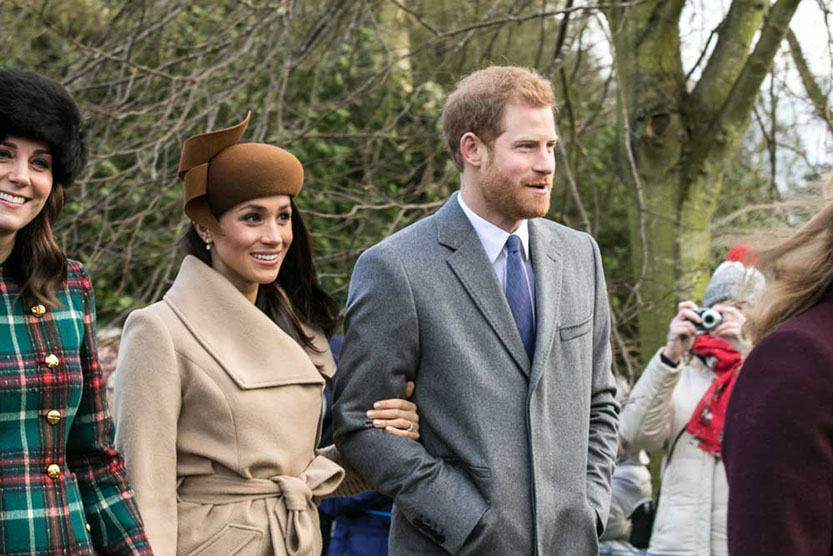
Figure 9.6 Prince Harry and Meghan Markle with other members of the Royal family, in 2017. One year later, the couple would wed and the American-born actress and fashion-designer would immediately become Her Royal Highness The Duchess of Sussex, a position and title that bestows significant benefits of social class (Credit: Mark Jones/Wikimedia Commons)
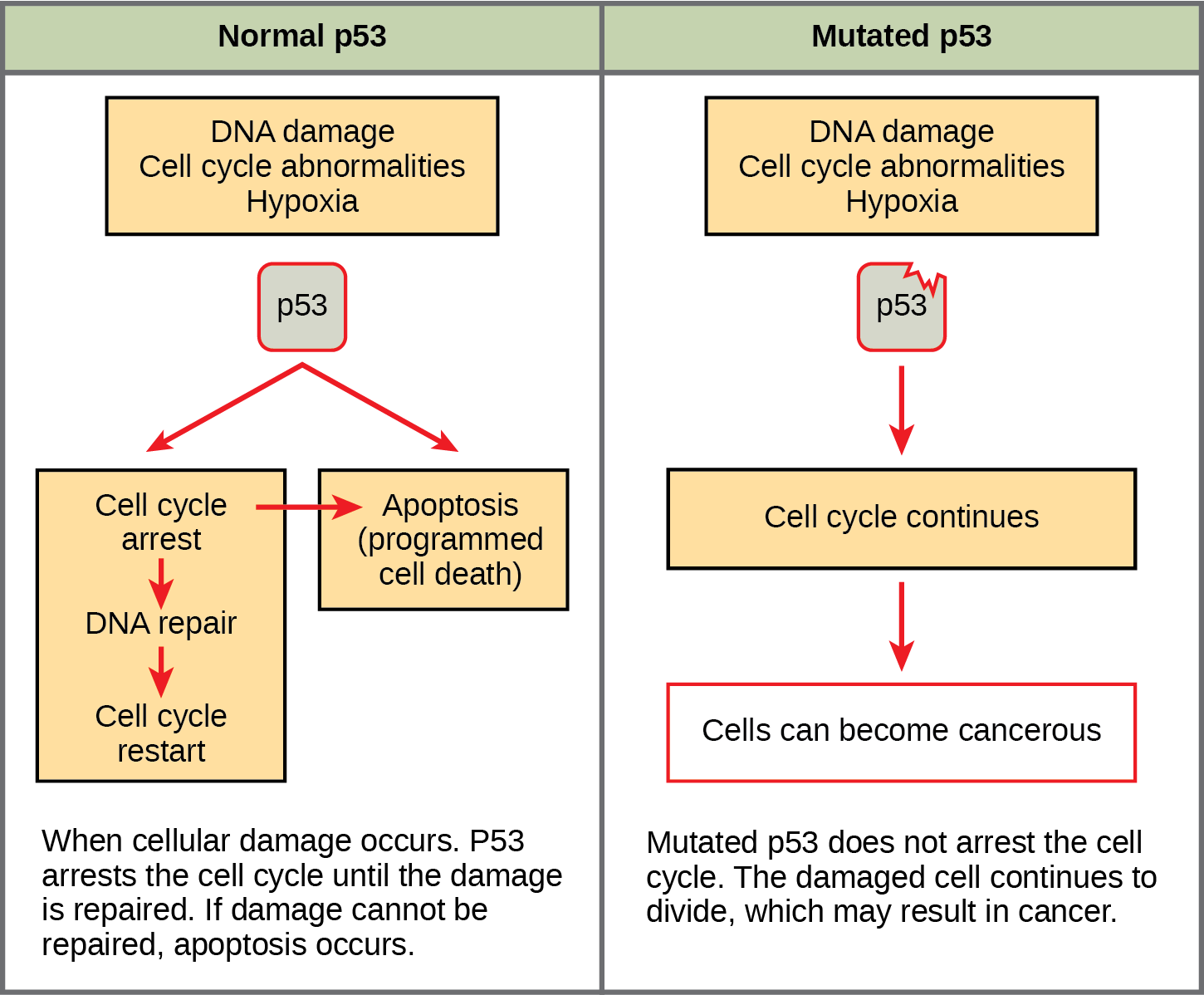
Figure 10.16 The role of normal p53 is to monitor DNA and the supply of oxygen (hypoxia is a condition of reduced oxygen supply). If damage is detected, p53 triggers repair mechanisms. If repairs are unsuccessful, p53 signals apoptosis. A cell with an abnormal p53 protein cannot repair damaged DNA and thus cannot signal apoptosis. Cells with abnormal p53 can become cancerous. (credit: modification of work by Thierry Soussi)
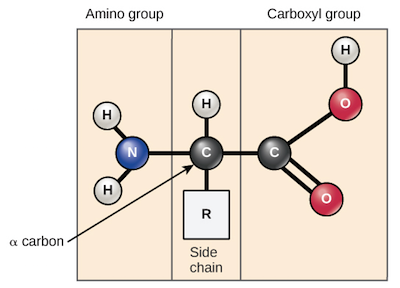
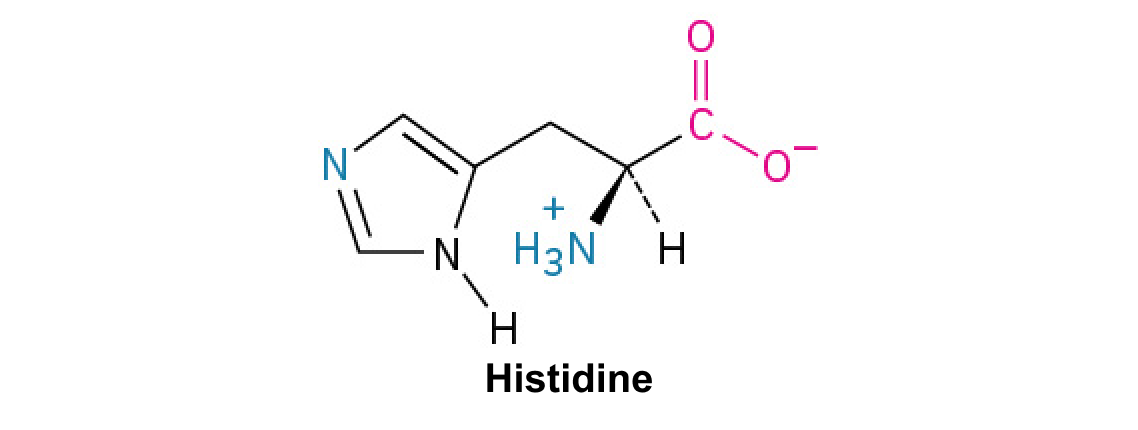
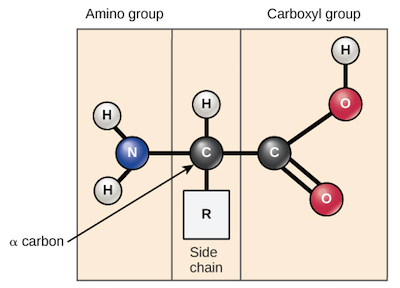
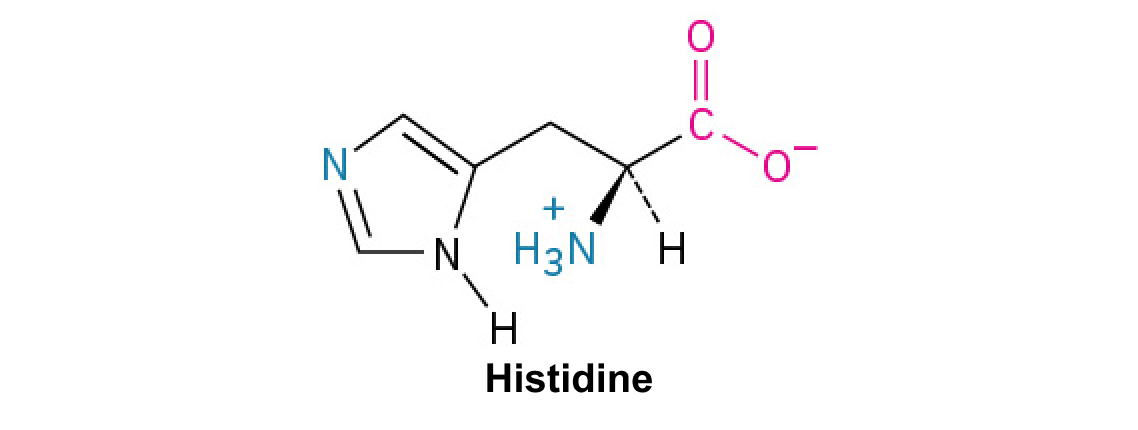
A nitrogen-containing functional group. A free amino acid’s amino group is typically protonated (NH₃⁺) near physiological pH; proline’s ring nitrogen is an exception to this formula.
Figure 15.4 This figure shows the genetic code for translating each nucleotide triplet in mRNA into an amino acid or a termination signal in a protein. (credit: modification of work by NIH)
Figure 12.4 In the P generation, pea plants that are true-breeding for the dominant yellow phenotype are crossed with plants with the recessive green phenotype. This cross produces F 1 heterozygotes with a yellow phenotype. Punnett square analysis can be used to predict the genotypes of the F 2 generation.
An electrical property that can be positive or negative. Opposite charges attract and like charges repel; net charge is the sum of all charges on a particle.
Figure 15.10 A generalized promoter of a gene transcribed by RNA polymerase II is shown. Transcription factors recognize the promoter. RNA polymerase II then binds and forms the transcription initiation complex.
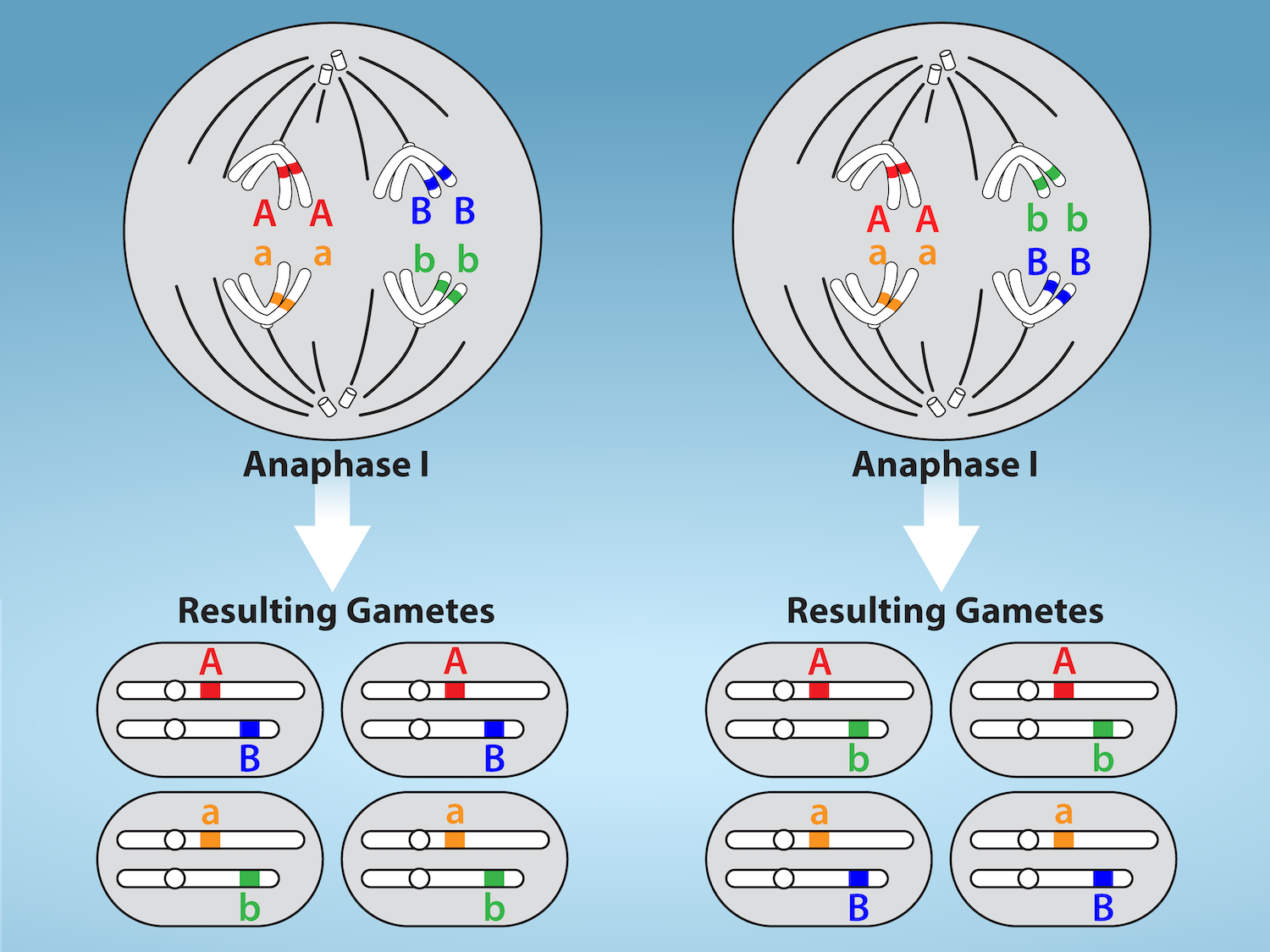
Figure 11.5 Random, independent assortment during metaphase I is demonstrated by considering a cell with a set of two chromosomes (n = 2).
There are two possible homologous chromosome arrangements at the equatorial plane in metaphase I, that are then separated during anaphase I.
The total possible number of different gametes is 2 n , where n equals the number of chromosomes in a set. In this example, there are four possible
genetic combinations for the gametes. With n = 23 in human cells, there are over eight million possible combinations of paternal and maternal
chromosomes. Credit: Rao, A.and Fletcher, S. Department of Biology, Texas A&M University.
Figure 12.4 In the P generation, pea plants that are true-breeding for the dominant yellow phenotype are crossed with plants with the recessive green phenotype. This cross produces F 1 heterozygotes with a yellow phenotype. Punnett square analysis can be used to predict the genotypes of the F 2 generation.
Figure 12.4 In the P generation, pea plants that are true-breeding for the dominant yellow phenotype are crossed with plants with the recessive green phenotype. This cross produces F 1 heterozygotes with a yellow phenotype. Punnett square analysis can be used to predict the genotypes of the F 2 generation.
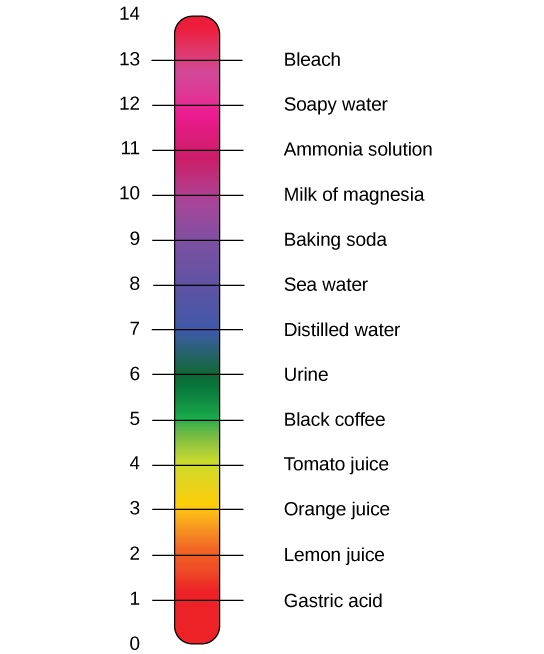
The exponent needed to obtain a number from a chosen fixed number. For decimal logarithms, log₁₀(100) = 2 because 10² = 100; pH uses the negative decimal logarithm of hydrogen ion activity.
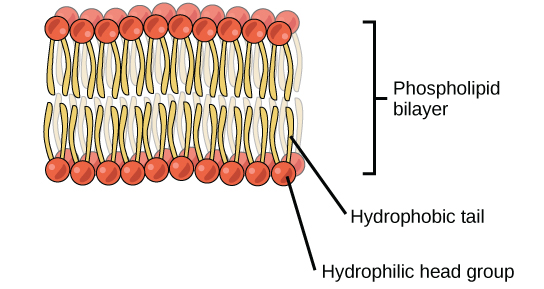
A thin boundary or sheet. Cell membranes are lipid bilayers containing proteins; blotting membranes are synthetic supports that hold proteins or nucleic acids for detection.
Figure 15.11 Eukaryotic pre-mRNA processing. In addition to 5’ Cap and 3’ Poly-A Tail addition, introns must be precisely removed and exons joined to generate a functional mRNA. Nucleotides upstream (towards the 5’cap) of the translation START codon are part of the 5’ untranslated region (5’ UTR). Nucleotides downstream (towards 3’end) of the STOP codon form the 3’ UTR. Both 5’ and 3’ UTRs are important for regulating translation initiation and mRNA stability. Credit: Rao, A., Ryan, K. Fletcher, S. and Tag, A. Department of Biology, Texas A&M University.
Rao, A., Ryan, K. Fletcher, S. and Tag, A. Department of Biology, Texas A&M University.; Mary Ann Clark, Matthew Douglas, and Jung Choi, Biology 2e, OpenStax. · CC BY-NC-SA 4.0
· Original image ↗ · Access for free ↗
Figure 12.4 In the P generation, pea plants that are true-breeding for the dominant yellow phenotype are crossed with plants with the recessive green phenotype. This cross produces F 1 heterozygotes with a yellow phenotype. Punnett square analysis can be used to predict the genotypes of the F 2 generation.
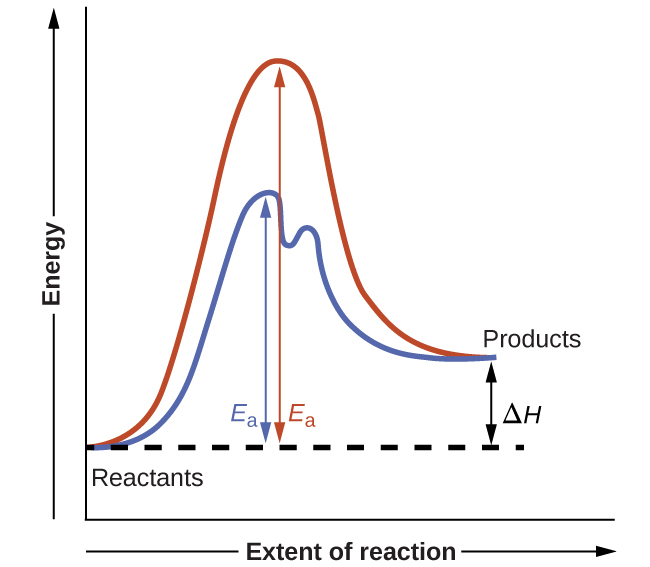
Figure 12.19 Reaction diagrams for an endothermic process in the absence (red curve) and presence (blue curve) of a catalyst. The catalyzed pathway involves a two-step mechanism (note the presence of two transition states) and an intermediate species (represented by the valley between the two transitions states).
Figure 7.45 - Non-homologous end joining (left) versus homologous recombination (right) - Wikipedia
Wikipedia, as credited by Kevin Ahern, Indira Rajagopal, and Taralyn Tan, Biochemistry Free For All, Oregon State University, via Biology LibreTexts. · Source attribution
· Original image ↗ · Access for free ↗
The amount of a substance that can dissolve in a solvent under specified conditions. Soluble means able to dissolve; insoluble means only very slightly soluble in that solvent.
Figure 15.7 Messenger RNA is a copy of protein-coding information in the coding strand of DNA, with the substitution of U in the RNA for T in the coding sequence. However, new RNA nucleotides base pair with the nucleotides of the template strand. RNA is synthesized in its 5'-3' direction, using the enzyme RNA polymerase. As the template is read, the DNA unwinds ahead of the polymerase and then rewinds behind it.
A fleeting, high-energy arrangement at a reaction barrier. It is an energy maximum along the reaction path, rather than a stable reaction intermediate.
Figure 12.19 Reaction diagrams for an endothermic process in the absence (red curve) and presence (blue curve) of a catalyst. The catalyzed pathway involves a two-step mechanism (note the presence of two transition states) and an intermediate species (represented by the valley between the two transitions states).
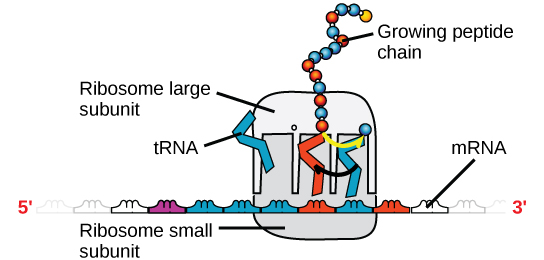
Figure 15.18 Translation begins when an initiator tRNA anticodon recognizes a start codon on mRNA bound to a small ribosomal subunit. The large ribosomal subunit joins the small subunit, and a second tRNA is recruited. As the mRNA moves relative to the ribosome, successive tRNAs move through the ribosome and the polypeptide chain is formed. Entry of a release factor into the A site terminates translation and the components dissociate.
No matching terms. Try a different name or abbreviation.
12.5 Prejudice and Discrimination
OpenStax · 12.5 Prejudice and Discrimination ↗ Instructional page including learning objectives, examples, figures, source tables and questions. Site navigation and embedded media players are omitted; source media links remain available.
Human conflict can result in crime, war, and mass murder, such as genocide. Prejudice and discrimination often are root causes of human conflict, which explains how strangers come to hate one another to the extreme of causing others harm. Prejudice and discrimination affect everyone. In this section we will examine the definitions of prejudice and discrimination, examples of these concepts, and causes of these biases.
Figure 12.21 Prejudice and discrimination occur across the globe. (a) A 1939 sign in German-occupied Poland warns “No Entrance for Poles!” (b) An African-American male drinks from a designated “colored” water fountain in Oklahoma in 1939 during the era of racial segregation as a practice of discrimination. (credit b: modification of work by United States Farm Security Administration)
Rose M. Spielman, William J. Jenkins, and Marilyn D. Lovett, Psychology 2E, OpenStax. (credit b: modification of work by United States Farm Security Administration) · CC BY-NC-SA 4.0
· Original image ↗ · Access for free ↗
As we discussed in the opening story of Trayvon Martin, humans are very diverse and although we share many similarities, we also have many differences. The social groups we belong to help form our identities (Tajfel, 1974). These differences may be difficult for some people to reconcile, which may lead to prejudice toward people who are different. Prejudice is a negative attitude and feeling toward an individual based solely on one’s membership in a particular social group (Allport, 1954; Brown, 2010). Prejudice is common against people who are members of an unfamiliar cultural group. Thus, certain types of education, contact, interactions, and building relationships with members of different cultural groups can reduce the tendency toward prejudice. In fact, simply imagining interacting with members of different cultural groups might affect prejudice. Indeed, when experimental participants were asked to imagine themselves positively interacting with someone from a different group, this led to an increased positive attitude toward the other group and an increase in positive traits associated with the other group. Furthermore, imagined social interaction can reduce anxiety associated with inter-group interactions (Crisp & Turner, 2009). What are some examples of social groups that you belong to that contribute to your identity? Social groups can include gender, race, ethnicity, nationality, social class, religion, sexual orientation, profession, and many more. And, as is true for social roles, you can simultaneously be a member of more than one social group. An example of prejudice is having a negative attitude toward people who are not born in the United States. Although people holding this prejudiced attitude do not know all people who were not born in the United States, they dislike them due to their status as foreigners.
Can you think of a prejudiced attitude you have held toward a group of people? How did your prejudice develop? Prejudice often begins in the form of a stereotype—that is, a specific belief or assumption about individuals based solely on their membership in a group, regardless of their individual characteristics. Stereotypes become overgeneralized and applied to all members of a group. For example, someone holding prejudiced attitudes toward older adults, may believe that older adults are slow and incompetent (Cuddy, Norton, & Fiske, 2005; Nelson, 2004). We cannot possibly know each individual person of advanced age to know that all older adults are slow and incompetent. Therefore, this negative belief is overgeneralized to all members of the group, even though many of the individual group members may in fact be spry and intelligent.
Another example of a well-known stereotype involves beliefs about racial differences among athletes. As Hodge, Burden, Robinson, and Bennett (2008) point out, Black athletes are often believed to be more athletic, yet less intelligent, than their White counterparts. These beliefs persist despite a number of high profile examples to the contrary. Sadly, such beliefs often influence how these athletes are treated by others and how they view themselves and their own capabilities. Whether or not you agree with a stereotype, stereotypes are generally well-known within a given culture (Devine, 1989).
Sometimes people will act on their prejudiced attitudes toward a group of people, and this behavior is known as discrimination. Discrimination is negative action toward an individual as a result of one’s membership in a particular group (Allport, 1954; Dovidio & Gaertner, 2004). As a result of holding negative beliefs (stereotypes) and negative attitudes (prejudice) about a particular group, people often treat the target of prejudice poorly, such as excluding older adults from their circle of friends. In this way, discrimination is a form of oppression. An example of a psychologist experiencing gender discrimination is found in the life and studies of Mary Whiton Calkins. Calkins was given special permission to attend graduate seminars at Harvard (at that time in the late 1880s, Harvard did not accept women) and at one point was the sole student of the famous psychologist William James. She passed all the requirements needed for a PhD and was described by psychologist Hugo Münsterberg as “one of the strongest professors of psychology in this country.” However, Harvard refused to grant Calkins a PhD because she was a woman (Harvard University, 2019).
Table 12.3 summarizes the characteristics of stereotypes, prejudice, and discrimination. Have you ever been the target of discrimination? If so, how did this negative treatment make you feel?
Behavior; positive or negative treatment of others
Holding stereotypes and harboring prejudice may lead to excluding, avoiding, and biased treatment of group members.
“I would never hire nor become friends with a person if I knew they were a Yankees fan.”
Table
12.3
So far, we’ve discussed stereotypes, prejudice, and discrimination as negative thoughts, feelings, and behaviors because these are typically the most problematic. However, it is important to also point out that people can hold positive thoughts, feelings, and behaviors toward individuals based on group membership; for example, they would show preferential treatment for people who are like themselves—that is, who share the same gender, race, or favorite sports team.
Link to Learning
Watch this video of a social experiment conducted in a park that demonstrates the concepts of prejudice, stereotypes, and discrimination. In the video, three people try to steal a bike out in the open. The race and gender of the thief is varied: a White male teenager, a Black male teenager, and a White female. Does anyone try to stop them? The treatment of the teenagers in the video demonstrates the concept of racism.
When we meet strangers we automatically process three pieces of information about them: their race, gender, and age (Ito & Urland, 2003). Why are these aspects of an unfamiliar person so important? Why don’t we instead notice whether their eyes are friendly, whether they are smiling, their height, the type of clothes they are wearing? Although these secondary characteristics are important in forming a first impression of a stranger, the social categories of race, gender, and age provide a wealth of information about an individual. This information, however, often is based on stereotypes. We may have different expectations of strangers depending on their race, gender, and age. What stereotypes and prejudices do you hold about people who are from a race, gender, and age group different from your own?
Racism
Racism is prejudice and discrimination against an individual based solely on one’s membership in a specific racial group (such as toward African Americans, Asian Americans, Latinos, Native Americans, European Americans). What are some stereotypes of various racial or ethnic groups? Research suggests cultural stereotypes for Asian Americans include cold, sly, and intelligent; for Latinos, cold and unintelligent; for European Americans, cold and intelligent; and for African Americans, aggressive, athletic, and more likely to be law breakers (Devine & Elliot, 1995; Fiske, Cuddy, Glick, & Xu, 2002; Sommers & Ellsworth, 2000; Dixon & Linz, 2000).
Racism exists for many racial and ethnic groups. For example, Black people are significantly more likely to have their vehicles searched during traffic stops than White people, particularly when Black people are driving in predominately White neighborhoods, a phenomenon often termed “DWB” or “driving while Black” (Rojek, Rosenfeld, & Decker, 2012).
Mexican Americans and other Latino groups also are targets of racism from the police and other members of the community. For example, when purchasing items with a personal check, Latino shoppers are more likely than White shoppers to be asked to show formal identification (Dovidio et al., 2010).
In one case of alleged harassment by the police, several East Haven, Connecticut, police officers were arrested on federal charges due to reportedly continued harassment and brutalization of Latinos. When the accusations came out, the mayor of East Haven was asked, “What are you doing for the Latino community today?” The Mayor responded, “I might have tacos when I go home, I’m not quite sure yet” (“East Haven Mayor,” 2012). This statement undermines the important issue of racial profiling and police harassment of Latinos, while belittling Latino culture by emphasizing an interest in a food product stereotypically associated with Latinos.
Racism is prevalent toward many other groups in the United States including Native Americans, Arab Americans, Jewish Americans, and Asian Americans. Have you experienced or witnessed racism toward any of these racial or ethnic groups? Are you aware of racism in your community?
One reason modern forms of racism, and prejudice in general, are hard to detect is related to the dual attitudes model (Wilson, Lindsey, & Schooler, 2000). Humans have two forms of attitudes: explicit attitudes, which are conscious and controllable, and implicit attitudes, which are unconscious and uncontrollable (Devine, 1989; Olson & Fazio, 2003). Because holding egalitarian views is socially desirable (Plant & Devine, 1998), most people do not show extreme racial bias or other prejudices on measures of their explicit attitudes. However, measures of implicit attitudes often show evidence of mild to strong racial bias or other prejudices (Greenwald, McGee, & Schwartz, 1998; Olson & Fazio, 2003).
Sexism
Sexism is prejudice and discrimination toward individuals based on their sex. Typically, sexism takes the form of men holding biases against women, but anyone can show sexism toward their own or the other sex. Like racism, sexism may be subtle and difficult to detect. Common forms of sexism in modern society include gender role expectations, such as expecting women to be the caretakers of the household. Sexism also includes people’s expectations for how members of a gender group should behave. For example, women are expected to be friendly, passive, and nurturing, and when women behave in an unfriendly, assertive, or neglectful manner they often are disliked for violating their gender role (Rudman, 1998). Research by Laurie Rudman (1998) finds that when female job applicants self-promote, they are likely to be viewed as competent, but they may be disliked and are less likely to be hired because they violated gender expectations for modesty. In this way, women are sometimes blamed for wage and employment inequality, but they would be viewed negatively for trying to overcome them, a phenomenon sometimes referred to as the double bind. Sexism can exist on a societal level such as in hiring, employment opportunities, and education. Women are less likely to be hired or promoted in male-dominated professions such as engineering, aviation, and construction (Figure 12.22) (Blau, Ferber, & Winkler, 2010; Ceci & Williams, 2011). Have you ever experienced or witnessed sexism? Think about your family members’ jobs or careers. Why do you think there are differences in the jobs women and men have, such as more women nurses but more male surgeons (Betz, 2008)?
Figure 12.22 Women now have many jobs previously closed to them, though they still face challenges in men-dominated occupations. (credit: "The National Guard"/Flickr)
People often form judgments and hold expectations about people based on their age. These judgments and expectations can lead to ageism, or prejudice and discrimination toward individuals based solely on their age. Think of expectations you hold for older adults. How could someone’s expectations influence the feelings they hold toward individuals from older age groups? Ageism is widespread in U.S. culture (Nosek, 2005), and a common ageist attitude toward older adults is that they are incompetent, physically weak, and slow (Greenberg, Schimel, & Martens, 2002) and some people consider older adults less attractive. Chang, Kannoth, Levy, Wang, Lee, and Levy (2020) reported on relationships between ageism and health outcomes over a 40-year-plus period from countries around the world. Across 11 health domains, people over 50 were likely to experience ageism most often in the form of being denied access to health services and work opportunities. Some cultures, however, including some Asian, Latino, and African American cultures, both outside and within the United States afford older adults respect and honor.
Typically, ageism occurs against older adults, but ageism also can occur toward younger adults. What expectations do you hold toward younger people? Does society expect younger adults to be immature and irresponsible? Are younger generations seen as having it too easy or having weaker characters than older generations? Raymer, Reed, Spiegel, and Purvanova (2017) examined ageism against younger workers. They found that older workers endorsed negative stereotypes of younger workers, believing that they had more work deficit characteristics (including perceptions of incompetence). How might these forms of ageism affect a younger and older adult who are applying for a sales clerk position?
Homophobia and Transphobia
Another form of prejudice is homophobia: an umbrella term referring to prejudice and discrimination of individuals based solely on their sexual orientation, which is often applied to bisexual, lesbian, gay, and other non-heterosexual people. Transphobia is the hatred or fear of those who are perceived to break or blur stereotypical gender roles, often expressed as stereotyping, discrimination, harassment and/or violence. Like ageism, homophobia is a widespread prejudice in U.S. society that is tolerated by many people (Herek & McLemore, 2013; Nosek, 2005). Negative feelings often result in discrimination, such as the exclusion of lesbian, gay, bisexual, transgender, and queer (LGBTQ+) people from social groups and the avoidance of LGBTQ+ neighbors and co-workers. This discrimination also extends to employers deliberately declining to hire qualified LGBTQ+ job applicants, a practice officially outlawed by a 2020 Surpreme Court decision but which remains a significant issue. Have you experienced or witnessed homophobia? If so, what stereotypes, prejudiced attitudes, and discrimination were evident?
Prejudice and discrimination persist in society due to social learning and conformity to social norms. Children learn prejudiced attitudes and beliefs from society: their parents, teachers, friends, the media, and other sources of socialization, such as social media (O’Keeffe & Clarke-Pearson, 2011). If certain types of prejudice and discrimination are acceptable in a society, there may be normative pressures to conform and share those prejudiced beliefs, attitudes, and behaviors. For example, public and private schools are still somewhat segregated by social class. Historically, only children from wealthy families could afford to attend private schools, whereas children from middle- and low-income families typically attended public schools. If a child from a low-income family received a merit scholarship to attend a private school, how might the child be treated by classmates? Can you recall a time when you held prejudiced attitudes or beliefs or acted in a discriminatory manner because your group of friends expected you to?
When we hold a stereotype about a person, we have expectations that they will fulfill that stereotype. A self-fulfilling prophecy is an expectation held by a person that alters their behavior in a way that tends to make it true. When we hold stereotypes about a person, we tend to treat the person according to our expectations. This treatment can influence the person to act according to our stereotypic expectations, thus confirming our stereotypic beliefs. Research by Rosenthal and Jacobson (1968) found that disadvantaged students whose teachers expected them to perform well had higher grades than disadvantaged students whose teachers expected them to do poorly.
Consider this example of cause and effect in a self-fulfilling prophecy: If an employer expects an openly gay job applicant to be incompetent, the potential employer might treat the applicant negatively during the interview by engaging in less conversation, making little eye contact, and generally behaving coldly toward the applicant (Hebl, Foster, Mannix, & Dovidio, 2002). In turn, the job applicant will perceive that the potential employer dislikes him, and he will respond by giving shorter responses to interview questions, making less eye contact, and generally disengaging from the interview. After the interview, the employer will reflect on the applicant’s behavior, which seemed cold and distant, and the employer will conclude, based on the applicant’s poor performance during the interview, that the applicant was in fact incompetent. Thus, the employer’s stereotype—gay people are incompetent and do not make good employees—is reinforced. Do you think this job applicant is likely to be hired? Treating individuals according to stereotypic beliefs can lead to prejudice and discrimination.
Another dynamic that can reinforce stereotypes is confirmation bias. When interacting with the target of our prejudice, we tend to pay attention to information that is consistent with our stereotypic expectations and ignore information that is inconsistent with our expectations. In this process, known as confirmation bias, we seek out information that supports our stereotypes and ignore information that is inconsistent with our stereotypes (Wason & Johnson-Laird, 1972). In the job interview example, the employer may not have noticed that the job applicant was friendly and engaging, and that he provided competent responses to the interview questions in the beginning of the interview. Instead, the employer focused on the job applicant’s performance in the later part of the interview, after the applicant changed his demeanor and behavior to match the interviewer’s negative treatment. Have you ever fallen prey to the self-fulfilling prophecy or confirmation bias, either as the source or target of such bias? How might we stop the cycle of the self-fulfilling prophecy?
In-Groups and Out-Groups
As discussed previously in this section, we all belong to a gender, race, age, and social economic group. These groups provide a powerful source of our identity and self-esteem (Tajfel & Turner, 1979). These groups serve as our in-groups. An in-group is a group that we identify with or see ourselves as belonging to. A group that we don’t belong to, or an out-group, is a group that we view as fundamentally different from us. For example, if you are a woman, your gender in-group includes all women, and your gender out-group includes all men (Figure 12.23). People often view gender groups as being fundamentally different from each other in personality traits, characteristics, social roles, and interests. Because we often feel a strong sense of belonging and emotional connection to our in-groups, we develop in-group bias: a preference for our own group over other groups. This in-group bias can result in prejudice and discrimination because the out-group is perceived as different and is less preferred than our in-group.
Figure 12.23 These children are very young, but they are already aware of their gender in-group and out-group. (credit: modification of work by "Reiner Kraft"/Flickr)
Rose M. Spielman, William J. Jenkins, and Marilyn D. Lovett, Psychology 2E, OpenStax. (credit: modification of work by "Reiner Kraft"/Flickr) · CC BY-NC-SA 4.0
· Original image ↗ · Access for free ↗
Despite the group dynamics that seem only to push groups toward conflict, there are forces that promote reconciliation between groups: the expression of empathy, of acknowledgment of past suffering on both sides, and the halt of destructive behaviors.
One function of prejudice is to help us feel good about ourselves and maintain a positive self-concept. This need to feel good about ourselves extends to our in-groups: We want to feel good and protect our in-groups. We seek to resolve threats individually and at the in-group level. This often happens by blaming an out-group for the problem. Scapegoating is the act of blaming an out-group when the in-group experiences frustration or is blocked from obtaining a goal (Allport, 1954).
11.3 Prejudice, Discrimination, and Racism
OpenStax · 11.3 Prejudice, Discrimination, and Racism ↗ Instructional page including learning objectives, examples, figures, source tables and questions. Site navigation and embedded media players are omitted; source media links remain available.
Learning Objectives
By the end of this section, you should be able to:
It is important to learn about stereotypes before discussing the terms prejudice, discrimination, and racism that are often used interchangeably in everyday conversation. Stereotypes are oversimplified generalizations about groups of people. Stereotypes can be based on race, ethnicity, age, gender, sexual orientation—almost any characteristic. They may be positive (usually about one’s own group) but are often negative (usually toward other groups, such as when members of a dominant racial group suggest that a subordinate racial group is stupid or lazy). In either case, the stereotype is a generalization that doesn’t take individual differences into account.
Where do stereotypes come from? In fact, new stereotypes are rarely created; rather, they are recycled from subordinate groups that have assimilated into society and are reused to describe newly subordinate groups. For example, many stereotypes that are currently used to characterize new immigrants were used earlier in American history to characterize Irish and Eastern European immigrants.
Prejudice refers to the beliefs, thoughts, feelings, and attitudes someone holds about a group. A prejudice is not based on personal experience; instead, it is a prejudgment, originating outside actual experience. Recall from the chapter on Crime and Deviance that the criminalization of marijuana was based on anti-immigrant sentiment; proponents used fictional, fear-instilling stories of "reefer madness" and rampant immoral and illegal activities among Spanish-speaking people to justify new laws and harsh treatment of marijuana users. Many people who supported criminalizing marijuana had never met any of the new immigrants who were rumored to use it; the ideas were based in prejudice.
While prejudice is based in beliefs outside of experience, experience can lead people to feel that their prejudice is confirmed or justified. This is a type of confirmation bias. For example, if someone is taught to believe that a certain ethnic group has negative attributes, every negative act committed someone in that group can be seen as confirming the prejudice. Even a minor social offense committed by a member of the ethnic group, like crossing the street outside the crosswalk or talking too loudly on a bus, could confirm the prejudice.
While prejudice often originates outside experience, it isn't instinctive. Prejudice—as well as the stereotypes that lead to it and the discrimination that stems from it—is most often taught and learned. The teaching arrives in many forms, from direct instruction or indoctrination, to observation and socialization. Movies, books, charismatic speakers, and even a desire to impress others can all support the development of prejudices.
Figure 11.4 Stereotypes and prejudices are persistent and apply to almost every category of people. They are also subject to confirmation bias, in which any bit of supporting evidence gives a person more confidence in their belief. For example, if you think older people are bad drivers, every time you see an accident involving an older driver, it's likely to increase your confidence in your stereotype. Even if you hear the statistics that younger drivers cause more accidents than older drivers, the fulfillment of your stereotype is difficult to overcome. (Credit: Chris Freser/flickr)
While prejudice refers to biased thinking, discrimination consists of actions against a group of people. Discrimination can be based on race, ethnicity, age, religion, health, and other categories. For example, discrimination based on race or ethnicity can take many forms, from unfair housing practices such as redlining to biased hiring systems. Overt discrimination has long been part of U.S. history. In the late nineteenth century, it was not uncommon for business owners to hang signs that read, "Help Wanted: No Irish Need Apply." And southern Jim Crow laws, with their "Whites Only" signs, exemplified overt discrimination that is not tolerated today.
Discrimination also manifests in different ways. The scenarios above are examples of individual discrimination, but other types exist. Institutional discrimination occurs when a societal system has developed with embedded disenfranchisement of a group, such as the U.S. military's historical nonacceptance of minority sexualities (the "don't ask, don't tell" policy reflected this norm).
While the form and severity of discrimination vary significantly, they are considered forms of oppression. Institutional discrimination can also include the promotion of a group's status, such as in the case of privilege, which describes the benefits people receive simply by being part of the dominant group.
Most people have some level of privilege, whether it has to do with health, ability, race, or gender. When discussing race, the focus is often on White privilege, which is the societal privilege that benefits White people, or those perceived to be White, over non-White people in some societies, including the United States.
Most White people are willing to admit that non-White people live with a set of disadvantages due to the color of their skin. But until they gain a good degree of self-awareness, few people are willing to acknowledge the benefits they themselves receive by being a part of the dominant group. Why not? Some may feel it lessens their accomplishments, others may feel a degree of guilt, and still others may feel that admitting to privilege makes them seem like a bad or mean person. But White (or other dominant) privilege is an institutional condition, not a personal one. It exists whether the person asks for it or not. In fact, a pioneering thinker on the topic, Peggy McIntosh, noted that she didn't recognize privilege because, in fact, it was not based in meanness. Instead, it was an "invisible weightless knapsack full of special provisions" that she didn't ask for, yet from which she still benefitted (McIntosh 1989). As the reference indicates, McIntosh's first major publication about White privilege was released in 1989; many people have only become familiar with the term in recent years.
Prejudice and discrimination can overlap and intersect in many ways. To illustrate, here are four examples of how prejudice and discrimination can occur. Unprejudiced nondiscriminators are open-minded, tolerant, and accepting individuals. Unprejudiced discriminators might be those who unthinkingly practice sexism in their workplace by not considering women or gender nonconforming people for certain positions that have traditionally been held by men. Prejudiced nondiscriminators are those who hold racist beliefs but don't act on them, such as a racist store owner who serves minority customers. Prejudiced discriminators include those who actively make disparaging remarks about others or who perpetuate hate crimes.
Racism
Racism is a stronger type of prejudice and discrimination used to justify inequalities against individuals by maintaining that one racial category is somehow superior or inferior to others; it is a set of practices used by a racial dominant group to maximize advantages for itself by disadvantaging racial minority groups. Such practices have affected wealth gap, employment, housing discrimination, government surveillance, incarceration, drug arrests, immigration arrests, infant mortality and much more (Race Forward 2021).
Broadly, individuals belonging to minority groups experience both individual racism and systemic racism during their lifetime. While reading the following list of some of the common forms of racism, ask yourself, “Am I a part of this racism?” “How can I contribute to stop racism?”
Individual or Interpersonal Racism refers to prejudice and discrimination executed by individuals consciously and unconsciously that occurs between individuals. Examples include telling a racist joke and believing in the superiority of White people.
Systemic Racism, also called structural racism or institutional racism, is systems and structures that have procedures or processes that disadvantages racial minority groups. Systemic racism occurs in organizations as discriminatory treatments and unfair policies based on race that result in inequitable outcomes for White people over people of color. For example, a school system where students of color are distributed into underfunded schools and out of the higher-resourced schools.
Racial Profiling is a type of systemic racism that involves the singling out of racial minorities for differential treatment, usually harsher treatment. The disparate treatment of racial minorities by law enforcement officials is a common example of racial profiling in the United States. For example, a study on the Driver's License Privilege to All Minnesota Residents from 2008 to 2010 found that the percentage of Latinos arrested was disproportionally high (Feist 2013). Similarly, the disproportionate number of Black men arrested, charged, and convicted of crimes reflect racial profiling.
Historical Racism is economic inequality or social disparity caused by past racism. For example, African-Americans have had their opportunities in wealth, education and employment adversely affected due to the mistreatment of their ancestors during the slavery and post-slavery period (Wilson 2012).
Cultural Racism occurs when the assumption of inferiority of one or more races is built into the culture of a society. For example, the European culture is considered supposedly more mature, evolved and rational than other cultures (Blaut 1992). A study showed that White and Asian American students with high GPAs experience greater social acceptance while Black and Native American students with high GPAs are rejected by their peers (Fuller-Rowell and Doan 2010).
Colorism is a form of racism, in which someone believes one type of skin tone is superior or inferior to another within a racial group. For example, if an employer believes a Black employee with a darker skin tone is less capable than a Black employee with lighter skin tone, that is colorism. Studies suggest that darker skinned African Americans experience more discrimination than lighter skinned African Americans (Herring, Keith, and Horton 2004; Klonoff and Landrine 2000).
Color-Avoidance Racism (sometimes referred to as "colorblind racism") is an avoidance of racial language by European-Americans that ignores the fact that racism continues to be an issue. The U.S. cultural narrative that typically focuses on individual racism fails to recognize systemic racism. It has arisen since the post-Civil Rights era and supports racism while avoiding any reference to race (Bonilla-Silva 2015).
How to Be an Antiracist
Almost all mainstream voices in the United States oppose racism. Despite this, racism is prevalent in several forms. For example, when a newspaper uses people's race to identify individuals accused of a crime, it may enhance stereotypes of a certain minority. Another example of racist practices is racial steering, in which real estate agents direct prospective homeowners toward or away from certain neighborhoods based on their race.
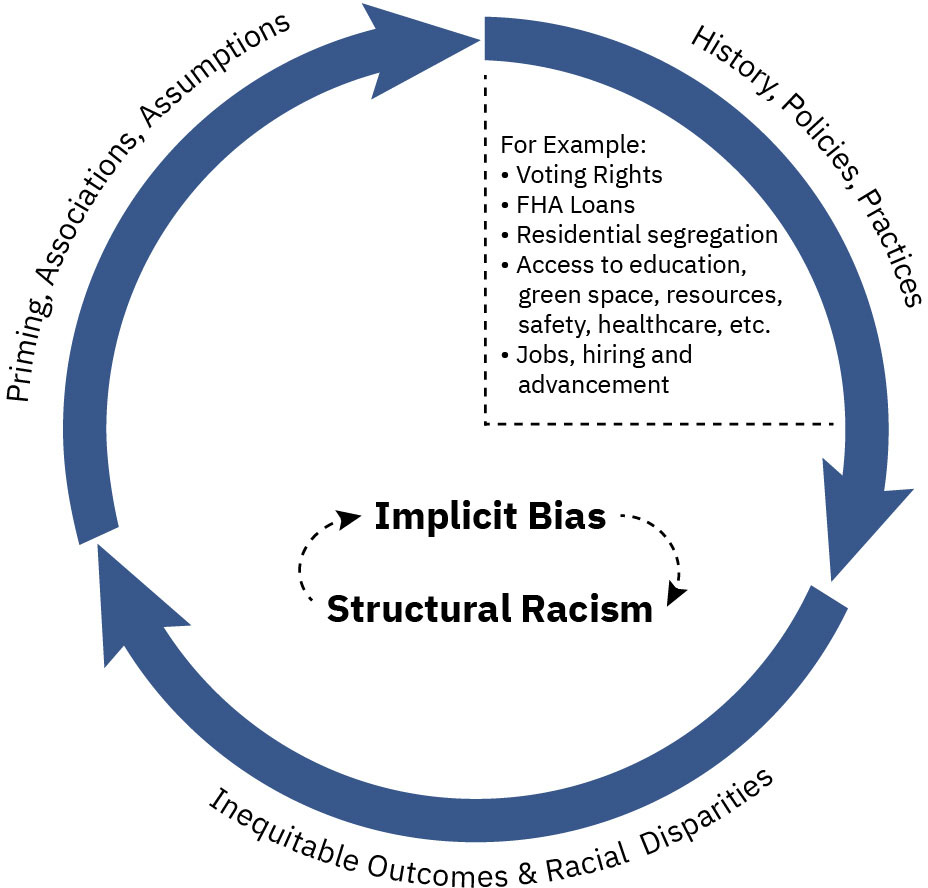
Racist attitudes and beliefs are often more insidious and harder to pin down than specific racist practices. They become more complex due to implicit bias (also referred to as unconscious bias) which is the process of associating stereotypes or attitudes towards categories of people without conscious awareness – which can result in unfair actions and decisions that are at odds with one’s conscious beliefs about fairness and equality (Osta and Vasquez 2021). For example, in schools we often see “honors” and “gifted” classes quickly filled with White students while the majority of Black and Latino students are placed in the lower track classes. As a result, our mind consciously and unconsciously starts to associate Black and Latino students with being less intelligent, less capable. Osta and Vasquez (2021) argue that placing the student of color into a lower and less rigorous track, we reproduce the inequity and the vicious cycle of structural racism and implicit bias continues.
If everyone becomes antiracist, breaking the vicious cycle of structural racism and implicit bias may not be far away. To be antiracist is a radical choice in the face of history, requiring a radical reorientation of our consciousness (Kendi 2019). Proponents of anti-racism indicate that we must work collaboratively within ourselves, our institutions, and our networks to challenge racism at local, national and global levels. Anti-racism is a continuous process that calls for the sustained commitment and participation of all members of society, including the following practices (Carter and Snyder 2020):
Understand and own the racist ideas in which we have been socialized and the racist biases that these ideas have created within each of us.
Identify racist policies, practices, and procedures and replace them with antiracist policies, practices, and procedures.
Anti-racism need not be confrontational in the sense of engaging in direct arguments with people, feeling terrible about your privilege, or denying your own needs or success. In fact, many people who are a part of a minority acknowledge the need for allies from the dominant group (Melaku 2020). Understanding and owning the racist ideas, and recognizing your own privilege, is a good and brave thing.
We cannot erase racism simply by enacting laws to abolish it, because it is embedded in our complex reality that relates to educational, economic, criminal, political, and other social systems. Importantly, everyone can become antiracist by making conscious choices daily. Being racist or antiracist is not about who you are; it is about what you do (Carter and Snyder 2020).
What does it mean to you to be an “anti-racist”? How do you see the recent events or protests in your community, country or somewhere else? Are they making any desired changes?
Big Picture
Racial Tensions in the United States
The death of Michael Brown in Ferguson, Missouri on August 9, 2014 illustrates racial tensions in the United States as well as the overlap between prejudice, discrimination, and institutional racism. On that day, Brown, a young unarmed Black man, was killed by a White police officer named Darren Wilson. During the incident, Wilson directed Brown and his friend to walk on the sidewalk instead of in the street. While eyewitness accounts vary, they agree that an altercation occurred between Wilson and Brown. Wilson’s version has him shooting Brown in self-defense after Brown assaulted him, while Dorian Johnson, a friend of Brown also present at the time, claimed that Brown first ran away, then turned with his hands in the air to surrender, after which Wilson shot him repeatedly (Nobles and Bosman 2014). Three autopsies independently confirmed that Brown was shot six times (Lowery and Fears 2014).
The shooting focused attention on a number of race-related tensions in the United States. First, members of the predominantly Black community viewed Brown’s death as the result of a White police officer racially profiling a Black man (Nobles and Bosman 2014). In the days after, it was revealed that only three members of the town’s fifty-three-member police force were Black (Nobles and Bosman 2014). The national dialogue shifted during the next few weeks, with some commentators pointing to a nationwide sedimentation of racial inequality and identifying redlining in Ferguson as a cause of the unbalanced racial composition in the community, in local political establishments, and in the police force (Bouie 2014). Redlining is the practice of routinely refusing mortgages for households and businesses located in predominately minority communities, while sedimentation of racial inequality describes the intergenerational impact of both practical and legalized racism that limits the abilities of Black people to accumulate wealth.
Ferguson’s racial imbalance may explain in part why, even though in 2010 only about 63 percent of its population was Black, in 2013 Black people were detained in 86 percent of stops, 92 percent of searches, and 93 percent of arrests (Missouri Attorney General’s Office 2014). In addition, de facto segregation in Ferguson’s schools, a race-based wealth gap, urban sprawl, and a Black unemployment rate three times that of the White unemployment rate worsened existing racial tensions in Ferguson while also reflecting nationwide racial inequalities (Bouie 2014).
This situation has not much changed in the United States. After Michael Brown, dozens of unarmed Black people have been shot and killed by police. Studies find no change to the racial disparity in the use of deadly force by police (Belli 2020). Do you think that racial tension can be reduced by stopping police action against racial minorities? What types of policies and practices are important to reduce racial tension? Who are responsible? Why?
3.1 What Is Culture?
OpenStax · 3.1 What Is Culture? ↗ Instructional page including learning objectives, examples, figures, source tables and questions. Site navigation and embedded media players are omitted; source media links remain available.
Learning Objectives
By the end of this section, you should be able to:
Humans are social creatures. According to Smithsonian Institution research, humans have been forming groups for almost 3 million years in order to survive. Living together, people formed common habits and behaviors, from specific methods of childrearing to preferred techniques for obtaining food.
Almost every human behavior, from shopping to marriage, is learned. In the U.S., marriage is generally seen as an individual choice made by two adults, based on mutual feelings of love. In other nations and in other times, marriages have been arranged through an intricate process of interviews and negotiations between entire families. In Papua New Guinea, almost 30 percent of women marry before the age of 18, and 8 percent of men have more than one wife (National Statistical Office, 2019). To people who are not from such a culture, arranged marriages may seem to have risks of incompatibility or the absence of romantic love. But many people from cultures where marriages are arranged, which includes a number of highly populated and modern countries, often prefer the approach because it reduces stress and increases stability (Jankowiak 2021).
Being familiar with unwritten rules helps people feel secure and at ease. Knowing to look left instead of right for oncoming traffic while crossing the street can help avoid serious injury and even death. Knowing unwritten rules is also fundamental in understanding humor in different cultures. Humor is common to all societies, but what makes something funny is not. Americans may laugh at a scene in which an actor falls; in other cultures, falling is never funny. Most people want to live their daily lives confident that their behaviors will not be challenged or disrupted. But even an action as seemingly simple as commuting to work evidences a great deal of cultural propriety, that is, there are a lot of expected behaviors. And many interpretations of them.
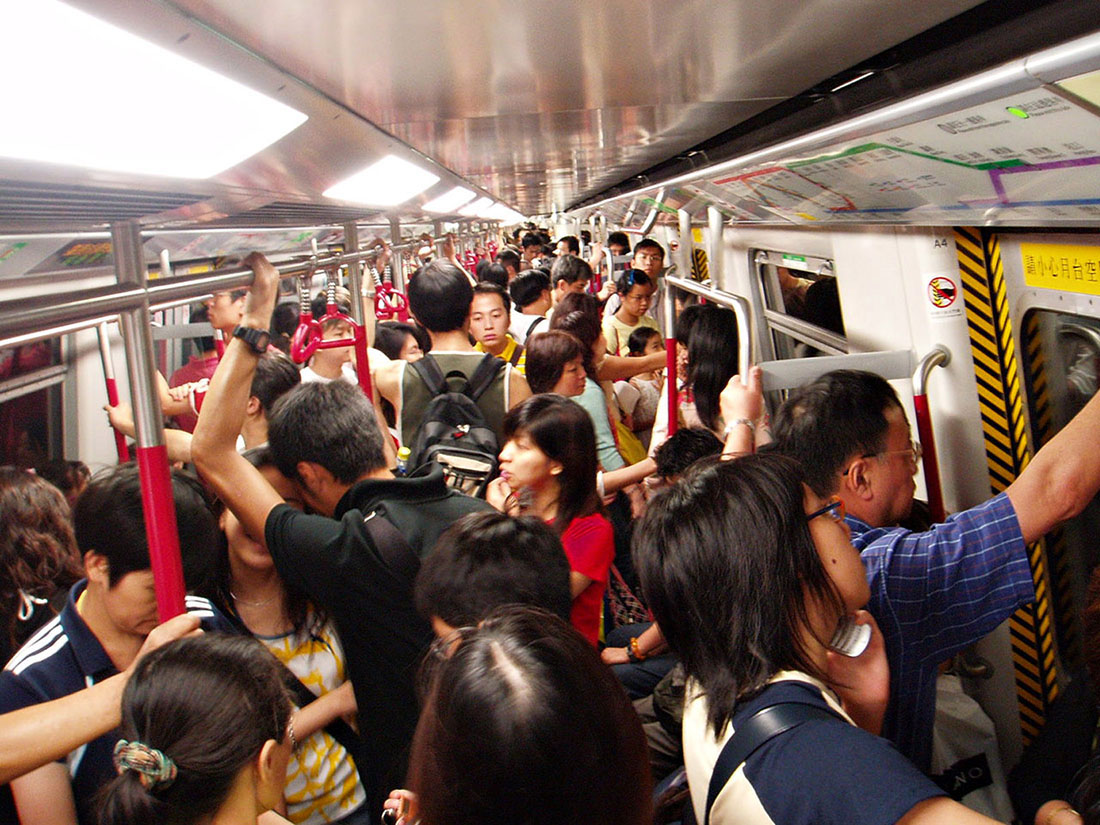
Take the case of going to work on public transportation. Whether people are commuting in Egypt, Ireland, India, Japan, or the U.S., many behaviors will be the same and may reveal patterns. Others will be different. In many societies that enjoy public transportation, a passenger will find a marked bus stop or station, wait for the bus or train, pay an agent before or after boarding, and quietly take a seat if one is available. But when boarding a bus in Cairo, Egypt, passengers might board while the bus is moving, because buses often do not come to a full stop to take on patrons. In Dublin, Ireland, bus riders would be expected to extend an arm to indicate that they want the bus to stop for them. And when boarding a commuter train in Mumbai, India, passengers must squeeze into overstuffed cars amid a lot of pushing and shoving on the crowded platforms. That kind of behavior might be considered rude in other societies, but in Mumbai it reflects the daily challenges of getting around on a train system that is taxed to capacity.
Culture can be material or nonmaterial. Metro passes and bus tokens are part of material culture, as are the buses, subway cars, and the physical structures of the bus stop. Think of material culture as items you can touch-they are tangible. Nonmaterial culture, in contrast, consists of the ideas, attitudes, and beliefs of a society. These are things you cannot touch. They are intangible. You may believe that a line should be formed to enter the subway car or that other passengers should not stand so close to you. Those beliefs are intangible because they do not have physical properties and can be touched.
Material and nonmaterial aspects of culture are linked, and physical objects often symbolize cultural ideas. A metro pass is a material object, but it represents a form of nonmaterial culture, namely, capitalism, and the acceptance of paying for transportation. Clothing, hairstyles, and jewelry are part of material culture, but the appropriateness of wearing certain clothing for specific events reflects nonmaterial culture. A school building belongs to material culture symbolizing education, but the teaching methods and educational standards are part of education’s nonmaterial culture.
As people travel from different regions to entirely different parts of the world, certain material and nonmaterial aspects of culture become dramatically unfamiliar. What happens when we encounter different cultures? As we interact with cultures other than our own, we become more aware of the differences and commonalities between others and our own. If we keep our sociological imagination awake, we can begin to understand and accept the differences. Body language and hand gestures vary around the world, but some body language seems to be shared across cultures: When someone arrives home later than permitted, a parent or guardian meeting them at the door with crossed arms and a frown on their face means the same in Russia as it does in the U.S. as it does in Ghana.
Cultural Universals
Although cultures vary, they also share common elements. Cultural universals are patterns or traits that are globally common to all societies. One example of a cultural universal is the family unit: every human society recognizes a family structure that regulates sexual reproduction and the care of children. Even so, how that family unit is defined and how it functions vary. In many Asian cultures, for example, family members from all generations commonly live together in one household. In these cultures, young adults continue to live in the extended household family structure until they marry and join their spouse’s household, or they may remain and raise their nuclear family within the extended family’s homestead. In the U.S., by contrast, individuals are expected to leave home and live independently for a period before forming a family unit that consists of parents and their offspring. Other cultural universals include customs like funeral rites, weddings, and celebrations of births. However, each culture may view and conduct the ceremonies quite differently.
Anthropologist George Murdock first investigated the existence of cultural universals while studying systems of kinship around the world. Murdock found that cultural universals often revolve around basic human survival, such as finding food, clothing, and shelter, or around shared human experiences, such as birth and death or illness and healing. Through his research, Murdock identified other universals including language, the concept of personal names, and, interestingly, jokes. Humor seems to be a universal way to release tensions and create a sense of unity among people (Murdock, 1949). Sociologists consider humor necessary to human interaction because it helps individuals navigate otherwise tense situations.
Sociological Research
Is Music a Cultural Universal?
Imagine that you are sitting in a theater, watching a film. The movie opens with the protagonist sitting on a park bench with a grim expression on their face. The music starts to come in. The first slow and mournful notes play in a minor key. As the melody continues, the heroine turns her head and sees a man walking toward her. The music gets louder, and the sounds don’t seem to go together – as if the orchestra is intentionally playing the wrong notes. You tense up as you watch, almost hoping to stop. The character is clearly in danger.
Now imagine that you are watching the same movie – the exact same footage – but with a different soundtrack. As the scene opens, the music is soft and soothing, with a hint of sadness. You see the protagonist sitting on the park bench with a grim expression. Suddenly, the music swells. The woman looks up and sees a man walking toward her. The notes are high and bright, and the pace is bouncy. You feel your heart rise in your chest. This is a happy moment.
Music has the ability to evoke emotional responses. In television shows, movies, commercials, and even the background music in a store, music has a message and seems to easily draw a response from those who hear it – joy, sadness, fear, victory. Are these types of musical cues cultural universals?
In 2009, a team of psychologists, led by Thomas Fritz of the Max Planck Institute for Human Cognitive and Brain Sciences in Leipzig, Germany, studied people’s reactions to music that they’d never heard (Fritz et al., 2009). The research team traveled to Cameroon, Africa, and asked Mafa tribal members to listen to Western music. The tribe, isolated from Western culture, had never been exposed to Western culture and had no context or experience within which to interpret its music. Even so, as the tribal members listened to a Western piano piece, they were able to recognize three basic emotions: happiness, sadness, and fear. Music, the study suggested, is a sort of universal language.
Researchers also found that music can foster a sense of wholeness within a group. In fact, scientists who study the evolution of language have concluded that originally language (an established component of group identity) and music were one (Darwin, 1871). Additionally, since music is largely nonverbal, the sounds of music can cross societal boundaries more easily than words. Music allows people to make connections, where language might be a more difficult barricade. As Fritz and his team found, music and the emotions it conveys are cultural universals.
Although human societies have much in common, cultural differences are far more prevalent than cultural universals. For example, while all cultures have language, analysis of conversational etiquette reveals tremendous differences. In some Middle Eastern cultures, it is common to stand close to others in conversation. Americans keep more distance and maintain a large “personal space.” Additionally, behaviors as simple as eating and drinking vary greatly from culture to culture. Some cultures use tools to put the food in the mouth while others use their fingers. If your professor comes into an early morning class holding a mug of liquid, what do you assume they are drinking? In the U.S., it’s most likely filled with coffee, not Earl Grey tea, a favorite in England, or Yak Butter tea, a staple in Tibet.
Some travelers pride themselves on their willingness to try unfamiliar foods, like the late celebrated food writer Anthony Bourdain (1956-2018). Often, however, people express disgust at another culture's cuisine. They might think that it’s gross to eat raw meat from a donkey or parts of a rodent, while they don’t question their own habit of eating cows or pigs.
Such attitudes are examples of ethnocentrism, which means to evaluate and judge another culture based on one’s own cultural norms. Ethnocentrism is believing your group is the correct measuring standard and if other cultures do not measure up to it, they are wrong. As sociologist William Graham Sumner (1906) described the term, it is a belief or attitude that one’s own culture is better than all others. Almost everyone is a little bit ethnocentric.
A high level of appreciation for one’s own culture can be healthy. A shared sense of community pride, for example, connects people in a society. But ethnocentrism can lead to disdain or dislike of other cultures and could cause misunderstanding, stereotyping, and conflict. Individuals, government, non-government, private, and religious institutions with the best intentions sometimes travel to a society to “help” its people, because they see them as uneducated, backward, or even inferior. Cultural imperialism is the deliberate imposition of one’s own cultural values on another culture.
Colonial expansion by Portugal, Spain, Netherlands, and England grew quickly in the fifteenth century and was accompanied by severe cultural imperialism. European colonizers often viewed the people in these new lands as uncultured savages who needed to adopt Catholic governance, Christianity, European dress, and other cultural practices.
A modern example of cultural imperialism may include the work of international aid agencies who introduce agricultural methods and plant species from developed countries into areas that are better served by indigenous varieties and agricultural approaches suited to the particular region. Another example would be the deforestation of the Amazon Basin as indigenous cultures lose land to timber corporations.
Figure 3.3 Experiencing an entirely new practice may lead to a high degree of interest or a level of criticism. The Indegenous people of Sagada, in the Philippines, have for thousands of years placed the bodies of deceased people into coffins hung on the cliffs near their villages. Some visitors may find this practice admirable, while others may think it’s inappropriate. (Credit: Arian Zwegers/flickr)
When people find themselves in a new culture, they may experience disorientation and frustration. In sociology, we call this culture shock. In addition to the traveler’s biological clock being ‘off’, a traveler from Chicago might find the nightly silence of rural Montana unsettling, not peaceful. Now, imagine that the ‘difference’ is cultural. An exchange student from China to the U.S. might be annoyed by the constant interruptions in class as other students ask questions—a practice that is considered rude in China. Perhaps the Chicago traveler was initially captivated with Montana’s quiet beauty and the Chinese student was originally excited to see a U.S.- style classroom firsthand. But as they experience unanticipated differences from their own culture, they may experience ethnocentrism as their excitement gives way to discomfort and doubts about how to behave appropriately in the new situation. According to many authors, international students studying in the U.S. report that there are personality traits and behaviors expected of them. Black African students report having to learn to ‘be Black in the U.S.’ and Chinese students report that they are naturally expected to be good at math. In African countries, people are identified by country or kin, not color. Eventually, as people learn more about a culture, they adapt to the new culture for a variety of reasons.
Culture shock may appear because people aren’t always expecting cultural differences. Anthropologist Ken Barger (1971) discovered this when he conducted a participatory observation in an Inuit community in the Canadian Arctic. Originally from Indiana, Barger hesitated when invited to join a local snowshoe race. He knew he would never hold his own against these experts. Sure enough, he finished last, to his mortification. But the tribal members congratulated him, saying, “You really tried!” In Barger’s own culture, he had learned to value victory. To the Inuit people, winning was enjoyable, but their culture valued survival skills essential to their environment: how hard someone tried could mean the difference between life and death. Over the course of his stay, Barger participated in caribou hunts, learned how to take shelter in winter storms, and sometimes went days with little or no food to share among tribal members. Trying hard and working together, two nonmaterial values, were indeed much more important than winning.
During his time with the Inuit tribe, Barger learned to engage in cultural relativism. Cultural relativism is the practice of assessing a culture by its own standards rather than viewing it through the lens of one’s own culture. Practicing cultural relativism requires an open mind and a willingness to consider, and even adapt to, new values, norms, and practices.
However, indiscriminately embracing everything about a new culture is not always possible. Even the most culturally relativist people from egalitarian societies—ones in which women have political rights and control over their own bodies—question whether the widespread practice of female genital mutilation in countries such as Ethiopia and Sudan should be accepted as a part of cultural tradition. Sociologists attempting to engage in cultural relativism, then, may struggle to reconcile aspects of their own culture with aspects of a culture that they are studying. Sociologists may take issue with the practices of female genital mutilation in many countries to ensure virginity at marriage just as some male sociologists might take issue with scarring of the flesh to show membership. Sociologists work diligently to keep personal biases out of research analysis.
Sometimes when people attempt to address feelings of ethnocentrism and develop cultural relativism, they swing too far to the other end of the spectrum. Xenocentrism is the opposite of ethnocentrism, and refers to the belief that another culture is superior to one’s own. (The Greek root word xeno-, pronounced “ZEE-no,” means “stranger” or “foreign guest.”) An exchange student who goes home after a semester abroad or a sociologist who returns from the field may find it difficult to associate with the values of their own culture after having experienced what they deem a more upright or nobler way of living. An opposite reaction is xenophobia, an irrational fear or hatred of different cultures.
Perhaps the greatest challenge for sociologists studying different cultures is the matter of keeping a perspective. It is impossible for anyone to overcome all cultural biases. The best we can do is strive to be aware of them. Pride in one’s own culture doesn’t have to lead to imposing its values or ideas on others. And an appreciation for another culture shouldn’t preclude individuals from studying it with a critical eye. This practice is perhaps the most difficult for all social scientists.
During her summer vacation, Caitlin flew from Chicago, Illinois to Madrid, Spain to visit Maria, the exchange student she had befriended the previous semester. In the airport, she heard rapid, musical Spanish being spoken all around her.
Exciting as it was, she felt isolated and disconnected. Maria’s mother kissed Caitlin on both cheeks when she greeted her. Her imposing father kept his distance. Caitlin was half asleep by the time supper was served—at 10 p.m. Maria’s family sat at the table for hours, speaking loudly, gesturing, and arguing about politics, a taboo dinner subject in Caitlin’s house. They served wine and toasted their honored guest. Caitlin had trouble interpreting her hosts’ facial expressions, and did not realize she should make the next toast. That night, Caitlin crawled into a strange bed, wishing she had not come. She missed her home and felt overwhelmed by the new customs, language, and surroundings. She’d studied Spanish in school for years—why hadn’t it prepared her for this?
What Caitlin did not realize was that people depend not only on spoken words but also on body language, like gestures and facial expressions, to communicate. Cultural norms and practices accompany even the smallest nonverbal signals (DuBois, 1951). They help people know when to shake hands, where to sit, how to converse, and even when to laugh. We relate to others through a shared set of cultural norms, and ordinarily, we take them for granted.
For this reason, culture shock is often associated with traveling abroad, although it can happen in one’s own country, state, or even hometown. Anthropologist Kalervo Oberg (1960) is credited with first coining the term “culture shock.” In his studies, Oberg found that most people are excited at first to encounter a new culture. But bit by bit, they become stressed by interacting with people from a different culture who speak another language and use different regional expressions. There is new food to digest, new daily schedules to follow, and new rules of etiquette to learn. Living with this constant stress can make people feel incompetent and insecure. People react to frustration in a new culture, Oberg found, by initially rejecting it and glorifying one’s own culture. An American visiting Italy might long for a “real” pizza or complain about the unsafe driving habits of Italians.
It helps to remember that culture is learned. Everyone is ethnocentric to an extent, and identifying with one’s own country is natural. Caitlin’s shock was minor compared to that of her friends Dayar and Mahlika, a Turkish couple living in married student housing on campus. And it was nothing like that of her classmate Sanai. Sanai had been forced to flee war-torn Bosnia with her family when she was fifteen. After two weeks in Spain, Caitlin had developed more compassion and understanding for what those people had gone through. She understood that adjusting to a new culture takes time. It can take weeks or months to recover from culture shock, and it can take years to fully adjust to living in a new culture.
By the end of Caitlin’s trip, she had made new lifelong friends. Caitlin stepped out of her comfort zone. She had learned a lot about Spain, but discovered a lot about herself and her own culture.
OpenStax · 9.1 What Is Social Stratification? ↗ Instructional page including learning objectives, examples, figures, source tables and questions. Site navigation and embedded media players are omitted; source media links remain available.
Learning Objectives
By the end of this section, you should be able to:
Differentiate between open and closed stratification systems
Distinguish between caste and class systems
Explain why meritocracy is considered an ideal system of stratification
Figure 9.2 In the upper echelons of the working world, people with the most power reach the top. These people make the decisions and earn the most money. The majority of Americans will never see the view from the top. (Credit: Alex Proimos/flickr)
Sociologists use the term social stratification to describe the system of social standing. Social stratification refers to a society’s categorization of its people into rankings based on factors like wealth, income, education, family background, and power.
Geologists also use the word “stratification” to describe the distinct vertical layers found in rock. Typically, society’s layers, made of people, represent the uneven distribution of society’s resources. Society views the people with more resources as the top layer of the social structure of stratification. Other groups of people, with fewer and fewer resources, represent the lower layers. An individual’s place within this stratification is called socioeconomic status (SES).
Figure 9.3 Strata in rock illustrate social stratification. People are sorted, or layered, into social categories. Many factors determine a person’s social standing, such as wealth, income, education, family background, and power. (Credit: Just a Prairie Boy/flickr)
Most people and institutions in the United States indicate that they value equality, a belief that everyone has an equal chance at success. In other words, hard work and talent—not inherited wealth, prejudicial treatment, institutional racism, or societal values—determine social mobility. This emphasis on choice, motivation, and self-effort perpetuates the American belief that people control their own social standing.
However, sociologists recognize social stratification as a society-wide system that makes inequalities apparent. While inequalities exist between individuals, sociologists are interested in larger social patterns. Sociologists look to see if individuals with similar backgrounds, group memberships, identities, and location in the country share the same social stratification. No individual, rich or poor, can be blamed for social inequalities, but instead all participate in a system where some rise and others fall. Most Americans believe the rising and falling is based on individual choices. But sociologists see how the structure of society affects a person's social standing and therefore is created and supported by society.
Figure 9.4 The people who live in these houses most likely share similar levels of income and education. Neighborhoods often house people of the same social standing. Wealthy families do not typically live next door to poorer families, though this varies depending on the particular city and country. (Credit: Orin Zebest/flickr)
Factors that define stratification vary in different societies. In most societies, stratification is an economic system, based on wealth, the net value of money and assets a person has, and income, a person’s wages or investment dividends. While people are regularly categorized based on how rich or poor they are, other important factors influence social standing. For example, in some cultures, prestige is valued, and people who have them are revered more than those who don’t. In some cultures, the elderly are esteemed, while in others, the elderly are disparaged or overlooked. Societies’ cultural beliefs often reinforce stratification.
One key determinant of social standing is our parents. Parents tend to pass their social position on to their children. People inherit not only social standing but also the cultural norms, values, and beliefs that accompany a certain lifestyle. They share these with a network of friends and family members that provide resources and support. This is one of the reasons first-generation college students do not fare as well as other students. They lack access to the resources and support commonly provided to those whose parents have gone to college.
Other determinants are found in a society’s occupational structure. Teachers, for example, often have high levels of education but receive relatively low pay. Many believe that teaching is a noble profession, so teachers should do their jobs for love of their profession and the good of their students—not for money. Yet, the same attitude is not applied to professional athletes, executives, or those working in corporate world. Cultural attitudes and beliefs like these support and perpetuate social and economic inequalities.
Systems of Stratification
Sociologists distinguish between two types of systems of stratification. Closed systems accommodate little change in social position. They do not allow people to shift levels and do not permit social relationships between levels. Closed systems include estate, slavery, and caste systems. Open systems are based on achievement and allow for movement and interaction between layers and classes. How different systems operate reflect, emphasize, and foster specific cultural values, shaping individual beliefs. In this section, we’ll review class and caste stratification systems, plus discuss the ideal system of meritocracy.
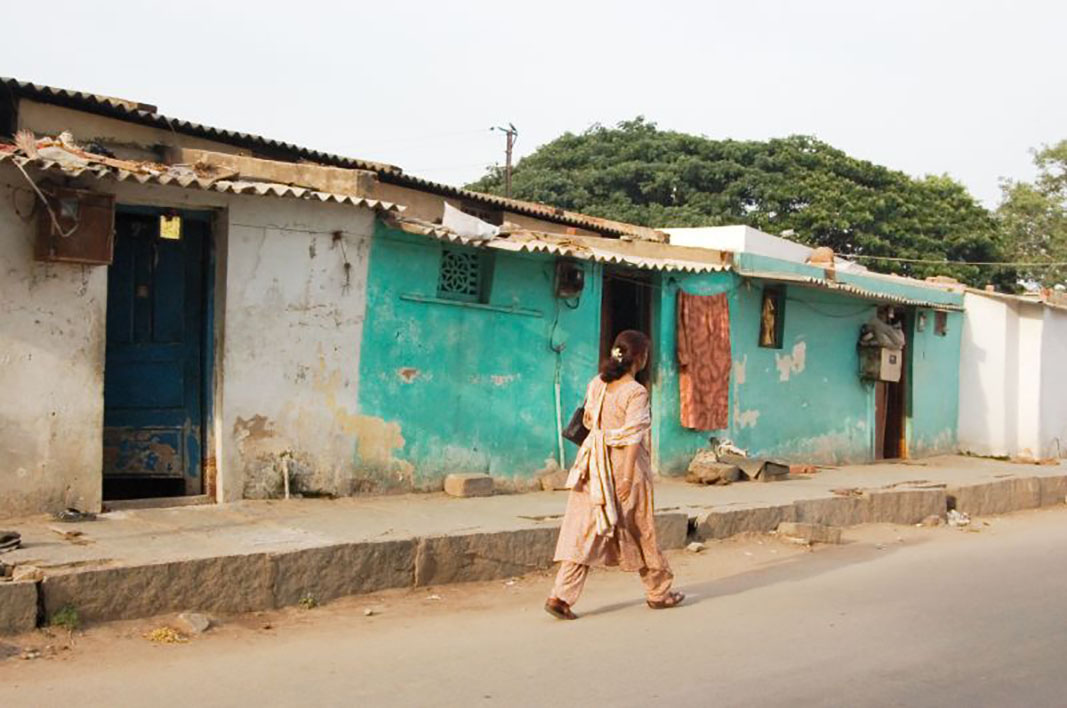
Figure 9.5 India used to have a rigid caste system. The people in the lowest caste suffered from extreme poverty and were shunned by society. Some aspects of India’s defunct caste system remain socially relevant. (Credit: Elessar/flickr)
Caste systems are closed stratification systems where people can do little or nothing to change the social standing of their birth. The caste system determines all aspects of an individual’s life: occupations, marriage partners, and housing. Individual talents, interests, or potential do not provide opportunities to improve a person's social position.
In the Hindu caste tradition, people expect to work in an occupation and to enter into a marriage based on their caste. Accepting this social standing is considered a moral duty and people are socialized to accept their social standing. Cultural values reinforced the system. Caste systems promote beliefs in fate, destiny, and the will of a higher power, rather than promoting individual freedom as a value. This belief system is an ideology. Every culture has an ideology that supports its system of stratification.
The caste system in India has been officially dismantled, but is still deeply embedded in Indian society, particularly in rural areas. In India’s larger cities, people now have more opportunities to choose their own career paths and marriage partners. As a global center of employment, corporations have introduced merit-based hiring and employment to the nation shifting the cultural expectations of the caste system.
The Class System
A class system is based on both social factors and individual achievement. A class consists of a set of people who share similar status based on factors like wealth, income, education, family background, and occupation. Unlike caste systems, class systems are open. People may move to a different level (vertical movement) of education or employment status than their parents. Though family and other societal models help guide a person toward a career, personal choice and opportunity play a role.
They can also socialize with and marry members of other classes. People have the option to form an exogamous marriage, a union of spouses from different social categories. Exogamous marriages often focus on values such as love and compatibility. Though social conformities still exist that encourage people to choose partners within their own class, called an endogamous marriage, people are not as pressured to choose marriage partners based solely on their social location.
Meritocracy is a hypothetical system in which social stratification is determined by personal effort and merit. The concept of meritocracy is an ideal because no society has ever existed where social standing was based entirely on merit. Rather, multiple factors influence social standing, including processes like socialization and the realities of inequality within economic systems. While a meritocracy has never existed, sociologists see aspects of meritocracies in modern societies when they study the role of academic and job performance and the systems in place for evaluating and rewarding achievement in these areas.
The differences between an open and closed system are explored further in the example below.
Status Consistency
Sociologists use the term status consistency to describe the consistency, or lack thereof, of an individual’s rank across the factors that determine social stratification within a lifetime. Caste systems correlate with high status consistency, due to the inability to move out of a class, whereas the more flexible class system demonstrates lower status consistency.
To illustrate, let’s consider Serena. Serena earned her high school diploma but did not go to college. Completing high school but not college is a trait more common to the lower-middle class. After high school, she began landscaping, which, as manual labor, tracks with lower-middle class or even lower class. However, over time, Serena started her own company. She hired employees. She won larger contracts. Serena became a business owner and earned more money. Those traits represent the upper-middle class. Inconsistencies between Serena’s educational level, her occupation, and income show Serena’s flexibility in her social status, giving her low status consistency. In a class system, hard work, new opportunities, coupled with a lower education status still allow a person movement into middle or upper class, whereas in a caste system, that would not be possible. In a class system, low status consistency correlates with having more choices and opportunities.
Figure 9.6 Prince Harry and Meghan Markle with other members of the Royal family, in 2017. One year later, the couple would wed and the American-born actress and fashion-designer would immediately become Her Royal Highness The Duchess of Sussex, a position and title that bestows significant benefits of social class (Credit: Mark Jones/Wikimedia Commons)
Meghan Markle, who married a member of the British royal family, for years endured unceasing negative media attention, invasion of privacy, and racially abusive comments. She and her husband–Prince Harry, grandson to Queen Elizabeth–undertook a series of legal actions to push back against overly aggressive media outlets. But because of the continued harassment and disagreements with others in the royal family, Meghan and Harry decided to step down from their royal obligations and begin a disassociation from the British monarchy. In doing so, they gave up honorary positions, titles, and financial support. For Meghan, who had been born in the U.S. and had earned her wealth through a successful career, these changes may not be so jarring. Prince Harry, however, had been "His Royal Highness" since he was born; by nature of his ancestry he was entitled to vast sums of money, property, and cultural-political positions such as Honorary Air Commandant, Commodore-in-Chief, and President of the Queen's Commonwealth Trust. Harry would also lose the military rank he had earned through almost ten years of military service, including two combat deployments to Afghanistan. Would Megxit work for him? What gave him those honors in the first place?
Britain’s monarchy arose during the Middle Ages. Its social hierarchy placed royalty at the top and commoners on the bottom. This was generally a closed system, with people born into positions of nobility. Wealth was passed from generation to generation through primogeniture, a law stating that all property would be inherited by the firstborn son. If the family had no son, the land went to the next closest male relation. Women could not inherit property, and their social standing was primarily determined through marriage.
The arrival of the Industrial Revolution changed Britain’s social structure. Commoners moved to cities, got jobs, and made better livings. Gradually, people found new opportunities to increase their wealth and power. Today, the government is a constitutional monarchy with the prime minister and other ministers elected to their positions, and with the royal family’s role being largely ceremonial. The long-ago differences between nobility and commoners have blurred, and the modern class system in Britain is similar to that of the United States (McKee 1996).
Today, the royal family still commands wealth, power, and a great deal of attention. After the death of Queen Elizabeth II in September 2022, Prince Charles ascended the throne. When he retires or passes away, the position will go to Prince William, Prince Harry's older brother.
Prince Harry and Meghan Markle moved to California and have embarked on nonprofit as well as media ventures. While living in the United States and working to some extent in entertainment, they will likely be considered a different type of royalty.