Write dissolution stoichiometry before relating molar solubility to ion concentration.
Compare Qsp with Ksp
For MX₂(s) ⇌ M²⁺ + 2X⁻, Ksp = [M²⁺][X⁻]² under the dilute-concentration approximation; the pure solid is omitted. In pure water, molar solubility s gives [M²⁺] = s and [X⁻] = 2s, so Ksp = 4s³. The ion product Qsp uses current concentrations. Qsp > Ksp predicts precipitation toward saturation; Qsp < Ksp permits further dissolution if solid is present. Comparing Ksp alone ranks molar solubility reliably only when stoichiometries are comparable.
Source: 15.1 Precipitation and Dissolution · 15.3 Coupled Equilibria
Shift dissolution through coupled equilibria
A common ion usually lowers a salt’s molar solubility. Acid can increase the solubility of salts containing basic anions such as carbonate by protonating and consuming the free anion. Formation of a soluble metal complex lowers free metal-ion activity and can pull more solid into solution; total dissolved metal can then greatly exceed free metal concentration. Selective precipitation exploits different saturation thresholds, with reagent added gradually and pH controlled. Separation depends on starting concentrations and competing equilibria, not simply labeling one salt insoluble.
Source: 15.1 Precipitation and Dissolution · 15.3 Coupled Equilibria
Apply it
Try before revealing the answer. A salt MX has Ksp = 1.0 × 10⁻¹⁰. Estimate solubility in pure water and in a solution initially containing 0.010 M X⁻.
Worked answer
In pure water, s² = Ksp, so s = 1.0 × 10⁻⁵ M. With a large common-ion excess, Ksp ≈ s(0.010), giving s ≈ 1.0 × 10⁻⁸ M. This is 1000-fold lower, assuming no complex formation or other reactions.
Source: 15.1 Precipitation and Dissolution · 15.3 Coupled Equilibria
15.1 Precipitation and Dissolution — figures and tables
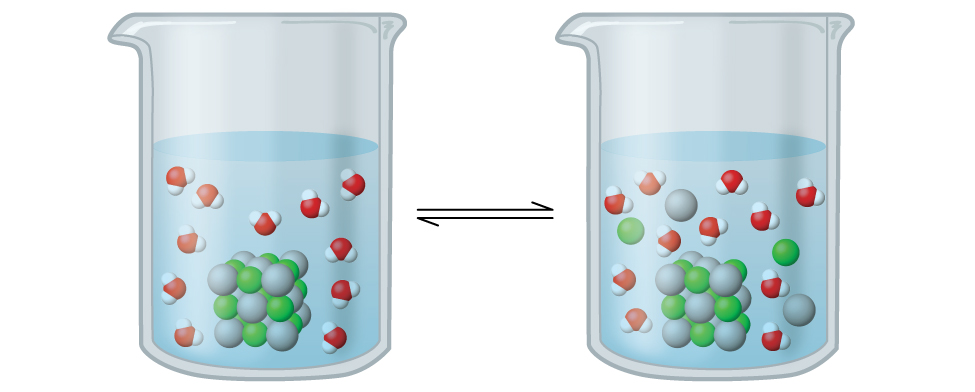
Figure 15.2 Silver chloride is a sparingly soluble ionic solid. When it is added to water, it dissolves slightly and produces a mixture consisting of a very dilute solution of Ag + and Cl – ions in equilibrium with undissolved silver chloride.
Paul Flowers, Klaus Theopold, Richard Langley, and William R. Robinson, Chemistry 2E, OpenStax. · CC BY-NC-SA 4.0 · Original image ↗ · Access for free ↗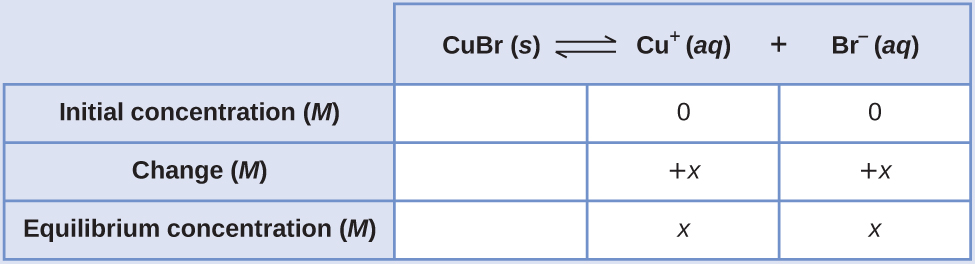
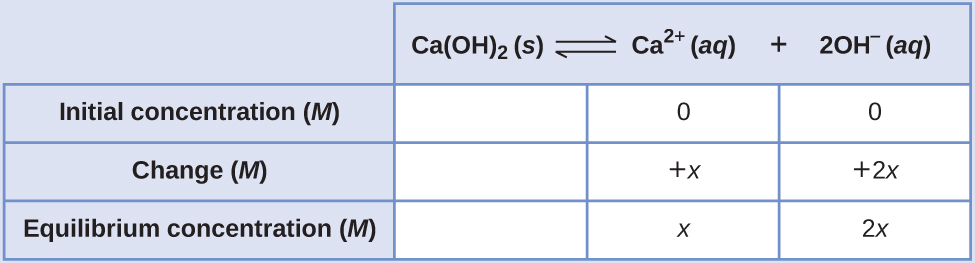
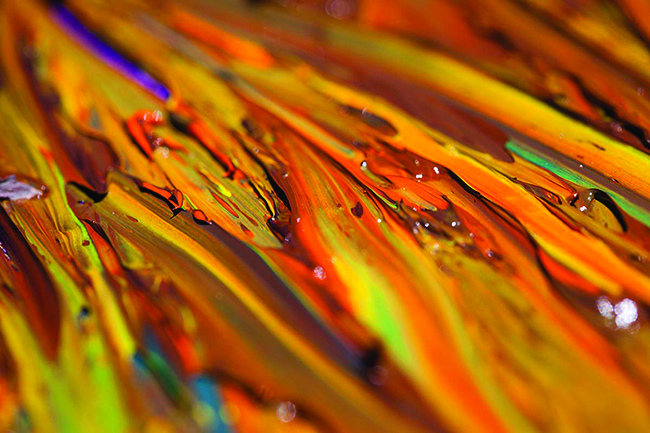
Figure 15.3 Oil paints contain pigments that are very slightly soluble in water. In addition to chrome yellow (PbCrO 4 ), examples include Prussian blue (Fe 7 (CN) 18 ), the reddish-orange color vermilion (HgS), and green color veridian (Cr 2 O 3 ). (credit: Sonny Abesamis)
Paul Flowers, Klaus Theopold, Richard Langley, and William R. Robinson, Chemistry 2E, OpenStax. (credit: Sonny Abesamis) · CC BY-NC-SA 4.0 · Original image ↗ · Access for free ↗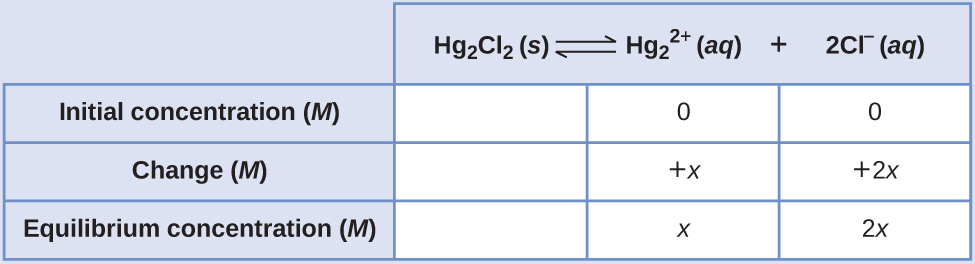
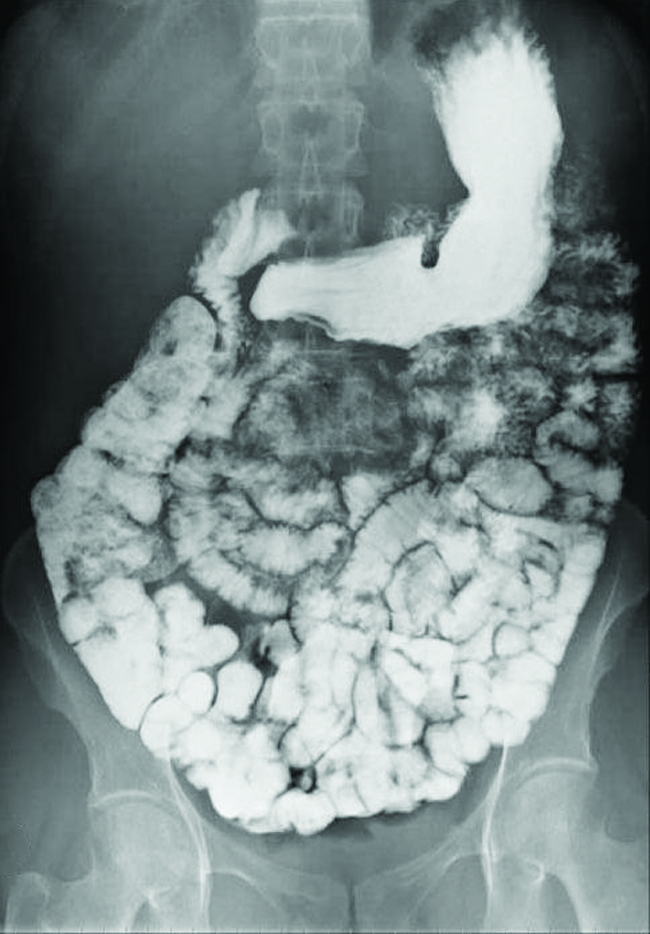
Figure 15.4 A suspension of barium sulfate coats the intestinal tract, permitting greater visual detail than a traditional X-ray. (credit modification of work by “glitzy queen00”/Wikimedia Commons)
Paul Flowers, Klaus Theopold, Richard Langley, and William R. Robinson, Chemistry 2E, OpenStax. (credit modification of work by “glitzy queen00”/Wikimedia Commons) · CC BY-NC-SA 4.0 · Original image ↗ · Access for free ↗
Figure 15.5 Anticoagulants can be added to blood that will combine with the Ca 2+ ions in blood serum and prevent the blood from clotting. (credit: modification of work by Neeta Lind)
Paul Flowers, Klaus Theopold, Richard Langley, and William R. Robinson, Chemistry 2E, OpenStax. (credit: modification of work by Neeta Lind) · CC BY-NC-SA 4.0 · Original image ↗ · Access for free ↗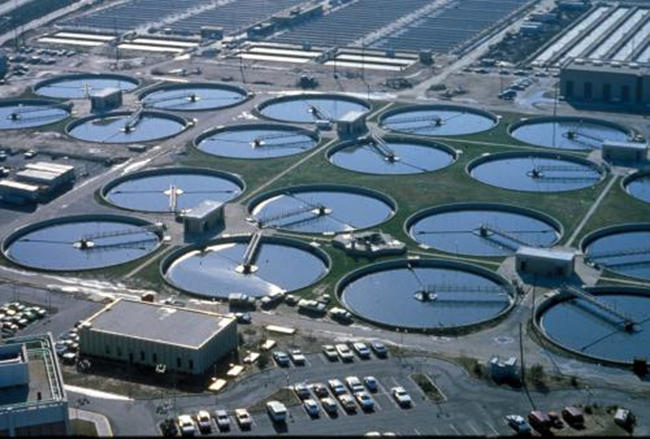
Figure 15.6 Wastewater treatment facilities, such as this one, remove contaminants from wastewater before the water is released back into the natural environment. (credit: “eutrophication&hypoxia”/Wikimedia Commons)
Paul Flowers, Klaus Theopold, Richard Langley, and William R. Robinson, Chemistry 2E, OpenStax. (credit: “eutrophication&hypoxia”/Wikimedia Commons) · CC BY-NC-SA 4.0 · Original image ↗ · Access for free ↗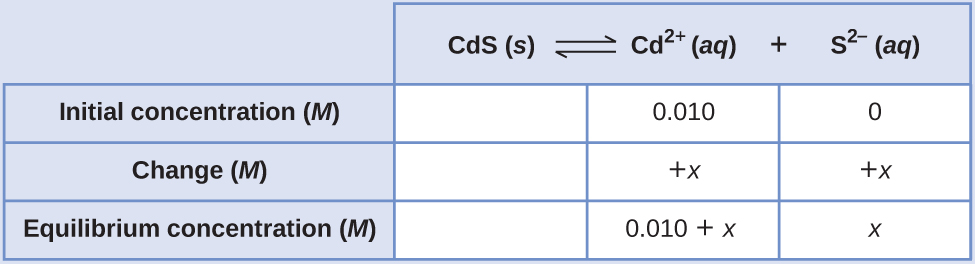
15.3 Coupled Equilibria — figures and tables
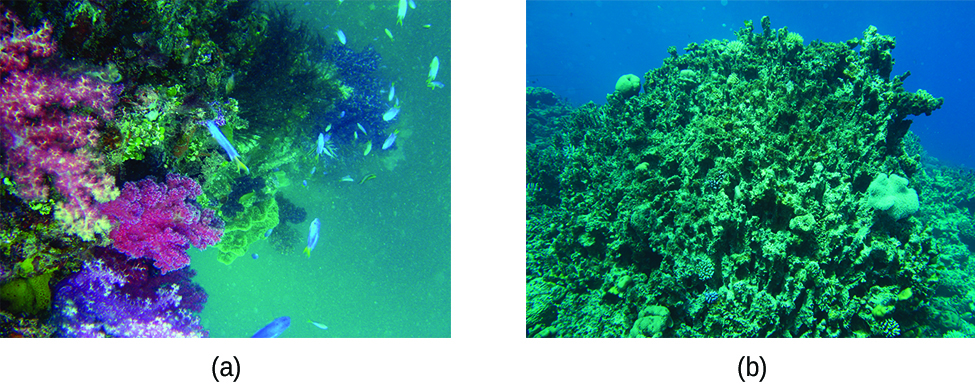
Figure 15.7 Healthy coral reefs (a) support a dense and diverse array of sea life across the ocean food chain. But when coral are unable to adequately build and maintain their calcium carbonate skeletons because of excess ocean acidification, the unhealthy reef (b) is only capable of hosting a small fraction of the species as before, and the local food chain starts to collapse. (credit a: modification of work by NOAA Photo Library; credit b: modification of work by “prilfish”/Flickr)
Paul Flowers, Klaus Theopold, Richard Langley, and William R. Robinson, Chemistry 2E, OpenStax. (credit a: modification of work by NOAA Photo Library; credit b: modification of work by “prilfish”/Flickr) · CC BY-NC-SA 4.0 · Original image ↗ · Access for free ↗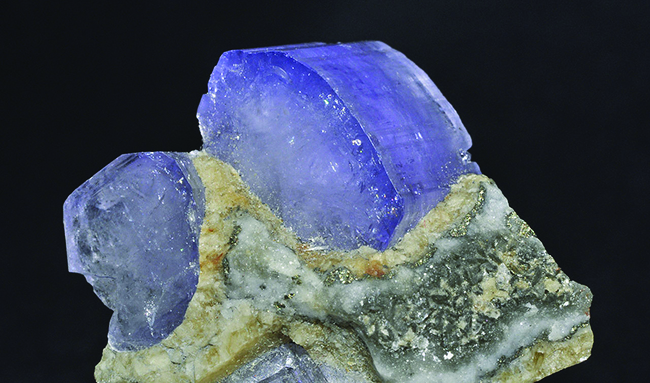
Figure 15.8 Crystal of the mineral hydroxyapatite, Ca 5 (PO 4 ) 3 OH, is shown here. The pure compound is white, but like many other minerals, this sample is colored because of the presence of impurities.
Paul Flowers, Klaus Theopold, Richard Langley, and William R. Robinson, Chemistry 2E, OpenStax. · CC BY-NC-SA 4.0 · Original image ↗ · Access for free ↗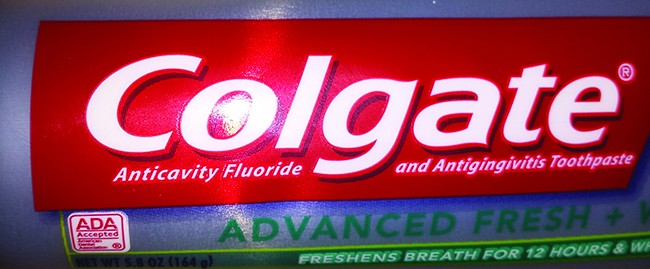
Figure 15.9 Fluoride, found in many toothpastes, helps prevent tooth decay (credit: Kerry Ceszyk).
Paul Flowers, Klaus Theopold, Richard Langley, and William R. Robinson, Chemistry 2E, OpenStax. (credit: Kerry Ceszyk). · CC BY-NC-SA 4.0 · Original image ↗ · Access for free ↗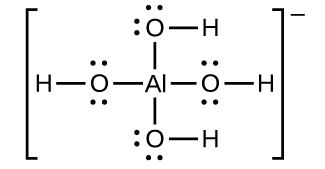

Source: 15.3 Coupled Equilibria