Bond dipoles add as vectors; the presence of polar bonds alone does not establish a polar molecule.
Lewis structures and resonance
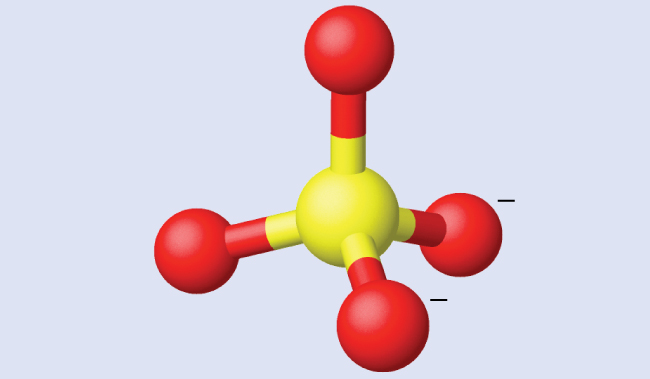
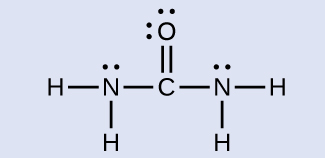
Count valence electrons, connect atoms, complete appropriate valence shells, and assign formal charge FC = valence electrons − nonbonding electrons − ½bonding electrons. Formal charges sum to the total species charge; they are accounting devices rather than measured partial charges. Resonance forms differ only in electron placement, not atomic connectivity. The actual structure is a delocalized hybrid, not a rapid alternation between drawings. A Lewis base donates an electron pair and a Lewis acid accepts one; electron-deficient boron and many metal cations are Lewis acids.
Source: Chemistry 2E 7 — Summary · 8.2 Hybrid Atomic Orbitals · 1.12 Drawing Chemical Structures
Bond and molecular dipoles
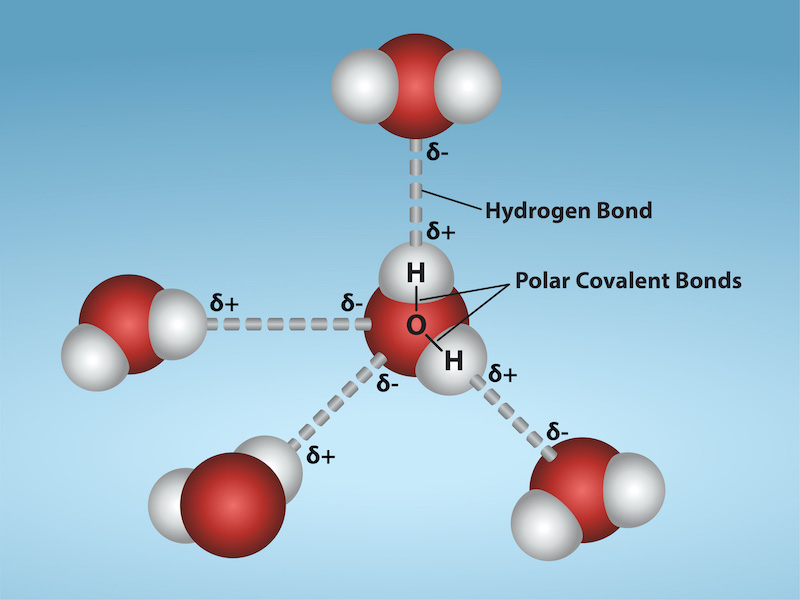
Electronegativity differences give partial charge separation and bond dipoles. Ionic and covalent bonding are limiting descriptions along a continuum of electron distribution. Molecular dipole moment is the vector sum of bond and lone-pair contributions in the actual geometry. Linear CO₂ has polar C=O bonds whose dipoles cancel; bent H₂O retains a net dipole. Symmetry can cancel equal vectors even when individual bonds are strongly polar. A net dipole influences solvent interactions and intermolecular attraction but does not by itself determine every physical property.
Source: Chemistry 2E 7 — Summary · 8.2 Hybrid Atomic Orbitals · 1.12 Drawing Chemical Structures
Shape from electron domains and orbital overlap
A σ bond comes from overlap along the internuclear axis; a π bond from side-by-side p-orbital overlap. In a useful localized model, sp³ centers have four electron domains and approximately tetrahedral arrangement, sp² three and trigonal planar arrangement, and sp two and linear arrangement. Lone pairs count as electron domains and usually compress neighboring bond angles. VSEPR predicts electron-pair arrangement; molecular shape names describe atom positions only. A double bond is one σ plus one π bond, while a triple bond is one σ plus two π bonds.
Source: Chemistry 2E 7 — Summary · 8.2 Hybrid Atomic Orbitals · 1.12 Drawing Chemical Structures
Bond order changes mechanics
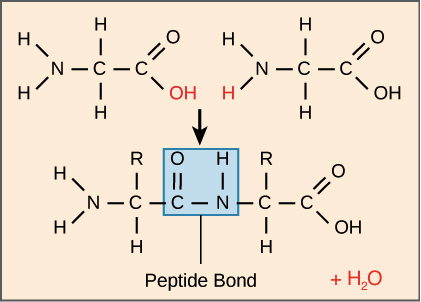
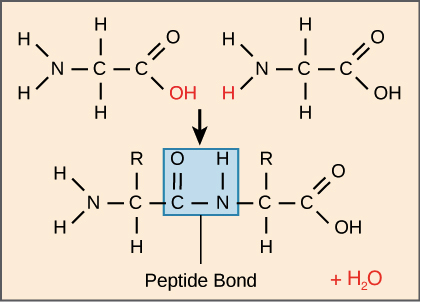
For comparable atom pairs, higher bond order generally shortens and strengthens a bond. A double bond is stronger than a single bond but not twice as strong. Rotation around an ordinary σ bond can preserve overlap, whereas rotation around a π bond disrupts p-orbital overlap and faces a large barrier. Delocalization can give intermediate bond lengths and restricted rotation, as in an amide C–N bond. Resonance stabilization affects reactivity: an electrophilic site may be less reactive when electron donation stabilizes its ground state.
Source: Chemistry 2E 7 — Summary · 8.2 Hybrid Atomic Orbitals · 1.12 Drawing Chemical Structures
Read skeletal and condensed formulas
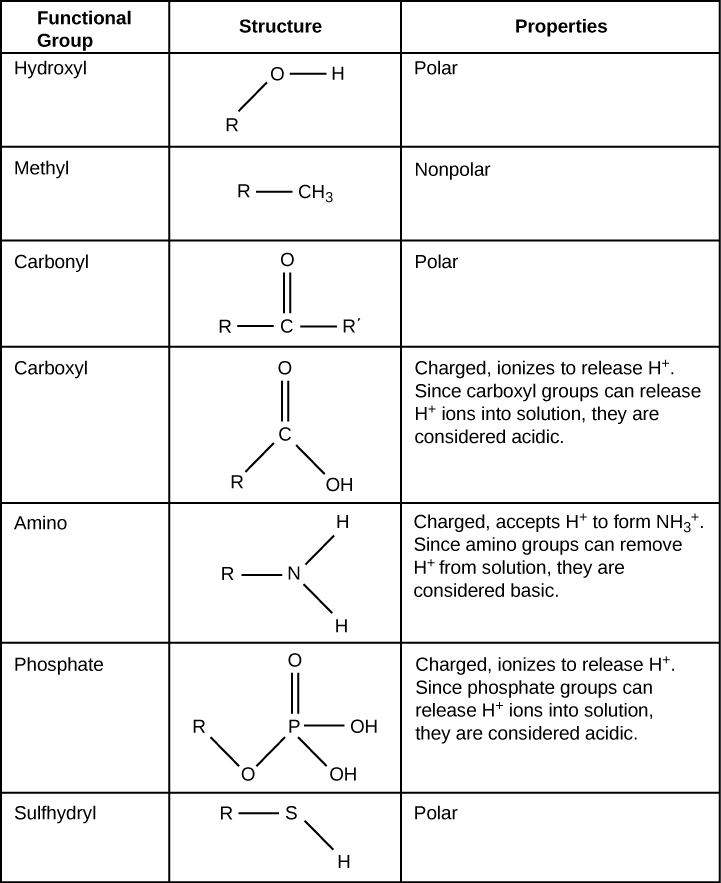
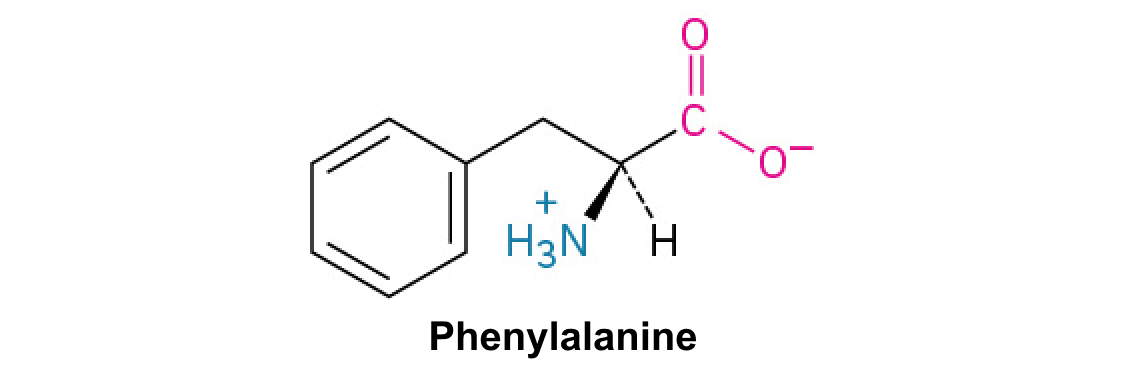
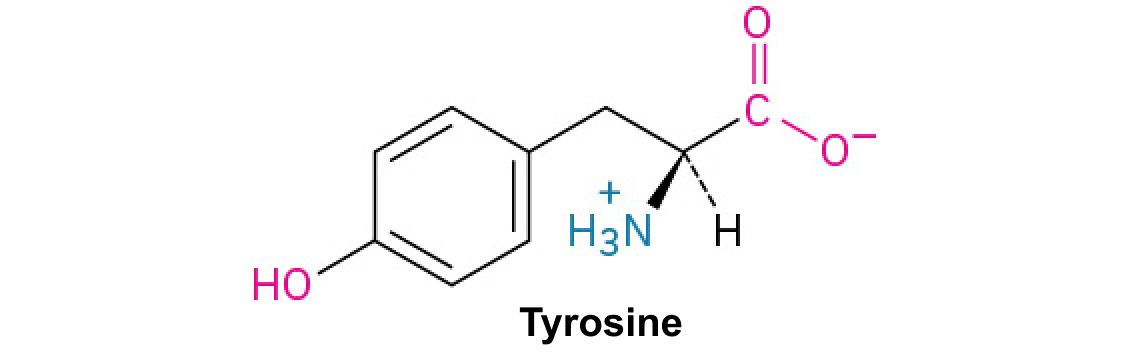
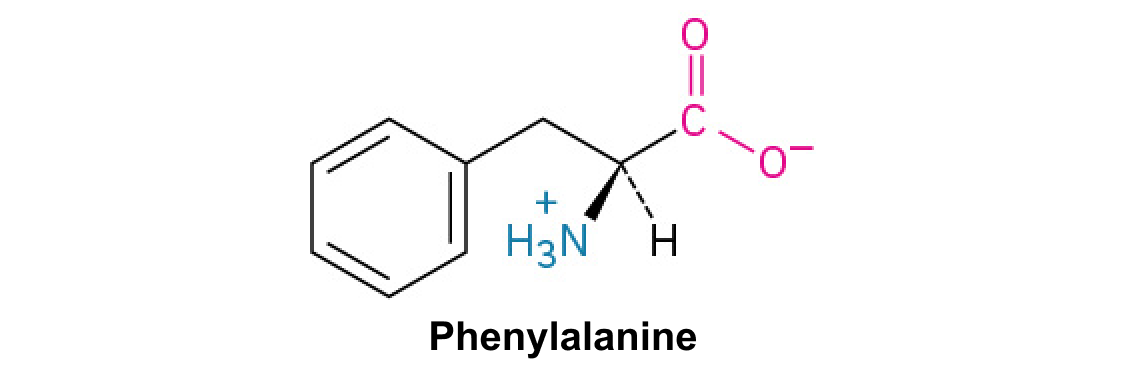
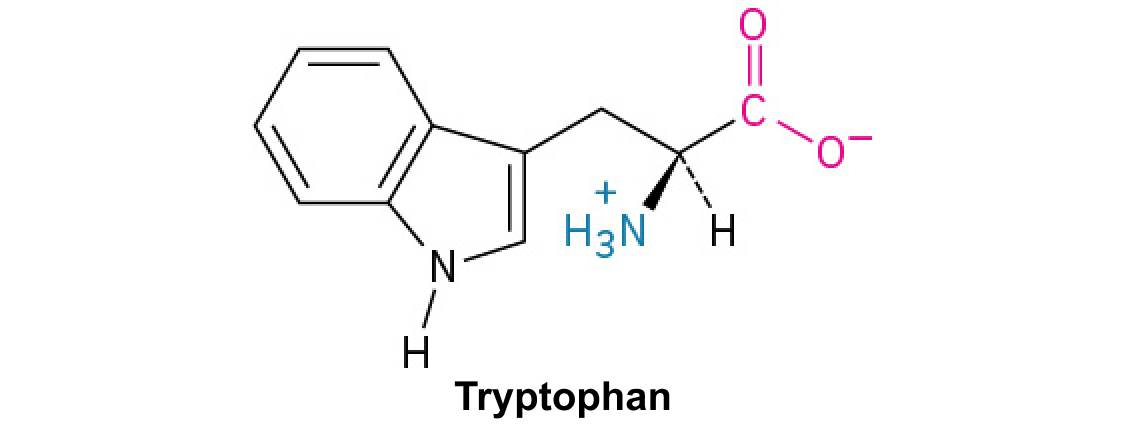
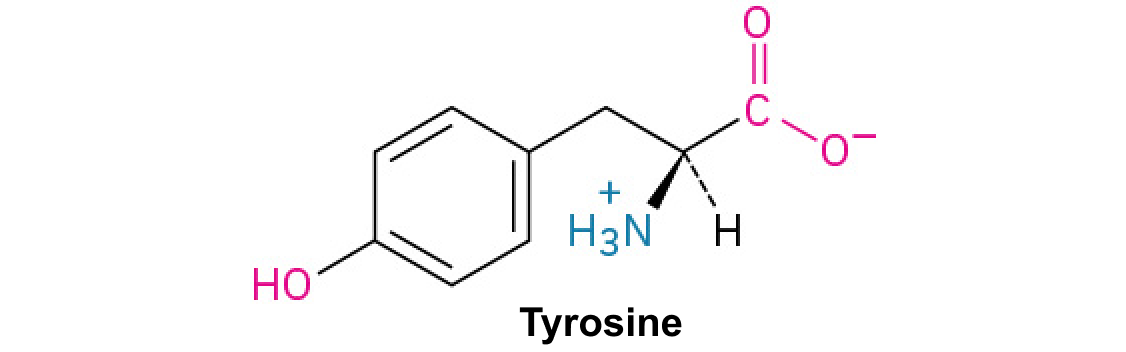
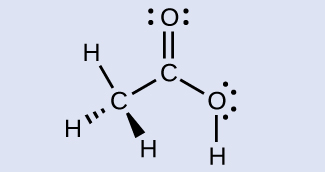
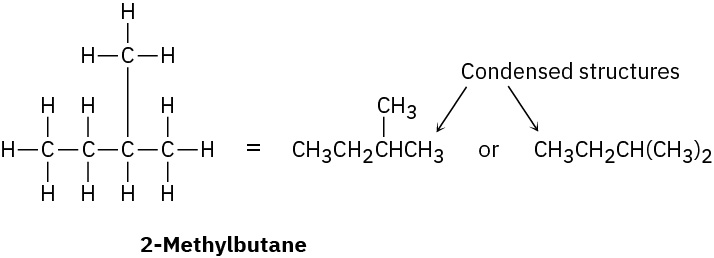
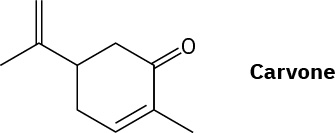
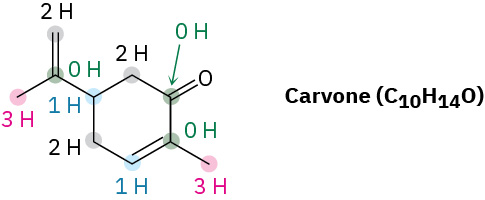
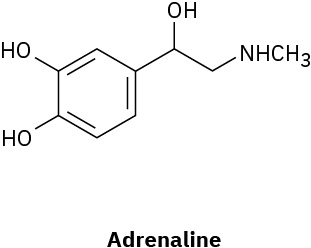
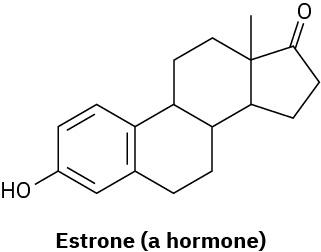
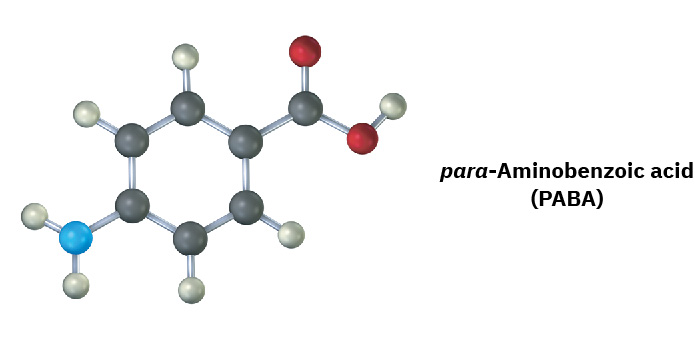
In a skeletal organic formula, unlabeled line ends and vertices represent carbon, and enough carbon-bound hydrogen is implied to satisfy ordinary valence. Heteroatoms and formal charges are shown explicitly; hydrogens on heteroatoms are usually shown. Wedges project toward the reader and dashed wedges away. Carbon commonly forms four bonds, neutral nitrogen three with a lone pair, oxygen two, and halogens one; charged and expanded-valence species require explicit electron accounting. Identify functional groups before counting atoms so an ester oxygen is not mistaken for a carbon vertex.
Source: Chemistry 2E 7 — Summary · 8.2 Hybrid Atomic Orbitals · 1.12 Drawing Chemical Structures
Apply it
Try before revealing the answer. CO₂ and H₂O each have polar bonds. Explain why only one has a net dipole, then count σ and π bonds in ethene, H₂C=CH₂.
Worked answer
CO₂ is linear and its equal bond dipoles oppose, canceling. H₂O is bent and the O–H dipoles do not cancel. Ethene has four C–H σ bonds and one C–C σ bond, plus one π bond: five σ and one π.
Source: Chemistry 2E 7 — Summary · 8.2 Hybrid Atomic Orbitals · 1.12 Drawing Chemical Structures
8.2 Hybrid Atomic Orbitals — figures and tables
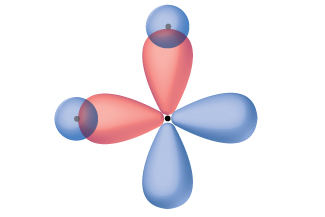
Figure 8.6 The hypothetical overlap of two of the 2 p orbitals on an oxygen atom (red) with the 1 s orbitals of two hydrogen atoms (blue) would produce a bond angle of 90°. This is not consistent with experimental evidence. 1
Paul Flowers, Klaus Theopold, Richard Langley, and William R. Robinson, Chemistry 2E, OpenStax. · CC BY-NC-SA 4.0 · Original image ↗ · Access for free ↗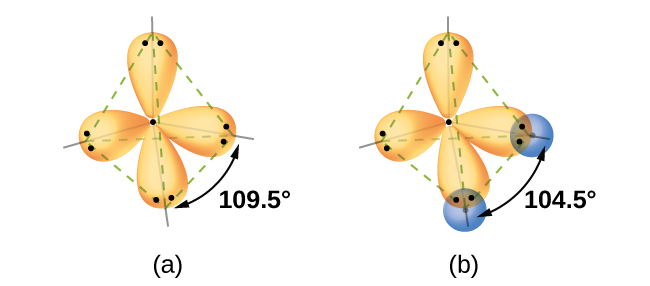
Figure 8.7 (a) A water molecule has four regions of electron density, so VSEPR theory predicts a tetrahedral arrangement of hybrid orbitals. (b) Two of the hybrid orbitals on oxygen contain lone pairs, and the other two overlap with the 1 s orbitals of hydrogen atoms to form the O–H bonds in H 2 O. This description is more consistent with the experimental structure.
Paul Flowers, Klaus Theopold, Richard Langley, and William R. Robinson, Chemistry 2E, OpenStax. · CC BY-NC-SA 4.0 · Original image ↗ · Access for free ↗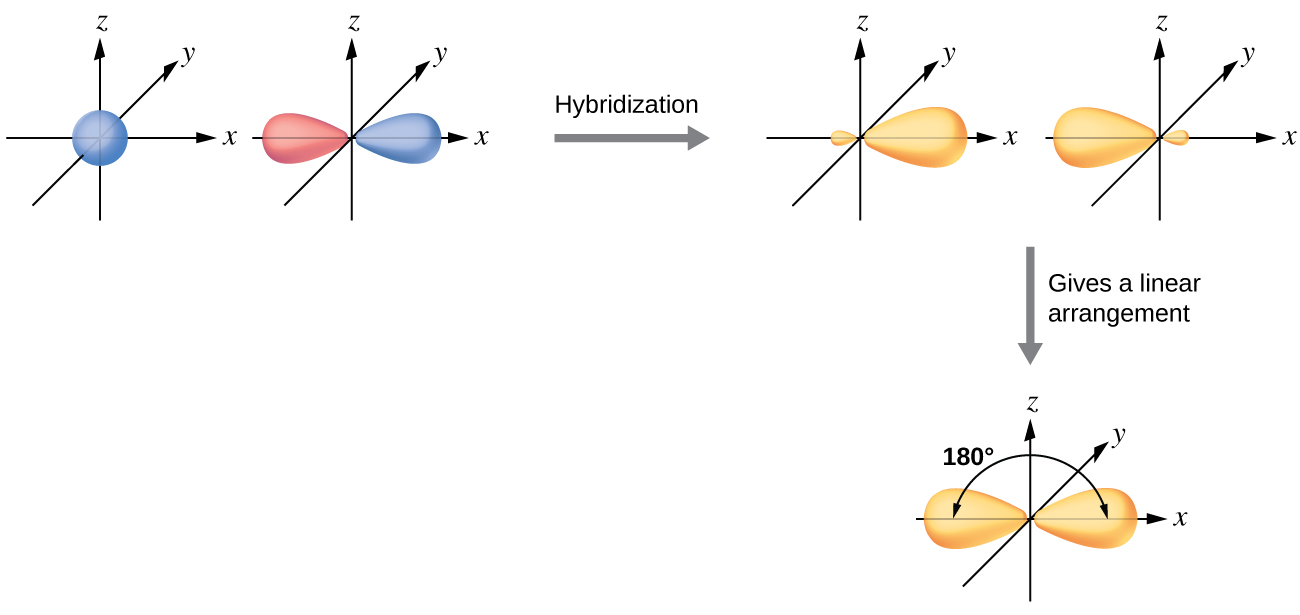
Figure 8.8 Hybridization of an s orbital (blue) and a p orbital (red) of the same atom produces two sp hybrid orbitals (yellow). Each hybrid orbital is oriented primarily in just one direction. Note that each sp orbital contains one lobe that is significantly larger than the other. The set of two sp orbitals are oriented at 180°, which is consistent with the geometry for two domains.
Paul Flowers, Klaus Theopold, Richard Langley, and William R. Robinson, Chemistry 2E, OpenStax. · CC BY-NC-SA 4.0 · Original image ↗ · Access for free ↗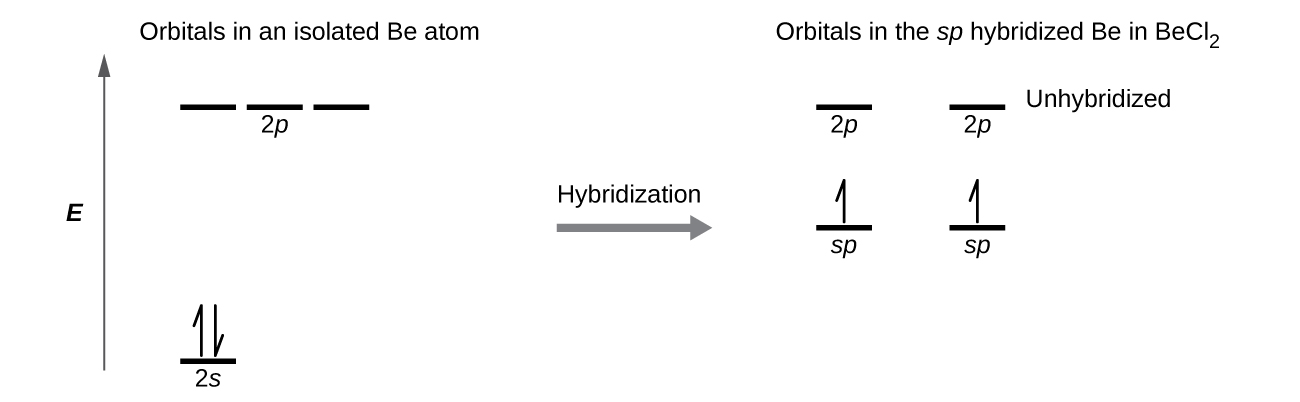
Figure 8.9 This orbital energy-level diagram shows the sp hybridized orbitals on Be in the linear BeCl 2 molecule. Each of the two sp hybrid orbitals holds one electron and is thus half filled and available for bonding via overlap with a Cl 3 p orbital.
Paul Flowers, Klaus Theopold, Richard Langley, and William R. Robinson, Chemistry 2E, OpenStax. · CC BY-NC-SA 4.0 · Original image ↗ · Access for free ↗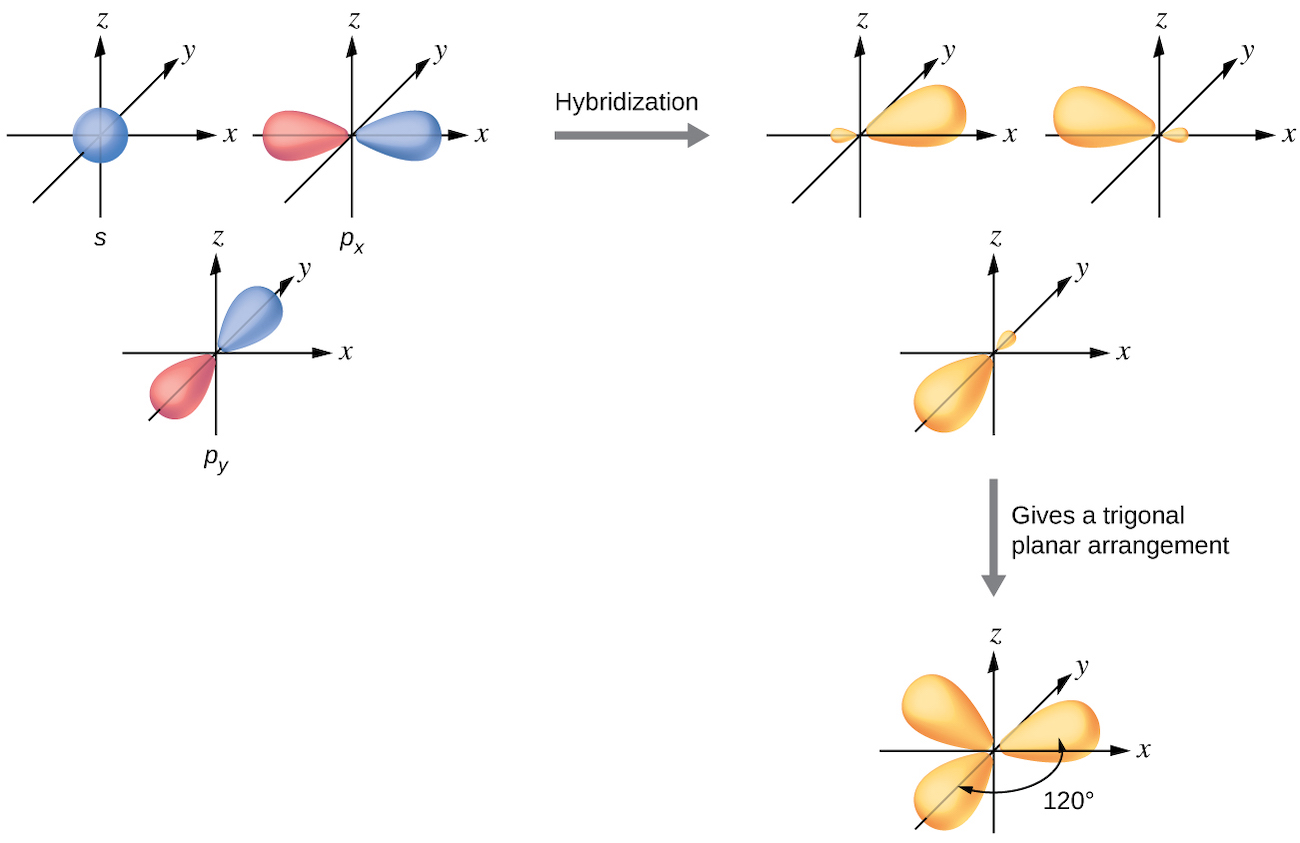
Figure 8.10 The hybridization of an s orbital (blue) and two p orbitals (red) produces three equivalent sp 2 hybridized orbitals (yellow) oriented at 120° with respect to each other. The remaining unhybridized p orbital is not shown here, but is located along the z axis.
Paul Flowers, Klaus Theopold, Richard Langley, and William R. Robinson, Chemistry 2E, OpenStax. · CC BY-NC-SA 4.0 · Original image ↗ · Access for free ↗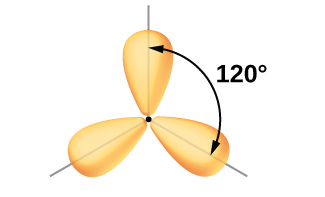
Figure 8.11 This alternate way of drawing the trigonal planar sp 2 hybrid orbitals is sometimes used in more crowded figures.
Paul Flowers, Klaus Theopold, Richard Langley, and William R. Robinson, Chemistry 2E, OpenStax. · CC BY-NC-SA 4.0 · Original image ↗ · Access for free ↗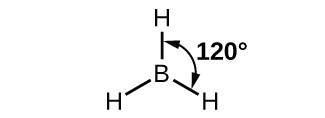
Figure 8.12 BH 3 is an electron-deficient molecule with a trigonal planar structure.
Paul Flowers, Klaus Theopold, Richard Langley, and William R. Robinson, Chemistry 2E, OpenStax. · CC BY-NC-SA 4.0 · Original image ↗ · Access for free ↗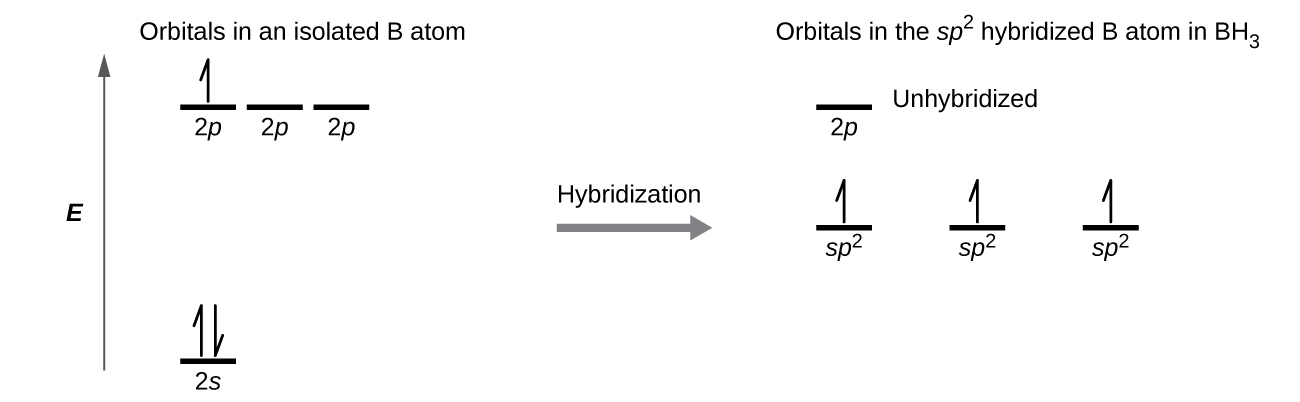
Figure 8.13 In an isolated B atom, there are one 2 s and three 2 p valence orbitals. When boron is in a molecule with three regions of electron density, three of the orbitals hybridize and create a set of three sp 2 orbitals and one unhybridized 2 p orbital. The three half-filled hybrid orbitals each overlap with an orbital from a hydrogen atom to form three σ bonds in BH 3 .
Paul Flowers, Klaus Theopold, Richard Langley, and William R. Robinson, Chemistry 2E, OpenStax. · CC BY-NC-SA 4.0 · Original image ↗ · Access for free ↗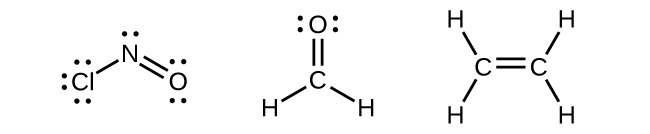
Figure 8.14 The central atom(s) in each of the structures shown contain three regions of electron density and are sp 2 hybridized. As we know from the discussion of VSEPR theory, a region of electron density contains all of the electrons that point in one direction. A lone pair, an unpaired electron, a single bond, or a multiple bond would each count as one region of electron density.
Paul Flowers, Klaus Theopold, Richard Langley, and William R. Robinson, Chemistry 2E, OpenStax. · CC BY-NC-SA 4.0 · Original image ↗ · Access for free ↗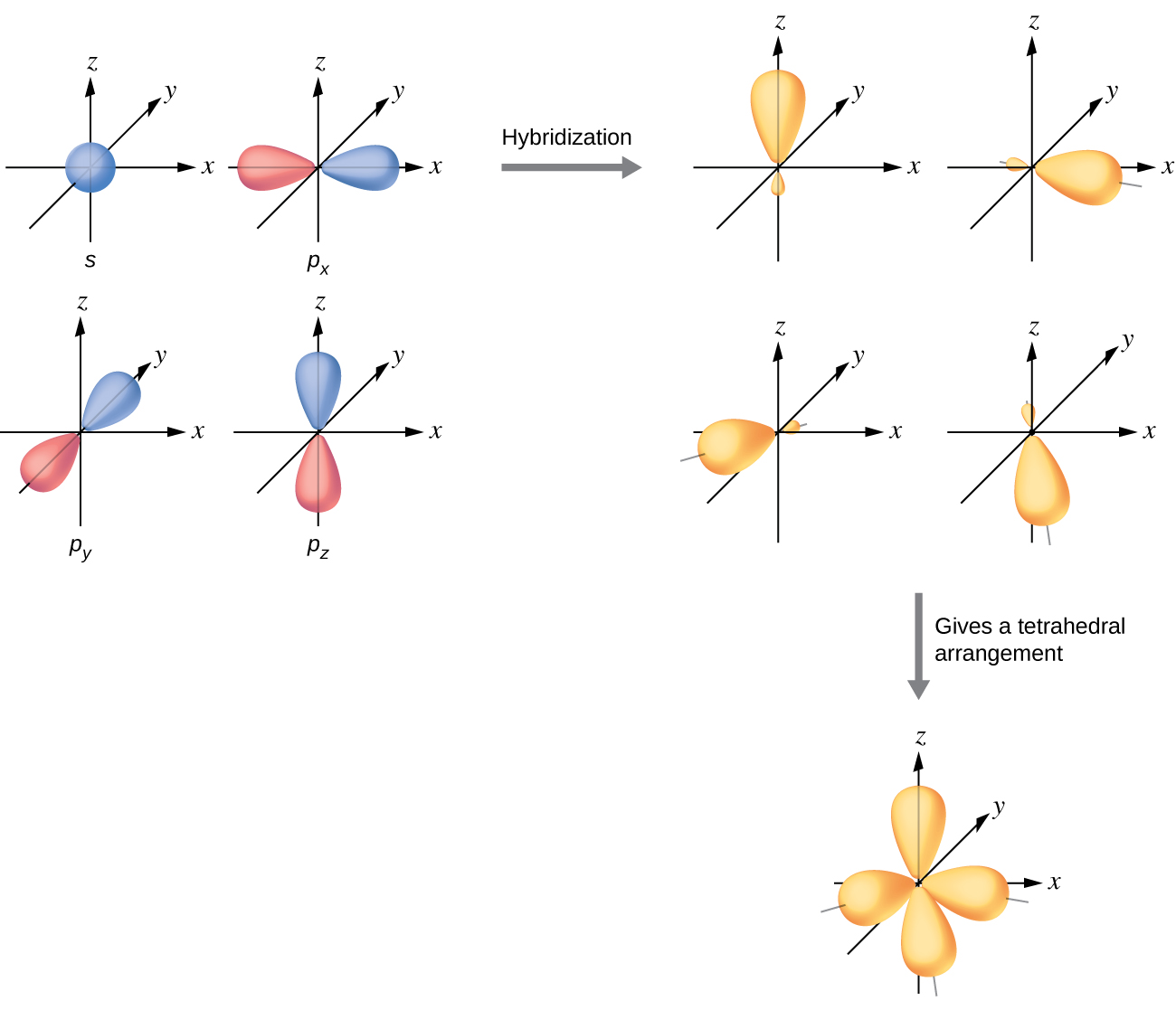
Figure 8.15 The hybridization of an s orbital (blue) and three p orbitals (red) produces four equivalent sp 3 hybridized orbitals (yellow) oriented at 109.5° with respect to each other.
Paul Flowers, Klaus Theopold, Richard Langley, and William R. Robinson, Chemistry 2E, OpenStax. · CC BY-NC-SA 4.0 · Original image ↗ · Access for free ↗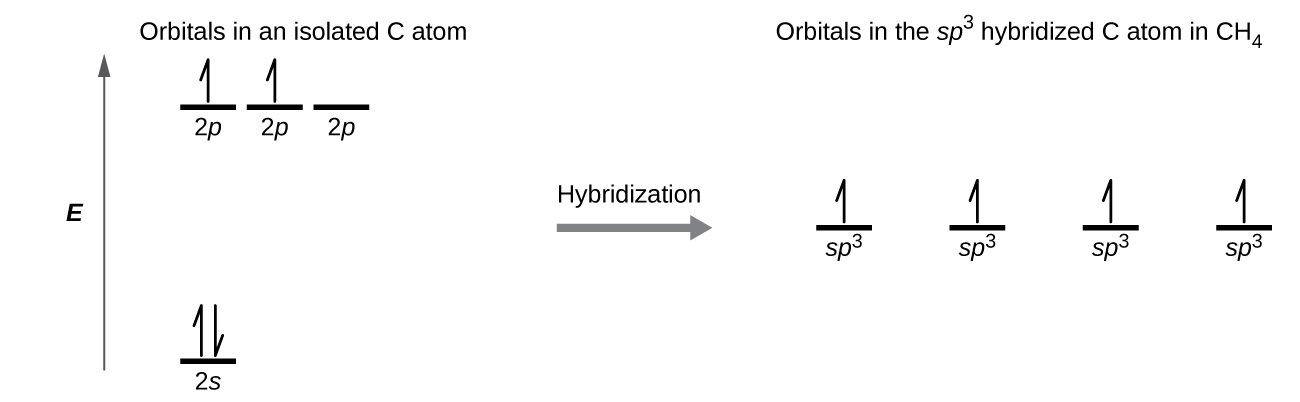
Figure 8.16 The four valence atomic orbitals from an isolated carbon atom all hybridize when the carbon bonds in a molecule like CH 4 with four regions of electron density. This creates four equivalent sp 3 hybridized orbitals. Overlap of each of the hybrid orbitals with a hydrogen orbital creates a C–H σ bond.
Paul Flowers, Klaus Theopold, Richard Langley, and William R. Robinson, Chemistry 2E, OpenStax. · CC BY-NC-SA 4.0 · Original image ↗ · Access for free ↗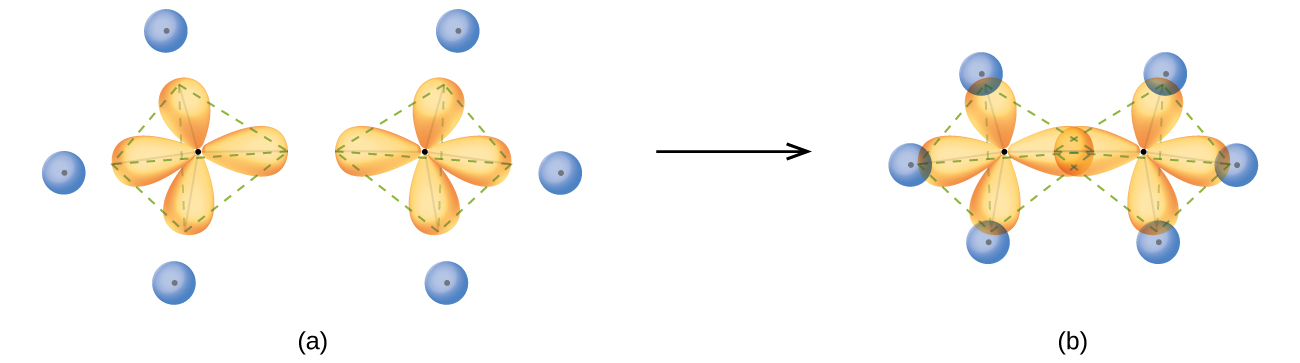
Figure 8.17 (a) In the ethane molecule, C 2 H 6 , each carbon has four sp 3 orbitals. (b) These four orbitals overlap to form seven σ bonds.
Paul Flowers, Klaus Theopold, Richard Langley, and William R. Robinson, Chemistry 2E, OpenStax. · CC BY-NC-SA 4.0 · Original image ↗ · Access for free ↗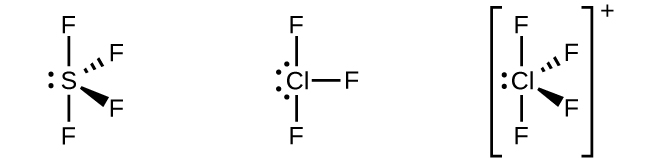
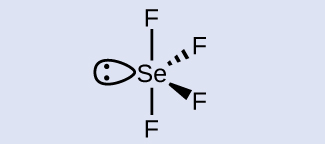
Figure 8.18 The three compounds pictured exhibit sp 3 d hybridization in the central atom and a trigonal bipyramid form. SF 4 and ClF 4 + ClF 4 + have one lone pair of electrons on the central atom, and ClF 3 has two lone pairs giving it the T-shape shown.
Paul Flowers, Klaus Theopold, Richard Langley, and William R. Robinson, Chemistry 2E, OpenStax. · CC BY-NC-SA 4.0 · Original image ↗ · Access for free ↗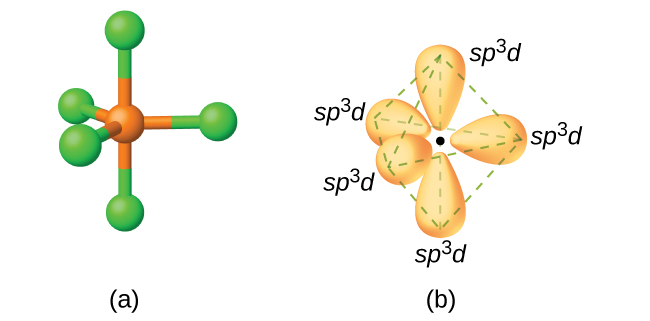
Figure 8.19 (a) The five regions of electron density around phosphorus in PCl 5 require five hybrid sp 3 d orbitals. (b) These orbitals combine to form a trigonal bipyramidal structure with each large lobe of the hybrid orbital pointing at a vertex. As before, there are also small lobes pointing in the opposite direction for each orbital (not shown for clarity).
Paul Flowers, Klaus Theopold, Richard Langley, and William R. Robinson, Chemistry 2E, OpenStax. · CC BY-NC-SA 4.0 · Original image ↗ · Access for free ↗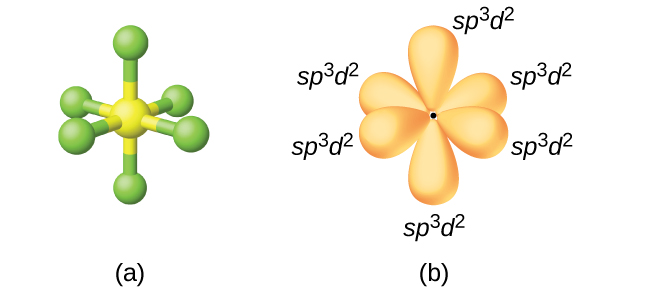
Figure 8.20 (a) Sulfur hexafluoride, SF 6 , has an octahedral structure that requires sp 3 d 2 hybridization. (b) The six sp 3 d 2 orbitals form an octahedral structure around sulfur. Again, the minor lobe of each orbital is not shown for clarity.
Paul Flowers, Klaus Theopold, Richard Langley, and William R. Robinson, Chemistry 2E, OpenStax. · CC BY-NC-SA 4.0 · Original image ↗ · Access for free ↗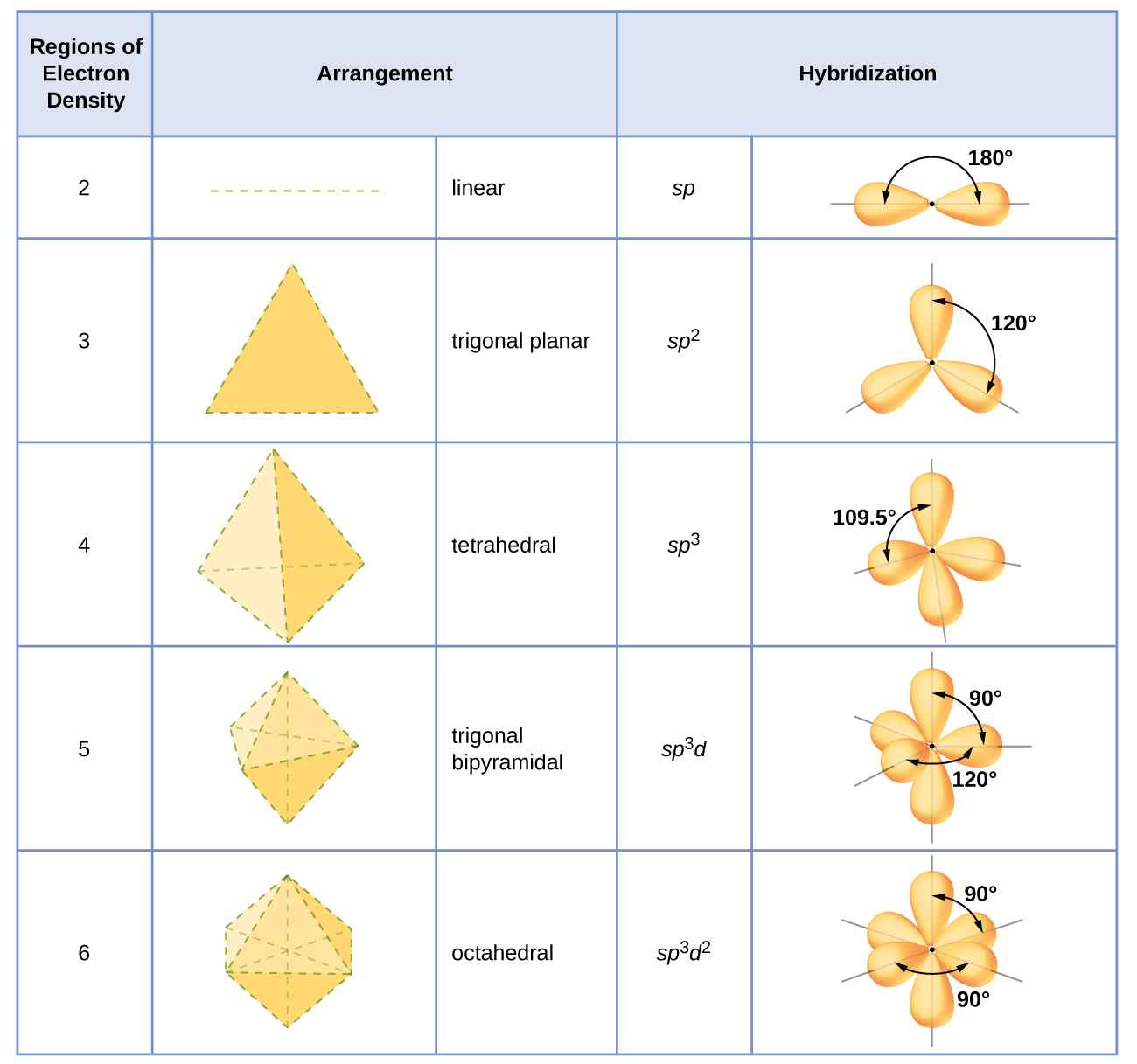
Figure 8.21 The shapes of hybridized orbital sets are consistent with the electron-pair geometries. For example, an atom surrounded by three regions of electron density is sp 2 hybridized, and the three sp 2 orbitals are arranged in a trigonal planar fashion.
Paul Flowers, Klaus Theopold, Richard Langley, and William R. Robinson, Chemistry 2E, OpenStax. · CC BY-NC-SA 4.0 · Original image ↗ · Access for free ↗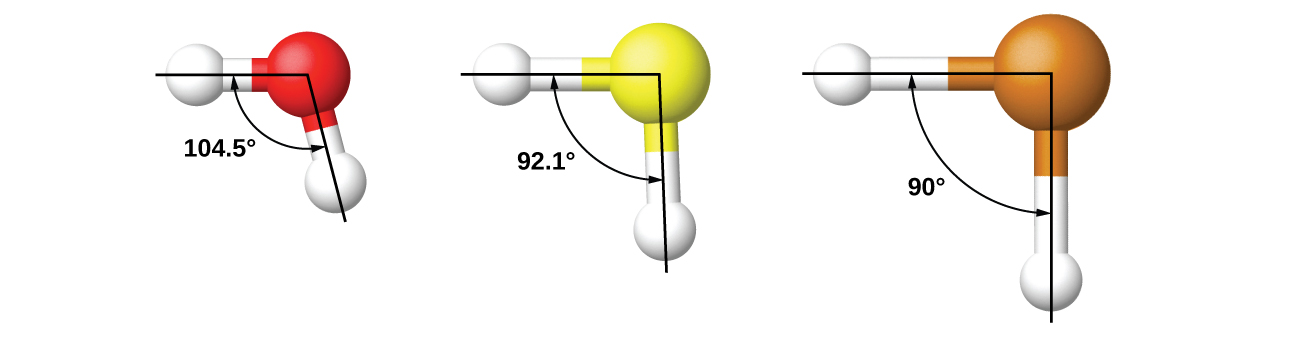
Source: 8.2 Hybrid Atomic Orbitals
1.12 Drawing Chemical Structures — figures and tables
| Compound | Line-bond structure | Skeletal structure |
|---|---|---|
| Isoprene, C5H8 | ||
| Methylcyclohexane, C7H14 | ||
| Phenol, C6H6O |
Table 1.3 Line-bond and Skeletal Structures for Some Compounds. John McMurry, Organic Chemistry, OpenStax.
Source: 1.12 Drawing Chemical Structures