Configuration labels describe structure; the sign of optical rotation must be measured.
Connectivity versus arrangement
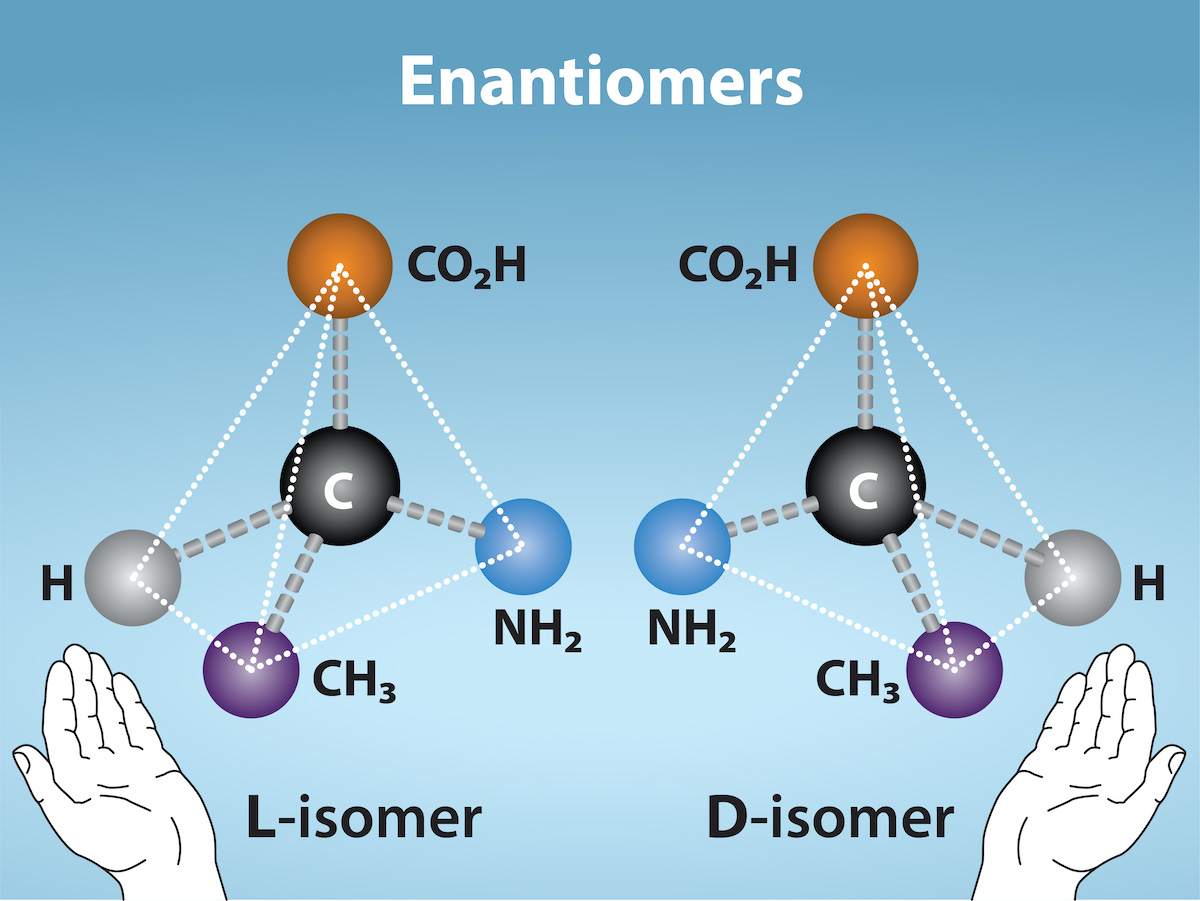
Constitutional isomers differ in which atoms connect. Conformers have the same connectivity and interconvert through rotations without breaking ordinary covalent bonds. Configurational stereoisomers require bond rearrangement or a high-barrier process to interconvert. Enantiomers are nonsuperimposable mirror images; diastereomers are stereoisomers that are not mirror images. A molecule with stereocenters can still be achiral if internal symmetry makes it superimposable on its mirror image, as in a meso compound. Geometric E/Z or cis/trans isomers arise when rotation is restricted.
Source: Organic Chemistry 5 — Summary · 5.5 Sequence Rules for Specifying Configuration
Assign configuration systematically
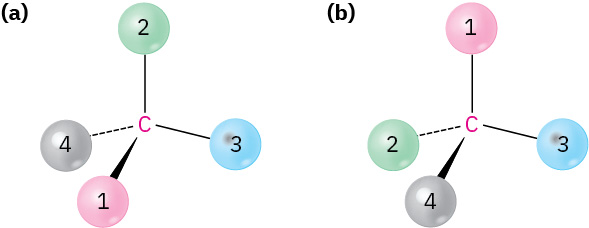
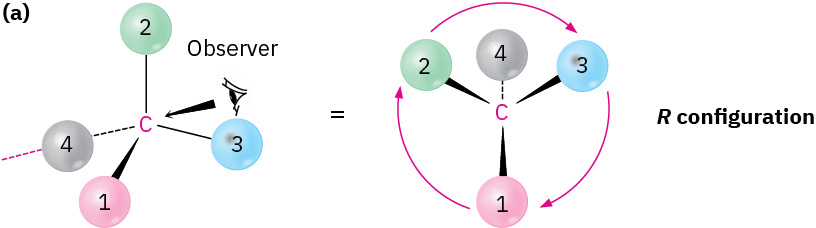
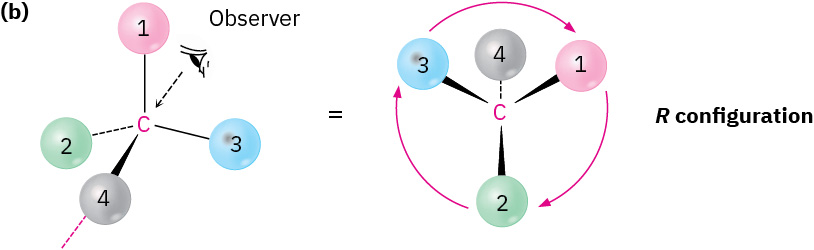
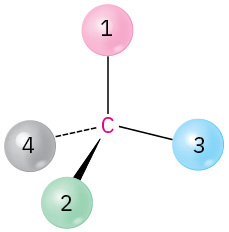
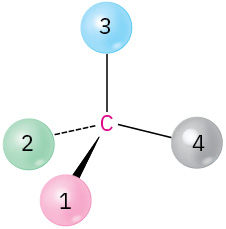
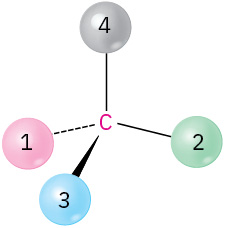
For R/S, rank substituents by atomic number of the directly attached atom, resolving ties outward to the first difference. Isotopes of the same element rank by mass; multiple bonds use duplicated-atom bookkeeping. Point priority 4 away: clockwise 1→2→3 is R, counterclockwise S; reverse if priority 4 points toward you. For an alkene, rank the two groups on each end: higher-priority groups together give Z, opposite give E. Cis/trans compares designated like groups and is not always interchangeable with E/Z.
Source: Organic Chemistry 5 — Summary · 5.5 Sequence Rules for Specifying Configuration
Measure rotation and composition
A chiral sample may rotate plane-polarized light. Specific rotation is [α] = αobserved/(ℓc) for a stated wavelength, temperature, solvent, and concentration convention; ℓ is commonly in decimeters and c in g/mL. Pure enantiomers have equal and opposite rotations under identical conditions. R does not imply positive rotation, and D does not imply positive rotation either. A racemic 50:50 pair has zero net rotation. Enantiomeric excess ee = |%major − %minor|; for a simple two-enantiomer mixture its rotation scales with ee.
Source: Organic Chemistry 5 — Summary · 5.5 Sequence Rules for Specifying Configuration
Apply it
Try before revealing the answer. A pure enantiomer has specific rotation +40°. A mixture of it and its mirror image has +20° under identical conditions. Find enantiomeric excess and composition.
Worked answer
ee = 20/40 = 50% in favor of the positive-rotating enantiomer. If x is its fraction, x − (1−x) = 0.50, so x = 0.75. The mixture is 75:25, not 50:50. This conclusion assumes only the two enantiomers contribute to the measured rotation.
Source: Organic Chemistry 5 — Summary · 5.5 Sequence Rules for Specifying Configuration
5.5 Sequence Rules for Specifying Configuration — figures and tables

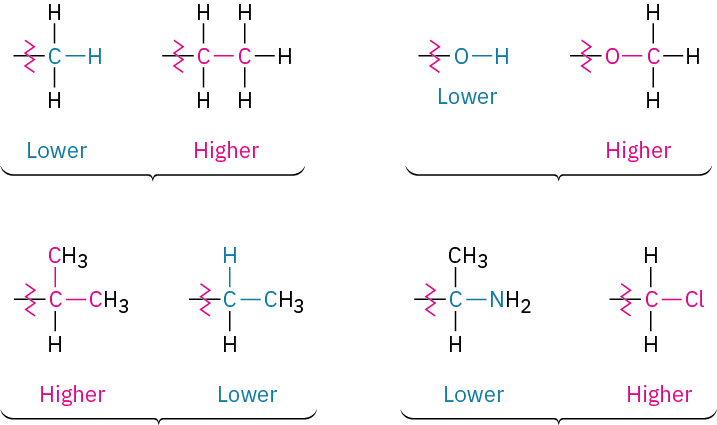
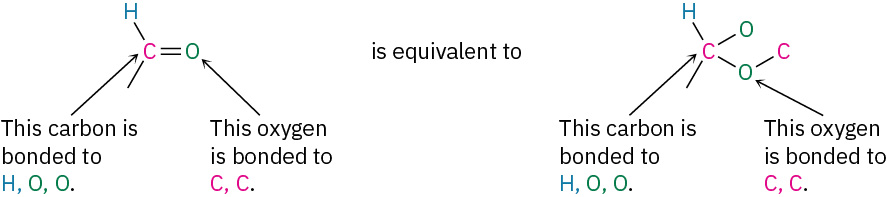
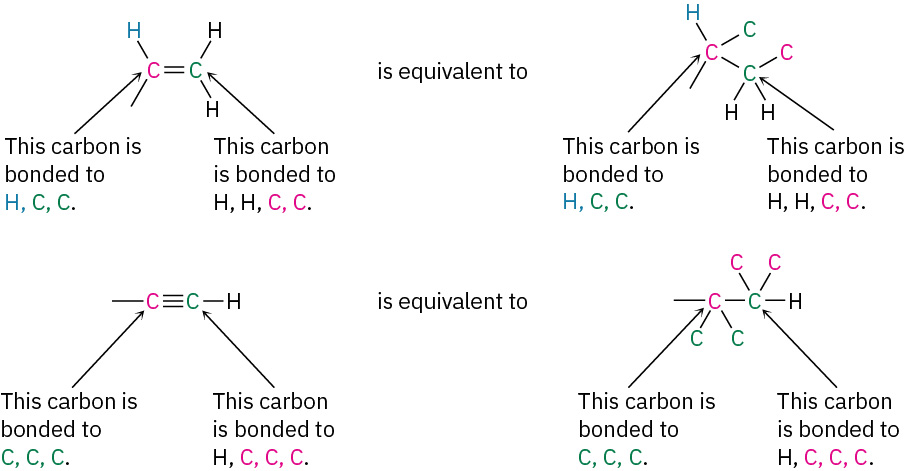
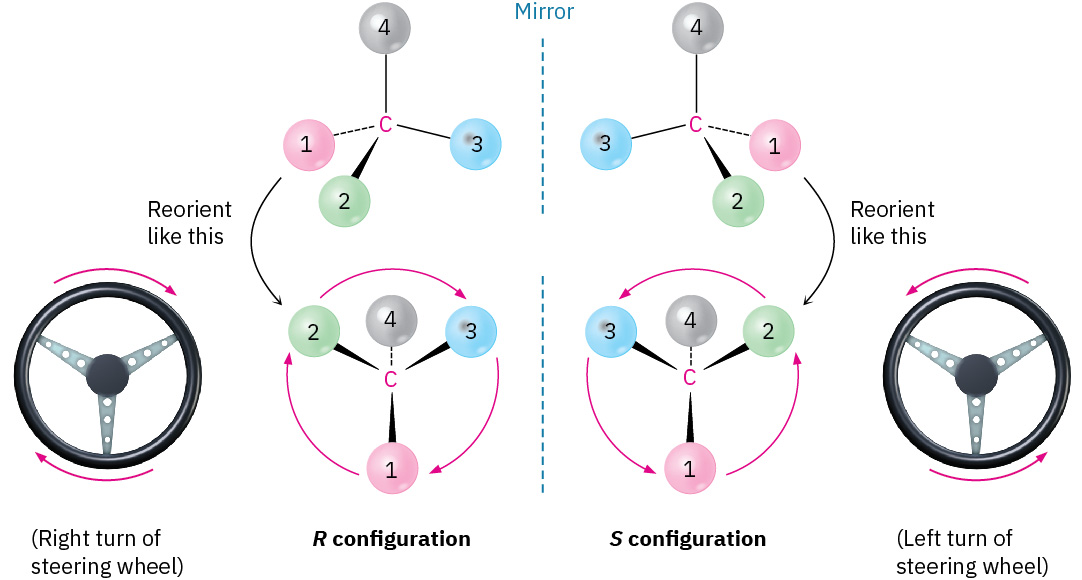
Figure 5.8 Assigning R and S configurations to chirality centers. When the molecule is oriented so that the lowest-ranked group ( 4 ) is toward the rear, the remaining three groups radiate toward the viewer like the spokes of a steering wheel. If the direction of travel 1 → 2 → 3 is clockwise (right turn), the center has the R configuration. If the direction of travel 1 → 2 → 3 is counterclockwise (left turn), the center is S .
John McMurry, Organic Chemistry, OpenStax. · CC BY-NC-SA 4.0 · Original image ↗ · Access for free ↗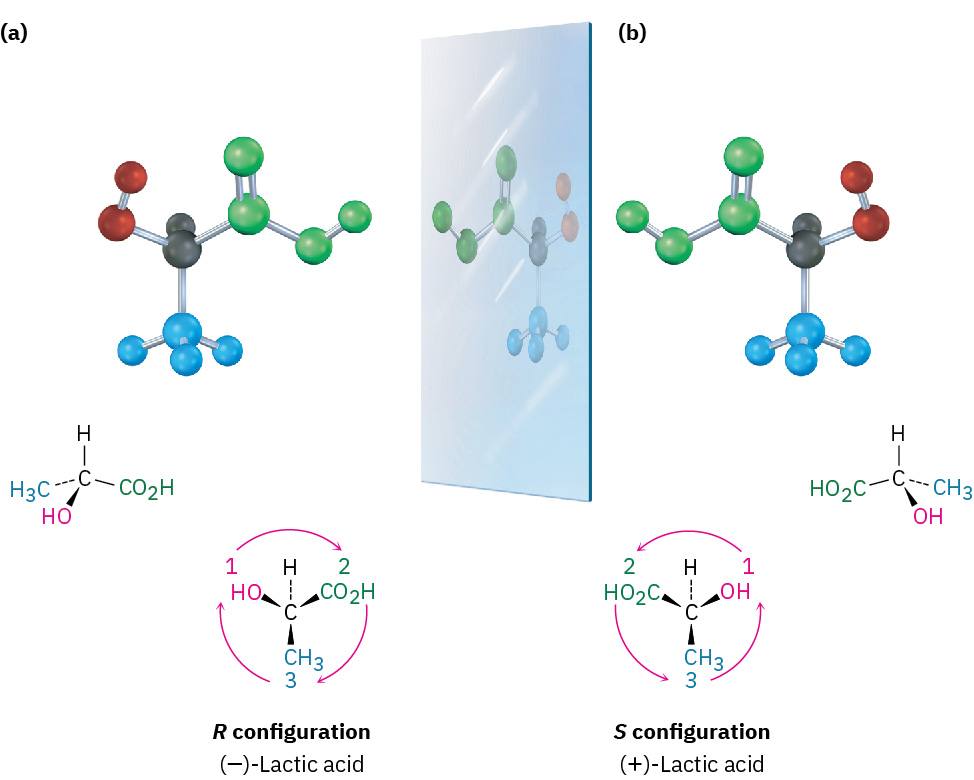
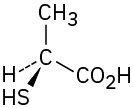
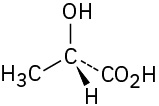
Figure 5.9 Assigning configuration to (a) ( R )-(−)-lactic acid and (b) ( S )-(+)-lactic acid.
John McMurry, Organic Chemistry, OpenStax. · CC BY-NC-SA 4.0 · Original image ↗ · Access for free ↗![The structures and ball-and-stick models of (S)-Glyceraldehyde [(S)-(minus)-2,3-dihydroxypropanal] and (S)-alanine [(S)-(plus)-2-aminopropanoic acid with their [alpha] D values equals minus 8.7 and plus 8.5, respectively.](../../assets/images/all-chem-o-5-5/figure-07.jpg)
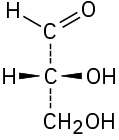
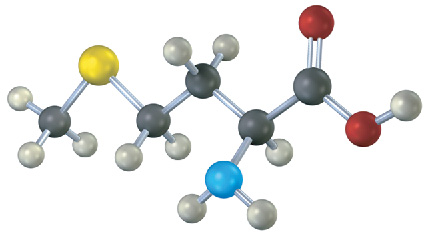
Figure 5.10 Assigning configuration to (a) (−)-glyceraldehyde. (b) (+)-alanine. Both happen to have the S configuration, although one is levorotatory and the other is dextrorotatory.
John McMurry, Organic Chemistry, OpenStax. · CC BY-NC-SA 4.0 · Original image ↗ · Access for free ↗