Foundation 5 · 5B · Bonding, stereochemistry, and molecular interactions

Intermolecular interactions and physical properties

Sources ↗

Compare both the interactions broken and those formed when predicting a physical change.

Types of intermolecular attraction

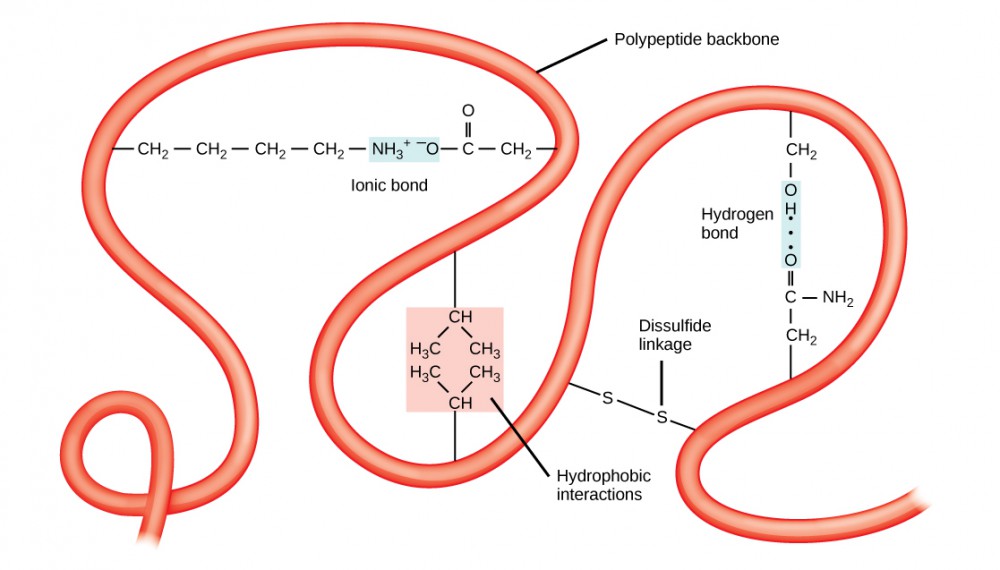
All and exhibit London dispersion from correlated instantaneous and induced ; larger, more polarizable clouds generally interact more strongly. Permanent also show – attraction. usually requires a donor with H bonded to N, O, or F and an available acceptor lone pair. A can accept without donating them, as a ketone does. – interactions strongly hydrate . These interactions are individually weaker than ordinary but can collectively dominate macromolecular structure and bulk properties.

Source: 10.1 Intermolecular Forces

Structure changes physical properties

Stronger cohesive attractions generally increase and reduce for comparable . Extended shapes can have greater contact area than compact branched isomers, strengthening dispersion. Melting also depends strongly on symmetry and crystal packing, so boiling-point rankings need not predict melting rankings. requires favorable overall : – interactions must compensate for separating and particles, with also contributing. A larger region often lowers a ’s water despite one group; can greatly improve aqueous .

Source: 10.1 Intermolecular Forces

Apply it

Try before revealing the answer. Compare ethanol and dimethyl ether, both C₂H₆O. Which should have the higher , and can each accept from water?

Worked answer

Ethanol can form intermolecular O–H with itself and has the higher . Dimethyl ether lacks an O–H donor and cannot form the same self-associated network. Both have oxygen lone pairs and can accept from water.

Source: 10.1 Intermolecular Forces

10.1 Intermolecular Forces — figures and tables

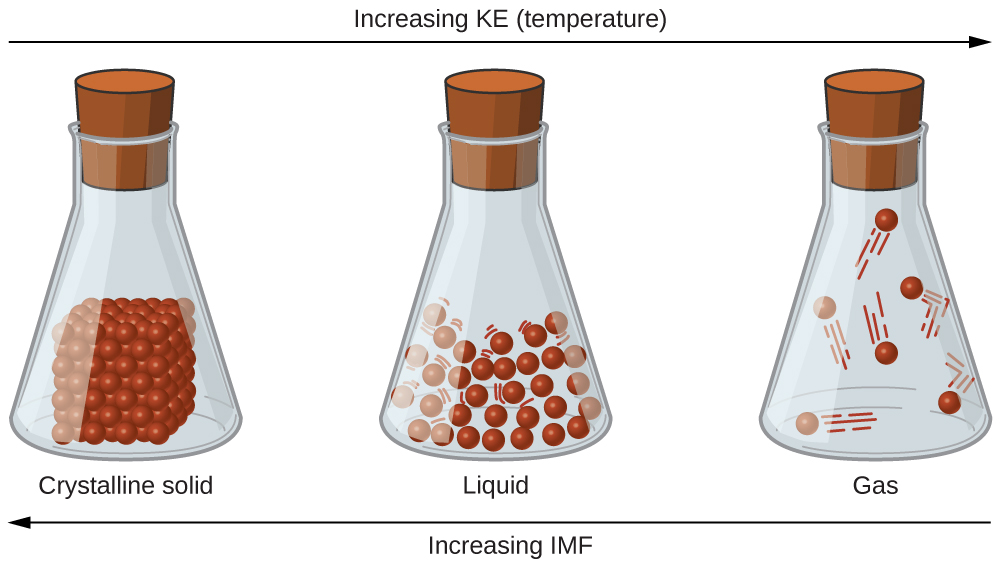
Three sealed flasks are labeled, “Crystalline solid,” “Liquid,” and “Gas,” from left to right. The first flask holds a cube composed of small spheres sitting on the bottom while the second flask shows a lot of small spheres in the bottom that are spaced a small distance apart from one another and have lines around them to indicate motion. The third flask shows a few spheres spread far from one another with larger lines to indicate motion. There is a right-facing arrow that spans the top of all three flasks. The arrow is labeled, “Increasing K E ( temperature ).” There is a left-facing arrow that spans the bottom of all three flasks. The arrow is labeled, “Increasing I M F.”
Figure 10.2 — 10.1 Intermolecular Forces

Figure 10.2 Transitions between solid, liquid, and gaseous states of a substance occur when conditions of temperature or pressure favor the associated changes in intermolecular forces. (Note: The space between particles in the gas phase is much greater than shown.)

Paul Flowers, Klaus Theopold, Richard Langley, and William R. Robinson, Chemistry 2E, OpenStax. · CC BY-NC-SA 4.0 · Original image ↗ · Access for free ↗
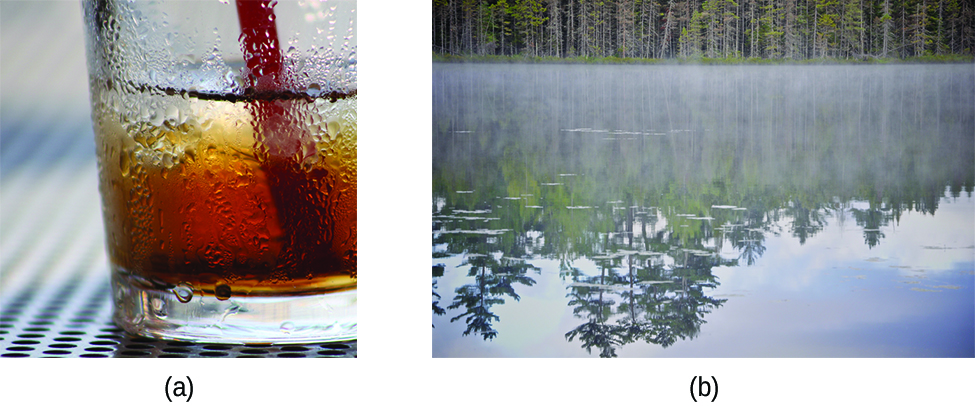
Image a shows a brown colored beverage in a glass with condensation on the outside. Image b shows a body of water with fog hovering above the surface of the water.
Figure 10.3 — 10.1 Intermolecular Forces

Figure 10.3 Condensation forms when water vapor in the air is cooled enough to form liquid water, such as (a) on the outside of a cold beverage glass or (b) in the form of fog. (credit a: modification of work by Jenny Downing; credit b: modification of work by Cory Zanker)

Paul Flowers, Klaus Theopold, Richard Langley, and William R. Robinson, Chemistry 2E, OpenStax. (credit a: modification of work by Jenny Downing; credit b: modification of work by Cory Zanker) · CC BY-NC-SA 4.0 · Original image ↗ · Access for free ↗
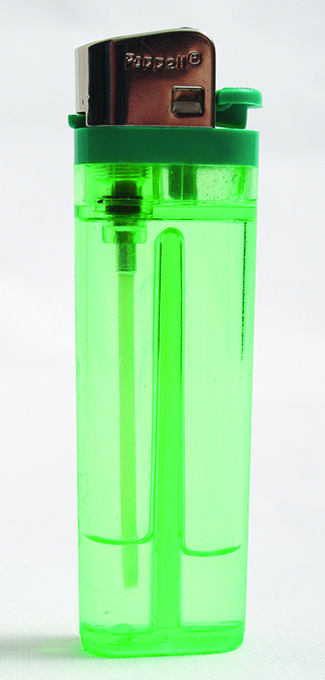
A butane lighter is shown.
Figure 10.4 — 10.1 Intermolecular Forces

Figure 10.4 Gaseous butane is compressed within the storage compartment of a disposable lighter, resulting in its condensation to the liquid state. (credit: modification of work by “Sam-Cat”/Flickr)

Paul Flowers, Klaus Theopold, Richard Langley, and William R. Robinson, Chemistry 2E, OpenStax. (credit: modification of work by “Sam-Cat”/Flickr) · CC BY-NC-SA 4.0 · Original image ↗ · Access for free ↗
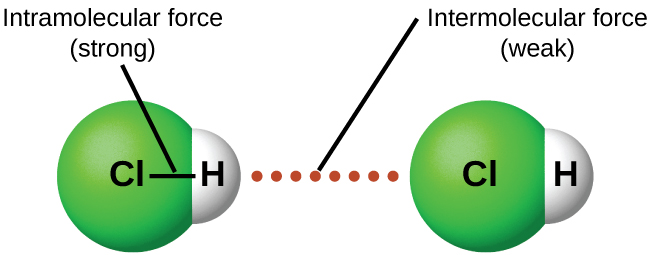
An image is shown in which two molecules composed of a green sphere labeled “C l” connected on the right to a white sphere labeled “H” are near one another with a dotted line labeled “Intermolecular force ( weak )” drawn between them. A line connects the two spheres in each molecule and the line is labeled “Intramolecular force ( strong ).”
Figure 10.5 — 10.1 Intermolecular Forces

Figure 10.5 Intra molecular forces keep a molecule intact. Inter molecular forces hold multiple molecules together and determine many of a substance’s properties.

Paul Flowers, Klaus Theopold, Richard Langley, and William R. Robinson, Chemistry 2E, OpenStax. · CC BY-NC-SA 4.0 · Original image ↗ · Access for free ↗
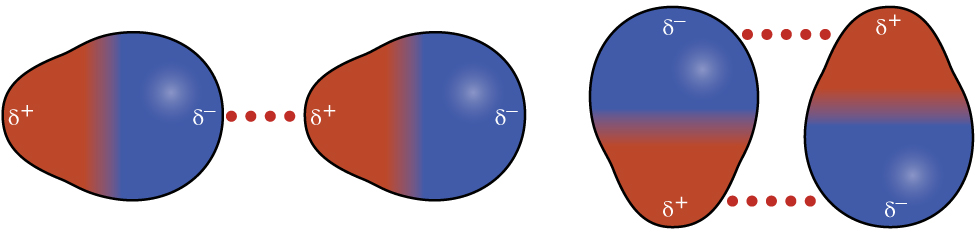
Two pairs of molecules are shown where each molecule has one larger blue side labeled “delta sign, negative sign” and a smaller red side labeled “delta sign, positive sign.” Toward the middle of the both molecules, but still on each distinct side, is a black dot. Between the two images is a dotted line labeled, “Attractive force.” In the first image, the red and blue sides are labeled, “Unequal distribution of electrons.” Below both images are brackets. The brackets are labeled, “Temporary dipoles.”
Figure 10.6 — 10.1 Intermolecular Forces

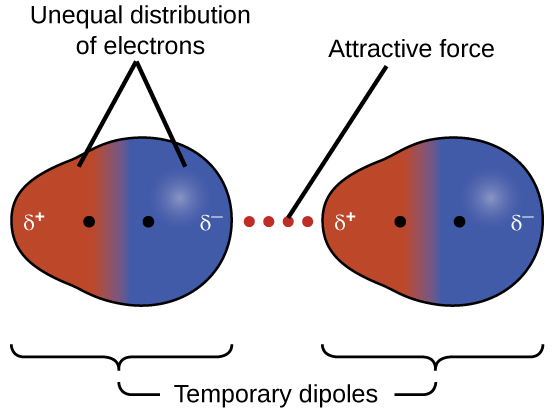
Figure 10.6 Dispersion forces result from the formation of temporary dipoles, as illustrated here for two nonpolar diatomic molecules.

Paul Flowers, Klaus Theopold, Richard Langley, and William R. Robinson, Chemistry 2E, OpenStax. · CC BY-NC-SA 4.0 · Original image ↗ · Access for free ↗
A line graph, titled “Carbon Family,” is shown where the y-axis is labeled “Temperature, ( degree sign C )” and has values of “negative 200” to “negative 40” from bottom to top in increments of 20. The x-axis is labeled “Period” and has values of “0” to “5” in increments of 1. The first point on the graph is labeled “C H subscript 4” and is at point “2, negative 160.” The second point on the graph is labeled “S i H subscript 4” and is at point “3, negative 120” while the third point on the graph is labeled “G e H subscript 4” and is at point “4, negative 100.” The fourth point on the graph is labeled “S n H subscript 4” and is at point “5, negative 60.”
10.1 Intermolecular Forces — illustration 6 Paul Flowers, Klaus Theopold, Richard Langley, and William R. Robinson, Chemistry 2E, OpenStax. · CC BY-NC-SA 4.0 · Original image ↗ · Access for free ↗
Three images of molecules are shown. The first shows a cluster of large, gray spheres each bonded together and to several smaller, white spheres. There is a gray, jagged line and then the mirror image of the first cluster of spheres is shown. Above these two clusters is the label, “Small contact area, weakest attraction,” and below is the label, “neopentane boiling point: 9.5 degrees C.” The second shows a chain of three gray spheres bonded by the middle sphere to a fourth gray sphere. Each gray sphere is bonded to several smaller, white spheres. There is a jagged, gray line and then the mirror image of the first chain appears. Above these two chains is the label, “Less surface area, less attraction,” and below is the label, “isopentane boiling point: 27 degrees C.” The third image shows a chain of five gray spheres bonded together and to several smaller, white spheres. There is a jagged gray line and then the mirror image of the first chain appears. Above these chains is the label, “Large contact area, strong attraction,” and below is the label, “n-pentane boiling point 36 degrees C.”
Figure 10.7 — 10.1 Intermolecular Forces

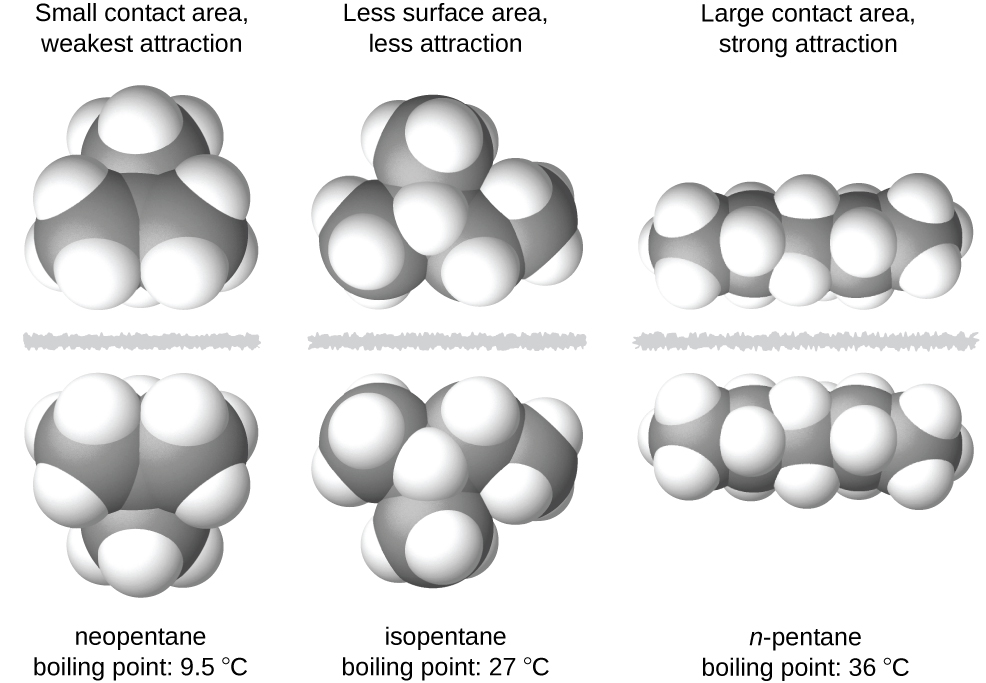
Figure 10.7 The strength of the dispersion forces increases with the contact area between molecules, as demonstrated by the boiling points of these pentane isomers.

Paul Flowers, Klaus Theopold, Richard Langley, and William R. Robinson, Chemistry 2E, OpenStax. · CC BY-NC-SA 4.0 · Original image ↗ · Access for free ↗
Three figures are shown. The first is a photo of the bottom of a gecko’s foot. The second is bigger version which shows the setae. The third is a bigger version of the setae and shows the spatulae.
Figure 10.8 — 10.1 Intermolecular Forces

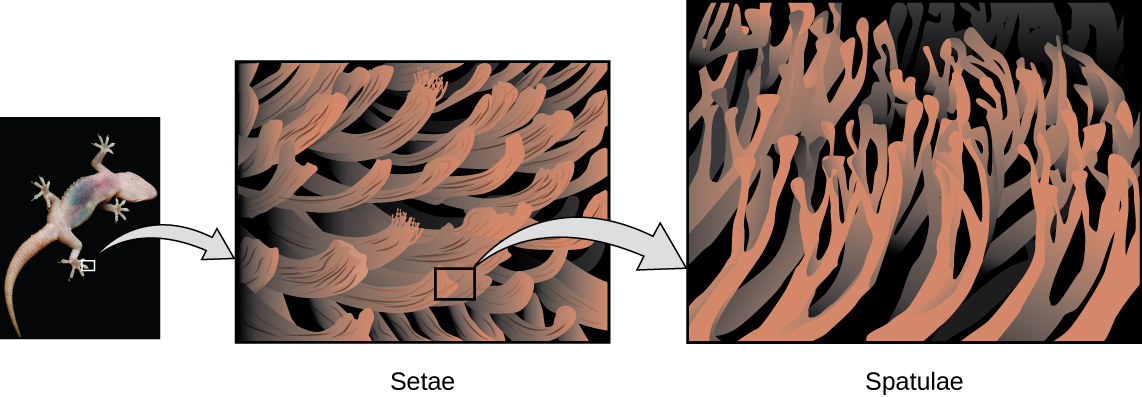
Figure 10.8 Geckos’ toes contain large numbers of tiny hairs (setae), which branch into many triangular tips (spatulae). Geckos adhere to surfaces because of van der Waals attractions between the surface and a gecko’s millions of spatulae. By changing how the spatulae contact the surface, geckos can turn their stickiness “on” and “off.” (credit photo: modification of work by “JC*+A!”/Flickr)

Paul Flowers, Klaus Theopold, Richard Langley, and William R. Robinson, Chemistry 2E, OpenStax. (credit photo: modification of work by “JC*+A!”/Flickr) · CC BY-NC-SA 4.0 · Original image ↗ · Access for free ↗
Two pairs of molecules are shown where each molecule has one larger blue side labeled “delta sign, negative sign” and a smaller red side labeled “delta sign, positive sign. In the first pair, the red sides of the two molecules both face to the left and the blue side to the right. A horizontal dotted line lies in between the two. In the second pair, the molecules face up and down, with the red and blue ends aligning. A horizontal dotted line lies between the red and blue ends facing upward and another lies between the red and blue ends facing downward.
Figure 10.9 — 10.1 Intermolecular Forces

Figure 10.9 This image shows two arrangements of polar molecules, such as HCl, that allow an attraction between the partial negative end of one molecule and the partial positive end of another.

Paul Flowers, Klaus Theopold, Richard Langley, and William R. Robinson, Chemistry 2E, OpenStax. · CC BY-NC-SA 4.0 · Original image ↗ · Access for free ↗
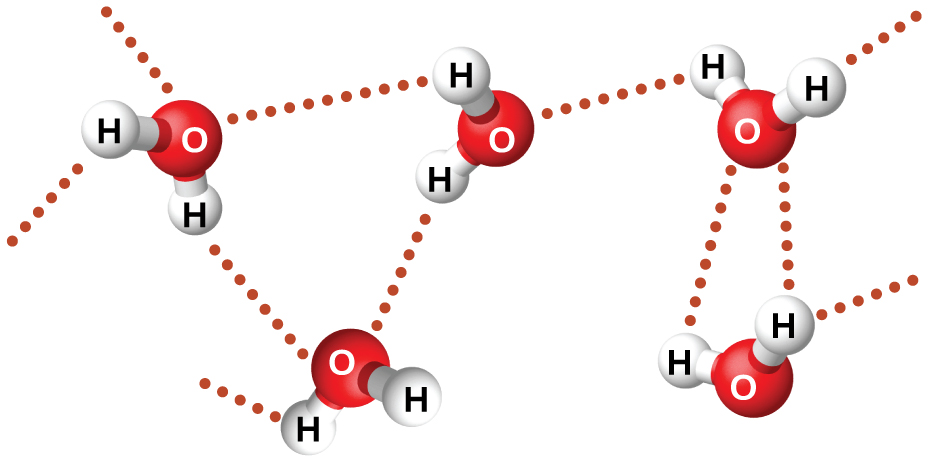
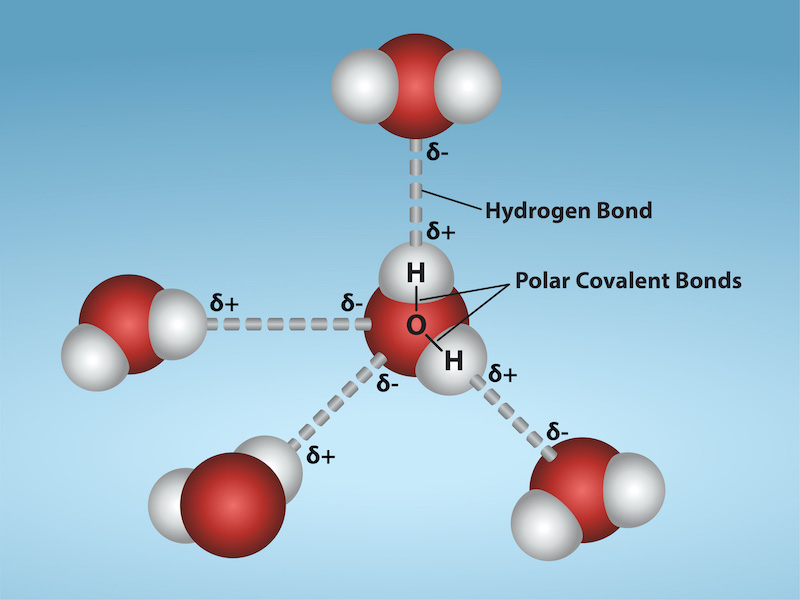
Five water molecules are shown near one another, but not touching. A dotted line lies between many of the hydrogen atoms on one molecule and the oxygen atom on another molecule.
Figure 10.10 — 10.1 Intermolecular Forces

Figure 10.10 Water molecules participate in multiple hydrogen-bonding interactions with nearby water molecules.

Paul Flowers, Klaus Theopold, Richard Langley, and William R. Robinson, Chemistry 2E, OpenStax. · CC BY-NC-SA 4.0 · Original image ↗ · Access for free ↗
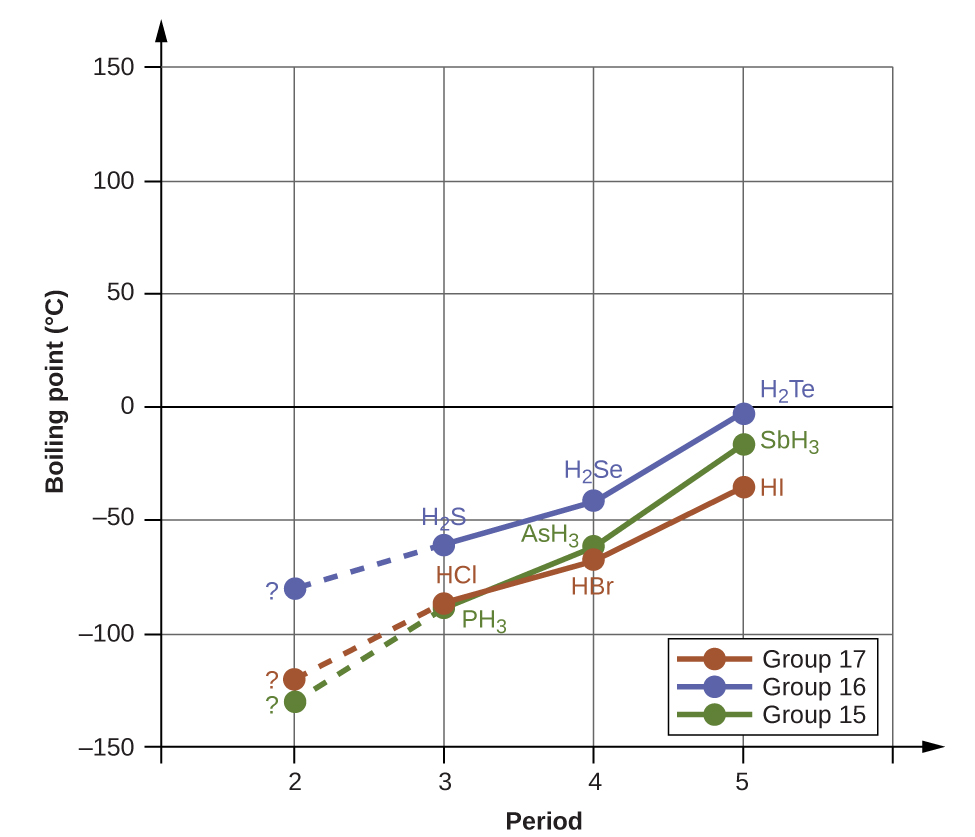
A line graph is shown where the y-axis is labeled “Boiling point (, degree sign, C )” and has values of “ negative 150” to “150” from bottom to top in increments of 50. The x-axis is labeled “Period” and has values of “0” to “5” in increments of 1. Three lines are shown on the graph and are labeled in the legend. The red line is labeled as “halogen family,” the blue is “oxygen family” and the green is “nitrogen family.” The first point on the red line is labeled “question mark” and is at point “2, negative 120”. The second point on the line is labeled “H C l” and is at point “3, negative 80” while the third point on the line is labeled “H B r” and is at point “4, negative 60”. The fourth point on the line is labeled “H I” and is at point “5, negative 40.” The first point on the green line is labeled “question mark” and is at point “2, negative 125.” The second point on the line is labeled “P H, subscript 3” and is at point “3, negative 80” while the third point on the line is labeled “A s H, subscript 3” and is at point “4, negative 55.” The fourth point on the line is labeled “S b H, subscript 3” and is at point “5, negative 10.” The first point on the blue line is labeled “question mark” and is at point “2, negative 80.” The second point on the line is labeled “H, subscript 2, S” and is at point “3, negative 55” while the third point on the line is labeled “H, subscript 2, S e” and is at point “4, negative 45.” The fourth point on the line is labeled “H, subscript 2, T e” and is at point “5, negative 3.”
Figure 10.11 — 10.1 Intermolecular Forces

Figure 10.11 For the group 15, 16, and 17 hydrides, the boiling points for each class of compounds increase with increasing molecular mass for elements in periods 3, 4, and 5.

Paul Flowers, Klaus Theopold, Richard Langley, and William R. Robinson, Chemistry 2E, OpenStax. · CC BY-NC-SA 4.0 · Original image ↗ · Access for free ↗
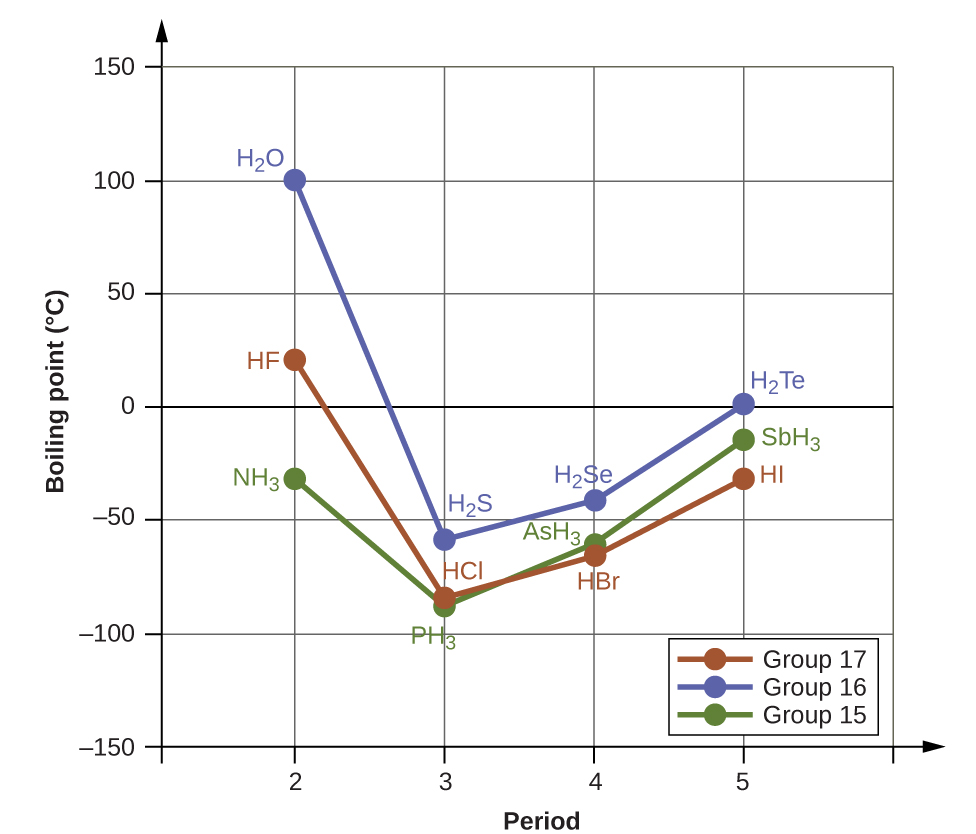
A line graph is shown where the y-axis is labeled “Boiling point, ( degree sign, C )” and has values of “negative 150” to “150” from bottom to top in increments of 50. The x-axis is labeled “Period” and has values of “0” to “5” in increments of 1. Three lines are shown on the graph and are labeled in the legend. The red line is labeled as “halogen family,” the blue is “oxygen family” and the green is “nitrogen family.” The first point on the red line is labeled “H F” and is at point “2, 25.” The second point on the line is labeled “H C l” and is at point “3, negative 80” while the third point on the line is labeled “H B r” and is at point “4, negative 60.” The fourth point on the line is labeled “H I” and is at point “5, negative 40.” The first point on the green line is labeled “N H, subscript 3” and is at point “2, negative 40.” The second point on the line is labeled “P H, subscript 3” and is at point “3, negative 80” while the third point on the line is labeled “A s H, subscript 3” and is at point “4, negative 55.” The fourth point on the line is labeled “S b H, subscript 3” and is at point “5, negative 10.” The first point on the blue line is labeled “H, subscript 2, O” and is at point “2, 100.” The second point on the line is labeled “H, subscript 2, S” and is at point “3, negative 55” while the third point on the line is labeled “H, subscript 2, S e” and is at point “4, negative 45.” The fourth point on the line is labeled “H, subscript 2, T e” and is at point “5, negative 3.”
Figure 10.12 — 10.1 Intermolecular Forces

Figure 10.12 In comparison to periods 3−5, the binary hydrides of period 2 elements in groups 17, 16 and 15 (F, O and N, respectively) exhibit anomalously high boiling points due to hydrogen bonding.

Paul Flowers, Klaus Theopold, Richard Langley, and William R. Robinson, Chemistry 2E, OpenStax. · CC BY-NC-SA 4.0 · Original image ↗ · Access for free ↗
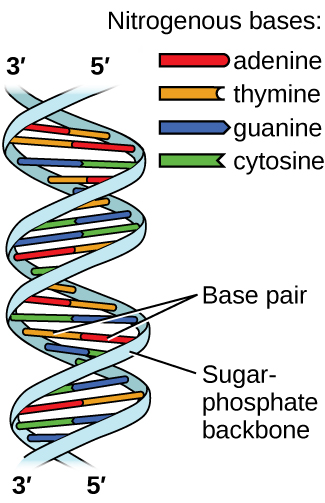
Two images are shown. The first lies on the left side of the page and shows a helical structure like a twisted ladder where the rungs of the ladder, labeled “Base pair” are red, yellow, green and blue paired bars. The red and yellow bars, which are always paired together, are labeled in the legend, which is titled “Nitrogenous bases” as “adenine” and “thymine,” respectively. The blue and green bars, which are always paired together, are labeled in the legend as “guanine” and “cytosine,” respectively. At the top of the helical structure, the left-hand side rail, or “Sugar, dash, phosphate backbone,” is labeled as “3, prime” while the right is labeled as “5, prime.” These labels are reversed at the bottom of the helix. To the right of the page is a large Lewis structure. The top left corner of this structure, labeled “5, prime,” shows a phosphorus atom single bonded to three oxygen atoms, one of which has a superscripted negative charge, and double bonded to a fourth oxygen atom. One of the single bonded oxygen atoms is single bonded to the left corner of a five-membered ring with an oxygen atom at its top point and which is single bonded to an oxygen atom on the bottom left. This oxygen atom is single bonded to a phosphorus atom that is single bonded to two other hydrogen atoms and double bonded to a fourth oxygen atom. The lower left of these oxygen atoms is single bonded to another oxygen atom that is single bonded to a five-membered ring with an oxygen in the upper bonding site. The bottom left of this ring has a hydroxyl group attached to it while the upper right carbon is single bonded to a nitrogen atom that is part of a five-membered ring bonded to a six-membered ring. Both of these rings have points of unsaturation and nitrogen atoms bonded into their structures. On the right side of the six-membered ring are two single bonded amine groups and a double bonded oxygen. Three separate dotted lines extend from these sites to corresponding sites on a second six-membered ring. This ring has points of unsaturation and a nitrogen atom in the bottom right bonding position that is single bonded to a five-membered ring on the right side of the image. This ring is single bonded to a carbon that is single bonded to an oxygen that is single bonded to a phosphorus. The phosphorus is single bonded to two other oxygen atoms and double bonded to a fourth oxygen atom. This group is labeled “5, prime.” The five-membered ring is also bonded on the top side to an oxygen that is bonded to a phosphorus single bonded to two other oxygen atoms and double bonded to a fourth oxygen atom. The upper left oxygen of this group is single bonded to a carbon that is single bonded to a five-membered ring with an oxygen in the bottom bonding position. This ring has a hydroxyl group on its upper right side that is labeled “3, prime” and is bonded on the left side to a nitrogen that is a member of a five-membered ring. This ring is bonded to a six-membered ring and both have points of unsaturation. This ring has a nitrogen on the left side, as well as an amine group, that have two dotted lines leading from them to an oxygen and amine group on a six membered ring. These dotted lines are labeled “Hydrogen bonds.” The six membered ring also has a double bonded oxygen on its lower side and a nitrogen atom on its left side that is single bonded to a five-membered ring. This ring connects to the two phosphate groups mentioned at the start of this to form a large circle. The name “guanine” is written below the lower left side of this image while the name “cytosine” is written on the lower right. The name “thymine” is written above the right side of the image and “adenine” is written on the top right. Three sections are indicated below the images where the left is labeled “Sugar, dash, phosphate backbone,” the middle is labeled “Bases” and the right is labeled “Sugar, dash, phosphate backbone.”
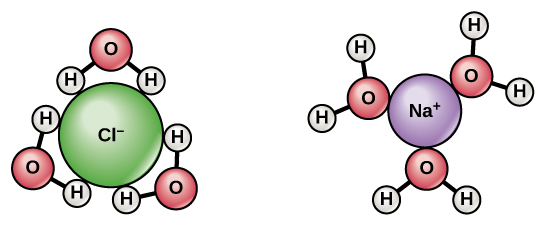
Figure 10.13 — 10.1 Intermolecular Forces

Figure 10.13 Two separate DNA molecules form a double-stranded helix in which the molecules are held together via hydrogen bonding. (credit: modification of work by Jerome Walker, Dennis Myts)

Paul Flowers, Klaus Theopold, Richard Langley, and William R. Robinson, Chemistry 2E, OpenStax. (credit: modification of work by Jerome Walker, Dennis Myts) · CC BY-NC-SA 4.0 · Original image ↗ · Access for free ↗
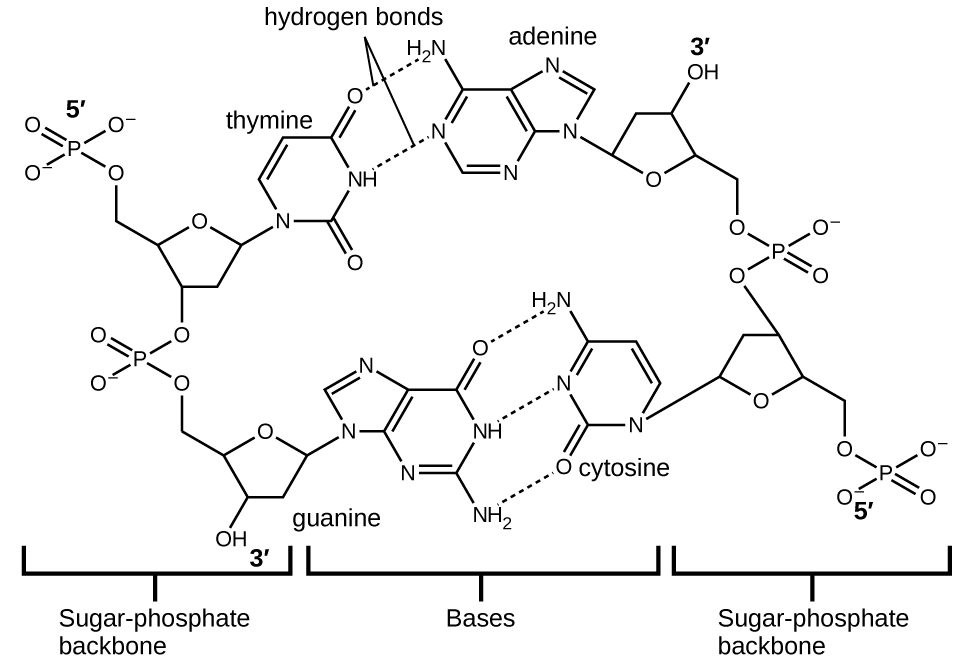
A large Lewis structure is shown. The top left corner of this structure, labeled “5, prime,” shows a phosphorus atom single bonded to three oxygen atoms, one of which has a superscripted negative charge, and double bonded to a fourth oxygen atom. One of the single bonded oxygen atoms is single bonded to the left corner of a five-membered ring with an oxygen atom at its top point and which is single bonded to an oxygen atom on the bottom left. This oxygen atom is single bonded to a phosphorus atom that is single bonded to two other hydrogen atoms and double bonded to a fourth oxygen atom. The lower left of these oxygen atoms is single bonded to another oxygen atom that is single bonded to a five-membered ring with an oxygen in the upper bonding site. The bottom left of this ring has a hydroxyl group attached to it while the upper right carbon is single bonded to a nitrogen atom that is part of a five-membered ring bonded to a six-membered ring. Both of these rings have points of unsaturation and nitrogen atoms bonded into their structures. On the right side of the six-membered ring are two single bonded amine groups and a double bonded oxygen. Three separate dotted lines extend from these sites to corresponding sites on a second six-membered ring. This ring has points of unsaturation and a nitrogen atom in the bottom right bonding position that is single bonded to a five-membered ring on the right side of the image. This ring is single bonded to a carbon that is single bonded to an oxygen that is single bonded to a phosphorus. The phosphorus is single bonded to two other oxygen atoms and double bonded to a fourth oxygen atom. This group is labeled “5, prime.” The five-membered ring is also bonded on the top side to an oxygen that is bonded to a phosphorus single bonded to two other oxygen atoms and double bonded to a fourth oxygen atom. The upper left oxygen of this group is single bonded to a carbon that is single bonded to a five-membered ring with an oxygen in the bottom bonding position. This ring has a hydroxyl group on its upper right side that is labeled “3, prime” and is bonded on the left side to a nitrogen that is a member of a five-membered ring. This ring is bonded to a six-membered ring and both have points of unsaturation. This ring has a nitrogen on the left side, as well as an amine group, that have two dotted lines leading from them to an oxygen and amine group on a six membered ring. These dotted lines are labeled “Hydrogen bonds.” The six membered ring also has a double bonded oxygen on its lower side and a nitrogen atom on its left side that is single bonded to a five-membered ring. This ring connects to the two phosphate groups mentioned at the start of this to form a large circle. The name “guanine” is written below the lower left side of this image while the name “cytosine” is written on the lower right. The name “thymine” is written above the right side of the image and “adenine” is written on the top right. Three sections are indicated below the images where the left is labeled “Sugar, dash, phosphate backbone,” the middle is labeled “Bases” and the right is labeled “Sugar, dash, phosphate backbone.”
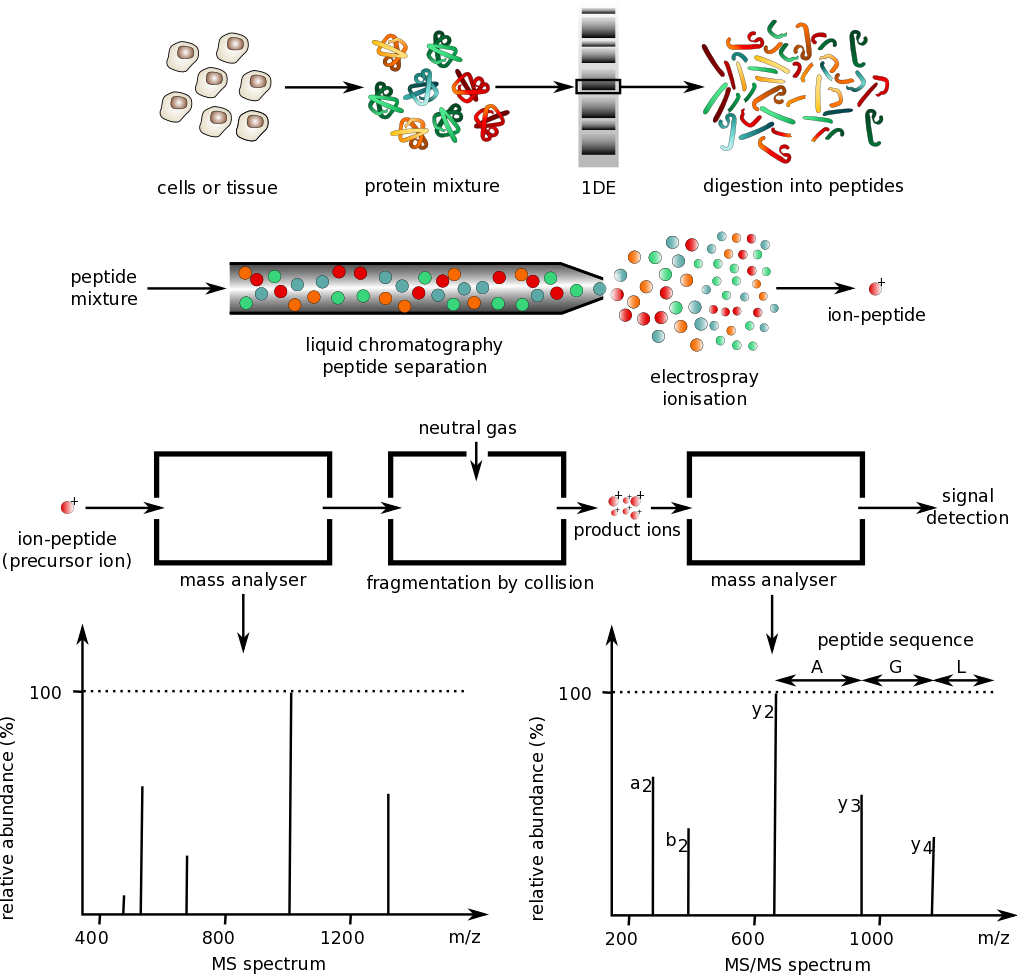
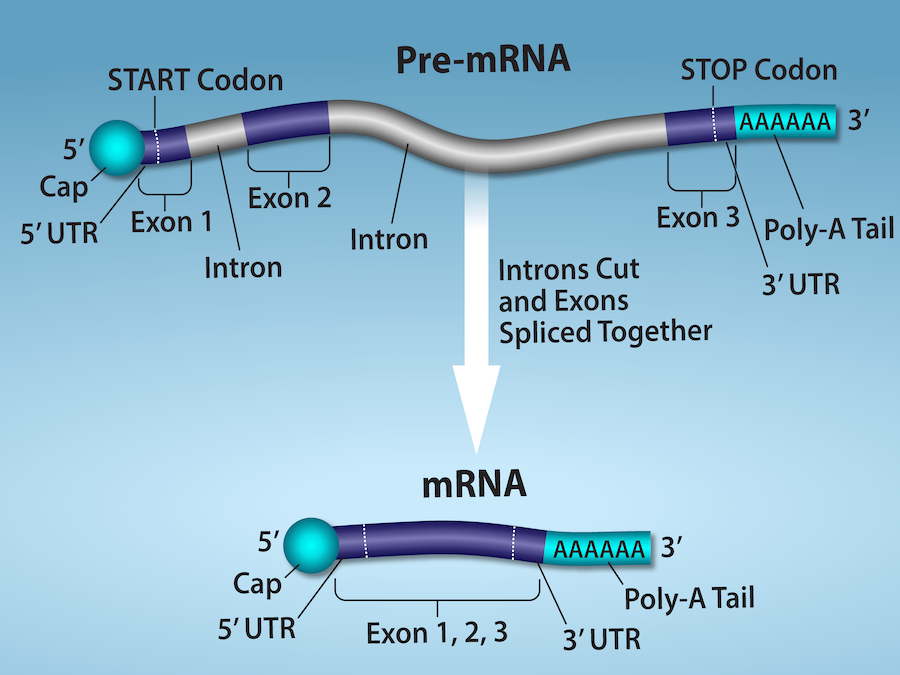
Figure 10.14 — 10.1 Intermolecular Forces

Figure 10.14 The geometries of the base molecules result in maximum hydrogen bonding between adenine and thymine (AT) and between guanine and cytosine (GC), so-called “complementary base pairs.”

Paul Flowers, Klaus Theopold, Richard Langley, and William R. Robinson, Chemistry 2E, OpenStax. · CC BY-NC-SA 4.0 · Original image ↗ · Access for free ↗
Atomic Radius Melting Point
fluorine, F2 38 g/mol 72 pm 53 K 85 K
chlorine, Cl2 71 g/mol 99 pm 172 K 238 K
bromine, Br2 160 g/mol 114 pm 266 K 332 K
iodine, I2 254 g/mol 133 pm 387 K 457 K
astatine, At2 420 g/mol 150 pm 575 K 610 K

Table 10.1. Paul Flowers, Klaus Theopold, Richard Langley, and William R. Robinson, Chemistry 2E, OpenStax.

Source: 10.1 Intermolecular Forces

145 terms, alphabetically ordered

Acid · ·

In the Brønsted–Lowry model, a substance that can donate a . Acidic have a higher activity than water.

Read explanation · OpenStax ↗
Activation energy ·

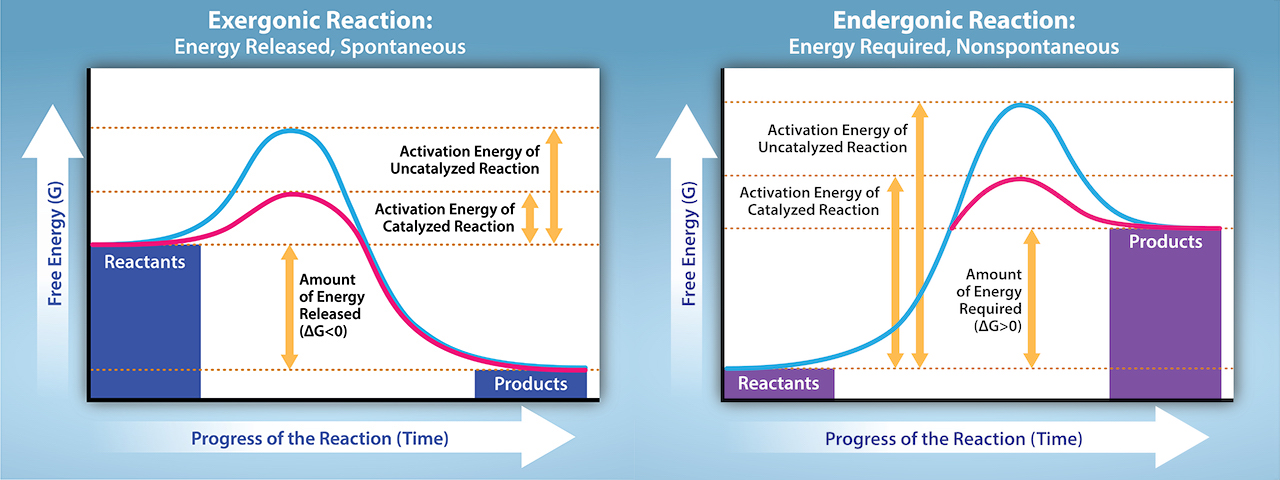
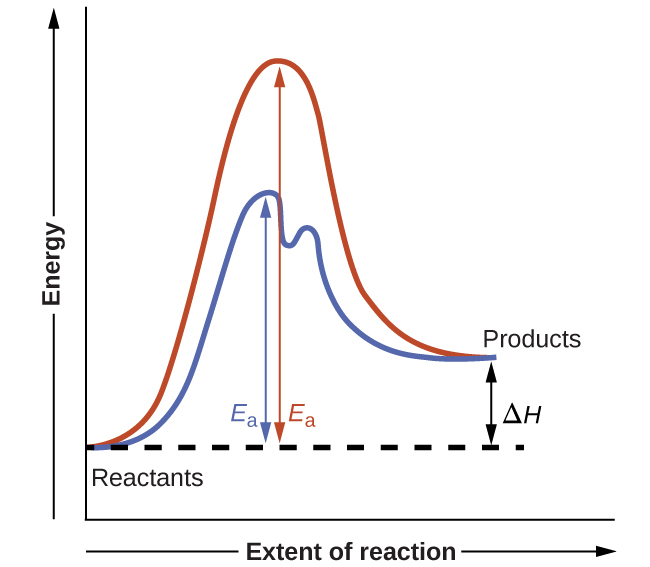
The energy barrier that must overcome to reach a and undergo .

Read explanation · OpenStax ↗
Adenine

A that pairs with in and in .

Read explanation · OpenStax ↗
Adenosine triphosphate

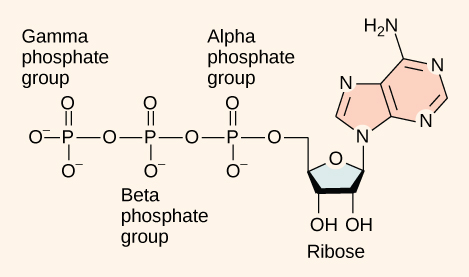
An energy-carrying ; its powers many cellular processes, including cycles.

Read explanation · OpenStax ↗
Alpha carbon · ·

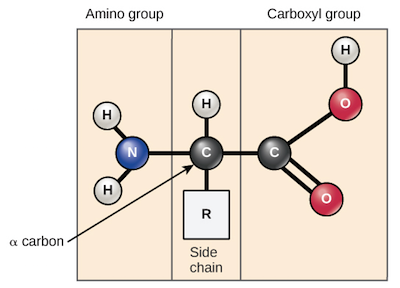
The central carbon next to the carboxyl carbon. In a standard it binds an , hydrogen, and .
Read explanation · OpenStax ↗
Alpha helix · · · · · ·

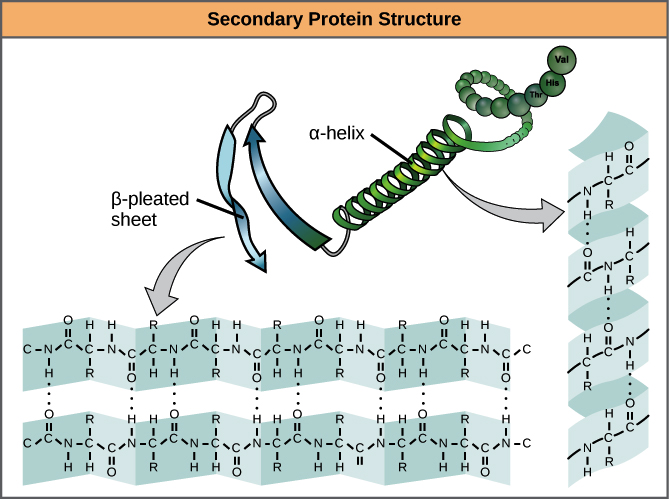
A helical stabilized by between a oxygen and an hydrogen four later.

Read explanation · OpenStax ↗
Amide · · ·

A group containing a carbon bonded to nitrogen. are amide linkages.
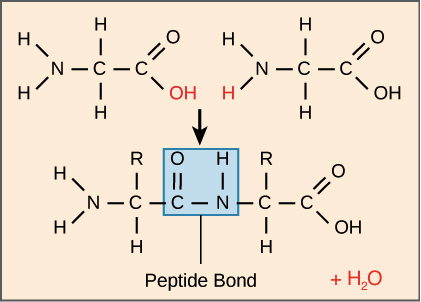
Read explanation · OpenStax ↗
Amino acid

A building block containing amino and and a characteristic .

Read explanation · OpenStax ↗
Amino acid residue · ·

The part of an incorporated into a chain. Residue can also describe another building block within a larger .

Read explanation · OpenStax ↗
Amino group · · ·

A nitrogen-containing . A free ’s amino group is typically (NH₃⁺) near physiological ; ’s ring nitrogen is an exception to this formula.

Read explanation · OpenStax ↗
Amphipathic

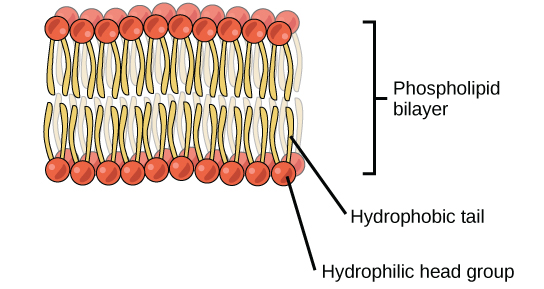
Having both a region and a region, as in a or .

Read explanation · OpenStax ↗
Analytical standard ·

A material with a known identity or amount used to compare or calibrate measurements.

Read explanation · Agilent ↗
Antiparallel

Running in opposite directions, as with two strands or neighboring strands in some .

Read explanation · OpenStax ↗
Aqueous solution ·

A in which water is the .

Read explanation · OpenStax ↗
Atom

The smallest unit of an element that retains its chemical identity; it has a surrounded by .

Read explanation · OpenStax ↗
Beta sheet · · · · · ·

A made of aligned segments connected by ; strands may be parallel or .

Read explanation · OpenStax ↗
Biomolecule

A made by or involved in living systems, including , , , and .

Read explanation · OpenStax ↗
Blotting ·

Transfer of separated or to a so a specific target can be detected.

Read explanation · Thermo Fisher ↗
Boiling point

The temperature at which a liquid’s equals the surrounding pressure.

Read explanation · Agilent ↗
Brønsted–Lowry base · · · · · · · · · · ·

In the Brønsted–Lowry model, a substance that can accept a . Basic solutions have lower activity than water.

Read explanation · OpenStax ↗
Calibration

Establishing the relation between a measured signal and known values or .

Read explanation · Agilent ↗
Carbohydrate

A class of including sugars and their , used for energy storage, structure, and recognition.

Read explanation · OpenStax ↗
Carbonyl group · ·

A carbon double-bonded to oxygen, C=O; present in and many other .

Read explanation · OpenStax ↗
Carboxyl group · ·

An , COOH. In free it is usually to COO⁻ near physiological .

Read explanation · OpenStax ↗
Catalyst · ·

A substance that speeds a by providing a pathway with lower and is regenerated rather than consumed overall.

Read explanation · OpenStax ↗
Chemical compound ·

A substance containing of two or more different chemically combined in a definite composition.

Read explanation · OpenStax ↗
Chemical element

A substance defined by having the same number of , such as carbon or oxygen.

Read explanation · OpenStax ↗
Chemical reaction ·

A process that rearranges and chemical bonds, converting into .

Read explanation · OpenStax ↗
Chromosome ·

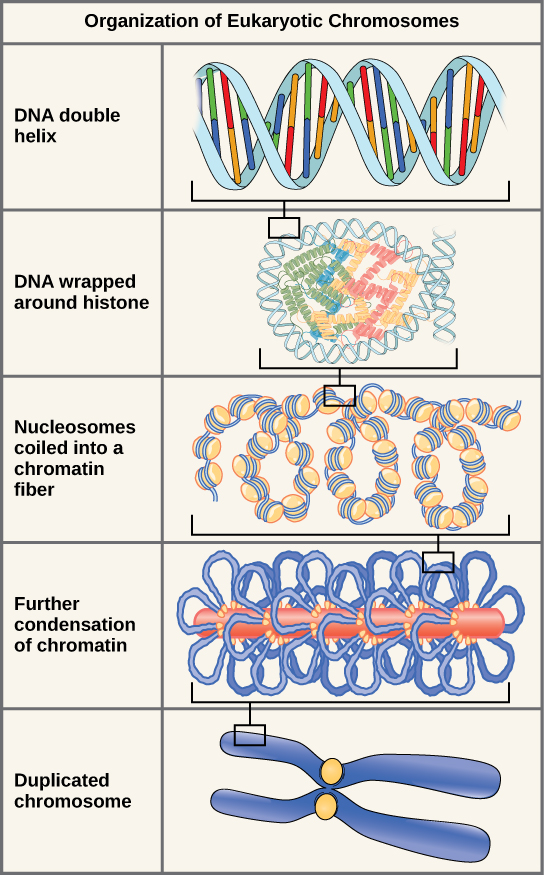
An organized with associated that carries . A replicated chromosome has two .

Read explanation · OpenStax ↗
Codon

A sequence of three that specifies an or a stop signal.

Read explanation · OpenStax ↗
Coenzyme

An organic that helps an catalyze a , often by carrying or chemical groups.

Read explanation · OpenStax ↗
Cofactor

A nonprotein component needed for an to work, such as a metal or an organic .

Read explanation · OpenStax ↗
Complementary base pairing · ·

Specific interactions between : usually A with T in , A with U in , and G with C.

Read explanation · NHGRI ↗
Concentration

The amount of a substance in a specified volume or mass of mixture.

Read explanation · OpenStax ↗
Covalent bond · ·

A bond in which share pairs. and are covalent.

Read explanation · OpenStax ↗
Cysteine ·

An with a . Two cysteines can form a .

Read explanation · OpenStax ↗
Cytosine

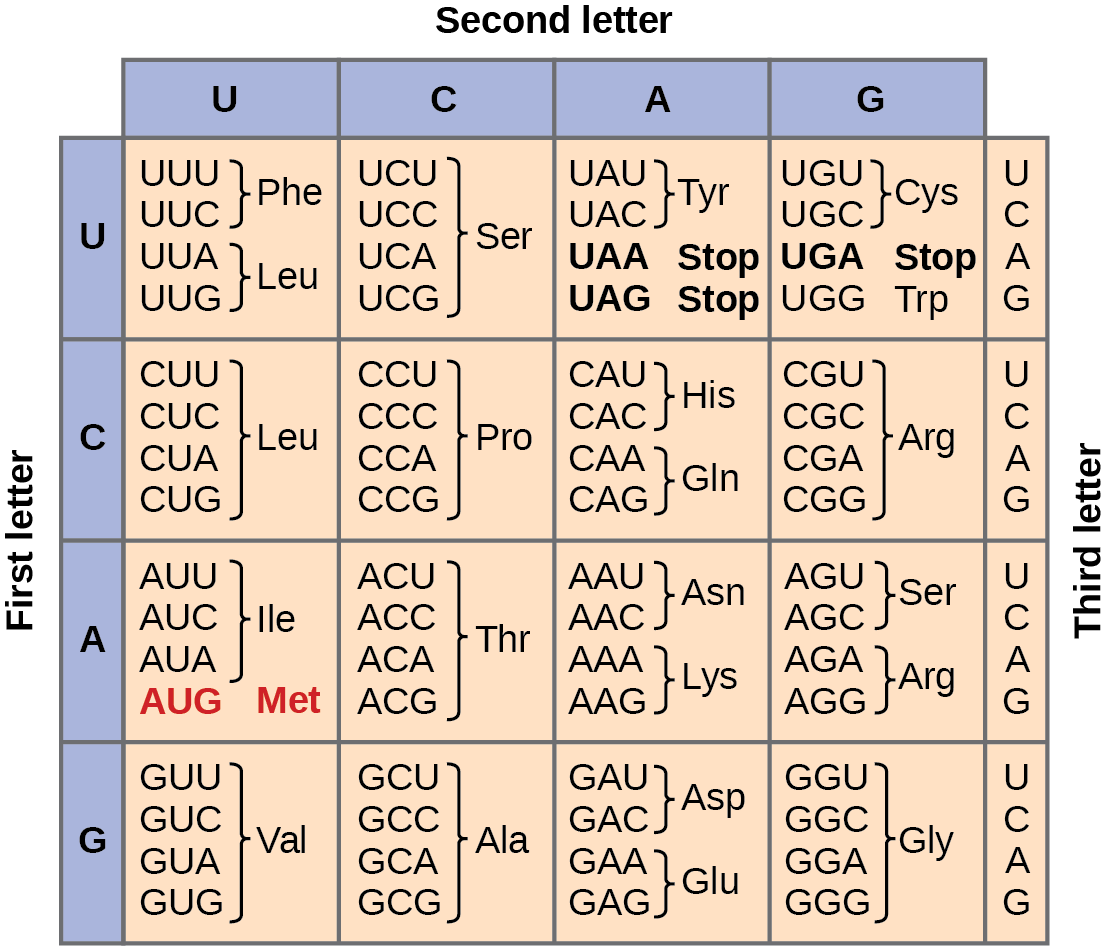
A in and that pairs with . can convert it to .

Read explanation · OpenStax ↗
Dalton

A unit of mass equal to one twelfth of the mass of a carbon-12 ; used to describe .

Read explanation · OpenStax ↗
Deamination

Removal of an . Deamination of produces and can change genetic information if unrepaired.

Read explanation · Biology LibreTexts / Oregon State University ↗
Dehydration synthesis

Joining with net removal of water; the overall used to depict formation.

Read explanation · OpenStax ↗
Deoxyribonucleic acid

The that stores genetic information used to specify and sequences.

Read explanation · OpenStax ↗
Deoxyribose

The five-carbon sugar in ; its 2′ carbon bears H instead of the found in .

Read explanation · OpenStax ↗
Deprotonation

Removal of a from a or group; this changes its by minus one.

Read explanation · OpenStax ↗
Detergent

An substance that can associate with both water and material; detergents can disrupt or interactions.

Read explanation · Thermo Fisher ↗
Dipole ·

A separation of positive and negative within a bond or .

Read explanation · OpenStax ↗
Disulfide bond · · ·

A covalent sulfur–sulfur bond formed by of two , which can stabilize structure.

Read explanation · NCBI Bookshelf ↗
DNA replication

Copying so genetic information can be passed to daughter cells. Each guides a complementary new strand.

Read explanation · OpenStax ↗
Electric charge · · ·

An electrical property that can be positive or negative. Opposite charges attract and like charges repel; net charge is the sum of all charges on a particle.

Read explanation · OpenStax ↗
Electric field

A quantity describing the electrical force per unit positive . An applied field drives through a gel during .

Read explanation · Thermo Fisher ↗
Electron

A negatively subatomic particle. Electron sharing and transfer determine much of chemical bonding.

Read explanation · OpenStax ↗
Electronegativity ·

An ’s tendency to attract shared in a chemical bond. Unequal attraction can make a bond .

Read explanation · OpenStax ↗
Electrophoresis

Movement of in an , used to separate through a support such as a gel.

Read explanation · Thermo Fisher ↗
Electrostatic interaction · ·

Attraction between opposite electrical or repulsion between like .

Read explanation · OpenStax ↗
Entropy

A measure related to the number of accessible microscopic arrangements and the dispersal of energy.

Read explanation · OpenStax ↗
Enzyme

A biological that speeds a without being consumed. Most enzymes are .

Read explanation · OpenStax ↗
Equilibrium

A state where opposing processes occur at equal rates, so macroscopic or other properties remain constant.

Read explanation · OpenStax ↗
Eukaryote ·

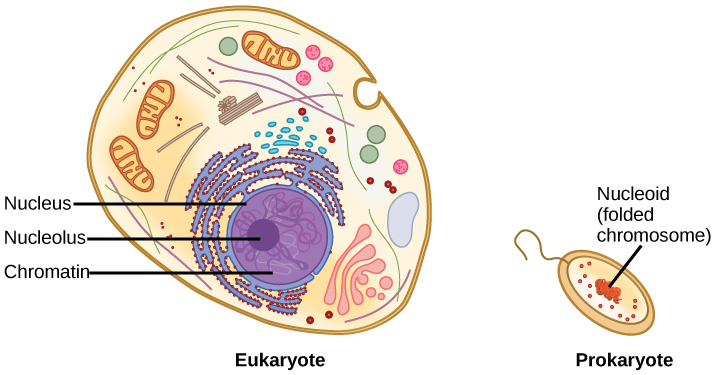
An organism whose cells have a -enclosed ; animals, plants, fungi, and protists are eukaryotes.

Read explanation · OpenStax ↗
Functional group

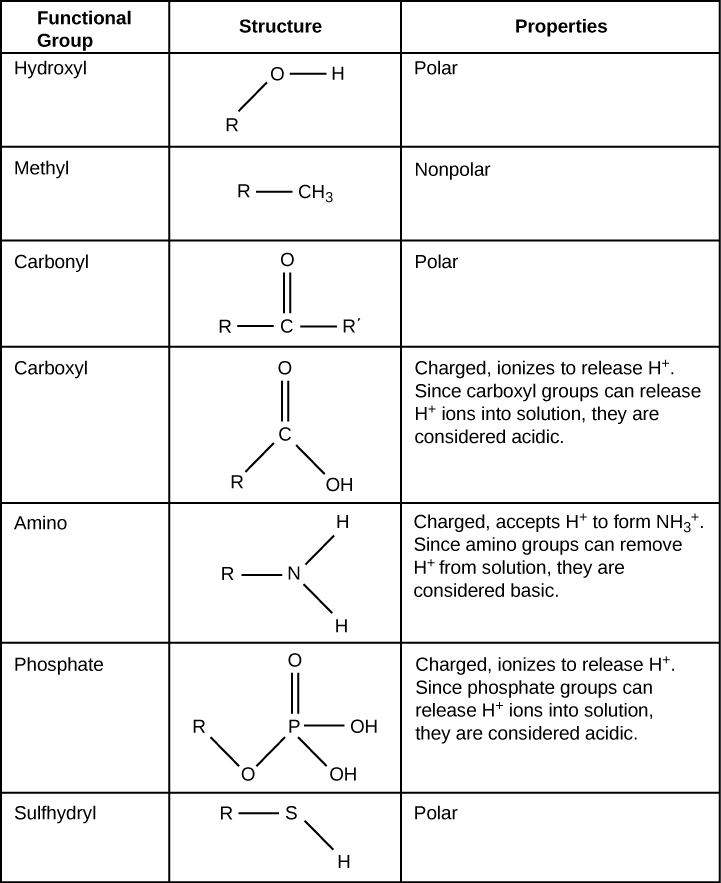
A group of whose chemical behavior gives a characteristic and properties.

Read explanation · OpenStax ↗
Gene

A sequence that contributes to a functional or , together with the information needed to express it.

Read explanation · OpenStax ↗
Gene expression

Production of a functional from a , including and, for -coding , .

Read explanation · NCBI Bookshelf ↗
Gibbs free energy · ·

A quantity used to predict whether a process is favorable at constant temperature and pressure. A negative change favors the forward process.

Read explanation · OpenStax ↗
Guanine

A that pairs with through three .

Read explanation · OpenStax ↗
halogen

Group 17 element with seven valence and a common −1 ionic state.

Read explanation · OpenStax ↗
hydride

Formally H⁻; hydride-transfer reagents or deliver a hydrogen with an pair.

Read explanation · OpenStax ↗
Hydrocarbon · ·

A made only of carbon and hydrogen. Hydrocarbon regions are generally .

Read explanation · OpenStax ↗
Hydrogen bond ·

An attraction between a hydrogen bonded to an and another . hydrogen bonds stabilize .

Read explanation · OpenStax ↗
Hydrogen ion · ·

A positively hydrogen species. H⁺ denotes a , which is hydrated in water; its activity determines .

Read explanation · OpenStax ↗
hydrogen-bond acceptor

with an available lone pair able to accept a .

Read explanation · OpenStax ↗
hydrogen-bond donor

Group with a suitably polarized hydrogen, commonly O–H or N–H, that can participate as a donor.

Read explanation · OpenStax ↗
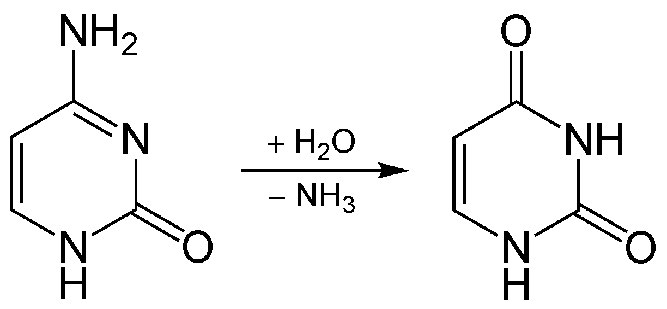
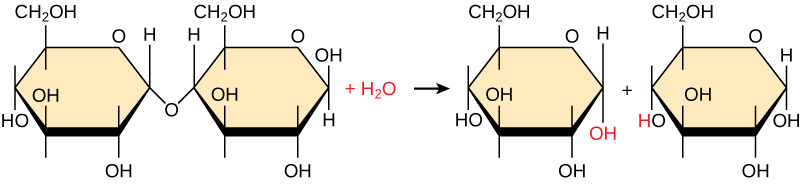
Hydrolysis

Breaking a chemical bond by adding water. hydrolysis separates .

Read explanation · OpenStax ↗
Hydrophilic

Interacting favorably with water, typically because a group is or .

Read explanation · OpenStax ↗
Hydrophobic

Interacting poorly with water. often gather in a ’s interior.

Read explanation · OpenStax ↗
Hydroxide ion ·

The negatively OH⁻. Basic contain a higher hydroxide ion activity than water at the same temperature.

Read explanation · OpenStax ↗
Hydroxyl group ·

An oxygen bonded to hydrogen, –OH. Hydroxyl groups can and often increase .

Read explanation · OpenStax ↗
Ion · ·

An or with a net because its numbers of and do not balance.

Read explanation · OpenStax ↗
Ionization ·

Formation of electrically or , for example before analysis in a .

Read explanation · Thermo Fisher ↗
ion–dipole interaction

attraction between an and a .

Read explanation · OpenStax ↗
Kilojoule ·

A unit of energy equal to 1,000 joules. Energy changes are often reported per , in kJ/mol.

Read explanation · NIST ↗
Kinetics

The study of and the factors and mechanisms that control them. A favorable may still proceed slowly.

Read explanation · OpenStax ↗
linkage

A tendency of nearby on the same to be inherited together.

Read explanation · OpenStax ↗
Lipid

A broad class of largely or , including fats, , and steroids.

Read explanation · OpenStax ↗
locus

The specific position of a or other feature.

Read explanation · OpenStax ↗
Logarithm · · ·

The exponent needed to obtain a number from a chosen fixed number. For decimal logarithms, log₁₀(100) = 2 because 10² = 100; uses the negative decimal logarithm of activity.

Read explanation · OpenStax ↗
London dispersion force

Attraction arising from correlated temporary fluctuations in distributions.

Read explanation · OpenStax ↗
Mass spectrometry ·

Analysis of according to their mass-to- ratios, used to identify and or .

Read explanation · Thermo Fisher ↗
Membrane · · · ·

A thin boundary or sheet. Cell membranes are bilayers containing ; membranes are synthetic supports that hold or for detection.

Read explanation · OpenStax ↗
Messenger RNA ·

An that carries coding information used by to synthesize a .

Read explanation · OpenStax ↗
molar mass

Mass per of a specified substance.

Read explanation · OpenStax ↗
mole

Amount containing exactly 6.02214076 × 10²³ specified entities.

Read explanation · OpenStax ↗
Molecular chaperone · ·

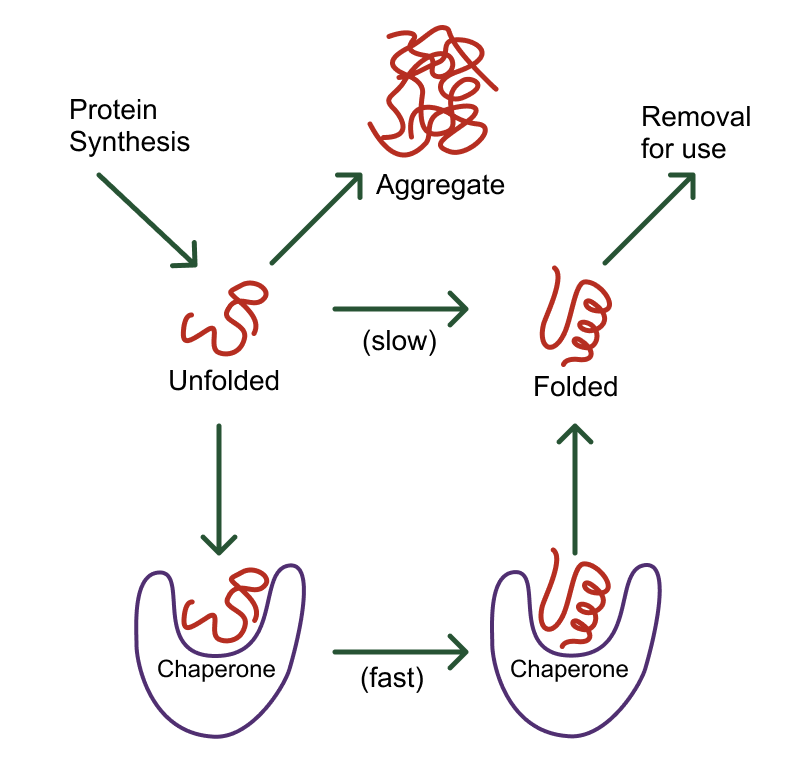
A that assists other in folding or prevents , without specifying their sequence.

Read explanation · NCBI Bookshelf ↗
Molecular mass · ·

The mass of a , commonly expressed in for . Molecular weight is often used informally for the same quantity.

Read explanation · OpenStax ↗
Molecule

Two or more joined by . A molecule may be electrically or carry a .

Read explanation · OpenStax ↗
Neutral

Having no net . For a , neutral instead means equal and activities; its is about 7 at 25 °C.

Read explanation · OpenStax ↗
Nitrogenous base · · ·

A nitrogen-containing ring component of ; its pairing interactions help specify sequences.

Read explanation · OpenStax ↗
Nonpolar ·

Lacking a substantial separation of . Nonpolar groups generally interact poorly with water.

Read explanation · OpenStax ↗
Nucleic acid

A of , such as or , used in information storage, expression, and other cellular functions.

Read explanation · OpenStax ↗
Nucleotide

A joined to a sugar and one or more .

Read explanation · OpenStax ↗
Nucleus ·

A -enclosed compartment containing most of a cell’s .

Read explanation · OpenStax ↗
Oxidation ·

Loss of or an increase in oxidation state. Oxidizing two can form a .

Read explanation · OpenStax ↗
Peptide

A chain of joined by ; the term commonly describes chains shorter than a typical .

Read explanation · OpenStax ↗
Peptide bond ·

A covalent between the carboxyl carbon of one and the amino nitrogen of the next.

Read explanation · OpenStax ↗
pH

A measure of , defined as the negative of activity. Lower pH means greater ; pH influences .

Read explanation · OpenStax ↗
Phosphate group ·

A phosphorus-containing group bonded to oxygens; phosphate groups occur in , , and modified .

Read explanation · OpenStax ↗
Phospholipid

An with a -containing region and tails; a major component of cellular .

Read explanation · OpenStax ↗
Polar

Having an uneven distribution of . Polar groups often interact favorably with water.

Read explanation · OpenStax ↗
polarizability

Ease with which an cloud is distorted by an .

Read explanation · OpenStax ↗
Polymer

A large made from many linked molecular building blocks.

Read explanation · OpenStax ↗
Polypeptide

A chain of connected by . A functional can contain one or several such chains.

Read explanation · OpenStax ↗
Proline ·

An whose loops back to the nitrogen, restricting rotation and often creating bends.

Read explanation · OpenStax ↗
Protein

One or more folded chains that perform biological roles such as , transport, signaling, or structural support.

Read explanation · OpenStax ↗
Protein aggregation · ·

Association of into larger clusters, often when exposed surfaces of unfolded stick together.

Read explanation · NCBI Bookshelf ↗
Protein backbone ·

The repeating nitrogen–alpha-carbon– chain of a , excluding its variable .

Read explanation · OpenStax ↗
Protein domain · ·

A region of a that forms a recognizable structural or functional unit.

Read explanation · OpenStax ↗
Proton

A positively subatomic particle. In – chemistry, donating a proton means transferring a .

Read explanation · OpenStax ↗
Protonation

Addition of a to an , , or ; this changes its by plus one.

Read explanation · OpenStax ↗
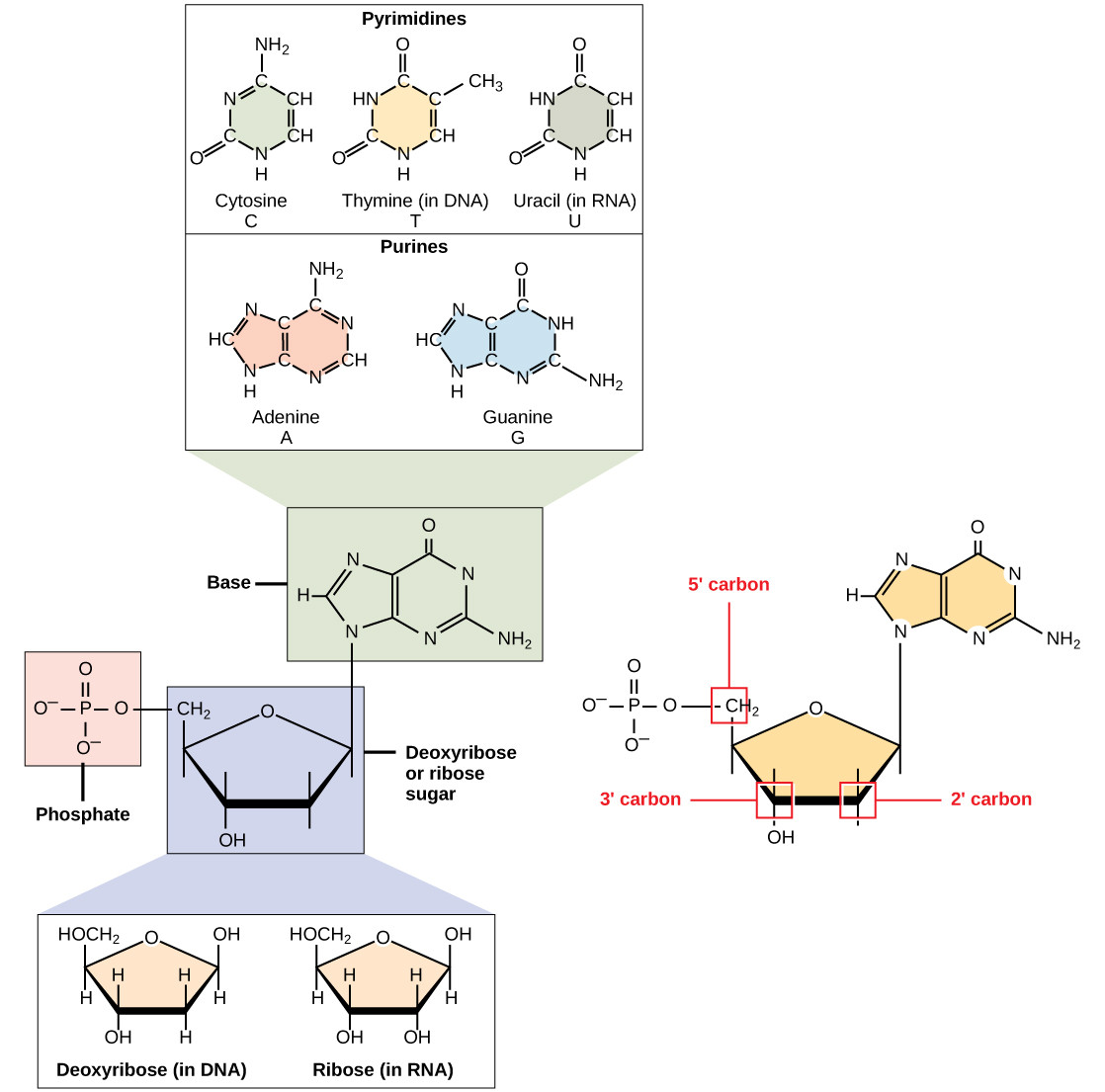
Purine · ·

A with two fused rings. and are purines.

Read explanation · OpenStax ↗
Pyrimidine · ·

A with one six-membered ring. , , and are pyrimidines.

Read explanation · OpenStax ↗
Quantification · ·

Estimating the amount or of a substance from measured signals and suitable or .

Read explanation · Waters ↗
R group · ·

The variable side chain attached to an ’s . It determines identity, , , and chemical behavior.

Read explanation · OpenStax ↗
Reactant

A starting substance transformed during a .

Read explanation · OpenStax ↗
Reaction intermediate · ·

A species formed in one step and consumed in another. It occupies a local energy minimum between .

Read explanation · OpenStax ↗
Reaction product ·

A substance formed by a .

Read explanation · OpenStax ↗
Reaction rate · ·

How quickly are consumed or form, usually expressed as a change per unit time.

Read explanation · OpenStax ↗
Ribonucleic acid ·

A with roles in , regulation, and ; carries -coding information.

Read explanation · OpenStax ↗
Ribose

The five-carbon sugar in , with a at the 2′ carbon.

Read explanation · OpenStax ↗
Ribosome ·

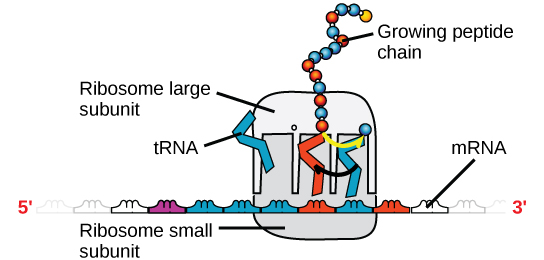
A complex of and that translates into a .

Read explanation · OpenStax ↗
Secondary structure

Local folding, such as and , stabilized mainly by .

Read explanation · OpenStax ↗
Sister chromatid

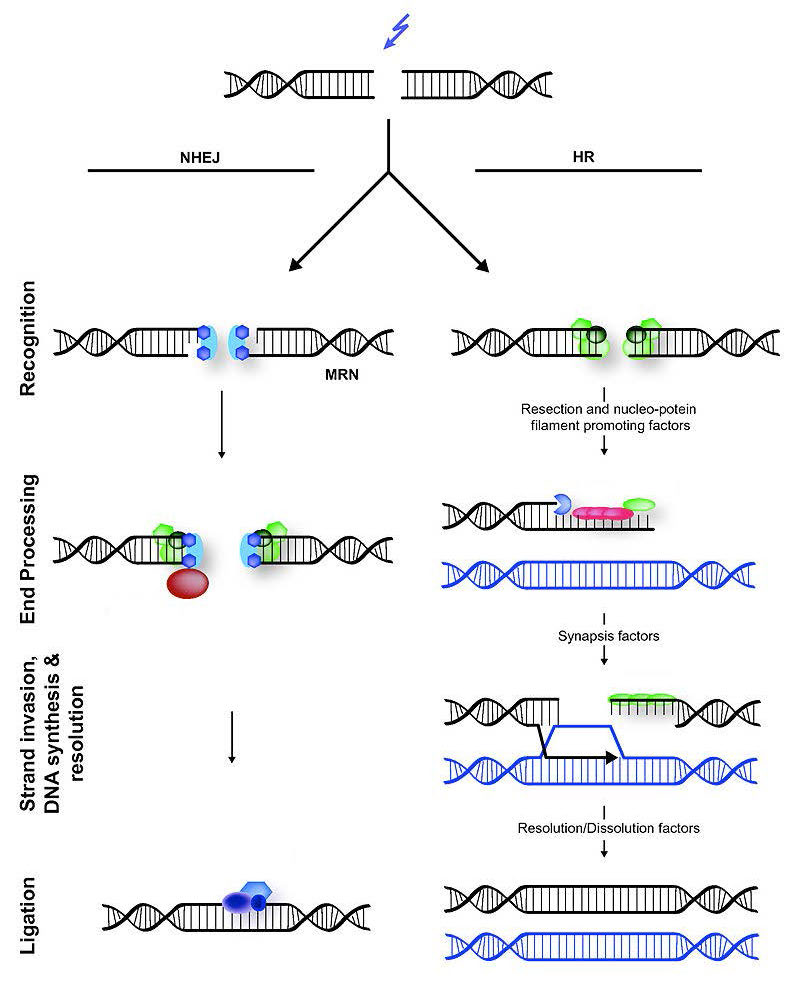
One of the two copies of a produced by . An intact sister chromatid can supply a template for accurate repair.

Read explanation · Biology LibreTexts / Oregon State University ↗
Solubility ·

The amount of a substance that can dissolve in a under specified conditions. Soluble means able to dissolve; insoluble means only very slightly soluble in that .

Read explanation · OpenStax ↗
Solute

A dissolved component of a .

Read explanation · OpenStax ↗
Solution

A homogeneous mixture in which are dissolved in a .

Read explanation · OpenStax ↗
Solvent

The component of a that dissolves other substances, usually the component present in the greatest amount.

Read explanation · OpenStax ↗
standard deviation

A measure of dispersion around a mean expressed in the original variable’s units.

Read explanation · OpenStax ↗
standard error

The sampling variability of an estimator, often the estimated of sample means.

Read explanation · OpenStax ↗
Template strand · · ·

A preexisting strand whose sequence guides complementary nucleic- synthesis.

Read explanation · OpenStax ↗
Thermodynamics ·

The study of energy, , and . It helps determine whether a process is favorable, while concerns how fast it occurs.

Read explanation · OpenStax ↗
Thiol group · · · ·

A sulfur bonded to hydrogen, –SH. thiols can form through .

Read explanation · OpenStax ↗
Thymine

A normally used in ; it pairs with through two .

Read explanation · OpenStax ↗
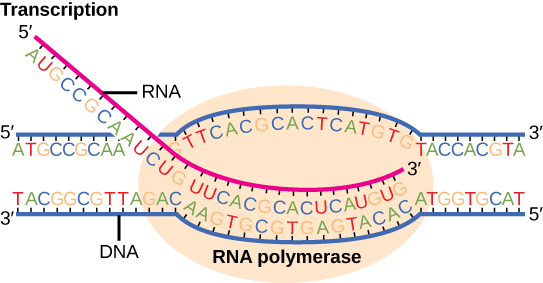
Transcription

Synthesis of using a template.

Read explanation · OpenStax ↗
Transition state

A fleeting, high-energy arrangement at a barrier. It is an energy maximum along the path, rather than a stable .

Read explanation · OpenStax ↗
Translation ·

Synthesis of a on a using the sequence of in .

Read explanation · OpenStax ↗
Uracil

A normally used in in place of . Uracil produced by in is a repair target.

Read explanation · OpenStax ↗
Van der Waals forces

Short-range attractions between nearby , including London dispersion interactions, that help stabilize close packing.

Read explanation · NCBI Bookshelf ↗
vapor pressure

pressure of vapor above its condensed phase at a specified temperature.

Read explanation · OpenStax ↗
VSEPR

Model predicting - arrangement by minimizing -pair repulsion.

Read explanation · OpenStax ↗

10.1 Intermolecular Forces

OpenStax · 10.1 Intermolecular Forces ↗
Instructional page including learning objectives, examples, figures, source tables and questions. Site navigation and embedded media players are omitted; source media links remain available.

Learning Objectives

By the end of this section, you will be able to:

  • Describe the types of intermolecular forces possible between or in condensed phases (dispersion forces, - attractions, and )
  • Identify the types of intermolecular forces experienced by specific based on their structures
  • Explain the relation between the intermolecular forces present within a substance and the temperatures associated with changes in its physical state

As was the case for gaseous substances, the molecular theory may be used to explain the behavior of solids and liquids. In the following description, the term particle will be used to refer to an , , or . Note that we will use the popular phrase “intermolecular attraction” to refer to attractive forces between the particles of a substance, regardless of whether these particles are , , or .

Consider these two aspects of the molecular-level environments in solid, liquid, and gaseous matter:

  • Particles in a solid are tightly packed together and often arranged in a regular pattern; in a liquid, they are close together with no regular arrangement; in a gas, they are far apart with no regular arrangement.
  • Particles in a solid vibrate about fixed positions and do not generally move in relation to one another; in a liquid, they move past each other but remain in essentially constant contact; in a gas, they move independently of one another except when they collide.

The differences in the properties of a solid, liquid, or gas reflect the strengths of the attractive forces between the , , or that make up each phase. The phase in which a substance exists depends on the relative extents of its intermolecular forces (IMFs) and the energies (KE) of its . IMFs are the various forces of attraction that may exist between the and of a substance due to phenomena, as will be detailed in this module. These forces serve to hold particles close together, whereas the particles’ KE provides the energy required to overcome the attractive forces and thus increase the distance between particles. Figure 10.2 illustrates how changes in physical state may be induced by changing the temperature, hence, the average KE, of a given substance.

Three sealed flasks are labeled, “Crystalline solid,” “Liquid,” and “Gas,” from left to right. The first flask holds a cube composed of small spheres sitting on the bottom while the second flask shows a lot of small spheres in the bottom that are spaced a small distance apart from one another and have lines around them to indicate motion. The third flask shows a few spheres spread far from one another with larger lines to indicate motion. There is a right-facing arrow that spans the top of all three flasks. The arrow is labeled, “Increasing K E ( temperature ).” There is a left-facing arrow that spans the bottom of all three flasks. The arrow is labeled, “Increasing I M F.”
Figure 10.2 — 10.1 Intermolecular Forces

Figure 10.2 Transitions between solid, liquid, and gaseous states of a substance occur when conditions of temperature or pressure favor the associated changes in intermolecular forces. (Note: The space between particles in the gas phase is much greater than shown.)

Paul Flowers, Klaus Theopold, Richard Langley, and William R. Robinson, Chemistry 2E, OpenStax. · CC BY-NC-SA 4.0 · Original image ↗ · Access for free ↗

As an example of the processes depicted in this figure, consider a sample of water. When gaseous water is cooled sufficiently, the attractions between H2O will be capable of holding them together when they come into contact with each other; the gas condenses, forming liquid H2O. For example, liquid water forms on the outside of a cold glass as the water vapor in the air is cooled by the cold glass, as seen in Figure 10.3.

Image a shows a brown colored beverage in a glass with condensation on the outside. Image b shows a body of water with fog hovering above the surface of the water.
Figure 10.3 — 10.1 Intermolecular Forces

Figure 10.3 Condensation forms when water vapor in the air is cooled enough to form liquid water, such as (a) on the outside of a cold beverage glass or (b) in the form of fog. (credit a: modification of work by Jenny Downing; credit b: modification of work by Cory Zanker)

Paul Flowers, Klaus Theopold, Richard Langley, and William R. Robinson, Chemistry 2E, OpenStax. (credit a: modification of work by Jenny Downing; credit b: modification of work by Cory Zanker) · CC BY-NC-SA 4.0 · Original image ↗ · Access for free ↗

We can also liquefy many gases by compressing them, if the temperature is not too high. The increased pressure brings the of a gas closer together, such that the attractions between the become strong relative to their KE. Consequently, they form liquids. Butane, C4H10, is the fuel used in disposable lighters and is a gas at standard temperature and pressure. Inside the lighter’s fuel compartment, the butane is compressed to a pressure that results in its to the liquid state, as shown in Figure 10.4.

A butane lighter is shown.
Figure 10.4 — 10.1 Intermolecular Forces

Figure 10.4 Gaseous butane is compressed within the storage compartment of a disposable lighter, resulting in its condensation to the liquid state. (credit: modification of work by “Sam-Cat”/Flickr)

Paul Flowers, Klaus Theopold, Richard Langley, and William R. Robinson, Chemistry 2E, OpenStax. (credit: modification of work by “Sam-Cat”/Flickr) · CC BY-NC-SA 4.0 · Original image ↗ · Access for free ↗

Finally, if the temperature of a liquid becomes sufficiently low, or the pressure on the liquid becomes sufficiently high, the of the liquid no longer have enough KE to overcome the IMF between them, and a solid forms. A more thorough discussion of these and other changes of state, or phase transitions, is provided in a later module of this chapter.

Link to Learning

Access this interactive simulation on states of matter, phase transitions, and intermolecular forces. This simulation is useful for visualizing concepts introduced throughout this chapter.

Forces between

Under appropriate conditions, the attractions between all gas will cause them to form liquids or solids. This is due to intermolecular forces, not intramolecular forces. Intramolecular forces are those within the that keep the together, for example, the bonds between the . Intermolecular forces are the attractions between , which determine many of the physical properties of a substance. Figure 10.5 illustrates these different molecular forces. The strengths of these attractive forces vary widely, though usually the IMFs between small are weak compared to the intramolecular forces that bond together within a . For example, to overcome the IMFs in one of liquid HCl and convert it into gaseous HCl requires only about 17 . However, to break the between the hydrogen and chlorine in one of HCl requires about 25 times more energy—430 .

An image is shown in which two molecules composed of a green sphere labeled “C l” connected on the right to a white sphere labeled “H” are near one another with a dotted line labeled “Intermolecular force ( weak )” drawn between them. A line connects the two spheres in each molecule and the line is labeled “Intramolecular force ( strong ).”
Figure 10.5 — 10.1 Intermolecular Forces

Figure 10.5 Intra molecular forces keep a molecule intact. Inter molecular forces hold multiple molecules together and determine many of a substance’s properties.

Paul Flowers, Klaus Theopold, Richard Langley, and William R. Robinson, Chemistry 2E, OpenStax. · CC BY-NC-SA 4.0 · Original image ↗ · Access for free ↗

All of the attractive forces between and are known as , although they are usually referred to more informally as intermolecular attraction. We will consider the various types of IMFs in the next three sections of this module.

Dispersion Forces

One of the three is present in all condensed phases, regardless of the nature of the or composing the substance. This attractive force is called the in honor of German-born American physicist Fritz London who, in 1928, first explained it. This force is often referred to as simply the dispersion force. Because the of an or are in constant motion (or, alternatively, the ’s location is subject to quantum-mechanical variability), at any moment in time, an or can develop a temporary, instantaneous if its are distributed asymmetrically. The presence of this can, in turn, distort the of a neighboring or , producing an induced . These two rapidly fluctuating, temporary thus result in a relatively weak attraction between the species—a so-called dispersion force like that illustrated in Figure 10.6.

Two pairs of molecules are shown where each molecule has one larger blue side labeled “delta sign, negative sign” and a smaller red side labeled “delta sign, positive sign.” Toward the middle of the both molecules, but still on each distinct side, is a black dot. Between the two images is a dotted line labeled, “Attractive force.” In the first image, the red and blue sides are labeled, “Unequal distribution of electrons.” Below both images are brackets. The brackets are labeled, “Temporary dipoles.”
Figure 10.6 — 10.1 Intermolecular Forces

Figure 10.6 Dispersion forces result from the formation of temporary dipoles, as illustrated here for two nonpolar diatomic molecules.

Paul Flowers, Klaus Theopold, Richard Langley, and William R. Robinson, Chemistry 2E, OpenStax. · CC BY-NC-SA 4.0 · Original image ↗ · Access for free ↗

Dispersion forces that develop between in different can attract the two to each other. The forces are relatively weak, however, and become significant only when the are very close. Larger and heavier and exhibit stronger dispersion forces than do smaller and lighter and . F2 and Cl2 are gases at room temperature (reflecting weaker attractive forces); Br2 is a liquid, and I2 is a solid (reflecting stronger attractive forces). Trends in observed melting and for the halogens clearly demonstrate this effect, as seen in Table 10.1.

Melting and of the Halogens
Atomic Radius Melting Point
fluorine, F2 38 g/mol 72 pm 53 K 85 K
chlorine, Cl2 71 g/mol 99 pm 172 K 238 K
bromine, Br2 160 g/mol 114 pm 266 K 332 K
iodine, I2 254 g/mol 133 pm 387 K 457 K
astatine, At2 420 g/mol 150 pm 575 K 610 K
Table 10.1

The increase in melting and with increasing atomic/molecular size may be rationalized by considering how the strength of dispersion forces is affected by the electronic structure of the or in the substance. In a larger , the valence are, on average, farther from the than in a smaller . Thus, they are less tightly held and can more easily form the temporary that produce the attraction. The measure of how easy or difficult it is for another (for example, a nearby or ) to distort a ’s distribution (its cloud) is known as . A that has a cloud that is easily distorted is said to be very polarizable and will have large dispersion forces; one with a cloud that is difficult to distort is not very polarizable and will have small dispersion forces.

Example 10.1

London Forces and Their Effects

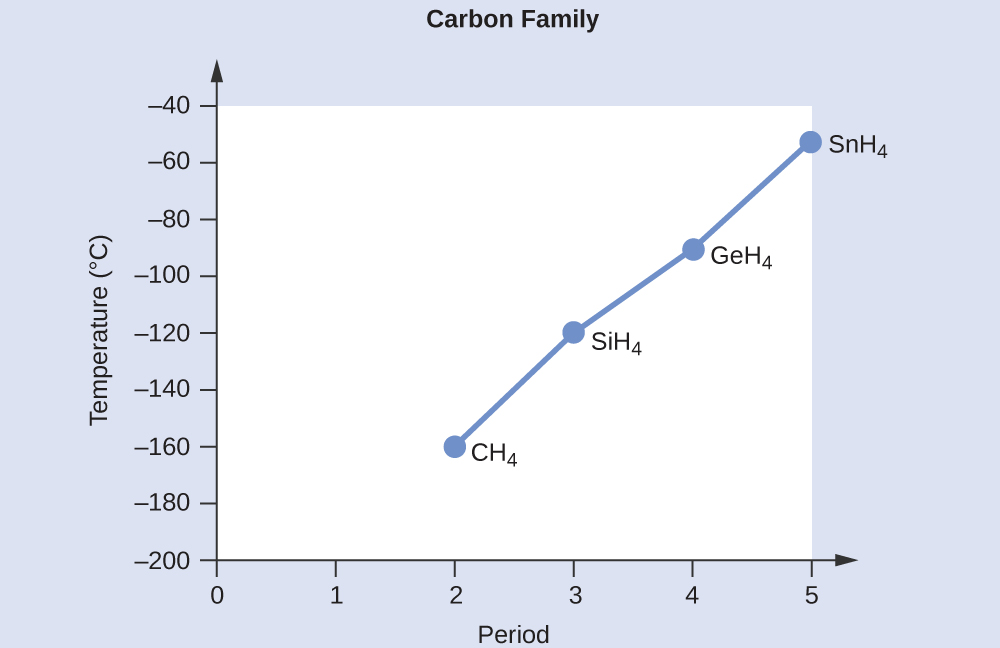
Order the following of a group 14 element and hydrogen from lowest to highest : CH4, SiH4, GeH4, and SnH4. Explain your reasoning.

Applying the skills acquired in the chapter on chemical bonding and molecular geometry, all of these are predicted to be , so they may experience only dispersion forces: the smaller the , the less polarizable and the weaker the dispersion forces; the larger the , the larger the dispersion forces. The molar masses of CH4, SiH4, GeH4, and SnH4 are approximately 16 g/mol, 32 g/mol, 77 g/mol, and 123 g/mol, respectively. Therefore, CH4 is expected to have the lowest and SnH4 the highest . The ordering from lowest to highest is expected to be CH4 < SiH4 < GeH4 < SnH4.

A graph of the actual of these versus the period of the group 14 element shows this prediction to be correct:

Check Your Learning

Order the following from lowest to highest : C2H6, C3H8, and C4H10.

Answer:

C2H6 < C3H8 < C4H10. All of these are and only have : the larger the , the larger the dispersion forces and the higher the . The ordering from lowest to highest is therefore C2H6 < C3H8 < C4H10.

The shapes of also affect the magnitudes of the dispersion forces between them. For example, for the isomers n-pentane, isopentane, and neopentane (shown in Figure 10.7) are 36 °C, 27 °C, and 9.5 °C, respectively. Even though these are composed of with the same chemical formula, C5H12, the difference in suggests that dispersion forces in the liquid phase are different, being greatest for n-pentane and least for neopentane. The elongated shape of n-pentane provides a greater surface area available for contact between , resulting in correspondingly stronger dispersion forces. The more compact shape of isopentane offers a smaller surface area available for intermolecular contact and, therefore, weaker dispersion forces. Neopentane are the most compact of the three, offering the least available surface area for intermolecular contact and, hence, the weakest dispersion forces. This behavior is analogous to the connections that may be formed between strips of VELCRO brand fasteners: the greater the area of the strip’s contact, the stronger the connection.

Three images of molecules are shown. The first shows a cluster of large, gray spheres each bonded together and to several smaller, white spheres. There is a gray, jagged line and then the mirror image of the first cluster of spheres is shown. Above these two clusters is the label, “Small contact area, weakest attraction,” and below is the label, “neopentane boiling point: 9.5 degrees C.” The second shows a chain of three gray spheres bonded by the middle sphere to a fourth gray sphere. Each gray sphere is bonded to several smaller, white spheres. There is a jagged, gray line and then the mirror image of the first chain appears. Above these two chains is the label, “Less surface area, less attraction,” and below is the label, “isopentane boiling point: 27 degrees C.” The third image shows a chain of five gray spheres bonded together and to several smaller, white spheres. There is a jagged gray line and then the mirror image of the first chain appears. Above these chains is the label, “Large contact area, strong attraction,” and below is the label, “n-pentane boiling point 36 degrees C.”
Figure 10.7 — 10.1 Intermolecular Forces

Figure 10.7 The strength of the dispersion forces increases with the contact area between molecules, as demonstrated by the boiling points of these pentane isomers.

Paul Flowers, Klaus Theopold, Richard Langley, and William R. Robinson, Chemistry 2E, OpenStax. · CC BY-NC-SA 4.0 · Original image ↗ · Access for free ↗

Chemistry in Everyday Life

Geckos and Intermolecular Forces

Geckos have an amazing ability to adhere to most surfaces. They can quickly run up smooth walls and across ceilings that have no toe-holds, and they do this without having suction cups or a sticky substance on their toes. And while a gecko can lift its feet easily as it walks along a surface, if you attempt to pick it up, it sticks to the surface. How are geckos (as well as spiders and some other insects) able to do this? Although this phenomenon has been investigated for hundreds of years, scientists only recently uncovered the details of the process that allows geckos’ feet to behave this way.

Geckos’ toes are covered with hundreds of thousands of tiny hairs known as setae, with each seta, in turn, branching into hundreds of tiny, flat, triangular tips called spatulae. The huge numbers of spatulae on its setae provide a gecko, shown in Figure 10.8, with a large total surface area for sticking to a surface. In 2000, Kellar Autumn, who leads a multi-institutional gecko research team, found that geckos adhered equally well to both silicon dioxide and gallium arsenide. This proved that geckos stick to surfaces because of dispersion forces—weak intermolecular attractions arising from temporary, synchronized distributions between adjacent . Although dispersion forces are very weak, the total attraction over millions of spatulae is large enough to support many times the gecko’s weight.

In 2014, two scientists developed a model to explain how geckos can rapidly transition from “sticky” to “non-sticky.” Alex Greaney and Congcong Hu at Oregon State University described how geckos can achieve this by changing the angle between their spatulae and the surface. Geckos’ feet, which are normally nonsticky, become sticky when a small shear force is applied. By curling and uncurling their toes, geckos can alternate between sticking and unsticking from a surface, and thus easily move across it. Later research led by Alyssa Stark at University of Akron showed that geckos can maintain their hold on surfaces (similar to the leaves in their habitats) equally well whether the surfaces were wet or dry. Stark's experiment used a ribbon to gently pull the geckos until they slipped, so that the researchers could determine the geckos' ability to hold various surfaces under wet and dry conditions. Further investigations may eventually lead to the development of better adhesives and other applications.

Three figures are shown. The first is a photo of the bottom of a gecko’s foot. The second is bigger version which shows the setae. The third is a bigger version of the setae and shows the spatulae.
Figure 10.8 — 10.1 Intermolecular Forces

Figure 10.8 Geckos’ toes contain large numbers of tiny hairs (setae), which branch into many triangular tips (spatulae). Geckos adhere to surfaces because of van der Waals attractions between the surface and a gecko’s millions of spatulae. By changing how the spatulae contact the surface, geckos can turn their stickiness “on” and “off.” (credit photo: modification of work by “JC*+A!”/Flickr)

Paul Flowers, Klaus Theopold, Richard Langley, and William R. Robinson, Chemistry 2E, OpenStax. (credit photo: modification of work by “JC*+A!”/Flickr) · CC BY-NC-SA 4.0 · Original image ↗ · Access for free ↗

Link to Learning

Watch this video to learn more about Kellar Autumn’s research that determined that are responsible for a gecko’s ability to cling and climb.

- Attractions

Recall from the chapter on chemical bonding and molecular geometry that have a partial positive on one side and a partial negative on the other side of the —a separation of called a . Consider a such as hydrogen chloride, HCl. In the HCl , the more Cl bears the partial negative , whereas the less H bears the partial positive . An attractive force between HCl results from the attraction between the positive end of one HCl and the negative end of another. This attractive force is called a - attraction—the force between the partially positive end of one and the partially negative end of another, as illustrated in Figure 10.9.

Two pairs of molecules are shown where each molecule has one larger blue side labeled “delta sign, negative sign” and a smaller red side labeled “delta sign, positive sign. In the first pair, the red sides of the two molecules both face to the left and the blue side to the right. A horizontal dotted line lies in between the two. In the second pair, the molecules face up and down, with the red and blue ends aligning. A horizontal dotted line lies between the red and blue ends facing upward and another lies between the red and blue ends facing downward.
Figure 10.9 — 10.1 Intermolecular Forces

Figure 10.9 This image shows two arrangements of polar molecules, such as HCl, that allow an attraction between the partial negative end of one molecule and the partial positive end of another.

Paul Flowers, Klaus Theopold, Richard Langley, and William R. Robinson, Chemistry 2E, OpenStax. · CC BY-NC-SA 4.0 · Original image ↗ · Access for free ↗

The effect of a - attraction is apparent when we compare the properties of HCl to F2 . Both HCl and F2 consist of the same number of and have approximately the same . At a temperature of 150 K, of both substances would have the same average KE. However, the - attractions between HCl are sufficient to cause them to “stick together” to form a liquid, whereas the relatively weaker dispersion forces between F2 are not, and so this substance is gaseous at this temperature. The higher normal of HCl (188 K) compared to F2 (85 K) is a reflection of the greater strength of - attractions between HCl , compared to the attractions between F2 . We will often use values such as boiling or freezing points, or enthalpies of vaporization or fusion, as indicators of the relative strengths of IMFs of attraction present within different substances.

Example 10.2

- Forces and Their Effects

Predict which will have the higher : N2 or CO. Explain your reasoning.

CO and N2 are both diatomic with masses of about 28 amu, so they experience similar . Because CO is a , it experiences - attractions. Because N2 is , its cannot exhibit - attractions. The - attractions between CO are comparably stronger than the dispersion forces between N2 , so CO is expected to have the higher .

Check Your Learning

Predict which will have the higher : ICl or Br2. Explain your reasoning.

Answer:

ICl. ICl and Br2 have similar masses (~160 amu) and therefore experience similar . ICl is and thus also exhibits - attractions; Br2 is and does not. The relatively stronger - attractions require more energy to overcome, so ICl will have the higher .

Nitrosyl fluoride (ONF, 49 amu) is a gas at room temperature. Water (H2O, 18 amu) is a liquid, even though it has a lower . We clearly cannot attribute this difference between the two to dispersion forces. Both have about the same shape and ONF is the heavier and larger . It is, therefore, expected to experience more significant dispersion forces. Additionally, we cannot attribute this difference in to differences in the moments of the . Both are and exhibit comparable moments. The large difference between the is due to a particularly strong - attraction that may occur when a contains a hydrogen bonded to a fluorine, oxygen, or nitrogen (the three most ). The very large difference in between the H (2.1) and the to which it is bonded (4.0 for an F , 3.5 for an O , or 3.0 for a N ), combined with the very small size of a H and the relatively small sizes of F, O, or N , leads to highly concentrated partial with these . with F-H, O-H, or N-H moieties are very strongly attracted to similar moieties in nearby , a particularly strong type of - attraction called . Examples of include HF⋯HF, H2O⋯HOH, and H3N⋯HNH2, in which the are denoted by dots. Figure 10.10 illustrates between water .

Five water molecules are shown near one another, but not touching. A dotted line lies between many of the hydrogen atoms on one molecule and the oxygen atom on another molecule.
Figure 10.10 — 10.1 Intermolecular Forces

Figure 10.10 Water molecules participate in multiple hydrogen-bonding interactions with nearby water molecules.

Paul Flowers, Klaus Theopold, Richard Langley, and William R. Robinson, Chemistry 2E, OpenStax. · CC BY-NC-SA 4.0 · Original image ↗ · Access for free ↗

Despite use of the word “bond,” keep in mind that are intermolecular attractive forces, not intramolecular attractive forces (). are much weaker than , only about 5 to 10% as strong, but are generally much stronger than other - attractions and dispersion forces.

have a pronounced effect on the properties of condensed phases (liquids and solids). For example, consider the trends in for the binary hydrides of group 15 (NH3, 3, AsH3, and SbH3), group 16 hydrides (H2O, H2S, H2, and H2Te), and group 17 hydrides (HF, HCl, HBr, and HI). The of the heaviest three hydrides for each group are plotted in Figure 10.11. As we progress down any of these groups, the polarities of the decrease slightly, whereas the sizes of the increase substantially. The effect of increasingly stronger dispersion forces dominates that of increasingly weaker - attractions, and the are observed to increase steadily.

A line graph is shown where the y-axis is labeled “Boiling point (, degree sign, C )” and has values of “ negative 150” to “150” from bottom to top in increments of 50. The x-axis is labeled “Period” and has values of “0” to “5” in increments of 1. Three lines are shown on the graph and are labeled in the legend. The red line is labeled as “halogen family,” the blue is “oxygen family” and the green is “nitrogen family.” The first point on the red line is labeled “question mark” and is at point “2, negative 120”. The second point on the line is labeled “H C l” and is at point “3, negative 80” while the third point on the line is labeled “H B r” and is at point “4, negative 60”. The fourth point on the line is labeled “H I” and is at point “5, negative 40.” The first point on the green line is labeled “question mark” and is at point “2, negative 125.” The second point on the line is labeled “P H, subscript 3” and is at point “3, negative 80” while the third point on the line is labeled “A s H, subscript 3” and is at point “4, negative 55.” The fourth point on the line is labeled “S b H, subscript 3” and is at point “5, negative 10.” The first point on the blue line is labeled “question mark” and is at point “2, negative 80.” The second point on the line is labeled “H, subscript 2, S” and is at point “3, negative 55” while the third point on the line is labeled “H, subscript 2, S e” and is at point “4, negative 45.” The fourth point on the line is labeled “H, subscript 2, T e” and is at point “5, negative 3.”
Figure 10.11 — 10.1 Intermolecular Forces

Figure 10.11 For the group 15, 16, and 17 hydrides, the boiling points for each class of compounds increase with increasing molecular mass for elements in periods 3, 4, and 5.

Paul Flowers, Klaus Theopold, Richard Langley, and William R. Robinson, Chemistry 2E, OpenStax. · CC BY-NC-SA 4.0 · Original image ↗ · Access for free ↗

If we use this trend to predict the for the lightest for each group, we would expect NH3 to boil at about −120 °C, H2O to boil at about −80 °C, and HF to boil at about −110 °C. However, when we measure the for these , we find that they are dramatically higher than the trends would predict, as shown in Figure 10.12. The stark contrast between our naïve predictions and reality provides compelling evidence for the strength of .

A line graph is shown where the y-axis is labeled “Boiling point, ( degree sign, C )” and has values of “negative 150” to “150” from bottom to top in increments of 50. The x-axis is labeled “Period” and has values of “0” to “5” in increments of 1. Three lines are shown on the graph and are labeled in the legend. The red line is labeled as “halogen family,” the blue is “oxygen family” and the green is “nitrogen family.” The first point on the red line is labeled “H F” and is at point “2, 25.” The second point on the line is labeled “H C l” and is at point “3, negative 80” while the third point on the line is labeled “H B r” and is at point “4, negative 60.” The fourth point on the line is labeled “H I” and is at point “5, negative 40.” The first point on the green line is labeled “N H, subscript 3” and is at point “2, negative 40.” The second point on the line is labeled “P H, subscript 3” and is at point “3, negative 80” while the third point on the line is labeled “A s H, subscript 3” and is at point “4, negative 55.” The fourth point on the line is labeled “S b H, subscript 3” and is at point “5, negative 10.” The first point on the blue line is labeled “H, subscript 2, O” and is at point “2, 100.” The second point on the line is labeled “H, subscript 2, S” and is at point “3, negative 55” while the third point on the line is labeled “H, subscript 2, S e” and is at point “4, negative 45.” The fourth point on the line is labeled “H, subscript 2, T e” and is at point “5, negative 3.”
Figure 10.12 — 10.1 Intermolecular Forces

Figure 10.12 In comparison to periods 3−5, the binary hydrides of period 2 elements in groups 17, 16 and 15 (F, O and N, respectively) exhibit anomalously high boiling points due to hydrogen bonding.

Paul Flowers, Klaus Theopold, Richard Langley, and William R. Robinson, Chemistry 2E, OpenStax. · CC BY-NC-SA 4.0 · Original image ↗ · Access for free ↗

Example 10.3

Effect of on

Consider the dimethylether (CH3OCH3), ethanol (CH3CH2OH), and propane (CH3CH2CH3). Their , not necessarily in order, are −42.1 °C, −24.8 °C, and 78.4 °C. Match each with its . Explain your reasoning.

The -predicted shapes of CH3OCH3, CH3CH2OH, and CH3CH2CH3 are similar, as are their molar masses (46 g/mol, 46 g/mol, and 44 g/mol, respectively), so they will exhibit similar dispersion forces. Since CH3CH2CH3 is , it may exhibit only dispersion forces. Because CH3OCH3 is , it will also experience - attractions. Finally, CH3CH2OH has an −OH group, and so it will experience the uniquely strong - attraction known as . So the ordering in terms of strength of IMFs, and thus , is CH3CH2CH3 < CH3OCH3 < CH3CH2OH. The of propane is −42.1 °C, the of dimethylether is −24.8 °C, and the of ethanol is 78.5 °C.

Check Your Learning

Ethane (CH3CH3) has a melting point of −183 °C and a of −89 °C. Predict the melting and for methylamine (CH3NH2). Explain your reasoning.

Answer:

The melting point and for methylamine are predicted to be significantly greater than those of ethane. CH3CH3 and CH3NH2 are similar in size and mass, but methylamine possesses an −NH group and therefore may exhibit . This greatly increases its IMFs, and therefore its melting and . It is difficult to predict values, but the known values are a melting point of −93 °C and a of −6 °C.

How Sciences Interconnect

and

() is found in every living organism and contains the genetic information that determines the organism’s characteristics, provides the blueprint for making the necessary for life, and serves as a template to pass this information on to the organism’s offspring. A consists of two (anti-)parallel chains of repeating , which form its well-known double helical structure, as shown in Figure 10.13.

Two images are shown. The first lies on the left side of the page and shows a helical structure like a twisted ladder where the rungs of the ladder, labeled “Base pair” are red, yellow, green and blue paired bars. The red and yellow bars, which are always paired together, are labeled in the legend, which is titled “Nitrogenous bases” as “adenine” and “thymine,” respectively. The blue and green bars, which are always paired together, are labeled in the legend as “guanine” and “cytosine,” respectively. At the top of the helical structure, the left-hand side rail, or “Sugar, dash, phosphate backbone,” is labeled as “3, prime” while the right is labeled as “5, prime.” These labels are reversed at the bottom of the helix. To the right of the page is a large Lewis structure. The top left corner of this structure, labeled “5, prime,” shows a phosphorus atom single bonded to three oxygen atoms, one of which has a superscripted negative charge, and double bonded to a fourth oxygen atom. One of the single bonded oxygen atoms is single bonded to the left corner of a five-membered ring with an oxygen atom at its top point and which is single bonded to an oxygen atom on the bottom left. This oxygen atom is single bonded to a phosphorus atom that is single bonded to two other hydrogen atoms and double bonded to a fourth oxygen atom. The lower left of these oxygen atoms is single bonded to another oxygen atom that is single bonded to a five-membered ring with an oxygen in the upper bonding site. The bottom left of this ring has a hydroxyl group attached to it while the upper right carbon is single bonded to a nitrogen atom that is part of a five-membered ring bonded to a six-membered ring. Both of these rings have points of unsaturation and nitrogen atoms bonded into their structures. On the right side of the six-membered ring are two single bonded amine groups and a double bonded oxygen. Three separate dotted lines extend from these sites to corresponding sites on a second six-membered ring. This ring has points of unsaturation and a nitrogen atom in the bottom right bonding position that is single bonded to a five-membered ring on the right side of the image. This ring is single bonded to a carbon that is single bonded to an oxygen that is single bonded to a phosphorus. The phosphorus is single bonded to two other oxygen atoms and double bonded to a fourth oxygen atom. This group is labeled “5, prime.” The five-membered ring is also bonded on the top side to an oxygen that is bonded to a phosphorus single bonded to two other oxygen atoms and double bonded to a fourth oxygen atom. The upper left oxygen of this group is single bonded to a carbon that is single bonded to a five-membered ring with an oxygen in the bottom bonding position. This ring has a hydroxyl group on its upper right side that is labeled “3, prime” and is bonded on the left side to a nitrogen that is a member of a five-membered ring. This ring is bonded to a six-membered ring and both have points of unsaturation. This ring has a nitrogen on the left side, as well as an amine group, that have two dotted lines leading from them to an oxygen and amine group on a six membered ring. These dotted lines are labeled “Hydrogen bonds.” The six membered ring also has a double bonded oxygen on its lower side and a nitrogen atom on its left side that is single bonded to a five-membered ring. This ring connects to the two phosphate groups mentioned at the start of this to form a large circle. The name “guanine” is written below the lower left side of this image while the name “cytosine” is written on the lower right. The name “thymine” is written above the right side of the image and “adenine” is written on the top right. Three sections are indicated below the images where the left is labeled “Sugar, dash, phosphate backbone,” the middle is labeled “Bases” and the right is labeled “Sugar, dash, phosphate backbone.”
Figure 10.13 — 10.1 Intermolecular Forces

Figure 10.13 Two separate DNA molecules form a double-stranded helix in which the molecules are held together via hydrogen bonding. (credit: modification of work by Jerome Walker, Dennis Myts)

Paul Flowers, Klaus Theopold, Richard Langley, and William R. Robinson, Chemistry 2E, OpenStax. (credit: modification of work by Jerome Walker, Dennis Myts) · CC BY-NC-SA 4.0 · Original image ↗ · Access for free ↗

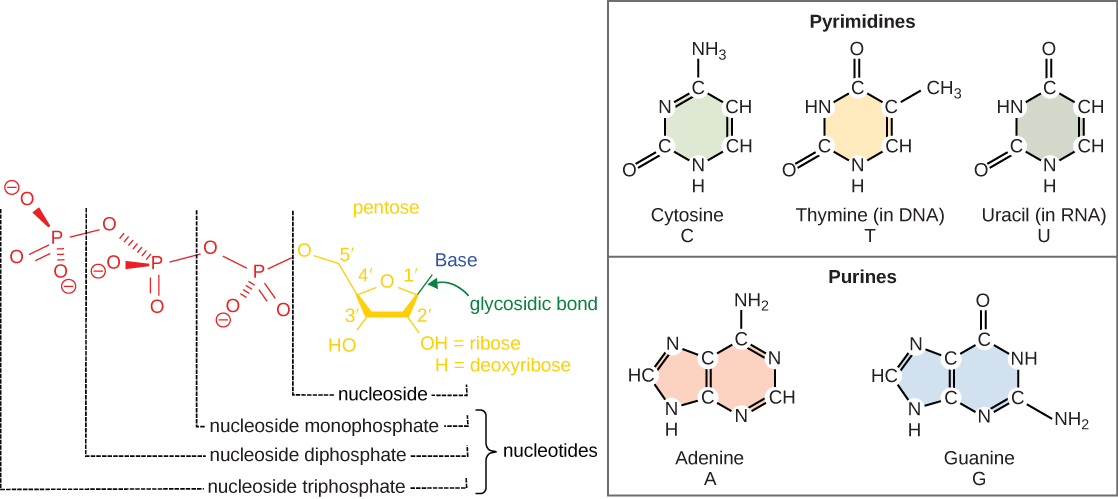
Each contains a () sugar bound to a on one side, and one of four on the other. Two of the , (C) and (T), are single-ringed structures known as . The other two, (A) and (G), are double-ringed structures called . These form complementary consisting of one and one , with pairing with , and with . Each pair is held together by . A and T share two , C and G share three, and both pairings have a similar shape and structure Figure 10.14.

A large Lewis structure is shown. The top left corner of this structure, labeled “5, prime,” shows a phosphorus atom single bonded to three oxygen atoms, one of which has a superscripted negative charge, and double bonded to a fourth oxygen atom. One of the single bonded oxygen atoms is single bonded to the left corner of a five-membered ring with an oxygen atom at its top point and which is single bonded to an oxygen atom on the bottom left. This oxygen atom is single bonded to a phosphorus atom that is single bonded to two other hydrogen atoms and double bonded to a fourth oxygen atom. The lower left of these oxygen atoms is single bonded to another oxygen atom that is single bonded to a five-membered ring with an oxygen in the upper bonding site. The bottom left of this ring has a hydroxyl group attached to it while the upper right carbon is single bonded to a nitrogen atom that is part of a five-membered ring bonded to a six-membered ring. Both of these rings have points of unsaturation and nitrogen atoms bonded into their structures. On the right side of the six-membered ring are two single bonded amine groups and a double bonded oxygen. Three separate dotted lines extend from these sites to corresponding sites on a second six-membered ring. This ring has points of unsaturation and a nitrogen atom in the bottom right bonding position that is single bonded to a five-membered ring on the right side of the image. This ring is single bonded to a carbon that is single bonded to an oxygen that is single bonded to a phosphorus. The phosphorus is single bonded to two other oxygen atoms and double bonded to a fourth oxygen atom. This group is labeled “5, prime.” The five-membered ring is also bonded on the top side to an oxygen that is bonded to a phosphorus single bonded to two other oxygen atoms and double bonded to a fourth oxygen atom. The upper left oxygen of this group is single bonded to a carbon that is single bonded to a five-membered ring with an oxygen in the bottom bonding position. This ring has a hydroxyl group on its upper right side that is labeled “3, prime” and is bonded on the left side to a nitrogen that is a member of a five-membered ring. This ring is bonded to a six-membered ring and both have points of unsaturation. This ring has a nitrogen on the left side, as well as an amine group, that have two dotted lines leading from them to an oxygen and amine group on a six membered ring. These dotted lines are labeled “Hydrogen bonds.” The six membered ring also has a double bonded oxygen on its lower side and a nitrogen atom on its left side that is single bonded to a five-membered ring. This ring connects to the two phosphate groups mentioned at the start of this to form a large circle. The name “guanine” is written below the lower left side of this image while the name “cytosine” is written on the lower right. The name “thymine” is written above the right side of the image and “adenine” is written on the top right. Three sections are indicated below the images where the left is labeled “Sugar, dash, phosphate backbone,” the middle is labeled “Bases” and the right is labeled “Sugar, dash, phosphate backbone.”
Figure 10.14 — 10.1 Intermolecular Forces

Figure 10.14 The geometries of the base molecules result in maximum hydrogen bonding between adenine and thymine (AT) and between guanine and cytosine (GC), so-called “complementary base pairs.”

Paul Flowers, Klaus Theopold, Richard Langley, and William R. Robinson, Chemistry 2E, OpenStax. · CC BY-NC-SA 4.0 · Original image ↗ · Access for free ↗

The cumulative effect of millions of effectively holds the two strands of together. Importantly, the two strands of can relatively easily “unzip” down the middle since are relatively weak compared to the that hold the of the individual together. This allows both strands to function as a template for .