Individual discrimination is unequal treatment through a person’s actions; institutional discrimination operates through organizational policies and routines. Structural patterns can emerge across housing, education, employment, and health systems, even when no single current actor openly endorses prejudice. A rule can be formally identical yet disadvantage groups with unequal starting resources or access. Prejudice is an attitude and discrimination a practice; either can occur without a simple one-to-one correspondence. To identify discrimination, specify the relevant comparison, decision process, and alternative explanations. An outcome disparity alone motivates investigation but does not automatically identify the responsible mechanism.
Explain how power, prestige, and class enable unequal treatment
Power is the capacity to influence outcomes or impose decisions; prestige is social esteem; class concerns economic position and resources. These dimensions can overlap but differ: a respected community elder may have little wealth, while a wealthy actor may lack local esteem. Power enables exclusion through hiring, lending, admissions, and allocation rules; prestige can make some voices more credible. Class resources help challenge decisions or avoid harmful institutions. Audit studies hold qualifications similar while varying a socially interpreted cue, helping test unequal treatment. Their findings apply to the tested setting and do not alone map every causal pathway in population inequality.
Worked question. Researchers send equivalent applications that differ only in a randomized name cue. Callback rates differ. What inference is stronger than a simple comparison of employment rates?
Randomization and matched qualifications strengthen the inference that the perceived cue affected callbacks in that hiring context. Employment-rate gaps could also reflect prior schooling, networks, location, or other mechanisms. The audit does not reveal each employer’s private attitude, but it can document unequal treatment without requiring an explicit prejudiced statement.
Figure 11.4 Stereotypes and prejudices are persistent and apply to almost every category of people. They are also subject to confirmation bias, in which any bit of supporting evidence gives a person more confidence in their belief. For example, if you think older people are bad drivers, every time you see an accident involving an older driver, it's likely to increase your confidence in your stereotype. Even if you hear the statistics that younger drivers cause more accidents than older drivers, the fulfillment of your stereotype is difficult to overcome. (Credit: Chris Freser/flickr)
12.2 Gender and Gender Inequality — figures and tables
Figure 12.8 — 12.2 Gender and Gender Inequality
Figure 12.8 Traditional images of U.S. gender roles reinforce the idea that women should be subordinate to men. (Credit: Sport Suburban/flickr)
Tonja R. Conerly, Kathleen Holmes, and Asha Lal Tamang, Introduction Sociology 3E, OpenStax. · CC BY-NC-SA 4.0
· Original image ↗ · Access for free ↗Figure 12.9 — 12.2 Gender and Gender Inequality
Figure 12.9 Although our society may have a stereotype that associates motorcycles with men, women make up a sizable portion of the biker community. (Credit: Robert Couse-Baker/flickr)
Tonja R. Conerly, Kathleen Holmes, and Asha Lal Tamang, Introduction Sociology 3E, OpenStax. · CC BY-NC-SA 4.0
· Original image ↗ · Access for free ↗Figure 12.10 — 12.2 Gender and Gender Inequality
Figure 12.10 In 2017 men’s overall median earnings were $52,146 and women’s were $41,977. This means that women earned 80.1% of what men earned in the United States. (Credit: Women’s Bureau, U.S. Department of Labor)
Tonja R. Conerly, Kathleen Holmes, and Asha Lal Tamang, Introduction Sociology 3E, OpenStax. · CC BY-NC-SA 4.0
· Original image ↗ · Access for free ↗Figure 12.11 — 12.2 Gender and Gender Inequality
Figure 12.11 In some cultures, women do all of the household chores with no help from men, as doing housework is a sign of weakness, considered by society as a feminine trait. (Credit: Evil Erin/flickr)
Tonja R. Conerly, Kathleen Holmes, and Asha Lal Tamang, Introduction Sociology 3E, OpenStax. · CC BY-NC-SA 4.0
· Original image ↗ · Access for free ↗Figure 12.12 — 12.2 Gender and Gender Inequality
Figure 12.12 Breakdown of Congressional Membership by Gender. 2021 saw a record number of women in Congress, with 120 women serving in the House and 24 serving in the Senate. Gender representation has been steadily increasing over time, but is not close to being equal. (Credit: Based on data from Center for American Women in Politics, Rutgers University)
Tonja R. Conerly, Kathleen Holmes, and Asha Lal Tamang, Introduction Sociology 3E, OpenStax. · CC BY-NC-SA 4.0
· Original image ↗ · Access for free ↗Figure 12.13 — 12.2 Gender and Gender Inequality
Figure 12.13 “Unbought and Unbossed”: Shirley Chisholm was the first Black United States Congresswoman, the co-founder of the Congressional Black Caucus, and a candidate for a major-party Presidential nomination.
19.3 Health in the United States — figures and tables
Figure 19.4 — 19.3 Health in the United States
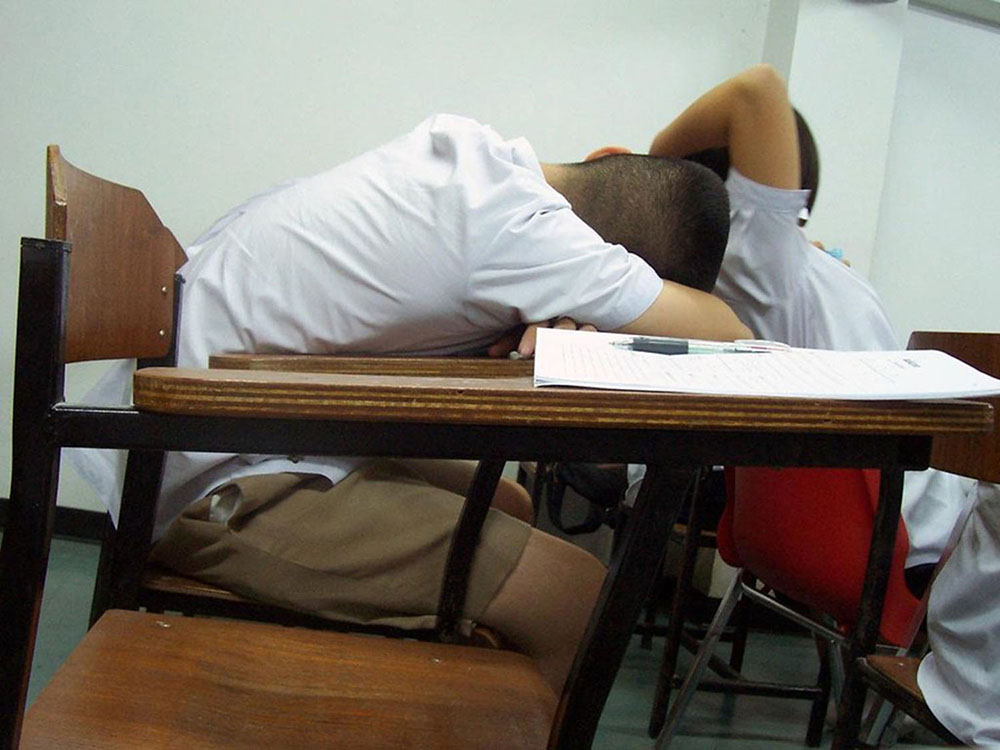
Figure 19.4 Many people fail to get enough sleep. But is insomnia a disease that should be cured with medication? (Credit: Wikimedia Commons)
Tonja R. Conerly, Kathleen Holmes, and Asha Lal Tamang, Introduction Sociology 3E, OpenStax. · CC BY-NC-SA 4.0
· Original image ↗ · Access for free ↗Figure 19.5 — 19.3 Health in the United States
Figure 19.5 Medication is a common option for children with ADHD. (Credit: Deviation56/Wikimedia Commons)
Tonja R. Conerly, Kathleen Holmes, and Asha Lal Tamang, Introduction Sociology 3E, OpenStax. · CC BY-NC-SA 4.0
· Original image ↗ · Access for free ↗Figure 19.6 — 19.3 Health in the United States
Figure 19.6 The accessibility sign indicates that people with disabilities can access the facility. The Americans with Disabilities Act requires that access be provided to everyone. (Credit: Ltljltlj/Wikimedia Commons)
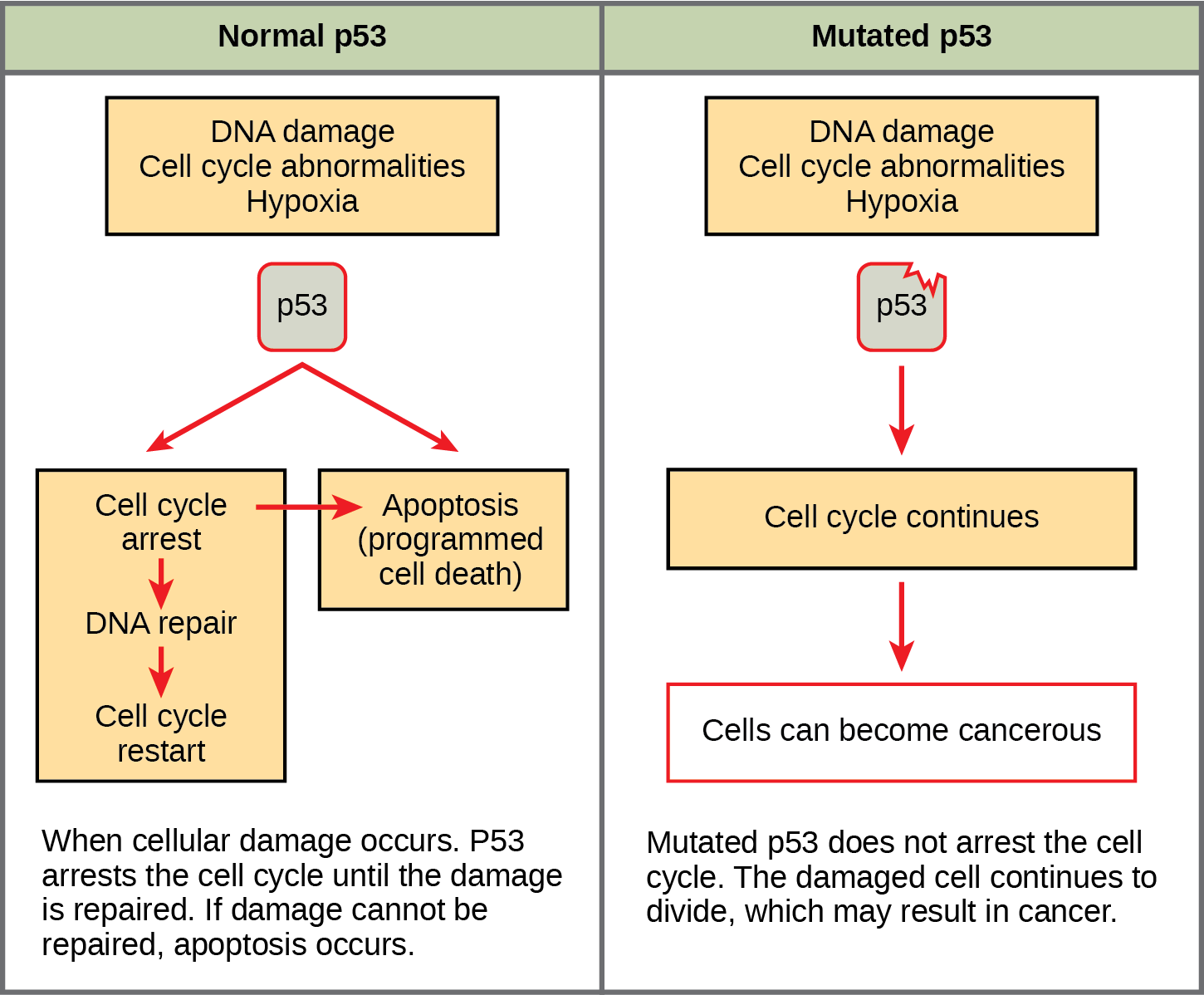
Figure 10.16 The role of normal p53 is to monitor DNA and the supply of oxygen (hypoxia is a condition of reduced oxygen supply). If damage is detected, p53 triggers repair mechanisms. If repairs are unsuccessful, p53 signals apoptosis. A cell with an abnormal p53 protein cannot repair damaged DNA and thus cannot signal apoptosis. Cells with abnormal p53 can become cancerous. (credit: modification of work by Thierry Soussi)
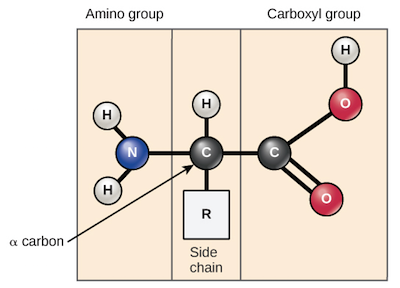
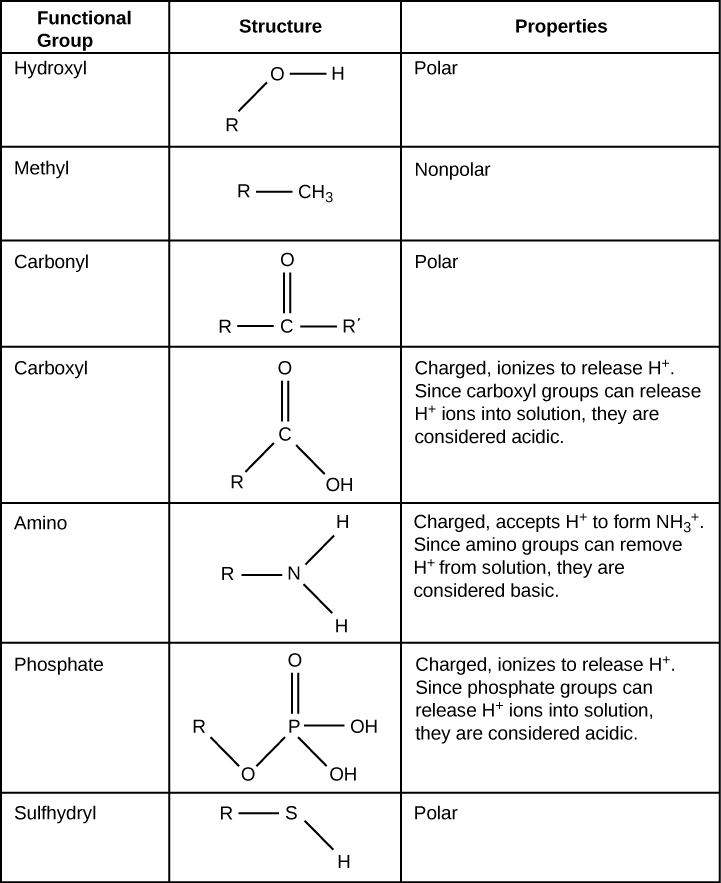
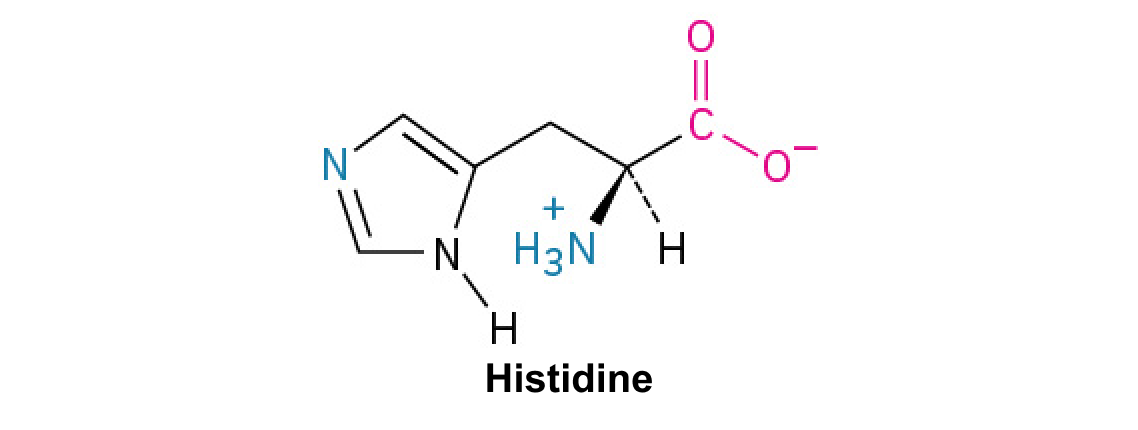
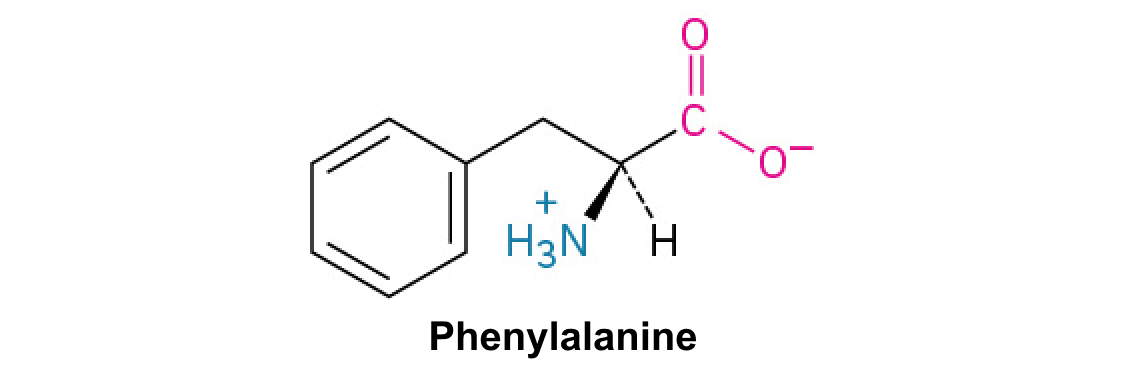
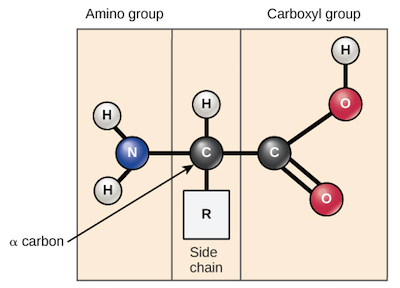
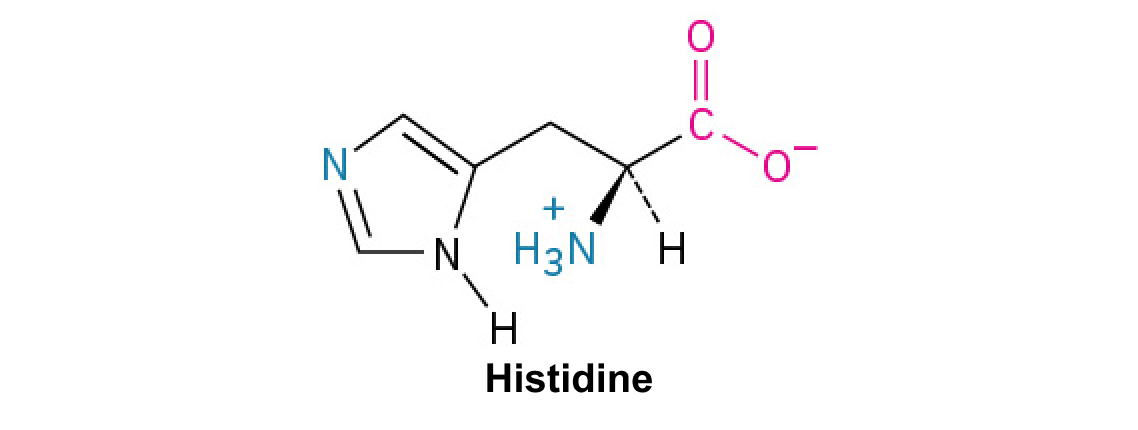
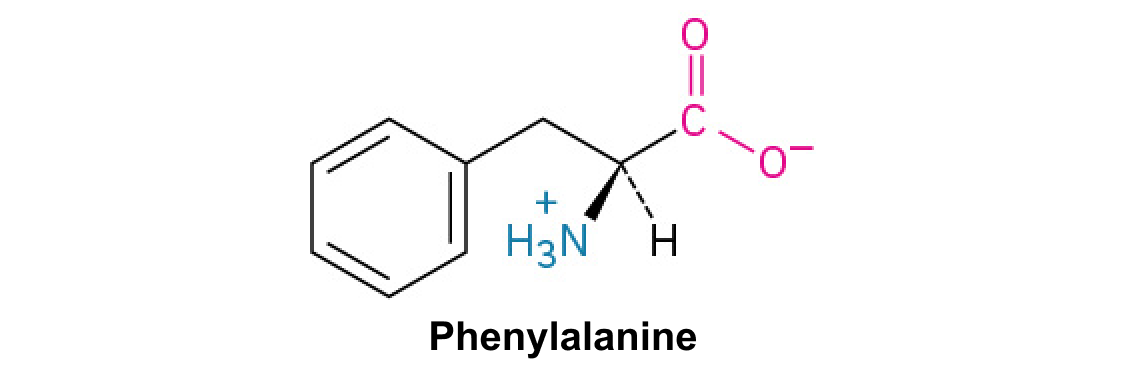
A nitrogen-containing functional group. A free amino acid’s amino group is typically protonated (NH₃⁺) near physiological pH; proline’s ring nitrogen is an exception to this formula.
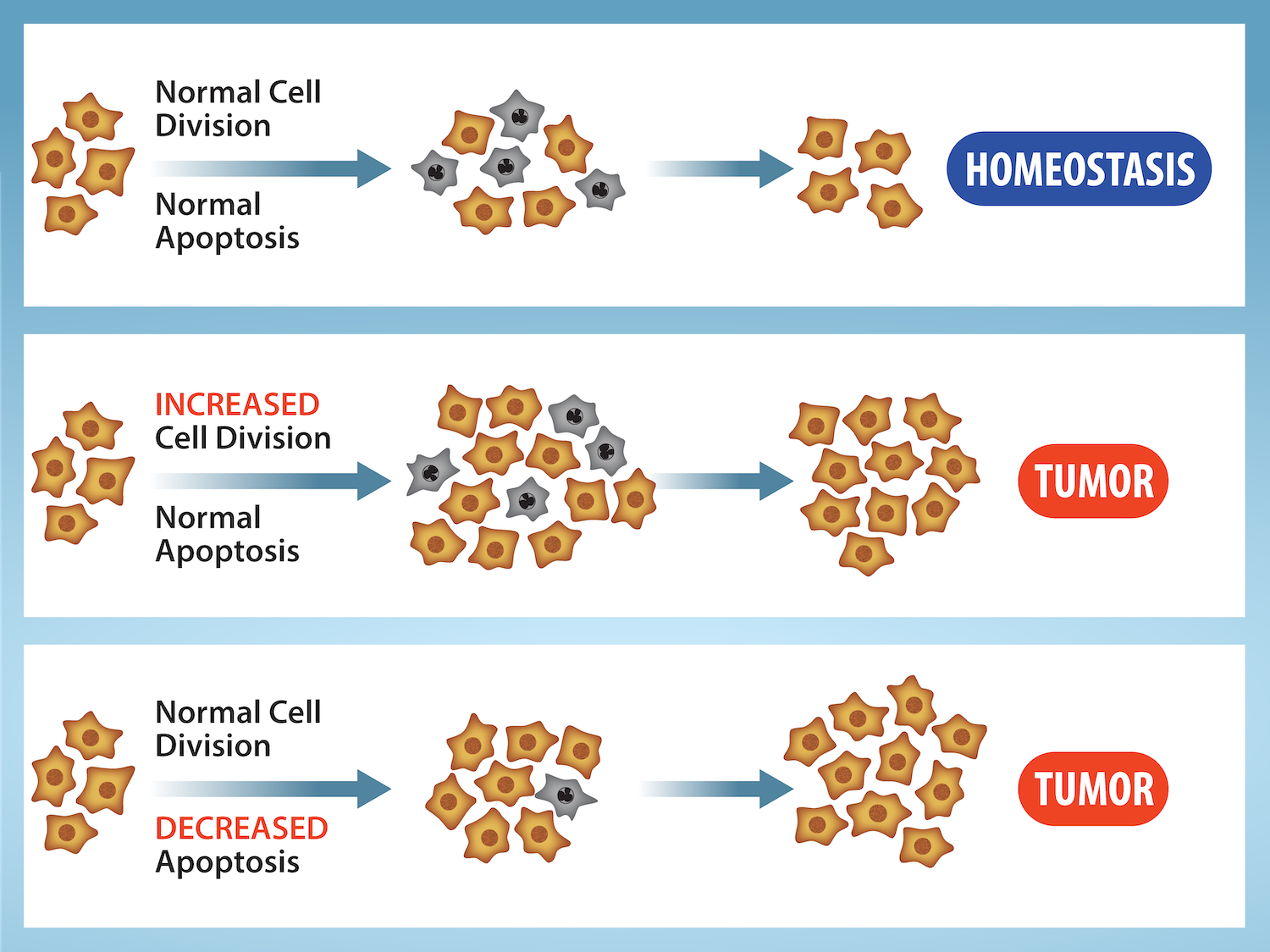
Figure 10.15 Cell Division and Apoptosis. In an adult organism, normal cell division is balanced by apoptosis (programmed cell death) to maintain a constant cell number in homeostasis. Either an increase in cell division or a decrease in apoptosis leads an increase in the number of cells and tumor formation. Credit: Rao, A. and Ryan, K. Department of Biology, Texas A&M University.
Rao, A. and Ryan, K. Department of Biology, Texas A&M University. Mary Ann Clark, Matthew Douglas, and Jung Choi, Biology 2e, OpenStax. · CC BY-NC-SA 4.0
· Original image ↗ · Access for free ↗
Figure 15.4 This figure shows the genetic code for translating each nucleotide triplet in mRNA into an amino acid or a termination signal in a protein. (credit: modification of work by NIH)
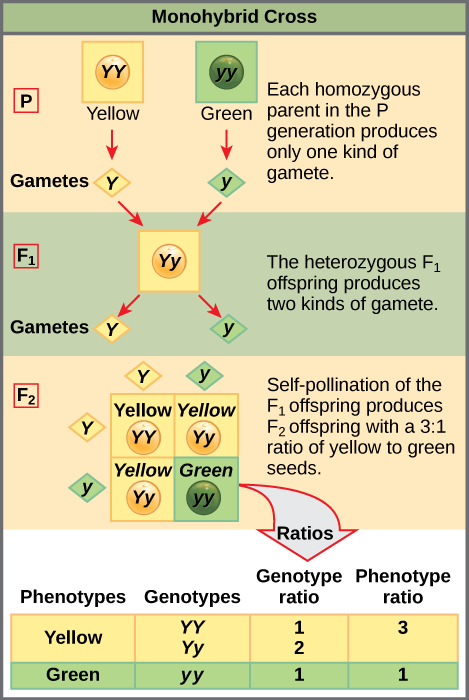
Figure 12.4 In the P generation, pea plants that are true-breeding for the dominant yellow phenotype are crossed with plants with the recessive green phenotype. This cross produces F 1 heterozygotes with a yellow phenotype. Punnett square analysis can be used to predict the genotypes of the F 2 generation.
An electrical property that can be positive or negative. Opposite charges attract and like charges repel; net charge is the sum of all charges on a particle.
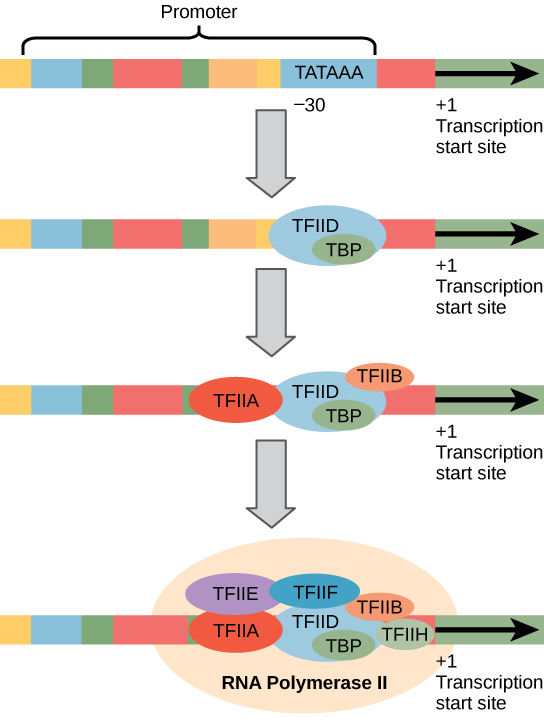
Figure 15.10 A generalized promoter of a gene transcribed by RNA polymerase II is shown. Transcription factors recognize the promoter. RNA polymerase II then binds and forms the transcription initiation complex.
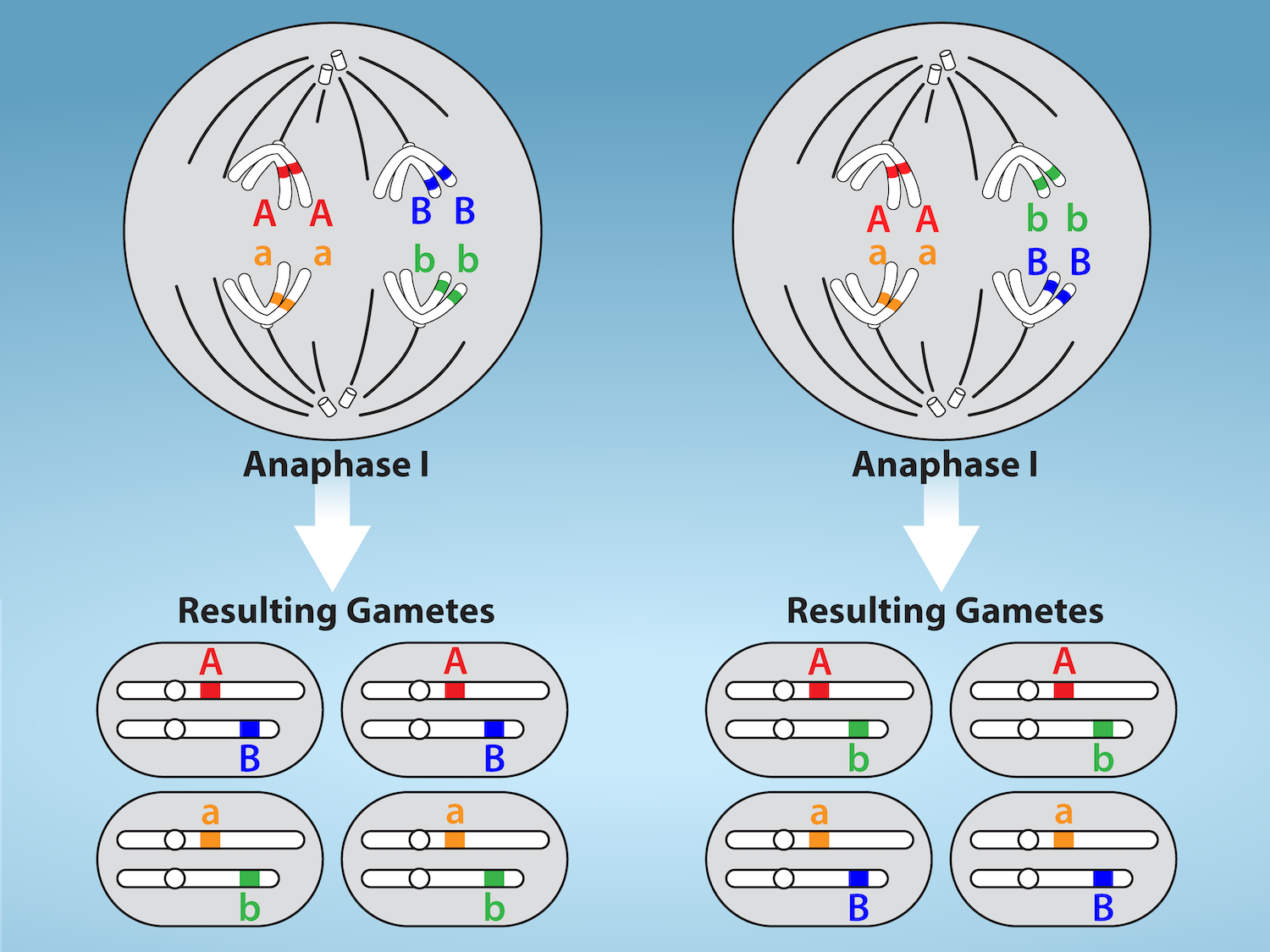
Figure 11.5 Random, independent assortment during metaphase I is demonstrated by considering a cell with a set of two chromosomes (n = 2).
There are two possible homologous chromosome arrangements at the equatorial plane in metaphase I, that are then separated during anaphase I.
The total possible number of different gametes is 2 n , where n equals the number of chromosomes in a set. In this example, there are four possible
genetic combinations for the gametes. With n = 23 in human cells, there are over eight million possible combinations of paternal and maternal
chromosomes. Credit: Rao, A.and Fletcher, S. Department of Biology, Texas A&M University.
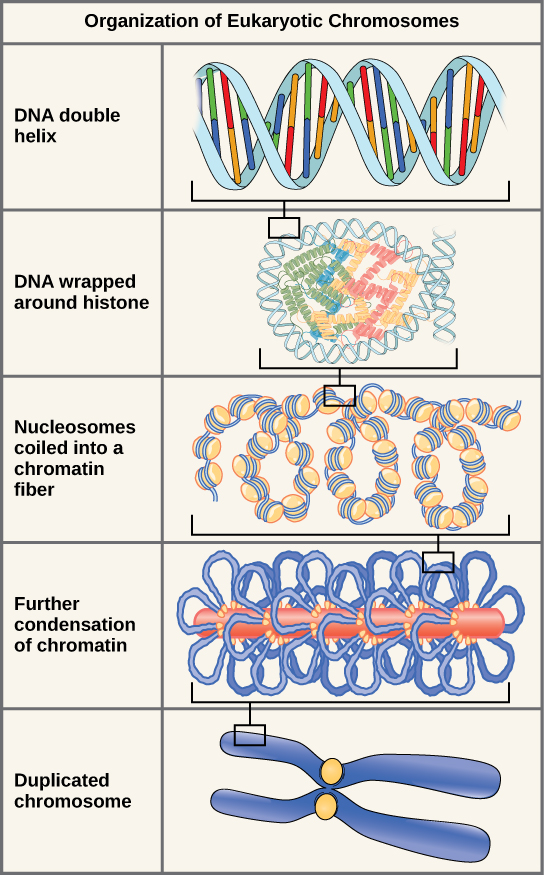
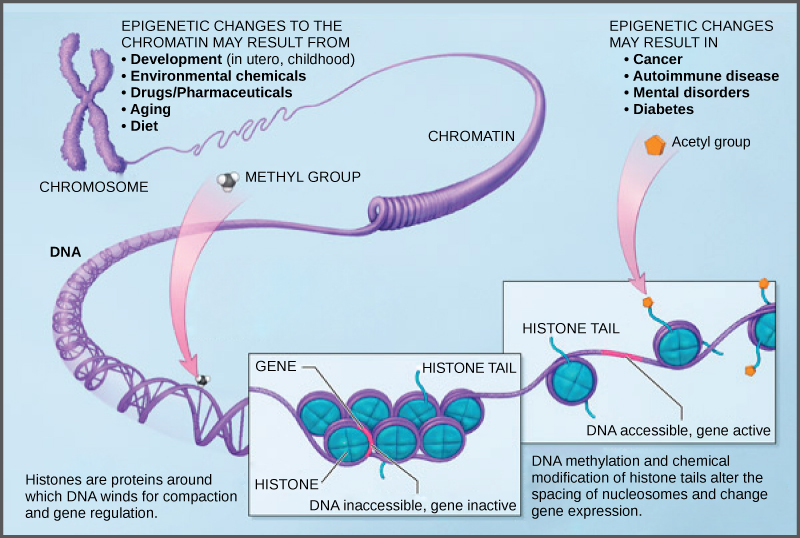
Figure 16.9 Histone proteins and DNA nucleotides can be modified chemically. Modifications affect nucleosome spacing and gene expression. (credit: modification of work by NIH)
Figure 12.4 In the P generation, pea plants that are true-breeding for the dominant yellow phenotype are crossed with plants with the recessive green phenotype. This cross produces F 1 heterozygotes with a yellow phenotype. Punnett square analysis can be used to predict the genotypes of the F 2 generation.
Figure 12.4 In the P generation, pea plants that are true-breeding for the dominant yellow phenotype are crossed with plants with the recessive green phenotype. This cross produces F 1 heterozygotes with a yellow phenotype. Punnett square analysis can be used to predict the genotypes of the F 2 generation.
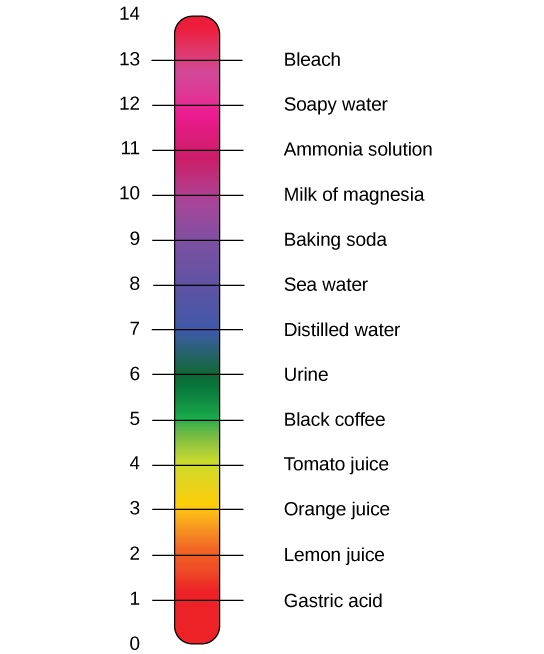
The exponent needed to obtain a number from a chosen fixed number. For decimal logarithms, log₁₀(100) = 2 because 10² = 100; pH uses the negative decimal logarithm of hydrogen ion activity.
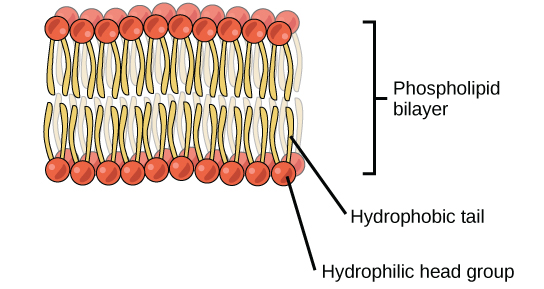
A thin boundary or sheet. Cell membranes are lipid bilayers containing proteins; blotting membranes are synthetic supports that hold proteins or nucleic acids for detection.
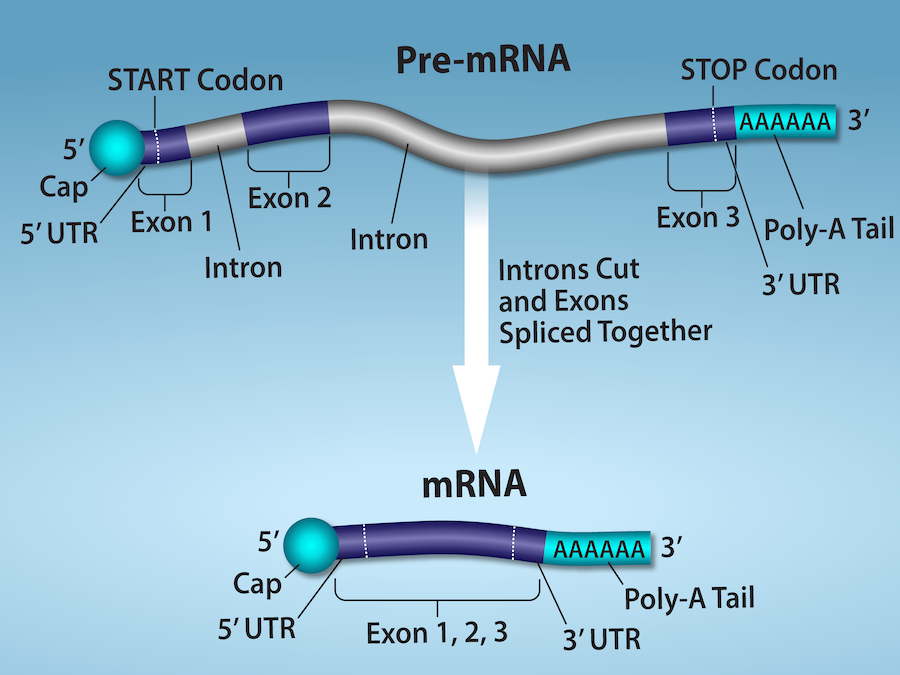
Figure 15.11 Eukaryotic pre-mRNA processing. In addition to 5’ Cap and 3’ Poly-A Tail addition, introns must be precisely removed and exons joined to generate a functional mRNA. Nucleotides upstream (towards the 5’cap) of the translation START codon are part of the 5’ untranslated region (5’ UTR). Nucleotides downstream (towards 3’end) of the STOP codon form the 3’ UTR. Both 5’ and 3’ UTRs are important for regulating translation initiation and mRNA stability. Credit: Rao, A., Ryan, K. Fletcher, S. and Tag, A. Department of Biology, Texas A&M University.
Rao, A., Ryan, K. Fletcher, S. and Tag, A. Department of Biology, Texas A&M University.; Mary Ann Clark, Matthew Douglas, and Jung Choi, Biology 2e, OpenStax. · CC BY-NC-SA 4.0
· Original image ↗ · Access for free ↗
Figure 12.4 In the P generation, pea plants that are true-breeding for the dominant yellow phenotype are crossed with plants with the recessive green phenotype. This cross produces F 1 heterozygotes with a yellow phenotype. Punnett square analysis can be used to predict the genotypes of the F 2 generation.
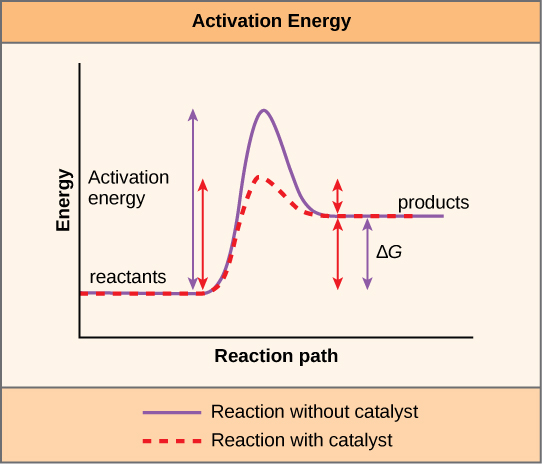
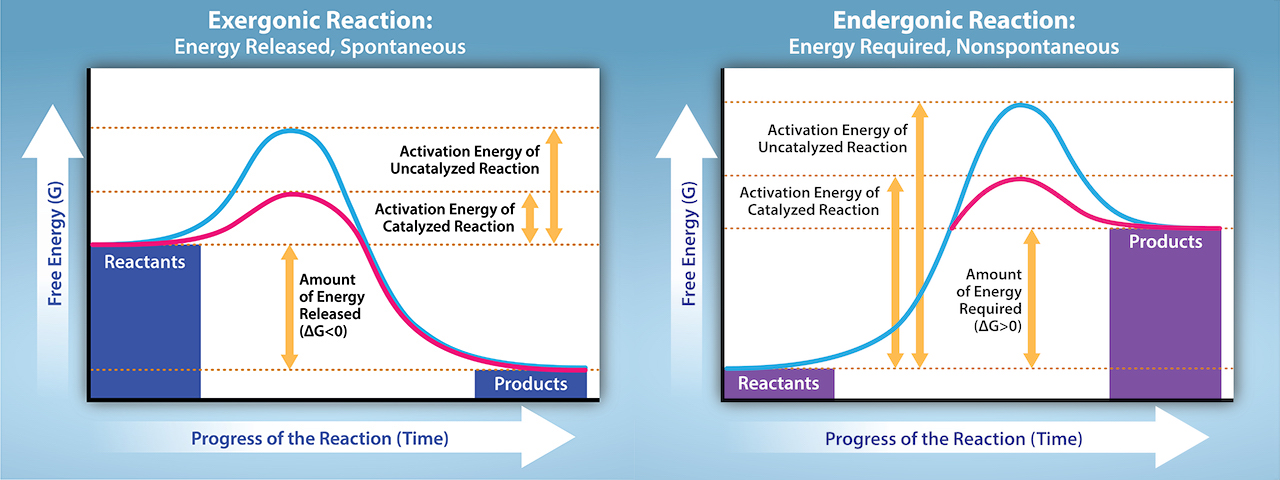
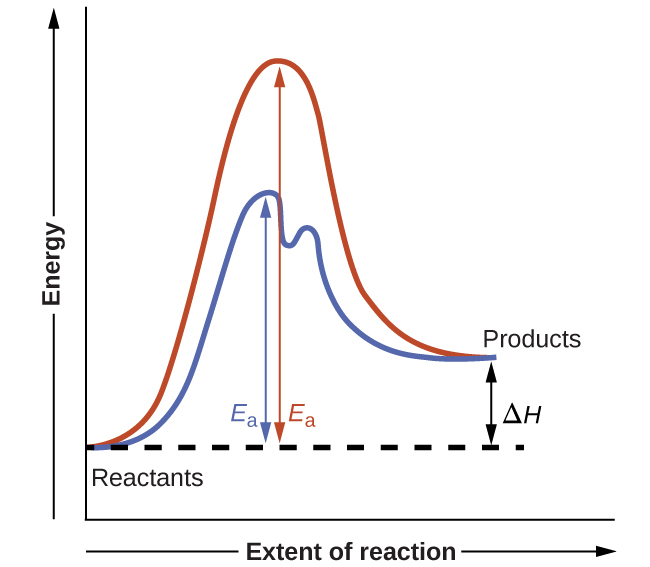
Figure 12.19 Reaction diagrams for an endothermic process in the absence (red curve) and presence (blue curve) of a catalyst. The catalyzed pathway involves a two-step mechanism (note the presence of two transition states) and an intermediate species (represented by the valley between the two transitions states).
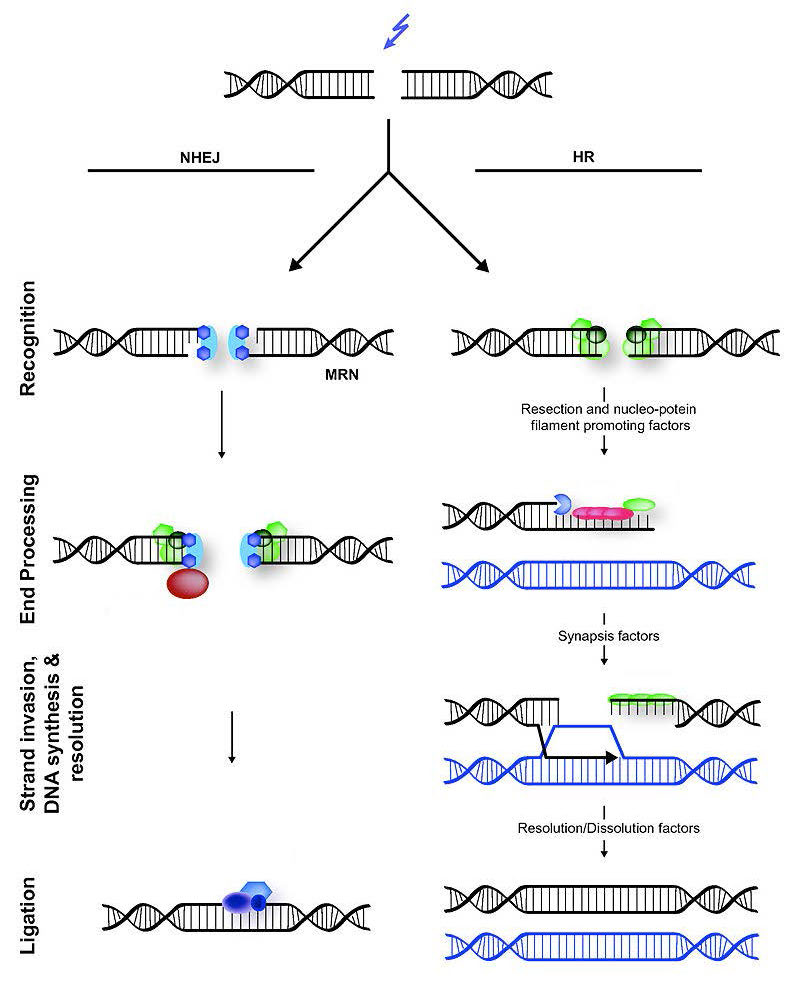
Figure 7.45 - Non-homologous end joining (left) versus homologous recombination (right) - Wikipedia
Wikipedia, as credited by Kevin Ahern, Indira Rajagopal, and Taralyn Tan, Biochemistry Free For All, Oregon State University, via Biology LibreTexts. · Source attribution
· Original image ↗ · Access for free ↗
social epidemiology
Study of how social conditions shape the distribution and determinants of health.
The amount of a substance that can dissolve in a solvent under specified conditions. Soluble means able to dissolve; insoluble means only very slightly soluble in that solvent.
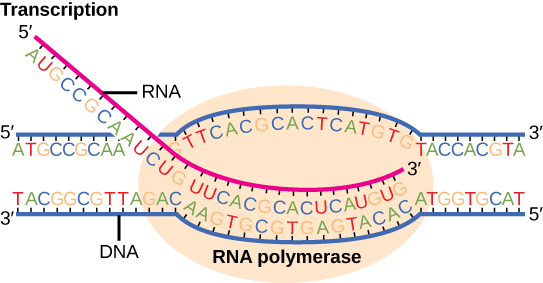
Figure 15.7 Messenger RNA is a copy of protein-coding information in the coding strand of DNA, with the substitution of U in the RNA for T in the coding sequence. However, new RNA nucleotides base pair with the nucleotides of the template strand. RNA is synthesized in its 5'-3' direction, using the enzyme RNA polymerase. As the template is read, the DNA unwinds ahead of the polymerase and then rewinds behind it.
A fleeting, high-energy arrangement at a reaction barrier. It is an energy maximum along the reaction path, rather than a stable reaction intermediate.
Figure 12.19 Reaction diagrams for an endothermic process in the absence (red curve) and presence (blue curve) of a catalyst. The catalyzed pathway involves a two-step mechanism (note the presence of two transition states) and an intermediate species (represented by the valley between the two transitions states).
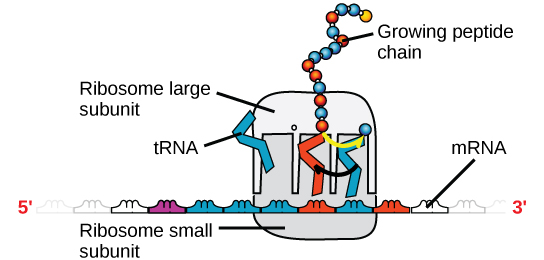
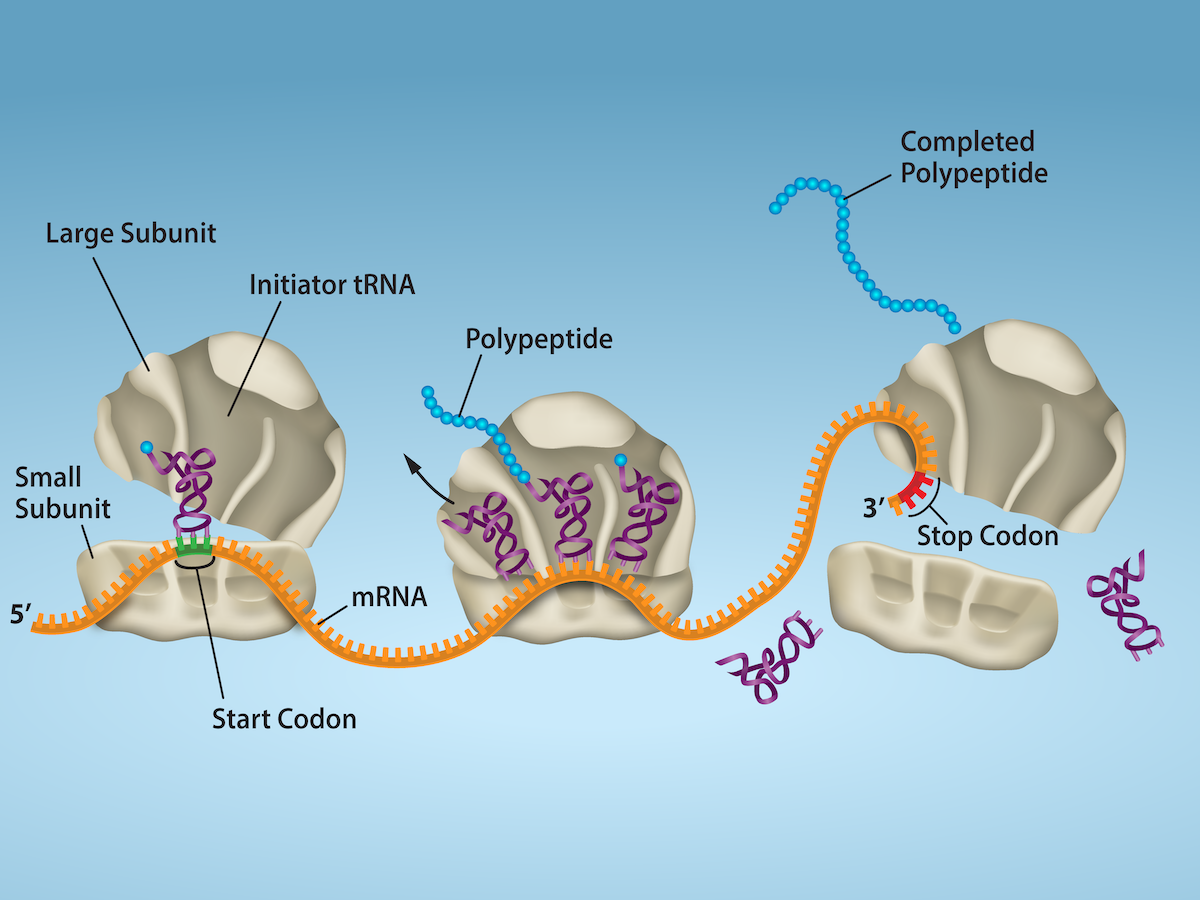
Figure 15.18 Translation begins when an initiator tRNA anticodon recognizes a start codon on mRNA bound to a small ribosomal subunit. The large ribosomal subunit joins the small subunit, and a second tRNA is recruited. As the mRNA moves relative to the ribosome, successive tRNAs move through the ribosome and the polypeptide chain is formed. Entry of a release factor into the A site terminates translation and the components dissociate.
No matching terms. Try a different name or abbreviation.
11.3 Prejudice, Discrimination, and Racism
OpenStax · 11.3 Prejudice, Discrimination, and Racism ↗ Instructional page including learning objectives, examples, figures, source tables and questions. Site navigation and embedded media players are omitted; source media links remain available.
Learning Objectives
By the end of this section, you should be able to:
It is important to learn about stereotypes before discussing the terms prejudice, discrimination, and racism that are often used interchangeably in everyday conversation. Stereotypes are oversimplified generalizations about groups of people. Stereotypes can be based on race, ethnicity, age, gender, sexual orientation—almost any characteristic. They may be positive (usually about one’s own group) but are often negative (usually toward other groups, such as when members of a dominant racial group suggest that a subordinate racial group is stupid or lazy). In either case, the stereotype is a generalization that doesn’t take individual differences into account.
Where do stereotypes come from? In fact, new stereotypes are rarely created; rather, they are recycled from subordinate groups that have assimilated into society and are reused to describe newly subordinate groups. For example, many stereotypes that are currently used to characterize new immigrants were used earlier in American history to characterize Irish and Eastern European immigrants.
Prejudice refers to the beliefs, thoughts, feelings, and attitudes someone holds about a group. A prejudice is not based on personal experience; instead, it is a prejudgment, originating outside actual experience. Recall from the chapter on Crime and Deviance that the criminalization of marijuana was based on anti-immigrant sentiment; proponents used fictional, fear-instilling stories of "reefer madness" and rampant immoral and illegal activities among Spanish-speaking people to justify new laws and harsh treatment of marijuana users. Many people who supported criminalizing marijuana had never met any of the new immigrants who were rumored to use it; the ideas were based in prejudice.
While prejudice is based in beliefs outside of experience, experience can lead people to feel that their prejudice is confirmed or justified. This is a type of confirmation bias. For example, if someone is taught to believe that a certain ethnic group has negative attributes, every negative act committed someone in that group can be seen as confirming the prejudice. Even a minor social offense committed by a member of the ethnic group, like crossing the street outside the crosswalk or talking too loudly on a bus, could confirm the prejudice.
While prejudice often originates outside experience, it isn't instinctive. Prejudice—as well as the stereotypes that lead to it and the discrimination that stems from it—is most often taught and learned. The teaching arrives in many forms, from direct instruction or indoctrination, to observation and socialization. Movies, books, charismatic speakers, and even a desire to impress others can all support the development of prejudices.
Figure 11.4 Stereotypes and prejudices are persistent and apply to almost every category of people. They are also subject to confirmation bias, in which any bit of supporting evidence gives a person more confidence in their belief. For example, if you think older people are bad drivers, every time you see an accident involving an older driver, it's likely to increase your confidence in your stereotype. Even if you hear the statistics that younger drivers cause more accidents than older drivers, the fulfillment of your stereotype is difficult to overcome. (Credit: Chris Freser/flickr)
While prejudice refers to biased thinking, discrimination consists of actions against a group of people. Discrimination can be based on race, ethnicity, age, religion, health, and other categories. For example, discrimination based on race or ethnicity can take many forms, from unfair housing practices such as redlining to biased hiring systems. Overt discrimination has long been part of U.S. history. In the late nineteenth century, it was not uncommon for business owners to hang signs that read, "Help Wanted: No Irish Need Apply." And southern Jim Crow laws, with their "Whites Only" signs, exemplified overt discrimination that is not tolerated today.
Discrimination also manifests in different ways. The scenarios above are examples of individual discrimination, but other types exist. Institutional discrimination occurs when a societal system has developed with embedded disenfranchisement of a group, such as the U.S. military's historical nonacceptance of minority sexualities (the "don't ask, don't tell" policy reflected this norm).
While the form and severity of discrimination vary significantly, they are considered forms of oppression. Institutional discrimination can also include the promotion of a group's status, such as in the case of privilege, which describes the benefits people receive simply by being part of the dominant group.
Most people have some level of privilege, whether it has to do with health, ability, race, or gender. When discussing race, the focus is often on White privilege, which is the societal privilege that benefits White people, or those perceived to be White, over non-White people in some societies, including the United States.
Most White people are willing to admit that non-White people live with a set of disadvantages due to the color of their skin. But until they gain a good degree of self-awareness, few people are willing to acknowledge the benefits they themselves receive by being a part of the dominant group. Why not? Some may feel it lessens their accomplishments, others may feel a degree of guilt, and still others may feel that admitting to privilege makes them seem like a bad or mean person. But White (or other dominant) privilege is an institutional condition, not a personal one. It exists whether the person asks for it or not. In fact, a pioneering thinker on the topic, Peggy McIntosh, noted that she didn't recognize privilege because, in fact, it was not based in meanness. Instead, it was an "invisible weightless knapsack full of special provisions" that she didn't ask for, yet from which she still benefitted (McIntosh 1989). As the reference indicates, McIntosh's first major publication about White privilege was released in 1989; many people have only become familiar with the term in recent years.
Prejudice and discrimination can overlap and intersect in many ways. To illustrate, here are four examples of how prejudice and discrimination can occur. Unprejudiced nondiscriminators are open-minded, tolerant, and accepting individuals. Unprejudiced discriminators might be those who unthinkingly practice sexism in their workplace by not considering women or gender nonconforming people for certain positions that have traditionally been held by men. Prejudiced nondiscriminators are those who hold racist beliefs but don't act on them, such as a racist store owner who serves minority customers. Prejudiced discriminators include those who actively make disparaging remarks about others or who perpetuate hate crimes.
Racism
Racism is a stronger type of prejudice and discrimination used to justify inequalities against individuals by maintaining that one racial category is somehow superior or inferior to others; it is a set of practices used by a racial dominant group to maximize advantages for itself by disadvantaging racial minority groups. Such practices have affected wealth gap, employment, housing discrimination, government surveillance, incarceration, drug arrests, immigration arrests, infant mortality and much more (Race Forward 2021).
Broadly, individuals belonging to minority groups experience both individual racism and systemic racism during their lifetime. While reading the following list of some of the common forms of racism, ask yourself, “Am I a part of this racism?” “How can I contribute to stop racism?”
Individual or Interpersonal Racism refers to prejudice and discrimination executed by individuals consciously and unconsciously that occurs between individuals. Examples include telling a racist joke and believing in the superiority of White people.
Systemic Racism, also called structural racism or institutional racism, is systems and structures that have procedures or processes that disadvantages racial minority groups. Systemic racism occurs in organizations as discriminatory treatments and unfair policies based on race that result in inequitable outcomes for White people over people of color. For example, a school system where students of color are distributed into underfunded schools and out of the higher-resourced schools.
Racial Profiling is a type of systemic racism that involves the singling out of racial minorities for differential treatment, usually harsher treatment. The disparate treatment of racial minorities by law enforcement officials is a common example of racial profiling in the United States. For example, a study on the Driver's License Privilege to All Minnesota Residents from 2008 to 2010 found that the percentage of Latinos arrested was disproportionally high (Feist 2013). Similarly, the disproportionate number of Black men arrested, charged, and convicted of crimes reflect racial profiling.
Historical Racism is economic inequality or social disparity caused by past racism. For example, African-Americans have had their opportunities in wealth, education and employment adversely affected due to the mistreatment of their ancestors during the slavery and post-slavery period (Wilson 2012).
Cultural Racism occurs when the assumption of inferiority of one or more races is built into the culture of a society. For example, the European culture is considered supposedly more mature, evolved and rational than other cultures (Blaut 1992). A study showed that White and Asian American students with high GPAs experience greater social acceptance while Black and Native American students with high GPAs are rejected by their peers (Fuller-Rowell and Doan 2010).
Colorism is a form of racism, in which someone believes one type of skin tone is superior or inferior to another within a racial group. For example, if an employer believes a Black employee with a darker skin tone is less capable than a Black employee with lighter skin tone, that is colorism. Studies suggest that darker skinned African Americans experience more discrimination than lighter skinned African Americans (Herring, Keith, and Horton 2004; Klonoff and Landrine 2000).
Color-Avoidance Racism (sometimes referred to as "colorblind racism") is an avoidance of racial language by European-Americans that ignores the fact that racism continues to be an issue. The U.S. cultural narrative that typically focuses on individual racism fails to recognize systemic racism. It has arisen since the post-Civil Rights era and supports racism while avoiding any reference to race (Bonilla-Silva 2015).
How to Be an Antiracist
Almost all mainstream voices in the United States oppose racism. Despite this, racism is prevalent in several forms. For example, when a newspaper uses people's race to identify individuals accused of a crime, it may enhance stereotypes of a certain minority. Another example of racist practices is racial steering, in which real estate agents direct prospective homeowners toward or away from certain neighborhoods based on their race.
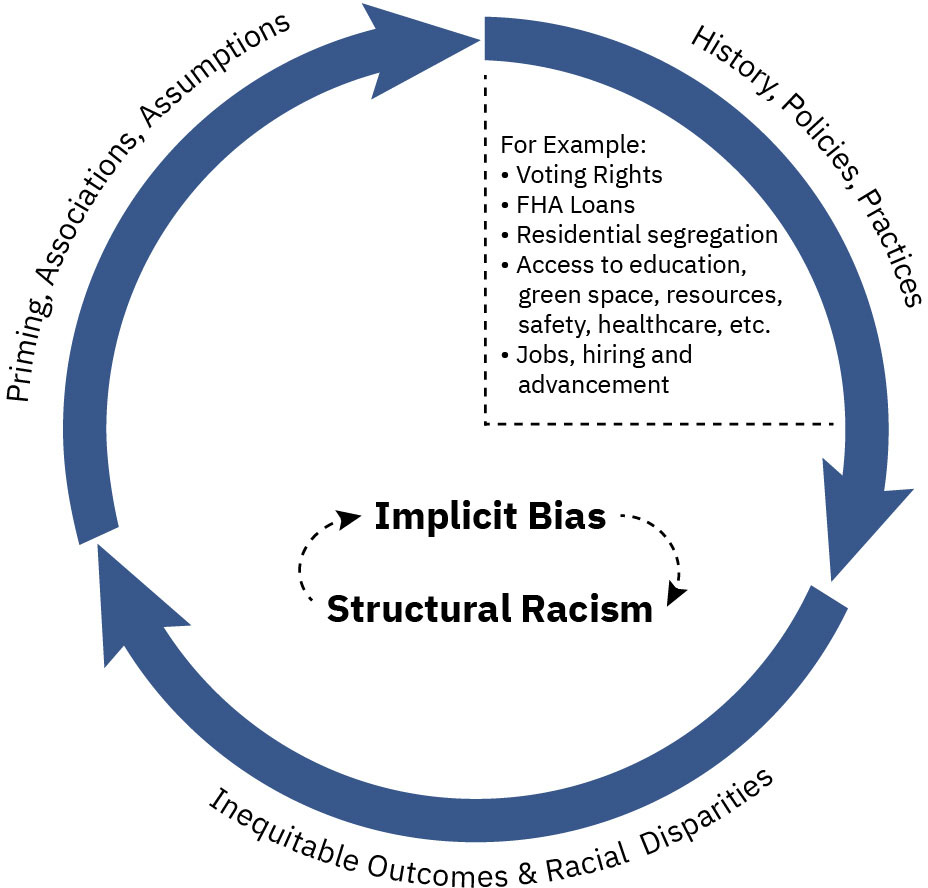
Racist attitudes and beliefs are often more insidious and harder to pin down than specific racist practices. They become more complex due to implicit bias (also referred to as unconscious bias) which is the process of associating stereotypes or attitudes towards categories of people without conscious awareness – which can result in unfair actions and decisions that are at odds with one’s conscious beliefs about fairness and equality (Osta and Vasquez 2021). For example, in schools we often see “honors” and “gifted” classes quickly filled with White students while the majority of Black and Latino students are placed in the lower track classes. As a result, our mind consciously and unconsciously starts to associate Black and Latino students with being less intelligent, less capable. Osta and Vasquez (2021) argue that placing the student of color into a lower and less rigorous track, we reproduce the inequity and the vicious cycle of structural racism and implicit bias continues.
If everyone becomes antiracist, breaking the vicious cycle of structural racism and implicit bias may not be far away. To be antiracist is a radical choice in the face of history, requiring a radical reorientation of our consciousness (Kendi 2019). Proponents of anti-racism indicate that we must work collaboratively within ourselves, our institutions, and our networks to challenge racism at local, national and global levels. Anti-racism is a continuous process that calls for the sustained commitment and participation of all members of society, including the following practices (Carter and Snyder 2020):
Understand and own the racist ideas in which we have been socialized and the racist biases that these ideas have created within each of us.
Identify racist policies, practices, and procedures and replace them with antiracist policies, practices, and procedures.
Anti-racism need not be confrontational in the sense of engaging in direct arguments with people, feeling terrible about your privilege, or denying your own needs or success. In fact, many people who are a part of a minority acknowledge the need for allies from the dominant group (Melaku 2020). Understanding and owning the racist ideas, and recognizing your own privilege, is a good and brave thing.
We cannot erase racism simply by enacting laws to abolish it, because it is embedded in our complex reality that relates to educational, economic, criminal, political, and other social systems. Importantly, everyone can become antiracist by making conscious choices daily. Being racist or antiracist is not about who you are; it is about what you do (Carter and Snyder 2020).
What does it mean to you to be an “anti-racist”? How do you see the recent events or protests in your community, country or somewhere else? Are they making any desired changes?
Big Picture
Racial Tensions in the United States
The death of Michael Brown in Ferguson, Missouri on August 9, 2014 illustrates racial tensions in the United States as well as the overlap between prejudice, discrimination, and institutional racism. On that day, Brown, a young unarmed Black man, was killed by a White police officer named Darren Wilson. During the incident, Wilson directed Brown and his friend to walk on the sidewalk instead of in the street. While eyewitness accounts vary, they agree that an altercation occurred between Wilson and Brown. Wilson’s version has him shooting Brown in self-defense after Brown assaulted him, while Dorian Johnson, a friend of Brown also present at the time, claimed that Brown first ran away, then turned with his hands in the air to surrender, after which Wilson shot him repeatedly (Nobles and Bosman 2014). Three autopsies independently confirmed that Brown was shot six times (Lowery and Fears 2014).
The shooting focused attention on a number of race-related tensions in the United States. First, members of the predominantly Black community viewed Brown’s death as the result of a White police officer racially profiling a Black man (Nobles and Bosman 2014). In the days after, it was revealed that only three members of the town’s fifty-three-member police force were Black (Nobles and Bosman 2014). The national dialogue shifted during the next few weeks, with some commentators pointing to a nationwide sedimentation of racial inequality and identifying redlining in Ferguson as a cause of the unbalanced racial composition in the community, in local political establishments, and in the police force (Bouie 2014). Redlining is the practice of routinely refusing mortgages for households and businesses located in predominately minority communities, while sedimentation of racial inequality describes the intergenerational impact of both practical and legalized racism that limits the abilities of Black people to accumulate wealth.
Ferguson’s racial imbalance may explain in part why, even though in 2010 only about 63 percent of its population was Black, in 2013 Black people were detained in 86 percent of stops, 92 percent of searches, and 93 percent of arrests (Missouri Attorney General’s Office 2014). In addition, de facto segregation in Ferguson’s schools, a race-based wealth gap, urban sprawl, and a Black unemployment rate three times that of the White unemployment rate worsened existing racial tensions in Ferguson while also reflecting nationwide racial inequalities (Bouie 2014).
This situation has not much changed in the United States. After Michael Brown, dozens of unarmed Black people have been shot and killed by police. Studies find no change to the racial disparity in the use of deadly force by police (Belli 2020). Do you think that racial tension can be reduced by stopping police action against racial minorities? What types of policies and practices are important to reduce racial tension? Who are responsible? Why?
12.2 Gender and Gender Inequality
OpenStax · 12.2 Gender and Gender Inequality ↗ Instructional page including learning objectives, examples, figures, source tables and questions. Site navigation and embedded media players are omitted; source media links remain available.
Learning Objectives
By the end of this section, you should be able to:
Explain the influence of socialization on gender roles in the United States
Explain the stratification of gender in major American institutions
Provide examples of gender inequality in the United States
Describe the rise of feminism in the United States
Describe gender from the view of each sociological perspective
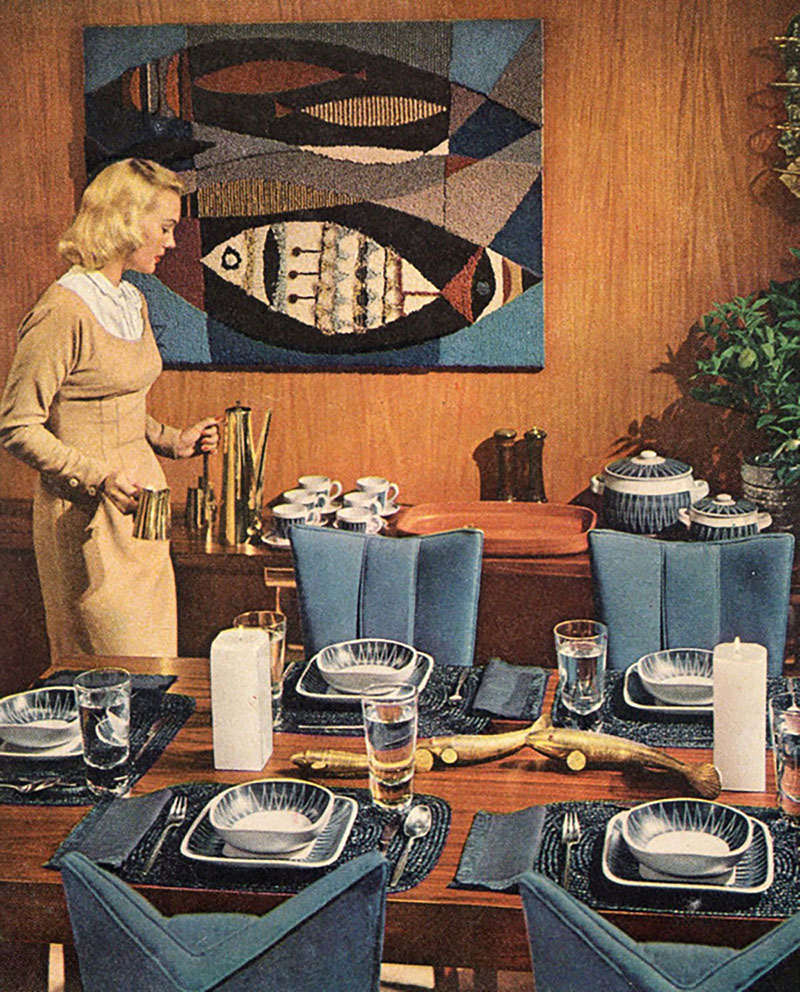
Figure 12.8 — 12.2 Gender and Gender Inequality
Figure 12.8 Traditional images of U.S. gender roles reinforce the idea that women should be subordinate to men. (Credit: Sport Suburban/flickr)
The phrase “boys will be boys” is often used to justify behavior such as pushing, shoving, or other forms of aggression from young boys. The phrase implies that such behavior is unchangeable and something that is part of a boy’s nature. Aggressive behavior, when it does not inflict significant harm, is often accepted from boys and men because it is congruent with the cultural script for masculinity. The “script” written by society is in some ways similar to a script written by a playwright. Just as a playwright expects actors to adhere to a prescribed script, society expects women and men to behave according to the expectations of their respective gender roles. Scripts are generally learned through a process known as socialization, which teaches people to behave according to social norms.
Children learn at a young age that there are distinct expectations for boys and girls. Cross-cultural studies reveal that children are aware of gender roles by age two or three. At four or five, most children are firmly entrenched in culturally appropriate gender roles (Kane 1996). Children acquire these roles through socialization, a process in which people learn to behave in a particular way as dictated by societal values, beliefs, and attitudes. For example, society often views riding a motorcycle as a masculine activity and, therefore, considers it to be part of the male gender role. Attitudes such as this are typically based on stereotypes, oversimplified notions about members of a group. Gender stereotyping involves overgeneralizing about the attitudes, traits, or behavior patterns of women or men. For example, women may be thought of as too timid or weak to ride a motorcycle.
Figure 12.9 — 12.2 Gender and Gender Inequality
Figure 12.9 Although our society may have a stereotype that associates motorcycles with men, women make up a sizable portion of the biker community. (Credit: Robert Couse-Baker/flickr)
Gender stereotypes form the basis of sexism. Sexism refers to prejudiced beliefs that value one sex over another. It varies in its level of severity. In parts of the world where women are strongly undervalued, young girls may not be given the same access to nutrition, healthcare, and education as boys. Further, they will grow up believing they deserve to be treated differently from boys (UNICEF 2011; Thorne 1993). While it is illegal in the United States when practiced as discrimination, unequal treatment of women continues to pervade social life. It should be noted that discrimination based on sex occurs at both the micro- and macro-levels. Many sociologists focus on discrimination that is built into the social structure; this type of discrimination is known as institutional discrimination (Pincus 2008).
Gender socialization occurs through four major agents of socialization: family, education, peer groups, and mass media. Each agent reinforces gender roles by creating and maintaining normative expectations for gender-specific behavior. Exposure also occurs through secondary agents such as religion and the workplace. Repeated exposure to these agents over time leads men and women into a false sense that they are acting naturally rather than following a socially constructed role.
Family is the first agent of socialization. There is considerable evidence that parents socialize sons and daughters differently. Generally speaking, girls are given more latitude to step outside of their prescribed gender role (Coltrane and Adams 2004; Kimmel 2000; Raffaelli and Ontai 2004). However, differential socialization typically results in greater privileges afforded to sons. For instance, boys are allowed more autonomy and independence at an earlier age than daughters. They may be given fewer restrictions on appropriate clothing, dating habits, or curfew. Sons are also often free from performing domestic duties such as cleaning or cooking and other household tasks that are considered feminine. Daughters are limited by their expectation to be passive and nurturing, generally obedient, and to assume many of the domestic responsibilities.
Even when parents set gender equality as a goal, there may be underlying indications of inequality. For example, boys may be asked to take out the garbage or perform other tasks that require strength or toughness, while girls may be asked to fold laundry or perform duties that require neatness and care. It has been found that fathers are firmer in their expectations for gender conformity than are mothers, and their expectations are stronger for sons than they are for daughters (Kimmel 2000). This is true in many types of activities, including preference for toys, play styles, discipline, chores, and personal achievements. As a result, boys tend to be particularly attuned to their father’s disapproval when engaging in an activity that might be considered feminine, like dancing or singing (Coltraine and Adams 2008). Parental socialization and normative expectations also vary along lines of social class, race, and ethnicity. African American families, for instance, are more likely than Caucasians to model an egalitarian role structure for their children (Staples and Boulin Johnson 2004).
The reinforcement of gender roles and stereotypes continues once a child reaches school age. Until very recently, schools were rather explicit in their efforts to stratify boys and girls. The first step toward stratification was segregation. Girls were encouraged to take home economics or humanities courses and boys to take math and science.
Studies suggest that gender socialization still occurs in schools today, perhaps in less obvious forms (Lips 2004). Teachers may not even realize they are acting in ways that reproduce gender differentiated behavior patterns. Yet any time they ask students to arrange their seats or line up according to gender, teachers may be asserting that boys and girls should be treated differently (Thorne 1993).
Even in levels as low as kindergarten, schools subtly convey messages to girls indicating that they are less intelligent or less important than boys. For example, in a study of teacher responses to male and female students, data indicated that teachers praised male students far more than female students. Teachers interrupted girls more often and gave boys more opportunities to expand on their ideas (Sadker and Sadker 1994). Further, in social as well as academic situations, teachers have traditionally treated boys and girls in opposite ways, reinforcing a sense of competition rather than collaboration (Thorne 1993). Boys are also permitted a greater degree of freedom to break rules or commit minor acts of deviance, whereas girls are expected to follow rules carefully and adopt an obedient role (Ready 2001).
Mimicking the actions of significant others is the first step in the development of a separate sense of self (Mead 1934). Like adults, children become agents who actively facilitate and apply normative gender expectations to those around them. When children do not conform to the appropriate gender role, they may face negative sanctions such as being criticized or marginalized by their peers. Though many of these sanctions are informal, they can be quite severe. For example, a girl who wishes to take karate class instead of dance lessons may be called a “tomboy” and face difficulty gaining acceptance from both male and female peer groups (Ready 2001). Boys, especially, are subject to intense ridicule for gender nonconformity (Coltrane and Adams 2004; Kimmel 2000).
Mass media serves as another significant agent of gender socialization. In television and movies, women tend to have less significant roles and are often portrayed as wives or mothers. When women are given a lead role, it often falls into one of two extremes: a wholesome, saint-like figure or a malevolent, hypersexual figure (Etaugh and Bridges 2003). This same inequality is pervasive in children’s movies (Smith 2008). Research indicates that in the ten top-grossing G-rated movies released between 1991 and 2013, nine out of ten characters were male (Smith 2008).
Television commercials and other forms of advertising also reinforce inequality and gender-based stereotypes. Women are almost exclusively present in ads promoting cooking, cleaning, or childcare-related products (Davis 1993). Think about the last time you saw a man star in a dishwasher or laundry detergent commercial. In general, women are underrepresented in roles that involve leadership, intelligence, or a balanced psyche. Of particular concern is the depiction of women in ways that are dehumanizing, especially in music videos. Even in mainstream advertising, however, themes intermingling violence and sexuality are quite common (Kilbourne 2000).
Stratification refers to a system in which groups of people experience unequal access to basic, yet highly valuable, social resources. There is a long history of gender stratification in the United States. When looking to the past, it would appear that society has made great strides in terms of abolishing some of the most blatant forms of gender inequality (see timeline below) but underlying effects of male dominance still permeate many aspects of society.
Before 1809—Women could not execute a will
Before 1840—Women were not allowed to own or control property
Before 1920—Women were not permitted to vote
Before 1963—Employers could legally pay a woman less than a man for the same work
Before 1973—Women did not have the right to a safe and legal abortion nationwide (Imbornoni 2009)
The Pay Gap
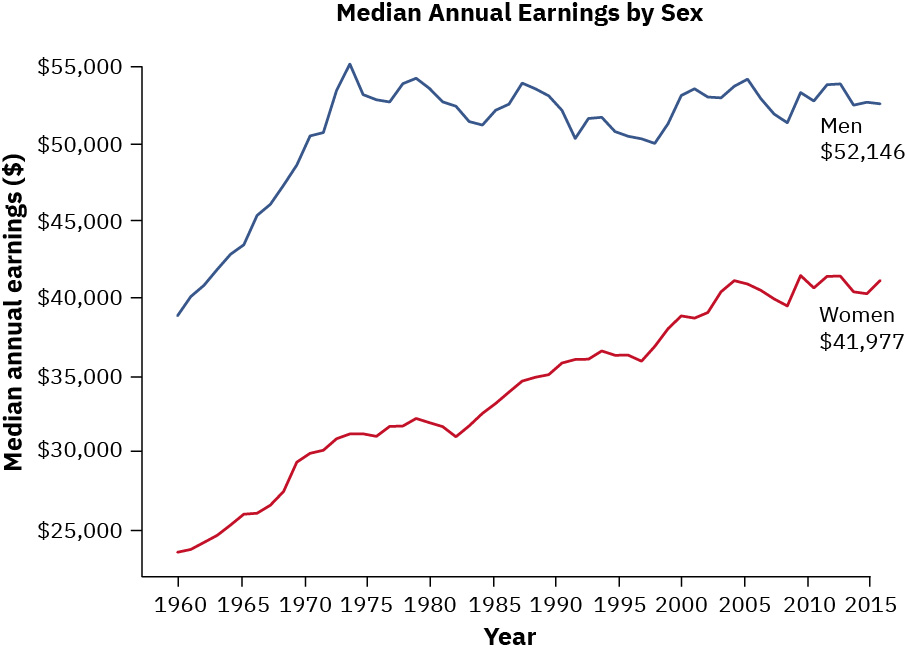
Despite making up nearly half (49.8 percent) of payroll employment, men vastly outnumber women in authoritative, powerful, and, therefore, high-earning jobs (U.S. Census Bureau 2010). Even when a woman’s employment status is equal to a man’s, she will generally make only 81 cents for every dollar made by her male counterpart (Payscale 2020). Women in the paid labor force also still do the majority of the unpaid work at home. On an average day, 84 percent of women (compared to 67 percent of men) spend time doing household management activities (U.S. Census Bureau 2011). This double duty keeps working women in a subordinate role in the family structure (Hochschild and Machung 1989).
Figure 12.10 — 12.2 Gender and Gender Inequality
Figure 12.10 In 2017 men’s overall median earnings were $52,146 and women’s were $41,977. This means that women earned 80.1% of what men earned in the United States. (Credit: Women’s Bureau, U.S. Department of Labor)
Gender stratification through the division of labor is not exclusive to the United States. According to George Murdock’s classic work, Outline of World Cultures (1954), all societies classify work by gender. When a pattern appears in all societies, it is called a cultural universal. While the phenomenon of assigning work by gender is universal, its specifics are not. The same task is not assigned to either men or women worldwide. But the way each task’s associated gender is valued is notable. In Murdock’s examination of the division of labor among 324 societies around the world, he found that in nearly all cases the jobs assigned to men were given greater prestige (Murdock and White 1968). Even if the job types were very similar and the differences slight, men’s work was still considered more vital.
Figure 12.11 — 12.2 Gender and Gender Inequality
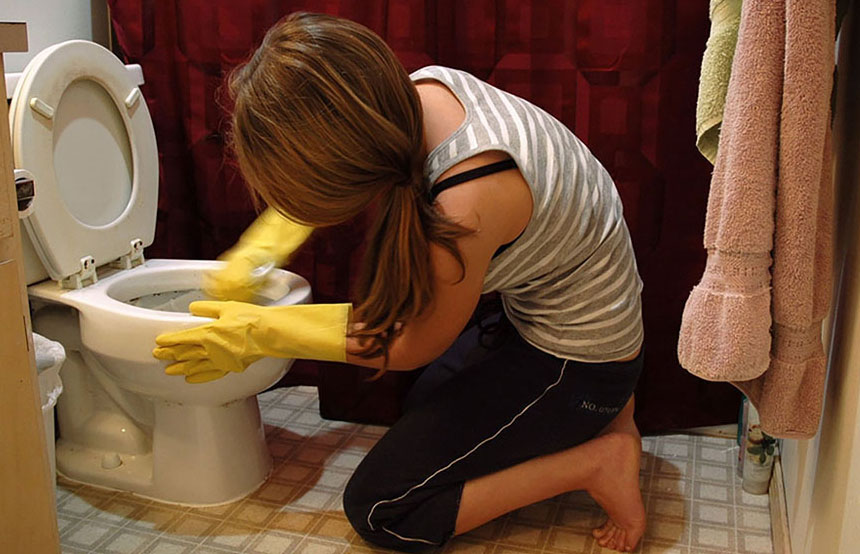
Figure 12.11 In some cultures, women do all of the household chores with no help from men, as doing housework is a sign of weakness, considered by society as a feminine trait. (Credit: Evil Erin/flickr)
Part of the gender pay gap can be attributed to unique barriers faced by women regarding work experience and promotion opportunities. A mother of young children is more likely to drop out of the labor force for several years or work on a reduced schedule than is the father. As a result, women in their 30s and 40s are likely, on average, to have less job experience than men. This effect becomes more evident when considering the pay rates of two groups of women: those who did not leave the workforce and those who did: In the United States, childless women with the same education and experience levels as men are typically paid with closer (but not exact) parity to men. However, women with families and children are paid less: Mothers are recommended a 7.9 percent lower starting salary than non-mothers, which is 8.6 percent lower than men (Correll 2007).
This evidence points to levels of discrimination that go beyond behaviors by individual companies or organizations. As discussed earlier in the gender roles section, many of these gaps are rooted in America’s social patterns of discrimination, which involve the roles that different genders play in child-rearing, rather than individual discrimination by employers in hiring and salary decisions. On the other hand, legal and ethical practices demand that organizations do their part to promote more equity among all genders.
The Glass Ceiling
The idea that women are unable to reach the executive suite is known as the glass ceiling. It is an invisible barrier that women encounter when trying to win jobs in the highest level of business. At the beginning of 2021, for example, a record 41 of the world’s largest 500 companies were run by women. While a vast improvement over the number twenty years earlier – where only two of the companies were run by women – these 41 chief executives still only represent eight percent of those large companies (Newcomb 2020).
Why do women have a more difficult time reaching the top of a company? One idea is that there is still a stereotype in the United States that women aren’t aggressive enough to handle the boardroom or that they tend to seek jobs and work with other women (Reiners 2019). Other issues stem from the gender biases based on gender roles and motherhood discussed above.
Another idea is that women lack mentors, executives who take an interest and get them into the right meetings and introduce them to the right people to succeed (Murrell & Blake-Beard 2017).
Women in Politics
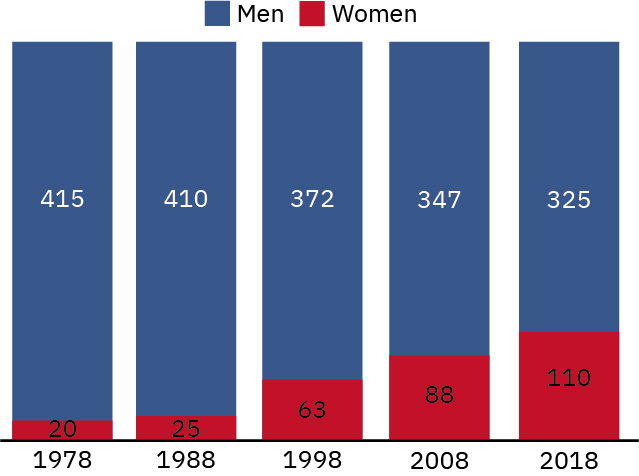
One of the most important places for women to help other women is in politics. Historically in the United States, like many other institutions, political representation has been mostly made up of White men. By not having women in government, their issues are being decided by people who don’t share their perspective. The number of women elected to serve in Congress has increased over the years, but does not yet accurately reflect the general population. For example, in 2018, the population of the United States was 49 percent male and 51 percent female, but the population of Congress was 78.8 percent male and 21.2 percent female (Manning 2018). Over the years, the number of women in the federal government has increased, but until it accurately reflects the population, there will be inequalities in our laws.
Figure 12.12 — 12.2 Gender and Gender Inequality
Figure 12.12 Breakdown of Congressional Membership by Gender. 2021 saw a record number of women in Congress, with 120 women serving in the House and 24 serving in the Senate. Gender representation has been steadily increasing over time, but is not close to being equal. (Credit: Based on data from Center for American Women in Politics, Rutgers University)
One of the underlying issues that continues to plague women in the United States is misogyny. This is the hatred of, aversion to, or prejudice against women. Over the years misogyny has evolved as an ideology that men are superior to women in all aspects of life. There have been multiple movements to try and fight this prejudice.
In 1963, writer and feminist Betty Friedan published The Feminine Mystique in which she contested the post-World War II belief that it was women’s sole destiny to marry and bear children. Friedan’s book began to raise the consciousness of many women who agreed that homemaking in the suburbs sapped them of their individualism and left them unsatisfied. In 1966, the National Organization for Women (NOW) formed and proceeded to set an agenda for the feminist movement. Framed by a statement of purpose written by Friedan, the agenda began by proclaiming NOW’s goal to make possible women’s participation in all aspects of American life and to gain for them all the rights enjoyed by men.
Feminists engaged in protests and actions designed to bring awareness and change. For example, the New York Radical Women demonstrated at the 1968 Miss America Pageant in Atlantic City to bring attention to the contest’s—and society’s—exploitation of women. The protestors tossed instruments of women’s oppression, including high-heeled shoes, curlers, girdles, and bras, into a “freedom trash can.” News accounts incorrectly described the protest as a “bra burning,” which at the time was a way to demean and trivialize the issue of women’s rights (Gay 2018).
Other protests gave women a more significant voice in a male-dominated social, political, and entertainment climate. For decades, Ladies Home Journal had been a highly influential women’s magazine, managed and edited almost entirely by men. Men even wrote the advice columns and beauty articles. In 1970, protesters held a sit-in at the magazine’s offices, demanding that the company hire a woman editor-in-chief, add women and non-White writers at fair pay, and expand the publication’s focus.
Feminists were concerned with far more than protests, however. In the 1970s, they opened battered women’s shelters and successfully fought for protection from employment discrimination for pregnant women, reform of rape laws (such as the abolition of laws requiring a witness to corroborate a woman’s report of rape), criminalization of domestic violence, and funding for schools that sought to counter sexist stereotypes of women. In 1973, the U.S. Supreme Court in Roe v. Wade invalidated a number of state laws under which abortions obtained during the first three months of pregnancy were illegal. This made a nontherapeutic abortion a legal medical procedure nationwide.
Gloria Steinem had pushed through gender barriers to take on serious journalism subjects, and had emerged as a prominent advocate for women’s rights. Through her work, Steinem met Dorothy Pittman-Hughes, who had founded New York City’s first shelter for domestic violence victims as well as the city’s Agency for Child Development. Together they founded Ms. Magazine, which avoided articles on homemaking and fashion in favor of pieces on women’s rights and empowerment. Ms. showcased powerful and accomplished women such as Shirley Chisholm and Sissy Farenthold, and was among the first publications to bring domestic violence, sexual harassment, and body image issues to the national conversation (Pogrebrin 2011).
Many advances in women’s rights were the result of women’s greater engagement in politics. For example, Patsy Mink, the first Asian American woman elected to Congress, was the co-author of the Education Amendments Act of 1972, Title IX of which prohibits sex discrimination in education. Mink had been interested in fighting discrimination in education since her youth, when she opposed racial segregation in campus housing while a student at the University of Nebraska. She went to law school after being denied admission to medical school because of her gender. Like Mink, many other women sought and won political office, many with the help of the National Women’s Political Caucus (NWPC). In 1971, the NWPC was formed by Bella Abzug, Gloria Steinem, Shirley Chisholm, and other leading feminists to encourage women’s participation in political parties, elect women to office, and raise money for their campaign.
Figure 12.13 — 12.2 Gender and Gender Inequality
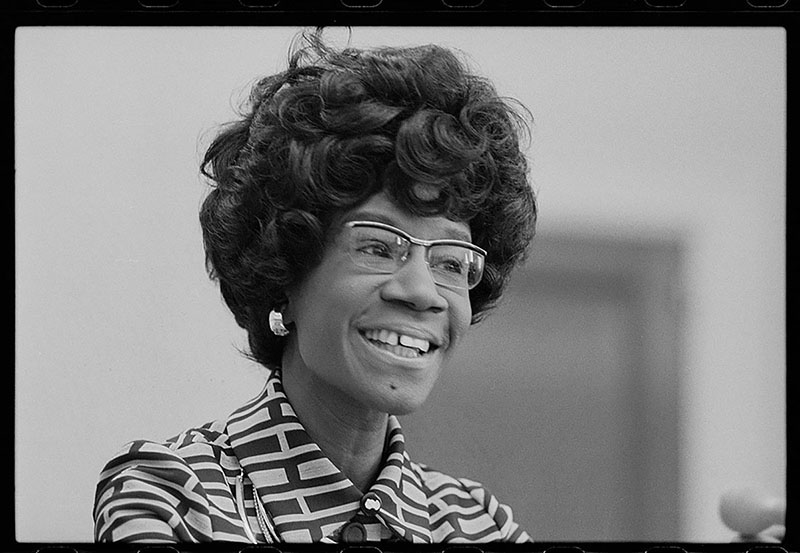
Figure 12.13 “Unbought and Unbossed”: Shirley Chisholm was the first Black United States Congresswoman, the co-founder of the Congressional Black Caucus, and a candidate for a major-party Presidential nomination.
Shirley Chisholm personally took up the mantle of women’s involvement in politics. Born of immigrant parents, she earned degrees from Brooklyn College and Columbia University, and began a career in early childhood education and advocacy. In the 1950’s she joined various political action groups, worked on election campaigns, and pushed for housing and economic reforms. After leaving one organization over its refusal to involve women in the decision-making process, she sought to increase gender and racial diversity within political and activist organizations throughout New York City. In 1968, she became the first Black woman elected to Congress. Refusing to take the quiet role expected of new Representatives, she immediately began sponsoring bills and initiatives. She spoke out against the Vietnam War, and fought for programs such as Head Start and the national school lunch program, which was eventually signed into law after Chisholm led an effort to override a presidential veto. Chisholm would eventually undertake a groundbreaking presidential run in 1972, and is viewed as paving the way for other women, and especially women of color, achieving political and social prominence (Emmrich 2019).
Theoretical Perspectives on Gender
Sociological theories help sociologists to develop questions and interpret data. For example, a sociologist studying why middle-school girls are more likely than their male counterparts to fall behind grade-level expectations in math and science might use a feminist perspective to frame her research. Another scholar might proceed from the conflict perspective to investigate why women are underrepresented in political office, and an interactionist might examine how the symbols of femininity interact with symbols of political authority to affect how women in Congress are treated by their male counterparts in meetings.
Structural functionalism has provided one of the most important perspectives of sociological research in the twentieth century and has been a major influence on research in the social sciences, including gender studies. Viewing the family as the most integral component of society, assumptions about gender roles within marriage assume a prominent place in this perspective.
Functionalists argue that gender roles were established well before the pre-industrial era when men typically took care of responsibilities outside of the home, such as hunting, and women typically took care of the domestic responsibilities in or around the home. These roles were considered functional because women were often limited by the physical restraints of pregnancy and nursing and unable to leave the home for long periods of time. Once established, these roles were passed on to subsequent generations since they served as an effective means of keeping the family system functioning properly.
When changes occurred in the social and economic climate of the United States during World War II, changes in the family structure also occurred. Many women had to assume the role of breadwinner (or modern hunter-gatherer) alongside their domestic role in order to stabilize a rapidly changing society. When the men returned from war and wanted to reclaim their jobs, society fell back into a state of imbalance, as many women did not want to forfeit their wage-earning positions (Hawke 2007).
According to conflict theory, society is a struggle for dominance among social groups (like women versus men) that compete for scarce resources. When sociologists examine gender from this perspective, we can view men as the dominant group and women as the subordinate group. According to conflict theory, social problems are created when dominant groups exploit or oppress subordinate groups. Consider the Women’s Suffrage Movement or the debate over women’s “right to choose” their reproductive futures. It is difficult for women to rise above men, as dominant group members create the rules for success and opportunity in society (Farrington and Chertok 1993).
Friedrich Engels, a German sociologist, studied family structure and gender roles. Engels suggested that the same owner-worker relationship seen in the labor force is also seen in the household, with women assuming the role of the proletariat. This is due to women’s dependence on men for the attainment of wages, which is even worse for women who are entirely dependent upon their spouses for economic support. Contemporary conflict theorists suggest that when women become wage earners, they can gain power in the family structure and create more democratic arrangements in the home, although they may still carry the majority of the domestic burden, as noted earlier (Rismanand and Johnson-Sumerford 1998).
Feminist theory is a type of conflict theory that examines inequalities in gender-related issues. It uses the conflict approach to examine the maintenance of gender roles and inequalities. Radical feminism, in particular, considers the role of the family in perpetuating male dominance. In patriarchal societies, men’s contributions are seen as more valuable than those of women. Patriarchal perspectives and arrangements are widespread and taken for granted. As a result, women’s viewpoints tend to be silenced or marginalized to the point of being discredited or considered invalid.
Sanday’s study of the Indonesian Minangkabau (2004) revealed that in societies some consider to be matriarchies (where women comprise the dominant group), women and men tend to work cooperatively rather than competitively regardless of whether a job is considered feminine by U.S. standards. The men, however, do not experience the sense of bifurcated consciousness under this social structure that modern U.S. females encounter (Sanday 2004).
Symbolic interactionism aims to understand human behavior by analyzing the critical role of symbols in human interaction. This is certainly relevant to the discussion of masculinity and femininity. Imagine that you walk into a bank hoping to get a small loan for school, a home, or a small business venture. If you meet with a male loan officer, you may state your case logically by listing all the hard numbers that make you a qualified applicant as a means of appealing to the analytical characteristics associated with masculinity. If you meet with a female loan officer, you may make an emotional appeal by stating your good intentions as a means of appealing to the caring characteristics associated with femininity.
Because the meanings attached to symbols are socially created and not natural, and fluid, not static, we act and react to symbols based on the current assigned meaning. The word gay, for example, once meant “cheerful,” but by the 1960s it carried the primary meaning of “homosexual.” In transition, it was even known to mean “careless” or “bright and showing” (Oxford American Dictionary 2010). Furthermore, the word gay (as it refers to a person), carried a somewhat negative and unfavorable meaning fifty years ago, but it has since gained more neutral and even positive connotations. When people perform tasks or possess characteristics based on the gender role assigned to them, they are said to be doing gender. This notion is based on the work of West and Zimmerman (1987). Whether we are expressing our masculinity or femininity, West and Zimmerman argue, we are always "doing gender." Thus, gender is something we do or perform, not something we are.
In other words, both gender and sexuality are socially constructed. The social construction of sexuality refers to the way in which socially created definitions about the cultural appropriateness of sex-linked behavior shape the way people see and experience sexuality. This is in marked contrast to theories of sex, gender, and sexuality that link male and female behavior to biological determinism, or the belief that men and women behave differently due to differences in their biology.
Sociological Research
Being Male, Being Female, and Being Healthy
In 1971, Broverman and Broverman conducted a groundbreaking study on the traits mental health workers ascribed to males and females. When asked to name the characteristics of a female, the list featured words such as unaggressive, gentle, emotional, tactful, less logical, not ambitious, dependent, passive, and neat. The list of male characteristics featured words such as aggressive, rough, unemotional, blunt, logical, direct, active, and sloppy (Seem and Clark 2006). Later, when asked to describe the characteristics of a healthy person (not gender specific), the list was nearly identical to that of a male.
This study uncovered the general assumption that being female is associated with being somewhat unhealthy or not of sound mind. This concept seems extremely dated, but in 2006, Seem and Clark replicated the study and found similar results. Again, the characteristics associated with a healthy male were very similar to that of a healthy (genderless) adult. The list of characteristics associated with being female broadened somewhat but did not show significant change from the original study (Seem and Clark 2006). This interpretation of feminine characteristic may help us one day better understand gender disparities in certain illnesses, such as why one in eight women can be expected to develop clinical depression in her lifetime (National Institute of Mental Health 1999). Perhaps these diagnoses are not just a reflection of women’s health, but also a reflection of society’s labeling of female characteristics, or the result of institutionalized sexism.
19.3 Health in the United States
OpenStax · 19.3 Health in the United States ↗ Instructional page including learning objectives, examples, figures, source tables and questions. Site navigation and embedded media players are omitted; source media links remain available.
Learning Objectives
By the end of this section, you should be able to:
Health in the United States is a complex and often contradictory issue. On the one hand, as one of the wealthiest nations, the United States fares well in health comparisons with the rest of the world. However, the United States also lags behind almost every industrialized country in terms of providing care to all its citizens. The following sections look at different aspects of health in the United States.
When looking at the social epidemiology of the United States, it is hard to miss the disparities among races. The discrepancy between Black and White Americans shows the gap clearly; in 2018, the average life expectancy for White males was approximately five years longer than for Black males: 78.8 compared to 74.7 (Wamsley 2021). (Note that in 2020 life expectancies of all races declined further, though the unprecedented COVID-19 pandemic was a significant cause.) Other indicates show a similar disparity. The 2018 infant mortality rates for different races and ethnicities are as follows:
Non-Hispanic Black people: 10.8
Native Hawaiian people or other Pacific Islanders: 9.4
Native American/Alaska Native people: 8.2
Hispanic people: 4.9
Non-Hispanic White people: 4.6
Asian and Asian American people: 3.6 (Centers for Disease Control 2021)
According to a report from the Henry J. Kaiser Foundation (2007), African Americans also have higher incidence of several diseases and causes of mortality, from cancer to heart disease to diabetes. In a similar vein, it is important to note that ethnic minorities, including Mexican Americans and Native Americans, also have higher rates of these diseases and causes of mortality than White people.
Lisa Berkman (2009) notes that this gap started to narrow during the Civil Rights movement in the 1960s, but it began widening again in the early 1980s. What accounts for these perpetual disparities in health among different ethnic groups? Much of the answer lies in the level of healthcare that these groups receive. The National Healthcare Disparities Report shows that even after adjusting for insurance differences, racial and ethnic minority groups receive poorer quality of care and less access to care than dominant groups. The Report identified these racial inequalities in care:
Black people, Native Americans, and Alaska Native people received worse care than Whites for about 40 percent of quality measures.
Hispanic people, Native Hawaiian people, and Pacific Islanders received worse care than White people for more than 30 percent of quality measures.
Asian people received worse care than White people for nearly 30 percent of quality measures but better care for nearly 30 percent of quality measures (Agency for Healthcare Research and Quality 2020).
Discussions of health by race and ethnicity often overlap with discussions of health by socioeconomic status, since the two concepts are intertwined in the United States. As the Agency for Health Research and Quality (2010) notes, “racial and ethnic minorities are more likely than non-Hispanic whites to be poor or near poor,” so much of the data pertaining to subordinate groups is also likely to be pertinent to low socioeconomic groups. Marilyn Winkleby and her research associates (1992) state that “one of the strongest and most consistent predictors of a person's morbidity and mortality experience is that person's socioeconomic status (SES). This finding persists across all diseases with few exceptions, continues throughout the entire lifespan, and extends across numerous risk factors for disease.” Morbidity is the incidence of disease.
It is important to remember that economics are only part of the SES picture; research suggests that education also plays an important role. Phelan and Link (2003) note that many behavior-influenced diseases like lung cancer (from smoking), coronary artery disease (from poor eating and exercise habits), and AIDS initially were widespread across SES groups. However, once information linking habits to disease was disseminated, these diseases decreased in high SES groups and increased in low SES groups. This illustrates the important role of education initiatives regarding a given disease, as well as possible inequalities in how those initiatives effectively reach different SES groups.
Health by Gender
Women are affected adversely both by unequal access to and institutionalized sexism in the healthcare industry. According to a recent report from the Kaiser Family Foundation, women experienced a decline in their ability to see needed specialists between 2001 and 2008. In 2008, one quarter of women questioned the quality of their healthcare (Ranji and Salganico 2011). Quality is partially indicated by access and cost. In 2018, roughly one in four (26%) women—compared to one in five (19%) men—reported delaying healthcare or letting conditions go untreated due to cost. Because of costs, approximately one in five women postponed preventive care, skipped a recommended test or treatment, or reduced their use of medication due to cost (Kaiser Family Foundation 2018).
We can see an example of institutionalized sexism in the way that women are more likely than men to be diagnosed with certain kinds of mental disorders. Psychologist Dana Becker notes that 75 percent of all diagnoses of Borderline Personality Disorder (BPD) are for women according to the Diagnostic Statistical Manual of Mental Disorders. This diagnosis is characterized by instability of identity, of mood, and of behavior, and Becker argues that it has been used as a catch-all diagnosis for too many women. She further decries the pejorative connotation of the diagnosis, saying that it predisposes many people, both within and outside of the profession of psychotherapy, against women who have been so diagnosed (Becker).
Many critics also point to the medicalization of women’s issues as an example of institutionalized sexism. Medicalization refers to the process by which previously normal aspects of life are redefined as deviant and needing medical attention to remedy. Historically and contemporaneously, many aspects of women’s lives have been medicalized, including menstruation, premenstrual syndrome, pregnancy, childbirth, and menopause. The medicalization of pregnancy and childbirth has been particularly contentious in recent decades, with many women opting against the medical process and choosing a more natural childbirth. Fox and Worts (1999) find that all women experience pain and anxiety during the birth process, but that social support relieves both as effectively as medical support. In other words, medical interventions are no more effective than social ones at helping with the difficulties of pain and childbirth. Fox and Worts further found that women with supportive partners ended up with less medical intervention and fewer cases of postpartum depression. Of course, access to quality birth care outside the standard medical models may not be readily available to women of all social classes.
How is your “sleep hygiene?” Sleep hygiene refers to the lifestyle and sleep habits that contribute to sleeplessness. Bad habits that can lead to sleeplessness include inconsistent bedtimes, lack of exercise, late-night employment, napping during the day, and sleep environments that include noise, lights, or screen time (National Institutes of Health 2011a).
According to the National Institute of Health, examining sleep hygiene is the first step in trying to solve a problem with sleeplessness.
For many people in the United States, however, making changes in sleep hygiene does not seem to be enough. According to a 2006 report from the Institute of Medicine, sleeplessness is an underrecognized public health problem affecting up to 70 million people. It is interesting to note that in the months (or years) after this report was released, advertising by the pharmaceutical companies behind Ambien, Lunesta, and Sepracor (three sleep aids) averaged $188 million weekly promoting these drugs (Gellene 2009).
According to a study in the American Journal of Public Health (2011), prescriptions for sleep medications increased dramatically from 1993 to 2007. While complaints of sleeplessness during doctor’s office visits more than doubled during this time, insomnia diagnoses increased more than sevenfold, from about 840,000 to 6.1 million. The authors of the study conclude that sleeplessness has been medicalized as insomnia, and that “insomnia may be a public health concern, but potential overtreatment with marginally effective, expensive medications with nontrivial side effects raises definite population health concerns” (Moloney, Konrad, and Zimmer 2011). Indeed, a study published in 2004 in the Archives of Internal Medicine shows that cognitive behavioral therapy, not medication, was the most effective sleep intervention (Jacobs, Pace-Schott, Stickgold, and Otto 2004).
A century ago, people who couldn’t sleep were told to count sheep. Now they pop a pill, and all those pills add up to a very lucrative market for the pharmaceutical industry. Is this industry behind the medicalization of sleeplessness, or is it just responding to a need?
Mental Health and Disability
The treatment received by those defined as mentally ill or disabled varies greatly from country to country. In the post-millennial United States, those of us who have never experienced such a disadvantage take for granted the rights our society guarantees for each citizen. We do not think about the relatively recent nature of the protections, unless, of course, we know someone constantly inconvenienced by the lack of accommodations or misfortune of suddenly experiencing a temporary disability.
Mental Health
People with mental disorders (a condition that makes it more difficult to cope with everyday life) and people with mental illness (a severe, lasting mental disorder that requires long-term treatment) experience a wide range of effects. According to the National Institute of Mental Health (NIMH), the United States has over 50 million adults with mental illness or mental disorder, or 20 percent of the total adult population. Of these, 13 million have what is considered serious mental illness or mental disorder (5 percent of the adult population); serious mental illness is that which causes impairment or disability (National Institute of Mental Health 2021). Finally, 16.5 percent of children aged 6-17 experienced mental illness or disorder (National Alliance on Mental Illness 2021).
The most common mental disorders in the United States are anxiety disorders. Almost 18 percent of U.S. adults are likely to be affected in a single year, and 28 percent are likely to be affected over the course of a lifetime (Anxiety and Depression Institute of America 2021). It is important to distinguish between occasional feelings of anxiety and a true anxiety disorder. Anxiety is a normal reaction to stress that we all feel at some point, but anxiety disorders are feelings of worry and fearfulness that last for months at a time. Anxiety disorders include obsessive compulsive disorder (OCD), panic disorders, posttraumatic stress disorder (PTSD), and both social and specific phobias.
The second most common mental disorders in the United States are mood disorders; roughly 10 percent of U.S. adults are likely to be affected yearly, while 21 percent are likely to be affected over the course of a lifetime (National Institute of Mental Health 2005). Mood disorders are the most common causes of illness-related hospitalization in the U.S. (Agency for Healthcare Research and Quality 2021). Major mood disorders are depression and dysthymic disorder. Like anxiety, depression might seem like something that everyone experiences at some point, and it is true that most people feel sad or “blue” at times in their lives. A true depressive episode, however, is more than just feeling sad for a short period. It is a long-term, debilitating illness that usually needs treatment to cure. Bipolar disorder is characterized by dramatic shifts in energy and mood, often affecting the individual’s ability to carry out day-to-day tasks. Bipolar disorder used to be called manic depression because of the way people would swing between manic and depressive episodes.
Depending on what definition is used, there is some overlap between mood disorders and personality disorders, which affect 9 percent of people in the United States yearly. A personality disorder is an enduring and inflexible pattern of long duration leading to significant distress or impairment, that is not due to use of substances or another medical condition. In other words, personality disorders cause people to behave in ways that are seen as abnormal to society but seem normal to them.
The diagnosis and classification regarding personality disorders has been evolving and is somewhat controversial. To guide diagnosis and potential treatments of mental disorders, the American Psychiatric Association publishes the Diagnostic and Statistical Manual on Mental Disorders (DSM). Experts working on the latest version initially proposed changing the categories of personality disorders. However, the final publication retains the original ten categories, but contains an alternate/emerging approach for classifying them. This evolution demonstrates the challenges and the wide array of treating conditions, and also represents areas of difference between theorists, practitioners, governing bodies, and other stakeholders. As discussed in the Sociological Research chapter, study and investigation is a diligent and multi-dimensional process. As the diagnostic application evolves, we will see how their definitions help scholars across disciplines understand the intersection of health issues and how they are defined by social institutions and cultural norms.
Figure 19.5 — 19.3 Health in the United States
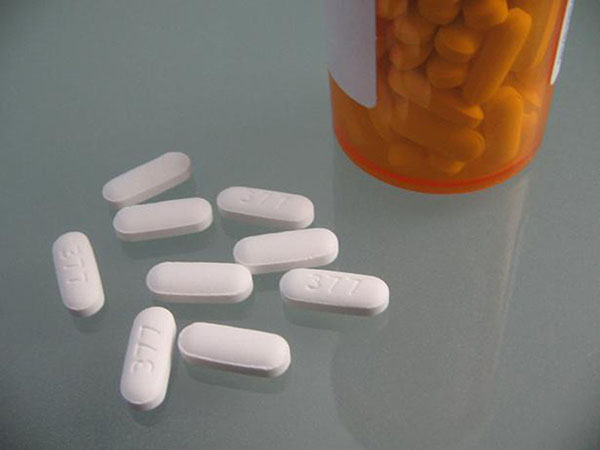
Figure 19.5 Medication is a common option for children with ADHD. (Credit: Deviation56/Wikimedia Commons)
Another commonly diagnosed mental disorder is Attention-Deficit/Hyperactivity Disorder (ADHD), which affects 9 percent of U.S. children and 4 percent of adults on a lifetime basis (Danielson 2018). Since ADHD is one of the most common childhood disorders, it is often incorrectly considered only a disease found in children. But ADHD can be a serious issue for adults who either had been diagnosed as children or who are diagnosed as adults. ADHD is marked by difficulty paying attention, difficulty controlling behavior, and hyperactivity. As a result, it can lead to educational and behavioral issues in children, success issues in college, and challenges in workplace and family life. However, there is some social debate over whether such drugs are being overprescribed (American Psychological Association). A significant difficulty in diagnosis, treatment, and societal understanding of ADHD is that it changes in expression based on a wide range of factors, including age (CHADD 2020).
Autism Spectrum Disorders (ASD) encompass a group of developmental brain disorders that are characterized by "deficits in social interaction, verbal and nonverbal communication, and engagement in repetitive behaviors or interests” (National Institute of Mental Health). As of 2021, the CDC estimates that 1 in 54 children has an autism spectrum disorder. Beyond the very high incidence, the rate of diagnosis has been increasing steadily as awareness became more widespread. In 2005, the rate was 1 in 166 children; in 2012 it was 1 in 88 children. The rate of increase and awareness has assisted diagnosis and treatment, but autism is a cause of significant fear among parents and families. Because of its impact on relationships and especially verbal communication, children with autism (and their parents) can be shunned, grossly misunderstood, and mistreated. For example, people with an autism spectrum disorder who cannot verbalize are often assumed to be unintelligent, or are sometimes left out of conversations or activities because others feel they cannot participate. Parents may be reluctant to let their children play with or associate with children with ASD. Adults with ASD go through many of the same misconceptions and mistreatments, such as being denied opportunities or being made to feel unwelcome (Applied Behavior Analysis).
Disability
Figure 19.6 — 19.3 Health in the United States
Figure 19.6 The accessibility sign indicates that people with disabilities can access the facility. The Americans with Disabilities Act requires that access be provided to everyone. (Credit: Ltljltlj/Wikimedia Commons)
Disability refers to a reduction in one’s ability to perform everyday tasks. The World Health Organization makes a distinction between the various terms used to describe disabilities. They use the term impairment to describe the physical limitations, while reserving the term disability to refer to the social limitation.
Before the passage of the Americans with Disabilities Act (ADA) in 1990, people in the United States with disabilities were often excluded from opportunities and social institutions many of us take for granted. This occurred not only through employment and other kinds of discrimination but also through casual acceptance by most people in the United States of a world designed for the convenience of the able-bodied. Imagine being in a wheelchair and trying to use a sidewalk without the benefit of wheelchair-accessible curbs. Imagine as a blind person trying to access information without the widespread availability of Braille. Imagine having limited motor control and being faced with a difficult-to-grasp round door handle. Issues like these are what the ADA tries to address. Ramps on sidewalks, Braille instructions, and more accessible door levers are all accommodations to help people with disabilities.
People with disabilities can be stigmatized by their illnesses. Stigmatization means their identity is spoiled; they are labeled as different, discriminated against, and sometimes even shunned. They are labeled (as an interactionist might point out) and ascribed a master status (as a functionalist might note), becoming “the blind girl” or “the boy in the wheelchair” instead of someone afforded a full identity by society. This can be especially true for people who are disabled due to mental illness or disorders.
As discussed in the section on mental health, many mental health disorders can be debilitating and can affect a person’s ability to cope with everyday life. This can affect social status, housing, and especially employment. According to the Bureau of Labor Statistics (2011), people with a disability had a higher rate of unemployment than people without a disability in 2010: 14.8 percent to 9.4 percent. This unemployment rate refers only to people actively looking for a job. In fact, eight out of ten people with a disability are considered “out of the labor force;” that is, they do not have jobs and are not looking for them. The combination of this population and the high unemployment rate leads to an employment-population ratio of 18.6 percent among those with disabilities. The employment-population ratio for people without disabilities was much higher, at 63.5 percent (U.S. Bureau of Labor Statistics 2011).
Many people who see a person with obesity may make negative assumptions about them based on their size. According to a study from the Yale Rudd Center for Food Policy and Obesity, large people are the object of “widespread negative stereotypes that overweight and obese persons are lazy, unmotivated, lacking in self-discipline, less competent, noncompliant, and sloppy” (Puhl and Heuer 2009).
Historically, both in the United States and elsewhere, it was considered acceptable to discriminate against people based on prejudiced opinions. Even after slavery was abolished through the 13th Amendment in 1865, institutionalized racism and prejudice against Black people persisted. In an example of stereotype interchangeability, the same insults that are flung today at the overweight and obese population (lazy, for instance) have been flung at various racial and ethnic groups in earlier history.
Why is it considered acceptable to feel prejudice toward—even to hate—people with obesity? Puhl and Heuer suggest that these feelings stem from the perception that obesity is preventable through self-control, better diet, and more exercise. Highlighting this contention is the fact that studies have shown that people’s perceptions of obesity are more positive when they think the obesity was caused by non-controllable factors like biology (a thyroid condition, for instance) or genetics.
Health experts emphasize that obesity is a disease, and that it is not the result of simple overeating. There are often a number of contributing factors that make it more difficult to avoid. Even with some understanding of non-controllable factors that might affect obesity, people with obesity are still subject to stigmatization. Puhl and Heuer’s study is one of many that document discrimination at work, in the media, and even in the medical profession. Large people are less likely to get into college than thinner people, and they are less likely to succeed at work.
Stigmatization of people with obesity comes in many forms, from the seemingly benign to the potentially illegal. In movies and television shows, overweight people are often portrayed negatively, or as stock characters who are the butt of jokes. One study found that in children’s movies “obesity was equated with negative traits (evil, unattractive, unfriendly, cruel) in 64 percent of the most popular children's videos. In 72 percent of the videos, characters with thin bodies had desirable traits, such as kindness or happiness” (Hines and Thompson 2007). In movies and television for adults, the negative portrayal is often meant to be funny. Think about the way you have seen obese people portrayed in movies and on television; now think of any other subordinate group being openly denigrated in such a way. It is difficult to find a parallel example.