Microsociology studies interaction and meaning in small-scale settings, such as a clinical conversation.
Distinguish micro- and macro-level explanations of social life
Microsociology studies interaction and meaning in small-scale settings, such as a clinical conversation. Macrosociology studies institutions, populations, and broad arrangements, such as insurance systems or labor markets. A meso-level analysis examines organizations or communities linking the two. Levels are complementary: a clinician’s time pressure may be experienced in interaction while arising from organizational payment rules. The ecological fallacy infers individual relationships from group-level associations; the reverse error treats individual patterns as sufficient evidence about institutions. Match the unit of measurement and analysis to the claim, and consider how processes at one level generate patterns at another.
Compare functionalist, conflict, symbolic-interactionist, social-constructionist, rational-choice, and feminist perspectives
Functionalism asks how institutions contribute to stability, distinguishing intended manifest functions, unintended latent functions, and dysfunctions. Conflict theory examines competition over resources and domination. Symbolic interactionism studies meanings negotiated in interaction; social constructionism examines how categories become socially accepted realities. Rational-choice approaches model decisions through perceived costs, benefits, and constraints, without requiring perfect calculation. Feminist perspectives analyze gendered power and its intersections with other inequalities. These are analytical perspectives, not interchangeable moral opinions. Education can simultaneously teach skills, reproduce advantage, and shape identities, so different theories can explain different aspects of the same institution.
Worked question. A hospital rule increases efficiency overall but makes patients feel unheard during short visits. Which levels and perspectives help analyze the pattern?
The organizational rule is meso-level, the interactional experience micro-level, and broader payment arrangements may be macro-level. Functionalism can examine efficiency and unintended dysfunctions; conflict theory can ask whose priorities control the rule; symbolic interactionism can examine the meaning of being heard. Evidence should test each proposed mechanism rather than declaring one perspective universally correct.
1.3 Theoretical Perspectives in Sociology — figures and tables
Figure 1.7 — 1.3 Theoretical Perspectives in Sociology
Figure 1.7 Sociologists develop theories to explain social occurrences such as protest rallies. (Credit: David Shankbone/flickr)
Tonja R. Conerly, Kathleen Holmes, and Asha Lal Tamang, Introduction Sociology 3E, OpenStax. · CC BY-NC-SA 4.0
· Original image ↗ · Access for free ↗Figure 1.8 — 1.3 Theoretical Perspectives in Sociology
Figure 1.8 Some sociologists see the online world contributing to the creation of an emerging global culture. Are you a part of any global communities? This Indiana rabbi is participating in what was recognized as the longest Zoom meeting, which started in Australia after the Sabbath and proceeded through each of the world’s time zones, effectively lasting much longer than a day. (Credit: Chabad Lubavitch/flickr)
The way one-on-one interactions and communications behave.
What’s it mean to be an X?
How do students react to cultural messages in school?
Table 1.1 Sociological Theories or Perspectives Different sociological perspectives enable sociologists to view social issues through a variety of useful lenses.. Tonja R. Conerly, Kathleen Holmes, and Asha Lal Tamang, Introduction Sociology 3E, OpenStax.
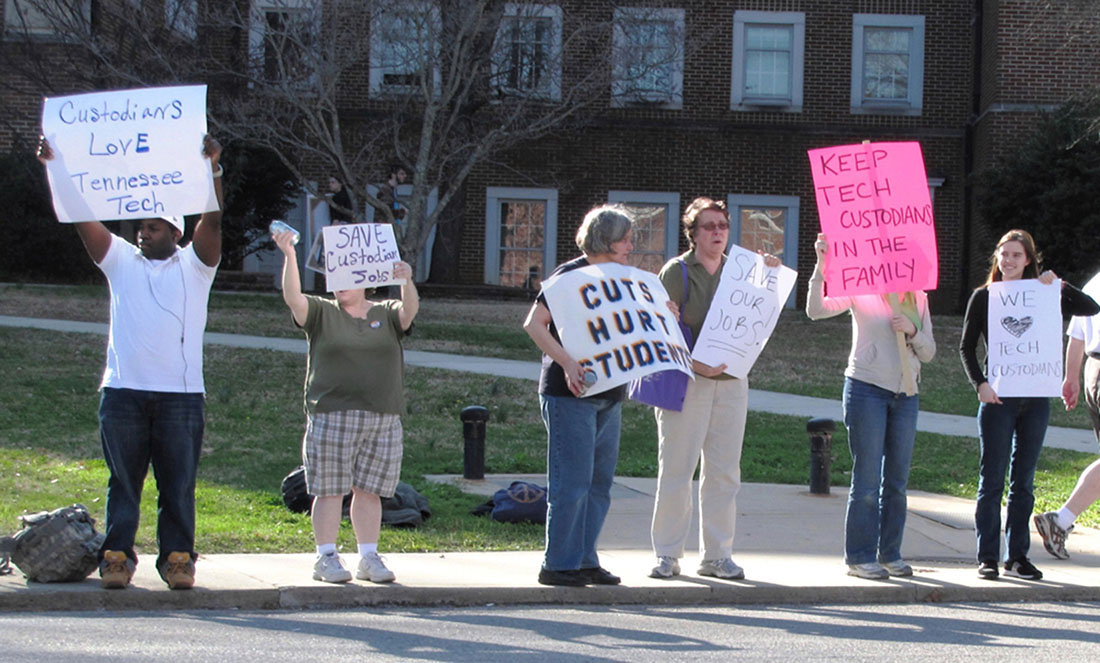
Figure 9.13 These people are protesting a decision made by Tennessee Technological University in Cookeville, Tennessee, to lay off custodians and outsource the jobs to a private firm to avoid paying employee benefits. Private job agencies often pay lower hourly wages. Is the decision fair? (Credit: Brian Stansberry/Wikimedia Commons)
Figure 9.14 (a) A group of construction workers on the job site, and (b) businesspeople in a meeting. What categories of stratification do these construction workers share? How do construction workers differ from executives or custodians? Who is more skilled? Who has greater prestige in society? (Credit: (a) Wikimedia Commons; Photo (b) Chun Kit/flickr)
4.3 Social Constructions of Reality — figures and tables
Figure 4.10 — 4.3 Social Constructions of Reality
Figure 4.10 Who are we? What role do we play in society? According to sociologists, we construct reality through our interactions with others. In a way, our day-to-day interactions are like those of actors on a stage. (Credit: Jan Lewandowski/flickr)
Tonja R. Conerly, Kathleen Holmes, and Asha Lal Tamang, Introduction Sociology 3E, OpenStax. · CC BY-NC-SA 4.0
· Original image ↗ · Access for free ↗Figure 4.11 — 4.3 Social Constructions of Reality
Figure 4.11 The story line of a self-fulfilling prophecy appears in many literary works, perhaps most famously in the story of Oedipus. Oedipus is told by an oracle that he will murder his father and marry his mother. In going out of his way to avoid his fate, Oedipus inadvertently fulfills it. Oedipus’s story illustrates one way in which members of society contribute to the social construction of reality. (Credit: Jean-Antoine-Theodore Giroust/Wikimedia Commons)
Tonja R. Conerly, Kathleen Holmes, and Asha Lal Tamang, Introduction Sociology 3E, OpenStax. · CC BY-NC-SA 4.0
· Original image ↗ · Access for free ↗Figure 4.12 — 4.3 Social Constructions of Reality
Figure 4.12 Parents often experience role strain or role conflict as they try to balance different and often urgent competing responsibilities. (Credit: Ran Zwigenberg/flickr)
Tonja R. Conerly, Kathleen Holmes, and Asha Lal Tamang, Introduction Sociology 3E, OpenStax. · CC BY-NC-SA 4.0
· Original image ↗ · Access for free ↗Figure 4.13 — 4.3 Social Constructions of Reality
Figure 4.13 A judge’s gavel is known as a prop designed to add gravity and ceremony to the proceedings. (Credit: Brian Turner/flickr)
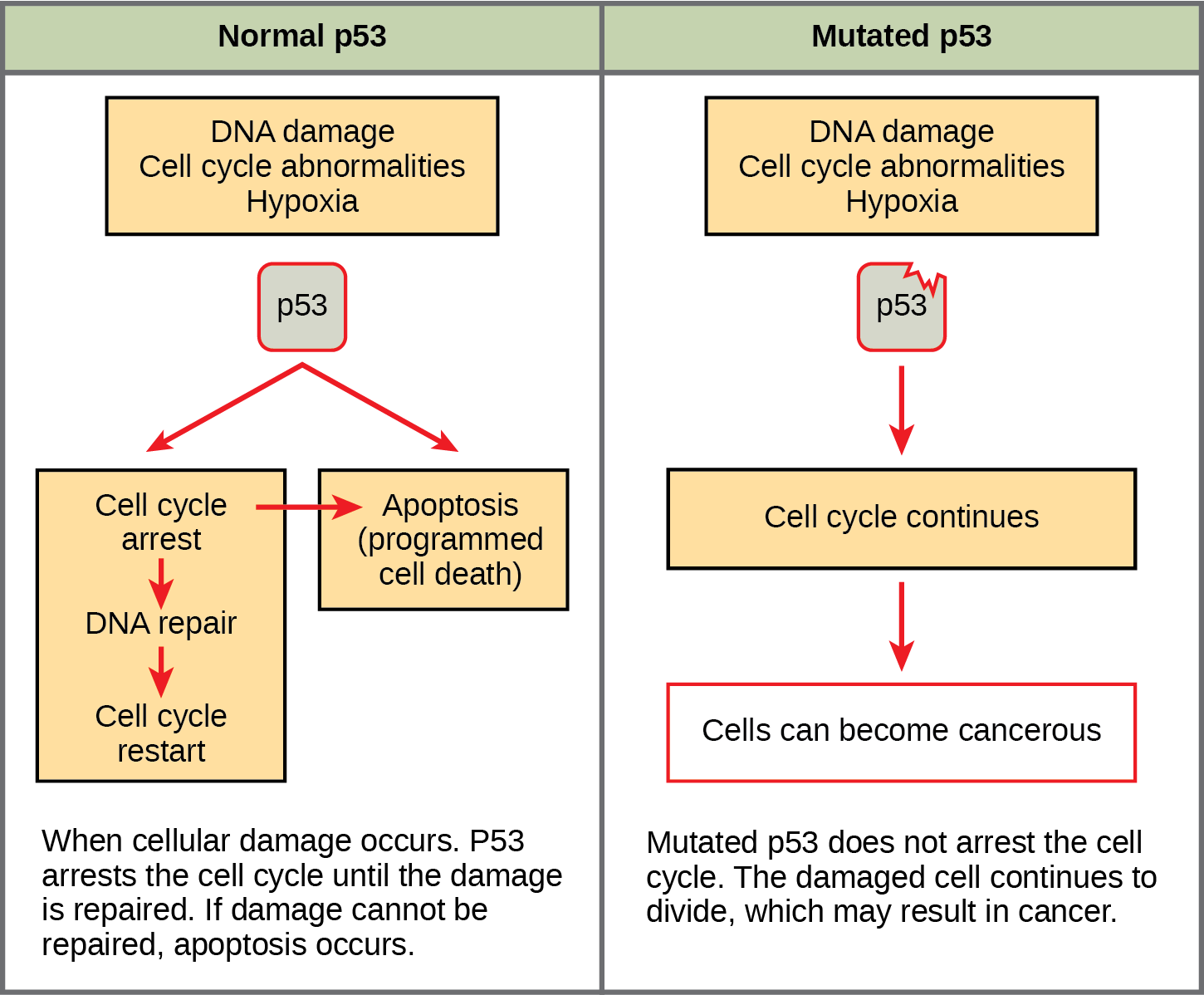
Figure 10.16 The role of normal p53 is to monitor DNA and the supply of oxygen (hypoxia is a condition of reduced oxygen supply). If damage is detected, p53 triggers repair mechanisms. If repairs are unsuccessful, p53 signals apoptosis. A cell with an abnormal p53 protein cannot repair damaged DNA and thus cannot signal apoptosis. Cells with abnormal p53 can become cancerous. (credit: modification of work by Thierry Soussi)
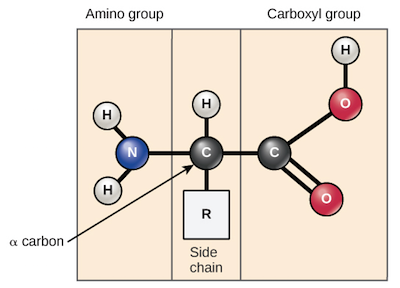
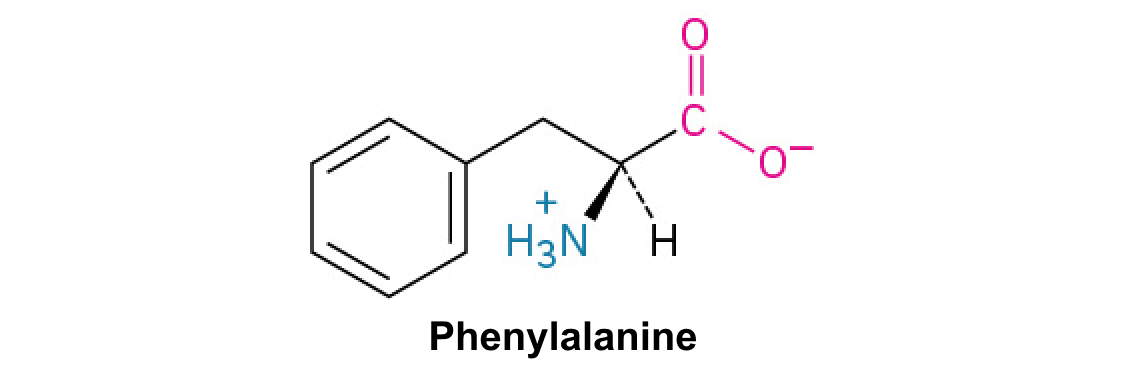
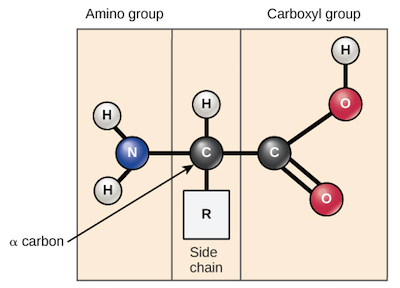
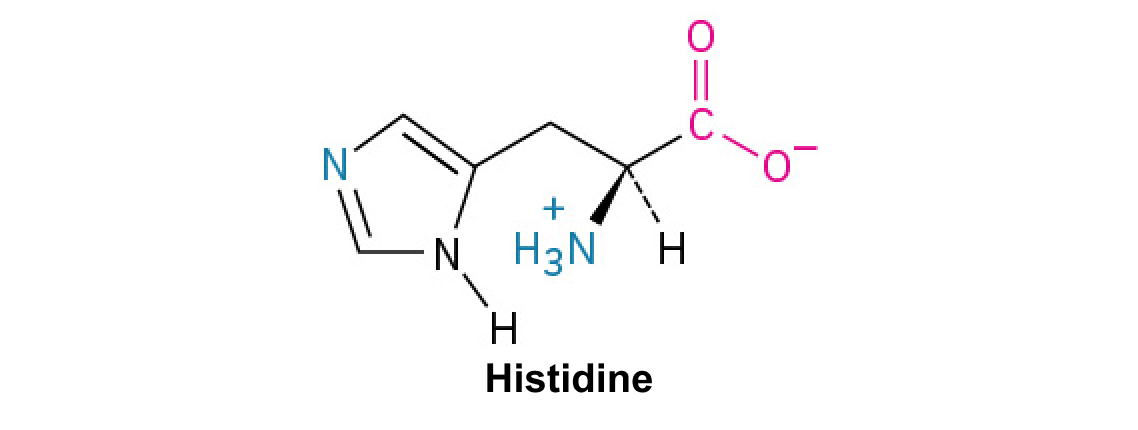
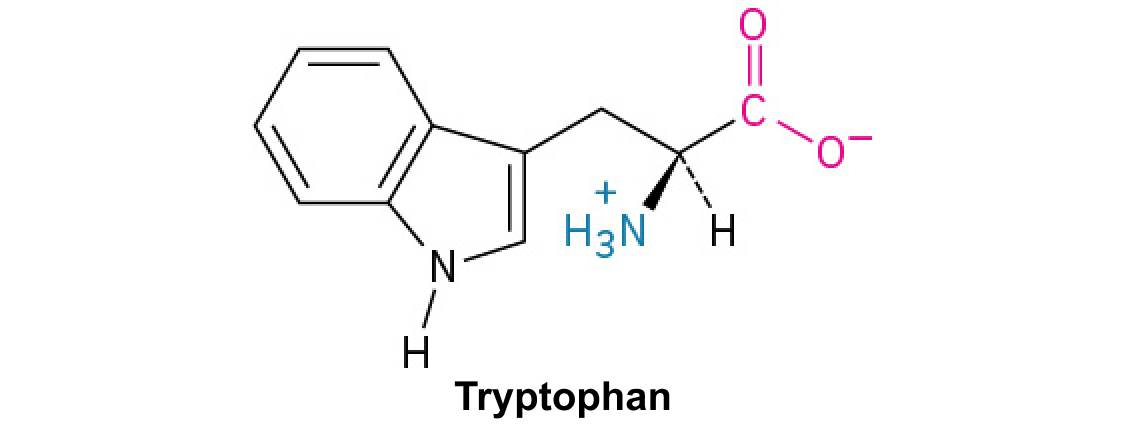
A nitrogen-containing functional group. A free amino acid’s amino group is typically protonated (NH₃⁺) near physiological pH; proline’s ring nitrogen is an exception to this formula.
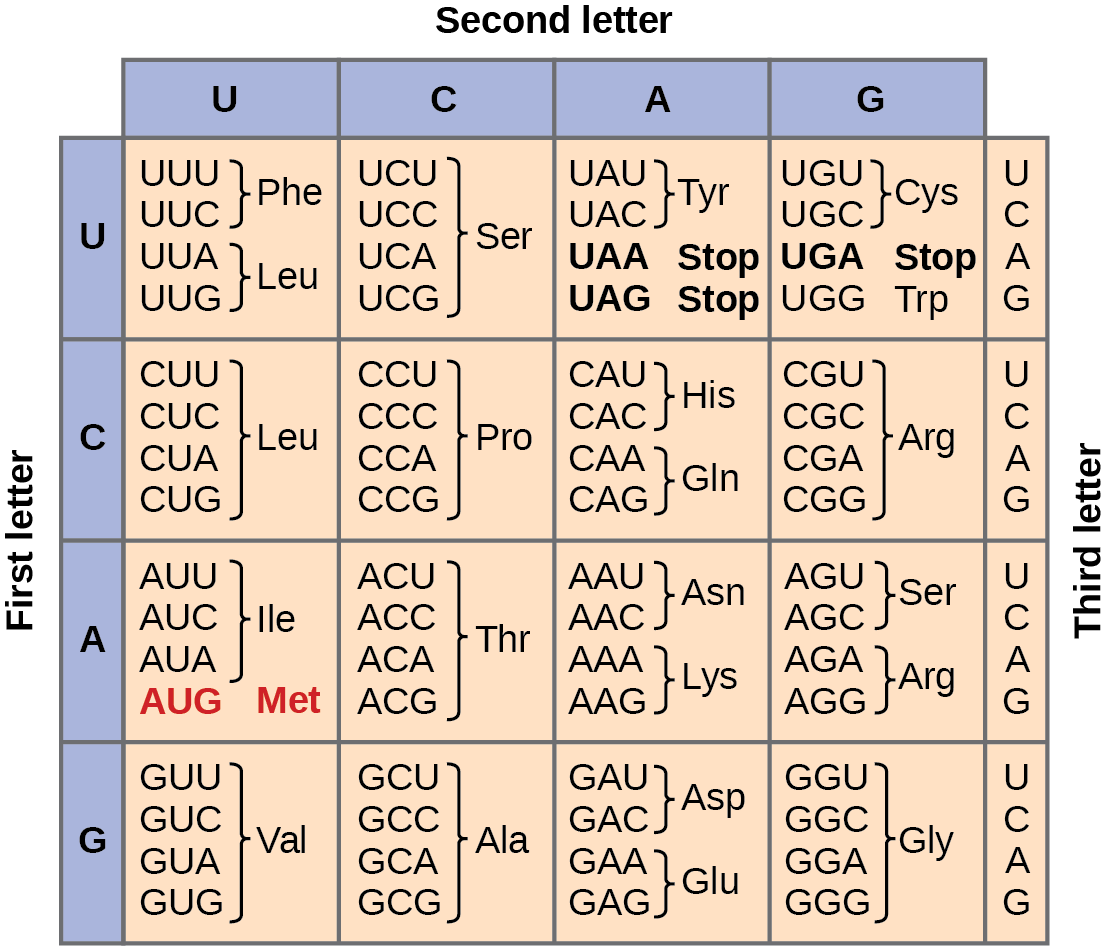
Figure 15.4 This figure shows the genetic code for translating each nucleotide triplet in mRNA into an amino acid or a termination signal in a protein. (credit: modification of work by NIH)
Figure 12.4 In the P generation, pea plants that are true-breeding for the dominant yellow phenotype are crossed with plants with the recessive green phenotype. This cross produces F 1 heterozygotes with a yellow phenotype. Punnett square analysis can be used to predict the genotypes of the F 2 generation.
An electrical property that can be positive or negative. Opposite charges attract and like charges repel; net charge is the sum of all charges on a particle.
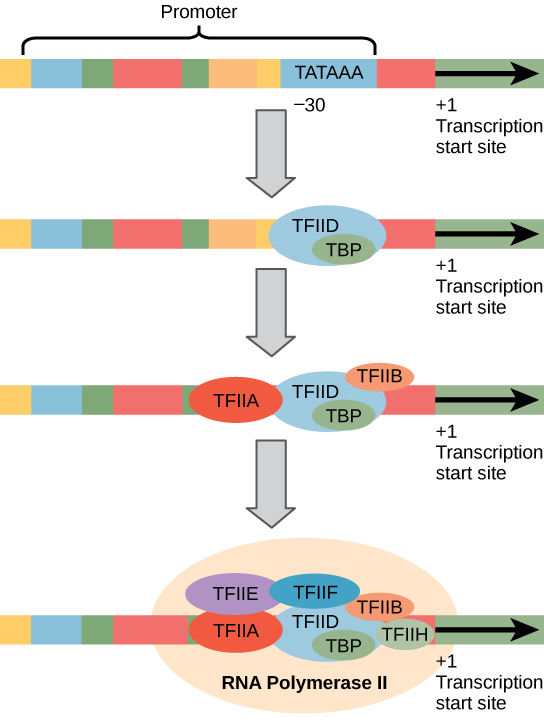
Figure 15.10 A generalized promoter of a gene transcribed by RNA polymerase II is shown. Transcription factors recognize the promoter. RNA polymerase II then binds and forms the transcription initiation complex.
Figure 12.4 In the P generation, pea plants that are true-breeding for the dominant yellow phenotype are crossed with plants with the recessive green phenotype. This cross produces F 1 heterozygotes with a yellow phenotype. Punnett square analysis can be used to predict the genotypes of the F 2 generation.
Figure 12.4 In the P generation, pea plants that are true-breeding for the dominant yellow phenotype are crossed with plants with the recessive green phenotype. This cross produces F 1 heterozygotes with a yellow phenotype. Punnett square analysis can be used to predict the genotypes of the F 2 generation.
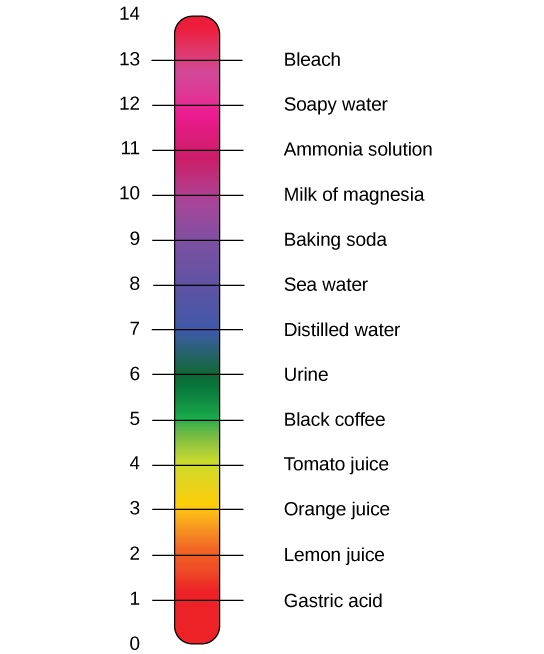
The exponent needed to obtain a number from a chosen fixed number. For decimal logarithms, log₁₀(100) = 2 because 10² = 100; pH uses the negative decimal logarithm of hydrogen ion activity.
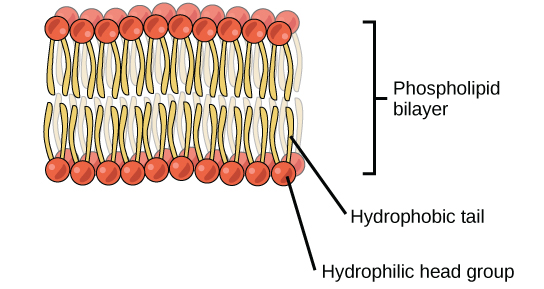
A thin boundary or sheet. Cell membranes are lipid bilayers containing proteins; blotting membranes are synthetic supports that hold proteins or nucleic acids for detection.
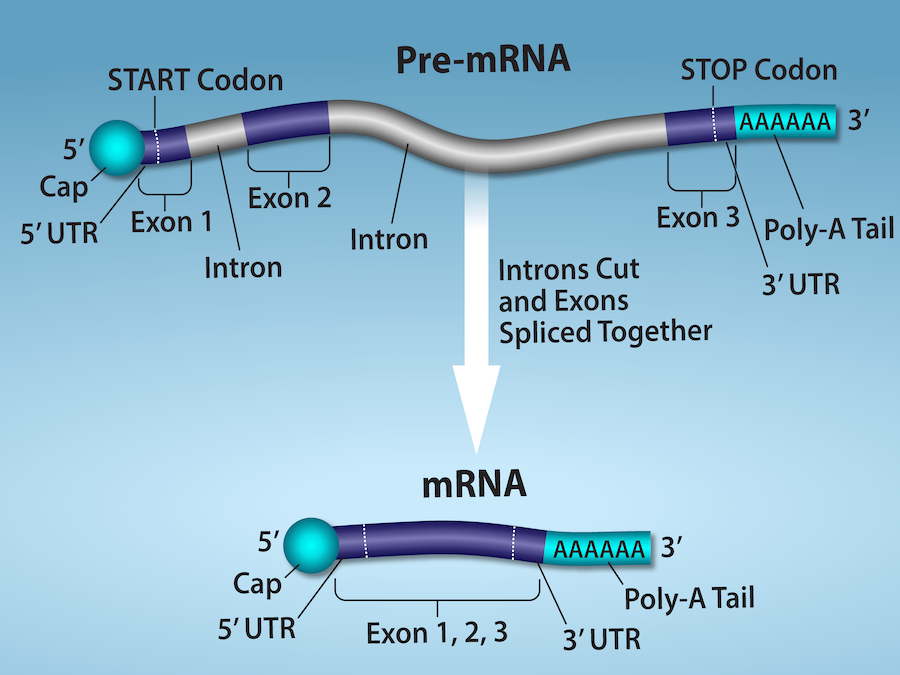
Figure 15.11 Eukaryotic pre-mRNA processing. In addition to 5’ Cap and 3’ Poly-A Tail addition, introns must be precisely removed and exons joined to generate a functional mRNA. Nucleotides upstream (towards the 5’cap) of the translation START codon are part of the 5’ untranslated region (5’ UTR). Nucleotides downstream (towards 3’end) of the STOP codon form the 3’ UTR. Both 5’ and 3’ UTRs are important for regulating translation initiation and mRNA stability. Credit: Rao, A., Ryan, K. Fletcher, S. and Tag, A. Department of Biology, Texas A&M University.
Rao, A., Ryan, K. Fletcher, S. and Tag, A. Department of Biology, Texas A&M University.; Mary Ann Clark, Matthew Douglas, and Jung Choi, Biology 2e, OpenStax. · CC BY-NC-SA 4.0
· Original image ↗ · Access for free ↗
microsociology
Analysis of small-scale interactions and meanings.
Figure 12.4 In the P generation, pea plants that are true-breeding for the dominant yellow phenotype are crossed with plants with the recessive green phenotype. This cross produces F 1 heterozygotes with a yellow phenotype. Punnett square analysis can be used to predict the genotypes of the F 2 generation.
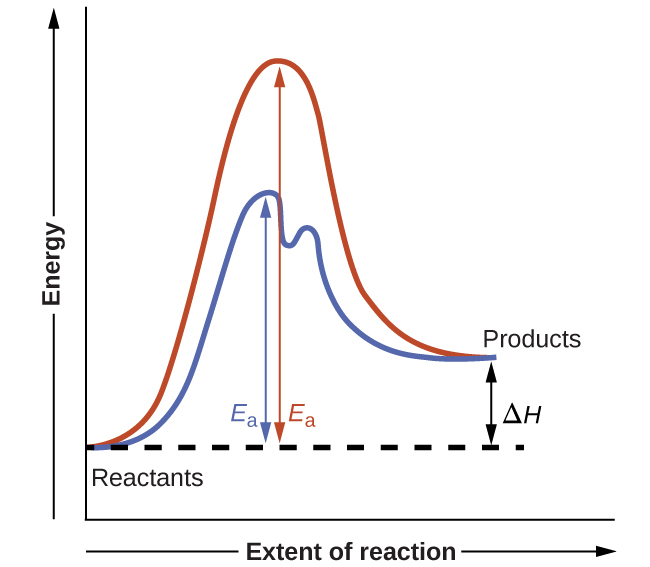
Figure 12.19 Reaction diagrams for an endothermic process in the absence (red curve) and presence (blue curve) of a catalyst. The catalyzed pathway involves a two-step mechanism (note the presence of two transition states) and an intermediate species (represented by the valley between the two transitions states).
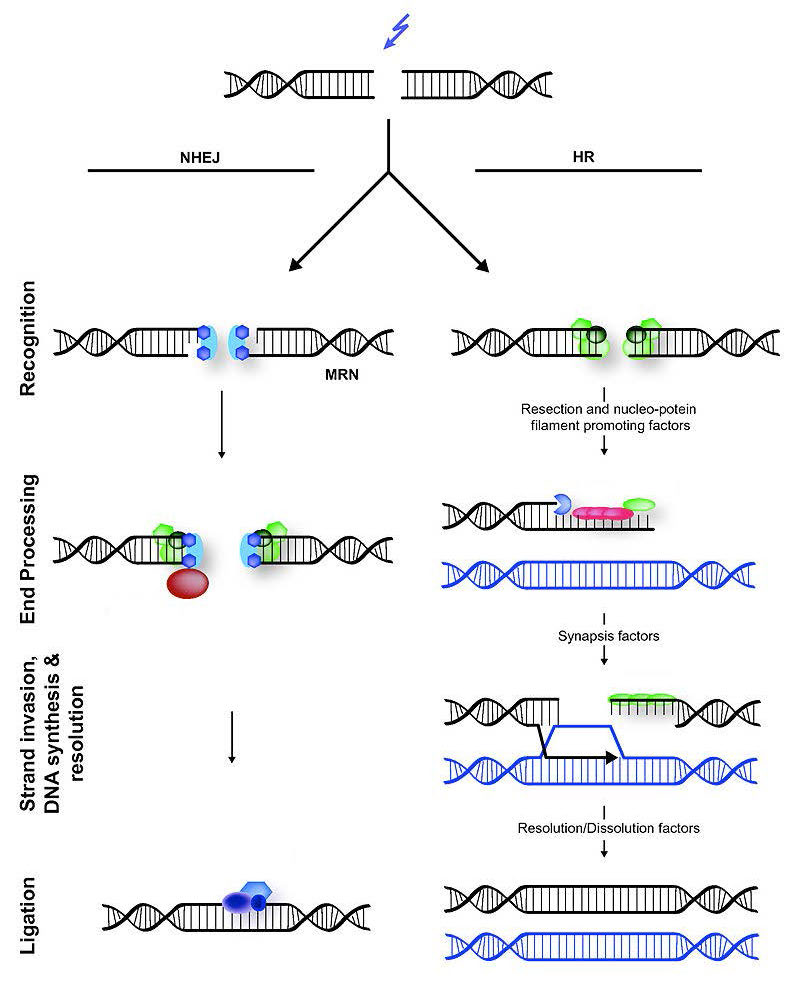
Figure 7.45 - Non-homologous end joining (left) versus homologous recombination (right) - Wikipedia
Wikipedia, as credited by Kevin Ahern, Indira Rajagopal, and Taralyn Tan, Biochemistry Free For All, Oregon State University, via Biology LibreTexts. · Source attribution
· Original image ↗ · Access for free ↗
social constructionism
Approach examining how shared practices and interpretations establish social categories and realities.
The amount of a substance that can dissolve in a solvent under specified conditions. Soluble means able to dissolve; insoluble means only very slightly soluble in that solvent.
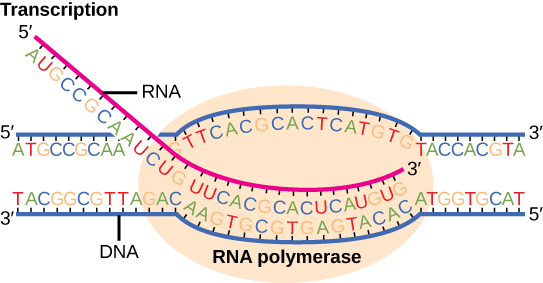
Figure 15.7 Messenger RNA is a copy of protein-coding information in the coding strand of DNA, with the substitution of U in the RNA for T in the coding sequence. However, new RNA nucleotides base pair with the nucleotides of the template strand. RNA is synthesized in its 5'-3' direction, using the enzyme RNA polymerase. As the template is read, the DNA unwinds ahead of the polymerase and then rewinds behind it.
A fleeting, high-energy arrangement at a reaction barrier. It is an energy maximum along the reaction path, rather than a stable reaction intermediate.
Figure 12.19 Reaction diagrams for an endothermic process in the absence (red curve) and presence (blue curve) of a catalyst. The catalyzed pathway involves a two-step mechanism (note the presence of two transition states) and an intermediate species (represented by the valley between the two transitions states).
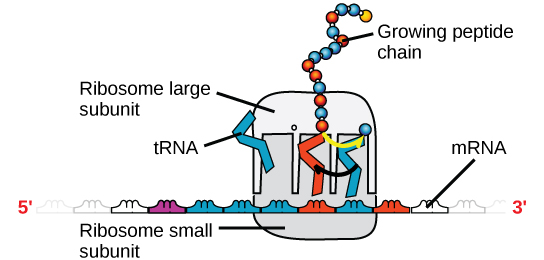
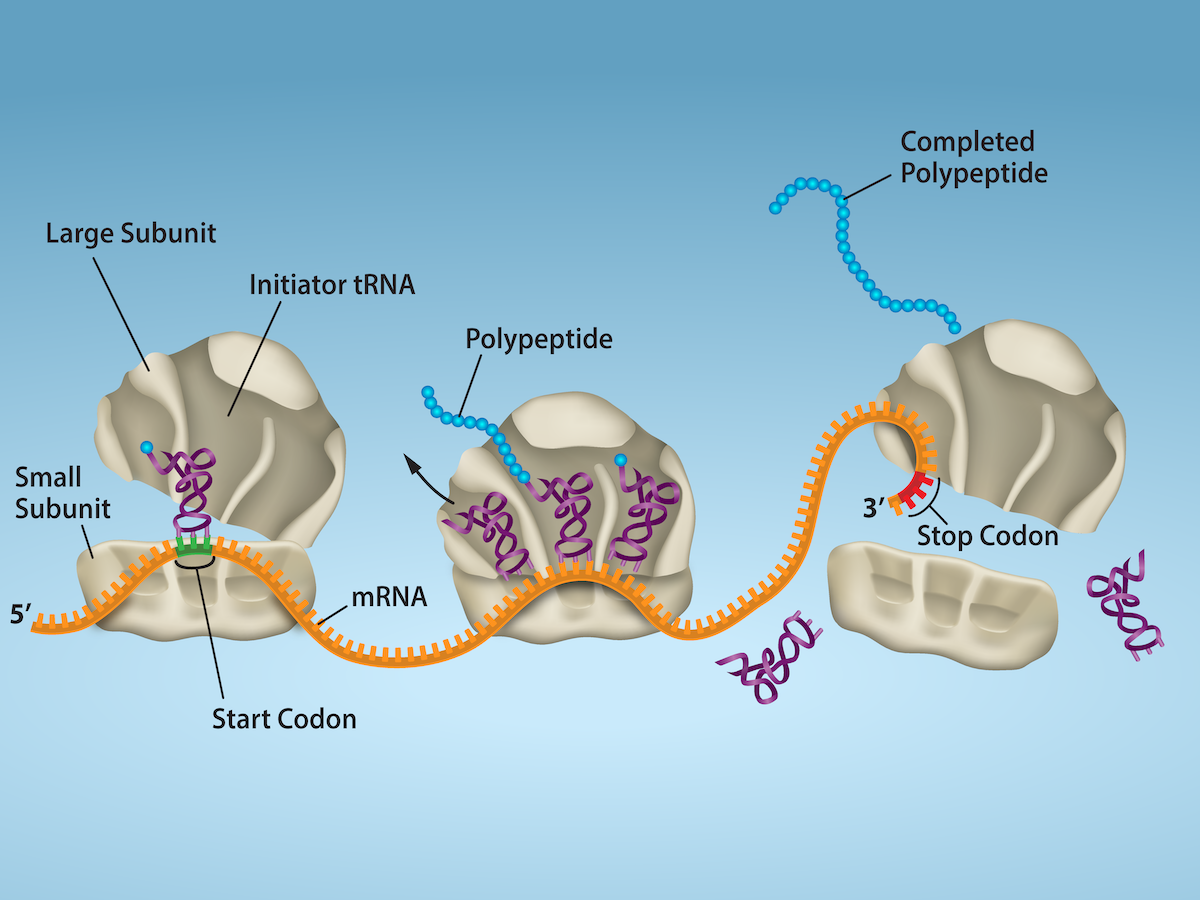
Figure 15.18 Translation begins when an initiator tRNA anticodon recognizes a start codon on mRNA bound to a small ribosomal subunit. The large ribosomal subunit joins the small subunit, and a second tRNA is recruited. As the mRNA moves relative to the ribosome, successive tRNAs move through the ribosome and the polypeptide chain is formed. Entry of a release factor into the A site terminates translation and the components dissociate.
No matching terms. Try a different name or abbreviation.
1.3 Theoretical Perspectives in Sociology
OpenStax · 1.3 Theoretical Perspectives in Sociology ↗ Instructional page including learning objectives, examples, figures, source tables and questions. Site navigation and embedded media players are omitted; source media links remain available.
Learning Objectives
By the end of this section you should be able to:
Describe the ways that sociological theories are used to explain social institutions.
Sociologists study social events, interactions, and patterns, and they develop theories to explain why things work as they do. In sociology, a theory is a way to explain different aspects of social interactions and to create a testable proposition, called a hypothesis, about society (Allan 2006).
For example, although suicide is generally considered an individual phenomenon, Émile Durkheim was interested in studying the social factors that affect it. He studied social solidarity, social ties within a group, and hypothesized that differences in suicide rates might be explained by religious differences. Durkheim gathered a large amount of data about Europeans and found that Protestants were more likely to die by suicide than Catholics. His work supports the utility of theory in sociological research.
Theories vary in scope depending on the scale of the issues that they are meant to explain. Macro-level theories relate to large-scale issues and large groups of people, while micro-level theories look at very specific relationships between individuals or small groups. Grand theories attempt to explain large-scale relationships and answer fundamental questions such as why societies form and why they change. Sociological theory is constantly evolving and should never be considered complete. Classic sociological theories are still considered important and current, but new sociological theories build upon the work of their predecessors and add to them (Calhoun, 2002).
In sociology, a few theories provide broad perspectives that help explain many different aspects of social life, and these are called paradigms. Paradigms are philosophical and theoretical frameworks used within a discipline to formulate theories, generalizations, and the experiments performed in support of them. Three paradigms have come to dominate sociological thinking because they provide useful explanations: structural functionalism, conflict theory, and symbolic interactionism.
The way one-on-one interactions and communications behave.
What’s it mean to be an X?
How do students react to cultural messages in school?
Table
1.1
Sociological Theories or Perspectives
Different sociological perspectives enable sociologists to view social issues through a variety of useful lenses.
Functionalism, also called structural-functional theory, sees society as a structure with interrelated parts designed to meet the biological and social needs of the individuals in that society. Functionalism grew out of the writings of English philosopher and biologist, Herbert Spencer, who saw similarities between society and the human body. He argued that just as the various organs of the body work together to keep the body functioning, the various parts of society work together to keep society functioning (Spencer, 1898). The parts of society that Spencer referred to were the social institutions, or patterns of beliefs and behaviors focused on meeting social needs, such as government, education, family, healthcare, religion, and the economy.
Émile Durkheim applied Spencer’s theory to explain how societies change and survive over time. Durkheim believed that society is a complex system of interrelated and interdependent parts that work together to maintain stability (Durkheim, 1893), and that society is held together by shared values, languages, and symbols. He believed that to study society, a sociologist must look beyond individuals to social facts such as laws, morals, values, religious beliefs, customs, fashion, and rituals, which all serve to govern social life (Durkheim, 1895). Alfred Radcliffe-Brown (1881–1955), a social anthropologist, defined the function of any recurrent activity as the part it played in social life as a whole, and therefore the contribution it makes to social stability and continuity (Radcliffe-Brown 1952). In a healthy society, all parts work together to maintain stability, a state called dynamic equilibrium by later sociologists such as Parsons (1961).
Durkheim believed that individuals may make up society, but in order to study society, sociologists have to look beyond individuals to social facts. Each of these social facts serves one or more functions within a society. For example, one function of a society’s laws may be to protect society from violence, while another is to punish criminal behavior, while another is to preserve public health.
Another noted structural functionalist, Robert Merton (1910–2003), pointed out that social processes often have many functions. Manifest functions are the consequences of a social process that are sought or anticipated, while latent functions are the unsought consequences of a social process. A manifest function of a college education, for example, includes gaining knowledge, preparing for a career, and finding a good job that utilizes that education. Latent functions of your college years include meeting new people, participating in extracurricular activities, or even finding a spouse or partner. Another latent function of education is creating a hierarchy of employment based on the level of education attained. Latent functions can be beneficial, neutral, or harmful. Social processes that have undesirable consequences for the operation of society are called dysfunctions. In education, examples of dysfunction include getting bad grades, truancy, dropping out, not graduating, and not finding suitable employment.
Criticism
One criticism of the structural-functional theory is that it can’t adequately explain social change even though the functions are processes. Also problematic is the somewhat circular nature of this theory: repetitive behavior patterns are assumed to have a function, yet we profess to know that they have a function only because they are repeated. Furthermore, dysfunctions may continue, even though they don’t serve a function, which seemingly contradicts the basic premise of the theory. Many sociologists now believe that functionalism is no longer useful as a macro-level theory, but that it does serve a useful purpose in some mid-level analyses.
Figure 1.8 — 1.3 Theoretical Perspectives in Sociology
Figure 1.8 Some sociologists see the online world contributing to the creation of an emerging global culture. Are you a part of any global communities? This Indiana rabbi is participating in what was recognized as the longest Zoom meeting, which started in Australia after the Sabbath and proceeded through each of the world’s time zones, effectively lasting much longer than a day. (Credit: Chabad Lubavitch/flickr)
Sociologists around the world look closely for signs of what would be an unprecedented event: the emergence of a global culture. In the past, empires such as those that existed in China, Europe, Africa, and Central and South America linked people from many different countries, but those people rarely became part of a common culture. They lived too far from each other, spoke different languages, practiced different religions, and traded few goods. Today, increases in communication, travel, and trade have made the world a much smaller place. More and more people are able to communicate with each other instantly—wherever they are located—by telephone, video, and text. They share movies, television shows, music, games, and information over the Internet. Students can study with teachers and pupils from the other side of the globe. Governments find it harder to hide conditions inside their countries from the rest of the world.
Sociologists research many different aspects of this potential global culture. Some explore the dynamics involved in the social interactions of global online communities, such as when members feel a closer kinship to other group members than to people residing in their own countries. Other sociologists study the impact this growing international culture has on smaller, less-powerful local cultures. Yet other researchers explore how international markets and the outsourcing of labor impact social inequalities. Sociology can play a key role in people’s abilities to understand the nature of this emerging global culture and how to respond to it.
Conflict theory looks at society as a competition for limited resources. This perspective is a macro-level approach most identified with the writings of German philosopher and economist Karl Marx, who saw society as being made up of individuals in different social classes who must compete for social, material, and political resources such as food and housing, employment, education, and leisure time. Social institutions like government, education, and religion reflect this competition in their inherent inequalities and help maintain the unequal social structure. Some individuals and organizations are able to obtain and keep more resources than others, and these “winners” use their power and influence to maintain social institutions. The perpetuation of power results in the perpetuation of oppression.
Several theorists suggested variations on this basic theme like Polish-Austrian sociologist Ludwig Gumplowicz (1838–1909) who expanded on Marx’s ideas by arguing that war and conquest are the bases of civilizations. He believed that cultural and ethnic conflicts led to states being identified and defined by a dominant group that had power over other groups (Irving, 2007).
German sociologist Max Weber (1864–1920) agreed with Marx but also believed that, in addition to economic inequalities, inequalities of political power and social structure cause conflict. Weber noted that different groups were affected differently based on education, race, and gender, and that people’s reactions to inequality were moderated by class differences and rates of social mobility, as well as by perceptions about the legitimacy of those in power. A reader of Marx, Georg Simmel believed that conflict can help integrate and stabilize a society. He said that the intensity of the conflict varies depending on the emotional involvement of the parties, the degree of solidarity within the opposing groups, and the clarity and limited nature of the goals. Simmel also showed that groups work to create internal solidarity, centralize power, and reduce dissent. The stronger the bond, the weaker the discord. Resolving conflicts can reduce tension and hostility and can pave the way for future agreements.
In the 1930s and 1940s, German philosophers, known as the Frankfurt School, developed critical theory as an elaboration on Marxist principles. Critical theory is an expansion of conflict theory and is broader than just sociology, incorporating other social sciences and philosophy. A critical theory is a holistic theory and attempts to address structural issues causing inequality. It must explain what’s wrong in current social reality, identify the people who can make changes, and provide practical goals for social transformation (Horkeimer, 1982).
More recently, inequality based on gender or race has been explained in a similar manner and has identified institutionalized power structures that help to maintain inequality between groups. Janet Saltzman Chafetz (1941–2006) presented a model of feminist theory that attempts to explain the forces that maintain gender inequality as well as a theory of how such a system can be changed (Turner, 2003). Similarly, critical race theory grew out of a critical analysis of race and racism from a legal point of view. Critical race theory looks at structural inequality based on white privilege and associated wealth, power, and prestige.
Sociology in the Real World
Farming and Locavores: How Sociological Perspectives Might View Food Consumption
The consumption of food is a commonplace, daily occurrence. Yet, it can also be associated with important moments in our lives. Eating can be an individual or a group action, and eating habits and customs are influenced by our cultures. In the context of society, our nation’s food system is at the core of numerous social movements, political issues, and economic debates. Any of these factors might become a topic of sociological study.
A structural-functional approach to the topic of food consumption might analyze the role of the agriculture industry within the nation’s economy and how this has changed from the early days of manual-labor farming to modern mechanized production. Another might study the different functions of processes in food production, from farming and harvesting to flashy packaging and mass consumerism.
A conflict theorist might be interested in the power differentials present in the regulation of food, by exploring where people’s right to information intersects with corporations’ drive for profit and how the government mediates those interests. Or a conflict theorist might examine the power and powerlessness experienced by local farmers versus large farming conglomerates, such as the documentary Food Inc., which depicts the current U.S. agribusiness as fostering unhealthy food, environmental damage, forcing out small farmers, and abuse of animals and workers in various ways, such as Monsanto's patenting of seeds. Another topic of study might be how nutrition varies between different social classes.
A sociologist viewing food consumption through a symbolic interactionist lens would be more interested in microlevel topics, such as the symbolic use of food in religious rituals, or the role it plays in the social interaction of a family dinner. This perspective might also explore the interactions among group members who identify themselves based on their sharing a particular diet, such as vegetarians (people who don’t eat meat) or locavores (people who strive to eat locally produced food).
Criticism
Just as structural functionalism was criticized for focusing too much on the stability of societies, conflict theory has been criticized because it tends to focus on conflict to the exclusion of recognizing stability. Many social structures are extremely stable or have gradually progressed over time rather than changing abruptly as conflict theory would suggest.
Symbolic Interactionist Theory
Symbolic interactionism is a micro-level theory that focuses on the relationships among individuals within a society. Communication—the exchange of meaning through language and symbols—is believed to be the way in which people make sense of their social worlds. Theorists Nancy J. Herman and Larry T. Reynolds (1994) note that this perspective sees people as being active in shaping the social world rather than simply being acted upon.
George Herbert Mead is considered a founder of symbolic interactionism though he never published his work on it (LaRossa and Reitzes, 1993). Mead’s student, Herbert Blumer (1900-1987), coined the term “symbolic interactionism” and outlined these basic premises: humans interact with things based on meanings ascribed to those things; the ascribed meaning of things comes from our interactions with others and society; the meanings of things are interpreted by a person when dealing with things in specific circumstances (Blumer 1969). If you love books, for example, a symbolic interactionist might propose that you learned that books are good or important in the interactions you had with family, friends, school, or church. Maybe your family had a special reading time each week, getting your library card was treated as a special event, or bedtime stories were associated with warmth and comfort.
Social scientists who apply symbolic-interactionist thinking look for patterns of interaction between individuals. Their studies often involve observation of one-on-one interactions. For example, while a conflict theorist studying a political protest might focus on class difference, a symbolic interactionist would be more interested in how individuals in the protesting group interact, as well as the signs and symbols protesters use to communicate their message.
The focus on the importance of symbols in building a society led sociologists like Erving Goffman (1922-1982) to develop a technique called dramaturgical analysis. Goffman used theater as an analogy for social interaction and recognized that people’s interactions showed patterns of cultural “scripts.” He argued that individuals were actors in a play. We switched roles, sometimes minute to minute—for example, from student or daughter to dog walker. Because it can be unclear what part a person may play in a given situation, he or she has to improvise his or her role as the situation unfolds (Goffman, 1958).
Studies that use the symbolic interactionist perspective are more likely to use qualitative research methods, such as in-depth interviews or participant observation, because they seek to understand the symbolic worlds in which research subjects live.
Constructivism is an extension of symbolic interaction theory which proposes that reality is what humans cognitively construct it to be. We develop social constructs based on interactions with others, and those constructs that last over time are those that have meanings which are widely agreed-upon or generally accepted by most within the society. This approach is often used to examine what’s defined as deviant within a society. There is no absolute definition of deviance, and different societies have constructed different meanings for deviance, as well as associating different behaviors with deviance.
One situation that illustrates this is what you believe you’re to do if you find a wallet in the street. In the United States, turning the wallet in to local authorities would be considered the appropriate action, and to keep the wallet would be seen as deviant. In contrast, many Eastern societies would consider it much more appropriate to keep the wallet and search for the owner yourself. Turning it over to someone else, even the authorities, would be considered deviant behavior.
Criticism
Research done from this perspective is often scrutinized because of the difficulty of remaining objective. Others criticize the extremely narrow focus on symbolic interaction. Proponents, of course, consider this one of its greatest strengths.
Sociological Theory Today
These three approaches still provide the main foundation of modern sociological theory though they have evolved. Structural-functionalism was a dominant force after World War II and until the 1960s and 1970s. At that time, sociologists began to feel that structural-functionalism did not sufficiently explain the rapid social changes happening in the United States at that time. The women’s movement and the Civil Rights movement forced academics to develop approaches to study these emerging social practices.
Conflict theory then gained prominence, with its emphasis on institutionalized social inequality. Critical theory, and the particular aspects of feminist theory and critical race theory, focused on creating social change through the application of sociological principles. The field saw a renewed emphasis on helping ordinary people understand sociology principles, in the form of public sociology.
Gaining prominence in the wake of Mead’s work in the 1920s and 1930s, symbolic interactionism declined in influence during the 1960s and 1970s only to be revitalized at the turn of the twenty-first century (Stryker, 1987). Postmodern social theory developed in the 1980s to look at society through an entirely new lens by rejecting previous macro-level attempts to explain social phenomena. Its growth in popularity coincides with the rise of constructivist views of symbolic interactionism.
9.4 Theoretical Perspectives on Social Stratification
Basketball is one of the highest-paying professional sports and stratification exists even among teams in the NBA. For example, the Toronto Raptors hands out the lowest annual payroll, while the New York Knicks reportedly pays the highest. Stephen Curry, a Golden State Warriors guard, is one of the highest paid athletes in the NBA, earning around $43 million a year (Sports Illustrated 2020), whereas the lowest paid player earns just over $200,000 (ESPN 2021). Even within specific fields, layers are stratified, members are ranked, and inequality exists.
In sociology, even an issue such as NBA salaries can be seen from various points of view. Functionalists will examine the purpose of such high salaries, conflict theorists will study the exorbitant salaries as an unfair distribution of money, and symbolic interactionists will describe how players display that wealth. Social stratification takes on new meanings when it is examined from different sociological perspectives—functionalism, conflict theory, and symbolic interactionism.
In sociology, the functionalist perspective examines how society’s parts operate. According to functionalism, different aspects of society exist because they serve a vital purpose. What is the function of social stratification?
In 1945, sociologists Kingsley Davis and Wilbert Moore published the Davis-Moore thesis, which argued that the greater the functional importance of a social role, the greater must be the reward. The theory posits that social stratification represents the inherently unequal value of different work. Certain tasks in society are more valuable than others (for example, doctors or lawyers). Qualified people who fill those positions are rewarded more than others.
According to Davis and Moore, a firefighter’s job is more important than, for instance, a grocery store cashier’s job. The cashier position does not require similar skill and training level as firefighting. Without the incentive of higher pay, better benefits, and increased respect, why would someone be willing to rush into burning buildings? If pay levels were the same, the firefighter might as well work as a grocery store cashier and avoid the risk of firefighting. Davis and Moore believed that rewarding more important work with higher levels of income, prestige, and power encourages people to work harder and longer.
Davis and Moore stated that, in most cases, the degree of skill required for a job determines that job’s importance. They noted that the more skill required for a job, the fewer qualified people there would be to do that job. Certain jobs, such as cleaning hallways or answering phones, do not require much skill. Therefore, most people would be qualified for these positions. Other work, like designing a highway system or delivering a baby, requires immense skill limiting the number of people qualified to take on this type of work.
Many scholars have criticized the Davis-Moore thesis. In 1953, Melvin Tumin argued that it does not explain inequalities in the education system or inequalities due to race or gender. Tumin believed social stratification prevented qualified people from attempting to fill roles (Tumin 1953).
Figure 9.13 These people are protesting a decision made by Tennessee Technological University in Cookeville, Tennessee, to lay off custodians and outsource the jobs to a private firm to avoid paying employee benefits. Private job agencies often pay lower hourly wages. Is the decision fair? (Credit: Brian Stansberry/Wikimedia Commons)
Conflict theorists are deeply critical of social stratification, asserting that it benefits only some people, not all of society. For instance, to a conflict theorist, it seems wrong that a basketball player is paid millions for an annual contract while a public school teacher may earn $35,000 a year. Stratification, conflict theorists believe, perpetuates inequality. Conflict theorists try to bring awareness to inequalities, such as how a rich society can have so many poor members.
Many conflict theorists draw on the work of Karl Marx. During the nineteenth-century era of industrialization, Marx believed social stratification resulted from people’s relationship to production. People were divided into two main groups: they either owned factories or worked in them. In Marx’s time, bourgeois capitalists owned high-producing businesses, factories, and land, as they still do today. Proletariats were the workers who performed the manual labor to produce goods. Upper-class capitalists raked in profits and got rich, while working-class proletariats earned skimpy wages and struggled to survive. With such opposing interests, the two groups were divided by differences of wealth and power. Marx believed workers experience deep alienation, isolation and misery resulting from powerless status levels (Marx 1848). Marx argued that proletariats were oppressed by the bourgeoisie.
Today, while working conditions have improved, conflict theorists believe that the strained working relationship between employers and employees still exists. Capitalists own the means of production, and a system is in place to make business owners rich and keep workers poor. According to conflict theorists, the resulting stratification creates class conflict.
Symbolic interactionism uses everyday interactions of individuals to explain society as a whole. Symbolic interactionism examines stratification from a micro-level perspective. This analysis strives to explain how people’s social standing affects their everyday interactions.
In most communities, people interact primarily with others who share the same social standing. It is precisely because of social stratification that people tend to live, work, and associate with others like themselves, people who share their same income level, educational background, class traits and even tastes in food, music, and clothing. The built-in system of social stratification groups people together. This is one of the reasons why it was rare for a royal prince like England’s Prince William to marry a commoner.
Symbolic interactionists also note that people’s appearance reflects their perceived social standing. As discussed above, class traits seen through housing, clothing, and transportation indicate social status, as do hairstyles, taste in accessories, and personal style. Symbolic interactionists also analyze how individuals think of themselves or others interpretation of themselves based on these class traits.
Figure 9.14 (a) A group of construction workers on the job site, and (b) businesspeople in a meeting. What categories of stratification do these construction workers share? How do construction workers differ from executives or custodians? Who is more skilled? Who has greater prestige in society? (Credit: (a) Wikimedia Commons; Photo (b) Chun Kit/flickr)
To symbolically communicate social standing, people often engage in conspicuous consumption, which is the purchase and use of certain products to make a social statement about status. Carrying pricey but eco-friendly water bottles could indicate a person’s social standing, or what they would like others to believe their social standing is. Some people buy expensive trendy sneakers even though they will never wear them to jog or play sports. A $17,000 car provides transportation as easily as a $100,000 vehicle, but the luxury car makes a social statement that the less expensive car can’t live up to. All these symbols of stratification are worthy of examination by an interactionist.
4.3 Social Constructions of Reality
OpenStax · 4.3 Social Constructions of Reality ↗ Instructional page including learning objectives, examples, figures, source tables and questions. Site navigation and embedded media players are omitted; source media links remain available.
Learning Objectives
By the end of this section, you should be able to:
Interpret the sociological concept of reality as a social construct
Define roles and describe their places in people’s daily interactions
Explain how individuals present themselves and perceive themselves in a social context
Figure 4.10 — 4.3 Social Constructions of Reality
Figure 4.10 Who are we? What role do we play in society? According to sociologists, we construct reality through our interactions with others. In a way, our day-to-day interactions are like those of actors on a stage. (Credit: Jan Lewandowski/flickr)
Until now, we’ve primarily discussed the differences between societies. Rather than discuss their problems and configurations, we’ll now explore how society came to be and how sociologists view social interaction.
In 1966 sociologists Peter Berger and Thomas Luckmann wrote a book called The Social Construction of Reality. In it, they argued that society is created by humans and human interaction, which they call habitualization. Habitualization describes how “any action that is repeated frequently becomes cast into a pattern, which can then be … performed again in the future in the same manner and with the same economical effort” (Berger and Luckmann 1966). Not only do we construct our own society but we also accept it as it is because others have created it before us. Society is, in fact, “habit.”
For example, your school exists as a school and not just as a building because you and others agree that it is a school. If your school is older than you are, it was created by the agreement of others before you. In a sense, it exists by consensus, both prior and current. This is an example of the process of institutionalization, the act of implanting a convention or norm into society. Bear in mind that the institution, while socially constructed, is still quite real.
Another way of looking at this concept is through W.I. Thomas’s notable Thomas theorem which states, “If men define situations as real, they are real in their consequences” (Thomas and Thomas 1928). That is, people’s behavior can be determined by their subjective construction of reality rather than by objective reality. For example, a teenager who is repeatedly given a label—overachiever, player, bum—might live up to the term even though it initially wasn’t a part of his character.
Like Berger and Luckmann in their description of habitualization, Thomas states that our moral codes and social norms are created by “successive definitions of the situation.” This concept is defined by sociologist Robert K. Merton as a self-fulfilling prophecy. Merton explains that with a self-fulfilling prophecy, even a false idea can become true if it is acted upon. One example he gives is of a “bank run.” Say for some reason, a number of people falsely fear that their bank is soon to be bankrupt. Because of this false notion, people run to their bank and demand all of their cash at once. As banks rarely, if ever, have that much money on hand, the bank does indeed run out of money, fulfilling the customers’ prophecy. Here, reality is constructed by an idea.
Symbolic interactionists offer another lens through which to analyze the social construction of reality. With a theoretical perspective focused on the symbols (like language, gestures, and artifacts) that people use to interact, this approach is interested in how people interpret those symbols in daily interactions. Interactionists also recognize that language and body language reflect our values. One has only to learn a foreign tongue to know that not every English word can be easily translated into another language. The same is true for gestures. While Americans might recognize a “thumbs up” as meaning “great,” in Germany it would mean “one” and in Japan it would mean “five.” Thus, our construction of reality is influenced by our symbolic interactions.
Figure 4.11 — 4.3 Social Constructions of Reality
Figure 4.11 The story line of a self-fulfilling prophecy appears in many literary works, perhaps most famously in the story of Oedipus. Oedipus is told by an oracle that he will murder his father and marry his mother. In going out of his way to avoid his fate, Oedipus inadvertently fulfills it. Oedipus’s story illustrates one way in which members of society contribute to the social construction of reality. (Credit: Jean-Antoine-Theodore Giroust/Wikimedia Commons)
As you can imagine, people employ many types of behaviors in day-to-day life. Roles are patterns of behavior that we recognize in each other that are representative of a person’s social status. Currently, while reading this text, you are playing the role of a student. However, you also play other roles in your life, such as “daughter,” “neighbor,” or “employee.” These various roles are each associated with a different status.
Sociologists use the term status to describe the responsibilities and benefits that a person experiences according to their rank and role in society. Some statuses are ascribed—those you do not select, such as son, elderly person, or female. Others, called achieved statuses, are obtained by choice, such as a high school dropout, self-made millionaire, or nurse. As a daughter or son, you occupy a different status than as a neighbor or employee. One person can be associated with a multitude of roles and statuses. Even a single status such as “student” has a complex role-set, or array of roles, attached to it (Merton 1957). It is important to note that status refers to the rank in social hierarchy, while role is the behavior expected of a person holding a certain status.
If too much is required of a single role, individuals can experience role strain. Consider the duties of a parent: cooking, cleaning, driving, problem-solving, acting as a source of moral guidance—the list goes on. Similarly, a person can experience role conflict when one or more roles are contradictory. A parent who also has a full-time career can experience role conflict on a daily basis. When there is a deadline at the office but a sick child needs to be picked up from school, which comes first? When you are working toward a promotion but your children want you to come to their school play, which do you choose? Being a college student can conflict with being an employee, being an athlete, or even being a friend. Our roles in life have a great effect on our decisions and who we become.
Figure 4.12 — 4.3 Social Constructions of Reality
Figure 4.12 Parents often experience role strain or role conflict as they try to balance different and often urgent competing responsibilities. (Credit: Ran Zwigenberg/flickr)
Of course, it is impossible to look inside a person’s head and study what role they are playing. All we can observe is behavior, or role performance. Role performance is how a person expresses his or her role. Sociologist Erving Goffman presented the idea that a person is like an actor on a stage. Calling his theory dramaturgy, Goffman believed that we use “impression management” to present ourselves to others as we hope to be perceived. Each situation is a new scene, and individuals perform different roles depending on who is present (Goffman 1959). Think about the way you behave around your coworkers versus the way you behave around your grandparents versus the way you behave with a blind date. Even if you’re not consciously trying to alter your personality, your grandparents, coworkers, and date probably see different sides of you.
As in a play, the setting matters as well. If you have a group of friends over to your house for dinner, you are playing the role of a host. It is agreed upon that you will provide food and seating and probably be stuck with a lot of the cleanup at the end of the night. Similarly, your friends are playing the roles of guests, and they are expected to respect your property and any rules you may set forth (“Don’t leave the door open or the cat will get out.”). In any scene, there needs to be a shared reality between players. In this case, if you view yourself as a guest and others view you as a host, there are likely to be problems.
Impression management is a critical component of symbolic interactionism. For example, a judge in a courtroom has many “props” to create an impression of fairness, gravity, and control—like their robe and gavel. Those entering the courtroom are expected to adhere to the scene being set. Just imagine the “impression” that can be made by how a person dresses. This is the reason that attorneys frequently select the hairstyle and apparel for witnesses and defendants in courtroom proceedings.
Figure 4.13 — 4.3 Social Constructions of Reality
Figure 4.13 A judge’s gavel is known as a prop designed to add gravity and ceremony to the proceedings. (Credit: Brian Turner/flickr)
Goffman’s dramaturgy ideas expand on the ideas of Charles Cooley and the looking-glass self. According to Cooley, we base our image on what we think other people see (Cooley 1902). We imagine how we must appear to others, then react to this speculation. We don certain clothes, prepare our hair in a particular manner, wear makeup, use cologne, and the like—all with the notion that our presentation of ourselves is going to affect how others perceive us. We expect a certain reaction, and, if lucky, we get the one we desire and feel good about it. But more than that, Cooley believed that our sense of self is based upon this idea: we imagine how we look to others, draw conclusions based upon their reactions to us, and then we develop our personal sense of self. In other words, people’s reactions to us are like a mirror in which we are reflected.