Gas-law ratios require kelvin and absolute pressure; partial pressures add for ideal mixtures.
Choose units and reference conditions
Absolute temperature is T(K) = T(°C) + 273.15. A mercury barometer balances atmospheric pressure with ρgh; 1 atm = 760 mmHg ≈ 101.3 kPa. Match R to the pressure and volume units: 8.314 J mol⁻¹ K⁻¹ with Pa and m³, or 0.08206 L atm mol⁻¹ K⁻¹. One liter is 10⁻³ m³. An ideal mole occupies about 22.4 L at 273.15 K and 1 atm; at 1 bar it occupies about 22.7 L. Always read the stated standard conditions.
PV = nRT models particles with negligible individual volume and negligible intermolecular attractions. At constant n and T, pressure varies inversely with volume; at constant n and P, volume varies directly with kelvin temperature. For fixed n, P₁V₁/T₁ = P₂V₂/T₂. Changing gas amount requires retaining n in the ratio. The ideal relationship also gives density ρ = PM/(RT), where M is molar mass. A gas becoming warmer need not expand if it is enclosed in a rigid container: pressure then rises.
Dalton’s law for ideal gases states Ptotal = ΣPᵢ. Mole fraction xᵢ = nᵢ/ntotal, so Pᵢ = xᵢPtotal. Mixture fractions sum to one. When a gas is collected over water, measured total pressure includes water vapor; subtract water’s vapor pressure at the experiment’s temperature before calculating dry gas moles. A change in total pressure at fixed gas composition scales each partial pressure equally. Molecular mass affects density and molecular speed, but not the partial pressure produced by a fixed number of ideal particles at fixed V and T.
Try before revealing the answer. A 2.0 L ideal gas sample at 300 K and 1.0 atm is heated to 450 K in a rigid vessel. It is 20% oxygen by mole. Find final total and oxygen partial pressure.
Worked answer
Volume and moles are constant, so P₂ = 1.0 × 450/300 = 1.5 atm. Oxygen partial pressure is 0.20 × 1.5 = 0.30 atm. Using Celsius in the temperature ratio would give an incorrect result.
9.3 Stoichiometry of Gaseous Substances, Mixtures, and Reactions — figures and tables
Figure 9.19 — 9.3 Stoichiometry of Gaseous Substances, Mixtures, and Reactions
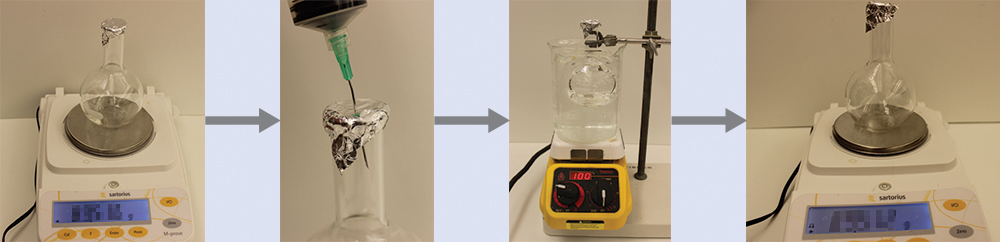
Figure 9.19 When the volatile liquid in the flask is heated past its boiling point, it becomes gas and drives air out of the flask. At t l ⟶ g , t l ⟶ g , the flask is filled with volatile liquid gas at the same pressure as the atmosphere. If the flask is then cooled to room temperature, the gas condenses and the mass of the gas that filled the flask, and is now liquid, can be measured. (credit: modification of work by Mark Ott)
Paul Flowers, Klaus Theopold, Richard Langley, and William R. Robinson, Chemistry 2E, OpenStax. (credit: modification of work by Mark Ott) · CC BY-NC-SA 4.0
· Original image ↗ · Access for free ↗Figure 9.20 — 9.3 Stoichiometry of Gaseous Substances, Mixtures, and Reactions
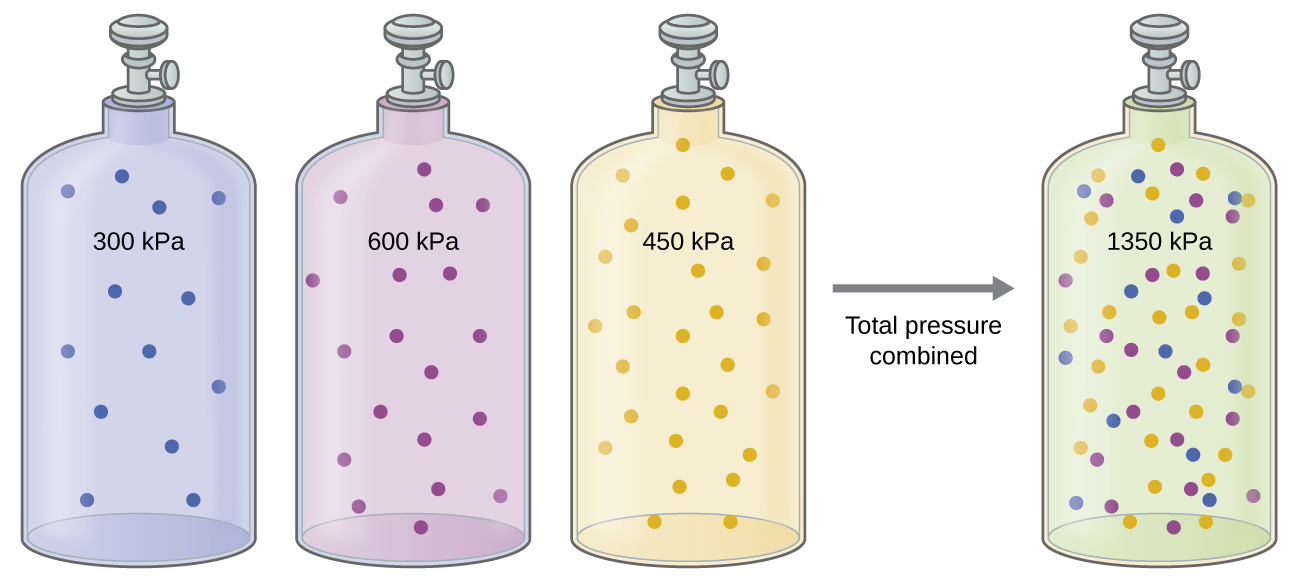
Figure 9.20 If equal-volume cylinders containing gasses at pressures of 300 kPa, 450 kPa, and 600 kPa are all combined in the same-size cylinder, the total pressure of the gas mixture is 1350 kPa.
Paul Flowers, Klaus Theopold, Richard Langley, and William R. Robinson, Chemistry 2E, OpenStax. · CC BY-NC-SA 4.0
· Original image ↗ · Access for free ↗Figure 9.21 — 9.3 Stoichiometry of Gaseous Substances, Mixtures, and Reactions
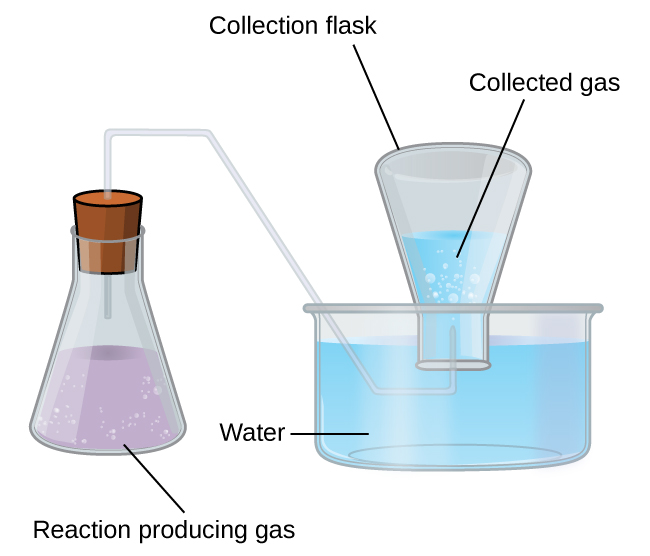
Figure 9.21 When a reaction produces a gas that is collected above water, the trapped gas is a mixture of the gas produced by the reaction and water vapor. If the collection flask is appropriately positioned to equalize the water levels both within and outside the flask, the pressure of the trapped gas mixture will equal the atmospheric pressure outside the flask (see the earlier discussion of manometers).
Paul Flowers, Klaus Theopold, Richard Langley, and William R. Robinson, Chemistry 2E, OpenStax. · CC BY-NC-SA 4.0
· Original image ↗ · Access for free ↗Figure 9.22 — 9.3 Stoichiometry of Gaseous Substances, Mixtures, and Reactions
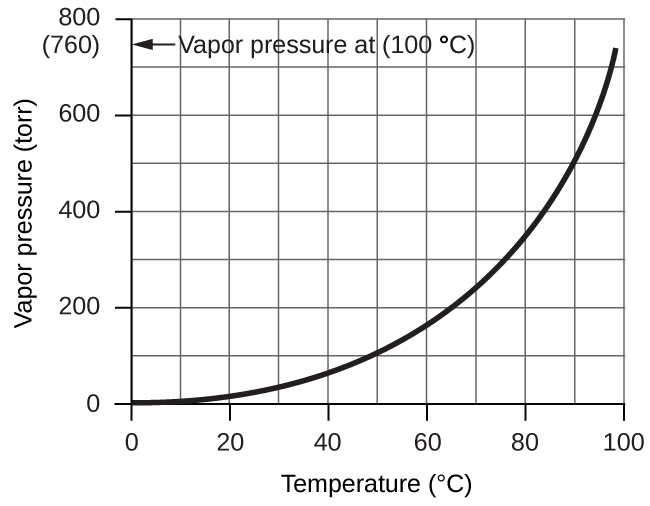
Figure 9.22 This graph shows the vapor pressure of water at sea level as a function of temperature.
Paul Flowers, Klaus Theopold, Richard Langley, and William R. Robinson, Chemistry 2E, OpenStax. · CC BY-NC-SA 4.0
· Original image ↗ · Access for free ↗Figure 9.23 — 9.3 Stoichiometry of Gaseous Substances, Mixtures, and Reactions
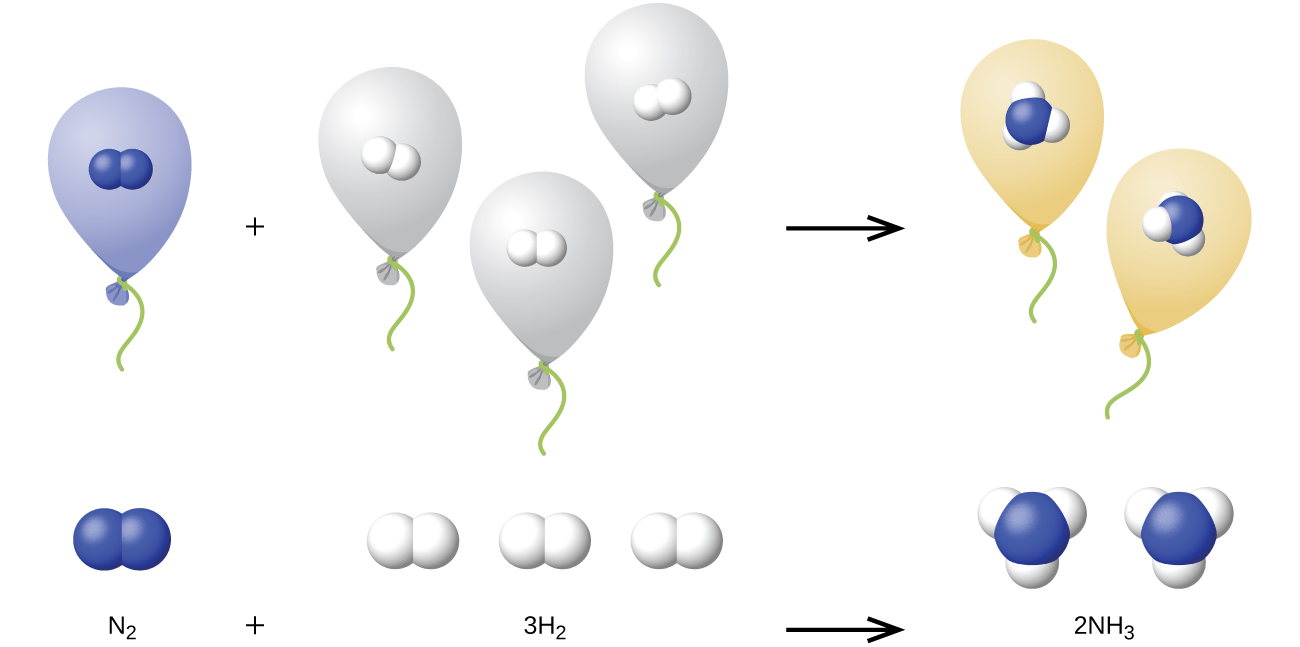
Figure 9.23 One volume of N 2 combines with three volumes of H 2 to form two volumes of NH 3 .
Paul Flowers, Klaus Theopold, Richard Langley, and William R. Robinson, Chemistry 2E, OpenStax. · CC BY-NC-SA 4.0
· Original image ↗ · Access for free ↗Figure 9.24 — 9.3 Stoichiometry of Gaseous Substances, Mixtures, and Reactions
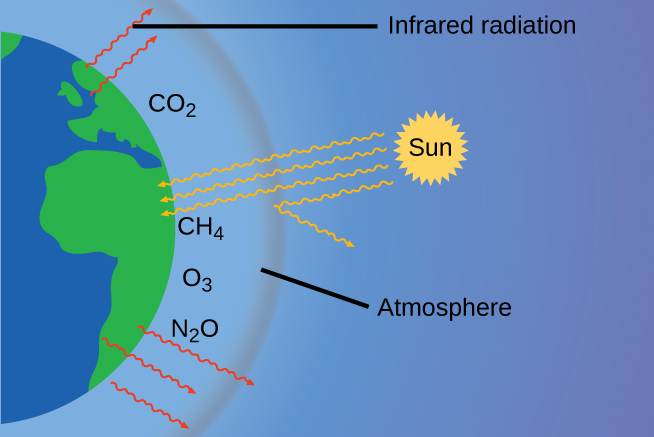
Figure 9.24 Greenhouse gases trap enough of the sun’s energy to make the planet habitable—this is known as the greenhouse effect. Human activities are increasing greenhouse gas levels, warming the planet and causing more extreme weather events.
Paul Flowers, Klaus Theopold, Richard Langley, and William R. Robinson, Chemistry 2E, OpenStax. · CC BY-NC-SA 4.0
· Original image ↗ · Access for free ↗Figure 9.25 — 9.3 Stoichiometry of Gaseous Substances, Mixtures, and Reactions
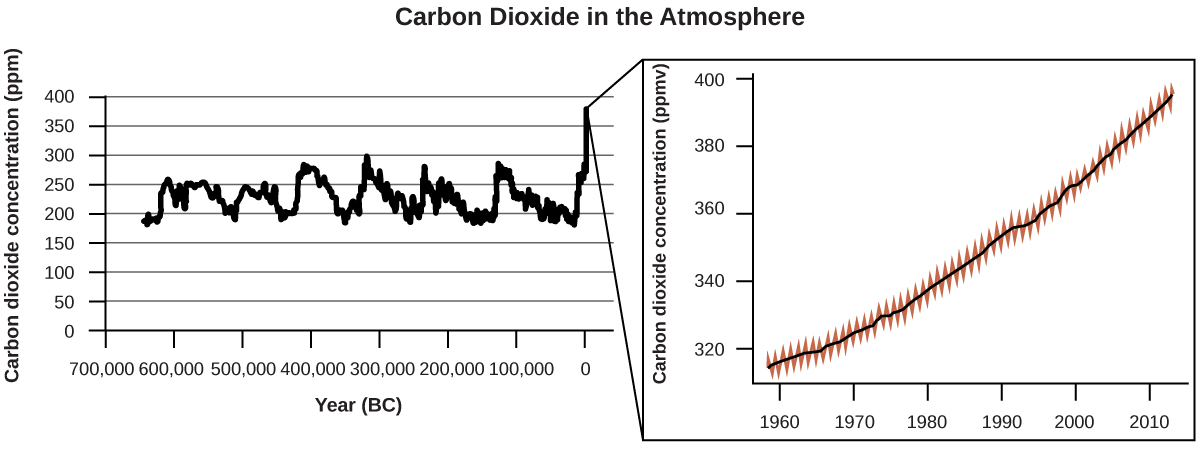
Figure 9.25 CO 2 levels over the past 700,000 years were typically from 200–300 ppm, with a steep, unprecedented increase over the past 50 years.
Paul Flowers, Klaus Theopold, Richard Langley, and William R. Robinson, Chemistry 2E, OpenStax. · CC BY-NC-SA 4.0
· Original image ↗ · Access for free ↗Figure 9.26 — 9.3 Stoichiometry of Gaseous Substances, Mixtures, and Reactions
Figure 9.26 Susan Solomon’s research focuses on climate change and has been instrumental in determining the cause of the ozone hole over Antarctica. (credit: National Oceanic and Atmospheric Administration)
Paul Flowers, Klaus Theopold, Richard Langley, and William R. Robinson, Chemistry 2E, OpenStax. (credit: National Oceanic and Atmospheric Administration) · CC BY-NC-SA 4.0
· Original image ↗ · Access for free ↗
Temperature (°C)
Pressure (torr)
Temperature (°C)
Pressure (torr)
Temperature (°C)
Pressure (torr)
–10
1.95
18
15.5
30
31.8
–5
3.0
19
16.5
35
42.2
–2
3.9
20
17.5
40
55.3
0
4.6
21
18.7
50
92.5
2
5.3
22
19.8
60
149.4
4
6.1
23
21.1
70
233.7
6
7.0
24
22.4
80
355.1
8
8.0
25
23.8
90
525.8
10
9.2
26
25.2
95
633.9
12
10.5
27
26.7
99
733.2
14
12.0
28
28.3
100.0
760.0
16
13.6
29
30.0
101.0
787.6
Table 9.2. Paul Flowers, Klaus Theopold, Richard Langley, and William R. Robinson, Chemistry 2E, OpenStax.
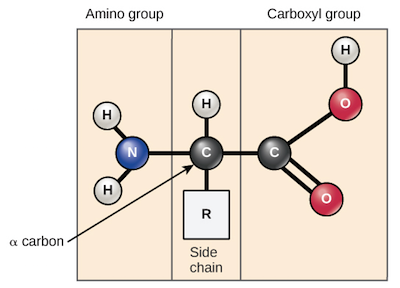
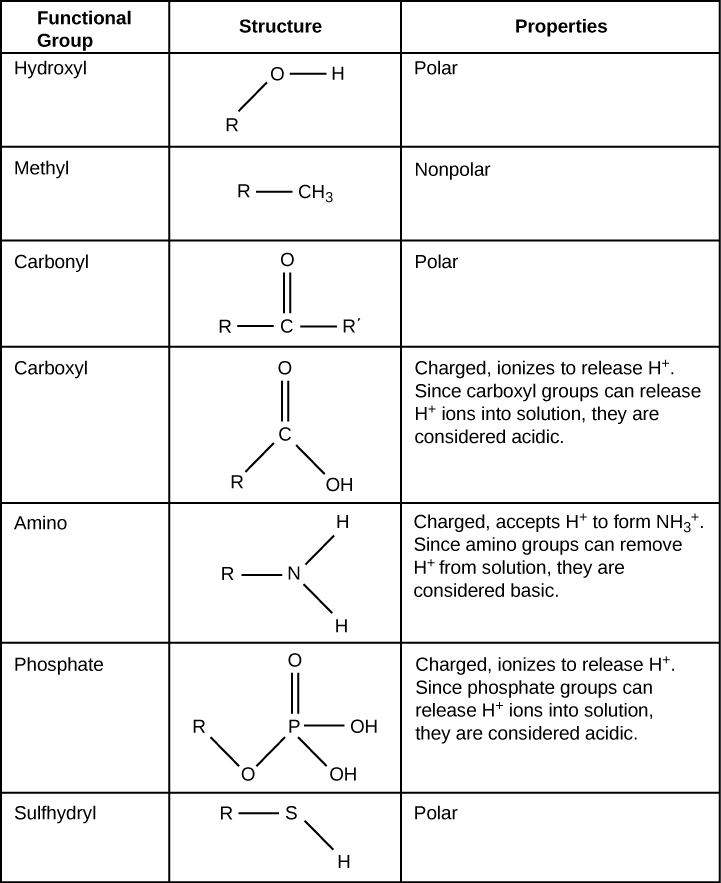
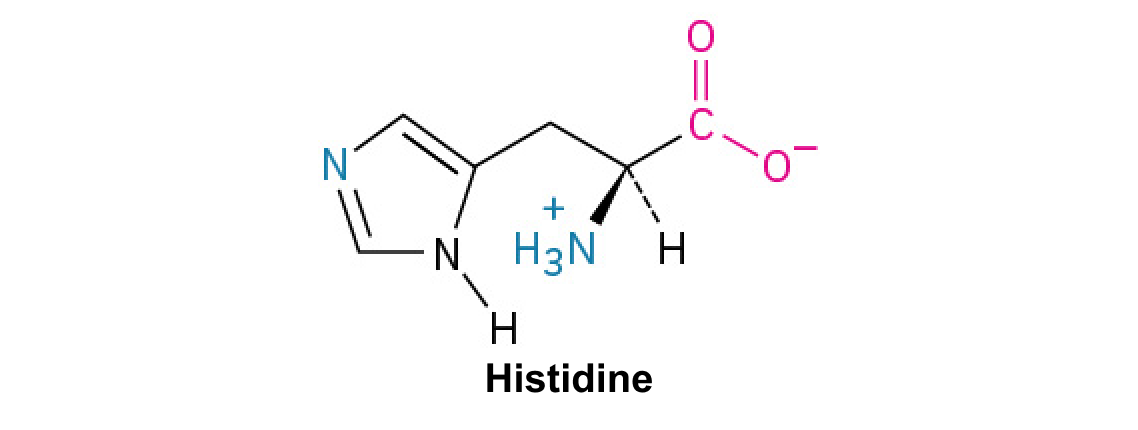
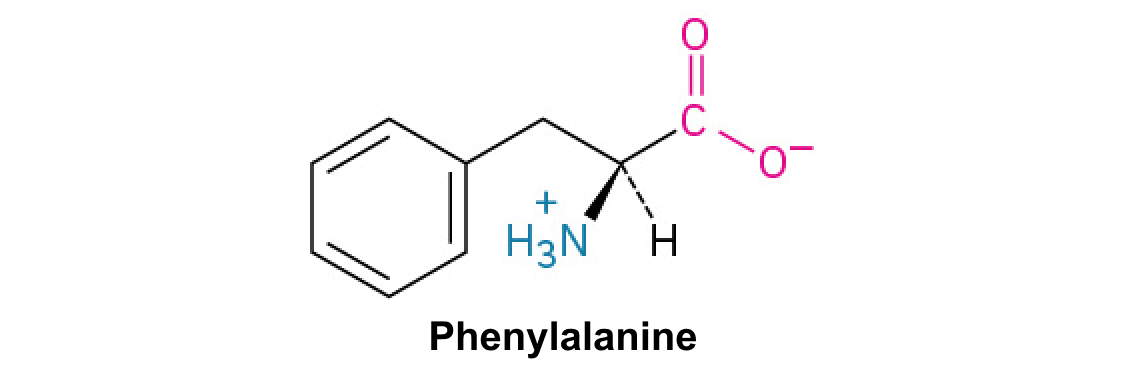
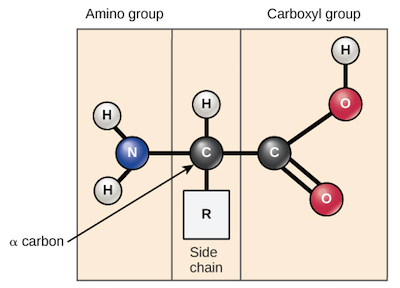
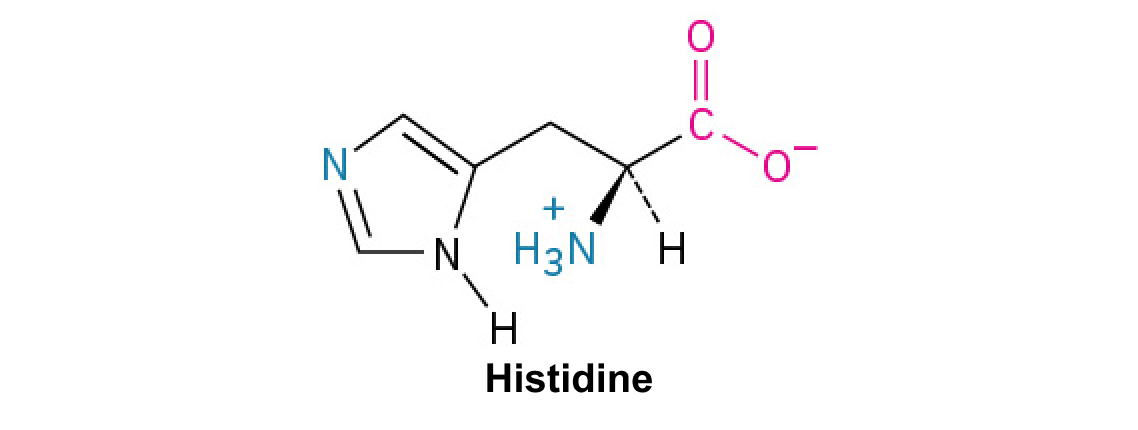
A nitrogen-containing functional group. A free amino acid’s amino group is typically protonated (NH₃⁺) near physiological pH; proline’s ring nitrogen is an exception to this formula.
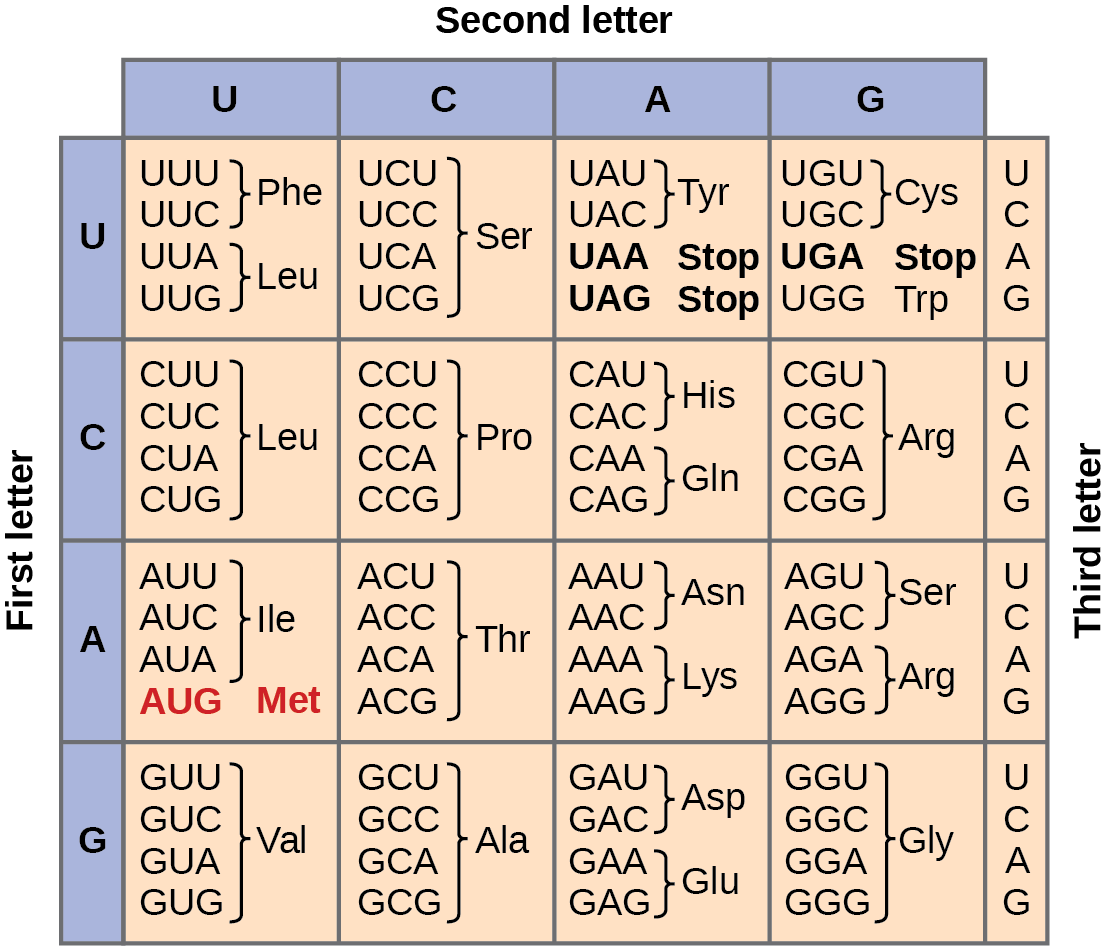
Figure 15.4 This figure shows the genetic code for translating each nucleotide triplet in mRNA into an amino acid or a termination signal in a protein. (credit: modification of work by NIH)
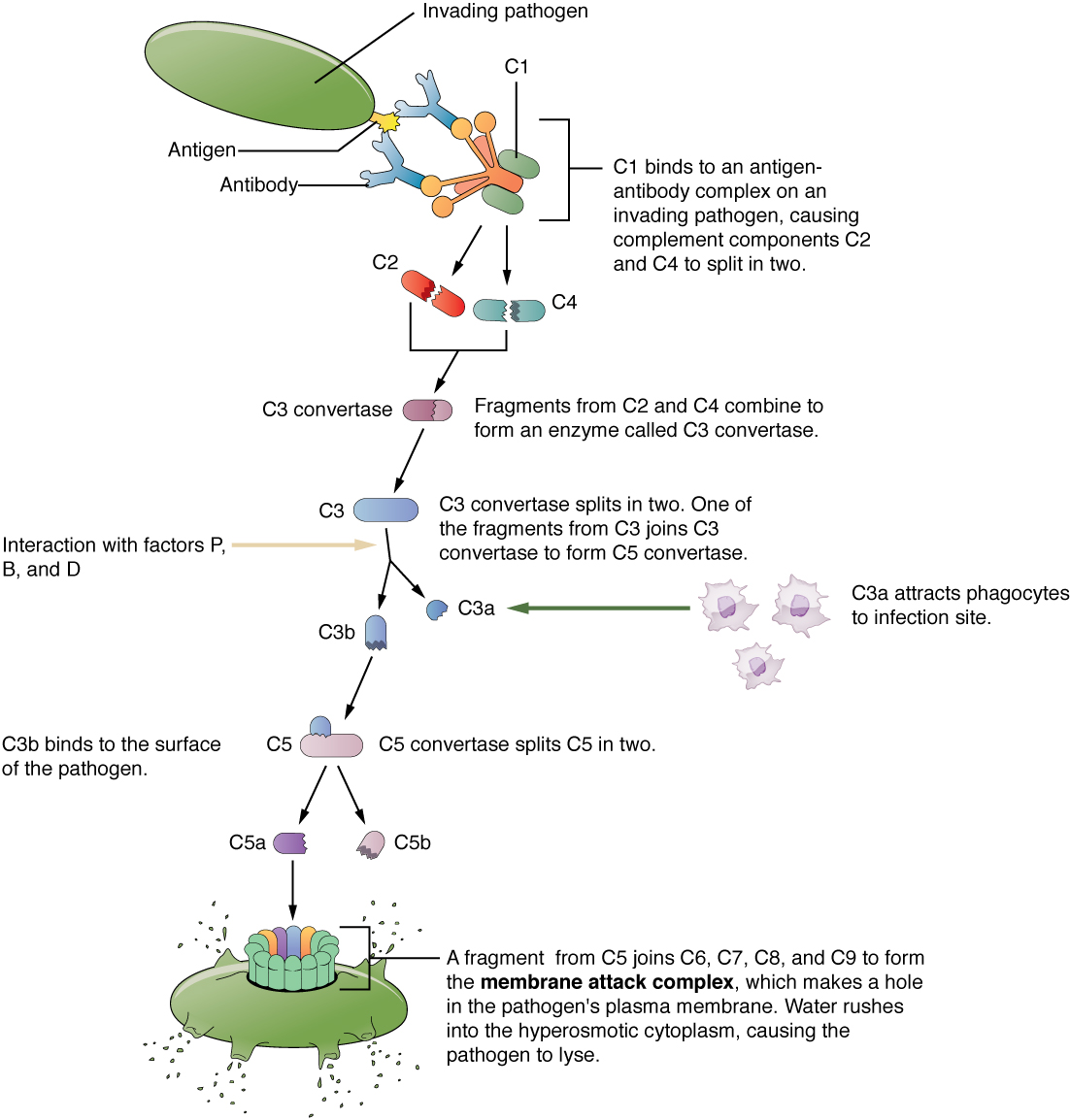
Figure 21.13 Complement Cascade and Function The classical pathway, used during adaptive immune responses, occurs when C1 reacts with antibodies that have bound an antigen.
An electrical property that can be positive or negative. Opposite charges attract and like charges repel; net charge is the sum of all charges on a particle.
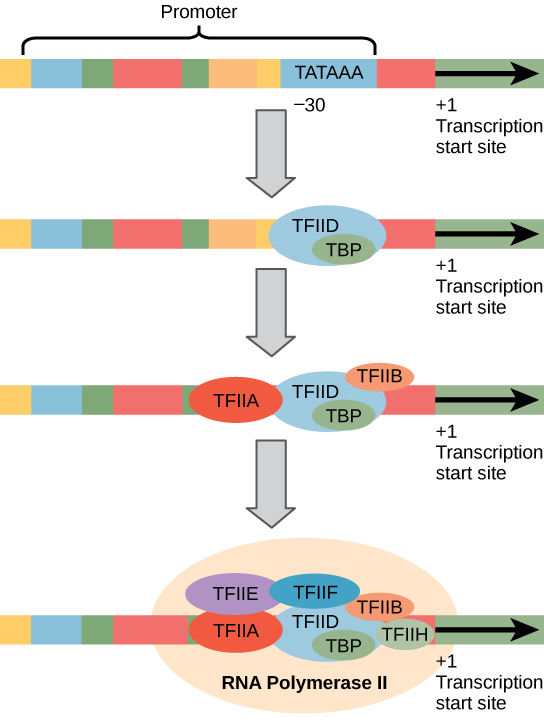
Figure 15.10 A generalized promoter of a gene transcribed by RNA polymerase II is shown. Transcription factors recognize the promoter. RNA polymerase II then binds and forms the transcription initiation complex.
The exponent needed to obtain a number from a chosen fixed number. For decimal logarithms, log₁₀(100) = 2 because 10² = 100; pH uses the negative decimal logarithm of hydrogen ion activity.
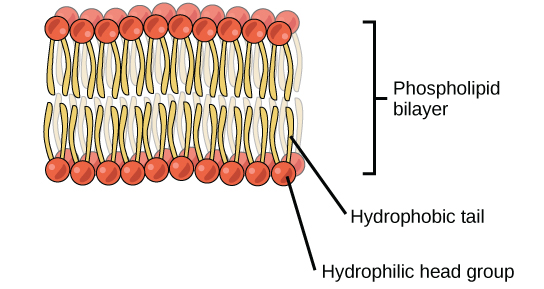
A thin boundary or sheet. Cell membranes are lipid bilayers containing proteins; blotting membranes are synthetic supports that hold proteins or nucleic acids for detection.
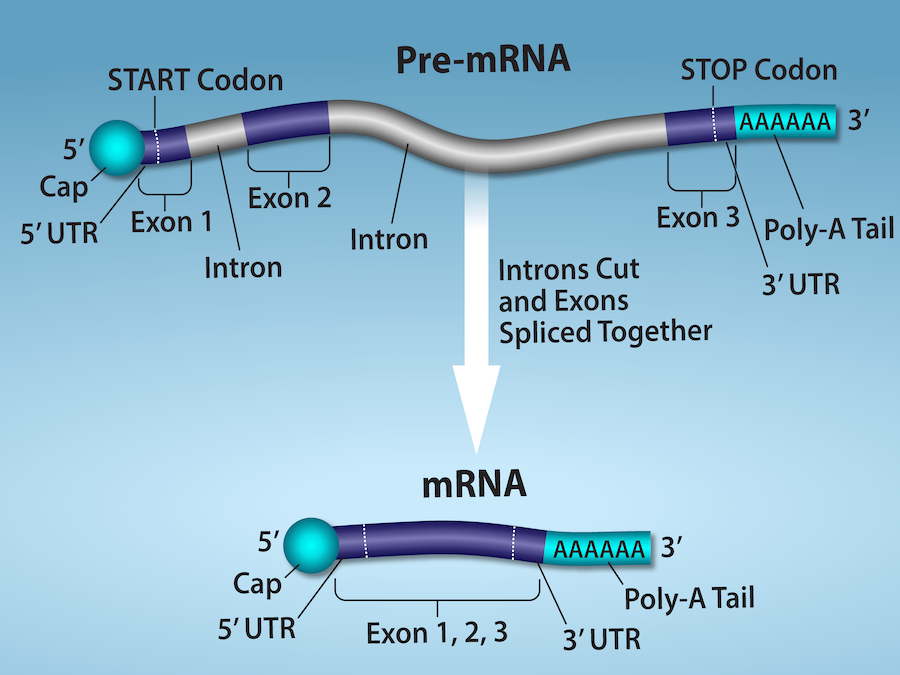
Figure 15.11 Eukaryotic pre-mRNA processing. In addition to 5’ Cap and 3’ Poly-A Tail addition, introns must be precisely removed and exons joined to generate a functional mRNA. Nucleotides upstream (towards the 5’cap) of the translation START codon are part of the 5’ untranslated region (5’ UTR). Nucleotides downstream (towards 3’end) of the STOP codon form the 3’ UTR. Both 5’ and 3’ UTRs are important for regulating translation initiation and mRNA stability. Credit: Rao, A., Ryan, K. Fletcher, S. and Tag, A. Department of Biology, Texas A&M University.
Rao, A., Ryan, K. Fletcher, S. and Tag, A. Department of Biology, Texas A&M University.; Mary Ann Clark, Matthew Douglas, and Jung Choi, Biology 2e, OpenStax. · CC BY-NC-SA 4.0
· Original image ↗ · Access for free ↗
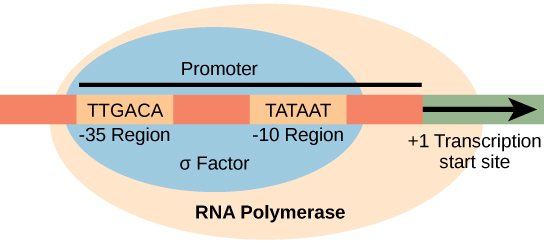
Figure 15.8 The σ subunit of prokaryotic RNA polymerase recognizes consensus sequences found in the promoter region upstream of the transcription start site. The σ subunit dissociates from the polymerase after transcription has been initiated.
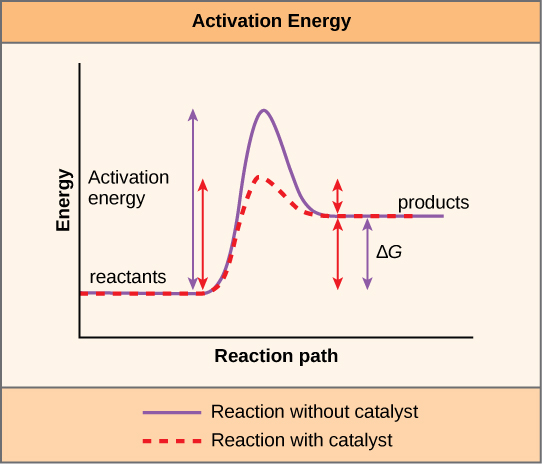
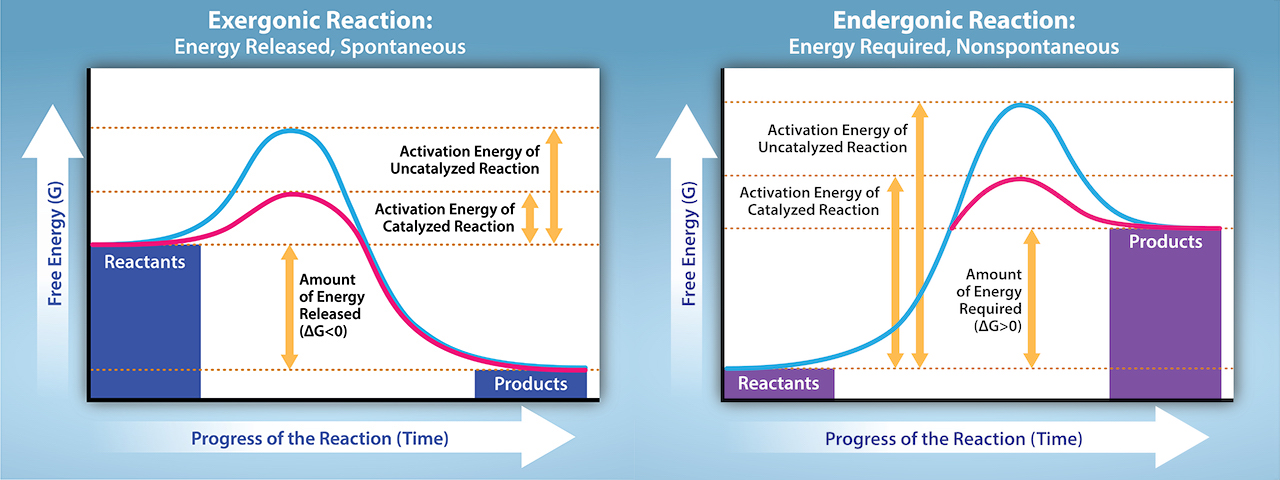
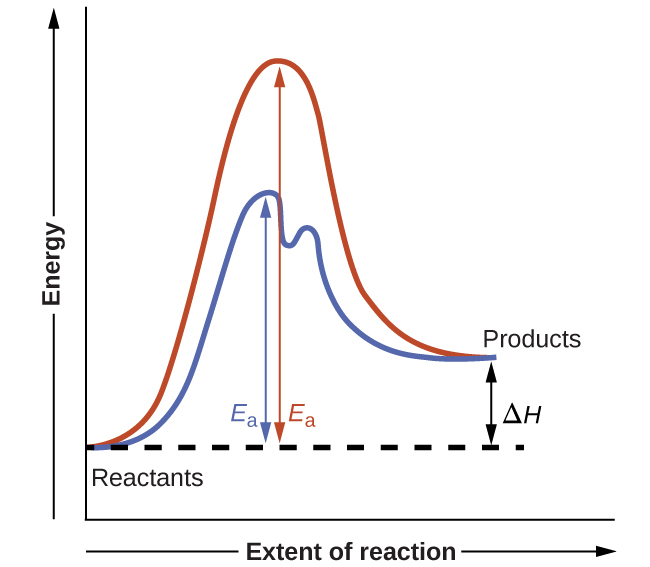
Figure 12.19 Reaction diagrams for an endothermic process in the absence (red curve) and presence (blue curve) of a catalyst. The catalyzed pathway involves a two-step mechanism (note the presence of two transition states) and an intermediate species (represented by the valley between the two transitions states).
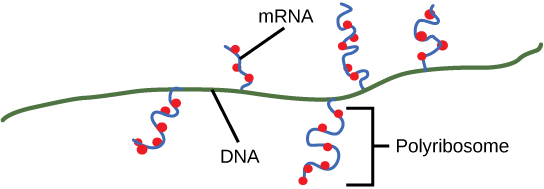
Figure 15.9 Multiple polymerases can transcribe a single bacterial gene while numerous ribosomes concurrently translate the mRNA transcripts into polypeptides. In this way, a specific protein can rapidly reach a high concentration in the bacterial cell.
Figure 15.8 The σ subunit of prokaryotic RNA polymerase recognizes consensus sequences found in the promoter region upstream of the transcription start site. The σ subunit dissociates from the polymerase after transcription has been initiated.
Figure 7.45 - Non-homologous end joining (left) versus homologous recombination (right) - Wikipedia
Wikipedia, as credited by Kevin Ahern, Indira Rajagopal, and Taralyn Tan, Biochemistry Free For All, Oregon State University, via Biology LibreTexts. · Source attribution
· Original image ↗ · Access for free ↗
The amount of a substance that can dissolve in a solvent under specified conditions. Soluble means able to dissolve; insoluble means only very slightly soluble in that solvent.
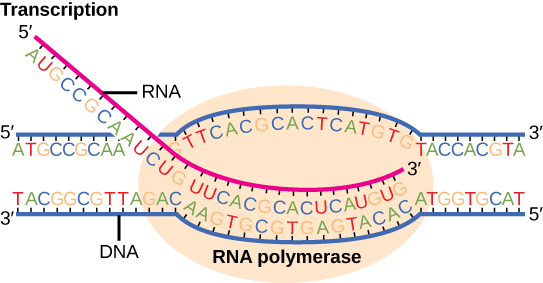
Figure 15.7 Messenger RNA is a copy of protein-coding information in the coding strand of DNA, with the substitution of U in the RNA for T in the coding sequence. However, new RNA nucleotides base pair with the nucleotides of the template strand. RNA is synthesized in its 5'-3' direction, using the enzyme RNA polymerase. As the template is read, the DNA unwinds ahead of the polymerase and then rewinds behind it.
A fleeting, high-energy arrangement at a reaction barrier. It is an energy maximum along the reaction path, rather than a stable reaction intermediate.
Figure 12.19 Reaction diagrams for an endothermic process in the absence (red curve) and presence (blue curve) of a catalyst. The catalyzed pathway involves a two-step mechanism (note the presence of two transition states) and an intermediate species (represented by the valley between the two transitions states).
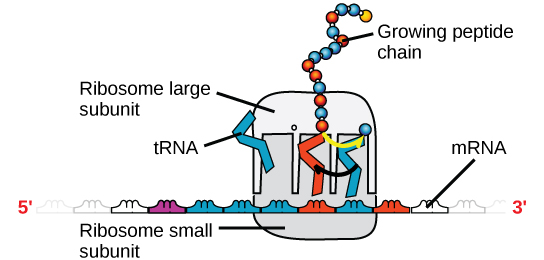
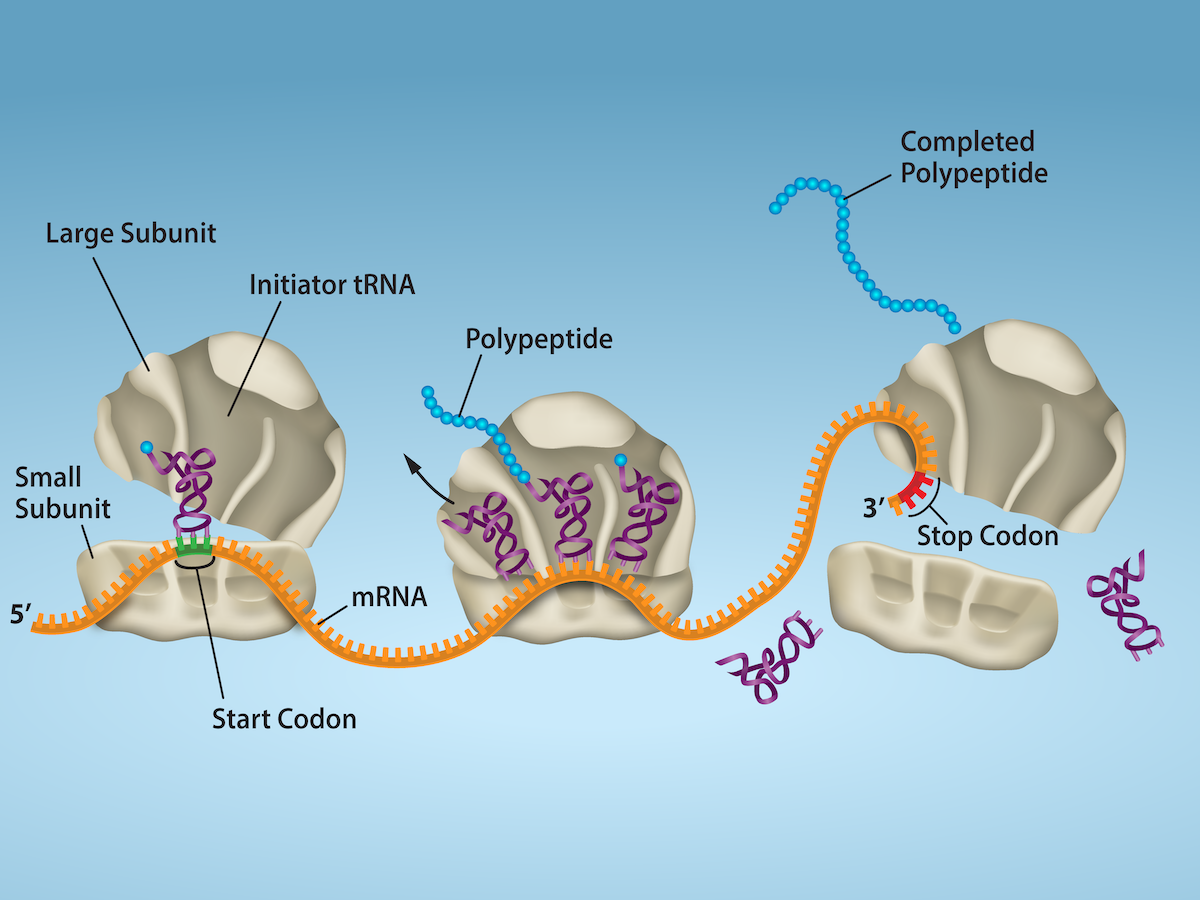
Figure 15.18 Translation begins when an initiator tRNA anticodon recognizes a start codon on mRNA bound to a small ribosomal subunit. The large ribosomal subunit joins the small subunit, and a second tRNA is recruited. As the mRNA moves relative to the ribosome, successive tRNAs move through the ribosome and the polypeptide chain is formed. Entry of a release factor into the A site terminates translation and the components dissociate.
No matching terms. Try a different name or abbreviation.
Chemistry 2E 9 — Summary
OpenStax · Chemistry 2E 9 — Summary ↗ Instructional page including learning objectives, examples, figures, source tables and questions. Site navigation and embedded media players are omitted; source media links remain available.
Gases exert pressure, which is force per unit area. The pressure of a gas may be expressed in the SI unit of pascal or kilopascal, as well as in many other units including torr, atmosphere, and bar. Atmospheric pressure is measured using a barometer; other gas pressures can be measured using one of several types of manometers.
The behavior of gases can be described by several laws based on experimental observations of their properties. The pressure of a given amount of gas is directly proportional to its absolute temperature, provided that the volume does not change (Amontons’s law). The volume of a given gas sample is directly proportional to its absolute temperature at constant pressure (Charles’s law). The volume of a given amount of gas is inversely proportional to its pressure when temperature is held constant (Boyle’s law). Under the same conditions of temperature and pressure, equal volumes of all gases contain the same number of molecules (Avogadro’s law).
The equations describing these laws are special cases of the ideal gas law, PV = nRT, where P is the pressure of the gas, V is its volume, n is the number of moles of the gas, T is its kelvin temperature, and R is the ideal (universal) gas constant.
The ideal gas law can be used to derive a number of convenient equations relating directly measured quantities to properties of interest for gaseous substances and mixtures. Appropriate rearrangement of the ideal gas equation may be made to permit the calculation of gas densities and molar masses. Dalton’s law of partial pressures may be used to relate measured gas pressures for gaseous mixtures to their compositions. Avogadro’s law may be used in stoichiometric computations for chemical reactions involving gaseous reactants or products.
Gaseous atoms and molecules move freely and randomly through space. Diffusion is the process whereby gaseous atoms and molecules are transferred from regions of relatively high concentration to regions of relatively low concentration. Effusion is a similar process in which gaseous species pass from a container to a vacuum through very small orifices. The rates of effusion of gases are inversely proportional to the square roots of their densities or to the square roots of their atoms/molecules’ masses (Graham’s law).
The kinetic molecular theory is a simple but very effective model that effectively explains ideal gas behavior. The theory assumes that gases consist of widely separated molecules of negligible volume that are in constant motion, colliding elastically with one another and the walls of their container with average speeds determined by their absolute temperatures. The individual molecules of a gas exhibit a range of speeds, the distribution of these speeds being dependent on the temperature of the gas and the mass of its molecules.
Gas molecules possess a finite volume and experience forces of attraction for one another. Consequently, gas behavior is not necessarily described well by the ideal gas law. Under conditions of low pressure and high temperature, these factors are negligible, the ideal gas equation is an accurate description of gas behavior, and the gas is said to exhibit ideal behavior. However, at lower temperatures and higher pressures, corrections for molecular volume and molecular attractions are required to account for finite molecular size and attractive forces. The van der Waals equation is a modified version of the ideal gas law that can be used to account for the non-ideal behavior of gases under these conditions.
9.3 Stoichiometry of Gaseous Substances, Mixtures, and Reactions
State Dalton’s law of partial pressures and use it in calculations involving gaseous mixtures
The study of the chemical behavior of gases was part of the basis of perhaps the most fundamental chemical revolution in history. French nobleman Antoine Lavoisier, widely regarded as the “father of modern chemistry,” changed chemistry from a qualitative to a quantitative science through hiswork with gases. He discovered the law of conservation of matter, discovered the role of oxygen in combustion reactions, determined the composition of air, explained respiration in terms of chemical reactions, and more. He was a casualty of the French Revolution, guillotined in 1794. Of his death, mathematician and astronomer Joseph-Louis Lagrange said, “It took the mob only a moment to remove his head; a century will not suffice to reproduce it.”2 Much of the knowledge we do have about Lavoisier's contributions is due to his wife, Marie-Anne Paulze Lavoisier, who worked with him in his lab. A trained artist fluent in several languages, she created detailed illustrations of the equipment in his lab, and translated texts from foreign scientists to complementhis knowledge. After his execution, she was instrumental in publishing Lavoisier's major treatise, which unified many concepts of chemistry and laid the groundwork for significant further study.
As described in an earlier chapter of this text, we can turn to chemical stoichiometry for answers to many of the questions that ask “How much?” The essential property involved in such use of stoichiometry is the amount of substance, typically measured in moles (n). For gases, molar amount can be derived from convenient experimental measurements of pressure, temperature, and volume. Therefore, these measurements are useful in assessing the stoichiometry of pure gases, gas mixtures, and chemical reactions involving gases. This section will not introduce any new material or ideas, but will provide examples of applications and ways to integrate concepts already discussed.
The ideal gas law described previously in this chapter relates the properties of pressure P, volume V, temperature T, and molar amount n. This law is universal, relating these properties in identical fashion regardless of the chemical identity of the gas:
The density d of a gas, on the other hand, is determined by its identity. As described in another chapter of this text, the density of a substance is a characteristic property that may be used to identify the substance.
Rearranging the ideal gas equation to isolate V and substituting into the density equation yields
This relation may be used for calculating the densities of gases of known identities at specified values of pressure and temperature as demonstrated in Example 9.11.
Example
9.11
Measuring Gas Density
What is the density of molecular nitrogen gas at STP?
The molar mass of molecular nitrogen, N2, is 28.01 g/mol. Substituting this value along with standard temperature and pressure into the gas density equation yields
Check Your Learning
What is the density of molecular hydrogen gas at 17.0 °C and a pressure of 760 torr?
Answer:
d = 0.0847 g/L
When the identity of a gas is unknown, measurements of the mass, pressure, volume, and temperature of a sample can be used to calculate the molar mass of the gas (a useful property for identification purposes). Combining the ideal gas equation
Cyclopropane, a gas once used with oxygen as a general anesthetic, is composed of 85.7% carbon and 14.3% hydrogen by mass. Find the empirical formula. If 1.56 g of cyclopropane occupies a volume of 1.00 L at 0.984 atm and 50 °C, what is the molecular formula for cyclopropane?
First determine the empirical formula of the gas. Assume 100 g and convert the percentage of each element into grams. Determine the number of moles of carbon and hydrogen in the 100-g sample of cyclopropane. Divide by the smallest number of moles to relate the number of moles of carbon to the number of moles of hydrogen. In the last step, realize that the smallest whole number ratio is the empirical formula:
Empirical formula is CH2 [empirical mass (EM) of 14.03 g/empirical unit].
Next, use the provided values for mass, pressure, temperature and volume to compute the molar mass of the gas:
Acetylene, a fuel used in welding torches, is composed of 92.3% C and 7.7% H by mass. Find the empirical formula. If 1.10 g of acetylene occupies of volume of 1.00 L at 1.15 atm and 59.5 °C, what is the molecular formula for acetylene?
Heating a sample of the liquid in a flask with a tiny hole at the top, which converts the liquid into gas that may escape through the hole
Removing the flask from heat at the instant when the last bit of liquid becomes gas, at which time the flask will be filled with only gaseous sample at ambient pressure
Sealing the flask and permitting the gaseous sample to condense to liquid, and then weighing the flask to determine the sample’s mass (see Figure 9.19)
Figure 9.19 — 9.3 Stoichiometry of Gaseous Substances, Mixtures, and Reactions
Figure 9.19 When the volatile liquid in the flask is heated past its boiling point, it becomes gas and drives air out of the flask. At t l ⟶ g , t l ⟶ g , the flask is filled with volatile liquid gas at the same pressure as the atmosphere. If the flask is then cooled to room temperature, the gas condenses and the mass of the gas that filled the flask, and is now liquid, can be measured. (credit: modification of work by Mark Ott)
Paul Flowers, Klaus Theopold, Richard Langley, and William R. Robinson, Chemistry 2E, OpenStax. (credit: modification of work by Mark Ott) · CC BY-NC-SA 4.0
· Original image ↗ · Access for free ↗
Using this procedure, a sample of chloroform gas weighing 0.494 g is collected in a flask with a volume of 129 cm3 at 99.6 °C when the atmospheric pressure is 742.1 mm Hg. What is the approximate molar mass of chloroform?
A sample of phosphorus that weighs 3.243 10−2 g exerts a pressure of 31.89 kPa in a 56.0-mL bulb at 550 °C. What are the molar mass and molecular formula of phosphorus vapor?
Unless they chemically react with each other, the individual gases in a mixture of gases do not affect each other’s pressure. Each individual gas in a mixture exerts the same pressure that it would exert if it were present alone in the container (Figure 9.20). The pressure exerted by each individual gas in a mixture is called its partial pressure. This observation is summarized by Dalton’s law of partial pressures: The total pressure of a mixture of ideal gases is equal to the sum of the partial pressures of the component gases:
Figure 9.20 — 9.3 Stoichiometry of Gaseous Substances, Mixtures, and Reactions
Figure 9.20 If equal-volume cylinders containing gasses at pressures of 300 kPa, 450 kPa, and 600 kPa are all combined in the same-size cylinder, the total pressure of the gas mixture is 1350 kPa.
The partial pressure of gas A is related to the total pressure of the gas mixture via its mole fraction (X), a unit of concentration defined as the number of moles of a component of a solution divided by the total number of moles of all components:
where PA, XA, and nA are the partial pressure, mole fraction, and number of moles of gas A, respectively, and nTotal is the number of moles of all components in the mixture.
Example
9.14
The Pressure of a Mixture of Gases
A 10.0-L vessel contains 2.50 10−3 mol of H2, 1.00 10−3 mol of He, and 3.00 10−4 mol of Ne at 35 °C.
(a) What are the partial pressures of each of the gases?
What is the pressure of a mixture of 0.200 g of H2, 1.00 g of N2, and 0.820 g of Ar in a container with a volume of 2.00 L at 20 °C?
Answer:
1.87 atm
Collection of Gases over Water
A simple way to collect gases that do not react with water is to capture them in a bottle that has been filled with water and inverted into a dish filled with water. The pressure of the gas inside the bottle can be made equal to the air pressure outside by raising or lowering the bottle. When the water level is the same both inside and outside the bottle (Figure 9.21), the pressure of the gas is equal to the atmospheric pressure, which can be measured with a barometer.
Figure 9.21 — 9.3 Stoichiometry of Gaseous Substances, Mixtures, and Reactions
Figure 9.21 When a reaction produces a gas that is collected above water, the trapped gas is a mixture of the gas produced by the reaction and water vapor. If the collection flask is appropriately positioned to equalize the water levels both within and outside the flask, the pressure of the trapped gas mixture will equal the atmospheric pressure outside the flask (see the earlier discussion of manometers).
However, there is another factor we must consider when we measure the pressure of the gas by this method. Water evaporates and there is always gaseous water (water vapor) above a sample of liquid water. As a gas is collected over water, it becomes saturated with water vapor and the total pressure of the mixture equals the partial pressure of the gas plus the partial pressure of the water vapor. The pressure of the pure gas is therefore equal to the total pressure minus the pressure of the water vapor—this is referred to as the “dry” gas pressure, that is, the pressure of the gas only, without water vapor. The vapor pressure of water, which is the pressure exerted by water vapor in equilibrium with liquid water in a closed container, depends on the temperature (Figure 9.22); more detailed information on the temperature dependence of water vapor can be found in Table 9.2, and vapor pressure will be discussed in more detail in the next chapter on liquids.
Figure 9.22 — 9.3 Stoichiometry of Gaseous Substances, Mixtures, and Reactions
Figure 9.22 This graph shows the vapor pressure of water at sea level as a function of temperature.
Vapor Pressure of Ice and Water in Various Temperatures at Sea Level
Temperature (°C)
Pressure (torr)
Temperature (°C)
Pressure (torr)
Temperature (°C)
Pressure (torr)
–10
1.95
18
15.5
30
31.8
–5
3.0
19
16.5
35
42.2
–2
3.9
20
17.5
40
55.3
0
4.6
21
18.7
50
92.5
2
5.3
22
19.8
60
149.4
4
6.1
23
21.1
70
233.7
6
7.0
24
22.4
80
355.1
8
8.0
25
23.8
90
525.8
10
9.2
26
25.2
95
633.9
12
10.5
27
26.7
99
733.2
14
12.0
28
28.3
100.0
760.0
16
13.6
29
30.0
101.0
787.6
Table
9.2
Example
9.16
Pressure of a Gas Collected Over Water
If 0.200 L of argon is collected over water at a temperature of 26 °C and a pressure of 750 torr in a system like that shown in Figure 9.21, what is the partial pressure of argon?
Rearranging this equation to solve for the pressure of argon gives:
The pressure of water vapor above a sample of liquid water at 26 °C is 25.2 torr (Appendix E), so:
Check Your Learning
A sample of oxygen collected over water at a temperature of 29.0 °C and a pressure of 764 torr has a volume of 0.560 L. What volume would the dry oxygen from this sample have under the same conditions of temperature and pressure?
We have previously measured quantities of reactants and products using masses for solids and volumes in conjunction with the molarity for solutions; now we can also use gas volumes to indicate quantities. If we know the volume, pressure, and temperature of a gas, we can use the ideal gas equation to calculate how many moles of the gas are present. If we know how many moles of a gas are involved, we can calculate the volume of a gas at any temperature and pressure.
Avogadro’s Law Revisited
Sometimes we can take advantage of a simplifying feature of the stoichiometry of gases that solids and solutions do not exhibit: All gases that show ideal behavior contain the same number of molecules in the same volume (at the same temperature and pressure). Thus, the ratios of volumes of gases involved in a chemical reaction are given by the coefficients in the equation for the reaction, provided that the gas volumes are measured at the same temperature and pressure.
We can extend Avogadro’s law (that the volume of a gas is directly proportional to the number of moles of the gas) to chemical reactions with gases: Gases combine, or react, in definite and simple proportions by volume, provided that all gas volumes are measured at the same temperature and pressure. For example, since nitrogen and hydrogen gases react to produce ammonia gas according to a given volume of nitrogen gas reacts with three times that volume of hydrogen gas to produce two times that volume of ammonia gas, if pressure and temperature remain constant.
The explanation for this is illustrated in Figure 9.23. According to Avogadro’s law, equal volumes of gaseous N2, H2, and NH3, at the same temperature and pressure, contain the same number of molecules. Because one molecule of N2 reacts with three molecules of H2 to produce two molecules of NH3, the volume of H2 required is three times the volume of N2, and the volume of NH3 produced is two times the volume of N2.
Figure 9.23 — 9.3 Stoichiometry of Gaseous Substances, Mixtures, and Reactions
Figure 9.23 One volume of N 2 combines with three volumes of H 2 to form two volumes of NH 3 .
Propane, C3H8(g), is used in gas grills to provide the heat for cooking. What volume of O2(g) measured at 25 °C and 760 torr is required to react with 2.7 L of propane measured under the same conditions of temperature and pressure? Assume that the propane undergoes complete combustion.
The ratio of the volumes of C3H8 and O2 will be equal to the ratio of their coefficients in the balanced equation for the reaction:
From the equation, we see that one volume of C3H8 will react with five volumes of O2:
A volume of 13.5 L of O2 will be required to react with 2.7 L of C3H8.
Check Your Learning
An acetylene tank for an oxyacetylene welding torch provides 9340 L of acetylene gas, C2H2, at 0 °C and 1 atm. How many tanks of oxygen, each providing 7.00 103 L of O2 at 0 °C and 1 atm, will be required to burn the acetylene?
Answer:
3.34 tanks (2.34 104 L)
Example
9.18
Volumes of Reacting Gases
Ammonia is an important fertilizer and industrial chemical. Suppose that a volume of 683 billion cubic feet of gaseous ammonia, measured at 25 °C and 1 atm, was manufactured. What volume of H2(g), measured under the same conditions, was required to prepare this amount of ammonia by reaction with N2?
Because equal volumes of H2 and NH3 contain equal numbers of molecules and each three molecules of H2 that react produce two molecules of NH3, the ratio of the volumes of H2 and NH3 will be equal to 3:2. Two volumes of NH3, in this case in units of billion ft3, will be formed from three volumes of H2:
The manufacture of 683 billion ft3 of NH3 required 1020 billion ft3 of H2. (At 25 °C and 1 atm, this is the volume of a cube with an edge length of approximately 1.9 miles.)
Check Your Learning
What volume of O2(g) measured at 25 °C and 760 torr is required to react with 17.0 L of ethylene, C2H4(g), measured under the same conditions of temperature and pressure? The products are CO2 and water vapor.
Convert the provided mass of the limiting reactant, Ga, to moles of hydrogen produced:
Convert the provided temperature and pressure values to appropriate units (K and atm, respectively), and then use the molar amount of hydrogen gas and the ideal gas equation to calculate the volume of gas:
Check Your Learning
Sulfur dioxide is an intermediate in the preparation of sulfuric acid. What volume of SO2 at 343 °C and 1.21 atm is produced by burning 1.00 kg of sulfur in excess oxygen?
Answer:
1.30 103 L
How Sciences Interconnect
Greenhouse Gases and Climate Change
The thin skin of our atmosphere keeps the earth from being an ice planet and makes it habitable. In fact, this is due to less than 0.5% of the air molecules. Of the energy from the sun that reaches the earth, almost is reflected back into space, with the rest absorbed by the atmosphere and the surface of the earth. Some of the energy that the earth absorbs is re-emitted as infrared (IR) radiation, a portion of which passes back out through the atmosphere into space. Most of this IR radiation, however, is absorbed by certain atmospheric gases, effectively trapping heat within the atmosphere in a phenomenon known as the greenhouse effect. This effect maintains global temperatures within the range needed to sustain life on earth. Without our atmosphere, the earth's average temperature would be lower by more than 30 °C (nearly 60 °F). The major greenhouse gases (GHGs) are water vapor, carbon dioxide, methane, and ozone. Since the Industrial Revolution, human activity has been increasing the concentrations of GHGs, which have changed the energy balance and are significantly altering the earth’s climate (Figure 9.24).
Figure 9.24 — 9.3 Stoichiometry of Gaseous Substances, Mixtures, and Reactions
Figure 9.24 Greenhouse gases trap enough of the sun’s energy to make the planet habitable—this is known as the greenhouse effect. Human activities are increasing greenhouse gas levels, warming the planet and causing more extreme weather events.
There is strong evidence from multiple sources that higher atmospheric levels of CO2 are caused by human activity, with fossil fuel burning accounting for about of the recent increase in CO2. Reliable data from ice cores reveals that CO2concentration in the atmosphere is at the highest level in the past 800,000 years; other evidence indicates that it may be at its highest level in 20 million years. In recent years, the CO2concentration has increased preindustrial levels of ~280 ppm to more than 400 ppm today (Figure 9.25).
Figure 9.25 — 9.3 Stoichiometry of Gaseous Substances, Mixtures, and Reactions
Figure 9.25 CO 2 levels over the past 700,000 years were typically from 200–300 ppm, with a steep, unprecedented increase over the past 50 years.
Click here to see a 2-minute video explaining greenhouse gases and global warming.
Portrait of a Chemist
Susan Solomon
Atmospheric and climate scientist Susan Solomon (Figure 9.26) is the author of one of The New York Times books of the year (The Coldest March, 2001), one of Time magazine’s 100 most influential people in the world (2008), and a working group leader of the Intergovernmental Panel on Climate Change (IPCC), which was the recipient of the 2007 Nobel Peace Prize. She helped determine and explain the cause of the formation of the ozone hole over Antarctica, and has authored many important papers on climate change. She has been awarded the top scientific honors in the US and France (the National Medal of Science and the Grande Medaille, respectively), and is a member of the National Academy of Sciences, the Royal Society, the French Academy of Sciences, and the European Academy of Sciences. Formerly a professor at the University of Colorado, she is now at MIT, and continues to work at NOAA.
For more information, watch this video about Susan Solomon.
Figure 9.26 — 9.3 Stoichiometry of Gaseous Substances, Mixtures, and Reactions
Figure 9.26 Susan Solomon’s research focuses on climate change and has been instrumental in determining the cause of the ozone hole over Antarctica. (credit: National Oceanic and Atmospheric Administration)
Paul Flowers, Klaus Theopold, Richard Langley, and William R. Robinson, Chemistry 2E, OpenStax. (credit: National Oceanic and Atmospheric Administration) · CC BY-NC-SA 4.0
· Original image ↗ · Access for free ↗