Foundation 5 · 5C · Separation and purification

separation

Sources ↗

Retention reflects interactions with both phases; a rule from one may reverse in another.

Partition between moving and stationary phases

separates through different interactions with a and a . Stronger stationary-phase association generally means later ; stronger mobile-phase favors earlier movement. Normal-phase is , so often retain more strongly in a relatively . uses a , often retaining longer. Changing mobile-phase composition changes both and competition for binding. A alone is not definitive identity; compare and, when necessary, an independent detection method.

Source: Principles of chromatography · A closer look at types of chromatography

Read each format correctly

Column separates a mixture as moves through packed stationary material. uses high pressure and small particles for efficient liquid-phase separation. uses a gas and requires sufficiently , thermally stable or suitable derivatives; retention depends on and stationary-phase . In and paper , = distance traveled by /distance traveled by , measured from the origin. A ’s can amount only with appropriate detector response and ; baseline separation improves independent .

Source: Principles of chromatography · A closer look at types of chromatography

separations use distinct properties

delays small that explore bead , so larger species first within the range. binds opposite : a positively binds negatively , and a negatively binds positively . net depends on relative to ; or changes can bound material. exploits specific binding to an or tag partner. Combining independent separation properties usually improves purity more than repeating the same selection.

Source: Principles of chromatography · A closer look at types of chromatography

Apply it

Try before revealing the answer. A has 6.0 and is applied at 8.0 to a positively . Should it bind? How could it be ?

Worked answer

At above its , the is generally net negative and can bind a positively -exchange . Increasing competes and screens attraction; lowering toward its can also weaken binding if the remains stable. Binding strength still depends on exposed distribution and conditions.

Source: Principles of chromatography · A closer look at types of chromatography

Principles of — figures and tables

The same components separate into spots on a plate or bands in a column.
Plate and column Khan Academy · CC BY-NC-SA 4.0 · Original image ↗
A column labeled with eluent, analyte, stationary phase, mobile phase, and collected eluate.
Parts of a column Khan Academy · CC BY-NC-SA 4.0 · Original image ↗
Successive stages of column chromatography with different colored components leaving at different times.
Collecting separated components Khan Academy · CC BY-NC-SA 4.0 · Original image ↗
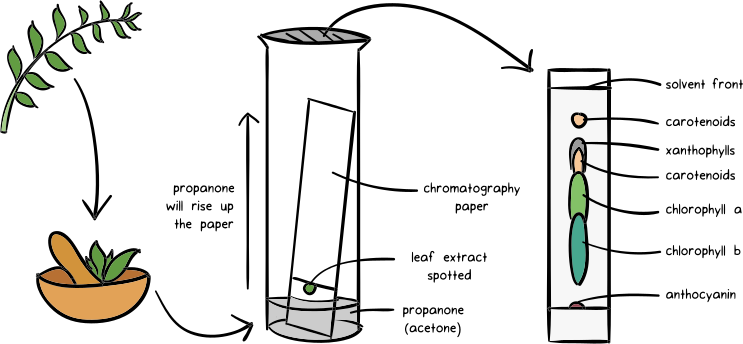
Leaf pigments separate into colored bands on chromatography paper.
Separating leaf pigments Khan Academy · CC BY-NC-SA 4.0 · Original image ↗
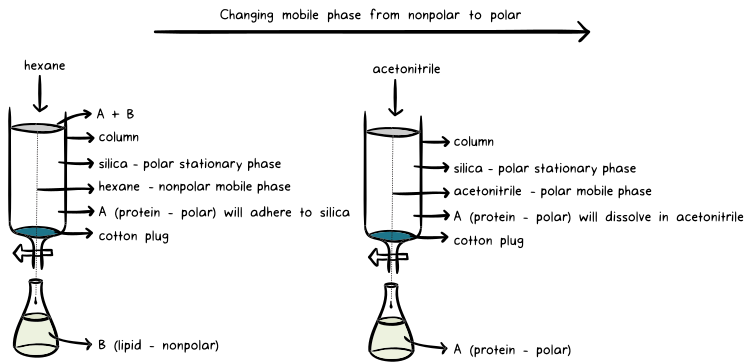
Solvent polarity changes between hexane and acetonitrile, altering the movement of retained compounds.
Changing the Khan Academy · CC BY-NC-SA 4.0 · Original image ↗
TLC spots C, A, and B travel 1, 2, and 3 centimeters while the solvent front travels 5 centimeters.
Distances used to calculate Khan Academy · CC BY-NC-SA 4.0 · Original image ↗
TermDefinition
or moving through the column
or substance that stays fixed inside the column
fluid entering the column
fluid exiting the column (that is collected in flasks)
the process of washing out a through a column using a suitable
mixture whose individual components have to be separated and analyzed
TechniqueBasis of separationNotes
*Paper solid ()liquid of spotted directly on a paper
* ()solid ( or )liquid of glass is coated with thin layer of on which is spotted the
*Liquid column solid ( or )liquid of glass column is packed with slurry of
solid (microporous beads of )liquidsize of small get trapped in the of the , while large flow through the gaps between the beads and have very small . So larger come out first. In this type of there isn’t any interaction, physical or chemical, between the and the .
solid ( or )liquidionic of the possessing the opposite as the will bind tightly to the , and having the same as the will flow through the column and out first.
solid ( or glass beads on to which are like and )liquid of the to the on the if the is a for the , it will bind tightly to the and the unbound will pass through in the , and out of the column, leaving the bound to the , which can then be detached from the and out of the column with an appropriate .
liquid or solid supportgas (inert gas like argon or helium) of the samples are and the with lowest comes out of the column first. The with the highest comes out of the column last.

*Fall under the category of ‘Liquid Chromatography’

ComponentDistance travelled by the component ()Distance travelled by the () () of the component
C15 = 1/5 = 0.2
A25 = 2/5 = 0.4
B35 = 3/5 = 0.6

Source: Principles of chromatography

A closer look at types of — figures and tables

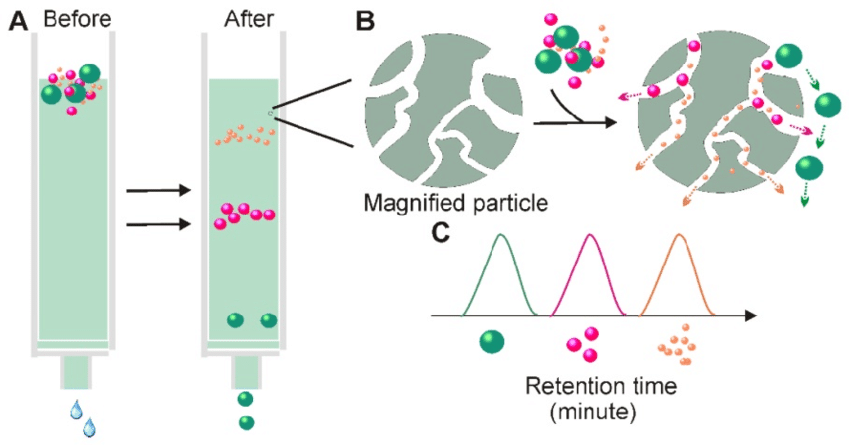
Large particles bypass bead pores and emerge first; smaller particles enter pores and emerge later.
ResearchGate figure credited in the Khan Academy source · Source attribution · Original image ↗
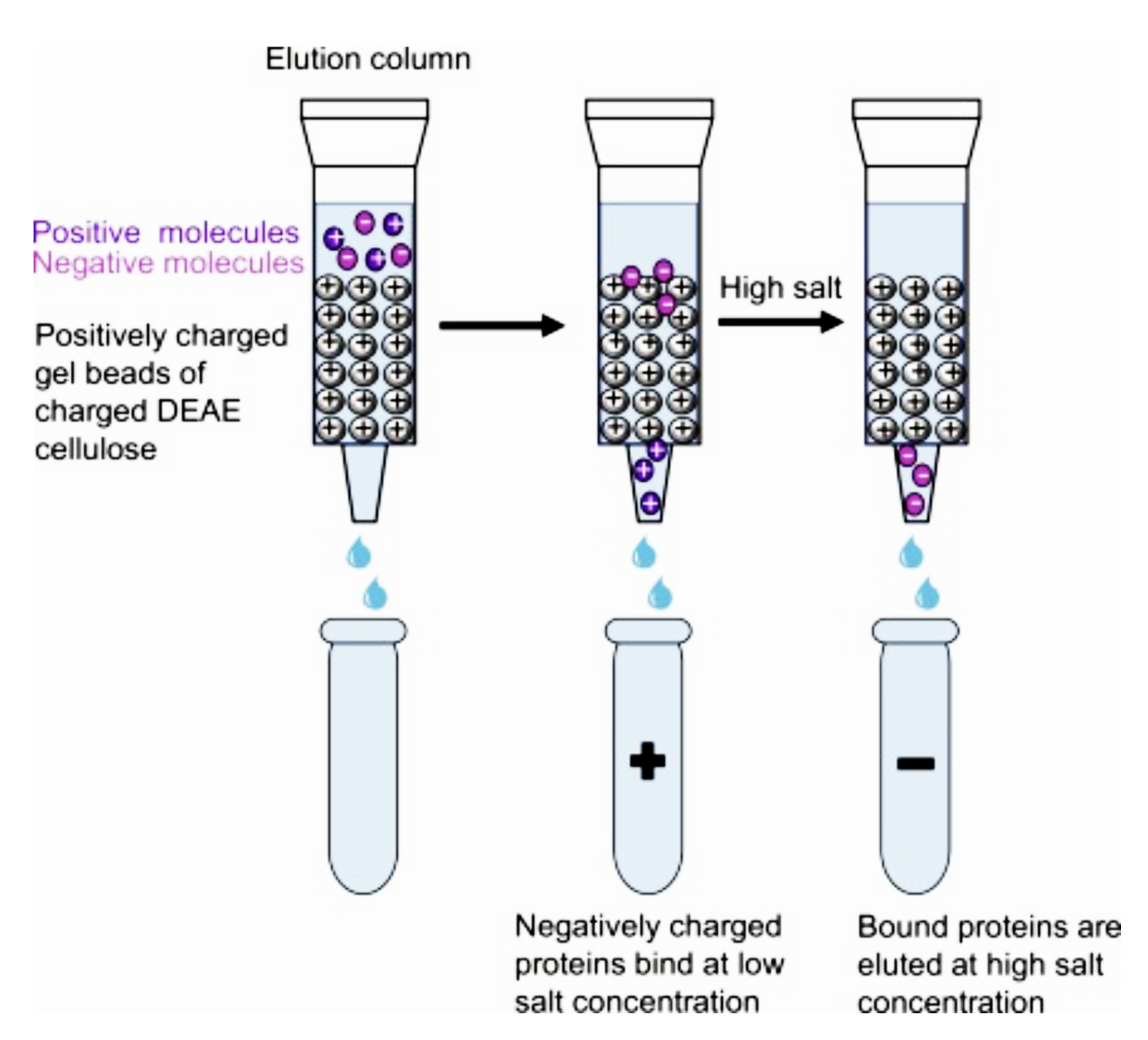
Positively charged DEAE resin binds negative proteins at low salt and releases them as salt concentration increases.
ScienceDirect, as credited by Khan Academy · Source attribution · Original image ↗
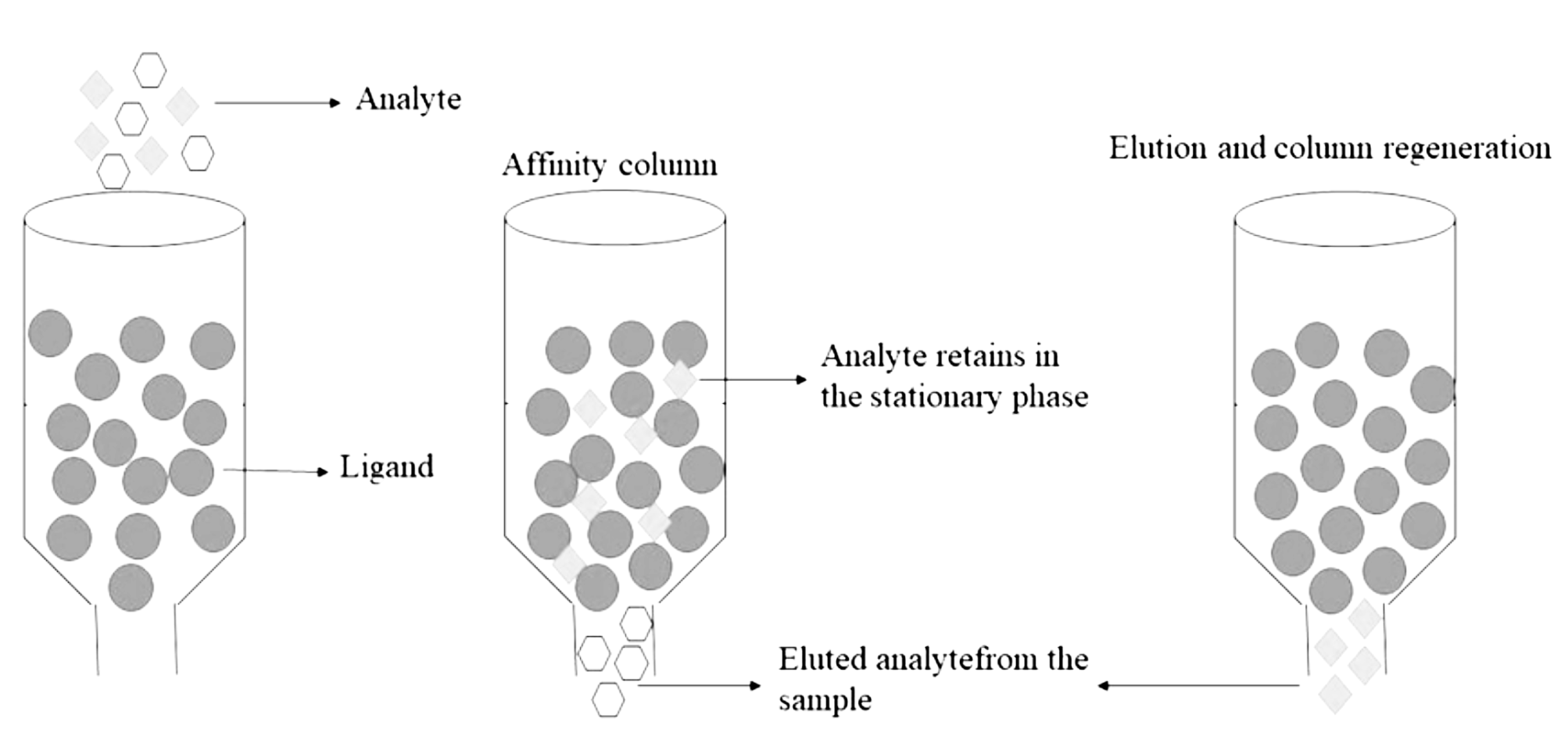
A target binds an immobilized ligand, unbound material is washed away, and the bound target is released.
Khan Academy · CC BY-NC-SA 4.0 · Original image ↗
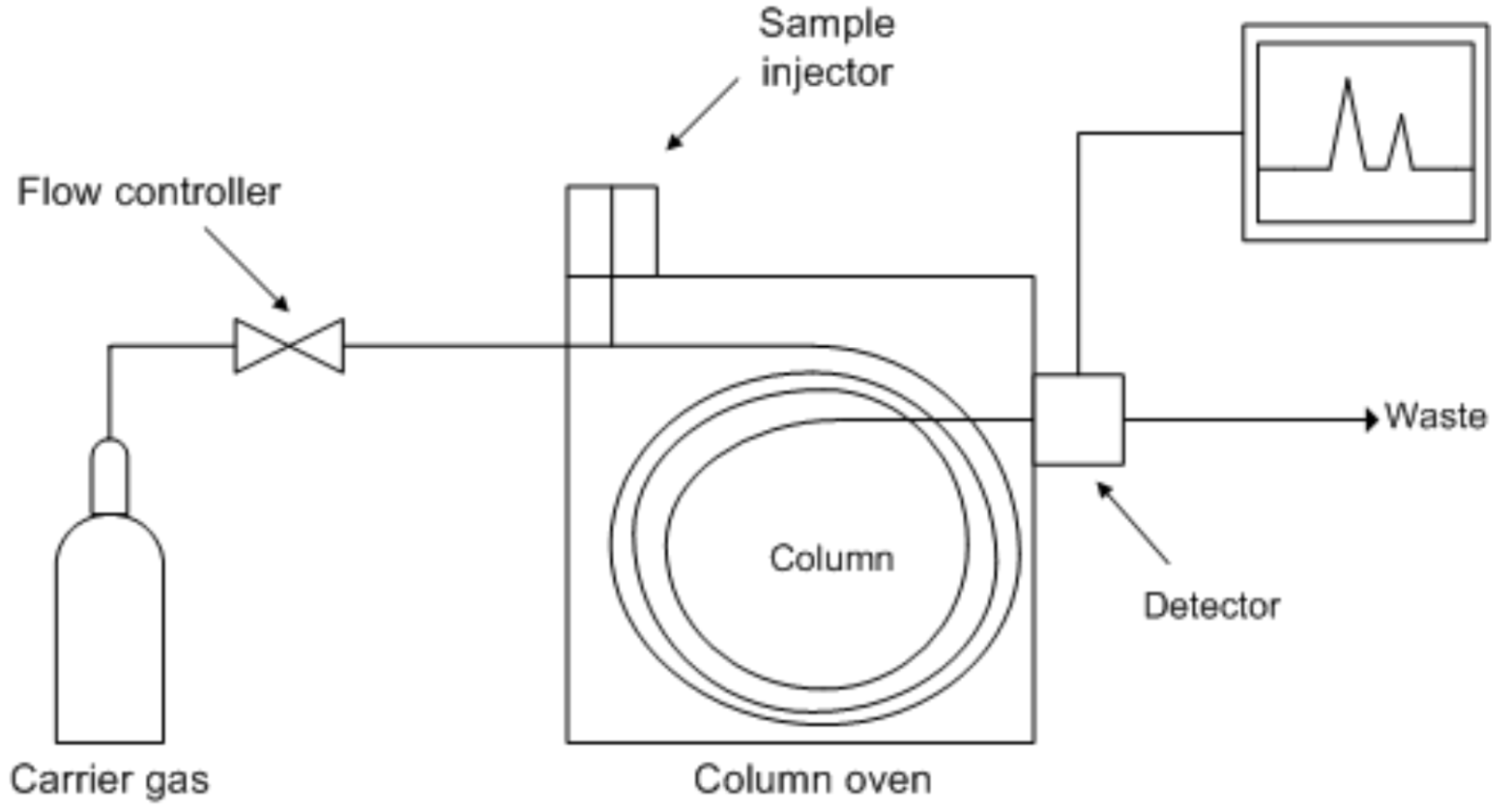
Carrier gas moves an injected sample through a column in an oven to a detector.
apparatus Khan Academy · CC BY-NC-SA 4.0 · Original image ↗
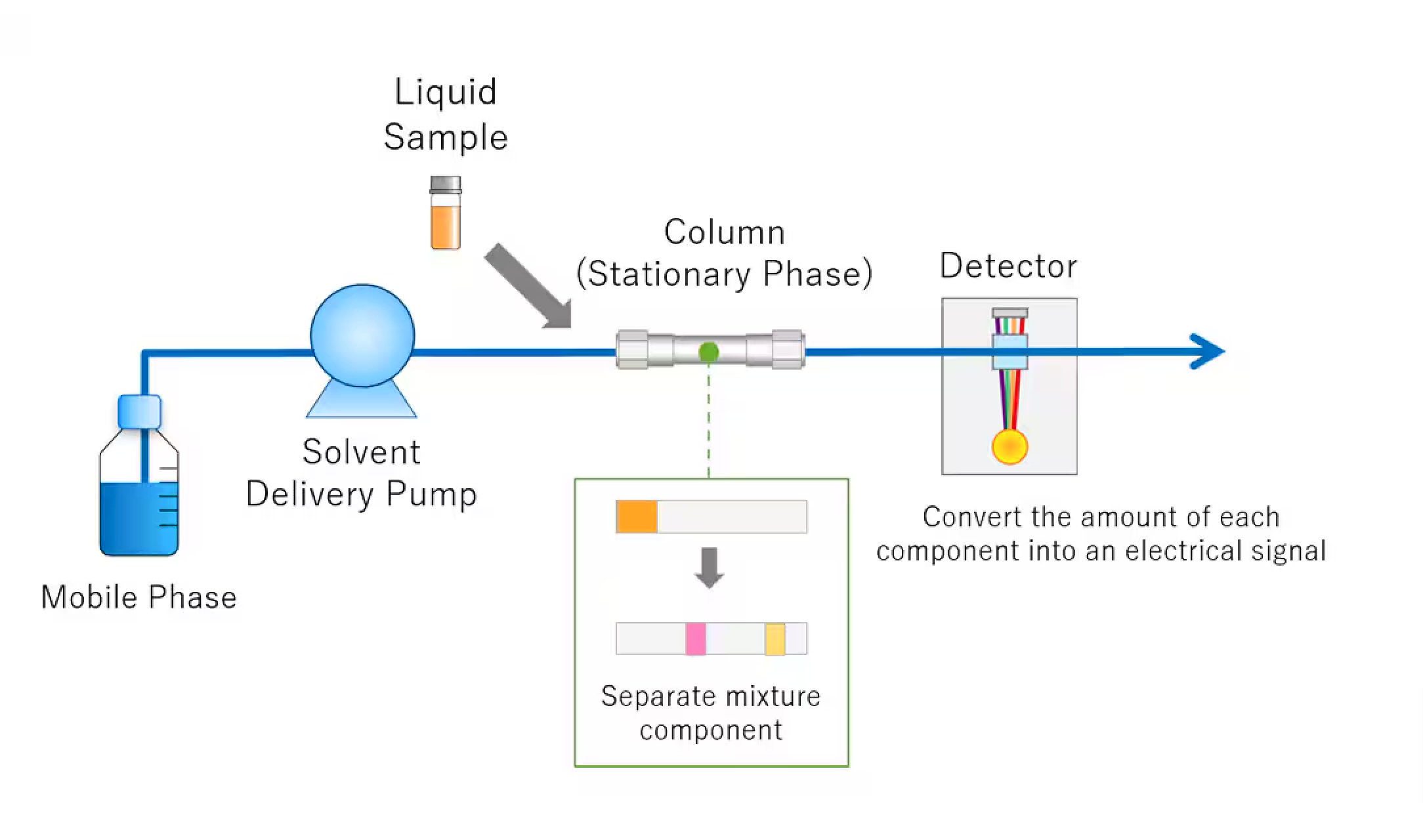
Solvent is pumped through an injection system and column to a detector and output.
apparatus Khan Academy · CC BY-NC-SA 4.0 · Original image ↗

Source: A closer look at types of chromatography

226 terms, alphabetically ordered

Absorbance

A measure of how much incident light a sample absorbs at a particular .

Read explanation · Waters ↗
Achiral

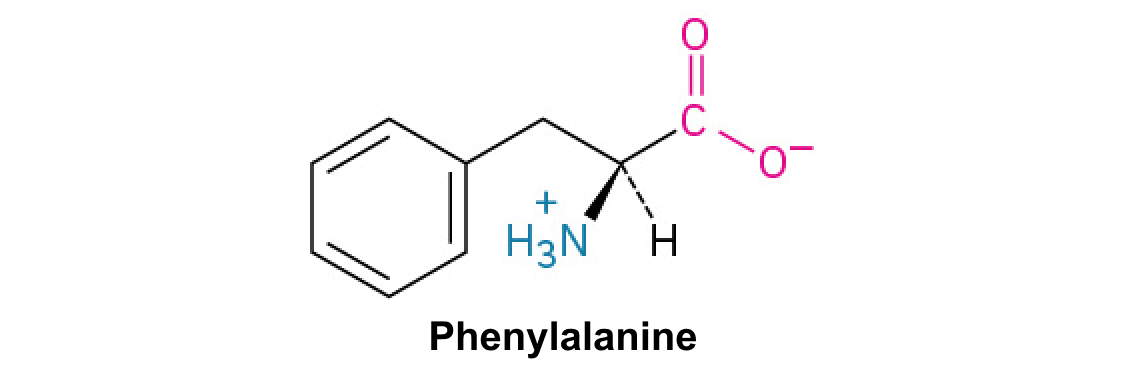
Superimposable on its mirror image. is achiral because its has two hydrogen substituents.

Read explanation · OpenStax ↗
Acid · ·

In the Brønsted–Lowry model, a substance that can donate a . Acidic have a higher activity than water.

Read explanation · OpenStax ↗
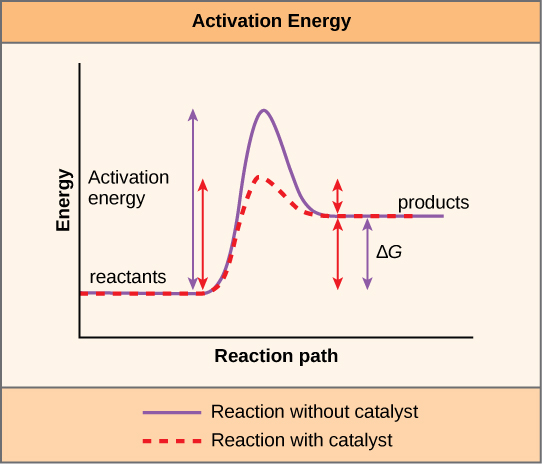
Activation energy ·

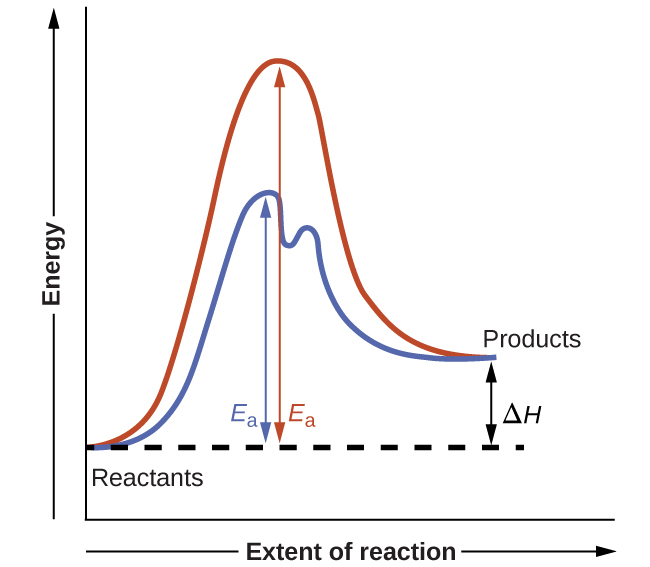
The energy barrier that must overcome to reach a and undergo .

Read explanation · OpenStax ↗
Active catalytic-site concentration ·

The total of active sites used to calculate from . It equals active when each has one site.

Read explanation · Biology LibreTexts ↗
Active pharmaceutical ingredient · ·

The component of a medicine responsible for its intended pharmacological effect. is commonly used to identify or it.

Read explanation · Waters ↗
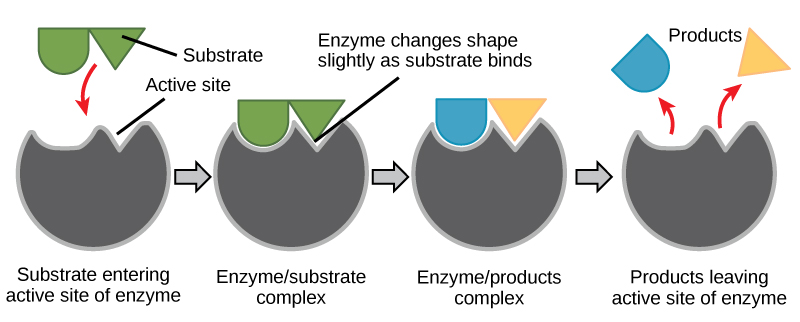
Active site

The region of an that binds its and carries out .

Read explanation · OpenStax ↗
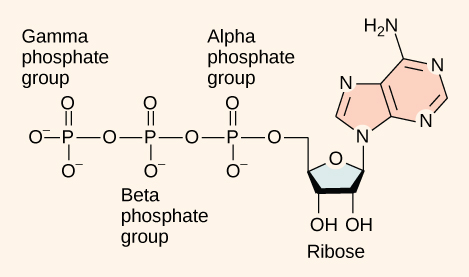
Adenosine triphosphate

An energy-carrying ; its powers many cellular processes, including cycles.

Read explanation · OpenStax ↗
Adsorption

Association of a with a surface, such as the in .

Read explanation · Waters ↗
Affinity chromatography

Separation by specific binding between a target and an , followed by selective release.

Read explanation · Cytiva ↗
Agarose

A seaweed-derived polysaccharide used to make gels and supports.

Read explanation · Thermo Fisher ↗
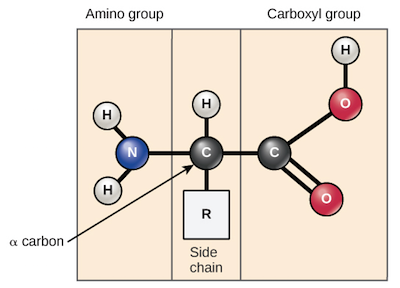
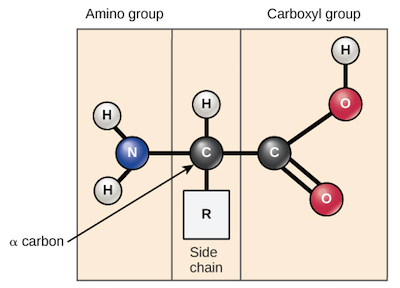
Alpha carbon · ·

The central carbon next to the carboxyl carbon. In a standard it binds an , hydrogen, and .

Read explanation · OpenStax ↗
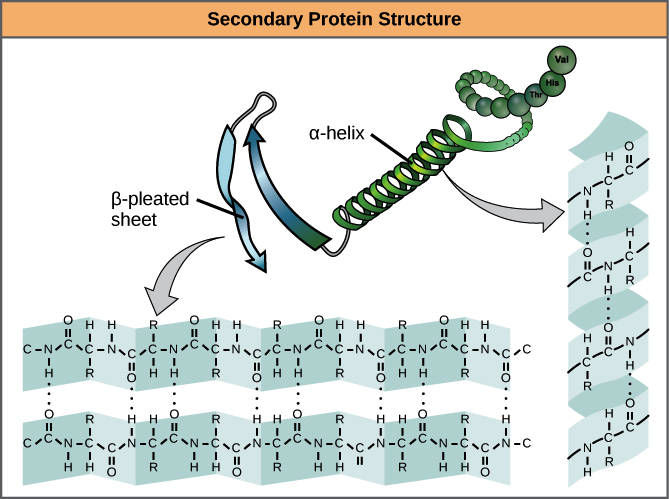
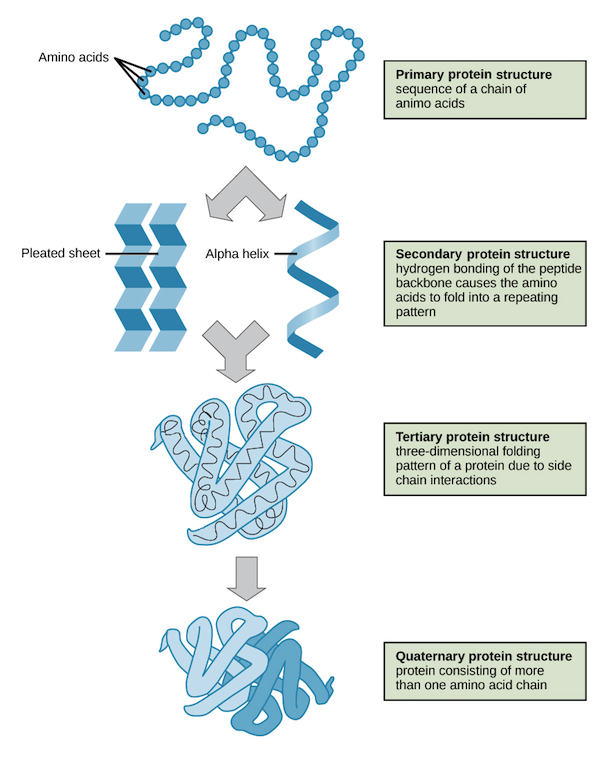
Alpha helix · · · · · ·

A helical stabilized by between a oxygen and an hydrogen four later.

Read explanation · OpenStax ↗
Alumina

Aluminum oxide; a used in some separations.

Read explanation · Waters ↗
Amide · · ·

A group containing a carbon bonded to nitrogen. are amide linkages.

Read explanation · OpenStax ↗
Amino acid

A building block containing amino and and a characteristic .

Read explanation · OpenStax ↗
Amino acid residue · ·

The part of an incorporated into a chain. Residue can also describe another building block within a larger .

Read explanation · OpenStax ↗
Amino group · · ·

A nitrogen-containing . A free ’s amino group is typically (NH₃⁺) near physiological ; ’s ring nitrogen is an exception to this formula.

Read explanation · OpenStax ↗
Amphipathic

Having both a region and a region, as in a or .

Read explanation · OpenStax ↗
Amylose

The largely unbranched component of , made mainly of linked by alpha-1,4 .

Read explanation · OpenStax ↗
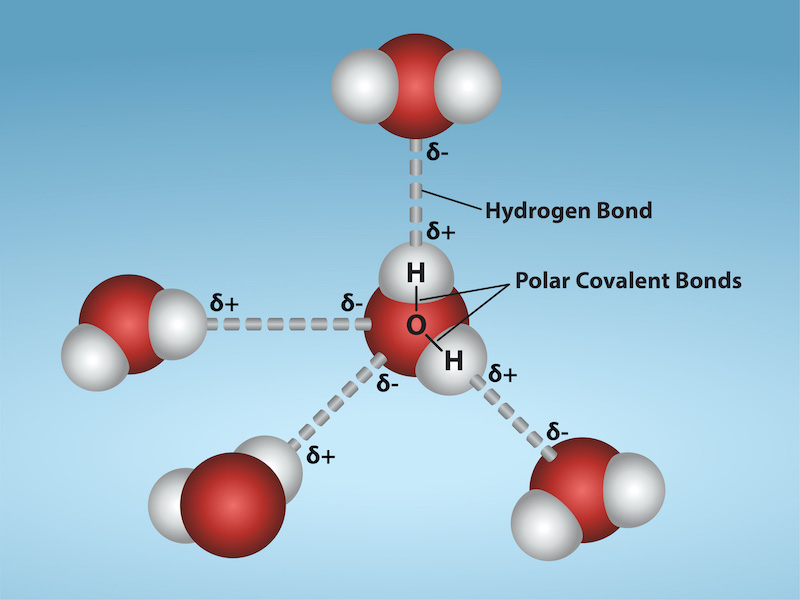
Analyte

A substance being measured or separated within a sample; the source table uses the term for the mixture under analysis.
Read explanation · Waters ↗
Analytical standard ·

A material with a known identity or amount used to compare or calibrate measurements.

Read explanation · Agilent ↗
Anion ·

An with a negative net .

Read explanation · OpenStax ↗
Anion exchange

A method using positively to bind negatively .

Read explanation · Cytiva ↗
anomeric carbon

The former carbon of a sugar, which becomes the or hemiketal center upon cyclization.

Read explanation · OpenStax ↗
Antibody

An that recognizes a specific region () on an . Antibodies help immune defenses and are used as detection tools in .

Read explanation · OpenStax ↗
Antigen

A or molecular structure specifically recognized by an or other adaptive immune .

Read explanation · OpenStax ↗
Antiparallel

Running in opposite directions, as with two strands or neighboring strands in some .

Read explanation · OpenStax ↗
Aqueous solution ·

A in which water is the .

Read explanation · OpenStax ↗
Aromatic

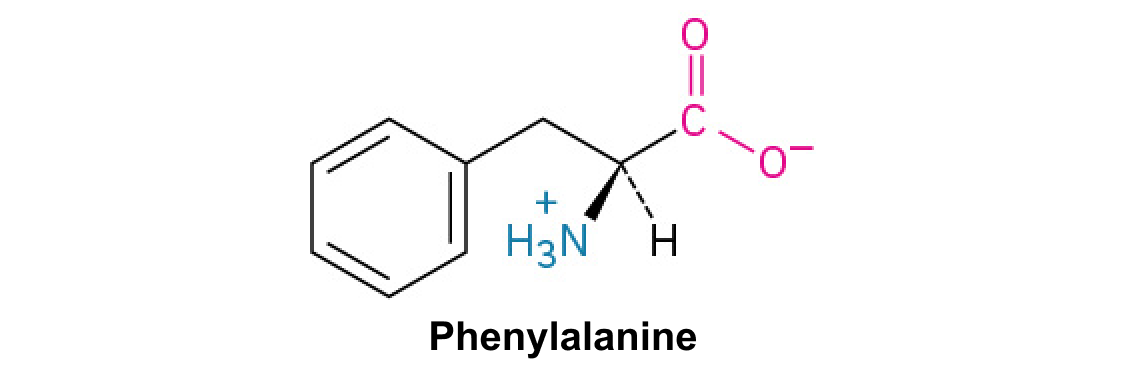
Containing a cyclic, with . , , and have aromatic .

Read explanation · OpenStax ↗
Assay

A procedure used to detect a substance or measure its amount, activity, or another property.

Read explanation · Thermo Fisher ↗
Atom

The smallest unit of an element that retains its chemical identity; it has a surrounded by .

Read explanation · OpenStax ↗
Benzene ring

A six-carbon ring with .

Read explanation · OpenStax ↗
Benzyl group

A attached through a –CH₂– group; part of ’s .

Read explanation · OpenStax ↗
Beta sheet · · · · · ·

A made of aligned segments connected by ; strands may be parallel or .

Read explanation · OpenStax ↗
Binding affinity ·

The strength of a binding interaction between . For simple binding, a smaller means higher affinity.

Read explanation · OpenStax ↗
Biomolecule

A made by or involved in living systems, including , , , and .

Read explanation · OpenStax ↗
Blotting ·

Transfer of separated or to a so a specific target can be detected.

Read explanation · Thermo Fisher ↗
Boiling point

The temperature at which a liquid’s equals the surrounding pressure.

Read explanation · Agilent ↗
Brønsted–Lowry base · · · · · · · · · · ·

In the Brønsted–Lowry model, a substance that can accept a . Basic solutions have lower activity than water.

Read explanation · OpenStax ↗
Buffer ·

A that resists changes when small amounts of or are added, commonly through a weak and its .

Read explanation · OpenStax ↗
Calibration

Establishing the relation between a measured signal and known values or .

Read explanation · Agilent ↗
Capillary action

Movement of liquid through narrow spaces caused by and adhesion to the surrounding material.

Read explanation · OpenStax ↗
Carbohydrate

A class of including sugars and their , used for energy storage, structure, and recognition.

Read explanation · OpenStax ↗
Carbonyl group · ·

A carbon double-bonded to oxygen, C=O; present in and many other .

Read explanation · OpenStax ↗
Carboxyl group · ·

An , COOH. In free it is usually to COO⁻ near physiological .

Read explanation · OpenStax ↗
Catalyst · ·

A substance that speeds a by providing a pathway with lower and is regenerated rather than consumed overall.

Read explanation · OpenStax ↗
Cation ·

An with a positive net .

Read explanation · OpenStax ↗
Cation exchange

A method using negatively to bind positively .

Read explanation · Cytiva ↗
Cellulose

A structural in plant cell walls, with beta-1,4 linkages; also used as a support.

Read explanation · OpenStax ↗
Centimeter

A unit of length equal to one hundredth of a meter.

Read explanation · NIST ↗
Chemical compound ·

A substance containing of two or more different chemically combined in a definite composition.

Read explanation · OpenStax ↗
Chemical element

A substance defined by having the same number of , such as carbon or oxygen.

Read explanation · OpenStax ↗
Chemical reaction ·

A process that rearranges and chemical bonds, converting into .

Read explanation · OpenStax ↗
Chromatin

The complex of and associated , including , in .

Read explanation · OpenStax ↗
Chromatogram

A record of detector response as separated components emerge from a system.

Read explanation · Agilent ↗
Chromatographic peak · ·

A rise and fall in detector signal as one or more components pass through the detector; a peak does not guarantee a single pure .

Read explanation · Agilent ↗
Chromatography

Separation of mixture components by their different interactions with a and a moving .

Read explanation · Waters ↗
Chromatography resin ·

The solid or beads in a column, often carrying chemical groups that determine separation behavior.

Read explanation · Cytiva ↗
Chromosome ·

An organized with associated that carries . A replicated chromosome has two .

Read explanation · OpenStax ↗
Codon

A sequence of three that specifies an or a stop signal.

Read explanation · OpenStax ↗
Concentration

The amount of a substance in a specified volume or mass of mixture.

Read explanation · OpenStax ↗
conjugate base

Species formed when an loses one .

Read explanation · OpenStax ↗
Conjugated system ·

Adjacent orbitals that allow to be distributed across several , often through alternating single and multiple bonds.

Read explanation · OpenStax ↗
Covalent bond · ·

A bond in which share pairs. and are covalent.

Read explanation · OpenStax ↗
Cysteine ·

An with a . Two cysteines can form a .

Read explanation · OpenStax ↗
Dalton

A unit of mass equal to one twelfth of the mass of a carbon-12 ; used to describe .

Read explanation · OpenStax ↗
Deoxyribonucleic acid

The that stores genetic information used to specify and sequences.

Read explanation · OpenStax ↗
Deprotonation

Removal of a from a or group; this changes its by minus one.

Read explanation · OpenStax ↗
Detergent

An substance that can associate with both water and material; detergents can disrupt or interactions.

Read explanation · Thermo Fisher ↗
Dissociation · ·

Separation of a chemical species or molecular complex into smaller components; dissociation releases a .

Read explanation · OpenStax ↗
Dissociation constant · ·

An for complex . For E + S ⇌ , Kd = [E]/[]; a smaller value indicates tighter binding under the stated conditions.

Read explanation · IUBMB ↗
Disulfide bond · · ·

A covalent sulfur–sulfur bond formed by of two , which can stabilize structure.

Read explanation · NCBI Bookshelf ↗
DNA replication

Copying so genetic information can be passed to daughter cells. Each guides a complementary new strand.

Read explanation · OpenStax ↗
Electric charge · · ·

An electrical property that can be positive or negative. Opposite charges attract and like charges repel; net charge is the sum of all charges on a particle.

Read explanation · OpenStax ↗
Electron

A negatively subatomic particle. Electron sharing and transfer determine much of chemical bonding.

Read explanation · OpenStax ↗
Electron capture detector

A detector sensitive to substances that capture , such as many halogenated .

Read explanation · Agilent ↗
Electron delocalization ·

Distribution of across several rather than confinement to one or bond.

Read explanation · OpenStax ↗
Electronegativity ·

An ’s tendency to attract shared in a chemical bond. Unequal attraction can make a bond .

Read explanation · OpenStax ↗
Electrostatic interaction · ·

Attraction between opposite electrical or repulsion between like .

Read explanation · OpenStax ↗
Eluate

The fluid that leaves a column, containing any sample components.

Read explanation · Waters ↗
Eluent

The fluid introduced into a column.

Read explanation · Waters ↗
Elution ·

Removal of a component from the by the flowing .

Read explanation · Waters ↗
Enzyme

A biological that speeds a without being consumed. Most enzymes are .

Read explanation · OpenStax ↗
Enzyme inhibitor · ·

A substance that reduces activity. The binding mechanism and rate data determine whether inhibition is competitive, uncompetitive, mixed, or another type.

Read explanation · Biology LibreTexts ↗
Enzyme saturation · ·

The high- limit in which sites spend almost all their time processing and the rate approaches .

Read explanation · Biology LibreTexts ↗
Enzyme–substrate complex · · ·

The bound association of an and its during a cycle. Often abbreviated ES in schemes.

Read explanation · OpenStax ↗
Epitope

The particular part of an recognized by an or immune .

Read explanation · OpenStax ↗
Equilibrium

A state where opposing processes occur at equal rates, so macroscopic or other properties remain constant.

Read explanation · OpenStax ↗
Equilibrium constant

A ratio of to activities at , each raised to its stoichiometric coefficient. At a fixed temperature, a does not change this ratio.

Read explanation · OpenStax ↗
Eukaryote ·

An organism whose cells have a -enclosed ; animals, plants, fungi, and protists are eukaryotes.

Read explanation · OpenStax ↗
FACT complex ·

A -associated complex that helps machinery traverse and supports reorganization.

Read explanation · OpenStax ↗
Flame ionization detector

A detector that measures generated when organic burn in a flame.

Read explanation · Agilent ↗
Fluorescence ·

Light emission after absorption of excitation light, usually at a longer than the absorbed light.

Read explanation · Thermo Fisher ↗
Fraction · ·

A portion of a sample collected during a separation, such as the fluid leaving a column during a time interval.

Read explanation · Waters ↗
Functional group

A group of whose chemical behavior gives a characteristic and properties.

Read explanation · OpenStax ↗
Gas chromatography

Separation of , thermally stable carried through a column by a gas. Retention depends on and stationary-phase interactions.

Read explanation · Agilent ↗
Gas-liquid chromatography

with a liquid stationary-phase film and a gaseous .

Read explanation · Agilent ↗
Gas-solid chromatography

with a solid and a gaseous .

Read explanation · Agilent ↗
Gene

A sequence that contributes to a functional or , together with the information needed to express it.

Read explanation · OpenStax ↗
Gene expression

Production of a functional from a , including and, for -coding , .

Read explanation · NCBI Bookshelf ↗
Glucose

A six-carbon sugar that is a major cellular energy source and a building block of , , and .

Read explanation · OpenStax ↗
Glutamate · ·

An whose is usually negatively near physiological .

Read explanation · OpenStax ↗
glutathione

A small –– whose reduced form supports cellular redox protection.

Read explanation · Biology LibreTexts / Oregon State University ↗
Glutathione S-transferase ·

An used as a fusion tag; GST-tagged can bind a .

Read explanation · Cytiva ↗
Glycine ·

The smallest ; its is hydrogen. It is and allows substantial flexibility.

Read explanation · OpenStax ↗
glycogen

A highly branched used for storage in animals.

Read explanation · Biology LibreTexts / Oregon State University ↗
Glycosidic bond

A involving a sugar’s . In a , an N-glycosidic bond links the sugar to the .

Read explanation · Biology LibreTexts / Oregon State University ↗
Gradient

A change in a quantity, such as , , or density, across a distance or over time.

Read explanation · Thermo Fisher ↗
Gradient elution

Changing mobile-phase composition during a separation, for example increasing or organic .

Read explanation · Waters ↗
hemiacetal

Carbon bonded to both and alkoxy groups, usually formed by alcohol addition to a .

Read explanation · OpenStax ↗
High performance liquid chromatography ·

Liquid using high-pressure pumps and an efficient packed column. The separation mechanism depends on the .

Read explanation · Waters ↗
Histidine tag

A short chain of histidines added to a to enable on an metal- .

Read explanation · Cytiva ↗
Histone

A -associated rich in . Core histones form the around which nucleosomal wraps.

Read explanation · OpenStax ↗
Hormone

A chemical messenger released by cells that changes the activity of target cells with matching .

Read explanation · OpenStax ↗
Hydrocarbon · ·

A made only of carbon and hydrogen. Hydrocarbon regions are generally .

Read explanation · OpenStax ↗
Hydrodynamic size

The effective size of a moving in , influenced by its shape and associated .

Read explanation · Cytiva ↗
Hydrogen bond ·

An attraction between a hydrogen bonded to an and another . hydrogen bonds stabilize .

Read explanation · OpenStax ↗
Hydrogen ion · ·

A positively hydrogen species. H⁺ denotes a , which is hydrated in water; its activity determines .

Read explanation · OpenStax ↗
Hydrolysis

Breaking a chemical bond by adding water. hydrolysis separates .

Read explanation · OpenStax ↗
Hydrophilic

Interacting favorably with water, typically because a group is or .

Read explanation · OpenStax ↗
Hydrophobic

Interacting poorly with water. often gather in a ’s interior.

Read explanation · OpenStax ↗
Hydroxide ion ·

The negatively OH⁻. Basic contain a higher hydroxide ion activity than water at the same temperature.

Read explanation · OpenStax ↗
Hydroxyl group ·

An oxygen bonded to hydrogen, –OH. Hydroxyl groups can and often increase .

Read explanation · OpenStax ↗
Immobilization ·

Attaching or confining a to a support so that it remains in place during an experiment.

Read explanation · Cytiva ↗
Immunoglobulin

An or the -bound form of the same type of -binding .

Read explanation · OpenStax ↗
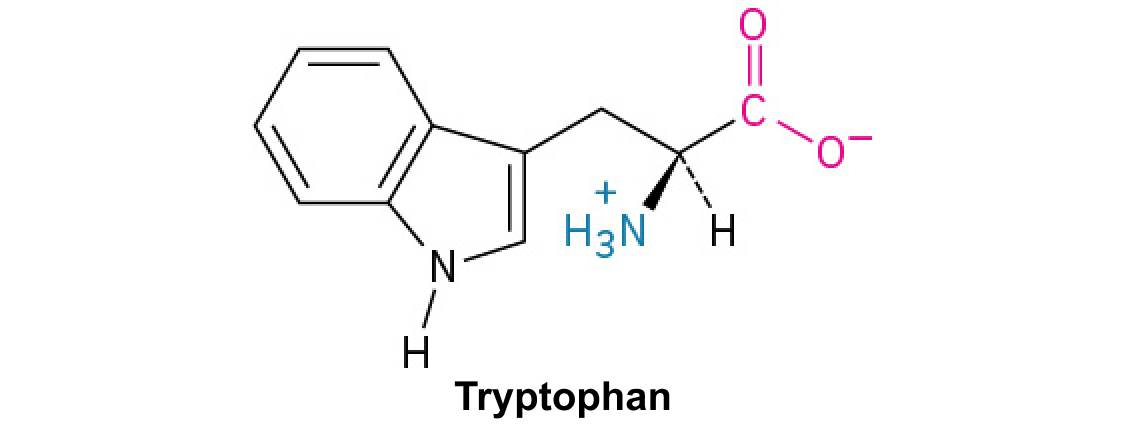
Indole

A fused six-membered and five-membered ring system containing nitrogen; found in .

Read explanation · OpenStax ↗
Ion · ·

An or with a net because its numbers of and do not balance.

Read explanation · OpenStax ↗
Ion exchange chromatography ·

Separation by net through reversible binding to an oppositely .

Read explanation · Cytiva ↗
Ionic strength

A measure of weighted by the square of each ’s ; it influences in .

Read explanation · Cytiva ↗
Ionization ·

Formation of electrically or , for example before analysis in a .

Read explanation · Thermo Fisher ↗
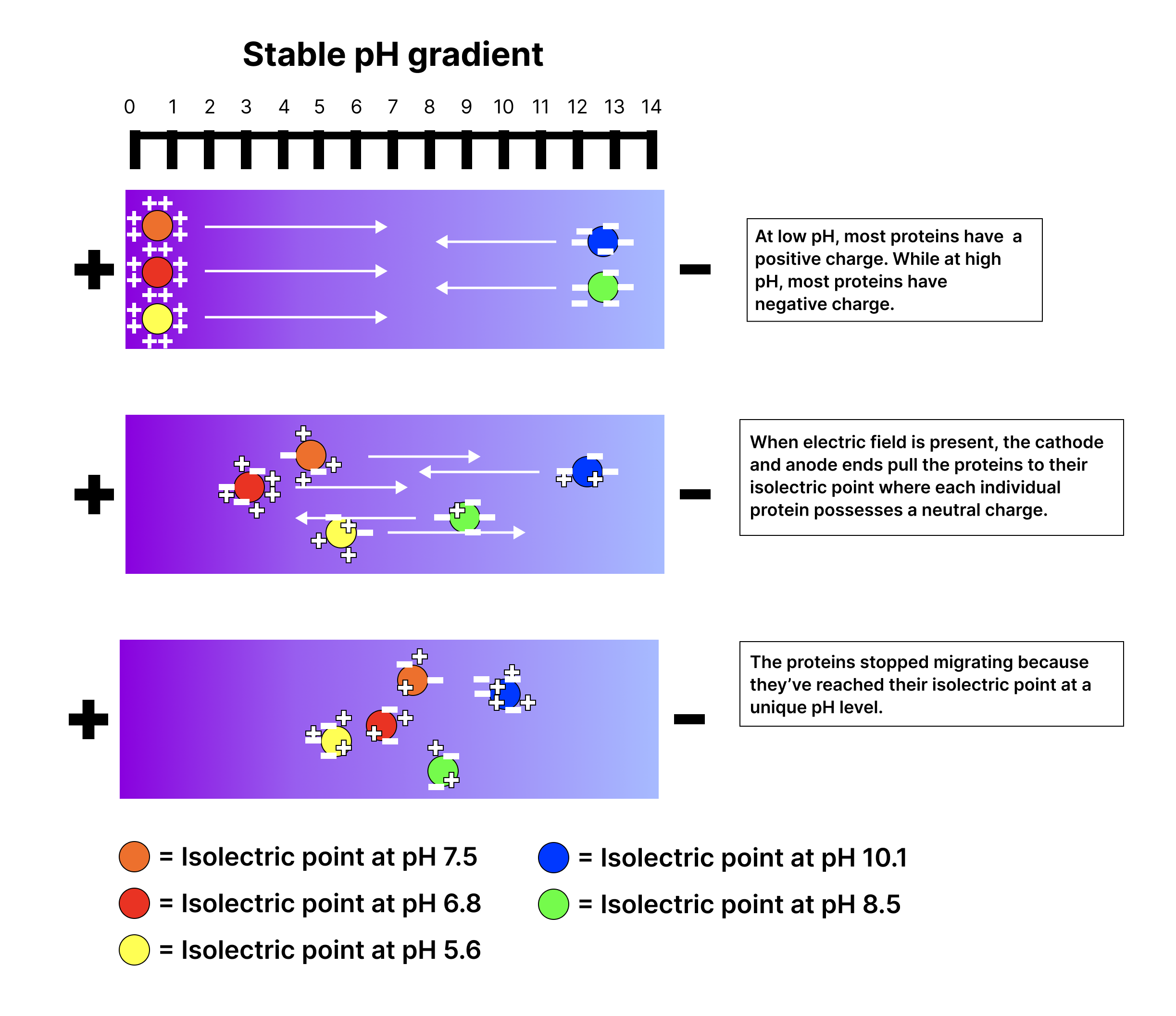
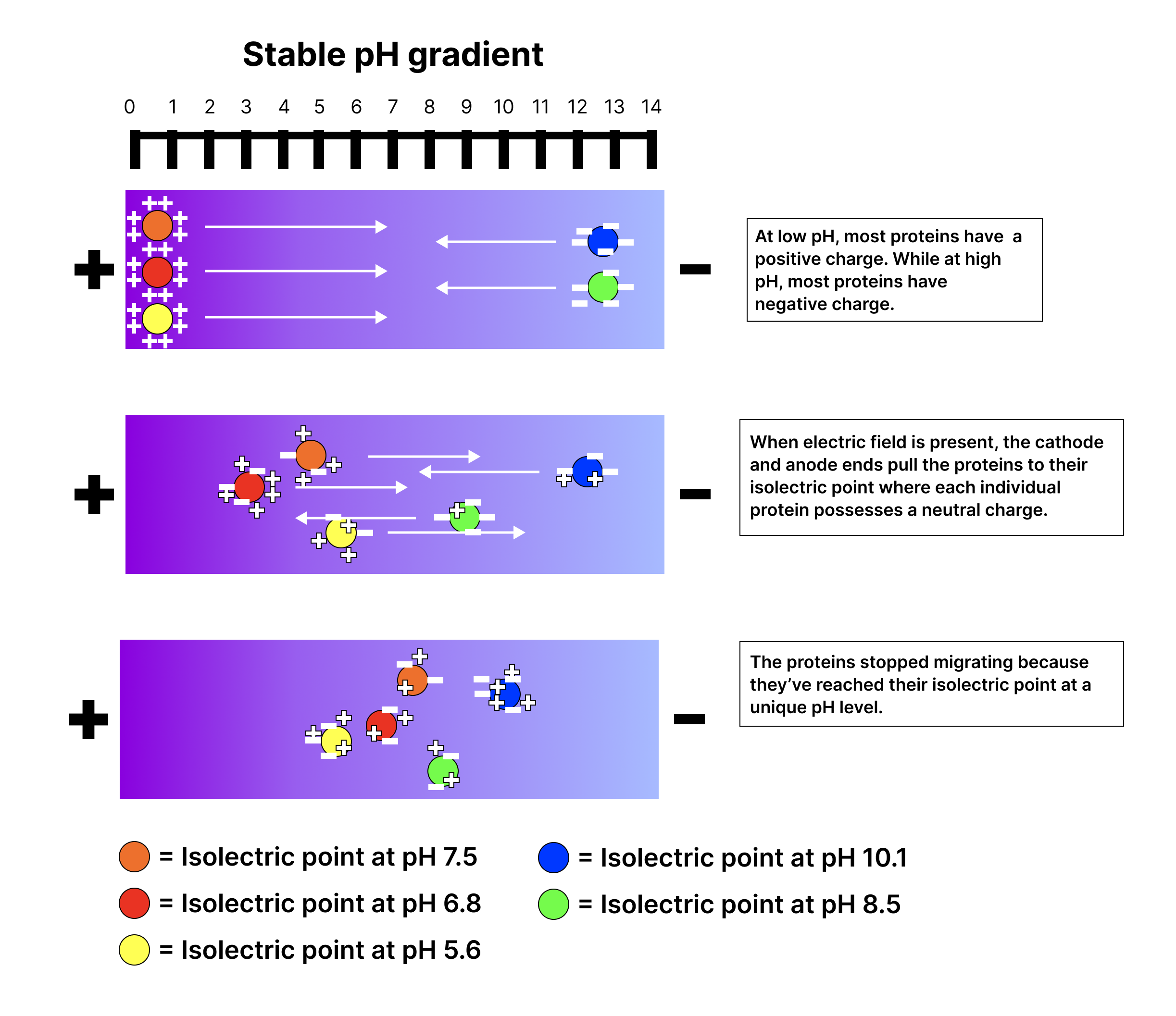
Isoelectric focusing

Separation of in a by their . A stops migrating where it has no net .

Read explanation · Thermo Fisher ↗
Isoelectric point ·

The at which a has zero net . In , a accumulates where local equals its pI.

Read explanation · OpenStax ↗
Ligand

A or that binds to a particular site on another , such as a or metal .

Read explanation · Cytiva ↗
linkage

A tendency of nearby on the same to be inherited together.

Read explanation · OpenStax ↗
Lipid

A broad class of largely or , including fats, , and steroids.

Read explanation · OpenStax ↗
locus

The specific position of a or other feature.

Read explanation · OpenStax ↗
Logarithm · · ·

The exponent needed to obtain a number from a chosen fixed number. For decimal logarithms, log₁₀(100) = 2 because 10² = 100; uses the negative decimal logarithm of activity.

Read explanation · OpenStax ↗
Mass spectrometry ·

Analysis of according to their mass-to- ratios, used to identify and or .

Read explanation · Thermo Fisher ↗
Matrix

A supporting material, such as a gel or the solid support in a column. Its properties influence movement and binding of sample .

Read explanation · Thermo Fisher ↗
Maximum reaction rate · ·

The limiting as becomes saturating. For a fixed under given conditions, Vmax = times .

Read explanation · Biology LibreTexts ↗
mechanical power

Rate of energy transfer, measured in watts.

Read explanation · OpenStax ↗
Membrane · · · ·

A thin boundary or sheet. Cell membranes are bilayers containing ; membranes are synthetic supports that hold or for detection.

Read explanation · OpenStax ↗
Messenger RNA ·

An that carries coding information used by to synthesize a .

Read explanation · OpenStax ↗
Mobile phase

The moving fluid that carries a sample through a system.

Read explanation · Waters ↗
Molecular chaperone · ·

A that assists other in folding or prevents , without specifying their sequence.

Read explanation · NCBI Bookshelf ↗
Molecular mass · ·

The mass of a , commonly expressed in for . Molecular weight is often used informally for the same quantity.

Read explanation · OpenStax ↗
Molecule

Two or more joined by . A molecule may be electrically or carry a .

Read explanation · OpenStax ↗
Neutral

Having no net . For a , neutral instead means equal and activities; its is about 7 at 25 °C.

Read explanation · OpenStax ↗
Nitrogenous base · · ·

A nitrogen-containing ring component of ; its pairing interactions help specify sequences.

Read explanation · OpenStax ↗
Nonpolar ·

Lacking a substantial separation of . Nonpolar groups generally interact poorly with water.

Read explanation · OpenStax ↗
Normal-phase chromatography

with a and a less . More strongly adsorbed components are retained longer.

Read explanation · Waters ↗
Normal-phase HPLC

with a and less .

Read explanation · Waters ↗
Nucleic acid

A of , such as or , used in information storage, expression, and other cellular functions.

Read explanation · OpenStax ↗
Nucleosome

The basic unit of : wrapped around a .

Read explanation · OpenStax ↗
Nucleotide

A joined to a sugar and one or more .

Read explanation · OpenStax ↗
Nucleus ·

A -enclosed compartment containing most of a cell’s .

Read explanation · OpenStax ↗
Octamer

A complex made of eight . A core contains eight .

Read explanation · OpenStax ↗
Oxidation ·

Loss of or an increase in oxidation state. Oxidizing two can form a .

Read explanation · OpenStax ↗
Peptide

A chain of joined by ; the term commonly describes chains shorter than a typical .

Read explanation · OpenStax ↗
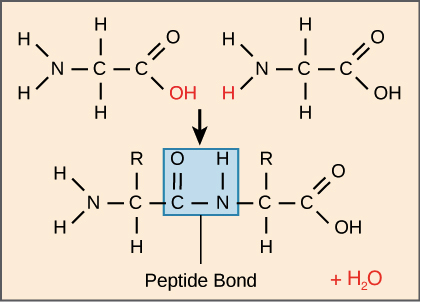
Peptide bond ·

A covalent between the carboxyl carbon of one and the amino nitrogen of the next.

Read explanation · OpenStax ↗
pH

A measure of , defined as the negative of activity. Lower pH means greater ; pH influences .

Read explanation · OpenStax ↗
Phenylalanine ·

A with an .

Read explanation · OpenStax ↗
Phosphate group ·

A phosphorus-containing group bonded to oxygens; phosphate groups occur in , , and modified .

Read explanation · OpenStax ↗
Phospholipid

An with a -containing region and tails; a major component of cellular .

Read explanation · OpenStax ↗
photon

Quantum of electromagnetic radiation with energy hf.

Read explanation · OpenStax ↗
Polar

Having an uneven distribution of . Polar groups often interact favorably with water.

Read explanation · OpenStax ↗
Polymer

A large made from many linked molecular building blocks.

Read explanation · OpenStax ↗
Polypeptide

A chain of connected by . A functional can contain one or several such chains.

Read explanation · OpenStax ↗
Porous material · · · ·

A material containing small spaces that can admit of suitable size.

Read explanation · Cytiva ↗
Proline ·

An whose loops back to the nitrogen, restricting rotation and often creating bends.

Read explanation · OpenStax ↗
Protein

One or more folded chains that perform biological roles such as , transport, signaling, or structural support.

Read explanation · OpenStax ↗
Protein aggregation · ·

Association of into larger clusters, often when exposed surfaces of unfolded stick together.

Read explanation · NCBI Bookshelf ↗
Protein backbone ·

The repeating nitrogen–alpha-carbon– chain of a , excluding its variable .

Read explanation · OpenStax ↗
Protein complex ·

An assembly of interacting chains that function together.

Read explanation · OpenStax ↗
Proteomics

Large-scale study of , including their identities, amounts, modifications, and interactions.

Read explanation · Thermo Fisher ↗
Proton

A positively subatomic particle. In – chemistry, donating a proton means transferring a .

Read explanation · OpenStax ↗
Protonation

Addition of a to an , , or ; this changes its by plus one.

Read explanation · OpenStax ↗
Purification · ·

Separating a desired substance from other components of a mixture.

Read explanation · Cytiva ↗
Quantification · ·

Estimating the amount or of a substance from measured signals and suitable or .

Read explanation · Waters ↗
R group · ·

The variable side chain attached to an ’s . It determines identity, , , and chemical behavior.

Read explanation · OpenStax ↗
Reactant

A starting substance transformed during a .

Read explanation · OpenStax ↗
Reaction intermediate · ·

A species formed in one step and consumed in another. It occupies a local energy minimum between .

Read explanation · OpenStax ↗
Reaction product ·

A substance formed by a .

Read explanation · OpenStax ↗
Reaction rate · ·

How quickly are consumed or form, usually expressed as a change per unit time.

Read explanation · OpenStax ↗
Receptor

A that recognizes a particular signal and helps produce a cellular response.

Read explanation · OpenStax ↗
refractive index

Ratio of vacuum light speed to phase speed in a medium.

Read explanation · OpenStax ↗
Refractive index detector

A detector that measures changes in when pass through it.

Read explanation · Waters ↗
Retention factor · · ·

In , the distance traveled by a sample spot divided by the distance traveled by the , both measured from the origin. RfC, RfA, and RfB denote the values for components C, A, and B.

Read explanation · Waters ↗
Retention time

The elapsed time between sample injection and detection of a component leaving the column.

Read explanation · Waters ↗
Reversed-phase chromatography

with a and a . components tend to be retained more strongly.

Read explanation · Waters ↗
Reversed-phase HPLC ·

with a and .

Read explanation · Waters ↗
Ribonucleic acid ·

A with roles in , regulation, and ; carries -coding information.

Read explanation · OpenStax ↗
Ribosome ·

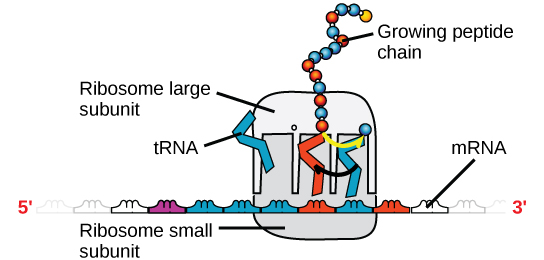
A complex of and that translates into a .

Read explanation · OpenStax ↗
Salt

An electrically made from and . Dissolved salts can screen or compete with – interactions.

Read explanation · Cytiva ↗
Secondary structure

Local folding, such as and , stabilized mainly by .

Read explanation · OpenStax ↗
Silica

Silicon dioxide; a solid commonly used as a in .

Read explanation · Waters ↗
Sister chromatid

One of the two copies of a produced by . An intact sister chromatid can supply a template for accurate repair.

Read explanation · Biology LibreTexts / Oregon State University ↗
Size exclusion chromatography · ·

Separation by using beads. Large access fewer and usually before small .

Read explanation · Cytiva ↗
Solubility ·

The amount of a substance that can dissolve in a under specified conditions. Soluble means able to dissolve; insoluble means only very slightly soluble in that .

Read explanation · OpenStax ↗
Solute

A dissolved component of a .

Read explanation · OpenStax ↗
Solution

A homogeneous mixture in which are dissolved in a .

Read explanation · OpenStax ↗
Solvent

The component of a that dissolves other substances, usually the component present in the greatest amount.

Read explanation · OpenStax ↗
Solvent front

The furthest point reached by the mobile-phase along a plate or paper.

Read explanation · Waters ↗
Starch

A plant storage made of chains; its two main forms are and amylopectin.

Read explanation · OpenStax ↗
Stationary phase

The material that remains fixed in a system.

Read explanation · Waters ↗
Substrate

A that an binds and chemically transforms.

Read explanation · OpenStax ↗
Substrate concentration

The amount of per volume. Square brackets denote ; [S] is varied to measure an curve.

Read explanation · Biology LibreTexts ↗
Subunit ·

An individual chain within a containing multiple chains.

Read explanation · OpenStax ↗
surface tension

Energy per unit interfacial area, equivalently force per unit boundary length.

Read explanation · OpenStax ↗
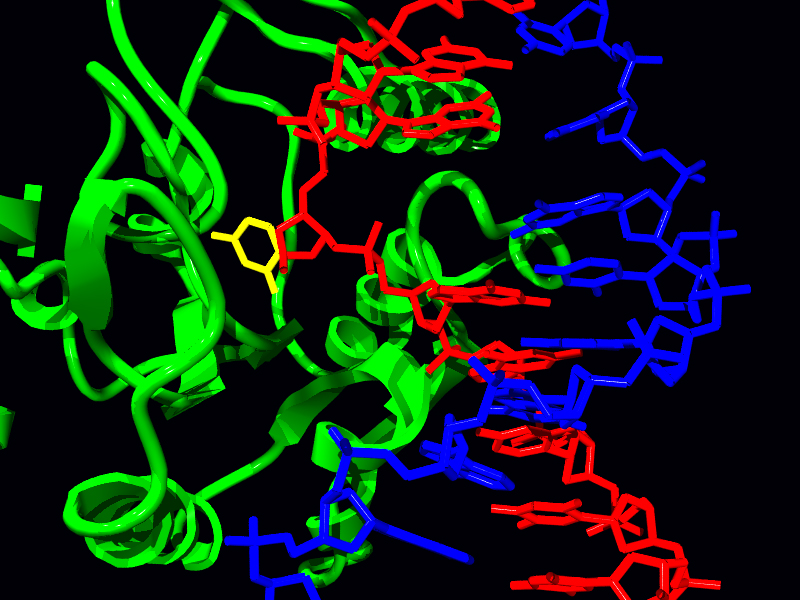
Template strand · · ·

A preexisting strand whose sequence guides complementary nucleic- synthesis.
Read explanation · OpenStax ↗
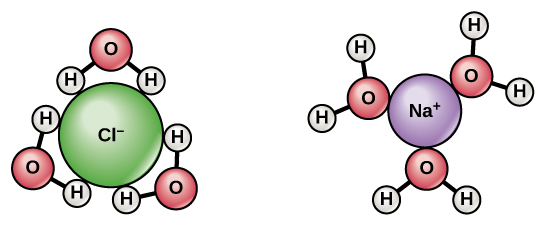
Thermal conductivity detector

A detector that measures changes in thermal conductivity of the gas.
Read explanation · Agilent ↗
Thin layer chromatography ·

A method that separates sample spots as moves along a thin stationary layer, often , on a plate.
Read explanation · Waters ↗
Thiol group · · · ·

A sulfur bonded to hydrogen, –SH. thiols can form through .

Read explanation · OpenStax ↗
Transcription

Synthesis of using a template.

Read explanation · OpenStax ↗
Transition state

A fleeting, high-energy arrangement at a barrier. It is an energy maximum along the path, rather than a stable .

Read explanation · OpenStax ↗
Translation ·

Synthesis of a on a using the sequence of in .

Read explanation · OpenStax ↗
Tryptophan ·

An with a bulky ; commonly grouped as .

Read explanation · OpenStax ↗
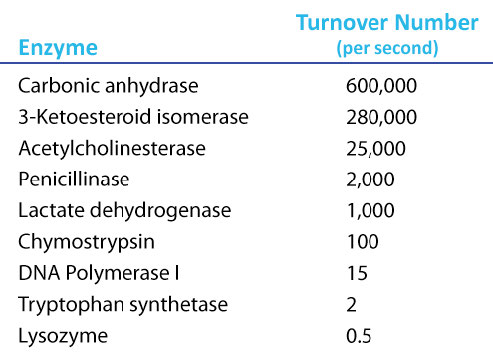
Turnover number · · ·

The maximum number of cycles per per unit time, calculated as /. Units are inverse time, commonly s⁻¹.

Read explanation · IUBMB ↗
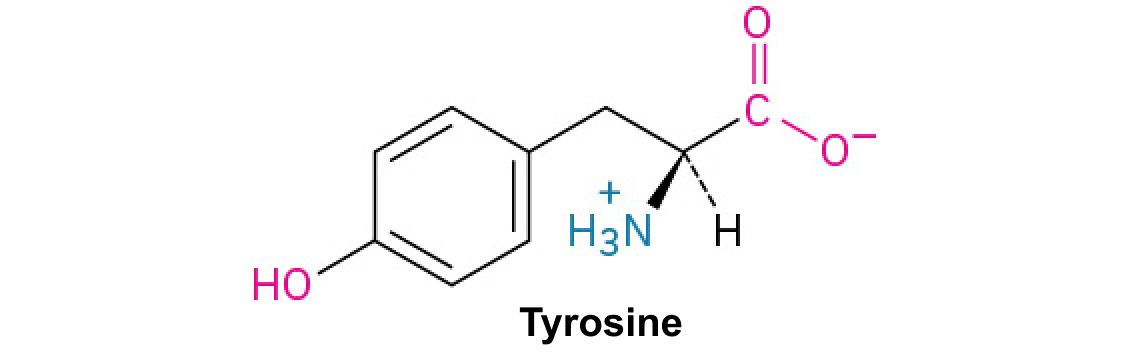
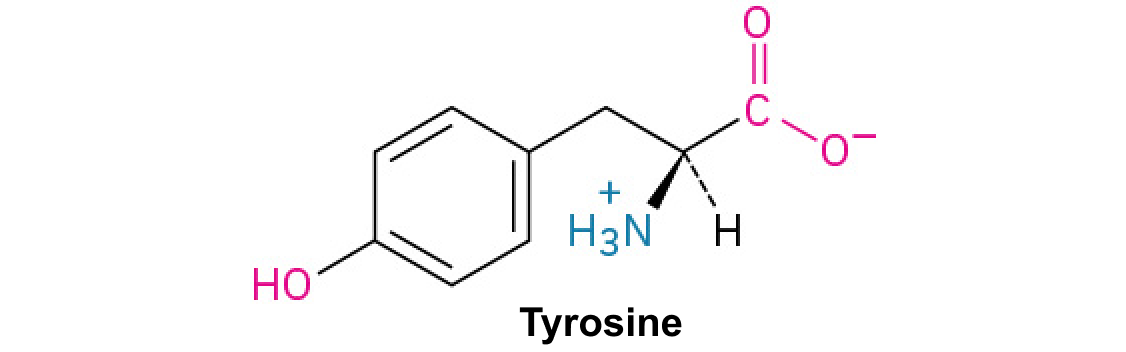
Tyrosine ·

An with a phenolic . Usually uncharged near physiological .

Read explanation · OpenStax ↗
Ultraviolet

Light with shorter than visible light. near 280 nm is mainly due to and .

Read explanation · Waters ↗
Ultraviolet-visible detection ·

Measurement of light at or visible as leave a column.

Read explanation · Waters ↗
vapor pressure

pressure of vapor above its condensed phase at a specified temperature.

Read explanation · OpenStax ↗
Volatile organic compound · ·

An organic chemical that readily enters the gas phase under the relevant conditions. can separate and detect many such .

Read explanation · Agilent ↗
Volatility · ·

The tendency of a substance to enter the gas phase; volatile vaporize relatively readily under given conditions.

Read explanation · Agilent ↗
Wavelength

The distance between repeating points of a wave, such as neighboring crests; light wavelength determines energy.

Read explanation · JASCO ↗

Principles of chromatography

Khan Academy · Principles of chromatography ↗
Complete article

‘’ is an analytical technique commonly used for separating a mixture of chemical substances into its individual components, so that the individual components can be thoroughly analyzed. There are many types of - e.g., liquid , , , - but all of these employ the same basic principles.

is a separation technique that every organic chemist and biochemist is familiar with. I, myself, being an organic chemist, have routinely carried out separations of a variety of mixture of in the lab. In , I was leafing through my research slides and came across a pictorial representation of an actual separation that I had carried out in the lab. I guess that picture would be a good starting point for this tutorial!

Let me first explain what I was trying to do here. I had two ‘A’ and ‘B’. I let them react with each other, under certain conditions, to form a ‘C’. After the was complete, I ended up with a mixture that contained unreacted A, unreacted B and my desired C. Now my task was to separate out A, B and C to isolate and analyze pure C.

The same components separate into spots on a plate or bands in a column.
Plate and column Khan Academy · CC BY-NC-SA 4.0 · Original image ↗

First, as shown in the left hand side panel, I ran a () plate. This is basically a rectangular piece of glass plate, coated with a thin layer of . I applied a spot of the mixture just above the of the plate (denoted with a solid line), and placed the plate in a jar that contained an appropriate organic (in this case, 1:1 volume by volume mixture of hexane:ethyl acetate was used), with just enough volume to dip the lower edge of the plate. Gradually by , the started rising up the plate, and as you can see the mixture separated into 3 spots with distinct colors by the time the had reached the mark.

Next, in order to actually perform the separation, I assembled a glass column (as shown on the right hand side of the picture). I took a glass column with a stopcock attached at the bottom, inserted a cotton plug at the bottom of the column and packed the column with a slurry of gel (prepared in an organic ). Once the column was packed, and the volume above the bed reduced to less than 5 mm, I carefully poured the mixture over the bed of from the top of the column, with the aid of a glass pipette. I opened the stopcock and let the run slowly through the column. I constantly kept adding from the top of the glass column. As you can see, the mixture started separating into three distinct bands - yellow, pink and orange corresponding to unreacted B, unreacted A and the desired C, respectively. I collected individual bands in separate flasks and was thus able to obtain pure C!

Principles of

Let’s first familiarize ourselves with some terms that are commonly used in the context of :

A column labeled with eluent, analyte, stationary phase, mobile phase, and collected eluate.
Parts of a column Khan Academy · CC BY-NC-SA 4.0 · Original image ↗
TermDefinition
or moving through the column
or substance that stays fixed inside the column
fluid entering the column
fluid exiting the column (that is collected in flasks)
the process of washing out a through a column using a suitable
mixture whose individual components have to be separated and analyzed

Now let’s try to understand the principle of . Let us draw a pictorial representation of a column separation set up.

Successive stages of column chromatography with different colored components leaving at different times.
Collecting separated components Khan Academy · CC BY-NC-SA 4.0 · Original image ↗

As depicted above, the is loaded over the bed (packed in the column) and allowed to adhere to the . Here, acts as the . () is then made to flow through the bed (under gravity or pressure). The different components of the exhibit varying degrees of adhesion to the (see later), and as a result they travel at different speeds through the as the flows through it, indicated by the separation of the different bands. The components that adhere more strongly to the travel more slowly compared to those with a weaker adhesion. Analytical can be used to ranging from milligram to gram scale.

Before we move on, let’s conduct a simple experiment to exemplify the of a separation.

  1. Take a few leaves and crush them in a mortar.

  2. Spot a drop of the leaf extract on a strip of paper ~ 0.5 above the edge of the paper. paper is made of and is quite in nature.

  3. Place the strip of paper in a jar that contains a small volume of propanone (acetone). There should be just enough propanone that the edge of the paper dips in it comfortably. Place a lid on the jar to avoid any evaporation of the .

  4. Let the rise up the paper by . Remove the paper strip from the jar once the has reached the ‘’ level. 5) What do you think you will notice?

Leaf pigments separate into colored bands on chromatography paper.
Separating leaf pigments Khan Academy · CC BY-NC-SA 4.0 · Original image ↗

The various components of the leaf pigment separate out! Could you have ever imagined that a leaf pigment was made up of so many ?

Principle of separation of different components: Differential (strength of adhesion) of the various components of the towards the stationary and results in the differential separation of the components. , in turn, is dictated by two properties of the : ‘’ and ‘’.

We can define as the property of how well a component of the mixture sticks to the , while is the property of how well a component of the mixture dissolves in the .

So, the interplay between the above two factors determines the differential rates at which the different components of the will move through the column. and of a can be manipulated by choosing the appropriate and .

Now, the question arises why do different possess different towards the stationary and mobile phases? “” of the dictates their towards the stationary and mobile phases. Let’s understand this through an example.

Suppose we have a mixture of two A and B, where ‘A’ is a and ‘B’ is a . Our column is packed with , which is in nature; our is hexane, which is in nature. What do you think will happen when we load this mixture of A and B onto this column?

‘A’, being in nature, will adsorb on to the (). ‘B’ being in nature, will readily dissolve in the (hexane) without adhering to , and will thus out of the column with hexane. Once B is out, the will be changed to something like acetonitrile. By doing so we will now force A to detach from the and dissolve in the , acetonitrile, and get out of the column with acetonitrile. This is illustrated in the diagram below.

Solvent polarity changes between hexane and acetonitrile, altering the movement of retained compounds.
Changing the Khan Academy · CC BY-NC-SA 4.0 · Original image ↗

Different types of

Throughout this article we are dealing with what we refer to as normal-phase , implying that our is () in nature and our is () in nature. For special applications, scientists sometimes employ reverse-phase techniques where the scenario is reversed i.e. the is while the is .

There are several types of , each differing in the kind of stationary and they use. The underlying principle though remains the same: differential of the various components of the towards the stationary and mobile phases results in the differential separation of the components. Again, the mode of interaction of the various components with the stationary and mobile phases may change depending on the technique used. The commonly used techniques are tabulated below.

TechniqueBasis of separationNotes
*Paper solid ()liquid of spotted directly on a paper
* ()solid ( or )liquid of glass is coated with thin layer of on which is spotted the
*Liquid column solid ( or )liquid of glass column is packed with slurry of
solid (microporous beads of )liquidsize of small get trapped in the of the , while large flow through the gaps between the beads and have very small . So larger come out first. In this type of there isn’t any interaction, physical or chemical, between the and the .
solid ( or )liquidionic of the possessing the opposite as the will bind tightly to the , and having the same as the will flow through the column and out first.
solid ( or glass beads on to which are like and )liquid of the to the on the if the is a for the , it will bind tightly to the and the unbound will pass through in the , and out of the column, leaving the bound to the , which can then be detached from the and out of the column with an appropriate .
liquid or solid supportgas (inert gas like argon or helium) of the samples are and the with lowest comes out of the column first. The with the highest comes out of the column last.

*Fall under the category of ‘Liquid ’

(): Retention factors (Rf)

Just to refresh our memories, normal phase is performed on a piece of glass plate that is coated with a thin layer of . Here, acts as the and the in which the plate is dipped and that runs up the plate by is the . The i.e. is very in nature, while the is less compared to .

The components of the will adhere to the tightly and thus travel slowly up the plate, while the less or components will not adhere that strongly to the and travel up the plate relatively fast with the . Now let’s again go back to the very first picture, discussed in this tutorial.

TLC spots C, A, and B travel 1, 2, and 3 centimeters while the solvent front travels 5 centimeters.
Distances used to calculate Khan Academy · CC BY-NC-SA 4.0 · Original image ↗

As shown above, the three components A, B and C of the mixture travelled different distances, as the moved up the plate. Measured from the origin (where we spotted the mixture): component C travelled 1 , component A travelled 2 cms and component B travelled 3 cms. The travelled 5 cms (distance from origin to ).

Rule of thumb:

  • The component that travels the least distance on the plate is the most , since it binds to the most tightly.

  • The component that travels the maximum distance is the least ; it binds to the least tightly and is most in the (), and hence moves up the plate with the .

So just by looking at a plate, you can tell which component is more and which component is less . There is also a parameter, termed as (Rf) that can be calculated for every individual component and this value is very commonly used in the ‘world of chemical syntheses’. This value is invariably reported in manuscripts so that people who replicate the synthesis of a can verify that they too are getting the same Rf values for the same .

is defined as the distance travelled by the individual component divided by the total distance travelled by the . ‘Lower the Rf value, more the component.’

ComponentDistance travelled by the component ()Distance travelled by the () (Rf) of the component
C15RfC = 1/5 = 0.2
A25RfA = 2/5 = 0.4
B35RfB = 3/5 = 0.6

Based on the Rf values (as calculated above), component C is the most and component B is the least .

Attribution and references

Attribution:

This article is licensed under a CC-BY-NC-SA 4.0 license. https://creativecommons.org/licenses/by-nc-sa/4.0/

A closer look at types of chromatography

Khan Academy · A closer look at types of chromatography ↗
Complete article

is a powerful analytical technique used to separate, identify, and the components of a mixture. In the context of biochemistry, is employed to separate based on various properties such as size, , , or specific . The basic principles of involve the interaction between two phases: the and the .

In this article, we’re going to be looking closer at types of that can be used to separate and other . These include: (), (), , (), and (). (See the previous article for a discussion of .) First, let’s review the terms involved!

Terminology and related concepts

1. ()

As the name implies, (), also known as , separates based on their size. pass through a column packed with beads. Smaller enter the and later, while larger are excluded from the and earlier. The of the is therefore inversely proportional to the size of the (i.e. larger first).

Large particles bypass bead pores and emerge first; smaller particles enter pores and emerge later.
ResearchGate figure credited in the Khan Academy source · Source attribution · Original image ↗

https://www.researchgate.net/figure/Principle-for-Size-exclusion-chromatography-based-exosome-isolation-When-passing-a_fig5_339544937

Applications:

2. ()

() separates based on their net . exploits the properties of , which depend on the of the . The column contains beads that bind with opposite . The beads in the column can be either positively () or negatively (). with the opposite bind to the beads, and unbound are washed away. Bound are by increasing the or changing the of the , disrupting the .

Positively charged DEAE resin binds negative proteins at low salt and releases them as salt concentration increases.
ScienceDirect, as credited by Khan Academy · Source attribution · Original image ↗

https://www.sciencedirect.com/topics/immunology-and-microbiology/ion-exchange-chromatography

Applications:

3.

separates based on their specific interactions with a attached to the . The on the can be an , , , or metal that specifically binds to the target . The target binds to the , while that do not have an for the are washed away. The target is then by adding a that disrupts the - interaction (e.g., high , change in , or addition of a competing ).

A target binds an immobilized ligand, unbound material is washed away, and the bound target is released.
Khan Academy · CC BY-NC-SA 4.0 · Original image ↗

Applications:

4. ()

() is a powerful analytical technique primarily used for the separation and analysis of and semi- . excels in separating complex mixtures of with similar chemical properties, as the degree of separation is a lot finer than with other techniques. The in is a high-boiling liquid or coated onto the inside of a long, narrow column, which is typically made of fused or stainless steel. The is an inert gas, often helium or nitrogen, that carries the sample through the column. As the sample mixture is injected into the system, it is vaporized and carried by the inert gas through the column.

Carrier gas moves an injected sample through a column in an oven to a detector.
apparatus Khan Academy · CC BY-NC-SA 4.0 · Original image ↗

The separation of in is based on their different for the stationary liquid phase and their volatilities. that have a greater for the will move more slowly through the column, while those with less will move faster. This results in the separation of the different components of the mixture as they from the column at different times, known as their .

There are two main types of :

  1. (): The is a liquid film coated on an inert solid support. is the most common type of and is widely used for the separation of .
  2. (): The is a solid material. is used for the separation of gases and low-molecular-weight .

Various detectors can be used in to identify and the separated components. Some of the most common detectors include:

Applications of :

  • Environmental Analysis: Used to detect and pollutants, such as (), pesticides, and herbicides in air, water, and soil samples.
  • Pharmaceuticals: Employed in the quality control of drugs and the analysis of complex mixtures in drug development.
  • Forensic Science: Essential for the analysis of substances found at crime scenes, such as drugs, explosives, and toxic substances.
  • Petrochemicals: Used to analyze complex mixtures of in petroleum , such as gasoline, diesel, and lubricants.
  • Food and Beverage Industry: Applied in the analysis of flavors, fragrances, and contaminants in food and beverages.

5. ()

() is a powerful analytical technique used for the separation, identification, and of components in a mixture. operates on the principles of other types of liquid/column but with enhanced performance due to high-pressure pumps that push the (liquid ) through a column filled with the . The main components of an system include a reservoir, a high-pressure pump, an injector, a column, a detector, and a data processing unit.

Solvent is pumped through an injection system and column to a detector and output.
apparatus Khan Academy · CC BY-NC-SA 4.0 · Original image ↗

Separation in is based on the differential interactions of the with the stationary and mobile phases. As the sample mixture is injected into the column, each component interacts differently with the and is carried through the column at different rates by the . These interactions can be due to differences in , , or molecular size, leading to the separation of the components as they from the column at different times, known as .

There are several modes of , each optimized for different types of separations:

  1. (): The most common mode, where the is () and the is . It is ideal for separating and moderately .
  2. (): In this mode, the is , and the is . It is used for separating .
  3. -Exchange : Utilizes a to separate ionic based on their . It is widely used for , , and other .
  4. Size-Exclusion (): Separates based on their size. Larger first because they are excluded from the of the , while smaller take longer as they penetrate the .
  5. : Employs a with specific that can bind selectively to certain , such as or , allowing for highly specific separations.

Various detectors can be used in to identify and the separated components. Here are detailed descriptions of some common detectors:

Applications of :

  • Pharmaceuticals: Used in the quality control, identification, and of (), impurities, and degradation .
  • Environmental Analysis: Employed to detect and pollutants, such as pesticides, herbicides, and pharmaceuticals, in water, soil, and air samples.
  • Food and Beverage Industry: Applied in the analysis of additives, contaminants, vitamins, and natural in food and beverages.
  • Clinical Diagnostics: Used to measure biomarkers, , and drugs in biological samples for diagnostic and therapeutic monitoring.
  • Biochemistry and : , particularly -exchange, reverse-phase, and size-exclusion modes, is extensively used for the separation, , and analysis of and . These methods are crucial for studying structure, function, and interactions, as well as for for further biochemical analysis.