The elaboration-likelihood model distinguishes deeper scrutiny of arguments from reliance on peripheral cues such as attractiveness or familiarity.
Apply elaboration-likelihood and social-cognitive models to attitude or behavior change
The elaboration-likelihood model distinguishes deeper scrutiny of arguments from reliance on peripheral cues such as attractiveness or familiarity. Motivation and ability to process information influence which route dominates. Strong arguments can produce durable change when actively examined, whereas peripheral cues may matter more under low involvement or distraction. Social-cognitive approaches emphasize self-efficacy, outcome expectations, skills, and reciprocal influences among behavior and environment. A person may accept a health message but fail to act if access or perceived capability is low. Effective behavior-change analysis therefore separates knowledge, attitudes, intentions, opportunities, and actual behavior.
Evaluate effects of message, audience, prior behavior, and social setting on persuasion
Persuasion depends on source credibility, message quality, framing, audience knowledge, prior commitments, and social norms. Fear appeals can motivate action when paired with feasible effective responses but can also prompt avoidance or defensive processing. Repeated exposure can increase familiarity without establishing truth. Prior small commitments may promote consistency; strong pressure may trigger psychological reactance when autonomy feels threatened. Inoculation approaches expose people to weakened counterarguments with refutations. Evaluate change using behavior and persistence, not only immediate agreement, and distinguish a message effect from incentives or environmental changes introduced at the same time.
Worked question. Two exercise campaigns use the same evidence. One also teaches an achievable starting routine and provides safe access to a walking space. It changes behavior more. Which additional mechanisms are plausible?
The added campaign may increase self-efficacy, behavioral skills, and practical opportunity. The result cannot be attributed solely to stronger persuasion because the environment changed too. A factorial study separating message content from access would identify their independent and combined contributions. Measure sustained activity rather than only favorable attitudes immediately after the message.
12.3 Attitudes and Persuasion — figures and tables
Figure 12.11 — 12.3 Attitudes and Persuasion
Figure 12.11 Cognitive dissonance is aroused by inconsistent beliefs and behaviors. Believing cigarettes are bad for your health, but smoking cigarettes anyway, can cause cognitive dissonance. To reduce cognitive dissonance, individuals can change their behavior, as in quitting smoking, or change their belief, such as discounting the evidence that smoking is harmful. (credit “cigarettes”: modification of work by CDC/Debora Cartagena; “patch”: modification of "RegBarc"/Wikimedia Commons; “smoking”: modification of work by Tim Parkinson)
Rose M. Spielman, William J. Jenkins, and Marilyn D. Lovett, Psychology 2E, OpenStax. (credit “cigarettes”: modification of work by CDC/Debora Cartagena; “patch”: modification of "RegBarc"/Wikimedia Commons; “smoking”: modification of work by Tim Parkinson) · CC BY-NC-SA 4.0
· Original image ↗ · Access for free ↗Figure 12.12 — 12.3 Attitudes and Persuasion
Figure 12.12 A person who has chosen a difficult path must deal with cognitive dissonance in addition to many other discomforts. (credit: Tyler J. Bolken)
Rose M. Spielman, William J. Jenkins, and Marilyn D. Lovett, Psychology 2E, OpenStax. (credit: Tyler J. Bolken) · CC BY-NC-SA 4.0
· Original image ↗ · Access for free ↗Figure 12.13 — 12.3 Attitudes and Persuasion
Figure 12.13 Justification of effort has a distinct effect on a person liking a group. Students in the difficult initiation condition liked the group more than students in other conditions due to the justification of effort.
Figure 12.14 We encounter attempts at persuasion attempts everywhere. Persuasion is not limited to formal advertising; we are confronted with it throughout our everyday world. (credit: Robert Couse-Baker)
Rose M. Spielman, William J. Jenkins, and Marilyn D. Lovett, Psychology 2E, OpenStax. (credit: Robert Couse-Baker) · CC BY-NC-SA 4.0
· Original image ↗ · Access for free ↗Figure 12.15 — 12.3 Attitudes and Persuasion
Figure 12.15 Persuasion can take one of two paths, and the durability of the end result depends on the path.
Figure 12.16 With the foot-in-the-door technique, getting someone to agree to a small request such as (a) wearing a campaign button can make them more likely to agree to a larger request, such as (b) putting campaigns signs in your yard. (credit a: modification of work by Joe Crawford; credit b: modification of work by "shutterblog"/Flickr)
Rose M. Spielman, William J. Jenkins, and Marilyn D. Lovett, Psychology 2E, OpenStax. (credit a: modification of work by Joe Crawford; credit b: modification of work by "shutterblog"/Flickr) · CC BY-NC-SA 4.0
· Original image ↗ · Access for free ↗
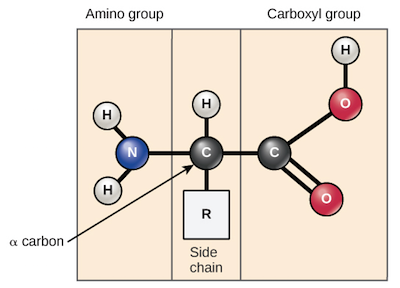
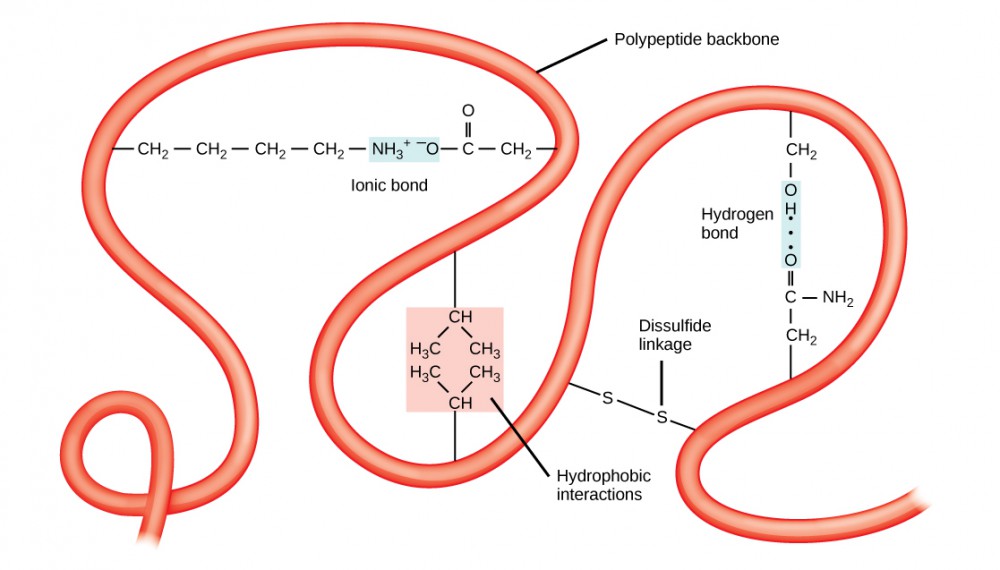
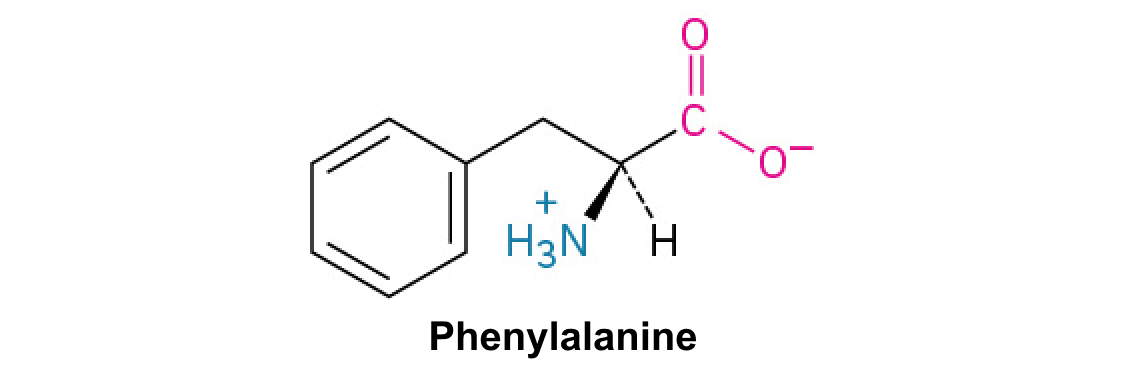
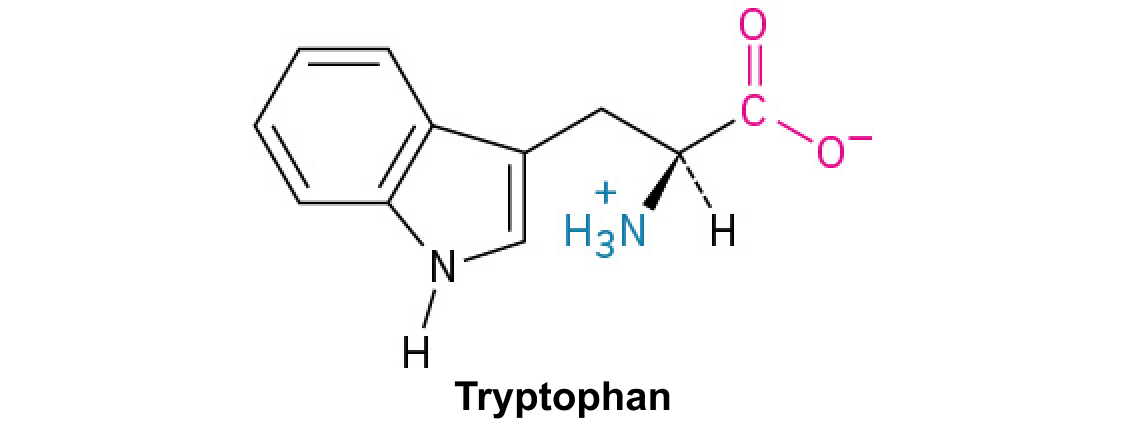
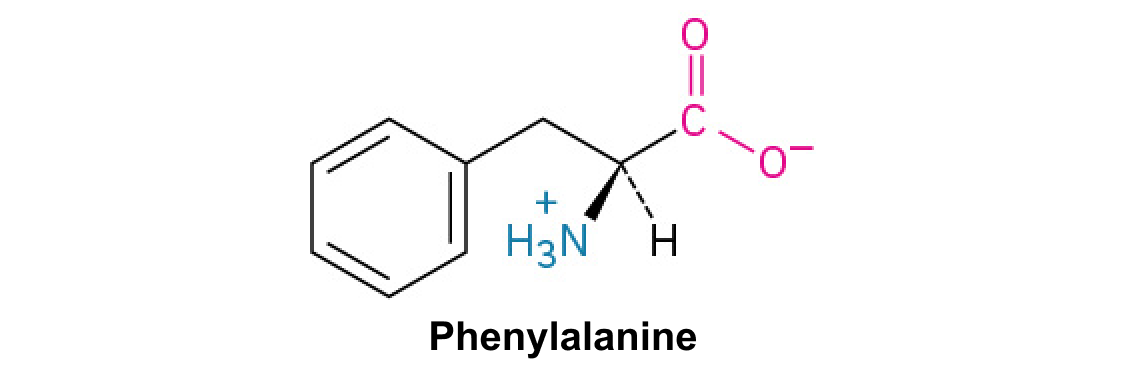
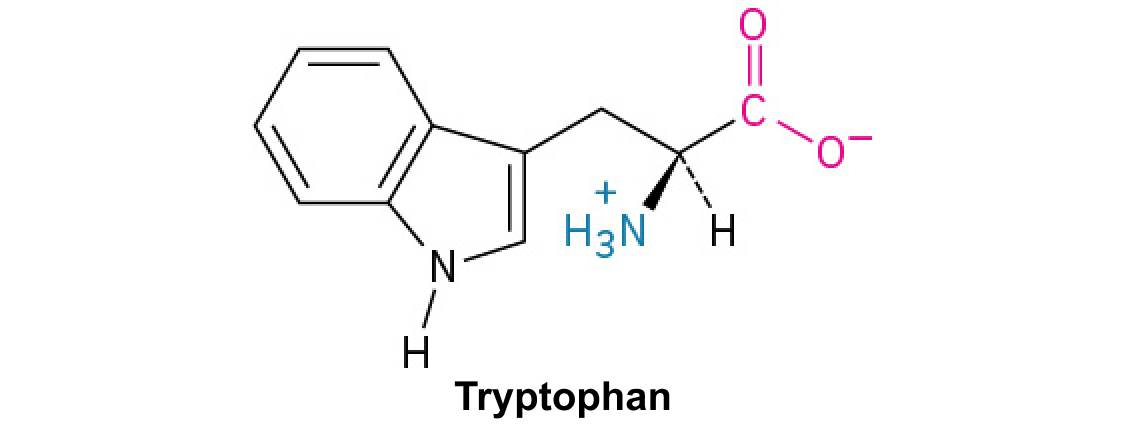
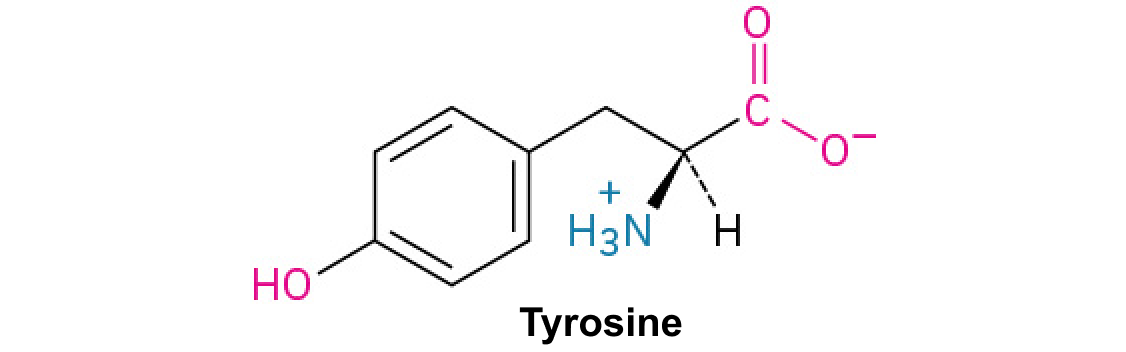
A nitrogen-containing functional group. A free amino acid’s amino group is typically protonated (NH₃⁺) near physiological pH; proline’s ring nitrogen is an exception to this formula.
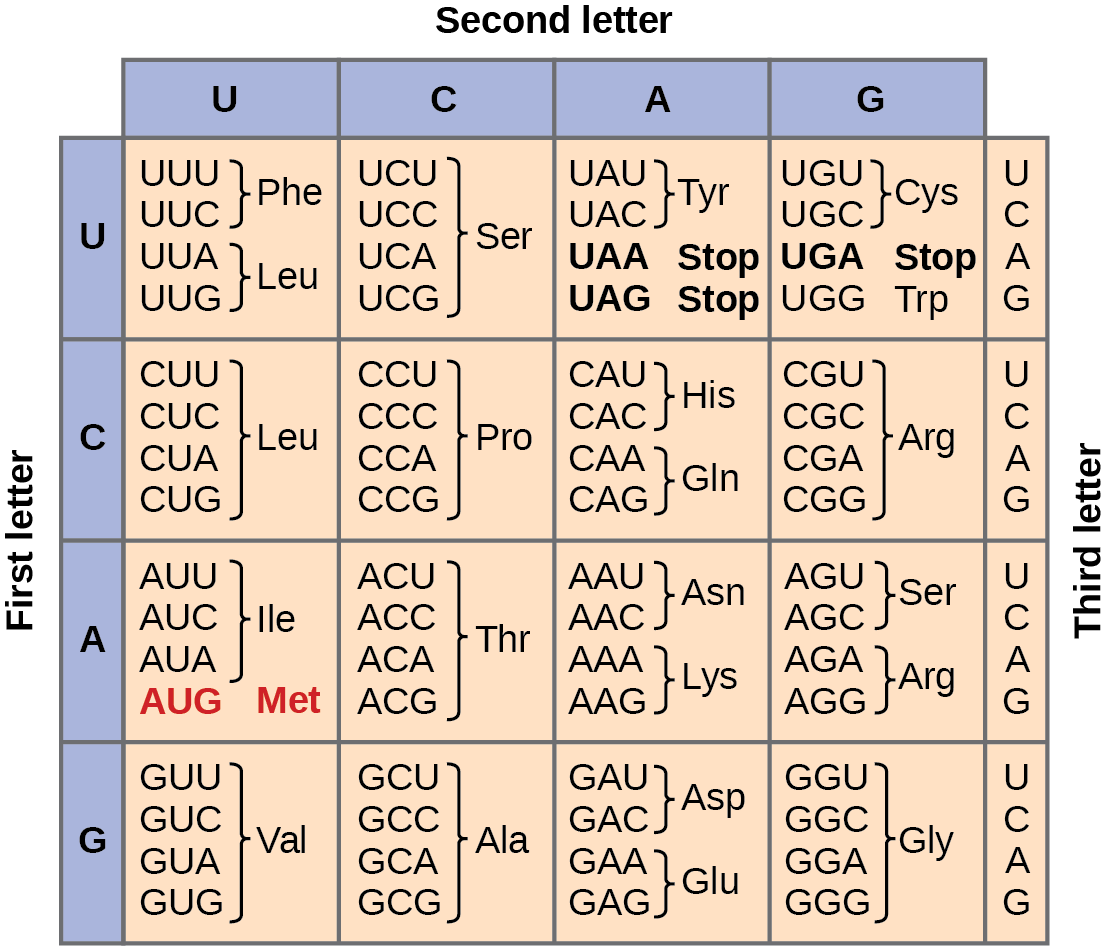
Figure 15.4 This figure shows the genetic code for translating each nucleotide triplet in mRNA into an amino acid or a termination signal in a protein. (credit: modification of work by NIH)
Figure 12.11 Cognitive dissonance is aroused by inconsistent beliefs and behaviors. Believing cigarettes are bad for your health, but smoking cigarettes anyway, can cause cognitive dissonance. To reduce cognitive dissonance, individuals can change their behavior, as in quitting smoking, or change their belief, such as discounting the evidence that smoking is harmful. (credit “cigarettes”: modification of work by CDC/Debora Cartagena; “patch”: modification of "RegBarc"/Wikimedia Commons; “smoking”: modification of work by Tim Parkinson)
Rose M. Spielman, William J. Jenkins, and Marilyn D. Lovett, Psychology 2E, OpenStax. (credit “cigarettes”: modification of work by CDC/Debora Cartagena; “patch”: modification of "RegBarc"/Wikimedia Commons; “smoking”: modification of work by Tim Parkinson) · CC BY-NC-SA 4.0
· Original image ↗ · Access for free ↗
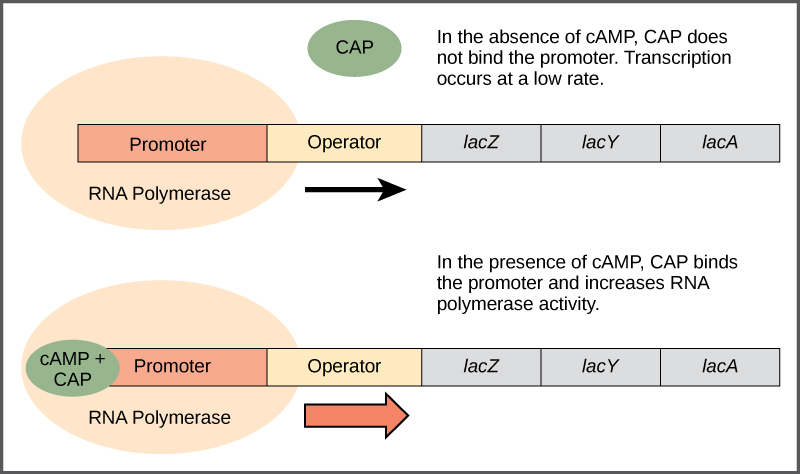
Figure 16.5 Transcriptional activation by the CAP protein. When glucose levels fall, E. coli may use other sugars for fuel but must transcribe new genes to do so. As glucose supplies become limited, cAMP levels increase. This cAMP binds to the CAP protein, a positive regulator that binds to a promoter region upstream of the genes required to use other sugar sources.
An electrical property that can be positive or negative. Opposite charges attract and like charges repel; net charge is the sum of all charges on a particle.
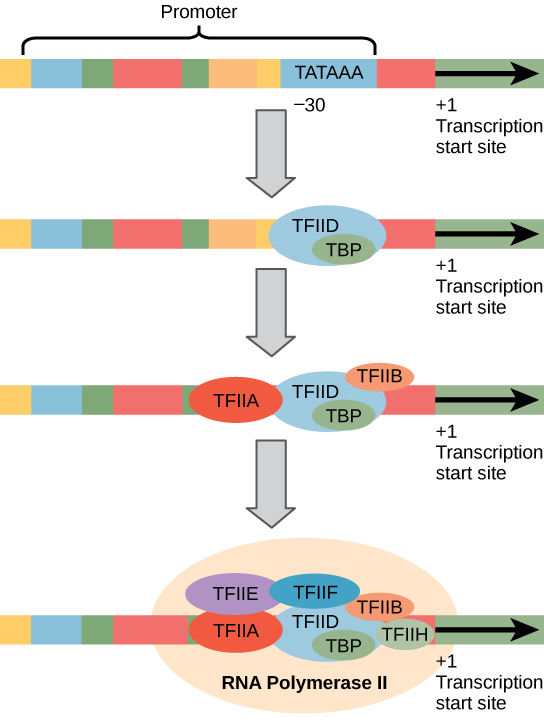
Figure 15.10 A generalized promoter of a gene transcribed by RNA polymerase II is shown. Transcription factors recognize the promoter. RNA polymerase II then binds and forms the transcription initiation complex.
The exponent needed to obtain a number from a chosen fixed number. For decimal logarithms, log₁₀(100) = 2 because 10² = 100; pH uses the negative decimal logarithm of hydrogen ion activity.
A supporting material, such as a porous gel or the solid support in a chromatography column. Its properties influence movement and binding of sample molecules.
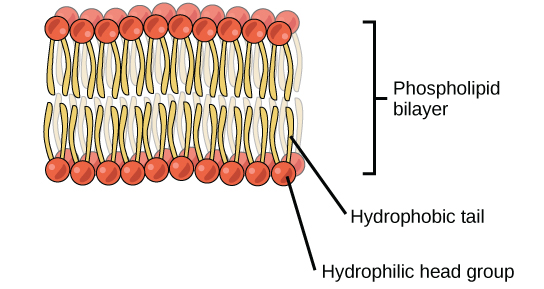
A thin boundary or sheet. Cell membranes are lipid bilayers containing proteins; blotting membranes are synthetic supports that hold proteins or nucleic acids for detection.
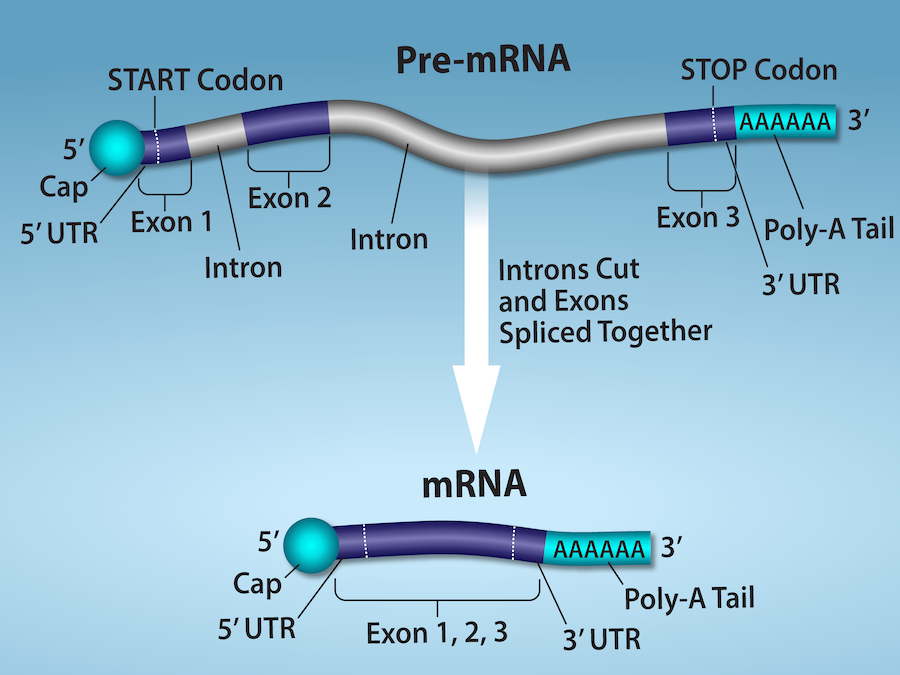
Figure 15.11 Eukaryotic pre-mRNA processing. In addition to 5’ Cap and 3’ Poly-A Tail addition, introns must be precisely removed and exons joined to generate a functional mRNA. Nucleotides upstream (towards the 5’cap) of the translation START codon are part of the 5’ untranslated region (5’ UTR). Nucleotides downstream (towards 3’end) of the STOP codon form the 3’ UTR. Both 5’ and 3’ UTRs are important for regulating translation initiation and mRNA stability. Credit: Rao, A., Ryan, K. Fletcher, S. and Tag, A. Department of Biology, Texas A&M University.
Rao, A., Ryan, K. Fletcher, S. and Tag, A. Department of Biology, Texas A&M University.; Mary Ann Clark, Matthew Douglas, and Jung Choi, Biology 2e, OpenStax. · CC BY-NC-SA 4.0
· Original image ↗ · Access for free ↗
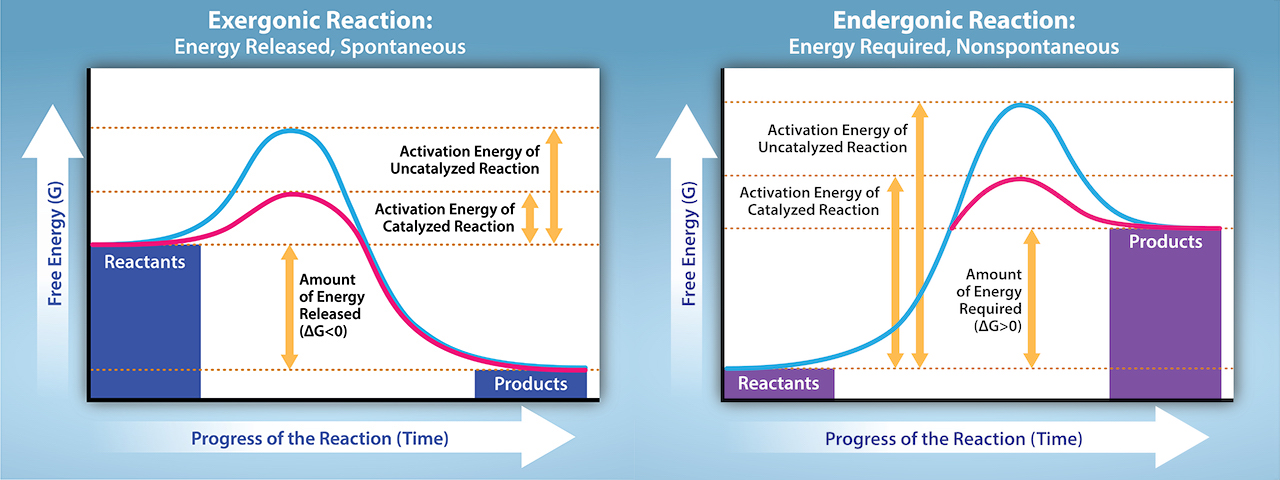
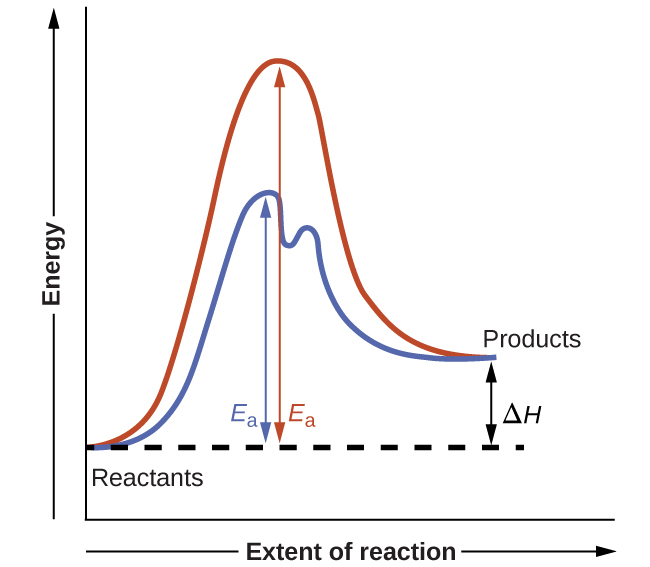
Figure 12.19 Reaction diagrams for an endothermic process in the absence (red curve) and presence (blue curve) of a catalyst. The catalyzed pathway involves a two-step mechanism (note the presence of two transition states) and an intermediate species (represented by the valley between the two transitions states).
Figure 7.45 - Non-homologous end joining (left) versus homologous recombination (right) - Wikipedia
Wikipedia, as credited by Kevin Ahern, Indira Rajagopal, and Taralyn Tan, Biochemistry Free For All, Oregon State University, via Biology LibreTexts. · Source attribution
· Original image ↗ · Access for free ↗
The amount of a substance that can dissolve in a solvent under specified conditions. Soluble means able to dissolve; insoluble means only very slightly soluble in that solvent.
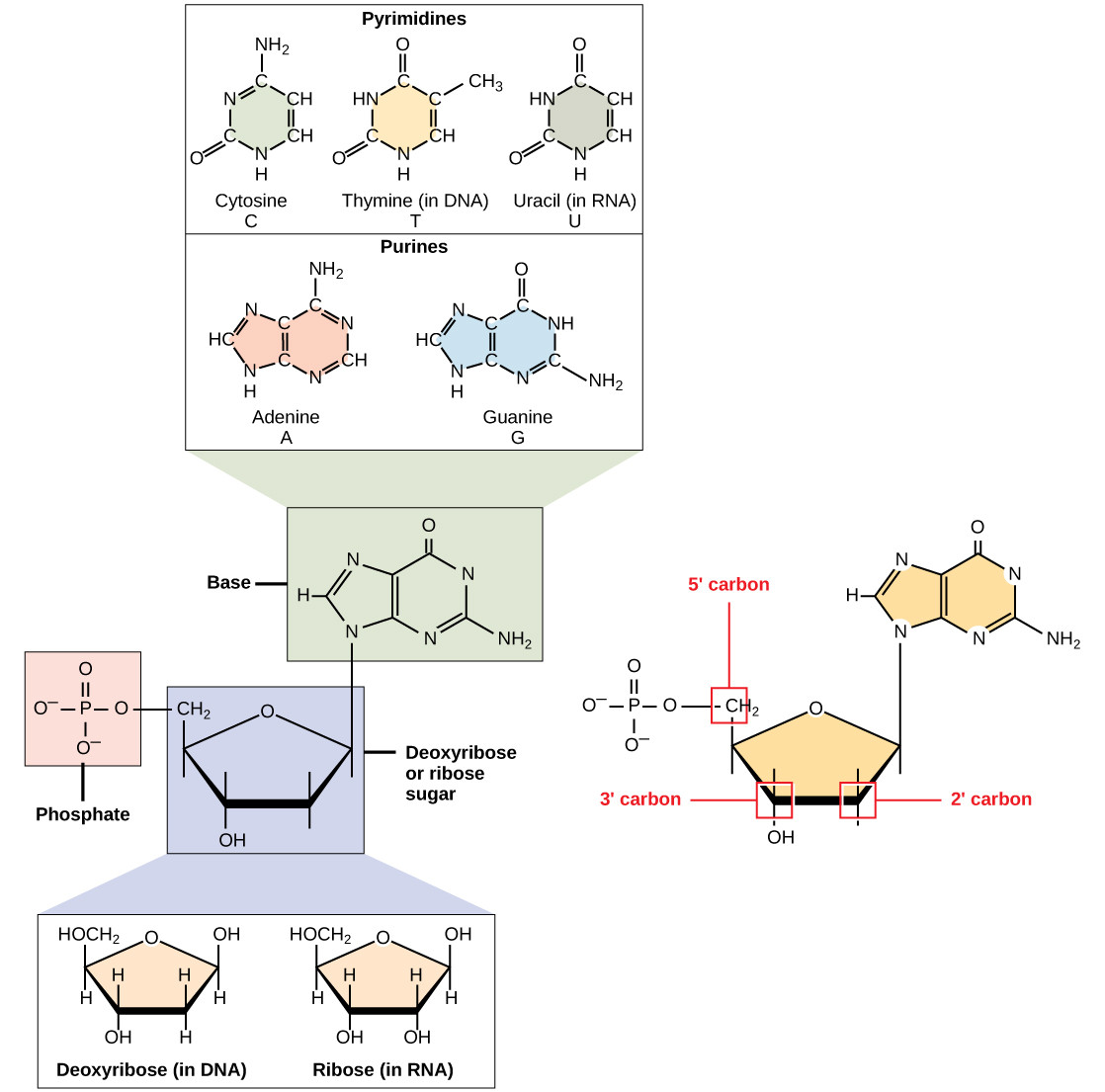
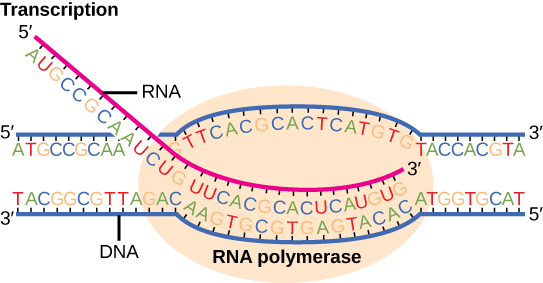
Figure 15.7 Messenger RNA is a copy of protein-coding information in the coding strand of DNA, with the substitution of U in the RNA for T in the coding sequence. However, new RNA nucleotides base pair with the nucleotides of the template strand. RNA is synthesized in its 5'-3' direction, using the enzyme RNA polymerase. As the template is read, the DNA unwinds ahead of the polymerase and then rewinds behind it.
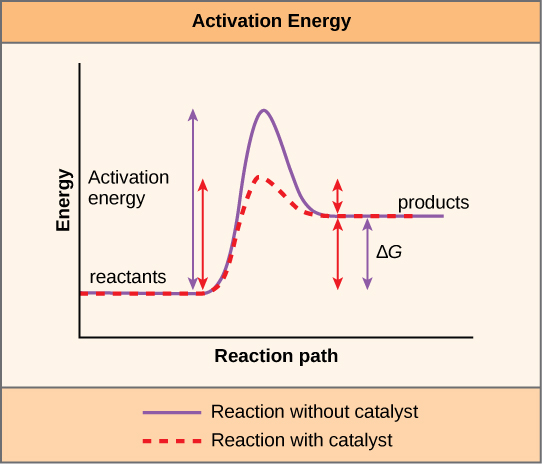
A fleeting, high-energy arrangement at a reaction barrier. It is an energy maximum along the reaction path, rather than a stable reaction intermediate.
Figure 12.19 Reaction diagrams for an endothermic process in the absence (red curve) and presence (blue curve) of a catalyst. The catalyzed pathway involves a two-step mechanism (note the presence of two transition states) and an intermediate species (represented by the valley between the two transitions states).
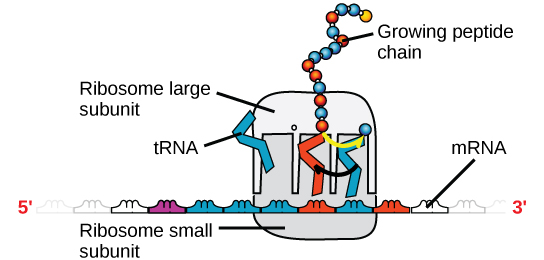
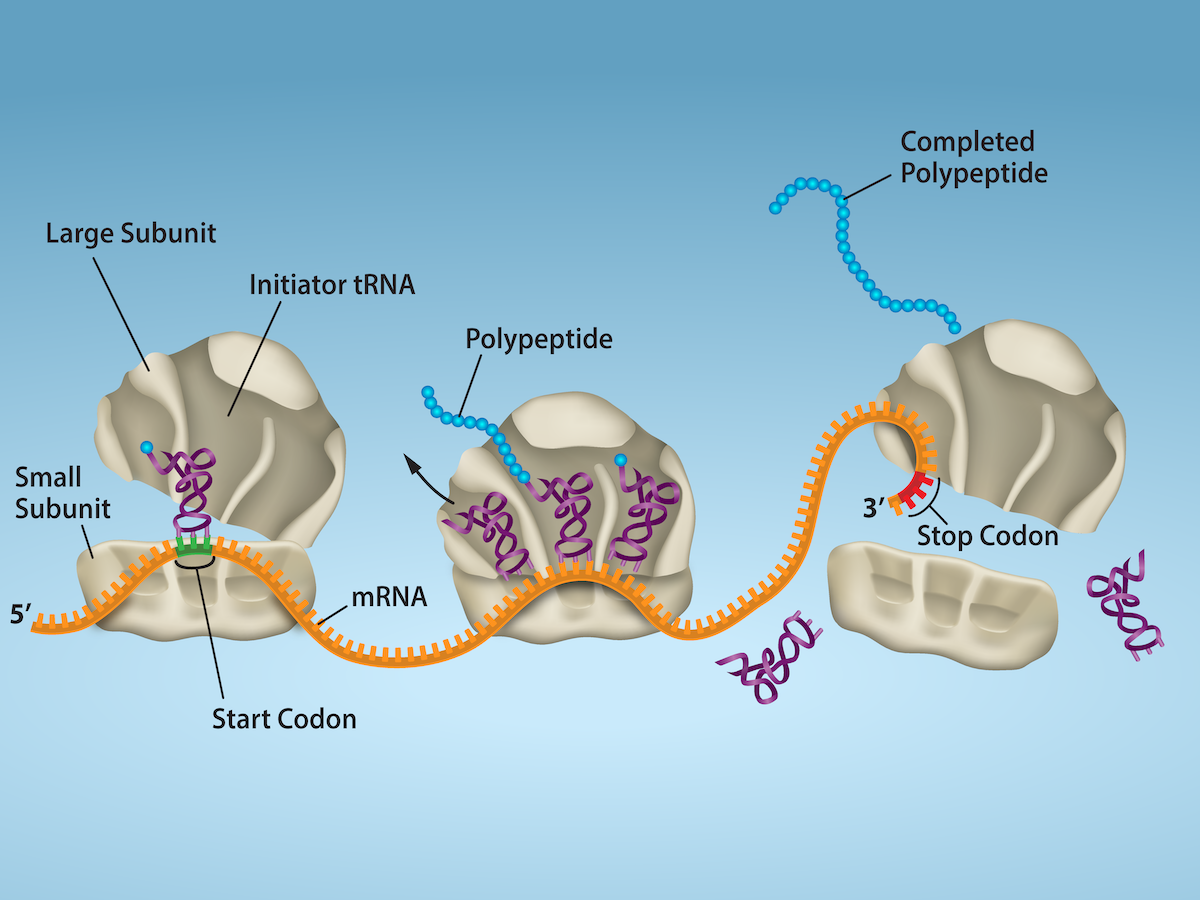
Figure 15.18 Translation begins when an initiator tRNA anticodon recognizes a start codon on mRNA bound to a small ribosomal subunit. The large ribosomal subunit joins the small subunit, and a second tRNA is recruited. As the mRNA moves relative to the ribosome, successive tRNAs move through the ribosome and the polypeptide chain is formed. Entry of a release factor into the A site terminates translation and the components dissociate.
No matching terms. Try a different name or abbreviation.
12.3 Attitudes and Persuasion
OpenStax · 12.3 Attitudes and Persuasion ↗ Instructional page including learning objectives, examples, figures, source tables and questions. Site navigation and embedded media players are omitted; source media links remain available.
Describe how people’s attitudes are internally changed through cognitive dissonance
Explain how people’s attitudes are externally changed through persuasion
Describe the peripheral and central routes to persuasion
Social psychologists have documented how the power of the situation can influence our behaviors. Now we turn to how the power of the situation can influence our attitudes and beliefs. Attitude is our evaluation of a person, an idea, or an object. We have attitudes for many things ranging from products that we might pick up in the supermarket to people around the world to political policies. Typically, attitudes are favorable or unfavorable: positive or negative (Eagly & Chaiken, 1993). And, they have three components: an affective component (feelings), a behavioral component (the effect of the attitude on behavior), and a cognitive component (belief and knowledge) (Rosenberg & Hovland, 1960).
For example, you may hold a positive attitude toward recycling. This attitude should result in positive feelings toward recycling (such as “It makes me feel good to recycle” or “I enjoy knowing that I make a small difference in reducing the amount of waste that ends up in landfills”). Certainly, this attitude should be reflected in our behavior: You actually recycle as often as you can. Finally, this attitude will be reflected in favorable thoughts (for example, “Recycling is good for the environment” or “Recycling is the responsible thing to do”).
Our attitudes and beliefs are not only influenced by external forces, but also by internal influences that we control. Like our behavior, our attitudes and thoughts are not always changed by situational pressures, but they can be consciously changed by our own free will. In this section we discuss the conditions under which we would want to change our own attitudes and beliefs.
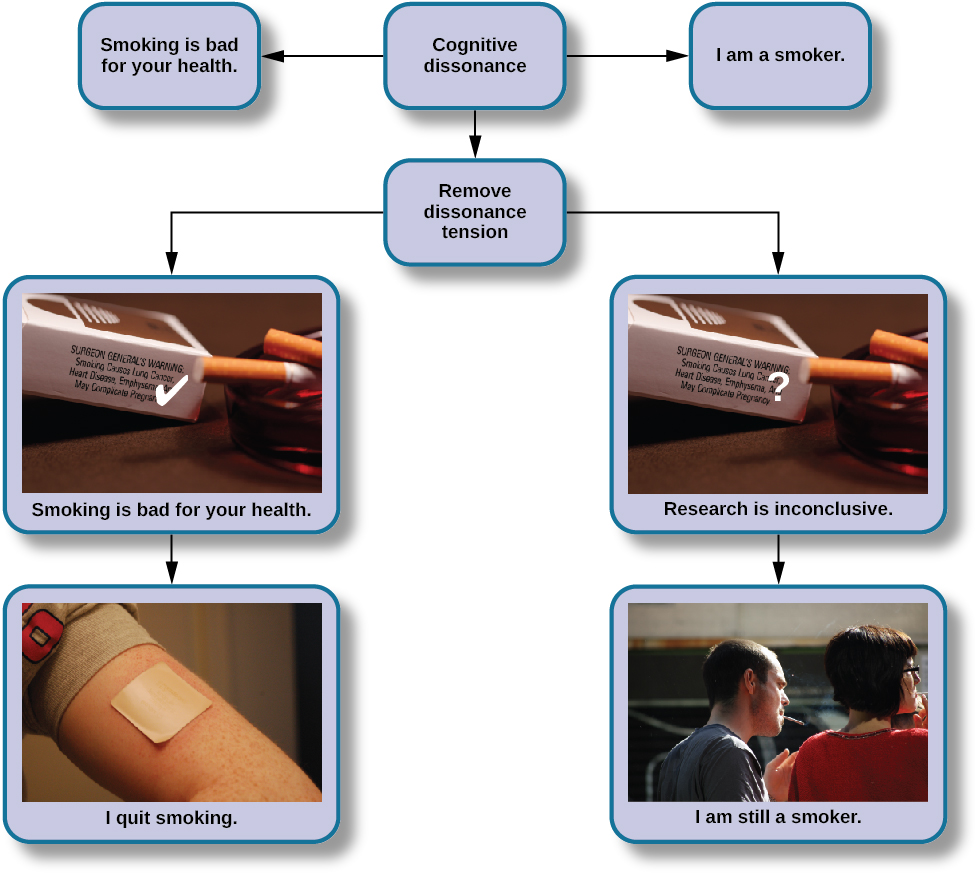
Social psychologists have documented that feeling good about ourselves and maintaining positive self-esteem is a powerful motivator of human behavior (Tavris & Aronson, 2008). In the United States, members of the predominant culture typically think very highly of themselves and view themselves as good people who are above average on many desirable traits (Ehrlinger, Gilovich, & Ross, 2005). Often, our behavior, attitudes, and beliefs are affected when we experience a threat to our self-esteem or positive self-image. Psychologist Leon Festinger (1957) defined cognitive dissonance as psychological discomfort arising from holding two or more inconsistent attitudes, behaviors, or cognitions (thoughts, beliefs, or opinions). Festinger’s theory of cognitive dissonance states that when we experience a conflict in our behaviors, attitudes, or beliefs that runs counter to our positive self-perceptions, we experience psychological discomfort (dissonance). For example, if you believe smoking is bad for your health but you continue to smoke, you experience conflict between your belief and behavior (Figure 12.11).
Figure 12.11 — 12.3 Attitudes and Persuasion
Figure 12.11 Cognitive dissonance is aroused by inconsistent beliefs and behaviors. Believing cigarettes are bad for your health, but smoking cigarettes anyway, can cause cognitive dissonance. To reduce cognitive dissonance, individuals can change their behavior, as in quitting smoking, or change their belief, such as discounting the evidence that smoking is harmful. (credit “cigarettes”: modification of work by CDC/Debora Cartagena; “patch”: modification of "RegBarc"/Wikimedia Commons; “smoking”: modification of work by Tim Parkinson)
Rose M. Spielman, William J. Jenkins, and Marilyn D. Lovett, Psychology 2E, OpenStax. (credit “cigarettes”: modification of work by CDC/Debora Cartagena; “patch”: modification of "RegBarc"/Wikimedia Commons; “smoking”: modification of work by Tim Parkinson) · CC BY-NC-SA 4.0
· Original image ↗ · Access for free ↗
Later research documented that only conflicting cognitions that threaten individuals’ positive self-image cause dissonance (Greenwald & Ronis, 1978). Additional research found that dissonance is not only psychologically uncomfortable but also can cause physiological arousal (Croyle & Cooper, 1983) and activate regions of the brain important in emotions and cognitive functioning (van Veen, Krug, Schooler, & Carter, 2009). When we experience cognitive dissonance, we are motivated to decrease it because it is psychologically, physically, and mentally uncomfortable. We can reduce cognitive dissonance by bringing our cognitions, attitudes, and behaviors in line—that is, making them harmonious. This can be done in different ways, such as:
changing our cognitions through rationalization or denial (e.g., telling ourselves that health risks can be reduced by smoking filtered cigarettes),
adding a new cognition (e.g., “Smoking suppresses my appetite so I don’t become overweight, which is good for my health.”).
A classic example of cognitive dissonance is Joaquin, a 20-year-old who enlists in the military. During boot camp he is awakened at 5:00 a.m., is chronically sleep deprived, yelled at, covered in sand flea bites, physically bruised and battered, and mentally exhausted (Figure 12.12). It gets worse. Recruits that make it to week 11 of boot camp have to do 54 hours of continuous training.
Figure 12.12 — 12.3 Attitudes and Persuasion
Figure 12.12 A person who has chosen a difficult path must deal with cognitive dissonance in addition to many other discomforts. (credit: Tyler J. Bolken)
Not surprisingly, Joaquin is miserable. No one likes to be miserable. In this type of situation, people can change their beliefs, their attitudes, or their behaviors. The last option, a change of behaviors, is not available to Joaquin. He has signed on to the military for four years, and he cannot legally leave.
If Joaquin keeps thinking about how miserable he is, it is going to be a very long four years. He will be in a constant state of cognitive dissonance. As an alternative to this misery, Joaquin can change his beliefs or attitudes. He can tell himself, “I am becoming stronger, healthier, and sharper. I am learning discipline and how to defend myself and my country. What I am doing is really important.” If this is his belief, he will realize that he is becoming stronger through his challenges. He then will feel better and not experience cognitive dissonance, which is an uncomfortable state.
The Effect of Initiation
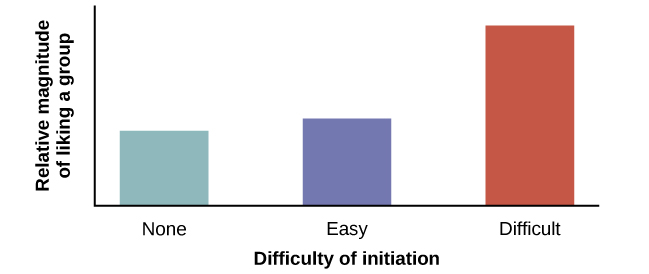
The military example demonstrates the observation that a difficult initiation into a group influences us to like the group more. Another social psychology concept, justification of effort, suggests that we value goals and achievements that we put a lot of effort into. According to this theory, if something is difficult for us to achieve, we believe it is more worthwhile. For example, if you move to an apartment and spend hours assembling a dresser you bought from Ikea, you will value that more than a fancier dresser someone else bought you. We do not want to have wasted time and effort to join a group that we eventually leave. A classic experiment by Aronson and Mills (1959) demonstrated this justification of effort effect. College students volunteered to join a campus group that would meet regularly to discuss the psychology of sex. Participants were randomly assigned to one of three conditions: no initiation, an easy initiation, and a difficult initiation into the group. After participating in the first discussion, which was deliberately made very boring, participants rated how much they liked the group. Participants who underwent a difficult initiation process to join the group rated the group more favorably than did participants with an easy initiation or no initiation (Figure 12.13).
Figure 12.13 — 12.3 Attitudes and Persuasion
Figure 12.13 Justification of effort has a distinct effect on a person liking a group. Students in the difficult initiation condition liked the group more than students in other conditions due to the justification of effort.
Similar effects can be seen in a more recent study of how student effort affects course evaluations. Heckert, Latier, Ringwald-Burton, and Drazen (2006) surveyed 463 undergraduates enrolled in courses at a midwestern university about the amount of effort that their courses required of them. In addition, the students were also asked to evaluate various aspects of the course. Given what you’ve just read, it will come as no surprise that those courses that were associated with the highest level of effort were evaluated as being more valuable than those that were not. Furthermore, students indicated that they learned more in courses that required more effort, regardless of the grades that they received in those courses (Heckert et al., 2006).
Besides the classic military example and group initiation, can you think of other examples of cognitive dissonance? Here is one: Maria and Marco live in Fairfield County, Connecticut, which is one of the wealthiest areas in the United States and has a very high cost of living. Maria telecommutes from home and Marco does not work outside of the home. They rent a very small house for more than $3000 a month. Marco shops at consignment stores for clothes and economizes when possible. They complain that they never have any money and that they cannot buy anything new. When asked why they do not move to a less expensive location, since Maria telecommutes, they respond that Fairfield County is beautiful, they love the beaches, and they feel comfortable there. How does the theory of cognitive dissonance apply to Maria and Marco’s choices?
Persuasion
In the previous section we discussed that the motivation to reduce cognitive dissonance leads us to change our attitudes, behaviors, and/or cognitions to make them consonant. Persuasion is the process of changing our attitude toward something based on some kind of communication. Much of the persuasion we experience comes from outside forces. How do people convince others to change their attitudes, beliefs, and behaviors (Figure 12.14)? What communications do you receive that attempt to persuade you to change your attitudes, beliefs, and behaviors?
Figure 12.14 — 12.3 Attitudes and Persuasion
Figure 12.14 We encounter attempts at persuasion attempts everywhere. Persuasion is not limited to formal advertising; we are confronted with it throughout our everyday world. (credit: Robert Couse-Baker)
A subfield of social psychology studies persuasion and social influence, providing us with a plethora of information on how humans can be persuaded by others.
The topic of persuasion has been one of the most extensively researched areas in social psychology (Fiske et al., 2010). During the Second World War, Carl Hovland extensively researched persuasion for the U.S. Army. After the war, Hovland continued his exploration of persuasion at Yale University. Out of this work came a model called the Yale attitude change approach, which describes the conditions under which people tend to change their attitudes. Hovland demonstrated that certain features of the source of a persuasive message, the content of the message, and the characteristics of the audience will influence the persuasiveness of a message (Hovland, Janis, & Kelley, 1953).
Features of the source of the persuasive message include the credibility of the speaker (Hovland & Weiss, 1951) and the physical attractiveness of the speaker (Eagly & Chaiken, 1975; Petty, Wegener, & Fabrigar, 1997). Thus, speakers who are credible, or have expertise on the topic, and who are deemed as trustworthy are more persuasive than less credible speakers. Similarly, more attractive speakers are more persuasive than less attractive speakers. The use of famous actors and athletes to advertise products on television and in print relies on this principle. The immediate and long term impact of the persuasion also depends, however, on the credibility of the messenger (Kumkale & Albarracín, 2004).
Features of the message itself that affect persuasion include subtlety (the quality of being important, but not obvious) (Petty & Cacioppo, 1986; Walster & Festinger, 1962); sidedness (that is, having more than one side) (Crowley & Hoyer, 1994; Igou & Bless, 2003; Lumsdaine & Janis, 1953); timing (Haugtvedt & Wegener, 1994; Miller & Campbell, 1959), and whether both sides are presented. Messages that are more subtle are more persuasive than direct messages. Arguments that occur first, such as in a debate, are more influential if messages are given back-to-back. However, if there is a delay after the first message, and before the audience needs to make a decision, the last message presented will tend to be more persuasive (Miller & Campbell, 1959).
Features of the audience that affect persuasion are attention (Albarracín & Wyer, 2001; Festinger & Maccoby, 1964), intelligence, self-esteem (Rhodes & Wood, 1992), and age (Krosnick & Alwin, 1989). In order to be persuaded, audience members must be paying attention. People with lower intelligence are more easily persuaded than people with higher intelligence; whereas people with moderate self-esteem are more easily persuaded than people with higher or lower self-esteem (Rhodes & Wood, 1992). Finally, younger adults aged 18–25 are more persuadable than older adults.
Elaboration Likelihood Model
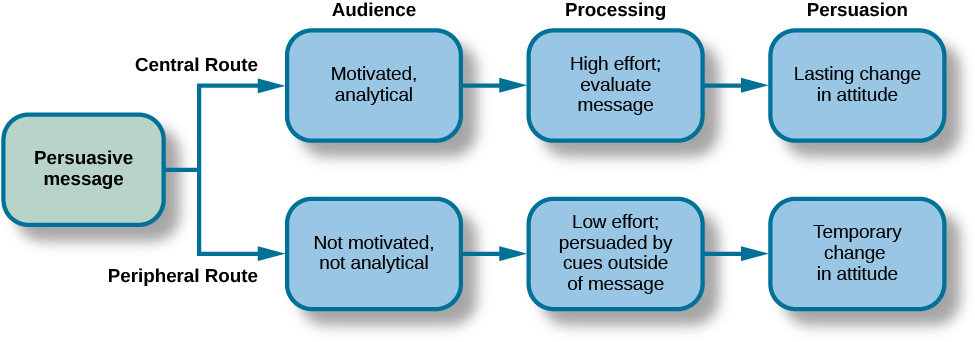
An especially popular model that describes the dynamics of persuasion is the elaboration likelihood model of persuasion (Petty & Cacioppo, 1986). The elaboration likelihood model considers the variables of the attitude change approach—that is, features of the source of the persuasive message, contents of the message, and characteristics of the audience are used to determine when attitude change will occur. According to the elaboration likelihood model of persuasion, there are two main routes that play a role in delivering a persuasive message: central and peripheral (Figure 12.15).
Figure 12.15 — 12.3 Attitudes and Persuasion
Figure 12.15 Persuasion can take one of two paths, and the durability of the end result depends on the path.
The central route is logic driven and uses data and facts to convince people of an argument’s worthiness. For example, a car company seeking to persuade you to purchase their model will emphasize the car’s safety features and fuel economy. This is a direct route to persuasion that focuses on the quality of the information. In order for the central route of persuasion to be effective in changing attitudes, thoughts, and behaviors, the argument must be strong and, if successful, will result in lasting attitude change.
The central route to persuasion works best when the target of persuasion, or the audience, is analytical and willing to engage in processing of the information. From an advertiser’s perspective, what products would be best sold using the central route to persuasion? What audience would most likely be influenced to buy the product? One example is buying a computer. It is likely, for example, that small business owners might be especially influenced by the focus on the computer’s quality and features such as processing speed and memory capacity.
The peripheral route is an indirect route that uses peripheral cues to associate positivity with the message (Petty & Cacioppo, 1986). Instead of focusing on the facts and a product’s quality, the peripheral route relies on association with positive characteristics such as positive emotions and celebrity endorsement. For example, having a popular athlete advertise athletic shoes is a common method used to encourage young adults to purchase the shoes. This route to attitude change does not require much effort or information processing. This method of persuasion may promote positivity toward the message or product, but it typically results in less permanent attitude or behavior change. The audience does not need to be analytical or motivated to process the message. In fact, a peripheral route to persuasion may not even be noticed by the audience, for example in the strategy of product placement. Product placement refers to putting a product with a clear brand name or brand identity in a TV show or movie to promote the product (Gupta & Lord, 1998). For example, one season of the reality series American Idol prominently showed the panel of judges drinking out of cups that displayed the Coca-Cola logo. What other products would be best sold using the peripheral route to persuasion? Another example is clothing: A retailer may focus on celebrities that are wearing the same style of clothing.
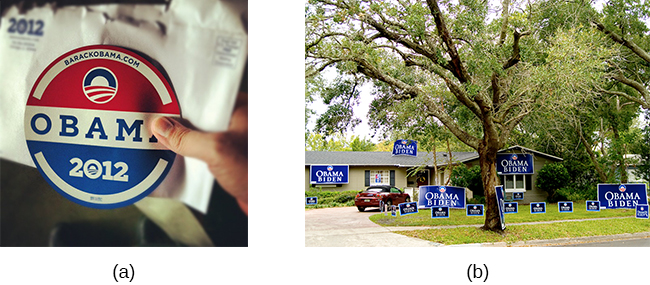
Researchers have tested many persuasion strategies that are effective in selling products and changing people’s attitude, ideas, and behaviors. One effective strategy is the foot-in-the-door technique (Cialdini, 2001; Pliner, Hart, Kohl, & Saari, 1974). Using the foot-in-the-door technique, the persuader gets a person to agree to bestow a small favor or to buy a small item, only to later request a larger favor or purchase of a bigger item. The foot-in-the-door technique was demonstrated in a study by Freedman and Fraser (1966) in which participants who agreed to post a small sign in their yard or sign a petition were more likely to agree to put a large sign in their yard than people who did not first receive the small request (Figure 12.16). Research on this technique also illustrates the principle of consistency (Cialdini, 2001): Our past behavior often directs our future behavior, and we have a desire to maintain consistency once we have committed to a behavior.
Figure 12.16 — 12.3 Attitudes and Persuasion
Figure 12.16 With the foot-in-the-door technique, getting someone to agree to a small request such as (a) wearing a campaign button can make them more likely to agree to a larger request, such as (b) putting campaigns signs in your yard. (credit a: modification of work by Joe Crawford; credit b: modification of work by "shutterblog"/Flickr)
Rose M. Spielman, William J. Jenkins, and Marilyn D. Lovett, Psychology 2E, OpenStax. (credit a: modification of work by Joe Crawford; credit b: modification of work by "shutterblog"/Flickr) · CC BY-NC-SA 4.0
· Original image ↗ · Access for free ↗
A common application of foot-in-the-door is when teens ask their parents for a small permission (for example, extending curfew by a half hour) and then asking them for something larger. Having granted the smaller request increases the likelihood that parents will acquiesce to the later, larger request.
How would a store owner use the foot-in-the-door technique to sell you an expensive product? For example, say that you are buying the latest model smartphone, and the salesperson suggests you purchase the best data plan. You agree to this. The salesperson then suggests a bigger purchase—the three-year extended warranty. After agreeing to the smaller request, you are more likely to also agree to the larger request. You may have encountered this if you have bought a car. When salespeople realize that a buyer intends to purchase a certain model, they might try to get the customer to pay for many or most available options on the car. Another example of the foot-in-the-door technique would be applied to an individual in the market for a used car who decides to buy a fully loaded new car. Why? Because the salesperson convinced the buyer that they need a car that has all of the safety features that were not available in the used car.
11.4 Learning Approaches
OpenStax · 11.4 Learning Approaches ↗ Instructional page including learning objectives, examples, figures, source tables and questions. Site navigation and embedded media players are omitted; source media links remain available.
Learning Objectives
By the end of this section, you will be able to:
Describe the behaviorist perspective on personality
Describe the cognitive perspective on personality
Describe the social cognitive perspective on personality
In contrast to the psychodynamic approaches of Freud and the neo-Freudians, which relate personality to inner (and hidden) processes, the learning approaches focus only on observable behavior. This illustrates one significant advantage of the learning approaches over psychodynamics: Because learning approaches involve observable, measurable phenomena, they can be scientifically tested.
The Behavioral Perspective
Behaviorists do not believe in biological determinism: They do not see personality traits as inborn. Instead, they view personality as significantly shaped by the reinforcements and consequences outside of the organism. In other words, people behave in a consistent manner based on prior learning. B. F. Skinner, a strict behaviorist, believed that environment was solely responsible for all behavior, including the enduring, consistent behavior patterns studied by personality theorists.
As you may recall from your study on the psychology of learning, Skinner proposed that we demonstrate consistent behavior patterns because we have developed certain response tendencies (Skinner, 1953). In other words, we learn to behave in particular ways. We increase the behaviors that lead to positive consequences, and we decrease the behaviors that lead to negative consequences. Skinner disagreed with Freud’s idea that personality is fixed in childhood. He argued that personality develops over our entire life, not only in the first few years. Our responses can change as we come across new situations; therefore, we can expect more variability over time in personality than Freud would anticipate. For example, consider a young woman, Greta, a risk taker. She drives fast and participates in dangerous sports such as hang gliding and kiteboarding. But after she gets married and has children, the system of reinforcements and punishments in her environment changes. Speeding and extreme sports are no longer reinforced, so she no longer engages in those behaviors. In fact, Greta now describes herself as a cautious person.
The Social-Cognitive Perspective
Albert Bandura agreed with Skinner that personality develops through learning. He disagreed, however, with Skinner’s strict behaviorist approach to personality development, because he felt that thinking and reasoning are important components of learning. He presented a social-cognitive theory of personality that emphasizes both learning and cognition as sources of individual differences in personality. In social-cognitive theory, the concepts of reciprocal determinism, observational learning, and self-efficacy all play a part in personality development.
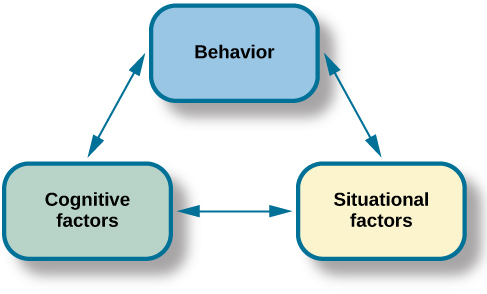
In contrast to Skinner’s idea that the environment alone determines behavior, Bandura (1990) proposed the concept of reciprocal determinism, in which cognitive processes, behavior, and context all interact, each factor influencing and being influenced by the others simultaneously (Figure 11.10). Cognitive processes refer to all characteristics previously learned, including beliefs, expectations, and personality characteristics. Behavior refers to anything that we do that may be rewarded or punished. Finally, the context in which the behavior occurs refers to the environment or situation, which includes rewarding/punishing stimuli.
Figure 11.10 — 11.4 Learning Approaches
Figure 11.10 Bandura proposed the idea of reciprocal determinism: Our behavior, cognitive processes, and situational context all influence each other.
Consider, for example, that you’re at a festival and one of the attractions is bungee jumping from a bridge. Do you do it? In this example, the behavior is bungee jumping. Cognitive factors that might influence this behavior include your beliefs and values, and your past experiences with similar behaviors. Finally, context refers to the reward structure for the behavior. According to reciprocal determinism, all of these factors are in play.
Bandura’s key contribution to learning theory was the idea that much learning is vicarious. We learn by observing someone else’s behavior and its consequences, which Bandura called observational learning. He felt that this type of learning also plays a part in the development of our personality. Just as we learn individual behaviors, we learn new behavior patterns when we see them performed by other people or models. Drawing on the behaviorists’ ideas about reinforcement, Bandura suggested that whether we choose to imitate a model’s behavior depends on whether we see the model reinforced or punished. Through observational learning, we come to learn what behaviors are acceptable and rewarded in our culture, and we also learn to inhibit deviant or socially unacceptable behaviors by seeing what behaviors are punished.
We can see the principles of reciprocal determinism at work in observational learning. For example, personal factors determine which behaviors in the environment a person chooses to imitate, and those environmental events in turn are processed cognitively according to other personal factors. One person may experience receiving attention as reinforcing, and that person may be more inclined to imitate behaviors such as boasting when a model has been reinforced. For others, boasting may be viewed negatively, despite the attention that might result—or receiving heightened attention may be perceived as being scrutinized. In either case, the person may be less likely to imitate those behaviors even though the reasons for not doing so would be different.
Bandura (1977, 1995) has studied a number of cognitive and personal factors that affect learning and personality development, and most recently has focused on the concept of self-efficacy. Self-efficacy is our level of confidence in our own abilities, developed through our social experiences. Self-efficacy affects how we approach challenges and reach goals. In observational learning, self-efficacy is a cognitive factor that affects which behaviors we choose to imitate as well as our success in performing those behaviors.
People who have high self-efficacy believe that their goals are within reach, have a positive view of challenges seeing them as tasks to be mastered, develop a deep interest in and strong commitment to the activities in which they are involved, and quickly recover from setbacks. Conversely, people with low self-efficacy avoid challenging tasks because they doubt their ability to be successful, tend to focus on failure and negative outcomes, and lose confidence in their abilities if they experience setbacks. Feelings of self-efficacy can be specific to certain situations. For instance, a student might feel confident in her ability in English class but much less so in math class.
Julian Rotter (1966) proposed the concept of locus of control, another cognitive factor that affects learning and personality development. Distinct from self-efficacy, which involves our belief in our own abilities, locus of control refers to our beliefs about the power we have over our lives. In Rotter’s view, people possess either an internal or an external locus of control (Figure 11.11). Those of us with an internal locus of control (“internals”) tend to believe that most of our outcomes are the direct result of our efforts. Those of us with an external locus of control (“externals”) tend to believe that our outcomes are outside of our control. Externals see their lives as being controlled by other people, luck, or chance. For example, say you didn’t spend much time studying for your psychology test and went out to dinner with friends instead. When you receive your test score, you see that you earned a D. If you possess an internal locus of control, you would most likely admit that you got a D because you didn’t spend enough time studying and decide to study more for the next test. On the other hand, if you possess an external locus of control, you might conclude that the test was too hard and not bother studying for the next test, because you figure you will get a bad grade anyway. Researchers have found that people with an internal locus of control perform better academically, achieve more in their careers, are more independent, are healthier, are better able to cope, and are less depressed than people who have an external locus of control (Benassi, Sweeney, & Durfour, 1988; Lefcourt, 1982; Maltby, Day, & Macaskill, 2007; Whyte, 1977, 1978, 1980).
Figure 11.11 — 11.4 Learning Approaches
Figure 11.11 Locus of control occurs on a continuum from internal to external.
Walter Mischel was a student of Julian Rotter and taught for years at Stanford, where he was a colleague of Albert Bandura. Mischel surveyed several decades of empirical psychological literature regarding trait prediction of behavior, and his conclusion shook the foundations of personality psychology. Mischel found that the data did not support the central principle of the field—that a person’s personality traits are consistent across situations. His report triggered a decades-long period of self-examination, known as the person-situation debate, among personality psychologists.
Mischel suggested that perhaps we were looking for consistency in the wrong places. He found that although behavior was inconsistent across different situations, it was much more consistent within situations—so that a person’s behavior in one situation would likely be repeated in a similar one. And as you will see next regarding his famous “marshmallow test,” Mischel also found that behavior is consistent in equivalent situations across time.
One of Mischel’s most notable contributions to personality psychology was his ideas on self-regulation. According to Lecci & Magnavita (2013), “Self-regulation is the process of identifying a goal or set of goals and, in pursuing these goals, using both internal (e.g., thoughts and affect) and external (e.g., responses of anything or anyone in the environment) feedback to maximize goal attainment” (p. 6.3). Self-regulation is also known as will power. When we talk about will power, we tend to think of it as the ability to delay gratification. For example, Bettina’s teenage son made strawberry cupcakes, and they looked delicious. However, Bettina forfeited the pleasure of eating one, because she is training for a 5K race and wants to be fit and do well in the race. Would you be able to resist getting a small reward now in order to get a larger reward later? This is the question Mischel investigated in his now-classic marshmallow test.
Mischel designed a study to assess self-regulation in young children. In the marshmallow study, Mischel and his colleagues placed a preschool child in a room with one marshmallow on the table. The children were told they could either eat the marshmallow now, or wait until the researcher returned to the room, and then they could have two marshmallows (Mischel, Ebbesen & Raskoff, 1972). This was repeated with hundreds of preschoolers. What Mischel and his team found was that young children differ in their degree of self-control. Mischel and his colleagues continued to follow this group of preschoolers through high school, and what do you think they discovered? The children who had more self-control in preschool (the ones who waited for the bigger reward) were more successful in high school. They had higher SAT scores, had positive peer relationships, and were less likely to have substance abuse issues; as adults, they also had more stable marriages (Mischel, Shoda, & Rodriguez, 1989; Mischel et al., 2010). On the other hand, those children who had poor self-control in preschool (the ones who grabbed the one marshmallow) were not as successful in high school, and they were found to have academic and behavioral problems. A more recent study using a larger and more representative sample found associations between early delay of gratification (Watts, Duncan, & Quan, 2018) and measures of achievement in adolescence. However, researchers also found that the associations were not as strong as those reported during Mischel's initial experiment and were quite sensitive to situational factors such as early measures of cognitive capacity, family background, and home environment. This research suggests that consideration of situational factors is important to better understand behavior.
Today, the debate is mostly resolved, and most psychologists consider both the situation and personal factors in understanding behavior. For Mischel (1993), people are situation processors. The children in the marshmallow test each processed, or interpreted, the rewards structure of that situation in their own way. Mischel’s approach to personality stresses the importance of both the situation and the way the person perceives the situation. Instead of behavior being determined by the situation, people use cognitive processes to interpret the situation and then behave in accordance with that interpretation.