Habituation is reduced behavioral responding after repeated presentation of a stimulus without an important consequence. It is learning about one stimulus rather than an association between two events. Dishabituation is renewed responding to the original stimulus after a novel or strong intervening event. Sensitization instead increases responsiveness after strong or repeated stimulation. Sensory adaptation occurs at sensory processing stages during sustained input; fatigue reflects reduced ability to respond. Recovery after a novel stimulus helps distinguish habituation from an exhausted response system. A declining startle response does not by itself reveal which mechanism occurred; test stimulus specificity and recovery.
Worked question. A harmless tone evokes progressively less orienting. A novel flash is presented, then the same tone again evokes strong orienting. What does the recovery suggest?
The pattern supports habituation followed by dishabituation. The capacity to respond is still present, arguing against simple motor fatigue. Include an unchanged control sequence to show that recovery follows the novel event rather than merely the passage of time. A receptor’s reduced firing during continuous stimulation would instead directly support sensory adaptation.
Figure 6.2 In operant conditioning, a response is associated with a consequence. This dog has learned that certain behaviors result in receiving a treat. (credit: Crystal Rolfe)
Figure 5.3 Nearly one third of participants in a study did not notice that a red cross passed on the screen because their attention was focused on the black or white figures. (credit: Cory Zanker)
Rose M. Spielman, William J. Jenkins, and Marilyn D. Lovett, Psychology 2E, OpenStax. (credit: Cory Zanker) · CC BY-NC-SA 4.0
· Original image ↗ · Access for free ↗Figure 5.4 — 5.1 Sensation versus Perception
Figure 5.4 In the Müller-Lyer illusion, lines appear to be different lengths although they are identical. (a) Arrows at the ends of lines may make the line on the right appear longer, although the lines are the same length. (b) When applied to a three-dimensional image, the line on the right again may appear longer although both black lines are the same length.
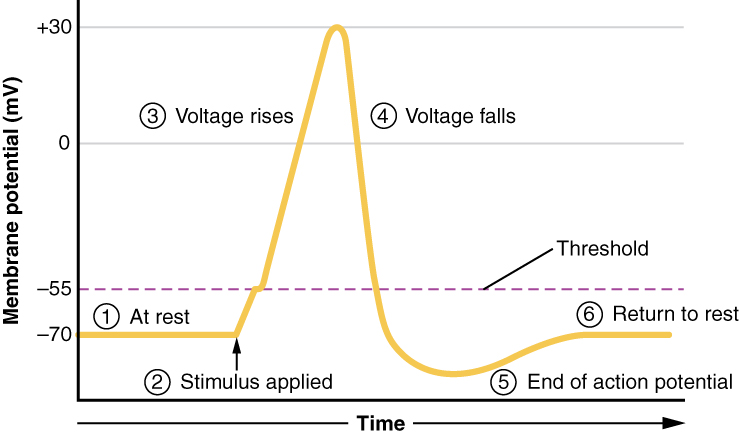
Figure 12.24 Stages of an Action Potential Plotting voltage measured across the cell membrane against time, the events of the action potential can be related to specific changes in the membrane voltage. (1) At rest, the membrane voltage is -70 mV. (2) The membrane begins to depolarize when an external stimulus is applied. (3) The membrane voltage begins a rapid rise toward +30 mV. (4) The membrane voltage starts to return to a negative value. (5) Repolarization continues past the resting membrane voltage, resulting in hyperpolarization. (6) The membrane voltage returns to the resting value shortly after hyperpolarization.
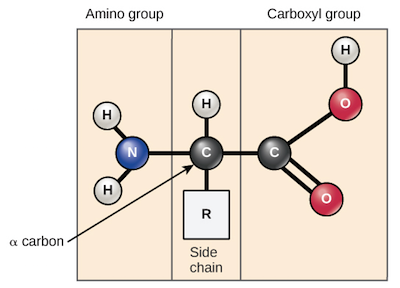
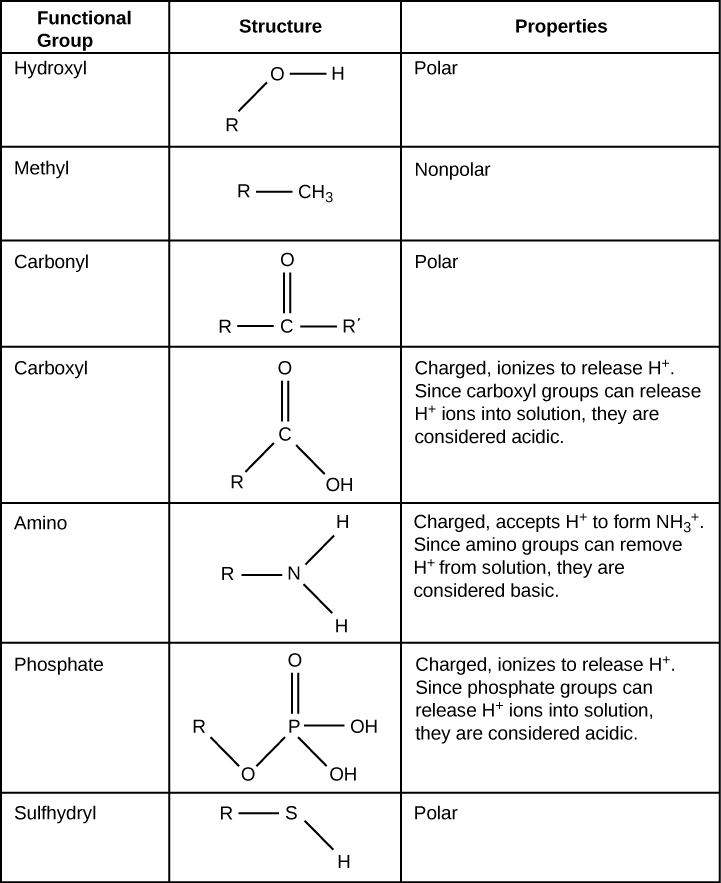
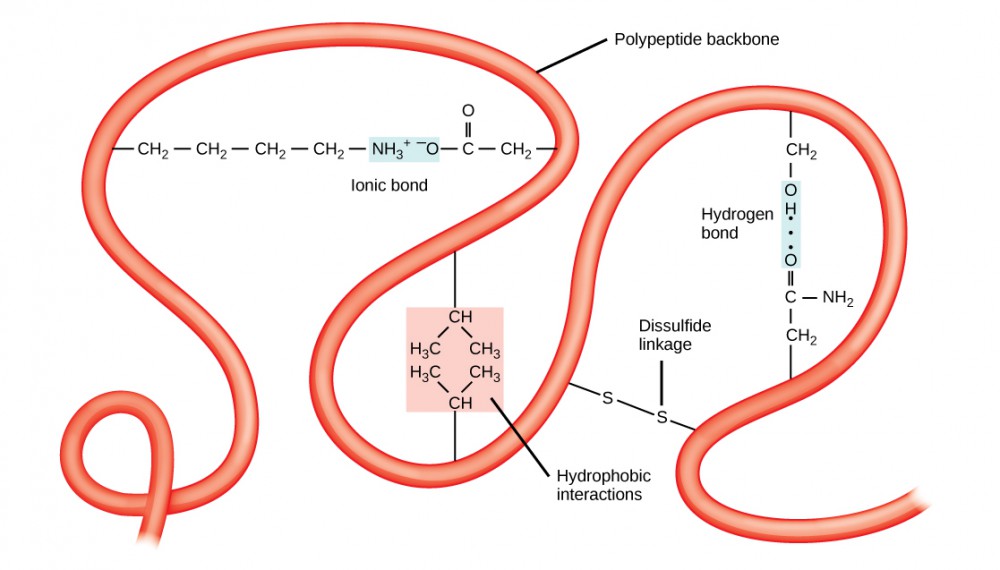
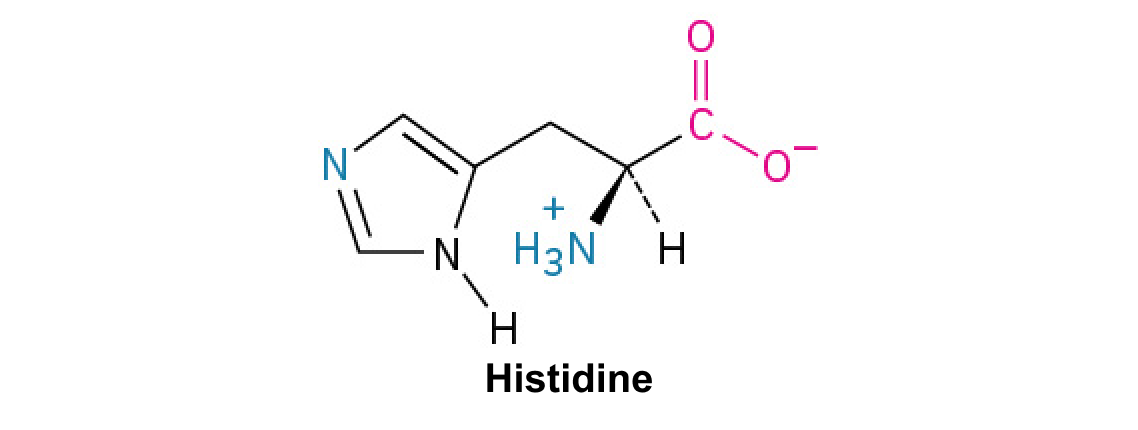
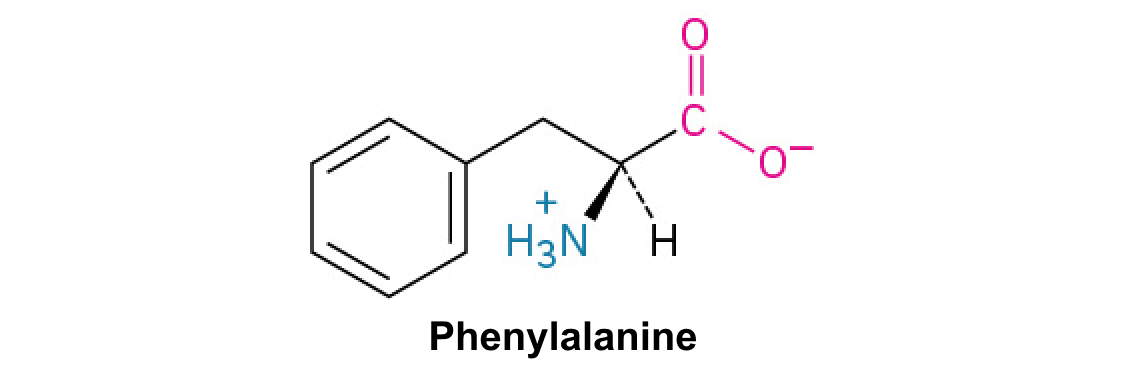
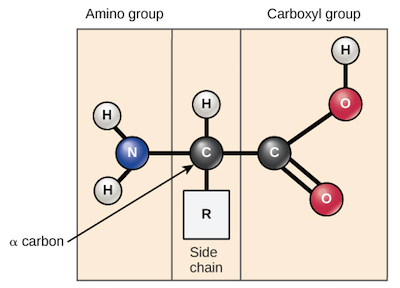
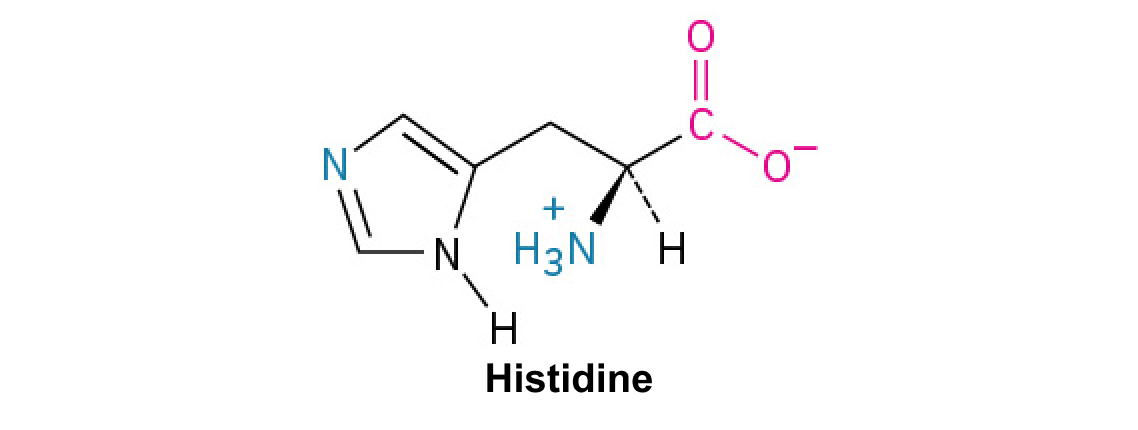
A nitrogen-containing functional group. A free amino acid’s amino group is typically protonated (NH₃⁺) near physiological pH; proline’s ring nitrogen is an exception to this formula.
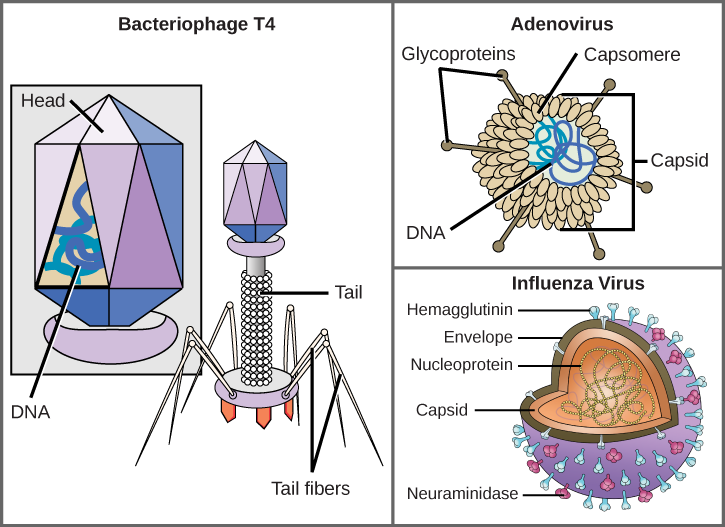
Figure 21.5 Complex Viruses. Viruses can be either complex or relatively simple in shape. This figure shows three relatively complex virions: the bacteriophage T4, with its DNA-containing head group and tail fibers that attach to host cells; adenovirus, which uses spikes from its capsid to bind to host cells; and the influenza virus, which uses glycoproteins embedded in its envelope to bind to host cells. The influenza virus also has matrix proteins, internal to the envelope, which help stabilize the virion’s shape. (credit “bacteriophage, adenovirus”: modification of work by NCBI, NIH; credit "influenza virus": modification of work by Dan Higgins, Centers for Disease Control and Prevention)
Mary Ann Clark, Matthew Douglas, and Jung Choi, Biology 2E, OpenStax. (credit “bacteriophage, adenovirus”: modification of work by NCBI, NIH; credit "influenza virus": modification of work by Dan Higgins, Centers for Disease Control and Prevention) · CC BY-NC-SA 4.0
· Original image ↗ · Access for free ↗
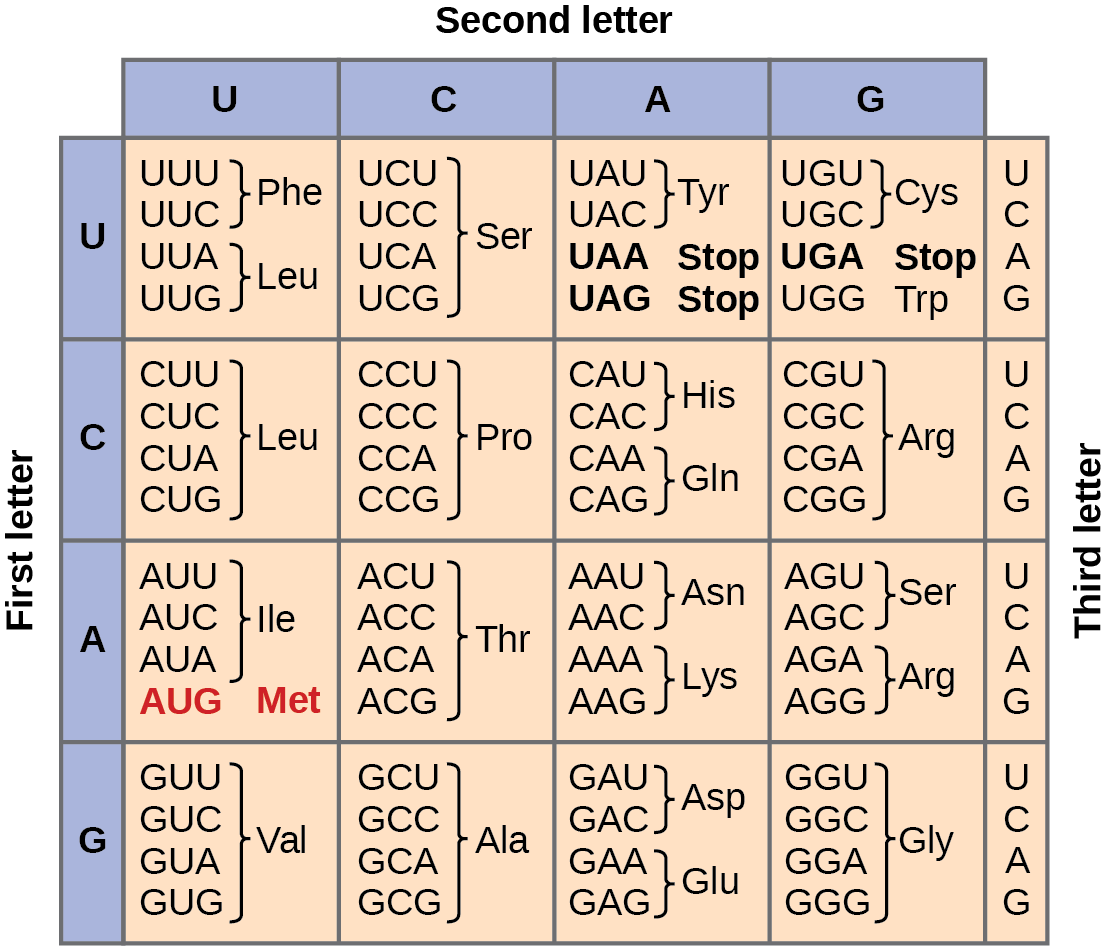
Figure 15.4 This figure shows the genetic code for translating each nucleotide triplet in mRNA into an amino acid or a termination signal in a protein. (credit: modification of work by NIH)
The stimulus difference meeting a specified discrimination criterion, often described as noticed on half the trials in introductory yes/no procedures; forced-choice accuracy uses a criterion above chance.
An electrical property that can be positive or negative. Opposite charges attract and like charges repel; net charge is the sum of all charges on a particle.
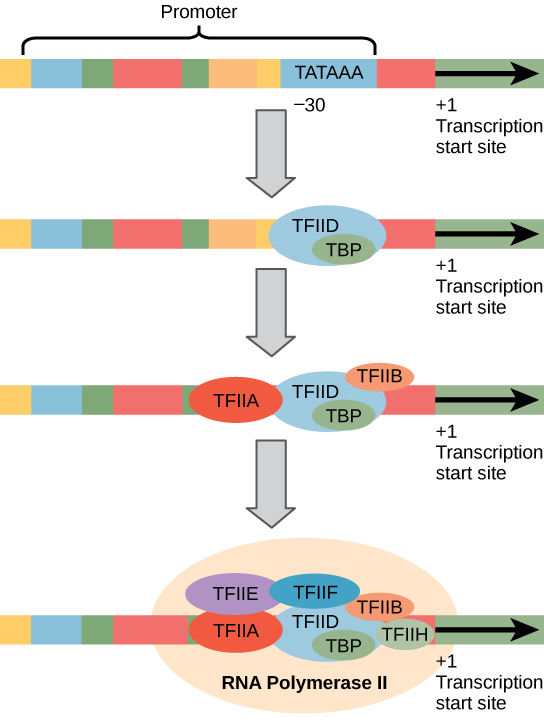
Figure 15.10 A generalized promoter of a gene transcribed by RNA polymerase II is shown. Transcription factors recognize the promoter. RNA polymerase II then binds and forms the transcription initiation complex.
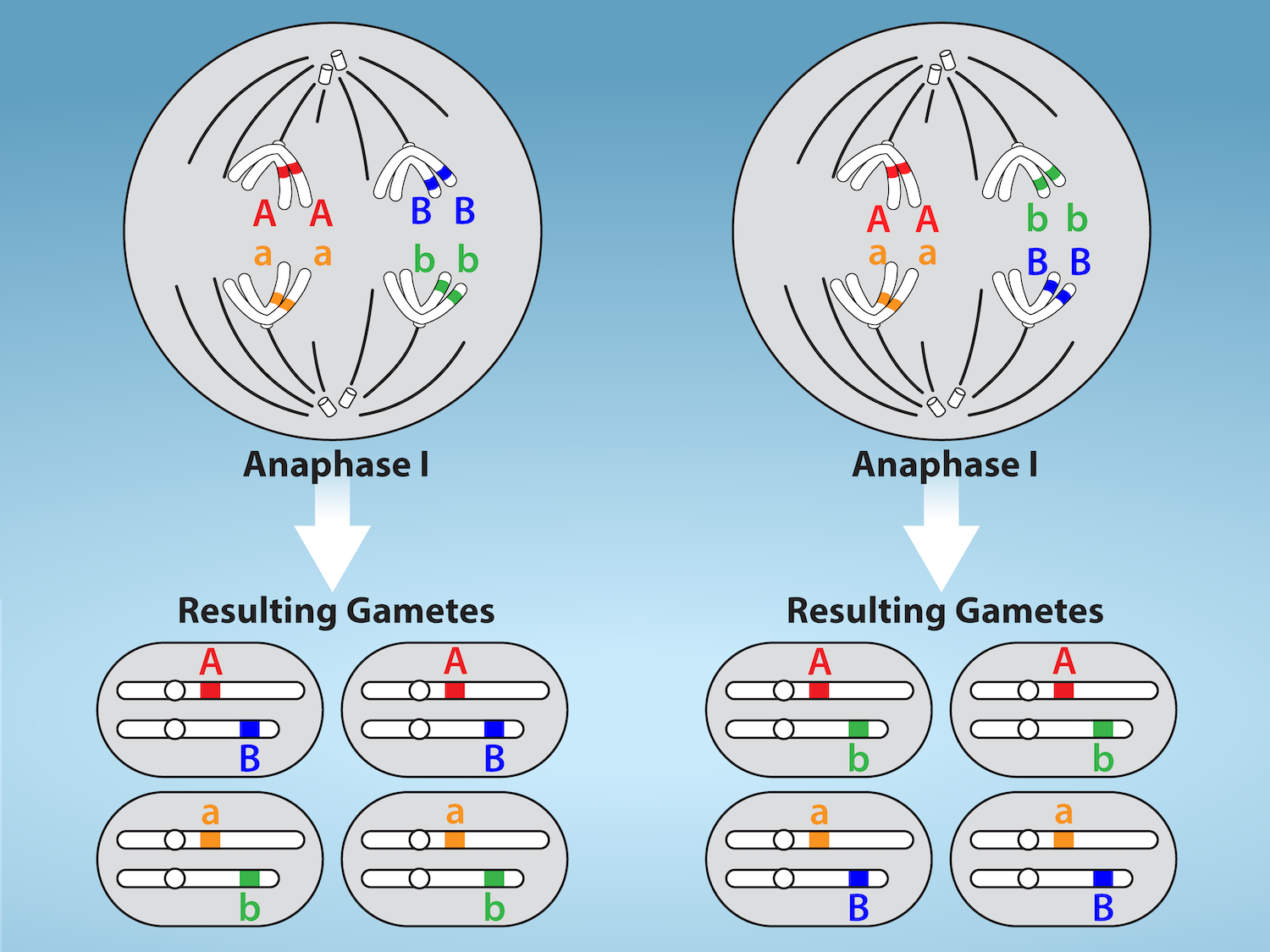
Figure 11.5 Random, independent assortment during metaphase I is demonstrated by considering a cell with a set of two chromosomes (n = 2).
There are two possible homologous chromosome arrangements at the equatorial plane in metaphase I, that are then separated during anaphase I.
The total possible number of different gametes is 2 n , where n equals the number of chromosomes in a set. In this example, there are four possible
genetic combinations for the gametes. With n = 23 in human cells, there are over eight million possible combinations of paternal and maternal
chromosomes. Credit: Rao, A.and Fletcher, S. Department of Biology, Texas A&M University.
The exponent needed to obtain a number from a chosen fixed number. For decimal logarithms, log₁₀(100) = 2 because 10² = 100; pH uses the negative decimal logarithm of hydrogen ion activity.
A thin boundary or sheet. Cell membranes are lipid bilayers containing proteins; blotting membranes are synthetic supports that hold proteins or nucleic acids for detection.
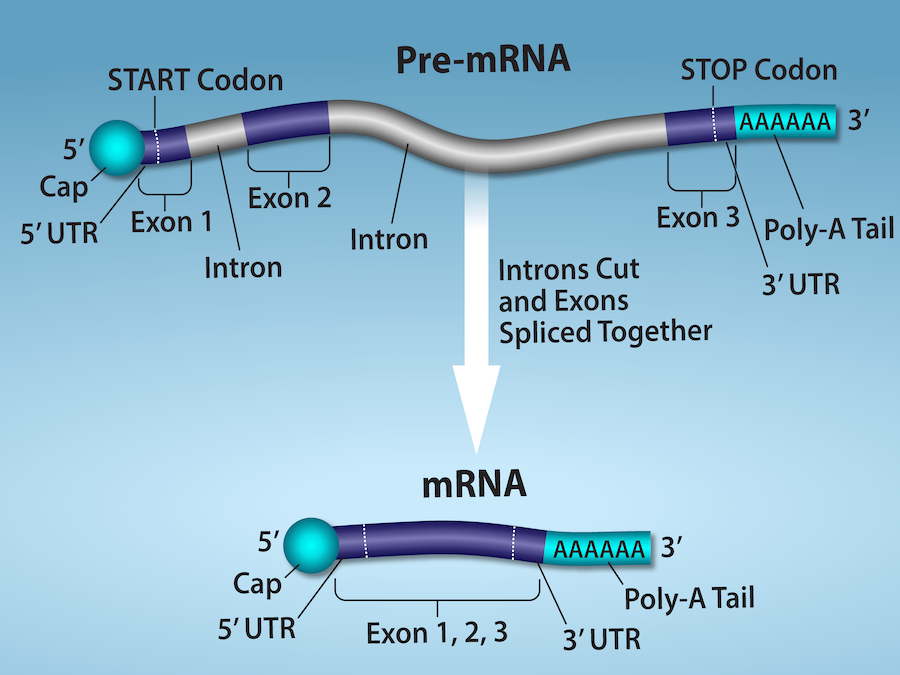
Figure 15.11 Eukaryotic pre-mRNA processing. In addition to 5’ Cap and 3’ Poly-A Tail addition, introns must be precisely removed and exons joined to generate a functional mRNA. Nucleotides upstream (towards the 5’cap) of the translation START codon are part of the 5’ untranslated region (5’ UTR). Nucleotides downstream (towards 3’end) of the STOP codon form the 3’ UTR. Both 5’ and 3’ UTRs are important for regulating translation initiation and mRNA stability. Credit: Rao, A., Ryan, K. Fletcher, S. and Tag, A. Department of Biology, Texas A&M University.
Rao, A., Ryan, K. Fletcher, S. and Tag, A. Department of Biology, Texas A&M University.; Mary Ann Clark, Matthew Douglas, and Jung Choi, Biology 2e, OpenStax. · CC BY-NC-SA 4.0
· Original image ↗ · Access for free ↗
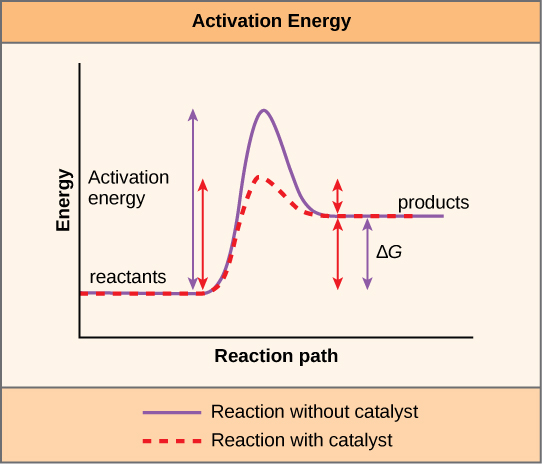
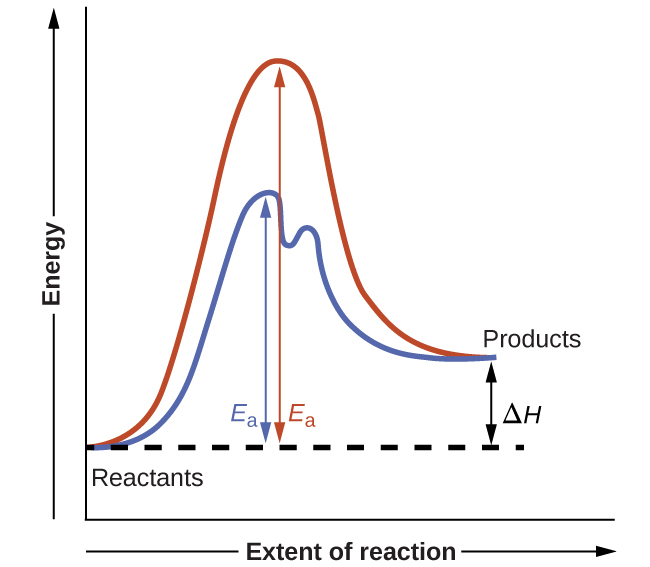
Figure 12.19 Reaction diagrams for an endothermic process in the absence (red curve) and presence (blue curve) of a catalyst. The catalyzed pathway involves a two-step mechanism (note the presence of two transition states) and an intermediate species (represented by the valley between the two transitions states).
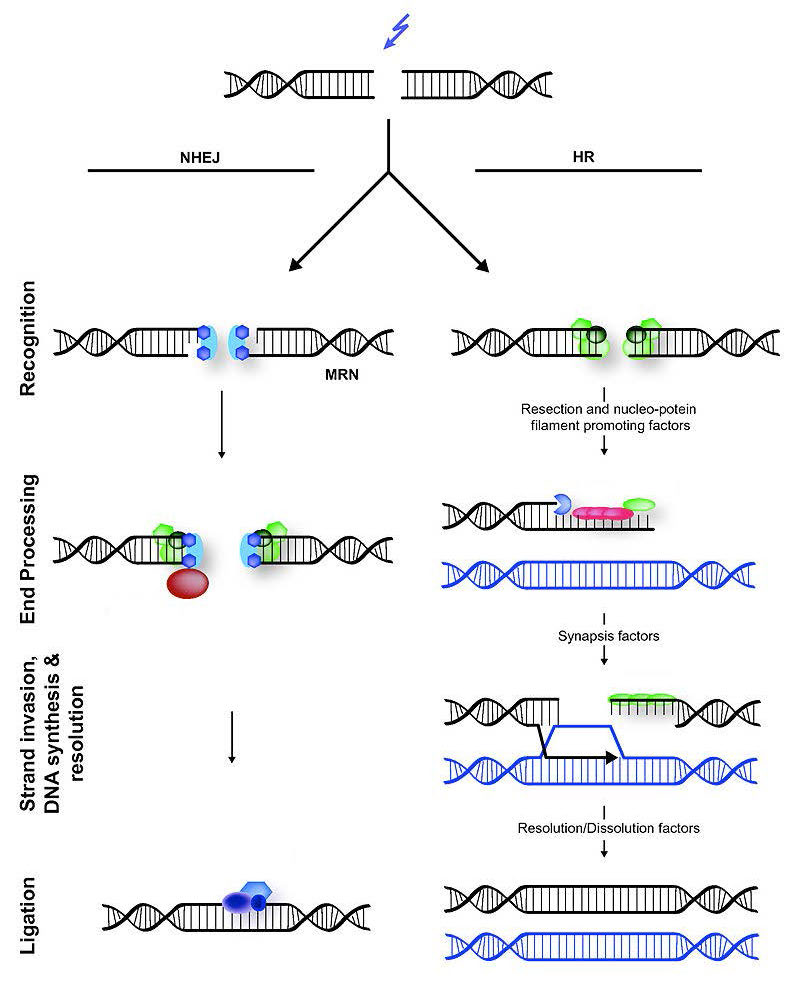
Figure 7.45 - Non-homologous end joining (left) versus homologous recombination (right) - Wikipedia
Wikipedia, as credited by Kevin Ahern, Indira Rajagopal, and Taralyn Tan, Biochemistry Free For All, Oregon State University, via Biology LibreTexts. · Source attribution
· Original image ↗ · Access for free ↗
The amount of a substance that can dissolve in a solvent under specified conditions. Soluble means able to dissolve; insoluble means only very slightly soluble in that solvent.
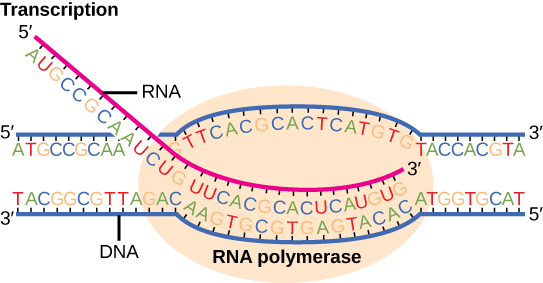
Figure 15.7 Messenger RNA is a copy of protein-coding information in the coding strand of DNA, with the substitution of U in the RNA for T in the coding sequence. However, new RNA nucleotides base pair with the nucleotides of the template strand. RNA is synthesized in its 5'-3' direction, using the enzyme RNA polymerase. As the template is read, the DNA unwinds ahead of the polymerase and then rewinds behind it.
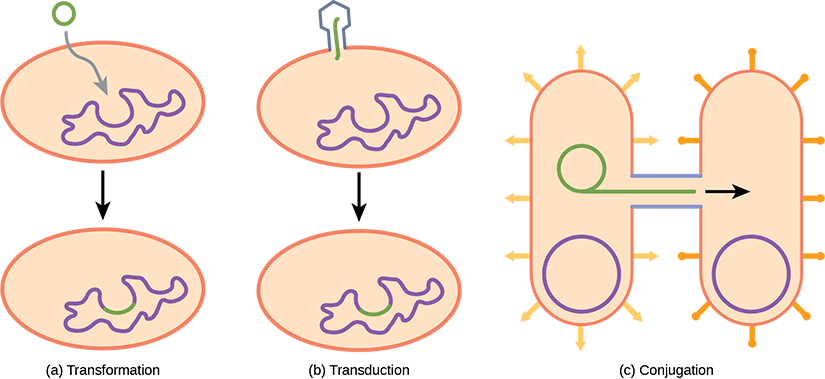
Figure 22.17 Gene transfer mechanisms in prokaryotes. There are three mechanisms by which prokaryotes can exchange DNA. In (a) transformation, the cell takes up prokaryotic DNA directly from the environment. The DNA may remain separate as plasmid DNA or be incorporated into the host genome. In (b) transduction, a bacteriophage injects DNA into the cell that contains a small fragment of DNA from a different prokaryote. In (c) conjugation, DNA is transferred from one cell to another via a mating bridge, or pilus, that connects the two cells after the sex pilus draws the two bacteria close enough to form the bridge.
A fleeting, high-energy arrangement at a reaction barrier. It is an energy maximum along the reaction path, rather than a stable reaction intermediate.
Figure 12.19 Reaction diagrams for an endothermic process in the absence (red curve) and presence (blue curve) of a catalyst. The catalyzed pathway involves a two-step mechanism (note the presence of two transition states) and an intermediate species (represented by the valley between the two transitions states).
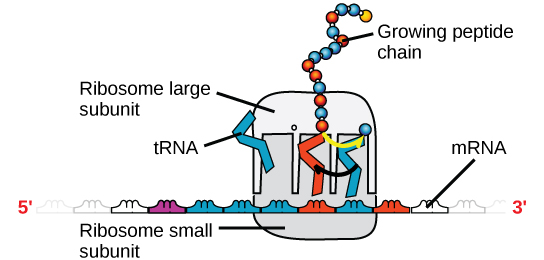
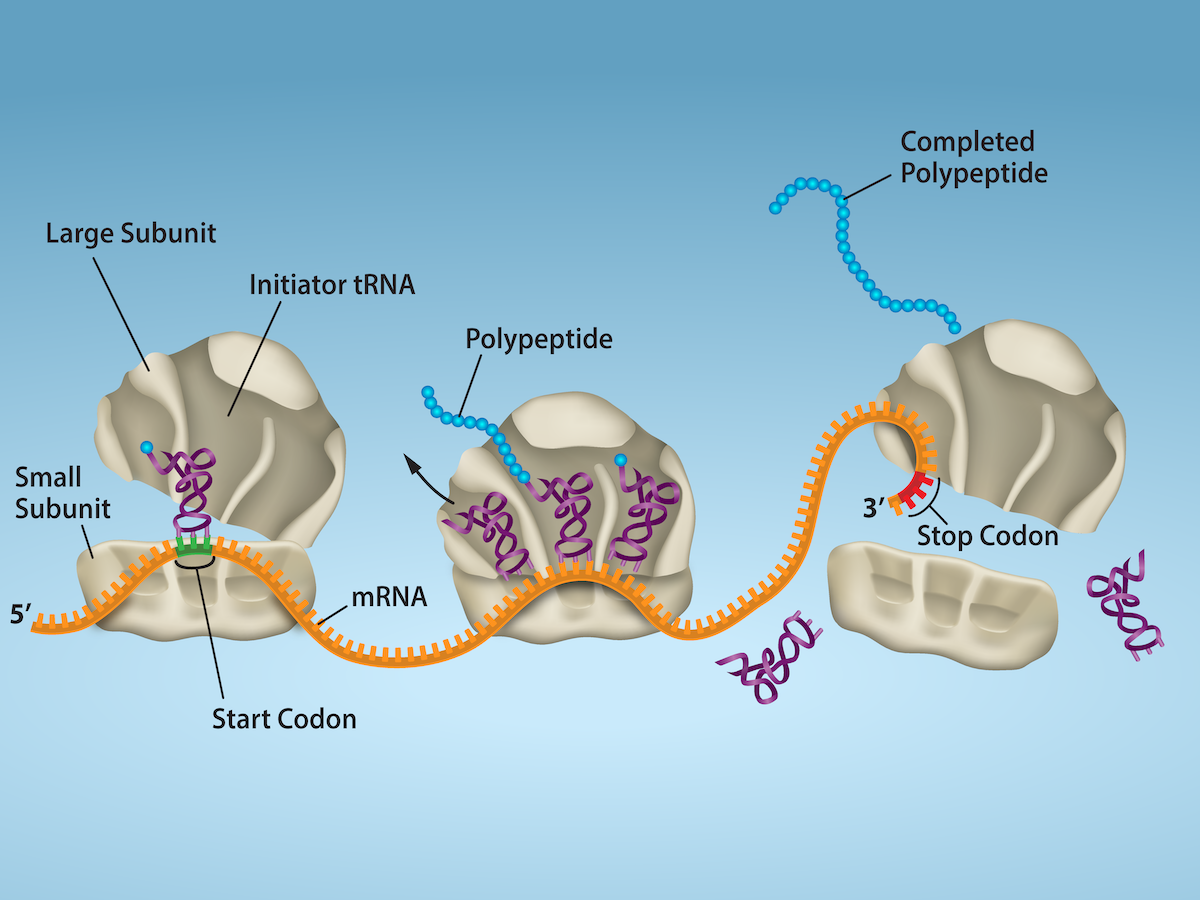
Figure 15.18 Translation begins when an initiator tRNA anticodon recognizes a start codon on mRNA bound to a small ribosomal subunit. The large ribosomal subunit joins the small subunit, and a second tRNA is recruited. As the mRNA moves relative to the ribosome, successive tRNAs move through the ribosome and the polypeptide chain is formed. Entry of a release factor into the A site terminates translation and the components dissociate.
Figure 15.7 Messenger RNA is a copy of protein-coding information in the coding strand of DNA, with the substitution of U in the RNA for T in the coding sequence. However, new RNA nucleotides base pair with the nucleotides of the template strand. RNA is synthesized in its 5'-3' direction, using the enzyme RNA polymerase. As the template is read, the DNA unwinds ahead of the polymerase and then rewinds behind it.
No matching terms. Try a different name or abbreviation.
6.1 What Is Learning?
OpenStax · 6.1 What Is Learning? ↗ Instructional page including learning objectives, examples, figures, source tables and questions. Site navigation and embedded media players are omitted; source media links remain available.
Learning Objectives
By the end of this section, you will be able to:
Explain how learned behaviors are different from instincts and reflexes
Birds build nests and migrate as winter approaches. Infants suckle for nourishment. Dogs shake water off wet fur. Salmon swim upstream to spawn, and spiders spin intricate webs. What do these seemingly unrelated behaviors have in common? They all are unlearned behaviors. Both instincts and reflexes are innate (unlearned) behaviors that organisms are born with. Reflexes are a motor or neural reaction to a specific stimulus in the environment. They tend to be simpler than instincts, involve the activity of specific body parts and systems (e.g., the knee-jerk reflex and the contraction of the pupil in bright light), and involve more primitive centers of the central nervous system (e.g., the spinal cord and the medulla). In contrast, instincts are innate behaviors that are triggered by a broader range of events, such as maturation and the change of seasons. They are more complex patterns of behavior, involve movement of the organism as a whole (e.g., sexual activity and migration), and involve higher brain centers.
Both reflexes and instincts help an organism adapt to its environment and do not have to be learned. For example, every healthy human baby has a sucking reflex, present at birth. Babies are born knowing how to suck on a nipple, whether artificial (from a bottle) or human. Nobody teaches the baby to suck, just as no one teaches a sea turtle hatchling to move toward the ocean.
Learning, like reflexes and instincts, allows an organism to adapt to its environment. But unlike instincts and reflexes, learned behaviors involve change and experience: learning is a relatively permanent change in behavior or knowledge that results from experience. In contrast to the innate behaviors discussed above, learning involves acquiring knowledge and skills through experience. Looking back at our surfing scenario, Julian will have to spend much more time training with his surfboard before he learns how to ride the waves like his father.
Learning to surf, as well as any complex learning process (e.g., learning about the discipline of psychology), involves a complex interaction of conscious and unconscious processes. Learning has traditionally been studied in terms of its simplest components—the associations our minds automatically make between events. Our minds have a natural tendency to connect events that occur closely together or in sequence. Associative learning occurs when an organism makes connections between stimuli or events that occur together in the environment. You will see that associative learning is central to all three basic learning processes discussed in this chapter; classical conditioning tends to involve unconscious processes, operant conditioning tends to involve conscious processes, and observational learning adds social and cognitive layers to all the basic associative processes, both conscious and unconscious. These learning processes will be discussed in detail later in the chapter, but it is helpful to have a brief overview of each as you begin to explore how learning is understood from a psychological perspective.
In classical conditioning, also known as Pavlovian conditioning, organisms learn to associate events—or stimuli—that repeatedly happen together. We experience this process throughout our daily lives. For example, you might see a flash of lightning in the sky during a storm and then hear a loud boom of thunder. The sound of the thunder naturally makes you jump (loud noises have that effect by reflex). Because lightning reliably predicts the impending boom of thunder, you may associate the two and jump when you see lightning. Psychological researchers study this associative process by focusing on what can be seen and measured—behaviors. Researchers ask if one stimulus triggers a reflex, can we train a different stimulus to trigger that same reflex?
In operant conditioning, organisms learn, again, to associate events—a behavior and its consequence (reinforcement or punishment). A pleasant consequence encourages more of that behavior in the future, whereas a punishment deters the behavior. Imagine you are teaching your dog, Hodor, to sit. You tell Hodor to sit, and give him a treat when he does. After repeated experiences, Hodor begins to associate the act of sitting with receiving a treat. He learns that the consequence of sitting is that he gets a doggie biscuit (Figure 6.2). Conversely, if the dog is punished when exhibiting a behavior, it becomes conditioned to avoid that behavior (e.g., receiving a small shock when crossing the boundary of an invisible electric fence).
Figure 6.2 — 6.1 What Is Learning?
Figure 6.2 In operant conditioning, a response is associated with a consequence. This dog has learned that certain behaviors result in receiving a treat. (credit: Crystal Rolfe)
Observational learning extends the effective range of both classical and operant conditioning. In contrast to classical and operant conditioning, in which learning occurs only through direct experience, observational learning is the process of watching others and then imitating what they do. A lot of learning among humans and other animals comes from observational learning. To get an idea of the extra effective range that observational learning brings, consider Ben and his son Julian from the introduction. How might observation help Julian learn to surf, as opposed to learning by trial and error alone? By watching his father, he can imitate the moves that bring success and avoid the moves that lead to failure. Can you think of something you have learned how to do after watching someone else?
All of the approaches covered in this chapter are part of a particular tradition in psychology, called behaviorism, which we discuss in the next section. However, these approaches do not represent the entire study of learning. Separate traditions of learning have taken shape within different fields of psychology, such as memory and cognition, so you will find that other chapters will round out your understanding of the topic. Over time these traditions tend to converge. For example, in this chapter you will see how cognition has come to play a larger role in behaviorism, whose more extreme adherents once insisted that behaviors are triggered by the environment with no intervening thought.
5.1 Sensation versus Perception
OpenStax · 5.1 Sensation versus Perception ↗ Instructional page including learning objectives, examples, figures, source tables and questions. Site navigation and embedded media players are omitted; source media links remain available.
Discuss the roles attention, motivation, and sensory adaptation play in perception
Sensation
What does it mean to sense something? Sensory receptors are specialized neurons that respond to specific types of stimuli. When sensory information is detected by a sensory receptor, sensation has occurred. For example, light that enters the eye causes chemical changes in cells that line the back of the eye. These cells relay messages, in the form of action potentials (as you learned when studying biopsychology), to the central nervous system. The conversion from sensory stimulus energy to action potential is known as transduction.
You have probably known since elementary school that we have five senses: vision, hearing (audition), smell (olfaction), taste (gustation), and touch (somatosensation). It turns out that this notion of five senses is oversimplified. We also have sensory systems that provide information about balance (the vestibular sense), body position and movement (proprioception and kinesthesia), pain (nociception), and temperature (thermoception).
The sensitivity of a given sensory system to the relevant stimuli can be expressed as an absolute threshold. Absolute threshold refers to the minimum amount of stimulus energy that must be present for the stimulus to be detected 50% of the time. Another way to think about this is by asking how dim can a light be or how soft can a sound be and still be detected half of the time. The sensitivity of our sensory receptors can be quite amazing. It has been estimated that on a clear night, the most sensitive sensory cells in the back of the eye can detect a candle flame 30 miles away (Okawa & Sampath, 2007). Under quiet conditions, the hair cells (the receptor cells of the inner ear) can detect the tick of a clock 20 feet away (Galanter, 1962).
It is also possible for us to get messages that are presented below the threshold for conscious awareness—these are called subliminal messages. A stimulus reaches a physiological threshold when it is strong enough to excite sensory receptors and send nerve impulses to the brain: This is an absolute threshold. A message below that threshold is said to be subliminal: We receive it, but we are not consciously aware of it. Over the years there has been a great deal of speculation about the use of subliminal messages in advertising, rock music, and self-help audio programs. Research evidence shows that in laboratory settings, people can process and respond to information outside of awareness. But this does not mean that we obey these messages like zombies; in fact, hidden messages have little effect on behavior outside the laboratory (Kunst-Wilson & Zajonc, 1980; Rensink, 2004; Nelson, 2008; Radel, Sarrazin, Legrain, & Gobancé, 2009; Loersch, Durso, & Petty, 2013).
Absolute thresholds are generally measured under incredibly controlled conditions in situations that are optimal for sensitivity. Sometimes, we are more interested in how much difference in stimuli is required to detect a difference between them. This is known as the just noticeable difference (jnd) or difference threshold. Unlike the absolute threshold, the difference threshold changes depending on the stimulus intensity. As an example, imagine yourself in a very dark movie theater. If an audience member were to receive a text message that caused the cell phone screen to light up, chances are that many people would notice the change in illumination in the theater. However, if the same thing happened in a brightly lit arena during a basketball game, very few people would notice. The cell phone brightness does not change, but its ability to be detected as a change in illumination varies dramatically between the two contexts. Ernst Weber proposed this theory of change in difference threshold in the 1830s, and it has become known as Weber’s law: The difference threshold is a constant fraction of the original stimulus, as the example illustrates.
Perception
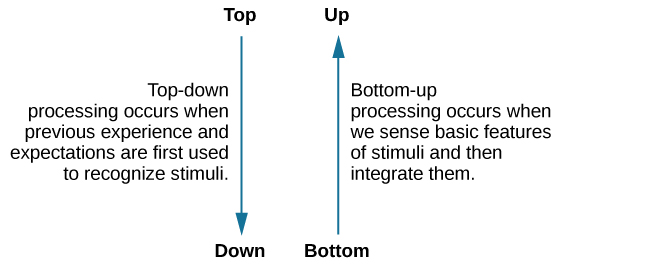
While our sensory receptors are constantly collecting information from the environment, it is ultimately how we interpret that information that affects how we interact with the world. Perception refers to the way sensory information is organized, interpreted, and consciously experienced. Perception involves both bottom-up and top-down processing. Bottom-up processing refers to sensory information from a stimulus in the environment driving a process, and top-down processing refers to knowledge and expectancy driving a process, as shown in Figure 5.2 (Egeth & Yantis, 1997; Fine & Minnery, 2009; Yantis & Egeth, 1999).
Figure 5.2 — 5.1 Sensation versus Perception
Figure 5.2 Top-down and bottom-up are ways we process our perceptions.
Imagine that you and some friends are sitting in a crowded restaurant eating lunch and talking. It is very noisy, and you are concentrating on your friend’s face to hear what they are saying, then the sound of breaking glass and clang of metal pans hitting the floor rings out. The server dropped a large tray of food. Although you were attending to your meal and conversation, that crashing sound would likely get through your attentional filters and capture your attention. You would have no choice but to notice it. That attentional capture would be caused by the sound from the environment: it would be bottom-up.
Alternatively, top-down processes are generally goal directed, slow, deliberate, effortful, and under your control (Fine & Minnery, 2009; Miller & Cohen, 2001; Miller & D'Esposito, 2005). For instance, if you misplaced your keys, how would you look for them? If you had a yellow key fob, you would probably look for yellowness of a certain size in specific locations, such as on the counter, coffee table, and other similar places. You would not look for yellowness on your ceiling fan, because you know keys are not normally lying on top of a ceiling fan. That act of searching for a certain size of yellowness in some locations and not others would be top-down—under your control and based on your experience.
One way to think of this concept is that sensation is a physical process, whereas perception is psychological. For example, upon walking into a kitchen and smelling the scent of baking cinnamon rolls, the sensation is the scent receptors detecting the odor of cinnamon, but the perception may be “Mmm, this smells like the bread Grandma used to bake when the family gathered for holidays.”
Although our perceptions are built from sensations, not all sensations result in perception. In fact, we often don’t perceive stimuli that remain relatively constant over prolonged periods of time. This is known as sensory adaptation. Imagine going to a city that you have never visited. You check in to the hotel, but when you get to your room, there is a road construction sign with a bright flashing light outside your window. Unfortunately, there are no other rooms available, so you are stuck with a flashing light. You decide to watch television to unwind. The flashing light was extremely annoying when you first entered your room. It was as if someone was continually turning a bright yellow spotlight on and off in your room, but after watching television for a short while, you no longer notice the light flashing. The light is still flashing and filling your room with yellow light every few seconds, and the photoreceptors in your eyes still sense the light, but you no longer perceive the rapid changes in lighting conditions. That you no longer perceive the flashing light demonstrates sensory adaptation and shows that while closely associated, sensation and perception are different.
There is another factor that affects sensation and perception: attention. Attention plays a significant role in determining what is sensed versus what is perceived. Imagine you are at a party full of music, chatter, and laughter. You get involved in an interesting conversation with a friend, and you tune out all the background noise. If someone interrupted you to ask what song had just finished playing, you would probably be unable to answer that question.
One of the most interesting demonstrations of how important attention is in determining our perception of the environment occurred in a famous study conducted by Daniel Simons and Christopher Chabris (1999). In this study, participants watched a video of people dressed in black and white passing basketballs. Participants were asked to count the number of times the team dressed in white passed the ball. During the video, a person dressed in a black gorilla costume walks among the two teams. You would think that someone would notice the gorilla, right? Nearly half of the people who watched the video didn’t notice the gorilla at all, despite the fact that he was clearly visible for nine seconds. Because participants were so focused on the number of times the team dressed in white was passing the ball, they completely tuned out other visual information. Inattentional blindness is the failure to notice something that is completely visible because the person was actively attending to something else and did not pay attention to other things (Mack & Rock, 1998; Simons & Chabris, 1999).
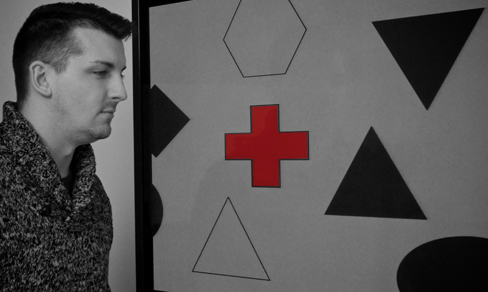
In a similar experiment, researchers tested inattentional blindness by asking participants to observe images moving across a computer screen. They were instructed to focus on either white or black objects, disregarding the other color. When a red cross passed across the screen, about one third of subjects did not notice it (Figure 5.3) (Most, Simons, Scholl, & Chabris, 2000).
Figure 5.3 — 5.1 Sensation versus Perception
Figure 5.3 Nearly one third of participants in a study did not notice that a red cross passed on the screen because their attention was focused on the black or white figures. (credit: Cory Zanker)
Motivation can also affect perception. Have you ever been expecting a really important phone call and, while taking a shower, you think you hear the phone ringing, only to discover that it is not? If so, then you have experienced how motivation to detect a meaningful stimulus can shift our ability to discriminate between a true sensory stimulus and background noise. The ability to identify a stimulus when it is embedded in a distracting background is called signal detection theory. This might also explain why a mother is awakened by a quiet murmur from her baby but not by other sounds that occur while she is asleep. Signal detection theory has practical applications, such as increasing air traffic controller accuracy. Controllers need to be able to detect planes among many signals (blips) that appear on the radar screen and follow those planes as they move through the sky. In fact, the original work of the researcher who developed signal detection theory was focused on improving the sensitivity of air traffic controllers to plane blips (Swets, 1964).
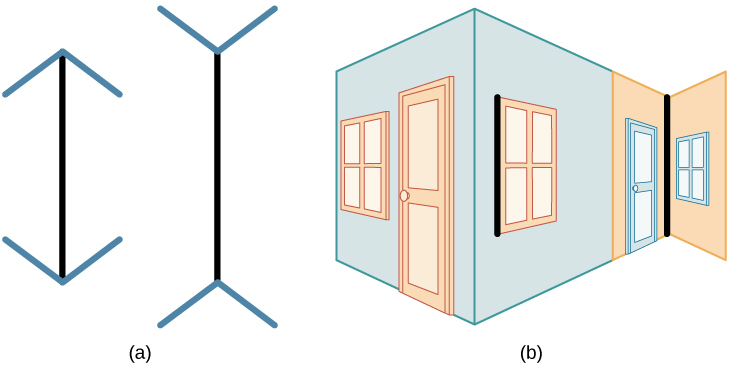
Our perceptions can also be affected by our beliefs, values, prejudices, expectations, and life experiences. As you will see later in this chapter, individuals who are deprived of the experience of binocular vision during critical periods of development have trouble perceiving depth (Fawcett, Wang, & Birch, 2005). The shared experiences of people within a given cultural context can have pronounced effects on perception. For example, Marshall Segall, Donald Campbell, and Melville Herskovits (1963) published the results of a multinational study in which they demonstrated that individuals from Western cultures were more prone to experience certain types of visual illusions than individuals from non-Western cultures, and vice versa. One such illusion that Westerners were more likely to experience was the Müller-Lyer illusion (Figure 5.4): The lines appear to be different lengths, but they are actually the same length.
Figure 5.4 — 5.1 Sensation versus Perception
Figure 5.4 In the Müller-Lyer illusion, lines appear to be different lengths although they are identical. (a) Arrows at the ends of lines may make the line on the right appear longer, although the lines are the same length. (b) When applied to a three-dimensional image, the line on the right again may appear longer although both black lines are the same length.
These perceptual differences were consistent with differences in the types of environmental features experienced on a regular basis by people in a given cultural context. People in Western cultures, for example, have a perceptual context of buildings with straight lines, what Segall’s study called a carpentered world (Segall et al., 1966). In contrast, people from certain non-Western cultures with an uncarpentered view, such as the Zulu of South Africa, whose villages are made up of round huts arranged in circles, are less susceptible to this illusion (Segall et al., 1999). It is not just vision that is affected by cultural factors. Indeed, research has demonstrated that the ability to identify an odor, and rate its pleasantness and its intensity, varies cross-culturally (Ayabe-Kanamura, Saito, Distel, Martínez-Gómez, & Hudson, 1998).
Children described as thrill seekers are more likely to show taste preferences for intense sour flavors (Liem, Westerbeek, Wolterink, Kok, & de Graaf, 2004), which suggests that basic aspects of personality might affect perception. Furthermore, individuals who hold positive attitudes toward reduced-fat foods are more likely to rate foods labeled as reduced fat as tasting better than people who have less positive attitudes about these products (Aaron, Mela, & Evans, 1994).