Group polarization shifts discussion outcomes toward a more extreme version of members’ initial average tendency. Exposure to supporting arguments and comparison with group norms can contribute. Groupthink prioritizes apparent agreement over critical evaluation, especially when dissent is discouraged, leadership is directive, or a group is insulated. Symptoms can include self-censorship, illusion of unanimity, and dismissal of alternatives. Polarization concerns direction and extremity; groupthink concerns faulty deliberation, so they can occur independently. Assigning independent initial judgments, inviting outside critique, and making disagreement legitimate can improve decisions, but a unanimous decision is not automatically evidence of groupthink.
Distinguish fads, mass hysteria, riots, and other collective behaviors
Collective behavior is relatively spontaneous activity outside established institutional routines. Crowds can be casual, conventional, expressive, or acting; their behavior depends on emerging norms and shared interpretations. A fad spreads rapidly and often fades quickly; a fashion may persist longer as an accepted style. Mass hysteria is a historical label for rapidly spreading shared fear or symptom reports; such reports require careful investigation rather than automatic dismissal. Riots involve disruptive collective action, sometimes violence or property destruction, and should be analyzed in social and political context. Collective behavior differs from a sustained organized social movement, although one can develop into the other.
Worked question. A committee initially favors modest restrictions, then endorses much stricter ones after discussion. Members also report hiding doubts because the chair rejects criticism. Are these observations the same phenomenon?
The movement toward a more extreme initial tendency is group polarization. Suppression of doubts and poor consideration of alternatives are evidence consistent with groupthink. Measure each separately: compare pre/post preferences for polarization and examine deliberation and dissent for groupthink. Independent written assessments before discussion may reduce conformity pressure.
Figure 12.17 These line segments illustrate the judgment task in Asch’s conformity study. Which line on the right—a, b, or c—is the same length as line x on the left?
Figure 12.19 People in crowds tend to take cues from others and act accordingly. (a) An audience is listening to a lecture and people are relatively quiet, still, and attentive to the speaker on the stage. (b) An audience is at a rock concert where people are dancing, singing, and possibly engaging in activities like crowd surfing. (credit a: modification of work by Matt Brown; credit b: modification of work by Christian Holmér)
Rose M. Spielman, William J. Jenkins, and Marilyn D. Lovett, Psychology 2E, OpenStax. (credit a: modification of work by Matt Brown; credit b: modification of work by Christian Holmér) · CC BY-NC-SA 4.0
· Original image ↗ · Access for free ↗Figure 12.20 — 12.4 Conformity, Compliance, and Obedience
Figure 12.20 The Milgram experiment showed the surprising degree to which people obey authority. Two out of three (65%) participants continued to administer shocks to an unresponsive learner.
Tendency to prioritize group cohesion over critical thinking that might lead to poor decision making; more likely to occur when there is perceived unanimity among the group
Exertion of less effort by a person working in a group because individual performance cannot be evaluated separately from the group, thus causing performance decline on easy tasks
Figure 21.3 According to the emergent-norm perspective, Hurricane Katrina victims sought needed supplies for survival, but to some outsiders their behavior was normally seen as looting. (Credit: Infrogmation/Wikimedia Commons)
Carpooling parents take several children to the movies
Convergent orientation
Group all facing the same direction
A semi-circle around a stage
Collective vocalization
Sounds or noises made collectively
Screams on a roller coaster
Collective verbalization
Collective and simultaneous participation in a speech or song
Pledge of Allegiance in the school classroom
Collective gesticulation
Body parts forming symbols
The YMCA dance
Collective manipulation
Objects collectively moved around
Holding signs at a protest rally
Collective locomotion
The direction and rate of movement to the event
Children running to an ice cream truck
Table 21.1 Clark McPhail identified various circumstances of convergent and collective behavior (McPhail 1991).. Tonja R. Conerly, Kathleen Holmes, and Asha Lal Tamang, Introduction Sociology 3E, OpenStax.
Figure 6.6 Kamala Harris, like many other women leaders, faces unique and sometimes conflicting expectations. She may want to lead, but some care more about whether she is liked. (Credit: California National Guard/flickr)
Figure 14.5 The purines have a double ring structure with a six-membered ring fused to a five-membered ring. Pyrimidines are smaller in size; they have a single six-membered ring structure.
Figure 10.16 The role of normal p53 is to monitor DNA and the supply of oxygen (hypoxia is a condition of reduced oxygen supply). If damage is detected, p53 triggers repair mechanisms. If repairs are unsuccessful, p53 signals apoptosis. A cell with an abnormal p53 protein cannot repair damaged DNA and thus cannot signal apoptosis. Cells with abnormal p53 can become cancerous. (credit: modification of work by Thierry Soussi)
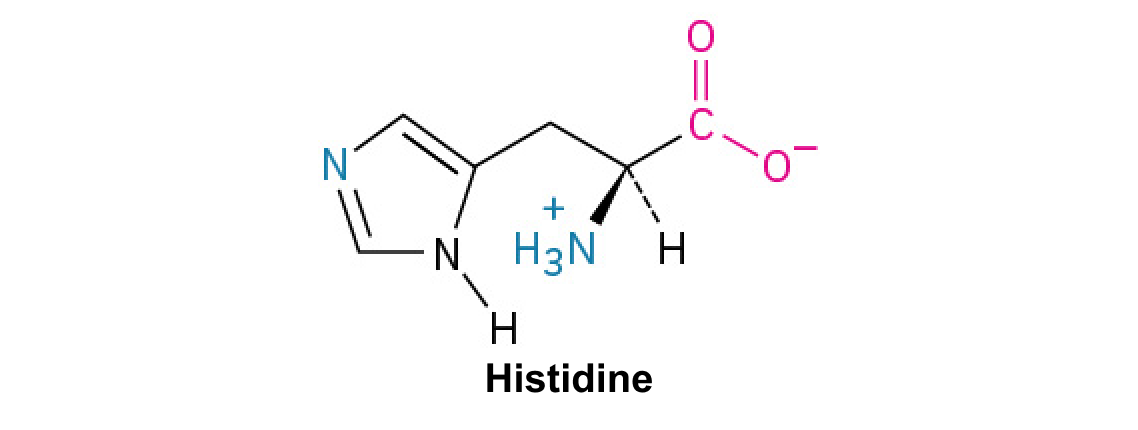
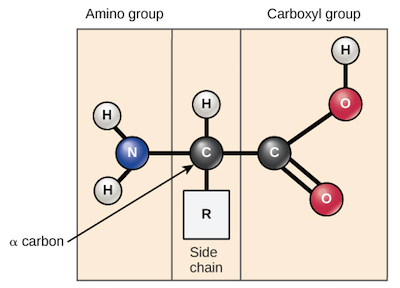
A nitrogen-containing functional group. A free amino acid’s amino group is typically protonated (NH₃⁺) near physiological pH; proline’s ring nitrogen is an exception to this formula.
Figure 15.4 This figure shows the genetic code for translating each nucleotide triplet in mRNA into an amino acid or a termination signal in a protein. (credit: modification of work by NIH)
Figure 14.5 The purines have a double ring structure with a six-membered ring fused to a five-membered ring. Pyrimidines are smaller in size; they have a single six-membered ring structure.
Figure 12.4 In the P generation, pea plants that are true-breeding for the dominant yellow phenotype are crossed with plants with the recessive green phenotype. This cross produces F 1 heterozygotes with a yellow phenotype. Punnett square analysis can be used to predict the genotypes of the F 2 generation.
An electrical property that can be positive or negative. Opposite charges attract and like charges repel; net charge is the sum of all charges on a particle.
Figure 12.4 In the P generation, pea plants that are true-breeding for the dominant yellow phenotype are crossed with plants with the recessive green phenotype. This cross produces F 1 heterozygotes with a yellow phenotype. Punnett square analysis can be used to predict the genotypes of the F 2 generation.
Figure 14.5 The purines have a double ring structure with a six-membered ring fused to a five-membered ring. Pyrimidines are smaller in size; they have a single six-membered ring structure.
Figure 12.4 In the P generation, pea plants that are true-breeding for the dominant yellow phenotype are crossed with plants with the recessive green phenotype. This cross produces F 1 heterozygotes with a yellow phenotype. Punnett square analysis can be used to predict the genotypes of the F 2 generation.
The exponent needed to obtain a number from a chosen fixed number. For decimal logarithms, log₁₀(100) = 2 because 10² = 100; pH uses the negative decimal logarithm of hydrogen ion activity.
A thin boundary or sheet. Cell membranes are lipid bilayers containing proteins; blotting membranes are synthetic supports that hold proteins or nucleic acids for detection.
Figure 15.11 Eukaryotic pre-mRNA processing. In addition to 5’ Cap and 3’ Poly-A Tail addition, introns must be precisely removed and exons joined to generate a functional mRNA. Nucleotides upstream (towards the 5’cap) of the translation START codon are part of the 5’ untranslated region (5’ UTR). Nucleotides downstream (towards 3’end) of the STOP codon form the 3’ UTR. Both 5’ and 3’ UTRs are important for regulating translation initiation and mRNA stability. Credit: Rao, A., Ryan, K. Fletcher, S. and Tag, A. Department of Biology, Texas A&M University.
Rao, A., Ryan, K. Fletcher, S. and Tag, A. Department of Biology, Texas A&M University.; Mary Ann Clark, Matthew Douglas, and Jung Choi, Biology 2e, OpenStax. · CC BY-NC-SA 4.0
· Original image ↗ · Access for free ↗
Figure 12.4 In the P generation, pea plants that are true-breeding for the dominant yellow phenotype are crossed with plants with the recessive green phenotype. This cross produces F 1 heterozygotes with a yellow phenotype. Punnett square analysis can be used to predict the genotypes of the F 2 generation.
Figure 14.5 The purines have a double ring structure with a six-membered ring fused to a five-membered ring. Pyrimidines are smaller in size; they have a single six-membered ring structure.
Figure 14.5 The purines have a double ring structure with a six-membered ring fused to a five-membered ring. Pyrimidines are smaller in size; they have a single six-membered ring structure.
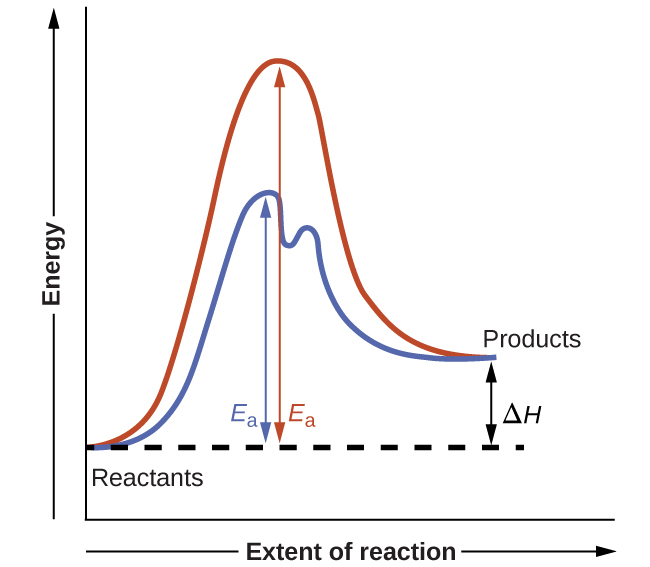
Figure 12.19 Reaction diagrams for an endothermic process in the absence (red curve) and presence (blue curve) of a catalyst. The catalyzed pathway involves a two-step mechanism (note the presence of two transition states) and an intermediate species (represented by the valley between the two transitions states).
Figure 7.45 - Non-homologous end joining (left) versus homologous recombination (right) - Wikipedia
Wikipedia, as credited by Kevin Ahern, Indira Rajagopal, and Taralyn Tan, Biochemistry Free For All, Oregon State University, via Biology LibreTexts. · Source attribution
· Original image ↗ · Access for free ↗
social facilitation
Effect of others’ presence that tends to strengthen dominant responses.
The amount of a substance that can dissolve in a solvent under specified conditions. Soluble means able to dissolve; insoluble means only very slightly soluble in that solvent.
Figure 14.5 The purines have a double ring structure with a six-membered ring fused to a five-membered ring. Pyrimidines are smaller in size; they have a single six-membered ring structure.
Figure 15.7 Messenger RNA is a copy of protein-coding information in the coding strand of DNA, with the substitution of U in the RNA for T in the coding sequence. However, new RNA nucleotides base pair with the nucleotides of the template strand. RNA is synthesized in its 5'-3' direction, using the enzyme RNA polymerase. As the template is read, the DNA unwinds ahead of the polymerase and then rewinds behind it.
A fleeting, high-energy arrangement at a reaction barrier. It is an energy maximum along the reaction path, rather than a stable reaction intermediate.
Figure 12.19 Reaction diagrams for an endothermic process in the absence (red curve) and presence (blue curve) of a catalyst. The catalyzed pathway involves a two-step mechanism (note the presence of two transition states) and an intermediate species (represented by the valley between the two transitions states).
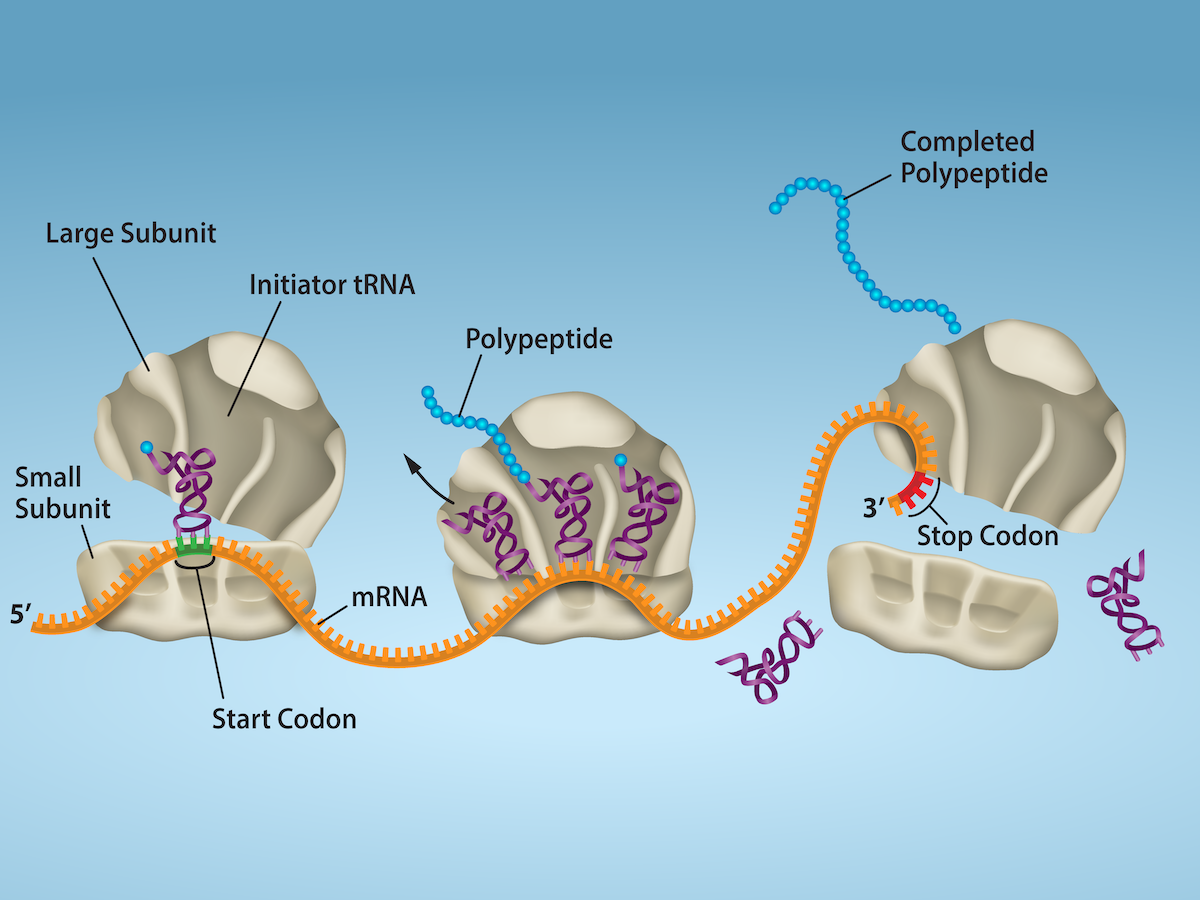
Figure 15.18 Translation begins when an initiator tRNA anticodon recognizes a start codon on mRNA bound to a small ribosomal subunit. The large ribosomal subunit joins the small subunit, and a second tRNA is recruited. As the mRNA moves relative to the ribosome, successive tRNAs move through the ribosome and the polypeptide chain is formed. Entry of a release factor into the A site terminates translation and the components dissociate.
Figure 14.5 The purines have a double ring structure with a six-membered ring fused to a five-membered ring. Pyrimidines are smaller in size; they have a single six-membered ring structure.
No matching terms. Try a different name or abbreviation.
12.4 Conformity, Compliance, and Obedience
OpenStax · 12.4 Conformity, Compliance, and Obedience ↗ Instructional page including learning objectives, examples, figures, source tables and questions. Site navigation and embedded media players are omitted; source media links remain available.
In this section, we discuss additional ways in which people influence others. The topics of conformity, social influence, obedience, and group processes demonstrate the power of the social situation to change our thoughts, feelings, and behaviors. We begin this section with a discussion of a famous social psychology experiment that demonstrated how susceptible humans are to outside social pressures.
Solomon Asch conducted several experiments in the 1950s to determine how people are affected by the thoughts and behaviors of other people. In one study, a group of participants was shown a series of printed line segments of different lengths: a, b, and c (Figure 12.17). Participants were then shown a fourth line segment: x. They were asked to identify which line segment from the first group (a, b, or c) most closely resembled the fourth line segment in length.
Figure 12.17 These line segments illustrate the judgment task in Asch’s conformity study. Which line on the right—a, b, or c—is the same length as line x on the left?
Each group of participants had only one true, naïve subject. The remaining members of the group were confederates of the researcher. A confederate is a person who is aware of the experiment and works for the researcher. Confederates are used to manipulate social situations as part of the research design, and the true, naïve participants believe that confederates are, like them, uninformed participants in the experiment. In Asch’s study, the confederates identified a line segment that was obviously shorter than the target line—a wrong answer. The naïve participant then had to identify aloud the line segment that best matched the target line segment.
How often do you think the true participant aligned with the confederates’ response? That is, how often do you think the group influenced the participant, and the participant gave the wrong answer? Asch (1955) found that 76% of participants conformed to group pressure at least once by indicating the incorrect line. Conformity is the change in a person’s behavior to go along with the group, even if he does not agree with the group. Why would people give the wrong answer? What factors would increase or decrease someone giving in or conforming to group pressure?
The Asch effect is the influence of the group majority on an individual’s judgment.
What factors make a person more likely to yield to group pressure? Research shows that the size of the majority, the presence of another dissenter, and the public or relatively private nature of responses are key influences on conformity.
The size of the majority: The greater the number of people in the majority, the more likely an individual will conform. There is, however, an upper limit: a point where adding more members does not increase conformity. In Asch’s study, conformity increased with the number of people in the majority—up to seven individuals. At numbers beyond seven, conformity leveled off and decreased slightly (Asch, 1955).
The presence of another dissenter: If there is at least one dissenter, conformity rates drop to near zero (Asch, 1955).
The public or private nature of the responses: When responses are made publicly (in front of others), conformity is more likely; however, when responses are made privately (e.g., writing down the response), conformity is less likely (Deutsch & Gerard, 1955).
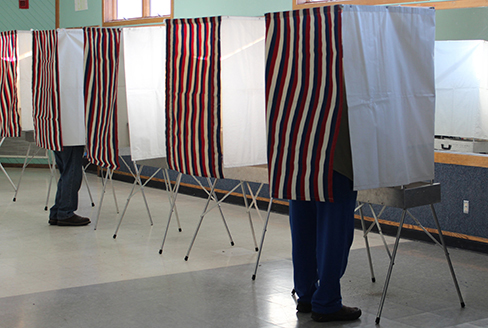
The finding that conformity is more likely to occur when responses are public than when they are private is the reason government elections require voting in secret, so we are not coerced by others (Figure 12.18). The Asch effect can be easily seen in children when they have to publicly vote for something. For example, if the teacher asks whether the children would rather have extra recess, no homework, or candy, once a few children vote, the rest will comply and go with the majority. In a different classroom, the majority might vote differently, and most of the children would comply with that majority. When someone’s vote changes if it is made in public versus private, this is known as compliance. Compliance can be a form of conformity. Compliance is going along with a request or demand, even if you do not agree with the request. In Asch’s studies, the participants complied by giving the wrong answers, but privately did not accept that the obvious wrong answers were correct.
Now that you have learned about the Asch line experiments, why do you think the participants conformed? The correct answer to the line segment question was obvious, and it was an easy task. Researchers have categorized the motivation to conform into two types: normative social influence and informational social influence (Deutsch & Gerard, 1955).
In normative social influence, people conform to the group norm to fit in, to feel good, and to be accepted by the group. However, with informational social influence, people conform because they believe the group is competent and has the correct information, particularly when the task or situation is ambiguous. What type of social influence was operating in the Asch conformity studies? Since the line judgment task was unambiguous, participants did not need to rely on the group for information. Instead, participants complied to fit in and avoid ridicule, an instance of normative social influence.
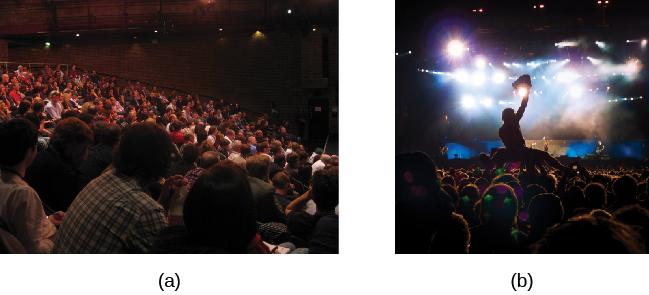
An example of informational social influence may be what to do in an emergency situation. Imagine that you are in a movie theater watching a film and what seems to be smoke comes in the theater from under the emergency exit door. You are not certain that it is smoke—it might be a special effect for the movie, such as a fog machine. When you are uncertain you will tend to look at the behavior of others in the theater. If other people show concern and get up to leave, you are likely to do the same. However, if others seem unconcerned, you are likely to stay put and continue watching the movie (Figure 12.19).
Figure 12.19 People in crowds tend to take cues from others and act accordingly. (a) An audience is listening to a lecture and people are relatively quiet, still, and attentive to the speaker on the stage. (b) An audience is at a rock concert where people are dancing, singing, and possibly engaging in activities like crowd surfing. (credit a: modification of work by Matt Brown; credit b: modification of work by Christian Holmér)
Rose M. Spielman, William J. Jenkins, and Marilyn D. Lovett, Psychology 2E, OpenStax. (credit a: modification of work by Matt Brown; credit b: modification of work by Christian Holmér) · CC BY-NC-SA 4.0
· Original image ↗ · Access for free ↗
How would you have behaved if you were a participant in Asch’s study? Many students say they would not conform, that the study is outdated, and that people nowadays are more independent. To some extent this may be true. Research suggests that overall rates of conformity may have reduced since the time of Asch’s research. Furthermore, efforts to replicate Asch’s study have made it clear that many factors determine how likely it is that someone will demonstrate conformity to the group. These factors include the participant’s age, gender, and socio-cultural background (Bond & Smith, 1996; Larsen, 1990; Walker & Andrade, 1996).
Conformity is one effect of the influence of others on our thoughts, feelings, and behaviors. Another form of social influence is obedience to authority. Obedience is the change of an individual’s behavior to comply with a demand by an authority figure. People often comply with the request because they are concerned about a consequence if they do not comply. To demonstrate this phenomenon, we review another classic social psychology experiment.
Stanley Milgram was a social psychology professor at Yale who was influenced by the trial of Adolf Eichmann, a Nazi war criminal. Eichmann’s defense for the atrocities he committed was that he was “just following orders.” Milgram (1963) wanted to test the validity of this defense, so he designed an experiment and initially recruited 40 men for his experiment. The volunteer participants were led to believe that they were participating in a study to improve learning and memory. The participants were told that they were to teach other students (learners) correct answers to a series of test items. The participants were shown how to use a device that they were told delivered electric shocks of different intensities to the learners. The participants were told to shock the learners if they gave a wrong answer to a test item—that the shock would help them to learn. The participants believed they gave the learners shocks, which increased in 15-volt increments, all the way up to 450 volts. The participants did not know that the learners were confederates and that the confederates did not actually receive shocks.
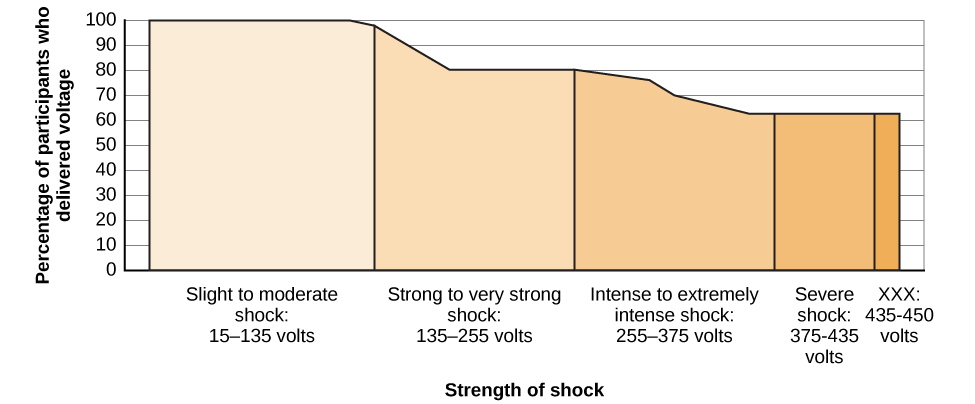
In response to a string of incorrect answers from the learners, the participants obediently and repeatedly shocked them. The confederate learners cried out for help, begged the participant teachers to stop, and even complained of heart trouble. Yet, when the researcher told the participant-teachers to continue the shock, 65% of the participants continued the shock to the maximum voltage and to the point that the learner became unresponsive (Figure 12.20). What makes someone obey authority to the point of potentially causing serious harm to another person?
Figure 12.20 The Milgram experiment showed the surprising degree to which people obey authority. Two out of three (65%) participants continued to administer shocks to an unresponsive learner.
Several variations of the original Milgram experiment were conducted to test the boundaries of obedience. When certain features of the situation were changed, participants were less likely to continue to deliver shocks (Milgram, 1965). For example, when the setting of the experiment was moved to an off-campus office building, the percentage of participants who delivered the highest shock dropped to 48%. When the learner was in the same room as the teacher, the highest shock rate dropped to 40%. When the teachers’ and learners’ hands were touching, the highest shock rate dropped to 30%. When the researcher gave the orders by phone, the rate dropped to 23%. These variations show that when the humanity of the person being shocked was increased, obedience decreased. Similarly, when the authority of the experimenter decreased, so did obedience.
This case is still very applicable today. What does a person do if an authority figure orders something done? What if the person believes it is incorrect, or worse, unethical? In a study by Martin and Bull (2008), midwives privately filled out a questionnaire regarding best practices and expectations in delivering a baby. Then, a more senior midwife and supervisor asked the junior midwives to do something they had previously stated they were opposed to. Most of the junior midwives were obedient to authority, going against their own beliefs. Burger (2009) partially replicated this study. He found among a multicultural sample of women and men that their levels of obedience matched Milgram's research. Doliński et al. (2017) performed a replication of Burger's work in Poland and controlled for the gender of both participants and learners, and once again, results that were consistent with Milgram's original work were observed.
When in group settings, we are often influenced by the thoughts, feelings, and behaviors of people around us. Whether it is due to normative or informational social influence, groups have power to influence individuals. Another phenomenon of group conformity is groupthink. Groupthink is the modification of the opinions of members of a group to align with what they believe is the group consensus (Janis, 1972). In group situations, the group often takes action that individuals would not perform outside the group setting because groups make more extreme decisions than individuals do. Moreover, groupthink can hinder opposing trains of thought. This elimination of diverse opinions contributes to faulty decision by the group.
There have been several instances of groupthink in the U.S. government. One example occurred when the United States led a small coalition of nations to invade Iraq in March 2003. This invasion occurred because a small group of advisors and former President George W. Bush were convinced that Iraq represented a significant terrorism threat with a large stockpile of weapons of mass destruction at its disposal. Although some of these individuals may have had some doubts about the credibility of the information available to them at the time, in the end, the group arrived at a consensus that Iraq had weapons of mass destruction and represented a significant threat to national security. It later came to light that Iraq did not have weapons of mass destruction, but not until the invasion was well underway. As a result, 6000 American soldiers were killed and many more civilians died. How did the Bush administration arrive at their conclusions? View this video of Colin Powell, 10 years after his famous United Nations speech, discussing the information he had at the time that his decisions were based on. ("CNN Official Interview: Colin Powell now regrets UN speech about WMDs," 2010).
Why does groupthink occur? There are several causes of groupthink, which makes it preventable. When the group is highly cohesive, or has a strong sense of connection, maintaining group harmony may become more important to the group than making sound decisions. If the group leader is directive and makes his opinions known, this may discourage group members from disagreeing with the leader. If the group is isolated from hearing alternative or new viewpoints, groupthink may be more likely. How do you know when groupthink is occurring?
There are several symptoms of groupthink including the following:
perceiving the group as invulnerable or invincible—believing it can do no wrong
believing the group is morally correct
self-censorship by group members, such as withholding information to avoid disrupting the group consensus
the quashing of dissenting group members’ opinions
the shielding of the group leader from dissenting views
perceiving an illusion of unanimity among group members
holding stereotypes or negative attitudes toward the out-group or others’ with differing viewpoints (Janis, 1972)
Given the causes and symptoms of groupthink, how can it be avoided? There are several strategies that can improve group decision making including seeking outside opinions, voting in private, having the leader withhold position statements until all group members have voiced their views, conducting research on all viewpoints, weighing the costs and benefits of all options, and developing a contingency plan (Janis, 1972; Mitchell & Eckstein, 2009).
Another phenomenon that occurs within group settings is group polarization. Group polarization (Teger & Pruitt, 1967) is the strengthening of an original group attitude after the discussion of views within a group. That is, if a group initially favors a viewpoint, after discussion the group consensus is likely a stronger endorsement of the viewpoint. Conversely, if the group was initially opposed to a viewpoint, group discussion would likely lead to stronger opposition. Group polarization explains many actions taken by groups that would not be undertaken by individuals. Group polarization can be observed at political conventions, when platforms of the party are supported by individuals who, when not in a group, would decline to support them. Recently, some theorists have argued that group polarization may be partly responsible for the extreme political partisanship that seems ubiquitous in modern society. Given that people can self-select media outlets that are most consistent with their own political views, they are less likely to encounter opposing viewpoints. Over time, this leads to a strengthening of their own perspective and of hostile attitudes and behaviors towards those with different political ideals. Remarkably, political polarization leads to open levels of discrimination that are on par with, or perhaps exceed, racial discrimination (Iyengar & Westwood, 2015). A more everyday example is a group’s discussion of how attractive someone is. Does your opinion change if you find someone attractive, but your friends do not agree? If your friends vociferously agree, might you then find this person even more attractive?
Social traps refer to situations that arise when individuals or groups of individuals behave in ways that are not in their best interest and that may have negative, long-term consequences. However, once established, a social trap is very difficult to escape. For example, following World War II, the United States and the former Soviet Union engaged in a nuclear arms race. While the presence of nuclear weapons is not in either party's best interest, once the arms race began, each country felt the need to continue producing nuclear weapons to protect itself from the other.
Imagine you were just assigned a group project with other students whom you barely know. Everyone in your group will get the same grade. Are you the type who will do most of the work, even though the final grade will be shared? Or are you more likely to do less work because you know others will pick up the slack? Social loafing involves a reduction in individual output on tasks where contributions are pooled. Because each individual's efforts are not evaluated, individuals can become less motivated to perform well. Karau and Williams (1993) and Simms and Nichols (2014) reviewed the research on social loafing and discerned when it was least likely to happen. The researchers noted that social loafing could be alleviated if, among other situations, individuals knew their work would be assessed by a manager (in a workplace setting) or instructor (in a classroom setting), or if a manager or instructor required group members to complete self-evaluations.
The likelihood of social loafing in student work groups increases as the size of the group increases (Shepperd & Taylor, 1999). According to Karau and Williams (1993), college students were the population most likely to engage in social loafing. Their study also found that women and participants from collectivistic cultures were less likely to engage in social loafing, explaining that their group orientation may account for this.
College students could work around social loafing or “free-riding” by suggesting to their professors use of a flocking method to form groups. Harding (2018) compared groups of students who had self-selected into groups for class to those who had been formed by flocking, which involves assigning students to groups who have similar schedules and motivations. Not only did she find that students reported less “free riding,” but that they also did better in the group assignments compared to those whose groups were self-selected.
Interestingly, the opposite of social loafing occurs when the task is complex and difficult (Bond & Titus, 1983; Geen, 1989). In a group setting, such as the student work group, if your individual performance cannot be evaluated, there is less pressure for you to do well, and thus less anxiety or physiological arousal (Latané, Williams, & Harkens, 1979). This puts you in a relaxed state in which you can perform your best, if you choose (Zajonc, 1965). If the task is a difficult one, many people feel motivated and believe that their group needs their input to do well on a challenging project (Jackson & Williams, 1985).
Another way that being part of a group can affect behavior is exhibited in instances in which deindividuation occurs. Deindividuation refers to situations in which a person may feel a sense of anonymity and therefore a reduction in accountability and sense of self when among others. Deindividuation is often pointed to in cases in which mob or riot-like behaviors occur (Zimbardo, 1969), but research on the subject and the role that deindividuation plays in such behaviors has resulted in inconsistent results (as discussed in Granström, Guvå, Hylander, & Rosander, 2009).
Table 12.2 summarizes the types of social influence you have learned about in this chapter.
Tendency to prioritize group cohesion over critical thinking that might lead to poor decision making; more likely to occur when there is perceived unanimity among the group
Exertion of less effort by a person working in a group because individual performance cannot be evaluated separately from the group, thus causing performance decline on easy tasks
Group situation in which a person may feel a sense of anonymity and a resulting reduction in accountability and sense of self
Table
12.2
21.1 Collective Behavior
OpenStax · 21.1 Collective Behavior ↗ Instructional page including learning objectives, examples, figures, source tables and questions. Site navigation and embedded media players are omitted; source media links remain available.
Learning Objectives
By the end of this section, you should be able to:
In March 2014, a group of musicians got together in a fish market in Odessa for a spontaneous performance of Beethoven's “Ode to Joy” from his Ninth Symphony. While tensions were building over Ukraine's efforts to join the European Union, and even as Russian troops had taken control of the Ukrainian airbase in Belbek, the Odessa Philharmonic Orchestra and Opera Chorus tried to lighten the troubled times for shoppers with music and song. Spontaneous gatherings like this are called flash mobs. They are often recorded or live streamed, and are sometimes planned to celebrate an event or person.
While flash mobs are often intensely designed and rehearsed in order to give the impression of spontaneity, challenges don't always go according to plan: Cinnamon is too intense, buckets may fall on people's heads, or a bottle breaks on the floor. But successes and failures on social media can tie people together. Challenges can lead to chats, recollections, and repeats.
Humans seek connections and shared experiences. Perhaps experiencing a flash mob event enhances this bond. It certainly interrupts our otherwise mundane routine with a reminder that we are social animals.
Flash mobs are examples of collective behavior, noninstitutionalized activity in which several or many people voluntarily engage. Other examples are a group of commuters traveling home from work and a population of teens adopting a favorite singer’s hairstyle. In short, collective behavior is any group behavior that is not mandated or regulated by an institution. There are three primary forms of collective behavior: the crowd, the mass, and the public.
It takes a fairly large number of people in close proximity to form a crowd (Lofland 1993). Examples include a group of people attending an Ani DiFranco concert, tailgating at a Patriots game, or attending a worship service. Turner and Killian (1993) identified four types of crowds. Casual crowds consist of people who are in the same place at the same time but who aren’t really interacting, such as people standing in line at the post office. Conventional crowds are those who come together for a scheduled event that occurs regularly, like a religious service. Expressive crowds are people who join together to express emotion, often at funerals, weddings, or the like. The final type, acting crowds, focuses on a specific goal or action, such as a protest movement or riot.
In addition to the different types of crowds, collective groups can also be identified in two other ways. A mass is a relatively large number of people with a common interest, though they may not be in close proximity (Lofland 1993), such as players of the popular Facebook game Farmville. A public, on the other hand, is an unorganized, relatively diffused group of people who share ideas, such as the Libertarian political party. While these two types of crowds are similar, they are not the same. To distinguish between them, remember that members of a mass share interests, whereas members of a public share ideas.
Early collective behavior theories (LeBon 1895; Blumer 1969) focused on the irrationality of crowds. Eventually, those theorists who viewed crowds as uncontrolled groups of irrational people were supplanted by theorists who viewed the behavior some crowds engaged in as the rational behavior of logical beings.
Figure 21.3 According to the emergent-norm perspective, Hurricane Katrina victims sought needed supplies for survival, but to some outsiders their behavior was normally seen as looting. (Credit: Infrogmation/Wikimedia Commons)
Sociologists Ralph Turner and Lewis Killian (1993) built on earlier sociological ideas and developed what is known as emergent norm theory. They believe that the norms experienced by people in a crowd may be disparate and fluctuating. They emphasize the importance of these norms in shaping crowd behavior, especially those norms that shift quickly in response to changing external factors. Emergent norm theory asserts that, in this circumstance, people perceive and respond to the crowd situation with their particular (individual) set of norms, which may change as the crowd experience evolves. This focus on the individual component of interaction reflects a symbolic interactionist perspective.
For Turner and Killian, the process begins when individuals suddenly find themselves in a new situation, or when an existing situation suddenly becomes strange or unfamiliar. For example, think about human behavior during Hurricane Katrina. New Orleans was decimated and people were trapped without supplies or a way to evacuate. In these extraordinary circumstances, what outsiders saw as “looting” was defined by those involved as seeking needed supplies for survival. Normally, individuals would not wade into a corner gas station and take canned goods without paying, but given that they were suddenly in a greatly changed situation, they established a norm that they felt was reasonable.
Once individuals find themselves in a situation ungoverned by previously established norms, they interact in small groups to develop new guidelines on how to behave. According to the emergent-norm perspective, crowds are not viewed as irrational, impulsive, uncontrolled groups. Instead, norms develop and are accepted as they fit the situation. While this theory offers insight into why norms develop, it leaves undefined the nature of norms, how they come to be accepted by the crowd, and how they spread through the crowd.
Value-Added Theory
Neil Smelser’s (1962) meticulous categorization of crowd behavior, called value-added theory, is a perspective within the functionalist tradition based on the idea that several conditions must be in place for collective behavior to occur. Each condition adds to the likelihood that collective behavior will occur. The first condition is structural conduciveness, which occurs when people are aware of the problem and have the opportunity to gather, ideally in an open area. Structural strain, the second condition, refers to people’s expectations about the situation at hand being unmet, causing tension and strain. The next condition is the growth and spread of a generalized belief, wherein a problem is clearly identified and attributed to a person or group.
Fourth, precipitating factors spur collective behavior; this is the emergence of a dramatic event. The fifth condition is mobilization for action, when leaders emerge to direct a crowd to action. The final condition relates to action by the agents. Called social control, it is the only way to end the collective behavior episode (Smelser 1962).
A real-life example of these conditions occurred after the fatal police shooting of teenager Michael Brown, an unarmed eighteen-year-old African American, in Ferguson, MO on August 9, 2014. The shooting drew national attention almost immediately. A large group of mostly Black, local residents assembled in protest—a classic example of structural conduciveness. When the community perceived that the police were not acting in the people's interest and were withholding the name of the officer, structural strain became evident. A growing generalized belief evolved as the crowd of protesters were met with heavily armed police in military-style protective uniforms accompanied by an armored vehicle. The precipitating factor of the arrival of the police spurred greater collective behavior as the residents mobilized by assembling a parade down the street. Ultimately they were met with tear gas, pepper spray, and rubber bullets used by the police acting as agents of social control. The element of social control escalated over the following days until August 18, when the governor called in the National Guard.
Interactionist sociologist Clark McPhail (1991) developed assembling perspective, another system for understanding collective behavior that credited individuals in crowds as rational beings. Unlike previous theories, this theory refocuses attention from collective behavior to collective action. Remember that collective behavior is a noninstitutionalized gathering, whereas collective action is based on a shared interest. McPhail’s theory focused primarily on the processes associated with crowd behavior, plus the lifecycle of gatherings. He identified several instances of convergent or collective behavior, as shown on the chart below.
Type of crowd
Description
Example
Convergence clusters
Family and friends who travel together
Carpooling parents take several children to the movies
Convergent orientation
Group all facing the same direction
A semi-circle around a stage
Collective vocalization
Sounds or noises made collectively
Screams on a roller coaster
Collective verbalization
Collective and simultaneous participation in a speech or song
Pledge of Allegiance in the school classroom
Collective gesticulation
Body parts forming symbols
The YMCA dance
Collective manipulation
Objects collectively moved around
Holding signs at a protest rally
Collective locomotion
The direction and rate of movement to the event
Children running to an ice cream truck
Table
21.1
Clark McPhail identified various circumstances of convergent and collective behavior (McPhail 1991).
As useful as this is for understanding the components of how crowds come together, many sociologists criticize its lack of attention on the large cultural context of the described behaviors, instead focusing on individual actions.
6.2 Group Size and Structure
OpenStax · 6.2 Group Size and Structure ↗ Instructional page including learning objectives, examples, figures, source tables and questions. Site navigation and embedded media players are omitted; source media links remain available.
Learning Objectives
By the end of this section, you should be able to:
Explain the ways that size influences group dynamics
Differentiate among styles of leadership
Interpret the impact of groups on individual behavior
Figure 6.5 — 6.2 Group Size and Structure
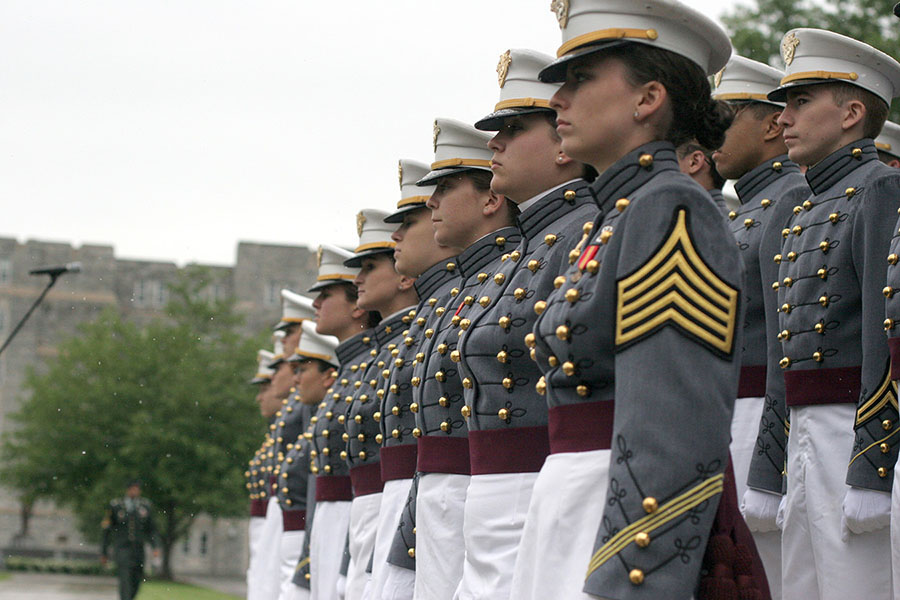
Figure 6.5 Cadets illustrate how strongly conformity can define groups. (Credit: West Point — The U.S. Military Academy/flickr)
A small group is typically one where the collection of people is small enough that all members of the group know each other and share simultaneous interaction, such as a nuclear family, a dyad, or a triad. Georg Simmel (1858–1915) wrote extensively about the difference between a dyad, or two-member group, and a triad, which is a three-member group (Simmel 1902). In the former, if one person withdraws, the group can no longer exist. We can think of a divorce, which effectively ends the “group” of the married couple or of two best friends never speaking again. In a triad, however, the dynamic is quite different. If one person withdraws, the group lives on. A triad has a different set of relationships. If there are three in the group, two-against-one dynamics can develop, and a majority opinion may form on any issue.
Small groups generally have strong internal cohesiveness and a sense of connection. Small groups may face challenges when trying to achieve large goals. They can struggle to be heard or to be a force for change if they are pushing against larger groups.
It is difficult to define exactly when a small group becomes a large group. Perhaps it occurs when one group grows so large that there are too many people to join in a simultaneous discussion. Sometimes it occurs when a group joins with other groups as part of a movement. These larger groups may share a geographic space, such as a fraternity or sorority on the same campus, or they might be spread out around the globe. The larger the group, the more attention it can garner, and the more pressure members can put toward whatever goal they wish to achieve. At the same time, the larger the group becomes, the more the risk grows for division and lack of cohesion.
Group Leadership
Often, larger groups require some kind of leadership. In small, primary groups, leadership tends to be informal. After all, most families don’t take a vote on who will rule the group, nor do most groups of friends. This is not to say that de facto leaders don’t emerge, but formal leadership is rare. In secondary groups, leadership is usually more overt. They often outline roles and responsibilities, with a chain of command to follow. Some secondary groups, like the military, have highly structured and clearly understood chains of command, and sometimes lives depend on those. After all, how well could soldiers function in a battle if different people were calling out orders and if they had no idea whom to listen to? Other secondary groups, like a workplace or a classroom, also have formal leaders, but the styles and functions of leadership can vary significantly.
Leadership function refers to the main goal of the leader, which may be instrumental or expressive. An instrumental leader is one who is goal-oriented and largely concerned with accomplishing set tasks. We can imagine that an army general or a Fortune 500 CEO would be an instrumental leader. In contrast, expressive leaders are more concerned with promoting emotional strength and health, and ensuring that people feel supported. Social and religious leaders—rabbis, priests, imams, directors of youth homes and social service programs—are often perceived as expressive leaders. Sometimes people expect men to take on instrumental roles and women to assume expressive roles. Women and men who exhibit the other-gender manner can be seen as deviants and can encounter resistance. Yet, both men and women prefer leaders who use a combination of expressive and instrumental leadership (Boatwright and Forrest, 2000).
Sociologists recognize three leadership styles. Democratic leaders encourage group participation in all decision making. They work hard to build consensus before choosing a course of action and moving forward. This type of leader is particularly common, for example, in a club where the members vote on which activities or projects to pursue. Democratic leaders can be well liked, but there is often a danger that decisions will proceed slowly since consensus building is time-consuming. A further risk is that group members might pick sides and entrench themselves into opposing factions rather than reaching a solution.
In contrast, a laissez-faire (French for “leave it alone”) leader is hands-off, allowing group members to self-manage and make their own decisions. An example of this kind of leader might be an art teacher who opens the art cupboard, leaves materials on the shelves, and tells students to help themselves and make some art. While this style can work well with highly motivated and mature participants who have clear goals and guidelines, it risks group dissolution and a lack of progress.
Finally, authoritarian leaders issue orders and assign tasks with little to no feedback from group members. These leaders are often instrumental leaders with a strong focus on meeting goals. Often, entrepreneurs fall into this mold, like Facebook founder Mark Zuckerberg. Not surprisingly, authoritarian leaders risk alienating the workers. When decisions need to be made quickly or informed by a high level of expertise, however, this style of leadership can be required.
In different circumstances, each of these leadership styles can be effective and successful. Consider what leadership style you prefer. Why? Do you like the same style in different areas of your life, such as a classroom, a workplace, and a sports team?
Big Picture
Women Political Candidates
Figure 6.6 — 6.2 Group Size and Structure
Figure 6.6 Kamala Harris, like many other women leaders, faces unique and sometimes conflicting expectations. She may want to lead, but some care more about whether she is liked. (Credit: California National Guard/flickr)
Kamala Harris broke a significant barrier when she became the first woman and first person of Black and South Asian descent to be elected vice president of the United States. A prominent presidential candidate in her own right during the 2020 primary election, Harris was asked by then-candidate Joe Biden to be his running mate in order to secure his electoral victory.
You may be surprised, however, to learn that more than ten other women were on the ballot for president or vice president on November 3, 2020. Many were not on the ballot in every state, and at least one (Ricki Sue King) actually encouraged people not to vote for her. Shirley Chisholm, Lenora Fulani, Jill Stein, Hillary Clinton and many other women have been candidates, but the United States has yet to elect a woman to the presidency.
Researchers and political analysts have long established that gender plays a significant role in how political leaders (both candidates and elected officials) are perceived. As a starting point, research indicates that, even among women, the public prefer masculine qualities in presidents. For example, a study in which subjects completed the Bem Sex-Role Inventory and Implicit Leadership Inventory found that the hypothetical “Ideal” president possessed more masculine qualities than feminine qualities (Powell and Butterfield 2011).
Beyond the implicit preference toward masculine qualities, women candidates face what is sometimes referred to as the “likability trap.” Essentially, the public expects and prefers certain qualities from its leaders, and also expects and prefers certain qualities based on the candidates’ gender. For women presidential candidates, these expectations often conflict. For example, when a male candidate ranks low on feminine qualities, their likeability is not significantly affected. But when a female candidate, like Hillary Clinton, ranks low on feminine qualities, their likability is significantly impacted. Interestingly, the same survey found that Kamala Harris had a much more balanced gender quality rating than Clinton did. The researchers qualified that since Kamala Harris ran for vice president, rather than president, the ratings cannot be directly compared to Clinton’s. This difference, though, may indicate why many women are elected to legislative and gubernatorial roles, but not to the presidency (Conroy, Martin, and Nadler, 2020).
These same perceptions present themselves in the workplace. Prescriptive stereotypes—that is, ideas about how men or women should behave—limit women’s advancement to leadership positions. Men are often appreciated for being ambitious, while women who exhibit assertive behavior are generally perceived as selfish or overly competitive (Baldoni, 2020). Furthermore, when men help out in the workplace, their contribution is appreciated while the same task carried out by women goes unacknowledged. Scholars observe that women are underrepresented in the top levels of U.S. businesses and Fortune 500 companies (Heilman 2012).
Figure 6.7 — 6.2 Group Size and Structure
Figure 6.7 This gag gift demonstrates how female leaders may be viewed if they violate social norms. (Credit: istolethetv/flickr)
We all like to fit in to some degree. Likewise, if we want to stand out, then we want to choose how we stand out and for what reasons. For example, a person who loves cutting-edge fashion might dress in thought-provoking new styles to set a new trend.
Conformity is the extent to which an individual complies with group norms or expectations. As you might recall, we use reference groups to assess and understand how to act, to dress, and to behave. Not surprisingly, young people are particularly aware of who conforms and who does not. A high school boy whose mother makes him wear ironed button-down shirts might protest that everyone else wears T-shirts and he will look stupid. Another high school boy might like wearing those shirts as a way of standing out. How much do you enjoy being noticed? Do you consciously prefer to conform to group norms so as not to be singled out? Are there people in your class who immediately come to mind when you think about those who don’t want to conform?
Psychologist Solomon Asch (1907–1996) conducted experiments that illustrated how great the pressure to conform is, specifically within a small group (1956). Read about his work in the Sociological Research feature and consider what you would do in Asch’s experiment. Would you speak up? What would help you speak up and what would discourage it?
Sociological Research
Conforming to Expectations
In 1951, psychologist Solomon Asch sat a small group of about eight people around a table. Only one of the people sitting there was the true subject; the rest were associates of the experimenter. However, the subject was led to believe that the others were all, like him, people brought in for an experiment in visual judgments. The group was shown two cards, the first card with a single vertical line, and the second card with three vertical lines differing in length. The experimenter polled the group and asked each participant one at a time which line on the second card matched up with the line on the first card.
However, this was not really a test of visual judgment. Rather, it was Asch’s study on the pressures of conformity. He was curious to see what the effect of multiple wrong answers would be on the subject, who presumably was able to tell which lines matched. In order to test this, Asch had each planted respondent answer in a specific way. The subject was seated in such a way that he had to hear almost everyone else’s answers before it was his turn. Sometimes the nonsubject members would unanimously choose an answer that was clearly wrong.
So what was the conclusion? Asch found that thirty-seven out of fifty test subjects responded with an “obviously erroneous” answer at least once. When faced by a unanimous wrong answer from the rest of the group, the subject conformed to a mean of four of the staged answers. Asch revised the study and repeated it, wherein the subject still heard the staged wrong answers, but was allowed to write down his answer rather than speak it aloud. In this version, the number of examples of conformity––giving an incorrect answer so as not to contradict the group––fell by two thirds. He also found that group size had an impact on how much pressure the subject felt to conform.
The results showed that speaking up when only one other person gave an erroneous answer was far more common than when five or six people defended the incorrect position. Finally, Asch discovered that people were far more likely to give the correct answer in the face of near-unanimous consent if they had a single ally. If even one person in the group also dissented, the subject conformed only a quarter as often. Clearly, it was easier to be a minority of two than a minority of one.
Asch concluded that there are two main causes for conformity: people want to be liked by the group or they believe the group is better informed than they are. He found his study results disturbing. To him, they revealed that intelligent, well-educated people would, with very little coaxing, go along with an untruth. He believed this result highlighted real problems with the education system and values in our society (Asch 1956).
Stanley Milgram, a Yale psychologist, had similar results in his experiment that is now known simply as the Milgram Experiment. In 1962, Milgram found that research subjects were overwhelmingly willing to perform acts that directly conflicted with their consciences when directed by a person of authority. In the experiment, subjects were willing to administer painful, even supposedly deadly, shocks to others who answered questions incorrectly.
Social psychologists have recognized that other people’s presence influences our behavior, whether we are aware of it or not. One example is the bystander effect, a situation in which people are less likely to interfere during an emergency or when a social norm is being violated if there are others around. They feel less responsible because of the presence of other bystanders (Beyer et al., 2017). This is known as diffusion of responsibility.
Most of the time people report that they don’t want to get involved and that’s why they don’t respond when they see something wrong. They assume someone else will step up and help. Researchers have found that people are less likely to help if they don’t know the victim (Cherry 2020).
Think about it this way, you’re walking to class and there are several students around. Someone falls on the ground having a seizure. What would you do? The bystander effect suggests that unless you know the person who has fallen, you are more likely to walk away than help. However, social psychologists believe that you are much more likely to help, or at least stop and check, if you are the only one around.