Socialization is the lifelong acquisition and negotiation of norms, skills, identities, and expectations.
Explain how family, peers, schools, media, and workplaces socialize individuals
Socialization is the lifelong acquisition and negotiation of norms, skills, identities, and expectations. Families provide early language, care patterns, and values; peers supply belonging and informal standards; schools teach explicit content and a hidden curriculum of routines and authority. Media provide models and frames, while workplaces socialize people into occupational roles. Anticipatory socialization prepares for a future role; resocialization replaces established expectations in a new setting. Total institutions organize many areas of daily life under one authority and can intensify resocialization. People actively interpret and sometimes resist these messages, and agents can give conflicting expectations rather than transmitting one uniform culture.
Worked question. A trainee learns clinical vocabulary in class but learns when to speak during rounds by observing senior staff. Later, a new workplace expects a different interaction style. Identify the socialization processes.
Formal instruction teaches explicit knowledge, while observation and implicit rewards teach workplace norms and a hidden curriculum. Practicing the future role before employment is anticipatory socialization; revising established expectations after the move is resocialization. The example shows multiple agents and ongoing learning rather than socialization ending in childhood.
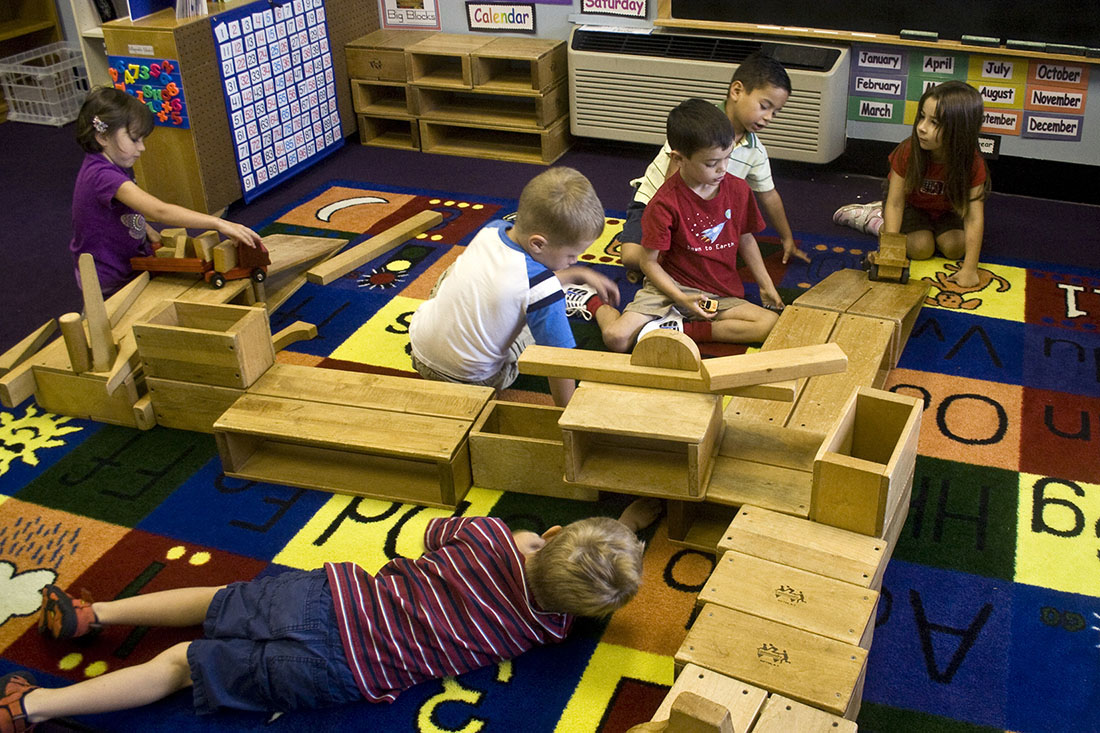
Figure 5.5 These kindergarteners aren’t just learning to read and write; they are being socialized to norms like keeping their hands to themselves, standing in line, and playing together. (Credit: woodleywonderworks/flickr)
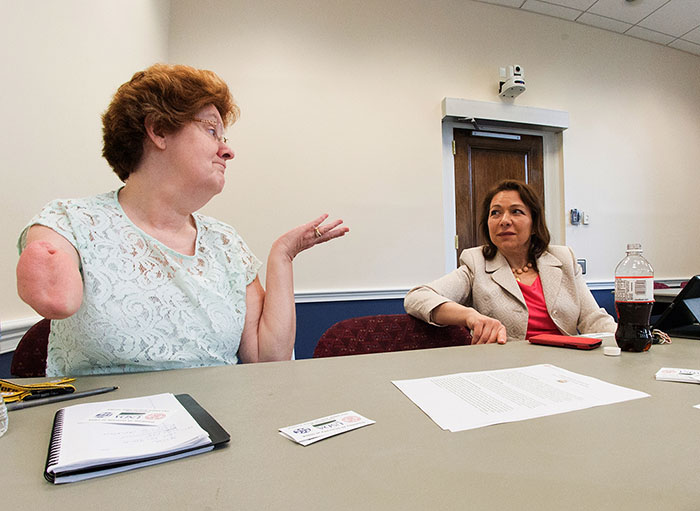
Figure 5.6 Workplace socialization occurs informally and formally, and may include material and non-material culture (Credit: U.S. Department of Agriculture/flickr).
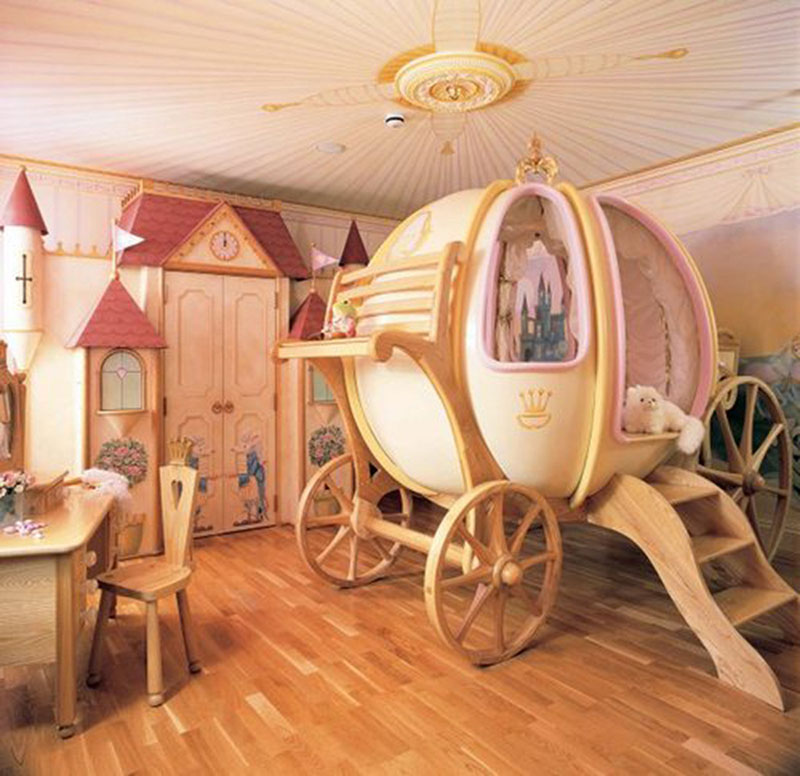
Figure 5.7 Some researchers, parents, and children's advocates are concerned about the effects of raising girls within what they call "princess culture." Many place blame on entertainment companies, such as Disney, for its portrayals of girls in its movies.
5.4 Socialization Across the Life Course — figures and tables
Figure 5.8 — 5.4 Socialization Across the Life Course
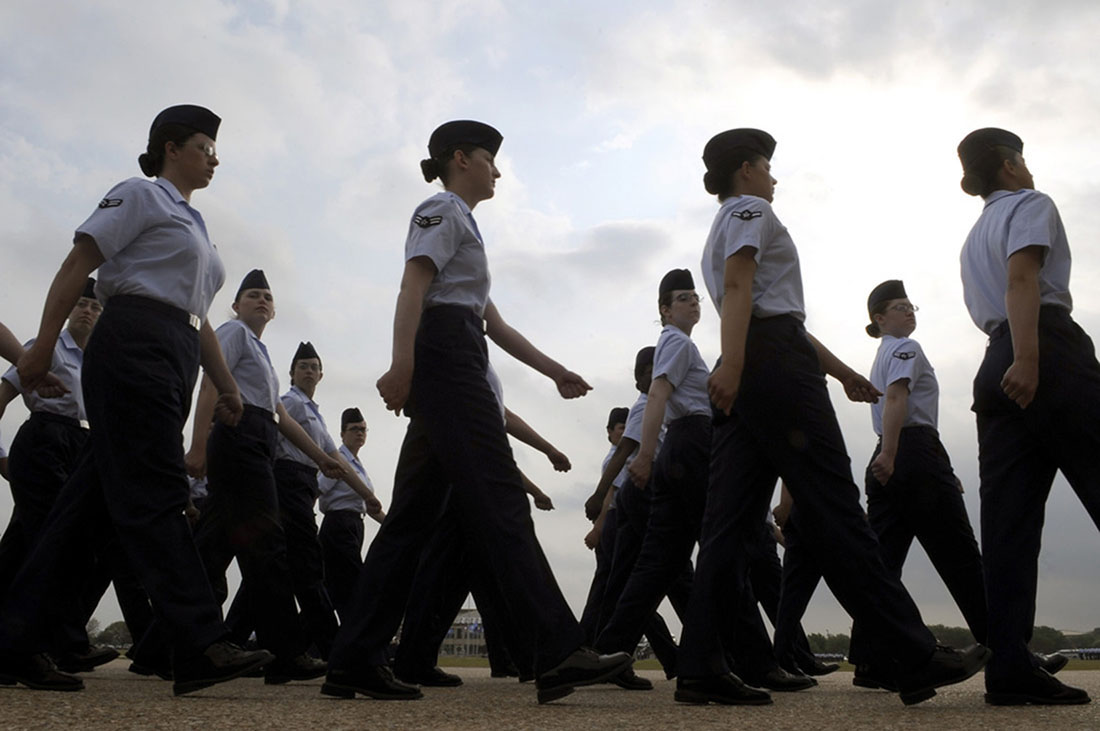
Figure 5.8 In basic training, members of the Air Force are taught to walk, move, and look like each other. (Credit: Staff Sergeant Desiree N. Palacios, U.S. Air Force/Wikimedia Commons)
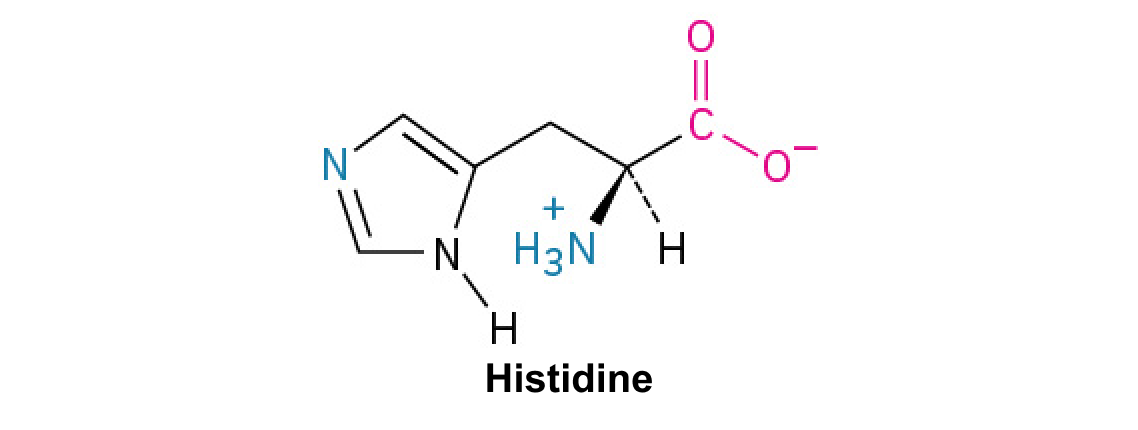
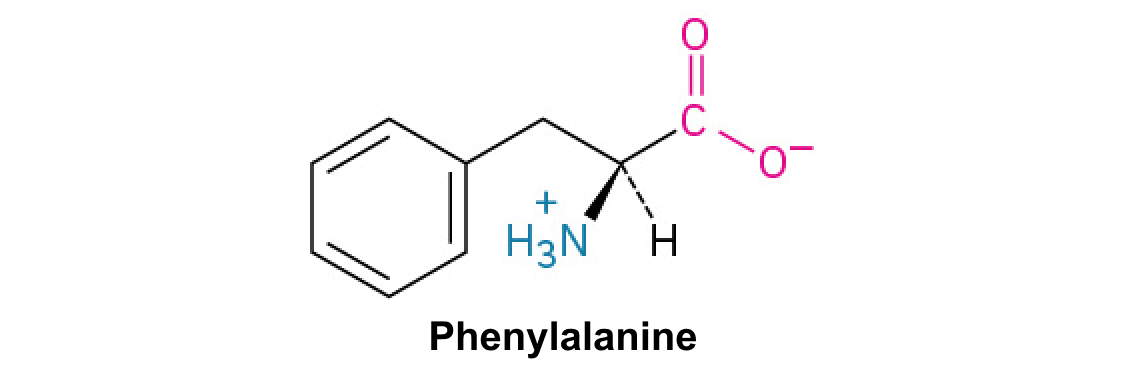
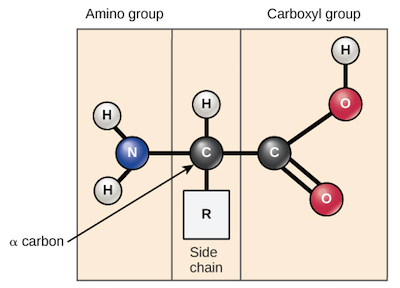
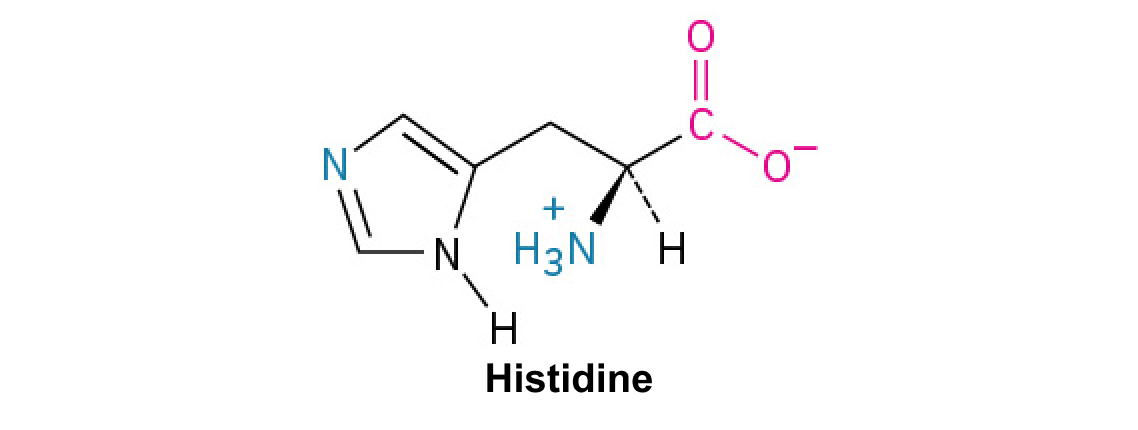
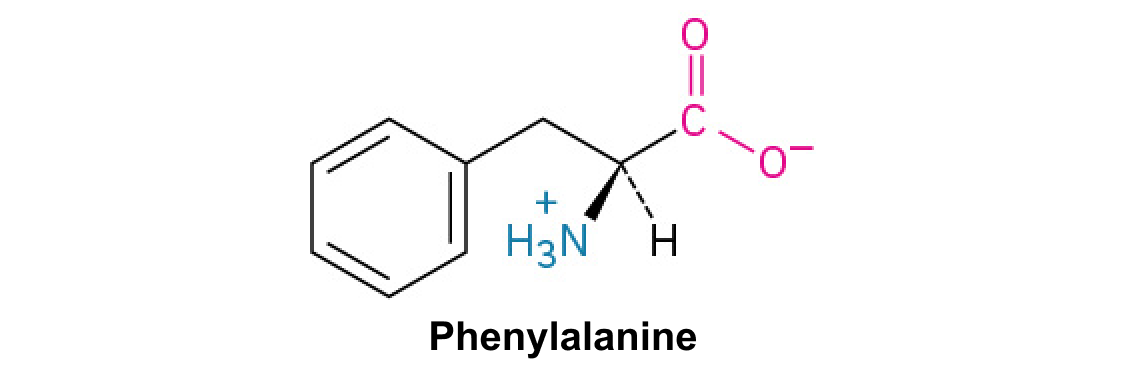
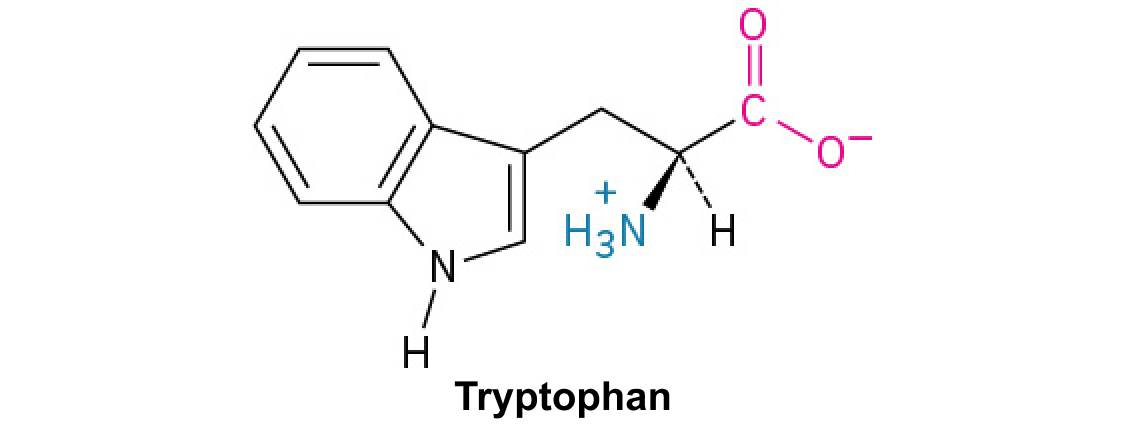
A nitrogen-containing functional group. A free amino acid’s amino group is typically protonated (NH₃⁺) near physiological pH; proline’s ring nitrogen is an exception to this formula.
Figure 15.4 This figure shows the genetic code for translating each nucleotide triplet in mRNA into an amino acid or a termination signal in a protein. (credit: modification of work by NIH)
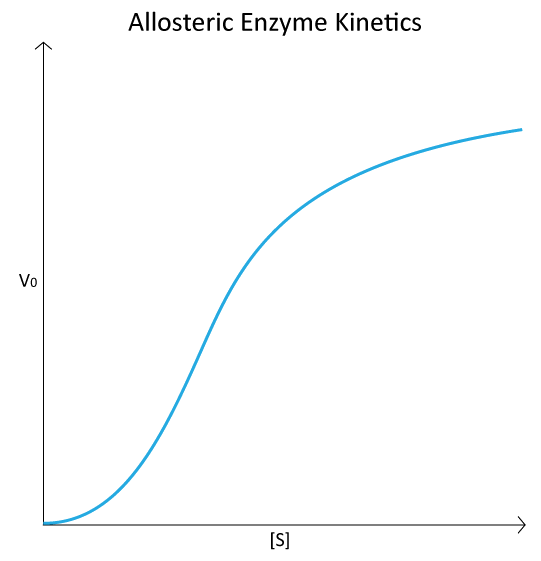
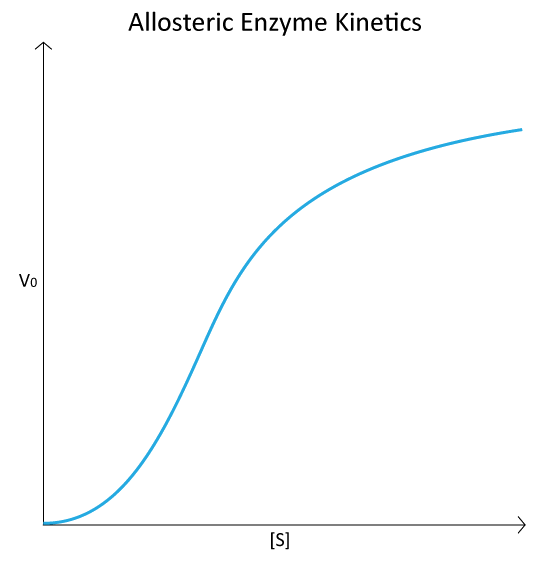
Figure 4.44 - Kinetic profile of an allosteric enzyme whose activity is controlled by a homotropic effector. Image by Aleia Kim
Kevin Ahern, Indira Rajagopal, and Taralyn Tan, Biochemistry Free For All, Oregon State University, via Biology LibreTexts. Image by Aleia Kim · CC BY-NC-SA 4.0
· Original image ↗ · Access for free ↗
An electrical property that can be positive or negative. Opposite charges attract and like charges repel; net charge is the sum of all charges on a particle.
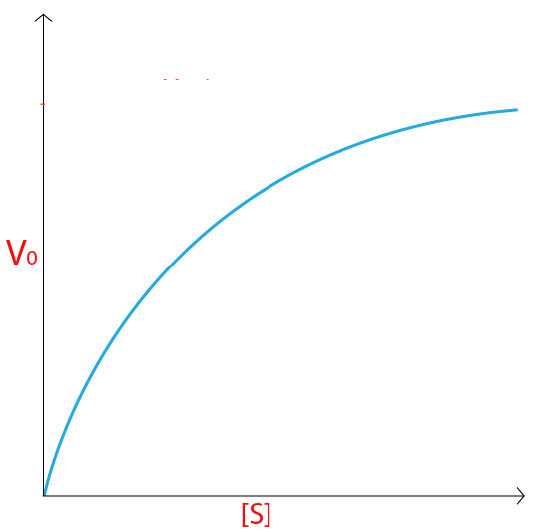
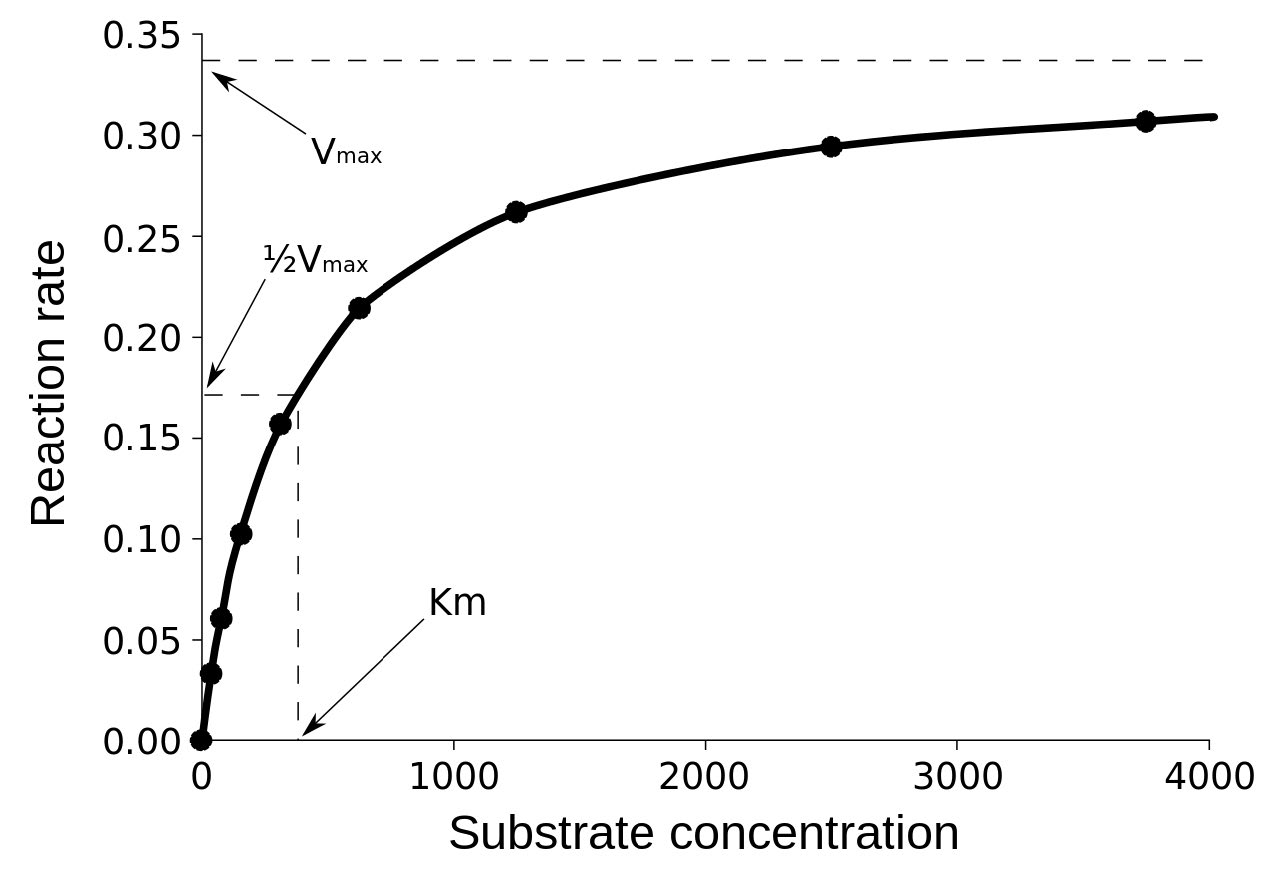
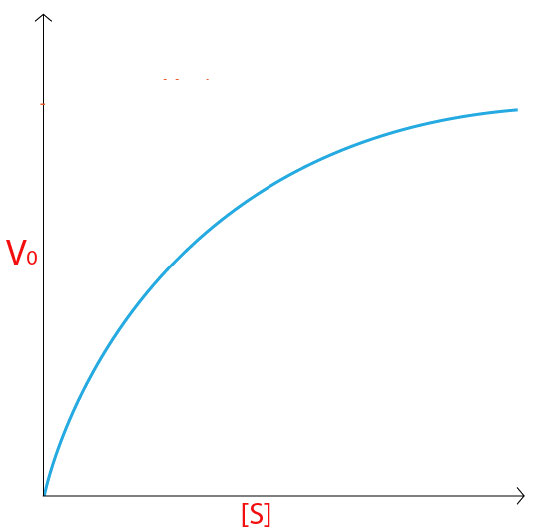
Figure 4.18 - Kinetics of an enzyme obeying Michaelis-Menten kinetics. Image by Aleia Kim
Kevin Ahern, Indira Rajagopal, and Taralyn Tan, Biochemistry Free For All, Oregon State University, via Biology LibreTexts. Image by Aleia Kim · CC BY-NC-SA 4.0
· Original image ↗ · Access for free ↗
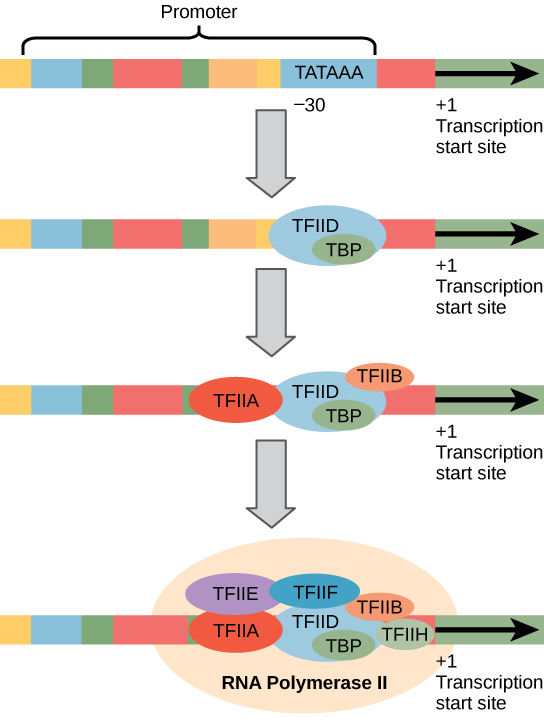
Figure 15.10 A generalized promoter of a gene transcribed by RNA polymerase II is shown. Transcription factors recognize the promoter. RNA polymerase II then binds and forms the transcription initiation complex.
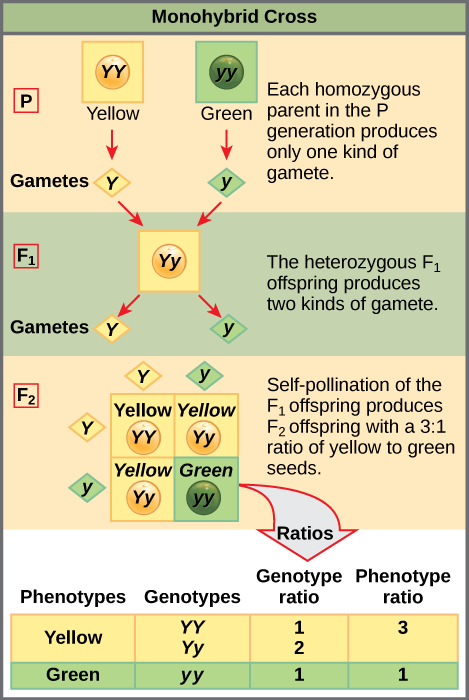
Figure 12.4 In the P generation, pea plants that are true-breeding for the dominant yellow phenotype are crossed with plants with the recessive green phenotype. This cross produces F 1 heterozygotes with a yellow phenotype. Punnett square analysis can be used to predict the genotypes of the F 2 generation.
Figure 4.18 - Kinetics of an enzyme obeying Michaelis-Menten kinetics. Image by Aleia Kim
Kevin Ahern, Indira Rajagopal, and Taralyn Tan, Biochemistry Free For All, Oregon State University, via Biology LibreTexts. Image by Aleia Kim · CC BY-NC-SA 4.0
· Original image ↗ · Access for free ↗
The early rate of product formation, measured before substantial substrate depletion or product accumulation, usually after the brief binding transient.
Figure 4.18 - Kinetics of an enzyme obeying Michaelis-Menten kinetics. Image by Aleia Kim
Kevin Ahern, Indira Rajagopal, and Taralyn Tan, Biochemistry Free For All, Oregon State University, via Biology LibreTexts. Image by Aleia Kim · CC BY-NC-SA 4.0
· Original image ↗ · Access for free ↗
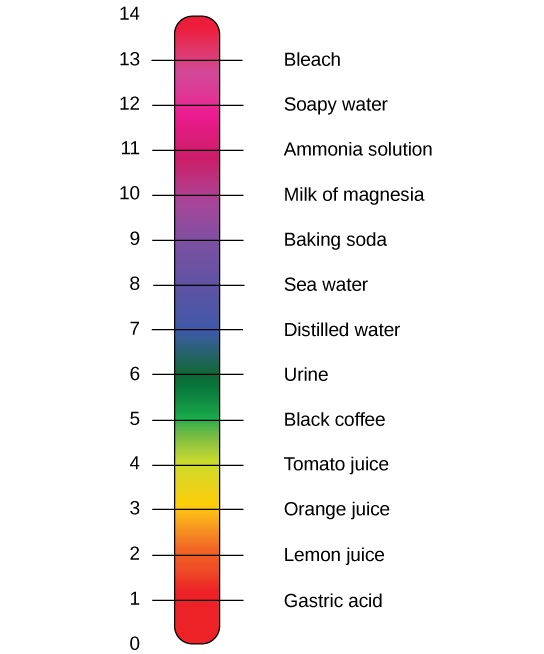
The exponent needed to obtain a number from a chosen fixed number. For decimal logarithms, log₁₀(100) = 2 because 10² = 100; pH uses the negative decimal logarithm of hydrogen ion activity.
A thin boundary or sheet. Cell membranes are lipid bilayers containing proteins; blotting membranes are synthetic supports that hold proteins or nucleic acids for detection.
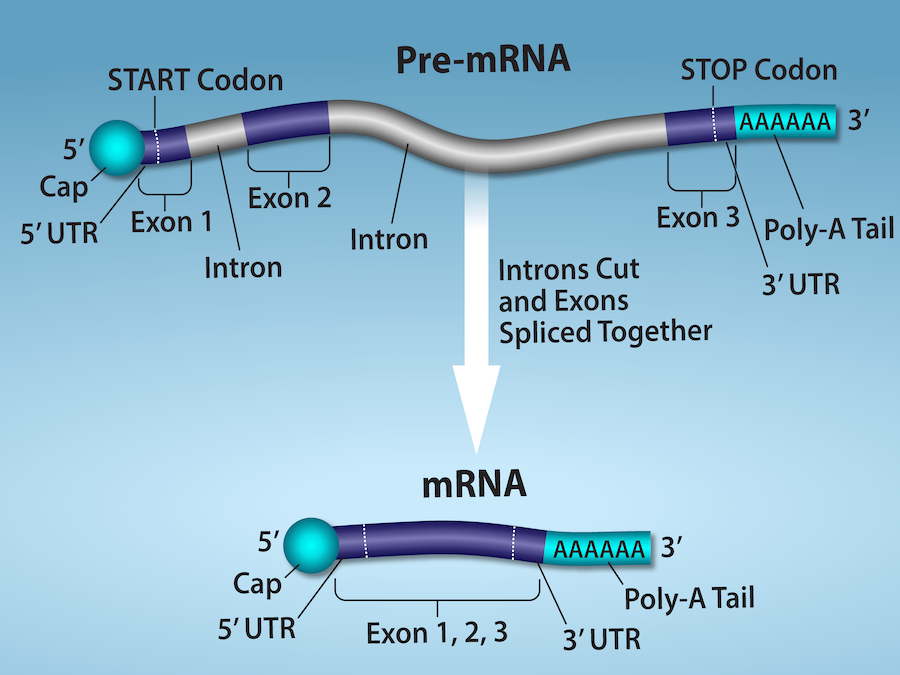
Figure 15.11 Eukaryotic pre-mRNA processing. In addition to 5’ Cap and 3’ Poly-A Tail addition, introns must be precisely removed and exons joined to generate a functional mRNA. Nucleotides upstream (towards the 5’cap) of the translation START codon are part of the 5’ untranslated region (5’ UTR). Nucleotides downstream (towards 3’end) of the STOP codon form the 3’ UTR. Both 5’ and 3’ UTRs are important for regulating translation initiation and mRNA stability. Credit: Rao, A., Ryan, K. Fletcher, S. and Tag, A. Department of Biology, Texas A&M University.
Rao, A., Ryan, K. Fletcher, S. and Tag, A. Department of Biology, Texas A&M University.; Mary Ann Clark, Matthew Douglas, and Jung Choi, Biology 2e, OpenStax. · CC BY-NC-SA 4.0
· Original image ↗ · Access for free ↗
Figure 4.18 - Kinetics of an enzyme obeying Michaelis-Menten kinetics. Image by Aleia Kim
Kevin Ahern, Indira Rajagopal, and Taralyn Tan, Biochemistry Free For All, Oregon State University, via Biology LibreTexts. Image by Aleia Kim · CC BY-NC-SA 4.0
· Original image ↗ · Access for free ↗
Figure 12.4 In the P generation, pea plants that are true-breeding for the dominant yellow phenotype are crossed with plants with the recessive green phenotype. This cross produces F 1 heterozygotes with a yellow phenotype. Punnett square analysis can be used to predict the genotypes of the F 2 generation.
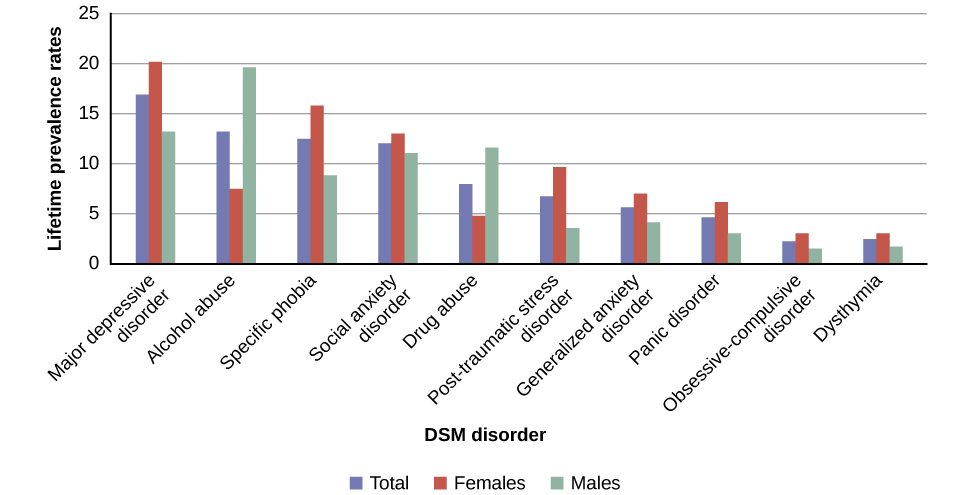
Figure 15.4 The graph shows the breakdown of psychological disorders, comparing the percentage prevalence among adult males and adult females in the United States. Because the data is from 2007, the categories shown here are from the DSM-IV, which has been supplanted by the DSM-5. Most categories remain the same; however, alcohol abuse now falls under a broader Alcohol Use Disorder category.
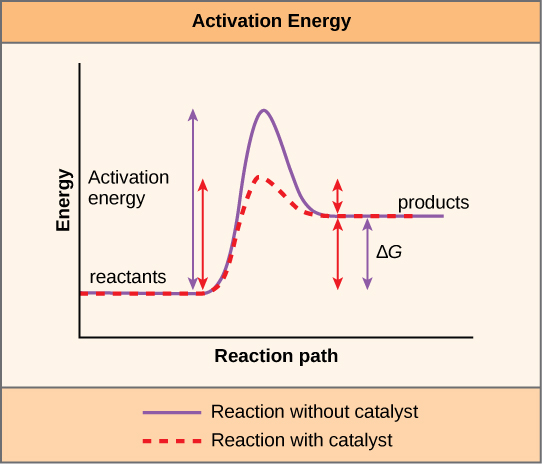
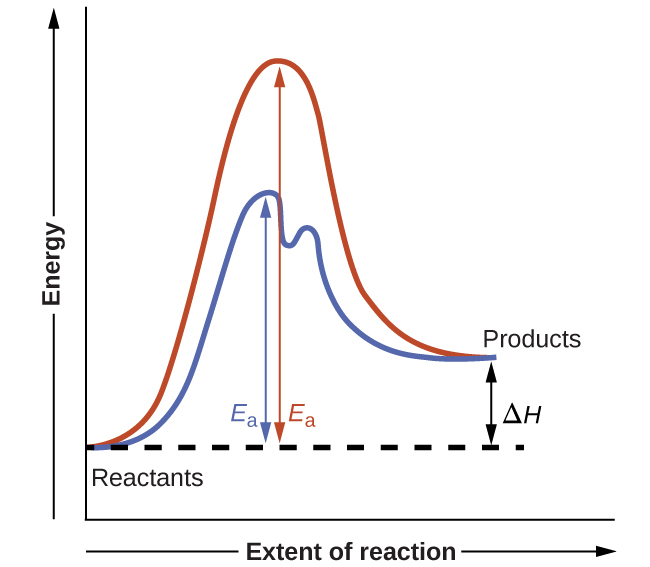
Figure 12.19 Reaction diagrams for an endothermic process in the absence (red curve) and presence (blue curve) of a catalyst. The catalyzed pathway involves a two-step mechanism (note the presence of two transition states) and an intermediate species (represented by the valley between the two transitions states).
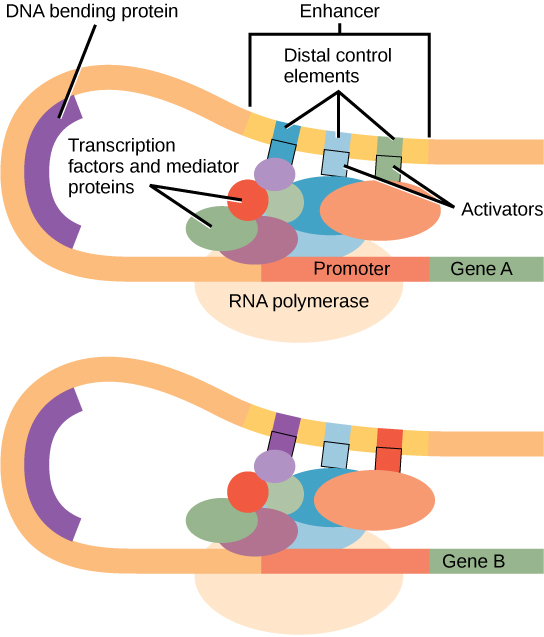
Figure 16.10 Interaction between proteins at the promoter and enhancer sites. An enhancer is a DNA sequence that promotes transcription. Each enhancer is made up of short DNA sequences called distal control elements. Activators bound to the distal control elements interact with mediator proteins and transcription factors. Two different genes may have the same promoter but different distal control elements, enabling differential gene expression.
Figure 4.44 - Kinetic profile of an allosteric enzyme whose activity is controlled by a homotropic effector. Image by Aleia Kim
Kevin Ahern, Indira Rajagopal, and Taralyn Tan, Biochemistry Free For All, Oregon State University, via Biology LibreTexts. Image by Aleia Kim · CC BY-NC-SA 4.0
· Original image ↗ · Access for free ↗
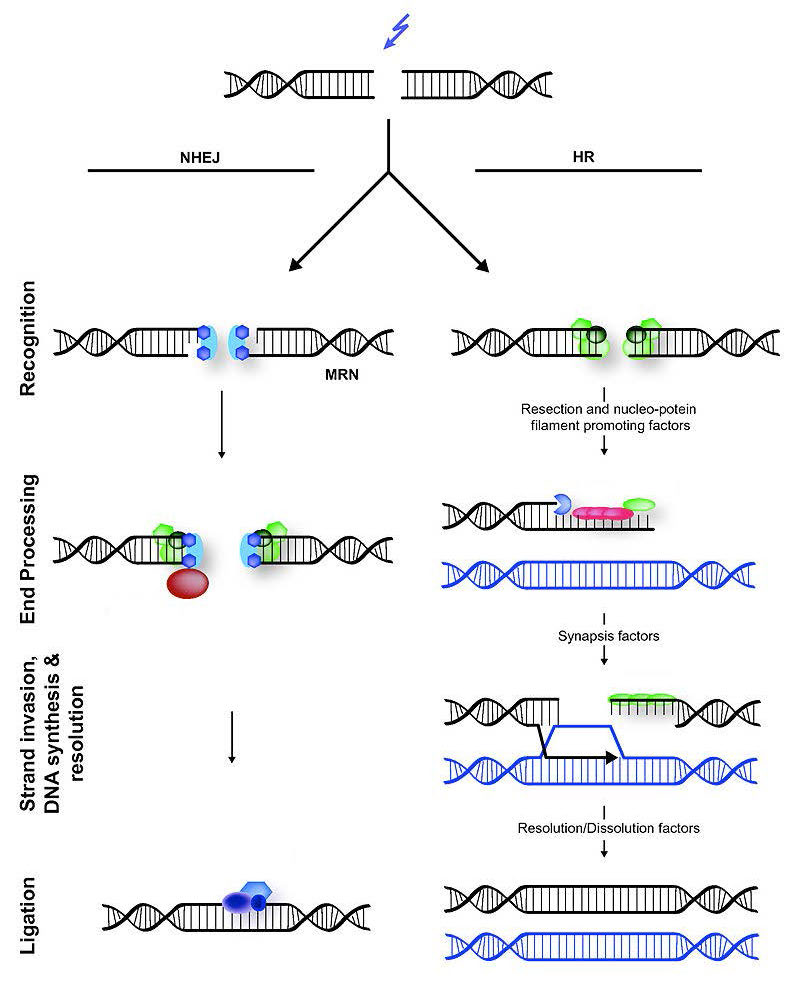
Figure 7.45 - Non-homologous end joining (left) versus homologous recombination (right) - Wikipedia
Wikipedia, as credited by Kevin Ahern, Indira Rajagopal, and Taralyn Tan, Biochemistry Free For All, Oregon State University, via Biology LibreTexts. · Source attribution
· Original image ↗ · Access for free ↗
The amount of a substance that can dissolve in a solvent under specified conditions. Soluble means able to dissolve; insoluble means only very slightly soluble in that solvent.
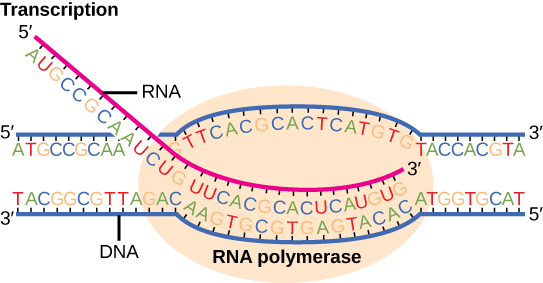
Figure 15.7 Messenger RNA is a copy of protein-coding information in the coding strand of DNA, with the substitution of U in the RNA for T in the coding sequence. However, new RNA nucleotides base pair with the nucleotides of the template strand. RNA is synthesized in its 5'-3' direction, using the enzyme RNA polymerase. As the template is read, the DNA unwinds ahead of the polymerase and then rewinds behind it.
A fleeting, high-energy arrangement at a reaction barrier. It is an energy maximum along the reaction path, rather than a stable reaction intermediate.
Figure 12.19 Reaction diagrams for an endothermic process in the absence (red curve) and presence (blue curve) of a catalyst. The catalyzed pathway involves a two-step mechanism (note the presence of two transition states) and an intermediate species (represented by the valley between the two transitions states).
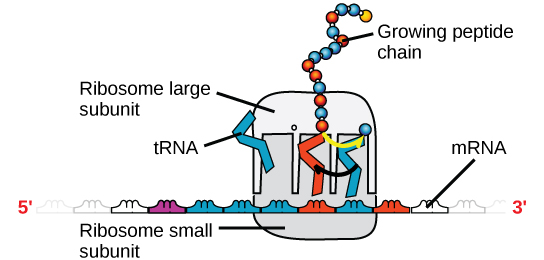
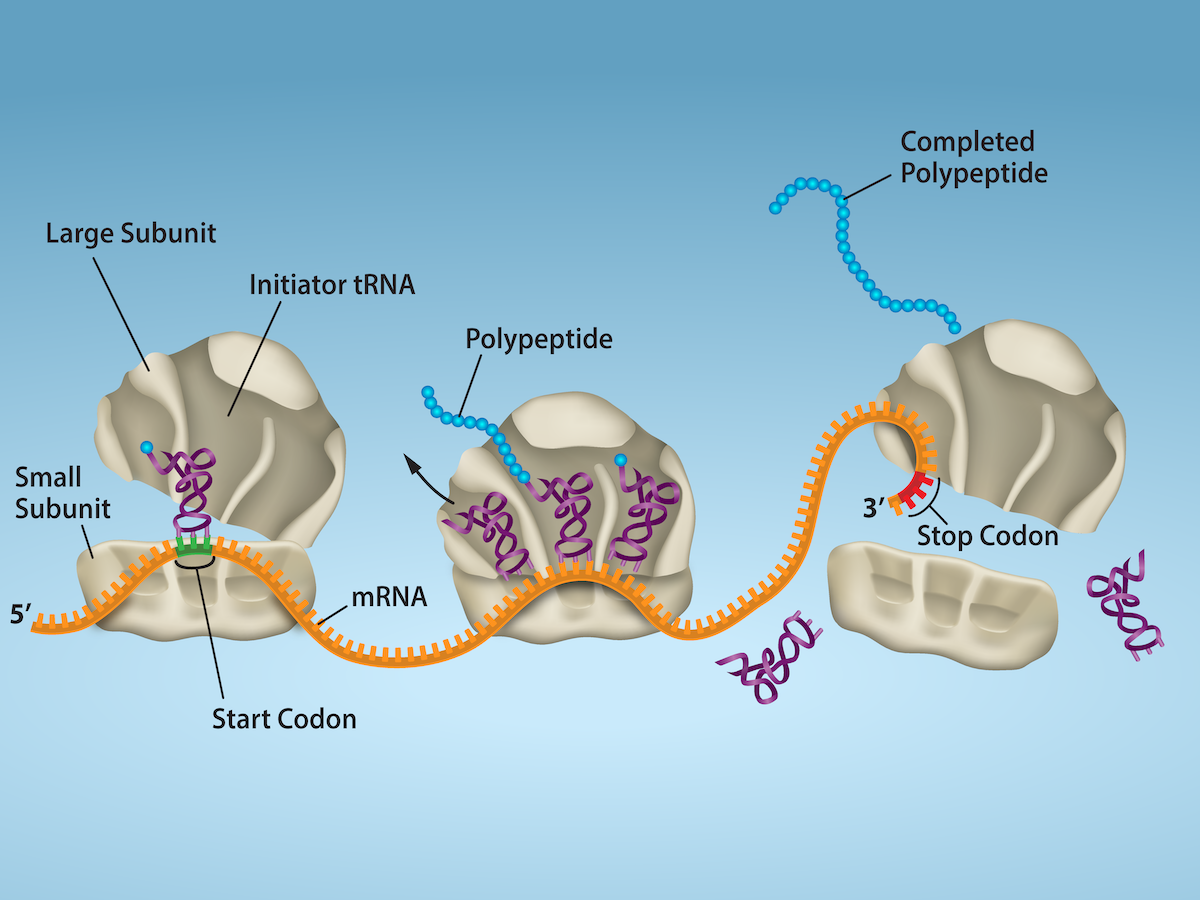
Figure 15.18 Translation begins when an initiator tRNA anticodon recognizes a start codon on mRNA bound to a small ribosomal subunit. The large ribosomal subunit joins the small subunit, and a second tRNA is recruited. As the mRNA moves relative to the ribosome, successive tRNAs move through the ribosome and the polypeptide chain is formed. Entry of a release factor into the A site terminates translation and the components dissociate.
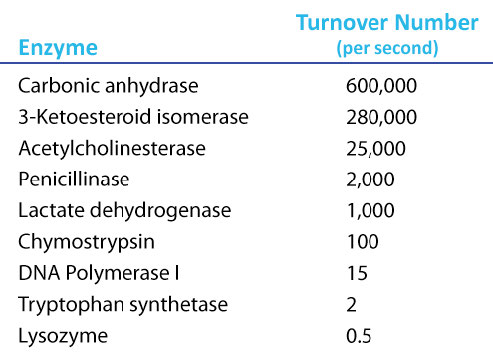
Figure 4.21 - Kcat (turnover number) values for several enzymes. Image by Aleia Kim
Kevin Ahern, Indira Rajagopal, and Taralyn Tan, Biochemistry Free For All, Oregon State University, via Biology LibreTexts. Image by Aleia Kim · CC BY-NC-SA 4.0
· Original image ↗ · Access for free ↗
No matching terms. Try a different name or abbreviation.
5.3 Agents of Socialization
OpenStax · 5.3 Agents of Socialization ↗ Instructional page including learning objectives, examples, figures, source tables and questions. Site navigation and embedded media players are omitted; source media links remain available.
Learning Objectives
By the end of this section, you should be able to:
Evaluate the roles of families and peer groups in socialization
Describe how people are socialized through institutions like schools, workplaces, and the government
Socialization helps people learn to function successfully in their social worlds. How does the process of socialization occur? How do we learn to use the objects of our society’s material culture? How do we come to adopt the beliefs, values, and norms that represent its nonmaterial culture? This learning takes place through interaction with various agents of socialization, like peer groups and families, plus both formal and informal social institutions.
Social Group Agents
Social groups often provide the first experiences of socialization. Families, and later peer groups, communicate expectations and reinforce norms. People first learn to use the tangible objects of material culture in these settings, as well as being introduced to the beliefs and values of society.
Family
Family is the first agent of socialization. Mothers and fathers, siblings and grandparents, plus members of an extended family, all teach a child what he or she needs to know. For example, they show the child how to use objects (such as clothes, computers, eating utensils, books, bikes); how to relate to others (some as “family,” others as “friends,” still others as “strangers” or “teachers” or “neighbors”); and how the world works (what is “real” and what is “imagined”). As you are aware, either from your own experience as a child or from your role in helping to raise one, socialization includes teaching and learning about an unending array of objects and ideas.
Keep in mind, however, that families do not socialize children in a vacuum. Many social factors affect the way a family raises its children. For example, we can use sociological imagination to recognize that individual behaviors are affected by the historical period in which they take place. Sixty years ago, it would not have been considered especially strict for a father to hit his son with a wooden spoon or a belt if he misbehaved, but today that same action might be considered child abuse.
Sociologists recognize that race, social class, religion, and other societal factors play an important role in socialization. For example, poor families usually emphasize obedience and conformity when raising their children, while wealthy families emphasize judgment and creativity (National Opinion Research Center 2008). This may occur because working-class parents have less education and more repetitive-task jobs for which it is helpful to be able to follow rules and conform. Wealthy parents tend to have better educations and often work in managerial positions or careers that require creative problem solving, so they teach their children behaviors that are beneficial in these positions. This means children are effectively socialized and raised to take the types of jobs their parents already have, thus reproducing the class system (Kohn 1977). Likewise, children are socialized to abide by gender norms, perceptions of race, and class-related behaviors.
In Sweden, for instance, stay-at-home fathers are an accepted part of the social landscape. A government policy provides subsidized time off work—480 days for families with newborns—with the option of the paid leave being shared between mothers and fathers. As one stay-at-home dad says, being home to take care of his baby son “is a real fatherly thing to do. I think that’s very masculine” (Associated Press 2011). Close to 90 percent of Swedish fathers use their paternity leave (about 340,000 dads); on average they take seven weeks per birth (The Economist, 2014). How do U.S. policies—and our society’s expected gender roles—compare? How will Swedish children raised this way be socialized to parental gender norms? How might that be different from parental gender norms in the United States?
A peer group is made up of people who are similar in age and social status and who share interests. Peer group socialization begins in the earliest years, such as when kids on a playground teach younger children the norms about taking turns, the rules of a game, or how to shoot a basket. As children grow into teenagers, this process continues. Peer groups are important to adolescents in a new way, as they begin to develop an identity separate from their parents and exert independence. Additionally, peer groups provide their own opportunities for socialization since kids usually engage in different types of activities with their peers than they do with their families. Peer groups provide adolescents’ first major socialization experience outside the realm of their families. Interestingly, studies have shown that although friendships rank high in adolescents’ priorities, this is balanced by parental influence.
Institutional Agents
The social institutions of our culture also inform our socialization. Formal institutions—like schools, workplaces, and the government—teach people how to behave in and navigate these systems. Other institutions, like the media, contribute to socialization by inundating us with messages about norms and expectations.
School
Most U.S. children spend about seven hours a day, 180 days a year, in school, which makes it hard to deny the importance school has on their socialization (U.S. Department of Education 2004). Students are not in school only to study math, reading, science, and other subjects—the manifest function of this system. Schools also serve a latent function in society by socializing children into behaviors like practicing teamwork, following a schedule, and using textbooks.
Figure 5.5 These kindergarteners aren’t just learning to read and write; they are being socialized to norms like keeping their hands to themselves, standing in line, and playing together. (Credit: woodleywonderworks/flickr)
School and classroom rituals, led by teachers serving as role models and leaders, regularly reinforce what society expects from children. Sociologists describe this aspect of schools as the hidden curriculum, the informal teaching done by schools.
For example, in the United States, schools have built a sense of competition into the way grades are awarded and the way teachers evaluate students (Bowles and Gintis 1976). When children participate in a relay race or a math contest, they learn there are winners and losers in society. When children are required to work together on a project, they practice teamwork with other people in cooperative situations. The hidden curriculum prepares children for the adult world. Children learn how to deal with bureaucracy, rules, expectations, waiting their turn, and sitting still for hours during the day. Schools in different cultures socialize children differently in order to prepare them to function well in those cultures. The latent functions of teamwork and dealing with bureaucracy are features of U.S. culture.
Schools also socialize children by teaching them about citizenship and national pride. In the United States, children are taught to say the Pledge of Allegiance. Most districts require classes about U.S. history and geography. As academic understanding of history evolves, textbooks in the United States have been scrutinized and revised to update attitudes toward other cultures as well as perspectives on historical events; thus, children are socialized to a different national or world history than earlier textbooks may have done. For example, information about the mistreatment of African Americans and Native American Indians more accurately reflects those events than in textbooks of the past.
Big Picture
Controversial Textbooks
On August 13, 2001, twenty South Korean men gathered in Seoul. Each chopped off one of his own fingers because of textbooks. These men took drastic measures to protest eight middle school textbooks approved by Tokyo for use in Japanese middle schools. According to the Korean government (and other East Asian nations), the textbooks glossed over negative events in Japan’s history at the expense of other Asian countries.
In the early 1900s, Japan was one of Asia’s more aggressive nations. For instance, it held Korea as a colony between 1910 and 1945. Today, Koreans argue that the Japanese are whitewashing that colonial history through these textbooks. One major criticism is that they do not mention that, during World War II, the Japanese forced Korean women into sexual slavery. The textbooks describe the women as having been “drafted” to work, a euphemism that downplays the brutality of what actually occurred. Some Japanese textbooks dismiss an important Korean independence demonstration in 1919 as a “riot.” In reality, Japanese soldiers attacked peaceful demonstrators, leaving roughly 6,000 dead and 15,000 wounded (Crampton 2002).
The protest affirms that textbooks are a significant tool of socialization in state-run education systems.
Figure 5.6 Workplace socialization occurs informally and formally, and may include material and non-material culture (Credit: U.S. Department of Agriculture/flickr).
Just as children spend much of their day at school, many U.S. adults at some point invest a significant amount of time at a place of employment. Although socialized into their culture since birth, workers require new socialization into a workplace, in terms of both material culture (such as how to operate the copy machine) and nonmaterial culture (such as whether it’s okay to speak directly to the boss or how to share the refrigerator). In the chapter introduction, Noel did not fully embrace the culture of their new company. Importantly, the obligation of such socialization is not simply on the worker: Organizational behavior and other business experts place responsibility on companies; organizations must have strong onboarding and socialization programs in order to build satisfaction, productivity, and workplace retention (Cebollero 2019).
Different jobs require different types of socialization. In the past, many people worked a single job until retirement. Today, the trend is to switch jobs at least once a decade. Between the ages of eighteen and forty-six, the average Baby Boomer of the younger set held 11.3 different jobs (U.S. Bureau of Labor Statistics, 2014). This means that people must become socialized to, and socialized by, a variety of work environments.
Religion
While some religions are informal institutions, here we focus on practices followed by formal institutions. Religion is an important avenue of socialization for many people. The United States is full of synagogues, temples, churches, mosques, and similar religious communities where people gather to worship and learn. Like other institutions, these places teach participants how to interact with the religion’s material culture (like a mezuzah, a prayer rug, or a communion wafer). For some people, important ceremonies related to family structure—like marriage and birth—are connected to religious celebrations. Many religious institutions also uphold gender norms and contribute to their enforcement through socialization. From ceremonial rites of passage that reinforce the family unit to power dynamics that reinforce gender roles, organized religion fosters a shared set of socialized values that are passed on through society.
Government
Although we do not think about it, many of the rites of passage people go through today are based on age norms established by the government. To be defined as an “adult” usually means being eighteen years old, the age at which a person becomes legally responsible for him- or herself. And sixty-five years old is the start of “old age” since most people become eligible for senior benefits at that point.
Each time we embark on one of these new categories—senior, adult, taxpayer—we must be socialized into our new role. Seniors must learn the ropes of Medicare, Social Security benefits, and senior shopping discounts. When U.S. males turn eighteen, they must register with the Selective Service System within thirty days to be entered into a database for possible military service. These government dictates mark the points at which we require socialization into a new category.
Mass Media
Mass media distribute impersonal information to a wide audience, via television, newspapers, radio, and the Internet. With the average person spending over four hours a day in front of the television (and children averaging even more screen time), media greatly influences social norms (Roberts, Foehr, and Rideout 2005). People learn about objects of material culture (like new technology and transportation options), as well as nonmaterial culture—what is true (beliefs), what is important (values), and what is expected (norms).
Figure 5.7 Some researchers, parents, and children's advocates are concerned about the effects of raising girls within what they call "princess culture." Many place blame on entertainment companies, such as Disney, for its portrayals of girls in its movies.
Movies aimed at young people have featured a host of girls and women leads. Snow White, Cinderella, and Sleeping Beauty gave way to The Little Mermaid, Beauty and the Beast, and Mulan. In many of those cases, if the character is not a princess to begin with, she typically ends the movie by marrying a prince or, in the case of Mulan, a military general. Although not all “princesses” in Disney movies play a passive role in their lives, they typically find themselves needing to be rescued by a man, and the happy ending they all search for includes marriage.
Alongside this prevalence of princesses, many parents are expressing concern about the culture of princesses that Disney has created. Peggy Orenstein addresses this problem in her popular book, Cinderella Ate My Daughter. Orenstein wonders why every little girl is expected to be a “princess” and why pink has become an all-consuming obsession for many young girls. Another mother wondered what she did wrong when her three-year-old daughter refused to do “nonprincessy” things, including running and jumping. The effects of this princess culture can have negative consequences for girls throughout life. An early emphasis on beauty can lead to reduced interest in math and science among girls, as well as avoiding educational scenarios that are not "typically feminine" (Coyne 2016).
Others acknowledge these issues, but find princess movies and "princess culture" less alarming. Some remind concerned parents that children have an array of media and activities around them, and the children may be happy wearing their princess outfit while digging for worms or going to hockey practice, which run counter to feminine stereotypes (Wagner 2019). Others indicate that rather than disallowing princess movies and merchandise, engaging with the children as they enjoy them might be more effective. And many people acknowledge that girls and women are often currently portrayed differently than they were in years past.
Disney seems to have gotten the message about the concerns. Its 2009 The Princess and the Frog was specifically billed as "a princess movie for people who don't like princess movies," and features a talented chef who becomes a business owner—who didn't need a man to rescue her—as its main character. Brave's Merida and the title character in Moana seem to go out of their way to separate themselves from traditional princesses, and undertake great acts of bravery to help others. Frozen focuses on sisterly love rather than romantic love. And though she was never meant to be a princess, Star Wars' Rey was the go-to girls Halloween costume for years after she was introduced in the movies.
5.4 Socialization Across the Life Course
OpenStax · 5.4 Socialization Across the Life Course ↗ Instructional page including learning objectives, examples, figures, source tables and questions. Site navigation and embedded media players are omitted; source media links remain available.
Learning Objectives
By the end of this section, you should be able to:
Explain how socialization occurs and recurs throughout life
Apply socialization to age-related transition points
Socialization isn’t a one-time or even a short-term event. We aren’t “stamped” by some socialization machine as we move along a conveyor belt and thereby socialized once and for all. In fact, socialization is a lifelong process.
In the United States, socialization throughout the life course is determined greatly by age norms and “time-related rules and regulations” (Settersten 2002). As we grow older, we encounter age-related transition points that require socialization into a new role, such as becoming school age, entering the workforce, or retiring. For example, the U.S. government mandates that all children attend school. Child labor laws, enacted in the early twentieth century, nationally declared that childhood be a time of learning, not of labor. In countries such as Niger and Sierra Leone, however, child labor remains common and socially acceptable, with little legislation to regulate such practices (UNICEF 2012).
Big Picture
Life After High School Around the World
In the United States, recent high school graduates have increasingly been focusing on college attendance. In recent years, about two-thirds of high school graduates are enrolled in college between their teen years and age twenty-four. About one-third of the same population primarly participates in the work force, meaning that they are employed or are looking for employment (Bureau of Labor Statistics 2020). Of those who attend college, most (about 69 percent) are considered immediate enrollers, meaning that they begin college in the first fall academic term immediately after their high school graduation (NCES 2020).
Other countries, especially high-income nations in Western Europe, have similar trends in college education, but fewer students start immediately. Gap years, overseas experiences, or mandatory wait times all lead students to a wide array of pre-college destinations. In Denmark, for example numbers of students who take a "year out" are so high that the government has sought to give students cash bonuses for attending immediately (Anderson 2009). For several decades, only about 25 percent of Denmark's high school graduates enrolled in college right away, and that number continued to drop in the 2010s, with a record low of only 15 percent in 2018 (Ritzau 2019). Compare that to the U.S. numbers mentioned above, where over two thirds of the students enroll in college immediately. And note that in Denmark, college is almost universally free.
In the United States, this life transition point is socialized quite differently. Taking a year off is much less common than in some other countries, but has certainly picked up in recent years. In most cases, U.S. youth are encouraged to select a few target colleges or potential workforce options by their late teens, and to get started on those pathways soon after high school. As mentioned above, many U.S. students do not attend college, but most of those students are in the workforce (including the military).
Other nations have entirely different approaches based on available educational institutions, financial circumstances, and family needs. In some nations, students often go to college soon after high school, but do so in other countries (including the U.S.). Dozens of nations require military conscription—military service—for men, and a few (such as Sweden, Israel, Norway, Eritrea, and Venezuela) for women as well.
How might your life be different if you lived in one of these other countries? Can you think of similar social norms—related to life age-transition points—that vary from country to country?
Many of life’s social expectations are made clear and enforced on a cultural level. Through interacting with others and watching others interact, the expectation to fulfill roles becomes clear. While in elementary or middle school, the prospect of having a boyfriend or girlfriend may have been considered undesirable. The socialization that takes place in high school changes the expectation. By observing the excitement and importance attached to dating and relationships within the high school social scene, it quickly becomes apparent that one is now expected not only to be a child and a student, but also a significant other. Graduation from formal education—high school, vocational school, or college—involves socialization into a new set of expectations.
Educational expectations vary not only from culture to culture, but also from class to class. While middle- or upper-class families may expect their daughter or son to attend a four-year university after graduating from high school, other families may expect their child to immediately begin working full-time, as many within their family have done before.
Sociology in the Real World
The Long Road to Adulthood for Millennials
Socialization differences also vary by generation. As you will see in the chapter on Aging and the Elderly, Millennials (those born from the early 1980's to the middle 1990's) have very different attitudes about when childhood ends, the prime of life begins, and when people become "old." (Preview: Millennials thought childhood ended later and people became old earlier than did Baby Boomers and Gen Xers at the same age.)
Millennials were deeply affected by the financial Recession in 2008. While the recession was in full swing, many were in the process of entering, attending, or graduating from high school and college. With employment prospects at historic lows, large numbers of graduates were unable to find work, sometimes moving back in with their parents and struggling to pay back student loans.
According to the New York Times, this economic stall caused the Millennials to postpone what most Americans consider to be adulthood: “The traditional cycle seems to have gone off course, as young people remain untethered to romantic partners or to permanent homes, going back to school for lack of better options, traveling, avoiding commitments, competing ferociously for unpaid internships or temporary (and often grueling) Teach for America jobs, forestalling the beginning of adult life” (Henig 2010). The term Boomerang Generation describes recent college graduates, for whom lack of adequate employment upon college graduation often leads to a return to the parental home (Davidson, 2014).
The five milestones that define adulthood, Henig writes, are “completing school, leaving home, becoming financially independent, marrying, and having a child” (Henig 2010). These social milestones are taking longer for Millennials to attain, if they’re attained at all. Sociologists wonder what long-term impact this generation’s situation may have on society as a whole.
In the process of socialization, adulthood brings a new set of challenges and expectations, as well as new roles to fill. As the aging process moves forward, social roles continue to evolve. Pleasures of youth, such as wild nights out and serial dating, become less acceptable in the eyes of society. Responsibility and commitment are emphasized as pillars of adulthood, and men and women are expected to “settle down.” During this period, many people enter into marriage or a civil union, bring children into their families, and focus on a career path. They become partners or parents instead of students or significant others.
Just as young children pretend to be doctors or lawyers, play house, and dress up, adults also engage in anticipatory socialization, the preparation for future life roles. Examples would include a couple who cohabitate before marriage or soon-to-be parents who read infant care books and prepare their home for the new arrival. As part of anticipatory socialization, adults who are financially able begin planning for their retirement, saving money, and looking into future healthcare options. The transition into any new life role, despite the social structure that supports it, can be difficult.
About a decade after the nation began to recover from the Recession, it was hit by another. Millennials, who had entered a very challenging employment situation, were saddled with debt and had very little in savings. By July 2020, the Millennial unemployment rate was 11.5 percent, which was actually higher than their unemployment rate during the 2008 Recession. Gen Z, the group of people born after the Millennials, fared even worse—with an 18 percent unemployment rate (Hoffower 2020). The cycle of financial insecurity and the potential socialization impacts may happen again in this decade.
In the process of resocialization, old behaviors that were helpful in a previous role are removed because they are no longer of use. Resocialization is necessary when a person moves to a senior care center, goes to boarding school, or serves a sentence in the prison system. In the new environment, the old rules no longer apply. The process of resocialization is typically more stressful than normal socialization because people have to unlearn behaviors that have become customary to them. While resocialization has a specific meaning, many organizations consider their training or retraining processes to embody elements of resocialization.
The most common way resocialization occurs is in a total institution where people are isolated from society and are forced to follow someone else’s rules. A ship at sea is a total institution, as are religious convents, prisons, or some cult organizations. They are places cut off from a larger society. The 2.2 million Americans who lived in prisons and penitentiaries at the end of 2012 are also members of this type of institution (U.S. Department of Justice 2012).
Many individuals are resocialized into an institution through a two-part process. First, members entering an institution must leave behind their old identity through what is known as a degradation ceremony. In a degradation ceremony, new members lose the aspects of their old identity and are given new identities. The process is sometimes gentle. To enter a senior care home, an elderly person often must leave a family home and give up many belongings which were part of his or her long-standing identity. Though caretakers guide the elderly compassionately, the process can still be one of loss. In many cults, this process is also gentle and happens in an environment of support and caring.
In other situations, the degradation ceremony can be more extreme. New prisoners lose freedom, rights (including the right to privacy), and personal belongings. When entering the military, soldiers have their hair cut short. Their old clothes are removed, and they wear matching uniforms. These individuals must give up any markers of their former identity in order to be resocialized into an identity as a “soldier.”
Figure 5.8 — 5.4 Socialization Across the Life Course
Figure 5.8 In basic training, members of the Air Force are taught to walk, move, and look like each other. (Credit: Staff Sergeant Desiree N. Palacios, U.S. Air Force/Wikimedia Commons)
After new members of an institution are stripped of their old identity, they build a new one that matches the new society. In the military, soldiers go through basic training together, where they learn new rules and bond with one another. They follow structured schedules set by their leaders. Soldiers must keep their areas clean for inspection, learn to march in correct formations, and salute when in the presence of superiors.
Learning to deal with life after having lived in a total institution requires yet another process of resocialization. In the U.S. military, soldiers learn discipline and a capacity for hard work. They set aside personal goals to achieve a mission, and they take pride in the accomplishments of their units. Many soldiers who leave the military transition these skills into excellent careers. Others have significant challenges upon leaving, uncertain about the outside world and what to do next. The process of resocialization to civilian life is not a simple one.
Other types of organizations may utilize or extend the concept of resocialization with regard to changing people's behaviors. Corporate trainers (and training researchers) sometimes emphasize the need for trainees to shed their old behaviors and adopt entirely new ones. When the people return to their jobs after training, they may be called to leave their old behaviors behind. Similarly, if an entire team goes for training, they may be called to leave their culture behind (Weinbauer-Heidel 2019). Not all such training would apply the resocialization metaphor, but behavioral or personal-professional areas such as stress management or priority/project management might borrow from resocialization principles in order to make the training effective.