Social facilitation describes improved performance of dominant or well-learned responses in the presence of others; difficult or unfamiliar tasks may instead worsen through increased arousal or evaluation concerns.
Social facilitation describes improved performance of dominant or well-learned responses in the presence of others; difficult or unfamiliar tasks may instead worsen through increased arousal or evaluation concerns. Social loafing is reduced individual effort when contributions are pooled and less identifiable. Deindividuation involves reduced self-monitoring or personal accountability in a group, with behavior shaped by group norms rather than inevitably becoming harmful. The bystander effect describes reduced helping under some conditions as more witnesses are present; diffusion of responsibility and pluralistic ignorance can contribute. Clear need, direct requests, and shared identity can change these effects, so group presence alone does not determine behavior.
Conformity changes behavior or judgment toward a group norm. Normative influence seeks acceptance or avoids rejection; informational influence treats others as evidence under uncertainty. Obedience responds to an authority’s command, while compliance responds to a request without necessarily accepting its premise. Peer pressure can be explicit or implicit and can promote beneficial as well as harmful behavior. Social control includes formal laws and institutional sanctions plus informal approval, criticism, or exclusion. Classic laboratory findings illustrate situational pressures but require attention to sample, ethics, and context; they do not establish that everyone will obey any authority.
Worked question. An expert pianist performs better before an audience, while beginners make more mistakes. In a separate group task, effort rises when individual contributions are named. Identify the mechanisms.
The performance interaction is consistent with social facilitation of dominant responses and impairment of less-practiced responses. Naming individual contributions reduces conditions supporting social loafing. It is not simply “groups improve performance”: task mastery and accountability change the prediction. A direct request to a specific bystander can similarly reduce diffusion of responsibility.
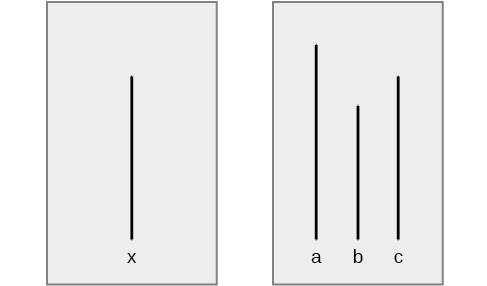
Figure 12.17 These line segments illustrate the judgment task in Asch’s conformity study. Which line on the right—a, b, or c—is the same length as line x on the left?
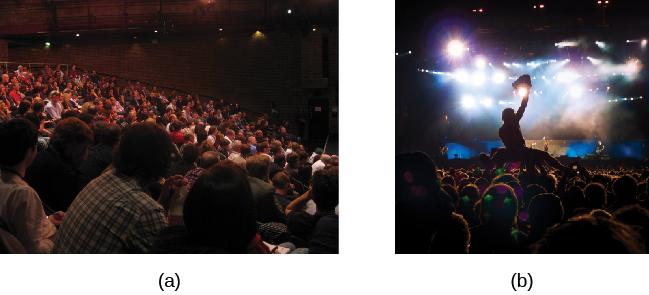
Figure 12.19 People in crowds tend to take cues from others and act accordingly. (a) An audience is listening to a lecture and people are relatively quiet, still, and attentive to the speaker on the stage. (b) An audience is at a rock concert where people are dancing, singing, and possibly engaging in activities like crowd surfing. (credit a: modification of work by Matt Brown; credit b: modification of work by Christian Holmér)
Rose M. Spielman, William J. Jenkins, and Marilyn D. Lovett, Psychology 2E, OpenStax. (credit a: modification of work by Matt Brown; credit b: modification of work by Christian Holmér) · CC BY-NC-SA 4.0
· Original image ↗ · Access for free ↗Figure 12.20 — 12.4 Conformity, Compliance, and Obedience
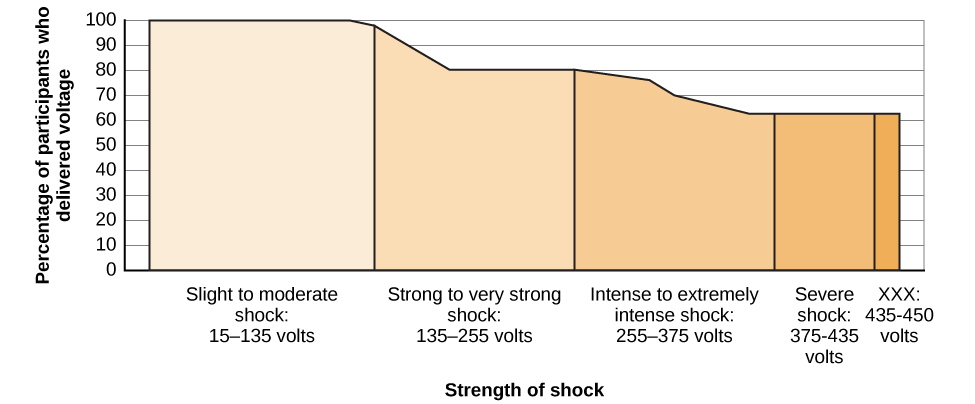
Figure 12.20 The Milgram experiment showed the surprising degree to which people obey authority. Two out of three (65%) participants continued to administer shocks to an unresponsive learner.
Tendency to prioritize group cohesion over critical thinking that might lead to poor decision making; more likely to occur when there is perceived unanimity among the group
Exertion of less effort by a person working in a group because individual performance cannot be evaluated separately from the group, thus causing performance decline on easy tasks
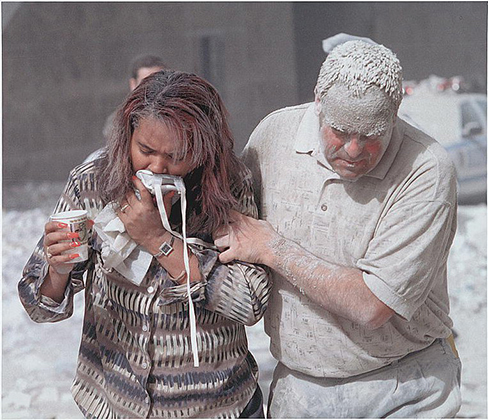
Figure 12.26 The events of 9/11 unleashed an enormous show of altruism and heroism on the parts of first responders and many ordinary people. (credit: Don Halasy)
Rose M. Spielman, William J. Jenkins, and Marilyn D. Lovett, Psychology 2E, OpenStax. (credit: Don Halasy) · CC BY-NC-SA 4.0
· Original image ↗ · Access for free ↗Figure 12.27 — 12.7 Prosocial Behavior
Figure 12.27 People tend to be attracted to similar people. Many couples share a cultural background. This can be quite obvious in a ceremony such as a wedding, and more subtle (but no less significant) in the day-to-day workings of a relationship. (credit: modification of work by Shiraz Chanawala)
Rose M. Spielman, William J. Jenkins, and Marilyn D. Lovett, Psychology 2E, OpenStax. (credit: modification of work by Shiraz Chanawala) · CC BY-NC-SA 4.0
· Original image ↗ · Access for free ↗Figure 12.28 — 12.7 Prosocial Behavior
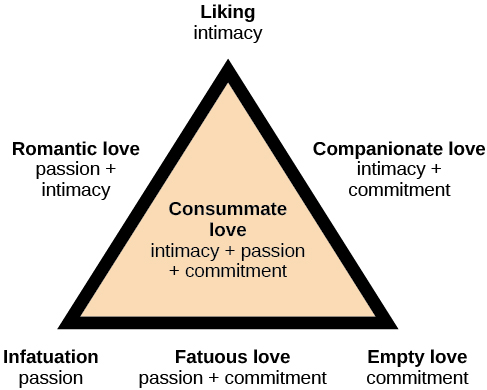
Figure 12.28 According to Sternberg’s triangular theory of love, seven types of love can be described from combinations of three components: intimacy, passion, and commitment. (credit: modification of work by “Lnesa”/Wikimedia Commons)
Rose M. Spielman, William J. Jenkins, and Marilyn D. Lovett, Psychology 2E, OpenStax. (credit: modification of work by “Lnesa”/Wikimedia Commons) · CC BY-NC-SA 4.0
· Original image ↗ · Access for free ↗Figure 12.29 — 12.7 Prosocial Behavior
Figure 12.29 According to Sternberg, consummate love describes a healthy relationship containing intimacy, passion, and commitment. (credit: Carloxito/Wikimedia)
Rose M. Spielman, William J. Jenkins, and Marilyn D. Lovett, Psychology 2E, OpenStax. (credit: Carloxito/Wikimedia) · CC BY-NC-SA 4.0
· Original image ↗ · Access for free ↗Figure 12.30 — 12.7 Prosocial Behavior
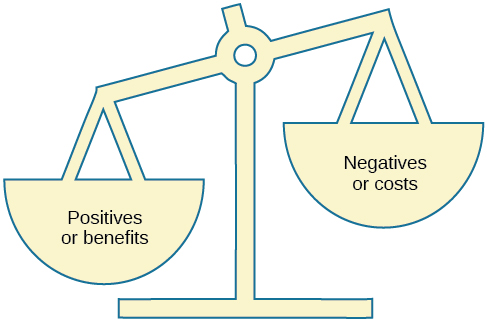
Figure 12.30 Acting like naïve economists, people may keep track of the costs and benefits of maintaining a relationship. Typically, only those relationships in which the benefits outweigh the costs will be maintained.
Figure 7.2 Are financial crimes deviant? Why do we consider them less harmful than other types of crimes, even though they may impact many more victims? (Credit: Justin Ruckman/flickr)
Table 7.1 Informal/Formal Sanctions Formal and informal sanctions may be positive or negative. Informal sanctions arise in social interactions, whereas formal sanctions officially enforce norms.. Tonja R. Conerly, Kathleen Holmes, and Asha Lal Tamang, Introduction Sociology 3E, OpenStax.
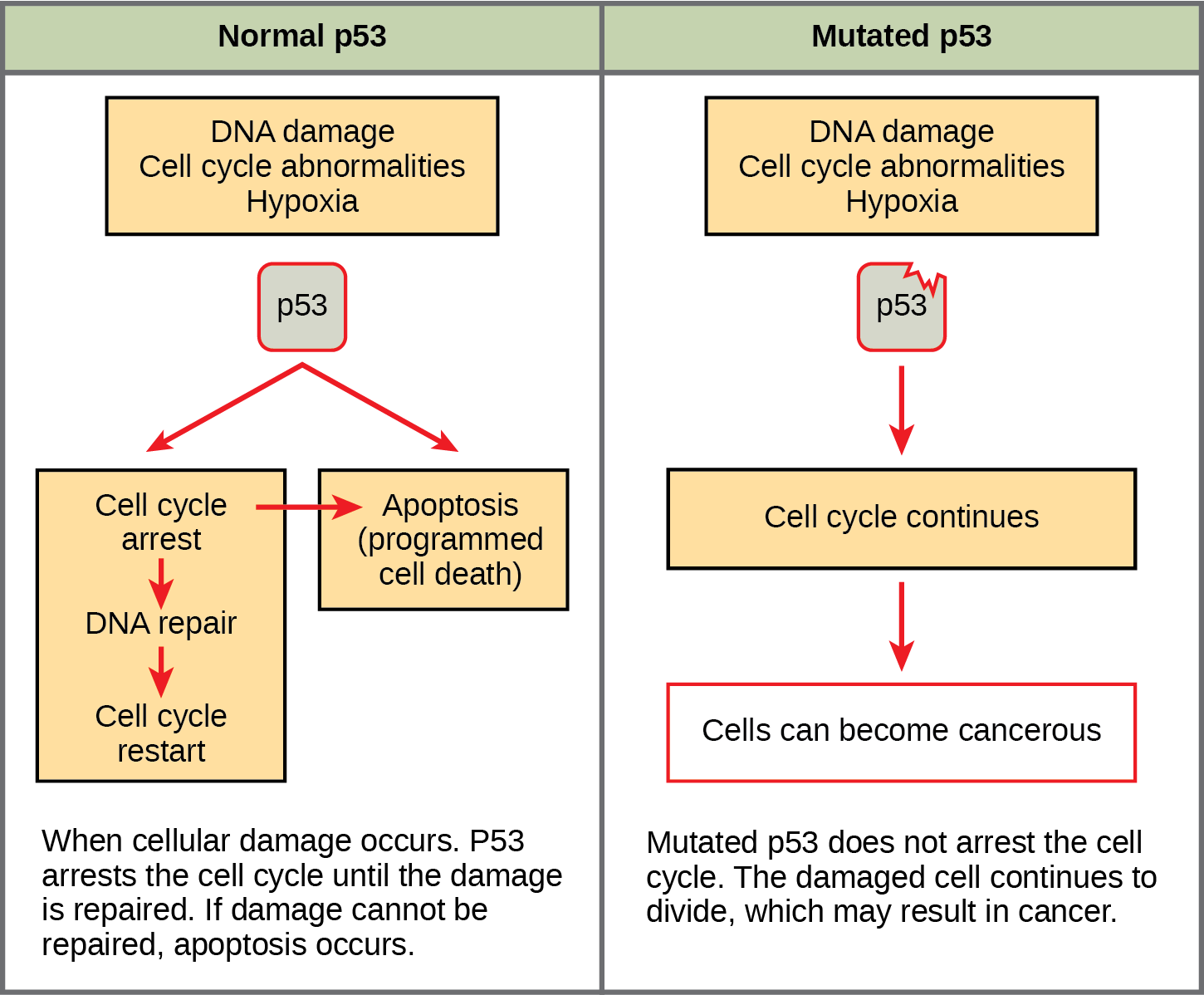
Figure 10.16 The role of normal p53 is to monitor DNA and the supply of oxygen (hypoxia is a condition of reduced oxygen supply). If damage is detected, p53 triggers repair mechanisms. If repairs are unsuccessful, p53 signals apoptosis. A cell with an abnormal p53 protein cannot repair damaged DNA and thus cannot signal apoptosis. Cells with abnormal p53 can become cancerous. (credit: modification of work by Thierry Soussi)
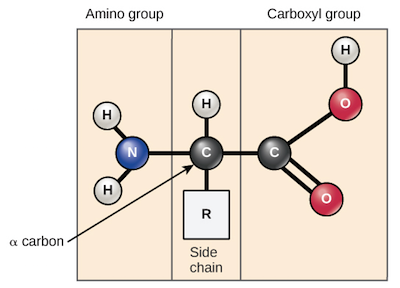
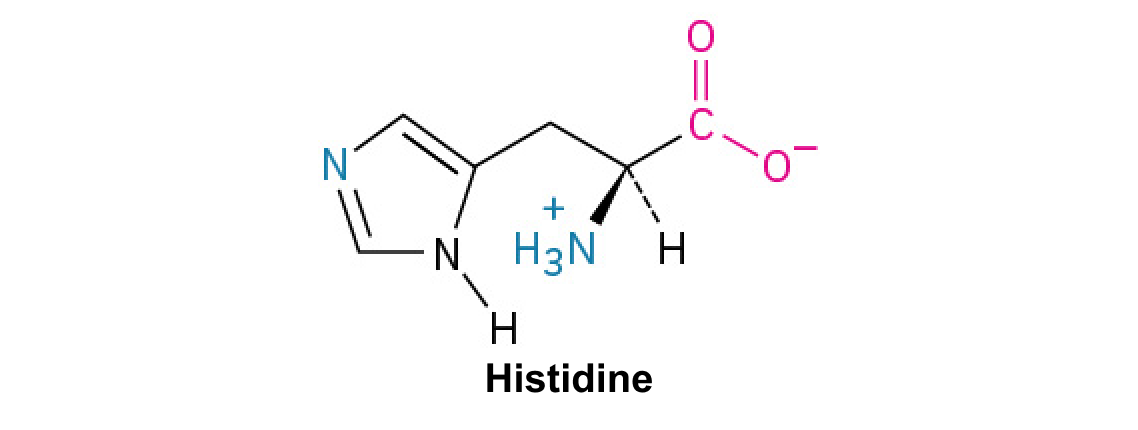
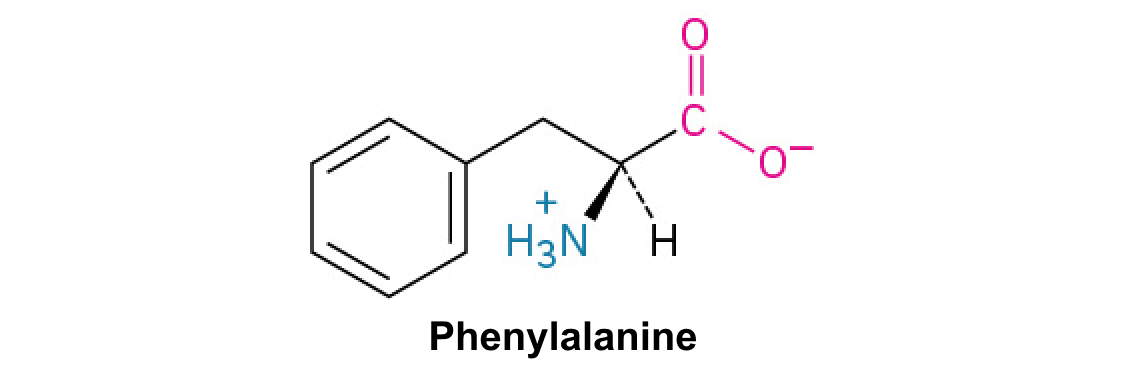
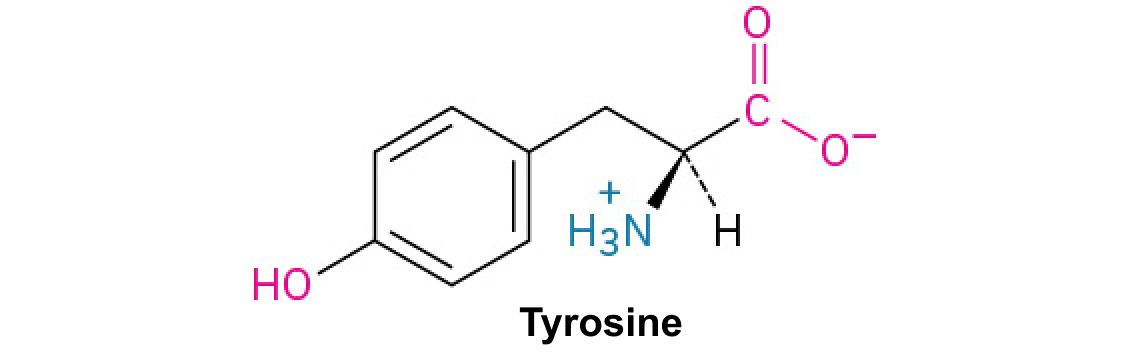
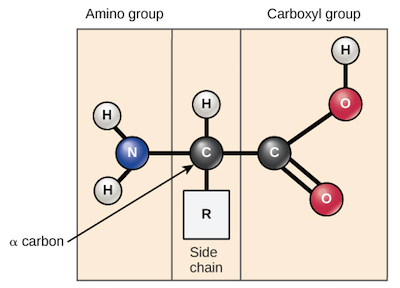
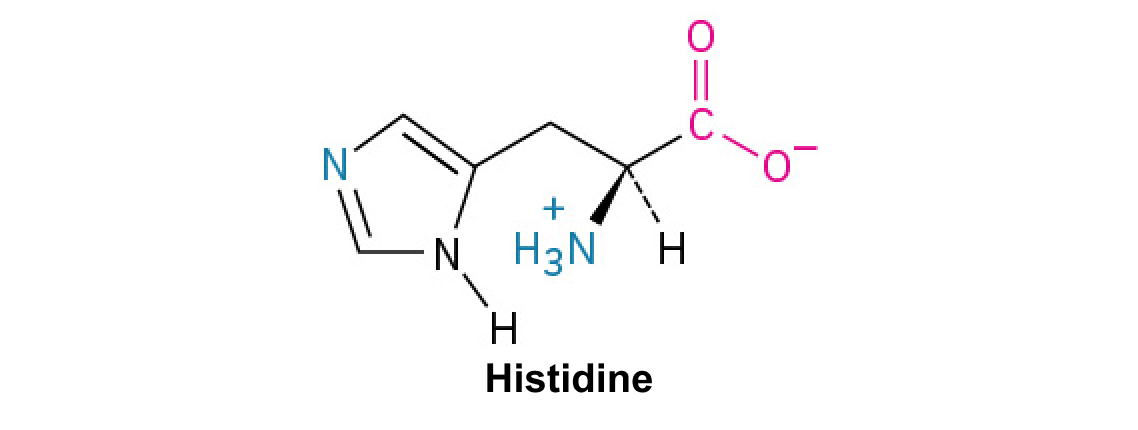
A nitrogen-containing functional group. A free amino acid’s amino group is typically protonated (NH₃⁺) near physiological pH; proline’s ring nitrogen is an exception to this formula.
Figure 15.4 This figure shows the genetic code for translating each nucleotide triplet in mRNA into an amino acid or a termination signal in a protein. (credit: modification of work by NIH)
Figure 12.4 In the P generation, pea plants that are true-breeding for the dominant yellow phenotype are crossed with plants with the recessive green phenotype. This cross produces F 1 heterozygotes with a yellow phenotype. Punnett square analysis can be used to predict the genotypes of the F 2 generation.
An electrical property that can be positive or negative. Opposite charges attract and like charges repel; net charge is the sum of all charges on a particle.
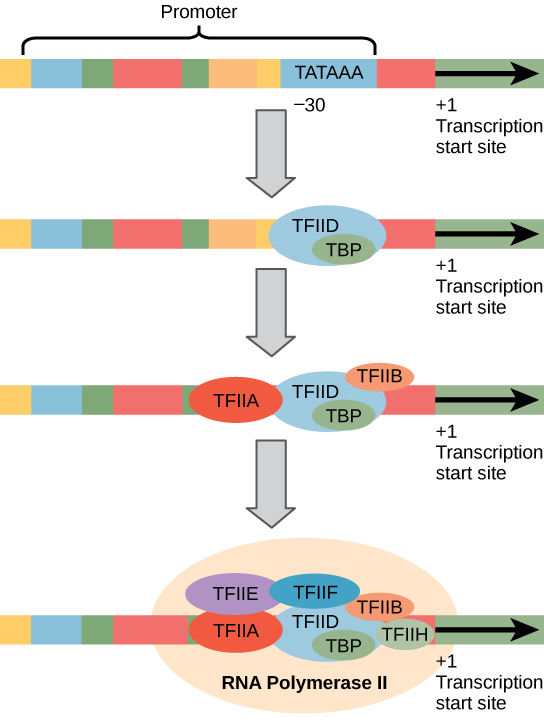
Figure 15.10 A generalized promoter of a gene transcribed by RNA polymerase II is shown. Transcription factors recognize the promoter. RNA polymerase II then binds and forms the transcription initiation complex.
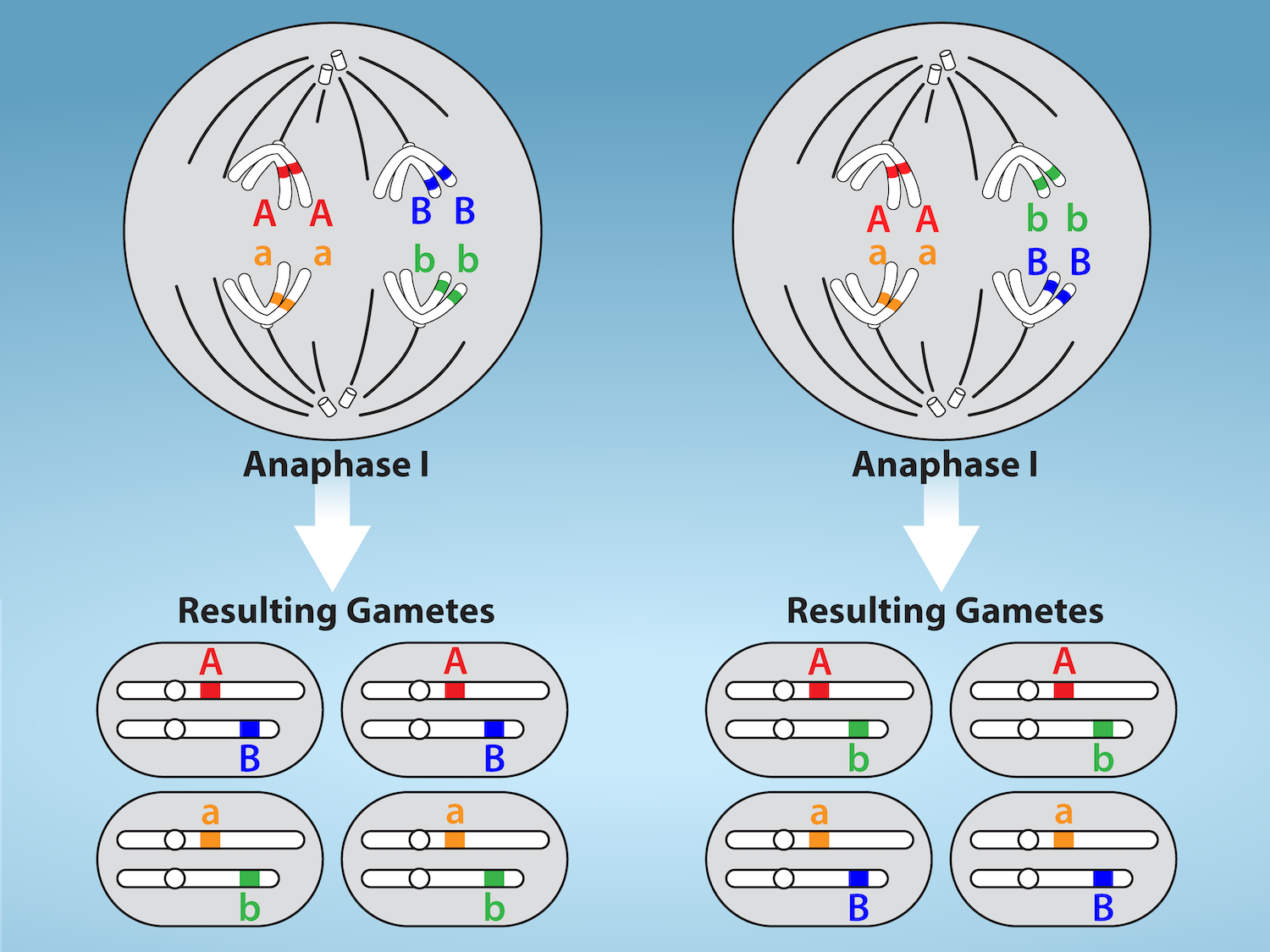
Figure 11.5 Random, independent assortment during metaphase I is demonstrated by considering a cell with a set of two chromosomes (n = 2).
There are two possible homologous chromosome arrangements at the equatorial plane in metaphase I, that are then separated during anaphase I.
The total possible number of different gametes is 2 n , where n equals the number of chromosomes in a set. In this example, there are four possible
genetic combinations for the gametes. With n = 23 in human cells, there are over eight million possible combinations of paternal and maternal
chromosomes. Credit: Rao, A.and Fletcher, S. Department of Biology, Texas A&M University.
Figure 12.4 In the P generation, pea plants that are true-breeding for the dominant yellow phenotype are crossed with plants with the recessive green phenotype. This cross produces F 1 heterozygotes with a yellow phenotype. Punnett square analysis can be used to predict the genotypes of the F 2 generation.
Figure 12.4 In the P generation, pea plants that are true-breeding for the dominant yellow phenotype are crossed with plants with the recessive green phenotype. This cross produces F 1 heterozygotes with a yellow phenotype. Punnett square analysis can be used to predict the genotypes of the F 2 generation.
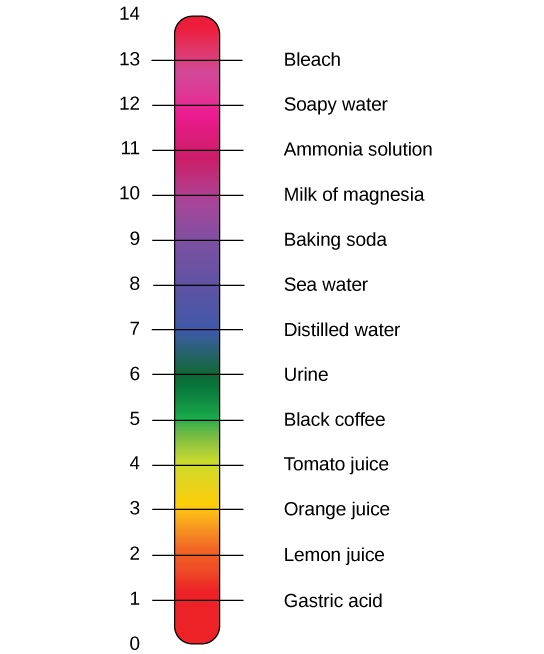
The exponent needed to obtain a number from a chosen fixed number. For decimal logarithms, log₁₀(100) = 2 because 10² = 100; pH uses the negative decimal logarithm of hydrogen ion activity.
A thin boundary or sheet. Cell membranes are lipid bilayers containing proteins; blotting membranes are synthetic supports that hold proteins or nucleic acids for detection.
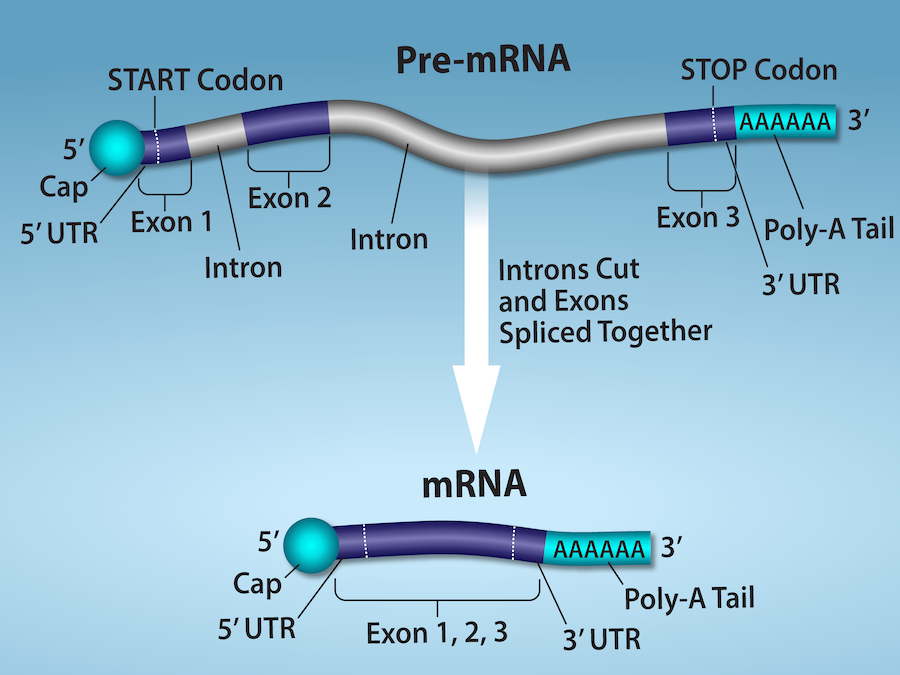
Figure 15.11 Eukaryotic pre-mRNA processing. In addition to 5’ Cap and 3’ Poly-A Tail addition, introns must be precisely removed and exons joined to generate a functional mRNA. Nucleotides upstream (towards the 5’cap) of the translation START codon are part of the 5’ untranslated region (5’ UTR). Nucleotides downstream (towards 3’end) of the STOP codon form the 3’ UTR. Both 5’ and 3’ UTRs are important for regulating translation initiation and mRNA stability. Credit: Rao, A., Ryan, K. Fletcher, S. and Tag, A. Department of Biology, Texas A&M University.
Rao, A., Ryan, K. Fletcher, S. and Tag, A. Department of Biology, Texas A&M University.; Mary Ann Clark, Matthew Douglas, and Jung Choi, Biology 2e, OpenStax. · CC BY-NC-SA 4.0
· Original image ↗ · Access for free ↗
Figure 12.4 In the P generation, pea plants that are true-breeding for the dominant yellow phenotype are crossed with plants with the recessive green phenotype. This cross produces F 1 heterozygotes with a yellow phenotype. Punnett square analysis can be used to predict the genotypes of the F 2 generation.
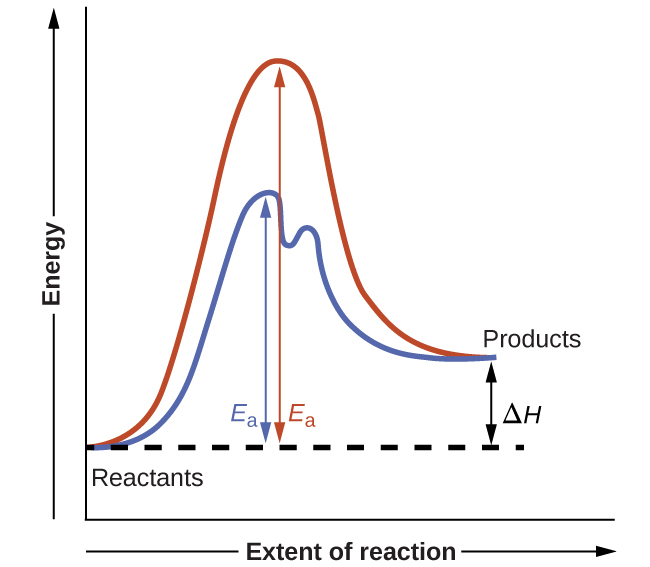
Figure 12.19 Reaction diagrams for an endothermic process in the absence (red curve) and presence (blue curve) of a catalyst. The catalyzed pathway involves a two-step mechanism (note the presence of two transition states) and an intermediate species (represented by the valley between the two transitions states).
Figure 7.45 - Non-homologous end joining (left) versus homologous recombination (right) - Wikipedia
Wikipedia, as credited by Kevin Ahern, Indira Rajagopal, and Taralyn Tan, Biochemistry Free For All, Oregon State University, via Biology LibreTexts. · Source attribution
· Original image ↗ · Access for free ↗
social facilitation
Effect of others’ presence that tends to strengthen dominant responses.
The amount of a substance that can dissolve in a solvent under specified conditions. Soluble means able to dissolve; insoluble means only very slightly soluble in that solvent.
Figure 15.7 Messenger RNA is a copy of protein-coding information in the coding strand of DNA, with the substitution of U in the RNA for T in the coding sequence. However, new RNA nucleotides base pair with the nucleotides of the template strand. RNA is synthesized in its 5'-3' direction, using the enzyme RNA polymerase. As the template is read, the DNA unwinds ahead of the polymerase and then rewinds behind it.
A fleeting, high-energy arrangement at a reaction barrier. It is an energy maximum along the reaction path, rather than a stable reaction intermediate.
Figure 12.19 Reaction diagrams for an endothermic process in the absence (red curve) and presence (blue curve) of a catalyst. The catalyzed pathway involves a two-step mechanism (note the presence of two transition states) and an intermediate species (represented by the valley between the two transitions states).
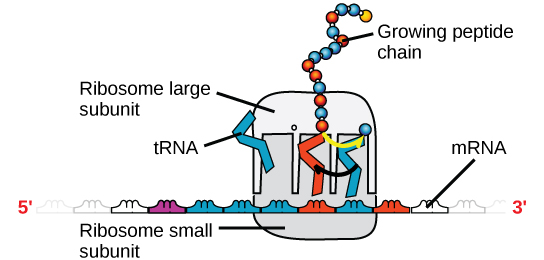
Figure 15.18 Translation begins when an initiator tRNA anticodon recognizes a start codon on mRNA bound to a small ribosomal subunit. The large ribosomal subunit joins the small subunit, and a second tRNA is recruited. As the mRNA moves relative to the ribosome, successive tRNAs move through the ribosome and the polypeptide chain is formed. Entry of a release factor into the A site terminates translation and the components dissociate.
No matching terms. Try a different name or abbreviation.
12.4 Conformity, Compliance, and Obedience
OpenStax · 12.4 Conformity, Compliance, and Obedience ↗ Instructional page including learning objectives, examples, figures, source tables and questions. Site navigation and embedded media players are omitted; source media links remain available.
In this section, we discuss additional ways in which people influence others. The topics of conformity, social influence, obedience, and group processes demonstrate the power of the social situation to change our thoughts, feelings, and behaviors. We begin this section with a discussion of a famous social psychology experiment that demonstrated how susceptible humans are to outside social pressures.
Solomon Asch conducted several experiments in the 1950s to determine how people are affected by the thoughts and behaviors of other people. In one study, a group of participants was shown a series of printed line segments of different lengths: a, b, and c (Figure 12.17). Participants were then shown a fourth line segment: x. They were asked to identify which line segment from the first group (a, b, or c) most closely resembled the fourth line segment in length.
Figure 12.17 These line segments illustrate the judgment task in Asch’s conformity study. Which line on the right—a, b, or c—is the same length as line x on the left?
Each group of participants had only one true, naïve subject. The remaining members of the group were confederates of the researcher. A confederate is a person who is aware of the experiment and works for the researcher. Confederates are used to manipulate social situations as part of the research design, and the true, naïve participants believe that confederates are, like them, uninformed participants in the experiment. In Asch’s study, the confederates identified a line segment that was obviously shorter than the target line—a wrong answer. The naïve participant then had to identify aloud the line segment that best matched the target line segment.
How often do you think the true participant aligned with the confederates’ response? That is, how often do you think the group influenced the participant, and the participant gave the wrong answer? Asch (1955) found that 76% of participants conformed to group pressure at least once by indicating the incorrect line. Conformity is the change in a person’s behavior to go along with the group, even if he does not agree with the group. Why would people give the wrong answer? What factors would increase or decrease someone giving in or conforming to group pressure?
The Asch effect is the influence of the group majority on an individual’s judgment.
What factors make a person more likely to yield to group pressure? Research shows that the size of the majority, the presence of another dissenter, and the public or relatively private nature of responses are key influences on conformity.
The size of the majority: The greater the number of people in the majority, the more likely an individual will conform. There is, however, an upper limit: a point where adding more members does not increase conformity. In Asch’s study, conformity increased with the number of people in the majority—up to seven individuals. At numbers beyond seven, conformity leveled off and decreased slightly (Asch, 1955).
The presence of another dissenter: If there is at least one dissenter, conformity rates drop to near zero (Asch, 1955).
The public or private nature of the responses: When responses are made publicly (in front of others), conformity is more likely; however, when responses are made privately (e.g., writing down the response), conformity is less likely (Deutsch & Gerard, 1955).
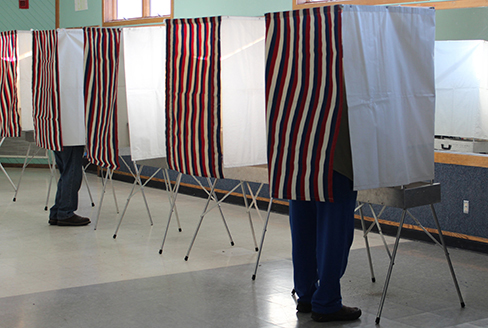
The finding that conformity is more likely to occur when responses are public than when they are private is the reason government elections require voting in secret, so we are not coerced by others (Figure 12.18). The Asch effect can be easily seen in children when they have to publicly vote for something. For example, if the teacher asks whether the children would rather have extra recess, no homework, or candy, once a few children vote, the rest will comply and go with the majority. In a different classroom, the majority might vote differently, and most of the children would comply with that majority. When someone’s vote changes if it is made in public versus private, this is known as compliance. Compliance can be a form of conformity. Compliance is going along with a request or demand, even if you do not agree with the request. In Asch’s studies, the participants complied by giving the wrong answers, but privately did not accept that the obvious wrong answers were correct.
Now that you have learned about the Asch line experiments, why do you think the participants conformed? The correct answer to the line segment question was obvious, and it was an easy task. Researchers have categorized the motivation to conform into two types: normative social influence and informational social influence (Deutsch & Gerard, 1955).
In normative social influence, people conform to the group norm to fit in, to feel good, and to be accepted by the group. However, with informational social influence, people conform because they believe the group is competent and has the correct information, particularly when the task or situation is ambiguous. What type of social influence was operating in the Asch conformity studies? Since the line judgment task was unambiguous, participants did not need to rely on the group for information. Instead, participants complied to fit in and avoid ridicule, an instance of normative social influence.
An example of informational social influence may be what to do in an emergency situation. Imagine that you are in a movie theater watching a film and what seems to be smoke comes in the theater from under the emergency exit door. You are not certain that it is smoke—it might be a special effect for the movie, such as a fog machine. When you are uncertain you will tend to look at the behavior of others in the theater. If other people show concern and get up to leave, you are likely to do the same. However, if others seem unconcerned, you are likely to stay put and continue watching the movie (Figure 12.19).
Figure 12.19 People in crowds tend to take cues from others and act accordingly. (a) An audience is listening to a lecture and people are relatively quiet, still, and attentive to the speaker on the stage. (b) An audience is at a rock concert where people are dancing, singing, and possibly engaging in activities like crowd surfing. (credit a: modification of work by Matt Brown; credit b: modification of work by Christian Holmér)
Rose M. Spielman, William J. Jenkins, and Marilyn D. Lovett, Psychology 2E, OpenStax. (credit a: modification of work by Matt Brown; credit b: modification of work by Christian Holmér) · CC BY-NC-SA 4.0
· Original image ↗ · Access for free ↗
How would you have behaved if you were a participant in Asch’s study? Many students say they would not conform, that the study is outdated, and that people nowadays are more independent. To some extent this may be true. Research suggests that overall rates of conformity may have reduced since the time of Asch’s research. Furthermore, efforts to replicate Asch’s study have made it clear that many factors determine how likely it is that someone will demonstrate conformity to the group. These factors include the participant’s age, gender, and socio-cultural background (Bond & Smith, 1996; Larsen, 1990; Walker & Andrade, 1996).
Conformity is one effect of the influence of others on our thoughts, feelings, and behaviors. Another form of social influence is obedience to authority. Obedience is the change of an individual’s behavior to comply with a demand by an authority figure. People often comply with the request because they are concerned about a consequence if they do not comply. To demonstrate this phenomenon, we review another classic social psychology experiment.
Stanley Milgram was a social psychology professor at Yale who was influenced by the trial of Adolf Eichmann, a Nazi war criminal. Eichmann’s defense for the atrocities he committed was that he was “just following orders.” Milgram (1963) wanted to test the validity of this defense, so he designed an experiment and initially recruited 40 men for his experiment. The volunteer participants were led to believe that they were participating in a study to improve learning and memory. The participants were told that they were to teach other students (learners) correct answers to a series of test items. The participants were shown how to use a device that they were told delivered electric shocks of different intensities to the learners. The participants were told to shock the learners if they gave a wrong answer to a test item—that the shock would help them to learn. The participants believed they gave the learners shocks, which increased in 15-volt increments, all the way up to 450 volts. The participants did not know that the learners were confederates and that the confederates did not actually receive shocks.
In response to a string of incorrect answers from the learners, the participants obediently and repeatedly shocked them. The confederate learners cried out for help, begged the participant teachers to stop, and even complained of heart trouble. Yet, when the researcher told the participant-teachers to continue the shock, 65% of the participants continued the shock to the maximum voltage and to the point that the learner became unresponsive (Figure 12.20). What makes someone obey authority to the point of potentially causing serious harm to another person?
Figure 12.20 The Milgram experiment showed the surprising degree to which people obey authority. Two out of three (65%) participants continued to administer shocks to an unresponsive learner.
Several variations of the original Milgram experiment were conducted to test the boundaries of obedience. When certain features of the situation were changed, participants were less likely to continue to deliver shocks (Milgram, 1965). For example, when the setting of the experiment was moved to an off-campus office building, the percentage of participants who delivered the highest shock dropped to 48%. When the learner was in the same room as the teacher, the highest shock rate dropped to 40%. When the teachers’ and learners’ hands were touching, the highest shock rate dropped to 30%. When the researcher gave the orders by phone, the rate dropped to 23%. These variations show that when the humanity of the person being shocked was increased, obedience decreased. Similarly, when the authority of the experimenter decreased, so did obedience.
This case is still very applicable today. What does a person do if an authority figure orders something done? What if the person believes it is incorrect, or worse, unethical? In a study by Martin and Bull (2008), midwives privately filled out a questionnaire regarding best practices and expectations in delivering a baby. Then, a more senior midwife and supervisor asked the junior midwives to do something they had previously stated they were opposed to. Most of the junior midwives were obedient to authority, going against their own beliefs. Burger (2009) partially replicated this study. He found among a multicultural sample of women and men that their levels of obedience matched Milgram's research. Doliński et al. (2017) performed a replication of Burger's work in Poland and controlled for the gender of both participants and learners, and once again, results that were consistent with Milgram's original work were observed.
When in group settings, we are often influenced by the thoughts, feelings, and behaviors of people around us. Whether it is due to normative or informational social influence, groups have power to influence individuals. Another phenomenon of group conformity is groupthink. Groupthink is the modification of the opinions of members of a group to align with what they believe is the group consensus (Janis, 1972). In group situations, the group often takes action that individuals would not perform outside the group setting because groups make more extreme decisions than individuals do. Moreover, groupthink can hinder opposing trains of thought. This elimination of diverse opinions contributes to faulty decision by the group.
There have been several instances of groupthink in the U.S. government. One example occurred when the United States led a small coalition of nations to invade Iraq in March 2003. This invasion occurred because a small group of advisors and former President George W. Bush were convinced that Iraq represented a significant terrorism threat with a large stockpile of weapons of mass destruction at its disposal. Although some of these individuals may have had some doubts about the credibility of the information available to them at the time, in the end, the group arrived at a consensus that Iraq had weapons of mass destruction and represented a significant threat to national security. It later came to light that Iraq did not have weapons of mass destruction, but not until the invasion was well underway. As a result, 6000 American soldiers were killed and many more civilians died. How did the Bush administration arrive at their conclusions? View this video of Colin Powell, 10 years after his famous United Nations speech, discussing the information he had at the time that his decisions were based on. ("CNN Official Interview: Colin Powell now regrets UN speech about WMDs," 2010).
Why does groupthink occur? There are several causes of groupthink, which makes it preventable. When the group is highly cohesive, or has a strong sense of connection, maintaining group harmony may become more important to the group than making sound decisions. If the group leader is directive and makes his opinions known, this may discourage group members from disagreeing with the leader. If the group is isolated from hearing alternative or new viewpoints, groupthink may be more likely. How do you know when groupthink is occurring?
There are several symptoms of groupthink including the following:
perceiving the group as invulnerable or invincible—believing it can do no wrong
believing the group is morally correct
self-censorship by group members, such as withholding information to avoid disrupting the group consensus
the quashing of dissenting group members’ opinions
the shielding of the group leader from dissenting views
perceiving an illusion of unanimity among group members
holding stereotypes or negative attitudes toward the out-group or others’ with differing viewpoints (Janis, 1972)
Given the causes and symptoms of groupthink, how can it be avoided? There are several strategies that can improve group decision making including seeking outside opinions, voting in private, having the leader withhold position statements until all group members have voiced their views, conducting research on all viewpoints, weighing the costs and benefits of all options, and developing a contingency plan (Janis, 1972; Mitchell & Eckstein, 2009).
Another phenomenon that occurs within group settings is group polarization. Group polarization (Teger & Pruitt, 1967) is the strengthening of an original group attitude after the discussion of views within a group. That is, if a group initially favors a viewpoint, after discussion the group consensus is likely a stronger endorsement of the viewpoint. Conversely, if the group was initially opposed to a viewpoint, group discussion would likely lead to stronger opposition. Group polarization explains many actions taken by groups that would not be undertaken by individuals. Group polarization can be observed at political conventions, when platforms of the party are supported by individuals who, when not in a group, would decline to support them. Recently, some theorists have argued that group polarization may be partly responsible for the extreme political partisanship that seems ubiquitous in modern society. Given that people can self-select media outlets that are most consistent with their own political views, they are less likely to encounter opposing viewpoints. Over time, this leads to a strengthening of their own perspective and of hostile attitudes and behaviors towards those with different political ideals. Remarkably, political polarization leads to open levels of discrimination that are on par with, or perhaps exceed, racial discrimination (Iyengar & Westwood, 2015). A more everyday example is a group’s discussion of how attractive someone is. Does your opinion change if you find someone attractive, but your friends do not agree? If your friends vociferously agree, might you then find this person even more attractive?
Social traps refer to situations that arise when individuals or groups of individuals behave in ways that are not in their best interest and that may have negative, long-term consequences. However, once established, a social trap is very difficult to escape. For example, following World War II, the United States and the former Soviet Union engaged in a nuclear arms race. While the presence of nuclear weapons is not in either party's best interest, once the arms race began, each country felt the need to continue producing nuclear weapons to protect itself from the other.
Imagine you were just assigned a group project with other students whom you barely know. Everyone in your group will get the same grade. Are you the type who will do most of the work, even though the final grade will be shared? Or are you more likely to do less work because you know others will pick up the slack? Social loafing involves a reduction in individual output on tasks where contributions are pooled. Because each individual's efforts are not evaluated, individuals can become less motivated to perform well. Karau and Williams (1993) and Simms and Nichols (2014) reviewed the research on social loafing and discerned when it was least likely to happen. The researchers noted that social loafing could be alleviated if, among other situations, individuals knew their work would be assessed by a manager (in a workplace setting) or instructor (in a classroom setting), or if a manager or instructor required group members to complete self-evaluations.
The likelihood of social loafing in student work groups increases as the size of the group increases (Shepperd & Taylor, 1999). According to Karau and Williams (1993), college students were the population most likely to engage in social loafing. Their study also found that women and participants from collectivistic cultures were less likely to engage in social loafing, explaining that their group orientation may account for this.
College students could work around social loafing or “free-riding” by suggesting to their professors use of a flocking method to form groups. Harding (2018) compared groups of students who had self-selected into groups for class to those who had been formed by flocking, which involves assigning students to groups who have similar schedules and motivations. Not only did she find that students reported less “free riding,” but that they also did better in the group assignments compared to those whose groups were self-selected.
Interestingly, the opposite of social loafing occurs when the task is complex and difficult (Bond & Titus, 1983; Geen, 1989). In a group setting, such as the student work group, if your individual performance cannot be evaluated, there is less pressure for you to do well, and thus less anxiety or physiological arousal (Latané, Williams, & Harkens, 1979). This puts you in a relaxed state in which you can perform your best, if you choose (Zajonc, 1965). If the task is a difficult one, many people feel motivated and believe that their group needs their input to do well on a challenging project (Jackson & Williams, 1985).
Another way that being part of a group can affect behavior is exhibited in instances in which deindividuation occurs. Deindividuation refers to situations in which a person may feel a sense of anonymity and therefore a reduction in accountability and sense of self when among others. Deindividuation is often pointed to in cases in which mob or riot-like behaviors occur (Zimbardo, 1969), but research on the subject and the role that deindividuation plays in such behaviors has resulted in inconsistent results (as discussed in Granström, Guvå, Hylander, & Rosander, 2009).
Table 12.2 summarizes the types of social influence you have learned about in this chapter.
Tendency to prioritize group cohesion over critical thinking that might lead to poor decision making; more likely to occur when there is perceived unanimity among the group
Exertion of less effort by a person working in a group because individual performance cannot be evaluated separately from the group, thus causing performance decline on easy tasks
Group situation in which a person may feel a sense of anonymity and a resulting reduction in accountability and sense of self
Table
12.2
12.7 Prosocial Behavior
OpenStax · 12.7 Prosocial Behavior ↗ Instructional page including learning objectives, examples, figures, source tables and questions. Site navigation and embedded media players are omitted; source media links remain available.
Describe conditions that influence the formation of relationships
Identify what attracts people to each other
Describe the triangular theory of love
Explain social exchange theory in relationships
You’ve learned about many of the negative behaviors of social psychology, but the field also studies many positive social interactions and behaviors. What makes people like each other? With whom are we friends? Whom do we date? Researchers have documented several features of the situation that influence whether we form relationships with others. There are also universal traits that humans find attractive in others. In this section we discuss conditions that make forming relationships more likely, what we look for in friendships and romantic relationships, the different types of love, and a theory explaining how our relationships are formed, maintained, and terminated.
Do you voluntarily help others? Voluntary behavior with the intent to help other people is called prosocial behavior. Why do people help other people? Is personal benefit such as feeling good about oneself the only reason people help one another? Research suggests there are many other reasons. Altruism is people’s desire to help others even if the costs outweigh the benefits of helping. In fact, people acting in altruistic ways may disregard the personal costs associated with helping (Figure 12.26). For example, news accounts of the 9/11 terrorist attacks on the World Trade Center in New York reported an employee in the first tower helped his co-workers make it to the exit stairwell. After helping a co-worker to safety he went back in the burning building to help additional co-workers. In this case the costs of helping were great, and the hero lost his life in the destruction (Stewart, 2002).
Figure 12.26 — 12.7 Prosocial Behavior
Figure 12.26 The events of 9/11 unleashed an enormous show of altruism and heroism on the parts of first responders and many ordinary people. (credit: Don Halasy)
Some researchers suggest that altruism operates on empathy. Empathy is the capacity to understand another person’s perspective, to feel what they feel. An empathetic person makes an emotional connection with others and feels compelled to help (Batson, 1991). Other researchers argue that altruism is a form of selfless helping that is not motivated by benefits or feeling good about oneself. Certainly, after helping, people feel good about themselves, but some researchers argue that this is a consequence of altruism, not a cause. Other researchers argue that helping is always self-serving because our egos are involved, and we receive benefits from helping (Cialdini, Brown, Lewis, Luce, & Neuberg 1997). It is challenging to determine experimentally the true motivation for helping, whether it is largely self-serving (egoism) or selfless (altruism). Thus, a debate on whether pure altruism exists continues.
What do you think is the single most influential factor in determining with whom you become friends and with whom you form romantic relationships? You might be surprised to learn that the answer is simple: the people with whom you have the most contact. This most important factor is proximity. You are more likely to be friends with people you have regular contact with. For example, there are decades of research that shows that you are more likely to become friends with people who live in your dorm, your apartment building, or your immediate neighborhood than with people who live farther away (Festinger, Schachler, & Back, 1950). It is simply easier to form relationships with people you see often because you have the opportunity to get to know them.
Similarity is another factor that influences who we form relationships with. We are more likely to become friends or lovers with someone who is similar to us in background, attitudes, and lifestyle. In fact, there is no evidence that opposites attract. Rather, we are attracted to people who are most like us (Figure 12.27) (McPherson, Smith-Lovin, & Cook, 2001). Why do you think we are attracted to people who are similar to us? Sharing things in common will certainly make it easy to get along with others and form connections. When you and another person share similar music taste, hobbies, food preferences, and so on, deciding what to do with your time together might be easy. Homophily is the tendency for people to form social networks, including friendships, marriage, business relationships, and many other types of relationships, with others who are similar (McPherson et al., 2001).
Figure 12.27 — 12.7 Prosocial Behavior
Figure 12.27 People tend to be attracted to similar people. Many couples share a cultural background. This can be quite obvious in a ceremony such as a wedding, and more subtle (but no less significant) in the day-to-day workings of a relationship. (credit: modification of work by Shiraz Chanawala)
Rose M. Spielman, William J. Jenkins, and Marilyn D. Lovett, Psychology 2E, OpenStax. (credit: modification of work by Shiraz Chanawala) · CC BY-NC-SA 4.0
· Original image ↗ · Access for free ↗
But, homophily limits our exposure to diversity (McPherson et al., 2001). By forming relationships only with people who are similar to us, we will have homogenous groups and will not be exposed to different points of view. In other words, because we are likely to spend time with those who are most like ourselves, we will have limited exposure to those who are different than ourselves, including people of different races, ethnicities, social-economic status, and life situations.
Once we form relationships with people, we desire reciprocity. Reciprocity is the give and take in relationships. We contribute to relationships, but we expect to receive benefits as well. That is, we want our relationships to be a two way street. We are more likely to like and engage with people who like us back. Self-disclosure is part of the two way street. Self-disclosure is the sharing of personal information (Laurenceau, Barrett, & Pietromonaco, 1998). We form more intimate connections with people with whom we disclose important information about ourselves. Indeed, self-disclosure is a characteristic of healthy intimate relationships, as long as the information disclosed is consistent with our own views (Cozby, 1973).
Attraction
We have discussed how proximity and similarity lead to the formation of relationships, and that reciprocity and self-disclosure are important for relationship maintenance. But, what features of a person do we find attractive? We don’t form relationships with everyone that lives or works near us, so how is it that we decide which specific individuals we will select as friends and lovers?
Researchers have documented several characteristics that humans find attractive. First we look for friends and lovers who are physically attractive. People differ in what they consider attractive, and attractiveness is culturally influenced. Research, however, suggests that some universally attractive features in women include large eyes, high cheekbones, a narrow jaw line, a slender build (Buss, 1989), and a lower waist-to-hip ratio (Singh, 1993). For men, attractive traits include being tall, having broad shoulders, and a narrow waist (Buss, 1989). Both men and women with high levels of facial and body symmetry are generally considered more attractive than asymmetric individuals (Fink, Neave, Manning, & Grammer, 2006; Penton-Voak et al., 2001; Rikowski & Grammer, 1999). Social traits that people find attractive in potential female mates include warmth, affection, and social skills; in males, the attractive traits include achievement, leadership qualities, and job skills (Regan & Berscheid, 1997). Although humans want mates who are physically attractive, this does not mean that we look for the most attractive person possible. In fact, this observation has led some to propose what is known as the matching hypothesis which asserts that people tend to pick someone they view as their equal in physical attractiveness and social desirability (Taylor, Fiore, Mendelsohn, & Cheshire, 2011). For example, you and most people you know likely would say that a very attractive movie star is out of your league. So, even if you had proximity to that person, you likely would not ask them out on a date because you believe you likely would be rejected. People weigh a potential partner’s attractiveness against the likelihood of success with that person. If you think you are particularly unattractive (even if you are not), you likely will seek partners that are fairly unattractive (that is, unattractive in physical appearance or in behavior).
Sternberg’s Triangular Theory of Love
We typically love the people with whom we form relationships, but the type of love we have for our family, friends, and lovers differs. Robert Sternberg (1986) proposed that there are three components of love: intimacy, passion, and commitment. These three components form a triangle that defines multiple types of love: this is known as Sternberg’s triangular theory of love (Figure 12.28). Intimacy is the sharing of details and intimate thoughts and emotions. Passion is the physical attraction—the flame in the fire. Commitment is standing by the person—the “in sickness and health” part of the relationship.
Figure 12.28 — 12.7 Prosocial Behavior
Figure 12.28 According to Sternberg’s triangular theory of love, seven types of love can be described from combinations of three components: intimacy, passion, and commitment. (credit: modification of work by “Lnesa”/Wikimedia Commons)
Rose M. Spielman, William J. Jenkins, and Marilyn D. Lovett, Psychology 2E, OpenStax. (credit: modification of work by “Lnesa”/Wikimedia Commons) · CC BY-NC-SA 4.0
· Original image ↗ · Access for free ↗
Sternberg (1986) states that a healthy relationship will have all three components of love—intimacy, passion, and commitment—which is described as consummate love (Figure 12.29). However, different aspects of love might be more prevalent at different life stages. Other forms of love include liking, which is defined as having intimacy but no passion or commitment. Infatuation is the presence of passion without intimacy or commitment. Empty love is having commitment without intimacy or passion. Companionate love, which is characteristic of close friendships and family relationships, consists of intimacy and commitment but no passion. Romantic love is defined by having passion and intimacy, but no commitment. Finally, fatuous love is defined by having passion and commitment, but no intimacy, such as a long term sexual love affair. Can you describe other examples of relationships that fit these different types of love?
Figure 12.29 — 12.7 Prosocial Behavior
Figure 12.29 According to Sternberg, consummate love describes a healthy relationship containing intimacy, passion, and commitment. (credit: Carloxito/Wikimedia)
We have discussed why we form relationships, what attracts us to others, and different types of love. But what determines whether we are satisfied with and stay in a relationship? One theory that provides an explanation is social exchange theory. According to social exchange theory, we act as naïve economists in keeping a tally of the ratio of costs and benefits of forming and maintaining a relationship with others (Figure 12.30) (Rusbult & Van Lange, 2003).
Figure 12.30 — 12.7 Prosocial Behavior
Figure 12.30 Acting like naïve economists, people may keep track of the costs and benefits of maintaining a relationship. Typically, only those relationships in which the benefits outweigh the costs will be maintained.
People are motivated to maximize the benefits of social exchanges, or relationships, and minimize the costs. People prefer to have more benefits than costs, or to have nearly equal costs and benefits, but most people are dissatisfied if their social exchanges create more costs than benefits. Let’s discuss an example. If you have ever decided to commit to a romantic relationship, you probably considered the advantages and disadvantages of your decision. What are the benefits of being in a committed romantic relationship? You may have considered having companionship, intimacy, and passion, but also being comfortable with a person you know well. What are the costs of being in a committed romantic relationship? You may think that over time boredom from being with only one person may set in; moreover, it may be expensive to share activities such as attending movies and going to dinner. However, the benefits of dating your romantic partner presumably outweigh the costs, or you wouldn’t continue the relationship.
7.1 Deviance and Control
OpenStax · 7.1 Deviance and Control ↗ Instructional page including learning objectives, examples, figures, source tables and questions. Site navigation and embedded media players are omitted; source media links remain available.
Learning Objectives
By the end of this section, you should be able to:
Define deviance, and explain the nature of deviant behavior
Differentiate between methods of social control
Figure 7.2 — 7.1 Deviance and Control
Figure 7.2 Are financial crimes deviant? Why do we consider them less harmful than other types of crimes, even though they may impact many more victims? (Credit: Justin Ruckman/flickr)
Wells Fargo CEO John Stumpf was forced to resign after his company enrolled customers in unnecessary auto insurance programs, while also fraudulently creating bank accounts without client consent. Both of these actions are prohibited by a range of laws and regulations. Over a million victims were charged improper fees or overcharged for insurance; some suffered reductions in their credit scores, and an estimated 25,000 people had their cars improperly repossessed. Even though these actions were found to be criminal, no one from Wells Fargo faced jail time, as is common in financial crimes. Deviance does not always align with punishment, and perceptions of its impact vary greatly.
What, exactly, is deviance? And what is the relationship between deviance and crime? According to sociologist William Graham Sumner, deviance is a violation of established contextual, cultural, or social norms, whether folkways, mores, or codified law (1906). It can be as minor as picking your nose in public or as major as committing murder. Although the word “deviance” has a negative connotation in everyday language, sociologists recognize that deviance is not necessarily bad (Schoepflin 2011). In fact, from a structural functionalist perspective, one of the positive contributions of deviance is that it fosters social change. For example, during the U.S. civil rights movement, Rosa Parks violated social norms when she refused to move to the “Black section” of the bus, and the Little Rock Nine broke customs of segregation to attend an Arkansas public school.
“What is deviant behavior?” cannot be answered in a straightforward manner. Whether an act is labeled deviant or not depends on many factors, including location, audience, and the individual committing the act (Becker 1963). Listening to music on your phone on the way to class is considered acceptable behavior. Listening to music during your 2 p.m. sociology lecture is considered rude. Listening to music when on the witness stand before a judge may cause you to be held in contempt of court and consequently fined or jailed.
As norms vary across cultures and time, it also makes sense that notions of deviance change. Sixty years ago, public schools in the United States had dress codes that often banned women from wearing pants to class. Today, it’s socially acceptable for women to wear pants, but less so for men to wear skirts. And more recently, the act of wearing or not wearing a mask became a matter of deviance, and in some cases, political affiliation and legality. Whether an act is deviant or not depends on society’s response to that act.
Sociology in the Real World
Why I Drive a Hearse
When sociologist Todd Schoepflin ran into his childhood friend Bill, he was shocked to see him driving a hearse for everyday tasks, instead of an ordinary car. A professionally trained researcher, Schoepflin wondered what effect driving a hearse had on his friend and what effect it might have on others on the road. Would using such a vehicle for everyday errands be considered deviant by most people?
Schoepflin interviewed Bill, curious first to know why he drove such an unconventional car. Bill had simply been on the lookout for a reliable winter car; on a tight budget, he searched used car ads and stumbled upon one for the hearse. The car ran well, and the price was right, so he bought it.
Bill admitted that others’ reactions to the car had been mixed. His parents were appalled, and he received odd stares from his coworkers. A mechanic once refused to work on it, and stated that it was “a dead person machine.” On the whole, however, Bill received mostly positive reactions. Strangers gave him a thumbs-up on the highway and stopped him in parking lots to chat about his car. His girlfriend loved it, his friends wanted to take it tailgating, and people offered to buy it. Could it be that driving a hearse isn’t really so deviant after all?
Schoepflin theorized that, although viewed as outside conventional norms, driving a hearse is such a mild form of deviance that it actually becomes a mark of distinction. Conformists find the choice of vehicle intriguing or appealing, while nonconformists see a fellow oddball to whom they can relate. As one of Bill’s friends remarked, “Every guy wants to own a unique car like this, and you can certainly pull it off.” Such anecdotes remind us that although deviance is often viewed as a violation of norms, it’s not always viewed in a negative light (Schoepflin 2011).
Figure 7.3 — 7.1 Deviance and Control
Figure 7.3 A hearse with the license plate “LASTRYD.” How would you view the owner of this car? (Credit: Brian Teutsch/flickr)
Deviance is a more encompassing term than crime, meaning that it includes a range of activities, some of which are crimes and some of which are not. Sociologists may study both with equal interest, but, as a whole, society views crime as far more significant. Crime preoccupies several levels of government, and it drives concerns among families and communities.
Deviance may be considered relative: Behaviors may be considered deviant based mostly on the circumstances in which they occurred; those circumstances may drive the perception of deviance more than the behavior itself. Relatively minor acts of deviance can have long-term impacts on the person and the people around them. For example, if an adult, who should “know better,” spoke loudly or told jokes at a funeral, they may be chastised and forever marked as disrespectful or unusual. But in many cultures, funerals are followed by social gatherings – some taking on a party-like atmosphere – so those same jovial behaviors would be perfectly acceptable, and even encouraged, just an hour later.
As discussed earlier, we typically learn these social norms as children and evolve them with experience. But the relativity of deviance can have significant societal impacts, including perceptions and prosecutions of crime. They may often be based on racial, ethnic, or related prejudices. When 15-year-old Elizabeth Eckford of the Little Rock Nine attempted to enter her legally desegregated high school, she was abiding by the law; but she was considered deviant by the crowd of White people that harassed and insulted her. (These events are discussed in more detail in the Education chapter.)
Consider the example of marijuana legalization mentioned earlier. Why was marijuana illegal in the first place? In fact, it wasn’t. Humans have used cannabis openly in their societies for thousands of years. While it was not a widely used substance in the United States, it had been accepted as a medicinal and recreational option, and was neither prohibited nor significantly regulated until the early 1900s. What changed?
In the early 1900s, an influx of immigrants began entering the country from Mexico. These newcomers took up residence in White communities, spoke a different language, and began competing for jobs and resources. They used marijuana more frequently than most Americans. Police and others began to circulate rumors regarding the substance’s link to violence and immorality. Newspapers and lawmakers spoke about the “Marijuana Menace” and the “evil weed,” and articles and images began to portray it as a corrupting force on America’s youth. Beginning in 1916, state after state began passing laws prohibiting marijuana use, and in 1937 Congress passed a federal law banning it (White 2012). Penalties for its usage increased over time, spiking during the War on Drugs, with racially and ethnically disparate applications. But more recently, as discussed in the introduction, marijuana is once again seen as an important medical treatment and an acceptable recreational pursuit. What changed this time?
Perceptions and proclamations of deviance have long been a means to oppress people by labeling their private behavior as criminal. Until the 1970s and 1980s, same-sex acts were prohibited by state laws. It was illegal to be gay or lesbian, and the restrictions extended to simple displays like holding hands. Other laws prohibited clothing deemed “inappropriate” for one’s biological sex. As a result, military service members and even war veterans were dishonorably discharged (losing all benefits) if they were discovered to be gay. Police harassed and humiliated LGBTQ people and regularly raided gay bars. And anti-LGBTQ street violence or hate crimes were tacitly permitted because they were rarely prosecuted and often lightly punished. While most states had eliminated their anti-LGBTQ laws by the time the Supreme Court struck them down in 2003, 14 states still had some version of them on the books.
To further explore the relativity of deviance and its relationship to perceptions of crime, consider gambling. Excessive or high-risk gambling is usually seen as deviant, but more moderate gambling is generally accepted. Still, gambling was for a long time prohibited in most of the United States, making it a crime to participate in certain types of gambling or to do so outside of specified locations. Even as laws loosened, a state for example may allow betting on horse races but not on sports. Changes to these laws occurred, especially due to the rise of online gambling via poker sites and sports betting. But for decades, a generally non-deviant behavior was made criminal: When otherwise law-abiding people decided to engage in low-stakes and non-excessive gambling, they were breaking the law. Sociologists may study the essential question arising from this situation: Were these gamblers being deviant by breaking the law, even when the actual behavior at hand was not generally considered deviant?
Social Control
When a person violates a social norm, what happens? A driver caught speeding can receive a speeding ticket. A student who wears a bathrobe to class gets a warning from a professor. An adult belching loudly is avoided. All societies practice social control, the regulation and enforcement of norms. The underlying goal of social control is to maintain social order, an arrangement of practices and behaviors on which society’s members base their daily lives. Think of social order as an employee handbook and social control as a manager. When a worker violates a workplace guideline, the manager steps in to enforce the rules; when an employee is doing an exceptionally good job at following the rules, the manager may praise or promote the employee.
The means of enforcing rules are known as sanctions. Sanctions can be positive as well as negative. Positive sanctions are rewards given for conforming to norms. A promotion at work is a positive sanction for working hard. Negative sanctions are punishments for violating norms. Being arrested is a punishment for shoplifting. Both types of sanctions play a role in social control.
Sociologists also classify sanctions as formal or informal. Although shoplifting, a form of social deviance, may be illegal, there are no laws dictating the proper way to scratch your nose. That doesn’t mean picking your nose in public won’t be punished; instead, you will encounter informal sanctions. Informal sanctions emerge in face-to-face social interactions. For example, wearing flip-flops to an opera or swearing loudly in church may draw disapproving looks or even verbal reprimands, whereas behavior that is seen as positive—such as helping an elderly person carry grocery bags across the street—may receive positive informal reactions, such as a smile or pat on the back.
Formal sanctions, on the other hand, are ways to officially recognize and enforce norm violations. If a student violates a college’s code of conduct, for example, the student might be expelled. Someone who speaks inappropriately to the boss could be fired. Someone who commits a crime may be arrested or imprisoned. On the positive side, a soldier who saves a life may receive an official commendation.
The table below shows the relationship between different types of sanctions.
Informal
Formal
Positive
An expression of thanks
A promotion at work
Negative
An angry comment
A parking fine
Table
7.1
Informal/Formal Sanctions
Formal and informal sanctions may be positive or negative. Informal sanctions arise in social interactions, whereas formal sanctions officially enforce norms.