Encoding transforms experience into a usable memory representation.
Explain encoding and strategies that improve it
Encoding transforms experience into a usable memory representation. Semantic elaboration relates new information to meaning and prior knowledge; organizing material into chunks reduces working-memory demands. Imagery, self-reference, and generating explanations can create additional retrieval routes. Spaced practice separates encounters, while retrieval practice requires recalling material rather than simply seeing it again. Interleaving related problem types can improve selection of the appropriate method. Maintenance rehearsal repeats information; elaborative rehearsal connects it to concepts. A fluent rereading experience is not proof of durable learning: compare delayed unaided performance. Encoding specificity predicts benefit when useful cues at retrieval match features encoded during study.
Source: 8.1 How Memory Functions · 8.2 Parts of the Brain Involved with Memory · 8.3 Problems with Memory · 8.4 Ways to Enhance Memory
Compare sensory, working, and long-term memory and use semantic networks and spreading activation
Sensory memory briefly retains modality-specific input, including iconic visual and echoic auditory traces. Working memory actively maintains and manipulates limited information; models distinguish a central executive, phonological loop, visuospatial sketchpad, and episodic buffer. Long-term memory includes explicit episodic experiences and semantic knowledge, plus implicit skills, priming, and conditioned associations. These are functional distinctions rather than single anatomical boxes. Semantic networks represent related concepts as linked nodes; activating one can facilitate nearby concepts through spreading activation. A category cue can therefore improve access without adding new learning at test. Chunking expands meaningful units, not an unlimited raw-information capacity.
Source: 8.1 How Memory Functions · 8.2 Parts of the Brain Involved with Memory · 8.3 Problems with Memory · 8.4 Ways to Enhance Memory
Distinguish recall, recognition, and relearning; explain cues and emotional effects on retrieval
Recall generates information with few external options; recognition identifies previously encountered information among alternatives; relearning measures savings when studying again. Context-dependent and state-dependent retrieval can occur when environmental or internal conditions resemble encoding conditions. Mood congruence favors material consistent with current mood, which is different from matching the original state. Emotion can prioritize central details while weakening peripheral detail, and vivid flashbulb memories remain vulnerable to reconstruction. Strong confidence is therefore not a guarantee of accuracy. Retrieval can update a memory, making the wording and sequence of repeated questioning consequential.
Source: 8.1 How Memory Functions · 8.2 Parts of the Brain Involved with Memory · 8.3 Problems with Memory · 8.4 Ways to Enhance Memory
Compare decay, interference, aging, reconstructed memories, and source-monitoring errors
Forgetting can reflect weak encoding, loss of access, decay, or competition. Proactive interference occurs when older learning disrupts newer information; retroactive interference occurs when new learning disrupts older information. Retrieval failure can improve with an effective cue, unlike never having encoded the item. Memories are reconstructed using schemas and later information, allowing misinformation effects, source-monitoring errors, and false recognition. Source monitoring asks whether a detail was seen, imagined, or heard from someone else. Aging may affect speed and episodic retrieval while leaving many semantic memories intact; group averages do not imply every individual has the same trajectory.
Source: 8.1 How Memory Functions · 8.2 Parts of the Brain Involved with Memory · 8.3 Problems with Memory · 8.4 Ways to Enhance Memory
Relate Alzheimer’s disease, Korsakoff syndrome, and other dysfunctions to impaired memory
Anterograde amnesia impairs forming new lasting memories after onset; retrograde amnesia disrupts memories from before onset. Medial temporal damage can severely impair new episodic learning while sparing some procedural skill acquisition. Alzheimer’s disease progressively disrupts memory and other functions and is associated with amyloid and tau pathology; it is not normal aging. Korsakoff syndrome follows severe thiamine deficiency, often in the context of prolonged alcohol-related malnutrition, and can include profound amnesia and confabulation. Confabulation is production of inaccurate memories without deliberate deception. A patient who improves a practiced motor task without remembering training illustrates dissociable memory systems.
Source: 8.1 How Memory Functions · 8.2 Parts of the Brain Involved with Memory · 8.3 Problems with Memory · 8.4 Ways to Enhance Memory · 35.5 Nervous System Disorders
Explain synaptic plasticity and long-term potentiation in learning and memory
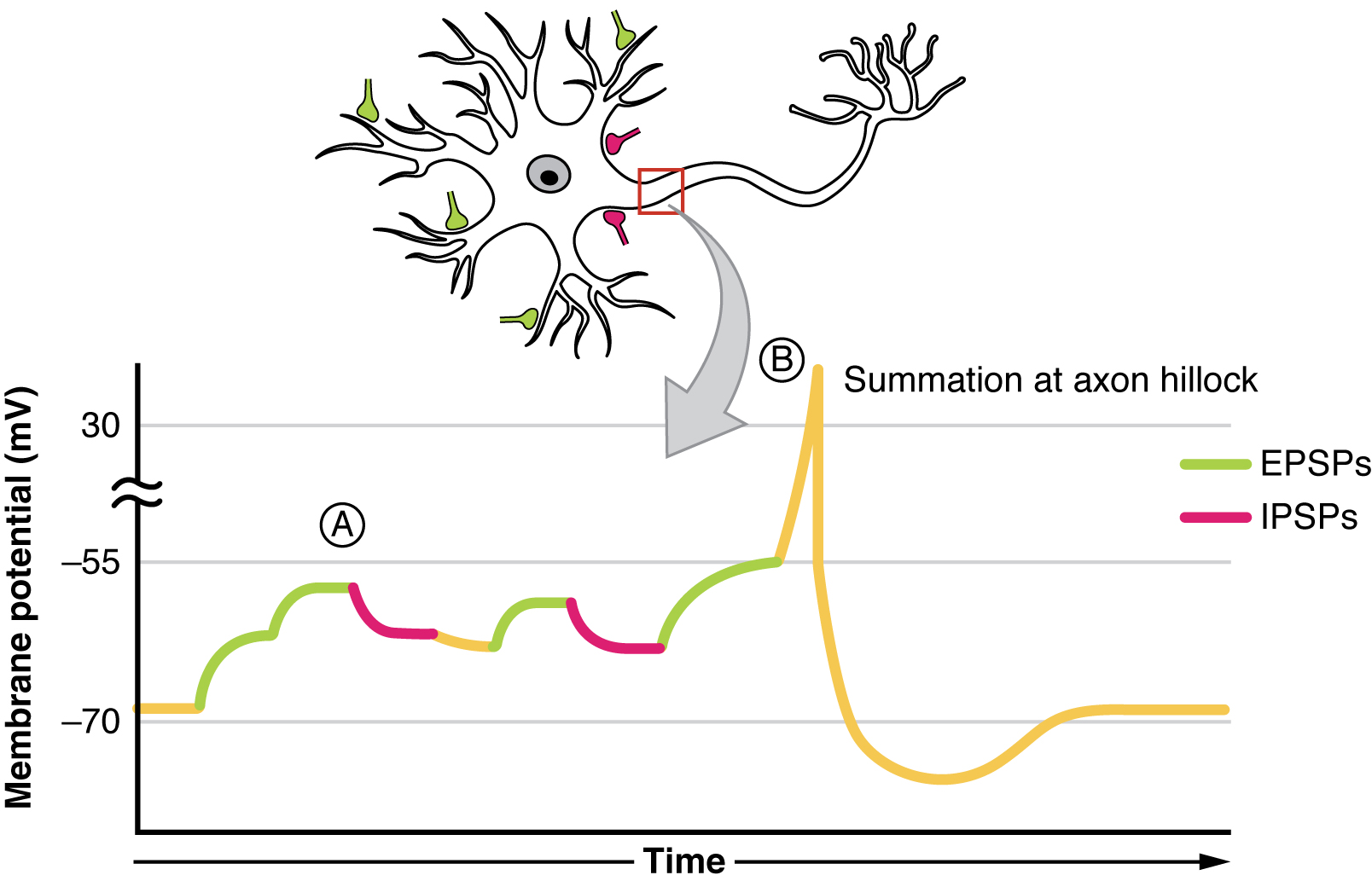
Synaptic plasticity changes the strength or organization of neural connections with experience. In a classic hippocampal long-term potentiation model, coincident presynaptic glutamate release and postsynaptic depolarization relieve the NMDA receptor’s magnesium block. Calcium entry activates pathways that strengthen synaptic responses, including changes in AMPA receptor availability. Longer-lasting changes can involve protein synthesis and structural remodeling. Long-term depression decreases synaptic strength under other activity patterns. These mechanisms support learning but do not imply that one potentiated synapse contains an entire autobiographical memory. Lesion, electrophysiological, and behavioral evidence must be connected rather than treating a correlation as a complete causal explanation.
Source: 8.1 How Memory Functions · 8.2 Parts of the Brain Involved with Memory · 8.3 Problems with Memory · 8.4 Ways to Enhance Memory
Apply the ideas
Worked question. After learning a new password, a student keeps entering the old one. Another participant learns a motor sequence across days but cannot recall the training sessions. Explain both results and design a stronger study strategy.
The old password interfering with the new is proactive interference. Improvement without conscious recollection supports preserved implicit procedural learning despite impaired explicit episodic memory. For factual study, space sessions and test unaided recall with feedback; compare delayed recall against equal-time rereading rather than using immediate familiarity as the outcome.
Source: 8.1 How Memory Functions · 8.2 Parts of the Brain Involved with Memory · 8.3 Problems with Memory · 8.4 Ways to Enhance Memory
8.1 How Memory Functions — figures and tables
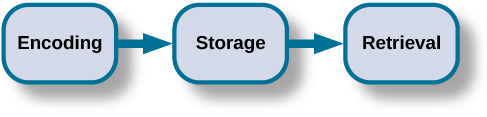
Figure 8.2 Encoding involves the input of information into the memory system. Storage is the retention of the encoded information. Retrieval, or getting the information out of memory and back into awareness, is the third function.
Rose M. Spielman, William J. Jenkins, and Marilyn D. Lovett, Psychology 2E, OpenStax. · CC BY-NC-SA 4.0 · Original image ↗ · Access for free ↗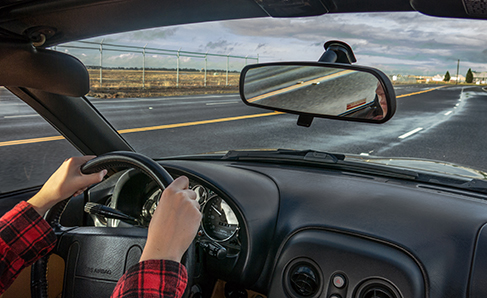
Figure 8.3 When you first learn new skills such as driving a car, you have to put forth effort and attention to encode information about how to start a car, how to brake, how to handle a turn, and so on. Once you know how to drive, you can encode additional information about this skill automatically. (credit: Robert Couse-Baker)
Rose M. Spielman, William J. Jenkins, and Marilyn D. Lovett, Psychology 2E, OpenStax. (credit: Robert Couse-Baker) · CC BY-NC-SA 4.0 · Original image ↗ · Access for free ↗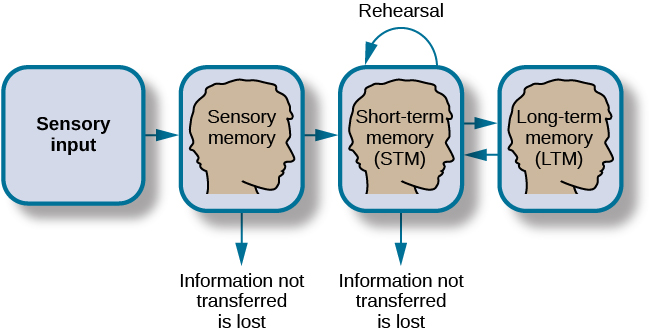
Figure 8.4 According to the Atkinson-Shiffrin model of memory, information passes through three distinct stages in order for it to be stored in long-term memory.
Rose M. Spielman, William J. Jenkins, and Marilyn D. Lovett, Psychology 2E, OpenStax. · CC BY-NC-SA 4.0 · Original image ↗ · Access for free ↗
Figure 8.5 Work through this series of numbers using the recall exercise explained above to determine the longest string of digits that you can store.
Rose M. Spielman, William J. Jenkins, and Marilyn D. Lovett, Psychology 2E, OpenStax. · CC BY-NC-SA 4.0 · Original image ↗ · Access for free ↗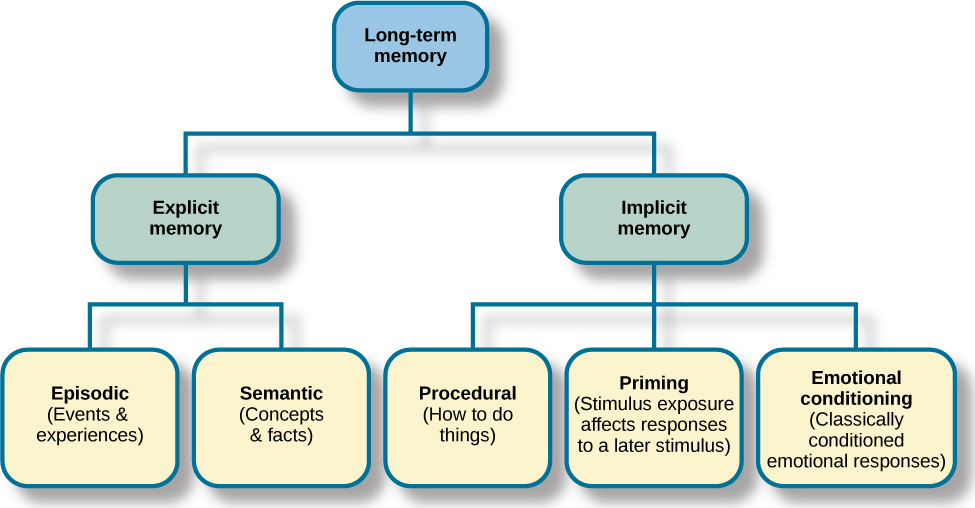
Figure 8.6 There are two components of long-term memory: explicit and implicit. Explicit memory includes episodic and semantic memory. Implicit memory includes procedural memory and things learned through conditioning.
Rose M. Spielman, William J. Jenkins, and Marilyn D. Lovett, Psychology 2E, OpenStax. · CC BY-NC-SA 4.0 · Original image ↗ · Access for free ↗
Figure 8.7 Marilu Henner’s super autobiographical memory is known as hyperthymesia. (credit: Mark Richardson)
Rose M. Spielman, William J. Jenkins, and Marilyn D. Lovett, Psychology 2E, OpenStax. (credit: Mark Richardson) · CC BY-NC-SA 4.0 · Original image ↗ · Access for free ↗Source: 8.1 How Memory Functions
8.2 Parts of the Brain Involved with Memory — figures and tables
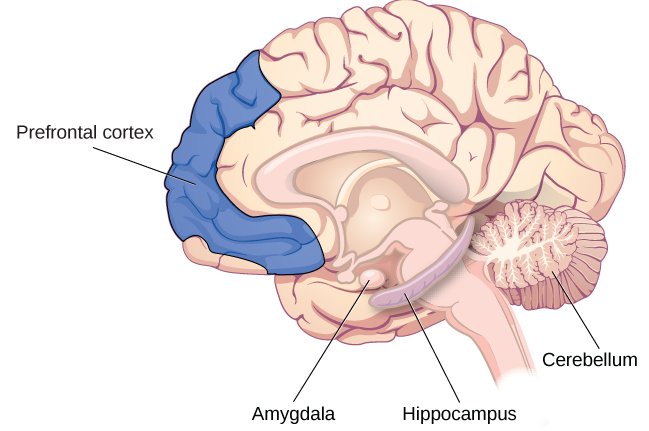
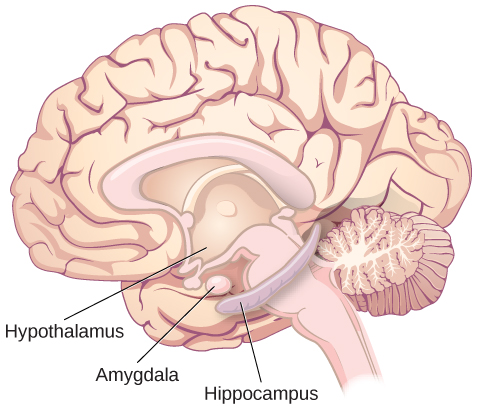
Figure 8.8 The amygdala is involved in fear and fear memories. The hippocampus is associated with declarative and episodic memory as well as recognition memory. The cerebellum plays a role in processing procedural memories, such as how to play the piano. The prefrontal cortex appears to be involved in remembering semantic tasks.
Rose M. Spielman, William J. Jenkins, and Marilyn D. Lovett, Psychology 2E, OpenStax. · CC BY-NC-SA 4.0 · Original image ↗ · Access for free ↗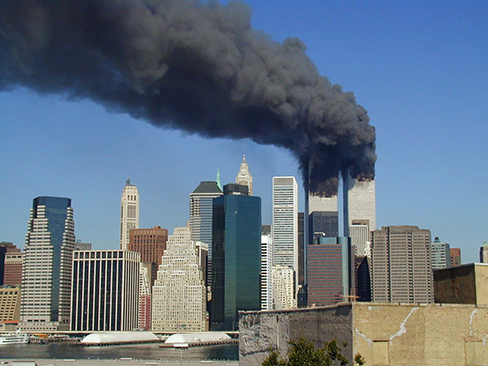
Figure 8.9 Most people can remember where they were when they first heard about the 9/11 terrorist attacks. This is an example of a flashbulb memory: a record of an atypical and unusual event that has very strong emotional associations. (credit: Michael Foran)
Rose M. Spielman, William J. Jenkins, and Marilyn D. Lovett, Psychology 2E, OpenStax. (credit: Michael Foran) · CC BY-NC-SA 4.0 · Original image ↗ · Access for free ↗8.3 Problems with Memory — figures and tables

Figure 8.10 This diagram illustrates the timeline of retrograde and anterograde amnesia. Memory problems that extend back in time before the injury and prevent retrieval of information previously stored in long-term memory are known as retrograde amnesia. Conversely, memory problems that extend forward in time from the point of injury and prevent the formation of new memories are called anterograde amnesia.
Rose M. Spielman, William J. Jenkins, and Marilyn D. Lovett, Psychology 2E, OpenStax. · CC BY-NC-SA 4.0 · Original image ↗ · Access for free ↗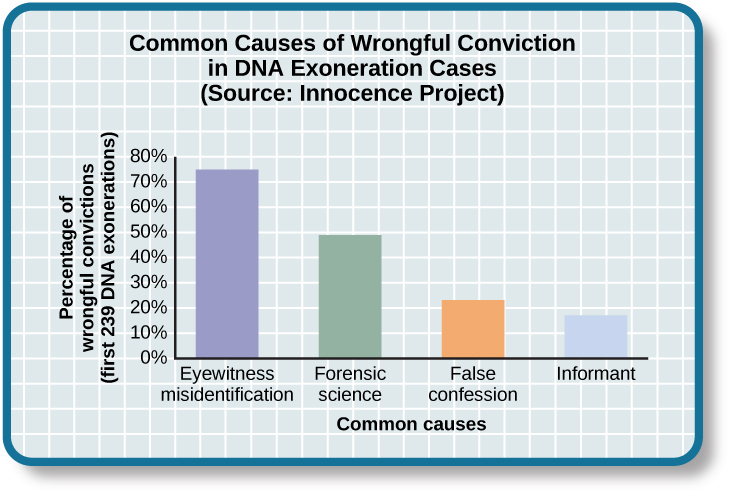
Figure 8.11 In studying cases where DNA evidence has exonerated people from crimes, the Innocence Project discovered that eyewitness misidentification is a leading cause of wrongful convictions (Benjamin N. Cardozo School of Law, Yeshiva University, 2009). Note: Multiple causes may play a role in a wrongful conviction.
Rose M. Spielman, William J. Jenkins, and Marilyn D. Lovett, Psychology 2E, OpenStax. · CC BY-NC-SA 4.0 · Original image ↗ · Access for free ↗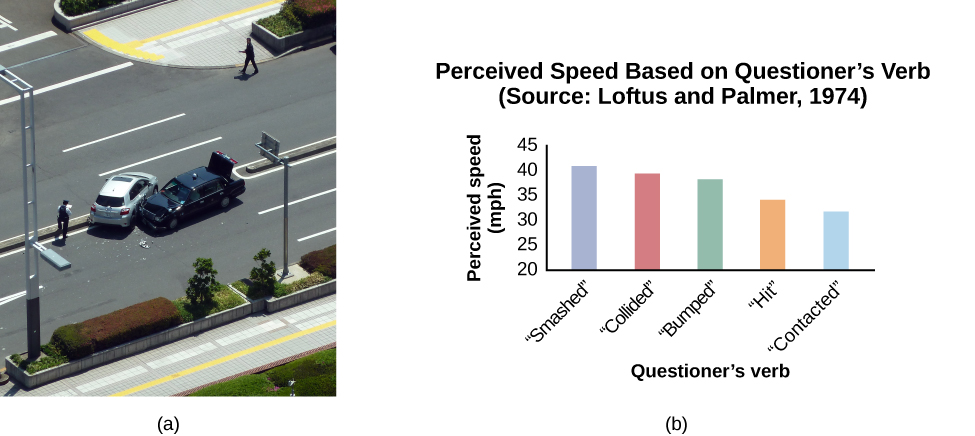
Figure 8.12 When people are asked leading questions about an event, their memory of the event may be altered. (credit a: modification of work by Rob Young)
Rose M. Spielman, William J. Jenkins, and Marilyn D. Lovett, Psychology 2E, OpenStax. (credit a: modification of work by Rob Young) · CC BY-NC-SA 4.0 · Original image ↗ · Access for free ↗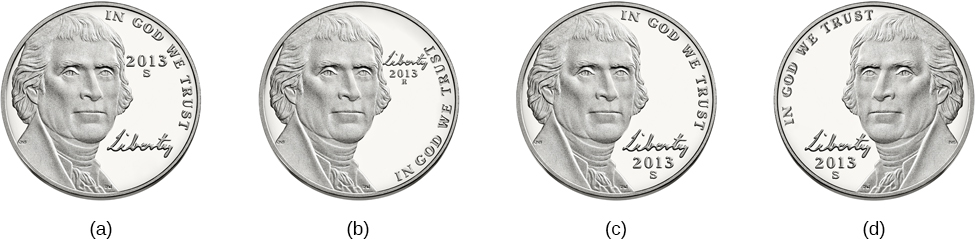
Figure 8.13 Can you tell which coin, (a), (b), (c), or (d) is the accurate depiction of a US nickel? The correct answer is (c).
Rose M. Spielman, William J. Jenkins, and Marilyn D. Lovett, Psychology 2E, OpenStax. · CC BY-NC-SA 4.0 · Original image ↗ · Access for free ↗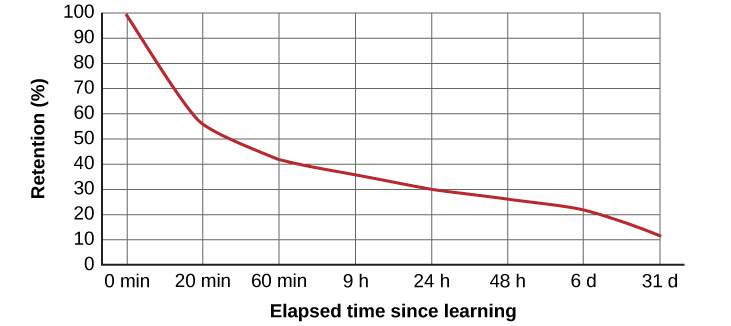
Figure 8.14 The Ebbinghaus forgetting curve shows how quickly memory for new information decays.
Rose M. Spielman, William J. Jenkins, and Marilyn D. Lovett, Psychology 2E, OpenStax. · CC BY-NC-SA 4.0 · Original image ↗ · Access for free ↗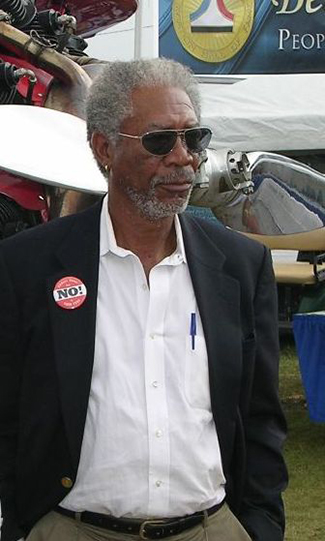
Figure 8.15 Blocking is also known as tip-of-the-tongue (TOT) phenomenon. The memory is right there, but you can’t seem to recall it, just like not being able to remember the name of that very famous actor, Morgan Freeman. (credit: modification of work by D. Miller)
Rose M. Spielman, William J. Jenkins, and Marilyn D. Lovett, Psychology 2E, OpenStax. (credit: modification of work by D. Miller) · CC BY-NC-SA 4.0 · Original image ↗ · Access for free ↗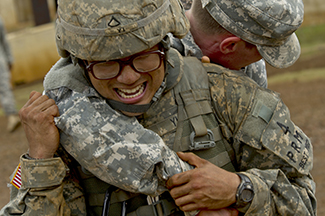
Figure 8.16 Many veterans of military conflicts involuntarily recall unwanted, unpleasant memories. (credit: Department of Defense photo by U.S. Air Force Tech. Sgt. Michael R. Holzworth)
Rose M. Spielman, William J. Jenkins, and Marilyn D. Lovett, Psychology 2E, OpenStax. (credit: Department of Defense photo by U.S. Air Force Tech. Sgt. Michael R. Holzworth) · CC BY-NC-SA 4.0 · Original image ↗ · Access for free ↗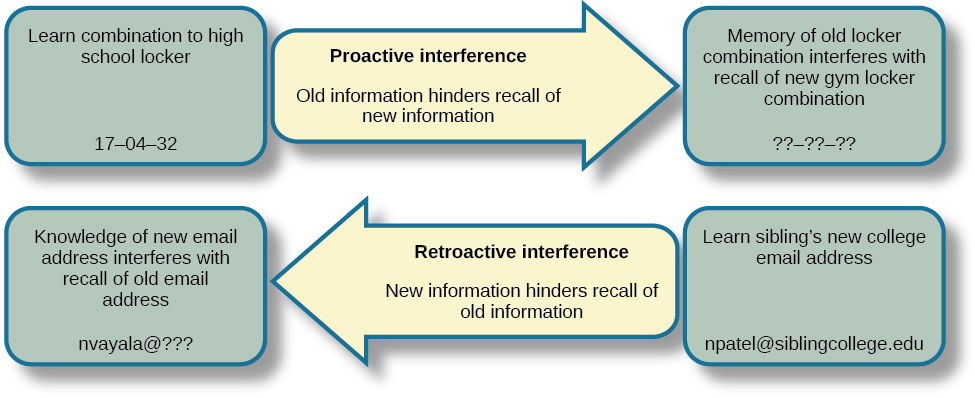
Figure 8.17 Sometimes forgetting is caused by a failure to retrieve information. This can be due to interference, either retroactive or proactive.
Rose M. Spielman, William J. Jenkins, and Marilyn D. Lovett, Psychology 2E, OpenStax. · CC BY-NC-SA 4.0 · Original image ↗ · Access for free ↗| Sin | Type | Description | Example |
|---|---|---|---|
| Transience | Forgetting | Accessibility of memory decreases over time | Forget events that occurred long ago |
| Absentmindedness | Forgetting | Forgetting caused by lapses in attention | Forget where your phone is |
| Blocking | Forgetting | Accessibility of information is temporarily blocked | Tip of the tongue |
| Misattribution | Distortion | Source of memory is confused | Recalling a dream memory as a waking memory |
| Suggestibility | Distortion | False memories | Result from leading questions |
| Bias | Distortion | Memories distorted by current belief system | Align memories to current beliefs |
| Persistence | Intrusion | Inability to forget undesirable memories | Traumatic events |
Table 8.1. Rose M. Spielman, William J. Jenkins, and Marilyn D. Lovett, Psychology 2E, OpenStax.
Source: 8.3 Problems with Memory
8.4 Ways to Enhance Memory — figures and tables

Figure 8.18 This is a knuckle mnemonic to help you remember the number of days in each month. Months with 31 days are represented by the protruding knuckles and shorter months fall in the spots between knuckles. (credit: modification of work by Cory Zanker)
Rose M. Spielman, William J. Jenkins, and Marilyn D. Lovett, Psychology 2E, OpenStax. (credit: modification of work by Cory Zanker) · CC BY-NC-SA 4.0 · Original image ↗ · Access for free ↗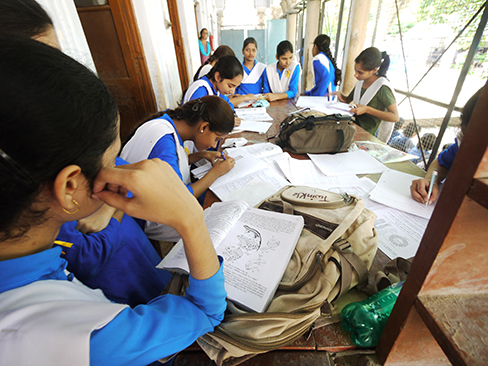
Figure 8.19 Memory techniques can be useful when studying for class. (credit: Barry Pousman)
Rose M. Spielman, William J. Jenkins, and Marilyn D. Lovett, Psychology 2E, OpenStax. (credit: Barry Pousman) · CC BY-NC-SA 4.0 · Original image ↗ · Access for free ↗Source: 8.4 Ways to Enhance Memory
35.5 Nervous System Disorders — figures and tables
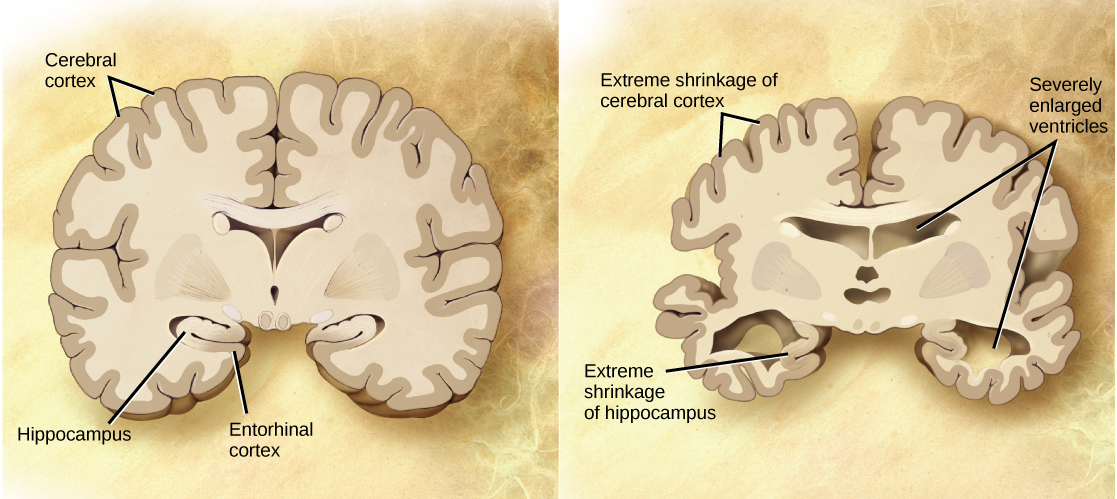
Figure 35.30 Compared to a normal brain (left), the brain from a patient with Alzheimer’s disease (right) shows a dramatic neurodegeneration, particularly within the ventricles and hippocampus. (credit: modification of work by “Garrando”/Wikimedia Commons based on original images by ADEAR: "Alzheimer's Disease Education and Referral Center, a service of the National Institute on Aging”)
Mary Ann Clark, Matthew Douglas, and Jung Choi, Biology 2E, OpenStax. (credit: modification of work by “Garrando”/Wikimedia Commons based on original images by ADEAR: "Alzheimer's Disease Education and Referral Center, a service of the National Institute on Aging”) · CC BY-NC-SA 4.0 · Original image ↗ · Access for free ↗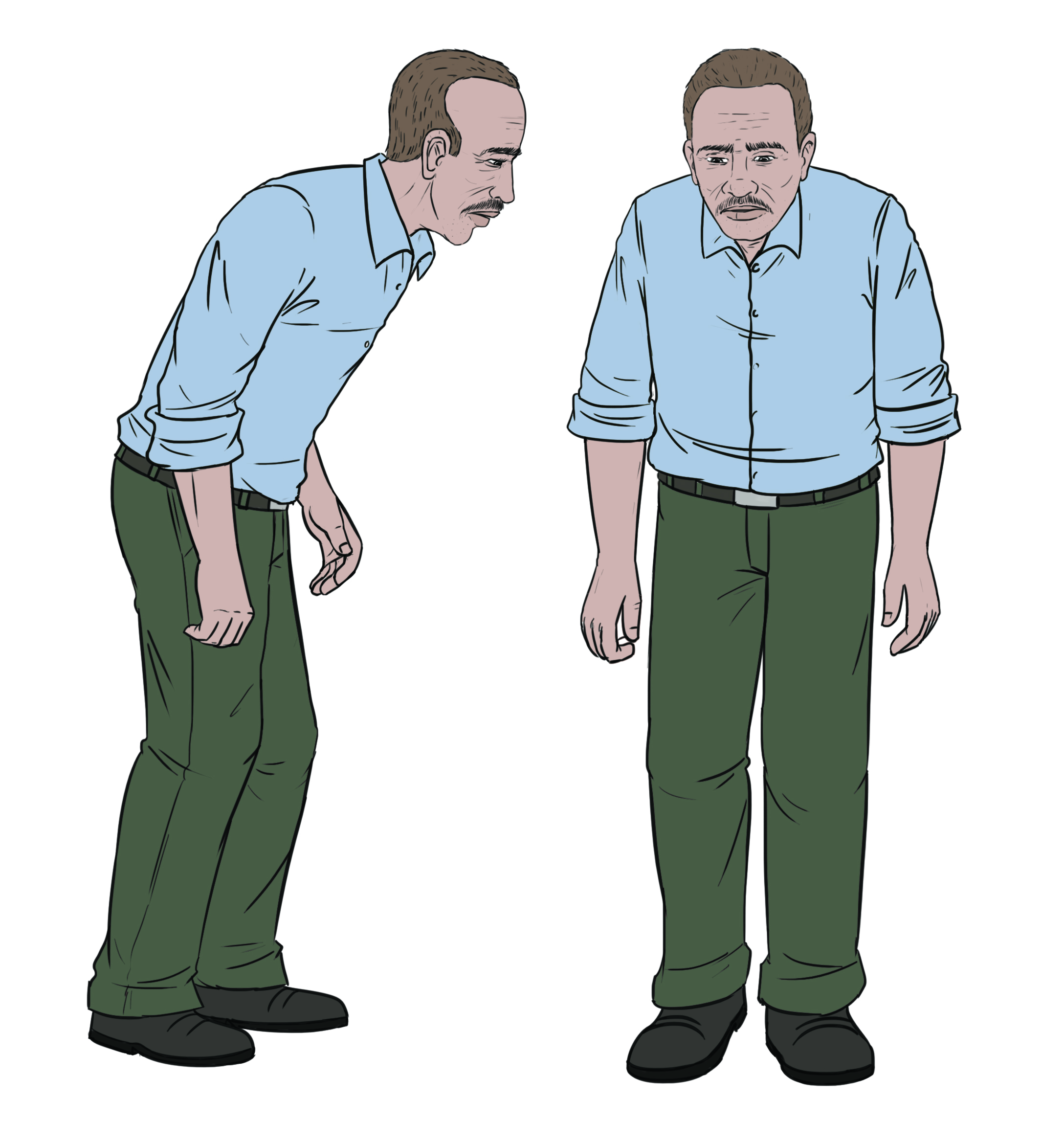
Figure 35.31 Parkinson’s patients often have a characteristic hunched walk.
Mary Ann Clark, Matthew Douglas, and Jung Choi, Biology 2E, OpenStax. · CC BY-NC-SA 4.0 · Original image ↗ · Access for free ↗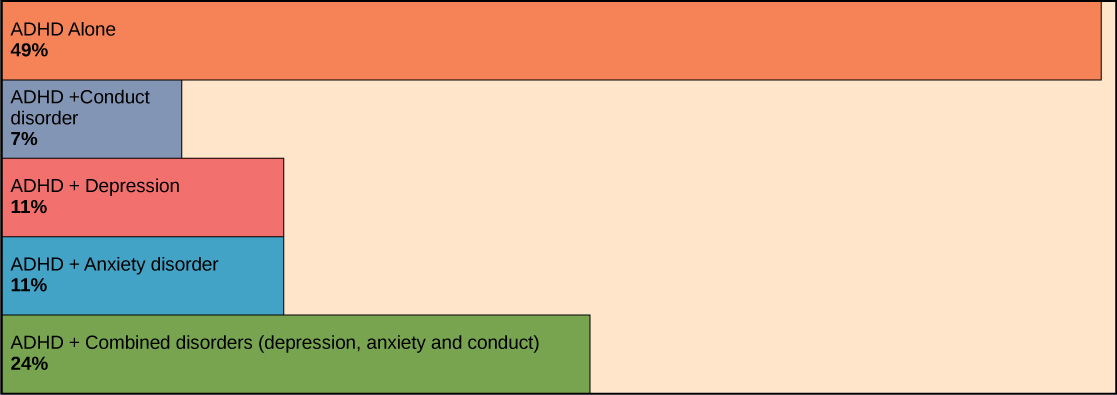
Figure 35.32 Many people with ADHD have one or more other neurological disorders. (credit “chart design and illustration”: modification of work by Leigh Coriale; credit “data”: Drs. Biederman and Faraone, Massachusetts General Hospital).
Mary Ann Clark, Matthew Douglas, and Jung Choi, Biology 2E, OpenStax. (credit “chart design and illustration”: modification of work by Leigh Coriale; credit “data”: Drs. Biederman and Faraone, Massachusetts General Hospital). · CC BY-NC-SA 4.0 · Original image ↗ · Access for free ↗Source: 35.5 Nervous System Disorders