Foundation 6 · 6B · Cognition and interpretation

Judgment, problem solving, and decision making

Sources ↗

An is a systematic procedure that yields a correct when applicable and executed correctly; a is a faster shortcut without that guarantee.

Compare problem-solving methods, algorithms, and heuristics and recognize barriers to

An is a systematic procedure that yields a correct when applicable and executed correctly; a is a faster shortcut without that guarantee. Trial and error tests alternatives; means–end analysis reduces differences between the current and desired states; working backward starts from the goal. An insight can reorganize a problem, but apparent suddenness does not establish absence of earlier processing. repeats a previously useful strategy even when unsuitable. restricts an object to familiar uses. Breaking a problem into subgoals helps, but poorly chosen subgoals can divert effort from the actual question.

Source: 7.3 Problem Solving

Predict effects of overconfidence, , and other judgment biases

The judges likelihood by ease of recalling examples; representativeness judges resemblance to a prototype and may neglect rates. Anchoring pulls estimates toward an initial value. favors information consistent with a belief, whereas retains the belief despite discrediting evidence. Overconfidence overestimates accuracy; makes past events appear more predictable after the outcome is known. changes choices through presentation of equivalent outcomes, and can make losses loom larger than gains. Distinguish bias from simple error by specifying the systematic pattern and comparing decisions under controlled information.

Source: 7.3 Problem Solving

Apply the ideas

Worked question. A rare disease affects 1% of people. A vivid news report makes a participant estimate a 30% risk, and they then search only for confirming stories. Identify the two processes and propose a check.

The vivid example promotes availability bias; selective searching illustrates . Present the same -rate information in a format and require consideration of disconfirming evidence. A confident estimate alone does not establish representativeness unless resemblance to a prototype drives the judgment.

Source: 7.3 Problem Solving

7.3 Problem Solving — figures and tables

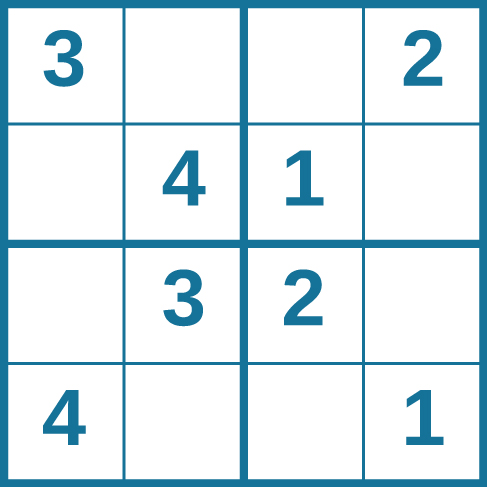
A four column by four row Sudoku puzzle is shown. The top left cell contains the number 3. The top right cell contains the number 2. The bottom right cell contains the number 1. The bottom left cell contains the number 4. The cell at the intersection of the second row and the second column contains the number 4. The cell to the right of that contains the number 1. The cell below the cell containing the number 1 contains the number 2. The cell to the left of the cell containing the number 2 contains the number 3.
Figure 7.7 — 7.3 Problem Solving

Figure 7.7 How long did it take you to solve this sudoku puzzle? (You can see the answer at the end of this section.)

Rose M. Spielman, William J. Jenkins, and Marilyn D. Lovett, Psychology 2E, OpenStax. · CC BY-NC-SA 4.0 · Original image ↗ · Access for free ↗
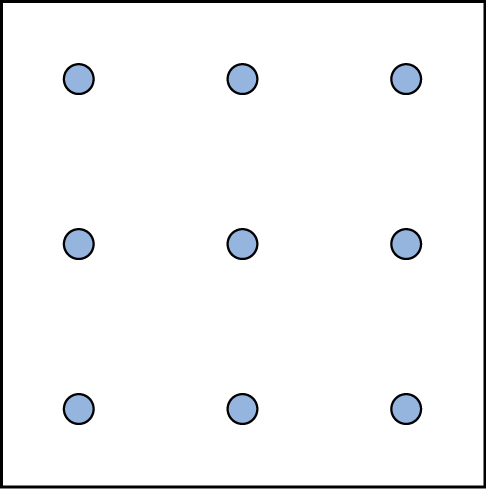
A square shaped outline contains three rows and three columns of dots with equal space between them.
Figure 7.8 — 7.3 Problem Solving

Figure 7.8 Did you figure it out? (The answer is at the end of this section.) Once you understand how to crack this puzzle, you won’t forget.

Rose M. Spielman, William J. Jenkins, and Marilyn D. Lovett, Psychology 2E, OpenStax. · CC BY-NC-SA 4.0 · Original image ↗ · Access for free ↗
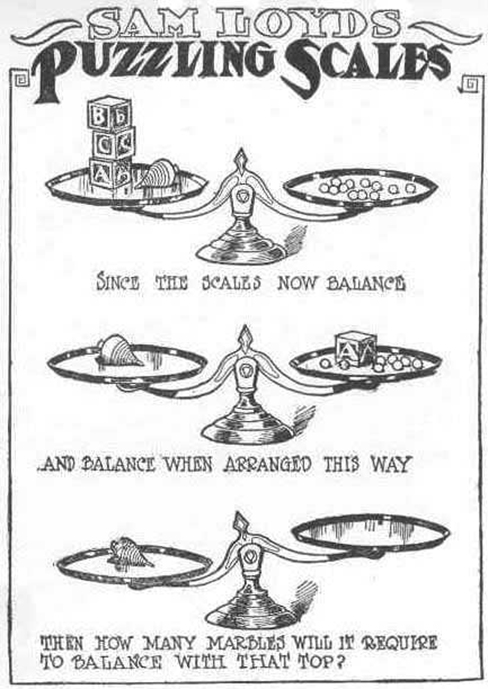
A puzzle involving a scale is shown. At the top of the figure it reads: “Sam Loyds Puzzling Scales.” The first row of the puzzle shows a balanced scale with 3 blocks and a top on the left and 12 marbles on the right. Below this row it reads: “Since the scales now balance.” The next row of the puzzle shows a balanced scale with just the top on the left, and 1 block and 8 marbles on the right. Below this row it reads: “And balance when arranged this way.” The third row shows an unbalanced scale with the top on the left side, which is much lower than the right side. The right side is empty. Below this row it reads: “Then how many marbles will it require to balance with that top?”
Figure 7.9 — 7.3 Problem Solving

Figure 7.9 What steps did you take to solve this puzzle? You can read the solution at the end of this section.

Rose M. Spielman, William J. Jenkins, and Marilyn D. Lovett, Psychology 2E, OpenStax. · CC BY-NC-SA 4.0 · Original image ↗ · Access for free ↗
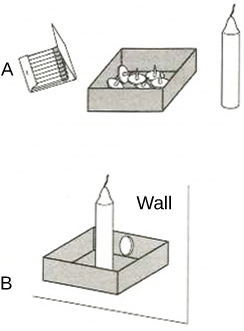
Figure a shows a book of matches, a box of thumbtacks, and a candle. Figure b shows the candle standing in the box that held the thumbtacks. A thumbtack attaches the box holding the candle to the wall.
Figure 7.10 — 7.3 Problem Solving

Figure 7.10 In Duncker's classic study, participants were provided the three objects in the top panel and asked to solve the problem. The solution is shown in the bottom portion.

Rose M. Spielman, William J. Jenkins, and Marilyn D. Lovett, Psychology 2E, OpenStax. · CC BY-NC-SA 4.0 · Original image ↗ · Access for free ↗
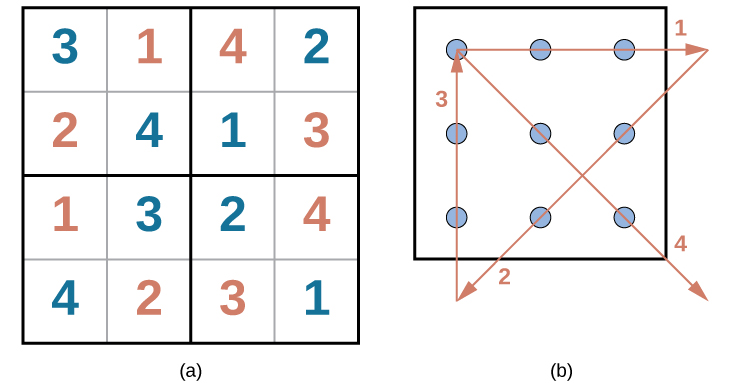
The first puzzle is a Sudoku grid of 16 squares (4 rows of 4 squares) is shown. Half of the numbers were supplied to start the puzzle and are colored blue, and half have been filled in as the puzzle’s solution and are colored red. The numbers in each row of the grid, left to right, are as follows. Row 1:  blue 3, red 1, red 4, blue 2. Row 2: red 2, blue 4, blue 1, red 3. Row 3: red 1, blue 3, blue 2, red 4. Row 4: blue 4, red 2, red 3, blue 1.The second puzzle consists of 9 dots arranged in 3 rows of 3 inside of a square.       The solution, four straight lines made without lifting the pencil, is shown in a red line with arrows indicating the direction of movement. In order to solve the puzzle, the lines must extend beyond the borders of the box. The four connecting lines are drawn as follows. Line 1 begins at the top left dot, proceeds through the middle and right dots of the top row, and extends to the right beyond the border of the square. Line 2 extends from the end of line 1, through the right dot of the horizontally centered row, through the middle dot of the bottom row, and beyond the square’s border ending in the space beneath the left dot of the bottom row. Line 3 extends from the end of line 2 upwards through the left dots of the bottom, middle, and top rows. Line 4 extends from the end of line 3 through the middle dot in the middle row and ends at the right dot of the bottom row.
Figure 7.11 — 7.3 Problem Solving

Figure 7.11

Rose M. Spielman, William J. Jenkins, and Marilyn D. Lovett, Psychology 2E, OpenStax. · CC BY-NC-SA 4.0 · Original image ↗ · Access for free ↗
Method Description Example
Trial and error Continue trying different until problem is solved Restarting phone, turning off WiFi, turning off bluetooth in order to determine why your phone is malfunctioning
Step-by-step problem-solving formula Instructional video for installing new software on your computer
General problem-solving framework Working backwards; breaking a task into steps

Table 7.2. Rose M. Spielman, William J. Jenkins, and Marilyn D. Lovett, Psychology 2E, OpenStax.

Bias Description
Anchoring Tendency to focus on one particular piece of information when making decisions or problem-solving
Confirmation Focuses on information that confirms existing beliefs
Hindsight Belief that the event just experienced was predictable
Representative Making a decision or judgment based on perceived similarity to existing stereotypes or prior beliefs
Availability Decision is based upon either an available precedent or an example that may be faulty

Table 7.3. Rose M. Spielman, William J. Jenkins, and Marilyn D. Lovett, Psychology 2E, OpenStax.

Source: 7.3 Problem Solving

124 terms, alphabetically ordered

Acid · ·

In the Brønsted–Lowry model, a substance that can donate a . Acidic have a higher activity than water.

Read explanation · OpenStax ↗
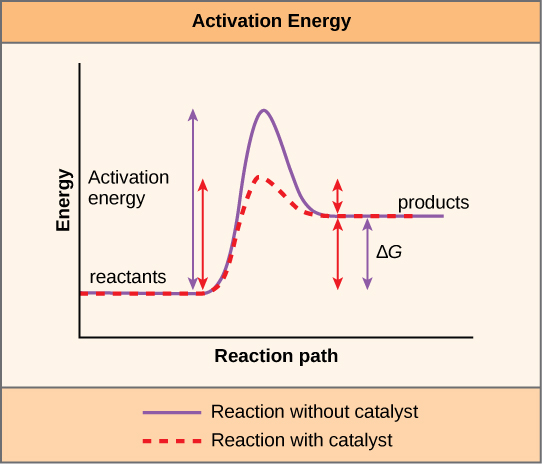
Activation energy ·

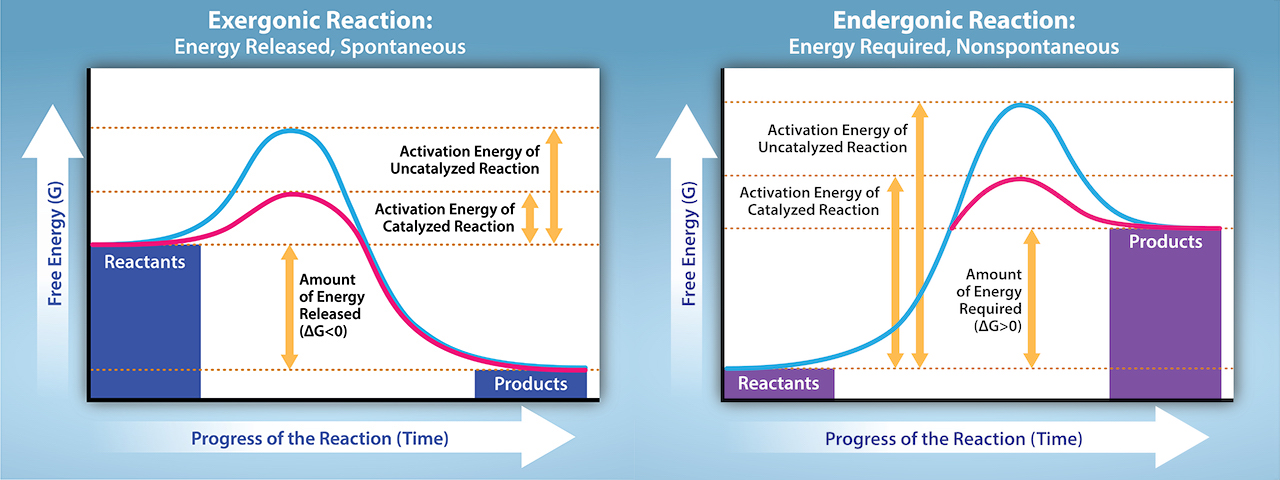
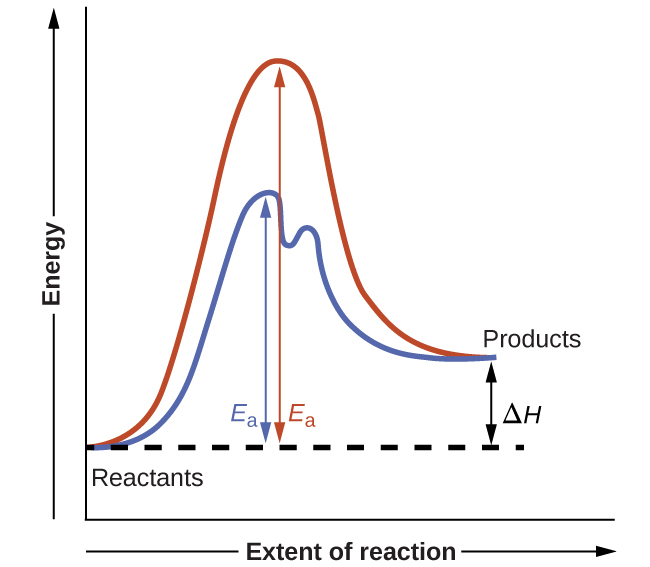
The energy barrier that must overcome to reach a and undergo .

Read explanation · OpenStax ↗
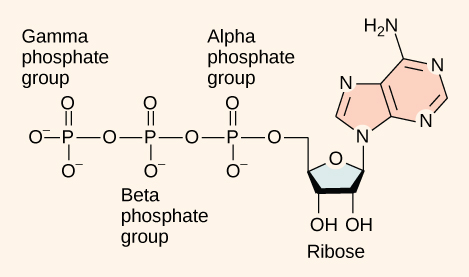
Adenosine triphosphate

An energy-carrying ; its powers many cellular processes, including cycles.

Read explanation · OpenStax ↗
algorithm

Explicit procedure that solves an applicable problem when correctly followed.

Read explanation · OpenStax ↗
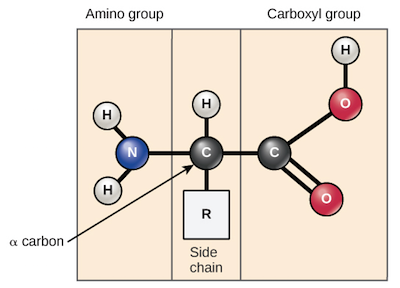
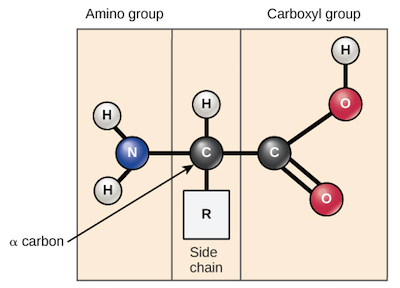
Alpha carbon · ·

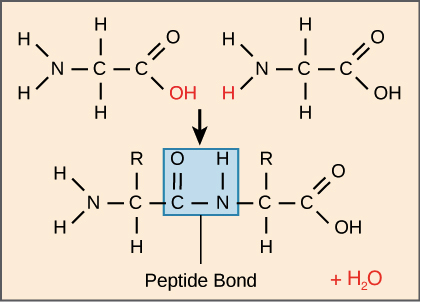
The central carbon next to the carboxyl carbon. In a standard it binds an , hydrogen, and .

Read explanation · OpenStax ↗
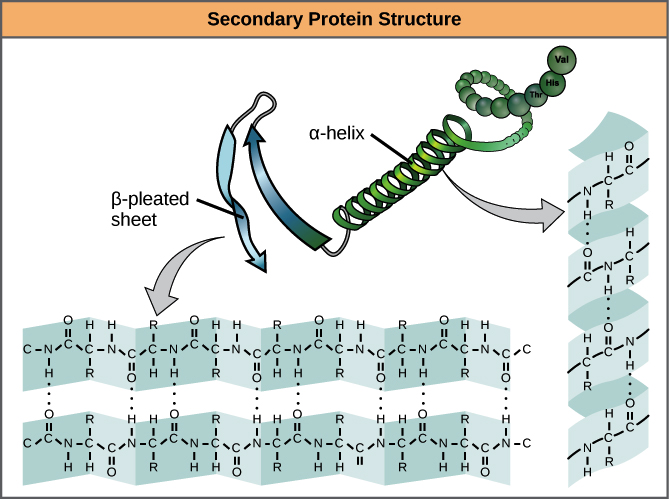
Alpha helix · · · · · ·

A helical stabilized by between a oxygen and an hydrogen four later.

Read explanation · OpenStax ↗
Amide · · ·

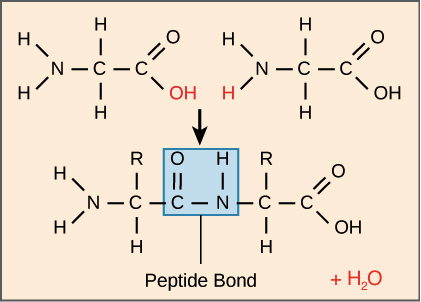
A group containing a carbon bonded to nitrogen. are amide linkages.

Read explanation · OpenStax ↗
Amino acid

A building block containing amino and and a characteristic .

Read explanation · OpenStax ↗
Amino acid residue · ·

The part of an incorporated into a chain. Residue can also describe another building block within a larger .

Read explanation · OpenStax ↗
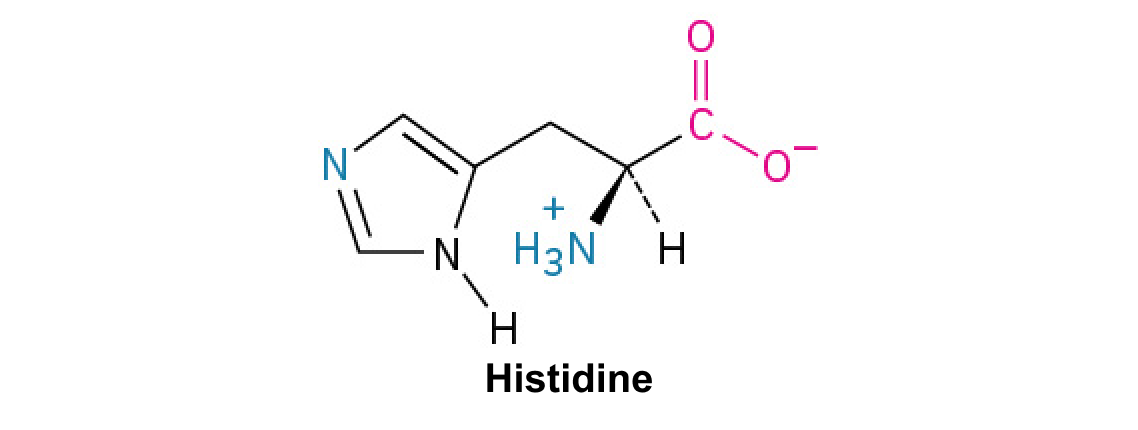
Amino group · · ·

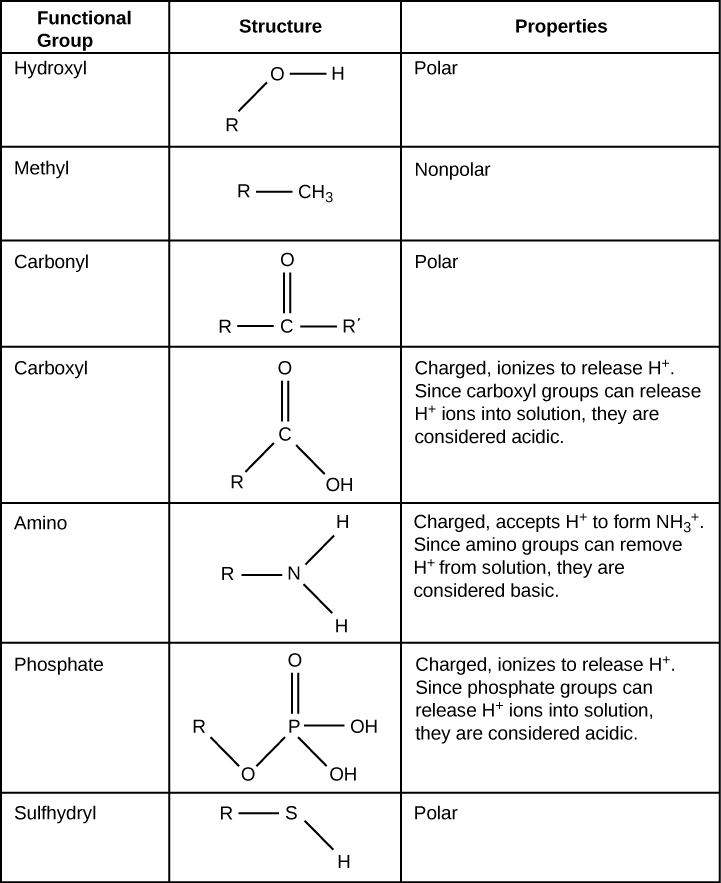
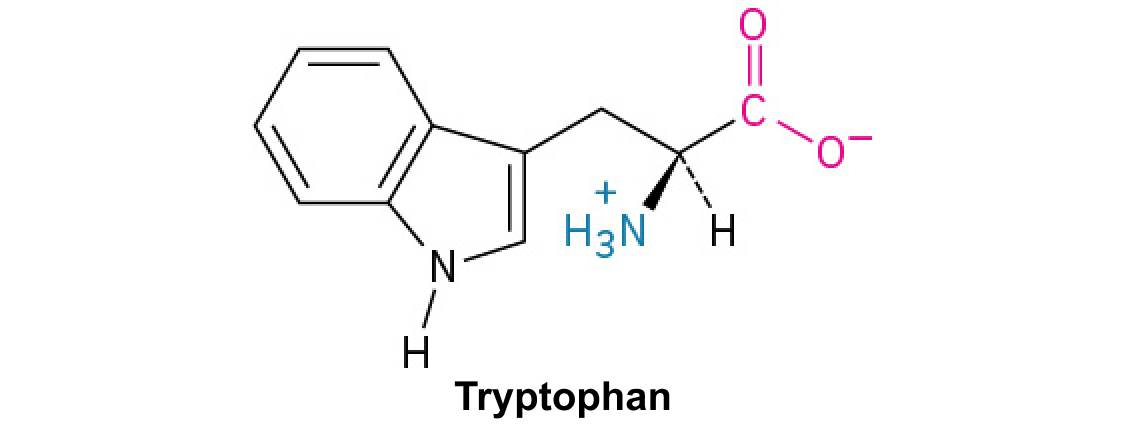
A nitrogen-containing . A free ’s amino group is typically (NH₃⁺) near physiological ; ’s ring nitrogen is an exception to this formula.

Read explanation · OpenStax ↗
Amphipathic

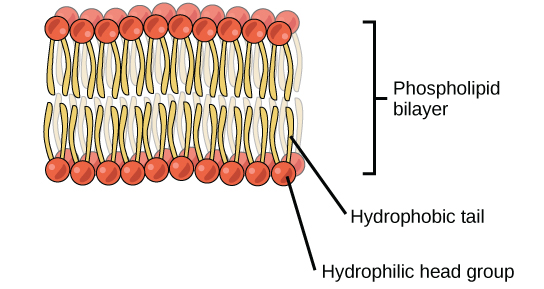
Having both a region and a region, as in a or .

Read explanation · OpenStax ↗
anchoring bias

Excessive influence of an initial value on later judgment.

Read explanation · OpenStax ↗
Antiparallel

Running in opposite directions, as with two strands or neighboring strands in some .

Read explanation · OpenStax ↗
Aqueous solution ·

A in which water is the .

Read explanation · OpenStax ↗
Aromatic

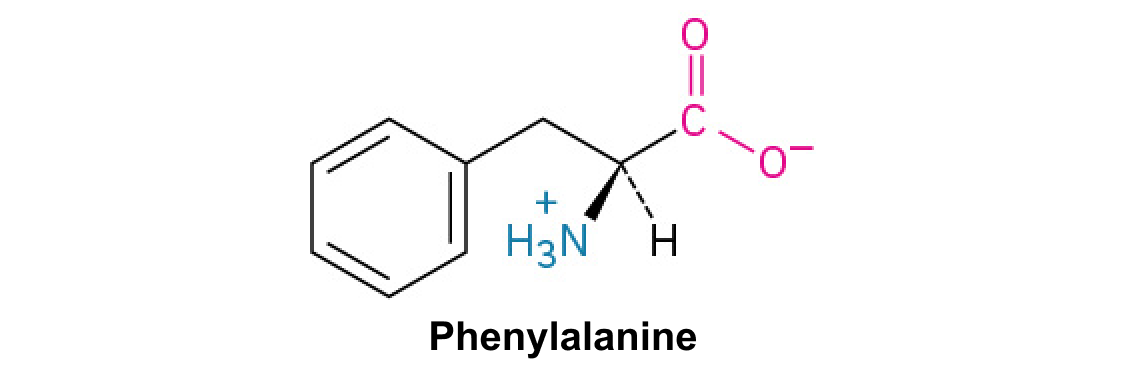
Containing a cyclic, with . , , and have aromatic .

Read explanation · OpenStax ↗
Atom

The smallest unit of an element that retains its chemical identity; it has a surrounded by .

Read explanation · OpenStax ↗
availability heuristic

Judging frequency or probability from ease of recall.

Read explanation · OpenStax ↗
belief perseverance

Maintaining a belief after its supporting evidence has been discredited.

Read explanation · OpenStax ↗
Benzene ring

A six-carbon ring with .

Read explanation · OpenStax ↗
Benzyl group

A attached through a –CH₂– group; part of ’s .

Read explanation · OpenStax ↗
Beta sheet · · · · · ·

A made of aligned segments connected by ; strands may be parallel or .

Read explanation · OpenStax ↗
Biomolecule

A made by or involved in living systems, including , , , and .

Read explanation · OpenStax ↗
Blotting ·

Transfer of separated or to a so a specific target can be detected.

Read explanation · Thermo Fisher ↗
Brønsted–Lowry base · · · · · · · · · · ·

In the Brønsted–Lowry model, a substance that can accept a . Basic solutions have lower activity than water.

Read explanation · OpenStax ↗
Carbohydrate

A class of including sugars and their , used for energy storage, structure, and recognition.

Read explanation · OpenStax ↗
Carbonyl group · ·

A carbon double-bonded to oxygen, C=O; present in and many other .

Read explanation · OpenStax ↗
Carboxyl group · ·

An , COOH. In free it is usually to COO⁻ near physiological .

Read explanation · OpenStax ↗
Catalyst · ·

A substance that speeds a by providing a pathway with lower and is regenerated rather than consumed overall.

Read explanation · OpenStax ↗
Chemical compound ·

A substance containing of two or more different chemically combined in a definite composition.

Read explanation · OpenStax ↗
Chemical element

A substance defined by having the same number of , such as carbon or oxygen.

Read explanation · OpenStax ↗
Chemical reaction ·

A process that rearranges and chemical bonds, converting into .

Read explanation · OpenStax ↗
Chromosome ·

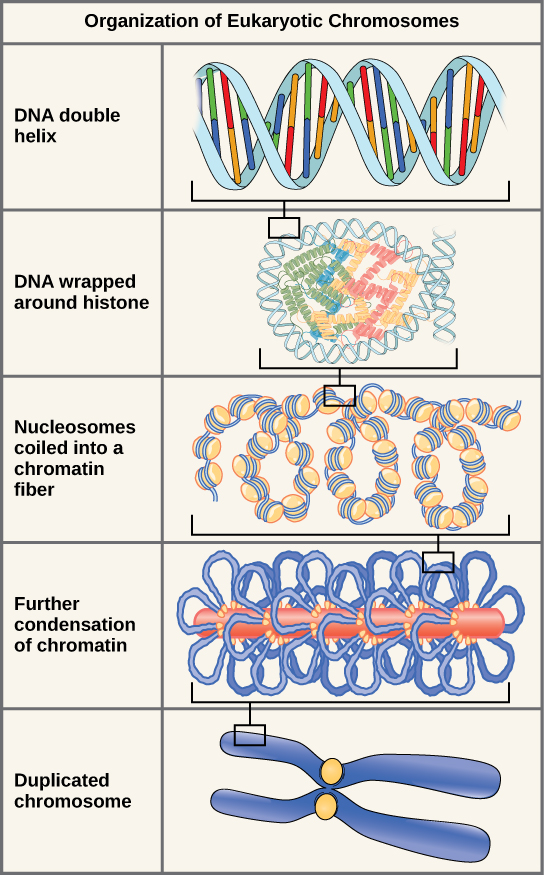
An organized with associated that carries . A replicated chromosome has two .

Read explanation · OpenStax ↗
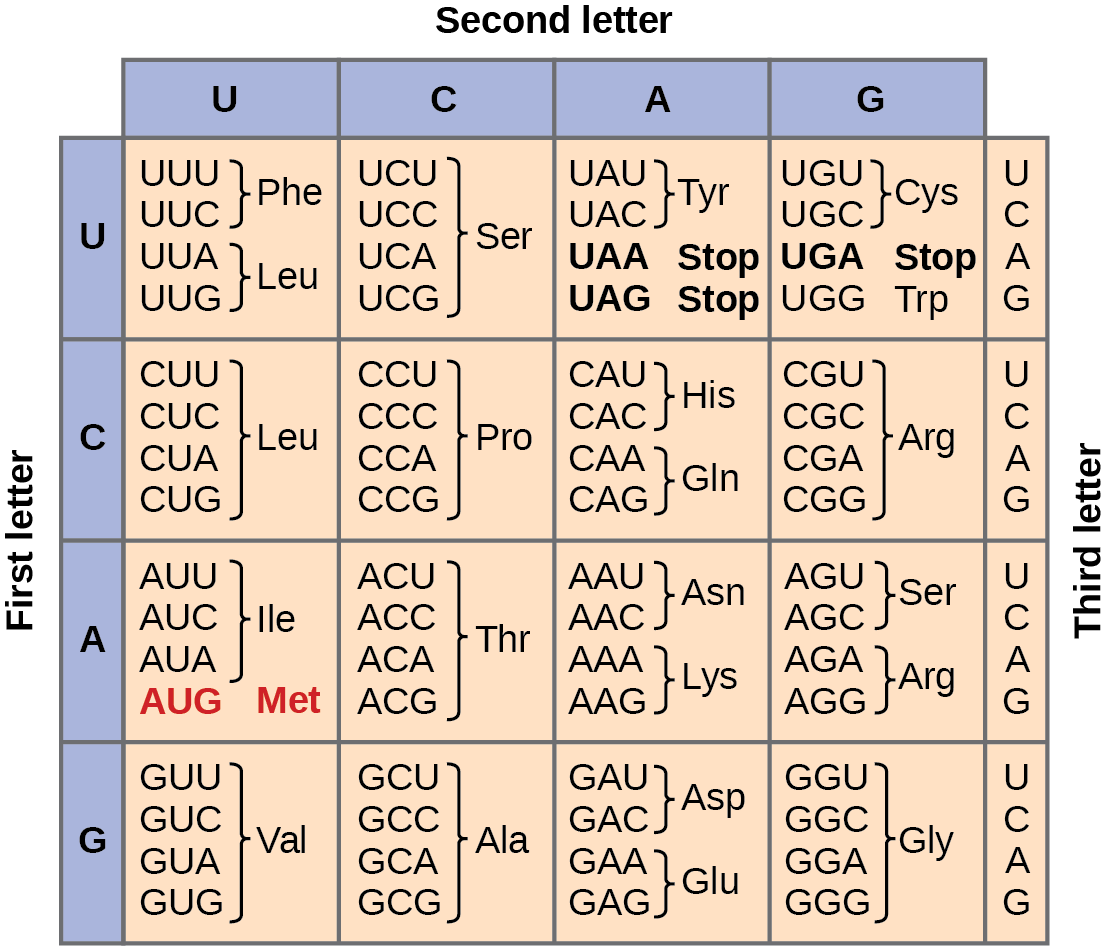
Codon

A sequence of three that specifies an or a stop signal.

Read explanation · OpenStax ↗
confirmation bias

Favoring evidence or searches that support an existing belief.

Read explanation · OpenStax ↗
Conjugated system ·

Adjacent orbitals that allow to be distributed across several , often through alternating single and multiple bonds.

Read explanation · OpenStax ↗
Covalent bond · ·

A bond in which share pairs. and are covalent.

Read explanation · OpenStax ↗
culture

Learned and shared meanings, practices, values, and artifacts.

Read explanation · OpenStax ↗
Cysteine ·

An with a . Two cysteines can form a .

Read explanation · OpenStax ↗
Deoxyribonucleic acid

The that stores genetic information used to specify and sequences.

Read explanation · OpenStax ↗
Deprotonation

Removal of a from a or group; this changes its by minus one.

Read explanation · OpenStax ↗
Detergent

An substance that can associate with both water and material; detergents can disrupt or interactions.

Read explanation · Thermo Fisher ↗
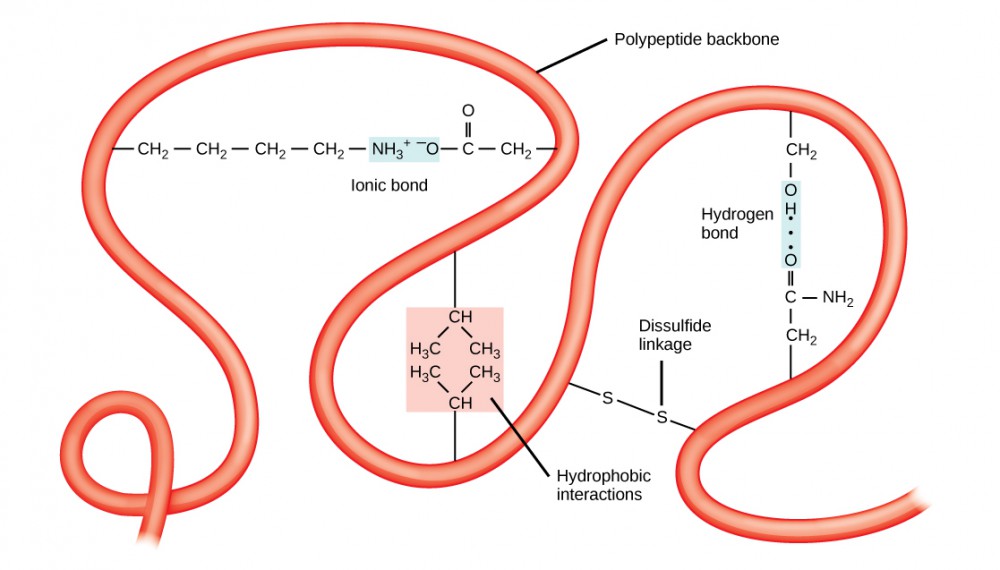
Disulfide bond · · ·

A covalent sulfur–sulfur bond formed by of two , which can stabilize structure.

Read explanation · NCBI Bookshelf ↗
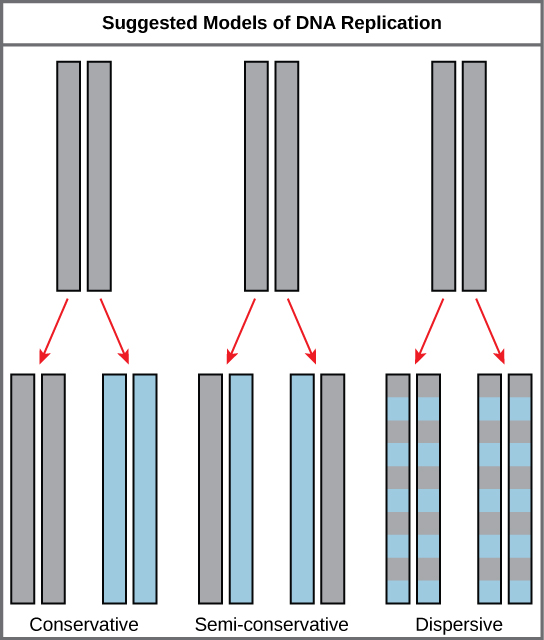
DNA replication

Copying so genetic information can be passed to daughter cells. Each guides a complementary new strand.

Read explanation · OpenStax ↗
Electric charge · · ·

An electrical property that can be positive or negative. Opposite charges attract and like charges repel; net charge is the sum of all charges on a particle.

Read explanation · OpenStax ↗
Electron

A negatively subatomic particle. Electron sharing and transfer determine much of chemical bonding.

Read explanation · OpenStax ↗
Electron delocalization ·

Distribution of across several rather than confinement to one or bond.

Read explanation · OpenStax ↗
Electronegativity ·

An ’s tendency to attract shared in a chemical bond. Unequal attraction can make a bond .

Read explanation · OpenStax ↗
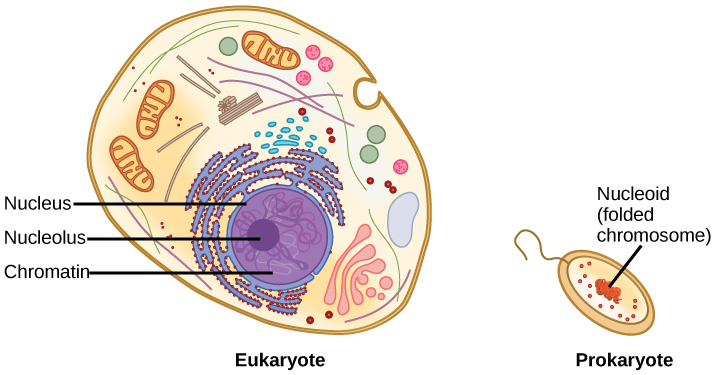
Eukaryote ·

An organism whose cells have a -enclosed ; animals, plants, fungi, and protists are eukaryotes.

Read explanation · OpenStax ↗
Fatty acid

A attached to a chain; fatty acids are components of many .

Read explanation · OpenStax ↗
framing

Construction of interpretations that define problems, , and motives for action.

Read explanation · OpenStax ↗
functional fixedness

Difficulty seeing uses for an object beyond its familiar function.

Read explanation · OpenStax ↗
Functional group

A group of whose chemical behavior gives a characteristic and properties.

Read explanation · OpenStax ↗
Gene

A sequence that contributes to a functional or , together with the information needed to express it.

Read explanation · OpenStax ↗
Gene expression

Production of a functional from a , including and, for -coding , .

Read explanation · NCBI Bookshelf ↗
heuristic

Efficient judgment or problem-solving shortcut that can produce systematic errors.

Read explanation · OpenStax ↗
hindsight bias

Retrospective belief that a known outcome was more predictable than it was.

Read explanation · OpenStax ↗
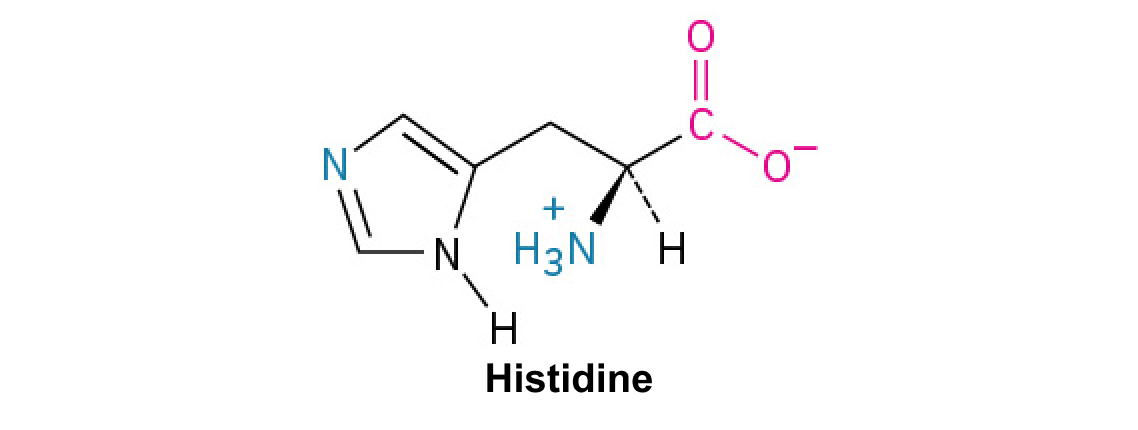
Histidine ·

A with an . Mostly uncharged near physiological , it can accept or donate .

Read explanation · OpenStax ↗
Hydrocarbon · ·

A made only of carbon and hydrogen. Hydrocarbon regions are generally .

Read explanation · OpenStax ↗
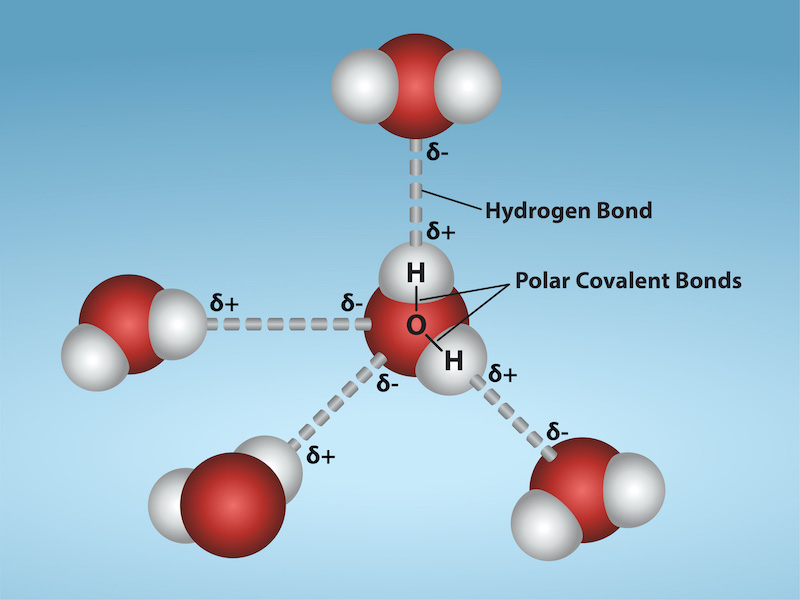
Hydrogen bond ·

An attraction between a hydrogen bonded to an and another . hydrogen bonds stabilize .

Read explanation · OpenStax ↗
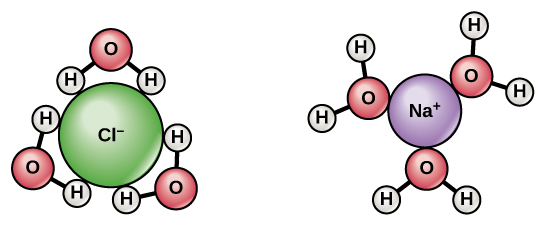
Hydrogen ion · ·

A positively hydrogen species. H⁺ denotes a , which is hydrated in water; its activity determines .

Read explanation · OpenStax ↗
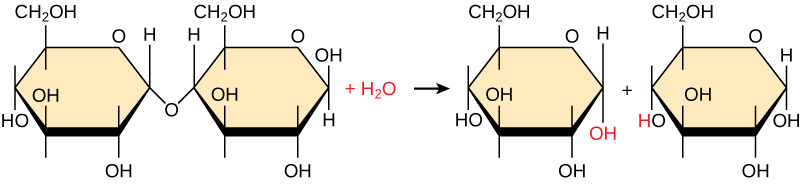
Hydrolysis

Breaking a chemical bond by adding water. hydrolysis separates .

Read explanation · OpenStax ↗
Hydrophilic

Interacting favorably with water, typically because a group is or .

Read explanation · OpenStax ↗
Hydrophobic

Interacting poorly with water. often gather in a ’s interior.

Read explanation · OpenStax ↗
Hydroxide ion ·

The negatively OH⁻. Basic contain a higher hydroxide ion activity than water at the same temperature.

Read explanation · OpenStax ↗
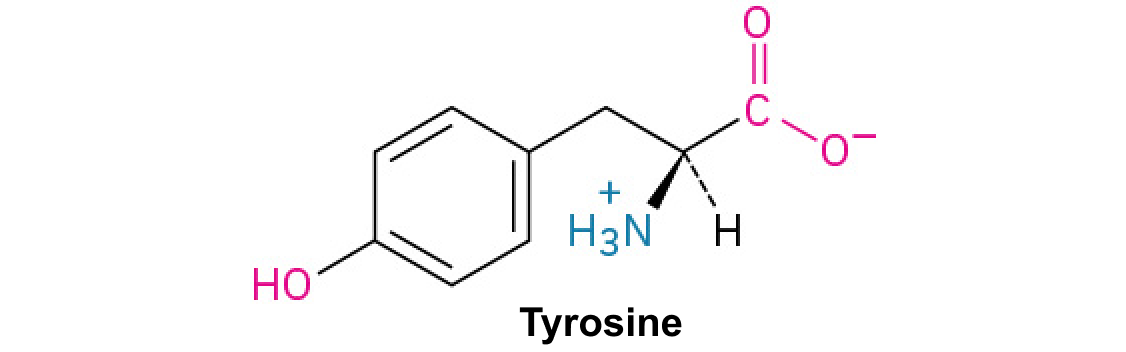
Hydroxyl group ·

An oxygen bonded to hydrogen, –OH. Hydroxyl groups can and often increase .

Read explanation · OpenStax ↗
Imidazole

A five-membered ring containing two nitrogens; ’s contains this ring.

Read explanation · OpenStax ↗
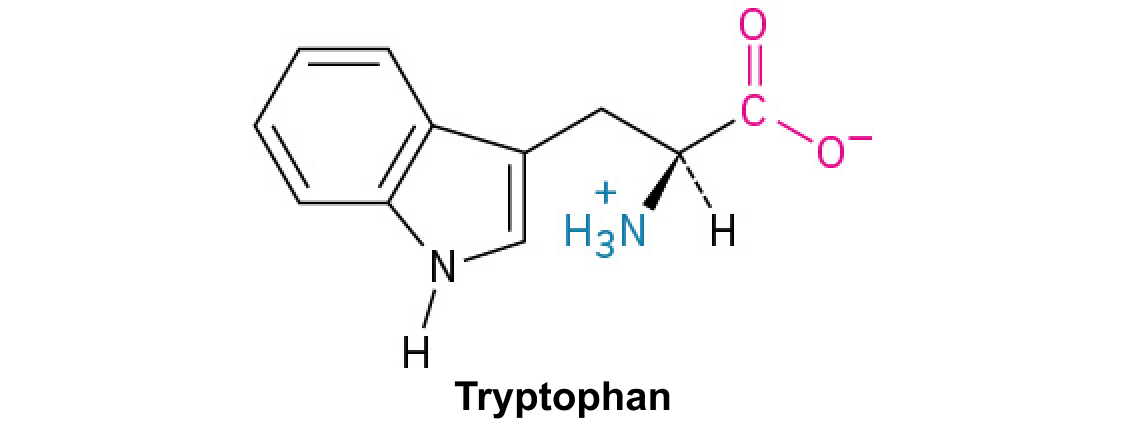
Indole

A fused six-membered and five-membered ring system containing nitrogen; found in .

Read explanation · OpenStax ↗
Ion · ·

An or with a net because its numbers of and do not balance.

Read explanation · OpenStax ↗
linkage

A tendency of nearby on the same to be inherited together.

Read explanation · OpenStax ↗
Lipid

A broad class of largely or , including fats, , and steroids.

Read explanation · OpenStax ↗
locus

The specific position of a or other feature.

Read explanation · OpenStax ↗
Logarithm · · ·

The exponent needed to obtain a number from a chosen fixed number. For decimal logarithms, log₁₀(100) = 2 because 10² = 100; uses the negative decimal logarithm of activity.

Read explanation · OpenStax ↗
loss aversion

Tendency for a loss to have greater psychological impact than an equivalent gain.

Read explanation · OpenStax ↗
Membrane · · · ·

A thin boundary or sheet. Cell membranes are bilayers containing ; membranes are synthetic supports that hold or for detection.

Read explanation · OpenStax ↗
mental set

Tendency to persist with a familiar problem-solving approach.

Read explanation · OpenStax ↗
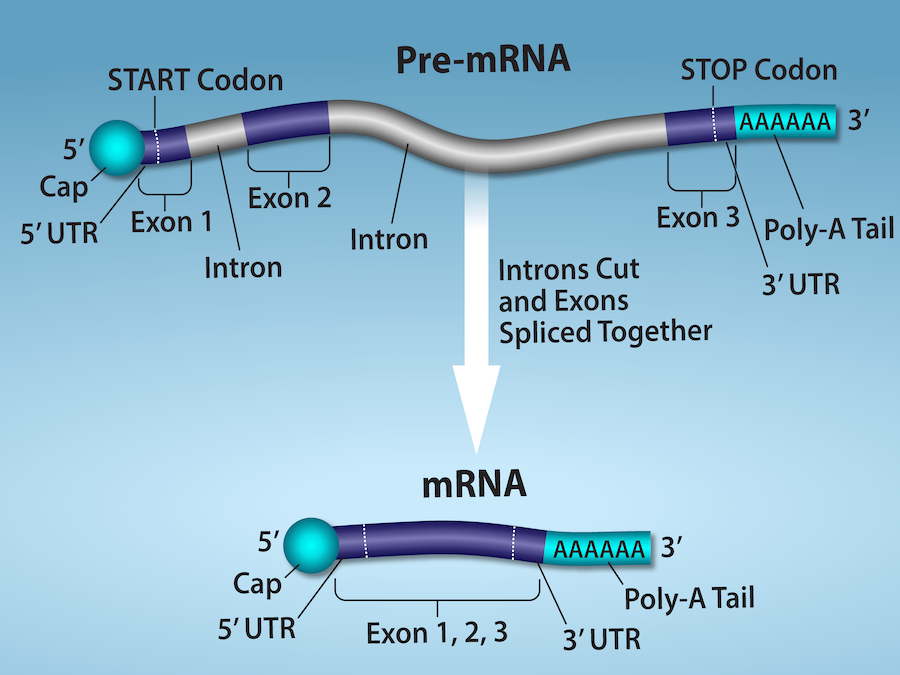
Messenger RNA ·

An that carries coding information used by to synthesize a .

Read explanation · OpenStax ↗
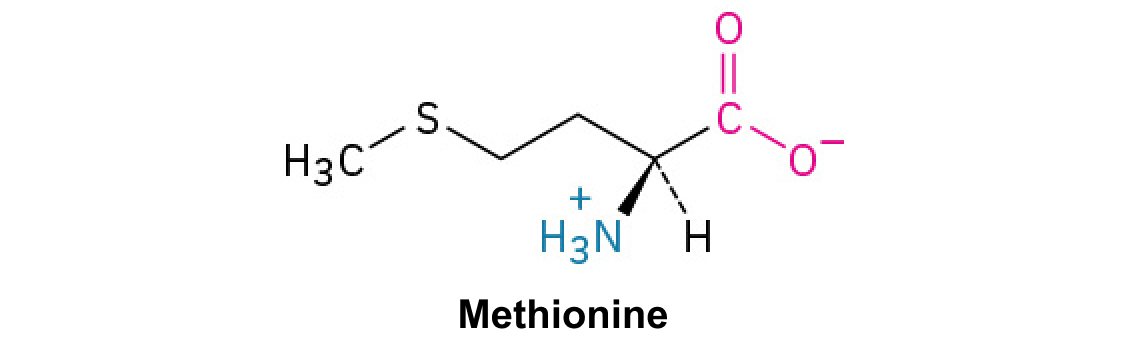
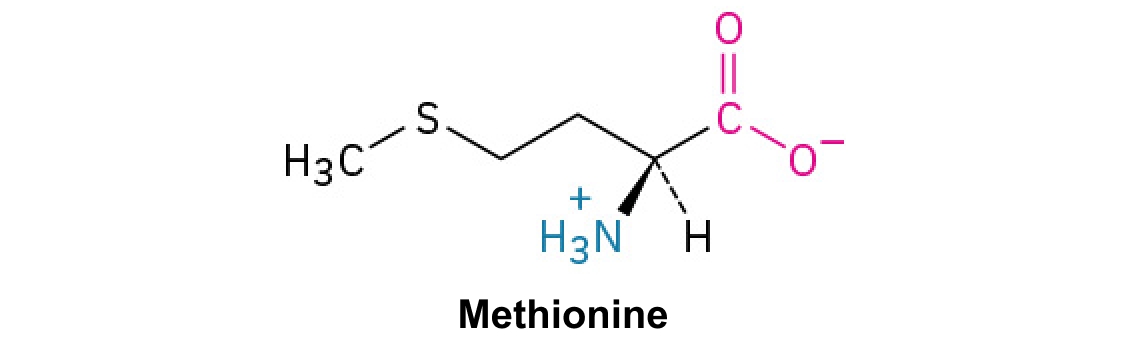
Methionine ·

A with sulfur in a . Unlike , it does not form .

Read explanation · OpenStax ↗
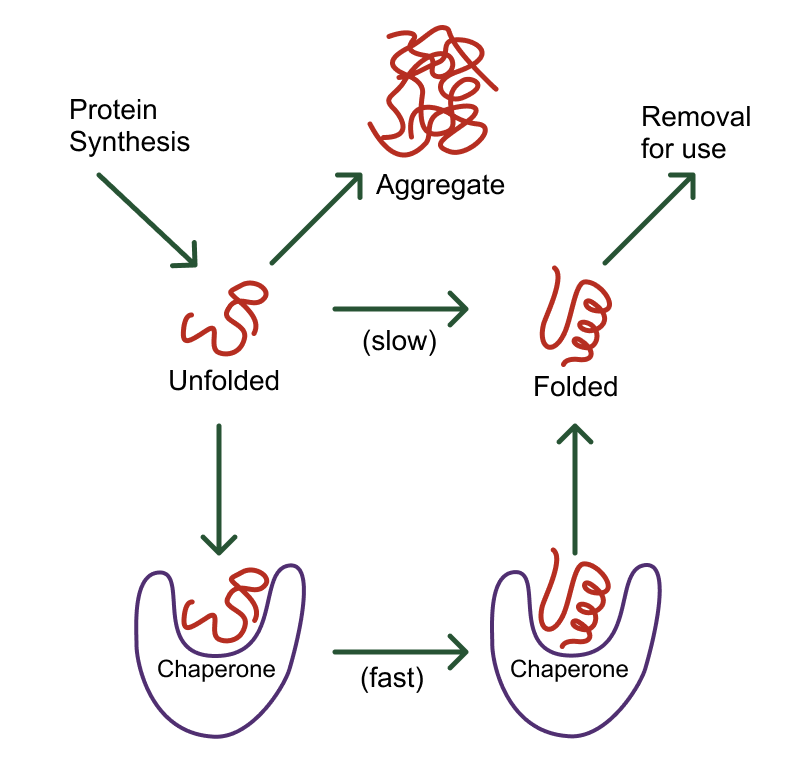
Molecular chaperone · ·

A that assists other in folding or prevents , without specifying their sequence.

Read explanation · NCBI Bookshelf ↗
Molecule

Two or more joined by . A molecule may be electrically or carry a .

Read explanation · OpenStax ↗
Neutral

Having no net . For a , neutral instead means equal and activities; its is about 7 at 25 °C.

Read explanation · OpenStax ↗
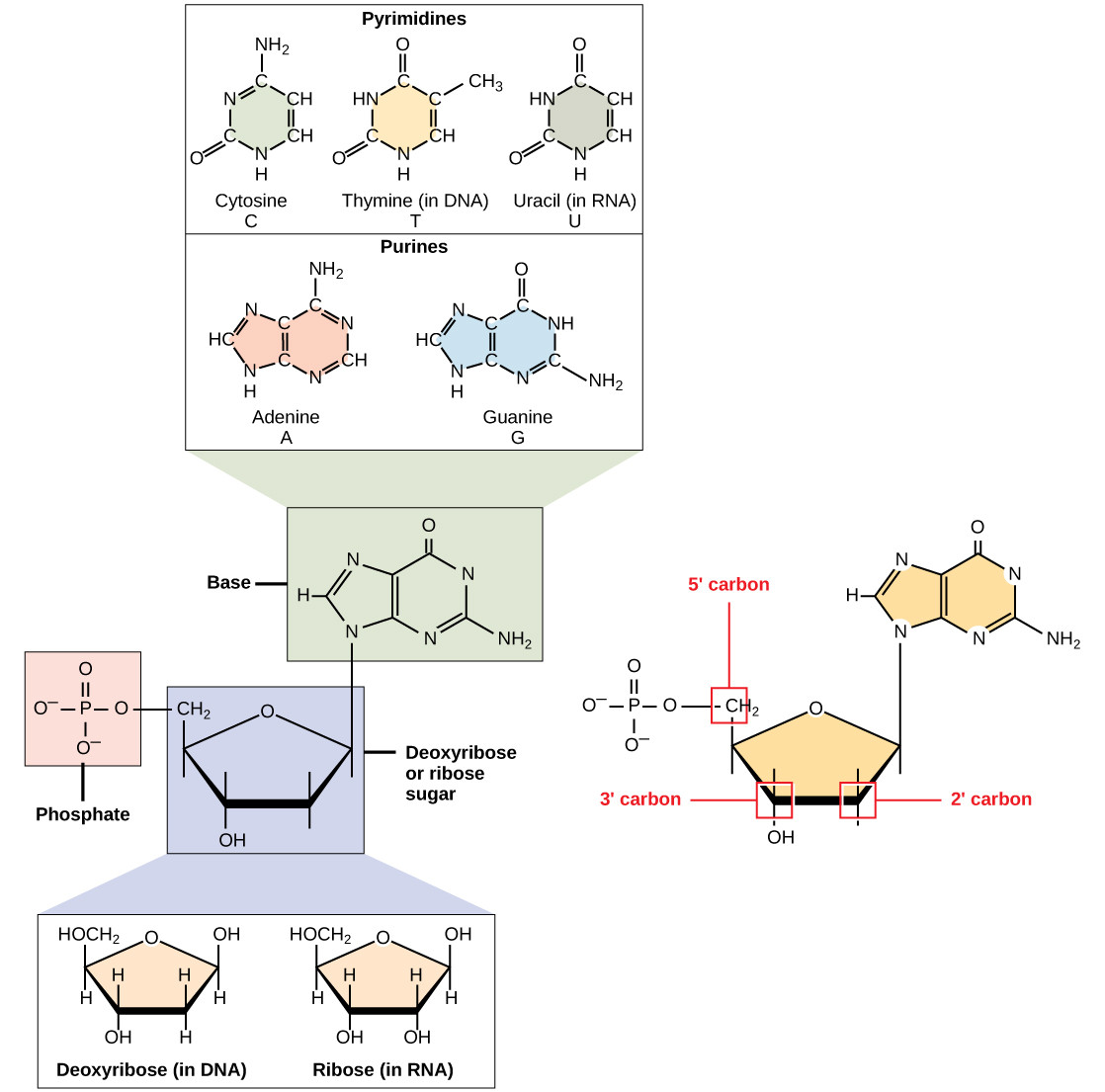
Nitrogenous base · · ·

A nitrogen-containing ring component of ; its pairing interactions help specify sequences.

Read explanation · OpenStax ↗
Nonpolar ·

Lacking a substantial separation of . Nonpolar groups generally interact poorly with water.

Read explanation · OpenStax ↗
Nucleic acid

A of , such as or , used in information storage, expression, and other cellular functions.

Read explanation · OpenStax ↗
Nucleotide

A joined to a sugar and one or more .

Read explanation · OpenStax ↗
Nucleus ·

A -enclosed compartment containing most of a cell’s .

Read explanation · OpenStax ↗
Oxidation ·

Loss of or an increase in oxidation state. Oxidizing two can form a .

Read explanation · OpenStax ↗
Peptide

A chain of joined by ; the term commonly describes chains shorter than a typical .

Read explanation · OpenStax ↗
Peptide bond ·

A covalent between the carboxyl carbon of one and the amino nitrogen of the next.

Read explanation · OpenStax ↗
pH

A measure of , defined as the negative of activity. Lower pH means greater ; pH influences .

Read explanation · OpenStax ↗
Phenylalanine ·

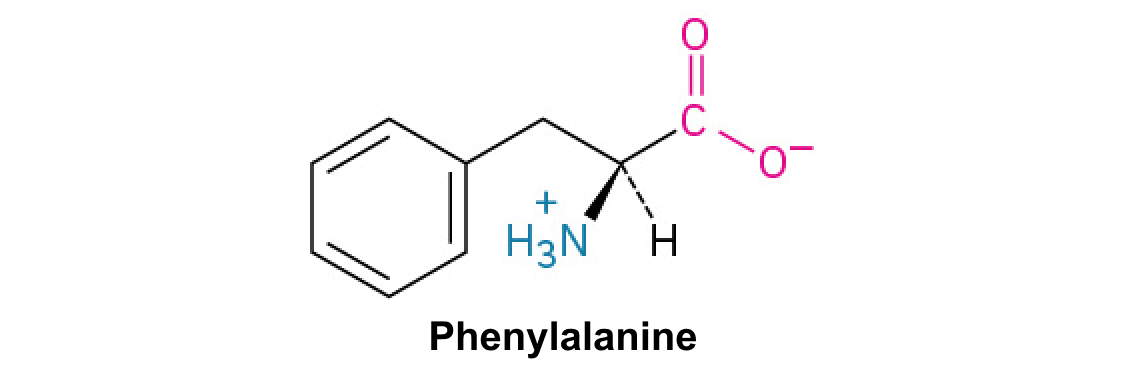
A with an .

Read explanation · OpenStax ↗
Phosphate group ·

A phosphorus-containing group bonded to oxygens; phosphate groups occur in , , and modified .

Read explanation · OpenStax ↗
Phospholipid

An with a -containing region and tails; a major component of cellular .

Read explanation · OpenStax ↗
Polar

Having an uneven distribution of . Polar groups often interact favorably with water.

Read explanation · OpenStax ↗
Polymer

A large made from many linked molecular building blocks.

Read explanation · OpenStax ↗
Polypeptide

A chain of connected by . A functional can contain one or several such chains.

Read explanation · OpenStax ↗
Proline ·

An whose loops back to the nitrogen, restricting rotation and often creating bends.

Read explanation · OpenStax ↗
Protein

One or more folded chains that perform biological roles such as , transport, signaling, or structural support.

Read explanation · OpenStax ↗
Protein aggregation · ·

Association of into larger clusters, often when exposed surfaces of unfolded stick together.

Read explanation · NCBI Bookshelf ↗
Protein backbone ·

The repeating nitrogen–alpha-carbon– chain of a , excluding its variable .

Read explanation · OpenStax ↗
Proton

A positively subatomic particle. In – chemistry, donating a proton means transferring a .

Read explanation · OpenStax ↗
Protonation

Addition of a to an , , or ; this changes its by plus one.

Read explanation · OpenStax ↗
R group · ·

The variable side chain attached to an ’s . It determines identity, , , and chemical behavior.

Read explanation · OpenStax ↗
Reactant

A starting substance transformed during a .

Read explanation · OpenStax ↗
Reaction intermediate · ·

A species formed in one step and consumed in another. It occupies a local energy minimum between .

Read explanation · OpenStax ↗
Reaction product ·

A substance formed by a .

Read explanation · OpenStax ↗
representativeness heuristic

Judging category membership from resemblance while potentially neglecting rates.

Read explanation · OpenStax ↗
Ribonucleic acid ·

A with roles in , regulation, and ; carries -coding information.

Read explanation · OpenStax ↗
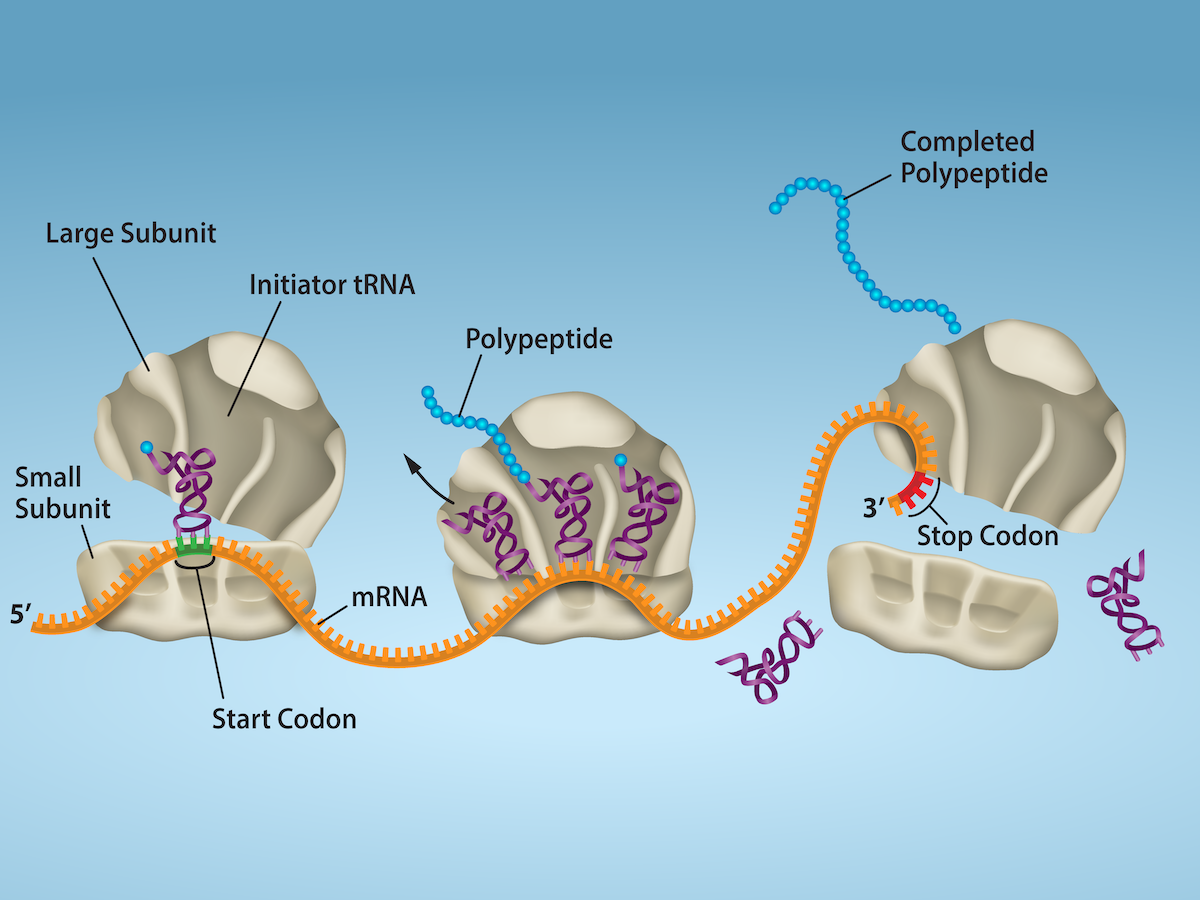
Ribosome ·

A complex of and that translates into a .

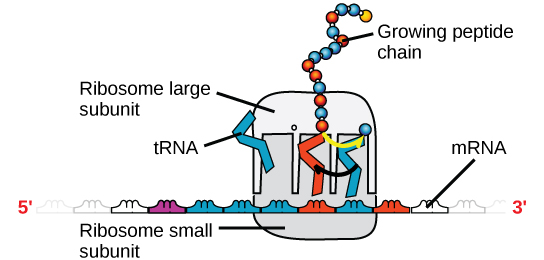
Read explanation · OpenStax ↗
Secondary structure

Local folding, such as and , stabilized mainly by .

Read explanation · OpenStax ↗
Sister chromatid

One of the two copies of a produced by . An intact sister chromatid can supply a template for accurate repair.

Read explanation · Biology LibreTexts / Oregon State University ↗
Solubility ·

The amount of a substance that can dissolve in a under specified conditions. Soluble means able to dissolve; insoluble means only very slightly soluble in that .

Read explanation · OpenStax ↗
Solute

A dissolved component of a .

Read explanation · OpenStax ↗
Solution

A homogeneous mixture in which are dissolved in a .

Read explanation · OpenStax ↗
Solvent

The component of a that dissolves other substances, usually the component present in the greatest amount.

Read explanation · OpenStax ↗
stereotype

Generalized belief about characteristics of members of a group.

Read explanation · OpenStax ↗
Template strand · · ·

A preexisting strand whose sequence guides complementary nucleic- synthesis.

Read explanation · OpenStax ↗
Thioether

A sulfur bonded to two carbon groups, as in ’s . It has no hydrogen.

Read explanation · OpenStax ↗
Thiol group · · · ·

A sulfur bonded to hydrogen, –SH. thiols can form through .

Read explanation · OpenStax ↗
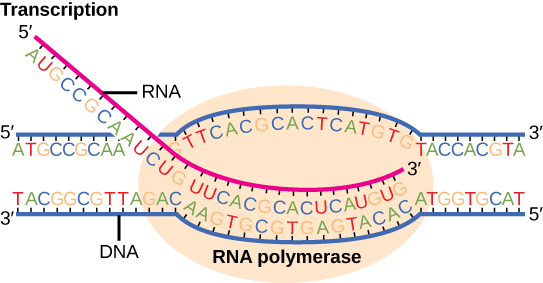
Transcription

Synthesis of using a template.

Read explanation · OpenStax ↗
Transition state

A fleeting, high-energy arrangement at a barrier. It is an energy maximum along the path, rather than a stable .

Read explanation · OpenStax ↗
Translation ·

Synthesis of a on a using the sequence of in .

Read explanation · OpenStax ↗
Tryptophan ·

An with a bulky ; commonly grouped as .

Read explanation · OpenStax ↗
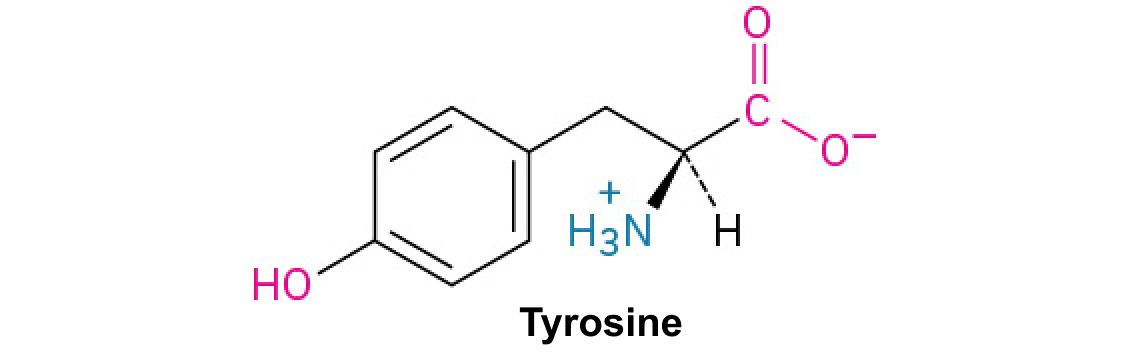
Tyrosine ·

An with a phenolic . Usually uncharged near physiological .

Read explanation · OpenStax ↗
wax

A ester of a long-chain and long-chain alcohol, commonly used in protective coatings.

Read explanation · OpenStax ↗

7.3 Problem Solving

OpenStax · 7.3 Problem Solving ↗
Instructional page including learning objectives, examples, figures, source tables and questions. Site navigation and embedded media players are omitted; source media links remain available.

Learning Objectives

By the end of this section, you will be able to:

  • Describe problem solving strategies
  • Define and
  • Explain some common roadblocks to effective problem solving and decision making

People face problems every day—usually, multiple problems throughout the day. Sometimes these problems are straightforward: To double a recipe for pizza dough, for example, all that is required is that each ingredient in the recipe be doubled. Sometimes, however, the problems we encounter are more complex. For example, say you have a work deadline, and you must mail a printed copy of a report to your supervisor by the end of the business day. The report is time-sensitive and must be sent overnight. You finished the report last night, but your printer will not work today. What should you do? First, you need to identify the problem and then apply a strategy for solving the problem.

Problem-Solving Strategies

When you are presented with a problem—whether it is a complex mathematical problem or a broken printer, how do you solve it? Before finding a to the problem, the problem must first be clearly identified. After that, one of many problem solving strategies can be applied, hopefully resulting in a .

A problem-solving strategy is a plan of action used to find a . Different strategies have different action plans associated with them (Table 7.2). For example, a well-known strategy is trial and error. The old adage, “If at first you don’t succeed, try, try again” describes trial and error. In terms of your broken printer, you could try checking the ink levels, and if that doesn’t work, you could check to make sure the paper tray isn’t jammed. Or maybe the printer isn’t actually connected to your laptop. When using trial and error, you would continue to try different until you solved your problem. Although trial and error is not typically one of the most time-efficient strategies, it is a commonly used one.

Problem-Solving Strategies
Method Description Example
Trial and error Continue trying different until problem is solved Restarting phone, turning off WiFi, turning off bluetooth in order to determine why your phone is malfunctioning
Step-by-step problem-solving formula Instructional video for installing new software on your computer
General problem-solving framework Working backwards; breaking a task into steps
Table 7.2

Another type of strategy is an . An is a problem-solving formula that provides you with step-by-step instructions used to achieve a desired outcome (Kahneman, 2011). You can think of an as a recipe with highly detailed instructions that produce the same result every time they are performed. Algorithms are used frequently in our everyday lives, especially in computer science. When you run a search on the Internet, search engines like Google use algorithms to decide which entries will appear first in your list of results. Facebook also uses algorithms to decide which posts to display on your newsfeed. Can you identify other situations in which algorithms are used?

A is another type of problem solving strategy. While an must be followed exactly to produce a correct result, a is a general problem-solving framework (Tversky & Kahneman, 1974). You can think of these as mental shortcuts that are used to solve problems. A “rule of thumb” is an example of a . Such a rule saves the person time and energy when making a decision, but despite its time-saving characteristics, it is not always the best method for making a rational decision. Different types of heuristics are used in different types of situations, but the impulse to use a occurs when one of five conditions is (Pratkanis, 1989):

  • When one is faced with too much information
  • When the time to make a decision is limited
  • When the decision to be made is unimportant
  • When there is access to very little information to use in making the decision
  • When an appropriate happens to come to mind in the same moment

Working backwards is a useful in which you begin solving the problem by focusing on the end result. Consider this example: You live in Washington, D.C. and have been invited to a wedding at 4 PM on Saturday in Philadelphia. Knowing that Interstate 95 tends to back up any day of the week, you need to plan your route and time your departure accordingly. If you want to be at the wedding service by 3:30 PM, and it takes 2.5 hours to get to Philadelphia without traffic, what time should you leave your house? You use the working backwards to plan the events of your day on a regular basis, probably without even thinking about it.

Another useful is the practice of accomplishing a large goal or task by breaking it into a series of smaller steps. Students often use this common method to complete a large research project or long essay for school. For example, students typically brainstorm, develop a thesis or main topic, research the chosen topic, organize their information into an outline, write a rough draft, revise and edit the rough draft, develop a final draft, organize the references list, and proofread their work before turning in the project. The large task becomes less overwhelming when it is broken down into a series of small steps.

Everyday Connection

Solving Puzzles

Problem-solving abilities can improve with practice. Many people challenge themselves every day with puzzles and other mental exercises to sharpen their problem-solving skills. Sudoku puzzles appear daily in most newspapers. Typically, a sudoku puzzle is a 9×9 grid. The simple sudoku below (Figure 7.7) is a 4×4 grid. To solve the puzzle, fill in the empty boxes with a single digit: 1, 2, 3, or 4. Here are the rules: The numbers must total 10 in each bolded box, each row, and each column; however, each digit can only appear once in a bolded box, row, and column. Time yourself as you solve this puzzle and compare your time with a classmate.

A four column by four row Sudoku puzzle is shown. The top left cell contains the number 3. The top right cell contains the number 2. The bottom right cell contains the number 1. The bottom left cell contains the number 4. The cell at the intersection of the second row and the second column contains the number 4. The cell to the right of that contains the number 1. The cell below the cell containing the number 1 contains the number 2. The cell to the left of the cell containing the number 2 contains the number 3.
Figure 7.7 — 7.3 Problem Solving

Figure 7.7 How long did it take you to solve this sudoku puzzle? (You can see the answer at the end of this section.)

Rose M. Spielman, William J. Jenkins, and Marilyn D. Lovett, Psychology 2E, OpenStax. · CC BY-NC-SA 4.0 · Original image ↗ · Access for free ↗

Here is another popular type of puzzle (Figure 7.8) that challenges your spatial reasoning skills. Connect all nine dots with four connecting straight lines without lifting your pencil from the paper:

A square shaped outline contains three rows and three columns of dots with equal space between them.
Figure 7.8 — 7.3 Problem Solving

Figure 7.8 Did you figure it out? (The answer is at the end of this section.) Once you understand how to crack this puzzle, you won’t forget.

Rose M. Spielman, William J. Jenkins, and Marilyn D. Lovett, Psychology 2E, OpenStax. · CC BY-NC-SA 4.0 · Original image ↗ · Access for free ↗

Take a look at the “Puzzling Scales” logic puzzle below (Figure 7.9). Sam Loyd, a well-known puzzle master, created and refined countless puzzles throughout lifetime (Cyclopedia of Puzzles, n.d.).

A puzzle involving a scale is shown. At the top of the figure it reads: “Sam Loyds Puzzling Scales.” The first row of the puzzle shows a balanced scale with 3 blocks and a top on the left and 12 marbles on the right. Below this row it reads: “Since the scales now balance.” The next row of the puzzle shows a balanced scale with just the top on the left, and 1 block and 8 marbles on the right. Below this row it reads: “And balance when arranged this way.” The third row shows an unbalanced scale with the top on the left side, which is much lower than the right side. The right side is empty. Below this row it reads: “Then how many marbles will it require to balance with that top?”
Figure 7.9 — 7.3 Problem Solving

Figure 7.9 What steps did you take to solve this puzzle? You can read the solution at the end of this section.

Rose M. Spielman, William J. Jenkins, and Marilyn D. Lovett, Psychology 2E, OpenStax. · CC BY-NC-SA 4.0 · Original image ↗ · Access for free ↗

Pitfalls to Problem Solving

Not all problems are successfully solved, however. What challenges stop us from successfully solving a problem? Imagine a person in a room that has four doorways. One doorway that has always been open in the past is now locked. The person, accustomed to exiting the room by that particular doorway, keeps trying to get out through the same doorway even though the other three doorways are open. The person is stuck—but they just need to go to another doorway, instead of trying to get out through the locked doorway. A is where you persist in approaching a problem in a way that has worked in the past but is clearly not working now.

is a type of where you cannot perceive an object being used for something other than what it was designed for. Duncker (1945) conducted foundational research on . He created an experiment in which participants were given a candle, a book of matches, and a box of thumbtacks. They were instructed to use those items to attach the candle to the wall so that it did not drip onto the table below. Participants had to use to overcome the problem (Figure 7.10). During the Apollo 13 mission to the moon, NASA engineers at Mission Control had to overcome to save the lives of the astronauts aboard the spacecraft. An explosion in a module of the spacecraft damaged multiple systems. The astronauts were in danger of being poisoned by rising levels of carbon dioxide because of problems with the carbon dioxide filters. The engineers found a way for the astronauts to use spare plastic bags, tape, and air hoses to create a makeshift air filter, which saved the lives of the astronauts.

Figure a shows a book of matches, a box of thumbtacks, and a candle. Figure b shows the candle standing in the box that held the thumbtacks. A thumbtack attaches the box holding the candle to the wall.
Figure 7.10 — 7.3 Problem Solving

Figure 7.10 In Duncker's classic study, participants were provided the three objects in the top panel and asked to solve the problem. The solution is shown in the bottom portion.

Rose M. Spielman, William J. Jenkins, and Marilyn D. Lovett, Psychology 2E, OpenStax. · CC BY-NC-SA 4.0 · Original image ↗ · Access for free ↗

Link to Learning

Researchers have investigated whether is affected by . In one experiment, individuals from the Shuar group in Ecuador were asked to use an object for a purpose other than that for which the object was originally intended. For example, the participants were told a story about a bear and a rabbit that were separated by a river and asked to select among various objects, including a spoon, a cup, erasers, and so on, to help the animals. The spoon was the only object long enough to span the imaginary river, but if the spoon was presented in a way that reflected its normal usage, it took participants longer to choose the spoon to solve the problem. (German & Barrett, 2005). The researchers wanted to know if exposure to highly specialized tools, as occurs with individuals in industrialized nations, affects their ability to transcend . It was determined that is experienced in both industrialized and nonindustrialized cultures (German & Barrett, 2005).

In order to make good decisions, we use our knowledge and our reasoning. Often, this knowledge and reasoning is sound and solid. Sometimes, however, we are swayed by biases or by others manipulating a situation. For example, let’s say you and three friends wanted to rent a house and had a combined target budget of $1,600. The realtor shows you only very run-down houses for $1,600 and then shows you a very nice house for $2,000. Might you ask each person to pay more in rent to get the $2,000 home? Why would the realtor show you the run-down houses and the nice house? The realtor may be challenging your . An occurs when you focus on one piece of information when making a decision or solving a problem. In this case, you’re so focused on the amount of money you are willing to spend that you may not recognize what kinds of houses are available at that price point.

The is the tendency to focus on information that confirms your existing beliefs. For example, if you think that your professor is not very nice, you notice all of the instances of rude behavior exhibited by the professor while ignoring the countless pleasant interactions he is involved in on a daily basis. leads you to believe that the event you just experienced was predictable, even though it really wasn’t. In other words, you knew all along that things would turn out the way they did. Representative bias describes a faulty way of thinking, in which you make a decision or judgment based on your perception of the similarity of the person or thing to your existing stereotypes and prior beliefs; for example, you may assume that your professors spend their free time reading books and engaging in intellectual conversation, because the idea of them spending their time playing volleyball or visiting an amusement park does not fit in with your stereotypes of professors. In another example, an urgent care nurse may be more likely to efficiently detect a heart attack in a male patient rather than a female patient, due to the nurse's unintentional that heart attacks happen more often to males.

Finally, the is a in which you make a decision based on an example, information, or recent experience that is that readily available to you, even though it may not be the best example to inform your decision. Biases tend to “preserve that which is already established—to maintain our preexisting knowledge, beliefs, attitudes, and hypotheses” (Aronson, 1995; Kahneman, 2011). These biases are summarized in Table 7.3.

Summary of Decision Biases
Bias Description
Anchoring Tendency to focus on one particular piece of information when making decisions or problem-solving
Confirmation Focuses on information that confirms existing beliefs
Hindsight Belief that the event just experienced was predictable
Representative Making a decision or judgment based on perceived similarity to existing stereotypes or prior beliefs
Availability Decision is based upon either an available precedent or an example that may be faulty
Table 7.3

Link to Learning

Were you able to determine how many marbles are needed to balance the scales in Figure 7.9? You need nine. Were you able to solve the problems in Figure 7.7 and Figure 7.8? Here are the answers (Figure 7.11).
The first puzzle is a Sudoku grid of 16 squares (4 rows of 4 squares) is shown. Half of the numbers were supplied to start the puzzle and are colored blue, and half have been filled in as the puzzle’s solution and are colored red. The numbers in each row of the grid, left to right, are as follows. Row 1:  blue 3, red 1, red 4, blue 2. Row 2: red 2, blue 4, blue 1, red 3. Row 3: red 1, blue 3, blue 2, red 4. Row 4: blue 4, red 2, red 3, blue 1.The second puzzle consists of 9 dots arranged in 3 rows of 3 inside of a square.       The solution, four straight lines made without lifting the pencil, is shown in a red line with arrows indicating the direction of movement. In order to solve the puzzle, the lines must extend beyond the borders of the box. The four connecting lines are drawn as follows. Line 1 begins at the top left dot, proceeds through the middle and right dots of the top row, and extends to the right beyond the border of the square. Line 2 extends from the end of line 1, through the right dot of the horizontally centered row, through the middle dot of the bottom row, and beyond the square’s border ending in the space beneath the left dot of the bottom row. Line 3 extends from the end of line 2 upwards through the left dots of the bottom, middle, and top rows. Line 4 extends from the end of line 3 through the middle dot in the middle row and ends at the right dot of the bottom row.
Figure 7.11 — 7.3 Problem Solving

Figure 7.11

Rose M. Spielman, William J. Jenkins, and Marilyn D. Lovett, Psychology 2E, OpenStax. · CC BY-NC-SA 4.0 · Original image ↗ · Access for free ↗