Foundation 9 · 9A · Social structure

Religion, government, and economy

Sources ↗

Religion includes beliefs, practices, symbols, and communities concerning the sacred; measures dimensions such as belief, practice, commitment, or participation.

Compare and religious organizations and relate , modernization, and to social change

Religion includes beliefs, practices, symbols, and communities concerning the sacred; measures dimensions such as belief, practice, commitment, or participation. Churches and denominations are relatively established organizations; sects often separate from a larger tradition, while new religious movements may introduce less established practices. These are analytical categories with context-dependent boundaries. concerns declining religious or participation in some ; modernization does not guarantee a uniform disappearance of religion. emphasizes a return to perceived foundational commitments, often in response to social change. Functionalist analysis examines solidarity and meaning, while conflict analysis examines and inequality; both require evidence rather than assumptions about all believers.

Source: 15.1 The Sociological Approach to Religion · 15.3 Religion in the United States · 17.1 Power and Authority · 17.2 Forms of Government · 18.1 Economic Systems · 18.3 Work in the United States

Distinguish and and compare political or economic systems and divisions of labor

is the ability to influence outcomes; is regarded as legitimate. Weber distinguished based on custom, based on perceived exceptional qualities, and based on rules and offices. Democracies, monarchies, oligarchies, and authoritarian systems differ in access to decision making and accountability, with substantial variation within labels. emphasizes private ownership and markets; emphasizes collective or public control, while actual economies mix arrangements. creates interdependence through specialization. Automation and can shift bargaining and job structure; growth alone does not specify how gains are distributed or whether working conditions improve.

Source: 15.1 The Sociological Approach to Religion · 15.3 Religion in the United States · 17.1 Power and Authority · 17.2 Forms of Government · 18.1 Economic Systems · 18.3 Work in the United States

Apply the ideas

Worked question. A leader is obeyed because of personal devotion, while an administrator is obeyed because an office grants decision . Identify the types. Does declining attendance at services necessarily show disappearance of all religious belief?

Personal devotion fits ; to an office under rules fits . Attendance measures one dimension of , so declining attendance can coexist with private belief or changed organizational forms. Measure belief, participation, and institutional influence separately before making a broad claim.

Source: 15.1 The Sociological Approach to Religion · 15.3 Religion in the United States · 17.1 Power and Authority · 17.2 Forms of Government · 18.1 Economic Systems · 18.3 Work in the United States

15.1 The Sociological Approach to Religion — figures and tables
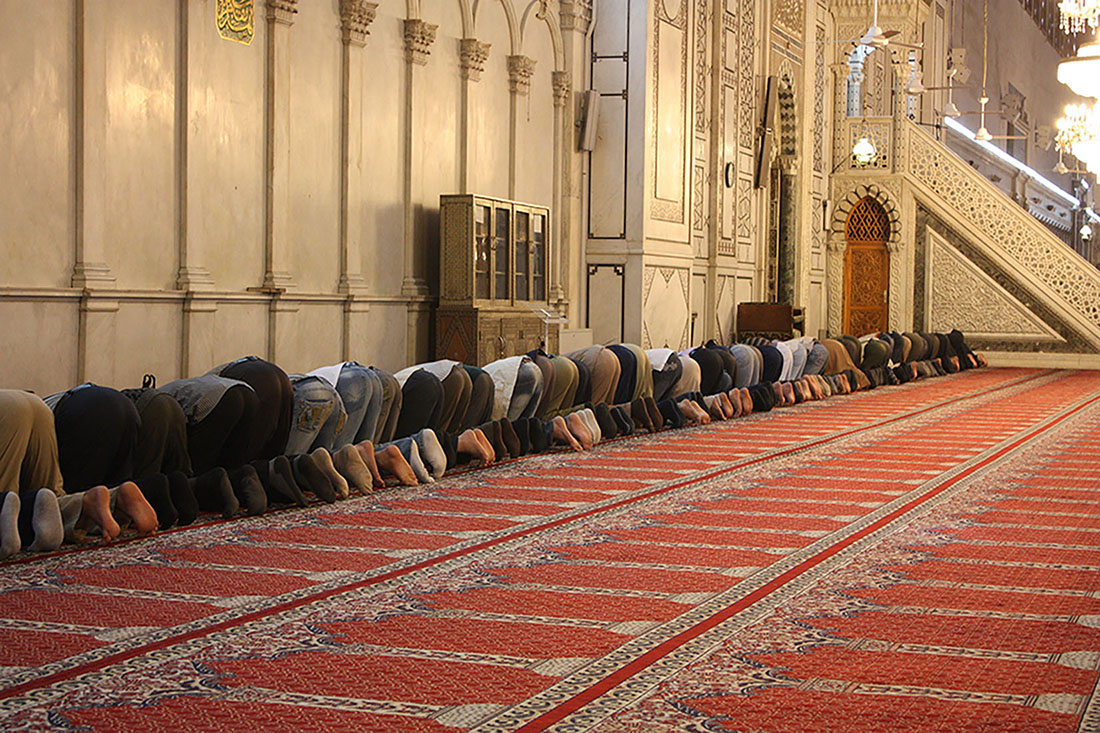
Several dozen people are positioned on their knees with their heads down, inside a mosque.
Figure 15.2 — 15.1 The Sociological Approach to Religion

Figure 15.2 Universality of religious practice, such as these prayers at the The Umayyad Mosque in Damascus, can create bonds among people who would otherwise be strangers. Muslim people around the world pray five times each day while facing the direction of the Kaaba in Mecca (pictured in Section 15.2). Beyond the religious observance, such a unifying act can build a powerful sense of community. (Credit: Arian Zwegers/flickr).

Tonja R. Conerly, Kathleen Holmes, and Asha Lal Tamang, Introduction Sociology 3E, OpenStax. · CC BY-NC-SA 4.0 · Original image ↗ · Access for free ↗
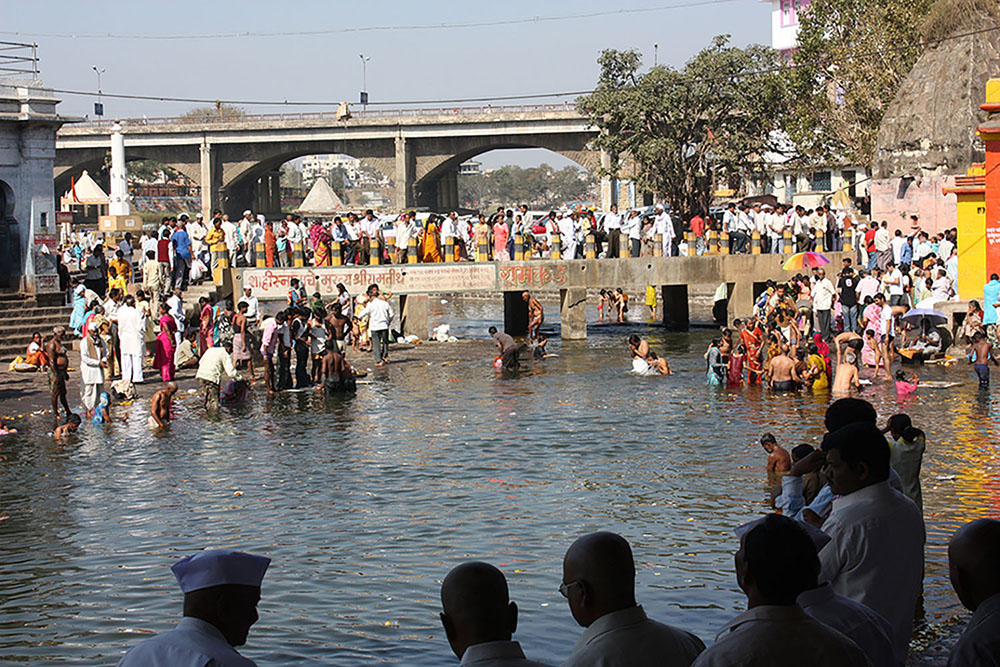
A large group of people surround a body of water. Several people are in the water.
Figure 15.3 — 15.1 The Sociological Approach to Religion

Figure 15.3 Functionalists believe religion meets many important needs for people, including group cohesion and companionship. Hindu pilgrims come from far away to Ram Kund, a holy place in the city of Nashik, India. One of the rituals performed is intended to bring salvation to the souls of people who have passed away. What need is this practice fulfilling? (Credit: Arian Zwegers/flickr)

Tonja R. Conerly, Kathleen Holmes, and Asha Lal Tamang, Introduction Sociology 3E, OpenStax. · CC BY-NC-SA 4.0 · Original image ↗ · Access for free ↗
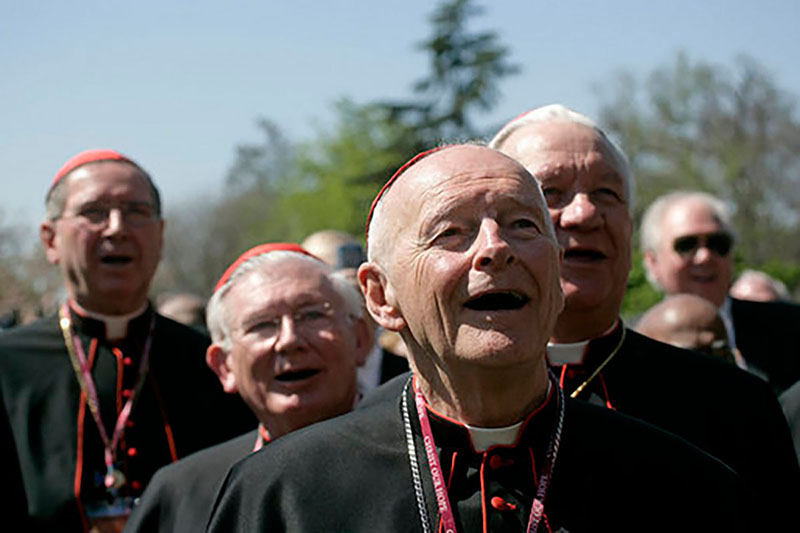
About a half-dozen older men wearing Roman Catholic priestly garb are shown from the shoulders up.
Figure 15.4 — 15.1 The Sociological Approach to Religion

Figure 15.4 Many religions, including the Catholic faith, have long prohibited women from becoming spiritual leaders. Feminist theorists focus on gender inequality and promote leadership roles for women in religion. (Credit: Wikimedia Commons)

Tonja R. Conerly, Kathleen Holmes, and Asha Lal Tamang, Introduction Sociology 3E, OpenStax. · CC BY-NC-SA 4.0 · Original image ↗ · Access for free ↗

The symbols of 14 religions are depicted in a circle around the edge of an illustration of Earth, with North America and part of South America visible. The Earth illustration is shown sitting in the middle of a starry sky.
Figure 15.5 — 15.1 The Sociological Approach to Religion

Figure 15.5 The symbols of fourteen religions are depicted here. In no particular order, they represent Judaism, Wicca, Taoism, Christianity, Confucianism, Baha’i, Druidism, Islam, Hinduism, Zoroastrianism, Shinto, Jainism, Sikhism, and Buddhism. Can you match the symbol to the religion? What might a symbolic interactionist make of these symbols? (Credit: ReligiousTolerance.org)

Tonja R. Conerly, Kathleen Holmes, and Asha Lal Tamang, Introduction Sociology 3E, OpenStax. · CC BY-NC-SA 4.0 · Original image ↗ · Access for free ↗

Source: 15.1 The Sociological Approach to Religion

15.3 Religion in the United States — figures and tables
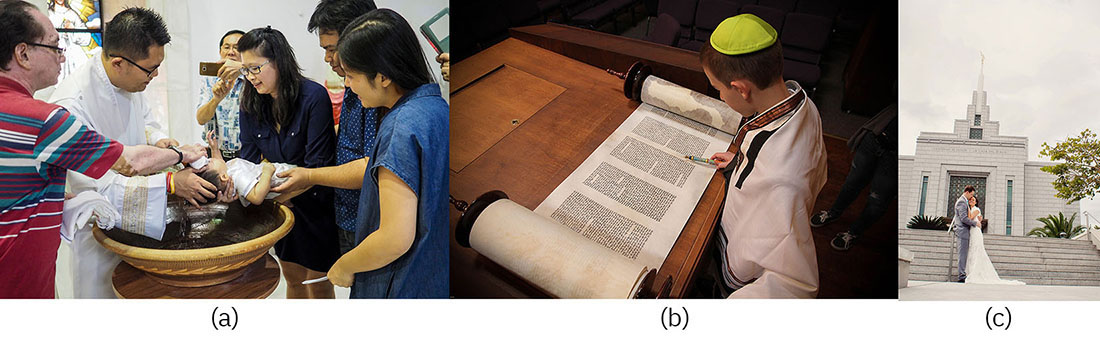
Photo A shows several people holding an infant over a Baptismal font. Photo B shows a young person reading the Torah at a podium. Photo C shows two people embracing in front of a Church building.
Figure 15.11 — 15.3 Religion in the United States

Figure 15.11 Religion and religious observance play a key role in every life stage, deepening its emotional and cognitive connections. Many religions have a ceremony or sacrament to bring infants into the faith, as this Baptism does for Christians. In Judaism, adolescents transition to adulthood through ceremonies like the Bat Mitzvah or Bar Mitzvah. And many couples cement their relationship through religious marriage ceremonies, as did these members of the Church of Jesus Christ of Latter Day Saints. (Credit: a: John Ragai/flickr; b: Michele Pace/flickr; c: kristin klein/flickr)

Tonja R. Conerly, Kathleen Holmes, and Asha Lal Tamang, Introduction Sociology 3E, OpenStax. · CC BY-NC-SA 4.0 · Original image ↗ · Access for free ↗
Religious tradition At least once a week Once or twice a month/a few times a year Seldom/never
Buddhist 18% 50% 31%
Catholic 39% 40% 20%
Evangelical Protestant 58% 30% 12%
Hindu 18% 60% 21%
Historically Black Protestant 53% 36% 10%
Jehovah’s Witness 85% 11% 3%
Jewish 19% 49% 31%
Mainline Protestant 33% 43% 24%
Church of Jesus Christ of Latter Day Saints 77% 14% 9%
Muslim 45% 31% 22%
Orthodox Christian 31% 54% 15%
Unaffiliated (religious “nones”) 4% 24% 72%

Table 15.2 A survey of U.S. adults asked about regularity of religious service attendance. (Credit: Pew Research Center, 2020). Tonja R. Conerly, Kathleen Holmes, and Asha Lal Tamang, Introduction Sociology 3E, OpenStax.

Source: 15.3 Religion in the United States

17.1 and — figures and tables

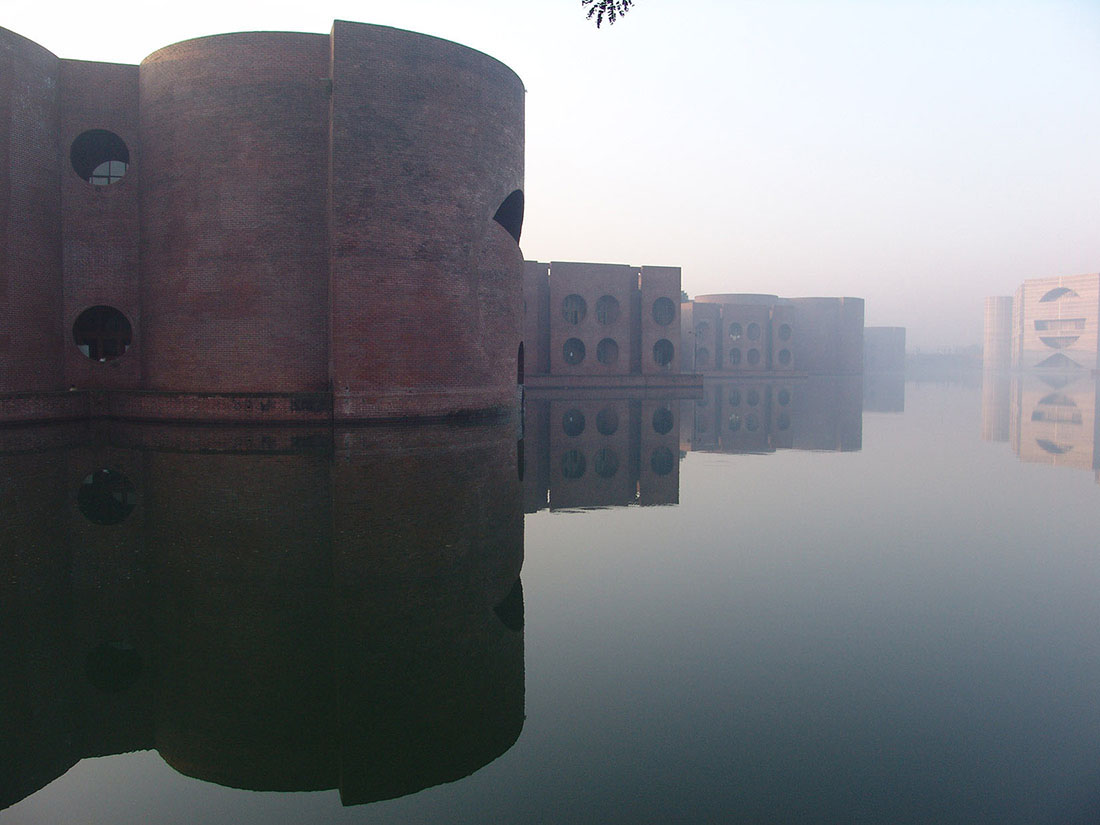
The National Assembly Building portion of the Capitol Complex in Dhaka, Bangladesh. A brick building with rounded walls and large circular open windows sits in a lake. In the background, another building in the complex with an entirely different design sits within the lake.
Figure 17.2 — 17.1 and

Figure 17.2 Government buildings are built to symbolize authority, but they also represent a specific perspective or message. The Capitol Complex in Bangladesh, Sher-e-Bangla Nagar, was designed to capture the essence of an entirely new country. Rather than the fortress-like, Greek- and Roman-inspired structures of many government buildings, architect Louis Kahn set the rounded, asymmetrical, modern complex within an artificial lake, with many open spaces exposed to the elements (Credit: Lykantrop/Wikimedia Commons)

Tonja R. Conerly, Kathleen Holmes, and Asha Lal Tamang, Introduction Sociology 3E, OpenStax. · CC BY-NC-SA 4.0 · Original image ↗ · Access for free ↗

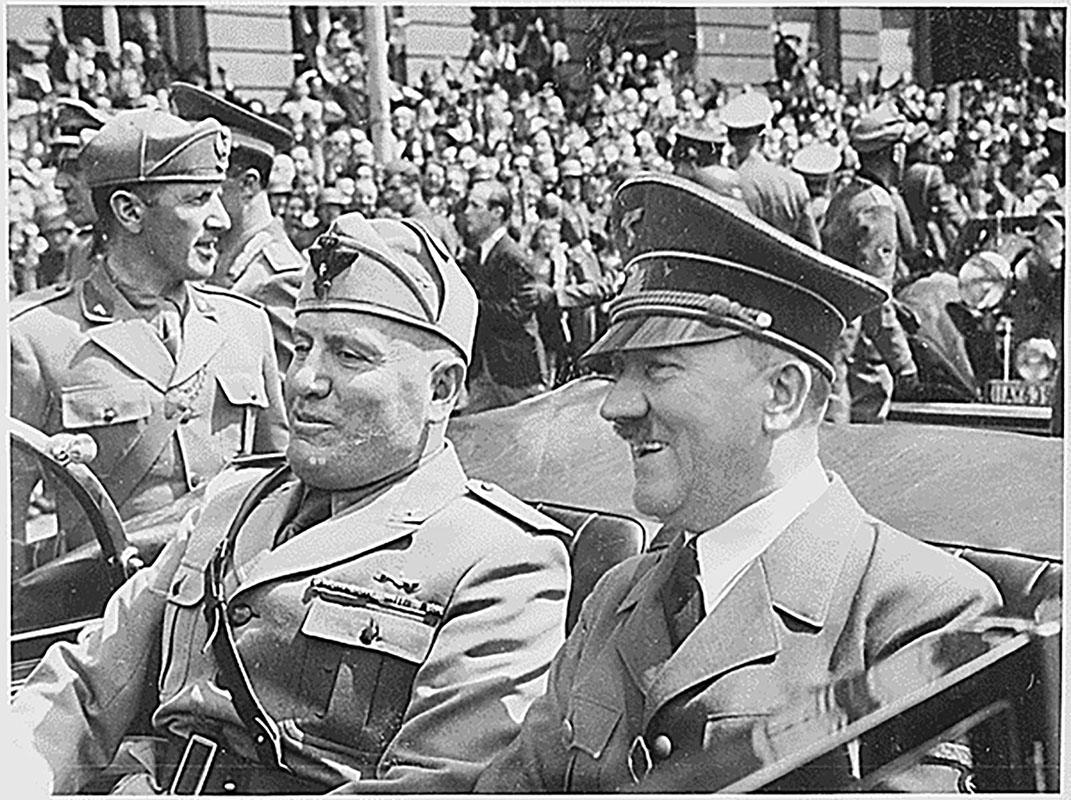
Adolf Hitler and Benito Mussolini are show riding together in a car.
Figure 17.3 — 17.1 and

Figure 17.3 Nazi leader Adolf Hitler was one of the most powerful and destructive dictators in modern history. He is pictured here with fascist Benito Mussolini of Italy. (Credit: U.S. National Archives and Records Administration)

Tonja R. Conerly, Kathleen Holmes, and Asha Lal Tamang, Introduction Sociology 3E, OpenStax. · CC BY-NC-SA 4.0 · Original image ↗ · Access for free ↗
A large group of people marching in protest.
Figure 17.4 — 17.1 and

Figure 17.4 Young people and students were among the most ardent supporters of democratic reform in the recent Arab Spring. Social media also played an important role in rallying grassroots support. (Credit: cjb22/flickr)

Tonja R. Conerly, Kathleen Holmes, and Asha Lal Tamang, Introduction Sociology 3E, OpenStax. · CC BY-NC-SA 4.0 · Original image ↗ · Access for free ↗
Traditional Charismatic Legal-Rational
Source of Legitimized by long-standing custom Based on a leader’s personal qualities resides in the office, not the person
Leadership Style Historic personality Dynamic personality Bureaucratic officials
Example Patriarchy (traditional positions of ) Napoleon, Jesus Christ, Mother Teresa, Martin Luther King, Jr. U.S. presidency and Congress
Modern British Parliament

Table 17.1 Weber’s Three Types of Authority Max Weber identified and explained three distinct types of authority:. Tonja R. Conerly, Kathleen Holmes, and Asha Lal Tamang, Introduction Sociology 3E, OpenStax.

Source: 17.1 Power and Authority

17.2 Forms of Government — figures and tables
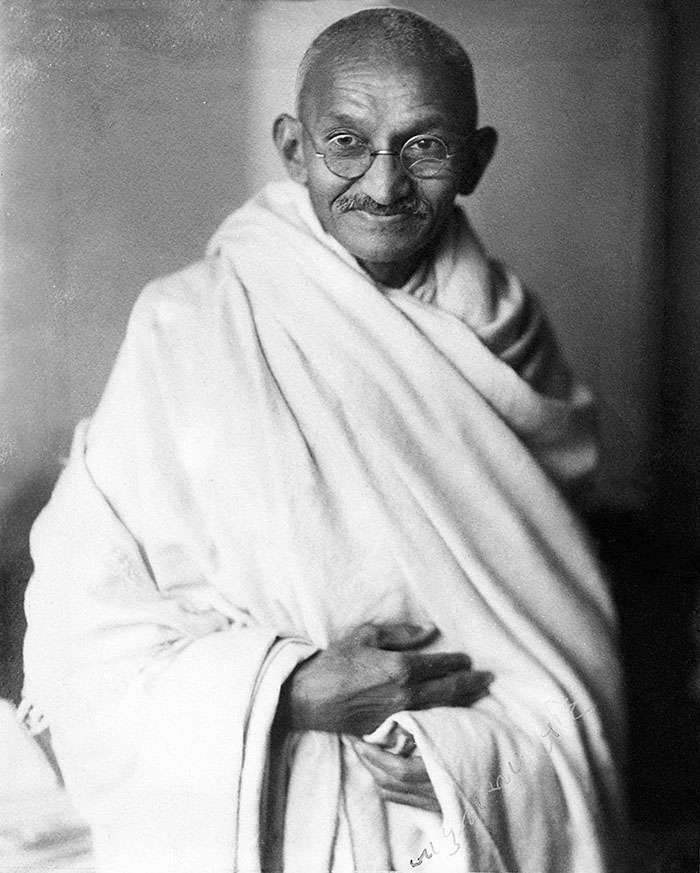
A photograph of Mohandas Ghandi.
Figure 17.5 — 17.2 Forms of Government

Figure 17.5 After becoming the leader of the Indian National Congress, Mohandas Ghandi employed a range of nonviolent methods to gain better rights and treatment for women and poor people and especially for the independence of India. He used fasting as a form of protest, and was imprisoned by the ruling British government (Credit: Elliot and Fry/Wikimedia Commons)

Tonja R. Conerly, Kathleen Holmes, and Asha Lal Tamang, Introduction Sociology 3E, OpenStax. · CC BY-NC-SA 4.0 · Original image ↗ · Access for free ↗
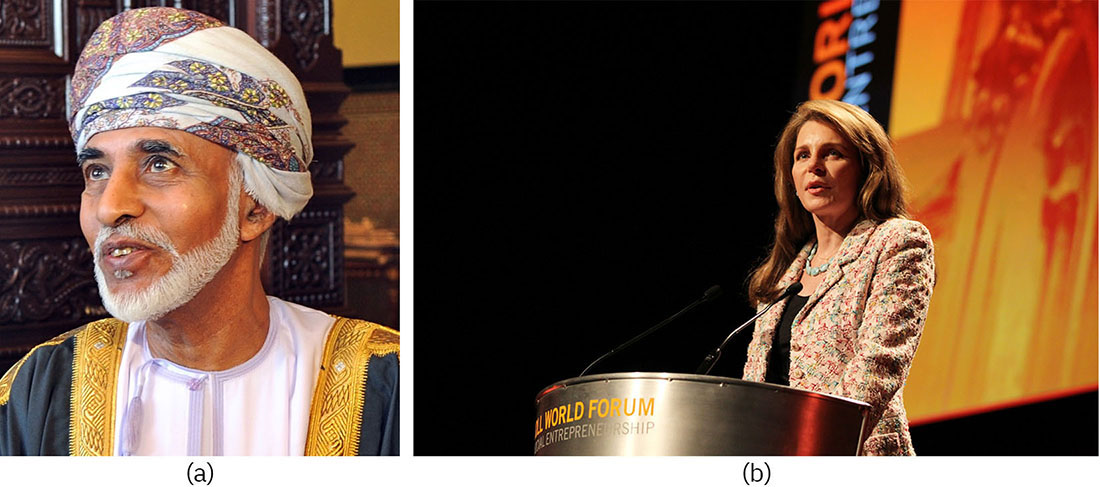
A photo of the deceased former Sultan of Oman Qaboos bin Said and a photo of Queen Noor of Jordan.
Figure 17.6 — 17.2 Forms of Government

Figure 17.6 Qaboos bin Said ruled Oman as its absolute monarch for fifty years, and oversaw the country's development from a relatively isolated nation to one that uses its vast supplies of oil to build wealth and influence. Queen Noor of Jordan is the dowager queen of this constitutional monarchy and has limited political authority. Queen Noor is American by birth, but relinquished her citizenship when she married. She is a noted global advocate for Arab-Western relations. (Credit A: Wikimedia Commons; B: Skoll World Forum/flickr)

Tonja R. Conerly, Kathleen Holmes, and Asha Lal Tamang, Introduction Sociology 3E, OpenStax. · CC BY-NC-SA 4.0 · Original image ↗ · Access for free ↗
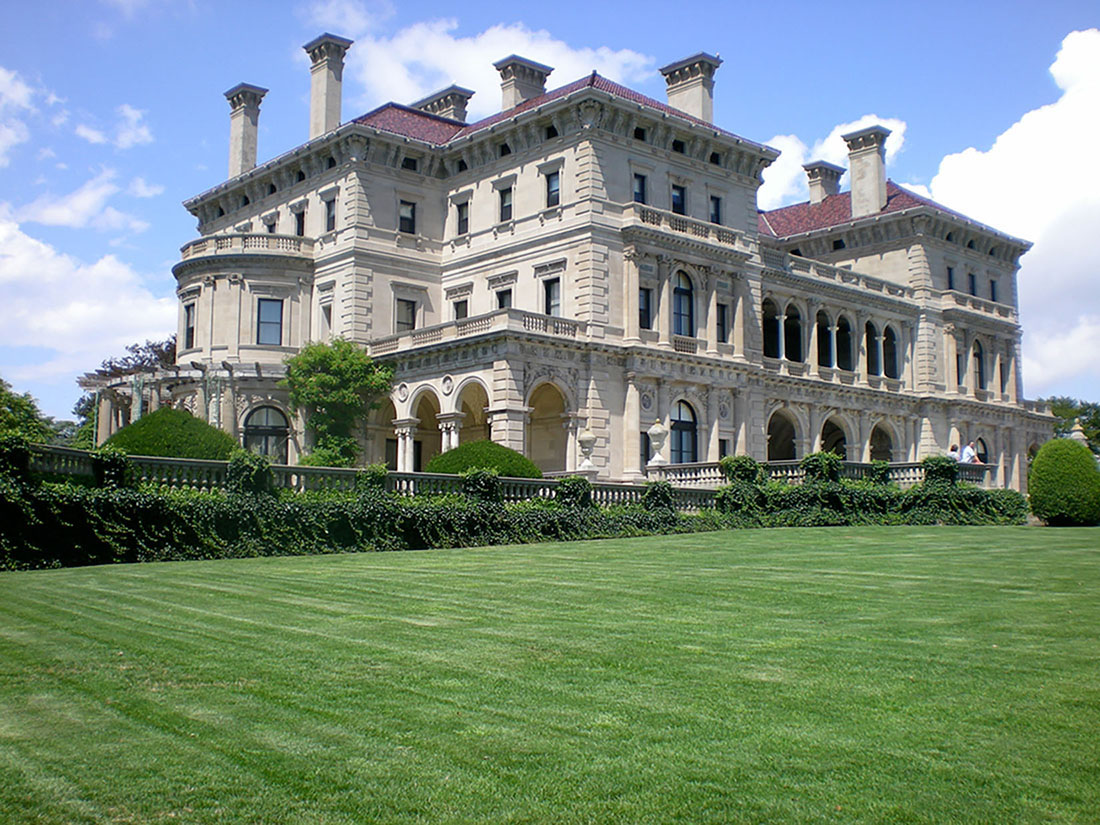
A mansion built during the Gilded Age.
Figure 17.7 — 17.2 Forms of Government

Figure 17.7 The Breakers, the famous Newport, Rhode Island, home of the Vanderbilts, is a powerful symbol of the extravagant wealth that characterized the Gilded Age. (Credit: ckramer/flickr)

Tonja R. Conerly, Kathleen Holmes, and Asha Lal Tamang, Introduction Sociology 3E, OpenStax. · CC BY-NC-SA 4.0 · Original image ↗ · Access for free ↗
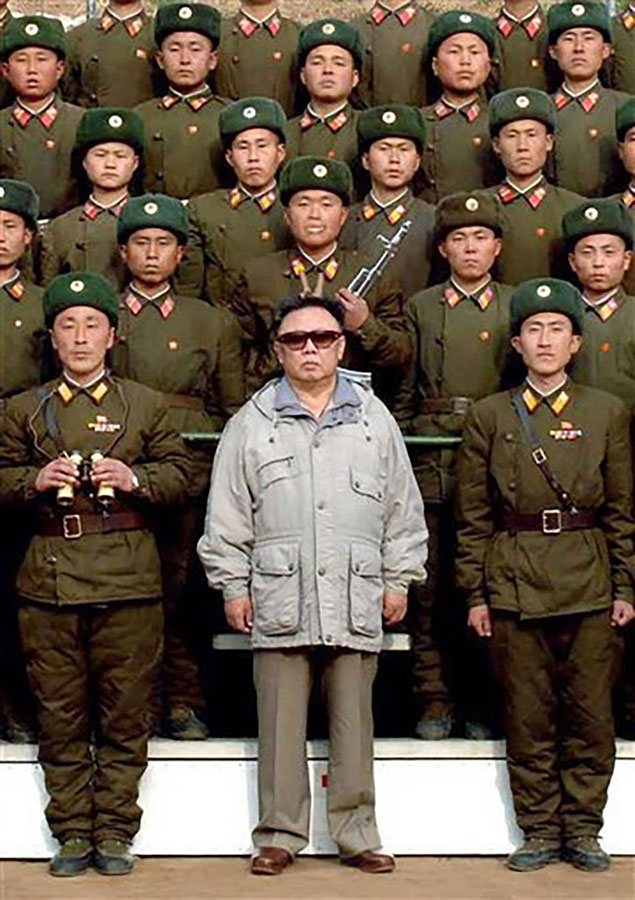
Kim Jong-Il of North Korea is shown wearing sunglasses amid a group of uniformed North Korean soldiers.
Figure 17.8 — 17.2 Forms of Government

Figure 17.8 Dictator Kim Jong-Il of North Korea was a charismatic leader of an absolute dictatorship. His followers responded emotionally to the death of their leader in 2011. (Credit: babeltrave/flickr)

Tonja R. Conerly, Kathleen Holmes, and Asha Lal Tamang, Introduction Sociology 3E, OpenStax. · CC BY-NC-SA 4.0 · Original image ↗ · Access for free ↗

Source: 17.2 Forms of Government

18.1 Economic Systems — figures and tables
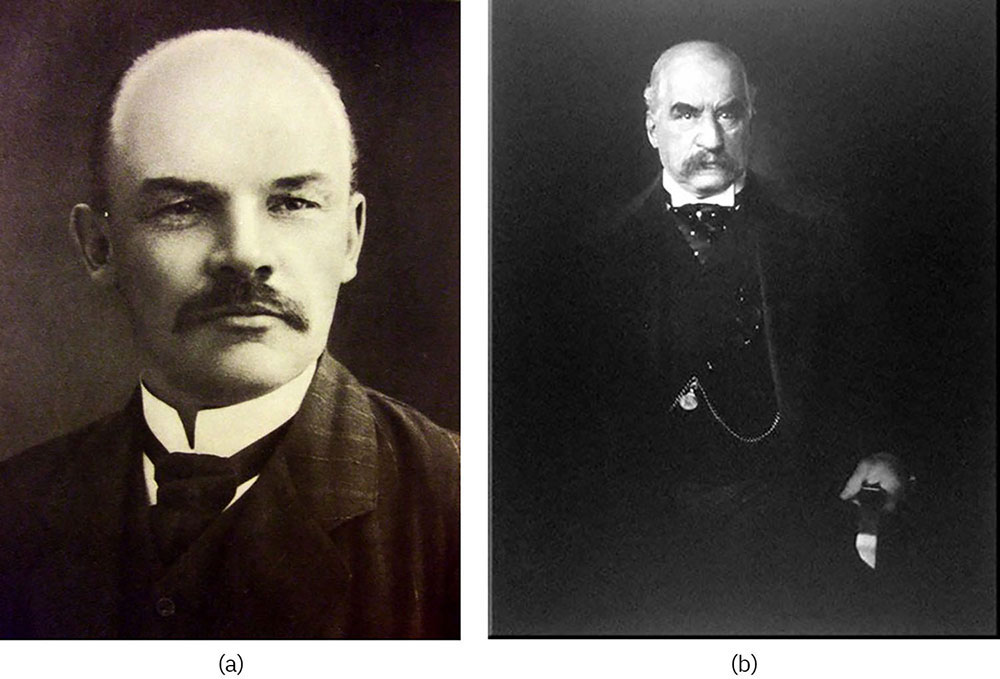
This figure consists of two images. The photo on the right is of Vladimir Ilyich Lenin, one of the founders of Russian communism. The image on the right is a photo of J.P. Morgan, one of the most influential capitalists in the United States. In figure (b), a photograph of J.P. Morgan is shown.
Figure 18.2 — 18.1 Economic Systems

Figure 18.2 Vladimir Ilyich Lenin was one of the founders of Russian communism. J.P. Morgan was one of the most influential capitalists in history. They have very different views on how economies should be run. (Credit: Photos (a) and (b) Wikimedia Commons)

Tonja R. Conerly, Kathleen Holmes, and Asha Lal Tamang, Introduction Sociology 3E, OpenStax. · CC BY-NC-SA 4.0 · Original image ↗ · Access for free ↗

Thousands of terraces are carved into the side of mountains. The terraces make the slopes flatter as they go up, functioning like steps. Rice plants grow in the water that has been deliberately flooded into the steps.
Figure 18.3 — 18.1 Economic Systems

Figure 18.3 Agricultural economies depend on discoveries and technologies to shift from subsistence to prosperity. The Banaue Rice Terraces were carved into the landscape by hand by the ancestors of the Ifugao people. Rice needs flat, completely submerged fields in which to grow, so mountainous areas would not be naturally suited for rice. By transforming the mountainsides and maintaining a massive irrigation system, these farmer-engineers produced far more rice than the landscape would have normally yielded. Interestingly, the economy of this location is shifting again, as tourism to the terraces grows faster than farming them.

Tonja R. Conerly, Kathleen Holmes, and Asha Lal Tamang, Introduction Sociology 3E, OpenStax. · CC BY-NC-SA 4.0 · Original image ↗ · Access for free ↗
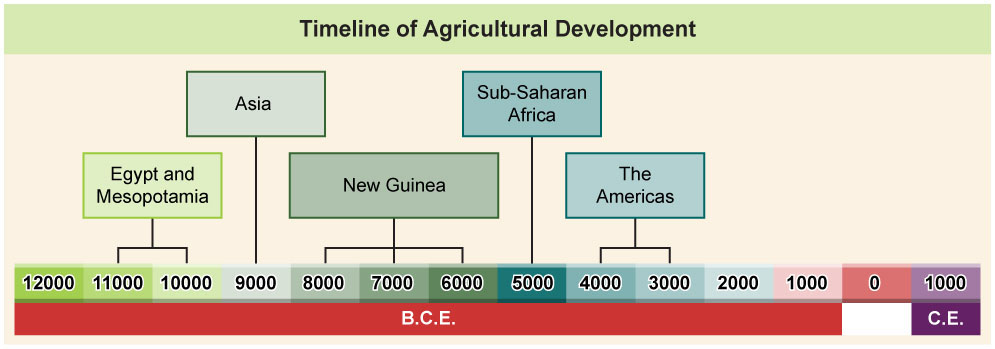
Figure is a Timeline of Agricultural Development. The timeline covers the year range of 12000 B.C.E. to 1000 C.E. Between the years 11000 B.C.E. and 10000 B.C.E., Egypt and Mesopotamia began developing agricultural techniques. In the 9000s B.C.E. Asia began developing agricultural techniques. Between the years 8000 B.C.E. and 6000 B.C.E., New Guinea began developing agricultural techniques. In the 5000s B.C.E., Sub-Saharan Africa began developing agricultural techniques. Between the years 4000 B.C.E. and 3000 B.C.E., the Americas began developing agricultural techniques.
Figure 18.4 — 18.1 Economic Systems

Figure 18.4 Agricultural practices have emerged in different societies at different times. (Information: Wikimedia Commons)

Tonja R. Conerly, Kathleen Holmes, and Asha Lal Tamang, Introduction Sociology 3E, OpenStax. · CC BY-NC-SA 4.0 · Original image ↗ · Access for free ↗
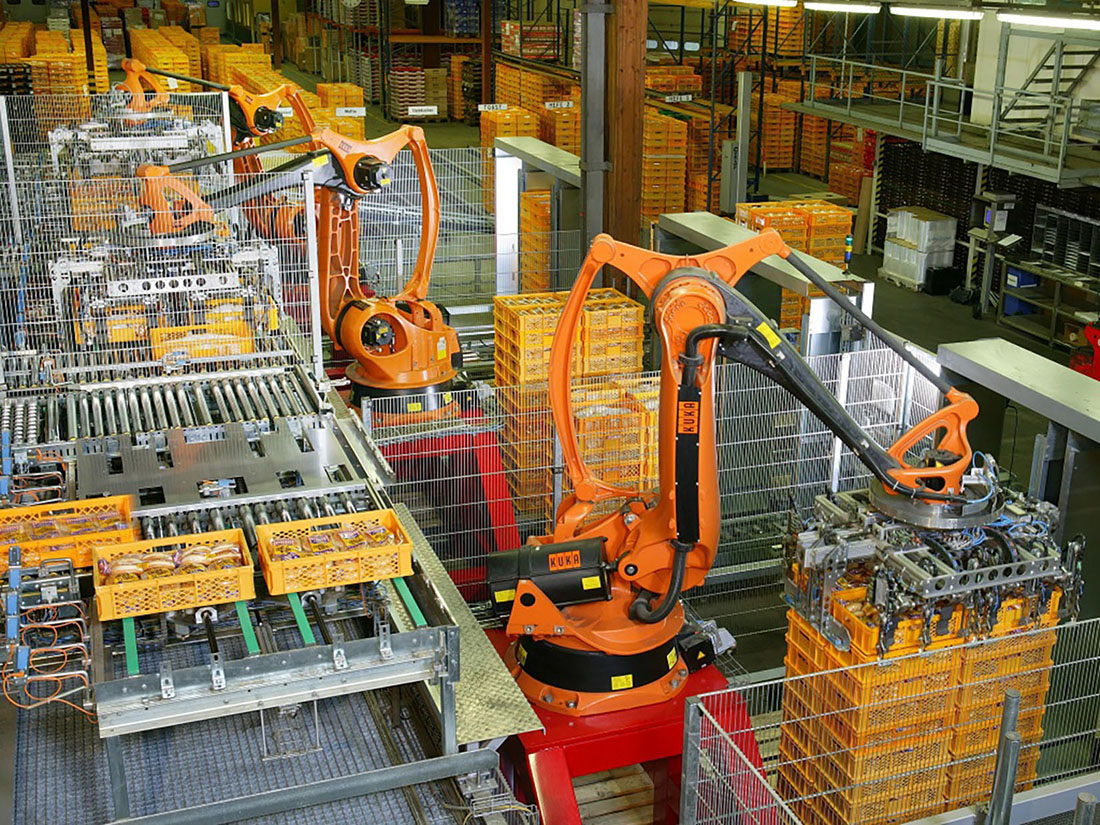
Two large robot arms with specialized devices on the ends grab and stack pallets of bread in a large factory.
Figure 18.5 — 18.1 Economic Systems

Figure 18.5 Capitalism enables incredible innovation, but it also empowers employers and owners to make many of their own decisions. This bread company has automated the process of packaging its products and preparing them for shipping. As you can see, the factory floor seems largely devoid of people. (Credit: KUKA Roboter GmbH, Bachmann)

Tonja R. Conerly, Kathleen Holmes, and Asha Lal Tamang, Introduction Sociology 3E, OpenStax. · CC BY-NC-SA 4.0 · Original image ↗ · Access for free ↗
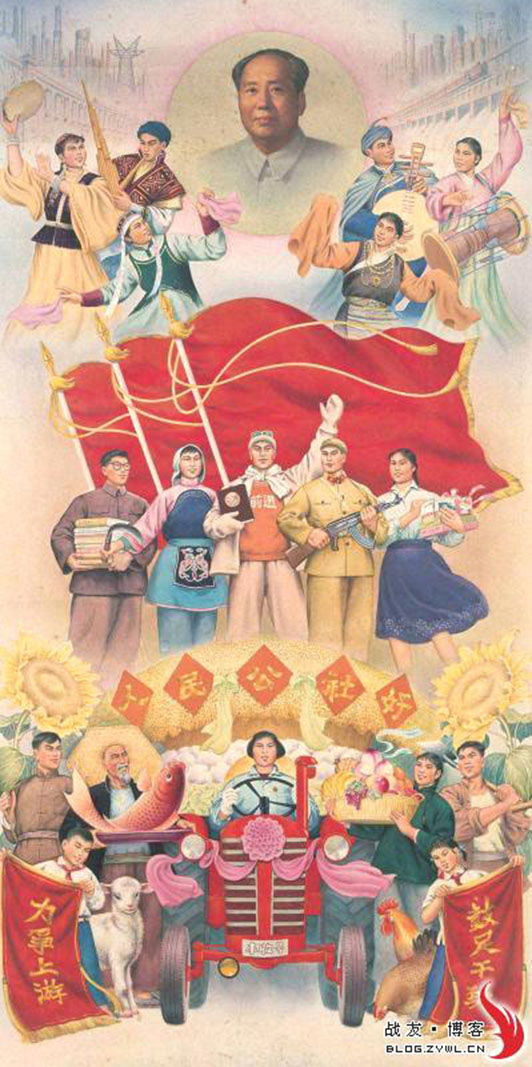
A colorful painting featuring Mao Zedong and other symbols of Chinese communism is shown here.
Figure 18.6 — 18.1 Economic Systems

Figure 18.6 The economies of China and Russia after World War II are examples of one form of socialism. (Credit: Wikimedia Commons)

Tonja R. Conerly, Kathleen Holmes, and Asha Lal Tamang, Introduction Sociology 3E, OpenStax. · CC BY-NC-SA 4.0 · Original image ↗ · Access for free ↗
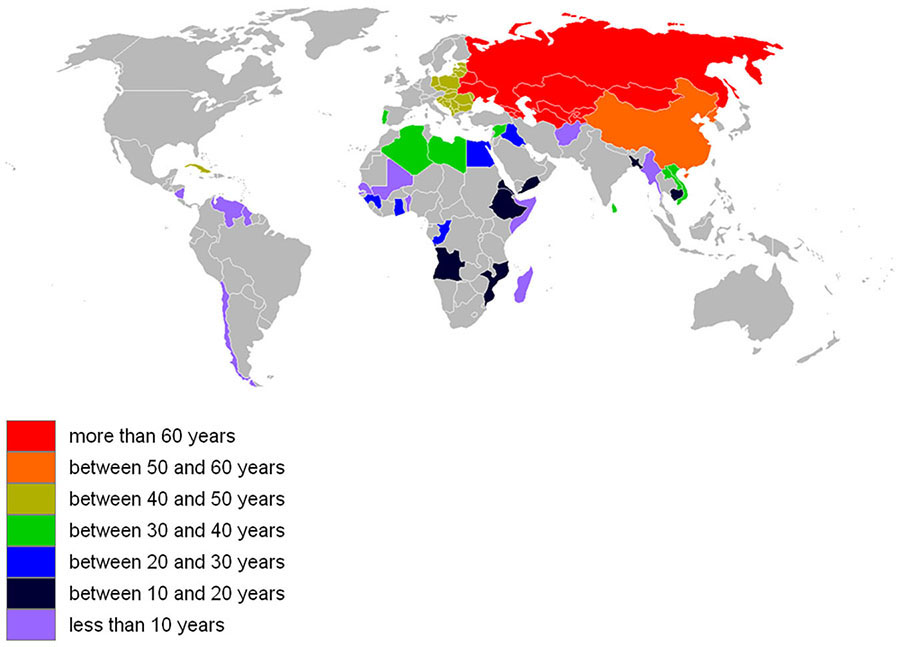
A world map depicting the countries which have adopted a socialist economy, and the length of time which they adopted it for.
Figure 18.7 — 18.1 Economic Systems

Figure 18.7 This map shows countries that have adopted a socialist economy at some point. The colors indicate the duration that socialism prevailed. (Credit: Wikimedia Commons)

Tonja R. Conerly, Kathleen Holmes, and Asha Lal Tamang, Introduction Sociology 3E, OpenStax. · CC BY-NC-SA 4.0 · Original image ↗ · Access for free ↗
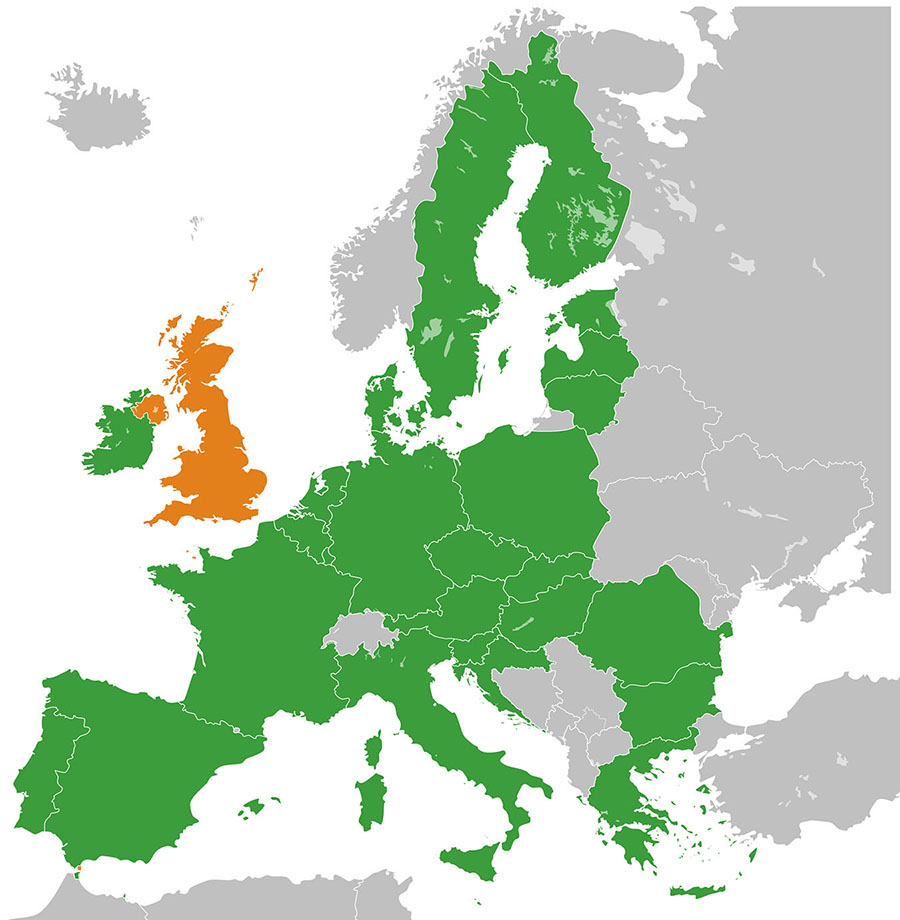
Map of Europe indicating countries that are members and have recently departed the European Union. Portugal, Spain, France, Finland, Germany, Italy, Greece, Poland, Latvia, the Netherlands, Belgium and Ireland are included. The United Kingdom, including Northern Ireland and Gibraltar, are indicated to be former members.
Figure 18.8 — 18.1 Economic Systems

Figure 18.8 Sociologists look for signs of convergence and divergence in the societies of countries that have joined and departed the European Union (EU). The United Kingdom voted to leave the EU, and after years of policy shifts, several new Prime Ministers, and negotiations, it formally departed in 2020 and ended most trade agreements in 2021. Note that the U.K.'s departure means that Britain, Scotland, Northern Ireland, and the 6.7 square kilometer territory of Gibraltar also departed. (Credit: Hogweard/Wikimedia Commons)

Tonja R. Conerly, Kathleen Holmes, and Asha Lal Tamang, Introduction Sociology 3E, OpenStax. · CC BY-NC-SA 4.0 · Original image ↗ · Access for free ↗

Source: 18.1 Economic Systems

18.3 Work in the United States — figures and tables

People attend a job fair. Several rows of tables are set up in a college gymnasium, and people walk between them and speak to each other.
Figure 18.10 — 18.3 Work in the United States

Figure 18.10 Many college students and others attend job fairs looking for their first job or for a better one. (Credit: COD Newsroom/flickr)

Tonja R. Conerly, Kathleen Holmes, and Asha Lal Tamang, Introduction Sociology 3E, OpenStax. · CC BY-NC-SA 4.0 · Original image ↗ · Access for free ↗

The cover of the video game World of Warcraft, including a green, fanged ogre, is shown here.
Figure 18.11 — 18.3 Work in the United States

Figure 18.11 In a virtual world, living the good life still costs real money. (Credit: Juan Pablo Amo/flickr)

Tonja R. Conerly, Kathleen Holmes, and Asha Lal Tamang, Introduction Sociology 3E, OpenStax. · CC BY-NC-SA 4.0 · Original image ↗ · Access for free ↗
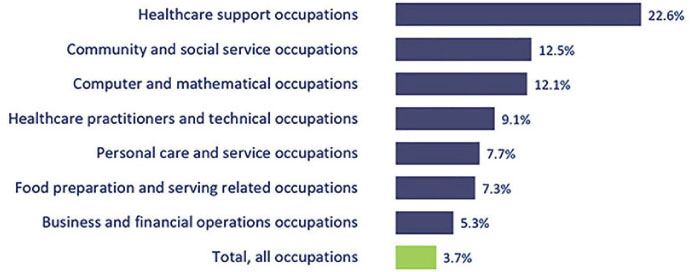
Eight bar graphs display the projected change in occupations. Healthcare support is 22.6 percent change. Community and social service occupations is 12.5 percent change. Computer and math is 12.1 percent change. Healthcare practitioners and technical operations is 9.1 percent change. Personal care is 7.7 percent change. Food preparation and serving is 7.3 percent change. Business and financial operations is 5.3 percent change. And total of all occupations is 3.7 percent change.
Figure 18.12 — 18.3 Work in the United States

Figure 18.12 Projected Percent Change, by Selected Occupational Groups, 2019-29 — This chart shows the projected growth of several occupational groups. (Credit: Bureau of Labor Statistics)

Tonja R. Conerly, Kathleen Holmes, and Asha Lal Tamang, Introduction Sociology 3E, OpenStax. · CC BY-NC-SA 4.0 · Original image ↗ · Access for free ↗
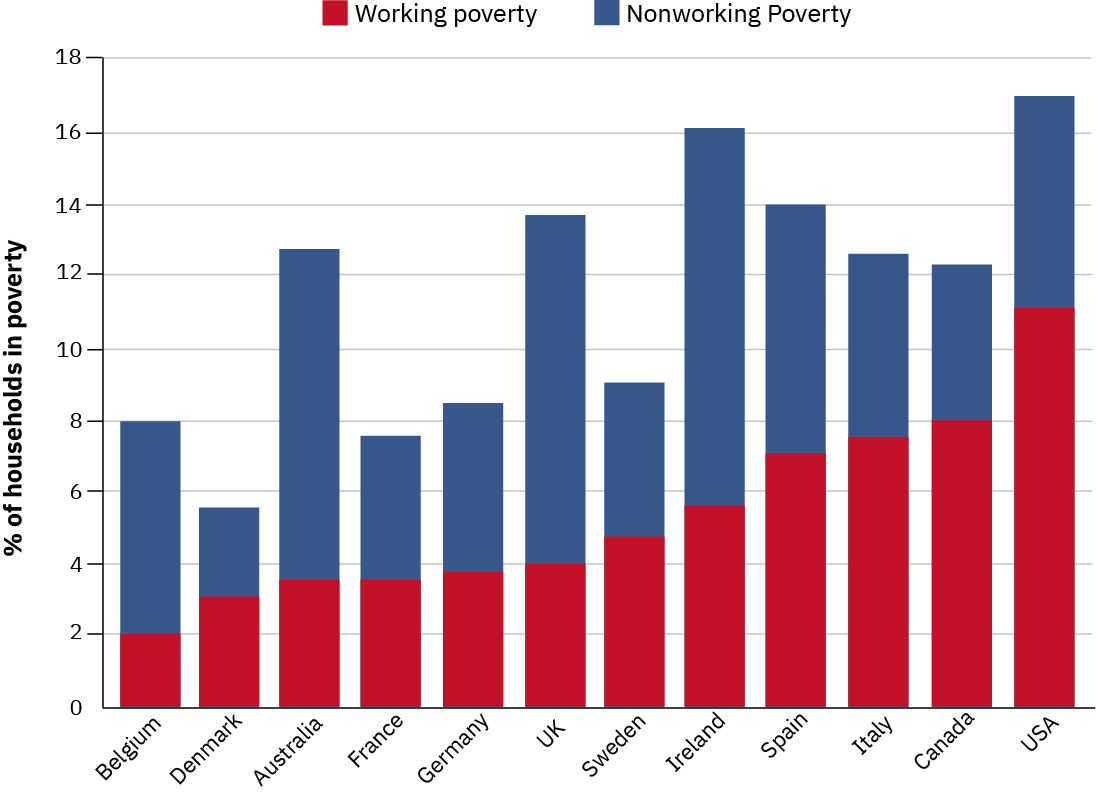
Graph depicting the working poverty vs. non-working poverty rates, distributed by country.
Figure 18.13 — 18.3 Work in the United States

Figure 18.13 Working Poverty vs. Nonworking Poverty Rates, Circa 2000 — A higher percentage of the people living in poverty in the United States have jobs compared to other developed nations.

Tonja R. Conerly, Kathleen Holmes, and Asha Lal Tamang, Introduction Sociology 3E, OpenStax. · CC BY-NC-SA 4.0 · Original image ↗ · Access for free ↗
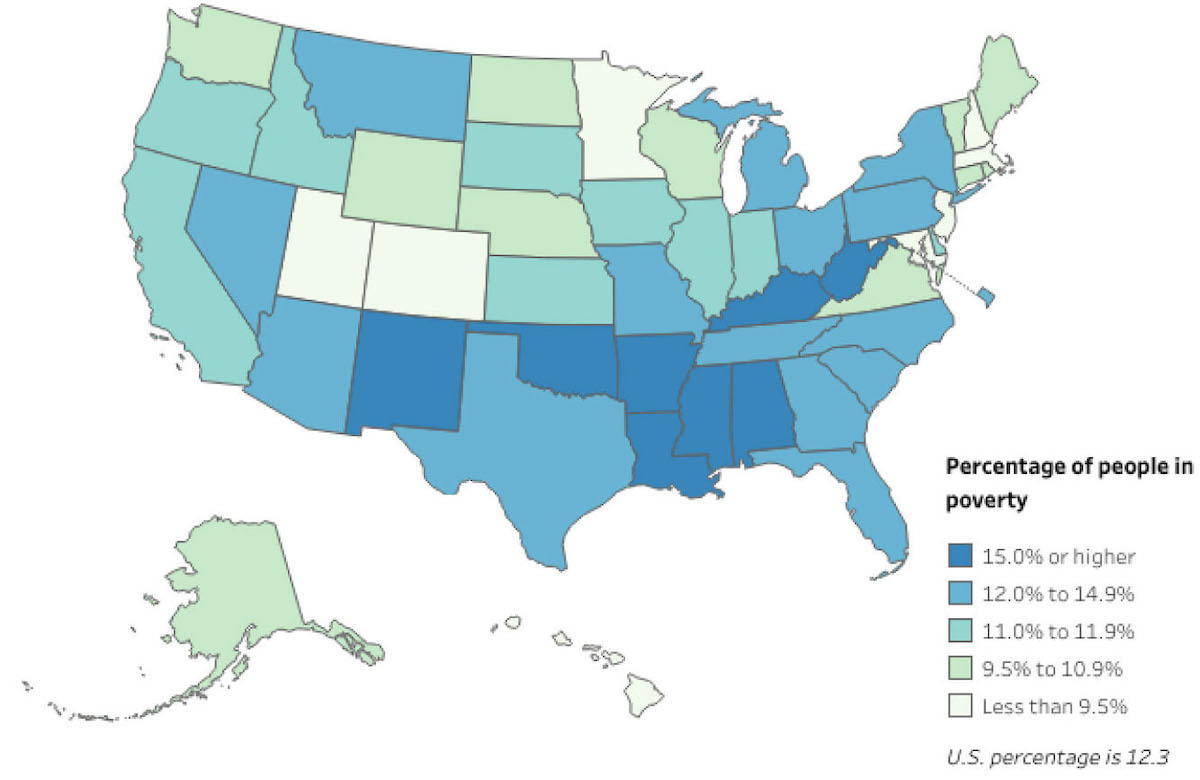
A map of the United States shows the percentage of people in poverty by state. New Mexico, Oklahoma, Arkansas, Louisiana, Mississippi, Alabama, Kentucky, and West Virginia have 15 percent or more people living in poverty. Nevada, Arizona, Montana, Texas, Missouri, Michigan, Ohio, Florida, Georgia, Pennsylvania, and New York have 12 percent to 14.9 percent living in poverty. California, Oregon, Idaho, South Dakota, Illinois, Indiana had 11 percent of people living in poverty. Utah, Colorado, Minnesota, New Hampshire, New Jersey, and Massachusetts have less than 9.5 percent living in poverty.
Figure 18.14 — 18.3 Work in the United States

Figure 18.14 Poverty rates vary by states and region. As you can see, areas with the highest level of poverty are relaively tightly clustered, but the second-highest rates of poverty occur in states across the nation, from Nevada and Arizona in the Southwest to New York in the Northeast. (Credit: U.S. Census Bureau)

Tonja R. Conerly, Kathleen Holmes, and Asha Lal Tamang, Introduction Sociology 3E, OpenStax. · CC BY-NC-SA 4.0 · Original image ↗ · Access for free ↗
Typical entry-level education Employment change,
2019–29 (percent)
Median annual wage, 2019(1)
Total, all occupations 3.7 $39,810
Doctoral or professional degree 5.9 $107,660
Master's degree 15.0 $76,180
Bachelor's degree 6.4 $75,440
Associate's degree 6.2 $54,940
Postsecondary nondegree award 5.6 $39,940
Some college, no degree -0.1 $36,790
High school diploma or equivalent 1.5 $37,930
No formal educational credential 3.3 $25,700

Table 18.2 More education means more jobs (generally) and a higher amount of compensation. (Credit: Bureau of Labor Statistics). Tonja R. Conerly, Kathleen Holmes, and Asha Lal Tamang, Introduction Sociology 3E, OpenStax.

Source: 18.3 Work in the United States
210 terms, alphabetically ordered

aberration

Departure from ideal optical image formation.

Read explanation · OpenStax ↗
absolute poverty

Insufficient resources to meet a specified basic-needs standard.

Read explanation · OpenStax ↗
Acid · ·

In the Brønsted–Lowry model, a substance that can donate a . Acidic have a higher activity than water.

Read explanation · OpenStax ↗
Activation energy ·

The energy barrier that must overcome to reach a and undergo .

Read explanation · OpenStax ↗
Active catalytic-site concentration ·

The total of active sites used to calculate from . It equals active when each has one site.

Read explanation · Biology LibreTexts ↗
Active site

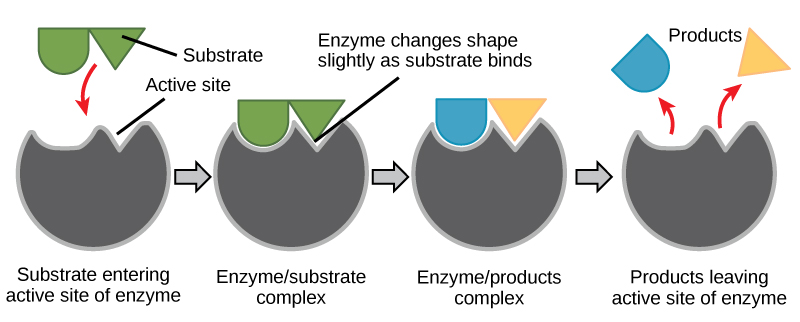
The region of an that binds its and carries out .

Read explanation · OpenStax ↗
Adenine

A that pairs with in and in .

Read explanation · OpenStax ↗
Adenosine triphosphate

An energy-carrying ; its powers many cellular processes, including cycles.

Read explanation · OpenStax ↗
Allele

One version or copy of a at a ; a typical cell carries two copies of an autosomal .

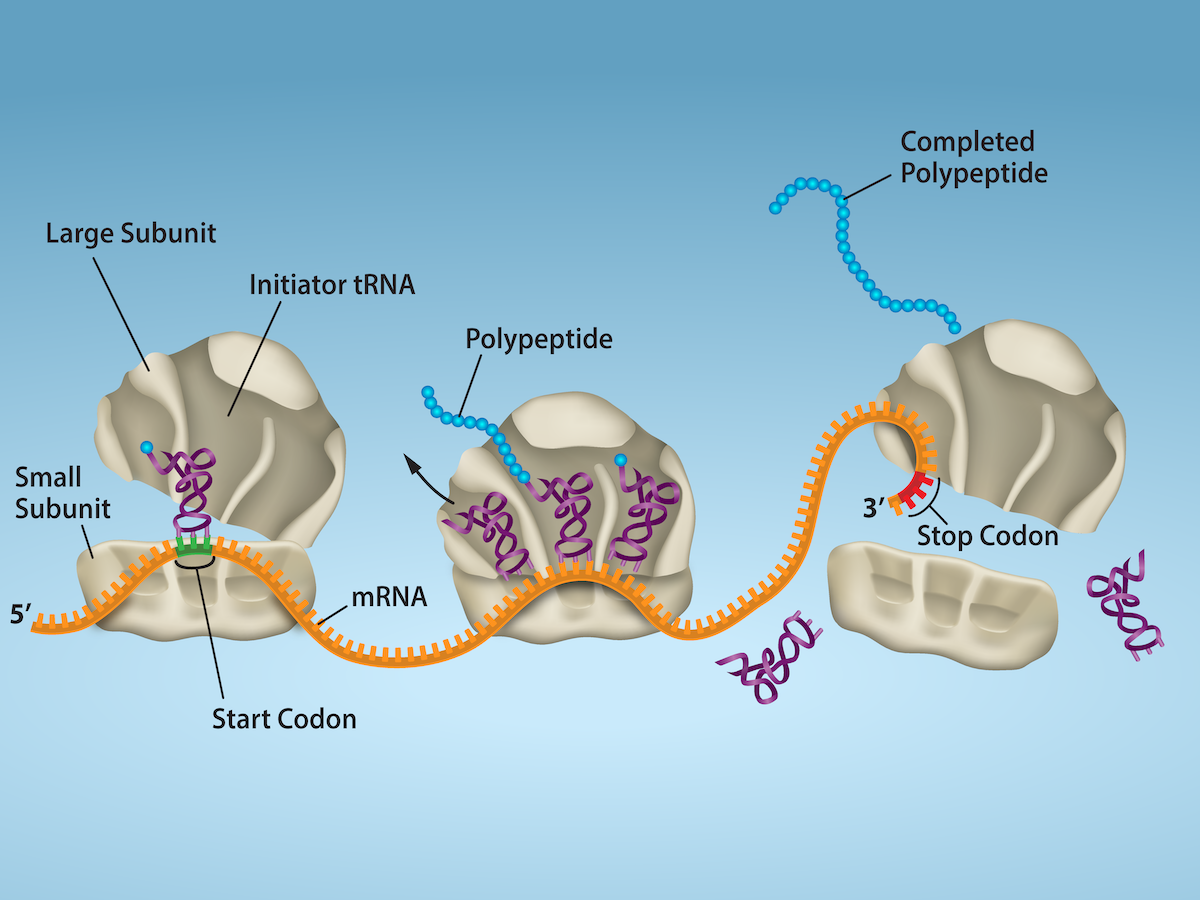
Read explanation · NCBI Bookshelf / Sinauer Associates ↗
Alpha carbon · ·

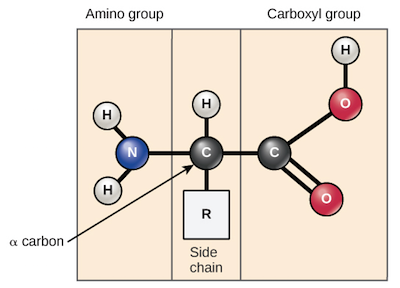
The central carbon next to the carboxyl carbon. In a standard it binds an , hydrogen, and .

Read explanation · OpenStax ↗
Alpha helix · · · · · ·

A helical stabilized by between a oxygen and an hydrogen four later.

Read explanation · OpenStax ↗
Amide · · ·

A group containing a carbon bonded to nitrogen. are amide linkages.

Read explanation · OpenStax ↗
Amino acid

A building block containing amino and and a characteristic .

Read explanation · OpenStax ↗
Amino acid residue · ·

The part of an incorporated into a chain. Residue can also describe another building block within a larger .

Read explanation · OpenStax ↗
Amino group · · ·

A nitrogen-containing . A free ’s amino group is typically (NH₃⁺) near physiological ; ’s ring nitrogen is an exception to this formula.

Read explanation · OpenStax ↗
Amphipathic

Having both a region and a region, as in a or .

Read explanation · OpenStax ↗
Analytical standard ·

A material with a known identity or amount used to compare or calibrate measurements.

Read explanation · Agilent ↗
Anticodon

A triplet that pairs to an . The anticodon for 5′-AUG-3′ is aligned 3′-UAC-5′, or written 5′-CAU-3′.

Read explanation · NCBI Bookshelf / Garland Science ↗
Antiparallel

Running in opposite directions, as with two strands or neighboring strands in some .

Read explanation · OpenStax ↗
Aqueous solution ·

A in which water is the .

Read explanation · OpenStax ↗
Aromatic

Containing a cyclic, with . , , and have aromatic .

Read explanation · OpenStax ↗
Atom

The smallest unit of an element that retains its chemical identity; it has a surrounded by .

Read explanation · OpenStax ↗
authority

regarded as legitimate by those subject to it.

Read explanation · OpenStax ↗
Benzene ring

A six-carbon ring with .

Read explanation · OpenStax ↗
Benzyl group

A attached through a –CH₂– group; part of ’s .

Read explanation · OpenStax ↗
Beta sheet · · · · · ·

A made of aligned segments connected by ; strands may be parallel or .

Read explanation · OpenStax ↗
Biomolecule

A made by or involved in living systems, including , , , and .

Read explanation · OpenStax ↗
Blotting ·

Transfer of separated or to a so a specific target can be detected.

Read explanation · Thermo Fisher ↗
Brønsted–Lowry base · · · · · · · · · · ·

In the Brønsted–Lowry model, a substance that can accept a . Basic solutions have lower activity than water.

Read explanation · OpenStax ↗
Calibration

Establishing the relation between a measured signal and known values or .

Read explanation · Agilent ↗
capitalism

Economic arrangement emphasizing private ownership and market allocation.

Read explanation · OpenStax ↗
Carbohydrate

A class of including sugars and their , used for energy storage, structure, and recognition.

Read explanation · OpenStax ↗
Carbonyl group · ·

A carbon double-bonded to oxygen, C=O; present in and many other .

Read explanation · OpenStax ↗
Carboxyl group · ·

An , COOH. In free it is usually to COO⁻ near physiological .

Read explanation · OpenStax ↗
Catalyst · ·

A substance that speeds a by providing a pathway with lower and is regenerated rather than consumed overall.

Read explanation · OpenStax ↗
charismatic authority

Legitimacy based on followers’ perception of a leader’s exceptional qualities.

Read explanation · OpenStax ↗
Chemical compound ·

A substance containing of two or more different chemically combined in a definite composition.

Read explanation · OpenStax ↗
Chemical element

A substance defined by having the same number of , such as carbon or oxygen.

Read explanation · OpenStax ↗
Chemical reaction ·

A process that rearranges and chemical bonds, converting into .

Read explanation · OpenStax ↗
Chromatin

The complex of and associated , including , in .

Read explanation · OpenStax ↗
Chromatographic peak · ·

A rise and fall in detector signal as one or more components pass through the detector; a peak does not guarantee a single pure .

Read explanation · Agilent ↗
Chromosome ·

An organized with associated that carries . A replicated chromosome has two .

Read explanation · OpenStax ↗
Codon

A sequence of three that specifies an or a stop signal.

Read explanation · OpenStax ↗
Concentration

The amount of a substance in a specified volume or mass of mixture.

Read explanation · OpenStax ↗
conflict theory

Perspective emphasizing inequality, competition, and over resources.

Read explanation · OpenStax ↗
Conjugated system ·

Adjacent orbitals that allow to be distributed across several , often through alternating single and multiple bonds.

Read explanation · OpenStax ↗
Cooperativity · ·

An interaction in which binding at one site changes binding at other sites. Positive cooperativity can produce a response.

Read explanation · Biology LibreTexts ↗
Copy number ·

The number of copies of a segment in a defined sample or ; it is distinct from or abundance.

Read explanation · NHGRI / NIH ↗
Covalent bond · ·

A bond in which share pairs. and are covalent.

Read explanation · OpenStax ↗
culture

Learned and shared meanings, practices, values, and artifacts.

Read explanation · OpenStax ↗
Cysteine ·

An with a . Two cysteines can form a .

Read explanation · OpenStax ↗
Cytosine

A in and that pairs with . can convert it to .

Read explanation · OpenStax ↗
Deamination

Removal of an . Deamination of produces and can change genetic information if unrepaired.

Read explanation · Biology LibreTexts / Oregon State University ↗
Deoxyribonucleic acid

The that stores genetic information used to specify and sequences.

Read explanation · OpenStax ↗
Deprotonation

Removal of a from a or group; this changes its by minus one.

Read explanation · OpenStax ↗
Detergent

An substance that can associate with both water and material; detergents can disrupt or interactions.

Read explanation · Thermo Fisher ↗
Diploid

Having two sets; comparisons of must account for and sample composition.

Read explanation · NHGRI / NIH ↗
discrimination

Unequal treatment linked to social category or group membership.

Read explanation · OpenStax ↗
Disulfide bond · · ·

A covalent sulfur–sulfur bond formed by of two , which can stabilize structure.

Read explanation · NCBI Bookshelf ↗
division of labor

Specialization of tasks among people, occupations, or institutions.

Read explanation · OpenStax ↗
DNA replication

Copying so genetic information can be passed to daughter cells. Each guides a complementary new strand.

Read explanation · OpenStax ↗
dominant

Describing an whose specified is expressed in a ; dominance does not imply greater frequency or .

Read explanation · OpenStax ↗
Double helix · · ·

Two strands wound around a common axis. normally has complementary, strands.

Read explanation · OpenStax ↗
Electric charge · · ·

An electrical property that can be positive or negative. Opposite charges attract and like charges repel; net charge is the sum of all charges on a particle.

Read explanation · OpenStax ↗
Electron

A negatively subatomic particle. Electron sharing and transfer determine much of chemical bonding.

Read explanation · OpenStax ↗
Electron delocalization ·

Distribution of across several rather than confinement to one or bond.

Read explanation · OpenStax ↗
Electronegativity ·

An ’s tendency to attract shared in a chemical bond. Unequal attraction can make a bond .

Read explanation · OpenStax ↗
Enzyme

A biological that speeds a without being consumed. Most enzymes are .

Read explanation · OpenStax ↗
Enzyme saturation · ·

The high- limit in which sites spend almost all their time processing and the rate approaches .

Read explanation · Biology LibreTexts ↗
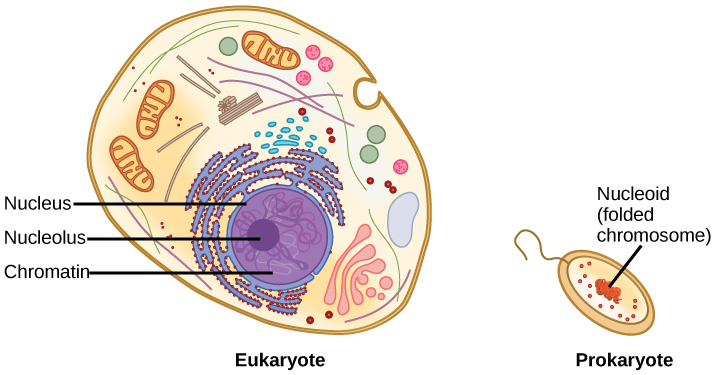
Eukaryote ·

An organism whose cells have a -enclosed ; animals, plants, fungi, and protists are eukaryotes.

Read explanation · OpenStax ↗
Exon

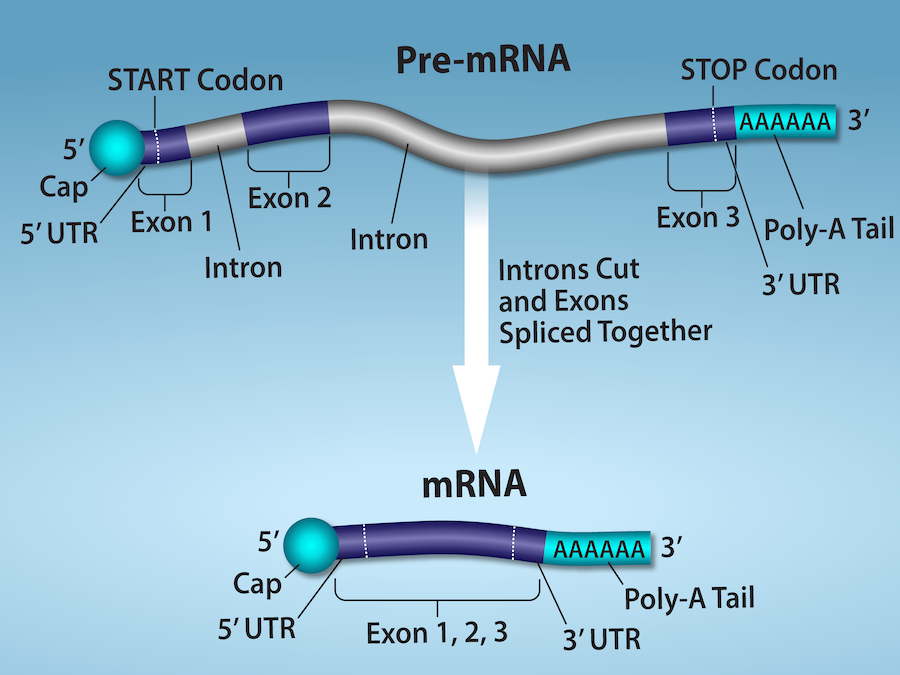
A segment retained in a mature spliced . In an exon may contain coding sequence, untranslated sequence, or both.

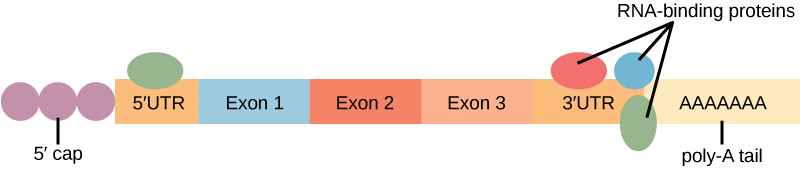
Read explanation · OpenStax ↗
FACT complex ·

A -associated complex that helps machinery traverse and supports reorganization.

Read explanation · OpenStax ↗
First-order kinetics

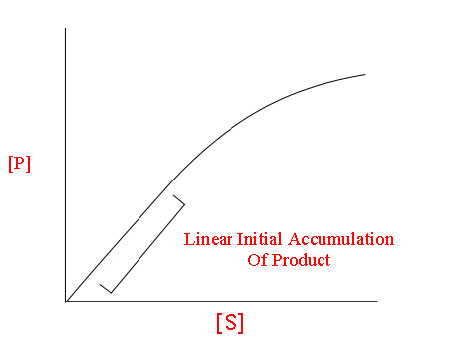
A rate dependence proportional to the first of a . At low , a is approximately first-order in .

Read explanation · Biology LibreTexts ↗
fitness

Relative reproductive contribution of a or organism in a particular environment.

Read explanation · OpenStax ↗
Functional group

A group of whose chemical behavior gives a characteristic and properties.

Read explanation · OpenStax ↗
functionalism

Perspective examining how social institutions contribute to stability and functioning.

Read explanation · OpenStax ↗
fundamentalism

Movement emphasizing adherence or return to perceived foundational religious commitments.

Read explanation · OpenStax ↗
Gene

A sequence that contributes to a functional or , together with the information needed to express it.

Read explanation · OpenStax ↗
Gene expression

Production of a functional from a , including and, for -coding , .

Read explanation · NCBI Bookshelf ↗
Genome

The complete genetic material of an organism or cell.

Read explanation · OpenStax ↗
genotype

The allelic composition of an organism at one or more specified .

Read explanation · OpenStax ↗
globalization

Increasing cross-border interconnection of economic, social, political, and cultural activity.

Read explanation · OpenStax ↗
Guanine

A that pairs with through three .

Read explanation · OpenStax ↗
Guanosine diphosphate

A with two phosphates, produced when is hydrolyzed by many signaling and factors.

Read explanation · The International Journal of Biochemistry & Cell Biology / PubMed ↗
Guanosine triphosphate

A -containing whose supports factor-driven steps in and other cellular processes.

Read explanation · OpenStax ↗
Half-life

The time required for half of a population or amount to remain during decay; a constant half-life is characteristic of decay.

Read explanation · OpenStax ↗
heterozygote ·

An individual with two different at a specified .

Read explanation · OpenStax ↗
Histidine ·

A with an . Mostly uncharged near physiological , it can accept or donate .

Read explanation · OpenStax ↗
Histone

A -associated rich in . Core histones form the around which nucleosomal wraps.

Read explanation · OpenStax ↗
Hydrogen bond ·

An attraction between a hydrogen bonded to an and another . hydrogen bonds stabilize .

Read explanation · OpenStax ↗
Hydrogen ion · ·

A positively hydrogen species. H⁺ denotes a , which is hydrated in water; its activity determines .

Read explanation · OpenStax ↗
Hydrolysis

Breaking a chemical bond by adding water. hydrolysis separates .

Read explanation · OpenStax ↗
Hydrophilic

Interacting favorably with water, typically because a group is or .

Read explanation · OpenStax ↗
Hydrophobic

Interacting poorly with water. often gather in a ’s interior.

Read explanation · OpenStax ↗
Hydroxide ion ·

The negatively OH⁻. Basic contain a higher hydroxide ion activity than water at the same temperature.

Read explanation · OpenStax ↗
Hydroxyl group ·

An oxygen bonded to hydrogen, –OH. Hydroxyl groups can and often increase .

Read explanation · OpenStax ↗
Hyperbolic curve ·

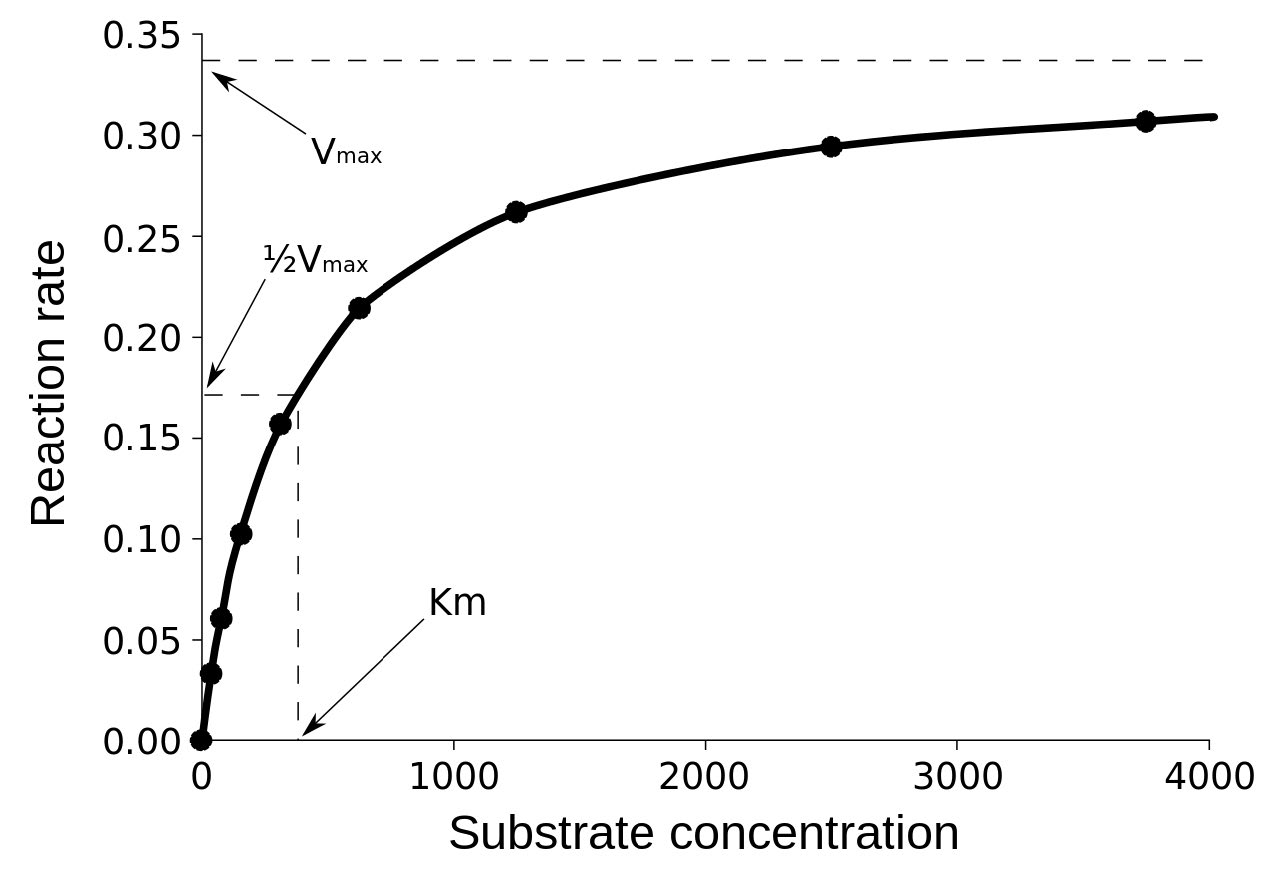
A curve that approaches an asymptote. The standard rate curve is a rectangular hyperbola approaching .

Read explanation · Biology LibreTexts ↗
Imidazole

A five-membered ring containing two nitrogens; ’s contains this ring.

Read explanation · OpenStax ↗
Indole

A fused six-membered and five-membered ring system containing nitrogen; found in .

Read explanation · OpenStax ↗
Initial reaction rate · · · ·

The early rate of formation, measured before substantial depletion or accumulation, usually after the brief binding transient.

Read explanation · Biology LibreTexts ↗
Intron ·

A segment removed from a precursor during . Intronic signals or regulatory sequences can affect .

Read explanation · OpenStax ↗
Ion · ·

An or with a net because its numbers of and do not balance.

Read explanation · OpenStax ↗
linkage

A tendency of nearby on the same to be inherited together.

Read explanation · OpenStax ↗
Lipid

A broad class of largely or , including fats, , and steroids.

Read explanation · OpenStax ↗
locus

The specific position of a or other feature.

Read explanation · OpenStax ↗
Logarithm · · ·

The exponent needed to obtain a number from a chosen fixed number. For decimal logarithms, log₁₀(100) = 2 because 10² = 100; uses the negative decimal logarithm of activity.

Read explanation · OpenStax ↗
Mass spectrometry ·

Analysis of according to their mass-to- ratios, used to identify and or .

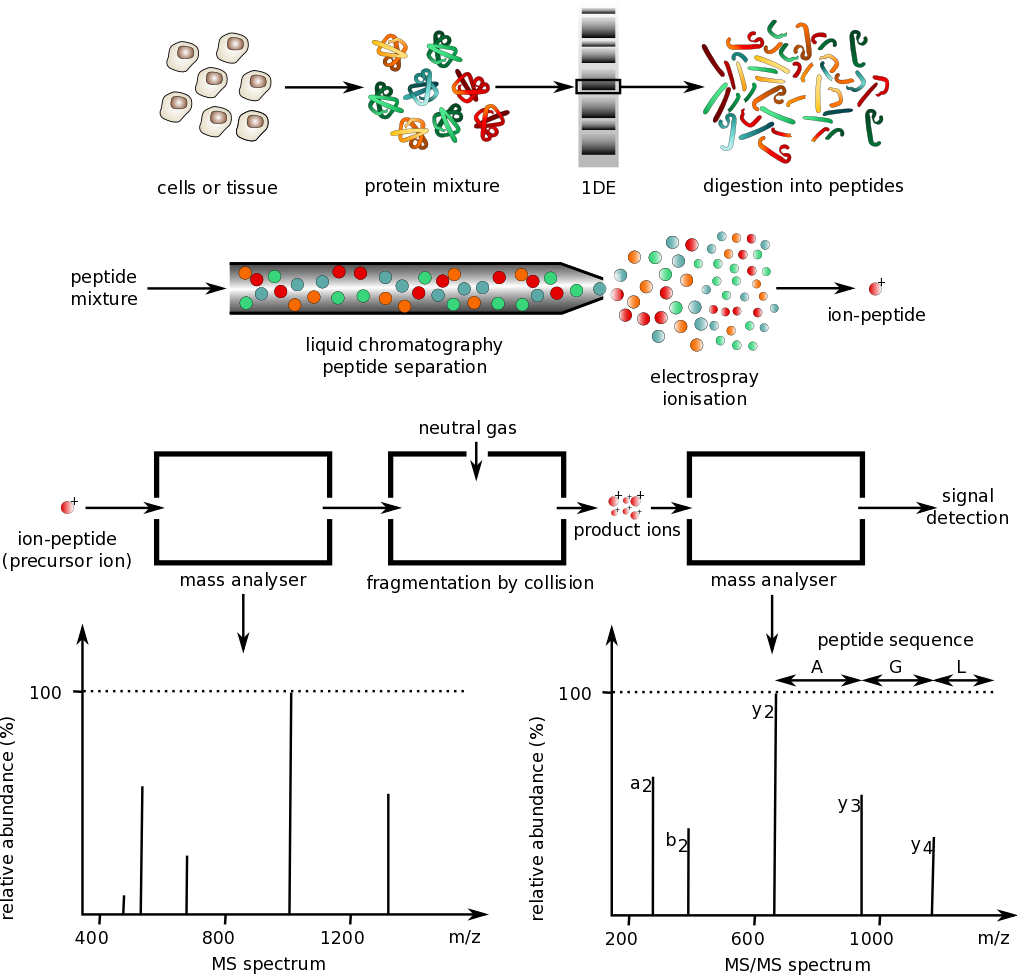
Read explanation · Thermo Fisher ↗
Mass-to-charge ratio

The mass of an divided by its number; this is the quantity measured by a .

Read explanation · Thermo Fisher ↗
Maximum reaction rate · ·

The limiting as becomes saturating. For a fixed under given conditions, Vmax = times .

Read explanation · Biology LibreTexts ↗
McDonaldization

Spread of efficiency, calculability, predictability, and control as organizing principles.

Read explanation · OpenStax ↗
Membrane · · · ·

A thin boundary or sheet. Cell membranes are bilayers containing ; membranes are synthetic supports that hold or for detection.

Read explanation · OpenStax ↗
meritocracy

Ideal in which rewards and positions are allocated by talent and effort.

Read explanation · OpenStax ↗
Messenger RNA ·

An that carries coding information used by to synthesize a .

Read explanation · OpenStax ↗
Methionine ·

A with sulfur in a . Unlike , it does not form .

Read explanation · OpenStax ↗
Michaelis–Menten kinetics · ·

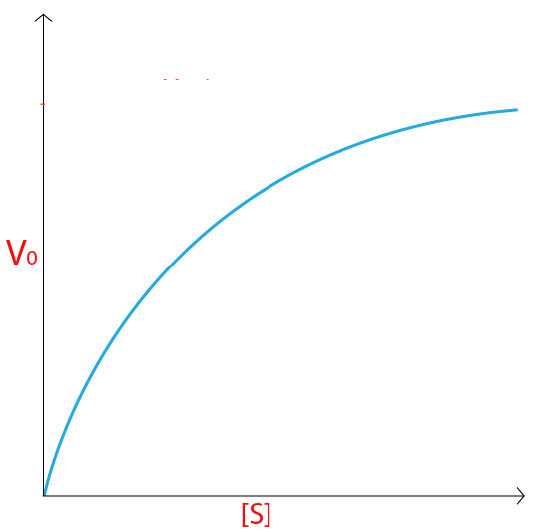
A model with = [S]/(Km + ). Its curve is ; may require a different model.

Read explanation · Biology LibreTexts ↗
Mismatch ·

An incorrectly paired set of in a nucleic- , such as G opposite T.

Read explanation · OpenStax ↗
Missense mutation ·

A coding-sequence that changes the specified ; its effect depends on the and context.

Read explanation · OpenStax ↗
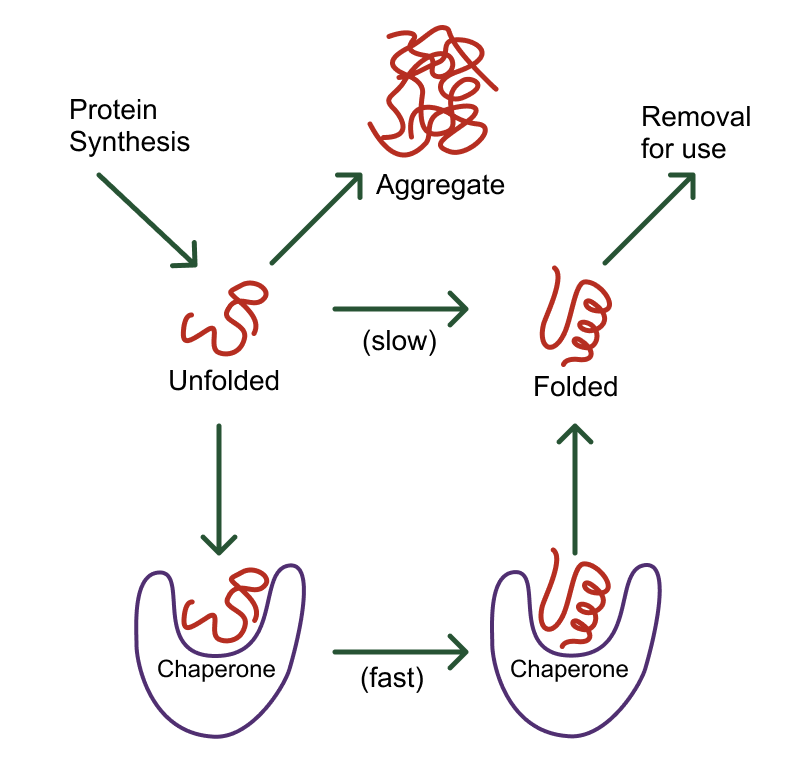
Molecular chaperone · ·

A that assists other in folding or prevents , without specifying their sequence.

Read explanation · NCBI Bookshelf ↗
Molecular mass ladder ·

A mixture of of known masses, run beside samples to estimate their apparent sizes.

Read explanation · Thermo Fisher ↗
Molecule

Two or more joined by . A molecule may be electrically or carry a .

Read explanation · OpenStax ↗
Mutation

A change in a sequence; some mutations alter a ’s sequence.

Read explanation · OpenStax ↗
mutualism

An ecological interaction in which both participants benefit.

Read explanation · OpenStax ↗
Neutral

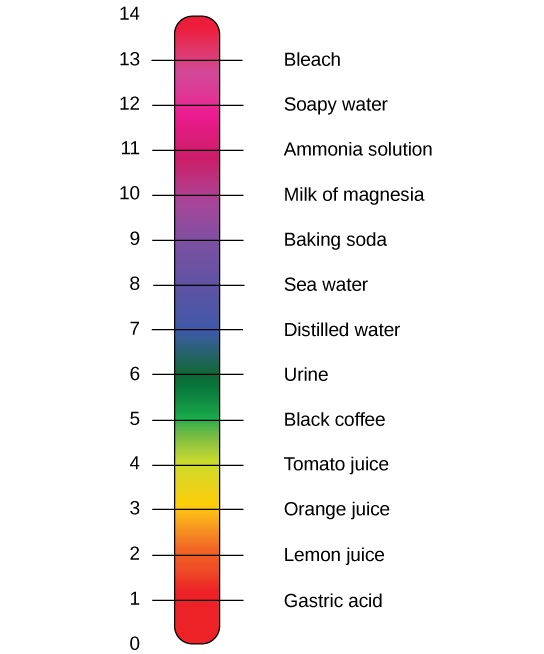
Having no net . For a , neutral instead means equal and activities; its is about 7 at 25 °C.

Read explanation · OpenStax ↗
Nitrogenous base · · ·

A nitrogen-containing ring component of ; its pairing interactions help specify sequences.

Read explanation · OpenStax ↗
Nonpolar ·

Lacking a substantial separation of . Nonpolar groups generally interact poorly with water.

Read explanation · OpenStax ↗
Nonsense mutation ·

A that converts an amino- into a premature , potentially truncating the or destabilizing its .

Read explanation · OpenStax ↗
Nucleic acid

A of , such as or , used in information storage, expression, and other cellular functions.

Read explanation · OpenStax ↗
Nucleosome

The basic unit of : wrapped around a .

Read explanation · OpenStax ↗
Nucleotide

A joined to a sugar and one or more .

Read explanation · OpenStax ↗
Nucleus ·

A -enclosed compartment containing most of a cell’s .

Read explanation · OpenStax ↗
obedience

Behavior in response to a perceived ’s command.

Read explanation · OpenStax ↗
Octamer

A complex made of eight . A core contains eight .

Read explanation · OpenStax ↗
Oxidation ·

Loss of or an increase in oxidation state. Oxidizing two can form a .

Read explanation · OpenStax ↗
Peptide

A chain of joined by ; the term commonly describes chains shorter than a typical .

Read explanation · OpenStax ↗
Peptide bond ·

A covalent between the carboxyl carbon of one and the amino nitrogen of the next.

Read explanation · OpenStax ↗
pH

A measure of , defined as the negative of activity. Lower pH means greater ; pH influences .

Read explanation · OpenStax ↗
phenotype

A measurable trait produced by interacting with development and environment.

Read explanation · OpenStax ↗
Phenylalanine ·

A with an .

Read explanation · OpenStax ↗
Phosphate group ·

A phosphorus-containing group bonded to oxygens; phosphate groups occur in , , and modified .

Read explanation · OpenStax ↗
Phospholipid

An with a -containing region and tails; a major component of cellular .

Read explanation · OpenStax ↗
photon

Quantum of electromagnetic radiation with energy hf.

Read explanation · OpenStax ↗
ploidy

The number of complete sets in a cell.

Read explanation · OpenStax ↗
Polar

Having an uneven distribution of . Polar groups often interact favorably with water.

Read explanation · OpenStax ↗
polarization

Orientation pattern of an electromagnetic wave’s electric-field oscillation.

Read explanation · OpenStax ↗
Polymer

A large made from many linked molecular building blocks.

Read explanation · OpenStax ↗
Polypeptide

A chain of connected by . A functional can contain one or several such chains.

Read explanation · OpenStax ↗
prestige

Social esteem or respect associated with a person or position.

Read explanation · OpenStax ↗
Proline ·

An whose loops back to the nitrogen, restricting rotation and often creating bends.

Read explanation · OpenStax ↗
Protein

One or more folded chains that perform biological roles such as , transport, signaling, or structural support.

Read explanation · OpenStax ↗
Protein aggregation · ·

Association of into larger clusters, often when exposed surfaces of unfolded stick together.

Read explanation · NCBI Bookshelf ↗
Protein backbone ·

The repeating nitrogen–alpha-carbon– chain of a , excluding its variable .

Read explanation · OpenStax ↗
Protein domain · ·

A region of a that forms a recognizable structural or functional unit.

Read explanation · OpenStax ↗
Proton

A positively subatomic particle. In – chemistry, donating a proton means transferring a .

Read explanation · OpenStax ↗
Protonation

Addition of a to an , , or ; this changes its by plus one.

Read explanation · OpenStax ↗
Purine · ·

A with two fused rings. and are purines.

Read explanation · OpenStax ↗
Pyrimidine · ·

A with one six-membered ring. , , and are pyrimidines.

Read explanation · OpenStax ↗
Quantification · ·

Estimating the amount or of a substance from measured signals and suitable or .

Read explanation · Waters ↗
R group · ·

The variable side chain attached to an ’s . It determines identity, , , and chemical behavior.

Read explanation · OpenStax ↗
rational-legal authority

Legitimacy based on formal rules and offices.

Read explanation · OpenStax ↗
Reactant

A starting substance transformed during a .

Read explanation · OpenStax ↗
Reaction intermediate · ·

A species formed in one step and consumed in another. It occupies a local energy minimum between .

Read explanation · OpenStax ↗
Reaction product ·

A substance formed by a .

Read explanation · OpenStax ↗
Reaction rate · ·

How quickly are consumed or form, usually expressed as a change per unit time.

Read explanation · OpenStax ↗
relative poverty

Resources substantially below the prevailing standard in a society.

Read explanation · OpenStax ↗
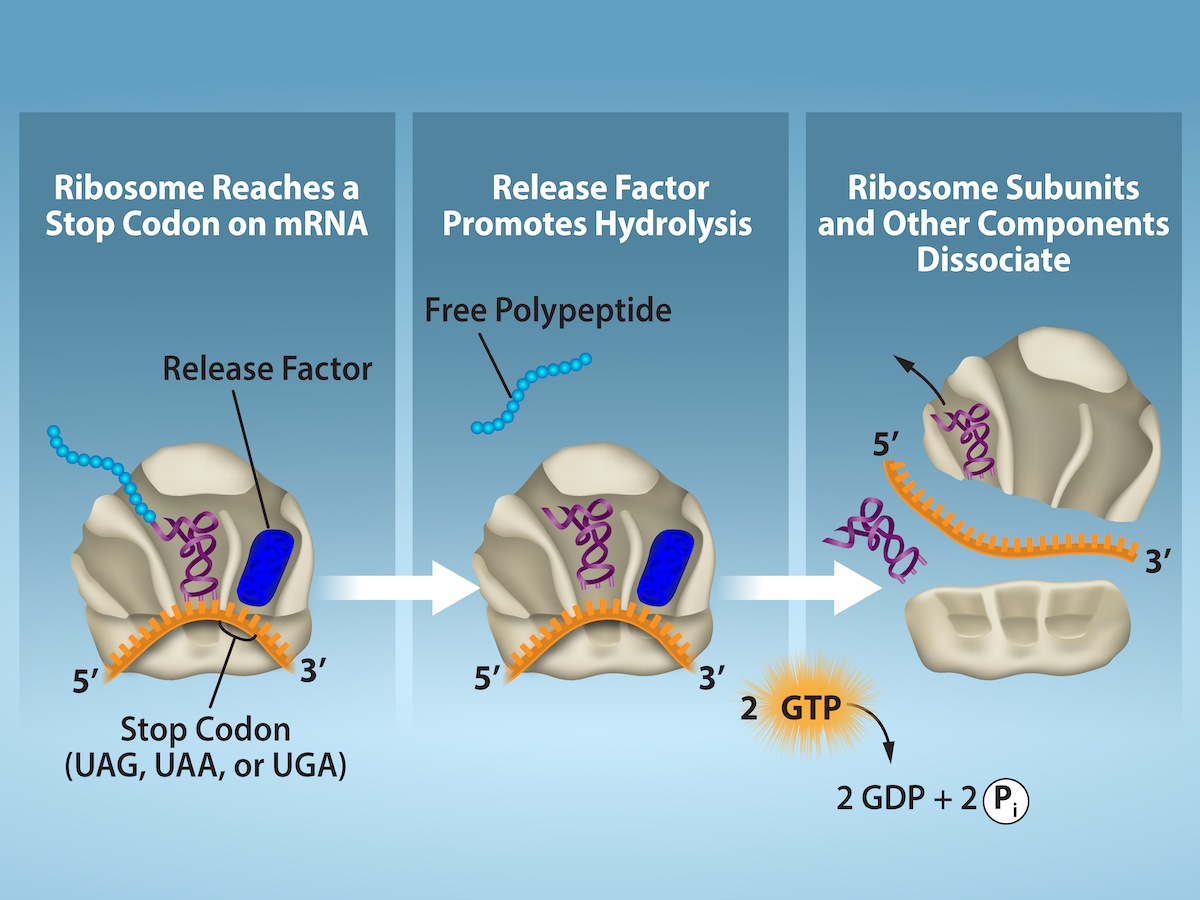
Release factor ·

A that recognizes a stop signal and promotes of the – to release the .

Read explanation · OpenStax ↗
religiosity

Degree and pattern of religious belief, commitment, practice, or participation.

Read explanation · OpenStax ↗
Ribonucleic acid ·

A with roles in , regulation, and ; carries -coding information.

Read explanation · OpenStax ↗
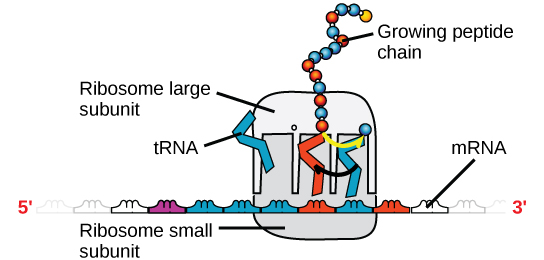
Ribosome ·

A complex of and that translates into a .

Read explanation · OpenStax ↗
RNA splicing · ·

Removal of and joining of in a precursor .

Read explanation · NCBI Bookshelf / Garland Science ↗
RNA stability

Persistence of an before degradation; greater stability generally means a longer lifetime or under specified conditions.

Read explanation · OpenStax ↗
sanction

Social reward or penalty used to encourage or discourage behavior.

Read explanation · OpenStax ↗
Secondary structure

Local folding, such as and , stabilized mainly by .

Read explanation · OpenStax ↗
secularization

Decline or transformation of religious and participation in social life.

Read explanation · OpenStax ↗
Separation resolution

A measure of how distinctly neighboring components or are separated.

Read explanation · Cytiva ↗
Sigmoidal curve ·

An S-shaped curve. A sigmoidal rate-versus- curve can indicate rather than simple behavior.

Read explanation · Biology LibreTexts ↗
Sister chromatid

One of the two copies of a produced by . An intact sister chromatid can supply a template for accurate repair.

Read explanation · Biology LibreTexts / Oregon State University ↗
social capital

Resources available through social relationships and networks.

Read explanation · OpenStax ↗
social power

Capacity to influence outcomes or act despite resistance.

Read explanation · OpenStax ↗
social stratification

Structured inequality in resources, opportunities, and social position.

Read explanation · OpenStax ↗
social support

Emotional, informational, or practical assistance available through relationships.

Read explanation · OpenStax ↗
socialism

Economic approaches emphasizing collective or public ownership or control.

Read explanation · OpenStax ↗
socialization

Lifelong learning and negotiation of social norms, roles, skills, and identities.

Read explanation · OpenStax ↗
socioeconomic status

Social and economic position commonly measured through income, education, and occupation.

Read explanation · OpenStax ↗
Solubility ·

The amount of a substance that can dissolve in a under specified conditions. Soluble means able to dissolve; insoluble means only very slightly soluble in that .

Read explanation · OpenStax ↗
Solute

A dissolved component of a .

Read explanation · OpenStax ↗
Solution

A homogeneous mixture in which are dissolved in a .

Read explanation · OpenStax ↗
Solvent

The component of a that dissolves other substances, usually the component present in the greatest amount.

Read explanation · OpenStax ↗
Spectrum ·

A distribution of measured signal over a variable such as or .

Read explanation · Thermo Fisher ↗
Stop codon · · ·

An that recruits a to end : UAA, UAG, or UGA in the standard code.

Read explanation · OpenStax ↗
Substitution · ·

Replacement of one by another. In a coding region it can be , , or .

Read explanation · OpenStax ↗
Substrate

A that an binds and chemically transforms.

Read explanation · OpenStax ↗
Substrate concentration

The amount of per volume. Square brackets denote ; [S] is varied to measure an curve.

Read explanation · Biology LibreTexts ↗
Subunit ·

An individual chain within a containing multiple chains.

Read explanation · OpenStax ↗
symbolic interactionism

Perspective examining meaning created and negotiated through interaction.

Read explanation · OpenStax ↗
Synonymous mutation · · · · ·

A coding-sequence that leaves the specified unchanged. It can still affect , , or .

Read explanation · OpenStax ↗
Template strand · · ·

A preexisting strand whose sequence guides complementary nucleic- synthesis.

Read explanation · OpenStax ↗
Thioether

A sulfur bonded to two carbon groups, as in ’s . It has no hydrogen.

Read explanation · OpenStax ↗
Thiol group · · · ·

A sulfur bonded to hydrogen, –SH. thiols can form through .

Read explanation · OpenStax ↗
Thymine

A normally used in ; it pairs with through two .

Read explanation · OpenStax ↗
traditional authority

Legitimacy based on established customs and inherited arrangements.

Read explanation · OpenStax ↗
Transcription

Synthesis of using a template.

Read explanation · OpenStax ↗
Transfer RNA ·

An adaptor that carries an and pairs its with a on .

Read explanation · OpenStax ↗
Transition state

A fleeting, high-energy arrangement at a barrier. It is an energy maximum along the path, rather than a stable .

Read explanation · OpenStax ↗
Translation ·

Synthesis of a on a using the sequence of in .

Read explanation · OpenStax ↗
Tryptophan ·

An with a bulky ; commonly grouped as .

Read explanation · OpenStax ↗
Turnover number · · ·

The maximum number of cycles per per unit time, calculated as /. Units are inverse time, commonly s⁻¹.

Read explanation · IUBMB ↗
Tyrosine ·

An with a phenolic . Usually uncharged near physiological .

Read explanation · OpenStax ↗
Uracil

A normally used in in place of . Uracil produced by in is a repair target.

Read explanation · OpenStax ↗
Wavelength

The distance between repeating points of a wave, such as neighboring crests; light wavelength determines energy.

Read explanation · JASCO ↗
wealth

Stock of assets minus liabilities at a point in time.

Read explanation · OpenStax ↗

15.1 The Sociological Approach to Religion

OpenStax · 15.1 The Sociological Approach to Religion ↗
Instructional page including learning objectives, examples, figures, source tables and questions. Site navigation and embedded media players are omitted; source media links remain available.

Learning Objectives

By the end of this section, you should be able to:

  • Discuss the historical view of religion from a sociological perspective
  • Describe how the major sociological paradigms view religion
Several dozen people are positioned on their knees with their heads down, inside a mosque.
Figure 15.2 — 15.1 The Sociological Approach to Religion

Figure 15.2 Universality of religious practice, such as these prayers at the The Umayyad Mosque in Damascus, can create bonds among people who would otherwise be strangers. Muslim people around the world pray five times each day while facing the direction of the Kaaba in Mecca (pictured in Section 15.2). Beyond the religious observance, such a unifying act can build a powerful sense of community. (Credit: Arian Zwegers/flickr).

Tonja R. Conerly, Kathleen Holmes, and Asha Lal Tamang, Introduction Sociology 3E, OpenStax. · CC BY-NC-SA 4.0 · Original image ↗ · Access for free ↗

From the Latin religio (respect for what is sacred) and religare (to bind, in the sense of an obligation), the term religion describes various systems of belief and practice that define what people consider to be sacred or spiritual (Fasching and deChant 2001; Durkheim 1915). Throughout history, and in societies across the world, leaders have used religious narratives, symbols, and traditions in an attempt to give more meaning to life and understand the universe. Some form of religion is found in every known , and it is usually practiced in a public way by a group. The practice of religion can include feasts and festivals, intercession with God or gods, marriage and funeral services, music and art, meditation or initiation, sacrifice or service, and other aspects of .

While some people think of religion as something individual because religious beliefs can be highly personal, religion is also a social institution. Social scientists recognize that religion exists as an organized and integrated set of beliefs, behaviors, and norms centered on basic social needs and values. Moreover, religion is a cultural universal found in all social groups. For instance, in every , funeral rites are practiced in some way, although these customs vary between cultures and within religious affiliations. Despite differences, there are common in a ceremony marking a person’s death, such as announcement of the death, care of the deceased, disposition, and ceremony or ritual. These universals, and the differences in the way societies and individuals experience religion, provide rich material for sociological study.

In studying religion, sociologists distinguish between what they term the experience, beliefs, and rituals of a religion. Religious experience refers to the conviction or sensation that we are connected to “the divine.” This type of communion might be experienced when people pray or meditate. Religious beliefs are specific ideas members of a particular faith hold to be true, such as that Jesus Christ was the son of God, or that reincarnation exists. Another illustration of religious beliefs is the creation stories we find in different religions. Religious rituals are behaviors or practices that are either required or expected of the members of a particular group, such as bar mitzvah or confession of sins (Barkan and Greenwood 2003).

The History of Religion as a Sociological Concept

In the wake of nineteenth century European industrialization and , three social theorists attempted to examine the relationship between religion and society: Émile Durkheim, Max Weber, and Karl Marx. They are among the founding thinkers of modern sociology.

As stated earlier, French sociologist Émile Durkheim (1858–1917) defined religion as a “unified system of beliefs and practices relative to sacred things” (1915). To him, sacred meant extraordinary—something that inspired wonder and that seemed connected to the concept of “the divine.” Durkheim argued that “religion happens” in society when there is a separation between the profane (ordinary life) and the sacred (1915). A rock, for example, isn’t sacred or profane as it exists. But if someone makes it into a headstone, or another person uses it for landscaping, it takes on different meanings—one sacred, one profane.

Durkheim is generally considered the first sociologist who analyzed religion in terms of its societal impact. Above all, he believed religion is about community: It binds people together (social cohesion), promotes behavior consistency (social control), and offers strength during life’s transitions and tragedies (meaning and purpose). By applying the methods of natural science to the study of society, Durkheim held that the source of religion and morality is the collective mind-set of society and that the cohesive bonds of social order result from common values in a society. He contended that these values need to be maintained to maintain social stability.

But what would happen if religion were to decline? This question led Durkheim to posit that religion is not just a social creation but something that represents the of society: When people celebrate sacred things, they celebrate the of their society. By this reasoning, even if traditional religion disappeared, society wouldn’t necessarily dissolve.

Whereas Durkheim saw religion as a source of social stability, German sociologist and political economist Max Weber (1864–1920) believed it was a precipitator of social change. He examined the effects of religion on economic activities and noticed that heavily Protestant societies—such as those in the Netherlands, England, Scotland, and Germany—were the most highly developed capitalist societies and that their most successful business leaders were Protestant. In writing The Protestant Ethic and the Spirit of (1905), he contends that the Protestant work ethic influenced the development of . Weber noted that certain kinds of Protestantism supported the pursuit of material gain by motivating believers to work hard, be successful, and not spend their profits on frivolous things. (The modern use of “work ethic” comes directly from Weber’s Protestant ethic, although it has now lost its religious connotations.)

Big Picture

The Protestant Work Ethic in the Information Age

Max Weber (1904) posited that, in Europe in time, Protestants were more likely than Catholics to value capitalist ideology, and believed in hard work and savings. He showed that Protestant values directly influenced the rise of and helped create the modern world order. Weber thought the emphasis on community in Catholicism versus the emphasis on individual achievement in Protestantism made a difference. century-old claim that the Protestant work ethic led to the development of has been one of the most important and controversial topics in the sociology of religion. Today, scholars continue to debate the applicability of contention to modern society (Greeley 1989).

What does the concept of work ethic mean today? The work ethic in the information age has been affected by tremendous cultural and social change, just as workers in the mid- to late nineteenth century were influenced by the wake of the Industrial Revolution. Factory jobs tend to be simple, uninvolved, and require very little thinking or decision making on the part of the worker. Today, the work ethic of the modern workforce has been transformed, as more thinking and decision making is required. Employees also seek autonomy and fulfillment in their jobs, not just wages. Higher levels of education have become necessary, as well as people management skills and access to the most recent information on any given topic. The information age has increased the rapid pace of production expected in many jobs.

On the other hand, the “” of the United States (Hightower 1975; Ritzer 1993), in which many service industries, such as the fast-food industry, have established routinized roles and tasks, has resulted in a “discouragement” of the work ethic. In jobs where roles and tasks are highly prescribed, workers have no opportunity to make decisions. They are considered replaceable commodities as opposed to valued employees. During times of recession, these service jobs may be the only employment possible for younger individuals or those with low-level skills. The pay, working conditions, and robotic nature of the tasks dehumanizes the workers and strips them of incentives for doing quality work.

Working hard also doesn’t seem to have any relationship with Catholic or Protestant religious beliefs anymore, or those of other religions; information age workers expect talent and hard work to be rewarded by material gain and career advancement.

German philosopher, journalist, and revolutionary socialist Karl Marx (1818–1883) also studied the social impact of religion. He believed religion reflects the of society and that it maintains inequality and perpetuates the status quo. For him, religion was just an extension of working-class (proletariat) economic suffering. He famously argued that religion “is the opium of the people” (1844).

For Durkheim, Weber, and Marx, who were reacting to the great social and economic upheaval of the late nineteenth century and early twentieth century in Europe, religion was an integral part of society. For Durkheim, religion was a force for cohesion that helped bind the members of society to the group, while Weber believed religion could be understood as something separate from society. Marx considered religion inseparable from the economy and the worker. Religion could not be understood apart from the capitalist society that perpetuated inequality. Despite their different views, these social theorists all believed in the centrality of religion to society.

Theoretical Perspectives on Religion

A large group of people surround a body of water. Several people are in the water.
Figure 15.3 — 15.1 The Sociological Approach to Religion

Figure 15.3 Functionalists believe religion meets many important needs for people, including group cohesion and companionship. Hindu pilgrims come from far away to Ram Kund, a holy place in the city of Nashik, India. One of the rituals performed is intended to bring salvation to the souls of people who have passed away. What need is this practice fulfilling? (Credit: Arian Zwegers/flickr)

Tonja R. Conerly, Kathleen Holmes, and Asha Lal Tamang, Introduction Sociology 3E, OpenStax. · CC BY-NC-SA 4.0 · Original image ↗ · Access for free ↗

Modern-day sociologists often apply one of three major theoretical perspectives. These views offer different lenses through which to study and understand society: , , and . Let’s explore how scholars applying these paradigms understand religion.

Functionalists contend that religion serves several functions in society. Religion, in , depends on society for its existence, value, and significance, and vice versa. From this perspective, religion serves several purposes, like providing answers to spiritual mysteries, offering emotional comfort, and creating a place for social interaction and social control.

In providing answers, religion defines the spiritual world and spiritual forces, including divine beings. For example, it helps answer questions like, “How was the world created?” “Why do we suffer?” “Is there a plan for our lives?” and “Is there an afterlife?” As another function, religion provides emotional comfort in times of crisis. Religious rituals bring order, comfort, and organization through shared familiar symbols and patterns of behavior.

One of the most important functions of religion, from a functionalist perspective, is the opportunities it creates for social interaction and the formation of groups. It provides and social networking and offers a place to meet others who hold similar values and a place to seek help (spiritual and material) in times of need. Moreover, it can foster group cohesion and integration. Because religion can be central to many people’s concept of themselves, sometimes there is an “in-group” versus “out-group” feeling toward other religions in our society or within a particular practice. On an extreme level, the Inquisition, the Salem witch trials, and anti-Semitism are all examples of this dynamic. Finally, religion promotes social control: It reinforces social norms such as appropriate styles of dress, following the law, and regulating sexual behavior.

Conflict theorists view religion as an institution that helps maintain patterns of social inequality. For example, the Vatican has a tremendous amount of , while the average income of Catholic parishioners is small. According to this perspective, religion has been used to support the “divine right” of oppressive monarchs and to justify unequal social structures, like India’s caste system.

Conflict theorists are critical of the way many religions promote the idea that believers should be satisfied with existing circumstances because they are divinely ordained. This dynamic has been used by Christian institutions for centuries to keep poor people poor and to teach them that they shouldn’t be concerned with what they lack because their “true” reward (from a religious perspective) will come after death. Conflict theorists also point out that those in in a religion are often able to dictate practices, rituals, and beliefs through their interpretation of religious texts or via proclaimed direct communication from the divine.

About a half-dozen older men wearing Roman Catholic priestly garb are shown from the shoulders up.
Figure 15.4 — 15.1 The Sociological Approach to Religion

Figure 15.4 Many religions, including the Catholic faith, have long prohibited women from becoming spiritual leaders. Feminist theorists focus on gender inequality and promote leadership roles for women in religion. (Credit: Wikimedia Commons)

Tonja R. Conerly, Kathleen Holmes, and Asha Lal Tamang, Introduction Sociology 3E, OpenStax. · CC BY-NC-SA 4.0 · Original image ↗ · Access for free ↗

The feminist perspective is a view that focuses specifically on gender inequality. In terms of religion, feminist theorists assert that, although women are typically the ones to socialize children into a religion, they have traditionally held very few positions of within religions. A few religions and religious denominations are more gender equal, but male dominance remains the norm of most.

Sociology in the Real World

Rational Choice Theory: Can Economic Theory Be Applied to Religion?

How do people decide which religion to follow, if any? How does one pick a church or decide which denomination “fits” best? Rational choice theory (RCT) is one way social scientists have attempted to explain these behaviors. The theory proposes that people are self-interested, though not necessarily selfish, and that people make rational choices—choices that can reasonably be expected to maximize positive outcomes while minimizing negative outcomes. Sociologists Roger Finke and Rodney Stark (1988) first considered the use of RCT to explain some aspects of religious behavior, with the assumption that there is a basic human need for religion in terms of providing belief in a supernatural being, a sense of meaning in life, and belief in life after death. Religious explanations of these concepts are presumed to be more satisfactory than scientific explanations, which may help to account for the continuation of strong religious connectedness in countries such as the United States, despite predictions of some competing theories for a great decline in religious affiliation due to modernization and religious pluralism.

Another assumption of RCT is that religious organizations can be viewed in terms of “costs” and “rewards.” Costs are not only monetary requirements, but are also the time, effort, and commitment demands of any particular religious organization. Rewards are the intangible benefits in terms of belief and satisfactory explanations about life, death, and the supernatural, as well as social rewards from membership. RCT proposes that, in a pluralistic society with many religious options, religious organizations will compete for members, and people will choose between different churches or denominations in much the same way they select other consumer goods, balancing costs and rewards in a rational manner. In this framework, RCT also explains the development and decline of churches, denominations, sects, and even cults; this limited part of the very complex RCT theory is the only aspect well supported by research data.

Critics of RCT argue that it doesn’t fit well with human spiritual needs, and many sociologists disagree that the costs and rewards of religion can even be meaningfully measured or that individuals use a rational balancing process regarding religious affiliation. The theory doesn’t address many aspects of religion that individuals may consider essential (such as faith) and further fails to account for agnostics and atheists who don’t seem to have a similar need for religious explanations. Critics also believe this theory overuses economic terminology and structure and point out that terms such as “rational” and “reward” are unacceptably defined by their use; they would argue that the theory is based on faulty logic and lacks external, empirical support. A scientific explanation for why something occurs can’t reasonably be supported by the that it does occur. RCT is widely used in economics and to a lesser extent in criminal justice, but the application of RCT in explaining the religious beliefs and behaviors of people and societies is still being debated in sociology today.

Rising from the concept that our world is socially constructed, studies the symbols and interactions of everyday life. To interactionists, beliefs and experiences are not sacred unless individuals in a society regard them as sacred. The Star of David in Judaism, the cross in Christianity, and the crescent and star in Islam are examples of sacred symbols. Interactionists are interested in what these symbols communicate. Because interactionists study one-on-one, everyday interactions between individuals, a scholar using this approach might ask questions focused on this dynamic. The interaction between religious leaders and practitioners, the role of religion in the ordinary components of everyday life, and the ways people express religious values in social interactions—all might be topics of study to an interactionist.

The symbols of 14 religions are depicted in a circle around the edge of an illustration of Earth, with North America and part of South America visible. The Earth illustration is shown sitting in the middle of a starry sky.
Figure 15.5 — 15.1 The Sociological Approach to Religion

Figure 15.5 The symbols of fourteen religions are depicted here. In no particular order, they represent Judaism, Wicca, Taoism, Christianity, Confucianism, Baha’i, Druidism, Islam, Hinduism, Zoroastrianism, Shinto, Jainism, Sikhism, and Buddhism. Can you match the symbol to the religion? What might a symbolic interactionist make of these symbols? (Credit: ReligiousTolerance.org)

Tonja R. Conerly, Kathleen Holmes, and Asha Lal Tamang, Introduction Sociology 3E, OpenStax. · CC BY-NC-SA 4.0 · Original image ↗ · Access for free ↗

15.3 Religion in the United States

OpenStax · 15.3 Religion in the United States ↗
Instructional page including learning objectives, examples, figures, source tables and questions. Site navigation and embedded media players are omitted; source media links remain available.

Learning Objectives

By the end of this section, you should be able to:

  • Give examples of religion as an agent of social change
  • Describe current U.S. trends including megachurches, stances on LGBTQ rights, and religious identification.
Photo A shows several people holding an infant over a Baptismal font. Photo B shows a young person reading the Torah at a podium. Photo C shows two people embracing in front of a Church building.
Figure 15.11 — 15.3 Religion in the United States

Figure 15.11 Religion and religious observance play a key role in every life stage, deepening its emotional and cognitive connections. Many religions have a ceremony or sacrament to bring infants into the faith, as this Baptism does for Christians. In Judaism, adolescents transition to adulthood through ceremonies like the Bat Mitzvah or Bar Mitzvah. And many couples cement their relationship through religious marriage ceremonies, as did these members of the Church of Jesus Christ of Latter Day Saints. (Credit: a: John Ragai/flickr; b: Michele Pace/flickr; c: kristin klein/flickr)

Tonja R. Conerly, Kathleen Holmes, and Asha Lal Tamang, Introduction Sociology 3E, OpenStax. · CC BY-NC-SA 4.0 · Original image ↗ · Access for free ↗

In examining the state of religion in the United States today, we see the complexity of religious life in our society, plus emerging trends like the rise of the megachurch, , and the role of religion in social change.

Religion and Social Change

Religion has historically been an impetus for and a barrier against social change. With Gutenberg’s invention of the printing press, spreading ideas became far easier to share. Many pamphlets for all sorts of interests were printed, but one of Gutenberg's greatest contributions may have been mass producing the Christian Bible. The of sacred texts into everyday, nonscholarly language empowered people to shape their religions. However, printers did not just work for the Church. They printed many other texts, including those that were not aligned with Church doctrine. Martin Luther had complaints against the Church (the 95 Theses) printed in 1517, which allowed them to be distributed throughout Europe. convictions eventually led to the Protestant Reformation, which revolutionized not only the Church, but much of Western civilization. Disagreements between religious groups and instances of religious persecution have led to wars and genocides. The United States is no stranger to religion as an agent of social change. In , many of the United States' early European arrivals were acting largely on religious convictions when they were driven to settle in the United States.

Liberation Theology

Liberation theology began as a movement within the Roman Catholic Church in the 1950s and 1960s in Latin America, and it combines Christian principles with political activism. It uses the church to promote social change via the political arena, and it is most often seen in attempts to reduce or eliminate social injustice, , and poverty. A list of proponents of this kind of social justice (although some pre-date liberation theory) could include Francis of Assisi, Leo Tolstoy, Martin Luther King Jr., and Desmond Tutu.

Although begun as a moral against the poverty caused by social injustice in that part of the world, today liberation theology is an international movement that encompasses many churches and denominations. Liberation theologians discuss theology from the point of view of the poor and the oppressed, and some interpret the scriptures as a call to action against poverty and injustice. In Europe and North America, feminist theology has emerged from liberation theology as a movement to bring social justice to women.

Social Policy and Debate

Religious Leaders and the Rainbow of Gay Pride

What happens when a religious leader officiates a gay marriage against denomination policies? What about when that same minister defends the action in part by coming out and making her own lesbian relationship known to the church?

In the case of the Reverend Amy DeLong, it meant a church trial. Some leaders in her denomination assert that homosexuality is incompatible with their faith, while others feel this type of has no place in a modern church (Barrick 2011).

As the LGBTQ community increasingly earns basic civil rights, how will religious communities respond? Many religious groups have traditionally discounted LGBTQ sexualities as “wrong.” However, these organizations have moved closer to respecting human rights by, for example, increasingly recognizing women as an equal gender. The Episcopal Church, a Christian sect comprising about 2.3 million people in the United States, has been far more welcoming to LGBTQ people. Progressing from a supportive proclamation in 1976, the Episcopal Church in the USA declared in 2015 that its clergy could preside over and same-sex marriages (HRC 2019). The decision was not without its detractors, and as recently as 2020 an Episcopal bishop (a senior leader) in upstate New York was dismissed for prohibiting same-sex marriages in diocese. (NBC, 2020). Lutheran and Anglican denominations also support the blessing of same-sex marriages, though they do not necessarily offer them the full recognition of opposite-sex marriages.

Catholic Church leader Pope Francis has been pushing for a more open church, and some Catholic bishops have been advocating for a more “gay-friendly” church (McKenna, 2014). For these and some other policies, Pope Francis has vocal resistance from Church members and some more conservative bishops, while other Catholic bishops have supported same-sex marriages.

American Jewish denominations generally recognize and support the blessing of same-sex marriages, and Jewish rabbis have been supporters of LGBTQ rights from the Civil Rights era. In other religions, such as Hinduism, which does not have a governing body common to other religions, LGBTQ people are generally welcomed, and the decision to perform same-sex marriages is at the discretion of individual priests.

Megachurches

A megachurch is a Christian church that has a very large congregation averaging more than 2,000 people who attend regular weekly services. As of 2009, the largest megachurch in the United States was in Houston Texas, boasting an average weekly attendance of more than 43,000 (Bogan 2009). Megachurches exist in other parts of the world, especially in South Korea, Brazil, and several African countries, but the rise of the megachurch in the United States is a fairly recent phenomenon that has developed primarily in California, Florida, Georgia, and Texas.

Since 1970 the number of megachurches in this country has grown from about fifty to more than 1,000, most of which are attached to the Southern Baptist denomination (Bogan 2009). Approximately six million people are members of these churches (Bird and Thumma 2011). The architecture of these church buildings often resembles a sport or concert arena. The church may include jumbotrons (large-screen televisual technology usually used in sports arenas to show close-up shots of an event). Worship services feature contemporary music with drums and electric guitars and use state-of-the-art sound equipment. The buildings sometimes include food courts, sports and recreation facilities, and bookstores. Services such as child care and mental health counseling are often offered.

Typically, a single, highly charismatic pastor leads the megachurch; at present, most are male. Some megachurches and their preachers have a huge television presence, and viewers all around the country watch and respond to their shows and fundraising.

Besides size, U.S. megachurches share other traits, including conservative theology, evangelism, use of technology and social networking (Facebook, Twitter, podcasts, blogs), hugely charismatic leaders, few financial struggles, multiple sites, and predominantly white membership. They list their main focuses as youth activities, community service, and study of the Scripture (Hartford Institute for Religion Research b).

Historical sociologists Émile Durkheim, Max Weber, and Karl Marx and psychoanalyst Sigmund Freud anticipated and claimed that the modernization of society would bring about a decrease in the influence of religion. Weber believed membership in distinguished clubs would outpace membership in Protestant sects as a way for people to gain or respect.

Conversely, some people suggest is a root cause of many social problems, such as divorce, drug use, and educational downturn. One-time presidential contender Michele Bachmann even linked Hurricane Irene and the 2011 earthquake felt in Washington D.C. to politicians’ failure to listen to God (Ward 2011). Similar statements have been made about Hurricane Harvey being the result of Houston’s progressivism and for the city electing a lesbian mayor.

While some the United States seems to be increasingly secular, that change is occurring with a concurrent rise in . Compared to other democratic, industrialized countries, the United States is generally perceived to be a fairly religious nation. Whereas 65 percent of U.S. adults in a 2009 Gallup survey said religion was an important part of their daily lives, the numbers were lower in Spain (49 percent), Canada (42 percent), France (30 percent), the United Kingdom (27 percent), and Sweden (17 percent) (Crabtree and Pelham 2009).

interests social observers because it entails a pattern of change in a fundamental social institution. Much has been made about the rising number of people who identify as having no religious affiliation, which in a 2019 Pew Poll reached a new high of 26 percent, up from 17 percent in 2009 (Pew Research Center, 2020). But the motivations and meanings of having “no religion” vary significantly. A person who is a part of a religion may make a difficult decision to formally leave it based on disagreements with the organization or the tenets of the faith. Other people may simply “drift away,” and decide to no longer identify themselves as members of a religion. Some people are not raised as a part of a religion, and therefore make a decision whether or not to join one later in life. And finally, a growing number of people identify as spiritual but not religious (SBNR) and they may pray, meditate, and even celebrate holidays in ways quite similar to people affiliated with formal religions; they may also find spirituality through other avenues that range from nature to martial arts. Sociologists and other social scientists may study these motivations and their impact on aspects of individuals’ lives, as well as cultural and group implications.

In addition to the identification and change regarding people’s religious affiliation, religious observance is also interesting. Researchers analyze the depth of involvement in formal institutions, like attending worship, and informal or individual practices. As shown in Table 15.2, of the religions surveyed, members of the Jehovah's Witness religion attend religious services more regularly than members of other religions in the United States. A number of Protestant religions also have relatively high attendance. Regular attendance at services may play a role in building social structure and acceptance of new people into the general community.

Religious tradition At least once a week Once or twice a month/a few times a year Seldom/never
Buddhist 18% 50% 31%
Catholic 39% 40% 20%
Evangelical Protestant 58% 30% 12%
Hindu 18% 60% 21%
Historically Black Protestant 53% 36% 10%
Jehovah’s Witness 85% 11% 3%
Jewish 19% 49% 31%
Mainline Protestant 33% 43% 24%
Church of Jesus Christ of Latter Day Saints 77% 14% 9%
Muslim 45% 31% 22%
Orthodox Christian 31% 54% 15%
Unaffiliated (religious “nones”) 4% 24% 72%
Table 15.2 A survey of U.S. adults asked about regularity of religious service attendance. (Credit: Pew Research Center, 2020)

Sociology in the Real World

Thank God for that Touchdown: Separation of Church and State

Imagine three public universities with football games scheduled on Saturday. At University A, a group of students in the stands who share the same faith decide to form a circle amid the spectators to pray for the team. For fifteen minutes, people in the circle share their prayers aloud among their group. At University B, the team ahead at halftime decides to join together in prayer, giving thanks and seeking support from God. This lasts for the first ten minutes of halftime on the sidelines of the field while spectators watch. At University C, the game program includes, among its opening moments, two minutes set aside for the team captain to share a prayer of choosing with the spectators.

In the tricky area of separation of church and state, which of these actions is allowed and which is forbidden? In our three fictional scenarios, the last example is against the law while the first two situations are perfectly acceptable.

In the United States, a nation founded on the principles of religious freedom (many settlers were escaping religious persecution in Europe), how stringently do we adhere to this ideal? How well do we respect people’s right to practice any belief system of their choosing? The answer just might depend on what religion you practice.

In 2003, for example, a lawsuit escalated in Alabama regarding a monument to the Ten Commandments in a public building. In response, a poll was conducted by USA Today, CNN, and Gallup. Among the findings: 70 percent of people approved of a Christian Ten Commandments monument in public, while only 33 percent approved of a monument to the Islamic Qur’an in the same space. Similarly, survey respondents showed a 64 percent approval of social programs run by Christian organizations, but only 41 percent approved of the same programs run by Muslim groups (Newport 2003).

These statistics suggest that, for most people in the United States, freedom of religion is less important than the religion under discussion. And this is precisely the point made by those who argue for separation of church and state. According to their contention, any state-sanctioned recognition of religion suggests endorsement of one belief system at the expense of all others—contradictory to the idea of freedom of religion.

So what violates separation of church and state and what is acceptable? Myriad lawsuits continue to test the answer. In the case of the three fictional examples above, the issue of spontaneity is key, as is the existence (or lack thereof) of planning on the part of event organizers.

The next time you’re at a state event—political, public school, community—and the topic of religion comes up, consider where it falls in this debate.

17.1 Power and Authority

OpenStax · 17.1 Power and Authority ↗
Instructional page including learning objectives, examples, figures, source tables and questions. Site navigation and embedded media players are omitted; source media links remain available.

Learning Objectives

By the end of this section, you should be able to:

The National Assembly Building portion of the Capitol Complex in Dhaka, Bangladesh. A brick building with rounded walls and large circular open windows sits in a lake. In the background, another building in the complex with an entirely different design sits within the lake.
Figure 17.2 — 17.1 and

Figure 17.2 Government buildings are built to symbolize authority, but they also represent a specific perspective or message. The Capitol Complex in Bangladesh, Sher-e-Bangla Nagar, was designed to capture the essence of an entirely new country. Rather than the fortress-like, Greek- and Roman-inspired structures of many government buildings, architect Louis Kahn set the rounded, asymmetrical, modern complex within an artificial lake, with many open spaces exposed to the elements (Credit: Lykantrop/Wikimedia Commons)

Tonja R. Conerly, Kathleen Holmes, and Asha Lal Tamang, Introduction Sociology 3E, OpenStax. · CC BY-NC-SA 4.0 · Original image ↗ · Access for free ↗

The world has almost 200 countries. Many of those countries have states or provinces with their own governments. In some countries such as the United States and Canada, Native Americans and First Nations have their own systems of government in some relationship with the federal government. Just considering those thousands of different entities, it's easy to see what differentiates governments. What about what they have in common? Do all of them serve the people? Protect the people? Increase prosperity?

The answer to those questions might be a matter of opinion, perspective, and circumstance. However, one reality seems clear: Something all governments have in common is that they exert control over the people they govern. The nature of that control—what we will define as and —is an important feature of society.

Sociologists have a distinctive approach to studying governmental and that differs from the perspective of political scientists. For the most part, political scientists focus on studying how is distributed in different types of political systems. They would observe, for example, that the United States’ political system is divided into three distinct branches (legislative, executive, and judicial), and they would explore how public opinion affects political parties, elections, and the political process in general. Sociologists, however, tend to be more interested in the influences of governmental on society and in how social conflicts arise from the distribution of . Sociologists also examine how the use of affects local, state, national, and global agendas, which in turn affect people differently based on status, class, and socioeconomic standing.

What Is ?

Adolf Hitler and Benito Mussolini are show riding together in a car.
Figure 17.3 — 17.1 and

Figure 17.3 Nazi leader Adolf Hitler was one of the most powerful and destructive dictators in modern history. He is pictured here with fascist Benito Mussolini of Italy. (Credit: U.S. National Archives and Records Administration)

Tonja R. Conerly, Kathleen Holmes, and Asha Lal Tamang, Introduction Sociology 3E, OpenStax. · CC BY-NC-SA 4.0 · Original image ↗ · Access for free ↗

For centuries, philosophers, politicians, and social scientists have explored and commented on the nature of . Pittacus (c. 640–568 B.C.E.) opined, “The measure of a man is what he does with ,” and Lord Acton perhaps more famously asserted, “ tends to corrupt; absolute corrupts absolutely” (1887). Indeed, the concept of can have decidedly negative connotations, and the term itself is difficult to define.

Many scholars adopt the definition developed by German sociologist Max Weber, who said that is the ability to exercise one’s will over others (Weber 1922). affects more than personal relationships; it shapes larger dynamics like social groups, professional organizations, and governments. Similarly, a government’s is not necessarily limited to control of its own citizens. A nation, for instance, will often use its clout to influence or support other governments or to seize control of other nation states. Efforts by the U.S. government to wield in other countries have included joining with other nations to form the Allied forces during World War II, entering Iraq in 2003 to topple Saddam Hussein’s regime, and imposing sanctions on the government of North Korea in the hopes of constraining its development of weapons.

Endeavors to gain and influence do not necessarily lead to violence, exploitation, or abuse. Leaders such as Martin Luther King Jr. and Mohandas Gandhi, for example, commanded powerful movements that effected positive change without military force. Both men organized nonviolent protests to combat corruption and injustice and succeeded in inspiring major reform. They relied on a variety of nonviolent protest strategies, such as rallies, sit-ins, marches, petitions, and boycotts.

Modern technology has made such forms of nonviolent reform easier to implement. Often, protesters can use cell phones and the Internet to disseminate information and plans to masses of protesters in a rapid and efficient manner. Some governments like Myanmar, China, and Russia tamp down communication and protest through platform bans or Internet blocks (see the Media and Technology chapter for more information). But in the Arab Spring uprisings of 2010-11, for example, Twitter feeds and other social media helped protesters coordinate their movements, share ideas, and bolster morale, as well as gain global support for their causes. Social media was also important in getting accurate accounts of the demonstrations out to the world, in contrast to many earlier situations in which government control of the media censored news reports. Notice that in these examples, the users of were the citizens rather than the governments. They found they had because they were able to exercise their will over their own leaders. Thus, government does not necessarily equate to absolute .

A large group of people marching in protest.
Figure 17.4 — 17.1 and

Figure 17.4 Young people and students were among the most ardent supporters of democratic reform in the recent Arab Spring. Social media also played an important role in rallying grassroots support. (Credit: cjb22/flickr)

Tonja R. Conerly, Kathleen Holmes, and Asha Lal Tamang, Introduction Sociology 3E, OpenStax. · CC BY-NC-SA 4.0 · Original image ↗ · Access for free ↗

Big Picture

Social Media as a Terrorist Tool

British aid worker, Alan Henning, was the fourth victim of the Islamic State (known as ISIS or ISIL) to be beheaded before video cameras in a recording titled, “Another Message to America and Its Allies,” which was posted on YouTube and -Islamic state Twitter feeds in the fall of 2014. Henning was captured during participation in a convoy taking medical supplies to a hospital in conflict-ravaged northern Syria. death was publicized via social media, as were the earlier beheadings of U.S. journalists Jim Foley and Steven Sotloff and British aid worker David Haines. The terrorist groups also used social media to demand an end to intervention in the Middle East by U.S., British, French, and Arab forces.

An international coalition, led by the United States, has been formed to combat ISIS in response to this series of publicized murders. France and the United Kingdom, members of the North Atlantic Treaty Organization (NATO), and Belgium are seeking government approval through their respective parliaments to participate in airstrikes. The specifics of target locations are a key point, however, and they emphasize the delicate and political nature of current conflict in the region. Due to perceived national interest and geopolitical dynamics, Britain and France are more willing to be a part of airstrikes on ISIS targets in Iran and likely to avoid striking targets in Syria. Several Arab nations are a part of the coalition, including Bahrain, Jordan, Saudi Arabia, Qatar, and the United Arab Emirates. Turkey, another NATO member, has not announced involvement in airstrikes, presumably because ISIS is holding forty-nine Turkish citizens hostage.

U.S. intervention in Libya and Syria is controversial, and it arouses debate about the role of the United States in world affairs, as well as the practical need for, and outcome of, military action in the Middle East. Experts and the U.S. public alike are weighing the need for fighting terrorism in its current form of the Islamic State and the bigger issue of helping to restore peace in the Middle East. Some consider ISIS a direct and growing threat to the United States if left unchecked. Others believe U.S. intervention unnecessarily worsens the Middle East situation and prefer that resources be used at home rather than increasing military involvement in an area of the world where they believe the United States has intervened long enough.

Types of

The protesters in Tunisia and the civil rights protesters of Martin Luther King, Jr.’s day had influence apart from their position in a government. Their influence came, in part, from their ability to advocate for what many people held as important values. Government leaders might have this kind of influence as well, but they also have the advantage of wielding associated with their position in the government. As this example indicates, there is more than one type of in a community.

refers to accepted —that is, that people agree to follow. People listen to figures because they feel that these individuals are worthy of respect. Generally speaking, people perceive the objectives and demands of an figure as reasonable and beneficial, or true.

Not all figures are police officers, elected officials or government authorities. Besides formal offices, can arise from tradition and personal qualities. Economist and sociologist Max Weber realized this when he examined individual action as it relates to , as well as large-scale structures of and how they relate to a society’s economy. Based on this work, Weber developed a classification system for . three types of are , and legal-rational (Weber 1922).

Traditional Charismatic Legal-Rational
Source of Legitimized by long-standing custom Based on a leader’s personal qualities resides in the office, not the person
Leadership Style Historic personality Dynamic personality Bureaucratic officials
Example Patriarchy (traditional positions of ) Napoleon, Jesus Christ, Mother Teresa, Martin Luther King, Jr. U.S. presidency and Congress
Modern British Parliament
Table 17.1 Weber’s Three Types of Max Weber identified and explained three distinct types of :

According to Weber, the of is accepted because that has traditionally been the case; its legitimacy exists because it has been accepted for a long time. Britain’s King Charles, for instance, occupies a position that he inherited based on the traditional rules of succession for the monarchy. People adhere to because they are invested in the past and feel obligated to perpetuate it. In this type of , a ruler typically has no real force to carry out will or maintain position but depends primarily on a group’s respect.

A more modern form of is patrimonialism, which is traditional domination facilitated by an administration and military that are purely personal instruments of the master (Eisenberg 1998). In this form of , all officials are personal favorites appointed by the ruler. These officials have no rights, and their privileges can be increased or withdrawn based on the caprices of the leader. The political organization of ancient Egypt typified such a system: when the royal household decreed that a pyramid be built, every Egyptian was forced to work toward its construction.

can be intertwined with race, class, and gender. In most societies, for instance, men are more likely to be privileged than women and thus are more likely to hold roles of . Similarly, members of racial groups or upper-class families also win respect more readily. In the United States, the Kennedy family, which has produced many prominent politicians, exemplifies this model.

Followers accept the of because they are drawn to the leader’s personal qualities. The appeal of a charismatic leader can be extraordinary, and can inspire followers to make unusual sacrifices or to persevere in the midst of great hardship and persecution. Charismatic leaders usually emerge in times of crisis and offer innovative or radical . They may even offer a vision of a new world order. Hitler’s rise to in the postwar economic depression of Germany is an example.

Charismatic leaders tend to hold for short durations, and according to Weber, they are just as likely to be tyrannical as they are heroic. Diverse male leaders such as Hitler, Napoleon, Jesus Christ, César Chávez, Malcolm X, and Winston Churchill are all considered charismatic leaders. Because so few women have held dynamic positions of leadership throughout history, the list of charismatic female leaders is comparatively short. Many historians consider figures such as Joan of Arc, Margaret Thatcher, and Mother Teresa to be charismatic leaders.

Legal-rational

According to Weber, made legitimate by laws, written rules, and regulations is termed legal-rational . In this type of , is vested in a particular rationale, system, or ideology and not necessarily in the person who implements the specifics of that doctrine. A nation that follows a constitution applies this type of . On a smaller scale, you might encounter legal-rational in the workplace via the set forth in the employee handbook, which provides a different type of than that of your boss.

Of course, ideals are seldom replicated in the real world. Few governments or leaders can be neatly categorized. Some leaders, like Mohandas Gandhi for instance, can be considered charismatic and legal-rational figures. Similarly, a leader or government can start out exemplifying one type of and gradually evolve or change into another type.

17.2 Forms of Government

OpenStax · 17.2 Forms of Government ↗
Instructional page including learning objectives, examples, figures, source tables and questions. Site navigation and embedded media players are omitted; source media links remain available.

Learning Objectives

By the end of this section, you should be able to:

  • Define common forms of government, such as monarchy, oligarchy, dictatorship, and democracy
  • Compare common forms of government and identify real-life examples of each
A photograph of Mohandas Ghandi.
Figure 17.5 — 17.2 Forms of Government

Figure 17.5 After becoming the leader of the Indian National Congress, Mohandas Ghandi employed a range of nonviolent methods to gain better rights and treatment for women and poor people and especially for the independence of India. He used fasting as a form of protest, and was imprisoned by the ruling British government (Credit: Elliot and Fry/Wikimedia Commons)

Tonja R. Conerly, Kathleen Holmes, and Asha Lal Tamang, Introduction Sociology 3E, OpenStax. · CC BY-NC-SA 4.0 · Original image ↗ · Access for free ↗

Most people generally agree that anarchy, or the absence of a centralized , does not create a stable environment for society, though anarchy does not necessarily equate to chaos. However, it is much harder for individuals to agree upon the particulars of how a population should be governed. Throughout history, various forms of government have evolved to suit the needs of changing populations and mindsets, each with pros and cons. Today, members of Western society hold that democracy is the most just and stable form of government, although former British Prime Minister Winston Churchill once declared to the House of Commons, “Indeed it has been said that democracy is the worst form of government except for all those other forms that have been tried from time to time” (Shapiro 2006).

Monarchy

Even though people in the United States tend to be most aware of Great Britain’s royals, many other nations also recognize kings, queens, princes, princesses, and other figures with official royal titles. The held by these positions varies from one country to another. Strictly speaking, a monarchy is a government in which a single person (a monarch) rules until he or she dies or abdicates the throne. Usually, a monarch claims the rights to the title by way of hereditary succession or as a result of some sort of divine appointment or calling. As mentioned above, the monarchies of most modern nations are ceremonial remnants of tradition, and individuals who hold titles in such sovereignties are often aristocratic figureheads.

A few nations today, however, are run by governments wherein a monarch has absolute or unmitigated . Such nations are called absolute monarchies. Although governments and regimes are constantly changing across the global landscape, it is generally safe to say that most modern absolute monarchies are concentrated in the Middle East and Africa. The small, oil-rich nation of Oman, for instance, is an example of an absolute monarchy. In this nation, Sultan Qaboos bin Said ruled from the 1970s until death in 2020, when cousin, Haitham bin Tariq, became Sultan. The Sultan creates all laws, appoints all judges, and has no formal check on their . Living conditions and opportunities for Oman’s citizens have improved to the point that the UN ranked the nation as the most improved in the world in the past (UNDP 2010), but many citizens who live under the reign of an absolute ruler must contend with oppressive or unfair policies that are installed based on the unchecked whims or political agendas of that leader.

In today’s global political climate, monarchies far more often take the form of constitutional monarchies, governments of nations that recognize monarchs but require these figures to abide by the laws of a greater constitution. Many countries that are now constitutional monarchies evolved from governments that were once considered absolute monarchies. In most cases, constitutional monarchies, such as Great Britain and Canada, feature elected prime ministers whose leadership role is far more involved and significant than that of its titled monarchs. In spite of their limited , monarchs endure in such governments because people enjoy their ceremonial significance and the pageantry of their rites.

A photo of the deceased former Sultan of Oman Qaboos bin Said and a photo of Queen Noor of Jordan.
Figure 17.6 — 17.2 Forms of Government

Figure 17.6 Qaboos bin Said ruled Oman as its absolute monarch for fifty years, and oversaw the country's development from a relatively isolated nation to one that uses its vast supplies of oil to build wealth and influence. Queen Noor of Jordan is the dowager queen of this constitutional monarchy and has limited political authority. Queen Noor is American by birth, but relinquished her citizenship when she married. She is a noted global advocate for Arab-Western relations. (Credit A: Wikimedia Commons; B: Skoll World Forum/flickr)

Tonja R. Conerly, Kathleen Holmes, and Asha Lal Tamang, Introduction Sociology 3E, OpenStax. · CC BY-NC-SA 4.0 · Original image ↗ · Access for free ↗

Oligarchy

The in an oligarchy is held by a small, elite group. Unlike in a monarchy, members of an oligarchy do not necessarily achieve their statuses based on ties to noble ancestry. Rather, they may ascend to positions of because of military might, economic , or similar circumstances.

The concept of oligarchy is somewhat elusive; rarely does a society openly define itself as an oligarchy. Generally, the word carries negative connotations and conjures notions of a corrupt group whose members make unfair policy decisions in order to maintain their privileged positions. Many modern nations that claim to be democracies are really oligarchies. In , some prominent journalists, such as Paul Krugman, who won a Nobele laureate prize in economics, have labeled the United States an oligarchy, pointing to the influence of large corporations and Wall Street executives on U.S. policy (Krugman 2011). Other political analysts assert that all democracies are really just “elected oligarchies,” or systems in which citizens must vote for an individual who is part of a pool of candidates who come from the society’s elite ruling class (Winters 2011).

Oligarchies have existed throughout history, and today many consider Russia an example of oligarchic political structure. After the fall of communism, groups of business owners captured control of this nation’s natural resources and have used the opportunity to expand their and political influence. Once an oligarchic structure has been established, it can be very difficult for middle- and lower-class citizens to advance their .

Social Policy and Debate

Is the United States an Oligarchy?

A mansion built during the Gilded Age.
Figure 17.7 — 17.2 Forms of Government

Figure 17.7 The Breakers, the famous Newport, Rhode Island, home of the Vanderbilts, is a powerful symbol of the extravagant wealth that characterized the Gilded Age. (Credit: ckramer/flickr)

Tonja R. Conerly, Kathleen Holmes, and Asha Lal Tamang, Introduction Sociology 3E, OpenStax. · CC BY-NC-SA 4.0 · Original image ↗ · Access for free ↗

The American Gilded Age saw the rise and dominance of ultra-rich families such as the Vanderbilts, Rockefellers, and Carnegies, and the wealthy often indulged in absurd luxuries. One example is a lavish dinner party hosted for a pampered pet dog who attended wearing a $15,000 diamond collar (PBS Online 1999). At the same time, most Americans barely scraped by, living below what was considered the poverty level.

Some scholars believe that the United States has now embarked on a second gilded age, pointing out that the 400 wealthiest American families now own more than the ‘lower’ 150 million Americans put together (Zucman 2019), and that the top 1% own more than the bottom 50%.

Wealthy individuals and corporations are major political donors. Based on campaign finance reform legislation in 1971 and 2002, political campaign contributions were regulated and limited; however, the 2012 Supreme Court decision in the case of Citizens United versus the Federal Election Commission repealed many of those restrictions. The Court ruled that contributions of corporations and unions to Political Action Committees (PACs) are a form of free speech that cannot be abridged and so cannot be limited or disclosed. Opponents believe this is potentially a step in promoting oligarchy in the United States; the ultra-wealthy and those who control the purse strings of large corporations and unions will, in effect, be able to elect their candidate of choice through their unlimited spending , as well as influence policy decisions, appointments to nonelected government jobs, and other forms of political . Krugman (2011) says, “We have a society in which money is increasingly concentrated in the hands of a few people, and in which that of income and threatens to make us a democracy in name only.”

How will that threat be fully assessed? And just because a small group of people can exert influence, do they? And does that influence work?

Wealthy people, and the companies and or industries they represent, use lobbying groups, think tanks, and legislative consulting group to directly influence policy. Investigations have compiled the widespread use and promotion of "model legislation," in which a lobbyist or industry group writes a bill that lawmakers then promote on their own. USA Today/Arizona Republic found that from 2010-18, over 10,000 bills were pushed through legislatures after being written and promoted by outside groups. These laws often thwart the will of the voters, or place the interests of a very small group of people above those of everyone else. For example, the interestingly titled Asbestos Transparency Bill was written by the asbestos industry to help protect it from lawsuits (O'Dell 2019). The same organizations also identify, train, manage, and compensate expert witnesses to testify on their behalf in front of various legislative and regulatory bodies.

Does it work? Political scientists studied who benefits from laws and policies, and found that 78 percent of Congress's decisions benefit the top 10 percent of Americans. Note that those same laws sometimes benefit other Americans as well. But only 5 percent of laws and policies have been shown to benefit the larger 90 percent of people while not benefiting the wealthiest Americans (Represent.US 2014).

Dictatorship

in a dictatorship is held by a single person (or a very small group) that wields complete and absolute over a government and population. Like some absolute monarchies, dictatorships may be corrupt and seek to limit or even eradicate the liberties of the general population. Dictators use a variety of means to perpetuate their . Economic and military might, as well as intimidation and brutality are often foremost among their tactics; individuals are less likely to rebel when they are starving and fearful. Many dictators start out as military leaders and are conditioned to the use of violence against opposition.

Some dictators also possess the personal appeal that Max Weber identified with a charismatic leader. Subjects of such a dictator may believe that the leader has special ability or and may be willing to submit to or her . The late Kim Jong-Il, North Korean dictator, and successor, Kim Jong-Un, exemplify this type of charismatic dictatorship.

Some dictatorships do not align themselves with any particular belief system or ideology; the goal of this type of regime is usually limited to preserving the of the dictator. A totalitarian dictatorship is even more oppressive and attempts to control all aspects of its subjects’ lives; including occupation, religious beliefs, and number of children permitted in each family. Citizens may be forced to publicly demonstrate their faith in the regime by participating in marches and demonstrations.

Some “benevolent” dictators, such as Napoleon and Anwar Sadat, are credited with advancing their people’s standard of living or exercising a moderate amount of evenhandedness. Others grossly abuse their . Joseph Stalin, Adolf Hitler, Saddam Hussein, Cambodia’s Pol Pot, and Zimbabwe’s Robert Mugabe, for instance, are heads of state who earned a reputation for leading through fear and intimidation.

Kim Jong-Il of North Korea is shown wearing sunglasses amid a group of uniformed North Korean soldiers.
Figure 17.8 — 17.2 Forms of Government

Figure 17.8 Dictator Kim Jong-Il of North Korea was a charismatic leader of an absolute dictatorship. His followers responded emotionally to the death of their leader in 2011. (Credit: babeltrave/flickr)

Tonja R. Conerly, Kathleen Holmes, and Asha Lal Tamang, Introduction Sociology 3E, OpenStax. · CC BY-NC-SA 4.0 · Original image ↗ · Access for free ↗

Democracy

A democracy is a form of government that strives to provide all citizens with an equal voice, or vote, in determining state policy, regardless of their level of . Another important fundamental of the democratic state is the establishment and governance of a just and comprehensive constitution that delineates the roles and responsibilities of leaders and citizens alike.

Democracies, in general, ensure certain basic rights for their citizens. First and foremost, citizens are free to organize political parties and hold elections. Leaders, once elected, must abide by the terms of the given nation’s constitution and are limited in the powers they can exercise, as well as in the length of the duration of their terms. Most democratic societies also champion freedom of individual speech, the press, and assembly, and they prohibit unlawful imprisonment. Of course, even in a democratic society, the government constrains citizens' total freedom to act however they wish. A democratically elected government does this by passing laws and writing regulations that, at least ideally, reflect the will of the majority of its people.

Although the United States champions the democratic ideology, it is not a “pure” democracy. In a purely democratic society, all citizens would vote on all proposed legislation, and this is not how laws are passed in the United States. There is a practical reason for this: a pure democracy would be hard to implement. Thus, the United States is a constitution-based federal republic in which citizens elect representatives to make policy decisions on their behalf. The term representative democracy, which is virtually with republic, can also be used to describe a government in which citizens elect representatives to promote policies that favor their interests. In the United States, representatives are elected at local and state levels, and the votes of the Electoral College determine who will hold the office of president. Each of the three branches of the U.S. government—the executive, judicial, and legislative—is held in check by the other branches.

18.1 Economic Systems

OpenStax · 18.1 Economic Systems ↗
Instructional page including learning objectives, examples, figures, source tables and questions. Site navigation and embedded media players are omitted; source media links remain available.

Learning Objectives

By the end of this section, you should be able to:

  • Differentiate types of economic systems and their historical development
  • Describe and both in theory and in practice
  • Discuss the ways functionalists, conflict theorists, and symbolic interactionists view the economy and work
This figure consists of two images. The photo on the right is of Vladimir Ilyich Lenin, one of the founders of Russian communism. The image on the right is a photo of J.P. Morgan, one of the most influential capitalists in the United States. In figure (b), a photograph of J.P. Morgan is shown.
Figure 18.2 — 18.1 Economic Systems

Figure 18.2 Vladimir Ilyich Lenin was one of the founders of Russian communism. J.P. Morgan was one of the most influential capitalists in history. They have very different views on how economies should be run. (Credit: Photos (a) and (b) Wikimedia Commons)

Tonja R. Conerly, Kathleen Holmes, and Asha Lal Tamang, Introduction Sociology 3E, OpenStax. · CC BY-NC-SA 4.0 · Original image ↗ · Access for free ↗

The economic systems of the modern era are and , and there have been many variations of each system across the globe. Countries have switched systems as their rulers and economic fortunes have changed. For example, Russia has been transitioning to a market-based economy since the fall of communism in that region of the world. Vietnam, where the economy was devastated by the Vietnam War, restructured to a state-run economy in response, and more recently has been moving toward a socialist-style market economy. In the past, other economic systems reflected the societies that formed them. Many of these earlier systems lasted centuries. These changes in economies raise many questions for sociologists. What are these older economic systems? How did they develop? Why did they fade away? What are the similarities and differences between older economic systems and modern ones?

Economics of Agricultural, Industrial, and Postindustrial Societies

Thousands of terraces are carved into the side of mountains. The terraces make the slopes flatter as they go up, functioning like steps. Rice plants grow in the water that has been deliberately flooded into the steps.
Figure 18.3 — 18.1 Economic Systems

Figure 18.3 Agricultural economies depend on discoveries and technologies to shift from subsistence to prosperity. The Banaue Rice Terraces were carved into the landscape by hand by the ancestors of the Ifugao people. Rice needs flat, completely submerged fields in which to grow, so mountainous areas would not be naturally suited for rice. By transforming the mountainsides and maintaining a massive irrigation system, these farmer-engineers produced far more rice than the landscape would have normally yielded. Interestingly, the economy of this location is shifting again, as tourism to the terraces grows faster than farming them.

Tonja R. Conerly, Kathleen Holmes, and Asha Lal Tamang, Introduction Sociology 3E, OpenStax. · CC BY-NC-SA 4.0 · Original image ↗ · Access for free ↗

Our earliest ancestors lived as hunter-gatherers. Small groups of extended families roamed from place to place looking for subsistence. They would settle in an area for a brief time when there were abundant resources. They hunted animals for their meat and gathered wild fruits, vegetables, and cereals. They ate what they caught or gathered their goods as soon as possible, because they had no way of preserving or transporting it. Once the resources of an area ran low, the group had to move on, and everything they owned had to travel with them. Food reserves only consisted of what they could carry. Many sociologists contend that hunter-gatherers did not have a true economy, because groups did not typically trade with other groups due to the scarcity of goods.

The Agricultural Revolution

The first true economies arrived when people started raising crops and domesticating animals. Although there is still a great deal of disagreement among archeologists as to the exact timeline, research indicates that agriculture began independently and at different times in several places around the world. The earliest agriculture was in the Fertile Crescent in the Middle East around 11,000–10,000 years ago. Next were the valleys of the Indus, Yangtze, and Yellow rivers in India and China, between 10,000 and 9,000 years ago. The people living in the highlands of New Guinea developed agriculture between 9,000 and 6,000 years ago, while people were farming in Sub-Saharan Africa between 5,000 and 4,000 years ago. Agriculture developed later in the western hemisphere, arising in what would become the eastern United States, central Mexico, and northern South America between 5,000 and 3,000 years ago (Diamond 2003).

Figure is a Timeline of Agricultural Development. The timeline covers the year range of 12000 B.C.E. to 1000 C.E. Between the years 11000 B.C.E. and 10000 B.C.E., Egypt and Mesopotamia began developing agricultural techniques. In the 9000s B.C.E. Asia began developing agricultural techniques. Between the years 8000 B.C.E. and 6000 B.C.E., New Guinea began developing agricultural techniques. In the 5000s B.C.E., Sub-Saharan Africa began developing agricultural techniques. Between the years 4000 B.C.E. and 3000 B.C.E., the Americas began developing agricultural techniques.
Figure 18.4 — 18.1 Economic Systems

Figure 18.4 Agricultural practices have emerged in different societies at different times. (Information: Wikimedia Commons)

Tonja R. Conerly, Kathleen Holmes, and Asha Lal Tamang, Introduction Sociology 3E, OpenStax. · CC BY-NC-SA 4.0 · Original image ↗ · Access for free ↗

Agriculture began with the simplest of technologies—for example, a pointed stick to break up the soil—but really took off when people harnessed animals to pull an even more efficient tool for the same task: a plow. With this new technology, one family could grow enough crops not only to feed themselves but also to feed others. Knowing there would be abundant food each year as long as crops were tended led people to abandon the nomadic life of hunter-gatherers and settle down to farm.

The improved efficiency in food production meant that not everyone had to toil all day in the fields. As agriculture grew, new jobs emerged, along with new technologies. Excess crops needed to be stored, processed, protected, and transported. Farming equipment and irrigation systems needed to be built and maintained. Wild animals needed to be domesticated and herds shepherded. Economies began to develop because people now had goods and services to trade. At the same time, farmers eventually came to labor for the ruling class.

As more people specialized in nonfarming jobs, villages grew into towns and then into cities. Urban areas created the need for administrators and public servants. Disputes over ownership, payments, debts, compensation for damages, and the like led to the need for laws and courts—and the judges, clerks, lawyers, and police who administered and enforced those laws.

At first, most goods and services were traded as gifts or through bartering between small social groups (Mauss 1922). Exchanging one form of goods or services for another was known as bartering. This system only works when one person happens to have something the other person needs at the same time. To solve this problem, people developed the idea of a means of exchange that could be used at any time: that is, money. Money refers to an object that a society agrees to assign a value to so it can be exchanged for payment. In early economies, money was often objects like cowry shells, rice, barley, or even rum. Precious metals quickly became the preferred means of exchange in many cultures because of their durability and portability. The first coins were minted in Lydia in what is now Turkey around 650–600 B.C.E. (Goldsborough 2010). Early legal codes established the value of money and the rates of exchange for various commodities. They also established the rules for inheritance, fines as penalties for crimes, and how property was to be divided and taxed (Horne 1915). A symbolic interactionist would note that bartering and money are systems of symbolic exchange. Monetary objects took on a symbolic meaning, one that carries into our modern-day use of cash, checks, and debit cards.

Sociology in the Real World

The Woman Who Lives without Money

Imagine having no money. If you wanted some french fries, needed a new pair of shoes, or were due to get an oil change for your car, how would you get those goods and services?

This isn’t just a theoretical question. Think about it. What do those on the outskirts of society do in these situations? Think of someone escaping domestic abuse who gave up everything and has no resources. Or an immigrant who wants to build a new life but who had to leave another life behind to find that opportunity. Or a person experiencing homelessness who simply wants a meal to eat.

This last example, homelessness, is what caused Heidemarie Schwermer to give up money. She was a divorced high school teacher in Germany, and her life took a turn when she relocated her children to a rural town with a significant homeless population. She began to question what serves as currency in a society and decided to try something new.

Schwermer founded a business called Gib und Nimm—in English, “give and take.” It operated on a moneyless basis and strived to facilitate people swapping goods and services for other goods and services—no cash allowed (Schwermer 2007). What began as a short experiment has become a new way of life. Schwermer says the change has helped her focus on people’s inner value instead of their outward . She wrote two books that tell her story (she’s donated all proceeds to charity) and, most importantly, a richness in her life she was unable to attain with money.

How might our three sociological perspectives view her actions? What would most interest them about her unconventional ways? Would a functionalist consider her of norms a social dysfunction that upsets the normal balance? How would a conflict theorist place her in the social hierarchy? What might a symbolic interactionist make of her choice not to use money—such an important symbol in the modern world?

What do you make of Gib und Nimm?

As city-states grew into countries and countries grew into empires, their economies grew as well. When large empires broke up, their economies broke up too. The governments of newly formed nations sought to protect and increase their markets. They financed voyages of discovery to find new markets and resources all over the world, which ushered in a rapid progression of economic development.

Colonies were established to secure these markets, and wars were financed to take over territory. These ventures were funded in part by raising capital from investors who were paid back from the goods obtained. Governments and private citizens also set up large trading companies that financed their enterprises around the world by selling stocks and bonds.

Governments tried to protect their share of the markets by developing a system called mercantilism. Mercantilism is an economic policy based on accumulating silver and gold by controlling colonial and foreign markets through taxes and other . The resulting restrictive practices and exacting demands included monopolies, bans on certain goods, high tariffs, and exclusivity requirements. Mercantilist governments also promoted manufacturing and, with the ability to fund technological improvements, they helped create the equipment that led to the Industrial Revolution.

The Industrial Revolution

Until the end of the eighteenth century, most manufacturing was done by manual labor. This changed as inventors devised machines to manufacture goods. A small number of innovations led to a large number of changes in the British economy. In the textile industries, the spinning of cotton, worsted yarn, and flax could be done more quickly and less expensively using new machines with names like the Spinning Jenny and the Spinning Mule (Bond 2003). Another important innovation was made in the production of iron: Coke from coal could now be used in all stages of smelting rather than charcoal from wood, which dramatically lowered the cost of iron production while increasing availability (Bond 2003). James Watt ushered in what many scholars recognize as the greatest change, revolutionizing transportation and thereby the entire production of goods with improved steam engine.

As people moved to cities to fill factory jobs, factory production also changed. Workers did their jobs in assembly lines and were trained to complete only one or two steps in the manufacturing process. These advances meant that more finished goods could be manufactured with more efficiency and speed than ever before.

The Industrial Revolution also changed agricultural practices. Until that time, many people practiced subsistence farming in which they produced only enough to feed themselves and pay their taxes. New technology introduced gasoline-powered farm tools such as tractors, seed drills, threshers, and combine harvesters. Farmers were encouraged to plant large fields of a single crop to maximize profits. With improved transportation and the invention of refrigeration, produce could be shipped safely all over the world.

The Industrial Revolution modernized the world. With growing resources came growing societies and economies. Between 1800 and 2000, the world’s population grew sixfold, while per capita income saw a tenfold jump (Maddison 2003).

While many people's lives were improving, the Industrial Revolution also birthed many societal problems. There were inequalities in the system. Owners amassed vast fortunes while laborers, including young children, toiled for long hours in unsafe conditions. Workers’ rights, wage protection, and safe work environments are issues that arose during this period and remain concerns today.

Postindustrial Societies and the Information Age

Postindustrial societies, also known as information societies, have evolved in modernized nations. One of the most valuable goods of the modern era is information. Those who have the means to produce, store, and disseminate information are leaders in this type of society.

One way scholars understand the development of different types of societies (like agricultural, industrial, and postindustrial) is by examining their economies in terms of four sectors: primary, secondary, tertiary, and quaternary. Each has a different focus. The primary sector extracts and produces raw materials (like metals and crops). The secondary sector turns those raw materials into finished goods. The tertiary sector provides services: child care, healthcare, and money management. Finally, the quaternary sector produces ideas; these include the research that leads to new technologies, the management of information, and a society’s highest levels of education and the arts (Kenessey 1987).

In underdeveloped countries, the majority of the people work in the primary sector. As economies develop, more and more people are employed in the secondary sector. In well-developed economies, such as those in the United States, Japan, and Western Europe, the majority of the workforce is employed in service industries. In the United States, for example, almost 80 percent of the workforce is employed in the tertiary sector (U.S. Bureau of Labor Statistics 2011).

The rapid increase in computer use in all aspects of daily life is a main reason for the transition to an information economy. Fewer people are needed to work in factories because computerized robots now handle many of the tasks. Other manufacturing jobs have been outsourced to less-developed countries as a result of the developing global economy. The growth of the Internet has created industries that exist almost entirely online. Within industries, technology continues to change how goods are produced. For instance, the music and film industries used to produce physical like CDs and DVDs for distribution. Now those goods are increasingly produced digitally and streamed or downloaded at a much lower physical manufacturing cost. Information and the means to use it creatively have become commodities in a postindustrial economy.

Two large robot arms with specialized devices on the ends grab and stack pallets of bread in a large factory.
Figure 18.5 — 18.1 Economic Systems

Figure 18.5 Capitalism enables incredible innovation, but it also empowers employers and owners to make many of their own decisions. This bread company has automated the process of packaging its products and preparing them for shipping. As you can see, the factory floor seems largely devoid of people. (Credit: KUKA Roboter GmbH, Bachmann)

Tonja R. Conerly, Kathleen Holmes, and Asha Lal Tamang, Introduction Sociology 3E, OpenStax. · CC BY-NC-SA 4.0 · Original image ↗ · Access for free ↗

Scholars don’t always agree on a single definition of . For our purposes, we will define as an economic system in which there is private ownership (as opposed to state ownership) and where there is an impetus to produce profit, and thereby . This is the type of economy in place in the United States today. Under , people invest capital (money or property invested in a business venture) in a business to produce a or service that can be sold in a market to consumers. The investors in the company are generally entitled to a share of any profit made on sales after the costs of production and distribution are taken out. These investors often reinvest their profits to improve and expand the business or acquire new ones. To illustrate how this works, consider this example. Sarah, Antonio, and Chris each invest $250,000 into a start-up company that offers an innovative baby . When the company nets $1 million in profits its first year, a portion of that profit goes back to Sarah, Antonio, and Chris as a return on their investment. Sarah reinvests with the same company to fund the development of a second line, Antonio uses return to help another start-up in the technology sector, and Chris buys a small yacht for vacations.

To provide their or service, owners hire workers to whom they pay wages. The cost of raw materials, the retail price they consumers, and the amount they pay in wages are determined through the law of supply and demand and by competition. When demand exceeds supply, prices tend to rise. When supply exceeds demand, prices tend to fall. When multiple businesses market similar and services to the same buyers, there is competition. Competition can be good for consumers because it can lead to lower prices and higher quality as businesses try to get consumers to buy from them rather than from their competitors.

Wages tend to be set in a similar way. People who have talents, skills, education, or training that is in short supply and is needed by businesses tend to earn more than people without comparable skills. Competition in the workforce helps determine how much people will be paid. In times when many people are unemployed and jobs are scarce, people are often willing to accept less than they would when their services are in high demand. In this scenario, businesses are able to maintain or increase profits by not increasing workers' wages.

in Practice

As capitalists began to dominate the economies of many countries during the Industrial Revolution, the rapid growth of businesses and their tremendous profitability gave some owners the capital they needed to create enormous corporations that could monopolize an entire industry. Many companies controlled all aspects of the production cycle for their industry, from the raw materials, to the production, to the stores in which they were sold. These companies were able to use their to buy out or stifle any competition.

In the United States, the predatory tactics used by these large monopolies caused the government to take action. Starting in the late 1800s, the government passed a series of laws that broke up monopolies and regulated how key industries—such as transportation, steel production, and oil and gas exploration and refining—could conduct business.

The United States is considered a capitalist country. However, the U.S. government has a great deal of influence on private companies through the laws it passes and the regulations enforced by government agencies. Through taxes, regulations on wages, guidelines to protect worker safety and the environment, plus financial rules for banks and investment firms, the government exerts a certain amount of control over how all companies do business. State and federal governments also own, operate, or control large parts of certain industries, such as the post office, schools, hospitals, highways and railroads, and many water, sewer, and utilities. Debate over the extent to which the government should be involved in the economy remains an issue of contention today. Some criticize such involvements as (a type of state-run economy), while others believe intervention is necessary to protect the rights of workers and the well-being of the general population.

A colorful painting featuring Mao Zedong and other symbols of Chinese communism is shown here.
Figure 18.6 — 18.1 Economic Systems

Figure 18.6 The economies of China and Russia after World War II are examples of one form of socialism. (Credit: Wikimedia Commons)

Tonja R. Conerly, Kathleen Holmes, and Asha Lal Tamang, Introduction Sociology 3E, OpenStax. · CC BY-NC-SA 4.0 · Original image ↗ · Access for free ↗

is an economic system in which there is government ownership (often referred to as “state run”) of goods and their production, with an impetus to share work and equally among the members of a society. Under , everything that people produce, including services, is considered a social . Everyone who contributes to the production of a good or to providing a service is entitled to a share in any benefits that come from its sale or use. To make sure all members of society get their fair share, governments must be able to control property, production, and distribution.

The focus in is on benefitting society, whereas seeks to benefit the individual. Socialists claim that a capitalistic economy leads to inequality, with unfair distribution of and individuals who use their at the expense of society. strives, ideally, to control the economy to avoid the problems inherent in .

Within , there are diverging views on the extent to which the economy should be controlled. One extreme believes all but the most personal items are public property. Other socialists believe only essential services such as healthcare, education, and utilities (electrical , telecommunications, and sewage) need direct control. Under this form of , farms, small shops, and businesses can be privately owned but are subject to government regulation.

The other area on which socialists disagree is on what level society should exert its control. In communist countries like the former Soviet Union, China, Vietnam, and North Korea, the national government exerts control over the economy centrally. They had the to tell all businesses what to produce, how much to produce, and what to for it. Other socialists believe control should be decentralized so it can be exerted by those most affected by the industries being controlled. An example of this would be a town collectively owning and managing the businesses on which its residents depend.

Because of challenges in their economies, several of these communist countries have moved from central planning to letting market forces help determine many production and pricing decisions. Market describes a subtype of that adopts certain traits of , like allowing limited private ownership or consulting market demands. This could involve situations like profits generated by a company going directly to the employees of the company or being used as public funds (Gregory and Stuart 2003). Many Eastern European and some South American countries have mixed economies. Key industries are nationalized and directly controlled by the government; however, most businesses are privately owned and regulated by the government.

Organized never became powerful in the United States. The success of labor unions and the government in securing workers’ rights, joined with the high standard of living enjoyed by most of the workforce, made less appealing than the controlled practiced here.

A world map depicting the countries which have adopted a socialist economy, and the length of time which they adopted it for.
Figure 18.7 — 18.1 Economic Systems

Figure 18.7 This map shows countries that have adopted a socialist economy at some point. The colors indicate the duration that socialism prevailed. (Credit: Wikimedia Commons)

Tonja R. Conerly, Kathleen Holmes, and Asha Lal Tamang, Introduction Sociology 3E, OpenStax. · CC BY-NC-SA 4.0 · Original image ↗ · Access for free ↗

in Practice

As with , the basic ideas behind go far back in history. Plato, in ancient Greece, suggested a republic in which people shared their material goods. Early Christian communities believed in common ownership, as did the systems of monasteries set up by various religious orders. Many of the leaders of the French Revolution called for the abolition of all private property, not just the estates of the aristocracy they had overthrown. Thomas More's Utopia, published in 1516, imagined a society with little private property and mandatory labor on a communal farm. A utopia has since come to mean an imagined place or situation in which everything is perfect. Most experimental utopian communities had the abolition of private property as a founding principle.

Modern really began as a to the excesses of uncontrolled industrial in the 1800s and 1900s. The enormous and lavish lifestyles enjoyed by owners contrasted sharply with the miserable conditions of the workers.

Some of the first great sociological thinkers studied the rise of . Max Weber admired some aspects of , especially its rationalism and how it could help social reform, but he worried that letting the government have complete control could result in an "iron cage of future bondage" from which there is no escape (Greisman and Ritzer 1981).

Pierre-Joseph Proudhon (1809−1865) was another early socialist who thought could be used to create utopian communities. In 1840 book, What Is Property?, he famously stated that “property is theft” (Proudhon 1840). By this he meant that if an owner did not work to produce or earn the property, then the owner was stealing it from those who did. Proudhon believed economies could work using a principle called , under which individuals and groups would exchange with one another on the basis of mutually satisfactory contracts (Proudhon 1840).

By far the most important influential thinker on is Karl Marx. Through own writings and those with collaborator, industrialist Friedrich Engels, Marx used a scientific analytical process to show that throughout history, the of class struggles caused changes in economies. He saw the relationships evolving from slave and owner, to serf and lord, to journeyman and master, to worker and owner. Neither Marx nor Engels thought could be used to set up small utopian communities. Rather, they believed a socialist society would be created after workers rebelled against capitalistic owners and seized the means of production. They felt industrial was a necessary step that raised the level of production in society to a point it could progress to a socialist and then communist state (Marx and Engels 1848). These ideas form the basis of the sociological perspective of social .

Sociology in the Real World

Politicians, , and Changing Perspectives

In most Presidential elections, as well as some state and local contests, one or more of the candidates is likely to be insulted with a term meant to evoke fear and indicate their lack of patriotism: They are called a socialist.

With a few exceptions throughout U.S. history, mainstream politicians would have taken efforts to shed this label. It may have brought to mind failed or totalitarian countries, where people had fewer freedoms and generally less prosperity than in America.

More recently, however, some political figures seem more comfortable with the term. Most notably, Vermont Senator Bernie Sanders has accepted the term "democratic socialist," as has New York Representative Alexandra Ocasio-Cortez. They ascribe to government involvement models similar to those of some European countries. They advocate for policies like student loan forgiveness, free public college, universal healthcare, elimination of for-profit prisons, and so on. In some cases, they advocate for breakups or government involvement in some corporate-dominated industries, such as utilities. They also note that many semi-socialist societies, such as Germany and the U.K, are among the world's largest economies, with plenty of economic opportunity and – if the ability to become rich is one measure – plenty of millionaires and billionaires.

Beyond the political damage that may be associated with , many people in America do not like the idea of government involvement in private industry. Choice and unlimited opportunity are parts of the fabric of the American story, and large corporations have had positive impacts on our lifestyle. But some of those notions are changing. Many people from different political backgrounds are decrying income inequality, which, as has been described elsewhere in this text, is higher than ever in the U.S.

Another aspect of the U.S. economy is whether it already has socialistic tendencies. One example might be the practice of subsidies, where politicians (of both parties) grant payments or tax breaks to certain businesses or industries. Subsidies were at some points necessary to help people like small farmers remain viable during crises; in many years, farm subsidies of tens of billions of dollars account for over 25 percent of total farm income; in 2003 it was 41 percent, and in 2020 it was 39 percent (Abbott 2020). Subsidies are also common in industries as profitable as oil, and the U.S. government is deeply involved in many companies' work in energy production. The government also has a significant role in the lending practices of private banks, often through action by the Federal Reserve. Add in corporate bail-outs, high levels of military spending, and the that the government is by far the largest employer of U.S. citizens, and it's clear that the United States isn't a purely capitalist society. Most economists refer to it as a mixed economy.

Is that such a bad thing? Neither system is perfect. Billionaire hedge fund manager Roy Dallio, who certainly benefited from before turning attention to social equality and philanthropy, expresses it this way: "Most capitalists don’t know how to divide the economic pie well and most socialists don’t know how to grow it well (Dalio 2019).

Convergence Theory

We have seen how the economies of some capitalist countries such as the United States have features that are very similar to . Some industries, particularly utilities, are either owned by the government or controlled through regulations. Public programs such as welfare, Medicare, and Social Security exist to provide public funds for private needs. We have also seen how several large communist (or formerly communist) countries such as Russia, China, and Vietnam have moved from state-controlled with central planning to market , which allows market forces to dictate prices and wages and for some business to be privately owned. In many formerly communist countries, these changes have led to economic growth compared to the stagnation they experienced under communism (Fidrmuc 2002).

In studying the economies of developing countries to see if they go through the same stages as previously developed nations did, sociologists have observed a pattern they call convergence. This describes the theory that societies move toward similarity over time as their economies develop.

Convergence theory explains that as a country's economy grows, its societal organization changes to become more like that of an industrialized society. Rather than staying in one job for a lifetime, people begin to move from job to job as conditions improve and opportunities arise. This means the workforce needs continual training and retraining. Workers move from rural areas to cities as they become centers of economic activity, and the government takes a larger role in providing expanded public services (Kerr et al. 1960).

Supporters of the theory point to Germany, France, and Japan—countries that rapidly rebuilt their economies after World War II. They point out how, in the 1960s and 1970s, East Asian countries like Singapore, South Korea, and Taiwan converged with countries with developed economies. They are now considered developed countries themselves.

Map of Europe indicating countries that are members and have recently departed the European Union. Portugal, Spain, France, Finland, Germany, Italy, Greece, Poland, Latvia, the Netherlands, Belgium and Ireland are included. The United Kingdom, including Northern Ireland and Gibraltar, are indicated to be former members.
Figure 18.8 — 18.1 Economic Systems

Figure 18.8 Sociologists look for signs of convergence and divergence in the societies of countries that have joined and departed the European Union (EU). The United Kingdom voted to leave the EU, and after years of policy shifts, several new Prime Ministers, and negotiations, it formally departed in 2020 and ended most trade agreements in 2021. Note that the U.K.'s departure means that Britain, Scotland, Northern Ireland, and the 6.7 square kilometer territory of Gibraltar also departed. (Credit: Hogweard/Wikimedia Commons)

Tonja R. Conerly, Kathleen Holmes, and Asha Lal Tamang, Introduction Sociology 3E, OpenStax. · CC BY-NC-SA 4.0 · Original image ↗ · Access for free ↗

To experience this rapid growth, the economies of developing countries must be able to attract inexpensive capital to invest in new businesses and to improve traditionally low productivity. They need access to new, international markets for buying the goods. If these characteristics are not in place, then their economies cannot catch up. This is why the economies of some countries are diverging rather than converging (Abramovitz 1986).

Another key characteristic of economic growth regards the implementation of technology. A developing country can bypass some steps of implementing technology that other nations faced earlier. Television and telephone systems are a good example. While developed countries spent significant time and money establishing elaborate system infrastructures based on metal wires or fiber-optic cables, developing countries today can go directly to cell phone and satellite transmission with much less investment.

Another factor affects convergence concerning social structure. Early in their development, countries such as Brazil and Cuba had economies based on cash crops (coffee or sugarcane, for instance) grown on large plantations by unskilled workers. The elite ran the plantations and the government, with little interest in training and educating the populace for other endeavors. This restricted economic growth until the of the wealthy plantation owners was challenged (Sokoloff and Engerman 2000). Improved economies generally lead to wider social improvement. Society benefits from improved educational systems, and people have more time to devote to learning and leisure.

Theoretical Perspectives on the Economy

Now that we’ve developed an understanding of the history and basic components of economies, let’s turn to theory. How might social scientists study these topics? What questions do they ask? What theories do they develop to add to the body of sociological knowledge?

Functionalist Perspective

Someone taking a functional perspective will most likely view work and the economy as a well-oiled machine that is designed for maximum efficiency. The Davis-Moore thesis, for example, suggests that some is a social necessity. The need for certain highly skilled positions combined with the relative difficulty of the occupation and the length of time it takes to qualify will result in a higher reward for that job and will provide a financial motivation to engage in more education and a more difficult profession (Davis and Moore 1945). This theory can be used to explain the and salaries that go with careers only available to those with doctorates or medical degrees.

The functionalist perspective would assume that the continued health of the economy is vital to the health of the nation, as it ensures the distribution of goods and services. For example, we need food to travel from farms (high-functioning and efficient agricultural systems) via roads (safe and effective trucking and rail routes) to urban centers (high-density areas where workers can gather). However, sometimes a dysfunction––a function with the potential to disrupt social institutions or organization (Merton 1968)––in the economy occurs, usually because some institutions fail to adapt quickly enough to changing social conditions. This lesson has been driven home recently with the bursting of the housing bubble. Due to risky lending practices and an underregulated financial market, we are recovering from the after-effects of the Great Recession, which Merton would likely describe as a major dysfunction.

Some of this is cyclical. Markets produce goods as they are supposed to, but eventually the market is saturated and the supply of goods exceeds the demands. Typically the market goes through phases of surplus, or excess, inflation, where the money in your pocket today buys less than it did yesterday, and recession, which occurs when there are two or more consecutive quarters of economic decline. The functionalist would say to let market forces fluctuate in a cycle through these stages. In reality, to control the risk of an economic depression (a sustained recession across several economic sectors), the U.S. government will often adjust interest rates to encourage more lending—and consequently more spending. In short, letting the natural cycle fluctuate is not a gamble most governments are willing to take.

Conflict Perspective

For a conflict perspective theorist, the economy is not a source of stability for society. Instead, the economy reflects and reproduces economic inequality, particularly in a capitalist marketplace. The conflict perspective is classically Marxist, with the bourgeoisie (ruling class) accumulating and by exploiting and perhaps oppressing the proletariat (workers), and regulating those who cannot work (the aged, the infirm) into the great mass of unemployed (Marx and Engels 1848). From the symbolic (though probably made up) statement of Marie Antoinette, who purportedly said, “Let them eat cake” when told that the peasants were starving, to the Occupy Wall Street movement that began during the Great Recession, the sense of inequity is almost unchanged. Conflict theorists believe is concentrated in the hands of those who do not deserve it. As of 2010, 20 percent of Americans owned 90 percent of U.S. (Domhoff 2014). While the inequality might not be as extreme as in pre-revolutionary France, it is enough to make many believe that the United States is not the it seems to be.

Symbolic Interactionist Perspective

Those working in the symbolic interaction perspective take a microanalytical view of society. They focus on the way reality is socially constructed through day-to-day interaction and how society is composed of people communicating based on a shared understanding of symbols.

One important symbolic interactionist concept related to work and the economy is career inheritance. This concept means simply that children tend to enter the same or similar occupation as their parents, which is a correlation that has been demonstrated in research studies (Antony 1998). For example, the children of police officers learn the norms and values that will help them succeed in law enforcement, and since they have a model career path to follow, they may find law enforcement even more attractive. Related to career inheritance is career —learning the norms and values of a particular job.

Finally, a symbolic interactionist might study what contributes to job satisfaction. Melvin Kohn and fellow researchers (1990) determined that workers were most likely to be happy when they believed they controlled some part of their work, when they felt they were part of the decision-making processes associated with their work, when they have freedom from surveillance, and when they felt integral to the outcome of their work. Sunyal, Sunyal, and Yasin (2011) found that a greater sense of vulnerability to stress, the more stress experienced by a worker, and a greater amount of perceived risk consistently predicted a lower worker job satisfaction.

18.3 Work in the United States
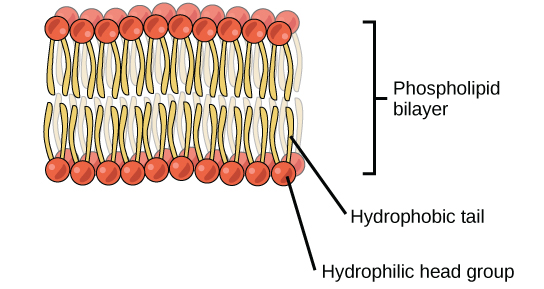
OpenStax · 18.3 Work in the United States ↗
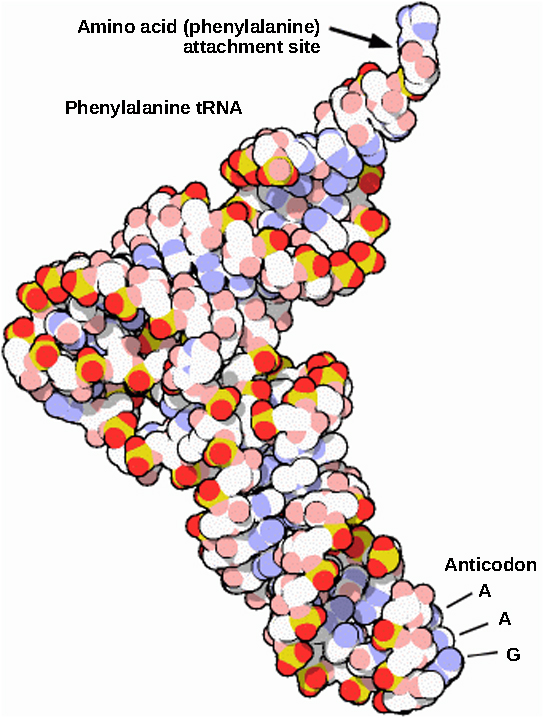
Instructional page including learning objectives, examples, figures, source tables and questions. Site navigation and embedded media players are omitted; source media links remain available.

Learning Objectives

By the end of this section, you should be able to:

  • Describe the current U.S. workforce and the trend of
  • Explain how women and immigrants have changed the modern U.S. workforce
  • Analyze the basic of poverty in the United States today
People attend a job fair. Several rows of tables are set up in a college gymnasium, and people walk between them and speak to each other.
Figure 18.10 — 18.3 Work in the United States
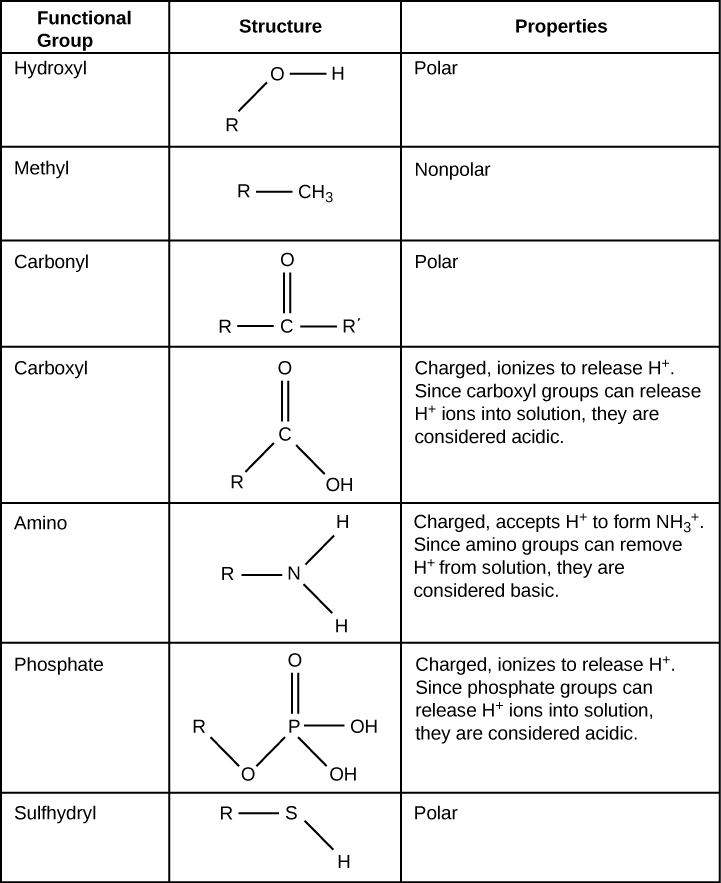
Figure 18.10 Many college students and others attend job fairs looking for their first job or for a better one. (Credit: COD Newsroom/flickr)

Tonja R. Conerly, Kathleen Holmes, and Asha Lal Tamang, Introduction Sociology 3E, OpenStax. · CC BY-NC-SA 4.0 · Original image ↗ · Access for free ↗

The American Dream has always been based on opportunity. There is a great deal of mythologizing about the energetic upstart who can climb to success based on hard work alone. Common wisdom states that if you study hard, develop good work habits, and graduate high school or, even better, college, then you'll have the opportunity to land a good job. That has long been seen as the key to a successful life. And although the reality has always been more complex than suggested by the myth, the worldwide recession that began in 2008 took its toll on the American Dream. During the recession, more than 8 million U.S. workers lost their jobs, and unemployment rates surpassed 10 percent on a national level. Today, while the recovery is still incomplete, many sectors of the economy are hiring, and unemployment rates have receded.

Sociology in the Real World

Real Money, Virtual Worlds

The cover of the video game World of Warcraft, including a green, fanged ogre, is shown here.
Figure 18.11 — 18.3 Work in the United States

Figure 18.11 In a virtual world, living the good life still costs real money. (Credit: Juan Pablo Amo/flickr)

Tonja R. Conerly, Kathleen Holmes, and Asha Lal Tamang, Introduction Sociology 3E, OpenStax. · CC BY-NC-SA 4.0 · Original image ↗ · Access for free ↗

If you are not one of the tens of millions gamers who enjoy World of Warcraft, Final Fantasy, Fortnite, Apex, or other online games, you might not know that for some people, these aren't just games: They're employment. The virtual world has been yielding very real profits for entrepreneurs who are able to buy, sell, and manage online real estate, currency, and more for cash (Holland and Ewalt 2006). If it seems strange that people would pay real money for imaginary goods, consider that for serious gamers the online world is of equal importance to the real one.

These entrepreneurs can sell items because the gaming sites have introduced scarcity into the virtual worlds. Scarcity of any resource, be it food, oil, gems, or virtual goods, drives supply and demand. When the supply is low, and demand is high, people are often willing to pay to get what they want. Even though the games offer enjoyment, scarcity builds tension and leads to a greater sense of satisfaction.

So how does it work? One of the ways to make such a living is by farming, gathering, or crafting certain resources, such as mining a particular ore or building a to sell. The buyers are those looking for a competitive edge or who simply don't want to spend their time on those tasks. Other methods include leveling, in which one person may pay another to play the game for them to acquire and in the game environment. As you may have read in the chapter on Media and Technology, an online presence can also pay dividends from advertisers or even directly from fans. Highly popular players stream their gameplay on Twitch and other services; others offer coaching, game guides, or reviews.

Then there is prize money or other compensation. Gaming tournaments may offer monetary awards to the winner. Finally, the growth of college and professional esports indicates that monetization and virtual/real-world crossovers are going to be continually lucrative in the form of sponsorship, prizes, and scholarships.

in the Workforce

The mix of jobs available in the United States began changing many years before the recession struck, and, as mentioned above, the American Dream has not always been easy to achieve. Geography, race, gender, and other factors have always played a role in the reality of success. More recently, the increased outsourcing—or contracting a job or set of jobs to an outside source—of manufacturing jobs to developing nations has greatly diminished the number of high-paying, often unionized, blue-collar positions available. A similar problem has arisen in the white-collar sector, with many low-level clerical and support positions also being outsourced, as evidenced by the international technical-support call centers in Mumbai, India, and Newfoundland, Canada. The number of supervisory and managerial positions has been reduced as companies streamline their command structures and industries continue to consolidate through mergers. Even highly educated skilled workers such as computer programmers have seen their jobs vanish overseas.

The automation of the workplace, which replaces workers with technology, is another cause of the changes in the job market. Computers can be programmed to do many routine tasks faster and less expensively than people who used to do such tasks. Jobs like bookkeeping, clerical work, and repetitive tasks on production assembly lines all lend themselves to automation. Envision your local supermarket’s self-scan checkout aisles. The automated cashiers affixed to the units take the place of paid employees. Now one cashier can oversee transactions at six or more self-scan aisles, which was a job that used to require one cashier per aisle.

Despite the ongoing economic recovery, the job market is actually growing in some areas, but in a very polarized fashion. means that a gap has developed in the job market, with most employment opportunities at the lowest and highest levels and few jobs for those with mid-level skills and education. At one end, there has been strong demand for low-skilled, low-paying jobs in industries like food service and retail. On the other end, some research shows that in certain fields there has been a steadily increasing demand for highly skilled and educated professionals, technologists, and managers. These high-skilled positions also tend to be highly paid (Autor 2010).

The that some positions are highly paid while others are not is an example of the class system, an economic hierarchy in which movement (both upward and downward) between various rungs of the socioeconomic is possible. Theoretically, at least, the class system as it is organized in the United States is an example of a , an economic system that rewards merit––typically in the form of skill and hard work––with upward mobility. A theorist working in the functionalist perspective might point out that this system is designed to reward hard work, which encourages people to strive for excellence in pursuit of reward. A theorist working in the conflict perspective might counter with the thought that hard work does not guarantee success even in a , because ––the accumulation of a network of social relationships and knowledge that will provide a platform from which to achieve financial success––in the form of connections or higher education are often required to access the high-paying jobs. Increasingly, we are realizing intelligence and hard work aren’t enough. If you lack knowledge of how to leverage the right names, connections, and players, you are unlikely to experience upward mobility.

With so many jobs being outsourced or eliminated by automation, what kind of jobs are there a demand for in the United States? While fishing and forestry jobs are in decline, in several markets jobs are increasing. These include community and social service, personal care and service, finance, computer and information services, and healthcare. The chart below, from the U.S. Bureau of Labor Statistics, illustrates areas of projected growth.

Eight bar graphs display the projected change in occupations. Healthcare support is 22.6 percent change. Community and social service occupations is 12.5 percent change. Computer and math is 12.1 percent change. Healthcare practitioners and technical operations is 9.1 percent change. Personal care is 7.7 percent change. Food preparation and serving is 7.3 percent change. Business and financial operations is 5.3 percent change. And total of all occupations is 3.7 percent change.
Figure 18.12 — 18.3 Work in the United States
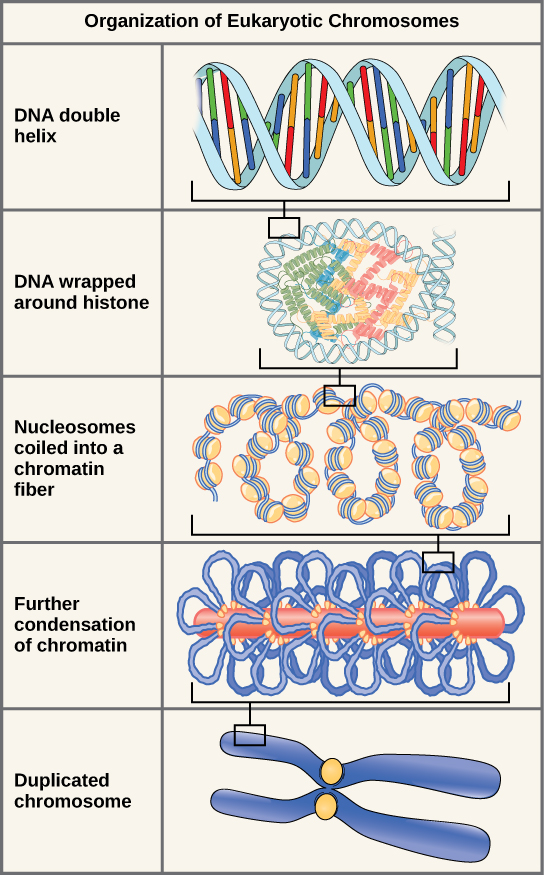
Figure 18.12 Projected Percent Change, by Selected Occupational Groups, 2019-29 — This chart shows the projected growth of several occupational groups. (Credit: Bureau of Labor Statistics)

Tonja R. Conerly, Kathleen Holmes, and Asha Lal Tamang, Introduction Sociology 3E, OpenStax. · CC BY-NC-SA 4.0 · Original image ↗ · Access for free ↗

Professions that typically require significant education and training and tend to be lucrative career choices. In particular, jobs that require some type of license or formal certification – be it healthcare, technology, or a trade – usually have a higher salary than those that do not. Service jobs, according to the Bureau of Labor Statistics, can include everything from jobs with the fire department to jobs scooping ice cream (Bureau of Labor Statistics 2019). There is a wide variety of training needed, and therefore an equally large wage potential discrepancy. One of the largest areas of growth by industry, rather than by occupational group (as seen above), is in the health field. This growth is across occupations, from associate-level nurse’s aides to management-level assisted-living staff. As baby boomers age, they are living longer than any generation before, and the growth of this population segment requires an increase in capacity throughout our country’s elder care system, from home healthcare nursing to geriatric nutrition.

Notably, jobs in farming are in decline. This is an area where those with less education traditionally could be assured of finding steady, if low-wage, work. With these jobs disappearing, more and more workers will find themselves untrained for the types of employment that are available.

Another projected trend in employment relates to the level of education and training required to gain and keep a job. As the chart below shows us, growth rates are higher for those with more education. Those with a professional degree or a master’s degree may expect job growth of 20 and 22 percent respectively, and jobs that require a bachelor’s degree are projected to grow 17 percent. At the other end of the , jobs that require a high school diploma or equivalent are projected to grow at only 12 percent, while jobs that require less than a high school diploma will grow 14 percent. Quite simply, without a degree, it will be more difficult to find a job. It is worth noting that these projections are based on overall growth across all occupation categories, so obviously there will be variations within different occupational areas. However, once again, those who are the least educated will be the ones least able to fulfill the American Dream.

Typical entry-level education Employment change,
2019–29 (percent)
Median annual wage, 2019(1)
Total, all occupations 3.7 $39,810
Doctoral or professional degree 5.9 $107,660
Master's degree 15.0 $76,180
Bachelor's degree 6.4 $75,440
Associate's degree 6.2 $54,940
Postsecondary nondegree award 5.6 $39,940
Some college, no degree -0.1 $36,790
High school diploma or equivalent 1.5 $37,930
No formal educational credential 3.3 $25,700
Table 18.2 More education means more jobs (generally) and a higher amount of compensation. (Credit: Bureau of Labor Statistics)

In the past, rising education levels in the United States had been able to keep pace with the rise in the number of education-dependent jobs. However, since the late 1970s, men have been enrolling in college at a lower rate than women, and graduating at a rate of almost 10 percent less. The lack of male candidates reaching the education levels needed for skilled positions has opened opportunities for women, minorities, and immigrants (Wang 2011).

Women in the Workforce

As discussed in the chapter introduction, women have been entering the workforce in ever-increasing numbers for several decades. They have also been finishing college and going on to earn higher degrees at higher rate than men do. This has resulted in many women being better positioned to obtain high-paying, high-skill jobs (Autor 2010).

While women are getting more and better jobs and their wages are rising more quickly than men's wages are, U.S. Census statistics show that they are still earning only 81 percent of what men are for the same positions (U.S. Census Bureau 2020).

Immigration and the Workforce

Simply put, people will move from where there are few or no jobs to places where there are jobs, unless something prevents them from doing so. The process of moving to a country is called immigration. Due to its reputation as the land of opportunity, the United States has long been the destination of all skill levels of workers. While the rate decreased somewhat during the economic slowdown of 2008, immigrants, both documented and undocumented, continue to be a major part of the U.S. workforce.

In 2005, before the recession arrived, immigrants made up a historic high of 14.7 percent of the workforce (Lowell et al. 2006). During the 1970s through 2000s, the United States experienced both an increase in college-educated immigrants and in immigrants who lacked a high school diploma. With this range across the , immigrants are well positioned for both the higher-paid jobs and the low-wage low-skill jobs that are predicted to grow in the next decade (Lowell et al. 2006). In the early 2000s, it certainly seemed that the United States was continuing to live up to its reputation of opportunity. But what about during the recession of 2008, when so many jobs were lost and unemployment hovered close to 10 percent? How did immigrant workers fare then?

The answer is that as of June 2009, when the National Bureau of Economic Research (NEBR) declared the recession officially over, “foreign-born workers gained 656,000 jobs while native-born workers lost 1.2 million jobs” (Kochhar 2010). As these numbers suggest, the unemployment rate that year decreased for immigrant workers and increased for native workers. The reasons for this trend are not entirely clear. Some Pew research suggests immigrants tend to have greater flexibility to move from job to job and that the immigrant population may have been early victims of the recession, and thus were quicker to rebound (Kochhar 2010). Regardless of the reasons, the 2009 job gains are far from enough to keep them inured from the country’s economic woes. Immigrant earnings are in decline, even as the number of jobs increases, and some theorize that increase in employment may come from a willingness to accept significantly lower wages and benefits.

While the political debate is often fueled by conversations about low-wage-earning immigrants, there are actually as many highly skilled––and high-earning––immigrant workers as well. Many immigrants are sponsored by their employers who claim they possess talents, education, and training that are in short supply in the U.S. These sponsored immigrants account for 15 percent of all legal immigrants (Batalova and Terrazas 2010). Interestingly, the U.S. population generally supports these high-level workers, believing they will help lead to economic growth and not be a drain on government services (Hainmueller and Hiscox 2010). On the other hand, undocumented immigrants tend to be trapped in extremely low-paying jobs in agriculture, service, and construction with few ways to improve their situation without risking exposure and deportation.

Poverty in the United States

When people lose their jobs during a recession or in a changing job market, it takes longer to find a new one, if they can find one at all. If they do, it is often at a much lower wage or not full time. This can force people into poverty. In the United States, we tend to have what is called , defined as being unable to live the lifestyle of the average person in your country. This must be contrasted with the that is frequently found in underdeveloped countries and defined as the inability, or near-inability, to afford basic necessities such as food (Byrns 2011).

We cannot even rely on unemployment statistics to provide a clear picture of total unemployment in the United States. First, unemployment statistics do not take into account underemployment, a state in which a person accepts a lower paying, lower status job than their education and experience qualifies them to perform. Second, unemployment statistics only count those:

  1. who are actively looking for work
  2. who have not earned income from a job in the past four weeks
  3. who are ready, willing, and able to work

The unemployment statistics provided by the U.S. government are rarely accurate, because many of the unemployed become discouraged and stop looking for work. Not only that, but these statistics undercount the youngest and oldest workers, the chronically unemployed (e.g., homeless), and seasonal and migrant workers.

A certain amount of unemployment is a direct result of the relative inflexibility of the labor market, considered structural unemployment, which describes when there is a societal level of disjuncture between people seeking jobs and the available jobs. This can be geographic (they are hiring in one area, but most unemployed live somewhere else), technological (workers are replaced by machines, as in the auto industry), educational (a lack of specific knowledge or skills among the workforce) or can result from any sudden change in the types of jobs people are seeking versus the types of companies that are hiring.

Because of the high standard of living in the United States, many people are working at full-time jobs but are still poor by the of . They are the working poor. The United States has a higher percentage of working poor than many other developed countries (Brady, Fullerton and Cross 2010). In terms of employment, the Bureau of Labor Statistics defines the working poor as those who have spent at least 27 weeks working or looking for work, and yet remain below the poverty line. Many of the facts about the working poor are as expected: Those who work only part time are more likely to be classified as working poor than those with full-time employment; higher levels of education lead to less likelihood of being among the working poor; and those with children under 18 are four times more likely than those without children to fall into this category. In 2009, the working poor included 10.4 million Americans, up almost 17 percent from 2008 (U.S. Bureau of Labor Statistics 2011).

Graph depicting the working poverty vs. non-working poverty rates, distributed by country.
Figure 18.13 — 18.3 Work in the United States
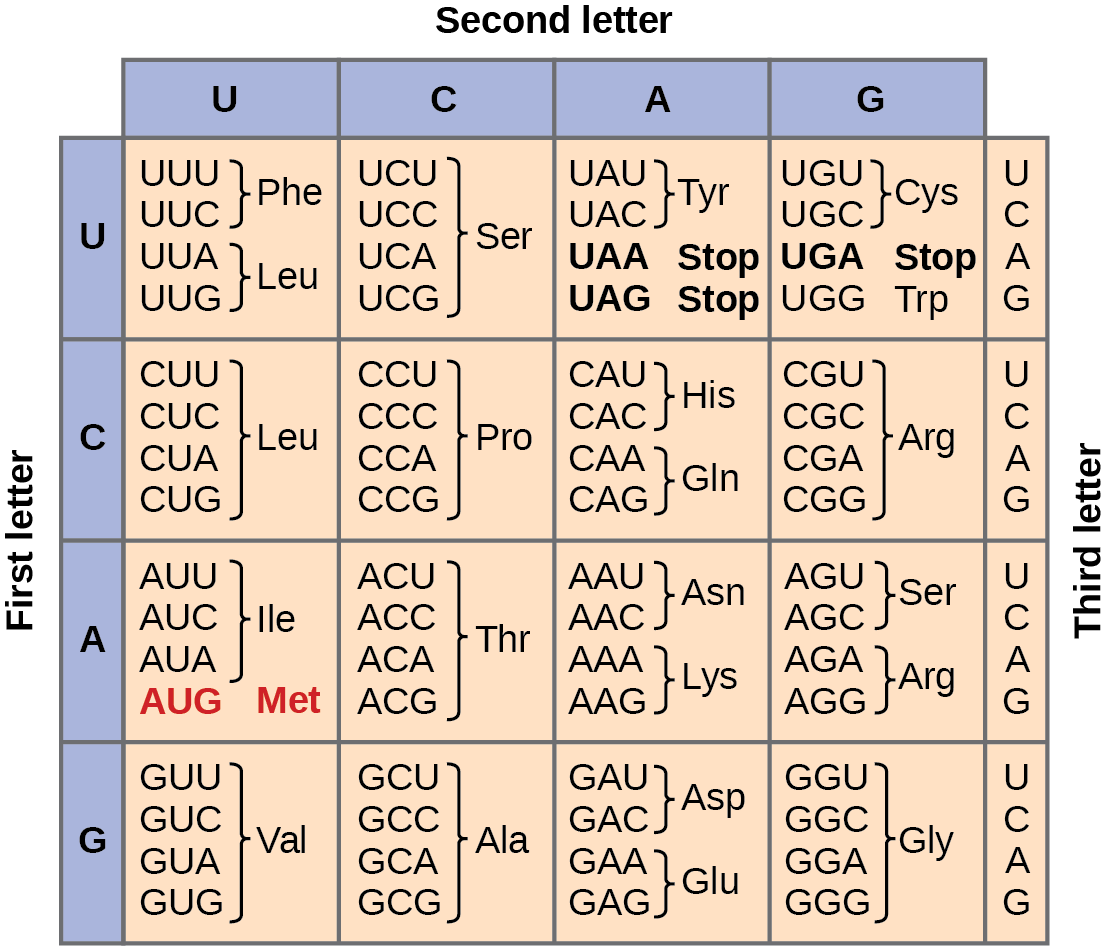
Figure 18.13 Working Poverty vs. Nonworking Poverty Rates, Circa 2000 — A higher percentage of the people living in poverty in the United States have jobs compared to other developed nations.

Tonja R. Conerly, Kathleen Holmes, and Asha Lal Tamang, Introduction Sociology 3E, OpenStax. · CC BY-NC-SA 4.0 · Original image ↗ · Access for free ↗
A map of the United States shows the percentage of people in poverty by state. New Mexico, Oklahoma, Arkansas, Louisiana, Mississippi, Alabama, Kentucky, and West Virginia have 15 percent or more people living in poverty. Nevada, Arizona, Montana, Texas, Missouri, Michigan, Ohio, Florida, Georgia, Pennsylvania, and New York have 12 percent to 14.9 percent living in poverty. California, Oregon, Idaho, South Dakota, Illinois, Indiana had 11 percent of people living in poverty. Utah, Colorado, Minnesota, New Hampshire, New Jersey, and Massachusetts have less than 9.5 percent living in poverty.
Figure 18.14 — 18.3 Work in the United States

Figure 18.14 Poverty rates vary by states and region. As you can see, areas with the highest level of poverty are relaively tightly clustered, but the second-highest rates of poverty occur in states across the nation, from Nevada and Arizona in the Southwest to New York in the Northeast. (Credit: U.S. Census Bureau)

Tonja R. Conerly, Kathleen Holmes, and Asha Lal Tamang, Introduction Sociology 3E, OpenStax. · CC BY-NC-SA 4.0 · Original image ↗ · Access for free ↗

Most developed countries protect their citizens from by providing different levels of social services such as unemployment insurance, welfare, food assistance, and so on. They may also provide job training and retraining so that people can reenter the job market. In the past, the elderly were particularly vulnerable to falling into poverty after they stopped working; however, pensions, retirement plans, and Social Security were designed to help prevent this. A major concern in the United States is the rising number of young people growing up in poverty. Growing up poor can cut off access to the education and services people need to move out of poverty and into stable employment. As we saw, more education was often a key to stability, and those raised in poverty are the ones least able to find well-paying work, perpetuating a cycle.

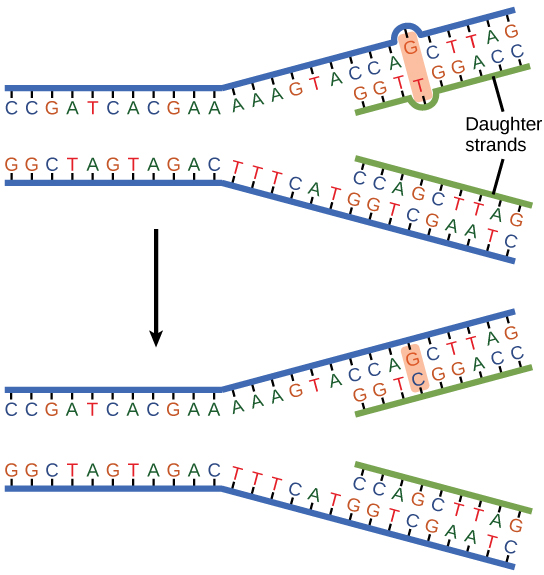
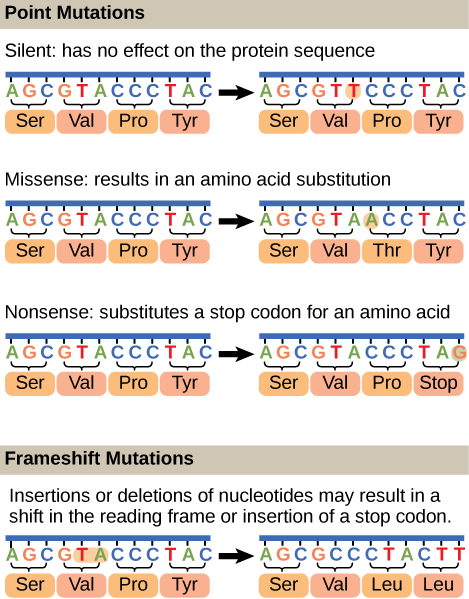
Another notion important to sociologists and citizens is the expense of being poor. In a practical sense, people with more money on hand, better credit, a more stable income, and reliable insurance can purchase items or services in different ways than people who lack those things. For example, someone with a higher income can pay bills more reliably, as well as have more credit extended to them through credit cards or loans. When it comes time for those people to purchase a car, for example, they can likely negotiate a lower monthly payment or less money down. In an even more simplistic situation, people with more spending money can buy groceries in bulk, spending far less per unit than those who must purchase smaller portions. The single greatest expense for most adults is housing; beyond its significant portion of a family's expenses, housing drives many other costs, such as transportation (how close does someone live to the places they need to go), childcare, and other areas. And people in poverty pay significantly more for their housing than others – sometimes 70-80 percent of their total income. Those with fewer resources are also more likely to rent rather than own, so they do not build credit in the same way, nor do they have the opportunity to sell the property later and utilize their equity (Nobles 2019).

The ways that governments, organizations, individuals, and society as a whole help the poor are matters of significant debate, informed by extensive study. Sociologists and other professionals contribute to these conversations and provide evidence of the impacts of these circumstances and interventions to change them. The decisions made on these issues have a profound effect on working in the United States.