Culture comprises learned and shared meanings, practices, and artifacts.
Distinguish beliefs, symbols, language, rituals, values, and material versus symbolic culture
Culture comprises learned and shared meanings, practices, and artifacts. Beliefs are propositions people accept as true; values are standards of what is desirable; norms specify expected behavior. Symbols carry socially recognized meaning, and language provides a generative symbolic system for communication and transmission. Rituals are patterned meaningful actions, whether religious or secular. Material culture includes objects and technologies, while nonmaterial or symbolic culture includes meanings, rules, and ideals. A white coat is material, but the authority attributed to it is symbolic. Shared culture does not mean complete agreement: groups debate meanings and individuals participate in overlapping cultural settings.
Culture lag occurs when some cultural elements, often institutions or norms, adapt more slowly than technological change. Culture shock is disorientation in an unfamiliar setting. Assimilation involves adopting aspects of a dominant or receiving culture, while multiculturalism recognizes coexistence of distinct cultural traditions. Acculturation describes change through contact and need not eliminate prior identity. A subculture shares distinctive practices within a broader society; a counterculture actively challenges dominant values. These categories overlap and change over time. Cultural difference alone does not establish conflict, and a group’s public symbols may not reveal the meanings held by all members.
Relate mass media, popular culture, diffusion, transmission, and evolutionary influences to cultural change
Cultural transmission occurs through teaching, imitation, stories, institutions, and repeated practice. Diffusion spreads elements between groups; innovation introduces new practices or recombines existing ones. Mass media can amplify popular culture and shape agendas, while audiences interpret messages actively. Global communication can promote homogenization, hybrid forms, or renewed local identities. Evolutionary approaches examine how learning biases and social transmission affect the persistence of practices, but cultural success is not identical to biological fitness or moral superiority. Access to communication technologies and control of media influence whose ideas spread, so diffusion cannot be explained by attractiveness alone.
Worked question. A hospital adopts telemedicine rapidly, but reimbursement rules and privacy expectations change slowly. Which concept applies? If patients blend new technology with established community practices, must that be complete assimilation?
The mismatch between technology and slower institutional adaptation illustrates culture lag. Combining practices can reflect acculturation or cultural hybridization without complete assimilation. Study actual meanings and use rather than inferring cultural replacement from adoption of one device.
Figure 3.3 Experiencing an entirely new practice may lead to a high degree of interest or a level of criticism. The Indegenous people of Sagada, in the Philippines, have for thousands of years placed the bodies of deceased people into coffins hung on the cliffs near their villages. Some visitors may find this practice admirable, while others may think it’s inappropriate. (Credit: Arian Zwegers/flickr)
Figure 3.5 In many parts of Africa and the Middle East, it is considered normal for men to hold hands in friendship. How would US citizens react to these two soldiers? (Credit: Geordie Mott/Wikimedia Commons)
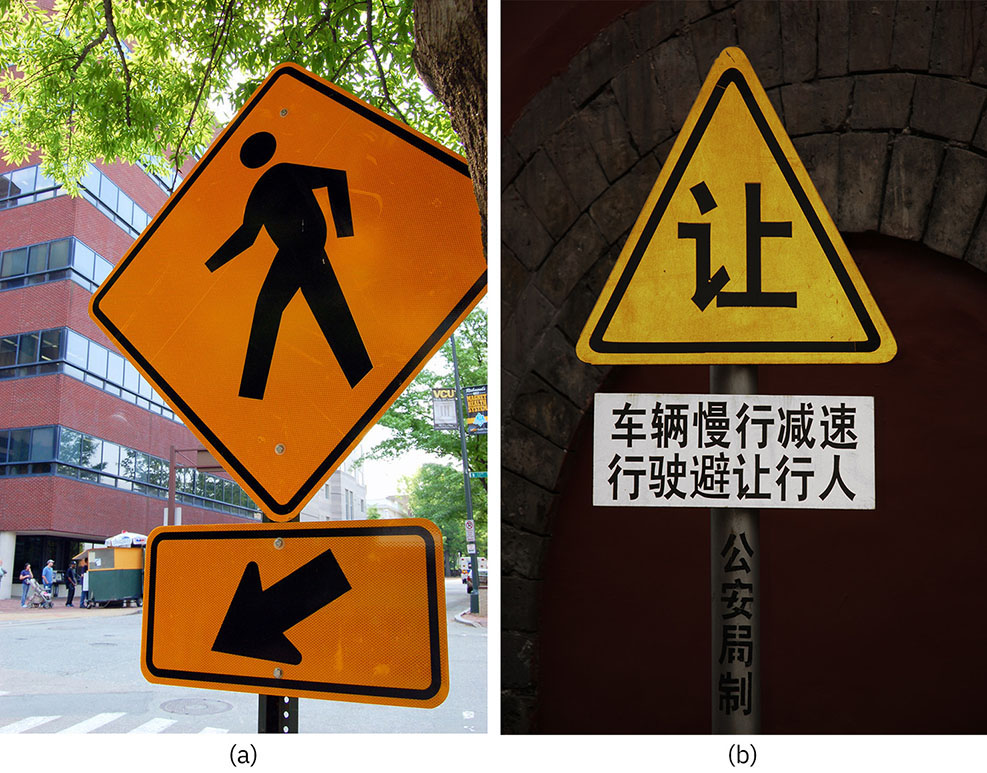
Figure 3.6 Some road signs are universal. But how would you interpret the signage on the right? (Credit: (a) Andrew Bain/flickr; (b) HonzaSoukup/flickr)
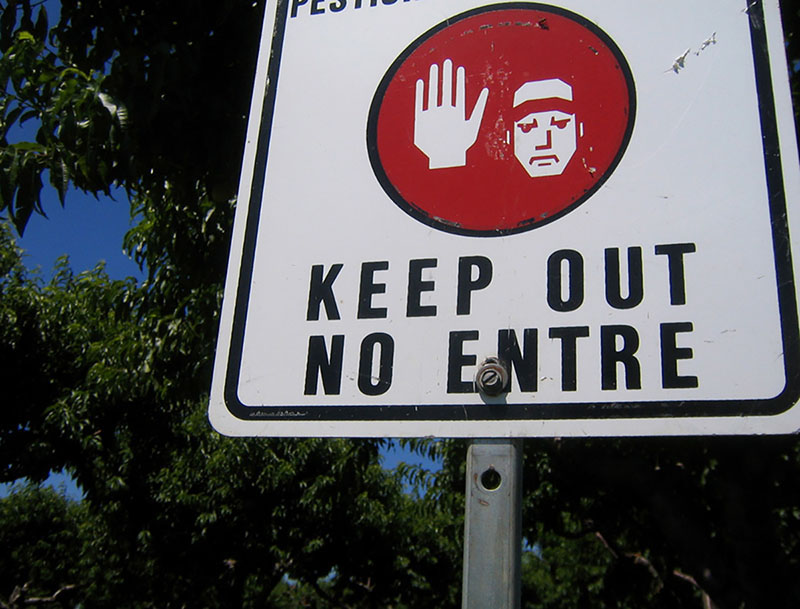
Figure 3.7 Many signs—on streets and in stores—include both English and Spanish. What effect does this have on members of society? What effect does it have on our culture? (Credit: istolethetv/flickr)
3.3 High, Low, Pop, Sub, Counter-culture and Cultural Change — figures and tables
Figure 3.8 — 3.3 High, Low, Pop, Sub, Counter-culture and Cultural Change
Figure 3.8 Cosplayers are a distinct subculture (a smaller cultural group within the larger culture) in the United States. And within the larger subculture are subgroups, such as this one emulating D.C. Comics characters. (Credit: Pat Loika)
Tonja R. Conerly, Kathleen Holmes, and Asha Lal Tamang, Introduction Sociology 3E, OpenStax. · CC BY-NC-SA 4.0
· Original image ↗ · Access for free ↗Figure 3.9 — 3.3 High, Low, Pop, Sub, Counter-culture and Cultural Change
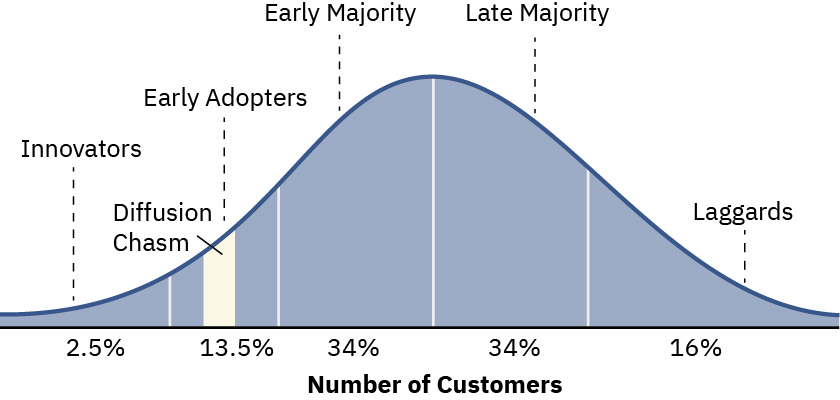
Figure 3.9 Technology Adoption Lifecycle — Sociologist Everett Rogers (1962) developed a model of the diffusion of innovations. As consumers gradually adopt a new innovation, the item grows toward 100 percent usage, or complete saturation within a society. This graph is frequently used in business, sales, technology, and cultural innovations. It can be used to describe how quickly different groups adopt (or begin using) a new technology or a new slang word, but note it is just a framework: not every innovation follows this exact pattern, but it provides a good foundation for discussion and prediction. (Graph attribution: Copyright Rice University, OpenStax, under CC BY NC-SA 4.0 license)
Tonja R. Conerly, Kathleen Holmes, and Asha Lal Tamang, Introduction Sociology 3E, OpenStax. · CC BY-NC-SA 4.0
· Original image ↗ · Access for free ↗Figure 3.10 — 3.3 High, Low, Pop, Sub, Counter-culture and Cultural Change
Figure 3.10 Officially patented in 1893 as the “clasp locker” (left), the zipper did not diffuse through society for many decades. Today, it is immediately recognizable around the world. (Credit: (a) US Patent Office/Wikimedia Commons; (b) Rabensteiner/Wikimedia Commons).
Figure 8.2 Throughout history, technology has been used to convey information. From petroglyphs near a Native American dwelling at Canyon de Chelly to warning signs outside of animal pens, our innovations have been used to provide the most effective delivery possible. (Credit: a: Anthony Quintano/flickr; b: tenioman/flickr)
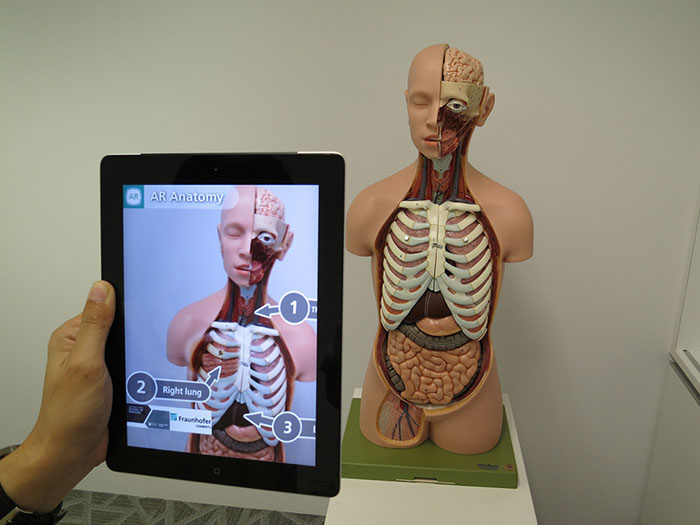
Figure 8.3 Augmented reality devices, robotics and 3D printing labs, and creatorspaces can significantly improve education. But due to their expense, they can also increase learning inequities.
8.3 Global Implications of Media and Technology — figures and tables
Figure 8.8 — 8.3 Global Implications of Media and Technology
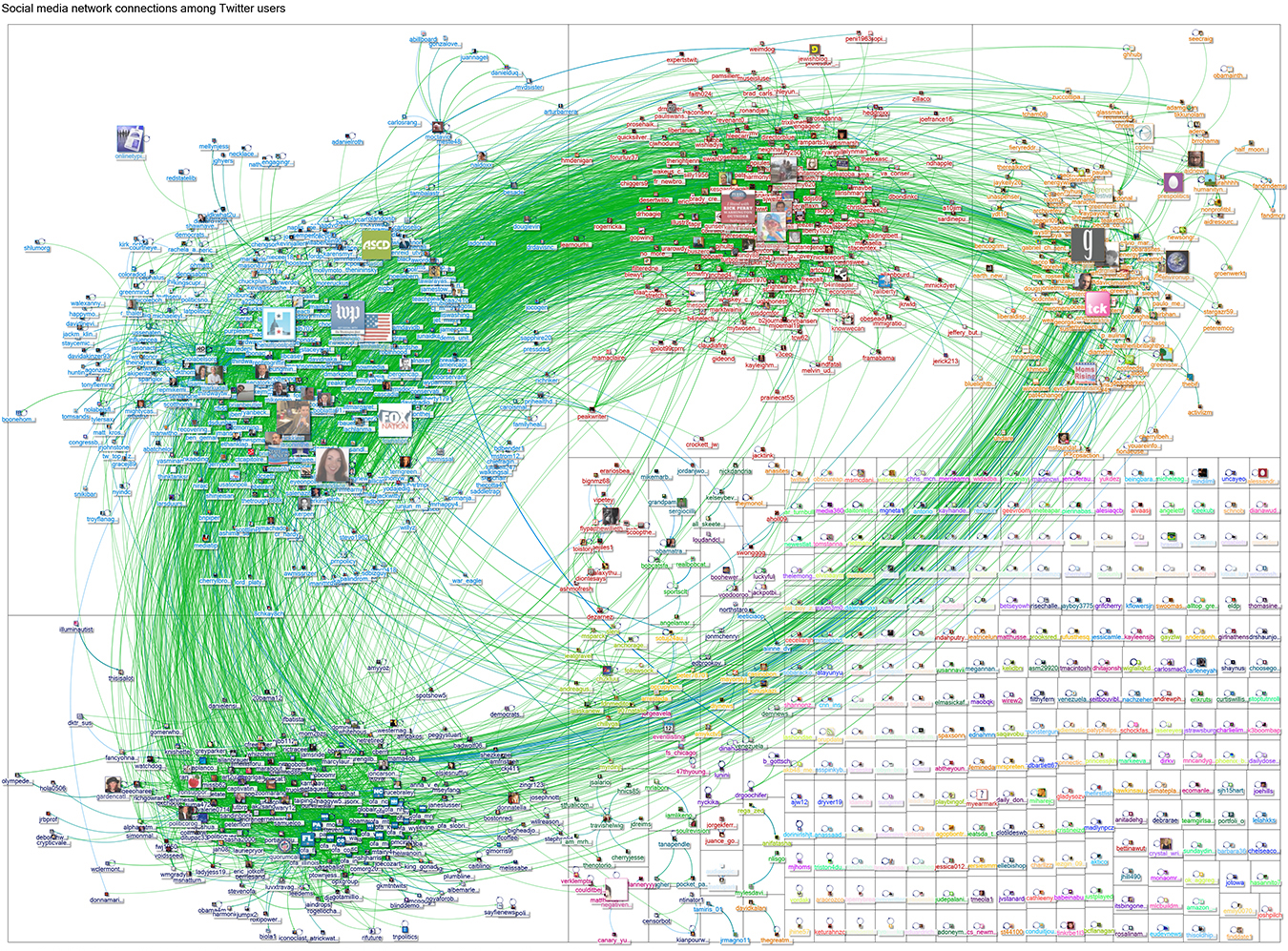
Figure 8.8 This graphic indicates the connections among people who tweeted or replied about the State of the Union address. Green lines indicate people who follow each other on the platform. (Credit Marc Smith/flickr)
Tonja R. Conerly, Kathleen Holmes, and Asha Lal Tamang, Introduction Sociology 3E, OpenStax. · CC BY-NC-SA 4.0
· Original image ↗ · Access for free ↗Figure 8.9 — 8.3 Global Implications of Media and Technology
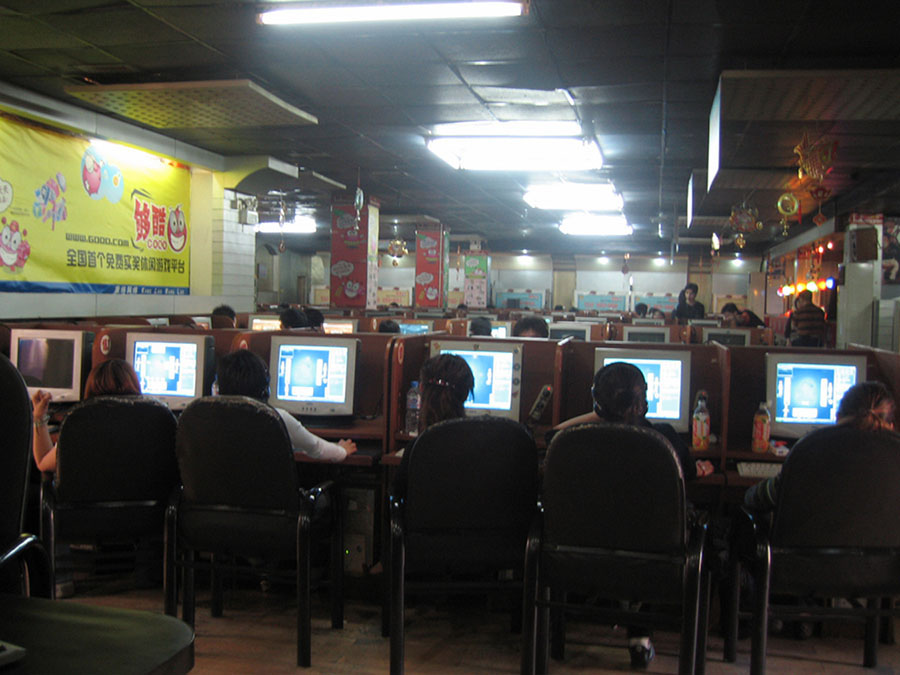
Figure 8.9 What information is accessible to these patrons of an internet café in China? What is censored from their view? (Credit: Kai Hendry/flickr)
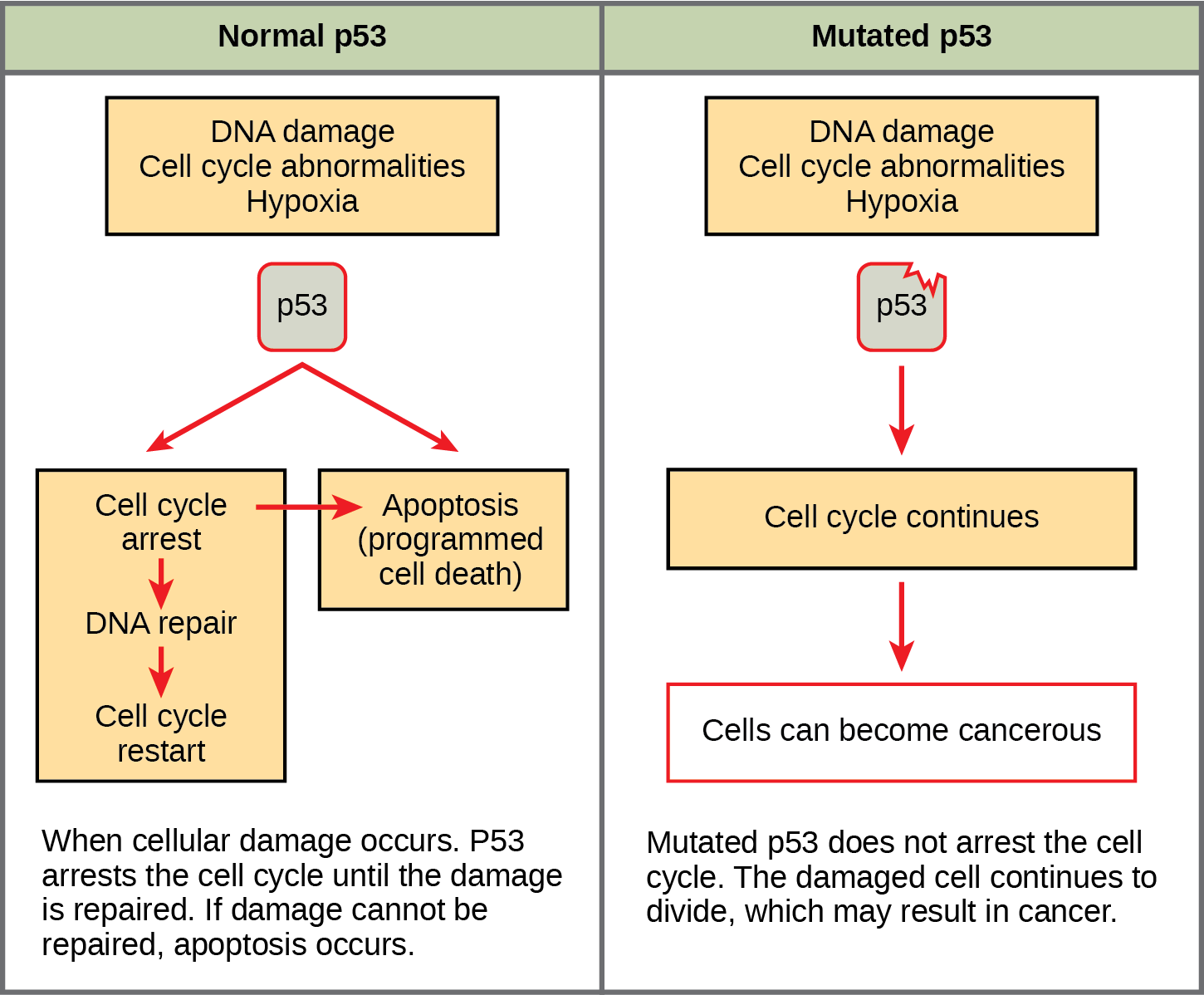
Figure 10.16 The role of normal p53 is to monitor DNA and the supply of oxygen (hypoxia is a condition of reduced oxygen supply). If damage is detected, p53 triggers repair mechanisms. If repairs are unsuccessful, p53 signals apoptosis. A cell with an abnormal p53 protein cannot repair damaged DNA and thus cannot signal apoptosis. Cells with abnormal p53 can become cancerous. (credit: modification of work by Thierry Soussi)
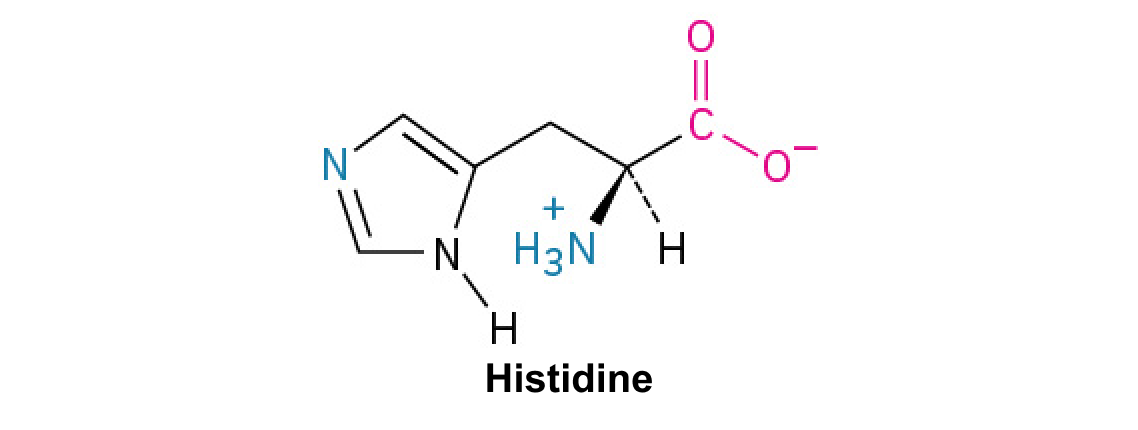
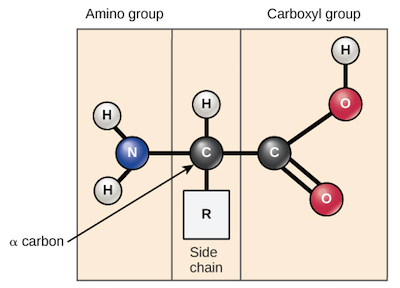
A nitrogen-containing functional group. A free amino acid’s amino group is typically protonated (NH₃⁺) near physiological pH; proline’s ring nitrogen is an exception to this formula.
Figure 15.14 This is a space-filling model of a tRNA molecule that adds the amino acid phenylalanine to a growing polypeptide chain. The anticodon AAG binds the Codon UUC on the mRNA. The amino acid phenylalanine is attached to the other end of the tRNA.
Figure 15.4 This figure shows the genetic code for translating each nucleotide triplet in mRNA into an amino acid or a termination signal in a protein. (credit: modification of work by NIH)
Figure 12.4 In the P generation, pea plants that are true-breeding for the dominant yellow phenotype are crossed with plants with the recessive green phenotype. This cross produces F 1 heterozygotes with a yellow phenotype. Punnett square analysis can be used to predict the genotypes of the F 2 generation.
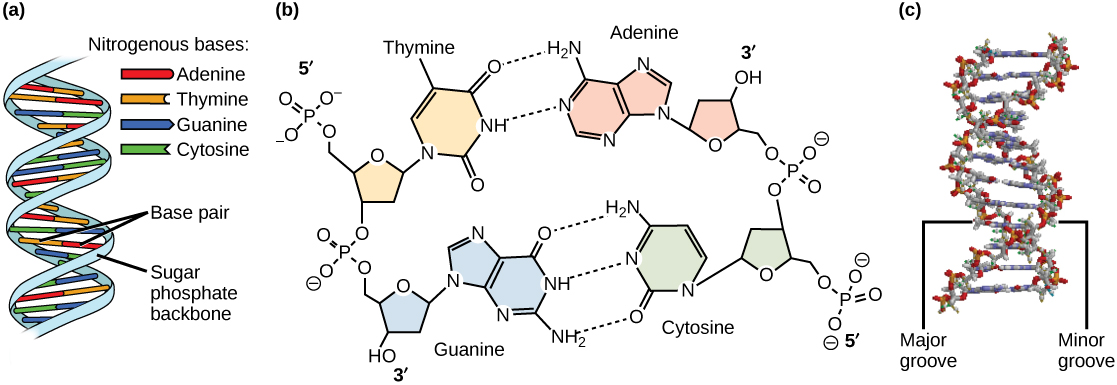
Figure 14.7 DNA has (a) a double helix structure and (b) phosphodiester bonds; the dotted lines between Thymine and Adenine and Guanine and Cytosine represent hydrogen bonds. The (c) major and minor grooves are binding sites for DNA binding proteins during processes such as transcription (the copying of RNA from DNA) and replication.
An electrical property that can be positive or negative. Opposite charges attract and like charges repel; net charge is the sum of all charges on a particle.
Figure 15.10 A generalized promoter of a gene transcribed by RNA polymerase II is shown. Transcription factors recognize the promoter. RNA polymerase II then binds and forms the transcription initiation complex.
Figure 12.4 In the P generation, pea plants that are true-breeding for the dominant yellow phenotype are crossed with plants with the recessive green phenotype. This cross produces F 1 heterozygotes with a yellow phenotype. Punnett square analysis can be used to predict the genotypes of the F 2 generation.
Figure 12.4 In the P generation, pea plants that are true-breeding for the dominant yellow phenotype are crossed with plants with the recessive green phenotype. This cross produces F 1 heterozygotes with a yellow phenotype. Punnett square analysis can be used to predict the genotypes of the F 2 generation.
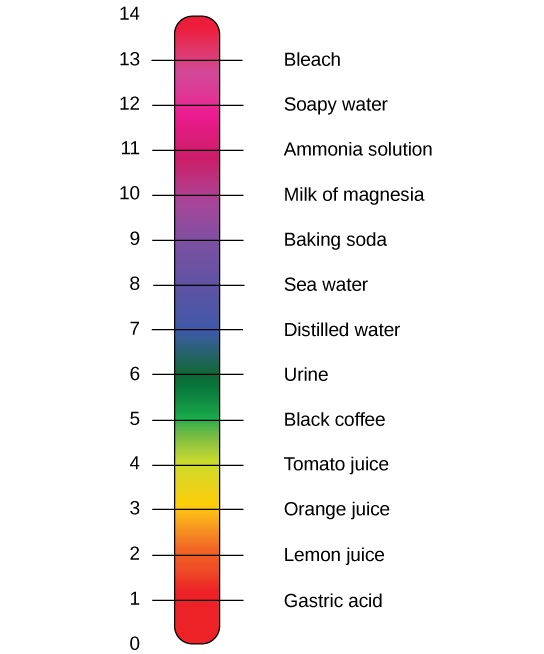
The exponent needed to obtain a number from a chosen fixed number. For decimal logarithms, log₁₀(100) = 2 because 10² = 100; pH uses the negative decimal logarithm of hydrogen ion activity.
A thin boundary or sheet. Cell membranes are lipid bilayers containing proteins; blotting membranes are synthetic supports that hold proteins or nucleic acids for detection.
Figure 15.11 Eukaryotic pre-mRNA processing. In addition to 5’ Cap and 3’ Poly-A Tail addition, introns must be precisely removed and exons joined to generate a functional mRNA. Nucleotides upstream (towards the 5’cap) of the translation START codon are part of the 5’ untranslated region (5’ UTR). Nucleotides downstream (towards 3’end) of the STOP codon form the 3’ UTR. Both 5’ and 3’ UTRs are important for regulating translation initiation and mRNA stability. Credit: Rao, A., Ryan, K. Fletcher, S. and Tag, A. Department of Biology, Texas A&M University.
Rao, A., Ryan, K. Fletcher, S. and Tag, A. Department of Biology, Texas A&M University.; Mary Ann Clark, Matthew Douglas, and Jung Choi, Biology 2e, OpenStax. · CC BY-NC-SA 4.0
· Original image ↗ · Access for free ↗
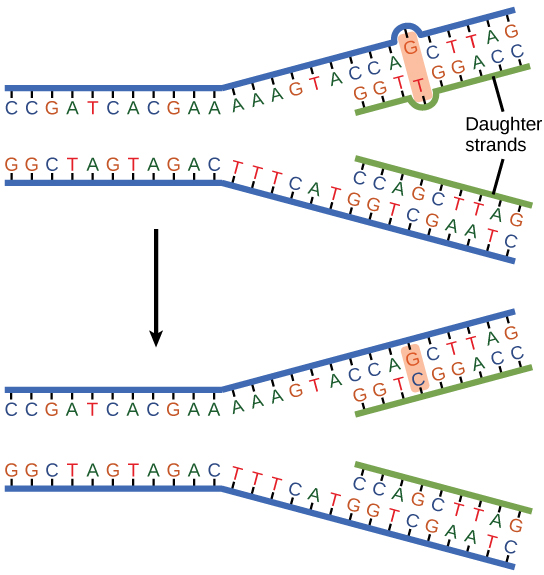
Figure 14.18 In mismatch repair, the incorrectly added base is detected after replication. The mismatch repair proteins detect this base and remove it from the newly synthesized strand by nuclease action. The gap is now filled with the correctly paired base.
Figure 12.4 In the P generation, pea plants that are true-breeding for the dominant yellow phenotype are crossed with plants with the recessive green phenotype. This cross produces F 1 heterozygotes with a yellow phenotype. Punnett square analysis can be used to predict the genotypes of the F 2 generation.
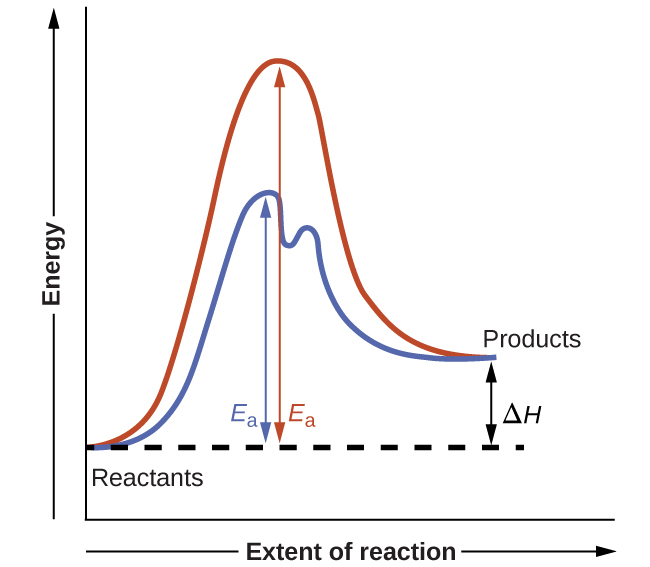
Figure 12.19 Reaction diagrams for an endothermic process in the absence (red curve) and presence (blue curve) of a catalyst. The catalyzed pathway involves a two-step mechanism (note the presence of two transition states) and an intermediate species (represented by the valley between the two transitions states).
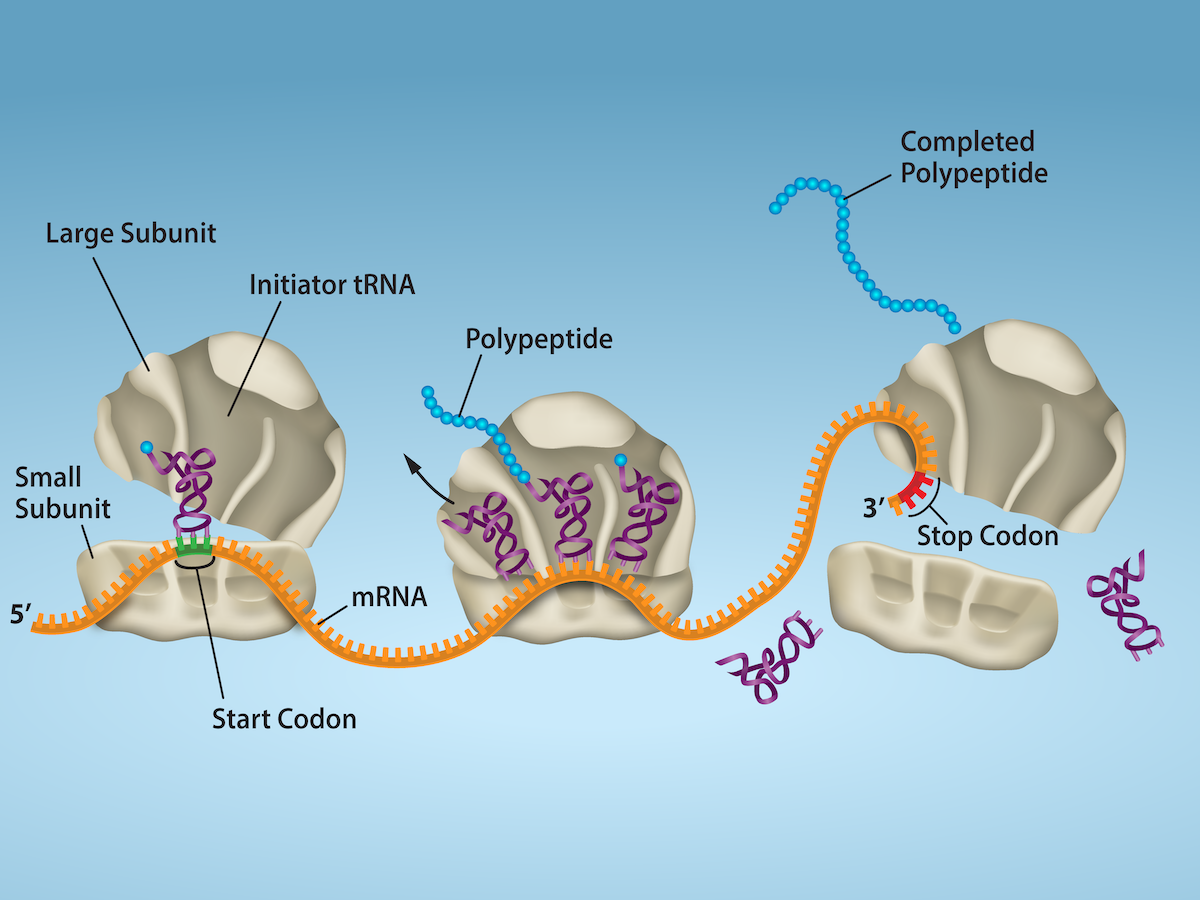
Figure 15.19 Translation Termination is Active. Translation is terminated when a STOP codon is in the A-site of the ribosome. Since there are no tRNAs corresponding to the STOP codons, the Release Factor protein enters and catalyzes the hydrolysis between the last amino acid and its tRNA. This hydrolysis releases the free carboxyl terminus (C-term) of the protein. Additional factors use the energy in GTP hydrolysis to disassemble the large and small ribosomal subunits and mRNA. Credit: Rao, A. and Ryan, K. Department of Biology, Texas A&M University.
Rao, A. and Ryan, K. Department of Biology, Texas A&M University.; Mary Ann Clark, Matthew Douglas, and Jung Choi, Biology 2e, OpenStax. · CC BY-NC-SA 4.0
· Original image ↗ · Access for free ↗
A gene with a readily measured product used to study regulation; reporter output can depend on RNA synthesis, RNA decay, translation, and protein behavior.
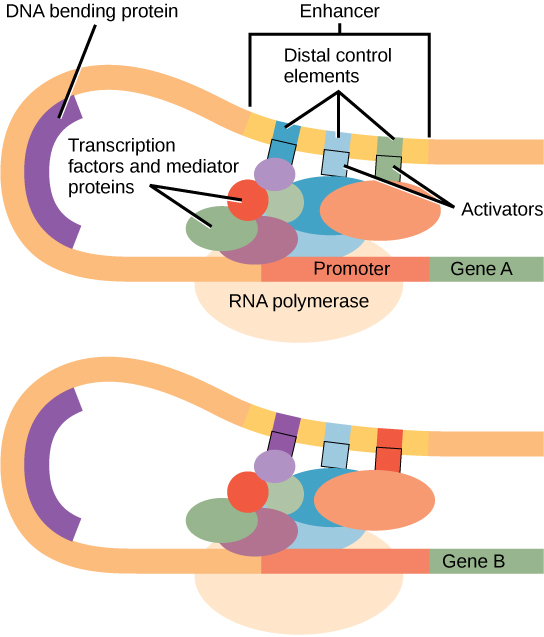
Figure 16.10 Interaction between proteins at the promoter and enhancer sites. An enhancer is a DNA sequence that promotes transcription. Each enhancer is made up of short DNA sequences called distal control elements. Activators bound to the distal control elements interact with mediator proteins and transcription factors. Two different genes may have the same promoter but different distal control elements, enabling differential gene expression.
Figure 7.45 - Non-homologous end joining (left) versus homologous recombination (right) - Wikipedia
Wikipedia, as credited by Kevin Ahern, Indira Rajagopal, and Taralyn Tan, Biochemistry Free For All, Oregon State University, via Biology LibreTexts. · Source attribution
· Original image ↗ · Access for free ↗
The amount of a substance that can dissolve in a solvent under specified conditions. Soluble means able to dissolve; insoluble means only very slightly soluble in that solvent.
Figure 15.4 This figure shows the genetic code for translating each nucleotide triplet in mRNA into an amino acid or a termination signal in a protein. (credit: modification of work by NIH)
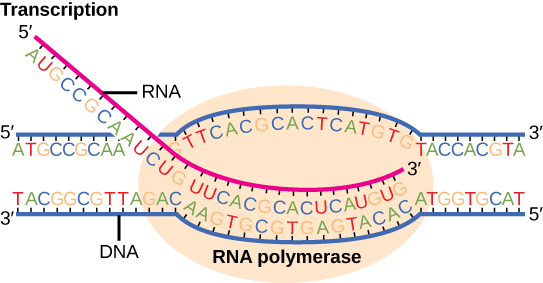
Figure 15.7 Messenger RNA is a copy of protein-coding information in the coding strand of DNA, with the substitution of U in the RNA for T in the coding sequence. However, new RNA nucleotides base pair with the nucleotides of the template strand. RNA is synthesized in its 5'-3' direction, using the enzyme RNA polymerase. As the template is read, the DNA unwinds ahead of the polymerase and then rewinds behind it.
Figure 15.14 This is a space-filling model of a tRNA molecule that adds the amino acid phenylalanine to a growing polypeptide chain. The anticodon AAG binds the Codon UUC on the mRNA. The amino acid phenylalanine is attached to the other end of the tRNA.
A fleeting, high-energy arrangement at a reaction barrier. It is an energy maximum along the reaction path, rather than a stable reaction intermediate.
Figure 12.19 Reaction diagrams for an endothermic process in the absence (red curve) and presence (blue curve) of a catalyst. The catalyzed pathway involves a two-step mechanism (note the presence of two transition states) and an intermediate species (represented by the valley between the two transitions states).
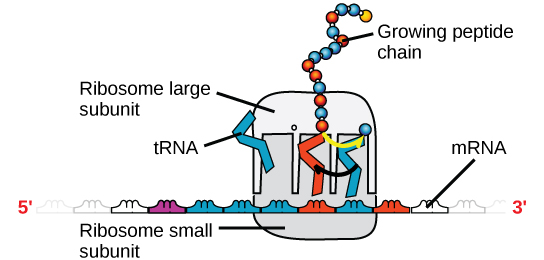
Figure 15.18 Translation begins when an initiator tRNA anticodon recognizes a start codon on mRNA bound to a small ribosomal subunit. The large ribosomal subunit joins the small subunit, and a second tRNA is recruited. As the mRNA moves relative to the ribosome, successive tRNAs move through the ribosome and the polypeptide chain is formed. Entry of a release factor into the A site terminates translation and the components dissociate.
No matching terms. Try a different name or abbreviation.
3.1 What Is Culture?
OpenStax · 3.1 What Is Culture? ↗ Instructional page including learning objectives, examples, figures, source tables and questions. Site navigation and embedded media players are omitted; source media links remain available.
Learning Objectives
By the end of this section, you should be able to:
Humans are social creatures. According to Smithsonian Institution research, humans have been forming groups for almost 3 million years in order to survive. Living together, people formed common habits and behaviors, from specific methods of childrearing to preferred techniques for obtaining food.
Almost every human behavior, from shopping to marriage, is learned. In the U.S., marriage is generally seen as an individual choice made by two adults, based on mutual feelings of love. In other nations and in other times, marriages have been arranged through an intricate process of interviews and negotiations between entire families. In Papua New Guinea, almost 30 percent of women marry before the age of 18, and 8 percent of men have more than one wife (National Statistical Office, 2019). To people who are not from such a culture, arranged marriages may seem to have risks of incompatibility or the absence of romantic love. But many people from cultures where marriages are arranged, which includes a number of highly populated and modern countries, often prefer the approach because it reduces stress and increases stability (Jankowiak 2021).
Being familiar with unwritten rules helps people feel secure and at ease. Knowing to look left instead of right for oncoming traffic while crossing the street can help avoid serious injury and even death. Knowing unwritten rules is also fundamental in understanding humor in different cultures. Humor is common to all societies, but what makes something funny is not. Americans may laugh at a scene in which an actor falls; in other cultures, falling is never funny. Most people want to live their daily lives confident that their behaviors will not be challenged or disrupted. But even an action as seemingly simple as commuting to work evidences a great deal of cultural propriety, that is, there are a lot of expected behaviors. And many interpretations of them.
Take the case of going to work on public transportation. Whether people are commuting in Egypt, Ireland, India, Japan, or the U.S., many behaviors will be the same and may reveal patterns. Others will be different. In many societies that enjoy public transportation, a passenger will find a marked bus stop or station, wait for the bus or train, pay an agent before or after boarding, and quietly take a seat if one is available. But when boarding a bus in Cairo, Egypt, passengers might board while the bus is moving, because buses often do not come to a full stop to take on patrons. In Dublin, Ireland, bus riders would be expected to extend an arm to indicate that they want the bus to stop for them. And when boarding a commuter train in Mumbai, India, passengers must squeeze into overstuffed cars amid a lot of pushing and shoving on the crowded platforms. That kind of behavior might be considered rude in other societies, but in Mumbai it reflects the daily challenges of getting around on a train system that is taxed to capacity.
Culture can be material or nonmaterial. Metro passes and bus tokens are part of material culture, as are the buses, subway cars, and the physical structures of the bus stop. Think of material culture as items you can touch-they are tangible. Nonmaterial culture, in contrast, consists of the ideas, attitudes, and beliefs of a society. These are things you cannot touch. They are intangible. You may believe that a line should be formed to enter the subway car or that other passengers should not stand so close to you. Those beliefs are intangible because they do not have physical properties and can be touched.
Material and nonmaterial aspects of culture are linked, and physical objects often symbolize cultural ideas. A metro pass is a material object, but it represents a form of nonmaterial culture, namely, capitalism, and the acceptance of paying for transportation. Clothing, hairstyles, and jewelry are part of material culture, but the appropriateness of wearing certain clothing for specific events reflects nonmaterial culture. A school building belongs to material culture symbolizing education, but the teaching methods and educational standards are part of education’s nonmaterial culture.
As people travel from different regions to entirely different parts of the world, certain material and nonmaterial aspects of culture become dramatically unfamiliar. What happens when we encounter different cultures? As we interact with cultures other than our own, we become more aware of the differences and commonalities between others and our own. If we keep our sociological imagination awake, we can begin to understand and accept the differences. Body language and hand gestures vary around the world, but some body language seems to be shared across cultures: When someone arrives home later than permitted, a parent or guardian meeting them at the door with crossed arms and a frown on their face means the same in Russia as it does in the U.S. as it does in Ghana.
Cultural Universals
Although cultures vary, they also share common elements. Cultural universals are patterns or traits that are globally common to all societies. One example of a cultural universal is the family unit: every human society recognizes a family structure that regulates sexual reproduction and the care of children. Even so, how that family unit is defined and how it functions vary. In many Asian cultures, for example, family members from all generations commonly live together in one household. In these cultures, young adults continue to live in the extended household family structure until they marry and join their spouse’s household, or they may remain and raise their nuclear family within the extended family’s homestead. In the U.S., by contrast, individuals are expected to leave home and live independently for a period before forming a family unit that consists of parents and their offspring. Other cultural universals include customs like funeral rites, weddings, and celebrations of births. However, each culture may view and conduct the ceremonies quite differently.
Anthropologist George Murdock first investigated the existence of cultural universals while studying systems of kinship around the world. Murdock found that cultural universals often revolve around basic human survival, such as finding food, clothing, and shelter, or around shared human experiences, such as birth and death or illness and healing. Through his research, Murdock identified other universals including language, the concept of personal names, and, interestingly, jokes. Humor seems to be a universal way to release tensions and create a sense of unity among people (Murdock, 1949). Sociologists consider humor necessary to human interaction because it helps individuals navigate otherwise tense situations.
Sociological Research
Is Music a Cultural Universal?
Imagine that you are sitting in a theater, watching a film. The movie opens with the protagonist sitting on a park bench with a grim expression on their face. The music starts to come in. The first slow and mournful notes play in a minor key. As the melody continues, the heroine turns her head and sees a man walking toward her. The music gets louder, and the sounds don’t seem to go together – as if the orchestra is intentionally playing the wrong notes. You tense up as you watch, almost hoping to stop. The character is clearly in danger.
Now imagine that you are watching the same movie – the exact same footage – but with a different soundtrack. As the scene opens, the music is soft and soothing, with a hint of sadness. You see the protagonist sitting on the park bench with a grim expression. Suddenly, the music swells. The woman looks up and sees a man walking toward her. The notes are high and bright, and the pace is bouncy. You feel your heart rise in your chest. This is a happy moment.
Music has the ability to evoke emotional responses. In television shows, movies, commercials, and even the background music in a store, music has a message and seems to easily draw a response from those who hear it – joy, sadness, fear, victory. Are these types of musical cues cultural universals?
In 2009, a team of psychologists, led by Thomas Fritz of the Max Planck Institute for Human Cognitive and Brain Sciences in Leipzig, Germany, studied people’s reactions to music that they’d never heard (Fritz et al., 2009). The research team traveled to Cameroon, Africa, and asked Mafa tribal members to listen to Western music. The tribe, isolated from Western culture, had never been exposed to Western culture and had no context or experience within which to interpret its music. Even so, as the tribal members listened to a Western piano piece, they were able to recognize three basic emotions: happiness, sadness, and fear. Music, the study suggested, is a sort of universal language.
Researchers also found that music can foster a sense of wholeness within a group. In fact, scientists who study the evolution of language have concluded that originally language (an established component of group identity) and music were one (Darwin, 1871). Additionally, since music is largely nonverbal, the sounds of music can cross societal boundaries more easily than words. Music allows people to make connections, where language might be a more difficult barricade. As Fritz and his team found, music and the emotions it conveys are cultural universals.
Although human societies have much in common, cultural differences are far more prevalent than cultural universals. For example, while all cultures have language, analysis of conversational etiquette reveals tremendous differences. In some Middle Eastern cultures, it is common to stand close to others in conversation. Americans keep more distance and maintain a large “personal space.” Additionally, behaviors as simple as eating and drinking vary greatly from culture to culture. Some cultures use tools to put the food in the mouth while others use their fingers. If your professor comes into an early morning class holding a mug of liquid, what do you assume they are drinking? In the U.S., it’s most likely filled with coffee, not Earl Grey tea, a favorite in England, or Yak Butter tea, a staple in Tibet.
Some travelers pride themselves on their willingness to try unfamiliar foods, like the late celebrated food writer Anthony Bourdain (1956-2018). Often, however, people express disgust at another culture's cuisine. They might think that it’s gross to eat raw meat from a donkey or parts of a rodent, while they don’t question their own habit of eating cows or pigs.
Such attitudes are examples of ethnocentrism, which means to evaluate and judge another culture based on one’s own cultural norms. Ethnocentrism is believing your group is the correct measuring standard and if other cultures do not measure up to it, they are wrong. As sociologist William Graham Sumner (1906) described the term, it is a belief or attitude that one’s own culture is better than all others. Almost everyone is a little bit ethnocentric.
A high level of appreciation for one’s own culture can be healthy. A shared sense of community pride, for example, connects people in a society. But ethnocentrism can lead to disdain or dislike of other cultures and could cause misunderstanding, stereotyping, and conflict. Individuals, government, non-government, private, and religious institutions with the best intentions sometimes travel to a society to “help” its people, because they see them as uneducated, backward, or even inferior. Cultural imperialism is the deliberate imposition of one’s own cultural values on another culture.
Colonial expansion by Portugal, Spain, Netherlands, and England grew quickly in the fifteenth century and was accompanied by severe cultural imperialism. European colonizers often viewed the people in these new lands as uncultured savages who needed to adopt Catholic governance, Christianity, European dress, and other cultural practices.
A modern example of cultural imperialism may include the work of international aid agencies who introduce agricultural methods and plant species from developed countries into areas that are better served by indigenous varieties and agricultural approaches suited to the particular region. Another example would be the deforestation of the Amazon Basin as indigenous cultures lose land to timber corporations.
Figure 3.3 Experiencing an entirely new practice may lead to a high degree of interest or a level of criticism. The Indegenous people of Sagada, in the Philippines, have for thousands of years placed the bodies of deceased people into coffins hung on the cliffs near their villages. Some visitors may find this practice admirable, while others may think it’s inappropriate. (Credit: Arian Zwegers/flickr)
When people find themselves in a new culture, they may experience disorientation and frustration. In sociology, we call this culture shock. In addition to the traveler’s biological clock being ‘off’, a traveler from Chicago might find the nightly silence of rural Montana unsettling, not peaceful. Now, imagine that the ‘difference’ is cultural. An exchange student from China to the U.S. might be annoyed by the constant interruptions in class as other students ask questions—a practice that is considered rude in China. Perhaps the Chicago traveler was initially captivated with Montana’s quiet beauty and the Chinese student was originally excited to see a U.S.- style classroom firsthand. But as they experience unanticipated differences from their own culture, they may experience ethnocentrism as their excitement gives way to discomfort and doubts about how to behave appropriately in the new situation. According to many authors, international students studying in the U.S. report that there are personality traits and behaviors expected of them. Black African students report having to learn to ‘be Black in the U.S.’ and Chinese students report that they are naturally expected to be good at math. In African countries, people are identified by country or kin, not color. Eventually, as people learn more about a culture, they adapt to the new culture for a variety of reasons.
Culture shock may appear because people aren’t always expecting cultural differences. Anthropologist Ken Barger (1971) discovered this when he conducted a participatory observation in an Inuit community in the Canadian Arctic. Originally from Indiana, Barger hesitated when invited to join a local snowshoe race. He knew he would never hold his own against these experts. Sure enough, he finished last, to his mortification. But the tribal members congratulated him, saying, “You really tried!” In Barger’s own culture, he had learned to value victory. To the Inuit people, winning was enjoyable, but their culture valued survival skills essential to their environment: how hard someone tried could mean the difference between life and death. Over the course of his stay, Barger participated in caribou hunts, learned how to take shelter in winter storms, and sometimes went days with little or no food to share among tribal members. Trying hard and working together, two nonmaterial values, were indeed much more important than winning.
During his time with the Inuit tribe, Barger learned to engage in cultural relativism. Cultural relativism is the practice of assessing a culture by its own standards rather than viewing it through the lens of one’s own culture. Practicing cultural relativism requires an open mind and a willingness to consider, and even adapt to, new values, norms, and practices.
However, indiscriminately embracing everything about a new culture is not always possible. Even the most culturally relativist people from egalitarian societies—ones in which women have political rights and control over their own bodies—question whether the widespread practice of female genital mutilation in countries such as Ethiopia and Sudan should be accepted as a part of cultural tradition. Sociologists attempting to engage in cultural relativism, then, may struggle to reconcile aspects of their own culture with aspects of a culture that they are studying. Sociologists may take issue with the practices of female genital mutilation in many countries to ensure virginity at marriage just as some male sociologists might take issue with scarring of the flesh to show membership. Sociologists work diligently to keep personal biases out of research analysis.
Sometimes when people attempt to address feelings of ethnocentrism and develop cultural relativism, they swing too far to the other end of the spectrum. Xenocentrism is the opposite of ethnocentrism, and refers to the belief that another culture is superior to one’s own. (The Greek root word xeno-, pronounced “ZEE-no,” means “stranger” or “foreign guest.”) An exchange student who goes home after a semester abroad or a sociologist who returns from the field may find it difficult to associate with the values of their own culture after having experienced what they deem a more upright or nobler way of living. An opposite reaction is xenophobia, an irrational fear or hatred of different cultures.
Perhaps the greatest challenge for sociologists studying different cultures is the matter of keeping a perspective. It is impossible for anyone to overcome all cultural biases. The best we can do is strive to be aware of them. Pride in one’s own culture doesn’t have to lead to imposing its values or ideas on others. And an appreciation for another culture shouldn’t preclude individuals from studying it with a critical eye. This practice is perhaps the most difficult for all social scientists.
During her summer vacation, Caitlin flew from Chicago, Illinois to Madrid, Spain to visit Maria, the exchange student she had befriended the previous semester. In the airport, she heard rapid, musical Spanish being spoken all around her.
Exciting as it was, she felt isolated and disconnected. Maria’s mother kissed Caitlin on both cheeks when she greeted her. Her imposing father kept his distance. Caitlin was half asleep by the time supper was served—at 10 p.m. Maria’s family sat at the table for hours, speaking loudly, gesturing, and arguing about politics, a taboo dinner subject in Caitlin’s house. They served wine and toasted their honored guest. Caitlin had trouble interpreting her hosts’ facial expressions, and did not realize she should make the next toast. That night, Caitlin crawled into a strange bed, wishing she had not come. She missed her home and felt overwhelmed by the new customs, language, and surroundings. She’d studied Spanish in school for years—why hadn’t it prepared her for this?
What Caitlin did not realize was that people depend not only on spoken words but also on body language, like gestures and facial expressions, to communicate. Cultural norms and practices accompany even the smallest nonverbal signals (DuBois, 1951). They help people know when to shake hands, where to sit, how to converse, and even when to laugh. We relate to others through a shared set of cultural norms, and ordinarily, we take them for granted.
For this reason, culture shock is often associated with traveling abroad, although it can happen in one’s own country, state, or even hometown. Anthropologist Kalervo Oberg (1960) is credited with first coining the term “culture shock.” In his studies, Oberg found that most people are excited at first to encounter a new culture. But bit by bit, they become stressed by interacting with people from a different culture who speak another language and use different regional expressions. There is new food to digest, new daily schedules to follow, and new rules of etiquette to learn. Living with this constant stress can make people feel incompetent and insecure. People react to frustration in a new culture, Oberg found, by initially rejecting it and glorifying one’s own culture. An American visiting Italy might long for a “real” pizza or complain about the unsafe driving habits of Italians.
It helps to remember that culture is learned. Everyone is ethnocentric to an extent, and identifying with one’s own country is natural. Caitlin’s shock was minor compared to that of her friends Dayar and Mahlika, a Turkish couple living in married student housing on campus. And it was nothing like that of her classmate Sanai. Sanai had been forced to flee war-torn Bosnia with her family when she was fifteen. After two weeks in Spain, Caitlin had developed more compassion and understanding for what those people had gone through. She understood that adjusting to a new culture takes time. It can take weeks or months to recover from culture shock, and it can take years to fully adjust to living in a new culture.
By the end of Caitlin’s trip, she had made new lifelong friends. Caitlin stepped out of her comfort zone. She had learned a lot about Spain, but discovered a lot about herself and her own culture.
OpenStax · 3.2 Elements of Culture ↗ Instructional page including learning objectives, examples, figures, source tables and questions. Site navigation and embedded media players are omitted; source media links remain available.
Learning Objectives
By the end of this section, you should be able to:
Differentiate values, beliefs, and norms
Explain the significance of symbols and language to a culture
The first, and perhaps most crucial, elements of culture we will discuss are values and beliefs. Value does not mean monetary worth in sociology, but rather ideals, or principles and standards members of a culture hold in high regard. Most cultures in any society hold “knowledge” (education) in high regard. Values are deeply embedded and are critical for learning a culture’s beliefs, which are the tenets or convictions that people hold to be true. Individual cultures in a society have personal beliefs, but they also shared collective values. To illustrate the difference, U.S. citizens may believe in the American Dream—that anyone who works hard enough will be successful and wealthy. Underlying this belief is the American value that wealth is important. In other cultures, success may be tied less to wealth and more to having many healthy children. Values shape a society by suggesting what is good and bad, beautiful and ugly, sought or avoided.
Consider the value that the U.S. places upon youth. Children represent innocence and purity, while a youthful adult appearance signifies sexuality. Shaped by this value, individuals spend millions of dollars each year on cosmetic products and surgeries to look young and beautiful. The U.S. also has an individualistic culture, meaning people place a high value on individuality and independence. In contrast, many other cultures are collectivist, meaning the welfare of the group takes priority over that of the individual. Fulfilling a society’s values can be difficult. Marital monogamy is valued, but many spouses engage in infidelity. Cultural diversity and equal opportunities for all people are valued in the U.S., yet the country’s highest political offices have been dominated by white men.
Values often suggest how people should behave, but they don’t accurately reflect how people do behave. Values portray an ideal culture, the standards society would like to embrace and live up to. But ideal culture differs from real culture. In an ideal culture, there would be no traffic accidents, murders, poverty, or racial tension. But in real culture, police officers, lawmakers, educators, and social workers constantly strive to prevent or address these issues. American teenagers are encouraged to value celibacy. However, the number of unplanned pregnancies among teens reveals that the ideal alone is not enough to spare teenagers the potential consequences of having sex.
One of the ways societies strive to maintain its values is through rewards and punishments. When people observe the norms of society and uphold its values, they are often rewarded. A boy who helps an elderly woman board a bus may receive a smile and a “thank you.” A business manager who raises profit margins may receive a quarterly bonus. People sanction unwanted or inappropriate behaviors by withholding support, approval, or permission, or by implementing sanctions. We may think of ‘sanction’ as a negative term, but sanctions are forms of social control, ways to encourage conformity to cultural norms or rules. Sometimes people conform to norms in anticipation or expectation of positive sanctions. Receiving good grades, for instance, may mean praise from parents and teachers. Sanctions can also be negative. . A boy who shoves an elderly woman aside to board the bus first may receive frowns or even a scolding from other passengers. A business manager who drives away customers will likely be fired. Breaking norms and rejecting values can lead to cultural sanctions such as earning a negative label like ‘lazy’ or to legal sanctions, such as traffic tickets, fines, or imprisonment. Utilizing social control encourages most people to conform regardless of whether authority figures (such as law enforcement) are present.
Values are not static. They change across time and between groups as people evaluate, debate, and change collective social beliefs. Values also vary from culture to culture. For example, cultures differ in their values about what kinds of physical closeness are appropriate in public. It’s rare to see two male friends or coworkers holding hands in the U.S. where that behavior often symbolizes romantic feelings. But in many nations, masculine physical intimacy is considered natural in public. This difference in cultural values came to light when people reacted to photos of former president G.W. Bush holding hands with the Crown Prince of Saudi Arabia in 2005. Simple gestures, such as hand-holding, carry great symbolic differences across cultures.
Figure 3.5 In many parts of Africa and the Middle East, it is considered normal for men to hold hands in friendship. How would US citizens react to these two soldiers? (Credit: Geordie Mott/Wikimedia Commons)
So far, many of the examples in this chapter have described how people are expected to behave in certain situations—for example, buying food or boarding a bus. These examples describe the visible and invisible rules of conduct through which societies are structured, or what sociologists call norms. Norms are behaviors that reflect compliance with what cultures and societies have defined as good, right, and important. Most members adhere to them.
Formal norms are established, written rules existing in all societies. They support many social institutions, such as the military, criminal justice and healthcare systems, and public schools. Functionalists may question what purpose these norms serve, conflict theorists might be interested in who creates, benefits, and suffers under these formal norms, and symbolic interactionists wonder about how a group that benefits interacts. Laws are formal norms, but so are employee manuals, college entrance exam requirements, and “no running” signs at swimming pools. Formal norms are the most specific and clearly stated of the various types of norms, and they are the most strictly enforced. But they are enforced to varying degrees.
For example, private property is highly valued in the U.S. Thieves can be fined, imprisoned, or both. People safeguard valuable possessions by locking their doors, buying a safe, and installing alarm systems on homes and cars. A less strictly enforced social norm is driving while intoxicated. While it’s against the law to drive drunk, drinking is for the most part an acceptable social behavior. And though there are laws to punish drunk driving, there are few systems in place to prevent the crime.
There are plenty of formal norms, but the list of informal norms—casual behaviors that are generally and widely conformed to—is longer. People learn informal norms by observation, imitation, and general socialization. Some informal norms are taught directly— “Kiss your Aunt Edna” or “Use your napkin”—while others are learned by observation, including understanding consequences when someone else violates a norm. Informal norms dictate appropriate behaviors without the need of written rules and so may be difficult to learn when you are new to or not familiar with the culture.
Although informal norms define personal interactions, they extend into other systems as well. In the U.S., there are informal norms regarding behavior at fast food restaurants. Customers line up to order their food and leave when they are done. They don’t sit down at a table with strangers, sing loudly as they prepare their condiments, or nap in a booth. Most people don’t commit even harmless breaches of informal norms.
Sociological Research
Breaching Experiments
Sociologist Harold Garfinkel (1917–2011) studied people’s customs in order to find out how societal rules and norms not only influence behavior but also shape social order. He believed that members of society together create a social order (Weber, 2011). His resulting book, Studies in Ethnomethodology (1967) discusses people’s assumptions about the social makeup of their communities.
One of Garfinkel’s research methods was known as a “breaching experiment,” in which the researcher behaves in a socially awkward manner in order to test the sociological concepts of social norms and conformity. The participants are not aware an experiment is in progress, but their response is recorded. For example, if the experimenter is, say, a man in a business suit, and he skips down the sidewalk or hops on one foot, a passersby is likely to stare at him with surprised expressions. But the experimenter does not simply “act weird” in public. Rather, the point is to deviate from a specific social norm in a small way, to subtly break some form of social etiquette, and see what happens.
For example, he set up a simple game of tic-tac-toe. One player was asked beforehand to mark Xs and Os not in the boxes but on the lines dividing the spaces instead. The other player, in the dark about the study, was flabbergasted and did not know how to continue. The second player’s outrage, anger, puzzlement, or other emotion suggested that cultural norms had been violated.
There are many rules about speaking with strangers in public. It is okay to tell a woman you like her shoes. It is not okay to ask if you can try them on. It is okay to stand in line behind someone at the ATM. It is not okay to look over his shoulder as he makes a transaction. It is okay to sit beside someone on a crowded bus. It’s weird to sit beside a stranger in a half-empty bus.
For some breaches, the researcher directly engages with innocent bystanders. An experimenter might strike up a conversation in a public bathroom, where it’s common to respect each other’s privacy. In a grocery store, an experimenter might take a food item out of another person’s grocery cart, saying, “That looks good! I think I’ll try it.” An experimenter might sit down at a table with others in a fast-food restaurant or follow someone around a museum and study the same paintings. In those cases, the bystanders are pressured to respond, and their discomfort illustrates how much we depend on social norms. Breaching experiments uncover and explore the many unwritten social rules we live by.
Norms may be further classified as either mores or folkways. Mores (mor-ays) are norms that embody the moral views and principles of a group. They often have a religious foundation. Violating them can have serious consequences. The strongest mores are protected with laws and other formal sanctions. In most societies, for instance, homicide is considered immoral, and it’s punishable by law (a formal norm). But more often, mores are judged and guarded by public sentiment (an informal norm). People who violate mores are seen as shameful. They can even be shunned or banned from some groups.
The mores of the U.S. school system require that a student’s writing be in the student’s own words or use special forms (such as quotation marks and a whole system of citation) for crediting other writers. Submitting or publishing another person’s words as if they are one’s own has a name—plagiarism. The consequences for violating this norm are often severe and can result in expulsion from school or termination from employment.
Unlike mores, folkways are norms without any moral underpinnings. Rather, folkways direct appropriate behavior in the day-to-day practices and expressions of a culture. We can think of them as ‘traditions’—things we do because we ‘always have.’ They indicate whether to shake hands or kiss on the cheek when greeting another person. They specify whether to wear a tie and blazer or a T-shirt and sandals to an event. In Canada, women can smile and say hello to men on the street. In Egypt, that’s not acceptable. In regions in the southern U.S., bumping into an acquaintance means stopping to chat. It’s considered rude not to, no matter how busy one is. In other regions, people guard their privacy and value time efficiency. A simple nod of the head is enough. Other accepted folkways in the U.S. may include holding the door open for a stranger or giving someone a gift on their birthday. The rules regarding these folkways may change from culture to culture. A folkway in one culture could be extremely rude in another.
Folkways are actions that people everywhere take for granted. People need to act without thinking in order to get seamlessly through daily routines. They can’t stop and analyze every action (Sumner, 1906). Folkways might be small actions, learned by observation and imitated, but they are by no means trivial. An important folkway in many cultures is kissing Grandmother on the cheek. Fail to do so and you will likely be scolded.
Humans, consciously and subconsciously, are always striving to make sense of their surrounding world. Symbols—such as gestures, signs, objects, signals, and words—help people understand that world. They provide communication methods to understanding experiences by conveying recognizable meanings that are shared by societies.
The world is filled with symbols. Sports uniforms, company logos, and traffic signs are symbols. In some cultures, a gold ring is a symbol of marriage. Some symbols are highly functional; stop signs, for instance, provide useful instruction. As physical objects, they belong to material culture, but because they function as symbols, they also convey nonmaterial cultural meanings. Some symbols are valuable only in what they represent. Trophies, blue ribbons, or gold medals, for example, represent accomplishments. But many objects have both material and nonmaterial symbolic value.
Figure 3.6 Some road signs are universal. But how would you interpret the signage on the right? (Credit: (a) Andrew Bain/flickr; (b) HonzaSoukup/flickr)
Symbols often get noticed when they are out of context. Used unconventionally, they convey strong messages. A stop sign placed on the door of a college building makes a political statement, as does a camouflage military jacket worn in an antiwar protest. Together, the semaphore signals for “N” and “D” represent nuclear disarmament—and form the well-known peace sign (Westcott, 2008). Some college students wear pajamas and bedroom slippers to class, clothing that was formerly associated only with privacy and bedtime. By wearing the outfit, students are defying traditional cultural norms.
Some symbols represent only one side of the story and elicit strong emotions, which can lead to social unrest. Their presence is a reminder of a nation’s worst times and not something to celebrate. Many of these symbols are targets of vandalism as the destruction of these representations is symbolic. Effigies representing public figures are burned to demonstrate anger at certain leaders. In 1989, crowds tore down the Berlin Wall, a decades-old symbol of the division between East and West Germany, communism, and capitalism. In the U.S. beginning in 2019, statues associated with slavery and the Civil War were removed from state capitols, college campuses, and public parks. In Germany, any display of Hitler or Nazi memorabilia or to deny the Holocaust is illegal.
While different cultures have varying systems of symbols, one system is common to all: language. Whatever its form, people learn social and cultural norms through it.
Language and Symbols
Language is a system that uses symbols with which people communicate and through which culture is transmitted. Letters (which make up words), pictographs, and hand gestures are all symbols that create a language used for communication. Sign language, for example, requires an intimate knowledge not only of an alphabet but also of signs that represent entire words and the meaning indicated by certain facial expressions or postures. Its grammar differs from the spoken language. As spoken language is different across regions, nations and cultures, and can even differ by the age of the person, so too does sign language.
All language systems contain the same basic elements that are effective in communicating ideas - object, subject, action. A written language system consists of symbols that refer to spoken sound. Taken together, these symbols convey specific meanings. The English language uses a combination of twenty-six letters to create words. These twenty-six letters make up over 600,000 recognized words (OED Online, 2011). We can compare the reliance on tone and inflection to Mandarin Chinese. It contains over 8,000 characters, but the same character may symbolize different concepts depending on the tone used.
English today contains an English and French version for the same concept. For example, in the English version, one eats, but in French version, one dines. In the English version, we meet someone. In the French version, we encounter someone. Readers of American English may be surprised by the inclusion of a ‘u’ in some spellings of words like ‘behaviour’ or ‘flavour.’ Americans have dropped that ‘u’ that writers of British English include. Billions of people speak English, and there are almost as many pronunciations of it.
Rules for speaking and writing vary even within cultures, most notably by region. Do you eat a grinder, a sub, or a hero/gyro? Do you refer to a can of carbonated liquid as “soda” or “pop”? Is a household entertainment room a “family room,” “rec room,” or “den”? When leaving a restaurant, do you ask your server for a “check,” the “ticket,” or your “bill”? Language is constantly evolving and adding new words as societies create new ideas. In this age of technology, many cultures have adapted almost instantly to new nouns such as “e-mail” and “Internet,” and verbs such as “downloading,” “texting,” and “blogging.” These would have been considered nonsense words in the world just twenty-five years ago.
Even while it constantly evolves, language shapes our perception of reality and our behavior. In the 1920s, linguists Edward Sapir and Benjamin Whorf advanced this idea which became known as Sapir-Whorf hypothesis or linguistic relativity. It is based on the idea that people experience their world through their language, and therefore understand their world through the cultural meanings embedded in their language. The hypothesis suggests that language shapes thought and thus behavior (Swoyer, 2003). For example, words have attached meanings beyond their definition that can influence thought and behavior. In the U.S. where the number thirteen is associated with bad luck, many high-rise buildings do not have a 13th floor. In Japan, however, the number four is considered unlucky, since it is pronounced similarly to the Japanese word for “death.”
Many sociologists believe that language can have a broad and lasting impact on perception. In 2002, Lera Boroditsky and her colleagues conducted experiments on native German and Spanish speakers in English. Unlike English, these languages assign genders to nouns. In German, for example, the word for sun, die Sonne, is feminine, but the word for moon, der Mond, is masculine. The team chose a set of nouns with opposite genders in German and Spanish and asked participants to provide adjectives to describe them. They found that German speakers used more masculine adjectives than Spanish speakers when describing a noun that was grammatically masculine in German but feminine in Spanish. For example, the word for key is masculine in German and feminine in Spanish. German speakers described keys as hard, heavy, jagged, metal, serrated, and useful, while Spanish speakers used the adjectives, golden, intricate, little, lovely, shiny, and tiny. The team concluded that gender perceptions acquired in a person’s native language carry forward to how they see the world even when they switch to a language without grammatical genders (Boroditsky, Schmidt, and Phillips, 2002).
Some sociologists also believe the structure of language can have consequences on both individual and group behavior. For example, a series of studies have found that Finland has a significantly higher rate of workplace accidents than Sweden despite the fact that the two have similar workplace regulations (Salminen & Johansson, 2000). John A. Lucy explained this discrepancy through differences in the structure of these languages. Swedish places a greater emphasis on the timing of movement in three-dimensional space. Consequently, Lucy argued, the Swedish factories are physically arranged in a manner that supports the smooth running of the product process. Finnish factories experience frequent disruptions, so that workers must rush and have more accidents (Lucy, 1997).
The Sapir-Whorf hypothesis has been interpreted to suggest that if a word does not exist in a language then users of that language cannot have the experience. Studies have shown, for instance, that unless people have access to the word “ambivalent,” they don’t recognize having conflicting positive and negative feelings about an issue as ‘ambivalence.’ However, the hypothesis should not suggest that people do not have conflicting feelings but rather that they interpret the feelings differently.
In addition to using spoken language, people communicate without words. Nonverbal communication is symbolic, and, as in the case of language, is learned through one’s culture. Some gestures are nearly universal; some are not. Smiles often indicate positive reinforcement in the U.S., whereas in some cultures it is rude if you do not know the person. A thumbs-up in Russia is an offensive curse (Passero, 2002). Other gestures vary in meaning depending on the situation and the person. A wave of the hand can mean many things, depending on how it’s done and for whom. It may mean “hello,” “goodbye,” “no thank you,” or “I’m royalty.” Winks convey a variety of messages, including “We have a secret,” “I’m only kidding,” or “I’m attracted to you.” From a distance, a person may “read” the emotional situation of people just by watching their body language and facial expressions. However, many cultures communicate with lots of physicality, which people outside that culture may interpret as an argument. So, for example, you might believe two people are arguing when, in fact, they are simply having a regular conversation.
Social Policy and Debate
Is the U.S. Bilingual?
When she was six, Lucy and her family immigrated to the United States and attended a school that allowed for the use of both English and Spanish. Lucy’s teacher and many staff were bilingual (fluent in English and Spanish), and the district offered books in both languages. While she was being driven to learn English, the dual-language option helped to ensure that she did not become lost and get behind in her learning of all subjects. Having math, science, and computing taught in both languages helped her understand those concepts and skills. Within two years of enrolling in the school, Lucy was getting nearly all of her instruction in English, and rarely used the Spanish-language books or resources. While she still had trouble with some intricacies of English, her math progress was above grade level and she did well in other subjects as well.
Some people might believe that Lucy would have learned faster had she been instructed only in English. But research indicates that is not the case. Johns Hopkins University researchers conducted a series of studies on the effects of bilingual education across multiple subjects (Slavin et al. 2008). They found that students taught in both their native tongue and English make better progress than those taught only in English.
Legally, the U.S. has no official language. But many believe English to be the rightful language of the U.S., and over thirty states have passed laws specifying English as their official tongue. Proponents of English-only laws suggest that a national ruling will save money on translation, printing, and human resource costs, including funding for bilingual teachers. They argue that setting English as the official language will encourage non-English speakers to learn English faster and adapt to the culture of the U.S. more easily (Mount 2010). Groups such as the American Civil Liberties Union (ACLU) oppose making English the official language and claim that it violates the rights of non-English speakers. English-only laws, they believe, deny the reality of our nation’s diversity and unfairly target non-English speakers. They point to the fact that much of the debate on this topic has risen since 1970, a period during which the U.S. has experienced new waves of immigration from Asia and Mexico.
Today, a lot of product information gets written in multiple languages. Enter a store like Home Depot and you’ll find signs in both English and Spanish. Buy a children’s product and the safety warnings could be presented in multiple languages. While marketers are financially motivated to reach the largest number of consumers possible, this trend also may help people become accustomed to a culture of bilingualism.
Studies show that most US immigrants eventually abandon their native tongues and become fluent in English. Bilingual education helps with that transition. Today, Lucy is an ambitious and high-achieving college student. Fluent in both English and Spanish, Lucy is studying law enforcement—a field that seeks bilingual employees. The same bilingualism that contributed to her success in grade school will help her thrive professionally as a law officer serving her community.
Figure 3.7 Many signs—on streets and in stores—include both English and Spanish. What effect does this have on members of society? What effect does it have on our culture? (Credit: istolethetv/flickr)
Explain the role of innovation, invention, and discovery in culture
Describe the role of cultural lag and globalization in cultural change
It may seem obvious that there are a multitude of cultural differences between societies in the world. After all, we can easily see that people vary from one society to the next. It’s natural to think that a young woman from a village in rural Kenya in Eastern Africa would have a different view of the world from a young woman from urban Mumbai, India—one of the most populated cities in the world.
Additionally, each culture has its own internal variations. Sometimes the differences between cultures are not as large as the differences within cultures. Sociologist Pierre Bourdieu wrote about cultural capital, which consists of material goods, non-material attitudes, and knowledge that are specific to a certain economic class. Bourdieu grouped cultural capital into three categories: embodied (a regional dialect), objectified (possessions), and institutionalized (academic credentials). In the U.S., some group culture into three categories as well: high, low, and pop (for popular).
This could be considered stereotyping by economic class rather than by race or gender, but sociologists use the term high culture to describe the pattern of cultural experiences and attitudes that exist in the highest or elite class segments of a society. People often associate high culture with intellectualism, political power, and prestige. In America, high culture also tends to be associated with wealth. Events considered high culture can be expensive, formal, and exclusive – attending a ballet, seeing a play, listening to a live symphony performance, or attending a prestigious university. Similarly, low culture is associated with the pattern of cultural experiences and attitudes that exist in the lowest class segments of a society.
The term popular culture refers to the pattern of cultural experiences and attitudes that exist in mainstream society. Popular culture events might include a parade, a baseball game, or the season finale of a television show. Music, anime, and cosplay are pieces of popular culture. Popular culture is accessible by most and is expressed and spread via commercial and social media outlets such as radio, television, movies, the music industry, publishers, and corporate-run websites. You can share a discussion of favorite football teams with a new coworker or comment on a reality show when making small talk in line at the grocery store. But if you tried to launch into a deep discussion on the classical Greek play Antigone, few members of U.S. society today would be familiar with it. Although high culture may be considered by some as superior to popular culture, the lines between high culture and popular culture vary over time and place. Shakespearean plays, considered to be popular culture when they were written, are now part of our society’s high culture. Five hundred years from now, will our descendants consider Dancing with the Stars as fine performance art?
Figure 3.8 — 3.3 High, Low, Pop, Sub, Counter-culture and Cultural Change
Figure 3.8 Cosplayers are a distinct subculture (a smaller cultural group within the larger culture) in the United States. And within the larger subculture are subgroups, such as this one emulating D.C. Comics characters. (Credit: Pat Loika)
A subculture is just what it sounds like—a smaller cultural group within a larger culture. People of a subculture are part of the larger culture but also share a specific identity within a smaller group.
Thousands of subcultures exist within the U.S. Ethnic and racial groups share the language, food, and customs of their heritage. Other subcultures are formed through shared experiences. Biker culture revolves around an interest in motorcycles. Some subcultures are formed by people who possess traits or preferences that differ from the majority of a society’s population. The body modification community embraces aesthetic additions to the human body, such as tattoos, piercings, and certain forms of plastic surgery. But even as members of a subculture band together, they still identify with and participate in the larger society.
Sociologists distinguish subcultures from countercultures, which reject some of the larger culture’s norms and values. In contrast to subcultures, which operate relatively smoothly within the larger society, countercultures might actively defy larger society by developing their own set of rules and norms to live by, sometimes even creating communities that operate outside of greater society. Counterculture members are ‘against’ the dominant ruling culture and want to install their own values. Sub-culture members may want to change some things but established procedures are followed.
Cults, a word derived from culture, are also considered counterculture groups. The group “Yearning for Zion” (YFZ) in Eldorado, Texas, existed outside the mainstream and the limelight, until its leader was accused of statutory rape and underage marriage. The sect’s formal norms clashed too severely to be tolerated by US law, and in 2008, authorities raided the compound and removed more than two hundred women and children from the property. Many cults claim to be spiritual, often establishing themselves as a religion. When each of the three Abrahamic religions (Christianity, Islam, and Judaism) in the world began, they were treated as cults and suffered much oppression because of it.
Cultural Change
Cultures continually change because new items are added to material culture every day and in turn, meanings are assigned to them (non-material), which affects other cultural components. For example, a new technology, such as railroads or smartphones, might introduce new ways of traveling or communicating. New ideas, such as flash mobs or crowdfunding, enter a culture . Sociologists identify two broad categories of change as innovation (meaning new) and diffusion (to spread out). Material cultural change happens when new items are discovered or invented or enter a culture as a result of globalization.
Innovation: Discovery and Invention
An innovation refers to an object or concept’s initial appearance in society—it is innovative because it is new. Innovations are discovered or invented. Discoveries make known previously unknown but existing aspects of reality. In 1610, when Galileo discovered Saturn's rings with a telescope, (though he incorrectly guessed they were two moons on either side of the planet), the planet's rings were already there, but until then, no one had known about them. When Christopher Columbus encountered Hispaniola, the island was, of course, already well known to its inhabitants. However, his discovery was new knowledge for Europeans, and it opened the way to changes in European culture, as well as to the cultures of the discovered lands. For example, new foods such as potatoes and tomatoes transformed the European diet, and horses brought from Europe changed hunting practices of Great Plains Native Americans.
Inventions result when something new is formed from existing objects or concepts—when things are put together in an entirely new manner. In the late 1800s and early 1900s, electric appliances were invented at an astonishing pace. Cars, airplanes, vacuum cleaners, lamps, radios, telephones, and televisions were all new inventions. Inventions may shape a culture by replacing older ways of carrying out tasks, being integrated into current practices, or creating new activities. Their adoption reflects (and may shape) cultural values, and their use may introduce new norms and practices.
Consider the rise of mobile phones. As more and more people began carrying these devices, phone conversations no longer were restricted to homes, offices, and phone booths. People on trains, in restaurants, and in other public places became annoyed by listening to one-sided conversations. New norms and behaviors were needed for cell phone use. Some people pushed for the idea that those who are out in the world should pay attention to their companions and surroundings. Fortunately, technology found a workaround: texting, which enables quiet communication, surpassed phone conversations as the primary way to communicate anywhere and everywhere.
When the pace of innovation increases, it can lead to generation gaps. Technological gadgets that catch on quickly with one generation are sometimes dismissed by an older generation that is skeptical or struggles to adopt them. The older generation might tune into a musician performing on public television while the younger generation prefers a livestream. A culture’s objects and ideas can cause not just generational but cultural gaps. Material culture tends to diffuse more quickly than nonmaterial culture; technology can spread through society quickly, but it can take generations for the ideas and beliefs of society to change, including methods for researching or learning information (e.g., library versus Internet search).
Figure 3.9 — 3.3 High, Low, Pop, Sub, Counter-culture and Cultural Change
Figure 3.9 Technology Adoption Lifecycle — Sociologist Everett Rogers (1962) developed a model of the diffusion of innovations. As consumers gradually adopt a new innovation, the item grows toward 100 percent usage, or complete saturation within a society. This graph is frequently used in business, sales, technology, and cultural innovations. It can be used to describe how quickly different groups adopt (or begin using) a new technology or a new slang word, but note it is just a framework: not every innovation follows this exact pattern, but it provides a good foundation for discussion and prediction. (Graph attribution: Copyright Rice University, OpenStax, under CC BY NC-SA 4.0 license)
Coined by sociologist William F. Ogburn (1922), the term culture lag refers to the time that passes between the introduction of a new item of material culture and its social acceptance. Culture lag can also cause tangible problems. The infrastructure of the U.S., built a hundred years ago or more, is having trouble supporting today’s more heavily populated and fast-paced life. Yet there is a lag in conceptualizing solutions to infrastructure problems. Municipalities struggle with traffic control, increased air pollution, and limited parking, which are all symptoms of culture lag. Although people are becoming aware of the consequences, overuse, or lack of resources, addressing these needs takes time.
Another way material and nonmaterial culture crosses borders is through diffusion. Like a gas in a laboratory experiment, the item or idea spreads throughout. Diffusion relates to the process of the integration of cultures into the mainstream while globalization refers to the promotion and increase of interactions between different regions and populations around the globe resulting in the integration of markets and interdependence of nations fostered through trade.
Ideas, concepts, or artifacts are often diffused, or spread, to individuals and groups, resulting in new social practices. People might develop a new appreciation of Thai noodles or Italian gelato (ice cream). Access to television and the Internet has brought the lifestyles and values portrayed in U.S. sitcoms into homes around the globe and vice versa. Twitter feeds from public demonstrations in one nation have encouraged political protesters in other countries. When this kind of diffusion occurs, ideas from one culture are introduced into another, often before the associated material objects. The graph above displays when diffusion typically occurs, essentially driving an innovation to spread beyond its earliest adopters to the wider majority of people.
Figure 3.10 — 3.3 High, Low, Pop, Sub, Counter-culture and Cultural Change
Figure 3.10 Officially patented in 1893 as the “clasp locker” (left), the zipper did not diffuse through society for many decades. Today, it is immediately recognizable around the world. (Credit: (a) US Patent Office/Wikimedia Commons; (b) Rabensteiner/Wikimedia Commons).
OpenStax · 8.1 Technology Today ↗ Instructional page including learning objectives, examples, figures, source tables and questions. Site navigation and embedded media players are omitted; source media links remain available.
Learning Objectives
By the end of this section, you should be able to:
Define technology and describe its evolution
Explain technological inequality and issues related to unequal access to technology
Describe the role of planned obsolescence in technological development
Figure 8.2 — 8.1 Technology Today
Figure 8.2 Throughout history, technology has been used to convey information. From petroglyphs near a Native American dwelling at Canyon de Chelly to warning signs outside of animal pens, our innovations have been used to provide the most effective delivery possible. (Credit: a: Anthony Quintano/flickr; b: tenioman/flickr)
It is easy to look at the latest virtual reality headset and think technology is a recent addition to our world. But from the steam engine to the most cutting-edge robotic surgery tools, technology has described the application of science to address the problems of daily life. We might roll our eyes at enormous and clunky computers of the 1970s that had far less storage than a free thumb drive. But chances are, twenty years from now our skinny laptops and pocket-filling phones will look just as archaic.
What Is Technology?
If someone asked your instructor what instructional technology they used, your instructor would likely assume the questioner was referring to courseware platforms, classroom response offerings, or presentation software. But if your instructor simply responded with, “pencil and paper,” they’d still be accurately describing technology. Modern paper and writing devices would have been considered fantastical creations in ancient times. And the fact that they endure, even as many other potential replacements have come into play, shows how effective those technologies are.
Just as the availability of digital technology shapes how we live today, the creation of stone tools changed how premodern humans lived and how well they ate. From the first calculator, invented in 2400 BCE Babylon in the form of an abacus, to the predecessor of the modern computer, created in 1882 by Charles Babbage, all of our technological innovations are advancements on previous iterations. And indeed, all aspects of our lives are influenced by technology. In agriculture, the introduction of machines that can till, thresh, plant, and harvest greatly reduced the need for manual labor, which in turn meant there were fewer rural jobs. This led to the urbanization of society, as well as lowered birth rates because there was less need for large families to work the farms. In the criminal justice system, the ability to ascertain innocence through DNA testing has saved the lives of people on death row. The examples are endless: technology plays a role in absolutely every aspect of our lives.
Technological Inequality
Figure 8.3 — 8.1 Technology Today
Figure 8.3 Augmented reality devices, robotics and 3D printing labs, and creatorspaces can significantly improve education. But due to their expense, they can also increase learning inequities.
As with any improvement to human society, not everyone has equal access. Technology, in particular, often creates changes that lead to ever greater inequalities. In short, the gap gets wider faster. This technological stratification has led to a new focus on ensuring better access for all.
There are two forms of technological stratification. The first is differential class-based access to technology in the form of the digital divide. This digital divide has led to the second form, a knowledge gap, which is, as it sounds, an ongoing and increasing gap in information for those who have less access to technology. Simply put, students in well-funded schools receive more exposure to technology than students in poorly funded schools. Those students with more exposure gain more proficiency, which makes them far more marketable in an increasingly technology-based job market and leaves our society divided into those with technological knowledge and those without. Even as we improve access, we have failed to address an increasingly evident gap in e-readiness—the ability to sort through, interpret, and process knowledge (Sciadas 2003).
Since the beginning of the millennium, social science researchers have tried to bring attention to the digital divide, the uneven access to technology among different races, classes, and geographic areas. The term became part of the common lexicon in 1996, when then Vice President Al Gore used it in a speech. This was the point when personal computer use shifted dramatically, from 300,000 users in 1991 to more than 10 million users by 1996 (Rappaport 2009). In part, the issue of the digital divide had to do with communities that received infrastructure upgrades that enabled high-speed Internet access, upgrades that largely went to affluent urban and suburban areas, leaving out large swaths of the country.
At the end of the twentieth century, technology access was also a big part of the school experience for those whose communities could afford it. Early in the millennium, poorer communities had little or no technology access, while well-off families had personal computers at home and wired classrooms in their schools. In the 2000s, however, the prices for low-end computers dropped considerably, and it appeared the digital divide was naturally ending. Research demonstrates that technology use and Internet access still vary a great deal by race, class, and age in the United States, though most studies agree that there is minimal difference in Internet use by adult men and adult women.
Data from the Pew Research Center (Perrin 2019) suggests the emergence of yet another divide. Larger percentages of groups such as Latinos and African Americans use their phones rather than traditional computers to connect to the Internet and undertake related activities. Roughly eight in ten White people reported owning computers, in contrast to roughly six in ten Black and Hispanic people owning them. White people were also more likely to have broadband (high-speed Internet) in their homes. But approximately one in four Black and Hispanic people reported being smartphone-only Internet users, a number that far outpaces White people's reliance on the devices. While it might seem that the Internet is the Internet, regardless of how you get there, there’s a notable difference. Tasks like updating a résumé or filling out a job application are much harder on a cell phone than on a large-screen computer in the home. As a result, the digital divide might mean no access to computers or the Internet, but could mean access to the kind of online technology that allows for empowerment, not just entertainment (Washington 2011).
Another aspect of the digital divide is present in the type of community one lives in. Census data released in 2018 showed that in the study period of 2013 to 2017, 78 percent of U.S. households had Internet access, but that homes in rural and low-income areas were below that national average by 13 percent. The data was collected by county, and showed that "mostly urban" counties significantly outpaced "mostly rural" counties. "Completely rural," lower-income counties had the lowest rates of home Internet adoption, at about 60 percent (Martin 2019).
One potential outcome of reduced home Internet and computer access can be the relatively low representation of certain populations in computing courses, computing majors, and computing careers. Some school districts, often with the help of government grants or corporate sponsorships, aim to address this aspect of the digital divide by providing computers to those who need them, either at a low cost or at no charge. A number of organizations, such as Code.org, Black Girls Code, and Black Boys Code, work to overcome the disparity by offering computer science education programs and camps, collaborative instruction programs with local school districts, and (perhaps most impactful in the long term) teacher training programs. As a result, the number of Black and Hispanic students in courses like Advanced Placement Computer Science has increased dramatically in recent years, as has the number of college majors from the same populations.
As a whole, the digital divide brings some level of controversy. Some question why it still exists after having been identified more than twenty years ago. Others question whether or not it exists at all, and offer data to support the claim that it does not exist (American Press Institute 2015). However, most experts agree that the COVID-19 pandemic revealed that the digital divide has persisted, particularly in education. While millions of students were confined to home and remote instruction, they were divided by their Internet access, their familiarity with computer hardware and software, and their ability to solve their own technology issues (PRB 2020). Even when governments and educational institutions implemented improvements to the access and technology situation, there remained the qualitative aspect of unplanned remote education: Many instructors and students are not as effective while communicating only through computer screens. When considering education, policymakers faced arduous decision-making processes and contentious debates as they tried the balance the issues of safety, educational quality, teacher safety, student mental health, and the overall changing landscape of the pandemic.
Constant Contact and Replaced Relationships
How often do you check your phone for new messages or alerts? If you're typical, it might be over 100 times a day. (The number is difficult to cite with confidence, because every few months, organizations or companies release new studies claiming to have updated statistics.) What happens to your phone when you are sleeping? In 2012, researchers reported that “44% of cell phone owners have slept with their phone next to their bed because they wanted to make sure they didn’t miss any calls, text messages, or other updates during the night, and 29% of cell owners describe their cell phone as ‘something they can’t imagine living without’” (Smith 2012). Just three years later, a frequently cited report by Bank of America indicated the number of phone-accompanied sleepers was at 71 percent (Kooser 2015). A more recent survey of 500 people found it to be 66 percent, but that survey only included adults (Abbott 2020). However, these surveys and the reaction to them might be a factor of selective memory: Prior to the rise of cell phones, many people had telephones in their rooms, often within arm's reach of their bed.
While people report that cell phones make it easier to stay in touch, simplify planning, and increase their productivity, those are not the only impacts of constant device usage in the United States. Smith also reports that “roughly one in five cell owners say that their phone has made it at least somewhat harder to forget about work at home or on the weekends; to give people their undivided attention; or to focus on a single task without being distracted” (Smith 2012). As mentioned in the opening of this chapter, even celebrities who have perhaps benefitted the most from increased communication and social media report stress and concern about their online presence and its related outcomes.
With so many people using social media both in the United States and abroad, it is no surprise that social media is a powerful force for social change or political expression. For example, McKenna Pope, a thirteen-year-old girl, used the Internet to successfully petition Hasbro to fight gender stereotypes by creating a gender-neutral Easy-Bake Oven instead of using only the traditional pink color (Kumar 2014). Movements such as MeToo and Black Lives Matter gained prominence partly through what is sometimes referred to as "hashtag activism." More recently, TikTok users who actively opposed Donald Trump's re-election registered for nearly all the seats at a major rally. When they did not attend, the arena was nearly empty, after the campaign had predicted it would be overflowing. Later, Trump supporters used the social media site Parler in their own rally planning and coordination.
Such consistent and impactful usage leads to unavoidable results: Newer communication methods are replacing older ones. Speaking by phone seems archaic and almost intrusive for some people, who greatly prefer non-voice messaging apps or texts. Media observers, etiquette commentators, and friends and family may lament people beginning and ending relationships by text message, but those methods have proven more comfortable, especially for young people.
What are the effects? There have not been studies on every type of relationship, but research into romantic relationships shows interesting results. First, consider the elements of a relationship. One is attachment, or the bond that people form with each other. Research has shown that constant communication via messaging significantly increases the level of attachment. That fact seems intuitive: people who continually check in on each other, report their whereabouts, and offer support or affirmation will build a stronger bond. The same study, however, found that the respondents rated the overall quality of the relationship as weaker or less satisfying when it was dominated by text messaging instead of voice conversation (Luo 2014).
Many of us have experienced another aspect of relationships: reliance or imbalance. Researchers have found that close friends who are heavily reliant on mobile devices and associated messaging may have more issues regarding overdependence on the relationship and differing expectations regarding communication. Friendships that do not rely on mobile devices may have far less frequent contact. Research found elements of guilt and pressure to respond (called entrapment) in mobile-dependent relationships, which led to overall dissatisfaction (Hall 2012).
Online Privacy, Security, and Control
As we increase our footprints on the web by going online more often to connect socially, share material, conduct business, and store information, we also increase our vulnerability to those with negative intent. Most Americans seem to accept that increased usage of online and related tools brings risks, but their perceptions of those risks are evolving. For example, people have different viewpoints on risks associated with individuals, companies, and the government. The Pew Research Center conducts frequent surveys on these topics. A recent publication indicated the following:
81 percent of people felt they had little control over the data collected by companies; 84 percent felt they had little control over data collected by the government.
62 percent felt that it was not possible to go through the day without having data collected about them by companies; 63% felt it wasn't possible to go through a day without data collection by the government.
79 percent were concerned about that data use by companies; 64 percent were concerned about data use by the government.
Other elements of the research demonstrate that older Americans felt more concern than younger ones, and that Black and Hispanic people were more likely than White people to believe the government was tracking them (Auxier 2019).
These attitudes may be revealed by practices or attitudes toward privacy efforts and safeguards. One person may be annoyed every time a privacy notice interrupts them, and they may simply sign the statement without thinking much about it. Another person may read every word of the agreement and carefully deliberate over whether to proceed.
Online privacy concerns also extend from individuals to their dependents. In accordance with the Child Online Privacy Protection Act, school districts must consider and control certain elements of privacy on behalf of students, meaning they cannot require or encourage students under age thirteen to provide personal information. Likewise, online platforms such as Instagram do not let children under the age of thirteen register for their sites. And where children are registered by their parents, sites like YouTube and, more recently, TikTok issue controls to prevent inappropriate portrayals by children or inappropriate behavior by other members. For example, YouTube often disables comments on videos produced by children (Moreno 2020). TikTok added privacy and protection methods in 2020, but in early 2021 was hit with allegations of violating child safety and privacy guidelines.
Although schools and companies are required to take steps to lower risks to children, parents and guardians are free to make their own choices on behalf of their children. Some parents avoid showing their children on social media; they do not post pictures, and ask family members to refrain from doing so (Levy, 2019). On the other end of the spectrum, some parents run social media accounts for their children. Sometimes referred to as "sharents," they may share entertaining videos, promote products through demos or try-ons, or post professionally produced photos on behalf of clothing companies or equipment makers. A child's (even a toddler's) role as an influencer can be financially lucrative, and companies making everything from helmets to dancewear have taken notice (Allchin 2012).
The issue of net neutrality, the principle that all Internet data should be treated equally by Internet service providers, is part of the national debate about Internet access and the digital divide. On one side of this debate is the belief that those who provide Internet service, like those who provide electricity and water, should be treated as common carriers, legally prohibited from discriminating based on the customer or nature of the goods. Supporters of net neutrality suggest that without such legal protections, the Internet could be divided into “fast” and “slow” lanes. A conflict perspective theorist might suggest that this discrimination would allow bigger corporations, such as Amazon, to pay Internet providers a premium for faster service, which could lead to gaining an advantage that would drive small, local competitors out of business.
The other side of the debate holds the belief that designating Internet service providers as common carriers would constitute an unreasonable regulatory burden and limit the ability of telecommunication companies to operate profitably. A functional perspective theorist might point out that, without profits, companies would not invest in making improvements to their Internet service or expanding those services to underserved areas. The final decision rests with the Federal Communications Commission and the federal government, which must decide how to fairly regulate broadband providers without dividing the Internet into haves and have-nots.
8.3 Global Implications of Media and Technology
OpenStax · 8.3 Global Implications of Media and Technology ↗ Instructional page including learning objectives, examples, figures, source tables and questions. Site navigation and embedded media players are omitted; source media links remain available.
Learning Objectives
By the end of this section, you should be able to:
Explain the advantages and concerns of media globalization
Figure 8.8 — 8.3 Global Implications of Media and Technology
Figure 8.8 This graphic indicates the connections among people who tweeted or replied about the State of the Union address. Green lines indicate people who follow each other on the platform. (Credit Marc Smith/flickr)
Technology, and increasingly media, has always driven globalization. In a landmark book, Thomas Friedman (2005), identified several ways in which technology “flattened” the globe and contributed to our global economy. The first edition of The World Is Flat, written in 2005, posits that core economic concepts were changed by personal computing and high-speed Internet. Access to these two technological shifts has allowed core-nation corporations to recruit workers in call centers located in China or India. Using examples like a Midwestern U.S. woman who runs a business from her home via the call centers of Bangalore, India, Friedman warns that this new world order will exist whether core-nation businesses are ready or not, and that in order to keep its key economic role in the world, the United States will need to pay attention to how it prepares workers of the twenty-first century for this dynamic.
Of course not everyone agrees with Friedman’s theory. Many economists pointed out that in reality innovation, economic activity, and population still gather in geographically attractive areas, and they continue to create economic peaks and valleys, which are by no means flattened out to mean equality for all. China’s hugely innovative and powerful cities of Shanghai and Beijing are worlds away from the rural squalor of the country’s poorest denizens.
It is worth noting that Friedman is an economist, not a sociologist. His work focuses on the economic gains and risks this new world order entails. In this section, we will look more closely at how media globalization and technological globalization play out in a sociological perspective. As the names suggest, media globalization is the worldwide integration of media through the cross-cultural exchange of ideas, while technological globalization refers to the cross-cultural development and exchange of technology.
Lyons (2005) suggests that multinational corporations are the primary vehicle of media globalization, and these corporations control global mass-media content and distribution (Compaine 2005). It is true, when looking at who controls which media outlets, that there are fewer independent news sources as larger and larger conglomerates develop. In the early 2000s, the United States offered about 1,500 newspapers, 2,800 book publishers, plus 6,000 magazines and a whopping 10,000 radio outlets (Bagdikian 2004). By 2019, some of those numbers had changed: There were only 1,000 newspapers, but over 7,000 magazines (note that both newspapers and magazines count as such even if they publish largely online) (BBC 2019). The number of book publishers and radio outlets has generally remained static, which may seem surprising.
On the surface, there is endless opportunity to find diverse media outlets. But the numbers are misleading. Media consolidation is a process in which fewer and fewer owners control the majority of media outlets. This creates an oligopoly in which a few firms dominate the media marketplace. In 1983, a mere 50 corporations owned the bulk of mass-media outlets. Today in the United States just five companies control 90 percent of media outlets (McChesney 1999). Ranked by 2014 company revenue, Comcast is the biggest, followed by the Disney Corporation, Time Warner, CBS, and Viacom (Time.com 2014). What impact does this consolidation have on the type of information to which the U.S. public is exposed? Does media consolidation deprive the public of multiple viewpoints and limit its discourse to the information and opinions shared by a few sources? Why does it matter?
Monopolies matter because less competition typically means consumers are less well served since dissenting opinions or diverse viewpoints are less likely to be found. Media consolidation results in the following dysfunctions. First, consolidated media owes more to its stockholders than to the public. Publicly traded Fortune 500 companies must pay more attention to their profitability and to government regulators than to the public's right to know. The few companies that control most of the media, because they are owned by the power elite, represent the political and social interests of only a small minority. In an oligopoly there are fewer incentives to innovate, improve services, or decrease prices.
While some social scientists predicted that the increase in media forms would create a global village (McLuhan 1964), current research suggests that the public sphere accessing the global village will tend to be rich, Caucasoid, and English-speaking (Jan 2009). As shown by the spring 2011 uprisings throughout the Arab world, technology really does offer a window into the news of the world. For example, here in the United States we saw internet updates of Egyptian events in real time, with people tweeting, posting, and blogging on the ground in Tahrir Square.
Still, there is no question that the exchange of technology from core nations to peripheral and semi-peripheral ones leads to a number of complex issues. For instance, someone using a conflict theorist approach might focus on how much political ideology and cultural colonialism occurs with technological growth. In theory at least, technological innovations are ideology-free; a fiber optic cable is the same in a Muslim country as a secular one, a communist country or a capitalist one. But those who bring technology to less-developed nations—whether they are nongovernment organizations, businesses, or governments—usually have an agenda. A functionalist, in contrast, might focus on the ways technology creates new means to share information about successful crop-growing programs, or on the economic benefits of opening a new market for cell phone use. Either way, cultural and societal assumptions and norms are being delivered along with those high-speed wires.
Cultural and ideological bias are not the only risks of media globalization. In addition to the risk of cultural imperialism and the loss of local culture, other problems come with the benefits of a more interconnected globe. One risk is the potential for censoring by national governments that let in only the information and media they feel serve their message, as is occurring in China. In addition, core nations such as the United States risk the use of international media by criminals to circumvent local laws against socially deviant and dangerous behaviors such as gambling, child pornography, and the sex trade. Offshore or international web sites allow U.S. citizens (and others) to seek out whatever illegal or illicit information they want, from twenty-four hour online gambling sites that do not require proof of age, to sites that sell child pornography. These examples illustrate the societal risks of unfettered information flow.
Big Picture
Authority and the Internet: An Uncomfortable Friendship
Figure 8.9 — 8.3 Global Implications of Media and Technology
Figure 8.9 What information is accessible to these patrons of an internet café in China? What is censored from their view? (Credit: Kai Hendry/flickr)
In the United States, the Internet is used to access illegal gambling and pornography sites, as well as to research stocks, crowd-source what car to buy, or keep in touch with childhood friends. Can we allow one or more of those activities, while restricting the rest? And who decides what needs restricting? In a country with democratic principles and an underlying belief in free-market capitalism, the answer is decided in the court system. But globally, the questions––and the governments' responses––are very different.
Other countries take a far more restrictive and directive approach to Internet regulation. China, which is a country with a tight rein on the dissemination of information, has long worked to suppress what it calls “harmful information,” including dissent concerning government politics, dialogue about China’s relationship with Hong Kong, or criticism of the government’s handling of events.
With sites like Twitter, Facebook, and YouTube blocked in China, the nation’s Internet users turn to local media companies for their needs. Even so, the country exerts strong control by identifying and prosecuting some violators of the bans, and undertaking more far-reaching tactics.
The nation blocks the use of certain terms, such as “human rights,” and passes new laws that require people to register with their real names and make it more dangerous to criticize government actions.
In early 2021, Myanmar's military launched a coup against its government. Elected leader Ang San Suu Kyi was arrested, and other top officials were detained or pushed from power. (Suu Kyi had previously spent years under house arrest.) Immediately, citizens launched widespread and persistent protests against the coup. Myanmar's military took immediate steps to quell the protests, including firing at and killing dozens of protesters and storming colleges and hospitals. But first, the government banned Twitter, Instagram, Facebook, and WhatsApp in an effort to reduce coordination among protesters and restrain news about the crackdown. The government also arrested reporters, including foreign nationals, who were accused of violating a public order law. Social media companies replied in what ways they could, such as deactivating the accounts of Myanmar's military so that they couldn't share their own messages.
Technological globalization is speeded in large part by technological diffusion, the spread of technology across borders. In the last two decades, there has been rapid improvement in the spread of technology to peripheral and semi-peripheral nations, and a 2008 World Bank report discusses both the benefits and ongoing challenges of this diffusion. In general, the report found that technological progress and economic growth rates were linked, and that the rise in technological progress has helped improve the situations of many living in absolute poverty (World Bank 2008). The report recognizes that rural and low-tech products such as corn can benefit from new technological innovations, and that, conversely, technologies like mobile banking can aid those whose rural existence consists of low-tech market vending. In addition, technological advances in areas like mobile phones can lead to competition, lowered prices, and concurrent improvements in related areas such as mobile banking and information sharing.
However, the same patterns of social inequality that create a digital divide in the United States also create digital divides within peripheral and semi-peripheral nations. While the growth of technology use among countries has increased dramatically over the past several decades, the spread of technology within countries is significantly slower among peripheral and semi-peripheral nations. In these countries, far fewer people have the training and skills to take advantage of new technology, let alone access it. Technological access tends to be clustered around urban areas and leaves out vast swaths of peripheral-nation citizens. While the diffusion of information technologies has the potential to resolve many global social problems, it is often the population most in need that is most affected by the digital divide. For example, technology to purify water could save many lives, but the villages in peripheral nations most in need of water purification don’t have access to the technology, the funds to purchase it, or the technological comfort level to introduce it as a solution.
Sociology in the Real World
The Mighty Cell Phone: How Mobile Phones Are Impacting Sub-Saharan Africa
Many of Africa’s poorest countries suffer from a marked lack of infrastructure including poor roads, limited electricity, and minimal access to education and telephones. But while landline use has not changed appreciably during the past ten years, there’s been a fivefold increase in mobile phone access; more than a third of people in Sub-Saharan Africa have the ability to access a mobile phone (Katine 2010). Even more can use a “village phone”—through a shared-phone program created by the Grameen Foundation. With access to mobile phone technology, a host of benefits become available that have the potential to change the dynamics in these poorest nations. Sometimes that change is as simple as being able to make a phone call to neighboring market towns. By finding out which markets have vendors interested in their goods, fishers and farmers can ensure they travel to the market that will serve them best and avoid a wasted trip. Others can use mobile phones and some of the emerging money-sending systems to securely send money to a family member or business partner elsewhere (Katine 2010).
These shared-phone programs are often funded by businesses like Germany’s Vodafone or Britain’s Masbabi, which hope to gain market share in the region. Phone giant Nokia points out that there are 4 billion mobile phone users worldwide—that’s more than twice as many people as have bank accounts—meaning there is ripe opportunity to connect banking companies with people who need their services (ITU Telecom 2009). Not all access is corporate-based, however. Other programs are funded by business organizations that seek to help peripheral nations with tools for innovation and entrepreneurship.
But this wave of innovation and potential business comes with costs. There is, certainly, the risk of cultural imperialism, and the assumption that core nations (and core-nation multinationals) know what is best for those struggling in the world’s poorest communities. Whether well intentioned or not, the vision of a continent of Africans successfully chatting on their iPhone may not be ideal. Like all aspects of global inequity, access to technology in Africa requires more than just foreign investment. There must be a concerted effort to ensure the benefits of technology get to where they are needed most.