Social movements sustain collective efforts to promote or resist change.
Explain relative deprivation, movement organization, and strategies for social change
Social movements sustain collective efforts to promote or resist change. Relative deprivation concerns perceived disadvantage compared with a relevant expectation or reference group, not simply absolute hardship. Resource-mobilization approaches emphasize money, skills, leadership, networks, and organizations; political-opportunity approaches examine openings and constraints in institutions. Framing connects problems, proposed solutions, and reasons to act. Reform movements seek limited institutional changes, revolutionary movements broader transformation, and resistance movements oppose change. Strategies include persuasion, coalition building, protest, legal action, and direct service. Grievance alone does not explain why one movement grows while another stalls; resources and opportunities affect organization and outcomes.
Source: 21.2 Social Movements · 21.3 Social Change · 8.3 Global Implications of Media and Technology · 20.2 Urbanization · 21.1 Collective Behavior
Compare globalization perspectives and effects of communication, economic interdependence, conflict, and terrorism
Globalization increases cross-border flows of goods, capital, people, information, and cultural forms. Modernization accounts emphasize institutional transformation and development; dependency and world-systems approaches emphasize unequal relationships among core, peripheral, and semiperipheral positions. Communication technologies can connect movements while also concentrating surveillance or platform power. Economic interdependence spreads benefits and shocks unevenly and can coexist with conflict. Terrorism uses threatened or actual violence to pursue political or ideological aims through fear; definitions and classifications are contested and should not be equated with a religion or ethnicity. Analyze institutions, strategies, and specific evidence rather than attributing global outcomes to group essences.
Source: 21.2 Social Movements · 21.3 Social Change · 8.3 Global Implications of Media and Technology · 20.2 Urbanization · 21.1 Collective Behavior
Relate industrialization, urban growth, suburbanization, decline, gentrification, and renewal
Industrialization concentrates production and can draw labor into cities; urbanization increases the proportion living in urban settings. Suburbanization shifts population and activity toward surrounding areas, often shaped by transport, housing policy, and unequal access. Deindustrialization can reduce employment and municipal revenue, contributing to decline without making every city follow one path. Gentrification involves reinvestment and higher-income in-migration that can raise costs and displace residents or businesses. Urban renewal changes the built environment and may improve services while disrupting established networks. Compare residents’ health, housing stability, and access before and after change, including those who move away.
Source: 21.2 Social Movements · 21.3 Social Change · 8.3 Global Implications of Media and Technology · 20.2 Urbanization · 21.1 Collective Behavior
Apply the ideas
Worked question. A neighborhood receives new parks and housing investment, but long-term low-income residents increasingly move out as rents rise. Why might a survey of remaining residents overstate benefits?
Selective displacement changes the sample: those most harmed may no longer be observed. Follow original residents regardless of address and measure rent burden, health, and social ties. The pattern can combine beneficial investment with gentrification-related exclusion. A movement opposing displacement may need resources and political openings in addition to shared grievances.
Source: 21.2 Social Movements · 21.3 Social Change · 8.3 Global Implications of Media and Technology · 20.2 Urbanization · 21.1 Collective Behavior
21.2 Social Movements — figures and tables
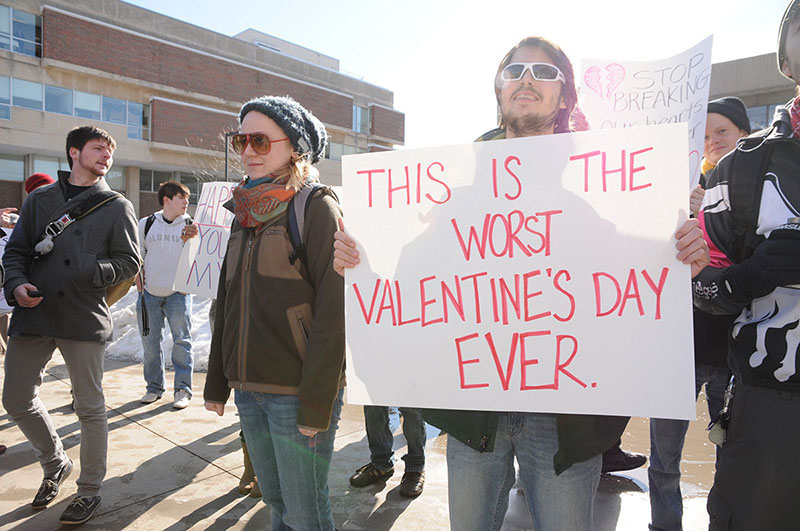
Figure 21.5 Staff at University of Wisconsin protest a proposed law that would significantly reduce their ability to bargain for better pay and benfits. (Credit: marctasman/flickr)
Tonja R. Conerly, Kathleen Holmes, and Asha Lal Tamang, Introduction Sociology 3E, OpenStax. · CC BY-NC-SA 4.0 · Original image ↗ · Access for free ↗
Figure 21.6 Texas Secede! is an organization which would like Texas to secede from the United States. (Credit: Tim Pearce/flickr)
Tonja R. Conerly, Kathleen Holmes, and Asha Lal Tamang, Introduction Sociology 3E, OpenStax. · CC BY-NC-SA 4.0 · Original image ↗ · Access for free ↗
Figure 21.7 At the time of this writing, more than thirty states and the District of Columbia allow marriage for same-sex couples. State constitutional bans are more difficult to overturn than mere state bans because of the higher threshold of votes required to change a constitution. Now that the Supreme Court has stricken a key part of the Defense of Marriage Act, same-sex couples married in states that allow it are now entitled to federal benefits afforded to heterosexual couples (CNN 2014). (Credit: Jose Antonio Navas/flickr).
Tonja R. Conerly, Kathleen Holmes, and Asha Lal Tamang, Introduction Sociology 3E, OpenStax. · CC BY-NC-SA 4.0 · Original image ↗ · Access for free ↗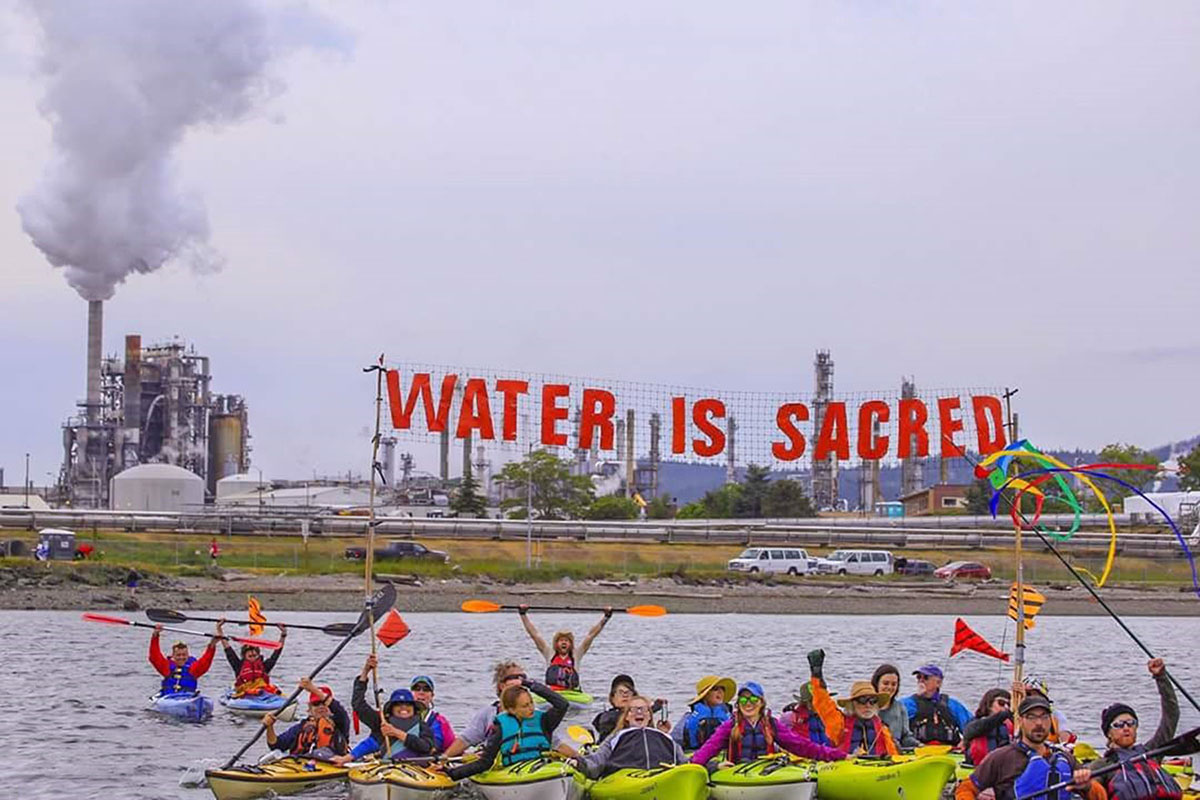
Figure 21.8 Are these activists most likely to have a larger impact through people who see their sign from the shore, or through people who will see pictures of their event on social media? (Credit: Backbone Campaign/flickr)
Tonja R. Conerly, Kathleen Holmes, and Asha Lal Tamang, Introduction Sociology 3E, OpenStax. · CC BY-NC-SA 4.0 · Original image ↗ · Access for free ↗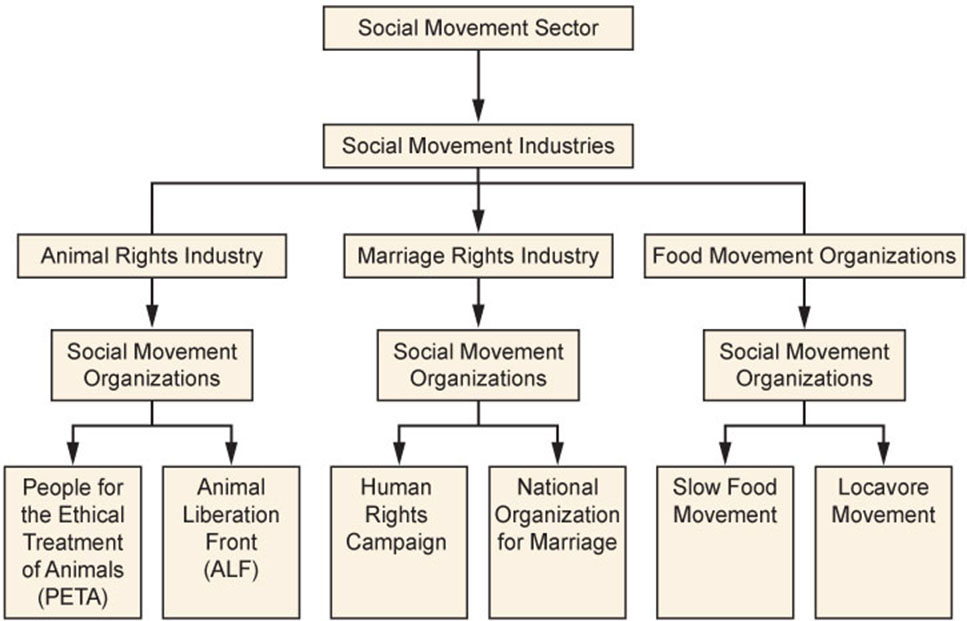
Figure 21.9 Multiple social movement organizations concerned about the same issue form a social movement industry. A society’s many social movement industries comprise its social movement sector. With so many options, to whom will you give your time and money?
Tonja R. Conerly, Kathleen Holmes, and Asha Lal Tamang, Introduction Sociology 3E, OpenStax. · CC BY-NC-SA 4.0 · Original image ↗ · Access for free ↗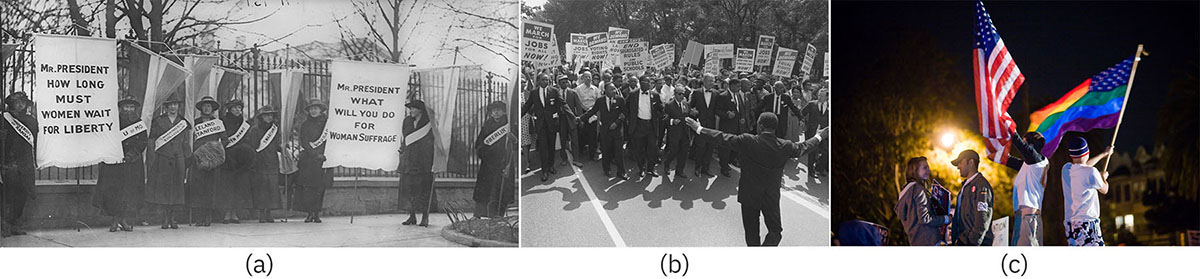
Figure 21.10 Extension occurs when social movements have sympathetic causes. Women’s rights, racial equality, and LGBT advocacy are all human rights issues. (Credit: Photos (a) and (b) Wikimedia Commons; Photo (c) Charlie Nguyen/flickr)
Tonja R. Conerly, Kathleen Holmes, and Asha Lal Tamang, Introduction Sociology 3E, OpenStax. · CC BY-NC-SA 4.0 · Original image ↗ · Access for free ↗Source: 21.2 Social Movements
8.3 Global Implications of Media and Technology — figures and tables
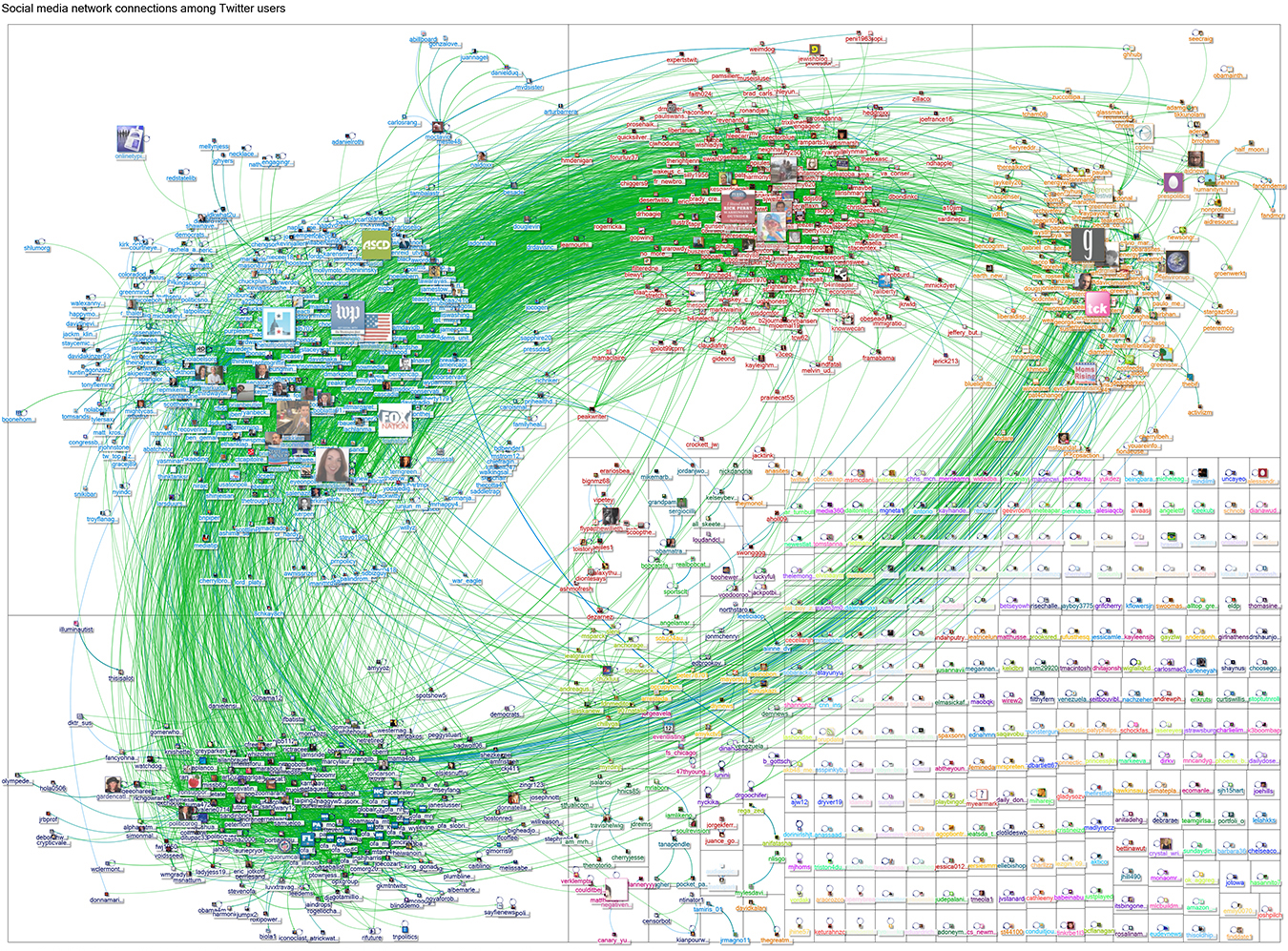
Figure 8.8 This graphic indicates the connections among people who tweeted or replied about the State of the Union address. Green lines indicate people who follow each other on the platform. (Credit Marc Smith/flickr)
Tonja R. Conerly, Kathleen Holmes, and Asha Lal Tamang, Introduction Sociology 3E, OpenStax. · CC BY-NC-SA 4.0 · Original image ↗ · Access for free ↗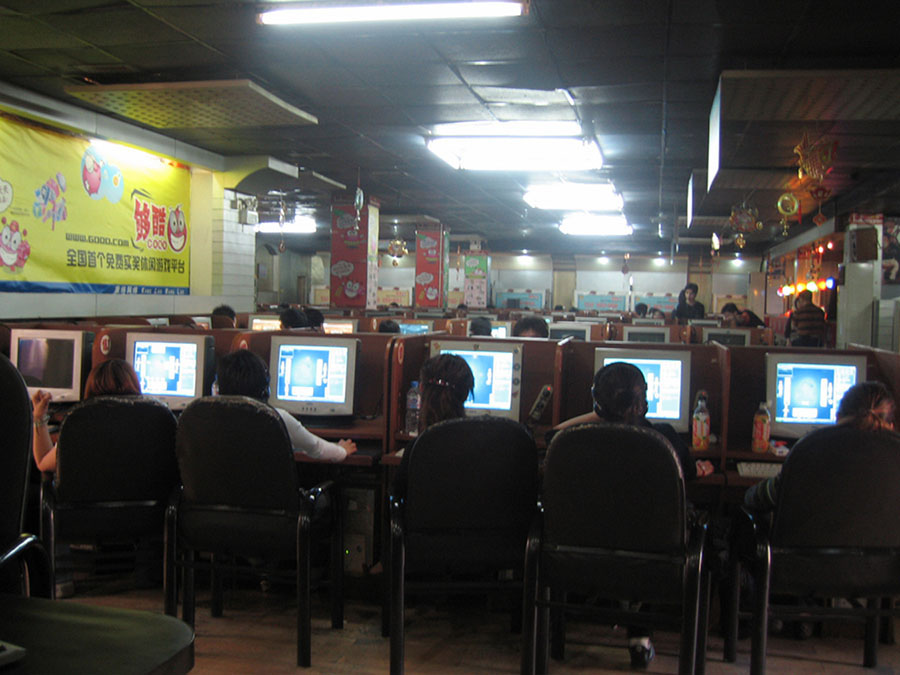
Figure 8.9 What information is accessible to these patrons of an internet café in China? What is censored from their view? (Credit: Kai Hendry/flickr)
Tonja R. Conerly, Kathleen Holmes, and Asha Lal Tamang, Introduction Sociology 3E, OpenStax. · CC BY-NC-SA 4.0 · Original image ↗ · Access for free ↗20.2 Urbanization — figures and tables

Figure 20.9 The lights of New York City are an iconic image of city life. (Credit: Jauher Ali Nasir/flickr)
Tonja R. Conerly, Kathleen Holmes, and Asha Lal Tamang, Introduction Sociology 3E, OpenStax. · CC BY-NC-SA 4.0 · Original image ↗ · Access for free ↗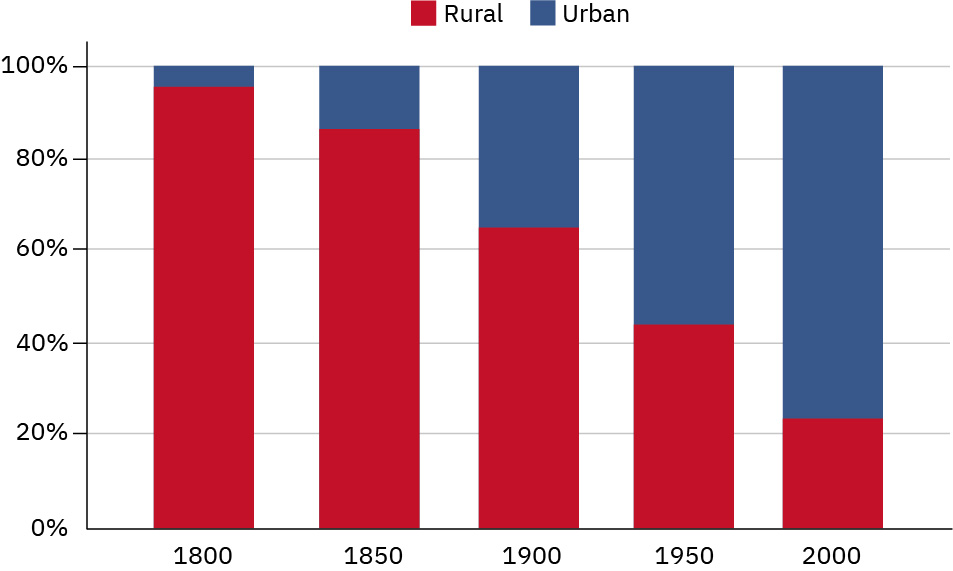
Figure 20.10 Percent of U.S. Population. As this chart illustrates, the shift from rural to urban living in the United States has been dramatic and continuous. (Credit: the U.S. Census Bureau)
Tonja R. Conerly, Kathleen Holmes, and Asha Lal Tamang, Introduction Sociology 3E, OpenStax. · CC BY-NC-SA 4.0 · Original image ↗ · Access for free ↗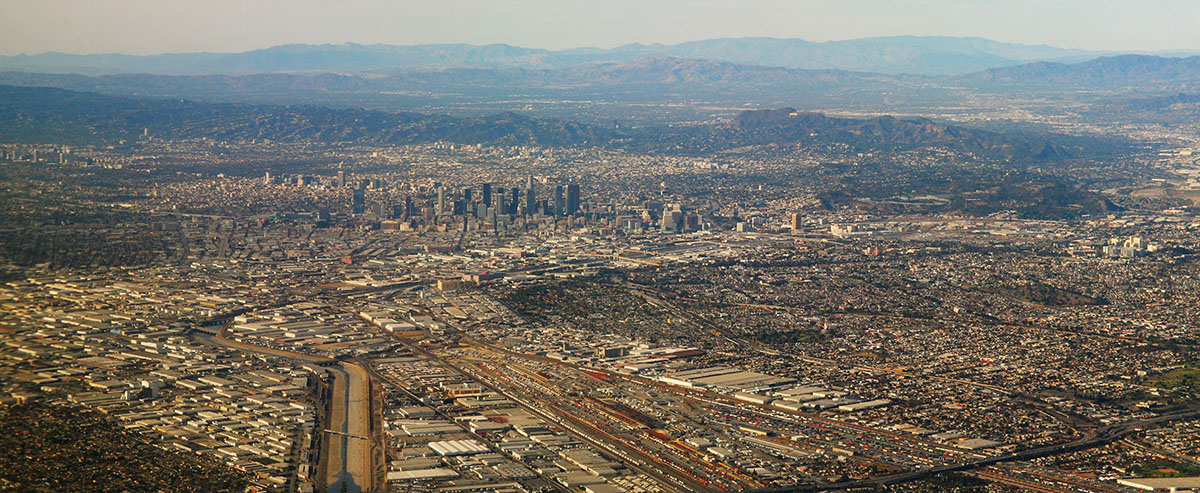
Figure 20.11 The sprawl in Los Angeles means long commutes and traffic congestion. (Credit: Doc Searles/flickr)
Tonja R. Conerly, Kathleen Holmes, and Asha Lal Tamang, Introduction Sociology 3E, OpenStax. · CC BY-NC-SA 4.0 · Original image ↗ · Access for free ↗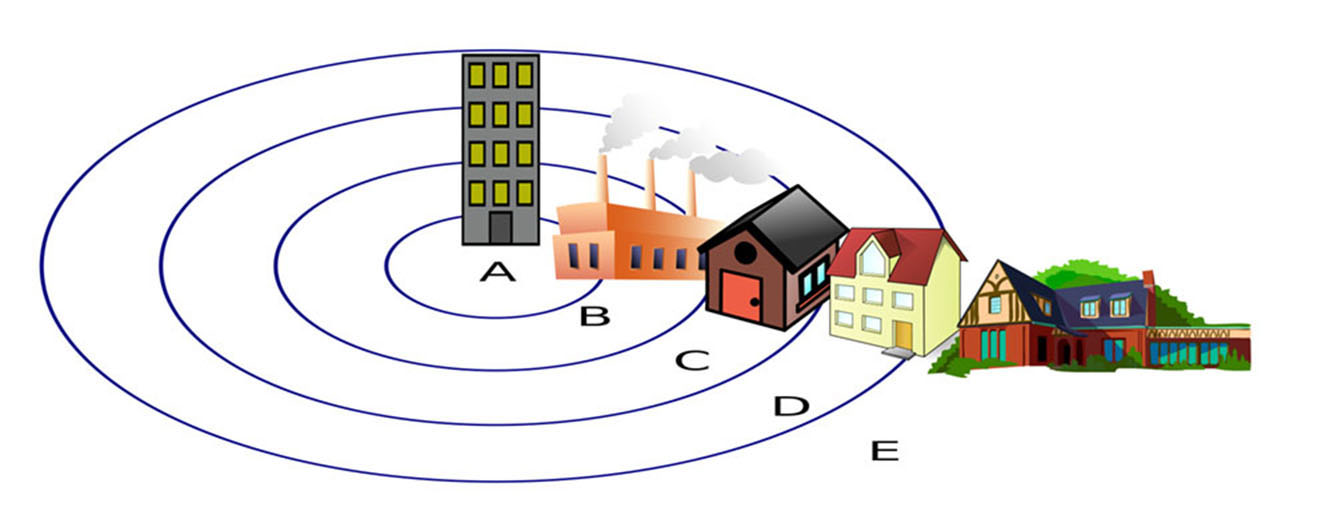
Figure 20.12 This illustration depicts the zones that make up a city in the concentric zone model. (Credit: Zeimusu/Wikimedia Commons)
Tonja R. Conerly, Kathleen Holmes, and Asha Lal Tamang, Introduction Sociology 3E, OpenStax. · CC BY-NC-SA 4.0 · Original image ↗ · Access for free ↗Source: 20.2 Urbanization
21.1 Collective Behavior — figures and tables
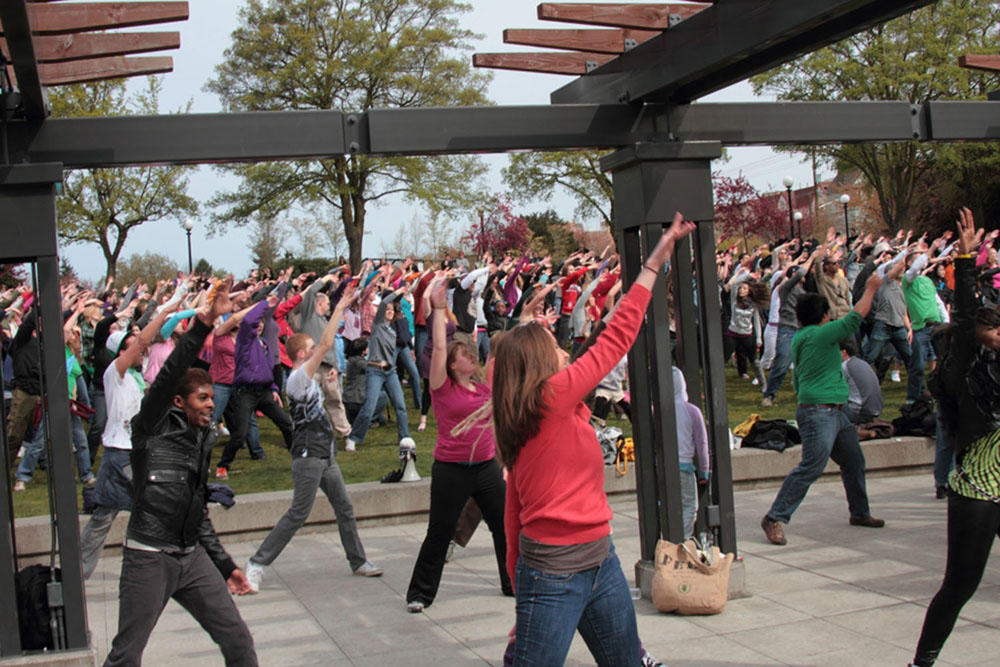
Figure 21.2 Is this a good time had by all? Some flash mobs may function as political protests, while others are for fun. (Credit Richard Wood/flickr)
Tonja R. Conerly, Kathleen Holmes, and Asha Lal Tamang, Introduction Sociology 3E, OpenStax. · CC BY-NC-SA 4.0 · Original image ↗ · Access for free ↗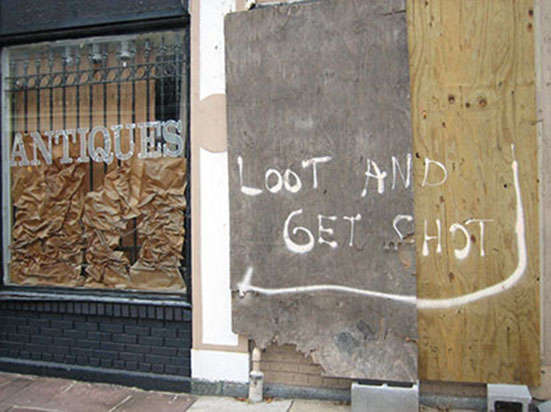
Figure 21.3 According to the emergent-norm perspective, Hurricane Katrina victims sought needed supplies for survival, but to some outsiders their behavior was normally seen as looting. (Credit: Infrogmation/Wikimedia Commons)
Tonja R. Conerly, Kathleen Holmes, and Asha Lal Tamang, Introduction Sociology 3E, OpenStax. · CC BY-NC-SA 4.0 · Original image ↗ · Access for free ↗
Figure 21.4 Agents of social control bring collective behavior to an end. (Credit: hozinja/flickr)
Tonja R. Conerly, Kathleen Holmes, and Asha Lal Tamang, Introduction Sociology 3E, OpenStax. · CC BY-NC-SA 4.0 · Original image ↗ · Access for free ↗| Type of crowd | Description | Example |
|---|---|---|
| Convergence clusters | Family and friends who travel together | Carpooling parents take several children to the movies |
| Convergent orientation | Group all facing the same direction | A semi-circle around a stage |
| Collective vocalization | Sounds or noises made collectively | Screams on a roller coaster |
| Collective verbalization | Collective and simultaneous participation in a speech or song | Pledge of Allegiance in the school classroom |
| Collective gesticulation | Body parts forming symbols | The YMCA dance |
| Collective manipulation | Objects collectively moved around | Holding signs at a protest rally |
| Collective locomotion | The direction and rate of movement to the event | Children running to an ice cream truck |
Table 21.1 Clark McPhail identified various circumstances of convergent and collective behavior (McPhail 1991).. Tonja R. Conerly, Kathleen Holmes, and Asha Lal Tamang, Introduction Sociology 3E, OpenStax.
Source: 21.1 Collective Behavior