Foundation 4 · 4A · Motion, forces, and energy

Periodic motion and waves

Sources ↗

A wave transfers energy while particles generally oscillate around their positions.

Describe a repeated cycle

A is maximum from . T is time per cycle; f = 1/T is measured in hertz. Angular ω = 2πf and specifies position within a cycle: x = A cos(ωt + φ). For an ideal mass–spring oscillator, ω = √(k/m); a small-angle pendulum has T = 2π√(L/g). These ideal are -independent only within the model’s limits. Damping removes mechanical energy and reduces ; driving near the natural can produce .

Source: College Physics 2E 16 — Section Summary · 16.9 Waves

Separate motion of the disturbance from motion of matter

Transverse waves displace the medium perpendicular to propagation; longitudinal waves displace it parallel, creating compressions and rarefactions. λ is the spatial repeat distance, and wave speed v = fλ. The source sets ; properties of the medium set propagation speed. When a wave crosses into another medium, its is preserved but can change. Superposition adds : in- waves reinforce and opposite- waves can cancel. A has stationary from counterpropagating waves.

Source: College Physics 2E 16 — Section Summary · 16.9 Waves

Apply it

Try before revealing the answer. A wave has 25 Hz and 0.80 m. It enters a medium where its speed is 10 m/s. What changes?

Worked answer

Initial speed is 25 × 0.80 = 20 m/s. remains 25 Hz across a stationary interface. The new is 10/25 = 0.40 m; remains 1/25 = 0.040 s.

Source: College Physics 2E 16 — Section Summary · 16.9 Waves

16.9 Waves — figures and tables

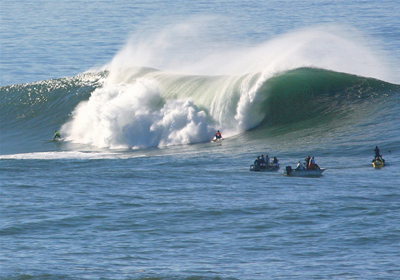
There is a high tidal wave of about 10 feet high in a sea. Three boats carrying three four persons each are ahead of the wave, which is coming toward them.
Figure 16.27 — 16.9 Waves

Figure 16.27 Waves in the ocean behave similarly to all other types of waves. (credit: Steve Jurveston, Flickr)

Paul Peter Urone and Roger Hinrichs, College Physics 2E, OpenStax. (credit: Steve Jurveston, Flickr) · CC BY-NC-SA 4.0 · Original image ↗ · Access for free ↗
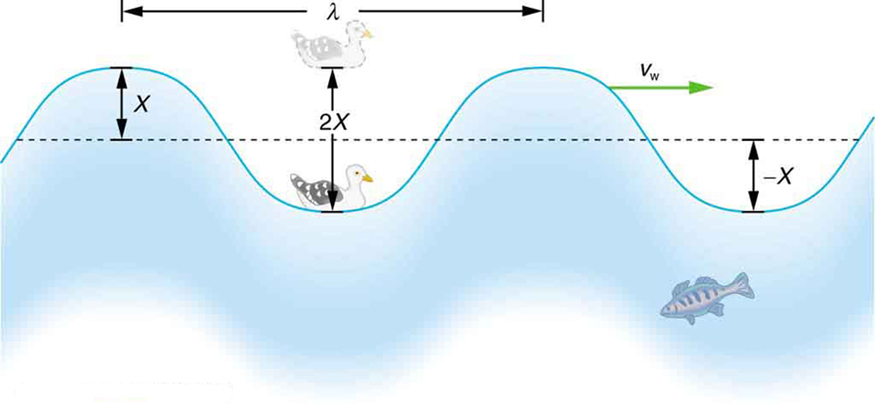
The figure shows an idealized ocean wave with two crests and two troughs that passes under a sea gull that bobs up and down in simple harmonic motion. The wave has a wavelength lambda which is the distance between adjacent identical parts of the wave. The height of a crest is equal to the depth of the trough that is X, therefore the total vertical distance between the top of a crest and the bottom of the trough is two-X.
Figure 16.28 — 16.9 Waves

Figure 16.28 An idealized ocean wave passes under a sea gull that bobs up and down in simple harmonic motion. The wave has a wavelength λ λ , which is the distance between adjacent identical parts of the wave. The up and down disturbance of the surface propagates parallel to the surface at a speed v w v w .

Paul Peter Urone and Roger Hinrichs, College Physics 2E, OpenStax. · CC BY-NC-SA 4.0 · Original image ↗ · Access for free ↗
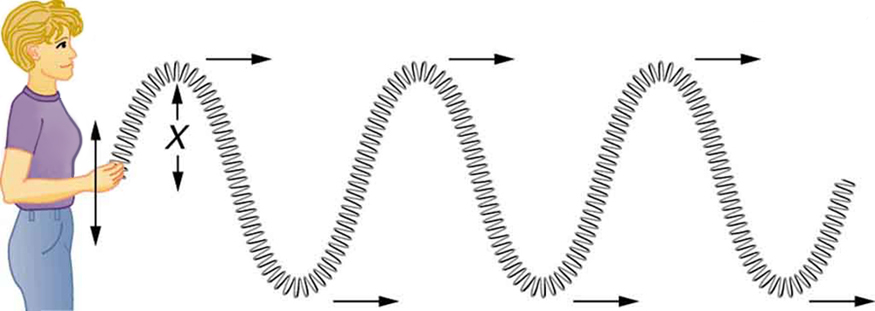
The figure shows a woman holding a long spring in her hand and moving it up and down causing it to move in a zigzag manner away from her. It is an example of a transverse wave, the wave propagates horizontally. The direction of motion of the wave is shown with the help of right arrows at each crest and trough.
Figure 16.29 — 16.9 Waves

Figure 16.29 In this example of a transverse wave, the wave propagates horizontally, and the disturbance in the cord is in the vertical direction.

Paul Peter Urone and Roger Hinrichs, College Physics 2E, OpenStax. · CC BY-NC-SA 4.0 · Original image ↗ · Access for free ↗
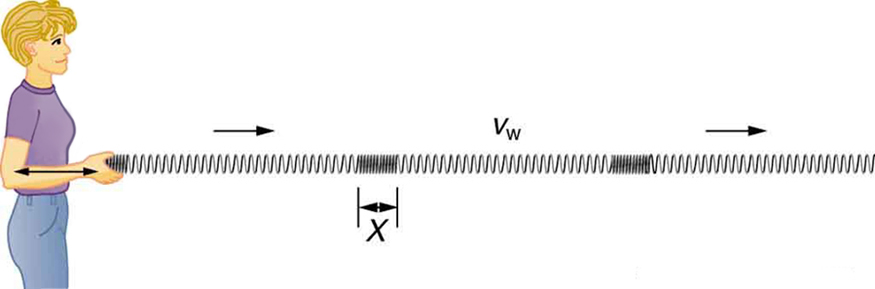
The figure shows a woman standing at left pushing a long spring in to and fro motion in horizontal direction away from her without moving her hand up and down. The cord stretches and contracts back and forth. This is an example of a longitudinal wave, the wave propagates horizontally. At some points the spring is compressed and at some other points the spring is expanded. One contracted part is equal to the amplitude X.
Figure 16.30 — 16.9 Waves

Figure 16.30 In this example of a longitudinal wave, the wave propagates horizontally, and the disturbance in the cord is also in the horizontal direction.

Paul Peter Urone and Roger Hinrichs, College Physics 2E, OpenStax. · CC BY-NC-SA 4.0 · Original image ↗ · Access for free ↗
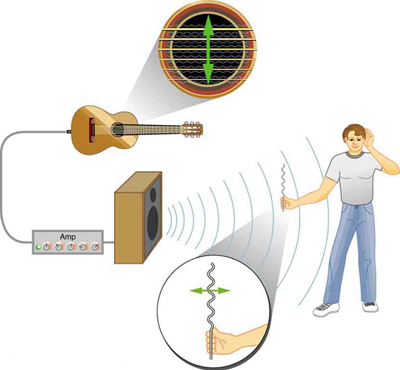
The figure shows a guitar connected to an amplifier and a man holding a sheet of paper facing the speaker attached to the amplifier. The strings of the guitar when played cause transverse waves. On the other hand, the sound of the guitar creates ripples on the sheet of paper causing it to rattle in a direction that shows that the sound waves are longitudinal.
Figure 16.31 — 16.9 Waves

Figure 16.31 The wave on a guitar string is transverse. The sound wave rattles a sheet of paper in a direction that shows the sound wave is longitudinal.

Paul Peter Urone and Roger Hinrichs, College Physics 2E, OpenStax. · CC BY-NC-SA 4.0 · Original image ↗ · Access for free ↗

Source: 16.9 Waves

118 terms, alphabetically ordered

acceleration

Rate of change of , measured in m/s².

Read explanation · OpenStax ↗
Acid · ·

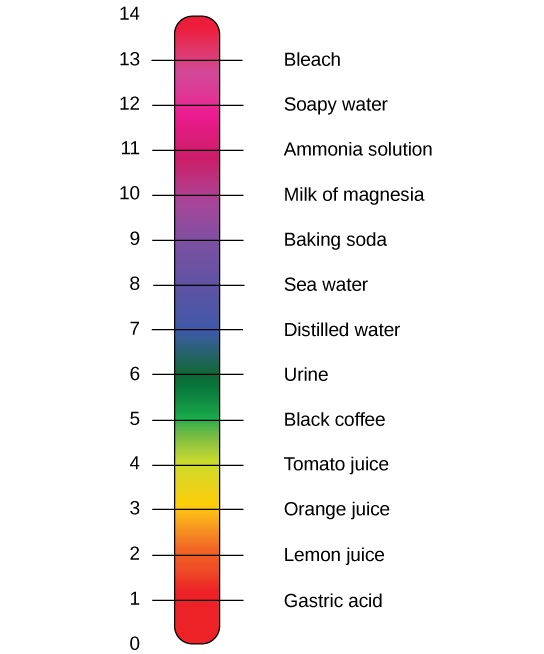
In the Brønsted–Lowry model, a substance that can donate a . Acidic have a higher activity than water.

Read explanation · OpenStax ↗
Activation energy ·

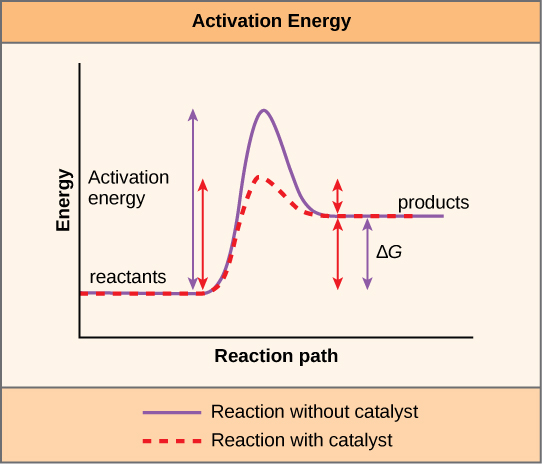
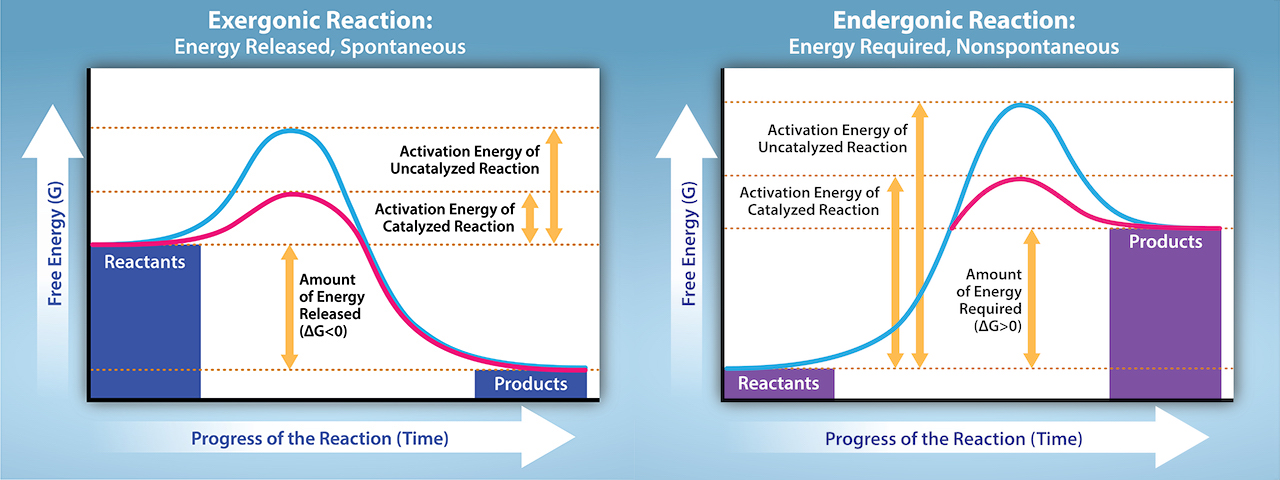
The energy barrier that must overcome to reach a and undergo .

Read explanation · OpenStax ↗
Adenosine triphosphate

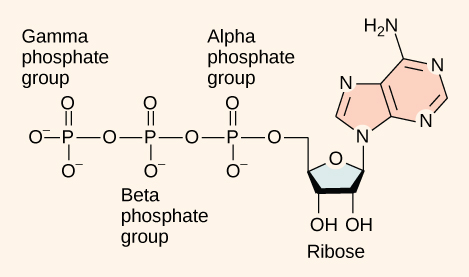
An energy-carrying ; its powers many cellular processes, including cycles.

Read explanation · OpenStax ↗
Alpha carbon · ·

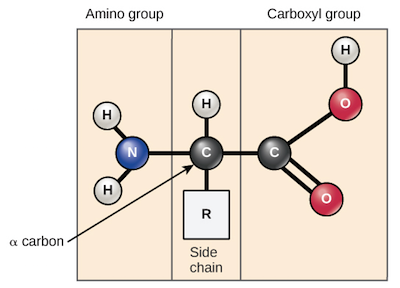
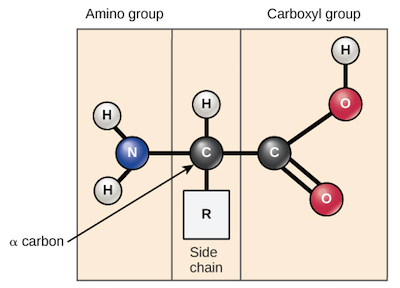
The central carbon next to the carboxyl carbon. In a standard it binds an , hydrogen, and .

Read explanation · OpenStax ↗
Amide · · ·

A group containing a carbon bonded to nitrogen. are amide linkages.

Read explanation · OpenStax ↗
Amino acid

A building block containing amino and and a characteristic .

Read explanation · OpenStax ↗
Amino acid residue · ·

The part of an incorporated into a chain. Residue can also describe another building block within a larger .

Read explanation · OpenStax ↗
Amino group · · ·

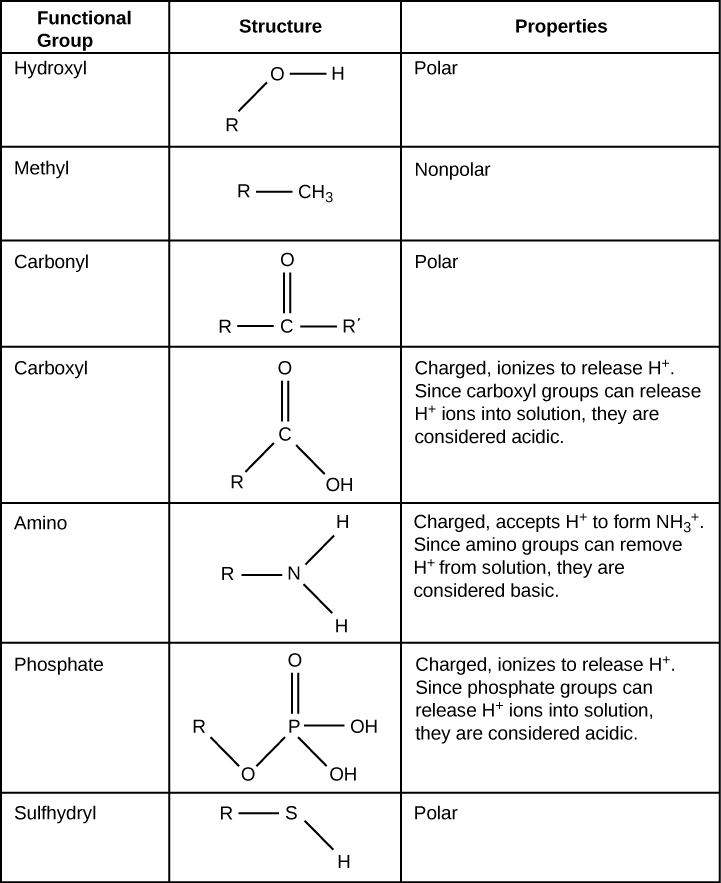
A nitrogen-containing . A free ’s amino group is typically (NH₃⁺) near physiological ; ’s ring nitrogen is an exception to this formula.

Read explanation · OpenStax ↗
Amphipathic

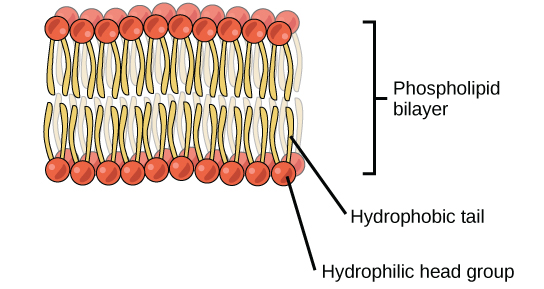
Having both a region and a region, as in a or .

Read explanation · OpenStax ↗
amplitude

Maximum from an oscillation’s position.

Read explanation · OpenStax ↗
antinode

Position of maximum oscillation in a .

Read explanation · OpenStax ↗
Aqueous solution ·

A in which water is the .

Read explanation · OpenStax ↗
Atom

The smallest unit of an element that retains its chemical identity; it has a surrounded by .

Read explanation · OpenStax ↗
Biomolecule

A made by or involved in living systems, including , , , and .

Read explanation · OpenStax ↗
Blotting ·

Transfer of separated or to a so a specific target can be detected.

Read explanation · Thermo Fisher ↗
Brønsted–Lowry base · · · · · · · · · · ·

In the Brønsted–Lowry model, a substance that can accept a . Basic solutions have lower activity than water.

Read explanation · OpenStax ↗
Carbohydrate

A class of including sugars and their , used for energy storage, structure, and recognition.

Read explanation · OpenStax ↗
Carbonyl group · ·

A carbon double-bonded to oxygen, C=O; present in and many other .

Read explanation · OpenStax ↗
Carboxyl group · ·

An , COOH. In free it is usually to COO⁻ near physiological .

Read explanation · OpenStax ↗
Catalyst · ·

A substance that speeds a by providing a pathway with lower and is regenerated rather than consumed overall.

Read explanation · OpenStax ↗
Chemical compound ·

A substance containing of two or more different chemically combined in a definite composition.

Read explanation · OpenStax ↗
Chemical element

A substance defined by having the same number of , such as carbon or oxygen.

Read explanation · OpenStax ↗
Chemical reaction ·

A process that rearranges and chemical bonds, converting into .

Read explanation · OpenStax ↗
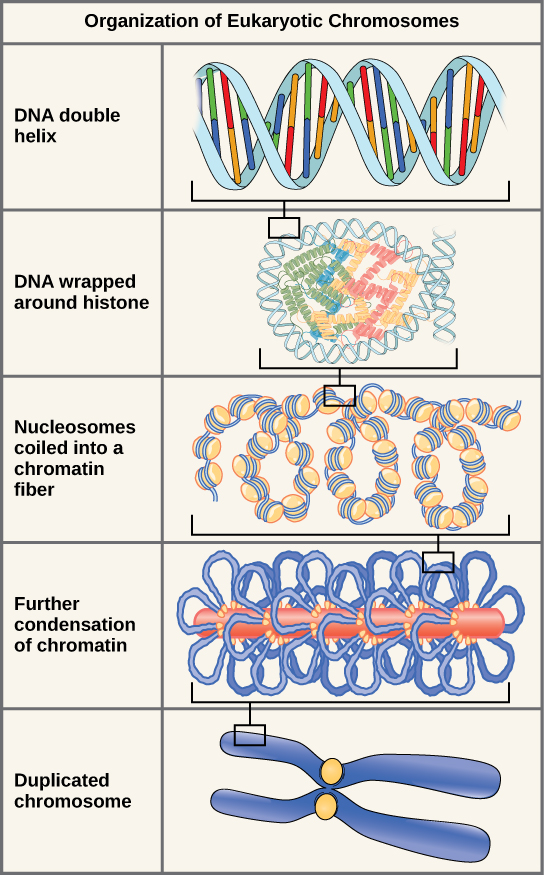
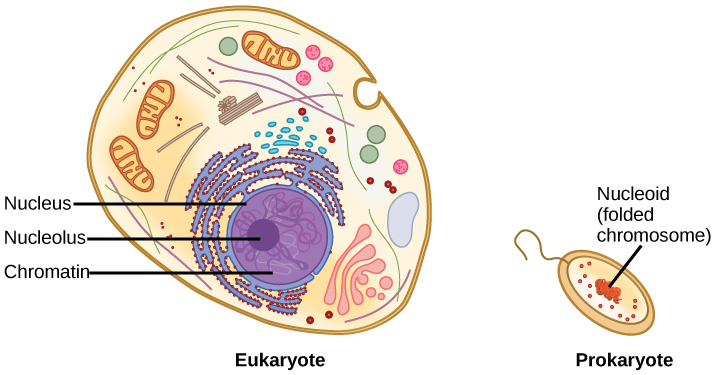
Chromatin

The complex of and associated , including , in .

Read explanation · OpenStax ↗
Chromatographic peak · ·

A rise and fall in detector signal as one or more components pass through the detector; a peak does not guarantee a single pure .

Read explanation · Agilent ↗
Chromosome ·

An organized with associated that carries . A replicated chromosome has two .

Read explanation · OpenStax ↗
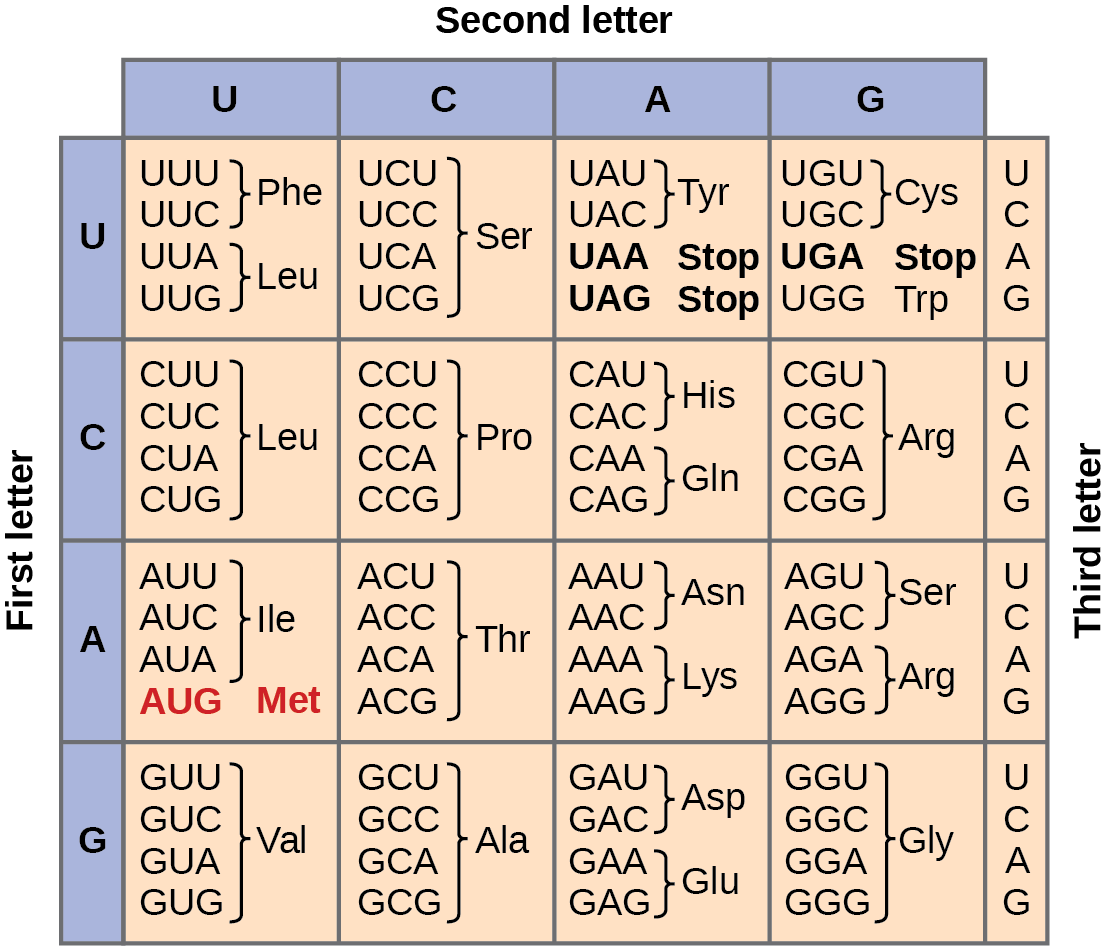
Codon

A sequence of three that specifies an or a stop signal.

Read explanation · OpenStax ↗
Concentration

The amount of a substance in a specified volume or mass of mixture.

Read explanation · OpenStax ↗
Covalent bond · ·

A bond in which share pairs. and are covalent.

Read explanation · OpenStax ↗
Cysteine ·

An with a . Two cysteines can form a .

Read explanation · OpenStax ↗
Deoxyribonucleic acid

The that stores genetic information used to specify and sequences.

Read explanation · OpenStax ↗
Deprotonation

Removal of a from a or group; this changes its by minus one.

Read explanation · OpenStax ↗
Detergent

An substance that can associate with both water and material; detergents can disrupt or interactions.

Read explanation · Thermo Fisher ↗
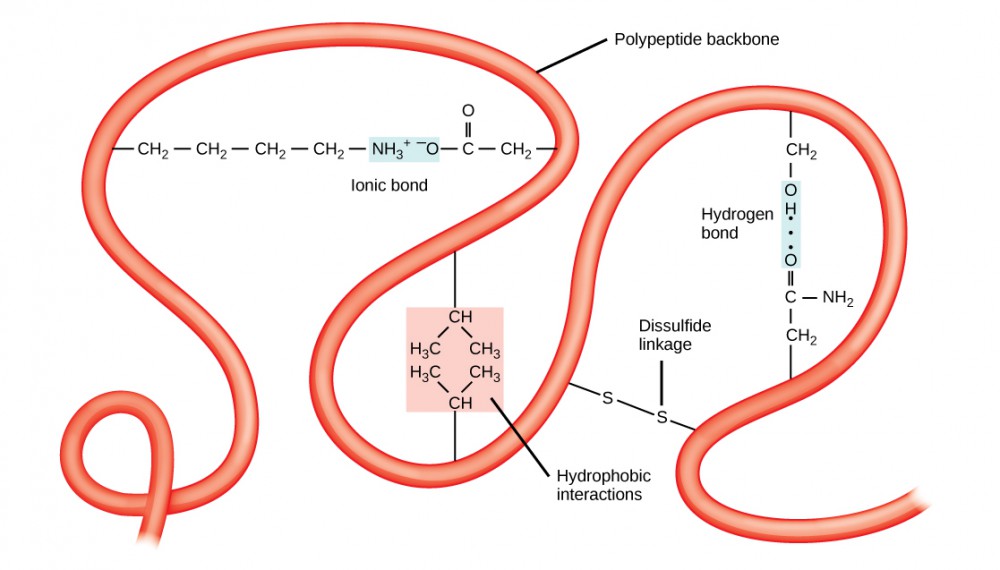
Disulfide bond · · ·

A covalent sulfur–sulfur bond formed by of two , which can stabilize structure.

Read explanation · NCBI Bookshelf ↗
DNA replication

Copying so genetic information can be passed to daughter cells. Each guides a complementary new strand.

Read explanation · OpenStax ↗
Electric charge · · ·

An electrical property that can be positive or negative. Opposite charges attract and like charges repel; net charge is the sum of all charges on a particle.

Read explanation · OpenStax ↗
Electron

A negatively subatomic particle. Electron sharing and transfer determine much of chemical bonding.

Read explanation · OpenStax ↗
Equilibrium

A state where opposing processes occur at equal rates, so macroscopic or other properties remain constant.

Read explanation · OpenStax ↗
Eukaryote ·

An organism whose cells have a -enclosed ; animals, plants, fungi, and protists are eukaryotes.

Read explanation · OpenStax ↗
FACT complex ·

A -associated complex that helps machinery traverse and supports reorganization.

Read explanation · OpenStax ↗
Functional group

A group of whose chemical behavior gives a characteristic and properties.

Read explanation · OpenStax ↗
Gene

A sequence that contributes to a functional or , together with the information needed to express it.

Read explanation · OpenStax ↗
Gene expression

Production of a functional from a , including and, for -coding , .

Read explanation · NCBI Bookshelf ↗
harmonic

Mode whose is an integer multiple of a fundamental .

Read explanation · OpenStax ↗
Histone

A -associated rich in . Core histones form the around which nucleosomal wraps.

Read explanation · OpenStax ↗
Hydrogen ion · ·

A positively hydrogen species. H⁺ denotes a , which is hydrated in water; its activity determines .

Read explanation · OpenStax ↗
Hydrolysis

Breaking a chemical bond by adding water. hydrolysis separates .

Read explanation · OpenStax ↗
Hydrophilic

Interacting favorably with water, typically because a group is or .

Read explanation · OpenStax ↗
Hydrophobic

Interacting poorly with water. often gather in a ’s interior.

Read explanation · OpenStax ↗
Hydroxide ion ·

The negatively OH⁻. Basic contain a higher hydroxide ion activity than water at the same temperature.

Read explanation · OpenStax ↗
Ion · ·

An or with a net because its numbers of and do not balance.

Read explanation · OpenStax ↗
Kinetic energy

Energy associated with motion; higher temperature generally increases average molecular kinetic energy.

Read explanation · OpenStax ↗
linkage

A tendency of nearby on the same to be inherited together.

Read explanation · OpenStax ↗
Lipid

A broad class of largely or , including fats, , and steroids.

Read explanation · OpenStax ↗
locus

The specific position of a or other feature.

Read explanation · OpenStax ↗
Logarithm · · ·

The exponent needed to obtain a number from a chosen fixed number. For decimal logarithms, log₁₀(100) = 2 because 10² = 100; uses the negative decimal logarithm of activity.

Read explanation · OpenStax ↗
longitudinal wave

Wave with medium parallel to its direction of travel.

Read explanation · OpenStax ↗
mechanical power

Rate of energy transfer, measured in watts.

Read explanation · OpenStax ↗
mechanical work

Energy transferred by a force acting through ; the force component parallel to motion contributes.

Read explanation · OpenStax ↗
Membrane · · · ·

A thin boundary or sheet. Cell membranes are bilayers containing ; membranes are synthetic supports that hold or for detection.

Read explanation · OpenStax ↗
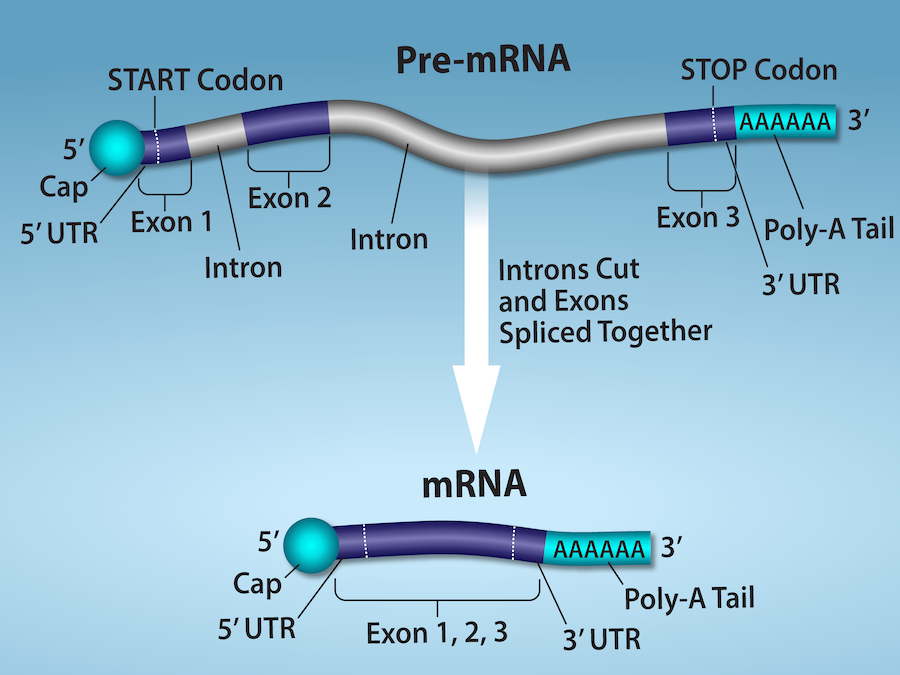
Messenger RNA ·

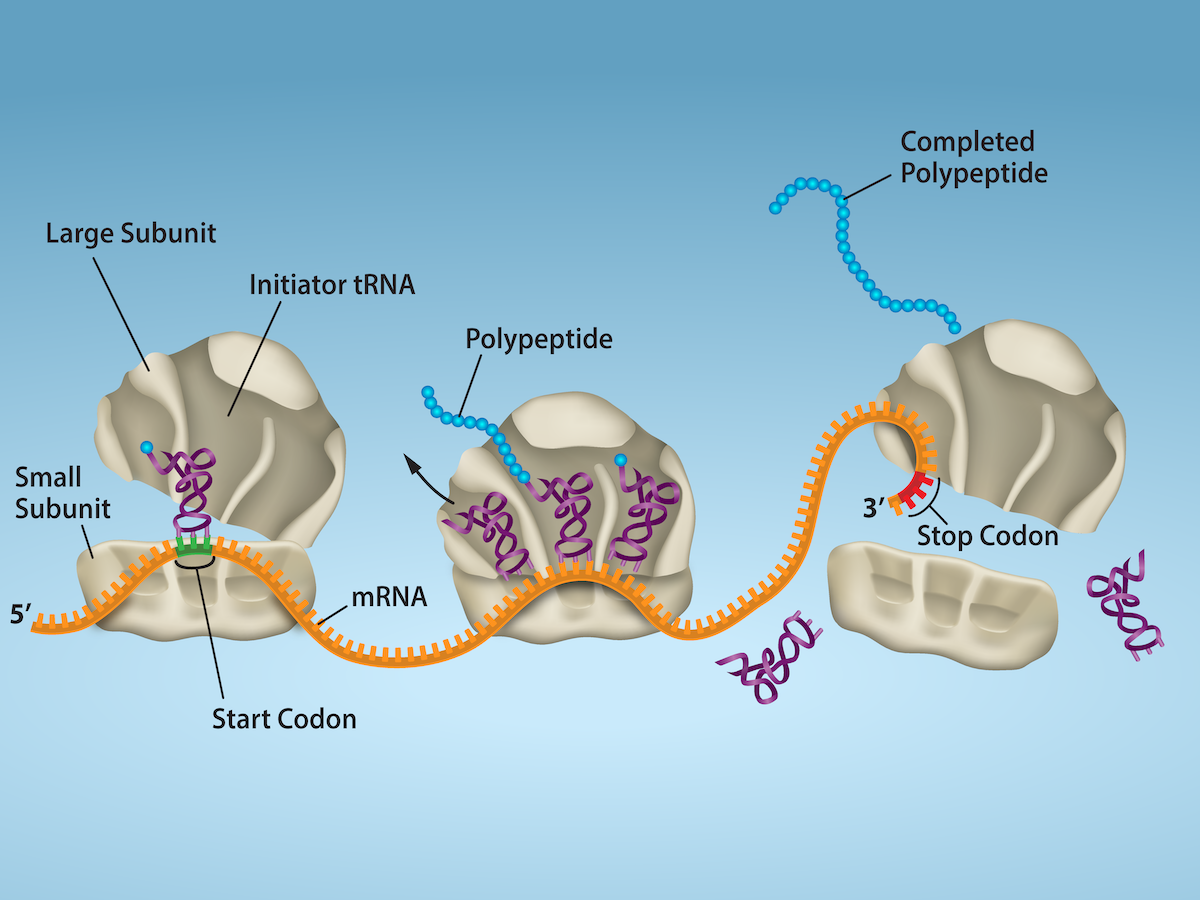
An that carries coding information used by to synthesize a .

Read explanation · OpenStax ↗
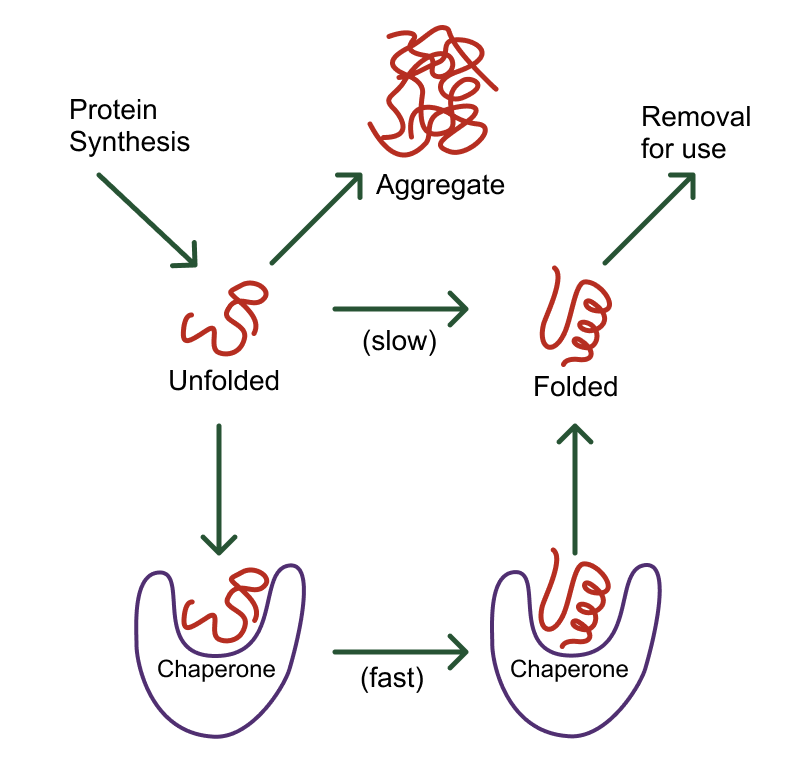
Molecular chaperone · ·

A that assists other in folding or prevents , without specifying their sequence.

Read explanation · NCBI Bookshelf ↗
Molecule

Two or more joined by . A molecule may be electrically or carry a .

Read explanation · OpenStax ↗
Neutral

Having no net . For a , neutral instead means equal and activities; its is about 7 at 25 °C.

Read explanation · OpenStax ↗
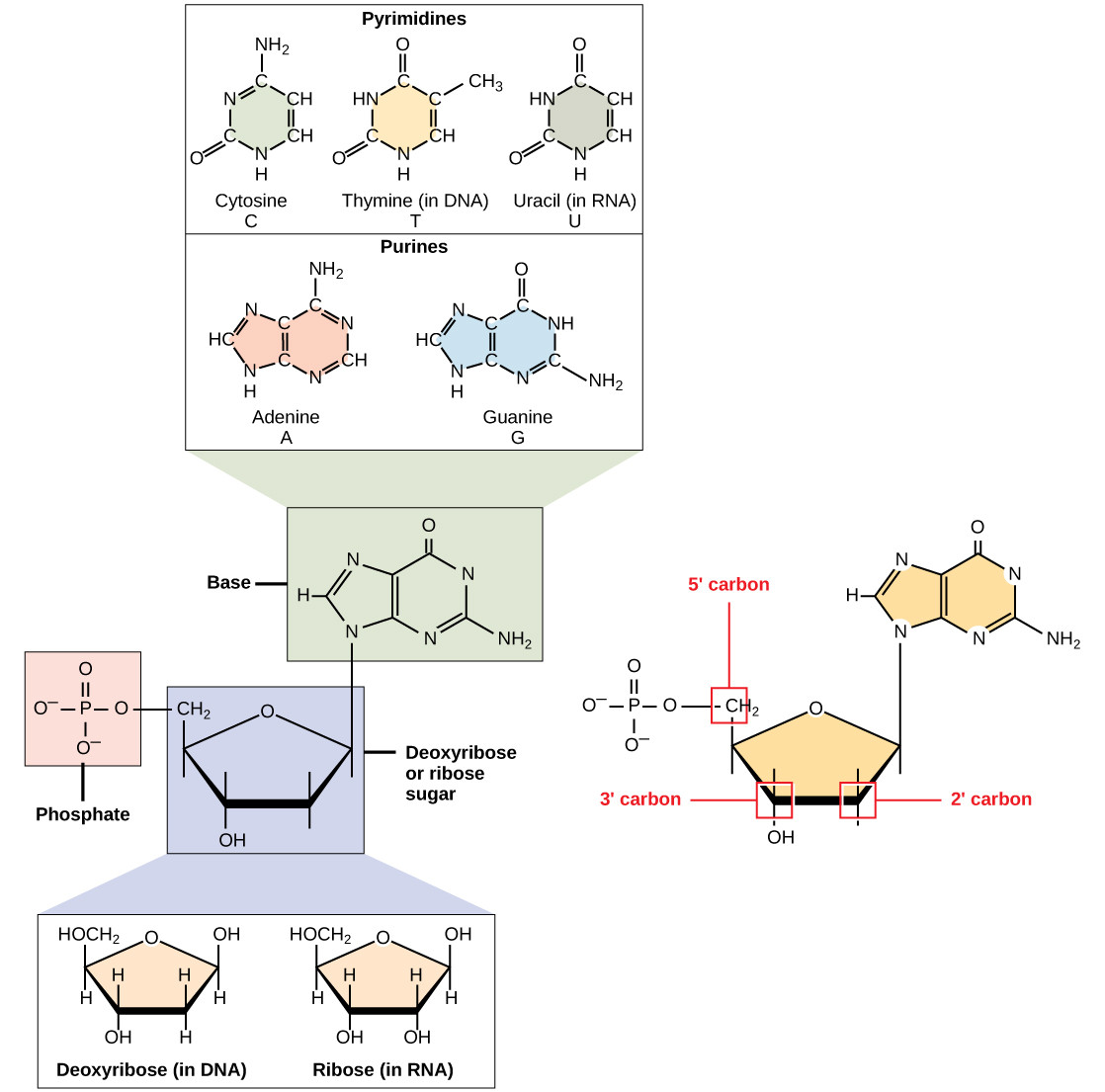
Nitrogenous base · · ·

A nitrogen-containing ring component of ; its pairing interactions help specify sequences.

Read explanation · OpenStax ↗
Nonpolar ·

Lacking a substantial separation of . Nonpolar groups generally interact poorly with water.

Read explanation · OpenStax ↗
Nucleic acid

A of , such as or , used in information storage, expression, and other cellular functions.

Read explanation · OpenStax ↗
Nucleosome

The basic unit of : wrapped around a .

Read explanation · OpenStax ↗
Nucleotide

A joined to a sugar and one or more .

Read explanation · OpenStax ↗
Nucleus ·

A -enclosed compartment containing most of a cell’s .

Read explanation · OpenStax ↗
Octamer

A complex made of eight . A core contains eight .

Read explanation · OpenStax ↗
oscillation frequency ·

Number of repeated cycles per unit time, measured in hertz.

Read explanation · OpenStax ↗
oscillation period ·

Time required for one complete cycle.

Read explanation · OpenStax ↗
oscillation phase ·

Position within an oscillatory cycle relative to a reference.

Read explanation · OpenStax ↗
Oxidation ·

Loss of or an increase in oxidation state. Oxidizing two can form a .

Read explanation · OpenStax ↗
Peptide

A chain of joined by ; the term commonly describes chains shorter than a typical .

Read explanation · OpenStax ↗
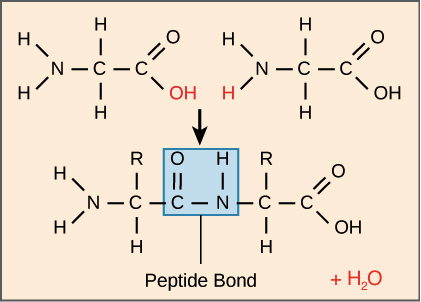
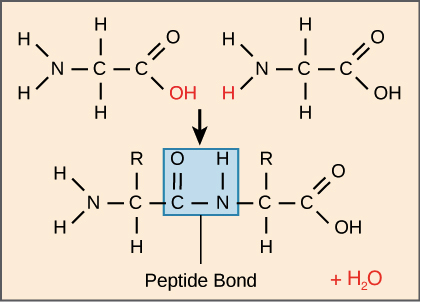
Peptide bond ·

A covalent between the carboxyl carbon of one and the amino nitrogen of the next.

Read explanation · OpenStax ↗
pH

A measure of , defined as the negative of activity. Lower pH means greater ; pH influences .

Read explanation · OpenStax ↗
Phosphate group ·

A phosphorus-containing group bonded to oxygens; phosphate groups occur in , , and modified .

Read explanation · OpenStax ↗
Phospholipid

An with a -containing region and tails; a major component of cellular .

Read explanation · OpenStax ↗
photon

Quantum of electromagnetic radiation with energy hf.

Read explanation · OpenStax ↗
physical displacement ·

Signed or difference between final and initial position.

Read explanation · OpenStax ↗
Polar

Having an uneven distribution of . Polar groups often interact favorably with water.

Read explanation · OpenStax ↗
Polymer

A large made from many linked molecular building blocks.

Read explanation · OpenStax ↗
Polypeptide

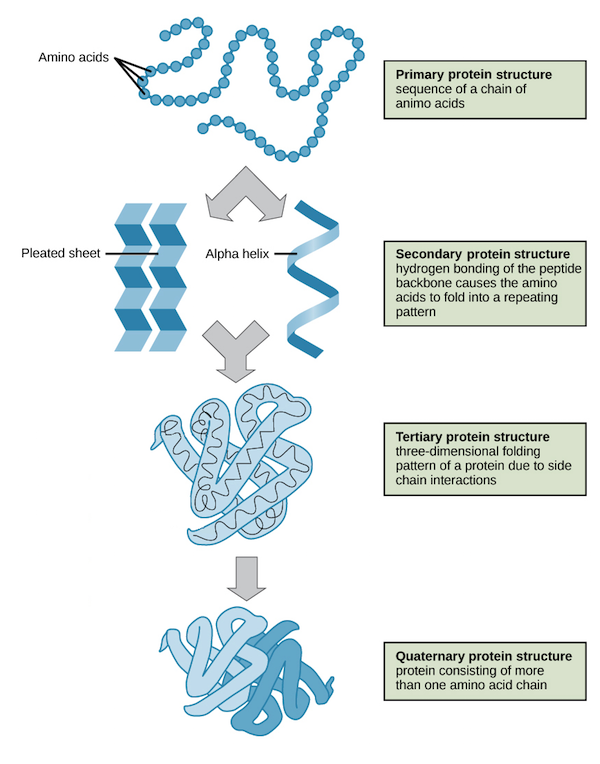
A chain of connected by . A functional can contain one or several such chains.

Read explanation · OpenStax ↗
Potential energy

Stored energy associated with position or molecular arrangement.

Read explanation · OpenStax ↗
Proline ·

An whose loops back to the nitrogen, restricting rotation and often creating bends.

Read explanation · OpenStax ↗
Protein

One or more folded chains that perform biological roles such as , transport, signaling, or structural support.

Read explanation · OpenStax ↗
Protein aggregation · ·

Association of into larger clusters, often when exposed surfaces of unfolded stick together.

Read explanation · NCBI Bookshelf ↗
Protein backbone ·

The repeating nitrogen–alpha-carbon– chain of a , excluding its variable .

Read explanation · OpenStax ↗
Proton

A positively subatomic particle. In – chemistry, donating a proton means transferring a .

Read explanation · OpenStax ↗
Protonation

Addition of a to an , , or ; this changes its by plus one.

Read explanation · OpenStax ↗
R group · ·

The variable side chain attached to an ’s . It determines identity, , , and chemical behavior.

Read explanation · OpenStax ↗
Reactant

A starting substance transformed during a .

Read explanation · OpenStax ↗
Reaction intermediate · ·

A species formed in one step and consumed in another. It occupies a local energy minimum between .

Read explanation · OpenStax ↗
Reaction product ·

A substance formed by a .

Read explanation · OpenStax ↗
resonance

Large driven response near a system’s natural .

Read explanation · OpenStax ↗
Ribonucleic acid ·

A with roles in , regulation, and ; carries -coding information.

Read explanation · OpenStax ↗
Ribosome ·

A complex of and that translates into a .

Read explanation · OpenStax ↗
Sister chromatid

One of the two copies of a produced by . An intact sister chromatid can supply a template for accurate repair.

Read explanation · Biology LibreTexts / Oregon State University ↗
Solubility ·

The amount of a substance that can dissolve in a under specified conditions. Soluble means able to dissolve; insoluble means only very slightly soluble in that .

Read explanation · OpenStax ↗
Solute

A dissolved component of a .

Read explanation · OpenStax ↗
Solution

A homogeneous mixture in which are dissolved in a .

Read explanation · OpenStax ↗
Solvent

The component of a that dissolves other substances, usually the component present in the greatest amount.

Read explanation · OpenStax ↗
spatial vector ·

Quantity with both magnitude and direction, combined by adding components.

Read explanation · OpenStax ↗
standing wave

Stationary interference pattern with fixed and antinodes.

Read explanation · OpenStax ↗
Subunit ·

An individual chain within a containing multiple chains.

Read explanation · OpenStax ↗
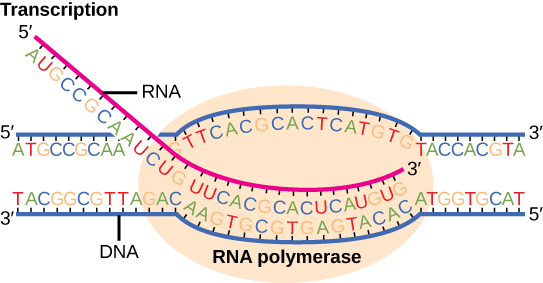
Template strand · · ·

A preexisting strand whose sequence guides complementary nucleic- synthesis.

Read explanation · OpenStax ↗
Thiol group · · · ·

A sulfur bonded to hydrogen, –SH. thiols can form through .

Read explanation · OpenStax ↗
Transcription

Synthesis of using a template.

Read explanation · OpenStax ↗
Transition state

A fleeting, high-energy arrangement at a barrier. It is an energy maximum along the path, rather than a stable .

Read explanation · OpenStax ↗
Translation ·

Synthesis of a on a using the sequence of in .

Read explanation · OpenStax ↗
transverse wave

Wave with medium perpendicular to its direction of travel.

Read explanation · OpenStax ↗
velocity

Rate of change of position, including direction.

Read explanation · OpenStax ↗
wave intensity ·

crossing unit area, measured in W/m².

Read explanation · OpenStax ↗
wave node ·

Point of zero in a .

Read explanation · OpenStax ↗
Wavelength

The distance between repeating points of a wave, such as neighboring crests; light wavelength determines energy.

Read explanation · JASCO ↗

College Physics 2E 16 — Section Summary

OpenStax · College Physics 2E 16 — Section Summary ↗
Instructional page including learning objectives, examples, figures, source tables and questions. Site navigation and embedded media players are omitted; source media links remain available.

16.1 Hooke’s Law: Stress and Strain Revisited

  • An oscillation is a back and forth motion of an object between two points of deformation.
  • An oscillation may create a wave, which is a disturbance that propagates from where it was created.
  • The simplest type of oscillations and waves are related to systems that can be described by Hooke’s law:
    F=−kx,

    where F is the restoring force, x is the from or deformation, and k is the force constant of the system.

  • Elastic PEel stored in the deformation of a system that can be described by Hooke’s law is given by
    PE el = ( 1 / 2 ) kx 2 .

16.2 Period and Frequency in Oscillations

  • Periodic motion is a repetitious oscillation.
  • The time for one oscillation is the T.
  • The number of oscillations per unit time is the f.
  • These quantities are related by
    f = 1 T .

16.3 Simple Harmonic Motion: A Special Periodic Motion

  • Simple motion is oscillatory motion for a system that can be described only by Hooke’s law. Such a system is also called a simple oscillator.
  • Maximum is the X. The T and f of a simple oscillator are given by

    T=2πmk and f=12πkm, where m is the mass of the system.

  • in simple motion as a function of time is given by x ( t ) = X cos 2π t T .
  • The is given by v(t)=− vmax sin2π tT, where vmax=Xkm.
  • The is found to be a ( t ) = − kX m cos 2π t T .

16.4 The Simple Pendulum

  • A mass m suspended by a wire of length L is a simple pendulum and undergoes simple motion for amplitudes less than about 15º.

    The of a simple pendulum is

    T=2πLg,

    where L is the length of the string and g is the due to gravity.

16.5 Energy and the Simple Harmonic Oscillator

  • Energy in the simple oscillator is shared between elastic and , with the total being constant:
    1 2 mv 2 + 1 2 kx 2 = constant.
  • Maximum depends on three factors: it is directly proportional to , it is greater for stiffer systems, and it is smaller for objects that have larger masses:
    vmax=Xkm

16.6 Uniform Circular Motion and Simple Harmonic Motion

A projection of uniform circular motion undergoes simple oscillation.

16.7 Damped Harmonic Motion

  • Damped oscillators have non-conservative forces that dissipate their energy.
  • Critical damping returns the system to as fast as possible without overshooting.
  • An underdamped system will oscillate through the position.
  • An overdamped system moves more slowly toward than one that is critically damped.

16.8 Forced Oscillations and Resonance

  • A system’s natural is the at which the system will oscillate if not affected by driving or damping forces.
  • A periodic force driving a oscillator at its natural produces . The system is said to resonate.
  • The less damping a system has, the higher the of the forced oscillations near . The more damping a system has, the broader response it has to varying driving .

16.9 Waves

  • A wave is a disturbance that moves from the point of creation with a wave vw.
  • A wave has a λ, which is the distance between adjacent identical parts of the wave.
  • Wave and are related to the wave’s and by v w = λ T or v w = fλ .
  • A has a disturbance perpendicular to its direction of propagation, whereas a has a disturbance parallel to its direction of propagation.

16.10 Superposition and Interference

  • Superposition is the combination of two waves at the same location.
  • Constructive interference occurs when two identical waves are superimposed in .
  • Destructive interference occurs when two identical waves are superimposed exactly out of .
  • A is one in which two waves superimpose to produce a wave that varies in but does not propagate.
  • are points of no motion in standing waves.
  • An is the location of maximum of a .
  • Waves on a string are resonant standing waves with a fundamental and can occur at higher multiples of the fundamental, called overtones or harmonics.
  • Beats occur when waves of similar f1 and f2 are superimposed. The resulting oscillates with a beat given by
    f B = ∣ f 1 − f 2 ∣ .

16.11 Energy in Waves: Intensity

is defined to be the per unit area:

I=PA and has units of W/m2.

16.9 Waves

OpenStax · 16.9 Waves ↗
Instructional page including learning objectives, examples, figures, source tables and questions. Site navigation and embedded media players are omitted; source media links remain available.

Learning Objectives

By the end of this section, you will be able to:

  • State the characteristics of a wave.
  • Calculate the of wave propagation.
There is a high tidal wave of about 10 feet high in a sea. Three boats carrying three four persons each are ahead of the wave, which is coming toward them.
Figure 16.27 — 16.9 Waves

Figure 16.27 Waves in the ocean behave similarly to all other types of waves. (credit: Steve Jurveston, Flickr)

Paul Peter Urone and Roger Hinrichs, College Physics 2E, OpenStax. (credit: Steve Jurveston, Flickr) · CC BY-NC-SA 4.0 · Original image ↗ · Access for free ↗

What do we mean when we say something is a wave? The most intuitive and easiest wave to imagine is the familiar water wave. More precisely, a wave is a disturbance that propagates, or moves from the place it was created. For water waves, the disturbance is in the surface of the water, perhaps created by a rock thrown into a pond or by a swimmer splashing the surface repeatedly. For sound waves, the disturbance is a change in air pressure, perhaps created by the oscillating cone inside a speaker. For earthquakes, there are several types of disturbances, including disturbance of Earth’s surface and pressure disturbances under the surface. Even radio waves are most easily understood using an analogy with water waves. Visualizing water waves is useful because there is more to it than just a mental image. Water waves exhibit characteristics common to all waves, such as , , and energy. All wave characteristics can be described by a small set of underlying principles.

A wave is a disturbance that propagates, or moves from the place it was created. The simplest waves repeat themselves for several cycles and are associated with simple motion. Let us start by considering the simplified water wave in Figure 16.28. The wave is an up and down disturbance of the water surface. It causes a sea gull to move up and down in simple motion as the wave crests and troughs ( and valleys) pass under the bird. The time for one complete up and down motion is the wave’s T. The wave’s is f=1/T, as usual. The wave itself moves to the right in the figure. This movement of the wave is actually the disturbance moving to the right, not the water itself (or the bird would move to the right). We define wave vw to be the speed at which the disturbance moves. Wave is sometimes also called the propagation or propagation speed, because the disturbance propagates from one location to another.

Misconception Alert

Many people think that water waves push water from one direction to another. In , in water waves far from shore, the particles of water tend to stay in one location, save for moving in circles due to the energy in the wave. The energy moves forward through the water, but the water stays in one place. If you feel yourself pushed in an ocean, far from the shore, what you feel is the energy of the wave, not a rush of water.

The figure shows an idealized ocean wave with two crests and two troughs that passes under a sea gull that bobs up and down in simple harmonic motion. The wave has a wavelength lambda which is the distance between adjacent identical parts of the wave. The height of a crest is equal to the depth of the trough that is X, therefore the total vertical distance between the top of a crest and the bottom of the trough is two-X.
Figure 16.28 — 16.9 Waves

Figure 16.28 An idealized ocean wave passes under a sea gull that bobs up and down in simple harmonic motion. The wave has a wavelength λ λ , which is the distance between adjacent identical parts of the wave. The up and down disturbance of the surface propagates parallel to the surface at a speed v w v w .

Paul Peter Urone and Roger Hinrichs, College Physics 2E, OpenStax. · CC BY-NC-SA 4.0 · Original image ↗ · Access for free ↗

The water wave in the figure also has a length associated with it, called its λ , the distance between adjacent identical parts of a wave. (λ is the distance parallel to the direction of propagation.) The speed of propagation vw is the distance the wave travels in a given time, which is one in the time of one . In equation form, that is

v w = λ T
16.66

or

v w = fλ .
16.67

This fundamental relationship holds for all types of waves. For water waves, vw is the speed of a surface wave; for sound, vw is the speed of sound; and for visible light, vw is the speed of light, for example.

Take-Home Experiment: Waves in a Bowl

Fill a large bowl or basin with water and wait for the water to settle so there are no ripples. Gently drop a cork into the middle of the bowl. Estimate the and of oscillation of the water wave that propagates away from the cork. Remove the cork from the bowl and wait for the water to settle again. Gently drop the cork at a height that is different from the first drop. Does the depend upon how high above the water the cork is dropped?

Example 16.8

Calculate the of Wave Propagation: Gull in the Ocean

Calculate the wave of the ocean wave in Figure 16.28 if the distance between wave crests is 10.0 m and the time for a sea gull to bob up and down is 5.00 s.

Strategy

We are asked to find vw. The given information tells us that λ=10.0m and T=5.00s. Therefore, we can use v w = λ T to find the wave .

  1. Enter the known values into vw=λT:
    v w = 10.0 m 5 .00 s .
    16.68
  2. Solve for vw to find vw= 2.00 m/s.

Discussion

This slow speed seems reasonable for an ocean wave. Note that the wave moves to the right in the figure at this speed, not the varying speed at which the sea gull moves up and down.

Transverse and Longitudinal Waves

A simple wave consists of a periodic disturbance that propagates from one place to another. The wave in Figure 16.29 propagates in the horizontal direction while the surface is disturbed in the vertical direction. Such a wave is called a or shear wave; in such a wave, the disturbance is perpendicular to the direction of propagation. In contrast, in a or compressional wave, the disturbance is parallel to the direction of propagation. Figure 16.30 shows an example of a . The size of the disturbance is its X and is completely independent of the speed of propagation vw.

The figure shows a woman holding a long spring in her hand and moving it up and down causing it to move in a zigzag manner away from her. It is an example of a transverse wave, the wave propagates horizontally. The direction of motion of the wave is shown with the help of right arrows at each crest and trough.
Figure 16.29 — 16.9 Waves

Figure 16.29 In this example of a transverse wave, the wave propagates horizontally, and the disturbance in the cord is in the vertical direction.

Paul Peter Urone and Roger Hinrichs, College Physics 2E, OpenStax. · CC BY-NC-SA 4.0 · Original image ↗ · Access for free ↗
The figure shows a woman standing at left pushing a long spring in to and fro motion in horizontal direction away from her without moving her hand up and down. The cord stretches and contracts back and forth. This is an example of a longitudinal wave, the wave propagates horizontally. At some points the spring is compressed and at some other points the spring is expanded. One contracted part is equal to the amplitude X.
Figure 16.30 — 16.9 Waves

Figure 16.30 In this example of a longitudinal wave, the wave propagates horizontally, and the disturbance in the cord is also in the horizontal direction.

Paul Peter Urone and Roger Hinrichs, College Physics 2E, OpenStax. · CC BY-NC-SA 4.0 · Original image ↗ · Access for free ↗

Waves may be transverse, longitudinal, or a combination of the two. (Water waves are actually a combination of transverse and longitudinal. The simplified water wave illustrated in Figure 16.28 shows no longitudinal motion of the bird.) The waves on the strings of musical instruments are transverse—so are electromagnetic waves, such as visible light.

Sound waves in air and water are longitudinal. Their disturbances are periodic variations in pressure that are transmitted in fluids. Fluids do not have appreciable shear strength, and thus the sound waves in them must be longitudinal or compressional. Sound in solids can be both longitudinal and transverse.

The figure shows a guitar connected to an amplifier and a man holding a sheet of paper facing the speaker attached to the amplifier. The strings of the guitar when played cause transverse waves. On the other hand, the sound of the guitar creates ripples on the sheet of paper causing it to rattle in a direction that shows that the sound waves are longitudinal.
Figure 16.31 — 16.9 Waves

Figure 16.31 The wave on a guitar string is transverse. The sound wave rattles a sheet of paper in a direction that shows the sound wave is longitudinal.

Paul Peter Urone and Roger Hinrichs, College Physics 2E, OpenStax. · CC BY-NC-SA 4.0 · Original image ↗ · Access for free ↗

Earthquake waves under Earth’s surface also have both longitudinal and transverse components (called compressional or P-waves and shear or S-waves, respectively). These components have important individual characteristics—they propagate at different speeds, for example. Earthquakes also have surface waves that are similar to surface waves on water.

Check Your Understanding

Why is it important to differentiate between longitudinal and transverse waves?

In the different types of waves, energy can propagate in a different direction relative to the motion of the wave. This is important to understand how different types of waves affect the materials around them.

PhET Explorations

Wave on a String

Watch a string vibrate in slow motion. Wiggle the end of the string and make waves, or adjust the and of an oscillator. Adjust the damping and tension. The end can be fixed, loose, or open.