Foundation 4 · 4C · Electricity, magnetism, and electrochemistry

Electrolysis, batteries, and cells

Sources ↗

always occurs at the and at the , regardless of sign.

Galvanic versus electrolytic operation

A converts a spontaneous redox into electrical : its is negative and positive. An uses an external source to drive the opposite of a spontaneous direction: its is positive and negative. travel through the external conducting path from toward ; electrolyte carry internally. A maintains electroneutrality without requiring flow through the . Distinguish flow from conventional current and names from their signs.

Source: Chemistry 2E 17 — Summary · 17.5 Batteries and Fuel Cells

Predict voltage from half-

Tabulated standard potentials are potentials. Calculate E°cell = E° − E° using both as reductions; reverse the half- when assembling the chemical equation. Balance by multiplying coefficients, but never multiply an potential by its stoichiometric coefficient. Positive Ecell corresponds to negative = −nFEcell for the stated . Standard values assume standard activities and a stated temperature. A positive standard potential does not guarantee the same direction under every nonstandard .

Source: Chemistry 2E 17 — Summary · 17.5 Batteries and Fuel Cells

Convert current into chemical amount

Faraday’s law counts transferred : = It and nelectrons = /F, with F ≈ 96,485 C/mol. Divide moles by the required per unit, then convert to mass or gas amount. For Cu²⁺ + 2e⁻ → Cu, one of copper requires two moles of . These calculations assume 100% current efficiency; competing reduce collected yield. Balance aqueous electrolysis against possible water or rather than assuming every dissolved will be discharged.

Source: Chemistry 2E 17 — Summary · 17.5 Batteries and Fuel Cells

can identical

The is E = E° − (RT/nF)ln Qreaction; at 25°C, E = E° − (0.0592 V/n)log₁₀Qreaction. A has identical chemistry and E°cell = 0, but different activities create nonzero voltage. For a metal/metal- cell, is favored on the more concentrated metal- side and on the dilute side, tending to reduce the difference. At Qreaction = K and E = 0. and are distinct quantities.

Source: Chemistry 2E 17 — Summary · 17.5 Batteries and Fuel Cells

Rechargeable batteries store chemical differences

A discharging lead– cell oxidizes Pb and reduces PbO₂; both form PbSO₄ while sulfuric is consumed, producing roughly 2 V per cell. Six cells in series provide about 12 V. A nickel–cadmium cell in electrolyte oxidizes to (OH)₂ and reduces nickel oxyhydroxide to Ni(OH)₂, providing roughly 1.2 V per cell. Charging supplies electrical to reverse the net chemical transformation. Practical voltage varies with state, current, temperature, and internal .

Source: Chemistry 2E 17 — Summary · 17.5 Batteries and Fuel Cells

Apply it

Try before revealing the answer. A current of 1.93 A deposits copper from Cu²⁺ for 1000 s at 100% efficiency. Find the copper amount and mass, using F = 96,500 C/mol and MCu = 63.5 g/mol.

Worked answer

= 1930 C, so amount = 1930/96,500 = 0.020 mol. Copper requires two per : nCu = 0.010 mol and mass = 0.635 g. Doubling current for the same duration doubles ideal deposited mass.

Source: Chemistry 2E 17 — Summary · 17.5 Batteries and Fuel Cells

17.5 Batteries and Fuel Cells — figures and tables
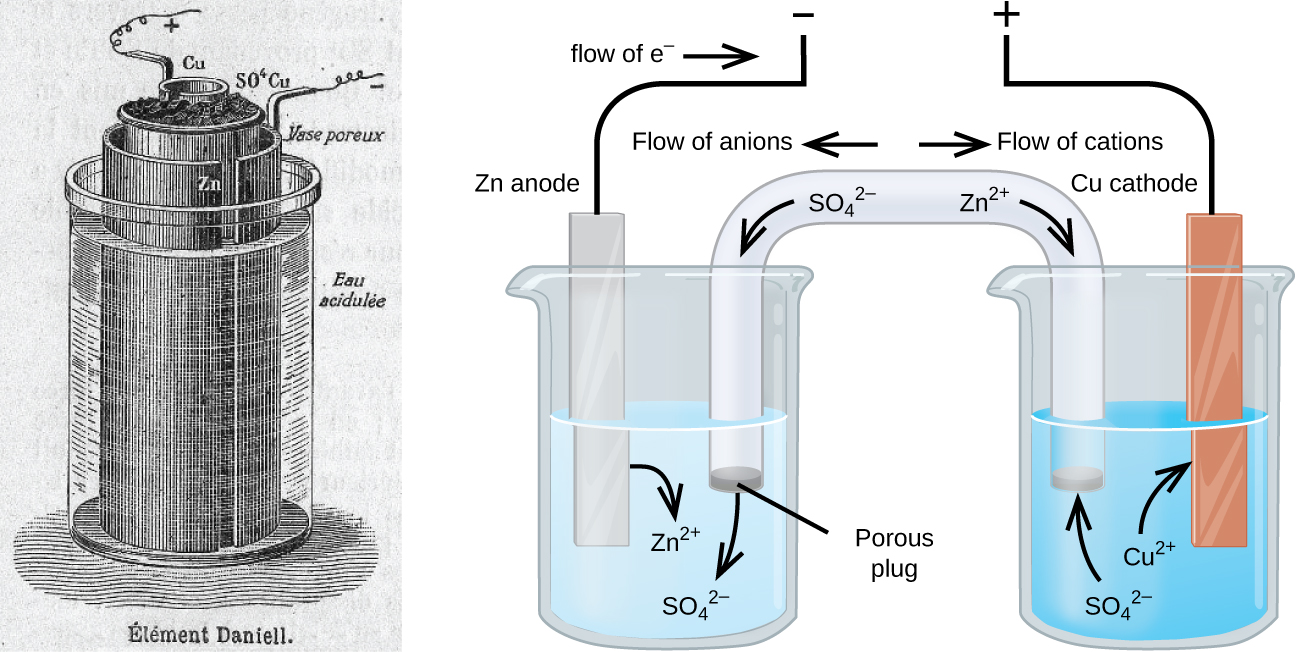
This figure contains a patent drawing for an electrochemical cell on the left labelled Element Daniell and a diagram of an electrochemical cell on the right. In the diagram, two beakers are shown. Each is just over half full. The beaker on the left contains a blue solution. The beaker on the right contains a colorless solution. A glass tube in the shape of an inverted U connects the two beakers at the center of the diagram. The tube contents are colorless. The ends of the tubes are beneath the surface of the solutions in the beakers and a small grey plug is present at each end of the tube. The plug in the left beaker is labeled “Porous plug.” Each beaker shows a metal strip partially submerged in the liquid. The beaker on the left has a silver strip that is labeled “Z n anode” at the top. The beaker on the right has an orange brown strip that is labeled “C u cathode” at the top.  A wire extends up and toward the center from the top of each of these strips before stopping. The end of the left wire points up to a negative sign. The end of the right wire points up to a positive sign. An arrow points toward the left wire which is labeled “Flow of e superscript negative.” A curved arrow extends from the Z n strip into the surrounding solution. The tip of this arrow is labeled “Z n superscript 2 plus.” A curved arrow extends from the salt bridge into the beaker on the left into the blue solution. The tip of this arrow is labeled “S O subscript 4 superscript 2 negative.” A curved arrow extends from the solution in the beaker on the right to the C u strip. The base of this arrow is labeled “C u superscript 2 plus.” A curved arrow extends from the colorless solution to salt bridge in the beaker on the right. The base of this arrow is labeled “S O subscript 4 superscript 2 negative.” Just right of the center of the salt bridge on the tube an arrow is placed on the salt bridge that points down and to the right. The base of this arrow is labeled “Z n superscript 2 plus.” Just above this region of the tube appears the label “Flow of cations.” Just left of the center of the salt bridge on the tube an arrow is placed on the salt bridge that points down and to the left. The base of this arrow is labeled “S O subscript 4 superscript 2 negative.” Just above this region of the tube appears the label “Flow of anions.”
Figure 17.8 — 17.5 Batteries and Fuel Cells

Figure 17.8 Illustration of a Daniell cell taken from a 1904 journal publication (left) along with a simplified illustration depicting the electrochemistry of the cell (right). The 1904 design used a porous clay pot to both contain one of the half-cell’s content and to serve as a salt bridge to the other half-cell.

Paul Flowers, Klaus Theopold, Richard Langley, and William R. Robinson, Chemistry 2E, OpenStax. · CC BY-NC-SA 4.0 · Original image ↗ · Access for free ↗
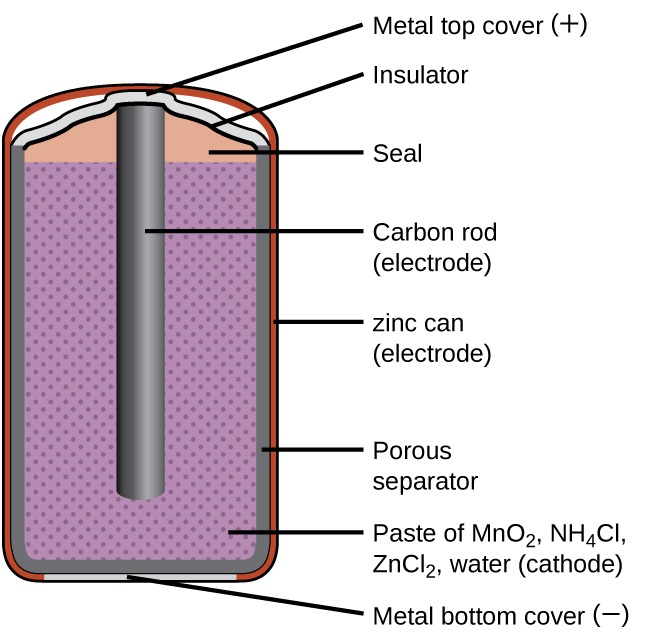
A diagram of a cross section of a dry cell battery is shown. The overall shape of the cell is cylindrical. The lateral surface of the cylinder, indicated as a thin red line, is labeled “zinc can (electrode).” Just beneath this is a slightly thicker dark grey surface that covers the lateral surface, top, and bottom of the battery, which is labeled “Porous separator.” Inside is a purple region with many evenly spaced small darker purple dots, labeled “Paste of M n O subscript 2, N H subscript 4 C l, Z n C l subscript 2, water (cathode).” A dark grey rod, labeled “Carbon rod (electrode),” extends from the top of the battery, leaving a gap of less than one-fifth the height of the battery below the rod to the bottom of the cylinder. A thin grey line segment at the very bottom of the cylinder is labeled “Metal bottom cover (negative).” The very top of the cylinder has a thin grey surface that curves upward at the center over the top of the carbon electrode at the center of the cylinder. This upper surface is labeled “Metal top cover (positive).” A thin dark grey line just below this surface is labeled “Insulator.” Below this, above the purple region, and outside of the carbon electrode at the center is an orange region that is labeled “Seal.”
Figure 17.9 — 17.5 Batteries and Fuel Cells

Figure 17.9 A schematic diagram shows a typical dry cell.

Paul Flowers, Klaus Theopold, Richard Langley, and William R. Robinson, Chemistry 2E, OpenStax. · CC BY-NC-SA 4.0 · Original image ↗ · Access for free ↗
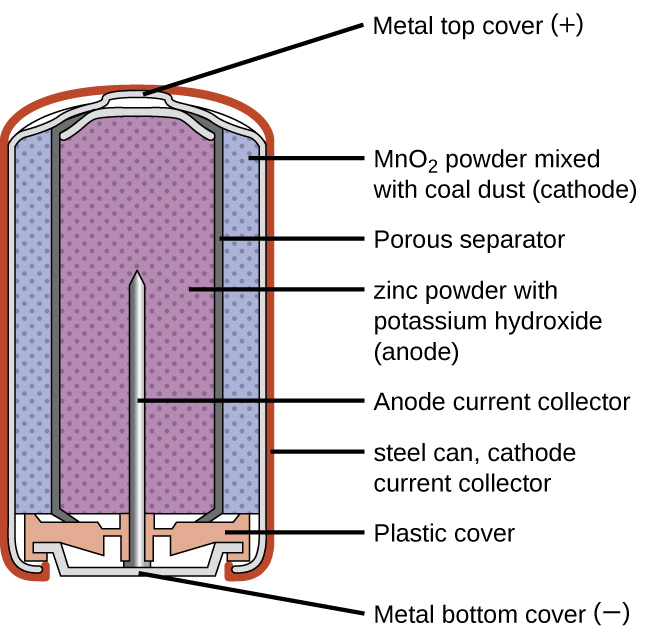
A diagram of a cross section of an alkaline battery is shown. The overall shape of the cell is cylindrical. The lateral surface of the cylinder, indicated as a thin red line, is labeled “Outer casing.” Just beneath this is a thin, light grey surface that covers the lateral surface and top of the battery. Inside is a blue region with many evenly spaced small darker dots, labeled “M n O subscript 2 (cathode).” A thin dark grey layer is just inside, which is labeled “Ion conducting separator.” A purple region with many evenly spaced small darker dots fills the center of the battery and is labeled “ zinc (anode).” The very top of the battery has a thin grey curved surface over the central purple region. The curved surface above is labeled “Positive connection (plus).” At the base of the battery, an orange structure, labeled “Protective cap,” is located beneath the purple and blue central regions. This structure holds a grey structure that looks like a nail with its head at the bottom and pointed end extending upward into the center of the battery. This nail-like structure is labeled “Current pick up.” At the very bottom of the battery is a thin grey surface that is held by the protective cap. This surface is labeled “Negative terminal (negative).”
Figure 17.10 — 17.5 Batteries and Fuel Cells

Figure 17.10 Alkaline batteries were designed as improved replacements for zinc-carbon (dry cell) batteries.

Paul Flowers, Klaus Theopold, Richard Langley, and William R. Robinson, Chemistry 2E, OpenStax. · CC BY-NC-SA 4.0 · Original image ↗ · Access for free ↗
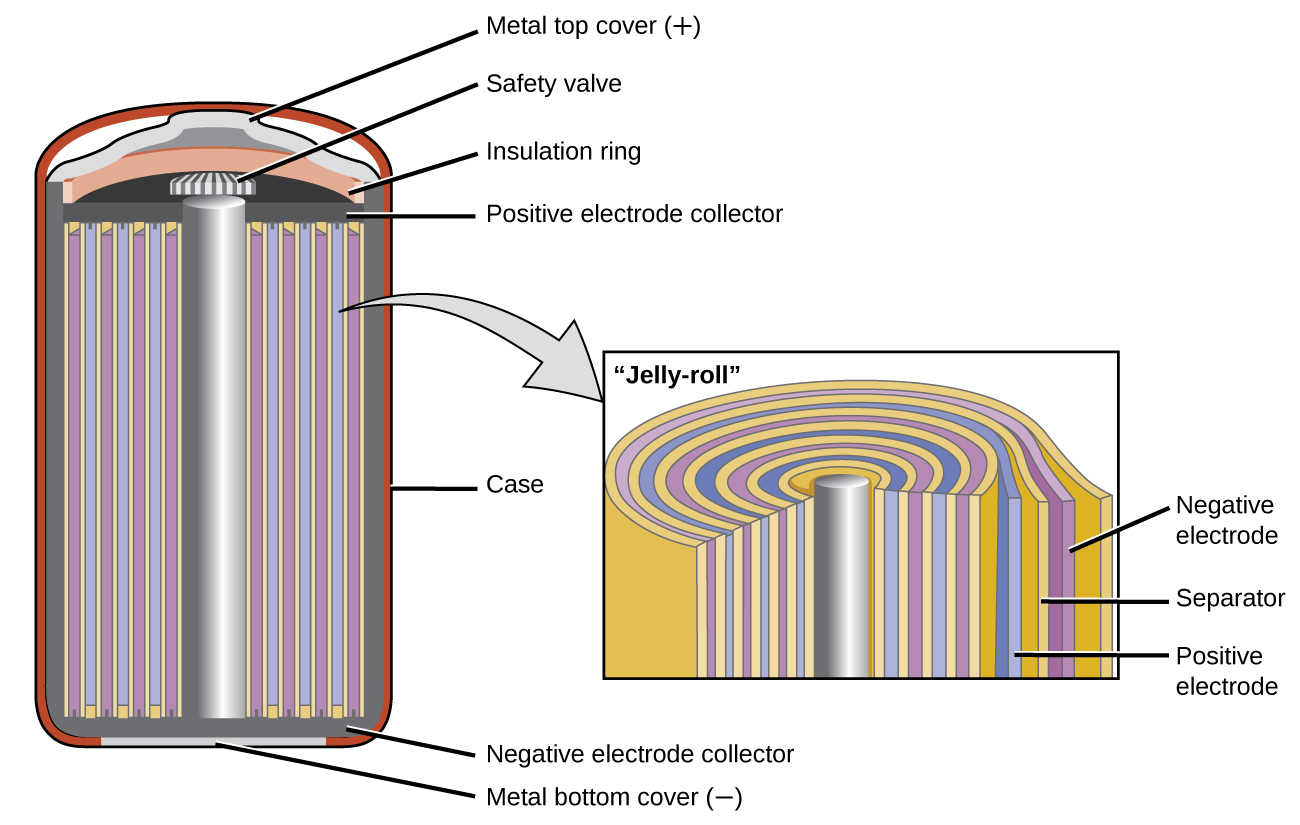
A diagram is shown of a cross section of a nickel cadmium battery. This battery is in a cylindrical shape. An outer red layer is labeled “case.” Just inside this layer is a thin, dark grey layer which is labeled at the bottom of the cylinder as “Negative electrode collector.” A silver rod extends upward through the center of the battery, which is surrounded by alternating layers, shown as vertical repeating bands, of yellow, purple, yellow, and blue. A slightly darker grey narrow band extends across the top of these alternating bands, which is labeled “Positive electrode collector.” A thin light grey band appears at the very bottom of the cylinder, which is labeled “Metal bottom cover (negative).” A small grey and white striped rectangular structure is present at the top of the central silver cylinder, which is labeled “Safety valve.” Above this is an orange layer that curves upward over the safety valve, which is labeled “Insulation ring.” Above this is a thin light grey layer that projects upward slightly at the center, which is labeled “Metal top cover (plus).” A light grey arrow points to a rectangle to the right that illustrates the layers at the center of the battery under magnification. From the central silver rod, the layers shown repeat the alternating pattern yellow, blue, yellow, and purple three times, with a final yellow layer covering the last purple layer. The outermost purple layer is labeled “Negative electrode.” The yellow layer beneath it is labeled “Separator.” The blue layer just inside is labeled “Positive electrode.”
Figure 17.11 — 17.5 Batteries and Fuel Cells

Figure 17.11 NiCd batteries use a “jelly-roll” design that significantly increases the amount of current the battery can deliver as compared to a similar-sized alkaline battery.

Paul Flowers, Klaus Theopold, Richard Langley, and William R. Robinson, Chemistry 2E, OpenStax. · CC BY-NC-SA 4.0 · Original image ↗ · Access for free ↗
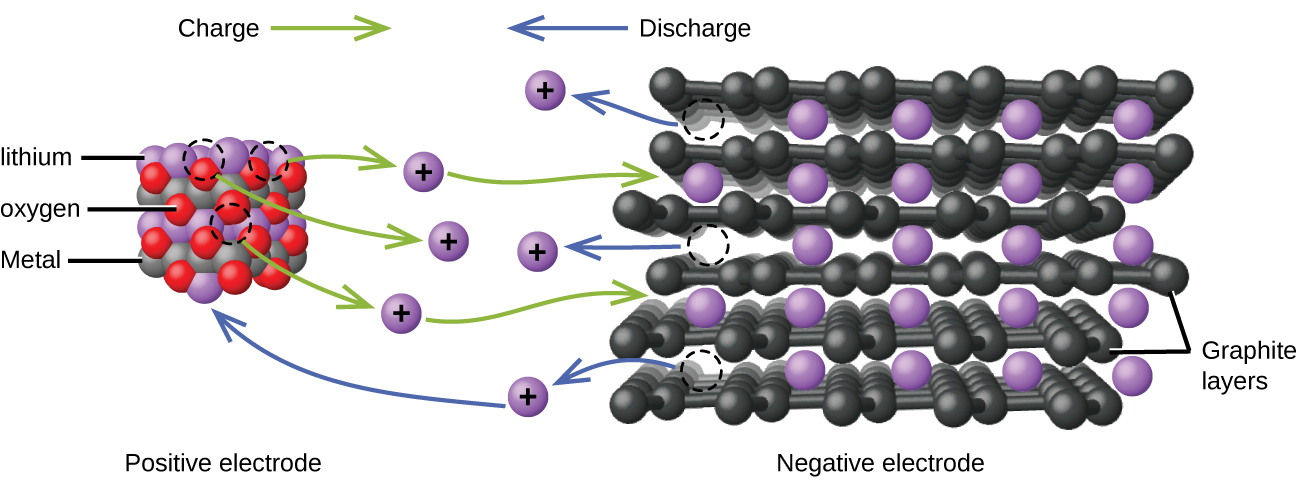
This figure shows a model of the flow of charge in a lithium ion battery. At the left, an approximately cubic structure formed by alternating red, grey, and purple spheres is labeled below as “Positive electrode.” The purple spheres are identified by the label “lithium.” The grey spheres are identified by the label “Metal.” The red spheres are identified by the label “oxygen.” Above this structure is the label “Charge” followed by a right pointing green arrow. At the right is a figure with layers of black interconnected spheres with purple spheres located in gaps between the layers. The black layers are labeled “Graphite layers.” Below the purple and black structure is the label “Negative electrode.” Above is the label “Discharge,” which is preceded by a blue arrow which points left. At the center of the diagram between the two structures are six purple spheres which are each labeled with a plus symbol. Three curved green arrows extend from the red, purple, and grey structure to each of the three closest purple plus labeled spheres. Green curved arrows extend from the right side of the upper and lower of these three purple plus labeled spheres to the black and purple layered structure. Three blue arrows extend from the purple and black layered structure to the remaining three purple plus labeled spheres at the center of the diagram. The base of each arrow has a circle formed by a dashed curved line in the layered structure. The lowest of the three purple plus marked spheres reached by the blue arrows has a second blue arrow extending from its left side which points to a purple sphere in the purple, green, and grey structure.
Figure 17.12 — 17.5 Batteries and Fuel Cells

Figure 17.12 In a lithium ion battery, charge flows as the lithium ions are transferred between the anode and cathode.

Paul Flowers, Klaus Theopold, Richard Langley, and William R. Robinson, Chemistry 2E, OpenStax. · CC BY-NC-SA 4.0 · Original image ↗ · Access for free ↗
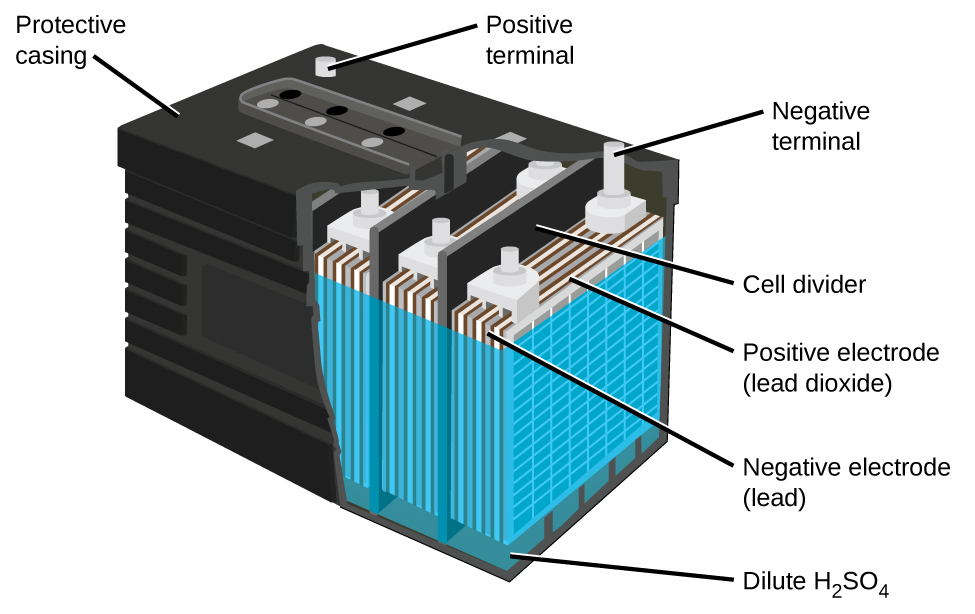
A diagram of a lead acid battery is shown. A black outer casing, which is labeled “Protective casing” is in the form of a rectangular prism. Grey cylindrical projections extend upward from the upper surface of the battery in the back left and back right corners. At the back right corner, the projection is labeled “Positive terminal.” At the back right corner, the projection is labeled “Negative terminal.” The bottom layer of the battery diagram is a dark green color, which is labeled “Dilute H subscript 2 S O subscript 4.” A blue outer covering extends upward from this region near the top of the battery. Inside, alternating grey and white vertical “sheets” are packed together in repeating units within the battery. The battery has the sides cut away to show three of these repeating units which are separated by black vertical dividers, which are labeled as “cell dividers.” The grey layers in the repeating units are labeled “Negative electrode (lead).” The white layers are labeled “Postive electrode (lead dioxide).”
Figure 17.13 — 17.5 Batteries and Fuel Cells

Figure 17.13 The lead acid battery in your automobile consists of six cells connected in series to give 12 V.

Paul Flowers, Klaus Theopold, Richard Langley, and William R. Robinson, Chemistry 2E, OpenStax. · CC BY-NC-SA 4.0 · Original image ↗ · Access for free ↗
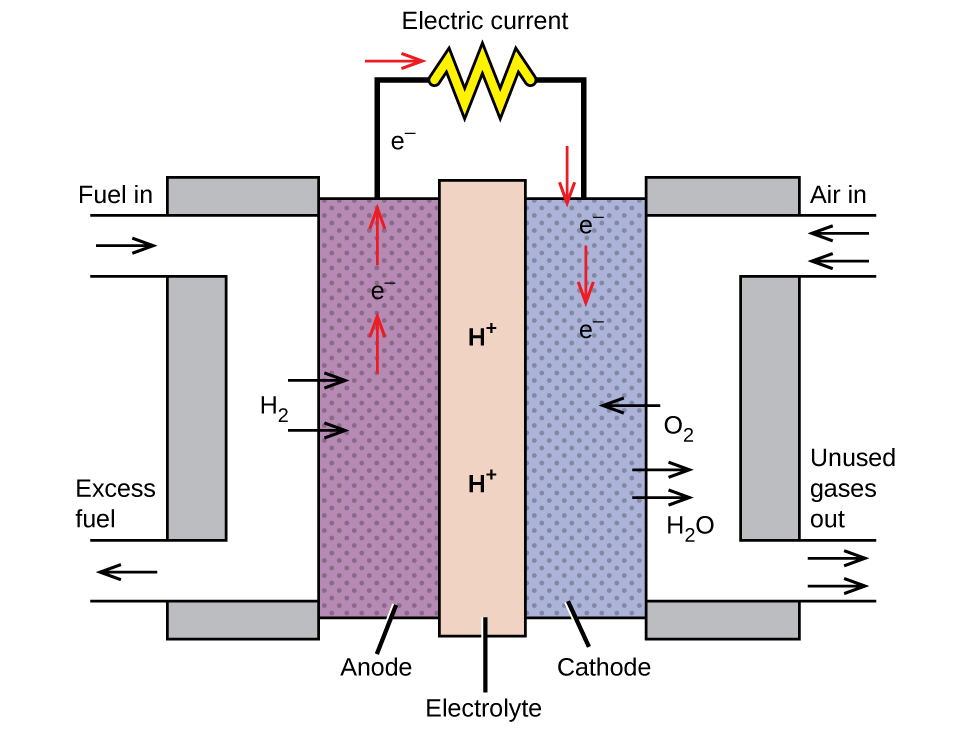
A diagram is shown of a hydrogen fuel cell. At the center is a vertical rectangle which is shaded dark gray and labeled “Electrolyte.” This region has two labels for H superscript plus in it. To the right and left are narrow vertical rectangles shaded light gray. The one to the right is labeled “Cathode” and the one to the left is labeled “Anode.” To the left of the left-most light gray region is a white region shaped like a closed left bracket. A yellow arrow points in to the white region with the label to show “Fuel In.” In the middle of the white area are two yellow arrows pointing toward the gray shading labeled “H subscript 2.” At the bottom of the white region is a yellow arrow pointing out that is labeled “Excess Fuel.” On the right side is another white region that makes a right closed bracket shape. There are two arrows with the label “Air In” and “H subscript 2 O” in the upper left side of this area pointing in. One arrow is light blue and one is dark blue. In the middle to the white area is a light blue arrow pointing toward the gray shading. The arrow is labeled “O subscript 2.” Below that are two dark blue arrows pointing out from the gray shading to the white area labeled “H subscript 2 O.” At the bottom of the white region are the light blue arrow for O subscript 2 and the dark blue arrow for H subscript 2 O pointing out. This is labeled “Unused Gases Out.” Black line segments extend upward from the light gray shaded regions. These line segments are connected by a horizontal segment that has a curly shape in a circle at the center. This shape is labeled “Electric Current.” In the left light gray shaded region above the yellow arrows is a red arrow pointing up, the label e superscript minus above it, and then another red arrow. The black line segment above this area also has the label e superscript minus. Where the line turns right to connect to the Electric Current shape is a right-facing red arrow. On the other side of the shape where the line turns downward to connect to the other light gray shaded region is a red downward-facing arrow. Below that arrow in the light gray region is the label e superscript minus, followed by a red down arrow, followed by another e superscript minus label that stops before the light blue arrow pointing in to the shaded area.
Figure 17.14 — 17.5 Batteries and Fuel Cells

Figure 17.14 In this hydrogen fuel cell, oxygen from the air reacts with hydrogen, producing water and electricity.

Paul Flowers, Klaus Theopold, Richard Langley, and William R. Robinson, Chemistry 2E, OpenStax. · CC BY-NC-SA 4.0 · Original image ↗ · Access for free ↗

Source: 17.5 Batteries and Fuel Cells
124 terms, alphabetically ordered

Acid · ·

In the Brønsted–Lowry model, a substance that can donate a . Acidic have a higher activity than water.

Read explanation · OpenStax ↗
Activation energy ·

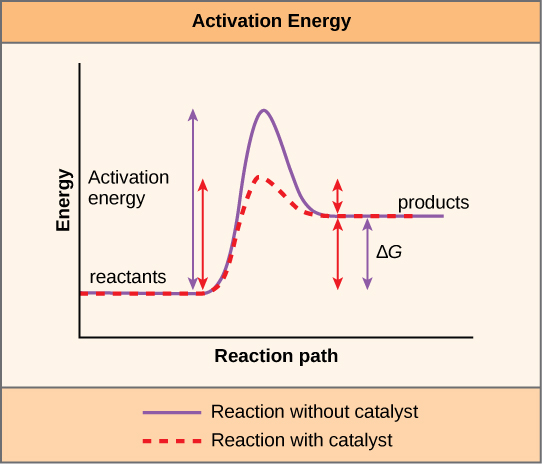
The energy barrier that must overcome to reach a and undergo .

Read explanation · OpenStax ↗
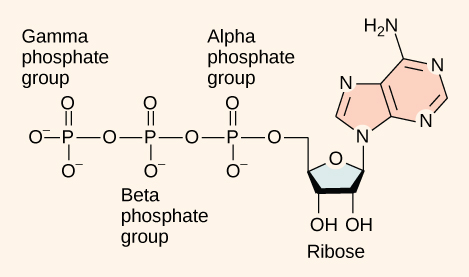
Adenosine triphosphate

An energy-carrying ; its powers many cellular processes, including cycles.

Read explanation · OpenStax ↗
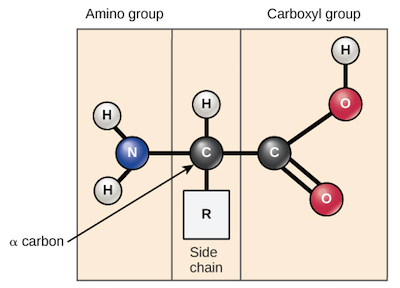
Alpha carbon · ·

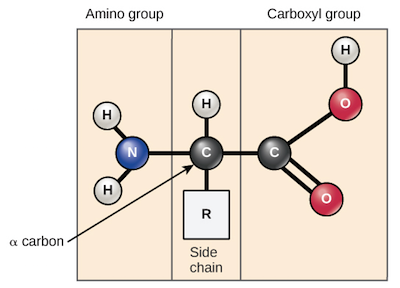
The central carbon next to the carboxyl carbon. In a standard it binds an , hydrogen, and .

Read explanation · OpenStax ↗
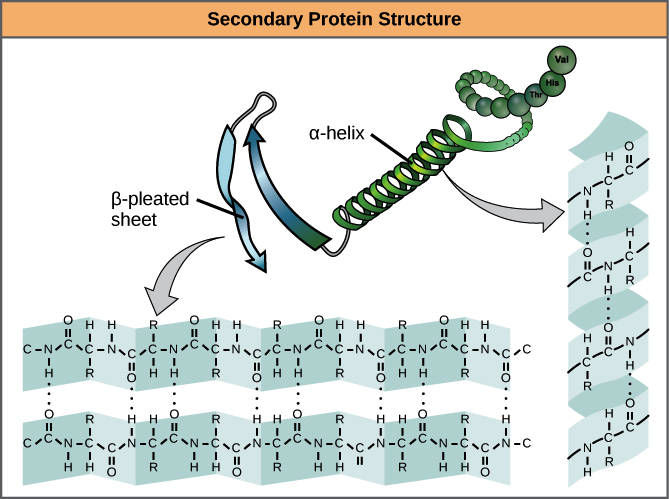
Alpha helix · · · · · ·

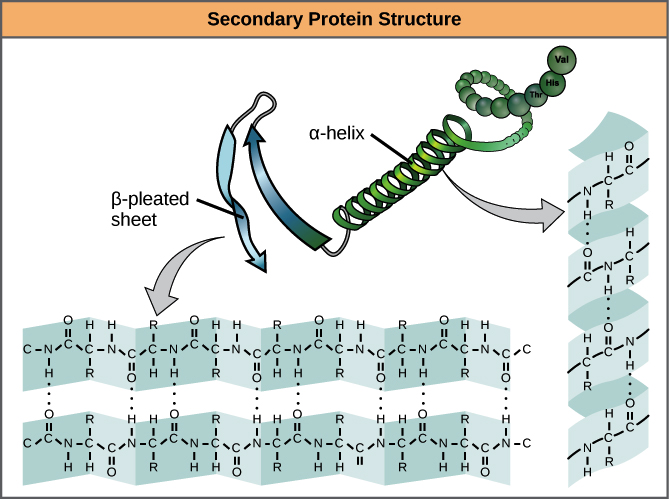
A helical stabilized by between a oxygen and an hydrogen four later.

Read explanation · OpenStax ↗
Amide · · ·

A group containing a carbon bonded to nitrogen. are amide linkages.

Read explanation · OpenStax ↗
Amino acid

A building block containing amino and and a characteristic .

Read explanation · OpenStax ↗
Amino acid residue · ·

The part of an incorporated into a chain. Residue can also describe another building block within a larger .

Read explanation · OpenStax ↗
Amino group · · ·

A nitrogen-containing . A free ’s amino group is typically (NH₃⁺) near physiological ; ’s ring nitrogen is an exception to this formula.

Read explanation · OpenStax ↗
Amphipathic

Having both a region and a region, as in a or .

Read explanation · OpenStax ↗
Anode

The positive in an apparatus; negatively migrate toward it.

Read explanation · Thermo Fisher ↗
Antiparallel

Running in opposite directions, as with two strands or neighboring strands in some .

Read explanation · OpenStax ↗
Aqueous solution ·

A in which water is the .

Read explanation · OpenStax ↗
Atom

The smallest unit of an element that retains its chemical identity; it has a surrounded by .

Read explanation · OpenStax ↗
Beta sheet · · · · · ·

A made of aligned segments connected by ; strands may be parallel or .

Read explanation · OpenStax ↗
Biomolecule

A made by or involved in living systems, including , , , and .

Read explanation · OpenStax ↗
Blotting ·

Transfer of separated or to a so a specific target can be detected.

Read explanation · Thermo Fisher ↗
Brønsted–Lowry base · · · · · · · · · · ·

In the Brønsted–Lowry model, a substance that can accept a . Basic solutions have lower activity than water.

Read explanation · OpenStax ↗
Carbohydrate

A class of including sugars and their , used for energy storage, structure, and recognition.

Read explanation · OpenStax ↗
Carbonyl group · ·

A carbon double-bonded to oxygen, C=O; present in and many other .

Read explanation · OpenStax ↗
Carboxyl group · ·

An , COOH. In free it is usually to COO⁻ near physiological .

Read explanation · OpenStax ↗
Catalyst · ·

A substance that speeds a by providing a pathway with lower and is regenerated rather than consumed overall.

Read explanation · OpenStax ↗
Cathode

The negative in an apparatus; positively migrate toward it.

Read explanation · Thermo Fisher ↗
Chemical reaction ·

A process that rearranges and chemical bonds, converting into .

Read explanation · OpenStax ↗
Chromosome ·

An organized with associated that carries . A replicated chromosome has two .

Read explanation · OpenStax ↗
Circular dichroism spectroscopy

A method measuring the difference in absorption of left- and right-circularly polarized light, often used to assess .

Read explanation · JASCO ↗
Codon

A sequence of three that specifies an or a stop signal.

Read explanation · OpenStax ↗
Concentration

The amount of a substance in a specified volume or mass of mixture.

Read explanation · OpenStax ↗
concentration cell

Cell deriving electrical potential from an activity difference between otherwise similar half-cells.

Read explanation · OpenStax ↗
conductor

Material with that can move readily through it.

Read explanation · OpenStax ↗
Covalent bond · ·

A bond in which share pairs. and are covalent.

Read explanation · OpenStax ↗
Cysteine ·

An with a . Two cysteines can form a .

Read explanation · OpenStax ↗
Deoxyribonucleic acid

The that stores genetic information used to specify and sequences.

Read explanation · OpenStax ↗
Deprotonation

Removal of a from a or group; this changes its by minus one.

Read explanation · OpenStax ↗
Detergent

An substance that can associate with both water and material; detergents can disrupt or interactions.

Read explanation · Thermo Fisher ↗
Disulfide bond · · ·

A covalent sulfur–sulfur bond formed by of two , which can stabilize structure.

Read explanation · NCBI Bookshelf ↗
DNA replication

Copying so genetic information can be passed to daughter cells. Each guides a complementary new strand.

Read explanation · OpenStax ↗
Electric charge · · ·

An electrical property that can be positive or negative. Opposite charges attract and like charges repel; net charge is the sum of all charges on a particle.

Read explanation · OpenStax ↗
Electric field

A quantity describing the electrical force per unit positive . An applied field drives through a gel during .

Read explanation · Thermo Fisher ↗
electrical resistance ·

Voltage across a component divided by current through it under specified conditions.

Read explanation · OpenStax ↗
Electrode

A that connects an electrical circuit to a or other medium; the and are electrodes.

Read explanation · Thermo Fisher ↗
electrolytic cell

Cell in which an external electrical source drives a nonspontaneous redox .

Read explanation · OpenStax ↗
Electron

A negatively subatomic particle. Electron sharing and transfer determine much of chemical bonding.

Read explanation · OpenStax ↗
Electronegativity ·

An ’s tendency to attract shared in a chemical bond. Unequal attraction can make a bond .

Read explanation · OpenStax ↗
Electrophoresis

Movement of in an , used to separate through a support such as a gel.

Read explanation · Thermo Fisher ↗
Electrostatic interaction · ·

Attraction between opposite electrical or repulsion between like .

Read explanation · OpenStax ↗
Entropy

A measure related to the number of accessible microscopic arrangements and the dispersal of energy.

Read explanation · OpenStax ↗
Equilibrium

A state where opposing processes occur at equal rates, so macroscopic or other properties remain constant.

Read explanation · OpenStax ↗
Equilibrium constant

A ratio of to activities at , each raised to its stoichiometric coefficient. At a fixed temperature, a does not change this ratio.

Read explanation · OpenStax ↗
Eukaryote ·

An organism whose cells have a -enclosed ; animals, plants, fungi, and protists are eukaryotes.

Read explanation · OpenStax ↗
Faraday constant

per of , approximately 96,485 C/mol.

Read explanation · OpenStax ↗
Functional group

A group of whose chemical behavior gives a characteristic and properties.

Read explanation · OpenStax ↗
galvanic cell

Electrochemical cell producing electrical from a spontaneous redox .

Read explanation · OpenStax ↗
Gene

A sequence that contributes to a functional or , together with the information needed to express it.

Read explanation · OpenStax ↗
Gene expression

Production of a functional from a , including and, for -coding , .

Read explanation · NCBI Bookshelf ↗
Gibbs free energy · ·

A quantity used to predict whether a process is favorable at constant temperature and pressure. A negative change favors the forward process.

Read explanation · OpenStax ↗
Gibbs free energy change · ·

The change in during a process. At constant temperature and pressure, a negative value favors the forward under the stated conditions; it does not specify speed.

Read explanation · OpenStax ↗
Gradient

A change in a quantity, such as , , or density, across a distance or over time.

Read explanation · Thermo Fisher ↗
Hydrogen bond ·

An attraction between a hydrogen bonded to an and another . hydrogen bonds stabilize .

Read explanation · OpenStax ↗
Hydrogen ion · ·

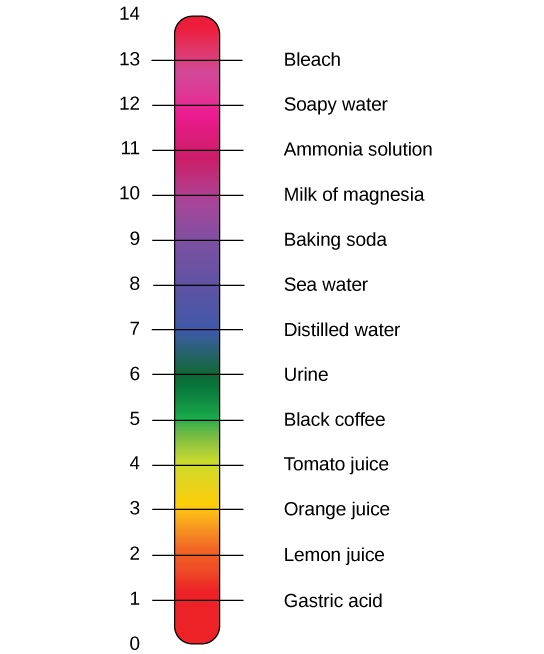
A positively hydrogen species. H⁺ denotes a , which is hydrated in water; its activity determines .

Read explanation · OpenStax ↗
Hydrolysis

Breaking a chemical bond by adding water. hydrolysis separates .

Read explanation · OpenStax ↗
Hydrophilic

Interacting favorably with water, typically because a group is or .

Read explanation · OpenStax ↗
Hydrophobic

Interacting poorly with water. often gather in a ’s interior.

Read explanation · OpenStax ↗
Hydroxide ion ·

The negatively OH⁻. Basic contain a higher hydroxide ion activity than water at the same temperature.

Read explanation · OpenStax ↗
Ion · ·

An or with a net because its numbers of and do not balance.

Read explanation · OpenStax ↗
Kinetics

The study of and the factors and mechanisms that control them. A favorable may still proceed slowly.

Read explanation · OpenStax ↗
linkage

A tendency of nearby on the same to be inherited together.

Read explanation · OpenStax ↗
Lipid

A broad class of largely or , including fats, , and steroids.

Read explanation · OpenStax ↗
locus

The specific position of a or other feature.

Read explanation · OpenStax ↗
Logarithm · · ·

The exponent needed to obtain a number from a chosen fixed number. For decimal logarithms, log₁₀(100) = 2 because 10² = 100; uses the negative decimal logarithm of activity.

Read explanation · OpenStax ↗
mechanical power

Rate of energy transfer, measured in watts.

Read explanation · OpenStax ↗
mechanical work

Energy transferred by a force acting through ; the force component parallel to motion contributes.

Read explanation · OpenStax ↗
Membrane · · · ·

A thin boundary or sheet. Cell membranes are bilayers containing ; membranes are synthetic supports that hold or for detection.

Read explanation · OpenStax ↗
Messenger RNA ·

An that carries coding information used by to synthesize a .

Read explanation · OpenStax ↗
mole

Amount containing exactly 6.02214076 × 10²³ specified entities.

Read explanation · OpenStax ↗
Molecular chaperone · ·

A that assists other in folding or prevents , without specifying their sequence.

Read explanation · NCBI Bookshelf ↗
Molecule

Two or more joined by . A molecule may be electrically or carry a .

Read explanation · OpenStax ↗
Nernst equation

Relationship between cell potential, standard potential, temperature, and .

Read explanation · OpenStax ↗
Neutral

Having no net . For a , neutral instead means equal and activities; its is about 7 at 25 °C.

Read explanation · OpenStax ↗
Nitrogenous base · · ·

A nitrogen-containing ring component of ; its pairing interactions help specify sequences.

Read explanation · OpenStax ↗
Nonpolar ·

Lacking a substantial separation of . Nonpolar groups generally interact poorly with water.

Read explanation · OpenStax ↗
Nucleic acid

A of , such as or , used in information storage, expression, and other cellular functions.

Read explanation · OpenStax ↗
Nucleotide

A joined to a sugar and one or more .

Read explanation · OpenStax ↗
Nucleus ·

A -enclosed compartment containing most of a cell’s .

Read explanation · OpenStax ↗
Oxidation ·

Loss of or an increase in oxidation state. Oxidizing two can form a .

Read explanation · OpenStax ↗
Peptide

A chain of joined by ; the term commonly describes chains shorter than a typical .

Read explanation · OpenStax ↗
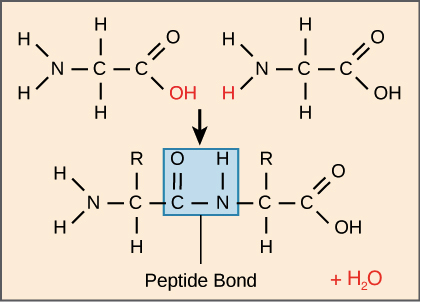
Peptide bond ·

A covalent between the carboxyl carbon of one and the amino nitrogen of the next.

Read explanation · OpenStax ↗
pH

A measure of , defined as the negative of activity. Lower pH means greater ; pH influences .

Read explanation · OpenStax ↗
Phosphate group ·

A phosphorus-containing group bonded to oxygens; phosphate groups occur in , , and modified .

Read explanation · OpenStax ↗
Phospholipid

An with a -containing region and tails; a major component of cellular .

Read explanation · OpenStax ↗
physical displacement ·

Signed or difference between final and initial position.

Read explanation · OpenStax ↗
Polar

Having an uneven distribution of . Polar groups often interact favorably with water.

Read explanation · OpenStax ↗
Polymer

A large made from many linked molecular building blocks.

Read explanation · OpenStax ↗
Polypeptide

A chain of connected by . A functional can contain one or several such chains.

Read explanation · OpenStax ↗
Proline ·

An whose loops back to the nitrogen, restricting rotation and often creating bends.

Read explanation · OpenStax ↗
Protein

One or more folded chains that perform biological roles such as , transport, signaling, or structural support.

Read explanation · OpenStax ↗
Protein aggregation · ·

Association of into larger clusters, often when exposed surfaces of unfolded stick together.

Read explanation · NCBI Bookshelf ↗
Protein backbone ·

The repeating nitrogen–alpha-carbon– chain of a , excluding its variable .

Read explanation · OpenStax ↗
Proton

A positively subatomic particle. In – chemistry, donating a proton means transferring a .

Read explanation · OpenStax ↗
Protonation

Addition of a to an , , or ; this changes its by plus one.

Read explanation · OpenStax ↗
R group · ·

The variable side chain attached to an ’s . It determines identity, , , and chemical behavior.

Read explanation · OpenStax ↗
Reactant

A starting substance transformed during a .

Read explanation · OpenStax ↗
Reaction intermediate · ·

A species formed in one step and consumed in another. It occupies a local energy minimum between .

Read explanation · OpenStax ↗
Reaction product ·

A substance formed by a .

Read explanation · OpenStax ↗
reaction quotient

-to- activity ratio with stoichiometric exponents at the current composition.

Read explanation · OpenStax ↗
Reaction rate · ·

How quickly are consumed or form, usually expressed as a change per unit time.

Read explanation · OpenStax ↗
Reduction

Gain of or a decrease in state. Reducing a restores two .

Read explanation · OpenStax ↗
reduction potential

potential for a half- written as a .

Read explanation · OpenStax ↗
Ribonucleic acid ·

A with roles in , regulation, and ; carries -coding information.

Read explanation · OpenStax ↗
Ribosome ·

A complex of and that translates into a .

Read explanation · OpenStax ↗
Salt bridge · ·

An attraction between oppositely groups, such as and .

Read explanation · NCBI Bookshelf ↗
Secondary structure

Local folding, such as and , stabilized mainly by .

Read explanation · OpenStax ↗
Sister chromatid

One of the two copies of a produced by . An intact sister chromatid can supply a template for accurate repair.

Read explanation · Biology LibreTexts / Oregon State University ↗
Solubility ·

The amount of a substance that can dissolve in a under specified conditions. Soluble means able to dissolve; insoluble means only very slightly soluble in that .

Read explanation · OpenStax ↗
Solute

A dissolved component of a .

Read explanation · OpenStax ↗
Solution

A homogeneous mixture in which are dissolved in a .

Read explanation · OpenStax ↗
Solvent

The component of a that dissolves other substances, usually the component present in the greatest amount.

Read explanation · OpenStax ↗
spatial vector ·

Quantity with both magnitude and direction, combined by adding components.

Read explanation · OpenStax ↗
Template strand · · ·

A preexisting strand whose sequence guides complementary nucleic- synthesis.

Read explanation · OpenStax ↗
Thermodynamics ·

The study of energy, , and . It helps determine whether a process is favorable, while concerns how fast it occurs.

Read explanation · OpenStax ↗
Thiol group · · · ·

A sulfur bonded to hydrogen, –SH. thiols can form through .

Read explanation · OpenStax ↗
Transcription

Synthesis of using a template.

Read explanation · OpenStax ↗
Transition state

A fleeting, high-energy arrangement at a barrier. It is an energy maximum along the path, rather than a stable .

Read explanation · OpenStax ↗
Translation ·

Synthesis of a on a using the sequence of in .

Read explanation · OpenStax ↗

Chemistry 2E 17 — Summary

OpenStax · Chemistry 2E 17 — Summary ↗
Instructional page including learning objectives, examples, figures, source tables and questions. Site navigation and embedded media players are omitted; source media links remain available.

17.1 Review of Redox Chemistry

Redox are defined by changes in numbers, and those most relevant to electrochemistry involve actual transfer of . Aqueous phase redox processes often involve water or its characteristic , H+ and OH−, as in addition to the oxidant and reductant, and equations representing these can be challenging to balance. The half- method is a systematic approach to balancing such equations that involves separate treatment of the and half-.

17.2 Galvanic Cells

Galvanic cells are devices in which a spontaneous redox occurs indirectly, with the oxidant and reductant redox couples contained in separate half-cells. are transferred from the reductant (in the half-cell) to the oxidant (in the half-cell) through an external circuit, and inert phase are transferred between half-cells, through a , to maintain . The construction and composition of a may be succinctly represented using chemical formulas and others symbols in the form of a cell schematic (cell notation).

17.3 Electrode and Cell Potentials

The property of potential, E, is the energy associated with the separation/transfer of . In electrochemistry, the potentials of cells and half-cells are quantities that reflect the driving force or the spontaneity of their redox processes. The cell potential of an electrochemical cell is the difference in between its and . To permit easy sharing of half-cell potential data, the standard hydrogen (SHE) is assigned a potential of exactly 0 V and used to define a single potential for any given half-cell. The potential of a half-cell, EX, is the cell potential of said half-cell acting as a when connected to a SHE acting as an . When the half-cell is operating under standard state conditions, its potential is the standard potential, E°X. Standard potentials reflect the relative oxidizing strength of the half-’s , with stronger oxidants exhibiting larger (more positive) E°X values. Tabulations of standard potentials may be used to compute standard cell potentials, E°cell, for many redox . The arithmetic sign of a cell potential indicates the spontaneity of the cell , with positive values for spontaneous and negative values for nonspontaneous (spontaneous in the reverse direction).

17.4 Potential, Free Energy, and Equilibrium

Potential is a quantity reflecting the intrinsic driving force of a redox process, and it is directly related to the change and for the process. For redox processes taking place in electrochemical cells, the maximum (electrical) done by the system is easily computed from the cell potential and the stoichiometry and is equal to the change for the process. The for a redox is logarithmically related to the ’s cell potential, with larger (more positive) potentials indicating with greater driving force that equilibrate when the has proceeded far towards completion (large value of K). Finally, the potential of a redox process varies with the composition of the mixture, being related to the standard potential and the value of its , , as described by the .

17.5 Batteries and Fuel Cells
Galvanic cells designed specifically to function as electrical supplies are called batteries. A variety of both single-use batteries (primary cells) and rechargeable batteries (secondary cells) are commercially available to serve a variety of applications, with important specifications including voltage, size, and lifetime. Fuel cells, sometimes called flow batteries, are devices that harness the energy of spontaneous redox normally associated with combustion processes. Like batteries, fuel cells enable the ’s transfer via an external circuit, but they require continuous input of the redox (fuel and oxidant) from an external reservoir. Fuel cells are typically much more efficient in converting the energy released by the to useful in comparison to internal combustion engines.

17.6 Corrosion

Spontaneous of metals by natural electrochemical processes is called corrosion, familiar examples including the rusting of iron and the tarnishing of silver. Corrosion process involve the creation of a in which different sites on the metal object function as and , with the corrosion taking place at the anodic site. Approaches to preventing corrosion of metals include use of a protective coating of zinc (galvanization) and the use of sacrificial anodes connected to the metal object (cathodic protection).

17.7 Electrolysis

Nonspontaneous redox processes may be forced to occur in electrochemical cells by the application of an appropriate potential using an external source—a process known as electrolysis. Electrolysis is the basis for certain ore refining processes, the industrial production of many chemical commodities, and the electroplating of metal coatings on various . Measurement of the current flow during electrolysis permits stoichiometric calculations.

17.5 Batteries and Fuel Cells
OpenStax · 17.5 Batteries and Fuel Cells ↗

Instructional page including learning objectives, examples, figures, source tables and questions. Site navigation and embedded media players are omitted; source media links remain available.

Learning Objectives

By the end of this section, you will be able to:

  • Describe the electrochemistry associated with several common batteries
  • Distinguish the operation of a fuel cell from that of a battery

There are many technological associated with the past two centuries of electrochemistry research, none more immediately obvious than the battery. A battery is a that has been specially designed and constructed in a way that best suits its intended use a source of electrical for specific applications. Among the first successful batteries was the Daniell cell, which relied on the spontaneous of zinc by copper(II) (Figure 17.8):

Zn(s)+Cu2+(aq)⟶Zn2+(aq)+Cu(s)
This figure contains a patent drawing for an electrochemical cell on the left labelled Element Daniell and a diagram of an electrochemical cell on the right. In the diagram, two beakers are shown. Each is just over half full. The beaker on the left contains a blue solution. The beaker on the right contains a colorless solution. A glass tube in the shape of an inverted U connects the two beakers at the center of the diagram. The tube contents are colorless. The ends of the tubes are beneath the surface of the solutions in the beakers and a small grey plug is present at each end of the tube. The plug in the left beaker is labeled “Porous plug.” Each beaker shows a metal strip partially submerged in the liquid. The beaker on the left has a silver strip that is labeled “Z n anode” at the top. The beaker on the right has an orange brown strip that is labeled “C u cathode” at the top.  A wire extends up and toward the center from the top of each of these strips before stopping. The end of the left wire points up to a negative sign. The end of the right wire points up to a positive sign. An arrow points toward the left wire which is labeled “Flow of e superscript negative.” A curved arrow extends from the Z n strip into the surrounding solution. The tip of this arrow is labeled “Z n superscript 2 plus.” A curved arrow extends from the salt bridge into the beaker on the left into the blue solution. The tip of this arrow is labeled “S O subscript 4 superscript 2 negative.” A curved arrow extends from the solution in the beaker on the right to the C u strip. The base of this arrow is labeled “C u superscript 2 plus.” A curved arrow extends from the colorless solution to salt bridge in the beaker on the right. The base of this arrow is labeled “S O subscript 4 superscript 2 negative.” Just right of the center of the salt bridge on the tube an arrow is placed on the salt bridge that points down and to the right. The base of this arrow is labeled “Z n superscript 2 plus.” Just above this region of the tube appears the label “Flow of cations.” Just left of the center of the salt bridge on the tube an arrow is placed on the salt bridge that points down and to the left. The base of this arrow is labeled “S O subscript 4 superscript 2 negative.” Just above this region of the tube appears the label “Flow of anions.”
Figure 17.8 — 17.5 Batteries and Fuel Cells
Figure 17.8 Illustration of a Daniell cell taken from a 1904 journal publication (left) along with a simplified illustration depicting the electrochemistry of the cell (right). The 1904 design used a porous clay pot to both contain one of the half-cell’s content and to serve as a salt bridge to the other half-cell.

Paul Flowers, Klaus Theopold, Richard Langley, and William R. Robinson, Chemistry 2E, OpenStax. · CC BY-NC-SA 4.0 · Original image ↗ · Access for free ↗

Modern batteries exist in a multitude of forms to accommodate various applications, from tiny button batteries that provide the modest needs of a wristwatch to the very large batteries used to supply backup energy to municipal grids. Some batteries are designed for single-use applications and cannot be recharged (primary cells), while others are based on conveniently reversible cell that allow recharging by an external source (secondary cells). This section will provide a summary of the basic electrochemical aspects of several batteries familiar to most consumers, and will introduce a related electrochemical device called a fuel cell that can offer improved performance in certain applications.

Link to Learning

Visit this site to learn more about batteries.

Single-Use Batteries

A common primary battery is the dry cell, which uses a zinc can as both container and (“–” terminal) and a graphite rod as the (“+” terminal). The Zn can is filled with an electrolyte paste containing manganese(IV) oxide, zinc(II) chloride, ammonium chloride, and water. A graphite rod is immersed in the electrolyte paste to complete the cell. The spontaneous cell involves the of zinc:

anode reaction:Zn(s)⟶Zn2+(aq)+2e−

and the of manganese(IV)

reduction reaction:2MnO2(s)+2NH4Cl(aq)+2e−⟶Mn2O3(s)+2NH3(aq)+H2O(l)+2Cl−

which together yield the cell :

cell reaction:2MnO2(s)+2NH4Cl(aq)+Zn(s)⟶Zn2+(aq)+Mn2O3(s)+2NH3(aq)+H2O(l)+2Cl−Ecell~1.5V

The voltage (cell potential) of a dry cell is approximately 1.5 V. Dry cells are available in various sizes (e.g., D, C, AA, AAA). All sizes of dry cells comprise the same components, and so they exhibit the same voltage, but larger cells contain greater amounts of the redox and therefore are capable of transferring correspondingly greater amounts of . Like other galvanic cells, dry cells may be connected in series to yield batteries with greater voltage outputs, if needed.

A diagram of a cross section of a dry cell battery is shown. The overall shape of the cell is cylindrical. The lateral surface of the cylinder, indicated as a thin red line, is labeled “zinc can (electrode).” Just beneath this is a slightly thicker dark grey surface that covers the lateral surface, top, and bottom of the battery, which is labeled “Porous separator.” Inside is a purple region with many evenly spaced small darker purple dots, labeled “Paste of M n O subscript 2, N H subscript 4 C l, Z n C l subscript 2, water (cathode).” A dark grey rod, labeled “Carbon rod (electrode),” extends from the top of the battery, leaving a gap of less than one-fifth the height of the battery below the rod to the bottom of the cylinder. A thin grey line segment at the very bottom of the cylinder is labeled “Metal bottom cover (negative).” The very top of the cylinder has a thin grey surface that curves upward at the center over the top of the carbon electrode at the center of the cylinder. This upper surface is labeled “Metal top cover (positive).” A thin dark grey line just below this surface is labeled “Insulator.” Below this, above the purple region, and outside of the carbon electrode at the center is an orange region that is labeled “Seal.”
Figure 17.9 — 17.5 Batteries and Fuel Cells
Figure 17.9 A schematic diagram shows a typical dry cell.

Paul Flowers, Klaus Theopold, Richard Langley, and William R. Robinson, Chemistry 2E, OpenStax. · CC BY-NC-SA 4.0 · Original image ↗ · Access for free ↗

Link to Learning

Visit this site to learn more about zinc-carbon batteries.

batteries (Figure 17.10) were developed in the 1950s to improve on the performance of the dry cell, and they were designed around the same redox couples. As their name suggests, these types of batteries use electrolytes, often potassium hydroxide. The are

anode:Zn(s)+2OH−(aq)⟶ZnO(s)+H2O(l)+2e−cathode:2MnO2(s)+H2O(l)+2e−⟶Mn2O3(s)+2OH−(aq)¯cell:Zn(s)+2MnO2(s)⟶ZnO(s)+Mn2O3(s)Ecell=+1.43 V

An battery can deliver about three to five times the energy of a zinc-carbon dry cell of similar size. batteries are prone to leaking potassium hydroxide, so they should be removed from devices for long-term storage. While some batteries are rechargeable, most are not. Attempts to recharge an battery that is not rechargeable often leads to rupture of the battery and leakage of the potassium hydroxide electrolyte.

A diagram of a cross section of an alkaline battery is shown. The overall shape of the cell is cylindrical. The lateral surface of the cylinder, indicated as a thin red line, is labeled “Outer casing.” Just beneath this is a thin, light grey surface that covers the lateral surface and top of the battery. Inside is a blue region with many evenly spaced small darker dots, labeled “M n O subscript 2 (cathode).” A thin dark grey layer is just inside, which is labeled “Ion conducting separator.” A purple region with many evenly spaced small darker dots fills the center of the battery and is labeled “ zinc (anode).” The very top of the battery has a thin grey curved surface over the central purple region. The curved surface above is labeled “Positive connection (plus).” At the base of the battery, an orange structure, labeled “Protective cap,” is located beneath the purple and blue central regions. This structure holds a grey structure that looks like a nail with its head at the bottom and pointed end extending upward into the center of the battery. This nail-like structure is labeled “Current pick up.” At the very bottom of the battery is a thin grey surface that is held by the protective cap. This surface is labeled “Negative terminal (negative).”
Figure 17.10 — 17.5 Batteries and Fuel Cells
Figure 17.10 Alkaline batteries were designed as improved replacements for zinc-carbon (dry cell) batteries.

Paul Flowers, Klaus Theopold, Richard Langley, and William R. Robinson, Chemistry 2E, OpenStax. · CC BY-NC-SA 4.0 · Original image ↗ · Access for free ↗

Link to Learning

Visit this site to learn more about batteries.

Rechargeable (Secondary) Batteries

Nickel-cadmium, or NiCd, batteries (Figure 17.11) consist of a nickel-plated , cadmium-plated , and a potassium hydroxide . The positive and negative plates, which are prevented from shorting by the separator, are rolled together and put into the case. This is a “jelly-roll” design and allows the NiCd cell to deliver much more current than a similar-sized battery. The are

anode:Cd(s)+2OH−(aq)⟶Cd(OH)2(s)+2e−cathode:NiO2(s)+2H2O(l)+2e−⟶Ni(OH)2(s)+2OH−(aq)¯cell:Cd(s)+NiO2(s)+2H2O(l)⟶Cd(OH)2(s)+Ni(OH)2(s)Ecell~1.2V

When properly treated, a NiCd battery can be recharged about 1000 times. Cadmium is a toxic heavy metal so NiCd batteries should never be ruptured or incinerated, and they should be disposed of in accordance with relevant toxic waste guidelines.

A diagram is shown of a cross section of a nickel cadmium battery. This battery is in a cylindrical shape. An outer red layer is labeled “case.” Just inside this layer is a thin, dark grey layer which is labeled at the bottom of the cylinder as “Negative electrode collector.” A silver rod extends upward through the center of the battery, which is surrounded by alternating layers, shown as vertical repeating bands, of yellow, purple, yellow, and blue. A slightly darker grey narrow band extends across the top of these alternating bands, which is labeled “Positive electrode collector.” A thin light grey band appears at the very bottom of the cylinder, which is labeled “Metal bottom cover (negative).” A small grey and white striped rectangular structure is present at the top of the central silver cylinder, which is labeled “Safety valve.” Above this is an orange layer that curves upward over the safety valve, which is labeled “Insulation ring.” Above this is a thin light grey layer that projects upward slightly at the center, which is labeled “Metal top cover (plus).” A light grey arrow points to a rectangle to the right that illustrates the layers at the center of the battery under magnification. From the central silver rod, the layers shown repeat the alternating pattern yellow, blue, yellow, and purple three times, with a final yellow layer covering the last purple layer. The outermost purple layer is labeled “Negative electrode.” The yellow layer beneath it is labeled “Separator.” The blue layer just inside is labeled “Positive electrode.”
Figure 17.11 — 17.5 Batteries and Fuel Cells
Figure 17.11 NiCd batteries use a “jelly-roll” design that significantly increases the amount of current the battery can deliver as compared to a similar-sized alkaline battery.

Paul Flowers, Klaus Theopold, Richard Langley, and William R. Robinson, Chemistry 2E, OpenStax. · CC BY-NC-SA 4.0 · Original image ↗ · Access for free ↗

Link to Learning

Visit this site for more information about nickel cadmium rechargeable batteries.

Lithium batteries (Figure 17.12) are among the most popular rechargeable batteries and are used in many portable electronic devices. The are

cathode:Li1−xCoO2+xLi++xe−⇌LiCoO2 anode:xLiC6⇌xLi++xe−+xC6 ¯ cell:Li1−xCoO2+xLiC6⇌LiCoO2+xC6Ecell~3.7V

The variable stoichiometry of the cell leads to variation in cell voltages, but for typical conditions, x is usually no more than 0.5 and the cell voltage is approximately 3.7 V. Lithium batteries are popular because they can provide a large amount current, are lighter than comparable batteries of other types, produce a nearly constant voltage as they discharge, and only slowly lose their when stored.

This figure shows a model of the flow of charge in a lithium ion battery. At the left, an approximately cubic structure formed by alternating red, grey, and purple spheres is labeled below as “Positive electrode.” The purple spheres are identified by the label “lithium.” The grey spheres are identified by the label “Metal.” The red spheres are identified by the label “oxygen.” Above this structure is the label “Charge” followed by a right pointing green arrow. At the right is a figure with layers of black interconnected spheres with purple spheres located in gaps between the layers. The black layers are labeled “Graphite layers.” Below the purple and black structure is the label “Negative electrode.” Above is the label “Discharge,” which is preceded by a blue arrow which points left. At the center of the diagram between the two structures are six purple spheres which are each labeled with a plus symbol. Three curved green arrows extend from the red, purple, and grey structure to each of the three closest purple plus labeled spheres. Green curved arrows extend from the right side of the upper and lower of these three purple plus labeled spheres to the black and purple layered structure. Three blue arrows extend from the purple and black layered structure to the remaining three purple plus labeled spheres at the center of the diagram. The base of each arrow has a circle formed by a dashed curved line in the layered structure. The lowest of the three purple plus marked spheres reached by the blue arrows has a second blue arrow extending from its left side which points to a purple sphere in the purple, green, and grey structure.
Figure 17.12 — 17.5 Batteries and Fuel Cells
Figure 17.12 In a lithium ion battery, charge flows as the lithium ions are transferred between the anode and cathode.

Paul Flowers, Klaus Theopold, Richard Langley, and William R. Robinson, Chemistry 2E, OpenStax. · CC BY-NC-SA 4.0 · Original image ↗ · Access for free ↗

Link to Learning

Visit this site for more information about lithium batteries.

The lead battery (Figure 17.13) is the type of secondary battery commonly used in automobiles. It is inexpensive and capable of producing the high current required by automobile starter motors. The for a lead battery are

anode: Pb ( s ) + HSO 4 − ( a q ) ⟶ PbSO 4 ( s ) + H + ( a q ) + 2e − cathode: PbO 2 ( s ) + HSO 4 − ( a q ) + 3H + ( a q ) + 2e − ⟶ PbSO 4 ( s ) + 2 H 2 O ( l ) ¯ cell: Pb ( s ) + PbO 2 ( s ) + 2 H 2 SO 4 ( a q ) ⟶ 2PbSO 4 ( s ) + 2 H 2 O ( l ) E cell ~ 2 V

Each cell produces 2 V, so six cells are connected in series to produce a 12-V car battery. Lead batteries are heavy and contain a caustic liquid electrolyte, H2SO4(aq), but are often still the battery of choice because of their high current density. Since these batteries contain a significant amount of lead, they must always be disposed of properly.

A diagram of a lead acid battery is shown. A black outer casing, which is labeled “Protective casing” is in the form of a rectangular prism. Grey cylindrical projections extend upward from the upper surface of the battery in the back left and back right corners. At the back right corner, the projection is labeled “Positive terminal.” At the back right corner, the projection is labeled “Negative terminal.” The bottom layer of the battery diagram is a dark green color, which is labeled “Dilute H subscript 2 S O subscript 4.” A blue outer covering extends upward from this region near the top of the battery. Inside, alternating grey and white vertical “sheets” are packed together in repeating units within the battery. The battery has the sides cut away to show three of these repeating units which are separated by black vertical dividers, which are labeled as “cell dividers.” The grey layers in the repeating units are labeled “Negative electrode (lead).” The white layers are labeled “Postive electrode (lead dioxide).”
Figure 17.13 — 17.5 Batteries and Fuel Cells
Figure 17.13 The lead acid battery in your automobile consists of six cells connected in series to give 12 V.

Paul Flowers, Klaus Theopold, Richard Langley, and William R. Robinson, Chemistry 2E, OpenStax. · CC BY-NC-SA 4.0 · Original image ↗ · Access for free ↗

Link to Learning

Visit this site for more information about lead batteries.

Fuel Cells

A fuel cell is a that uses traditional combustive fuels, most often hydrogen or methane, that are continuously fed into the cell along with an oxidant. (An alternative, but not very popular, name for a fuel cell is a flow battery.) Within the cell, fuel and oxidant undergo the same redox chemistry as when they are combusted, but via a catalyzed electrochemical that is significantly more efficient. For example, a typical hydrogen fuel cell uses graphite embedded with platinum-based to accelerate the two half-cell :

A diagram is shown of a hydrogen fuel cell. At the center is a vertical rectangle which is shaded dark gray and labeled “Electrolyte.” This region has two labels for H superscript plus in it. To the right and left are narrow vertical rectangles shaded light gray. The one to the right is labeled “Cathode” and the one to the left is labeled “Anode.” To the left of the left-most light gray region is a white region shaped like a closed left bracket. A yellow arrow points in to the white region with the label to show “Fuel In.” In the middle of the white area are two yellow arrows pointing toward the gray shading labeled “H subscript 2.” At the bottom of the white region is a yellow arrow pointing out that is labeled “Excess Fuel.” On the right side is another white region that makes a right closed bracket shape. There are two arrows with the label “Air In” and “H subscript 2 O” in the upper left side of this area pointing in. One arrow is light blue and one is dark blue. In the middle to the white area is a light blue arrow pointing toward the gray shading. The arrow is labeled “O subscript 2.” Below that are two dark blue arrows pointing out from the gray shading to the white area labeled “H subscript 2 O.” At the bottom of the white region are the light blue arrow for O subscript 2 and the dark blue arrow for H subscript 2 O pointing out. This is labeled “Unused Gases Out.” Black line segments extend upward from the light gray shaded regions. These line segments are connected by a horizontal segment that has a curly shape in a circle at the center. This shape is labeled “Electric Current.” In the left light gray shaded region above the yellow arrows is a red arrow pointing up, the label e superscript minus above it, and then another red arrow. The black line segment above this area also has the label e superscript minus. Where the line turns right to connect to the Electric Current shape is a right-facing red arrow. On the other side of the shape where the line turns downward to connect to the other light gray shaded region is a red downward-facing arrow. Below that arrow in the light gray region is the label e superscript minus, followed by a red down arrow, followed by another e superscript minus label that stops before the light blue arrow pointing in to the shaded area.
Figure 17.14 — 17.5 Batteries and Fuel Cells
Figure 17.14 In this hydrogen fuel cell, oxygen from the air reacts with hydrogen, producing water and electricity.

Paul Flowers, Klaus Theopold, Richard Langley, and William R. Robinson, Chemistry 2E, OpenStax. · CC BY-NC-SA 4.0 · Original image ↗ · Access for free ↗
Anode:2H2(g)⟶4H+(aq)+4e−Cathode:O2(g)+4H+(aq)+4e−⟶2H2O(g)¯Cell:2H2(g)+O2(g)⟶2H2O(g)Ecell~1.2V

These types of fuel cells generally produce voltages of approximately 1.2 V. Compared to an internal combustion engine, the energy efficiency of a fuel cell using the same redox is typically more than double (~20%–25% for an engine versus ~50%–75% for a fuel cell). Hydrogen fuel cells are commonly used on extended space missions, and prototypes for personal vehicles have been developed, though the technology remains relatively immature.

Link to Learning

Check out this link to learn more about fuel cells.