Foundation 7 · 7A · Individual influences on behavior

structure and links with behavior

Sources ↗

An is an evaluative orientation toward an object, person, behavior, or issue.

Distinguish cognitive, affective, and behavioral components of attitudes

An is an evaluative orientation toward an object, person, behavior, or issue. Its cognitive component includes beliefs, its affective component feelings, and its behavioral component action tendencies or reported actions. Someone may believe exercise helps health, enjoy walking, and intend to walk daily while still missing walks because of time constraints. Attitudes predict behavior better when they are specific, accessible, relevant to the situation, and compatible with social norms and perceived control. A questionnaire measuring beliefs alone does not directly measure behavior. Reverse influence is possible: behavior can reshape evaluation as people interpret or justify their actions.

Source: 12.3 Attitudes and Persuasion · 12.2 Self-presentation

Explain and how role playing or foot-in-the-door effects can alter attitudes

is discomfort from important inconsistency among beliefs or behavior; people may change attitudes, change behavior, or add justifications to reduce it. Insufficient external justification can encourage an internal shift after freely chosen counterattitudinal action. instead emphasizes inferring attitudes from observing one’s own behavior, especially when prior attitudes are weak. Role playing may make certain actions familiar and alter self-interpretation. Foot-in-the-door begins with a small request, increasing later compliance with a larger related request; consistency and self-perception can contribute. Compliance is not proof of enduring private acceptance.

Source: 12.3 Attitudes and Persuasion · 12.2 Self-presentation

Apply the ideas

Worked question. Participants freely write an essay against their initial view for either a small or large payment. Those paid less later report a larger shift. Explain the classic dissonance interpretation and one limitation.

A large payment supplies an external justification; a small payment leaves greater pressure to reconcile the freely chosen action with the original . Changing the can reduce that inconsistency. The result depends on perceived choice and other conditions, and self-report shifts can also reflect demand characteristics. A delayed private measure helps test persistence.

Source: 12.3 Attitudes and Persuasion · 12.2 Self-presentation

12.3 Attitudes and Persuasion — figures and tables
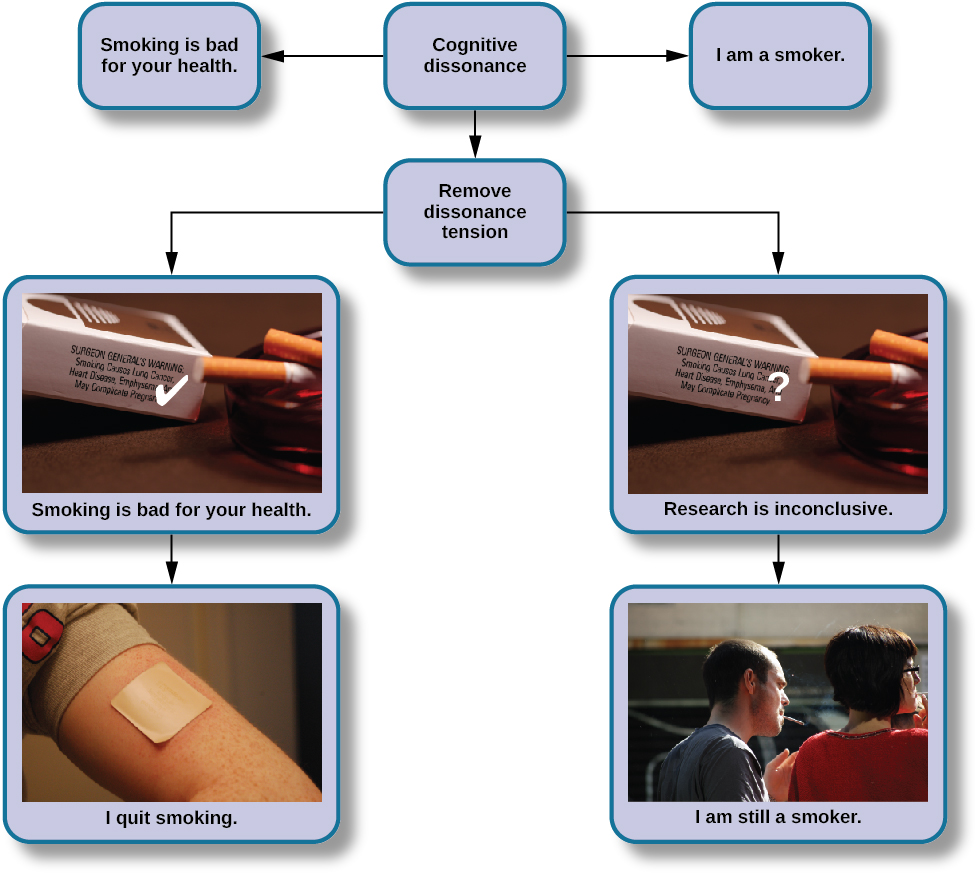
A diagram shows the process of cognitive dissonance. Two disparate statements (“I am a smoker” and “Smoking is bad for your health”) are joined as an example of cognitive dissonance. A flow diagram joins them in a process labeled, “Remove dissonance tension,” with two resulting flows. The first flow path shows the warning on a pack of cigarettes with a checkmark imposed over the image that is labeled, “Smoking is bad for your health.” The path then shows a photograph of an arm with a nicotine patch that is labeled, “I quit smoking.” The second flow path shows the warning on a pack of cigarettes with an X imposed over the image and is labeled, “Research is inconclusive,” then shows a photograph of a person smoking labeled, “I am still a smoker.”
Figure 12.11 — 12.3 Attitudes and Persuasion

Figure 12.11 Cognitive dissonance is aroused by inconsistent beliefs and behaviors. Believing cigarettes are bad for your health, but smoking cigarettes anyway, can cause cognitive dissonance. To reduce cognitive dissonance, individuals can change their behavior, as in quitting smoking, or change their belief, such as discounting the evidence that smoking is harmful. (credit “cigarettes”: modification of work by CDC/Debora Cartagena; “patch”: modification of "RegBarc"/Wikimedia Commons; “smoking”: modification of work by Tim Parkinson)

Rose M. Spielman, William J. Jenkins, and Marilyn D. Lovett, Psychology 2E, OpenStax. (credit “cigarettes”: modification of work by CDC/Debora Cartagena; “patch”: modification of "RegBarc"/Wikimedia Commons; “smoking”: modification of work by Tim Parkinson) · CC BY-NC-SA 4.0 · Original image ↗ · Access for free ↗

A photograph shows a person doing pushups while a military leader stands over the person; other people are doing jumping jacks in the background.
Figure 12.12 — 12.3 Attitudes and Persuasion

Figure 12.12 A person who has chosen a difficult path must deal with cognitive dissonance in addition to many other discomforts. (credit: Tyler J. Bolken)

Rose M. Spielman, William J. Jenkins, and Marilyn D. Lovett, Psychology 2E, OpenStax. (credit: Tyler J. Bolken) · CC BY-NC-SA 4.0 · Original image ↗ · Access for free ↗
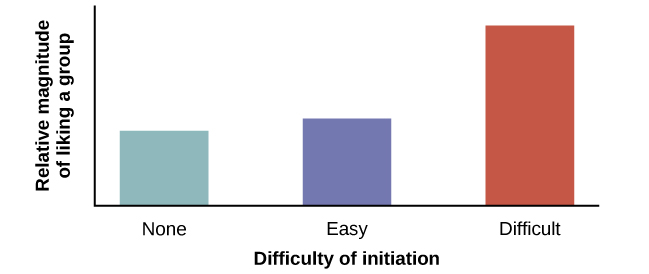
A bar graph has an x-axis labeled, “Difficulty of initiation” and a y-axis labeled, “Relative magnitude of liking a group.” The liking of the group is low to moderate for the groups whose difficulty of initiation was “none” or “easy,” but high for the group whose difficulty of initiation was “difficult.”
Figure 12.13 — 12.3 Attitudes and Persuasion

Figure 12.13 Justification of effort has a distinct effect on a person liking a group. Students in the difficult initiation condition liked the group more than students in other conditions due to the justification of effort.

Rose M. Spielman, William J. Jenkins, and Marilyn D. Lovett, Psychology 2E, OpenStax. · CC BY-NC-SA 4.0 · Original image ↗ · Access for free ↗

A photograph shows the back of a car that is covered in numerous bumper stickers.
Figure 12.14 — 12.3 Attitudes and Persuasion

Figure 12.14 We encounter attempts at persuasion attempts everywhere. Persuasion is not limited to formal advertising; we are confronted with it throughout our everyday world. (credit: Robert Couse-Baker)

Rose M. Spielman, William J. Jenkins, and Marilyn D. Lovett, Psychology 2E, OpenStax. (credit: Robert Couse-Baker) · CC BY-NC-SA 4.0 · Original image ↗ · Access for free ↗
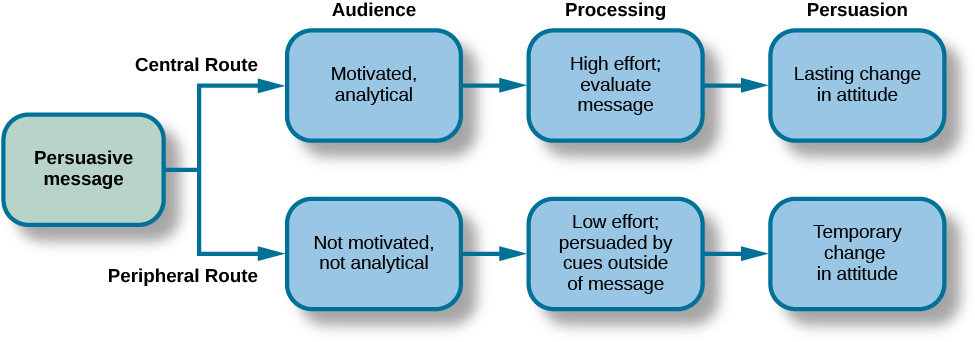
A diagram shows two routes of persuasion. A box on the left is labeled “persuasive message” and arrows from the box separate into two routes: the central and peripheral routes, each with boxes describing the characteristics of the audience, processing, and persuasion. The audience is “motivated, analytical” in the central route, and “not motivated, not analytical” in the peripheral route. Processing in the central route is “high effort; evaluate message” and in the peripheral route is “low effort; persuaded by cues outside of message.” Persuasion in the central route is “lasting change in attitude” and in the peripheral route is “temporary change in attitude.”
Figure 12.15 — 12.3 Attitudes and Persuasion

Figure 12.15 Persuasion can take one of two paths, and the durability of the end result depends on the path.

Rose M. Spielman, William J. Jenkins, and Marilyn D. Lovett, Psychology 2E, OpenStax. · CC BY-NC-SA 4.0 · Original image ↗ · Access for free ↗
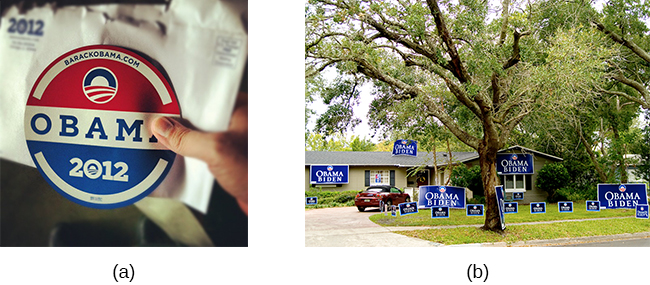
Photograph A shows a campaign button. Photograph B shows a yard filled with numerous signs.
Figure 12.16 — 12.3 Attitudes and Persuasion

Figure 12.16 With the foot-in-the-door technique, getting someone to agree to a small request such as (a) wearing a campaign button can make them more likely to agree to a larger request, such as (b) putting campaigns signs in your yard. (credit a: modification of work by Joe Crawford; credit b: modification of work by "shutterblog"/Flickr)

Rose M. Spielman, William J. Jenkins, and Marilyn D. Lovett, Psychology 2E, OpenStax. (credit a: modification of work by Joe Crawford; credit b: modification of work by "shutterblog"/Flickr) · CC BY-NC-SA 4.0 · Original image ↗ · Access for free ↗

Source: 12.3 Attitudes and Persuasion

12.2 Self-presentation — figures and tables
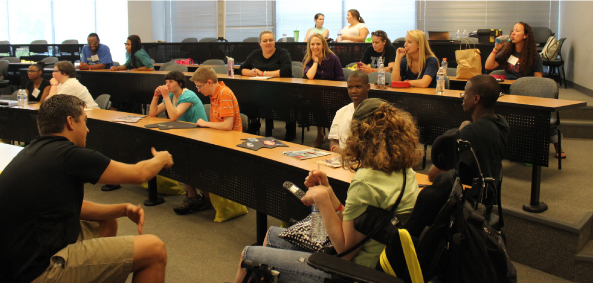
A photograph shows students in a classroom.
Figure 12.8 — 12.2 Self-presentation

Figure 12.8 Being a student is just one of the many social roles you have. (credit: modification of work by “Rural Institute”/Flickr)

Rose M. Spielman, William J. Jenkins, and Marilyn D. Lovett, Psychology 2E, OpenStax. (credit: modification of work by “Rural Institute”/Flickr) · CC BY-NC-SA 4.0 · Original image ↗ · Access for free ↗
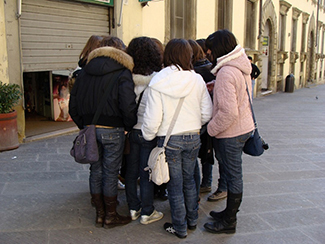
A photograph shows a group of young people dressed similarly.
Figure 12.9 — 12.2 Self-presentation

Figure 12.9 Young people struggle to become independent at the same time they are desperately trying to fit in with their peers. (credit: Monica Arellano-Ongpin)

Rose M. Spielman, William J. Jenkins, and Marilyn D. Lovett, Psychology 2E, OpenStax. (credit: Monica Arellano-Ongpin) · CC BY-NC-SA 4.0 · Original image ↗ · Access for free ↗

A photograph shows a person standing on a box with arms held out. The person is covered in shawl-like attire and a full hood that covers the face completely.
Figure 12.10 — 12.2 Self-presentation

Figure 12.10 Iraqi prisoners of war were abused by their American captors in Abu Ghraib prison, during the second Iraq war. (credit: United States Department of Defense)

Rose M. Spielman, William J. Jenkins, and Marilyn D. Lovett, Psychology 2E, OpenStax. (credit: United States Department of Defense) · CC BY-NC-SA 4.0 · Original image ↗ · Access for free ↗

Source: 12.2 Self-presentation
132 terms, alphabetically ordered

Acid · ·

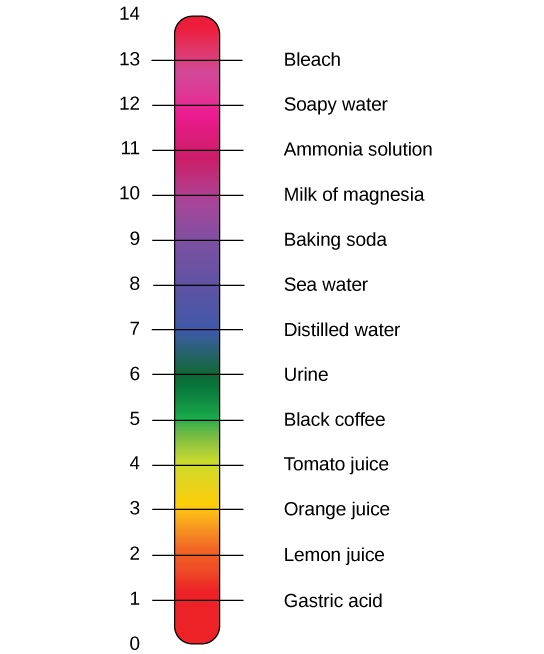
In the Brønsted–Lowry model, a substance that can donate a . Acidic have a higher activity than water.

Read explanation · OpenStax ↗
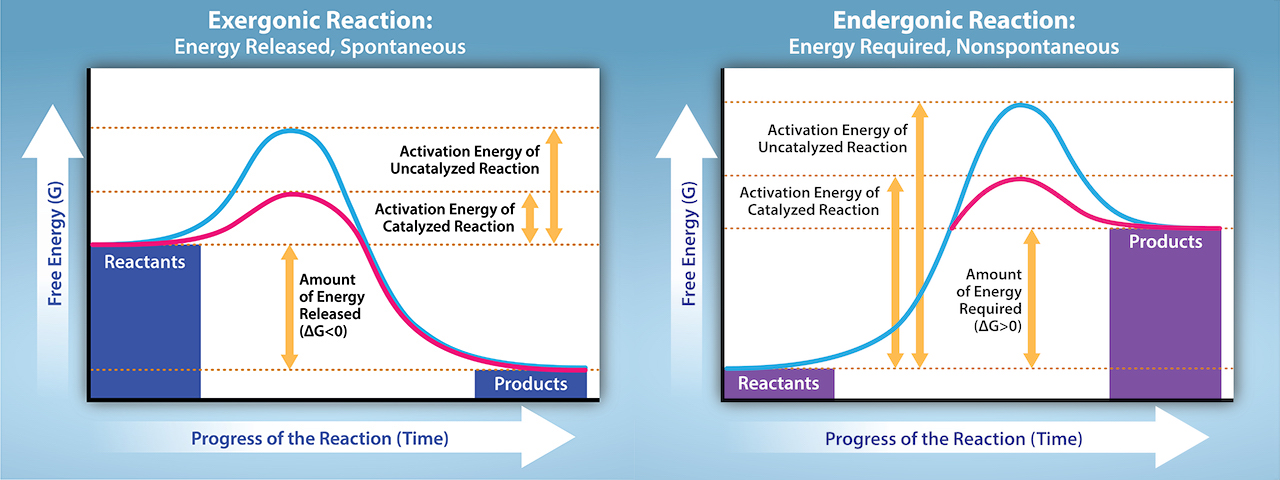
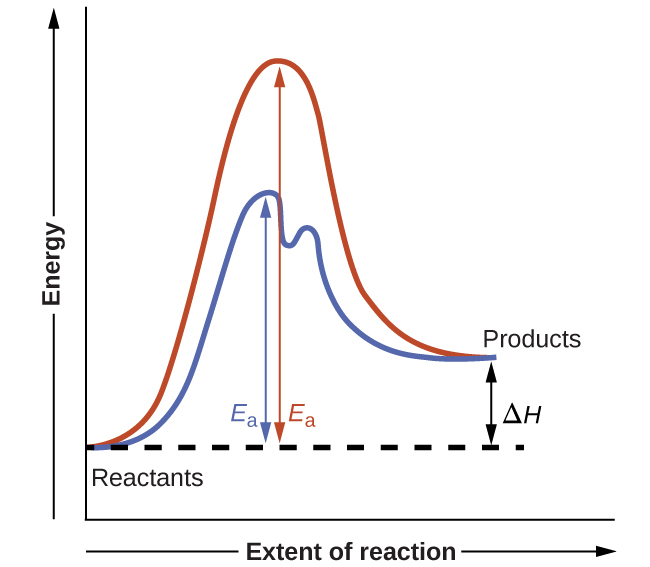
Activation energy ·

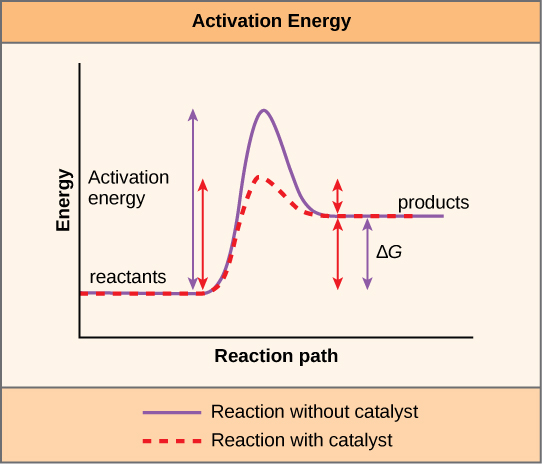
The energy barrier that must overcome to reach a and undergo .

Read explanation · OpenStax ↗
Adenosine triphosphate

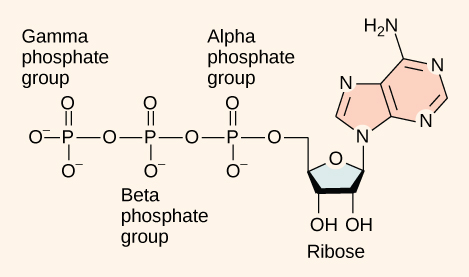
An energy-carrying ; its powers many cellular processes, including cycles.

Read explanation · OpenStax ↗
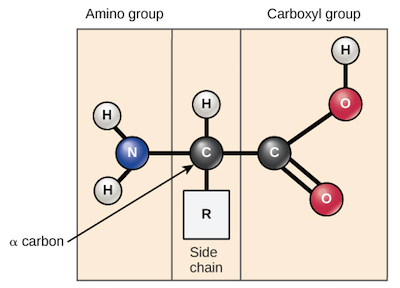
Alpha carbon · ·

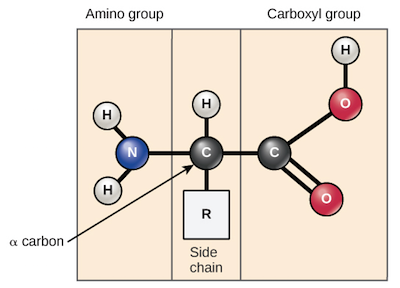
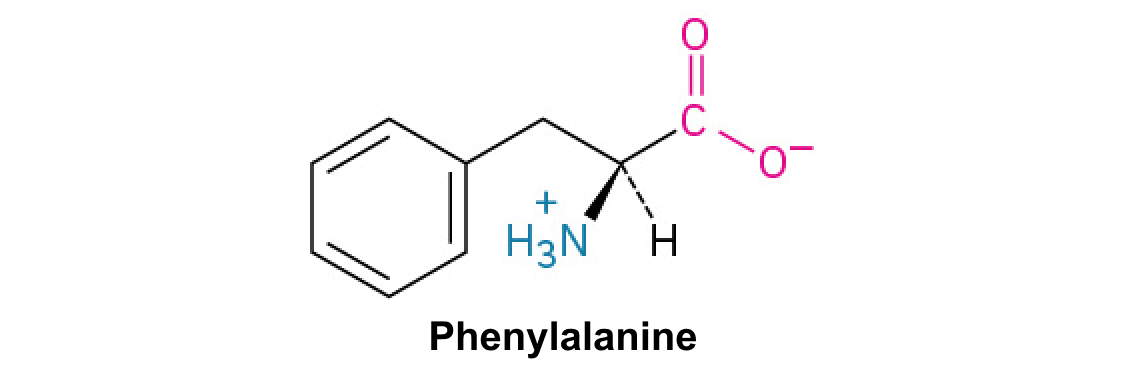
The central carbon next to the carboxyl carbon. In a standard it binds an , hydrogen, and .

Read explanation · OpenStax ↗
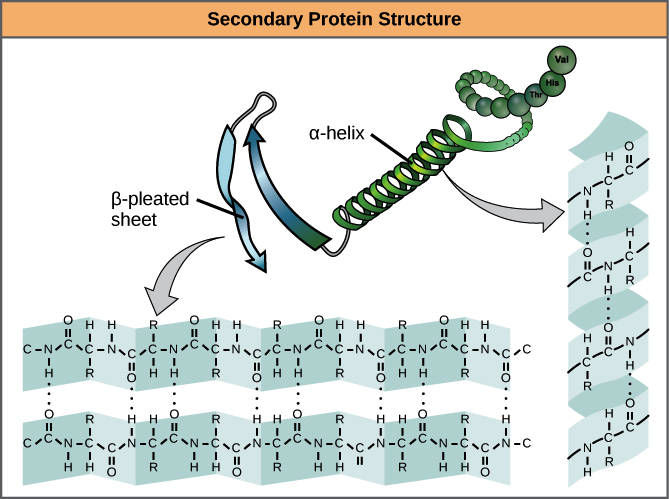
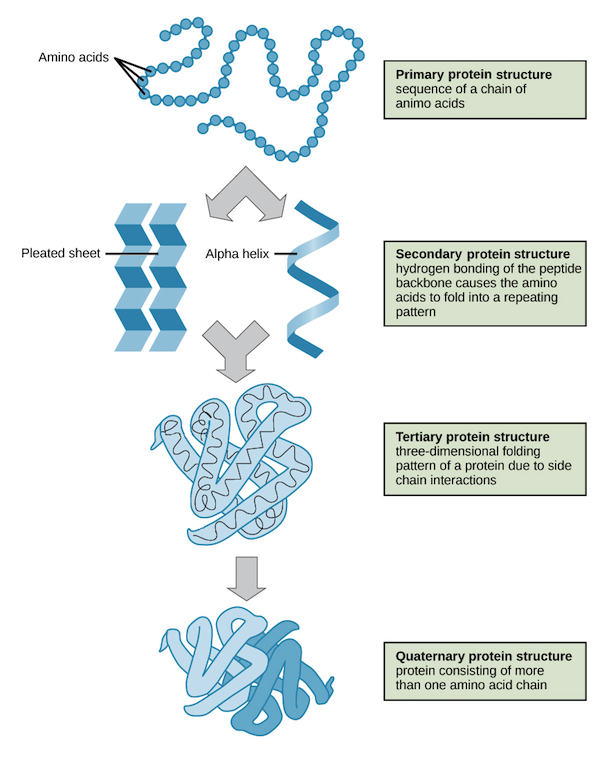
Alpha helix · · · · · ·

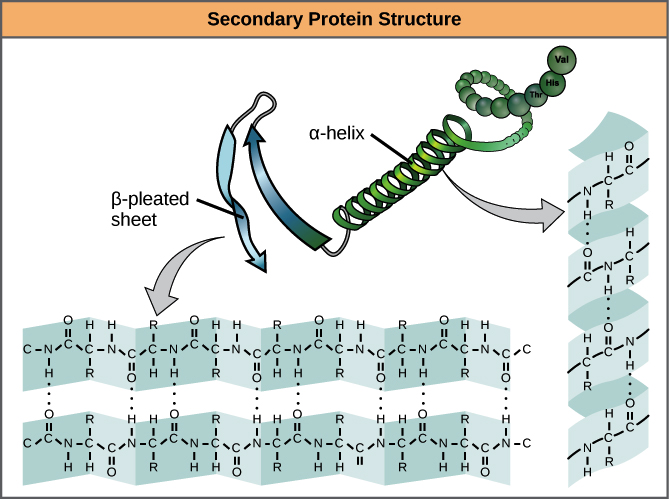
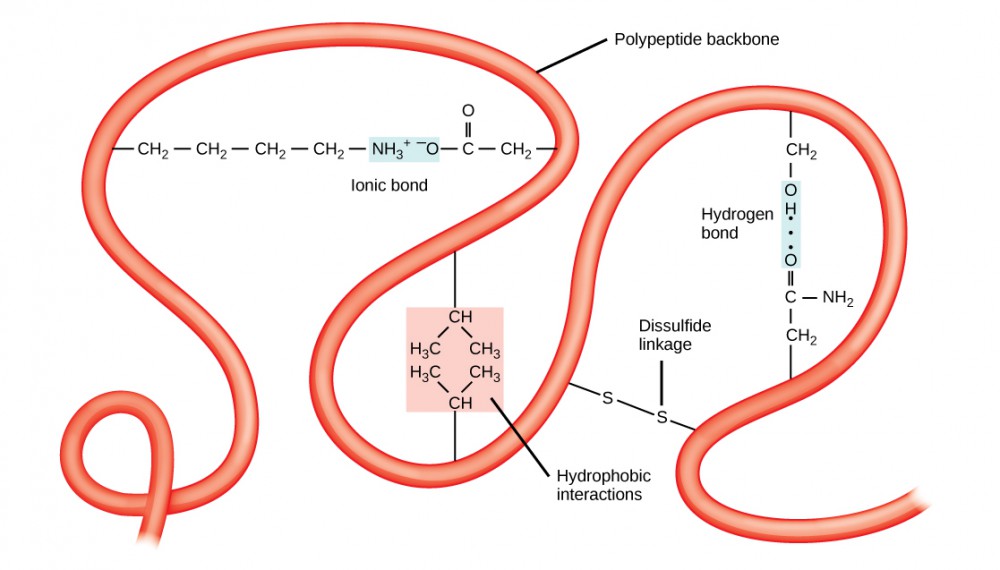
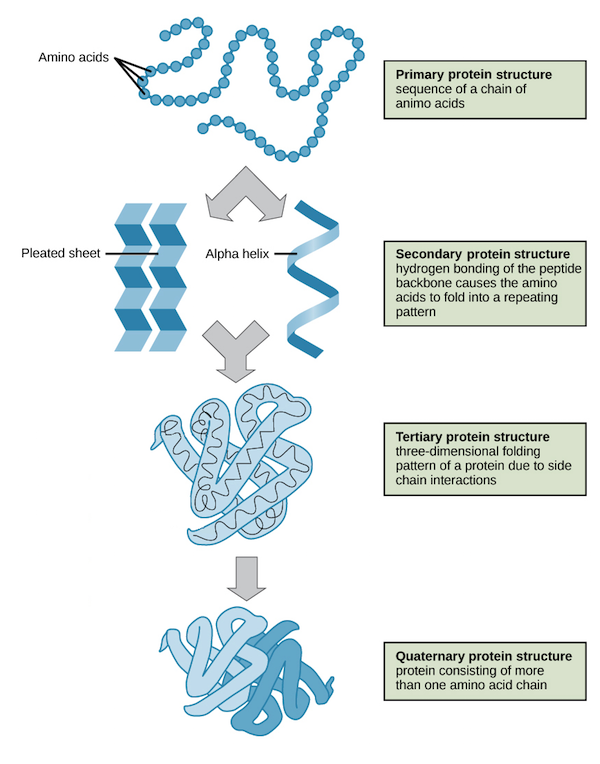
A helical stabilized by between a oxygen and an hydrogen four later.

Read explanation · OpenStax ↗
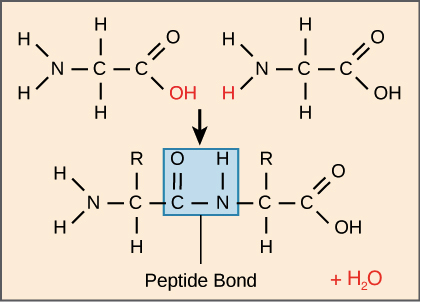
Amide · · ·

A group containing a carbon bonded to nitrogen. are amide linkages.

Read explanation · OpenStax ↗
Amino acid

A building block containing amino and and a characteristic .

Read explanation · OpenStax ↗
Amino acid residue · ·

The part of an incorporated into a chain. Residue can also describe another building block within a larger .

Read explanation · OpenStax ↗
Amino group · · ·

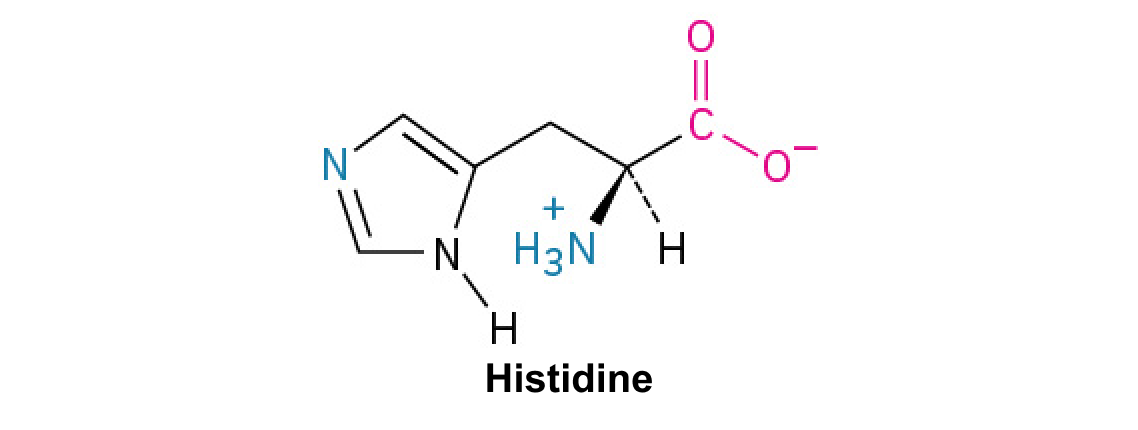
A nitrogen-containing . A free ’s amino group is typically (NH₃⁺) near physiological ; ’s ring nitrogen is an exception to this formula.

Read explanation · OpenStax ↗
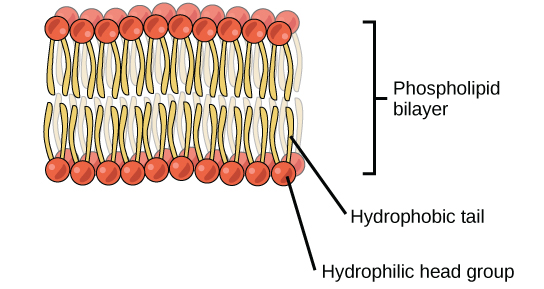
Amphipathic

Having both a region and a region, as in a or .

Read explanation · OpenStax ↗
Amylose

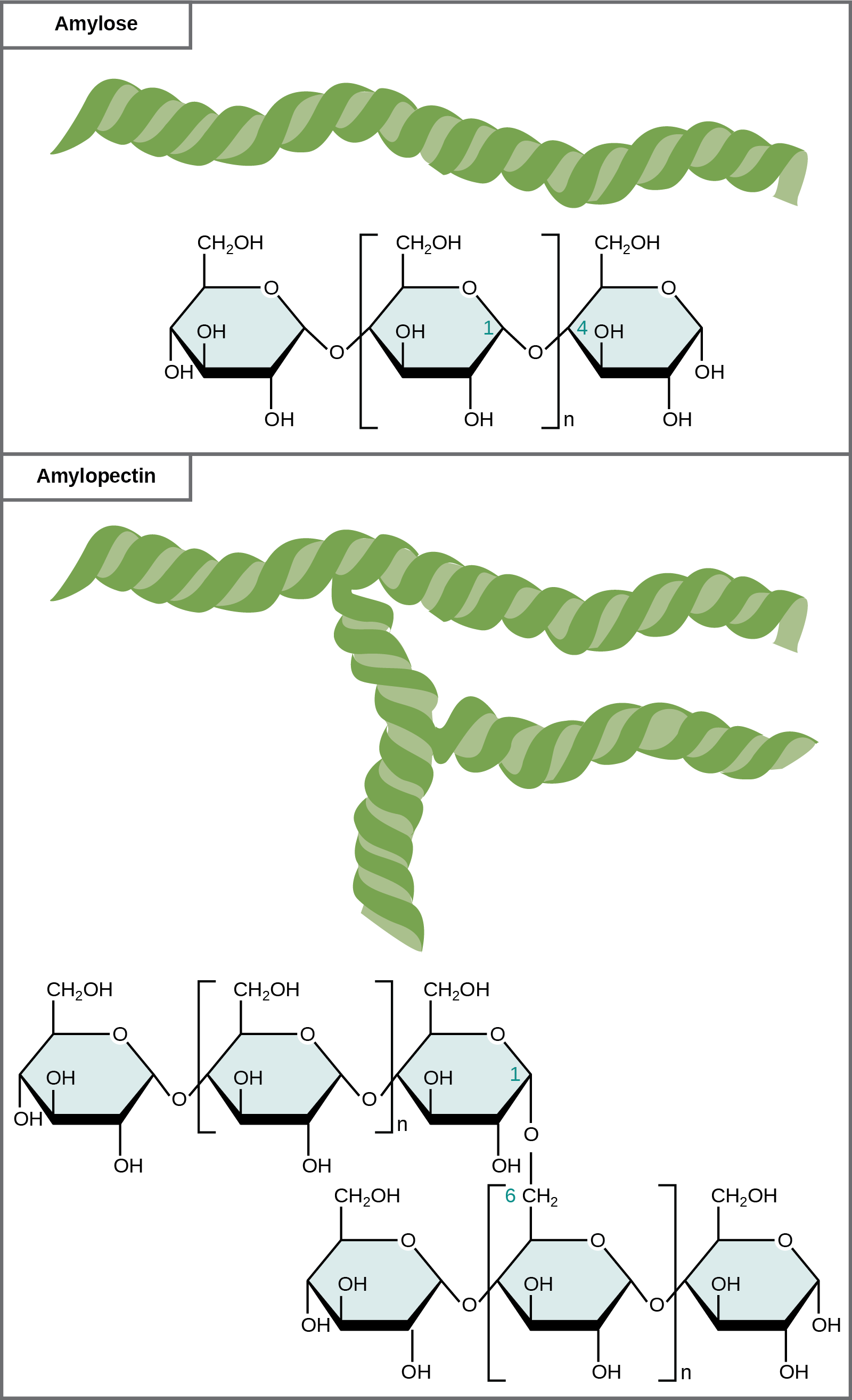
The largely unbranched component of , made mainly of linked by alpha-1,4 .

Read explanation · OpenStax ↗
anomeric carbon

The former carbon of a sugar, which becomes the or hemiketal center upon cyclization.

Read explanation · OpenStax ↗
Antiparallel

Running in opposite directions, as with two strands or neighboring strands in some .

Read explanation · OpenStax ↗
Aqueous solution ·

A in which water is the .

Read explanation · OpenStax ↗
Aromatic

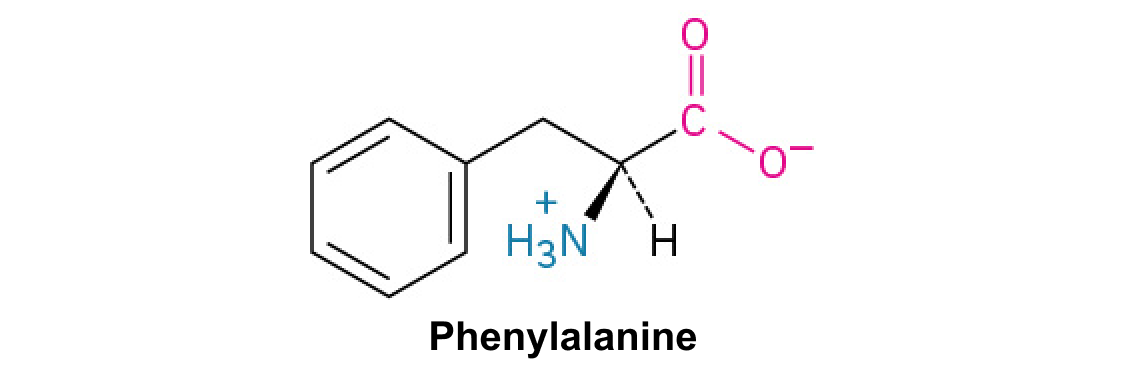
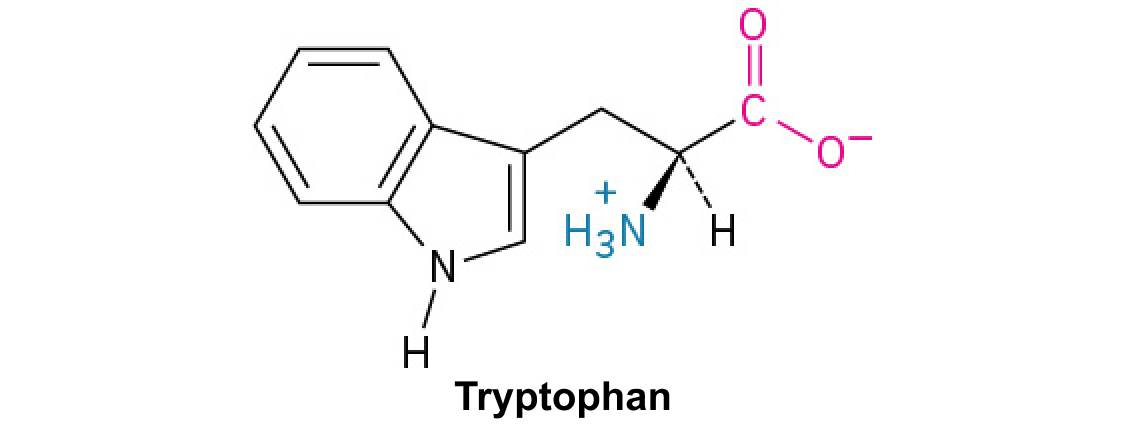
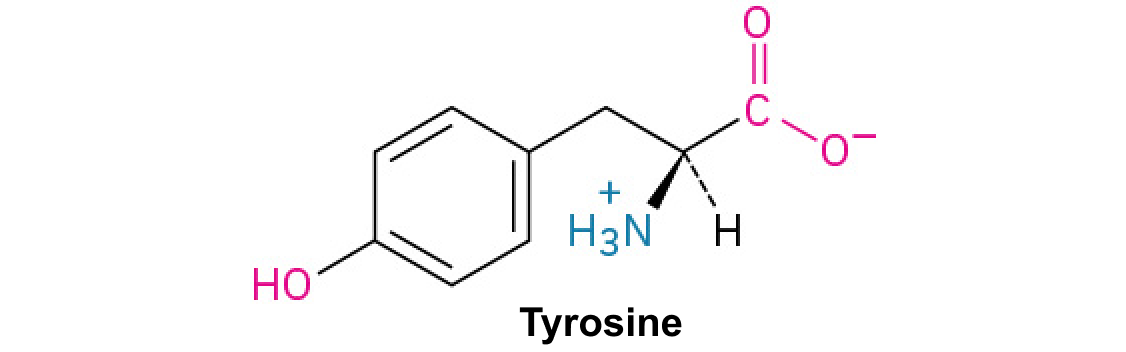
Containing a cyclic, with . , , and have aromatic .

Read explanation · OpenStax ↗
Atom

The smallest unit of an element that retains its chemical identity; it has a surrounded by .

Read explanation · OpenStax ↗
attitude

Evaluation of an object, person, issue, or behavior.

Read explanation · OpenStax ↗
Benzene ring

A six-carbon ring with .

Read explanation · OpenStax ↗
Benzyl group

A attached through a –CH₂– group; part of ’s .

Read explanation · OpenStax ↗
Beta sheet · · · · · ·

A made of aligned segments connected by ; strands may be parallel or .

Read explanation · OpenStax ↗
Biomolecule

A made by or involved in living systems, including , , , and .

Read explanation · OpenStax ↗
Blotting ·

Transfer of separated or to a so a specific target can be detected.

Read explanation · Thermo Fisher ↗
Brønsted–Lowry base · · · · · · · · · · ·

In the Brønsted–Lowry model, a substance that can accept a . Basic solutions have lower activity than water.

Read explanation · OpenStax ↗
Carbohydrate

A class of including sugars and their , used for energy storage, structure, and recognition.

Read explanation · OpenStax ↗
Carbonyl group · ·

A carbon double-bonded to oxygen, C=O; present in and many other .

Read explanation · OpenStax ↗
Carboxyl group · ·

An , COOH. In free it is usually to COO⁻ near physiological .

Read explanation · OpenStax ↗
Catalyst · ·

A substance that speeds a by providing a pathway with lower and is regenerated rather than consumed overall.

Read explanation · OpenStax ↗
Cellulose

A structural in plant cell walls, with beta-1,4 linkages; also used as a support.

Read explanation · OpenStax ↗
central route

Persuasion through motivated, able evaluation of message arguments.

Read explanation · OpenStax ↗
Chemical reaction ·

A process that rearranges and chemical bonds, converting into .

Read explanation · OpenStax ↗
Chromatin

The complex of and associated , including , in .

Read explanation · OpenStax ↗
Chromatography

Separation of mixture components by their different interactions with a and a moving .

Read explanation · Waters ↗
Chromosome ·

An organized with associated that carries . A replicated chromosome has two .

Read explanation · OpenStax ↗
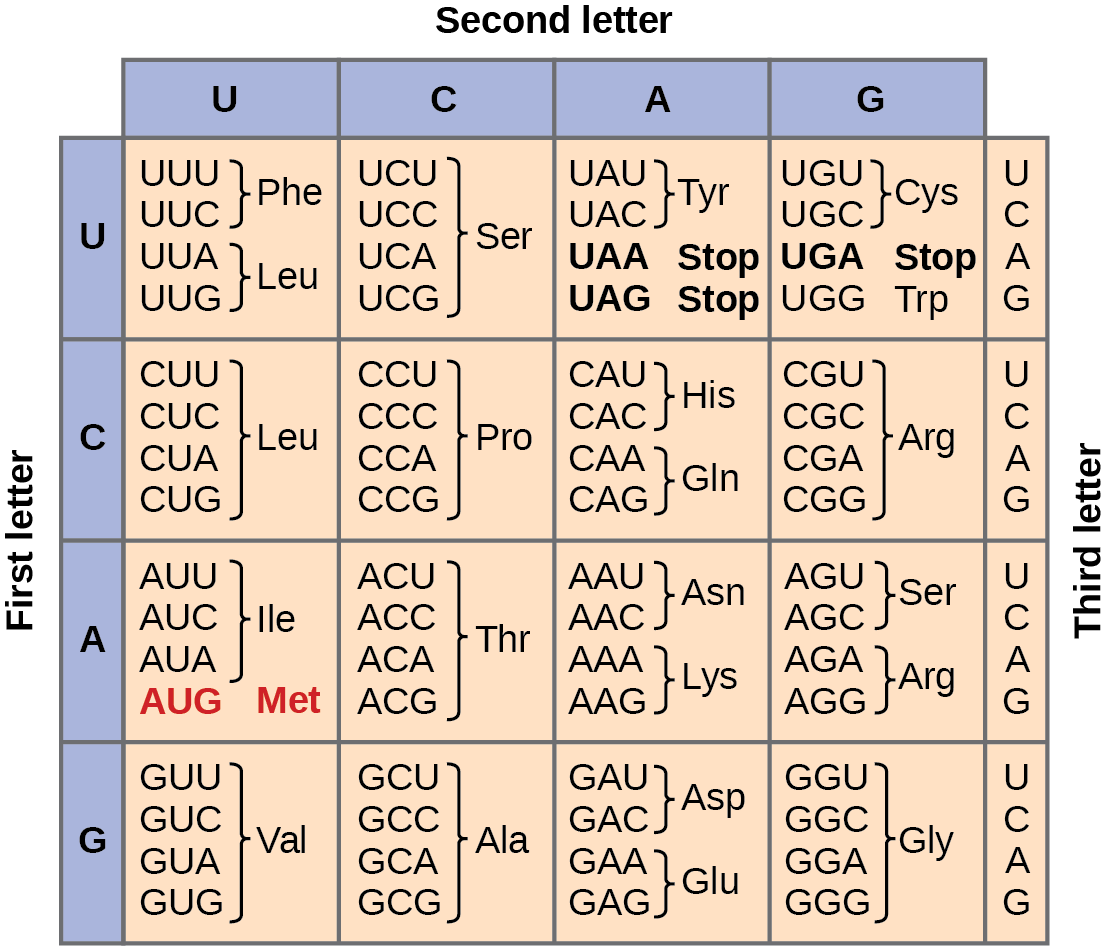
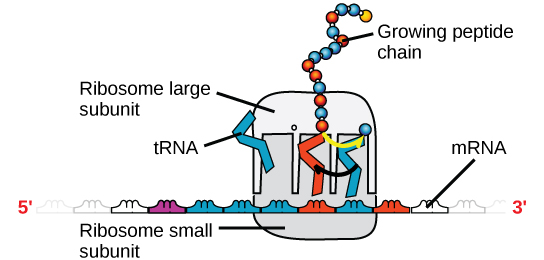
Codon

A sequence of three that specifies an or a stop signal.

Read explanation · OpenStax ↗
cognitive dissonance

Discomfort arising from important inconsistency among beliefs, attitudes, or actions.

Read explanation · OpenStax ↗
Conjugated system ·

Adjacent orbitals that allow to be distributed across several , often through alternating single and multiple bonds.

Read explanation · OpenStax ↗
Covalent bond · ·

A bond in which share pairs. and are covalent.

Read explanation · OpenStax ↗
culture

Learned and shared meanings, practices, values, and artifacts.

Read explanation · OpenStax ↗
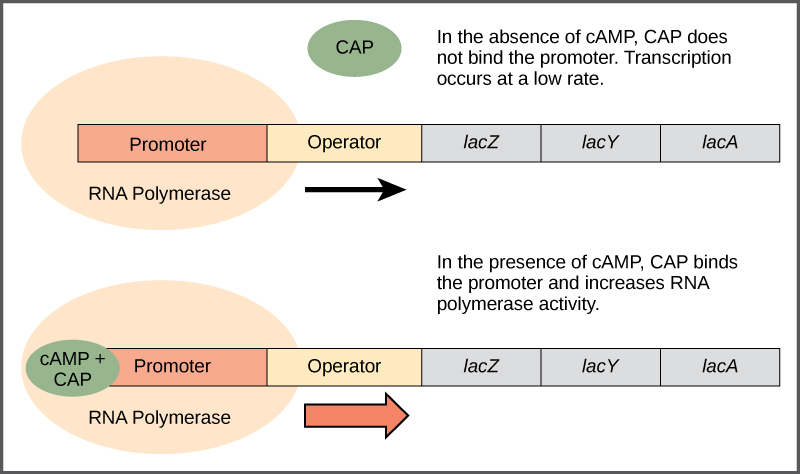
Cyclic AMP ·

A signal. In the simplified E. coli lac model, low raises cAMP, which activates CAP.

Read explanation · OpenStax ↗
cyclic nucleotide

whose forms a cyclic within its sugar, such as .

Read explanation · OpenStax ↗
Cysteine ·

An with a . Two cysteines can form a .

Read explanation · OpenStax ↗
Deoxyribonucleic acid

The that stores genetic information used to specify and sequences.

Read explanation · OpenStax ↗
Deprotonation

Removal of a from a or group; this changes its by minus one.

Read explanation · OpenStax ↗
Detergent

An substance that can associate with both water and material; detergents can disrupt or interactions.

Read explanation · Thermo Fisher ↗
Disulfide bond · · ·

A covalent sulfur–sulfur bond formed by of two , which can stabilize structure.

Read explanation · NCBI Bookshelf ↗
DNA replication

Copying so genetic information can be passed to daughter cells. Each guides a complementary new strand.

Read explanation · OpenStax ↗
Electric charge · · ·

An electrical property that can be positive or negative. Opposite charges attract and like charges repel; net charge is the sum of all charges on a particle.

Read explanation · OpenStax ↗
Electron

A negatively subatomic particle. Electron sharing and transfer determine much of chemical bonding.

Read explanation · OpenStax ↗
Electron delocalization ·

Distribution of across several rather than confinement to one or bond.

Read explanation · OpenStax ↗
Electronegativity ·

An ’s tendency to attract shared in a chemical bond. Unequal attraction can make a bond .

Read explanation · OpenStax ↗
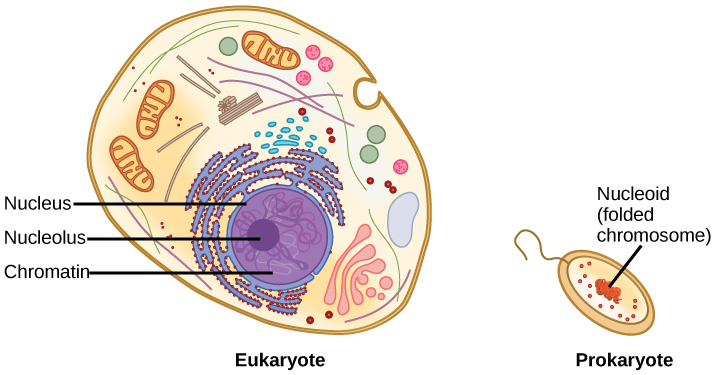
Eukaryote ·

An organism whose cells have a -enclosed ; animals, plants, fungi, and protists are eukaryotes.

Read explanation · OpenStax ↗
FACT complex ·

A -associated complex that helps machinery traverse and supports reorganization.

Read explanation · OpenStax ↗
foot-in-the-door technique

Compliance strategy beginning with a small request before a larger related request.

Read explanation · OpenStax ↗
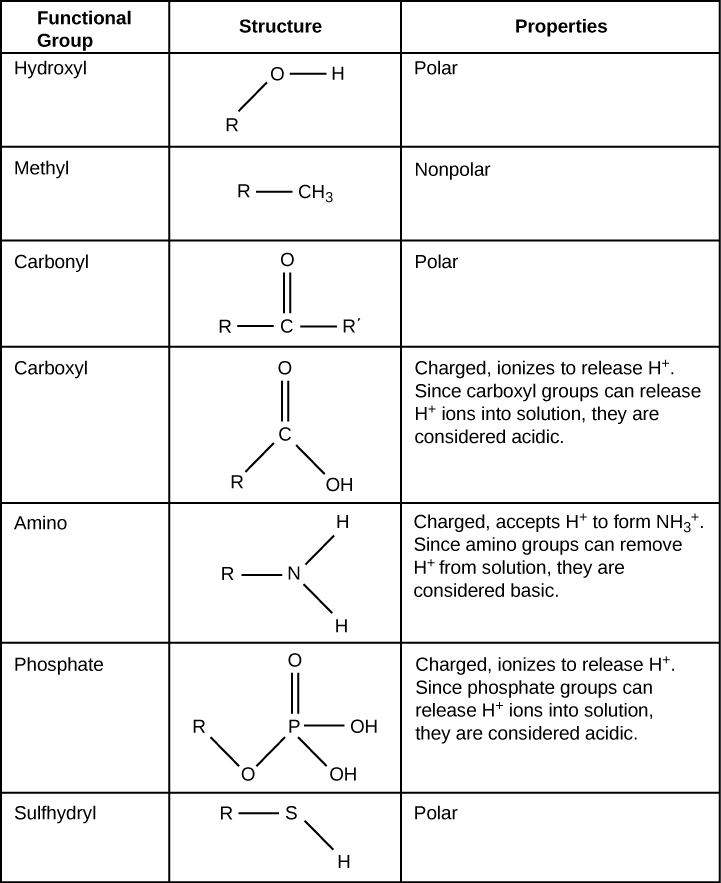
Functional group

A group of whose chemical behavior gives a characteristic and properties.

Read explanation · OpenStax ↗
Gene

A sequence that contributes to a functional or , together with the information needed to express it.

Read explanation · OpenStax ↗
Gene expression

Production of a functional from a , including and, for -coding , .

Read explanation · NCBI Bookshelf ↗
Glucose

A six-carbon sugar that is a major cellular energy source and a building block of , , and .

Read explanation · OpenStax ↗
glycogen

A highly branched used for storage in animals.

Read explanation · Biology LibreTexts / Oregon State University ↗
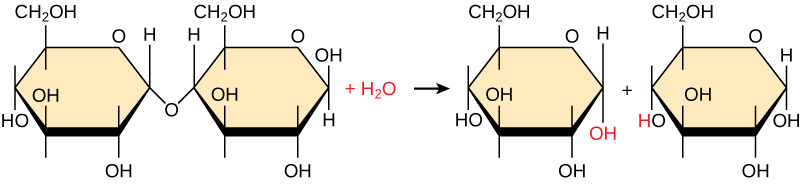
Glycosidic bond

A involving a sugar’s . In a , an N-glycosidic bond links the sugar to the .

Read explanation · Biology LibreTexts / Oregon State University ↗
hemiacetal

Carbon bonded to both and alkoxy groups, usually formed by alcohol addition to a .

Read explanation · OpenStax ↗
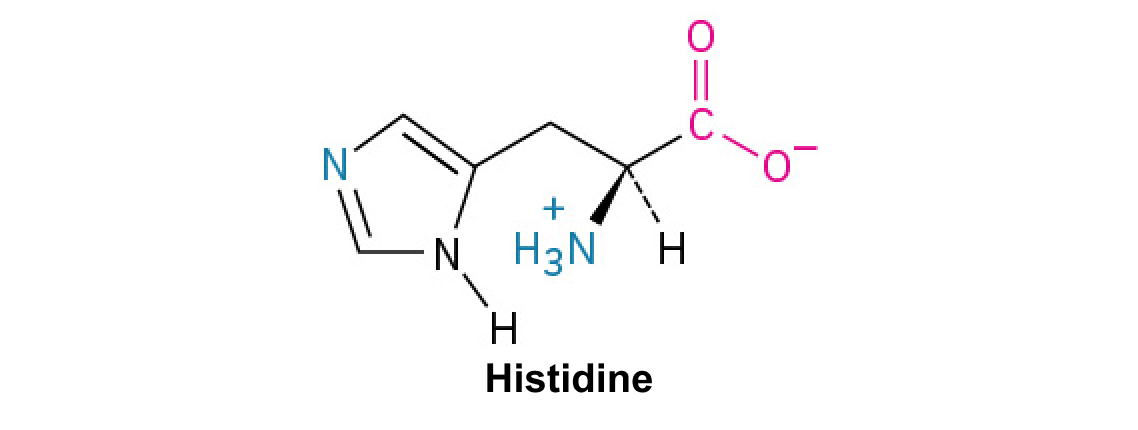
Histidine ·

A with an . Mostly uncharged near physiological , it can accept or donate .

Read explanation · OpenStax ↗
Histone

A -associated rich in . Core histones form the around which nucleosomal wraps.

Read explanation · OpenStax ↗
Hydrogen bond ·

An attraction between a hydrogen bonded to an and another . hydrogen bonds stabilize .

Read explanation · OpenStax ↗
Hydrogen ion · ·

A positively hydrogen species. H⁺ denotes a , which is hydrated in water; its activity determines .

Read explanation · OpenStax ↗
Hydrolysis

Breaking a chemical bond by adding water. hydrolysis separates .

Read explanation · OpenStax ↗
Hydrophilic

Interacting favorably with water, typically because a group is or .

Read explanation · OpenStax ↗
Hydrophobic

Interacting poorly with water. often gather in a ’s interior.

Read explanation · OpenStax ↗
Hydroxide ion ·

The negatively OH⁻. Basic contain a higher hydroxide ion activity than water at the same temperature.

Read explanation · OpenStax ↗
Hydroxyl group ·

An oxygen bonded to hydrogen, –OH. Hydroxyl groups can and often increase .

Read explanation · OpenStax ↗
Imidazole

A five-membered ring containing two nitrogens; ’s contains this ring.

Read explanation · OpenStax ↗
Indole

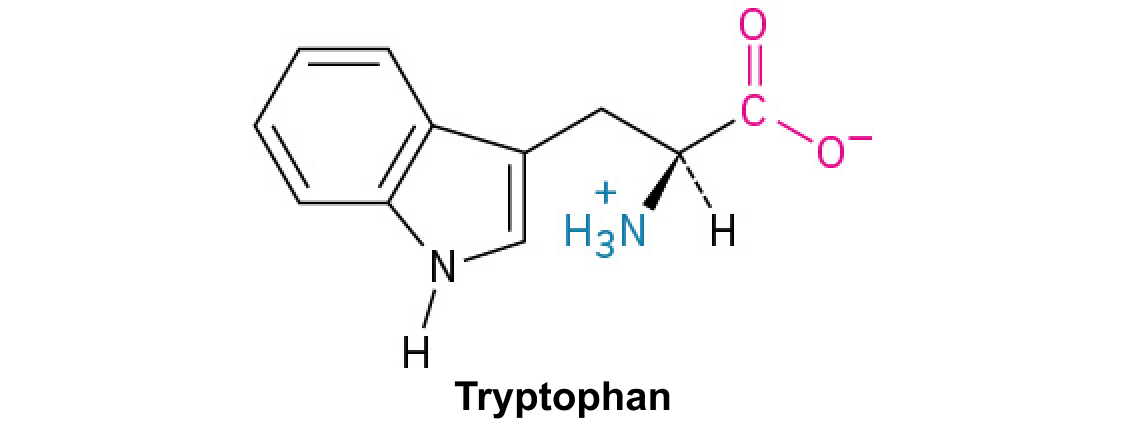
A fused six-membered and five-membered ring system containing nitrogen; found in .

Read explanation · OpenStax ↗
insufficient justification

Situation in which external reasons seem inadequate to explain one’s counterattitudinal behavior.

Read explanation · OpenStax ↗
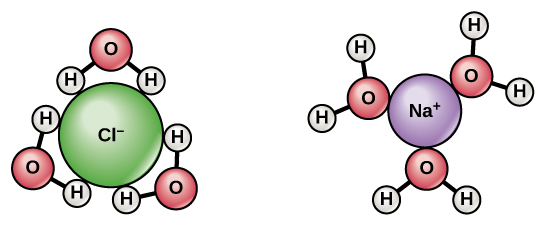
Ion · ·

An or with a net because its numbers of and do not balance.

Read explanation · OpenStax ↗
linkage

A tendency of nearby on the same to be inherited together.

Read explanation · OpenStax ↗
Lipid

A broad class of largely or , including fats, , and steroids.

Read explanation · OpenStax ↗
locus

The specific position of a or other feature.

Read explanation · OpenStax ↗
Logarithm · · ·

The exponent needed to obtain a number from a chosen fixed number. For decimal logarithms, log₁₀(100) = 2 because 10² = 100; uses the negative decimal logarithm of activity.

Read explanation · OpenStax ↗
Membrane · · · ·

A thin boundary or sheet. Cell membranes are bilayers containing ; membranes are synthetic supports that hold or for detection.

Read explanation · OpenStax ↗
Messenger RNA ·

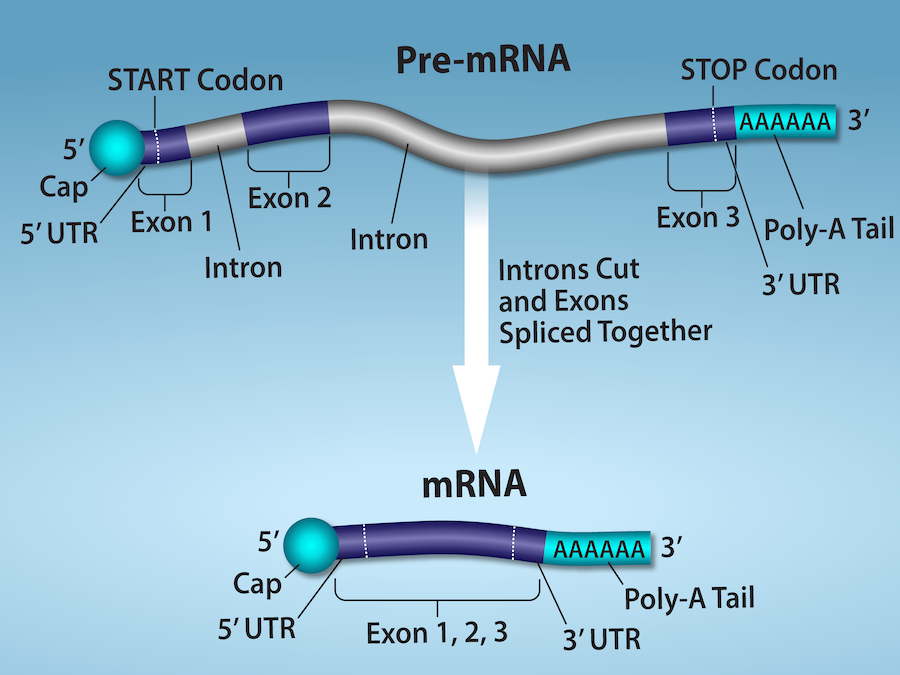
An that carries coding information used by to synthesize a .

Read explanation · OpenStax ↗
Mobile phase

The moving fluid that carries a sample through a system.

Read explanation · Waters ↗
Molecular chaperone · ·

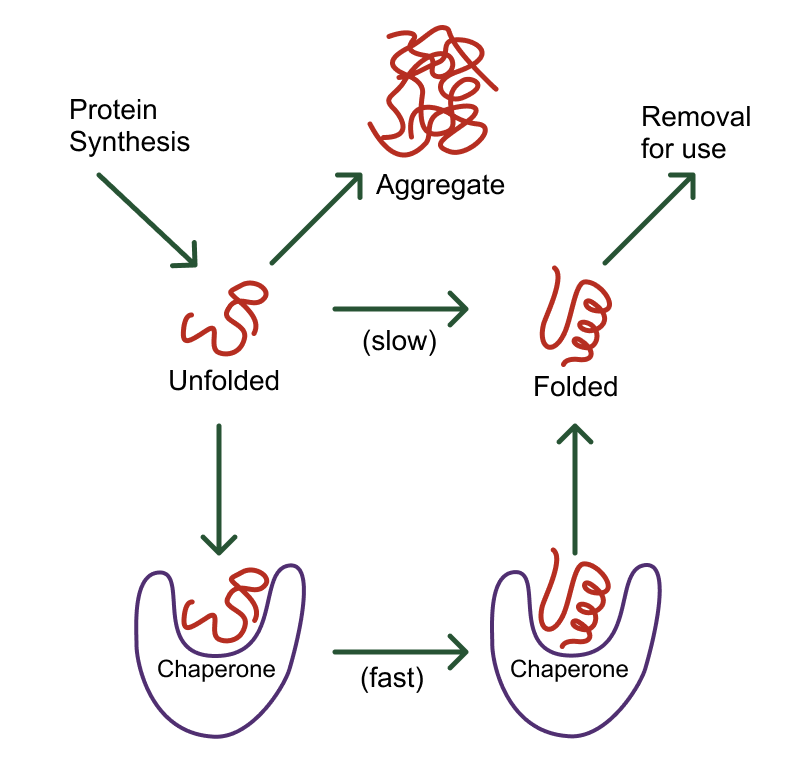
A that assists other in folding or prevents , without specifying their sequence.

Read explanation · NCBI Bookshelf ↗
Molecule

Two or more joined by . A molecule may be electrically or carry a .

Read explanation · OpenStax ↗
Neutral

Having no net . For a , neutral instead means equal and activities; its is about 7 at 25 °C.

Read explanation · OpenStax ↗
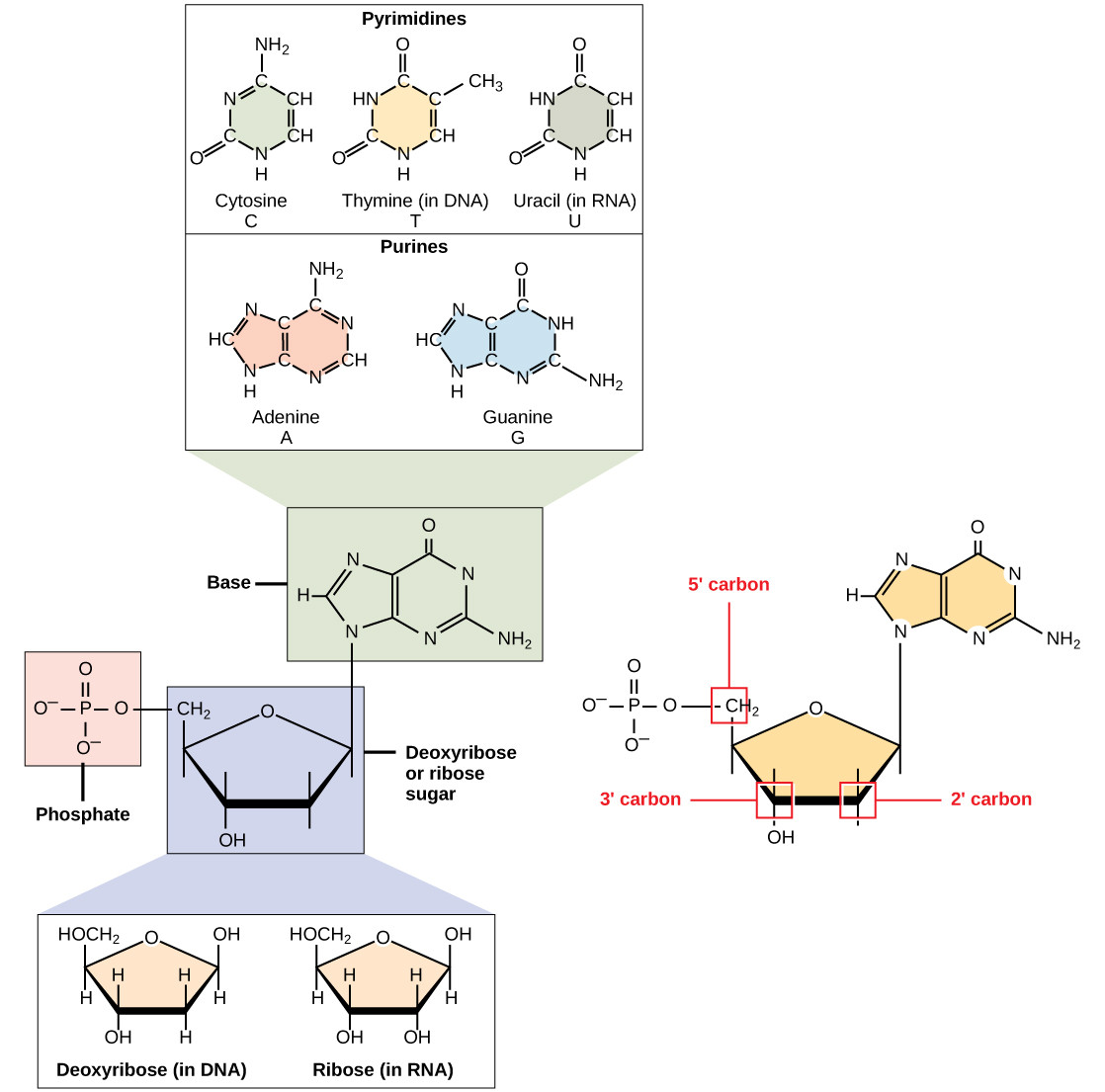
Nitrogenous base · · ·

A nitrogen-containing ring component of ; its pairing interactions help specify sequences.

Read explanation · OpenStax ↗
Nonpolar ·

Lacking a substantial separation of . Nonpolar groups generally interact poorly with water.

Read explanation · OpenStax ↗
Nucleic acid

A of , such as or , used in information storage, expression, and other cellular functions.

Read explanation · OpenStax ↗
Nucleosome

The basic unit of : wrapped around a .

Read explanation · OpenStax ↗
Nucleotide

A joined to a sugar and one or more .

Read explanation · OpenStax ↗
Nucleus ·

A -enclosed compartment containing most of a cell’s .

Read explanation · OpenStax ↗
Octamer

A complex made of eight . A core contains eight .

Read explanation · OpenStax ↗
Oxidation ·

Loss of or an increase in oxidation state. Oxidizing two can form a .

Read explanation · OpenStax ↗
Peptide

A chain of joined by ; the term commonly describes chains shorter than a typical .

Read explanation · OpenStax ↗
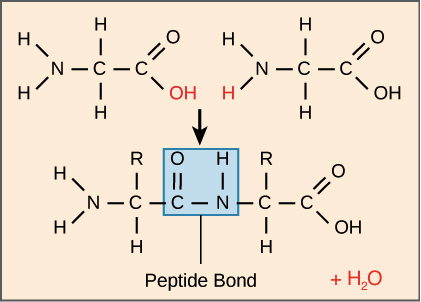
Peptide bond ·

A covalent between the carboxyl carbon of one and the amino nitrogen of the next.

Read explanation · OpenStax ↗
peripheral route

Persuasion relying more on cues than detailed evaluation of arguments.

Read explanation · OpenStax ↗
pH

A measure of , defined as the negative of activity. Lower pH means greater ; pH influences .

Read explanation · OpenStax ↗
Phenylalanine ·

A with an .

Read explanation · OpenStax ↗
Phosphate group ·

A phosphorus-containing group bonded to oxygens; phosphate groups occur in , , and modified .

Read explanation · OpenStax ↗
Phospholipid

An with a -containing region and tails; a major component of cellular .

Read explanation · OpenStax ↗
Polar

Having an uneven distribution of . Polar groups often interact favorably with water.

Read explanation · OpenStax ↗
Polymer

A large made from many linked molecular building blocks.

Read explanation · OpenStax ↗
Polypeptide

A chain of connected by . A functional can contain one or several such chains.

Read explanation · OpenStax ↗
Proline ·

An whose loops back to the nitrogen, restricting rotation and often creating bends.

Read explanation · OpenStax ↗
Protein

One or more folded chains that perform biological roles such as , transport, signaling, or structural support.

Read explanation · OpenStax ↗
Protein aggregation · ·

Association of into larger clusters, often when exposed surfaces of unfolded stick together.

Read explanation · NCBI Bookshelf ↗
Protein backbone ·

The repeating nitrogen–alpha-carbon– chain of a , excluding its variable .

Read explanation · OpenStax ↗
Proton

A positively subatomic particle. In – chemistry, donating a proton means transferring a .

Read explanation · OpenStax ↗
Protonation

Addition of a to an , , or ; this changes its by plus one.

Read explanation · OpenStax ↗
R group · ·

The variable side chain attached to an ’s . It determines identity, , , and chemical behavior.

Read explanation · OpenStax ↗
Reactant

A starting substance transformed during a .

Read explanation · OpenStax ↗
Reaction intermediate · ·

A species formed in one step and consumed in another. It occupies a local energy minimum between .

Read explanation · OpenStax ↗
Reaction product ·

A substance formed by a .

Read explanation · OpenStax ↗
Ribonucleic acid ·

A with roles in , regulation, and ; carries -coding information.

Read explanation · OpenStax ↗
Ribosome ·

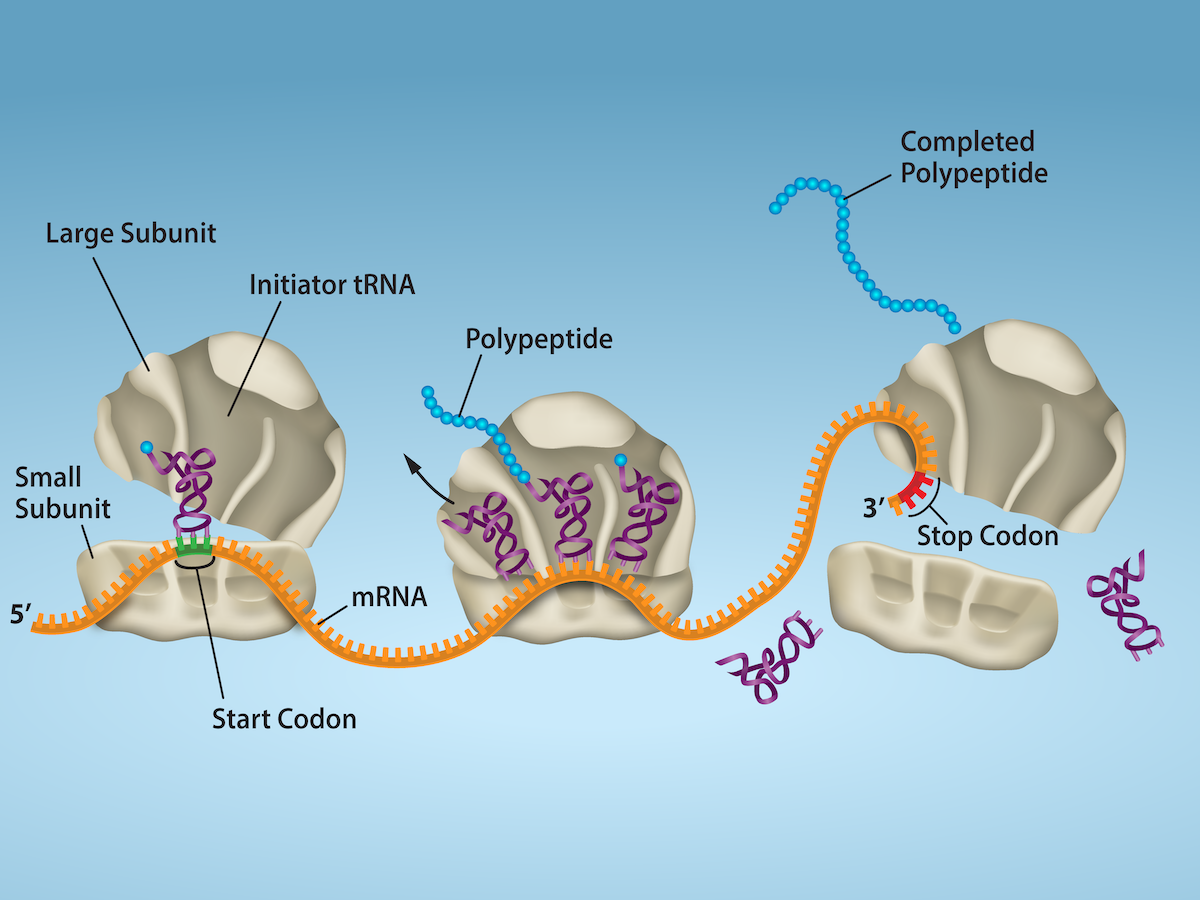
A complex of and that translates into a .

Read explanation · OpenStax ↗
Secondary structure

Local folding, such as and , stabilized mainly by .

Read explanation · OpenStax ↗
self-esteem

Evaluation of one’s own worth.

Read explanation · OpenStax ↗
self-perception theory

Account in which people infer their attitudes partly by observing their own behavior.

Read explanation · OpenStax ↗
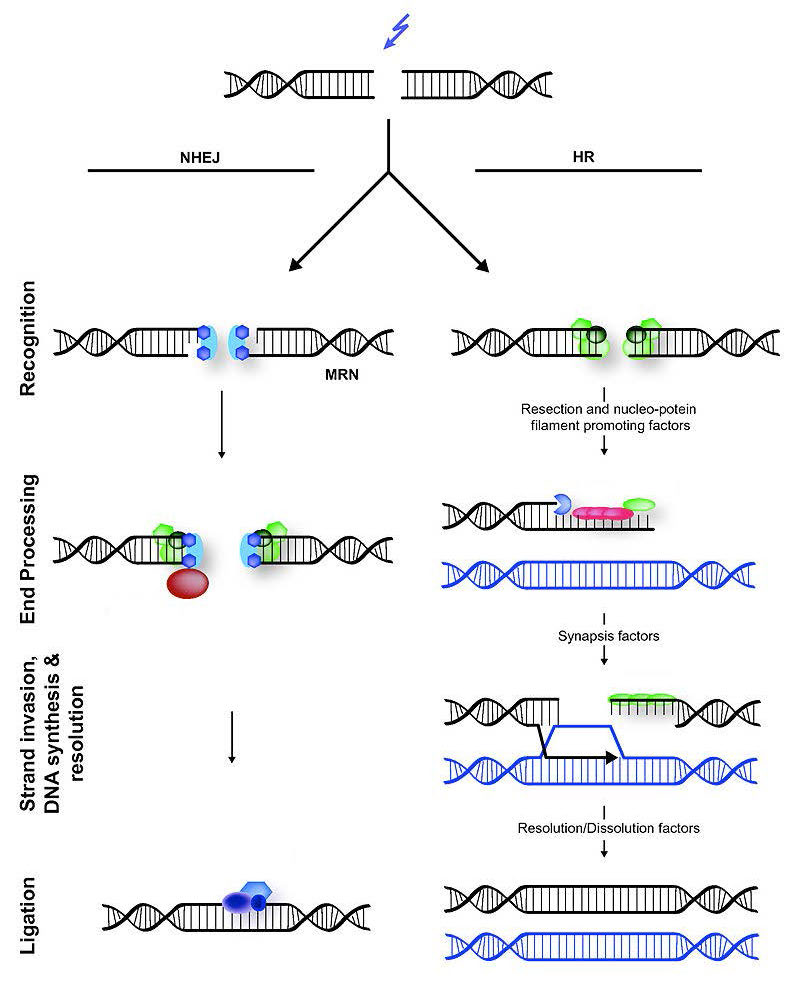
Sister chromatid

One of the two copies of a produced by . An intact sister chromatid can supply a template for accurate repair.

Read explanation · Biology LibreTexts / Oregon State University ↗
social power

Capacity to influence outcomes or act despite resistance.

Read explanation · OpenStax ↗
Solubility ·

The amount of a substance that can dissolve in a under specified conditions. Soluble means able to dissolve; insoluble means only very slightly soluble in that .

Read explanation · OpenStax ↗
Solute

A dissolved component of a .

Read explanation · OpenStax ↗
Solution

A homogeneous mixture in which are dissolved in a .

Read explanation · OpenStax ↗
Solvent

The component of a that dissolves other substances, usually the component present in the greatest amount.

Read explanation · OpenStax ↗
Starch

A plant storage made of chains; its two main forms are and amylopectin.

Read explanation · OpenStax ↗
Stationary phase

The material that remains fixed in a system.

Read explanation · Waters ↗
Subunit ·

An individual chain within a containing multiple chains.

Read explanation · OpenStax ↗
Template strand · · ·

A preexisting strand whose sequence guides complementary nucleic- synthesis.

Read explanation · OpenStax ↗
Thiol group · · · ·

A sulfur bonded to hydrogen, –SH. thiols can form through .

Read explanation · OpenStax ↗
Transcription

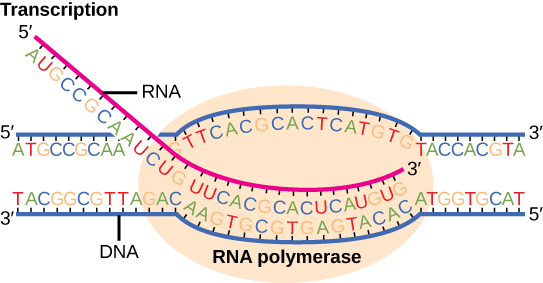
Synthesis of using a template.

Read explanation · OpenStax ↗
Transition state

A fleeting, high-energy arrangement at a barrier. It is an energy maximum along the path, rather than a stable .

Read explanation · OpenStax ↗
Translation ·

Synthesis of a on a using the sequence of in .

Read explanation · OpenStax ↗
Tryptophan ·

An with a bulky ; commonly grouped as .

Read explanation · OpenStax ↗
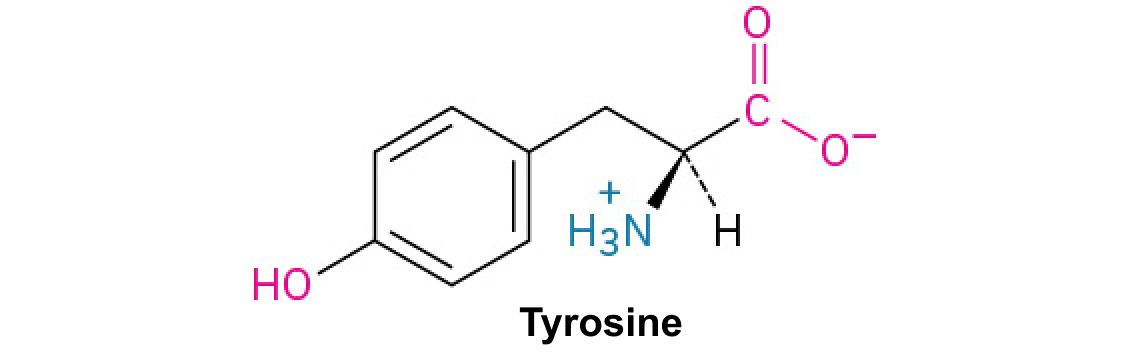
Tyrosine ·

An with a phenolic . Usually uncharged near physiological .

Read explanation · OpenStax ↗

12.3 Attitudes and Persuasion

OpenStax · 12.3 Attitudes and Persuasion ↗
Instructional page including learning objectives, examples, figures, source tables and questions. Site navigation and embedded media players are omitted; source media links remain available.

Learning Objectives

By the end of this section, you will be able to:

  • Define
  • Describe how people’s attitudes are internally changed through
  • Explain how people’s attitudes are externally changed through persuasion
  • Describe the peripheral and central routes to persuasion

Social psychologists have documented how the of the situation can influence our behaviors. Now we turn to how the of the situation can influence our attitudes and beliefs. is our evaluation of a person, an idea, or an object. We have attitudes for many things ranging from that we might pick up in the supermarket to people around the world to political policies. Typically, attitudes are favorable or unfavorable: positive or negative (Eagly & Chaiken, 1993). And, they have three components: an affective component (feelings), a behavioral component (the effect of the on behavior), and a cognitive component (belief and knowledge) (Rosenberg & Hovland, 1960).

For example, you may hold a positive toward recycling. This should result in positive feelings toward recycling (such as “It makes me feel good to recycle” or “I enjoy knowing that I make a small difference in reducing the amount of waste that ends up in landfills”). Certainly, this should be reflected in our behavior: You actually recycle as often as you can. Finally, this will be reflected in favorable thoughts (for example, “Recycling is good for the environment” or “Recycling is the responsible thing to do”).

Our attitudes and beliefs are not only influenced by external forces, but also by internal influences that we control. Like our behavior, our attitudes and thoughts are not always changed by situational pressures, but they can be consciously changed by our own free will. In this section we discuss the conditions under which we would want to change our own attitudes and beliefs.

What is ?

Social psychologists have documented that feeling good about ourselves and maintaining positive is a powerful motivator of human behavior (Tavris & Aronson, 2008). In the United States, members of the predominant typically think very highly of themselves and view themselves as good people who are above average on many desirable traits (Ehrlinger, Gilovich, & Ross, 2005). Often, our behavior, attitudes, and beliefs are affected when we experience a threat to our or positive self-image. Psychologist Leon Festinger (1957) defined as psychological discomfort arising from holding two or more inconsistent attitudes, behaviors, or cognitions (thoughts, beliefs, or opinions). Festinger’s theory of states that when we experience a conflict in our behaviors, attitudes, or beliefs that runs counter to our positive self-perceptions, we experience psychological discomfort (dissonance). For example, if you believe smoking is bad for your health but you continue to smoke, you experience conflict between your belief and behavior (Figure 12.11).

A diagram shows the process of cognitive dissonance. Two disparate statements (“I am a smoker” and “Smoking is bad for your health”) are joined as an example of cognitive dissonance. A flow diagram joins them in a process labeled, “Remove dissonance tension,” with two resulting flows. The first flow path shows the warning on a pack of cigarettes with a checkmark imposed over the image that is labeled, “Smoking is bad for your health.” The path then shows a photograph of an arm with a nicotine patch that is labeled, “I quit smoking.” The second flow path shows the warning on a pack of cigarettes with an X imposed over the image and is labeled, “Research is inconclusive,” then shows a photograph of a person smoking labeled, “I am still a smoker.”
Figure 12.11 — 12.3 Attitudes and Persuasion

Figure 12.11 Cognitive dissonance is aroused by inconsistent beliefs and behaviors. Believing cigarettes are bad for your health, but smoking cigarettes anyway, can cause cognitive dissonance. To reduce cognitive dissonance, individuals can change their behavior, as in quitting smoking, or change their belief, such as discounting the evidence that smoking is harmful. (credit “cigarettes”: modification of work by CDC/Debora Cartagena; “patch”: modification of "RegBarc"/Wikimedia Commons; “smoking”: modification of work by Tim Parkinson)

Rose M. Spielman, William J. Jenkins, and Marilyn D. Lovett, Psychology 2E, OpenStax. (credit “cigarettes”: modification of work by CDC/Debora Cartagena; “patch”: modification of "RegBarc"/Wikimedia Commons; “smoking”: modification of work by Tim Parkinson) · CC BY-NC-SA 4.0 · Original image ↗ · Access for free ↗

Later research documented that only conflicting cognitions that threaten individuals’ positive self-image cause dissonance (Greenwald & Ronis, 1978). Additional research found that dissonance is not only psychologically uncomfortable but also can cause physiological arousal (Croyle & Cooper, 1983) and activate regions of the brain important in emotions and cognitive functioning (van Veen, Krug, Schooler, & Carter, 2009). When we experience , we are motivated to decrease it because it is psychologically, physically, and mentally uncomfortable. We can reduce by bringing our cognitions, attitudes, and behaviors in line—that is, making them harmonious. This can be done in different ways, such as:

  • changing our discrepant behavior (e.g., stop smoking),
  • changing our cognitions through rationalization or denial (e.g., telling ourselves that health risks can be reduced by smoking filtered cigarettes),
  • adding a new cognition (e.g., “Smoking suppresses my appetite so I don’t become overweight, which is good for my health.”).

A classic example of is Joaquin, a 20-year-old who enlists in the military. During boot he is awakened at 5:00 a.m., is chronically sleep deprived, yelled at, covered in sand flea bites, physically bruised and battered, and mentally exhausted (Figure 12.12). It gets worse. Recruits that make it to week 11 of boot have to do 54 hours of continuous training.

A photograph shows a person doing pushups while a military leader stands over the person; other people are doing jumping jacks in the background.
Figure 12.12 — 12.3 Attitudes and Persuasion

Figure 12.12 A person who has chosen a difficult path must deal with cognitive dissonance in addition to many other discomforts. (credit: Tyler J. Bolken)

Rose M. Spielman, William J. Jenkins, and Marilyn D. Lovett, Psychology 2E, OpenStax. (credit: Tyler J. Bolken) · CC BY-NC-SA 4.0 · Original image ↗ · Access for free ↗

Not surprisingly, Joaquin is miserable. No one likes to be miserable. In this type of situation, people can change their beliefs, their attitudes, or their behaviors. The last option, a change of behaviors, is not available to Joaquin. He has signed on to the military for four years, and he cannot legally leave.

If Joaquin keeps thinking about how miserable he is, it is going to be a very long four years. He will be in a constant state of . As an alternative to this misery, Joaquin can change beliefs or attitudes. He can tell himself, “I am becoming stronger, healthier, and sharper. I am learning discipline and how to defend myself and my country. What I am doing is really important.” If this is belief, he will realize that he is becoming stronger through challenges. He then will feel better and not experience , which is an uncomfortable state.

The Effect of Initiation

The military example demonstrates the observation that a difficult initiation into a group influences us to like the group more. Another social psychology concept, justification of effort, suggests that we value goals and achievements that we put a lot of effort into. According to this theory, if something is difficult for us to achieve, we believe it is more worthwhile. For example, if you move to an apartment and spend hours assembling a dresser you bought from Ikea, you will value that more than a fancier dresser someone else bought you. We do not want to have wasted time and effort to join a group that we eventually leave. A classic experiment by Aronson and Mills (1959) demonstrated this justification of effort effect. College students volunteered to join a campus group that would meet regularly to discuss the psychology of sex. Participants were randomly assigned to one of three conditions: no initiation, an easy initiation, and a difficult initiation into the group. After participating in the first discussion, which was deliberately made very boring, participants rated how much they liked the group. Participants who underwent a difficult initiation process to join the group rated the group more favorably than did participants with an easy initiation or no initiation (Figure 12.13).

A bar graph has an x-axis labeled, “Difficulty of initiation” and a y-axis labeled, “Relative magnitude of liking a group.” The liking of the group is low to moderate for the groups whose difficulty of initiation was “none” or “easy,” but high for the group whose difficulty of initiation was “difficult.”
Figure 12.13 — 12.3 Attitudes and Persuasion

Figure 12.13 Justification of effort has a distinct effect on a person liking a group. Students in the difficult initiation condition liked the group more than students in other conditions due to the justification of effort.

Rose M. Spielman, William J. Jenkins, and Marilyn D. Lovett, Psychology 2E, OpenStax. · CC BY-NC-SA 4.0 · Original image ↗ · Access for free ↗

Similar effects can be seen in a more recent study of how student effort affects course evaluations. Heckert, Latier, Ringwald-Burton, and Drazen (2006) surveyed 463 undergraduates enrolled in courses at a midwestern university about the amount of effort that their courses required of them. In addition, the students were also asked to evaluate various aspects of the course. Given what you’ve just read, it will come as no surprise that those courses that were associated with the highest level of effort were evaluated as being more valuable than those that were not. Furthermore, students indicated that they learned more in courses that required more effort, regardless of the grades that they received in those courses (Heckert et al., 2006).

Besides the classic military example and group initiation, can you think of other examples of ? Here is one: Maria and Marco live in Fairfield County, Connecticut, which is one of the wealthiest areas in the United States and has a very high cost of living. Maria telecommutes from home and Marco does not work outside of the home. They rent a very small house for more than $3000 a month. Marco shops at consignment stores for clothes and economizes when possible. They complain that they never have any money and that they cannot buy anything new. When asked why they do not move to a less expensive location, since Maria telecommutes, they respond that Fairfield County is beautiful, they love the beaches, and they feel comfortable there. How does the theory of apply to Maria and Marco’s choices?

Persuasion

In the previous section we discussed that the motivation to reduce leads us to change our attitudes, behaviors, and/or cognitions to make them consonant. Persuasion is the process of changing our toward something based on some kind of communication. Much of the persuasion we experience comes from outside forces. How do people convince others to change their attitudes, beliefs, and behaviors (Figure 12.14)? What communications do you receive that attempt to persuade you to change your attitudes, beliefs, and behaviors?

A photograph shows the back of a car that is covered in numerous bumper stickers.
Figure 12.14 — 12.3 Attitudes and Persuasion

Figure 12.14 We encounter attempts at persuasion attempts everywhere. Persuasion is not limited to formal advertising; we are confronted with it throughout our everyday world. (credit: Robert Couse-Baker)

Rose M. Spielman, William J. Jenkins, and Marilyn D. Lovett, Psychology 2E, OpenStax. (credit: Robert Couse-Baker) · CC BY-NC-SA 4.0 · Original image ↗ · Access for free ↗

A subfield of social psychology studies persuasion and social influence, providing us with a plethora of information on how humans can be persuaded by others.

Yale Change Approach

The topic of persuasion has been one of the most extensively researched areas in social psychology (Fiske et al., 2010). During the Second World War, Carl Hovland extensively researched persuasion for the U.S. Army. After the war, Hovland continued exploration of persuasion at Yale University. Out of this work came a model called the Yale change approach, which describes the conditions under which people tend to change their attitudes. Hovland demonstrated that certain features of the source of a persuasive message, the content of the message, and the characteristics of the audience will influence the persuasiveness of a message (Hovland, Janis, & Kelley, 1953).

Features of the source of the persuasive message include the credibility of the speaker (Hovland & Weiss, 1951) and the physical attractiveness of the speaker (Eagly & Chaiken, 1975; Petty, Wegener, & Fabrigar, 1997). Thus, speakers who are credible, or have expertise on the topic, and who are deemed as trustworthy are more persuasive than less credible speakers. Similarly, more attractive speakers are more persuasive than less attractive speakers. The use of famous actors and athletes to advertise on television and in print relies on this principle. The immediate and long term impact of the persuasion also depends, however, on the credibility of the messenger (Kumkale & Albarracín, 2004).

Features of the message itself that affect persuasion include subtlety (the quality of being important, but not obvious) (Petty & Cacioppo, 1986; Walster & Festinger, 1962); sidedness (that is, having more than one side) (Crowley & Hoyer, 1994; Igou & Bless, 2003; Lumsdaine & Janis, 1953); timing (Haugtvedt & Wegener, 1994; Miller & Campbell, 1959), and whether both sides are presented. Messages that are more subtle are more persuasive than direct messages. Arguments that occur first, such as in a debate, are more influential if messages are given back-to-back. However, if there is a delay after the first message, and before the audience needs to make a decision, the last message presented will tend to be more persuasive (Miller & Campbell, 1959).

Features of the audience that affect persuasion are attention (Albarracín & Wyer, 2001; Festinger & Maccoby, 1964), intelligence, (Rhodes & Wood, 1992), and age (Krosnick & Alwin, 1989). In order to be persuaded, audience members must be paying attention. People with lower intelligence are more easily persuaded than people with higher intelligence; whereas people with moderate are more easily persuaded than people with higher or lower (Rhodes & Wood, 1992). Finally, younger adults aged 18–25 are more persuadable than older adults.

Elaboration Likelihood Model

An especially popular model that describes the dynamics of persuasion is the elaboration likelihood model of persuasion (Petty & Cacioppo, 1986). The elaboration likelihood model considers the variables of the change approach—that is, features of the source of the persuasive message, contents of the message, and characteristics of the audience are used to determine when change will occur. According to the elaboration likelihood model of persuasion, there are two main routes that play a role in delivering a persuasive message: central and peripheral (Figure 12.15).

A diagram shows two routes of persuasion. A box on the left is labeled “persuasive message” and arrows from the box separate into two routes: the central and peripheral routes, each with boxes describing the characteristics of the audience, processing, and persuasion. The audience is “motivated, analytical” in the central route, and “not motivated, not analytical” in the peripheral route. Processing in the central route is “high effort; evaluate message” and in the peripheral route is “low effort; persuaded by cues outside of message.” Persuasion in the central route is “lasting change in attitude” and in the peripheral route is “temporary change in attitude.”
Figure 12.15 — 12.3 Attitudes and Persuasion

Figure 12.15 Persuasion can take one of two paths, and the durability of the end result depends on the path.

Rose M. Spielman, William J. Jenkins, and Marilyn D. Lovett, Psychology 2E, OpenStax. · CC BY-NC-SA 4.0 · Original image ↗ · Access for free ↗

The is logic driven and uses data and facts to convince people of an argument’s worthiness. For example, a car company seeking to persuade you to purchase their model will emphasize the car’s safety features and fuel economy. This is a direct route to persuasion that focuses on the quality of the information. In order for the of persuasion to be effective in changing attitudes, thoughts, and behaviors, the argument must be strong and, if successful, will result in lasting change.

The to persuasion works best when the target of persuasion, or the audience, is analytical and willing to engage in processing of the information. From an advertiser’s perspective, what would be best sold using the to persuasion? What audience would most likely be influenced to buy the ? One example is buying a computer. It is likely, for example, that small business owners might be especially influenced by the focus on the computer’s quality and features such as processing speed and memory capacity.

The is an indirect route that uses peripheral cues to associate positivity with the message (Petty & Cacioppo, 1986). Instead of focusing on the facts and a ’s quality, the relies on association with positive characteristics such as positive emotions and celebrity endorsement. For example, having a popular athlete advertise athletic shoes is a common method used to encourage young adults to purchase the shoes. This route to change does not require much effort or information processing. This method of persuasion may promote positivity toward the message or , but it typically results in less permanent or behavior change. The audience does not need to be analytical or motivated to process the message. In , a to persuasion may not even be noticed by the audience, for example in the strategy of placement. placement refers to putting a with a clear brand name or brand identity in a TV show or movie to promote the (Gupta & Lord, 1998). For example, one season of the reality series American Idol prominently showed the panel of judges drinking out of cups that displayed the Coca-Cola logo. What other would be best sold using the to persuasion? Another example is clothing: A retailer may focus on celebrities that are wearing the same style of clothing.

Researchers have tested many persuasion strategies that are effective in selling and changing people’s , ideas, and behaviors. One effective strategy is the (Cialdini, 2001; Pliner, Hart, Kohl, & Saari, 1974). Using the , the persuader gets a person to agree to bestow a small favor or to buy a small item, only to later request a larger favor or purchase of a bigger item. The was demonstrated in a study by Freedman and Fraser (1966) in which participants who agreed to post a small sign in their yard or sign a petition were more likely to agree to put a large sign in their yard than people who did not first receive the small request (Figure 12.16). Research on this technique also illustrates the principle of consistency (Cialdini, 2001): Our past behavior often directs our future behavior, and we have a desire to maintain consistency once we have committed to a behavior.

Photograph A shows a campaign button. Photograph B shows a yard filled with numerous signs.
Figure 12.16 — 12.3 Attitudes and Persuasion

Figure 12.16 With the foot-in-the-door technique, getting someone to agree to a small request such as (a) wearing a campaign button can make them more likely to agree to a larger request, such as (b) putting campaigns signs in your yard. (credit a: modification of work by Joe Crawford; credit b: modification of work by "shutterblog"/Flickr)

Rose M. Spielman, William J. Jenkins, and Marilyn D. Lovett, Psychology 2E, OpenStax. (credit a: modification of work by Joe Crawford; credit b: modification of work by "shutterblog"/Flickr) · CC BY-NC-SA 4.0 · Original image ↗ · Access for free ↗

A common application of foot-in-the-door is when teens ask their parents for a small permission (for example, extending curfew by a half hour) and then asking them for something larger. Having granted the smaller request increases the likelihood that parents will acquiesce to the later, larger request.

How would a store owner use the to sell you an expensive ? For example, say that you are buying the latest model smartphone, and the salesperson suggests you purchase the best data plan. You agree to this. The salesperson then suggests a bigger purchase—the three-year extended warranty. After agreeing to the smaller request, you are more likely to also agree to the larger request. You may have encountered this if you have bought a car. When salespeople realize that a buyer intends to purchase a certain model, they might try to get the customer to pay for many or most available options on the car. Another example of the would be applied to an individual in the market for a used car who decides to buy a fully loaded new car. Why? Because the salesperson convinced the buyer that they need a car that has all of the safety features that were not available in the used car.

12.2 Self-presentation
OpenStax · 12.2 Self-presentation ↗
Instructional page including learning objectives, examples, figures, source tables and questions. Site navigation and embedded media players are omitted; source media links remain available.

Learning Objectives

By the end of this section, you will be able to:

  • Describe social roles and how they influence behavior
  • Explain what social norms are and how they influence behavior
  • Define script
  • Describe the findings and criticisms of Zimbardo’s Stanford prison experiment

As you’ve learned, social psychology is the study of how people affect one another’s thoughts, feelings, and behaviors. We have discussed situational perspectives and social psychology’s emphasis on the ways in which a person’s environment, including and other social influences, affect behavior. In this section, we examine situational forces that have a strong influence on human behavior including social roles, social norms, and scripts. We discuss how humans use the social environment as a source of information, or cues, on how to behave. Situational influences on our behavior have important consequences, such as whether we will help a stranger in an emergency or how we would behave in an unfamiliar environment.

Social Roles

One major social determinant of human behavior is our social roles. A social role is a pattern of behavior that is expected of a person in a given setting or group (Hare, 2003). Each one of us has several social roles. You may be, at the same time, a student, a parent, an aspiring teacher, a son or daughter, a spouse, and a lifeguard. How do these social roles influence your behavior? Social roles are defined by culturally shared knowledge. That is, nearly everyone in a given knows what behavior is expected of a person in a given role. For example, what is the social role for a student? If you look around a college classroom you will likely see students engaging in studious behavior, taking notes, listening to the professor, reading the textbook, and sitting quietly at their desks (Figure 12.8). Of course you may see students deviating from the expected studious behavior such as texting on their phones or using Facebook on their laptops, but in all cases, the students that you observe are attending class—a part of the social role of students.

A photograph shows students in a classroom.
Figure 12.8 — 12.2 Self-presentation
Figure 12.8 Being a student is just one of the many social roles you have. (credit: modification of work by “Rural Institute”/Flickr)

Rose M. Spielman, William J. Jenkins, and Marilyn D. Lovett, Psychology 2E, OpenStax. (credit: modification of work by “Rural Institute”/Flickr) · CC BY-NC-SA 4.0 · Original image ↗ · Access for free ↗

Social roles, and our related behavior, can vary across different settings. How do you behave when you are engaging in the role of a child attending a family function? Now imagine how you behave when you are engaged in the role of employee at your workplace. It is very likely that your behavior will be different. Perhaps you are more relaxed and outgoing with your family, making jokes and doing silly things. But at your workplace you might speak more professionally, and although you may be friendly, you are also serious and focused on getting the work completed. These are examples of how our social roles influence and often dictate our behavior to the extent that identity and personality can vary with context (that is, in different social groups) (Malloy, Albright, Kenny, Agatstein & Winquist, 1997).

Social Norms

As discussed previously, social roles are defined by a ’s shared knowledge of what is expected behavior of an individual in a specific role. This shared knowledge comes from social norms. A social norm is a group’s expectation of what is appropriate and acceptable behavior for its members—how they are supposed to behave and think (Deutsch & Gerard, 1955; Berkowitz, 2004). How are we expected to act? What are we expected to talk about? What are we expected to wear? In our discussion of social roles we noted that colleges have social norms for students’ behavior in the role of student and workplaces have social norms for employees’ behaviors in the role of employee. Social norms are everywhere including in families, gangs, and on social media outlets. What are some social norms on Instagram?

Connect the Concepts

Tweens, Teens, and Social Norms

My 11-year-old daughter, Janelle, recently told me she needed shorts and shirts for the summer, and that she wanted me to take her to a store at the mall that is popular with preteens and teens to buy them. I have noticed that many girls have clothes from that store, so I tried teasing her. I said, “All the shirts say ‘Aero’ on the front. If you are wearing a shirt like that and you have a substitute teacher, and the other girls are all wearing that type of shirt, won’t the substitute teacher think you are all named ‘Aero’?”

My daughter replied, in typical 11-year-old fashion, “Mom, you are not funny. Can we please go shopping?”

I tried a different tactic. I asked Janelle if having clothing from that particular store will make her popular. She replied, “No, it will not make me popular. It is what the popular kids wear. It will make me feel happier.” How can a label or name brand make someone feel happier? Think back to what you’ve learned about lifespan development. What is it about pre-teens and young teens that make them want to fit in (Figure 12.9)? Does this change over time? Think back to your high school experience, or look around your college campus. What is the main name brand clothing you see? What messages do we get from the media about how to fit in?

A photograph shows a group of young people dressed similarly.
Figure 12.9 — 12.2 Self-presentation
Figure 12.9 Young people struggle to become independent at the same time they are desperately trying to fit in with their peers. (credit: Monica Arellano-Ongpin)

Rose M. Spielman, William J. Jenkins, and Marilyn D. Lovett, Psychology 2E, OpenStax. (credit: Monica Arellano-Ongpin) · CC BY-NC-SA 4.0 · Original image ↗ · Access for free ↗

Scripts

Because of social roles, people tend to know what behavior is expected of them in specific, familiar settings. A script is a person’s knowledge about the sequence of events expected in a specific setting (Schank & Abelson, 1977). How do you act on the first day of school, when you walk into an elevator, or are at a restaurant? For example, at a restaurant in the United States, if we want the server’s attention, we try to make eye contact. In Brazil, you would make the sound “psst” to get the server’s attention. You can see the cultural differences in scripts. To an American, saying “psst” to a server might seem rude, yet to a Brazilian, trying to make eye contact might not seem an effective strategy. Scripts are important sources of information to guide behavior in given situations. Can you imagine being in an unfamiliar situation and not having a script for how to behave? This could be uncomfortable and confusing. How could you find out about social norms in an unfamiliar ?

Zimbardo’s Stanford Prison Experiment

The famous Stanford prison experiment, conducted by social psychologist Philip Zimbardo and colleagues at Stanford University, demonstrated the of social roles, social norms, and scripts. In the summer of 1971, an advertisement was placed in a California newspaper asking for male volunteers to participate in a study about the psychological effects of prison life. More than 70 men volunteered, and these volunteers then underwent psychological testing to eliminate candidates who had underlying psychiatric issues, medical issues, or a history of crime or drug abuse. The pool of volunteers was whittled down to 24 healthy male college students. Each student was paid $15 per day (equivalent to about $80 today) and was randomly assigned to play the role of either a prisoner or a guard in the study. Based on what you have learned about research methods, why is it important that participants were randomly assigned?

A mock prison was constructed in the basement of the psychology building at Stanford. Participants assigned to play the role of prisoners were “arrested” at their homes by Palo Alto police officers, booked at a police station, and subsequently taken to the mock prison. The experiment was scheduled to run for several weeks. To the surprise of the researchers, both the “prisoners” and “guards” assumed their roles with zeal. On the second day of the experiment, the guards forced the prisoners to strip, took their beds, and isolated the ringleaders using solitary confinement. In a relatively short time, the guards came to harass the prisoners in an increasingly sadistic manner, through a complete lack of privacy, lack of basic comforts such as mattresses to sleep on, and through degrading chores and late-night counts.

The prisoners, in turn, began to show signs of severe anxiety and hopelessness—they began tolerating the guards’ abuse. Even the Stanford professor who designed the study and was the head researcher, Philip Zimbardo, found himself acting as if the prison was real and role, as prison supervisor, was real as well. After only six days, the experiment had to be ended due to the participants’ deteriorating behavior. Zimbardo explained,

At this point it became clear that we had to end the study. We had created an overwhelmingly powerful situation—a situation in which prisoners were withdrawing and behaving in pathological ways, and in which some of the guards were behaving sadistically. Even the “good” guards felt helpless to intervene, and none of the guards quit while the study was in progress. Indeed, it should be noted that no guard ever came late for shift, called in sick, left early, or demanded extra pay for overtime work. (Zimbardo, 2013)

The Stanford Prison Experiment has been used as a memorable demonstration of the incredible that social roles, norms, and scripts have in affecting human behavior. However, multiple aspects of the study have been subject to criticism since its inception. The nature of these criticisms range from ethical concerns to issues of generalizability (Bartels, Milovich, & Moussier, 2016; Griggs, 2014; Le Texier, 2019). One criticism is that the way students were recruited for the experiment may have impacted the outcome (Carnahan & McFarland, 2007). Another criticism questions the conclusions that can be drawn from the study. Zimbardo appears to have provided specific guidelines of the types of behaviors that were expected of the guards (Zimbardo, 2007). Subsequent research suggests that such guidelines likely created an expectation of the types of behavior that Zimbardo reported observing in the Stanford Prison Experiment (Bartels, 2019), and that given these expectations, the guards simply acted as they thought they were expected to act. It has also been problematic that attempts to replicate aspects of the study have not been successful. For example, when no guidelines were presented to the guards, researchers documented different outcomes than those observed by Zimbardo. (Reicher & Haslam, 2006).

The Stanford Prison Experiment has some parallels with the abuse of prisoners of war by U.S. Army troops and CIA personnel at the Abu Ghraib prison in 2003 and 2004 during the Iraq War. The offenses at Abu Ghraib were documented by photographs of the abuse, some taken by the abusers themselves (Figure 12.10).

A photograph shows a person standing on a box with arms held out. The person is covered in shawl-like attire and a full hood that covers the face completely.
Figure 12.10 — 12.2 Self-presentation
Figure 12.10 Iraqi prisoners of war were abused by their American captors in Abu Ghraib prison, during the second Iraq war. (credit: United States Department of Defense)
Rose M. Spielman, William J. Jenkins, and Marilyn D. Lovett, Psychology 2E, OpenStax. (credit: United States Department of Defense) · CC BY-NC-SA 4.0 · Original image ↗ · Access for free ↗