A repressor can block transcription; an activator can increase it. For strong lac expression, remove repression and provide CAP–cAMP activation.
An operon coordinates related genes
- An operon is a group of genes transcribed from a shared promoter into one polycistronic mRNA. Each coding region can be translated into a separate protein. The Jacob–Monod model explains coordinated control through regulatory DNA and proteins.
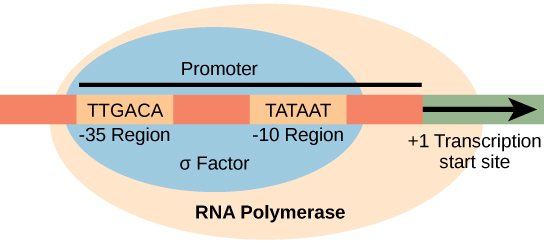
- The promoter recruits RNA polymerase. An operator is a regulatory DNA site recognized by a repressor; it can overlap or lie near the promoter. An activator binds its own regulatory site and helps transcription.
- A regulatory gene makes the repressor or activator; it need not be part of the operon it controls. Not all bacterial genes belong to operons, and bacteria also regulate RNA stability, translation, and protein activity.
Separate the regulator from its signal
| Question | Distinction | Example |
|---|---|---|
| Does the protein decrease or increase transcription? | Negative control uses a repressor; positive control uses an activator. | Both LacI repression and CAP activation regulate the lac operon. |
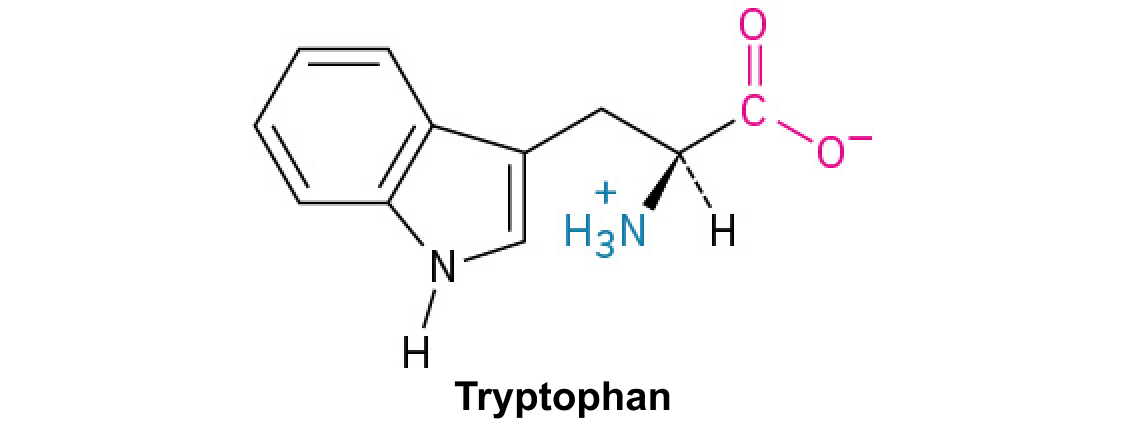
| What does the small molecule do? | An inducer increases expression; a corepressor enables repression. | Allolactose relieves lac repression; tryptophan enables trp repression. |
| What kind of element changes? | A cis-acting DNA site affects a linked gene; a trans-acting regulator can act on other DNA molecules in the same cell. | Operator DNA is cis-acting; diffusible LacI protein acts in trans. |
Authored study comparison; source tables remain unchanged.
Negative control does not mean “always off.” Removing an active repressor increases expression. Positive control does not mean “always on”: the activator may require a signal.
Tryptophan represses its own synthesis
- The trp operon encodes enzymes for tryptophan biosynthesis. When tryptophan is scarce, the repressor is inactive and transcription can proceed.
- When tryptophan is abundant, it acts as a corepressor: binding changes the repressor so it can bind the operator and inhibit transcription. This is a repressible operon under negative control.
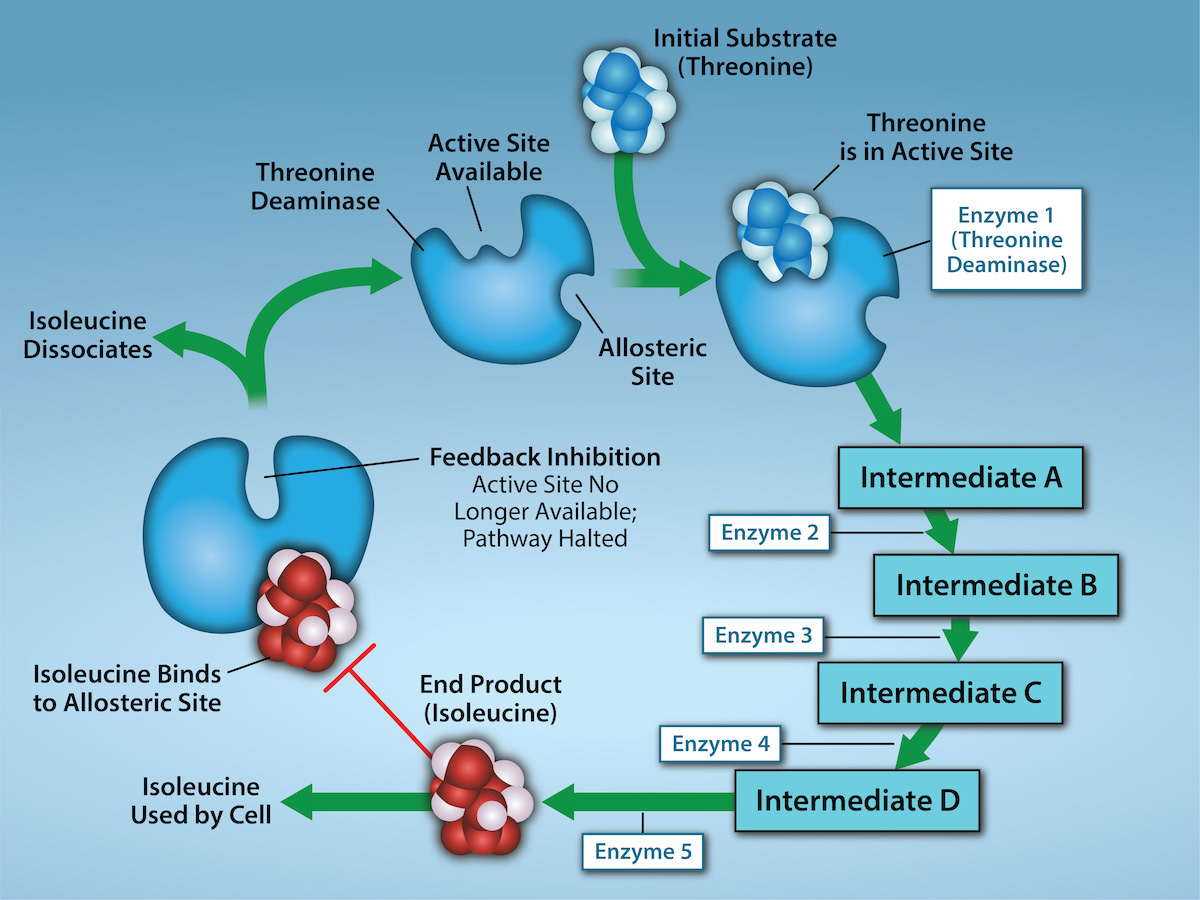
- This regulation changes enzyme production. Feedback inhibition instead changes the activity of an enzyme already present; the two mechanisms can work together.
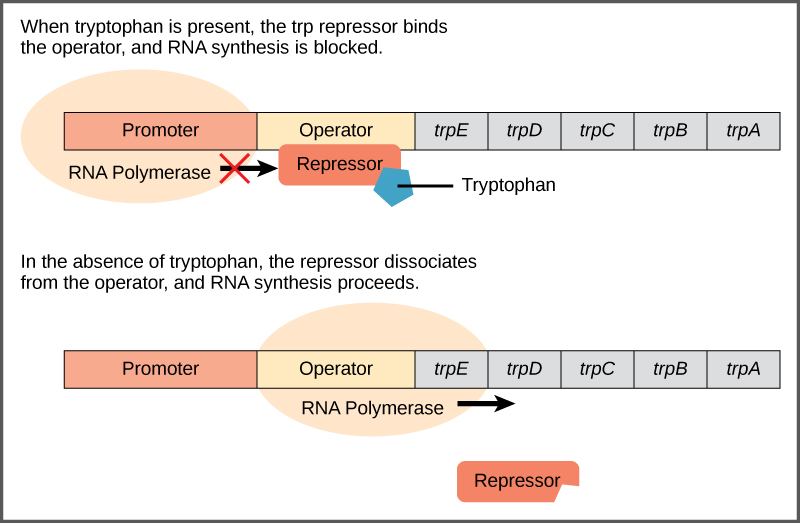
Figure 16.4 The tryptophan operon. The five genes that are needed to synthesize tryptophan in E. coli are located next to each other in the trp operon. When tryptophan is plentiful, two tryptophan molecules bind the repressor protein at the operator sequence. This physically blocks the RNA polymerase from transcribing the tryptophan genes. When tryptophan is absent, the repressor protein does not bind to the operator and the genes are transcribed.
Mary Ann Clark, Matthew Douglas, and Jung Choi, Biology 2e, OpenStax. · CC BY-NC-SA 4.0 · Original image ↗ · Access for free ↗Lactose relieves repression; low glucose enables activation
- The lac operon helps E. coli use lactose. lacZ encodes β-galactosidase, which hydrolyzes lactose and also makes the inducer allolactose; lacY encodes lactose permease; lacA encodes a transacetylase.
- Without inducer, LacI binds the operator and strongly represses transcription. Allolactose binds LacI and reduces its operator binding. Allolactose acts on the protein, not by binding the operator itself.
- When glucose is low, cAMP generally rises. cAMP activates catabolite activator protein, CAP, also called cAMP receptor protein or CRP. CAP–cAMP binds upstream and helps RNA polymerase initiate transcription.
- Strong expression needs both relief of repression and activation. With glucose and lactose present, transcription is low rather than maximally activated. Small basal expression allows cells to begin responding to lactose.
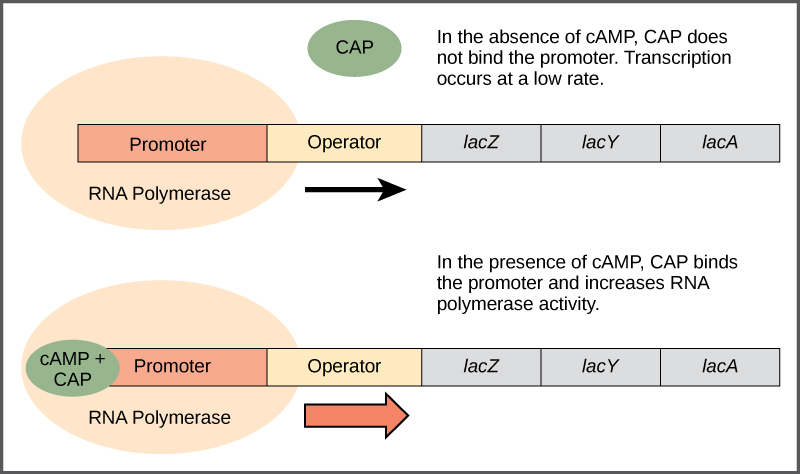
Figure 16.5 Transcriptional activation by the CAP protein. When glucose levels fall, E. coli may use other sugars for fuel but must transcribe new genes to do so. As glucose supplies become limited, cAMP levels increase. This cAMP binds to the CAP protein, a positive regulator that binds to a promoter region upstream of the genes required to use other sugar sources.
Mary Ann Clark, Matthew Douglas, and Jung Choi, Biology 2e, OpenStax. · CC BY-NC-SA 4.0 · Original image ↗ · Access for free ↗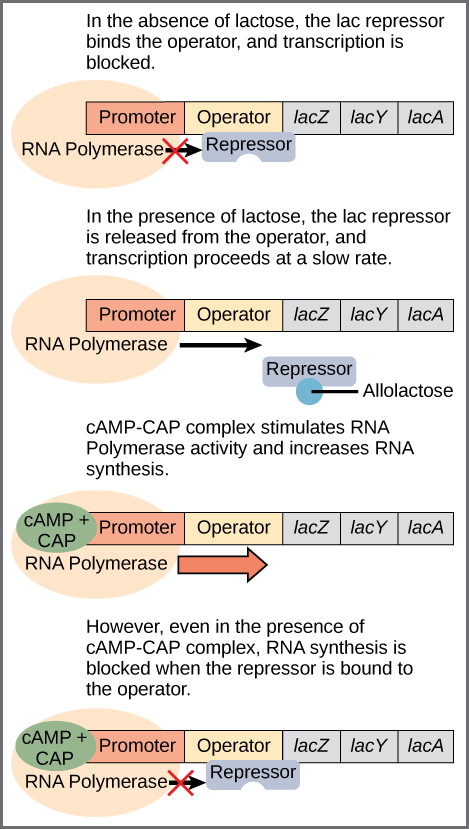
Figure 16.6 Regulation of the lac operon. Transcription of the lac operon is carefully regulated so that its expression only occurs when glucose is limited and lactose is present to serve as an alternative fuel source.
Mary Ann Clark, Matthew Douglas, and Jung Choi, Biology 2e, OpenStax. · CC BY-NC-SA 4.0 · Original image ↗ · Access for free ↗| Glucose | CAP binds | Lactose | Repressor binds | Transcription |
|---|---|---|---|---|
| + | - | - | + | No |
| + | - | + | - | Some |
| - | + | - | + | No |
| - | + | + | - | Yes |
Table 16.2. Mary Ann Clark, Matthew Douglas, and Jung Choi, Biology 2e, OpenStax.
How to read the source table. “No” represents strong repression, not a guarantee of zero RNA molecules; “Some” means low expression and “Yes” means high expression in this simplified model. The source’s surrounding all-or-none wording is less precise than its table.
Practice: combine two nutrient signals
Question. In wild-type cells, compare lac transcription with glucose/lactose present or absent. Which condition gives the highest expression? What happens to trp transcription when intracellular tryptophan rises?
Show nutrient reasoning
Without lactose, the lac repressor keeps expression very low whether glucose is high or low. With lactose and glucose, repression is relieved but CAP activation is weak: expression is low. With lactose and low glucose, repression is relieved and CAP–cAMP activates transcription: expression is high. Rising tryptophan activates the trp repressor and lowers trp transcription.
Practice: changing a protein versus its DNA site
Question. Assume low glucose, no inducer, and otherwise intact lac regulation. One strain lacks functional LacI; another has an operator mutation that prevents LacI binding. Predict expression. Would supplying a normal lacI gene on a plasmid restore repression?
Show mutation reasoning
Both strains express lac strongly under these assumptions: CAP–cAMP can activate and repression is absent. Added functional LacI restores repression in the lacI-deficient strain because the protein can reach the intact operator. It cannot repair the mutant operator; the linked operon remains unrepressed. Include wild-type cells and an empty-vector control. Constitutive relief of repression does not remove the separate need for CAP to achieve high expression.
Practice: test an activator defect
Question. Cells have low glucose and an inducer that has disabled LacI. Deleting the CAP-binding site lowers lac mRNA. Would extra cAMP rescue expression? Design a control that distinguishes altered transcription from altered enzyme activity.
Show experimental reasoning
Extra cAMP cannot restore the missing DNA-binding site. Reintroducing the intact site should restore activation if that deletion caused the defect. Compare matched normal, deleted-site, and restored-site constructs while holding inducer and growth conditions constant. Measure lac mRNA and β-galactosidase activity per viable cell; an enzyme-activity measurement alone cannot distinguish reduced transcription from altered protein function.