Protein output depends on DNA accessibility, transcription, RNA processing and survival, translation, and protein turnover. Measure the stage you want to explain.
Make regulatory DNA accessible
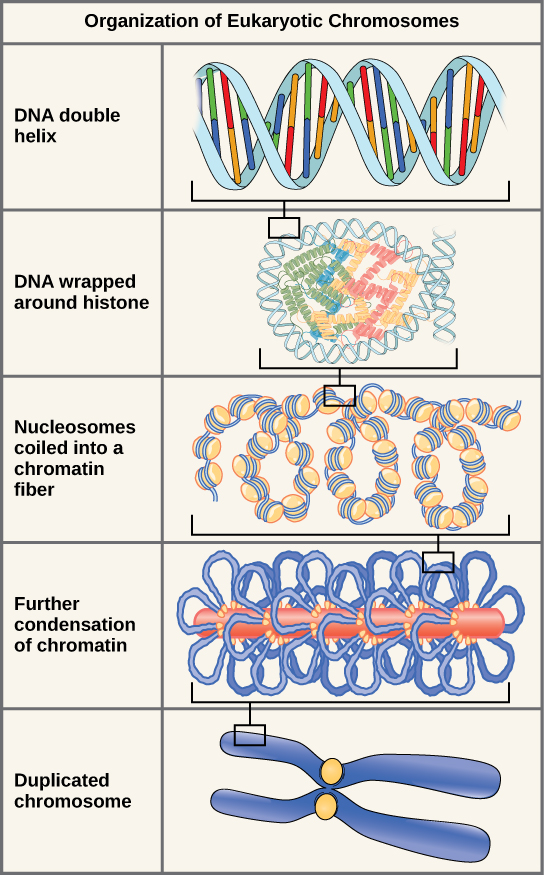
- Different cell types can share a genome yet express different genes. DNA wraps around histone octamers to form nucleosomes; their position and associated proteins influence access to regulatory sequences.
- Chromatin remodeling uses ATP-dependent complexes to reposition or remove nucleosomes. Euchromatin is generally more accessible; heterochromatin is more compact. Accessibility permits regulation but does not by itself guarantee transcription.
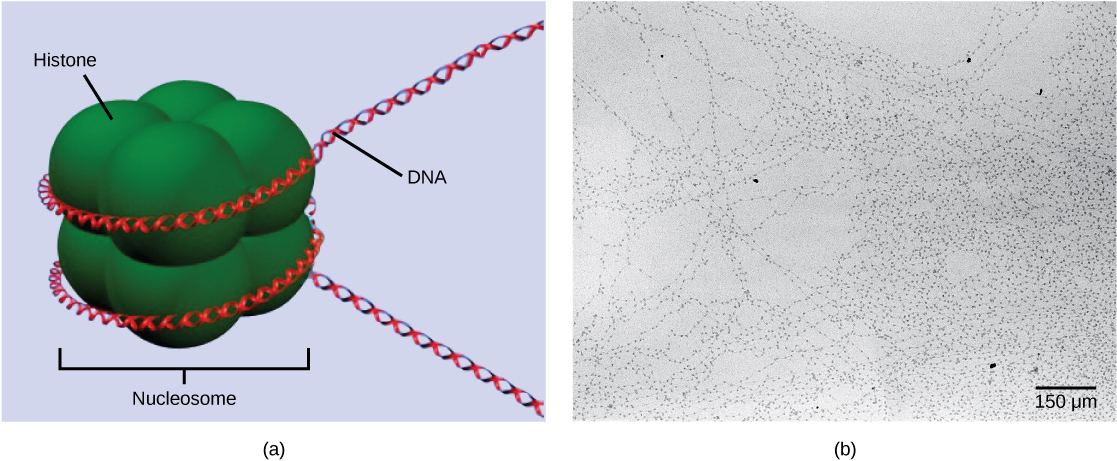
Figure 16.7 DNA is folded around histone proteins to create (a) nucleosome complexes. These nucleosomes control the access of proteins to the underlying DNA. When viewed through an electron microscope (b), the nucleosomes look like beads on a string. (credit “micrograph”: modification of work by Chris Woodcock)
modification of work by Chris Woodcock; Mary Ann Clark, Matthew Douglas, and Jung Choi, Biology 2e, OpenStax. · CC BY-NC-SA 4.0 · Original image ↗ · Access for free ↗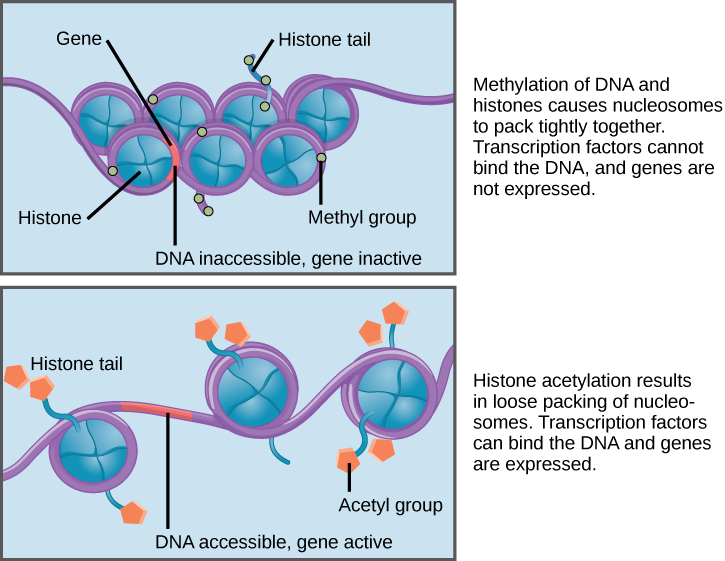
Figure 16.8 Nucleosomes can slide along DNA. When nucleosomes are spaced closely together (top), transcription factors cannot bind and gene expression is turned off. When the nucleosomes are spaced far apart (bottom), the DNA is exposed. Transcription factors can bind, allowing gene expression to occur. Modifications to the histones and DNA affect nucleosome spacing.
Mary Ann Clark, Matthew Douglas, and Jung Choi, Biology 2e, OpenStax. · CC BY-NC-SA 4.0 · Original image ↗ · Access for free ↗Source: Biology 2e §16.3 — Chromatin and epigenetic regulation
Histone marks and DNA methylation
- Histone acetyltransferases add acetyl groups to lysines, neutralizing their positive charge and often favoring accessible chromatin. Histone deacetylases remove those groups and often favor repression. Reader proteins also interpret histone marks.
- Histone methylation is not uniformly repressive: its effect depends on the modified residue and context. Do not equate every methyl group with a closed gene.
- DNA methyltransferases add methyl groups to DNA, commonly at cytosines in CpG dinucleotides in mammals. Methylation of promoter CpG islands often accompanies silencing through altered factor binding and recruitment of repressors. DNA methylation also occurs outside CpG islands.
- Epigenetic regulation can maintain expression states through cell divisions without changing the DNA sequence. Marks can change, and inheritance across cell divisions does not mean every environmental effect passes to offspring. Genomic imprinting and X-chromosome inactivation are examples of sustained expression differences.
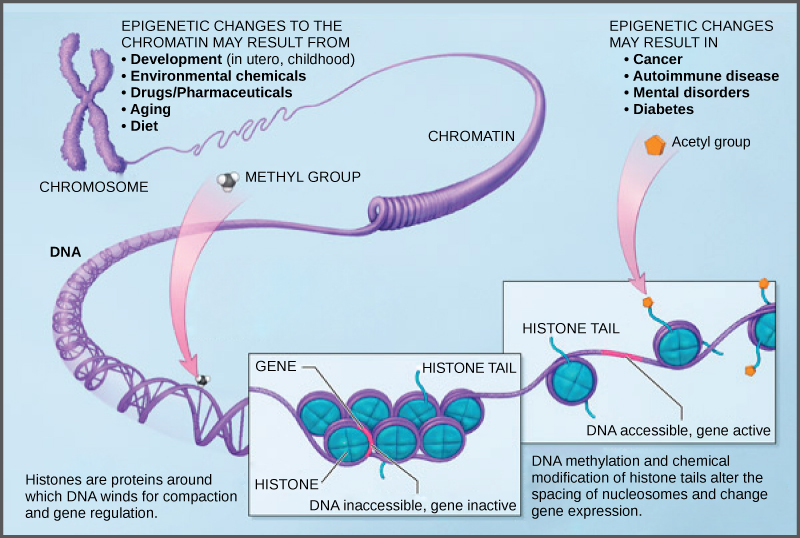
Figure 16.9 Histone proteins and DNA nucleotides can be modified chemically. Modifications affect nucleosome spacing and gene expression. (credit: modification of work by NIH)
modification of work by NIH; Mary Ann Clark, Matthew Douglas, and Jung Choi, Biology 2e, OpenStax. · CC BY-NC-SA 4.0 · Original image ↗ · Access for free ↗Source: Biology 2e §16.3 — Chromatin and epigenetic regulation
Combine promoter, enhancer, and regulator inputs
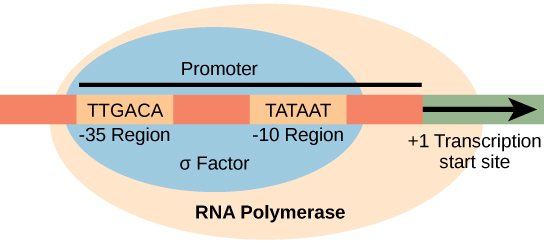
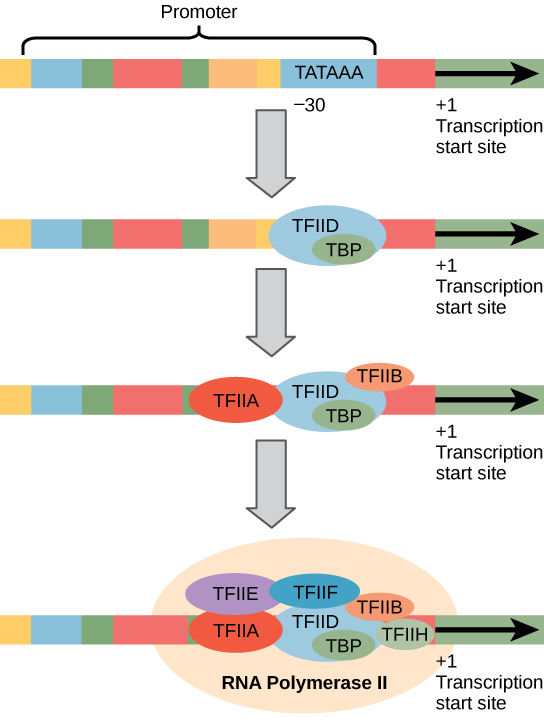
- General transcription factors assemble with RNA polymerase II at the core promoter. Some promoters use a TATA box; many do not. Specific transcription factors bind regulatory sequences and recruit activators, repressors, coactivators, or chromatin-modifying complexes.
- Enhancers can act from upstream, downstream, or within a gene. DNA looping brings enhancer-bound proteins into communication with promoter machinery, often through Mediator. Silencers recruit factors that reduce expression.
- The DNA-binding site is a cis-acting element; the diffusible regulatory protein is a trans-acting factor. “Cis” does not require immediately adjacent DNA. Combinatorial control means the combination of available factors and accessible sites determines the response.
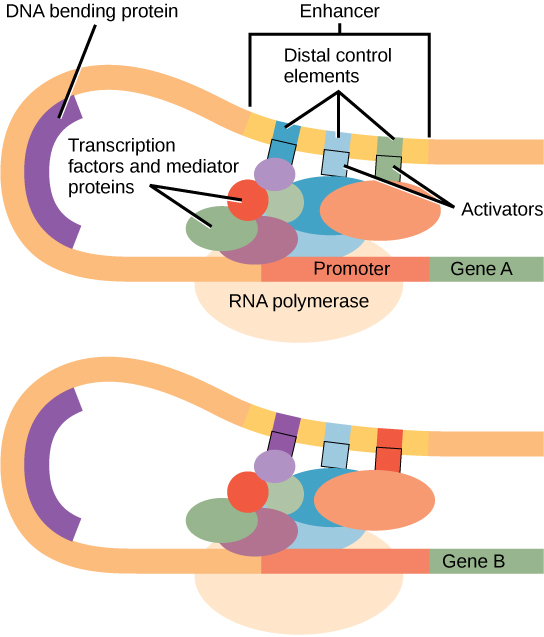
Figure 16.10 Interaction between proteins at the promoter and enhancer sites. An enhancer is a DNA sequence that promotes transcription. Each enhancer is made up of short DNA sequences called distal control elements. Activators bound to the distal control elements interact with mediator proteins and transcription factors. Two different genes may have the same promoter but different distal control elements, enabling differential gene expression.
Mary Ann Clark, Matthew Douglas, and Jung Choi, Biology 2e, OpenStax. · CC BY-NC-SA 4.0 · Original image ↗ · Access for free ↗A useful distinction. Two cells can have the same promoter and enhancer sequences but different transcription-factor activity. Conversely, changing an enhancer can affect its linked gene even when the proteins in both cells are identical.
Source: Biology 2e §16.4 — Eukaryotic transcriptional regulation
Choose which mature RNA is produced
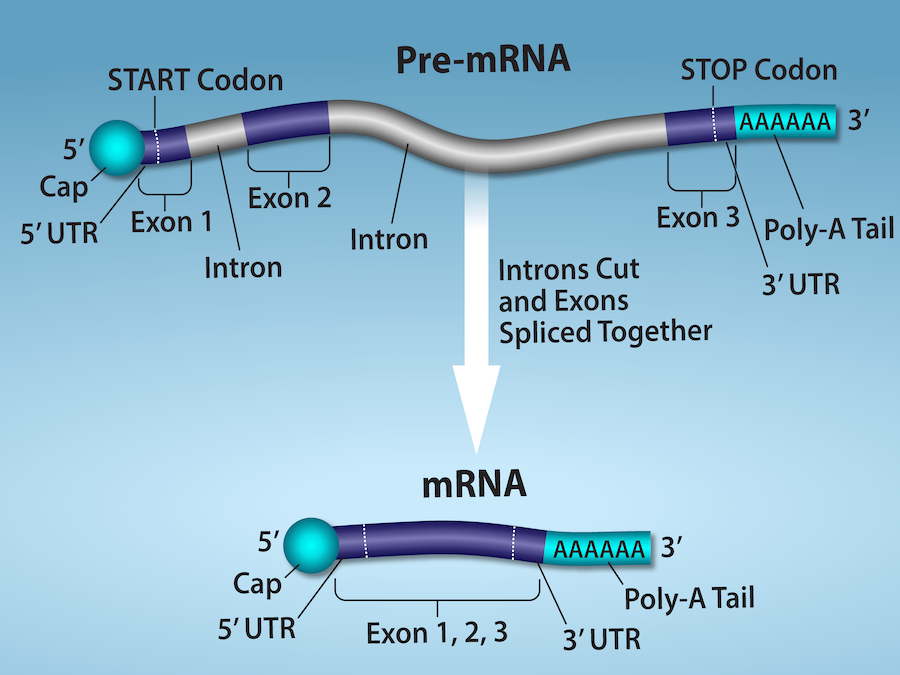
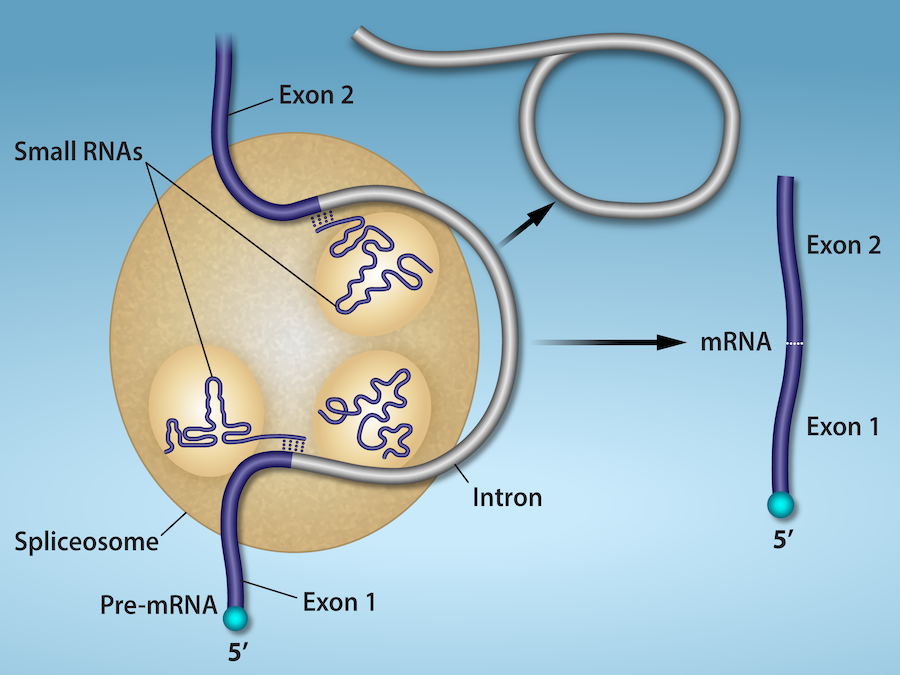
RNA-binding regulators can favor or block particular splice sites, changing which exons appear in mature RNA. Alternative splicing can change protein domains or untranslated regions without changing the gene’s DNA. Exons are retained RNA segments, including untranslated sequence; they are not necessarily entirely protein-coding.
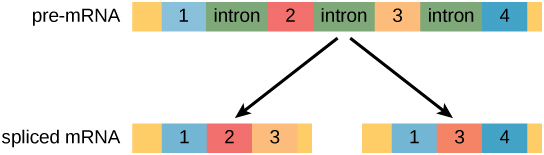
Figure 16.11 Pre-mRNA can be alternatively spliced to create differently mature mRNAs which will ultimately lead to formation of different proteins from the same gene.
Mary Ann Clark, Matthew Douglas, and Jung Choi, Biology 2e, OpenStax. · CC BY-NC-SA 4.0 · Original image ↗ · Access for free ↗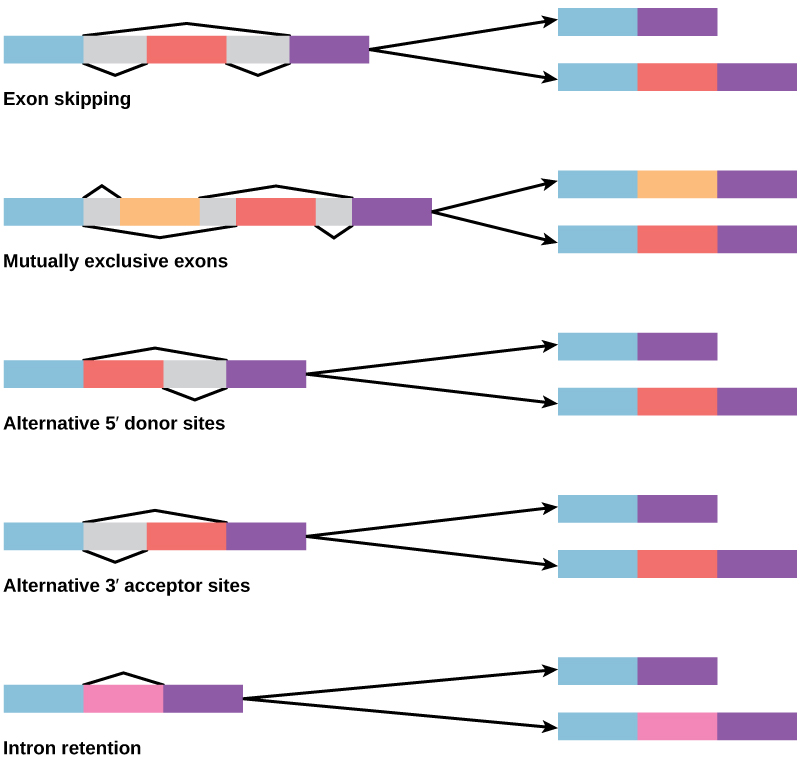
Figure 16.12 There are five basic modes of alternative splicing.
Mary Ann Clark, Matthew Douglas, and Jung Choi, Biology 2e, OpenStax. · CC BY-NC-SA 4.0 · Original image ↗ · Access for free ↗Different isoforms can therefore differ in activity, location, or stability. A change in total mRNA abundance does not reveal which isoform changed.
Control how long an RNA remains available
- The 5′ cap, poly-A tail, and bound proteins affect protection and translation. RNA-binding proteins recognize sequences or structures, often in untranslated regions, and can stabilize an RNA or promote its decay.
- Steady-state mRNA abundance reflects both synthesis and degradation. More mRNA can result from faster transcription or slower decay. After new transcription stops, a decay time course can distinguish these explanations.
- For first-order decay, each half-life removes half of the remaining RNA. Starting with 100 units gives 50 after one half-life and 25 after two. This model assumes a constant decay rate and no new synthesis.
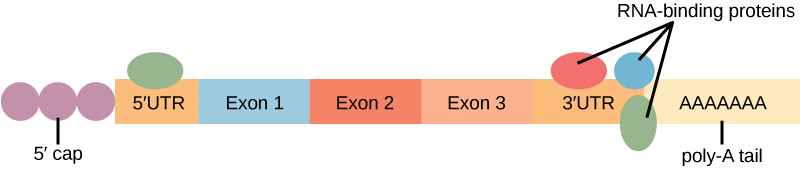
Figure 16.13 RNA-binding proteins. The protein-coding region of this processed mRNA is flanked by 5' and 3' untranslated regions (UTRs). The presence of RNA-binding proteins at the 5' or 3' UTR influences the stability of the RNA molecule.
Mary Ann Clark, Matthew Douglas, and Jung Choi, Biology 2e, OpenStax. · CC BY-NC-SA 4.0 · Original image ↗ · Access for free ↗Noncoding RNAs guide regulation
- MicroRNAs (miRNAs) are short regulatory RNAs processed from longer precursors; Dicer participates in their maturation. A guide strand associates with Argonaute in the RNA-induced silencing complex, RISC, and recognizes target RNA by base pairing.
- In animals, miRNAs commonly bind sites in a 3′ UTR with incomplete complementarity and reduce protein output by inhibiting translation and promoting mRNA decay. Recognition is sequence-dependent; a miRNA does not repress every RNA.
- Small interfering RNAs (siRNAs) also guide RNA interference; extensive complementarity can direct Argonaute-mediated target cleavage. Long noncoding RNAs can help organize chromatin regulation; XIST RNA helps establish X-chromosome silencing.
Read the outcome, not just the label. Reduced protein with unchanged mRNA suggests translation or protein-turnover control. Reduced mRNA can reflect faster decay or slower synthesis; one endpoint cannot distinguish them.
Source: Biology 2e §16.5 — RNA stability and microRNAs · Biology 2e §16.3 — Chromatin and epigenetic regulation
Control translation and protein lifetime
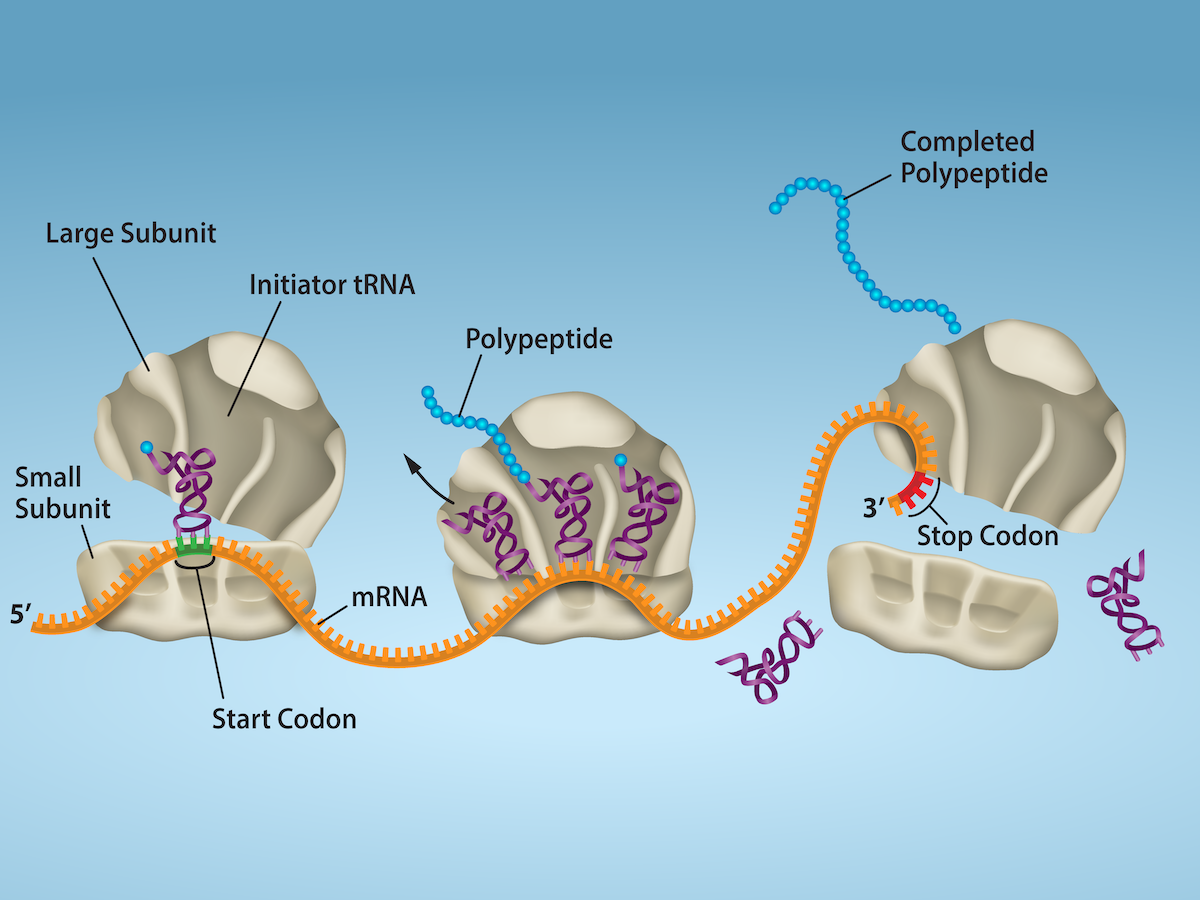
- Translation initiation can change independently of mRNA abundance. Phosphorylation of the eIF2 α subunit inhibits recycling by eIF2B, reducing the eIF2–GTP complex needed to deliver initiator tRNA. This generally reduces initiation, although selected stress-response RNAs can behave differently.
- Protein modifications can change activity, localization, interactions, or stability. Particular polyubiquitin chains target proteins to the proteasome, a protein complex rather than a membrane-bound organelle. Not every ubiquitin modification is a degradation signal.
- Protein abundance reflects translation and degradation. A longer protein half-life can raise protein levels while its mRNA remains unchanged. Protein abundance and protein activity are different measurements.
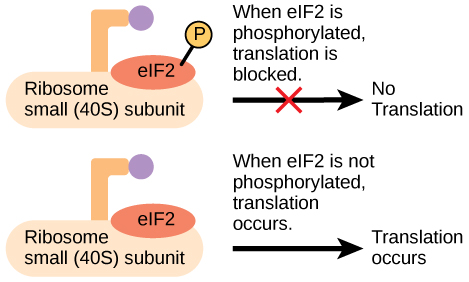
Figure 16.14 Gene expression can be controlled by factors that bind the translation initiation complex.
Mary Ann Clark, Matthew Douglas, and Jung Choi, Biology 2e, OpenStax. · CC BY-NC-SA 4.0 · Original image ↗ · Access for free ↗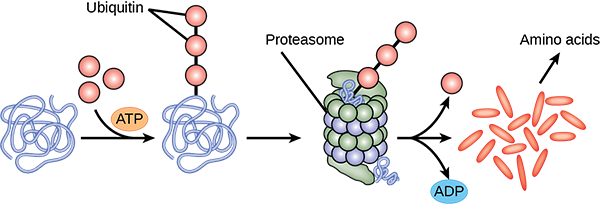
Figure 16.15 Proteins with ubiquitin tags are marked for degradation within the proteasome.
Mary Ann Clark, Matthew Douglas, and Jung Choi, Biology 2e, OpenStax. · CC BY-NC-SA 4.0 · Original image ↗ · Access for free ↗Source detail: initiation and degradation
The source simplifies eIF2 phosphorylation as preventing GTP binding. The key regulatory step is inhibition of eIF2B-mediated GDP–GTP exchange. Proteasomes initially generate peptides, which other enzymes can further break down into amino acids.
Source: Biology 2e §16.6 — Translation and protein turnover control
Practice: test combinatorial control
Question. A reporter gives 1 unit with no added factors, 2 with factor A, 2 with factor B, and 12 with both. Mutating the A-binding site reduces the combined signal to 2. What does this support, and what controls are needed?
Show enhancer reasoning
The pattern supports cooperative or otherwise combinatorial activation through the A site; it does not prove A binds B directly. Compare intact, mutant, and restored-site reporters with the same promoter, copy number, and delivery conditions. Normalize to viable cells or a suitable reference reporter; check reporter RNA as well as reporter activity. An unchanged promoter is essential for attributing the difference to the regulatory site.
Source: Biology 2e §16.4 — Eukaryotic transcriptional regulation · Biology 2e §16.3 — Chromatin and epigenetic regulation
Practice: transcription or RNA decay?
Question. Two RNAs start at 100 units when transcription is stopped. RNA A has a 20-minute half-life; RNA B has a 40-minute half-life. How much remains after 40 minutes? Does higher steady-state RNA B prove faster transcription?
Show decay reasoning
RNA A has passed through two half-lives: 100 × (1/2)² = 25 units. RNA B has passed through one: 100 × (1/2) = 50 units. Higher steady-state B could reflect slower degradation, so it does not establish faster transcription. Compare normalized decay curves under matched conditions and measure nascent RNA synthesis separately.
Practice: a microRNA target-site experiment
Question. Adding a miRNA lowers protein from a reporter with its normal 3′ UTR but not from a reporter with the predicted target site mutated. Both reporters have unchanged mRNA abundance at the measured time. What is supported?
Show microRNA reasoning
The effect depends on the intact target site and is consistent with reduced translation. Unchanged mRNA at this time does not exclude later decay, and altered protein turnover remains another possible explanation. Include a nontargeting RNA control and restore the target sequence to test rescue. Measure new protein synthesis and protein decay to distinguish translation from turnover.
Source: Biology 2e §16.5 — RNA stability and microRNAs · Biology 2e §16.6 — Translation and protein turnover control