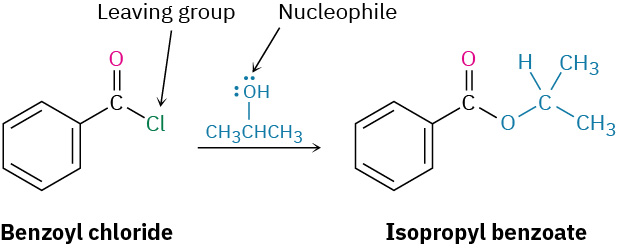
A leaving group attached to carbonyl carbon allows addition to be followed by elimination.
Recognize acyl families
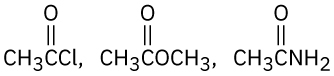
Carboxylic-acid derivatives retain an acyl carbonyl bonded to a substituent: anhydrides have –OC(=O)R, esters –OR, and amides –NR₂ or related nitrogen groups. An ester name lists its alcohol-derived alkyl group before the acid-derived carboxylate name; an amide uses -amide and identifies N-substituents. Amides have strong nitrogen-to-carbonyl resonance donation, reduced nitrogen basicity, and restricted C–N rotation. Anhydrides are generally more reactive than esters, which are generally more reactive than amides under comparable nucleophilic-substitution conditions.
Source: Organic Chemistry 21 — Summary · 21.2 Nucleophilic Acyl Substitution Reactions
Addition–elimination mechanisms
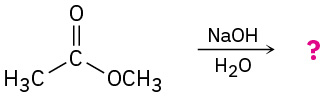
A nucleophile adds to carbonyl carbon, producing a tetrahedral intermediate; collapse reforms C=O and expels a leaving group. Acid catalysis raises electrophilicity and can turn an otherwise poor leaving group into a neutral species. Base-promoted ester hydrolysis forms carboxylate and is effectively driven forward by deprotonation of the acid product. Transesterification exchanges the ester’s alkoxy group for another alcohol-derived group under suitable catalysis. Amide hydrolysis usually needs stronger acid, base, heat, or enzyme catalysis because resonance and poor leaving-group ability resist substitution.
Source: Organic Chemistry 21 — Summary · 21.2 Nucleophilic Acyl Substitution Reactions
Reactivity is more than one ranking
Good leaving groups are generally weak bases, and reduced electron donation into C=O increases electrophilicity. Steric crowding can hinder nucleophilic approach, while ring strain can accelerate reactions that relieve unfavorable geometry. In β-lactams, the four-membered ring limits ordinary amide geometry and enhances acyl reactivity; this enables covalent acylation of bacterial cell-wall synthesis enzymes. Electronic and geometric context can therefore make one amide much more reactive than an ordinary open-chain amide. Compare mechanisms under matched conditions instead of treating every derivative as identical.
Source: Organic Chemistry 21 — Summary · 21.2 Nucleophilic Acyl Substitution Reactions
Apply it
Try before revealing the answer. Why does an ester generally hydrolyze faster than a comparable amide under the same conditions, and why is a β-lactam an important exception?
Worked answer
An amide receives stronger nitrogen lone-pair donation, reducing carbonyl electrophilicity, and its nitrogen-derived leaving group is ordinarily less favorable. A strained β-lactam cannot realize the same geometry and resonance stabilization, and ring opening relieves strain, so it is unusually susceptible to acyl substitution.
Source: Organic Chemistry 21 — Summary · 21.2 Nucleophilic Acyl Substitution Reactions
Organic Chemistry 21 — Summary — figures and tables

Source: Organic Chemistry 21 — Summary
21.2 Nucleophilic Acyl Substitution Reactions — figures and tables
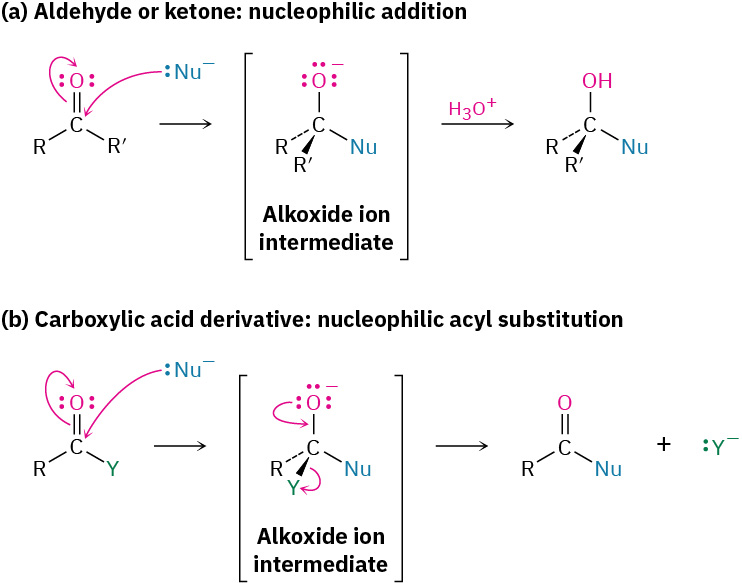
Figure 21.2 The general mechanisms of nucleophilic addition and nucleophilic acyl substitution reactions. Both reactions begin with addition of a nucleophile to a polar C═O C═O bond to give a tetrahedral, alkoxide ion intermediate. (a) The intermediate formed from an aldehyde or ketone is protonated to give an alcohol, but (b) the intermediate formed from a carboxylic acid derivative expels a leaving group to give a new carbonyl compound.
John McMurry, Organic Chemistry, OpenStax. · CC BY-NC-SA 4.0 · Original image ↗ · Access for free ↗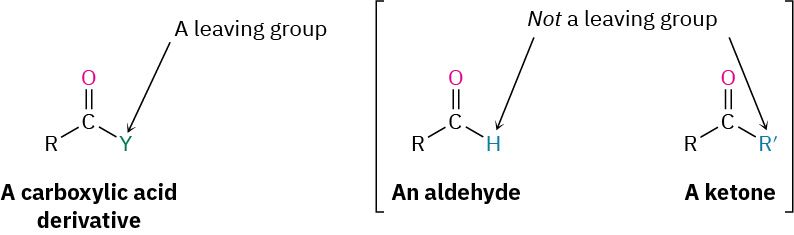
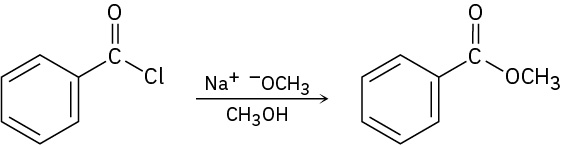
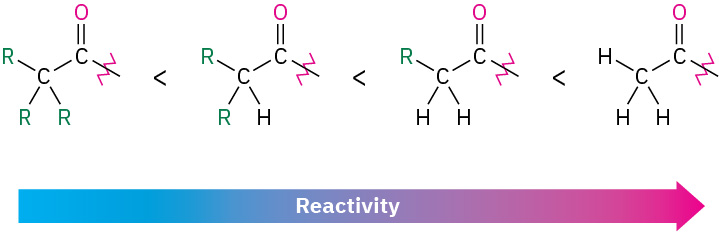
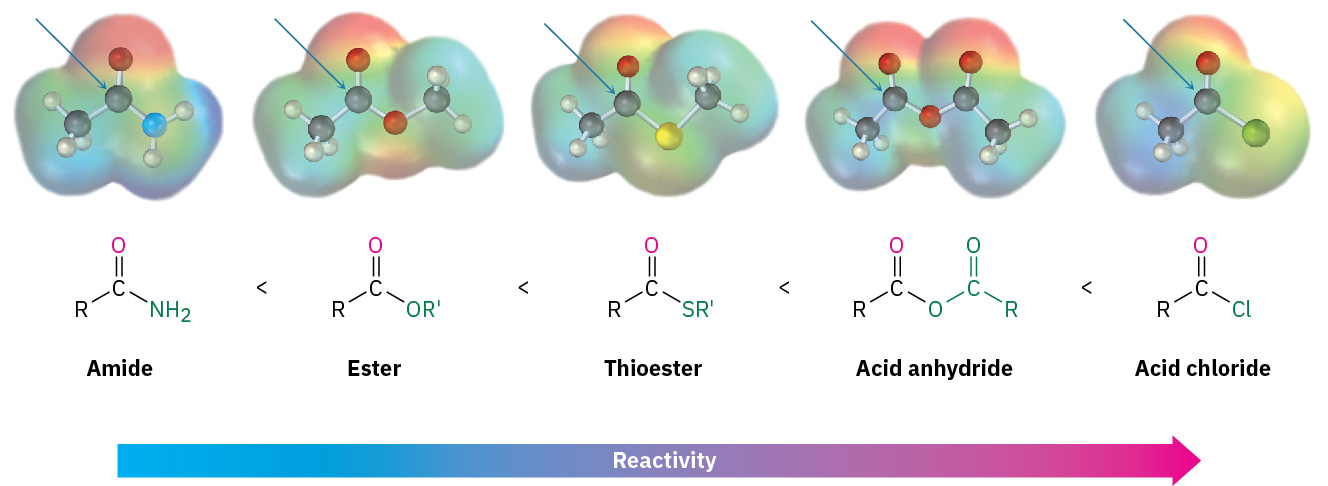
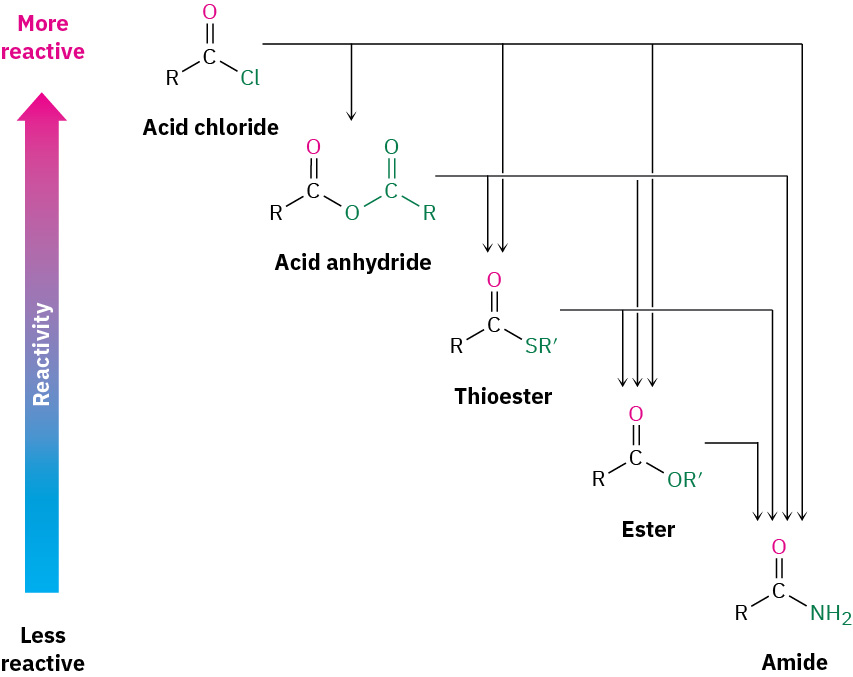
Figure 21.3 Interconversions of carboxylic acid derivatives. A more reactive acid derivative can be converted into a less reactive one, but not vice versa.
John McMurry, Organic Chemistry, OpenStax. · CC BY-NC-SA 4.0 · Original image ↗ · Access for free ↗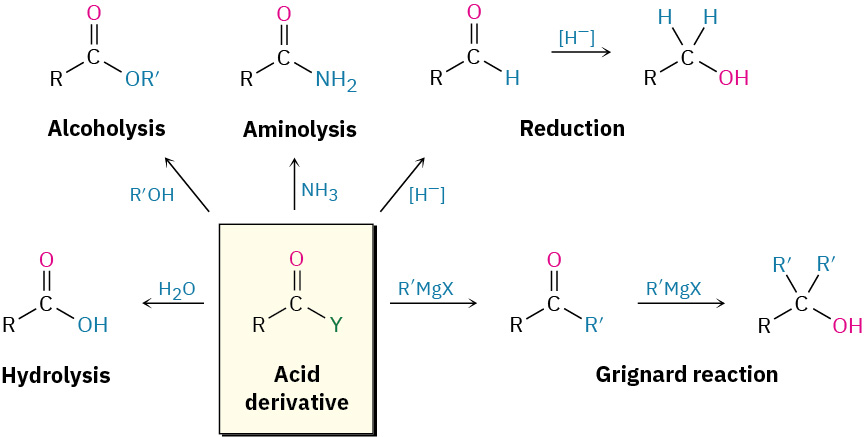
Figure 21.4 Some general reactions of carboxylic acid derivatives.
John McMurry, Organic Chemistry, OpenStax. · CC BY-NC-SA 4.0 · Original image ↗ · Access for free ↗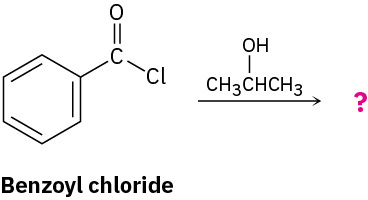

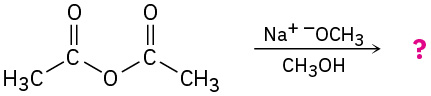
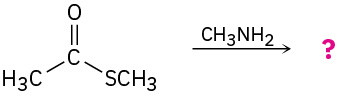
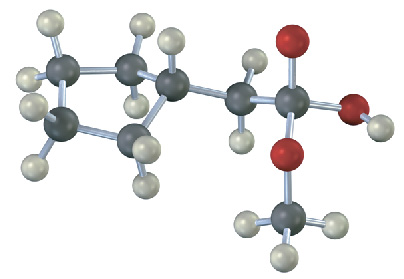
| Reaction | Yield |
|---|---|
| • Hydrolysis | Reaction with water to yield a carboxylic acid |
| • Alcoholysis | Reaction with an alcohol to yield an ester |
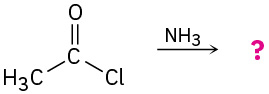
| • Aminolysis | Reaction with ammonia or an amine to yield an amide |
| • Reduction | Reaction with a hydride reducing agent to yield an aldehyde or an alcohol |
| • Grignard reaction | Reaction with an organometallic reagent to yield a ketone or an alcohol |
John McMurry, Organic Chemistry, OpenStax.