Anomeric configuration and linkage position determine whether a glycosidic bond can be recognized and hydrolyzed.
Classify and compare sugar stereochemistry
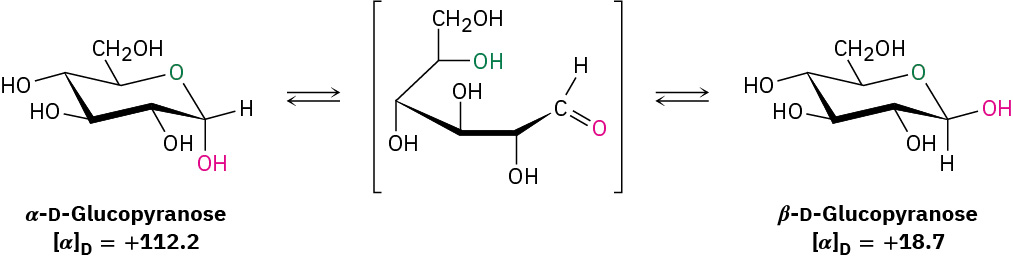
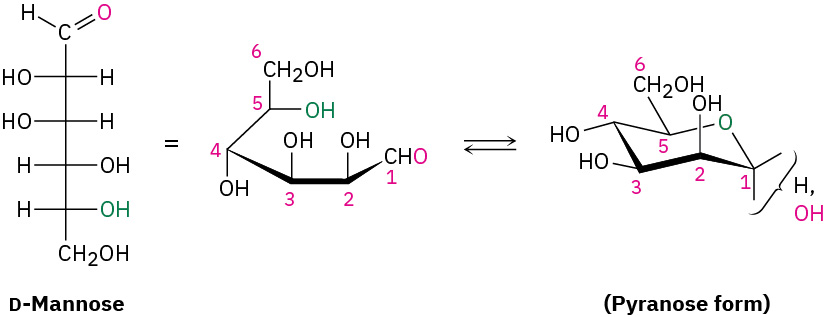
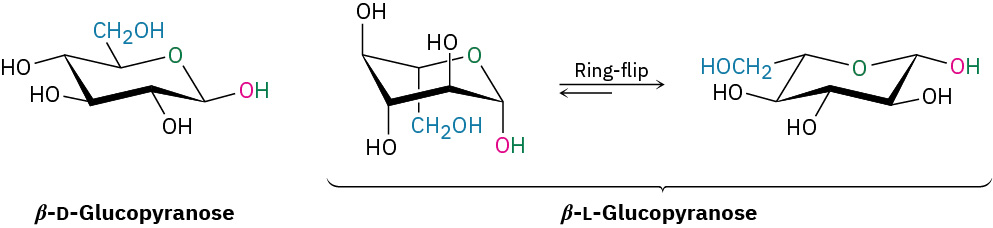
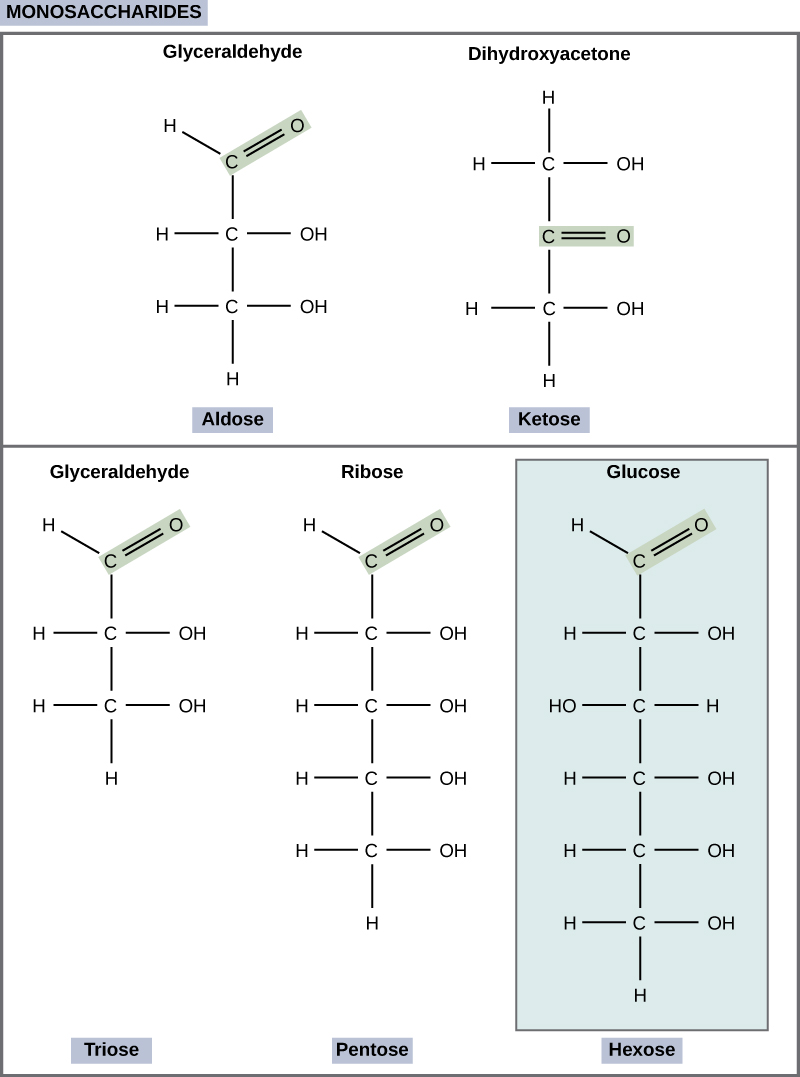
Aldoses contain an aldehyde in the open form; ketoses contain a ketone. Carbon count gives triose, pentose, hexose, and related names. In a Fischer projection, D/L depends on the highest-numbered stereocenter relative to glyceraldehyde and does not specify optical-rotation sign. Epimers differ at one stereocenter. Ring closure forms a hemiacetal or hemiketal and creates an anomeric center at the former carbonyl carbon. For common D-sugar Haworth drawings, α places the anomeric substituent trans to the reference CH₂OH group and β cis. Chair conformations distinguish axial from equatorial placement without changing configuration.
Source: Organic Chemistry 25 — Summary · 25.5 Cyclic Structures of Monosaccharides: Anomers
Anomeric reactions and tautomerism
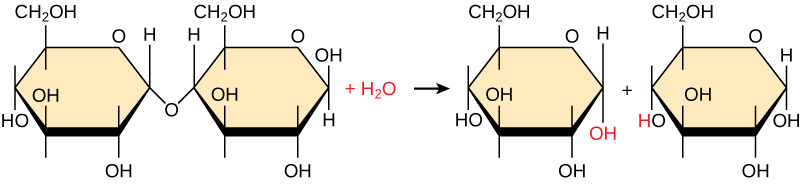
A sugar with a free anomeric hemiacetal can reopen, interconvert between α and β forms by mutarotation, and behave as a reducing sugar. Converting that center to a glycosidic acetal locks its configuration until hydrolysis. Acid or specific glycosidases cleave glycosidic bonds; enzyme recognition depends on linkage geometry. Under suitable basic conditions, sugars can interconvert through enediol intermediates, allowing aldose–ketose isomerization and epimerization. Thus some ketoses test as reducing sugars after tautomerization. Ring-opening and bond hydrolysis are distinct processes.
Source: Organic Chemistry 25 — Summary · 25.5 Cyclic Structures of Monosaccharides: Anomers
Linkages determine polymer behavior
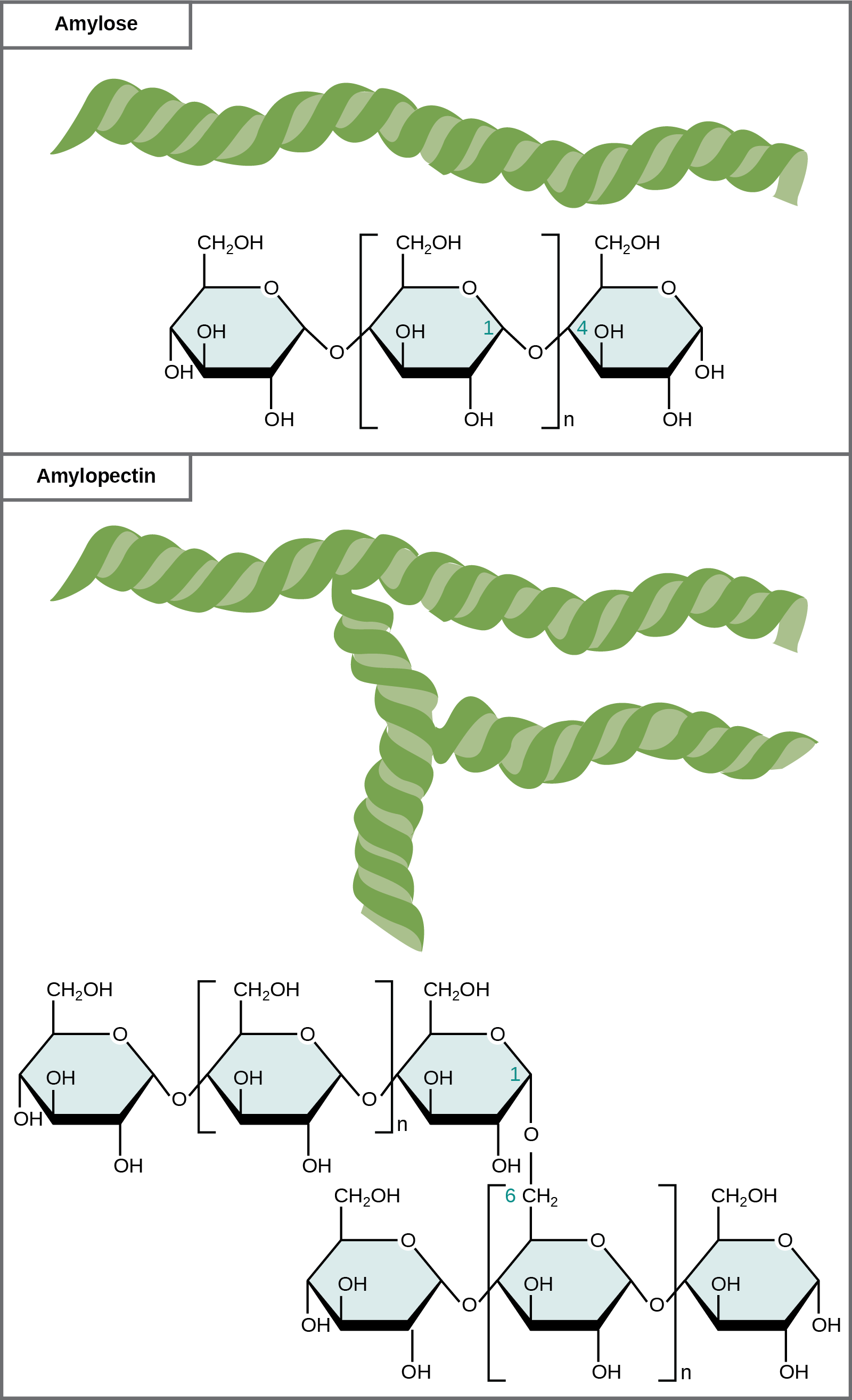
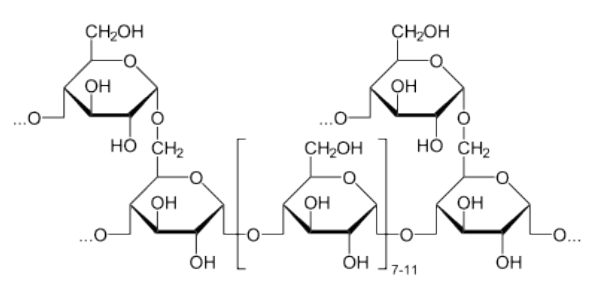
Maltose contains an α(1→4) glucose linkage; lactose contains β(1→4) galactose–glucose. Both retain a free anomeric center and are reducing. Sucrose links the anomeric centers of glucose and fructose and is nonreducing. Starch contains α(1→4) chains with α(1→6) branches in amylopectin; glycogen is more highly branched. Cellulose has β(1→4) glucose chains that form strong interchain associations. Humans digest many α-linked glucose polymers but lack the enzyme needed to cleave cellulose’s β(1→4) linkage. Branching creates multiple nonreducing ends for enzyme action.
Source: Organic Chemistry 25 — Summary · 25.5 Cyclic Structures of Monosaccharides: Anomers
Apply it
Try before revealing the answer. A disaccharide contains one free anomeric carbon. Can it mutarotate and reduce an appropriate oxidizing reagent? How does sucrose differ?
Worked answer
The free anomeric hemiacetal can open and reclose, permitting mutarotation and reducing behavior. In sucrose, both anomeric carbons participate in its glycosidic acetal/ketal linkage, preventing ordinary ring opening at those centers unless the bond is hydrolyzed.
Source: Organic Chemistry 25 — Summary · 25.5 Cyclic Structures of Monosaccharides: Anomers
25.5 Cyclic Structures of Monosaccharides: Anomers — figures and tables
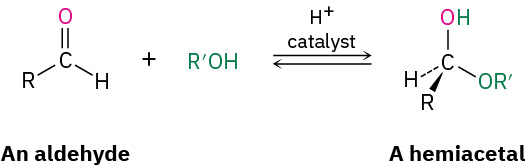
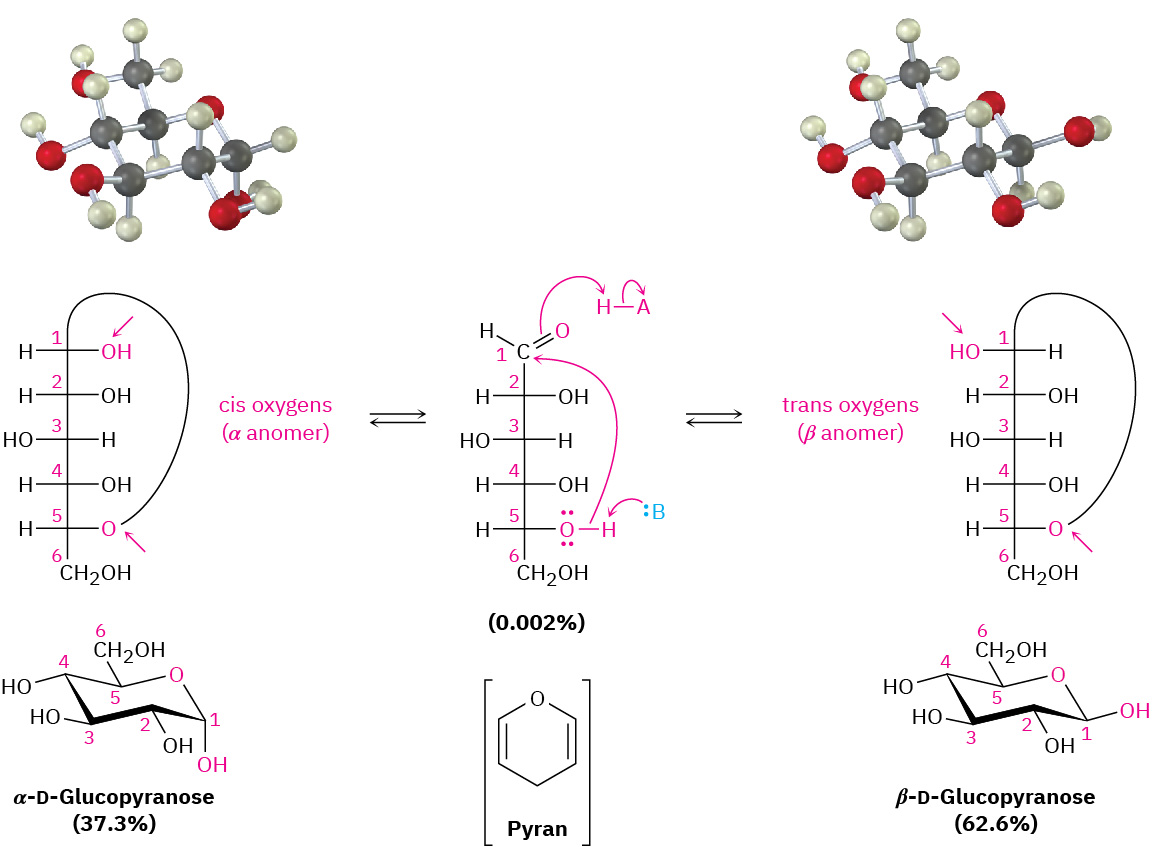
Figure 25.5 Glucose in its cyclic pyranose forms. As explained in the text, two anomers are formed by cyclization of glucose. The molecule whose newly formed –OH group at C1 is cis to the oxygen atom on the lowest chirality center (C5) in a Fischer projection is the α anomer. The molecule whose newly formed –OH group is trans to the oxygen atom on the lowest chirality center in a Fischer projection is the β anomer.
John McMurry, Organic Chemistry, OpenStax. · CC BY-NC-SA 4.0 · Original image ↗ · Access for free ↗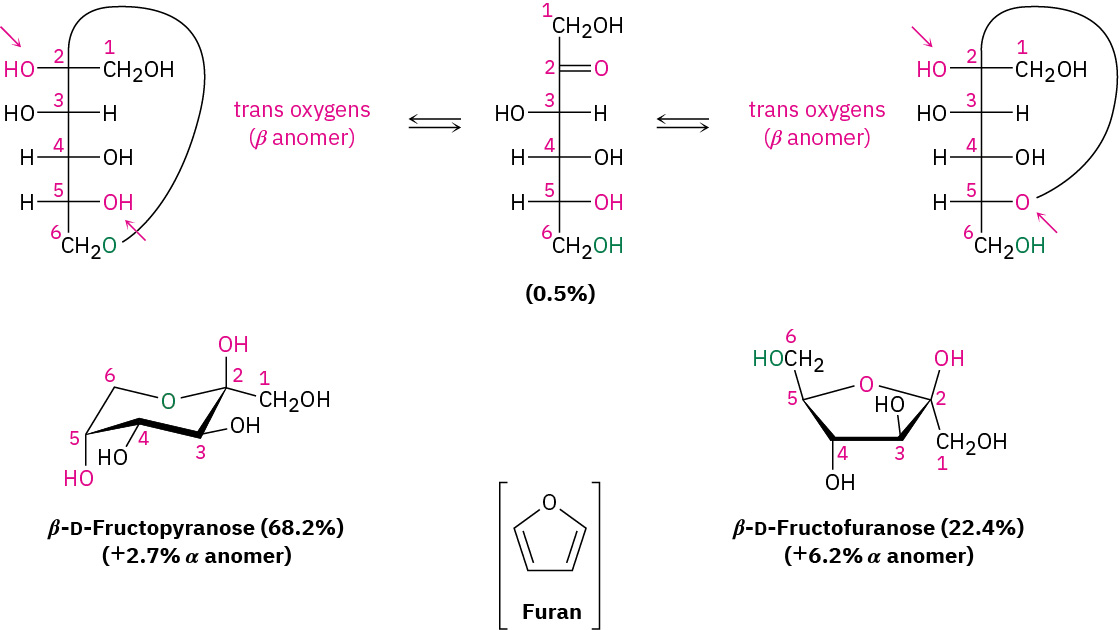
Figure 25.6 Pyranose and furanose forms of fructose in aqueous solution. The two pyranose anomers result from addition of the C6 –OH group to the C2 carbonyl; the two furanose anomers result from addition of the C5 –OH group to the C2 carbonyl.
John McMurry, Organic Chemistry, OpenStax. · CC BY-NC-SA 4.0 · Original image ↗ · Access for free ↗