Size exclusion: large first. Ion exchange: opposite charges bind. Affinity: the matching target binds.
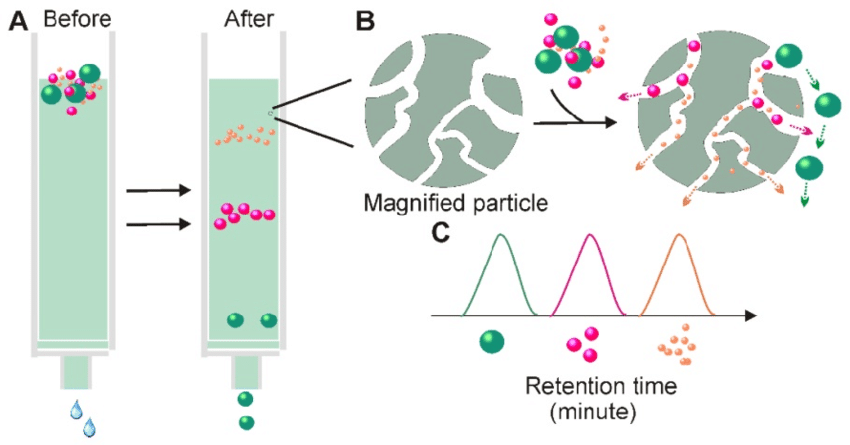
Size exclusion: access to pores
Size exclusion chromatography (SEC) uses porous beads. Large molecules enter fewer pores and take a shorter route through the column, so they elute first. Smaller molecules explore more pore volume and elute later. Separation reflects hydrodynamic size, so shape also matters. SEC is useful for separating aggregates, exchanging buffers, and estimating size under calibrated conditions.
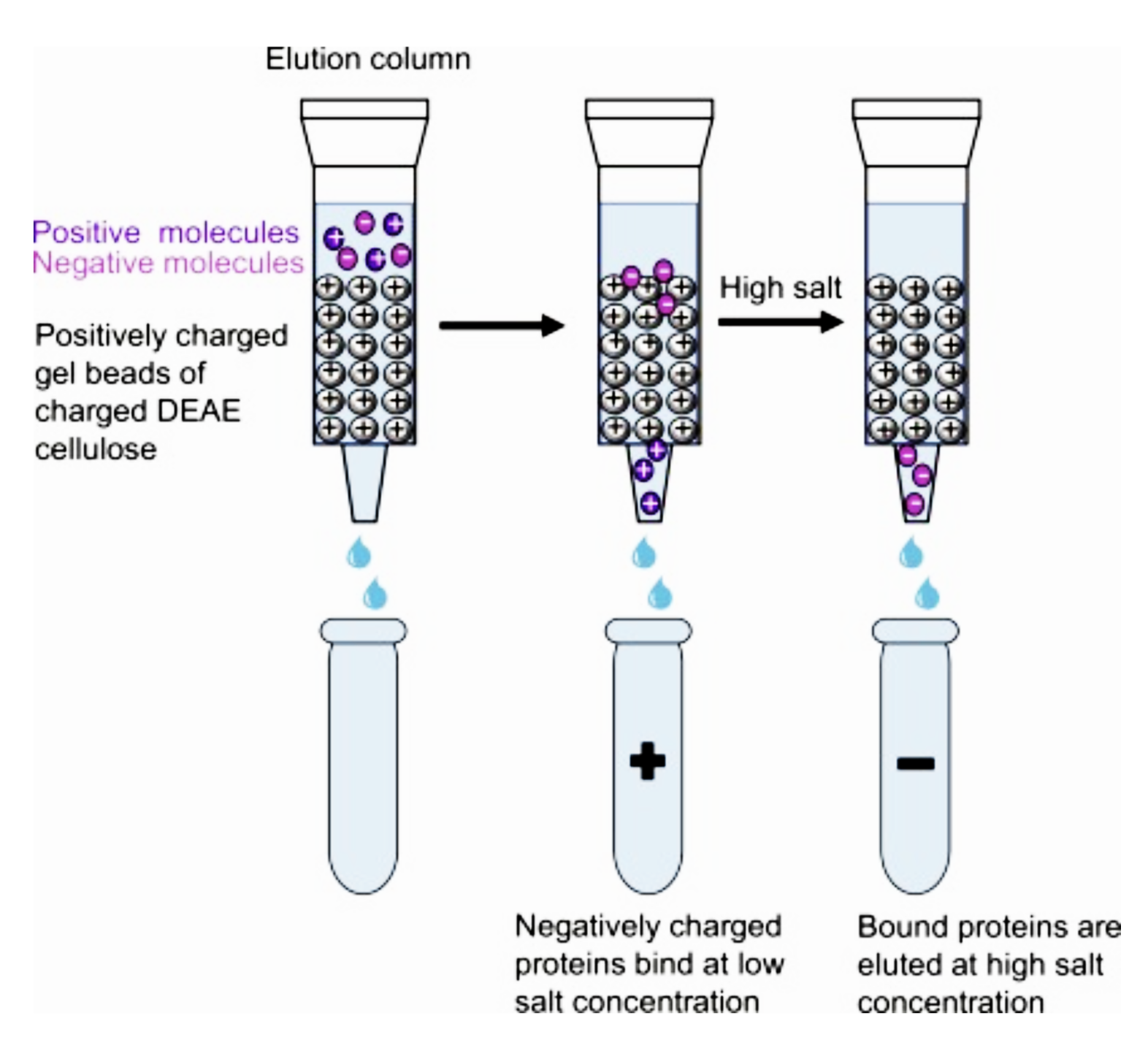
Ion exchange: opposite charges attract
- Anion exchange uses a positively charged resin, such as DEAE, to bind negative proteins. Cation exchange uses a negatively charged resin to bind positive proteins.
- At pH above its pI, a protein is net negative; below its pI, it is net positive. Choose the buffer and resin together.
- Unbound proteins pass through. Increasing salt competes with charge interactions; changing pH changes protein charge. Either can release bound proteins.
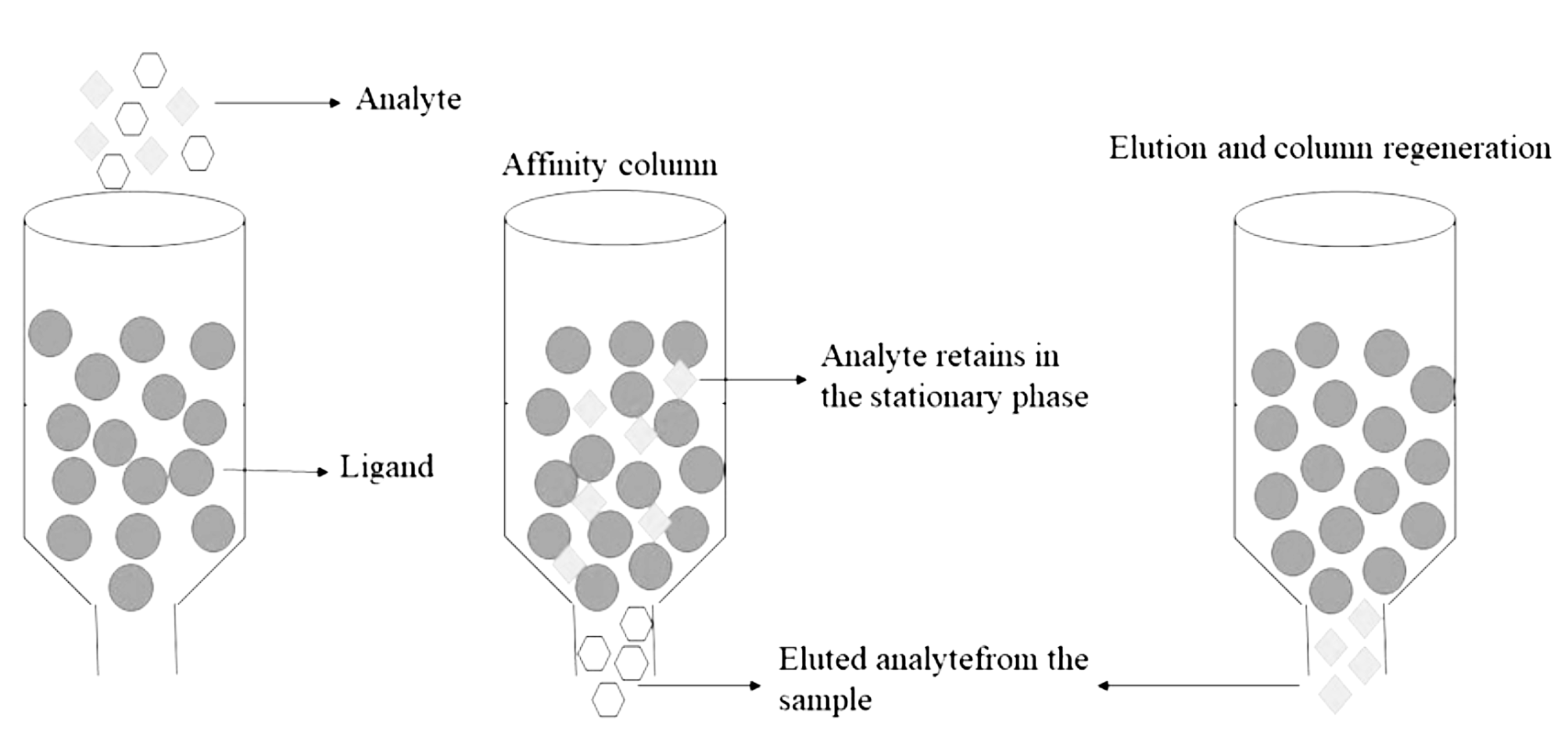
Affinity: selective binding
Affinity chromatography captures a target with an immobilized binding partner. Wash away unbound material, then release the target with a competing ligand or altered conditions. Examples include antibody–antigen binding, His-tag binding to metal-containing resin, and GST-tag binding to glutathione.
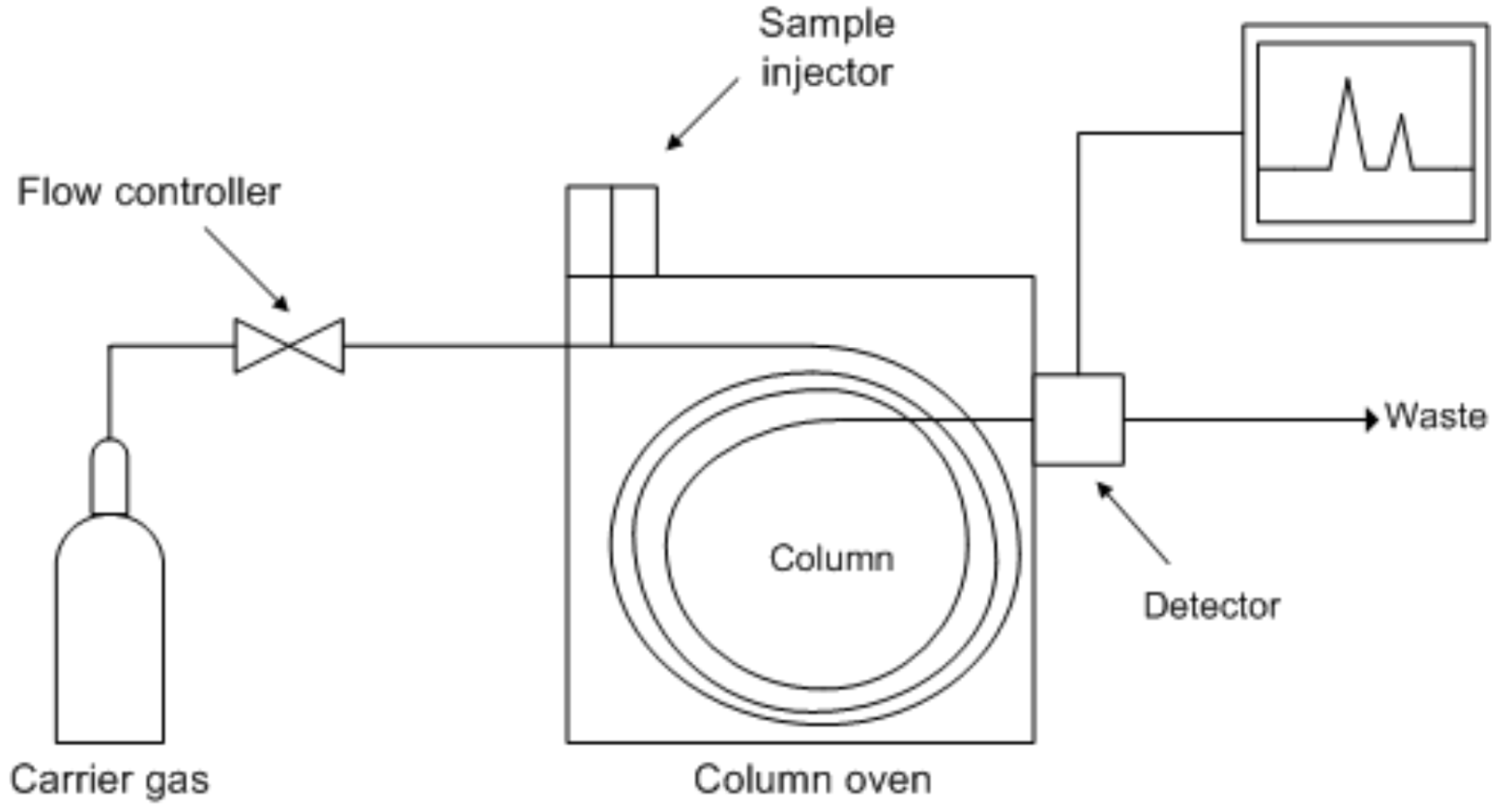
Gas chromatography
GC uses an inert carrier gas, a heated column, and a detector. In GLC, the stationary phase is a liquid film; in GSC, it is a solid. Retention depends on volatility and stationary-phase interactions. Detector options include FID, TCD, ECD, and MS. GC suits volatile, thermally stable compounds; intact proteins generally require liquid-phase methods rather than direct GC.
High performance liquid chromatography
HPLC uses high-pressure pumps and efficient packed columns. The stationary phase determines what separates the sample: HPLC is not itself a single separation mechanism. RP-HPLC has a nonpolar stationary phase and commonly separates peptides by hydrophobic interactions. NP-HPLC uses a polar stationary phase.
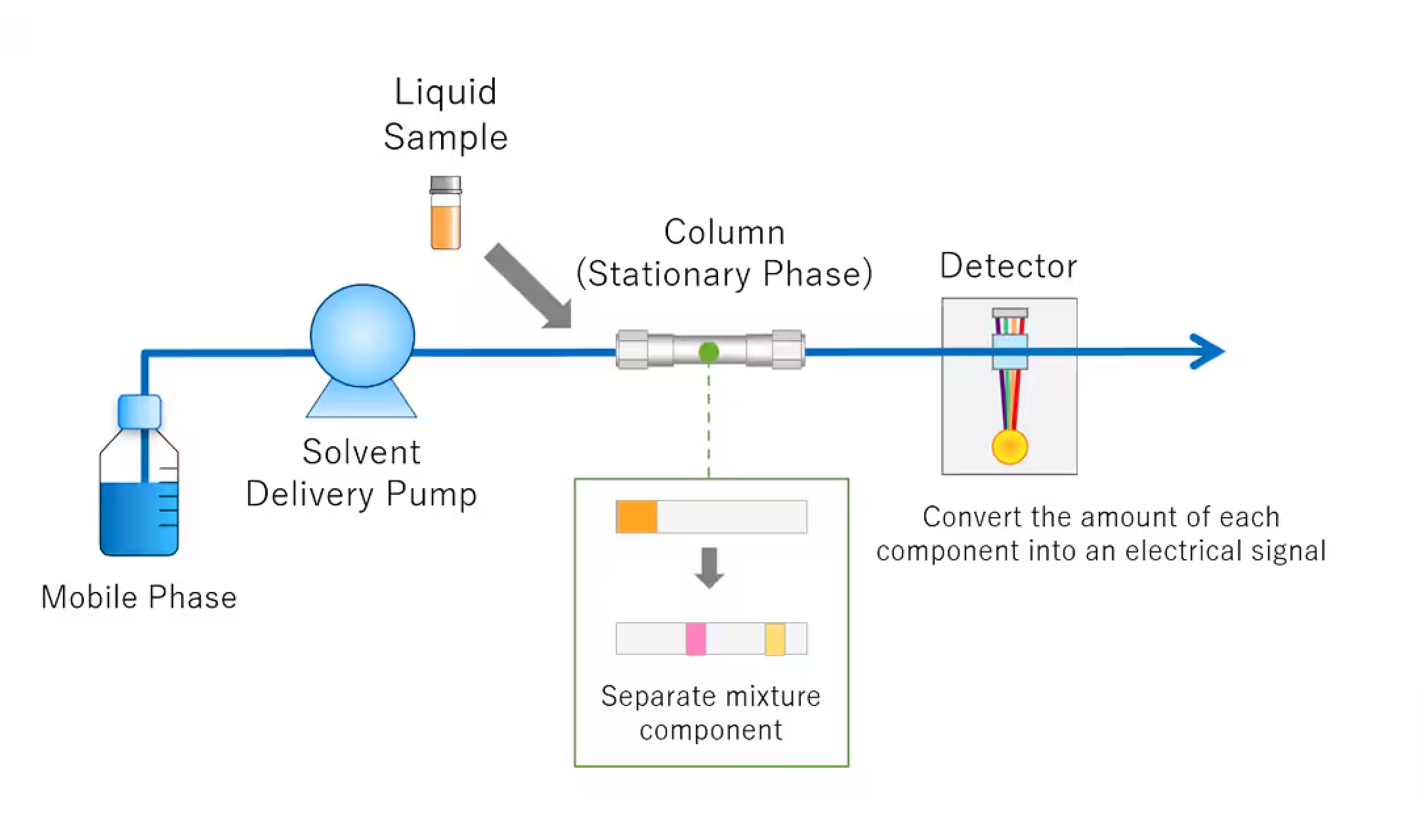
The detector records a chromatogram of signal against retention time. UV-visible absorbance, RID, and MS are possible detection methods. A peak’s position helps identification under validated conditions; its area supports quantification with suitable calibration.